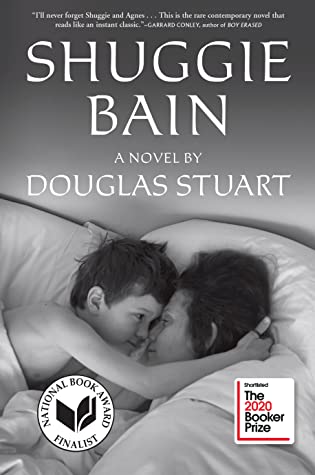
Douglas Stuart, Shuggie Bain (#BookReview)

How to write about a book that has made such a big splash that it has already been extensively reviewed. What more can one say? This is what I’m facing with Douglas Stuart’s debut and Booker Prize-winning novel, Shuggie Bain.

I haven’t, in fact, read much about it, because I prefer to come to books fresh, but I have heard an interview with Stuart, and I can imagine what has been written about his book. I have also discussed it with my reading group. All I can do is just launch in, and write what I would normally write, but I fear it won’t add anything fresh to the discussion. It will, however, record, for me, my thoughts and feelings.

The story

For those of you who haven’t yet read Shuggie Bain, it tells the story of its eponymous protagonist growing up in public housing in 1980s industrial Glasgow. This was the time of Thatcher, a time when mines, shipyards, railyards closed, resulting in significant unemployment and the usual fallout when men can’t work and women and children end up on welfare:

Whole housing estates of young men who were promised the working trades of their fathers had no future now. Men were losing their very masculinity.

This is important, but it is also just the backdrop for the personal story of Shuggie and his mother Agnes. There are other characters, but these two are the book’s core.

The story starts in 1992 with Shuggie, nearly 16, living on his own in a boarding house in Southside Glasgow. He is clearly pitied by the people around him, so the question for us is why is he there alone, how did he get there? We then go back to 1981, where we meet Shuggie’s family, thirty-nine-year-old Agnes, her second husband Shug, and Shuggie’s two older siblings, Catherine and Leek, who were born to Agnes’ first husband. It is not a happy situation. They are all living in a flat with Agnes’ parents, Wullie and Lizzie, and Agnes feels a failure.

When Shug does take his family away, it’s a cruel action, and Agnes and her three children soon find themselves alone, living on welfare payments in the desolate Pithead – a housing scheme which had “the plainest, unhappiest-looking homes Agnes had ever seen”. She knew Shug was “a selfish animal”, but she wasn’t expecting this. From here, their lives are a struggle, though Agnes – now drinking heavily – tries her darnedest to maintain appearances amongst women who reject her and her airs.

The characters

Agnes’ airs! Stuart has an impressive ability to create vivid, real characters. Even the villains of the piece – like Shug – are recognisable as people beyond the “type”, in his case a macho, violent, womaniser, they represent. This is no mean feat. However, it’s Agnes, Shuggie and, to a degree, Leek, who are our focus.

Agnes is a woman with aspirations. She’s resourceful, when sober, and wants more than the life she’s been dealt. But, she is unable to find a way out, largely because, for women of her time and place, it seems that a man is the answer. Her first husband Brendan tries to buy her happiness, but he’s boring. Then the flashy Shug comes along. For all his failings, and they abound, he too tries to buy her happiness, but tires of all her “wanting”.

Unfortunately, one of the things Agnes wants is “to take a good drink”. Her drinking, which was already evident when they lived at her “mammy’s”, becomes a serious problem at Pithead. Life, for her children, becomes insufferable. Catherine skedaddles into an early marriage as soon as she can, while the sensitive, artistic Leek withdraws into himself, leaving the young Shuggie to be the main watcher over his mother. And this is where this novel’s credentials as autofiction come into play, because the evocation of the child-addict parent relationship reads so authentically. We can’t help admiring Agnes’ gallus, while also despairing for her and her children.

So, it’s a heartbreaking story. Not only does Shuggie struggle with his addicted mother – loving her, caring for her in ways that a child should never have to – but he must cope with his own outsiderness that he doesn’t understand. From a very young age his way of talking, dressing and walking, not to mention his disinterest in typical boy things, are ridiculed. He’s called names, beaten up, ostracised, and he doesn’t know why. At 10 years old, aware he’s “no right”, he asks his mother, “What’s wrong with me, Mammy?” If she knows, she doesn’t tell him, but a few years later, he realises that Leek, who had tried to teach him to toughen up, had known all along.

Leek is the support act, figuratively and literally, to Shuggie and his mother. He quietly provides support in the background, even after he eventually leaves home. He’s resentful of the impact on his own ambitions to become an artist, but he sticks around, taking labouring work, because he is needed. In many ways, he’s the hero of the novel, and my heart went out to him as much as to Shuggie. This, I think, says it all:

he looked like a half-shut penknife, a thing that should be sharp and useful, that was instead closed and waiting and rusting.

The writing

It also gives you a flavour of the book’s expressive writing. One of the first things you might notice is that Stuart loves a simile. The book is full of them, but they are so good, like

“The auld man’s face crumpled like a dropped towel.”

and

“The unwelcome presence of a man was like a school bell.”

and so many of Agnes, such this when Shug leaves her

“Agnes, sparkling and fluffy, was lying like a party dress that had been dropped on the floor”.

The book is also well structured, opening in 1992, which immediately tells us that whatever happens Shuggie is going to survive, and ending back in 1992, this time on a note of hope, albeit a tentative one.

Stuart uses vernacular extensively, resulting in much unfamiliar-to-me vocabulary – boak, hauch, gallus, to name a few – but they are understandable from the context, and essential to setting the scene. The novel is not at all hard to read. Indeed it’s beautiful – and easier to understand than some spoken Scottish can be!

Moreover, for all its bleakness, the novel has a good smattering of humour. Here’s Shuggie defending his mother, drunk and over-dressed, marching into the hospital to see her dying father,

Shuggie heard the nurse say to a male attendant that she thought for sure Agnes was a working girl.

“She is not,” said Shuggie, quite proudly. “My mother has never worked a day in her life. She’s far too good-looking for that.” 

What it all means

The novel is, as I’ve said, autobiographical, but that doesn’t mean that Stuart simply sat down and wrote his life. Shuggie Bain reads as a considered piece of fiction that has some things to tell – about dashed dreams, the powerlessness of women in a male-dominated world, poverty, addiction and outsiderness. It’s both political and personal about what happens to lives when the ground beneath is taken away. And yet, for all that, it’s also about love – child-to-mother, brother-to-brother, friend-to-friend – that survives in places you barely expect it to. No-one in my reading group was sorry we scheduled it.

Douglas Stuart
Shuggie Bain
London: Picador, 2020 (2021 eBook)
355pp.
ISBN: 9781529019308
Poetry Month 2021: Your favourite poems

Earlier this month, I wrote a Monday Musings on Poetry Month, at the end of which I asked readers to name their favourite poem.

Poetry Month finished yesterday, 31 August, so I thought I’d close out the month by listing the nominated poems, alphabetically by poet. I should add that some commenters cheekily named more than one (so I did too). Links on the poem title takes you to an online version

If this list has suddenly inspired you to add your own, please do so in the comments, and I will add it to this list.

Meanwhile, here are some thoughts about poetry posted on Instagram by the month’s organisers, RedRoom Poetry

“Poetry … brings me great comfort and discomfort, and I’m thankful for both” (David Stavanger, Lead Producer))

“Writing is also an act of reading–not only books but all forms of textuality: the ground, the vegetation, the ‘world around us’. (John Kinsella, #30in30 writing prompt)

“Poetry for me is the project of trying to put into language ideas and states of being that feel unnameable or uncontainable” (Izzy Roberts-Orr, Digital Producer)

“Poetry has no limits or positions. It is a freedom. It can be one word or many.” (Tenzin Choegyl, #poetryambassador)

And this, a challenge for Bill:

“I’m not interested in hearing people read other people’s poems. I’d rather listen to a truck driver read out a poem about his truck, than the world’s finest actor read out the world’s finest sonnet. It’s about the poet for me.” (Brendan Cowell, #30in30)

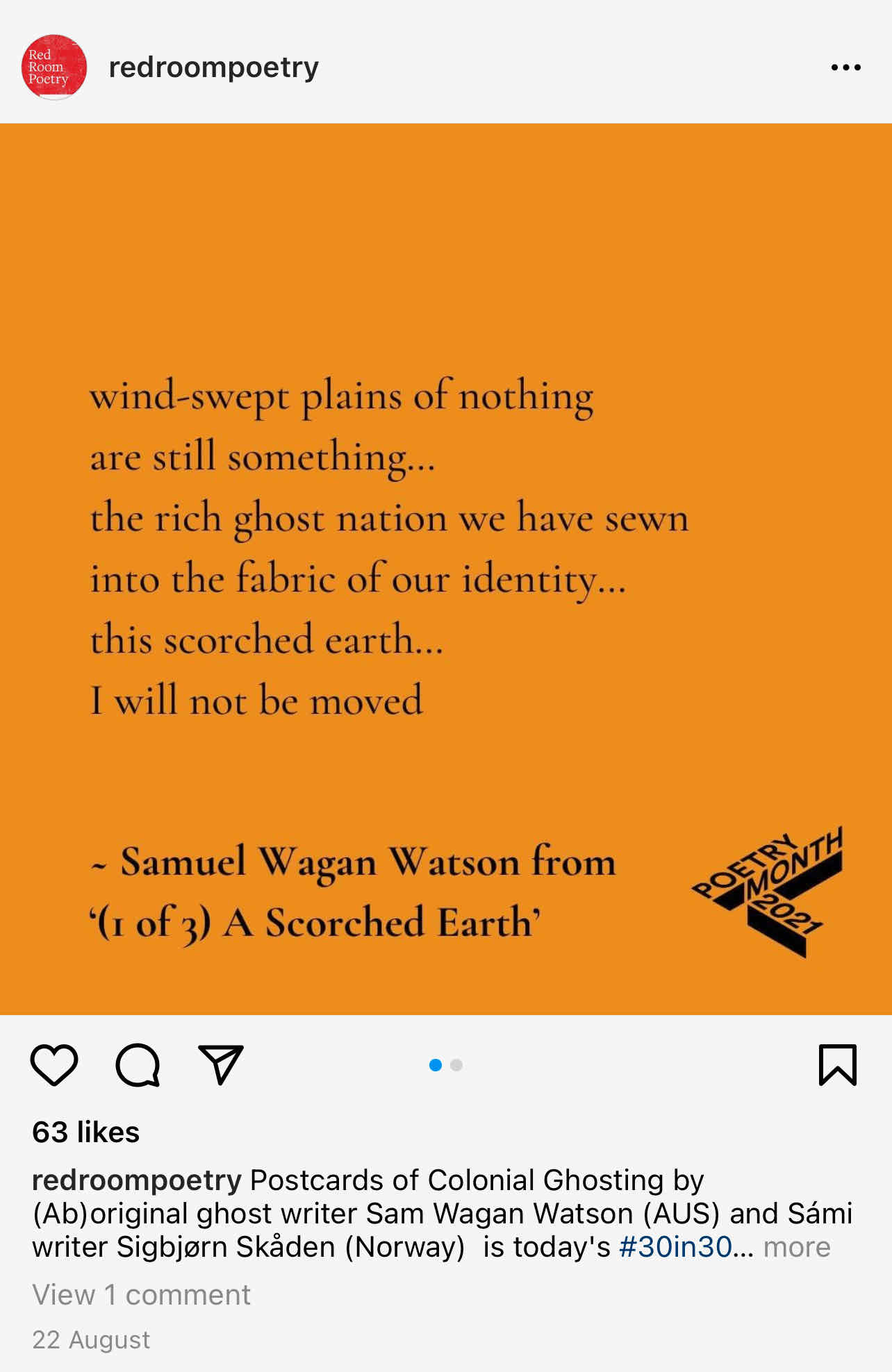
And finally, to close out Poetry Month, an image from RedRoom Poetry’s Instagram account of one of the many poems posted during the month (as part of the paired-poets #fairtrade project). (I think it is ok, copyright-wise, for me to share this)

And remember, it’s not too late to share your favourite/s.

Monday musings on Australian literature: 2021 Mark and Evette Moran Nib Literary Award longlist

I only occasionally use my Monday Musings post to make awards announcements. Today is one of those occasions, because the Nib Literary Awards longlist was announced today and I did want to share it, as it’s one of Australia’s quieter but yet interesting awards.

I have written about it before and in that post you can read about about its origins and intentions but, in a nutshell, it celebrates “excellence in research and writing”. It is not limited by genre, though given the research focus, nonfiction always features heavily.

The Nib, which celebrates its 20th anniversary this year, is managed by Sydney’s Waverley Council. It is, according to the email announcement I received, the “only major literary award of its kind presented by a local council”. Whether you like awards or not, this represents an impressive and meaningful commitment to Australia’s literary culture, wouldn’t you say?

Anyhow, the judges for the 2021 award are Katerina Cosgrove (author), Jamie Grant (poet and editor), and Lee Kofman (author and editor). They worked their way through 150 nominations, with their judging criteria being “high literary merit, readability and value to the community”.

The longlist

Book cover
  • Bill Birtles‘ The truth about China: Propaganda, patriotism and the search for answers (nonfiction/political)
  • Tanya Bretherton’s The husband poisoner: Suburban women who killed in post-World War II Sydney (nonfiction/true crime) (Kim’s review)
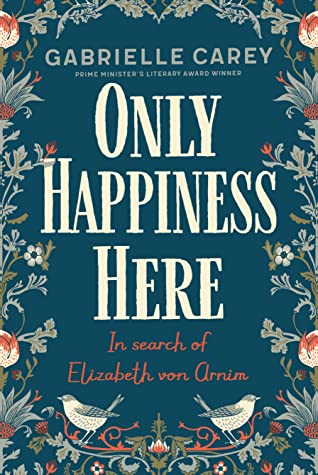
  • Gabrielle Carey‘s Only happiness here: In search of Elizabeth von Arnim (biography/memoir) (on my wishlist) (Brona’s review)
  • Alison Croggon’s Monsters: A reckoning (nonfiction/memoir) (on my TBR)
  • Sarah Dingle’s Brave new humans: The dirty reality of donor conception (nonfiction/science)
  • Richard Fidler’s The golden maze (nonfiction/history)
  • Tim Flannery’s The climate cure: Solving the climate emergency in the era of COVID-19 (nonfiction/environment) (on my TBR)
  • Anthony Ham’s The last lions of Africa: Stories from the frontline in the battle to save a species (nonfiction/environment)
  • Kate Holden’s The winter road: A story of legacy, land and a killing at Croppa Creek (nonfiction/environment)
  • Zoe Holman’s Where the water ends: Seeking refuge in Fortress Europe (nonfiction/refugees) (Lisa’s review)
  • Ramona Koval’s A letter to Layla: Travels to our deep past and near future (nonfiction)
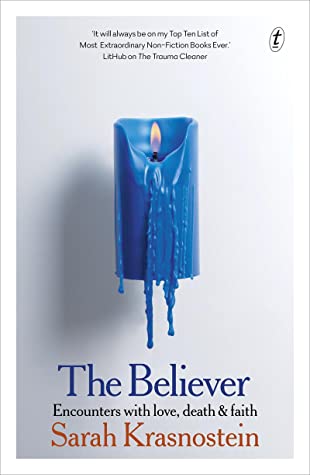
  • Sarah Krasnostein’s The believer: Encounters with love, death & faith (nonfiction/religion) (on my TBR)
  • Bri Lee’s Who gets to be smart: Privilege, power and knowledge (nonfiction/sociopolitics)
  • Mark McKenna’s Return to Uluru (nonfiction/racial politics) (on my TBR) (Janine’s review)
  • Tim Olsen’s Son of the brush (nonfiction/memoir)
  • Dymphna Stella Rees’ A paper inheritance (nonfiction/biography)
  • Rebecca Starford’s The imitator (fiction)
  • Luke Stegemann’s Amnesia Road, landscape, violence and memory (nonfiction/history) (Janine’s review)

At 18 titles, this is a long longlist. Eleven of the 18 are by women, but beyond that it’s not a particularly diverse list in terms of authors. It would be great to see that change. However, thinking of “value to the community”, it does encompass several of our important contemporary political issues including the environment (climate change and species extinction), refugees, racial politics and difficult histories. Four books fall into the life-writing category. There is only one work of fiction, which is probably why very few of these books have been reviewed by the bloggers I follow. We are mostly a fiction-focused lot!

The shortlist will be announced in late September, with the overall Winner ($20,000) and the People’s Choice Prize being announced in November.

Do you have any thoughts on this list?

F*ck Covid: An Online Literary Affair (2)

This is the second of my two posts on the F*CK COVID online-only event. My first post introduced it and covered the fiction session. This post will report on the non-fiction session. I’ll start by noting that while the first session involved established authors, this one, I think it’s fair to say, involved emerging writers, who were also both from diverse cultural backgrounds.

Past-present: adventures in non-fiction with Shu-Ling Chua and Sneha Lees

While Gold’s and Brandi’s books were both novels, the two books covered here represent different forms, Shu-ling Chua’s Echoes being a collection of essays, and Sneha Lees’ Good Indian daughter (published under the name Ruhi Lee) being a memoir.

On their inspirations

Shu-Ling was inspired by the surprising discovery that a pop song in Crazy Rich Asians, “I want your love”, had been loved by her grandmother. This led her to researching the soundtrack, and exploring “lineages and inheritances” from various perspectives, including cultural, literary, fashion. This core theme held true, she said, through the three essays, which focus on domestic life, fashion, music, and water. Nigel suggested the word “intricate” described her book, but Shu-Ling prefers “intertextual” because she layers different cultural sources. She talked about the pressure she felt to be original (but I’ll leave that to the Q&A where it came up again!)

Sneha‘s book started with her wanting to understand why she was disappointed to discover, when pregnant, that she was having a girl. She came to realise that it was not about the baby but about how she felt as a woman in the world, and that this went back to psychological and physical abuse she’d experienced growing up. Her challenges in writing her story were: how to maintain a relationship with her family on whose watch this abuse had happened; and how to retain her culture. She talked about the high suicide rate for Indian woman, and her wanting to break the silence.

On wounds, scars and critiquing culture

Nigel said there was a heart of forgiveness in her memoir. Sneha laughed and said that Hard Copy program’s Nadine Davidoff had advised to write from the scar not the wound, but she’d often written from the wound. She admitted, however, that she had developed empathy for her parents, as their own stories had been tough, and this had given her a kernel of forgiveness. (This reminded me of Alice Pung coming to understand her parents.) Sneha’s book is about self and inter-generational understanding.

Shu-Ling talked of writing about wounds and scars – regarding sexual trauma – in her earlier writing, and the need to write about these things in ethically, responsibly. You need to consider, she said, the ethical, social, cultural, historical backgrounds. 

Sneha, sort of expanding this, spoke of needing to be mindful when writing about Indian culture in Australia. She was writing, she said, for white editors, publishers, readers, and didn’t want to make it easy for white people to see her critiques of her culture as evidence of their culture’s superiority. She loves her culture, but she also wanted to critique it. She’s interested in what it means to be Indian, what it means to be Australian.

Nigel wanted to explore this more, particularly how to critique dominant Australian culture?

Shu-Ling spoke about being part of a bigger group of writers trying to broaden Australians’ understanding of migrant culture, away from the expected traditional voyage and first generation stories. They need to be able to write about things important to them. Activism can take different forms and newer writers are carving out their own space.

Nigel asked whether the current bland simplification in Federal politics regarding migrants – like the “stop the boats” mantra – makes it hard to write about. Sneha commented on how distressing the short-term understanding behind these policies is. How can a white person proudly say “send back the boats” when they themselves came by boat and ruined the country. This thinking devalues what migrants and refugees bring: it ”feels like shit but you just write through it”.

On writing openly, honestly, respectfully about family …

… when they are still alive!  

Sneha talked to her parents about publishing her story, being anxious about airing “dirty laundry” and not wanting to attack the family. As a result, she agreed to publish under a pseudonym, Ruhi Lee (she’s now out!), but she also quoted Ann LaMott’s

If people wanted you to write warmly about them, they should have behaved better.

For Shu-Ling it was different. Her book is mainly about her mother’s side and her mother was part of the process. There were, however, uncomfortable conversations, such as about premarital sex. She agreed with Sneha that it’s not easy to write about family, but said that Echoes is a bit removed. She used music, for example, to create a bridge with her mother (and grandmother).

On the role of place in their writing

Shu-Ling said that, while she wrote the book in Melbourne, it is very much about Canberra because She’s exploring nostalgia. Also, she sees Canberra as “her” city, because neither her mother nor grandmother lived there.

Sneha didn’t feel that where she was writing, Melbourne, had impacted her book, but admitted that, before she wrote it, she had seen India through rose-coloured glasses.

The readings

As in the first session, both authors read. Sneha chose a section about having to talk to her parents about her sex education homework. Her father was horrified by the “the debauched syllabus”. Being taught this was “so veritably un-Indian”. Shu-Ling read from the last essay in her book, “To fish for the moon”, in which she talked, among other things, about what “opting out of motherhood” means. Is this a beginning or ending or both?

Nigel asked Shu-Ling about the tenderness he perceived in her writing. She said she writes as if she is speaking to a friend. She also said that her favourite writers write tenderly.

For Sneha, the question was obvious – her humour. Sneha said that humour writing is her first love, and that books and memoirs by comedians were major influences. She grew up with a diet of humour in her family. Readers need humour, she said.

Q&A

  • On the pressure to be original. Expanding this, Shu-Ling explained that she loved, for example, Alice Pung’s work, but had felt she must be different from her and others, like Benjamin Law and Maxine Beneba Clarke. She wanted to move away from the capitalistic focus on the individual, so used the conversation idea. She sees herself as renovating rather than building a new building. What a great metaphor!
  • On feeling equipped to write about BIG issues. Sneha spoke about addressing the political in a personal way. The advice from Hard Copy was to “just tell your story”, and to “give the reader more credit”, letting them come to it. This lets her stick to what she knows. Shu-Ling spoke similarly on focusing on the personal, and also about not wanting to speak over others.
  • On relationship with editors. Sneha said she had a great editor, and really enjoyed what was a collaborative process. She felt she could push back, but she also respected their suggestions and probings. Shu-Ling didn’t feel comfortable with her first editor, but the second one was collaborative.
  • On whether their families have read their stories. Sneha was sad that she felt she couldn’t celebrate publication with her family, besides her sister, while Shu-Ling said her mother had read her final draft for inaccuracies.
  • On turning memories into memoirs, managing the gaps and creating a narrative. Shu-Ling starts with a moodboard, and writes her first draft using stream of consciousness, winding her way through her question to a conclusion. She then develops her narrative during polishing. Because her subject matter is recent, she has few memory gaps. Anyhow, she says, memoir is not about the past, but about your relationship with the past. Sneha, on the other hand, says regarding narrative that she is a big structure person, so puts that down first. Her memoir was structured along her pregnancy timeline; for her new novel she has mapped out her chapters. However regarding memory, she said her story was complicated by gaslighting so she had to cross-check with sister, husband, and friends. Nigel commented that he loved her memoir’s chapter titles, like “Thanks for the panic attack. Here’s a heart attack in return”.
  • On surprising post-publication emotions. Shu-Ling was initially “down” that her book hadn’t charged the world, but appreciated the positive responses. Sneha didn’t expect ”to feel like shit”, but this was partly due to her the lockdown causing her launch to be cancelled, and to the COVID crisis being so bad in India. She was surprised by how much women “felt” her book.

Tips for writing through the pandemic

Sneha said to go back to what you love, like rereading old favourites. She was reassured about the value of her work by Ethan Hawke’s TED talk’s statement that

art’s not a luxury—it’s actually sustenance. We need it.

Shu-Ling agreed with rereading old favourites, being for her, essays. She also talked about the importance of community, and that the pandemic means she can attend interstate and overseas writing events which revitalise her creative energy. (Hear, hear!)

Overall themes

Interestingly, two ideas recurred in both sessions: one related to trusting readers, and the other to the value of the editing process.

A big thanks to the ACT Writers Centre, Nigel Featherstone and the four panelists for organising and taking part in an event that felt so honest and reaffirming. Art is indeed sustenance.

F*ck Covid: An Online Literary Affair (1)

An initiative of the ACT Writers Centre and its Creative Producer Nigel Featherstone, F*CK COVID, was an online-only event. It comprised two panel discussions, featuring “four of Australia’s most exciting literary voices”, one focused on fiction, and the other non-fiction. I will report on these in separate posts.

Both sessions included the authors reading from their books for a few minutes, which, as always, was a treasure.

Hard truths; Risky fiction, with Irma Gold and Mark Brandi

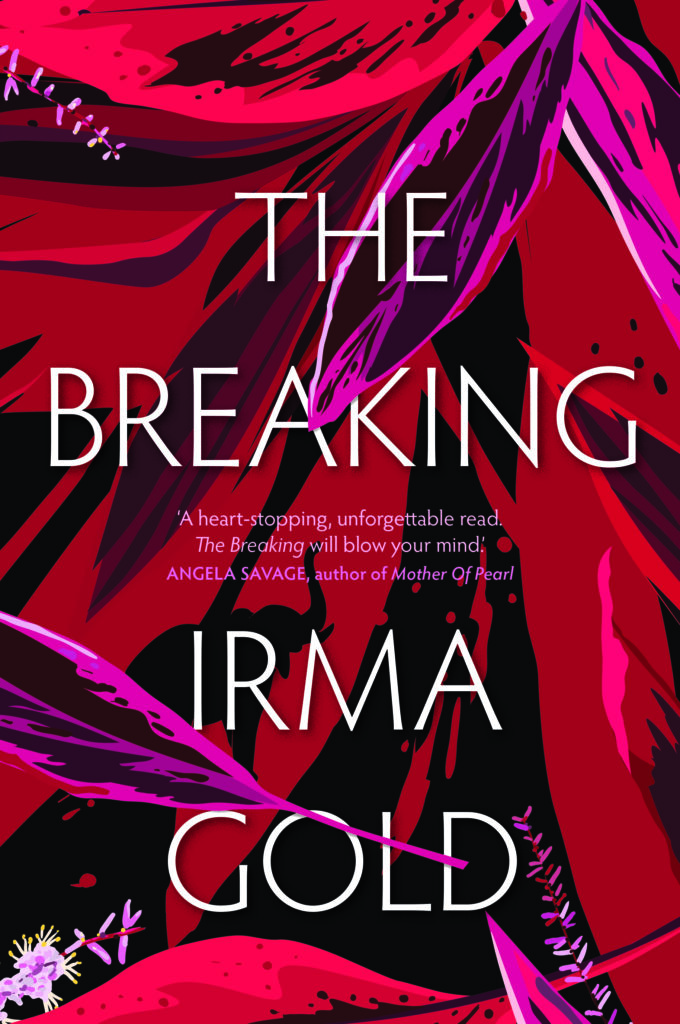
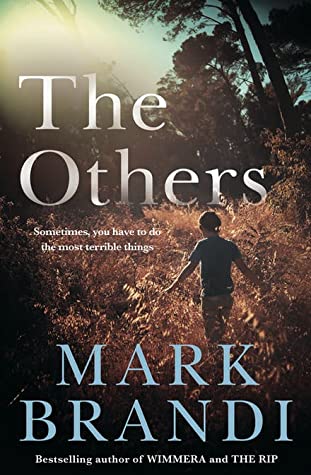
After introducing the authors and their latest books, Irma Gold (The breaking, my review) and Mark Brandi (The others), Featherstone launched into his gently probing questions, which resulted in some great insights, for readers and writers. We started with Gold and Brandi describing their books, but you can find that info elsewhere if you haven’t read the books! You can also read more about Irma on her novel in my report of a conversation in May.

On their inspirations

Interestingly, both authors’ novels started as short stories.

Book cover

Gold’s started as a story that is now, essentially, her first chapter. It was not initially about elephants and animal cruelty. She feels that if she’d started with that idea the novel would have been more issues-driven that the character-driven story it is. The two characters appeared to her fully-formed she said. She also said that her stories are usually dark, but she wanted to write something more joyful.

Brandi’s novel started as a short story (published in Meanjin in 2016). Unlike Gold’s non-autobiographical novel, Brandi’s story was based on a childhood experience that gave him his first insight into the complexity and contradictions of the adult world. However, he said that as he has talked about the novel post-publication, he has realised that the story was more inspired by his father’s life with his father’s father. It’s about nature versus nurture, and how events affect us later in life.

On challenges they faced writing difficult sections

For Irma, this was writing the animal cruelty scenes. One scene in particular was “very hard” to write. She wanted to not make the book so harrowing that people would not want to read it. Her aim was to give enough for people to understand the situation. Even so, one agent and some publishers found her story “too risky” and did not want to take it on. Gold said what she loves about writing is “seeing the world through other perspectives”, which is just what we readers like too, eh?

For Mark, the whole thing was challenging! He also likes “seeing world though other eyes”. The discussion focused mainly on writing difficult material through a child’s eyes. Brandi spoke about trusting readers. He believes that the reader’s imagination can do a better job than the author, so he creates the prompt to allow readers “to go to the dark place if they are brave enough to”. People, he said, can tolerate cruelty to humans more than to animals. (Why is that?) He also said he’s happy to read “dark stuff”, that it doesn’t give him a negative world view (which I relate to).

Nigel complimented Australia’s publishing landscape, believing we have publishers prepared to take risks.

On style

Nigel asked Mark about his “pared back” style, in which there’s barely a sentence that is exposition or description. Mark responded that this is what he likes to read. He likes to be trusted, respected as a reader. He wants his readers to bring themselves to the work, and to “paint the picture themselves”. Reading, he said, is a “dance between reader and writer”.

This led to a discussion about dialogue. Brandi tries to use dialogue sparingly. It must have meaning. Nigel quoted Francine Prose (Reading like a writer) who wrote that “good dialogue is when character’s thoughts are louder on the page”. Irma concurred, saying that every line of dialogue has to have a reason for being there.

On themes and perspectives

Nigel suggested that Irma’s overall theme was Hannah’s yearning to do the right thing and to find love. Irma replied that she wasn’t consciously thinking of these, but she has later realised that Hannah came from her observation of 20-something tourists she’d seen in Thailand. Their freedom looked “so delicious and wonderful” but she’d realised that, at her age, she had the benefit of knowing who she was, and where she was going. Uncertain Hannah came from this recognition! It’s interesting to explore a character like Hannah, particularly when you throw in someone like Deven who tests and challenges. Nigel commented that in good novels, the DNA is in the opening, and that The Breaking opens with a sense of tension, darkness, and humour.

For Mark, Nigel returned to the issue of writing from the perspective of an 11-year-old (Jacob). Mark confessed that the inner child is “close to the surface for him”! Then, turning serious, he identified the two main issues: a child’s limited understanding of the world, particularly when that world is closely mediated through his father; a child’s language and narrow “vocabulary palette”. He used Jacob’s imagination to convey things a boy’s language couldn’t.

Here a William Faulkner quote was paraphrased, as it seemed to apply to both Irma and Mark. The original is:

“It begins with a character, usually, and once he stands up on his feet and begins to move, all I can do is trot along behind him with a paper and pencil trying to keep up long enough to put down what he says and does.”

On bringing together character, plot and story

Nigel asked about their writing process, regarding how and when they bring all the elements together.

Irma said that for her character and place go together. She also talked about how her work as an editor has given her an insight, particularly, into pacing. She said that her first draft is very much character-based, with plot and pacing honed during editing.

Mark’s response somewhat echoed Irma’s in that he’s very dependent on his editor and publisher for help with plotting. Again, his style of reading aligned with mine, when he said that he doesn’t pay much attention to plot in his own reading, and that he “will stay with good characters through whatever harebrained plot the author throws up“. I loved this, because I don’t care about plot holes. I care about characters and ideas.

Anyhow, he said that he leaves a couple of months after his draft, and will often see plot deficiencies when he returns to it, but there are always more when the book gets to publisher.

Q&A

  • On their writing sessions: Both writers said you need a routine, and described their own. Mark drafts 2-3 hours every day because “voice and character are crucial” and he needs to stay with them. Irma said her process/routine varies for each project depending on what’s happening in her life (as she works full-time and has three children). With The breaking, she could only allocate two three-hour sessions a week, but her subconscious worked away in between, making those sessions productive.
  • On writing violence, and how to dial it back when the subject matter is violent. Irma suggested that people tolerate more violence against humans so it may not be a big problem, while Mark says that you give the reader enough details, then trust them to imagine. The question is, he said: What are the violent scenes in service of? Are they to convey what it’s like day to day, to support characterisation, or? Answering these will help avoid gratuitous violence.
  • On titles, which comes first, the story or the title: For both it was clearly the story, but Mark said that The others came to him very early while The rip started as something else. Irma said The breaking came to her after the book had gone to the publisher.

Tips for writing through the pandemic

Mark said routine and ritual and hard work – and giving it your whole being and heart.

Irma admitted that, until now, we Canberrans hadn’t been greatly affected, but she agreed that routine is important. Now she is in lockdown, and has more time, she plans to grab that! Find your time and your routine, was her advice.

Live events are the best, but online ones like this can be just as good in terms of both content and warmth. Watch for session two’s report …

Price Warung, Selected tales of Price Warung (#BookReview)

Price Warung, as I wrote in my previous post on him, is the pseudonym used by English-born Australian writer, William Astley, who came to Australia with his parents in 1859 when he was still a child. Astley became a radical journalist and short-story writer, with particular interests in transportation/convict literature, and the Labour and Federation movements. Tales of the early days, the book I reviewed in my first post, was republished by the Sydney University Press, and was entirely convict-focused.

I didn’t expect to see Price Warung again, but here he is, a few years later, in a book containing a selection from three of his five books: Tales of the convict system (1892), Tales of the early Days (1894), and Half-crown Bob and tales of the riverine (1898). Given I’ve already devoted a post to the convict stories – four of which are included in this collection’s eleven, including the well-regarded “Secret Society of the Ring” – I will focus here on editor Lucas Smith’s introduction to the collection and Warung’s riverine stories, which are new to me.

Introduction

The first thing to say is that these stories were written between 1888 and 1898, but are mostly set decades earlier.

Smith starts by stating that, after Marcus Clarke’s For the term of his natural life (1874), “no writer did more to forge the myth of Australia’s convict heritage than William Astley”. However, Astley’s work a journalist included rural newspapers, like the Riverine Herald in Echuca, where gathered material for his “poignant and humorous stories about early steamboat traffic on the Murray River”. Smith says that these stories, which were “reminiscent of Joseph Furphy*”, were “his only departure from depictions of the convict system’s grimness”.

Astley’s popularity was brief, but it did make him a prominent “literary and political figure”. He is, claims Smith, “our Chekhov to Clarke’s Tolstoy”. Big claim, eh? Smith says that, with Clarke, Warung “is responsible for our colloquial [my emph.] understanding of the convicts as victims (although usually not innocent ones) of an inhuman system.” While historians like Russell Ward describe “how Australian convicts often enjoyed higher-quality food and working conditions than the labouring classes in England”, the brutal images of “striped backs”, “broken bodies” and “unrepentant gangs bent of revenge” persist. They are based in fact but were “a small aspect of the transportation system”.

Smith goes on to briefly discuss the origins – the facts and fiction – of the “convict myth”, before explaining why Warung is worth reading:

Warung is far from the supreme stylist of colonial Australia. He is often sub-Dickensian in his sentimentality, and rigid in his humour. Nevertheless, his realism, irony and humour, as well as his diligent research, exhaustively undertaken from both archival research and his associations with “the ghosts of Old Sydney”, make him worthy of reintroduction to a contemporary audience.

This collection, he says, represents “a cross-section of his work: the lured convict tales, the laconic riverboat yarns, and the anti-System diatribes”.

Regarding Warung’s reputation, Smith says that unlike some of the other men and women of the Bulletin school of the 1890s, Warung has attracted little academic attention, being seen, with a few exceptions, as an also-ran. One of these exceptions is, intriguingly, an American, Edward Watts, who believes that Warung has been “unfairly marginalised”. While not quite convinced by Watts’ suggestion of a “faint comparison to the infamous neglect of Herman Melville prior to the 1920s”, Smith argues that Warung is “more than a penny-a-liner and well deserving of further study”.

The Riverine

Smith says of the riverine stories that, “freed from the grim and technical language of the penal system”, they contain Warung’s “most fluid and picturesque writing”. He’s right, though these stories have their own technical language to confront. They are more humorous, but can also be “political”, with issues like labour practices, land-deals, political bribery, and so on, revealed through their narratives. Smith suggests that the convicts were violent to authority, while the riverine folk were “merely contemptuous”.

Book cover

The four riverine stories – “The last of the Wombat Barge”, “Dictionary Ned”, “The incineration of Dictionary Ned”, and “The doom of Walmsley’s Ruby” – all concern the steamboats that plied the river system, carrying cargo, particularly wool, from producers to ports, and bringing needed goods back. Given this industry’s demise by the 1930s, Warung’s stories offer insights from one who knew (versus Nancy Cato’s more romanticised historical fiction, All the rivers run trilogy). Echuca, where Warung spent some time, was a major port on the Murray.

“The last of the Wombat Barge” revolves around a woman working on the boats. While Jim, who managed the river pontoons to let boats through, was partial to “womanines”, others were not impressed by a woman taking a man’s job (whether it directly concerned them or not). Indeed, “the whole river population … were in agitation”:

The mate, whom Mrs Kingsley had displaced had almost as much to say as Sooty Bill the loafer, who never had a wash except when he was thrown in the river in a squabble, and who never did an honest day’s work out of gaol.

Various men try to change Captain Kingsley’s mind, but things turn to custard when the deckhands, for whom “the idea of being bossed by a woman galled their manhood” quit, and he is forced to employ scab Chinese labour. While “missie mate” was good at her job, the Kingsleys are, ultimately, brought down by pride and greed. However, the language used to describe the Chinese is shocking, with the novel’s moral being not to employ the Chinese, whose intelligence was limited to “imitation”, who lacked “initiative and readiness of wit”, and who brought disease.

“Dictionary Ned” is my favourite riverine story. Bargeman Ned buys a dictionary when he’s around forty years old, “in the vain hope of making up the deficiencies his early education”. He carries it everywhere, studying it, rigorously, at every opportunity, “when other men smoked, or swapped yarns, or drank”. He is also scrupulous about keeping his person and clothes clean. He is noticed by College Bill who, in addition to being of “odorous carcass”, has squandered his education. He accosts Ned, but comes off worse in a game of words, resulting in Ned’s star rising among his river peers, who had previously ridiculed him. The story’s end, though, is one of kindness and redemption. “The incineration of Dictionary Ned” is an entertaining tale about Ned’s desire for cremation, but it also exposes some of the politics and land deals between squatters and selectors in colonial Australia.

Warung’s stories aren’t particularly subtle but even the more gruesome ones exude a life and energy in their characters that engaged me. The stories also offer insights into the times about which he writes, and the times from which he writes! Worth reading.

* You can follow Bill’s current slow reading engagement with Furphy here.

Price Warung
Selected tales of Price Warung: Selected and introduced by Lucas Smith
Bonfire Books, 2020
236pp.
ISBN: 9780646819273

(Review copy courtesy Bonfire Books)


Monday musings on Australian literature: a “grim continent”?

These are grim times, so you might have assumed that our current predicament is today’s topic, but no, we are going back to 1929. My, if there was a grim time, 1929 heralded such a one. However, it’s not the Depression I’m going to either. In fact, the article I found in Trove, which inspired this post, was written in July 1929, and published in Adelaide’s The Advertiser on 31 August, that is, before the big crash.

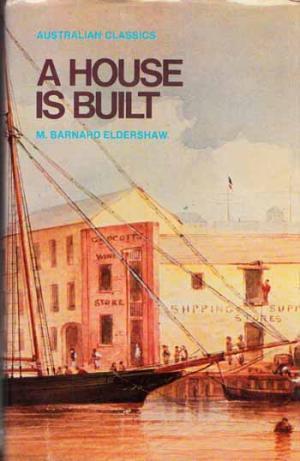
What, then, was the grim continent – and why? You’ll have realised, given this is my Monday Musings on Australian literature, that it’s Australia – and you’d be right. The article was written by “a Special Correspondent London” and it discusses three recently published novels: James Tucker’s The adventures of Ralph Rashleigh, M. Barnard Eldershaw’s A house is built, and Katharine Susannah Prichard’s Coonardoo

As an aside, would you believe that the authors of these books were not named in the article. Moreover, the first book’s author, whom I didn’t know so had to go looking, wasn’t named in an article announcing its serialisation. I’ve said it before and I’ll probably say it again: the author is the important thing! Books don’t appear out of thin air. They come out of darned hard work, and the author should be noted and remembered.

Anyhow, back to the “grim continent”. The article focuses mostly on the outback, so I’ll deal first with M. Barnard Eldershaw’s urban novel, which, as many of you know, shared the inaugural The Bulletin prize, in 1928, with Prichard’s Coonardoo.

Book cover

The article commences by telling us that “because of its unusual character and the starkness of its pictures of Australian life in the convict days”, The adventures of Ralph Rashleigh was receiving the most attention by the reviewers. However, Mr. Arnold Bennett, “who reviews books in the intervals of writing them, prefers to lavish his praise on A house is built“. He wrote in the Evening Standard that Barnard Eldershaw’s book is

“beyond question, a very notable novel … an extraordinary book … a major phenomenon of modern fiction. Not one scene not three scenes, but many scenes in it are magnificent.”

Bennett apparently spent a whole column praising the book. Our Special Correspondent says:

“It is Mr. Bennett’s pleasant habit to describe with gusto the things he likes; nevertheless, the joint authors of A house is built should be gratified by such commendation from such a quarter”.

I reckon! (I do like the “describe with gusto”, and the little hint that this is perhaps not proper critic style!)

The article’s main focus, however, is a column in the Evening News by another novelist-critic, J. B. Priestley, “a sound critic of the younger school”. Priestley wrote about all three books in his column, which he headed “The grim continent”. Our correspondent wrote that he concluded his piece:

with the interesting confession that all the stories he has read about Australia and the Australian bush have succeeded in depressing him. He quoted with approval the complaint of a character in Coonardoo, that “it’s all so ugly and empty,” and added that there must be something desolating about the raw emptiness of the bush, a something not friendly to literature. 

Our correspondent, however, suggests that this sense of the bush is “an emanation of literature rather than of the bush itself”. S/he suggests that many of those who know the bush do not find it ugly, cruel and cheerless:

Mr. Priestley writes from a purely literary knowledge of Australia, and if he feels so depressed about the country, his range of reading must have been restricted to the authors who, in Marcus Clarke-Henry Lawson tradition, have emphasised the more sombre aspects of pioneering and bush life.

Book cover

S/he goes on to suggest that Priestley and his ilk could try other authors who offer “authentic” accounts of the outback, like “Mrs. Aeneas Gunn’s We of the Never Never in which the humor and beauty, as well as the tragedy of the bush are admirably brought out.” S/he also disputes the evocation of the bush in Coonardoo:

The bush, comprehending in that vague term the vast pastoral spaces of inland Australia, is far from being the perennial abode of misery and despair: a region inhabited by sullen despairing people who are for ever yearning (in the words of the woman in “Coonardoo”) to “get away from it all.” 

S/he romanticises, somewhat, the “folk” who “fight the stern and sometimes losing battle with Nature”, arguing you can’t help but “admire their courage, cheerfulness, and steadfastness of character”. We don’t know who this “special correspondent” is, or what experience they have had. However, s/he does make the point that the “bush,” is not all of Australia, that there are “millions of people living in the Australian towns and cities” who know little or nothing of the bush.  

Finally, s/he turns to “the convict tradition” which is the subject of James Tucker’s The adventures of Ralph Rashleigh, and which

survives in Australia for literary purposes only; a fading echo of old, unhappy far-off things. The bad old days provide excellent material for novels of the romantically historical type, or for grim pieces of literature like “The Adventures of Ralph Rashleigh.” 

S/he concludes by applauding the fact that “good Australian literary work” is being appreciated in London, but says

It is not so agreeable to find one or two sombre aspects of Australian life stressed as if they were representative of the whole. 

S/he suggests that should J.B. Priestley ever visit Australia, he would find “a land, not of grimness and gloom, but of color and sunshine”. Moreover, s/he asserts

contact with its people and conditions will provide an effective antidote to the depression with which some of its literature seems to fill him.

I’m not sure whether to laugh or cry at that.

Anyhow, I enjoyed the article for revealing that Australian literature was being read and paid significant attention in 1920s England, and for its perspective on our ongoing discussion about the “the bush” and Australian literature. There’s a defensiveness, and a romanticisation, that you often find in expats, as I presume “special correspondent” is, but s/he makes some important points too, one being a disconnect between what people were writing and/or reading, and the reality of contemporary Australian life.

For Aussie readers in particular: whether you agree or not that there was such a disconnect, do you think we have matured to the point now where there is more alignment between who we are and what we are writing?

Delicious descriptions: Sara Dowse on West Block

In my recent post on Sara Dowse’s West Block, I ran out of time to share some quotes and thoughts on her depiction of Canberra and the heritage building, West Block, in which the novel is set. I am remedying that now.

But, I’ll start by saying that, like most readers, I love reading because it takes me to other places, lives and cultures. Not only is this stimulating, but it helps me understand others more – and that can only be good. However, there is also something special about reading about one’s own place and life. Sometimes it reinforces our own impressions, sometimes it just enables us to sit back and remember, and sometimes it encourages us to look at our things from a different angle or perspective. Sara Dowse’s West Block, which is set in the city in which I’ve lived the majority of my adult life, does all of these for me.

When I say I’m going to remedy that now, I mean I’m going to partly remedy that now because I’ve decided – for my benefit if for no-one else’s – to make two posts, one on West Block and one on Canberra.

West Block

So, West Block – which features on both the original Penguin cover and the new For Pity Sake one. You can find a succinct history of the building on Architect and Heritage Consultant practice Lovell Chen’s site. West Block is part of what was the Parliament House Secretariat group of buildings designed in 1925 by the Chief Architect of the Commonwealth Department of Works and Railways, John Smith Murdoch. The central building was Provisional Parliament House (now Old Parliament House, since the completion of our current Parliament House in 1988). East Block was the other building. The architectural style was, says Lovell Chen, “Stripped Classical”, though changes, including an additional wing, were made to West Block over the next couple of decades. 

As I wrote in my post, West Block housed the Department of Prime Minister and Cabinet, and Dowse describes the regular trips made by its inhabitants through some of the parliamentary rose gardens to Parliament House. Another point made by Dowse is that across the road from West Block were – and still are – the British and New Zealand High Commissions.

However, by the late 1970s when the novel is set, the building was 50 years old, and it was showing. Not only was Cassie’s Women’s Equality Branch (WEB) to be moved out of the Department, but Departmental head, Deasey, had “pulled a deal” to move his Department to another nearby building, so West Block could be demolished. Cassie is “appalled”, but no-one else seems to be:

They had no sense of history, these men.

West Block was being discarded, just like the WEB! (In the event, West Block has survived, but in what form is still unknown, though a boutique hotel is, controversially, the latest. Seems anomalous in the location, to me, but …)

I enjoyed the many descriptions of the building – of the light playing on the walls, of what could be seen out of the windows – but another issue related to the characters’ offices. As in most hierarchical organisations, where you are in a building says something about your status. So …

Economist Jonathan’s boss, Kenneth Olman

had one of the best rooms in West Block. Red silk drapes. Mahogany walls. On which he hung original Australian paintings, the kind that were bound to increase their value. A Whiteley. A Williams. An Olsen. Jonathan used to gaze at them during lulls, love his eyes from on to another, congratulating Olman on his taste and good sense.

We learn here of course, about the building, and about the characters of Olman and Jonathan.

Another senior bureaucrat, Harland, also had a good room.

a large, teak-panelled room with windows facing west and south. His desk was poised between them. He liked to turn in the swivel chair and, flexing his fingers, look down on the cars below, streaming along Commonwealth Avenue.

Facing west and south aren’t ideal, of course, but he did have a view of Commonwealth Avenue and those High Commissions I mentioned. However, the aspect meant that it was cool in the morning, and in the afternoon,

was filled with shadow.

And little else.

It formed part of the executive section, the refurbished front of West Block that faced the rear of Parliament House, and hid its own rather mangy tail. Despite certain luxurious touches – panelling, furniture, carpet, drapes – his office had all the persona of a monk’s cell.

Harland, we come to know, is a sober, reliable public servant – and his corner of West Block tells us that!

Can you guess where Cassie’s office is? On the “gloomy” side of the building, albeit the wind does blow in “wattle smells from Yarralumla and the embassies”. This building, Dowse conveys, was old and had no air-conditioning. It was cold in winter, but, on the plus side, they could open windows! As for Cassie’s interior decoration?

Under Rita’s supervision, the Women’s Equality Branch had dressed Cassie’s wall, with posters left over from International Women’s Year.

These are just a few examples of how Dowse describes the building, and uses it to evoke the characters of its people and their relationships. You don’t have to know West Block – which I have never entered – to enjoy Dowse’s writing about it. It lives – we have cold and sun, we have shadows and floral scents, we have views and some old building idiosyncrasies – and it acts on its occupants.

Have you loved novels in which buildings are quintessential?

Sara Dowse, West Block (New Ed.), For Pity Sake Publishing, 2020.

Sara Dowse, West Block (#BookReview)

The decision to republish, last year, Sara Dowse’s pioneering 1983 novel, West Block, was prescient. Think about this. In last weekend’s The Saturday Paper (14 August 2021), journalist Karen Middleton wrote about an issue involving the Department of Prime Minister and Cabinet. In her article, she shares some comments made about this Department by law professor Anne Twomey. Twomey, Middleton writes, called

the department “disorganised, shambolic and disrespectful of the legal process”.

“In days gone by, the department was full of extremely competent people – the traditional mandarins,” she says. “Look what’s coming out of it now.”

Now, this is the Department Sara Dowse worked in during the 1970s. It was housed in a wonderful old Canberra building called West Block, and it’s this building, and Dowse’s work there, which inspired her eponymous novel. I read it back in the 1980s, and loved it, but have always wanted to read it again. How would it stack up – as a novel, and as a document about Canberra and the public service – decades later? Having now reread it, I think it stacks up very well, and clearly so did For Pity Sake Publishing.

This new edition is prefaced by an Author’s Note, in which Dowse provides a background to the novel, including her career trajectory which inspired it. Dowse headed up the Whitlam government’s new Women’s Affairs Section, from 1974 to 1977. Dowse resigned partly in protest at the section’s removal from the Department by the Fraser Government, but partly also because what she really wanted to do was write.

But, what to write about? She was American-born, living in Australia at a time when Australian women’s writing was flowering – with Australian stories. Although she’d been in Australia since 1958, it was her experience working in West Block, that gave her such a story:

The building itself galvanised me. The minute I walked into it, I wanted to write its story, but now that I was in a position to, I was up against the prejudice against Canberra, most particularly, Canberra’s public service.

As a Canberran and a public servant myself – albeit a librarian/archivist rather than a bureaucrat – I know whereof she speaks.

‘Nuff said, so I’ll return to my opening description of the novel as “pioneering”. Some of you may have wondered about that call. First, few novels had been set, to then anyhow, in Canberra. There’d been some, like M. Barnard Eldershaw’s Plaque with laurel, but not many. That has changed, since, due partly in fact to Canberra’s group of Seven Writers, of which Dowse was a member. Second, not many novels had been written about the workings of the public service, particularly Australia’s. And finally, Dowse’s writing, particularly the structure she used for her novel, was innovative. Dowse said in the book’s zoom launch I attended last year, that one of her inspirations was John Dos Passos, and how he can tell a big story through overlapping individual stories.

All this makes West Block an excellent and meaningful read, not just for Canberrans, but for Australians and readers of thoughtful novels anywhere.

Servants of a nation (Harland)

With that long preamble, let’s now get to the book. Set in 1977, it tells the intersecting stories of five public servants: conservative, “sober-faced” bureaucrat George Harland; passionate, progressive Henry Beeker; socially conscious, dedicated but lonely Catherine Duffy; young, up and coming economist Jonathan Roe; and the femocrat, Women’s Equality Branch head, Cassie Armstrong, whose story bookends the novel, making her its main and unifying character. While each character’s story occupies a separate chapter, giving each centre stage in turn, they do occasionally appear in each other’s stories, and they all work in West Block to Departmental head, Deasey.

Through these characters we see the workings of government, and here, as a plus, we also gain insight into the issues of the time which, besides women’s affairs, included Australia’s uranium policy and Vietnam. Dowse uses these big issues to show what happens behind the scenes – trips overseas to negotiate with other governments, the IDCs (interdepartmental committees) and argy-bargying between departments as public servants try to find compromise between their various political masters, relationships between politicians and bureaucrats. Underpinning these is the daily life of public servants as they navigate the ethics of public service and their career ambitions alongside their jobs. We see tensions between different perspectives on and approaches to service – the sober conservatives like Harland versus the crusading progressives like Beeker. Dowse gives both their due.

This sounds dry, but it’s not because Dowse infuses her story with humanity. Her characters are not just public servants, but human beings with lives, and feelings. At the launch I attended, interviewer Seminara said she loved the characters for their commitment to public interest and because they are “admirable as characters, flawed as people.” Harland struggles to understand his daughter who has left her husband and children; Catherine confronts the ethics of personal relationships that intrude into work life; and Jonathan reacts poorly to his girlfriend’s unplanned pregnancy, for example.

Cassie, the main character, is not Dowse but is clearly inspired by her. The angst is palpable as she and her staff struggle to get their voices heard and women’s agenda on the table. There is a telling scene with Deasey that says it all. She presents him with her Branch’s thorough report into women’s needs cross-government. He’s not impressed:

‘Seriously now. We’ve had enough of your fingers poking in every pie. Causes no end of trouble. I can’t allow it, do you hear? It’s no way to run a department. So, be a reasonable girl. Pick out one, two, maybe three things to concentrate on.’ He stopped for breath. ‘Discrimination legislation, for instance.

“Girl” eh! Would he have said to Harland, “be a sensible boy”? I reckon not.

There are two more crucial characters in this novel, Canberra and West Block. They breathe life into and enrich the read immensely, but this is getting long, so watch for a Delicious Descriptions in a couple of days.

While West Block’s style and structure is not as unusual as it was in the 1980s, it will likely still challenge those who like straightforward chronological narratives with deeply interacting characters. For me, though, there is a overarching narrative arc concerning Cassie’s devastated realisation that she is not going to effect the change for women she’d envisaged – and I enjoyed every beautifully-delineated character.

Ultimately, West Block pays tribute to the public servants who understand that their role is to be “servants of a nation” not of their political masters. This is the role of the public service, no matter how much its political masters would like to make it otherwise. Unfortunately, this fundamental principle has been increasingly tarnished over recent decades, which makes re-publication of this novel now, all the more relevant and, dare I say, necessary.

Challenge logo

Sara Dowse
West Block
Book designer: Barbie Robinson
For Pity Sake Publishing, 2020 (New Edition, Orig. ed. 1983)
348pp.
ISBN: 9780648565789

Review copy courtesy For Pity Sake Publishing and the author

Monday musings on Australian literature: Supporting genres, 3: Biography

Time for another in my little Monday Musings sub-series on “supporting” genres. I’ve chosen Biography for this one, since the 2021 National Biography Award winner will be announced this month.

However, I have written quite a bit about Australian biography before:

David Marr, NLA Seymour Lecture, Sept 2016

Given all this, you might think that this post is superfluous, but I figured that it’s helpful to put all these together in one post as a resource for myself (and maybe for others too?) These posts provide significance evidence for the support of and interest in biography in Australia – and they mean that the rest of this post will be a bit different to the first two “supporting genre” posts.

Definition

You may have noticed that I described the Seymour Biography Lecture as “devoted to life-writing” – and here’s the rub, because there is quite a blurring of definitions when we talk about “biography” these days. Traditionally, biography has been seen as a detailed description of a person’s life written by a third person. Autobiography, on the other hand, is the story of a person’s life, written by that person. Then there’s memoir which focuses on a particular aspect or period of a person’s life, and is written, again, by that person. All of these come under the banner of “life-writing”. The problem is that, for example, the Seymour Biography Award is called “biography” but the lectures are, in fact, broader. Indeed, the first lecture we went to was given by Robert Drewe who has written, and who thus talked about, memoir.

This is fine but the nomenclature is strange, don’t you think? Even our National Biography Award is, actually, a national life writing award. It “celebrates excellence in biography, autobiography and memoir writing” says the Award website. Interestingly, though, while all these forms feature regularly in the shortlists, traditional biographies have tended to be the winners. A recent exception was Behrouz Boochani’s No friend but the mountains.

Life-writing now

Life-writing is big business. Search online and you will find many companies offering to help you write your life story, or to write your life story for you. You will also find courses on life-writing. Daughter Gums did one a few years ago at the ACT Writers Centre taught by memoirist Benjamin Law.

The Fellowship of Australian Writers NSW (FAWNSW) has an excellent page on the subject written by Dr Rae Luckie. They quote from La Trobe University’s description of its Unit for Studies in Biography and Autobiography.

Life writing is now one of the most dynamic and rapidly developing fields of international scholarship. It includes not just biography and autobiography, but also diaries, journals, letters, and the use of life narrative in various disciplines: history, anthropology, sociology, politics, business and leadership studies, sport, and others… In addition to its high academic profile, life writing generates great interest among the general public: works of biography and autobiography sell in vast numbers.

Nadia Wheatley, Her mother's daughter

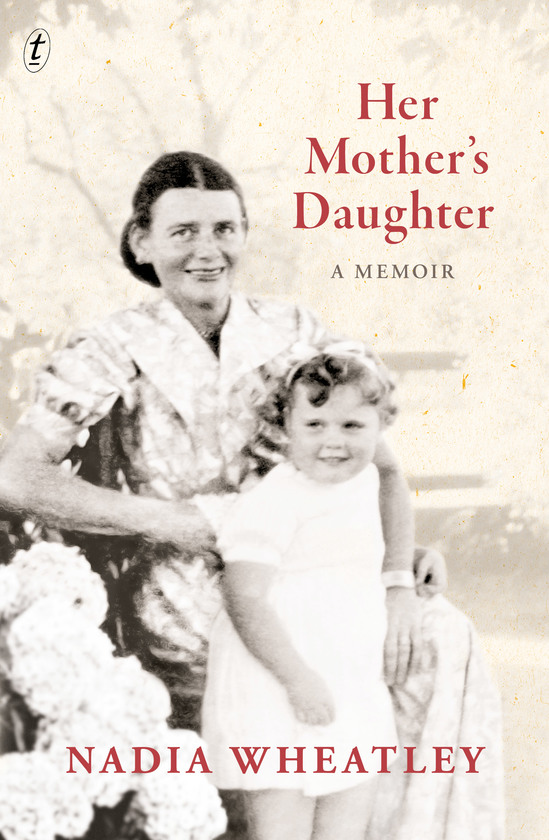
Luckie talks about changes in the field, saying that “writers whose work is included under the umbrella of ‘life writing’ have broken traditional auto/biographical boundaries”. She mentions works I read before blogging, like Inga Clendinnen’s Tiger’s eye, Helen Garner’s Joe Cinque’s consolation, and, even, Robert Dessaix’s “autobiographical novel” Night letters! While I enjoy the traditional biography, and have reviewed several here, I am not averse to reading writers who play with the form, like the hybrid-biography-memoirs I’ve reviewed (such as Nadia Wheatley’s Her mother’s daughter and Gabrielle Carey’s Moving among strangers)

The biggest change, though, is probably that academic historians are now embracing the form in a way they hadn’t previously. If you are interested in a discussion of the topic, check out this in the first issue of the Australian Journal of Biography and History. The authors comment on the fact that “there are now prizes to encourage biographical writing, lectures that feature prominent biographers, biography research centres and courses in universities, public conferences and so on.” Another interesting point they make is the significant role biography played in feminist history.

Biography – and life-writing – are now serious, as well as, marketable business. You heard it here!

Zeitgeist, or Serendipity?

Book cover

And now for something completely different. It concerns those funny coincidences which happen in the literary firmament, like when David Lodge’s Author, author and Colm Tóibín’s The master, which are novels about Henry James, both came out in 2004. What was that about?

Well, I’ve noticed another strange coincidence: the recent publication of Jennifer Walker’s Elizabeth of the German Garden: A biography of Elizabeth Von Arnim (2017), Gabrielle Carey’s Only happiness here: In search of Elizabeth von Arnim (2020) and Joyce Morgan’s The Countess from Kirribilli: The mysterious and free-spirited literary sensation who beguiled the world (2021). Many of you, I know, have heard of Elizabeth von Arnim. Her best-known works are the satirically humorous Elizabeth and her German Garden and the popular Enchanted April which was made into a successful feature film starring many of our favourite grand dames of English theatre. For those of you who don’t know her, though, she’s a British novelist who was born in Sydney (Kirribilli) in 1866, but who moved to England with her family when she was three and never lived here again. Her connection with Australia is therefore tenuous, but she was a wonderful character who moved among the biggest literary movers and shakers of her time. I devoured many of her novels, and a memoir, back in the 80s and 90s when Virago published her. Why this flurry of interest now? (Not that I disagree.)

Do you read biography? If so, care to share some favourites?

Previous supporting genre posts: 1. Historical fiction; 2. Short stories