George Orwell, How the poor die (#Review)

“It is a sound instinct that warns people to keep out of hospitals if possible, and especially out of the public wards.” George Orwell may have written this in 1946, in his essay, “How the poor die”, but I can’t help thinking that it is still a sound instinct, something only too vividly confirmed by the experience of COVID-19, world-wide. How many people have contracted COVID-19 in hospital, for a start? How many hospitals have been so over-run that they’ve had patients in corridors, in foyers, in ambulances on ramps, in quickly erected marquee wards, not to mention people on the streets waiting to get in. This isn’t the experience of all patients in all hospitals in all countries, but as far as I can tell one or more of these things has happened in every place that COVID-19 has taken hold. It’s not pretty.

But, I digress. Back to Orwell. The essay was inspired by an experience he had in a public ward of a hospital in Paris in 1929, but why leave it to 1946 to publish? According to Wikipedia, the editor of Orwell’s Collected Works, Peter Davison, suggests that it may have been first written between 1931 and 1936, when Orwell was writing about “the unemployed, tramps and beggars”, and that he reworked it over 1940 to 1941. It was submitted to a journal around then but was rejected, “possibly because readers would have been unwilling to read about ‘how the poor die’ at such a time”. In the end, a section [which section, I wonder?] was retyped and it was published in November 1946.

Orwell’s experiences were awful. He had pneumonia, he says, and was placed in a packed ward – “a long, rather low, ill-lit room … with three rows of beds surprisingly close together” – and treated with cupping and a very painful mustard poultice. This, however, was not the worst of it. He describes the impersonal, disrespectful way in which the patients were treated by the doctors, medical students and nurses, the lack of basic cleanliness and care (with patients, not nurses, for example, often getting bedpans for those who couldn’t do it themselves). That this was going to be the sort of story he’d tell is heralded in the second paragraph where he describes having a bath on admission as “a compulsory routine for all newcomers, apparently, just as in prison or the workhouse”.

Anyhow, Orwell then moves on to death. He suggests that the lonely, ignored death of patient numéro 57, would be seen as “an example of a ‘natural’ death, one of the things you pray for in the Litany”. He considers it might be “better to die violently and not too old”, because, for all the horrors of war, he writes, death via a man-made weapon nowhere near “approaches in cruelty some of the commoner diseases”.

At this point, I was wondering about what hospital experiences Orwell had had, but he goes on to mention a Spanish hospital and an English cottage hospital, both of which he experienced in the 1930s. So, when he argues that the English cottage hospital was superior, he is speaking from experience. I wonder, though, whether a French cottage hospital might have been similarly decent? I don’t know.

Orwell next gives a brief history of hospitals through the nineteenth century, describing how they were places where medical students practised on the poor. He focuses on surgery, which, at that time, was “believed to be no more than a peculiarly gruesome form of sadism”. This apparently inspired a nineteenth century genre (though he doesn’t use that term) of horror-literature “connected with doctors and hospitals”. All you horror lovers will be familiar with this, I’m sure. Doctors in these stories had names like Slasher, Carver and Fillgrave. He also mentions Tennyson’s poem “The Children’s Hospital” (1880) as being part of this anti-surgery literature.

I found all this interesting, but wondered what his point was. A page or so before the end, I thought I found a hint, when, after referencing the improvements brought by anaesthetics and disinfectants, he says

Moreover, national health insurance has partly done away with the idea that a working-class patient is a pauper who deserves little consideration.

And yet … he concludes by saying that, despite improvements, hospitals are still not the best place to die, and that “the dread of hospitals probably still survives among the very poor”. It takes a long time, he implies, for past experiences and history to die out in the collective imagination. Not necessarily a bad thing, I think.

Wikipedia tells us that in 1948, two years after this story was published, and one year before Orwell died, Britain’s National Health Service was established “as publicly-funded medical provision for all”. The person behind it was the Minister of Health, Aneurin Bevan, who had once been Orwell’s colleague at the Tribune.

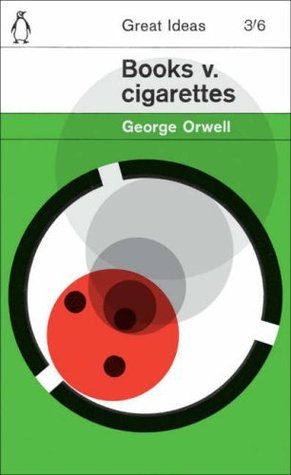
Previous reviews from this book: “Books v. Cigarettes“, “Bookshop memories“, “Confessions of a book reviewer“, “The prevention of literature” and “My country right of left“?

George Orwell
“How the poor die” (orig. 1946, in Now)
in Books v. cigarettes (Great Ideas)
London: Penguin Books, 2008
pp. 50-64
ISBN: 9780141036618

Available online at the Orwell Foundation.
Stella … 10 years

While the Stella Prize isn’t quite 10 years old, next year will see the awarding of the 10th prize. With that landmark in its sights, the Stella people decided to tweak the prize criteria, and have added single-author poetry collections to the forms eligible for the prize. An excellent move. Around the same time, they announced their 2022 judging panel – Melissa Lucashenko (chair), Declan Fry, Cate Kennedy, Sisonke Msimang, and Oliver Reeson – creating another nicely diverse panel.

Now and then: Ten years of Stella

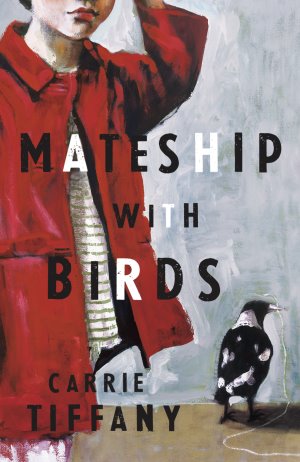
To celebrate entering its 10th year, Stella held a zoom session involving three past winning and shortlisted authors, Carrie Tiffany (Mateship with birds), Emily Bitto (The strays), and Claire G. Coleman (Terra Nullius). (Links are to my reviews) The session was convened by Christine Gordon who introduced herself as a Stella founding member, and the Programming and Events coordinator for Melbourne’s Readings Bookshop.

I wasn’t sure what to expect, but it was short and tightly focused on the value of the Stella. There was no Q&A, but I it was a good opportunity to hear from three writers whom I’ve read and reviewed here.

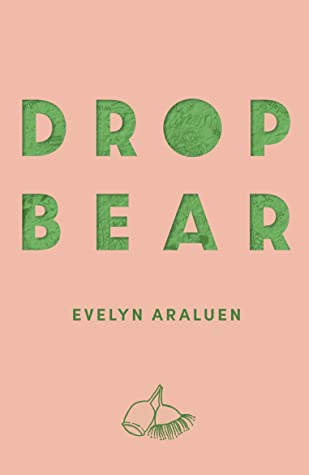
To honour the Prize’s inclusion of poetry collections next year, Christine started by reading from Evelyn Araluen’s poem “Acknowledgement of country” (from Dropbear). It’s a powerful, in-your-face poem that further inspired me to read this collection. (Brona has reviewed it, but doesn’t mention this particular poem.)

What did you know about the prize at the point your book was listed/won?

Mateship with Birds (Courtesy: Pan MacMillan)

Emily, who won the prize in its third year, remembers being excited by the idea behind the prize. Being a debut author, she didn’t know much about the literary landscape that inspired it, but she was amazed by the inequities that the Stella Count had revealed for women writers, across prizes, publishing, and reviewing. She was thrilled to win, but straight after, she found its value being questioned by men who wondered how worthwhile it was to win a prize only open to women! As the panel concurred, these critics didn’t understand the idea of an unequal playing field and its impact.

Carrie, Stella’s inaugural winner, said that she had not been overly aware of discrimination. She’d had good experience with her first novel – Everyman’s rules for scientific living – of the Orange Prize (now the Women’s Prize for Fiction), which was taken very seriously. But, she did experience backlash immediately after winning the Stella, with patronising articles in The Age and The Australian, for example. The latter described her book as a “bush romance”. Had someone like Carey or Winton written the book, she said, it would have been described in terms of exploring “nature and desire”. She said that her approach now would be to talk about history and women’s lack of opportunity and education, about how women have much catching up to do. Stella, she said, has more than broken the glass ceiling, it has “smashed the wall out of the building”.

Claire said that, like Carrie, she’d come to writing late, and had had no connection with the writing community. Being longlisted and then shortlisted for her debut novel was a profound endorsement.

What did winning mean for you?

Emily BItto, The strays, book cover

Christine noted that winning the Stella has a clear impact on sales. Emily agreed saying her book had been out for a year before winning the award, and sold as much in the first two weeks after winning as it had in that whole first year. Claire said after her shortlisting, her book achieved a spike in sales. Christine then mentioned the ongoing work Stella does to keep books in the public eye, over the long haul.

Choose a favourite poem

Christine asked each participant to share a favourite poem:

  • Claire read “White excellence” (Ellen van Neerven’s Throat, which Brona has also reviewed)
  • Carrie commented first that, while poetry collections are new to the prize, verse novels like Lisa Jacobsen’s shortlisted The sunlit zone had been eligible from the beginning. She read a poem dedicated to poet Anne Carson (Maria Takolander’s Trigger warning). She loved its focus on words and the concreteness of language.
  • Emily read “This landscape before me” by, she admitted, her friend, Sarah Holland-Batt. (Available at Poetry Foundation.

Why do you write/Earliest memories of writing

Emily talked about writing newspapers for her mother – from headlines right through to the sports news! As for why she writes, she described herself as an “angsty person” concerned about finding what we can do that’s meaningful. Books give her meaning, and she decided she wanted to contribute to that. Writing feels a worthwhile thing to do. (Amen to that, eh?) She added that winning the Stella was a wonderful endorsement.

Claire G Coleman, Terra nullius

Claire said, simply, that she was impelled to write Terra nullius: it was there and had to be written. In the process, though, she found that writing was something she could do, and that it is, in fact, the only job she’s suited for! She felt that being listed for this and other prizes helped create interest in her, which probably then helped her get her next books published. The prize changed her life in the sense that it told her that she could write.

Carrie, like Emily, sees reading as life-sustaining. She also likes that she can conceal herself in her writing, she can use the novel “to express me”. She believes in the role fiction can play in encouraging empathy: through novels we can “learn what it is to be someone else”. As to whether the prize was life-changing, she said that she was obliged, as a winner, to give lectures at universities. This was challenging as she’d never done it before! She also felt that her success with her first two novels meant people were more open to her later, more difficult book.

At this point, Christine closed the session, reminding us that Stella’s aim is to get women’s writing on everyone’s agenda, and asking us all to “Be a Stella Ambassador”. But of course!

I wouldn’t say I learnt anything earth-shatteringly new. However, through the experience of these quite different writers, I obtained a first-hand sense of what Stella can mean for writers. I also enjoyed getting to know these three a little more – and I loved all four poems that were shared. There’s something about hearing a poem read.

Monday musings on Australian literature: Novelistic re-imaginings

Years ago I read a Guardian article titled “Top 10 novels inspired by Shakespeare”. Written by Sally O’Reilly, it started with “Shakespeare famously customised existing plots when writing his plays, and added to them an acute perception of human experience which gave them universal significance.” I thought, then, that it might be fun to share a few Australian novels that customise or are inspired by existing plots from well-known works. There are many, of course, because it is a popular thing to do, so I just plan to get the ball rolling from some of the books I’ve reviewed here, and then throw it to the rest of you to share those you’ve read, Australian and otherwise.

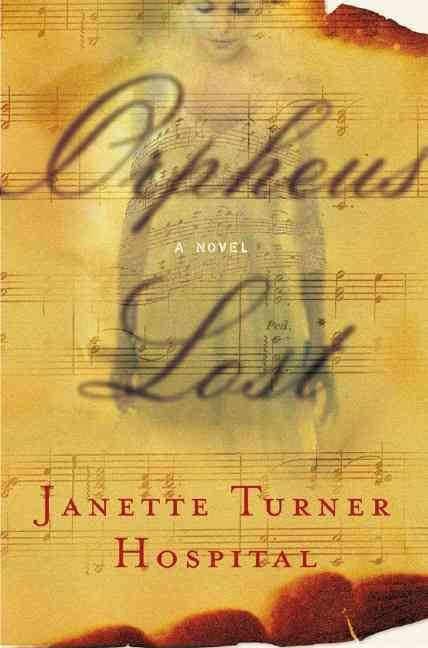
Janette Turner Hospital, Orpheus lost

When I started thinking about this topic, I immediately thought of relevant books I’ve read over the last couple of decades, like Jane Smiley’s One thousand acres (Shakespeare’s King Lear), Lloyd Jones’ Mr Pip (Dickens’ Great expectations), and, of course, Jean Rhys’ The wide Sargasso Sea (Charlotte Bronte’s Jane Eyre). None of these are Australian, however, but they might clue you into the challenge I had in titling this post, because “re-imaginings” come in many forms. Examples include retelling a story from a different perspective, setting the story in a different place and time, and providing prequels or sequels to a story. Some stick closely to the original story and characters while others are more in the “loosely inspired” or “loosely based on” category. The variations are endless.

Why do writers do this? There’s probably a different answer for every writer, but some reasons do seem to recur. One is the desire to tell a story from a different perspective, such as, for example, a feminist one to redress the problematic views of an earlier time. Another is to bring a story that the writer thinks has something important to say to a modern audience. We don’t always know exactly why writers decide to do this, but, like most readers, I like to have a guess.

And yet, I have to admit that I tend to be anxious about them. Do I know the original, and if not, should I read it first? What if I don’t want to read it first? Should I still read the re-imagining. If I do know the original, will I remember it well enough to understand the author’s intentions? More often than not, it works out fine, whether I’ve read the original or not – but I never learn my lesson, and next time, I go through it all again.

Mirandi Riwoe, The fish girl

Anyhow, here is a random few that I’ve reviewed on my blog. I’m listing them alphabetically by author. I did consider trying to categorise them – but decided that would take me down a rabbit-hole!

  • Janet Turner Hospital’s Orpheus lost (2007) (my review): reimagines the Orpheus story, with a feminist perspective, making the woman the would-be rescuer.
  • David Malouf’s Ransom (2009) (my review): re-visions the section of the Iliad in which Priam visits Achilles to ask for his son’s body back. Malouf said he wanted to suggest a new kind of human, non-heroic consciousness, by having Priam “do something extraordinary”.
  • Mirandi Riwoe’s The fish girl (2018) (my review): a “post-colonial response” to Somerset Maugham’s short story “The four Dutchmen”. She gives the girl a backstory, and explores it from the perspective of the colonised, particularly colonised young women. She shows that young women were pawns in both the hands of colonial powers and of their own men.
  • Roslyn Russell’s Maria returns: Barbados to Mansfield Park (2014) (my review): an imagined sequel to Jane Austen’s Mansfield Park, in which Russell redeems the banished adulteress Maria Bertram and “runs with” the hints regarding slavery in Austen’s novel.
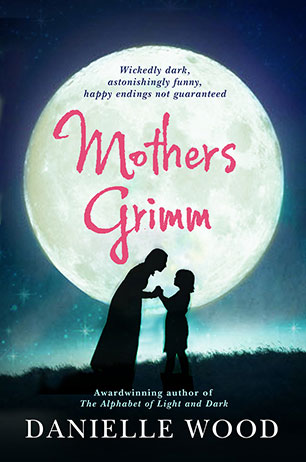
  • Danielle Wood’s Mothers Grimm (2014) (my review): re-visions some Grimm Brothers’ fairytales – “Rapunzel“, “Hansel and Gretel“, “Sleeping Beauty“, and “The Goose Girl“ – to reflect on and question contemporary motherhood.

Geraldine Brooks’ March (2006), which I read before blogging, is another well-known Australian example. She takes the absent father from Little women, Mr March, and creates story about him, focusing on his role in the Civil War.

Danielle Wood, Mothers Grimm, book cover

Not surprisingly, classics (in both senses of the words), myths and fairy-tales feature strongly in these re-imaginings because they provide a springboard that doesn’t have to be explained to the reader. The exception, in my list, is Riwoe’s The fish girl which takes a Somerset Maugham short story. Maugham is well-known, of course, but not necessarily the short story used here. We could, however, call it the exception that proves the rule, in that in the end these works do need to stand on their own, with the original work adding depth for those who know it, rather than being a prerequisite.

What do you think? And, have you read novelistic re-imaginings? Do you like them, and why or why not? We’d love to hear from you.

Six degrees of separation, FROM The lottery TO …

Another month has gone, and we in Canberra, New South Wales and Victoria are still in lockdown. However, with vaccinations proceeding apace, the end is in sight, we hope. On the plus side, it is spring, and the blossoms are out – and daylight savings starts this weekend which I love. I know that for some of you, though, it is autumn. I hope you are having a good one. Meanwhile, let’s get onto our Six Degrees of Separation meme, which, as most of you know, is run by Kate. Check her blog – booksaremyfavouriteandbest – to see how it works.

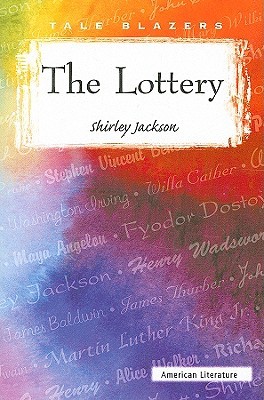
We start, of course, with the book chosen by Kate except that this month it is a short story, Shirley Jackson’s much studied, much anthologised “The lottery”. And, because it is a short story, I did manage to read it (my post).

My first link is an obvious one, another short story with a shocking ending, Kate Chopin’s “Désirèe’s baby” (my review). I’m a big Chopin fan, which started when I read her novel The awakening. Anyhow, our starting short story and this one make powerful statements about human cruelty, and both, coincidentally, start by describing lovely days!

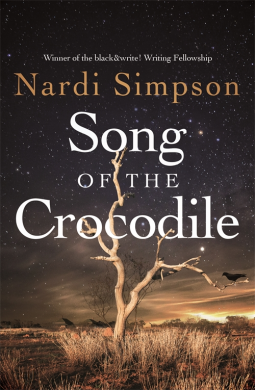
Chopin’s story involves a baby and racism. Another book in which a baby is unwittingly related to brutal, racist behaviour is Nardi Simpson’s Song of the crocodile (my review). It’s a novel by a First Nations Australian, so its ambit extends beyond Chopin’s, but it is this baby who grows up and forces this novel’s shocking denouement.

Book cover

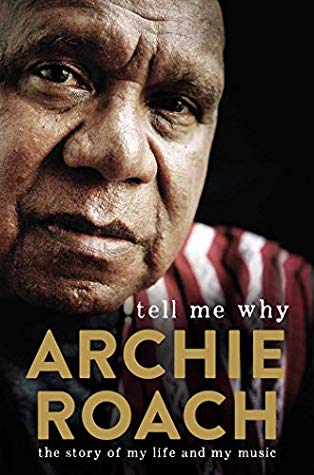
For my next link, I thought I’d move away from grimness, except I then realised that this next book also has racism at its core! However, my link is on the author’s career, because Nardi Simpson had an established singing career before she became a novelist. The author of the book I’m linking to is also a well-recognised First Nations singer, but his book is a memoir, Archie Roach’s Tell me why: The story of my life and my music (my review).

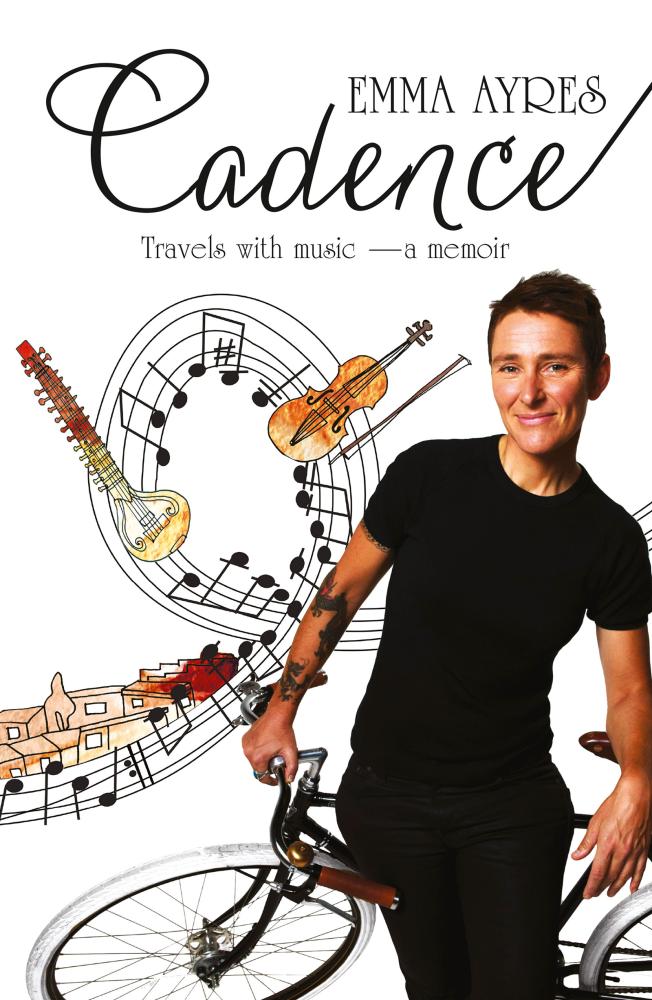
Emma Ayres, Cadence

I’m sticking with musical memoirs for my next link. It is a travel memoir by a musician who, bravely to my mind, cycled across Europe and Asia, from England to Hong Kong, with her violin. The book is Emma Ayres’ Cadence: Travels with music (my review).

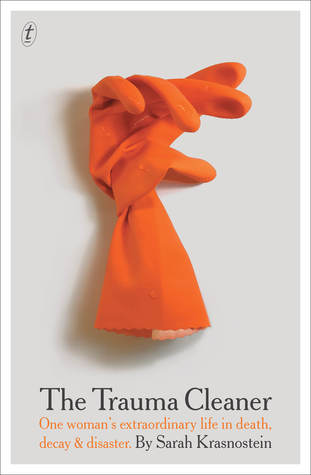
Sarah Krasnostein, The trauma cleaner

Most Australians know Emma Ayres, as she was a much-loved presenter some years ago on ABC Classic FM. Most of us also know that, after she left that job, she went to Kabul and soon after that transitioned to Eddie Ayres. He wrote about this process in his book Danger music. However, I haven’t read that, but I have read Sarah Krasnostein’s The trauma cleaner (my review), an award-winning biography of a transgender woman, Sandra Pankhurst.

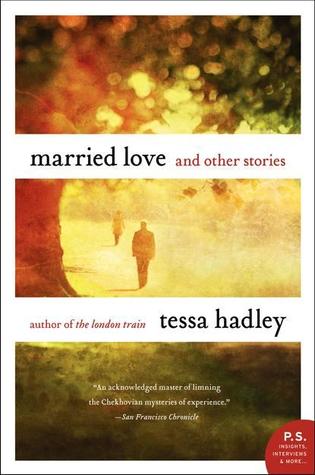
Now, what to end on? I think a short story might be apposite, and there is one that I read back in my first year of blogging that might fit the bill, though, back then, I gave less attention to my short story reviews than I do now. The story is Tessa Hadley’s “Friendly fire” (my post). I’m linking on the protagonists who are two middle-aged women cleaners in an industrial warehouse, Pam who owns the cleaning business and her friend Shelley who is helping her out for the day. The main focus is Shelley, and her thoughts about life and family, particularly about her son who is in the military in Afghanistan, which might give you a clue about the story’s title. I read it online, but it has been published in a collection called Married love, hence the cover I’ve used.

So, this month I have at least come full circle in terms of form. We have also travelled quite a bit, given one of the links is a a travel memoir, and we have, I’ve realised, met a few cleaners, as Nardi Simpson’s novel involves house cleaners and washerwomen. Perhaps, I’m giving myself a hint!

Now, the usual: Have you read “The lottery”? And, regardless, what would you link to it?

Shirley Jackson, The lottery (#Review)

As a lover of short stories, I have wanted to read Shirley Jackson’s “The lottery” for some time. With Kate selecting it as October’s Six Degrees starting work, now seemed the perfect time!

Shirley Jackson (1916-1965) pops up on blogosphere with some consistency, and is clearly well-regarded. Her career spanned two decades and, during that time, as the thorough Wikipedia article says, she wrote six novels, two memoirs, and more than 200 short stories. Her debut novel, The road through the wall, and “The lottery”, were both published in 1948, though she had had short stories published over the preceding decade.

It was “The lottery”, however, which established her reputation – particularly as a master of horror stories. Wikipedia says it resulted in over 300 letters from readers, many “outraged at its conjuring of a dark aspect of human nature”. In the San Francisco Chronicle of July 22, 1948, Jackson responded to persistent queries from her readers about her intentions:

“Explaining just what I had hoped the story to say is very difficult. I suppose I hoped, by setting a particularly brutal ancient rite in the present and in my own village, to shock the story’s readers with a graphic dramatization of the pointless violence and general inhumanity in their own lives.”

Many of you probably know the story, but, just in case, I’m not going to “spoil” it beyond that. I will, however, make a few comments.

I’ll start with Wikipedia’s succinct synopsis: it is about ‘a fictional small town which observes an annual rite known as “the lottery”, in which a member of the community is selected by chance’. It’s a great read, because the build-up is so good and the ending so powerful. If you were not forewarned, you’d have no idea you were reading a “horror” story, because there’s nothing Gothic about the setting, no eeriness, no overt build up of fear even. Instead, there’s the coming together of this village’s 300 people coming for this annual event. It’s summer, “the flowers were blossoming profusely and the grass was richly green”. Idyllic, in other words, or, so we are set up to see it is (or, could be?)

The children are described, then the men and women. It all seems benign, though there are tiny hints of something else, that you may not notice if you’re not expecting it. The emcee of “the lottery” is the ironically named Mr. Summers, who has the “time and energy to devote to civic [my emph] duties”. Many of the names in the story sound normal, but they also carry symbolic weight – Graves, Adams, Delacroix (pointedly, as it turns out, perverted to Dellacroy by the townspeople).

Anyhow, there is a long discussion of the “black box” that is used for the lottery, but, although it is “black”, it sounds quaint and unimportant. No great care is taken of it between lotteries. There’s a bit of camaraderie and joking between the townspeople; there’s confirmation of the formalities; but, slowly tension builds. Mr Summers and the first man to draw from the black box, grin at each other “humorlessly and nervously”. We are now half way through the story, and there’s nervousness among the attendees.

Then, plopped in here, is a little discussion about some villages – because this is not just this village’s tradition – having given up, or talking of giving up, the lottery. However, Old Man Warner (another interesting name), who has been through 77 lotteries, doesn’t approve of change. He sees “nothing but trouble in that”. When you know the end, you wonder what sort of person he is! Certainly not the archetypal dear old man, grandpa to everyone! Meanwhile, anxiety slowly builds, with another townsperson saying to her son, “I wish they’d hurry”.

The “winner”, when identified, doesn’t behave like a winner, which provides another dark hint, but which causes our aforementioned Old Man Warner to pronounce that “people ain’t the way they used to be”.

The final line of the story is shocking, but by then you have worked out what winning means, so it adds an extra layer to the story’s meaning (as you’d expect in a good short story).

You can find in Wikipedia, and elsewhere on the web, all sorts of critical reactions and theories about what it means, but I’d like to return to Jackson’s comment that she intended a “graphic dramatisation of the pointless violence and general inhumanity“. Why do the townspeople accept “the lottery”? What makes some villages give up the ritual and others not? Why do some in this town act with relish and others not? It recalls, for me, Christos Tsiolkas’ The slap. Yes, it’s a novel and a very different story, but I saw it as being fundamentally about the violence that seems to be be lying too near the surface of our so-called civilised society. I’ll leave it at that, but it makes me think, plus ça change.

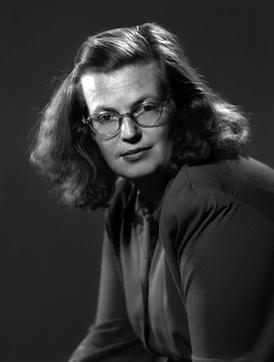
Image credit: Shirley Jackson, New York City. 1940s. Contact: photography@magnumphotos.com. Low resolution version from Wikipedia, used under Fair Use.

Shirley Jackson
“The lottery”
First published in The New Yorker, June 26, 1948

Avalailable online at The New Yorker.

Maggie O’Farrell, Hamnet (#BookReview)

Book cover

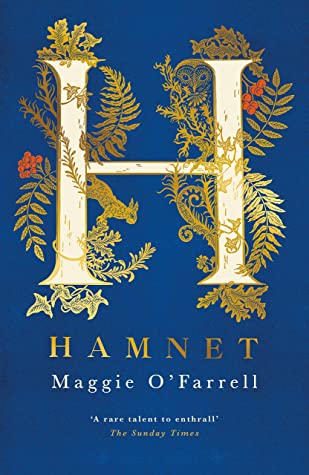
Not unusually, I’m late to this book that was all the talk in 2020 – and, I may not have read it at all if it hadn’t been for my reading group. I’m talking, as you will have guessed from the post title, of Maggie O’Farrell’s Hamnet.

As most of you will know, Hamnet’s plot draws from the life of Shakespeare (never named in the novel) and Anne Hathaway, and the death of their son Hamnet at the age of 11. There was an older sister, Susanna, and Hamnet’s twin sister, Judith. O’Farrell explains her interest in her Author’s Note:

Lastly, it is not known why Hamnet Shakespeare died: his burial is listed but not the cause of his death. The Black Death or ‘pestilence’, as it would have been known in the late sixteenth century, is not mentioned once by Shakespeare, in any of his plays or poetry. I have always wondered about this absence and its possible significance; this novel is the result of my idle speculation.

Because this book has been well-covered already online, I’m going to take a slightly different tack with this post, and focus on a couple of questions.

“She herself might tell a different story”

With all books, but particularly with historical fiction, one of my questions is, why did the author choose to write their story. O’Farrell partly answers it in her Author’s note. However, there is also, surely, a feminist reading, because, although the novel is titled Hamnet, it is primarily about his mother Agnes (as Anne is named in Shakespeare’s will). Early in the novel, O’Farrell writes “This is the story, the myth of Agnes’s childhood. She herself might tell a different story”.

The thing is, we don’t know a lot about Agnes Hathaway which makes her ripe for historical fiction. What we do know is that women’s stories were – and too often still are – rarely told, but that that doesn’t mean their lives were unimportant. It means that importance hasn’t been placed on them. Whoever Agnes really was, O’Farrell has created a wonderful, eccentric character, who is perceptive, warm, independently-minded, a little flawed but engaged in the life of her family and community. She is fun to read about.

Besides telling a story about her, though, O’Farrell also presents, through her, a story about grief, and this, for me, was one of the strongest aspects of the novel. Agnes’ thoughts about burying her son, her astonishment that people can complain about their children, her utter discombobulation were so real:

Agnes is not the person she used to be. She is utterly changed. She can recall being someone who felt sure of life and what it would hold for her …

This person is now lost to her for ever. She is someone adrift in her life, who doesn’t recognise it. She is unmoored, at a loss. … Small things undo her. Nothing is certain any more.

So real …

Hamlet?

Warning: Spoiler of sorts

Given the novel is titled for Hamnet, rather than for its main protagonist, Agnes, it’s worth considering why, and this leads us to the play Hamlet. The novel ends with Agnes attending a performance of her husband’s play, which confirms the significance of this play to the novel. The epigraph to the novel’s second part is a quote from Hamlet (V:ii): “Thou livest;/ . . . draw thy breath in pain,/ To tell my story”. But, Hamlet could scarcely be seen to be Hamnet’s story, though I did have a little laugh at the point in the novel where Hamnet chooses to die:

They cannot both live: he sees this and she sees this. There is not enough life, enough air, enough blood for both of them. Perhaps there never was. And if either of them is to live, it must be her. He wills it. He grips the sheet, tight, in both hands. He, Hamnet, decrees it. It shall be.

Eleven-year-old Hamnet seems, here, to be far more decisive than his namesake who is known for his prevarication. This, however, is not what we are expected to take away from the novel I’m sure!

So, what else? Well, there’s the grief theme, which Hamlet can be seen to “resolve” in the novel. Agnes, devastated after her son’s death, can’t understand her husband returning to work – and writing comedies:

His company are having a great success with a new comedy. They took it to the Palace and the word was that the Queen was much diverted by it.

There is a silence. Judith looks from her mother, to her sister, to the letter. 

A comedy? her mother asks.

She is even more devastated though to learn that her husband has gone on to write a play using their son’s name – Hamnet and Hamlet being interchangeable – so she goes to London to confront him. What happens is something else. Initially, she feels eviscerated:

How could he thieve this name, then strip and flense it of all it embodies, discarding the very life it once contained? 

But then, as she sees the ghost father and living son, she starts to see something else:

He has, Agnes sees, done what any father would wish to do, to exchange his child’s suffering for his own, to take his place, to offer himself up in his child’s stead so that the boy might live.

My reading group discussed the question of the play a little, though we didn’t come to any particular conclusion, which I rather like. However, we did talk about how Shakespeare wrote his darkest, strongest plays, including the four great tragedies, after Hamnet’s death, which suggests that his son’s death had a big impact on him. A member also raised the play’s existential nature, seeing it exploring the fragility of life – “to be or not to be” – and how you go on in the face of bleakness.

Now, I could go on and talk about the style (language, use of present tense, symbolism), the decision not to name Shakespeare, and the dual storyline structure, as I normally would, but I’m sure they’ve been discussed elsewhere, so I’m leaving it this time. There were aspects of the novel that I question, but the truth is that I fell for Agnes and her story.

So, I’m going to leave you with two quotes, one from the husband, one from the wife.

It is so tenuous, so fragile, the life of the playhouses. He often thinks that, more than anything, it is like the embroidery on his father’s gloves: only the beautiful shows, only the smallest part, while underneath is a cross-hatching of labour and skill and frustration and sweat. 

Gardens don’t stand still: they are always in flux. 

These relate to their spheres of activity, but they also say something about life, don’t you think?

Maggie O’Farrell
Hamnet
London: Tinder Press, 2020
310pp.
eISBN: 9781472223814

Monday musings on Australian literature: 2021 Mark and Evette Moran Nib Literary Award shortlist

Once again I am using my Monday Musings post to make an awards announcement, though I prefer not to. However, I am breaking my rule-of-thumb so soon again for a few reasons: I spent too much time on yesterday’s Living under Covid-19 post leaving less time for today’s post; I have a zoom Tai Chi class this evening; and, the Mark and Evette Moran Nib Literary Award shortlist was announced today. I hope this doesn’t disappoint those of you who enjoy my more usual MM posts (however you define that), but it’s the best I have for you today! It has inspired a future MM post, but you’ll have to wait to see what that is.

Now, you may remember that the longlist for this year’s Nib award was a very long one – 18 titles. I wondered how they were going to whittle it down, and to how many. Before I share their decision, I’ll remind you that this award celebrates “excellence in research and writing”. It is not limited by genre, though given the research focus, nonfiction always features heavily.

Wonderfully, all shortlisted authors automatically win the Alex Buzo Shortlist Prize, of $1000, each. So, a big congratulations to them. And now …

The shortlist

Book cover
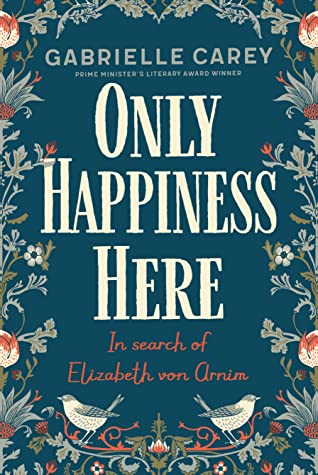
  • Gabrielle Carey‘s Only happiness here: In search of Elizabeth von Arnim (biography/memoir) (on my wishlist) (Brona’s review)
  • Kate Holden’s The winter road: A story of legacy, land and a killing at Croppa Creek (nonfiction/environment)
  • Ramona Koval’s A letter to Layla: Travels to our deep past and near future (nonfiction)
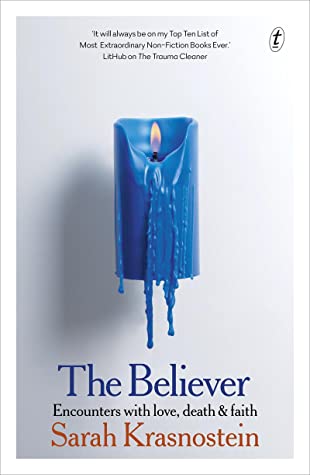
  • Sarah Krasnostein’s The believer: Encounters with love, death & faith (nonfiction/religion) (on my TBR)
  • Tim Olsen’s Son of the brush (nonfiction/memoir)
  • Luke Stegemann’s Amnesia Road, landscape, violence and memory (nonfiction/history) (Janine’s review)

Unfortunately, only one of the five books from the longlist that I had on my TBR – I identified four in my longlist post, and bought another since – made it through. However, that one l will definitely read this year, whether it wins or not.

Head judge Jamie Grant said that

This year’s Nib shortlist has been chosen from the largest and most diverse field that the prize has yet known. There are biographies, true crime stories, philosophical meditations, and personal memoirs among the shortlisted books, a variety the judges hope will include as many different readers as possible.

It certainly was diverse in terms of content, and in terms of author gender, but it could be more diverse regarding author background. I wonder if the lack of diversity in this aspect is due to authors not being aware of this prize. Hopefully, posts like this will help improve its visibility.

The judges for the 2021 award are Katerina Cosgrove (author), Jamie Grant (poet and editor), and Lee Kofman (author and editor).

Finally, I should add that there is a People’s Choice prize, which is now open for voting. It is worth $2,500, and all who vote will go into a draw to win a Nib Award prize pack containing all six of this year’s shortlisted books and $100 voucher from Nib Award community partners, Gertrude & Alice Bookstore Cafe. You can Cast Your Vote here!

The overall Winner ($20,000) and the People’s Choice Prize will be announced on 24 November.

Many of you commented on the longlist … any further thoughts now?

Living under COVID-19 (5): Holds on happiness

It’s nearly a year since I wrote a COVID-19 post. I nearly wrote one a few months ago when things were going COVID-normal smoothly, by which I mean our lives were minimally restricted, with daily life being as free as we could hope given the world-wide situation. We (I mean we Ken Behrens) were visiting friends and family around Australia. We were dining out, going to the movies and theatre, playing sport, visiting museums and galleries, and so on. Gradually, even generous distancing rules had been removed. Certainly, we were not wearing masks. (We were, though, still sanitising and checking-in.) I wondered what I could say, given life in most other parts of the world was still comparatively more restricted. Life was generally pleasant.

But then, Delta made its way here and we were not prepared because we – for, mostly, political reasons – were too far behind in the “race” to vaccinate, and it left us exposed. Now, our two largest states, and my little Capital Territory, are locked down. It is the right thing, I believe, to prioritise health and life, equitably, while we get our vaccination levels up – but it’s not easy. It is in this environment that I remembered the inimitable Jane Austen’s suggestion that

It is well to have as many holds on happiness as possible. (Henry Tilney to Catherine Moreland, Northanger Abbey)

I thought to share some of my holds on happiness …

Only connect (EM Forster)

For most of us, the best “hold” is connecting with family and friends. Those who, like me, live with supportive others are lucky to at least have built-in company, but even we need some variety. It’s been said ad infinitum, but how lucky are we, compared to those who suffered through the Spanish Flu or the plague pandemics, in being able to remain in quality contact with others through WhatsApp, Telegram, FaceTime, Zoom, and so on.

For me, WhatsApp chats replacing a regular lunch with friends, FaceTime sessions with our son, his partner and our grandson, Zoom catch-ups and meetings, and emails, blogging, and common old phone calls with our daughter and others, are keeping me sane and connected. They can also provide some joy. Have you ever tried playing hide-and-seek via FaceTime with a three-year-old? It can be done!

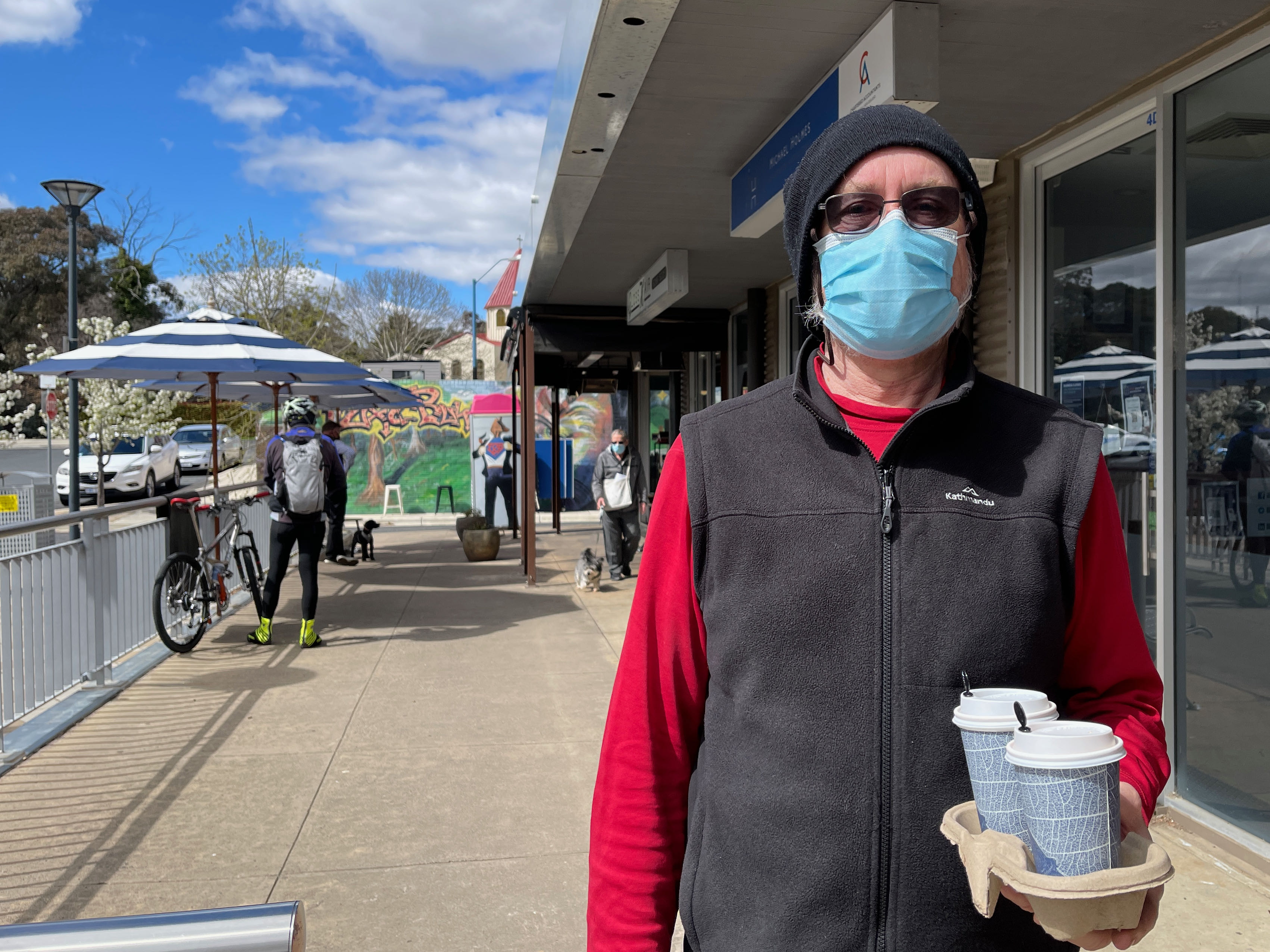
Other connections come from regular visits to our local PO to get the mail. We love our local post office workers. And to cafes for takeaway coffee and food. We love our favourite cafe owners too!

‘Twill do me good to walk (Shakespeare)

If connecting with people is important, equally so is exercise. It distracts the mind, keep us fit and tires the body (which is a useful thing in a constrained life!) Fortunately, we are allowed to exercise outside, and for most of us that’s walking. In some jurisdictions some sports are also allowed, but Mr Gums and I don’t do organised sports.

So, for us, exercise comprises walking in the nature park across the road, gardening, joining our zoomed Tai Chi classes – and, for me, doing yoga via my Yoga With Adrienne app. (You can also find her on YouTube if you are interested. She is delightful, and a good if imperfect substitute for my own wonderful teacher/neighbour.)

The thing about these activities is that, besides being good for our minds and bodies, they provide structure to our days. Structure, we learnt pretty quickly, is important to getting through endless days that look the same. Each morning, we say, “what are we doing today?” and make a plan of action (or inaction, as it sometimes is.)

Indulge your imagination (Jane Austen)

Exercise might distract the mind, but the mind and spirit also need feeding, and again, technology is helping us out. Of course, there are books, and they are my mainstay, as they are for many others. But, most of us need more – whether this be movie outings with others, live music gigs and concerts, theatre, festivals of all persuasions – and it is these that have been so affected by COVID-19. However, it is also in these that technology has been best able to help (albeit not ideal).

It is also plague season again in London and the playhouses are shut. (Maggie O’Farrell, Hamnet)

I don’t need to tell you about streamed movies. It seems that every time I turn around there’s a new service. I have no idea where to start with all that so, although we are a technologically-focused pair, we haven’t chosen one yet. There’s enough available on free-to-air so far to entertain and inform us, because if there’s one thing we’ve been doing, it’s been keeping informed.

I have written in previous Living with COVID-19 posts about online writers’ events. I haven’t attended many recently, but I did join the ACT Writers Centre F*ck Covid afternoon (and have written about that.) The participants included established and emerging writers, and they were so generously open and articulate about their work and practice.

We have also attended webinars (including one with Jenny Hocking about the Palace Letters, which is well worth listening to) and online and streamed concerts from Musica Viva and the ABC. This short video link featuring recorder player Genevieve Lacey and harpist Marshall Maguire will give you a taste of one concert we “attended”.

We have passed up so many other opportunities. If there’s one thing about this lockdown, it’s that the arts world has done its best to stay alive and to reach out to us in whatever way they can. I can’t wait to give back by attending their shows and applauding their efforts – in person! I just hope they can all survive until then.

Meanwhile, wherever you are, how are you surviving? How is life looking in your place?

Nancy Jin and Rosalind Moran, These strange outcrops (#BookReview)

Bagging Canberra – often used synonymously for the Federal Government – is almost a national sport, but in recent years anthologies have appeared to counter this with more complex stories about this place. The first two I’ve read – The invisible thread, edited by Irma Gold (my review) and Meanjin’s The Canberra issue (my review) – commemorated Canberra’s centenary, but last year saw the publication of the evocatively titled These strange outcrops.

This anthology is the work of two young Canberrans, Nancy Jin and Rosalind Moran, who founded Cicerone Journal. Established in 2018, it is, they say,

a Canberra-based publication that seeks to encourage an open curiosity about the world in a socio-political climate of disconnection and disenchantment. We aim to publish writing that is exploratory and thoughtful, and new and unusual.

The journal’s fifth edition will be devoted to speculative fiction, and is due soon.

So now, These strange outcrops, which is subtitled, Writing and art from Canberra. It comprises original short stories, poems, and visual art created by established and emerging Canberra writers, and has a specific goal, as the editors write in their Foreword. It “grew out of a desire to question media narratives that portray Australia’s capital city as a place of disconnection and insularity”. They note that with a population of 400,000, Canberra and the surrounding region is “home to far more stories and perspectives than are commonly depicted in the news”. They wanted, they say, to “challenge the prejudices and stereotypes” and “celebrate the varied lives and imaginings of this unique place”.

“blurry at the edges” (Owen Bullock)

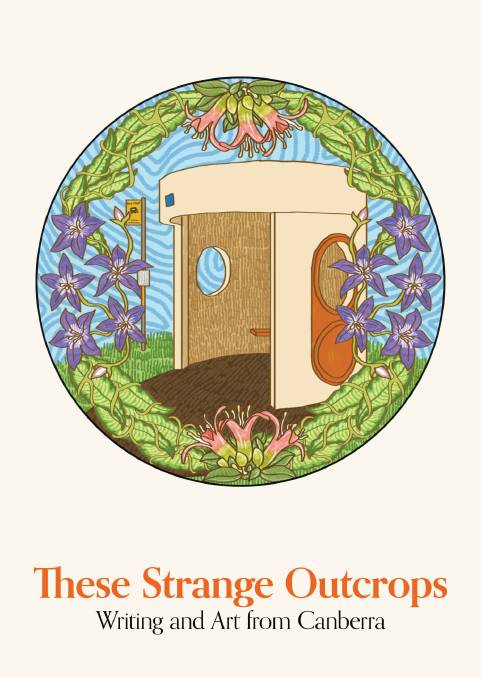
They have achieved their goal, and with style. This publication is physically gorgeous, from the cover, with its iconic Canberra bus stop framed by two Canberra floral emblems (the Royal Bluebell and Correa), through its beautiful endpapers comprising a correa blossom pattern, to the care taken with the design of the individual pieces. I can’t imagine any contributor not being thrilled with the look of their contribution.

But, the main point is, of course, the content. It more than lives up to the appearance, by which I mean, the book is not just a pretty face. An important thing with anthologies is the order, and it’s clear that the editors thought carefully about this. They start with the physical Canberra, and its natural environment, which is one of the reasons many of us love this place, and conclude with the experiences of different members of Canberra’s diverse population. In between, are various explorations of a wide range of aspects of life in Canberra, from those common to us all (like Cheryl Polonski’s poem “Wintertime in Canberra” and Penelope Layland’s poem “Showtime”) to some that speak to more specific experiences (like Daniel Ray’s prose piece about that challenging post-Year-12 time, “Queanbeyan: Quinbean: Clear water”). Some contributions are movingly personal, while others are unapologetically political. The end result is an authentic whole, that shows Canberra to be a rich and complex place, a bit “blurry at the edges” but with enough commonality at the core that makes us real, regardless of what outsiders might think.

Now, I did have some favourites, and will share a few of them over the rest of this post. The opening set of poems, “Canberra Haiku” by Owen Bullock beautifully introduces the collection, with its series of little impressions portaying Canberra’s breadth, from flowers peeking through a cracked pavement to a tattooed bus passenger and a permaculture working bee, from magpies and our mountains and lake to heatwaves and “blurry … edges”. The next few pieces explore place, often with an awareness of what was before we came, such as Janne D Graham’s poem “Crace Park” which conveys a sense of wrongness in our “calculated spaces”. A sort of antidote – or comment on this – is Helen Moran’s vibrant painting “Rainbow Serpent sleeping in Lake George”, the Rainbow Serpent being significant to many First Nations Australia peoples. It mesmerises me, because, while looking simple, it evokes complex and conflicting ideas. Set against a dark blue and black background, the bright, cheery serpent also looks ready to pounce. At least, that’s how it appears to me.

Patricia Piccinini, Sky Whale, pic: Nick-D from Wikipedia, using CC-BY-SA 3.0

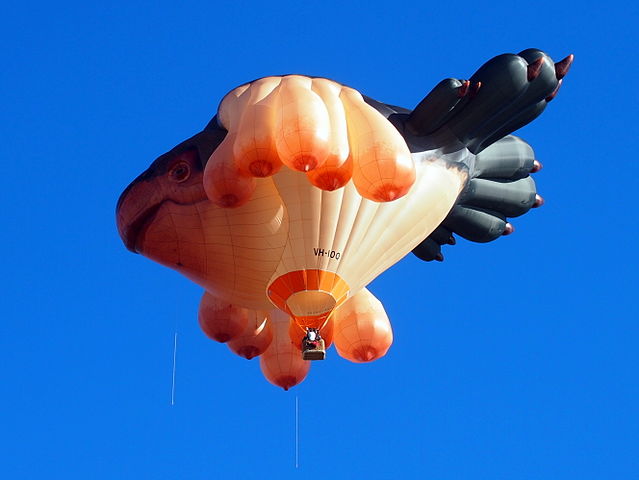
Some of the pieces invoke wry humour to make their point, like Fiona McIlroy’s poem “sky whale” which uses the Patricia Piccinini’s Canberra-Centenary-commissioned hot-air balloon “The Skywhale” to reflect on attitudes to public art that challenges perceptions.

Canberra is
determined
to have a whale of a time
in the Centenary
to live it up
to lighten up
kick up our heels
yet a flying
maternal mammal
is just pushing the
envelope

The wordplay throughout the poem is delicious.

“come so far, lost so much” (Joo-Inn Chew)

Some of the strongest pieces concern migration and racism. Canberra, like much of Australia, is a multicultural place. We have Ngunnawal and other First Nations people here; we have Australian-born residents who have come from around Australia for work; and we have migrants including refugees. We have – or had, before the pandemic – an annual, vibrant and successful Multicultural Festival, which celebrates this aspect of the region, but several pieces in the anthology convey the sadness and pain that must always come with migration, regardless of its cause. Anita Patel speaks in “What are you cooking?” of the sadness of losing her mother in another part of the world, so that even those weekly phone conversations are no longer possible, while Joo-Inn Chew’s poem “A new arrival at Companion House” talks of the hope contained in the birth of a baby to people who have “come so far, lost so much”.

Others are much darker, speaking to non-acceptance, such as Michelangelo Curtotti’s ironically titled poem “The welcome”. In one of those perfect segues, this poem is followed by Stuart McMillen’s graphic short story, “I used to be a racist”.

As frequently happens when reviewing anthologies, I’ve only cursorily dipped into the treasures contained within. I apologise to all those contributors whom I don’t mention here, but know that you’ve been read and heard. The best thing would be for more to read your work in this thoughtful, considered anthology. It can be purchased from Cicerone (linked above).

Meanwhile, let’s finish on Rafiqah Fattah’s defiant poem, “Generation selfie”, about the 16 to 25 year olds who are too often ignored or passed over:

And now, there is a tremor in the air
We are here

Challenge logo

Nancy Jin and Rosalind Moran
These strange outcrops: Writing and art from Canberra
Canberra: Cicerone Journal, 2020
74pp.
ISBN: 9780646814155

Monday musings on Australian literature: Supporting genres, 4: Literary nonfiction

Continuing my little Monday Musings sub-series on “supporting” genres, I’m turning next to a rather “rubbery” genre, literary nonfiction. It is tricky to define – and partly for that reason, it is not obviously well supported.

Literary nonfiction goes by a few other names including creative nonfiction and narrative nonfiction. This last one provides a bit of a clue to its definition, which is that it generally refers to non-fiction writing that uses some of the techniques of fiction, particularly, but not only, in terms of narrative style. Wikipedia defines it as “a genre of writing that uses literary styles and techniques to create factually accurate narratives.” It quotes Lee Gutkind, who founded Creative Nonfiction magazine:

“Ultimately, the primary goal of the creative nonfiction writer is to communicate information, just like a reporter, but to shape it in a way that reads like fiction.”

In other words, it aims for a prose style that is more entertaining (but not at the expense of fact.) In my review of Anna Funder’s Stasiland, I wrote that she “uses some of the literary techniques – relating to structure, voice and language – more commonly found in fiction to tell her story”.

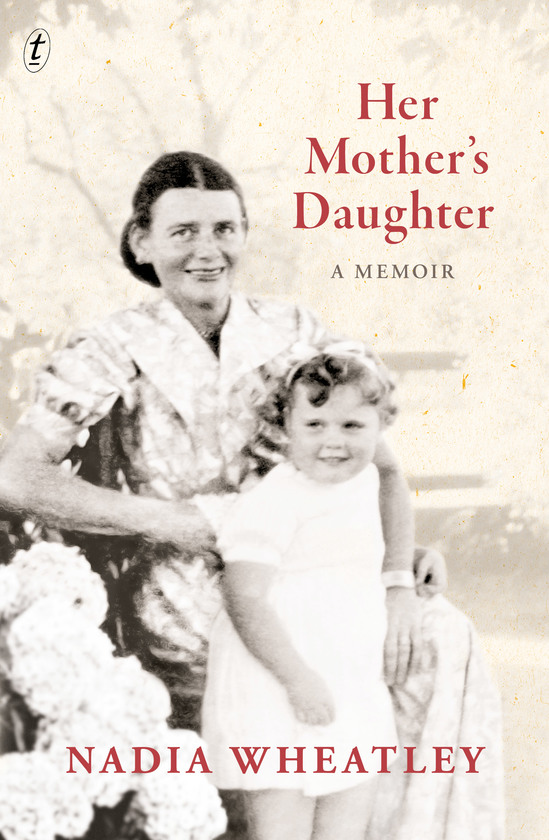
Well-known Australian writers in this “genre” include Helen Garner, Chloe Hooper, Anna Krien, Anna Funder and Sarah Krasnostein, all of whom I’ve read. It is a grey area, though, and I suspect each of us would draw the line at different places. However, I would include essay collections by Fiona Wright and Maria Tumarkin, and many hybrid memoir/biographies, like Nadia Wheatley’s Her mother’s daughter (my review)? Historians who write for general audiences rather than academia might also be included. I’m thinking here of Clare Wright and Inga Clendinnen, as possibilities. What do you think?

Prizes

For some genres – literary fiction and crime for example – awards/prizes are a major source of support (in terms of money and recognition) but this is less so for literary nonfiction.

Anna Funder's Stasiland bookcover

Back in 2004, Anna Funder’s Stasiland (my review) won the Samuel Johnson Prize for Nonfiction. Now renamed the Baillie Gifford Prize for Non-Fiction, it is, says Wikipedia, “an annual British book prize for the best non-fiction writing in the English language”. Not surprisingly, winners include works from this literary nonfiction “genre”. Another winner I’ve reviewed here (though it’s not Australian) is Helen Macdonald’s H is for hawk (my review). Australians have not featured highly in this award.

In Australia, several of the state awards include a nonfiction category, and these have been won by literary nonfiction, though they compete with other forms of nonfiction like histories, biographies and other forms of life-writing, essays, and so on.

Major Australian Nonfiction Literary Prizes

None of the awards listed here are specifically for “literary nonfiction” but these are awards which may be won by such books.

Sarah Krasnostein, The trauma cleaner

Also relevant are awards that are not “specifically” nonfiction:

Nadia Wheatley, Her mother's daughter
  • Mark and Evette Moran Nib Literary Award: this award for “excellence in research” and “in writing” has been won by books in this genre, like Helen Garner’s Joe Cinque’s consolation (2005) and Nadia Wheatley’s Her mother’s daughter (2019).
  • Stella Prize: while this multi-genre/multi-form prize has more often been won by fiction, nonfiction – and particularly literary nonfiction – does feature in its long- and shortlists. Rebecca Giggs’ Fathoms, for example, was shortlisted in 2021.

But, is there more?

The issue, though, for writers is what support do they get when they come up with an idea? Are the sorts of fellowships, grants and writer’s residencies that fiction writers can access also around for nonfiction writers? Well, yes, there are, such as:

  • Neilma Sidney Literary Travel Fund is an unusual award that is open not just to writers but also to “literary sector workers”. It recognises the importance of travel to writing and literary careers. Awardees have included writers researching nonfiction topics – and, despite COVID, it is still being offered, with a round being made in June this year. To give some examples, in 2018, the aformentioned Rebecca Giggs received a grant for expenses related to a writing residency at the Rachel Carson Centre for Environment and Society in Munich, Germany. And, in November 2019, Tamara Lazaroff received some funds to research her experimental narrative non-fiction memoir Hermit girls on De Witt Island, Tasmania. 
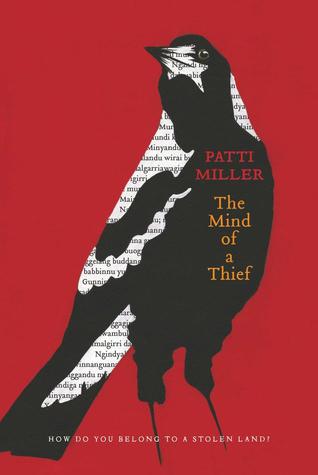
  • Varuna Writers House Residencies are open to “committed writers from all genres”. With around 160 residencies a year, the alumni is extensive, but they include Gail Bell whose The poison principle (on my TBR) won the 2002 NSW Premier’s Prize for Non-Fiction and Patti Miller whose complex memoir, The mind of a thief, was longlisted for the 2013 Stella Prize.

There are more, but these two provide a good start.

Do you read literary nonfiction? If so, would you care to share some favourites?

Previous supporting genre posts: 1. Historical fiction; 2. Short stories; 3. Biography