Monday musings on Australian literature: Two new indies

This month – February* – has been designated #ReadIndies month by two British bloggers, Karen (kaggsysbookishramblings) and Lizzy (Lizzy’s Literary Life). The rules are simple: “read anything you like, in any language you like, as long as it was published by an independent publisher”. This is not a difficult reading month for me to take part in, as the majority of my reading comes from independent publishers.

However, the question is, what is an independent publisher? Karen and Lizzy admit that it’s not easy to define, but they mean smaller outfits that print and issue their own works, and aren’t part of a larger conglomerate. In Australia, the Small Press Network (about which I’ve written before) is a good place to start. In the end, Karen and Lizzy suggest “going with your gut”. They also say, quite rightly, that most independent publisher websites will proclaim their independence. I have written a few times about independent publishers. You can find most of these on my Small Publishers tag. In those posts, I’ve named many small and independent publishers. In this post I’m adding two very new publishers which launched during the pandemic: Ultimo Press and Upswell. What a funny coincidence that both start with U!

Ultimo Press

“to be distinctive, a little bit different, to disrupt and to have fun.”

Launched in 2020, Ultimo Press is an independent publisher with the simple ambition of becoming “home to Australia’s best storytellers”. They say they are part of Hardie Grant Publishing (which is now a reasonably large, diverse business with offices worldwide), making me wonder what they mean by “independent”. However, Hardie Grant describes itself as “independent” and “Australian-owned”, so I’m going with it.

Most Australians will assume, rightly, that Ultimo’s name comes from the Sydney suburb, but here is how they describe it:

Named for the Sydney suburb that houses Hardie Grant’s Sydney office, Ultimo references our home – an historic and colourful part of Sydney. The Italian translates roughly to ‘the latest’, and that will be our ambition: to provide a platform for the latest trends and newest voices.
The staff has some extensive industry cred, as the Who We Are page shows.

They “want to excite readers of general and literary fiction (especially the sweet spot in between), and discover non-fiction that inspires and ignites”. Their “hallmarks will be editorial excellence, arresting design, dynamic marketing and publicity, respect and loyalty to our authors, and publishing compelling new voices and original perspectives that reflect the full spectrum of Australian life”.
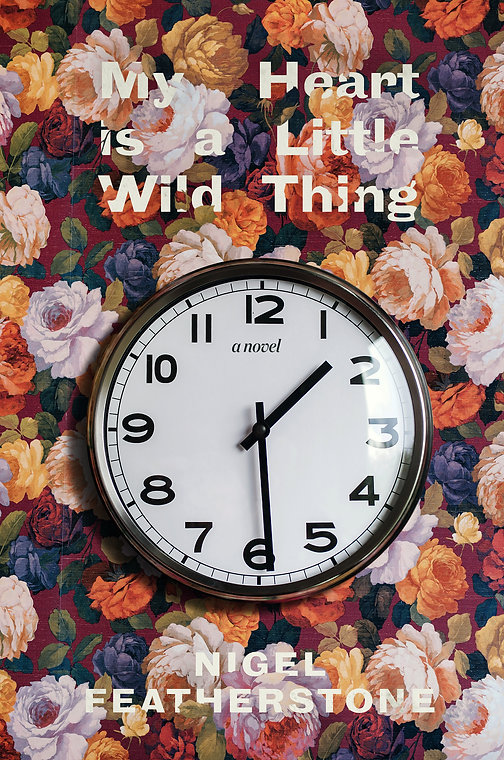
They have certainly started with a bang, with some of their books already making a splash, like Diana Reid’s Love and virtue (which I gave Daughter Gums for Christmas and she loved) and Shankari Chandran’s Chai time at Cinnamon Gardens. They’ve published Claire G. Coleman, and coming up is Yumna Kassab’s Australiana (March 2022), and local writer Nigel Featherstone’s latest novel, My heart is is a little wild thing (May 2022). Regular readers here will be familiar with Featherstone’s warm, expressive writing.

Ultimo certainly looks like a new indie to watch, as does …

Upswell

“where have all the adventurous readers gone?”**

Launched in 2021, Upswell is, you could probably say, a passion project, but it’s the passion project of someone with significant cred too. Director Terri-ann White ran UWA Publishing from 2006 until mid-2020. During that time she was responsible for significant publishing output across the genres, but, for litbloggers like me, especially for some great literary fiction and creative non-fiction. Josephine Wilson’s Miles Franklin Award winning Extinctions (Amanda’s review) and Jessica White’s hybrid biography-memoir, Hearing Maud (my review) are just two examples of too many to name.

Upswell is a not-for-profit company, with its directors being three impressive women, Carmen Lawrence, Linda Savage and White.

Like Ultimo Press, White wants to publish distinctive works, but puts it this way. She will publish

a small number of distinctive books each year in, broadly, the areas of narrative nonfiction, fiction and poetry. I am interested in books that elude easy categorising and work somewhat against the grain of current trends. They are books that may have trouble finding a home in the contemporary Australian publishing sector.

She’s shown, with her early list, not to be afraid of forms that often scare off the big publishers, like novellas, essays and poetry. And, like Ultimo, Upswell has started well with one of its first books, John Hughes’ The dogs (Lisa’s review) being shortlisted for last year’s Victorian Premier’s Literary Awards (not that awards are the only – or main – marker of excellence.)
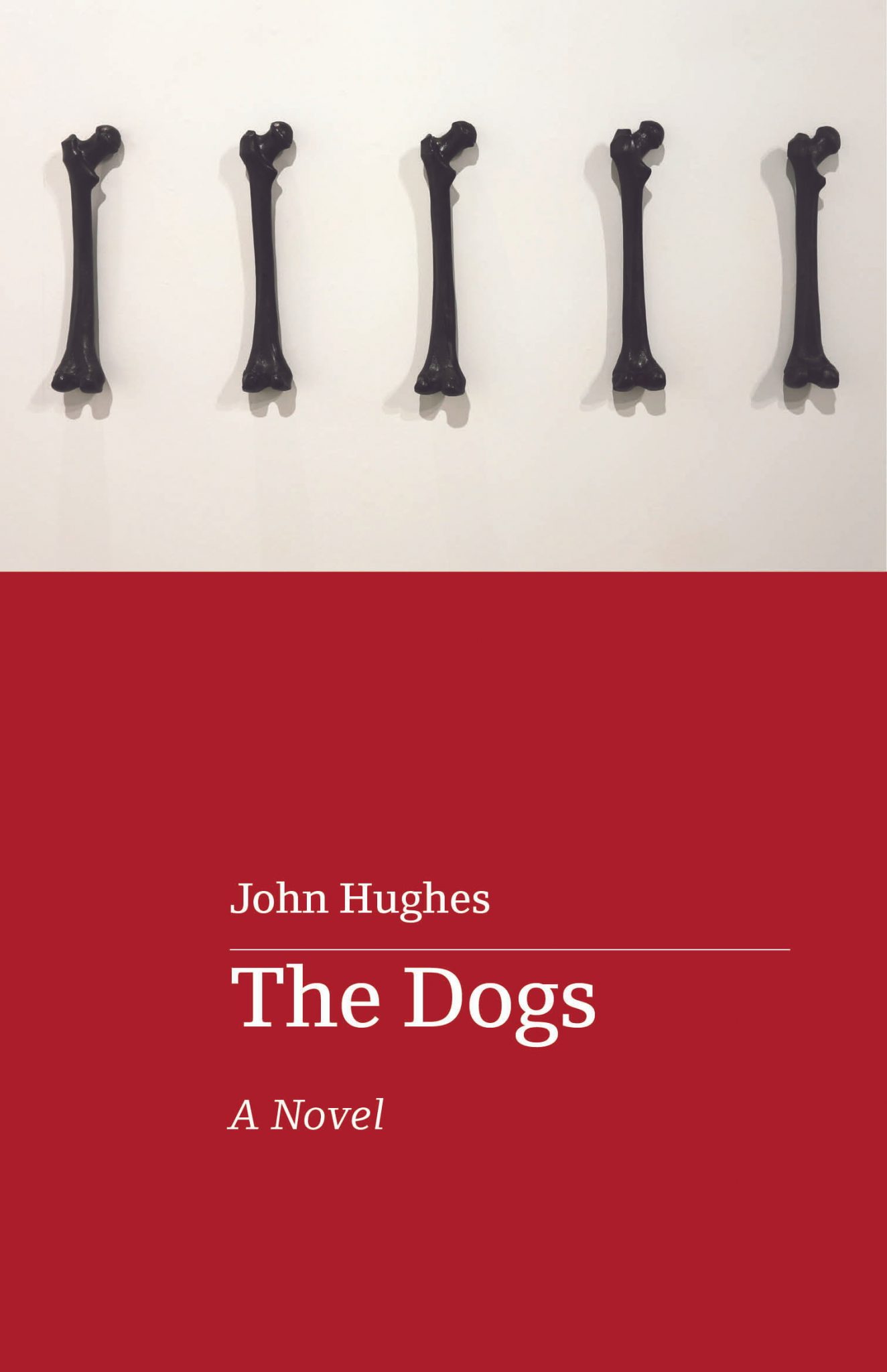
Upswell is also distributing a bit differently. Of course, individual books can be bought from them directly or from booksellers, but they also have a subscription program, which Lisa and I took part in last year, receiving their first three books: John Hughes’ The dogs, Belinda Probert’s Imaginative possession and Vietnamese-American author Monique Truong’s The sweetest fruit. This year they are offering several subscription packages, which is a great option. You get to support an excellent publisher by providing them some certainty and you get little surprises during the year.

This isn’t the only different thing, however. Upswell also has DGR status, which means that (Australian) donations to them are tax-deductible. Donations will support their Regional Writing and Publishing Workshops, Mentorships with White, a strong poetry list, and their Noongar Voices program.

So, two new indies to add to the ever-growing list of wonderful indie publishers in Australia. Do support them when you can – and, the bookshops which stock (and feature) them. If you don’t see them at your local bookshop, talk to the bookseller. A personal touch is a powerful thing.

Finally, a little aside just in case you are interested, Marcie (Buried in Print) is running a Read Indies series on her blog, in which she is devoting posts to individual Canadian indies.

* The “month” has been extended to 15 March.
** From an article by Terri-ann White in SeeSaw magazine
Julie Koh, Portable curiosities: Stories (#BookReview)

I’ve decided to try reading more audiobooks this year, despite not being a big fan of this mode of consuming books. I’m a textual person. I like to see the print on the page, how it is set out. I like to see the words. I like to see how the names are spelt. Given my reservations and the fact that I expect to “read” in short stints, I thought short stories might be the way to go. I think they are, though my overall reservations still stand.

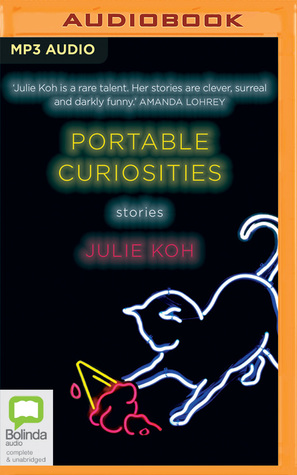
My first book was one that was well-reviewed when it appeared in 2016, Julie Koh’s Portable curiosities. It won the SMH Best Young Novelists Awards in 2017, and was shortlisted for several other awards, including the Steele Rudd Award for Short Story Collections (Queensland Literary Awards) and the Glenda Adams Award for New Writing (NSW Premier’s Literary Awards). I checked to see who won the Steele Rudd Award that year, because Koh’s collection is great. It was clearly a strong year. There were co-winners, Elizabeth Harrower’s wonderful A few days in the country, and other stories (my review) and Fiona McFarlane’s High places, which I’ve also been wanting to read.

So, Portable curiosities. I had no idea what this collection was about, and was delighted to find a lively, engaged and engaging interrogation of contemporary Australia, particularly as it intersects with Chinese-Australian experienceIt is highly satirical, penetrating the myths and assumptions that underpin our shaky existence.

The order of stories in a collection is always worth thinking about, and it is notable that this twelve-story collection opens with a story called “Sight” which satirises immigrant Chinese mothers who are so ambitious for their children to fit in and achieve success that they discourage any sort of individuality or creativity. Many of the stories have a surreal or absurdist element. They start realistically but suddenly we find ourselves in another realm or dimension. “Sight”, starting off the collection, is an example. Here, we suddenly find our young narrator having a “third eye” painted on her navel. This eye represents her imaginative self, so her mother organises for it to be removed in an operation.

From here, having satirised Chinese immigrant culture, Koh moves on to critique, with biting clarity, aspects of Australian culture, from misogyny (in “Fantastic breasts” where our male narrator looks for “the perfect set of breasts to have and to hold” at a conference on “The difficulties of an objective existence in a patriarchal world”) to crushing, soulless workplaces that pay lipservice to their employees’ mental health (in “Civility Place”). “Satirist rising” mourns the end of the civilised world, with a bizarre travelling exhibition that aims to ensure the continuation of the “landscapes of our mind”, while the cleverly titled “Cream reaper” (you have to read it to see what I mean) tackles foodie culture, turning foodie-ism into an extreme sport. Along the way, it also skewers multiple aspects of our capitalist culture, like the housing bubble, the commercialism of art, institutional banking, and the plight of the tortured writer.

As a retired film archivist, I loved “The three-dimensional yellow man” which takes to task the stereotyping of Asians on film. There’s “no need for a back story”, our one-dimensional (yellow man) Asian actor is told, “you’re evil”. He belongs, after all, to the “cruel, meek blank-faced race”. Again, the satirical targets are broad-ranging from film festival panels to Pauline Hanson – and embarrassingly close to the bone.

Many of the stories, like “Two” and “Slow death of Cat Cafe”, explore success, materialism and power, while the 2030-set “The Sister Company” exposes a cynically commercial “mental health industry” through the application of androids to the problem. All these stories, despite, or because of, their laugh-out-loud moments and forays into absurdity, hit their mark. A couple, such as “Two” and “Cream reaper”, felt a bit long, even though I thoroughly enjoyed their imagination, but this might have been a product of listening rather than reading, so I’m reserving judgement on this.

My favourite, however, was probably the last, “The fat girl in history”, which opens on a reference to the popular (in Australia) CSIRO Total Well-being Diet. The narrator is Julie, and, although this story also moves into surreal realms, there is a strong sense of autofiction here. Remember, though, that autofiction is still fiction so … Our narrator is a fiction-writer experiencing a crisis of confidence. She has written about a depressed girl, androids and the future – all of which appear in this collection. She’s been told that she writes like Peter Carey, though she admits she’s never read him. She reads an article telling her that contemporary literature is “in the throes of autofiction”, that the “days of pastiche are over”, and then informs us that she’s going to write autofiction titled “The fat girl in history.” Australians will know that Peter Carey has written a short story, “The fat man in history”, and that his debut collection named for this story started his stellar career. I will leave you to think about the portents and threads of meaning Koh is playing with here, but her outright cheekiness in daring us to go with her made me laugh – particularly when I saw where she went.

Portable curiosities deals with serious, on-song subjects, and I so enjoyed seeing her address them through satire, absurdity and surrealism with a healthy dose of black humour. At times the lateral thinking in these stories, not to mention Koh’s interest in satire, reminded me of Carmel Bird. A most enjoyable collection, that was expressively read by Lauren Hamilton Neill.

Julie Koh
Portable curiosities: Stories
(Read by Lauren Hamilton Neill)
Bolinda Audio, 2018 (Orig. pub. 2016)
5hrs 48mins (Unabridged)
ISBN: 9781489440808

Monday musings on Australian literature: The Guardian Australia’s Unmissables (2)

Two years ago, I wrote a post on The Guardian Australia’s Unmissables series, which was initiated in 2019 and aimed to highlight 12 new releases they deem “significant”. The series was supported by the Copyright Agency Cultural Fund.

Randolph Stow, The merry-go-round in the sea

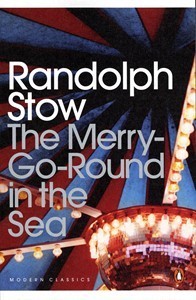
I wondered at the end of my previous post whether the project would continue after the initial twelve. It seems that it did, at least until August 2020. By that time, they’d added 15 more works, but there were some changes. The initial project was about “highlighting significant new release Australian books”, but, pleasingly to me, later selections include older books like Randolph Stow’s The merry-go-round in the sea, published in 1965. This is because, from the 15th selection on, they changed tack to offer books “you’ve finally got time for”. That is, Unmissables went from “new releases” to books recommended by writers “for your lockdown”. 

With this, they also changed how the books were presented. In the original series, there were two articles per book, one on the book and one offering some additional resource – an extract from the book, or an interview with or essay by the author. From the 15th selection, there’s just one article, written by the recommender.

I’m chuffed that I’ve read several of this more broadly focused selection. And now, before I list the books, I’ll share Christos Tsiolkas’ comments on making a selection:

Should I choose a novel that I think under-appreciated and undervalued? Should I use positive discrimination in my choice? Should I choose the contemporary and au courant? Or should I be deliberately anti-fashion?

My being disconcerted speaks to the obsession with the “curated self” that we all now have in the digital age: every choice must be scrutinised for its moral and political purport. But in the end, I decided to trust my instincts. I had returned home from overseas in mid-March of this year and, knowing I was to enter a fortnight’s quarantine and then a subsequent period of quietude, I picked a handful of books off the shelves that I just had to read again. The only Australian book I chose in that initial cluster was Randolph Stow’s The Merry-Go-Round in the Sea.

Now, the books …

(Listed alphabetically by author)

Book cover
  • Julia Baird’s Phosphorescence (nonfiction) (1/4/2020) (my review) plus essay by Bridie Jabour applying Baird’s book to living through coronavirus. Little did she know in April 2020, how far we had to go!
  • Peter Carey’s True history of the Kelly Gang (novel) (3/8/2020) (read before blogging) recommended by Caro Llewellyn. Clearly a Carey fan, she says she read it knowing she “was in the presence of a writer walking along a knife’s edge of daring and audacity, my stomach churning at Australia’s cruel past”.
  • Kenneth Cook’s Wake in fright (novel)(24/7/2020) recommended by Briohny Doyle who says the story is easy to explain but its “nightmarish tension not so much”. However, she gives it a red hot go!
  • Chris Flynn’s Mammoth (novel) (24/4/2020) (my review) plus essay by Paul Daley who explains how this book about which he was doubtful got him hooked good and proper.
  • Kate Grenville’s The secret river (novel) (20/7/2020) (read before blogging) recommended by Stephanie Wood who says that “we hold our breath as we read, hoping for the happy, harmonious ending we know cannot come”.
  • Clive James’ Sentenced to life (poetry collection) (28/5/2020) recommended by Vicki Laveau Harvie who calls this slim volume “the poetic equivalent of the tiny, concentrated energy rations marathon runners take to keep going, when the end is not yet in sight”.
  • George Johnston’s A cartload of clay (novel) (6/7/2020) recommended by Paul Daley whose comments are included in my recent Unfinished books post.
  • Elizabeth Jolley’s My father’s moon (novel) (10/7/2020) (my review) recommended by Carrie Tiffany, who opens her piece with “it is proof of a fine novel when its characters enter your spirit as you are reading and take up residence there”.
  • Melissa Lucashenko’s Too much lip (novel) (17/7/2020) (my review) recommended by Alice Pung, who supports this book with a passionate argument that ‘for those of us whose family survived genocide, slavery and stolen children (as mine did), this book is a triumph, brimming with love and wit”.
  • Frederic Manning’s The middle part of fortune (19/6/2020) (Lisa’s review) recommended by Jeff Sparrow who asks “Why hasn’t Anzackery’s ever-rising tide washed Frederic Manning and The Middle Parts of Fortune further up the Australian literary shore?”
  • Alice Pung’s Her father’s daughter (memoir) (27/7/2020) (my review) recommended by Melanie Cheng who discusses her choice, saying “escapism seemed facile”. She needed “a book that could speak to the existential emergency humanity was facing, but also offer a blueprint for how to get through it”.
  • Nevil Shute’s On the beach (novel) (21/5/2020) recommended by Chris Flynn who calls it “a dynamite isolation read”. A teen favourite of mine, it has dated I think, but is still a good apocalypse read.
  • Randolph Stow’s The merry-go-round in the sea (novel) (11/6/2020) (my review) recommended by Christos Tsiolkas. He appreciates that COVID-19 has provided “the opportunity for stillness”, and suggests Stow’s novel is perfect because “it unfolds at a composed, quiet pace”.
  • Alexis Wright’s Carpentaria (novel) (4/6/2020) (my post) recommended by Tara June Winch, who provides excellent insight into how to approach this wild novel. She says “it will change you, as long as you have the guts to read all the way through”.
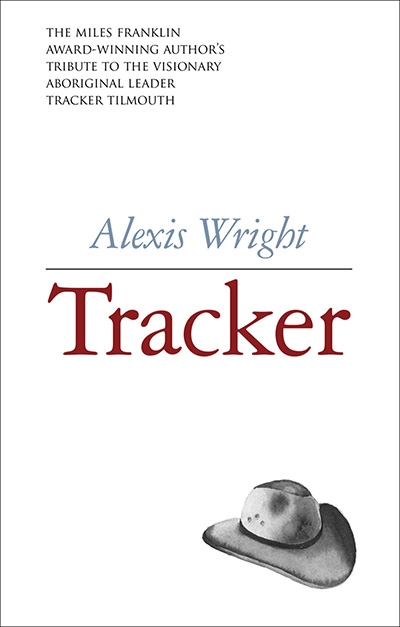
  • Alexis Wright’s Tracker (collective biography)(13/7/2020) recommended by Tegan Bennett Daylight who summarises this Stella-winner as “a chorus of voices about one of the country’s most prominent Indigenous activists is a glorious kaleidoscope of testimony”
Alexis Wright, Tracker

I wish The Guardian provided more about this project. How did the funding get extended and why did it stop? Regardless, there’s good reading here, both the books and the articles about them.

Finally …

This is a simple post, but interesting I hope. I am currently in Melbourne where our second grandchild, a little girl this time, has just been born. She is Neve Jessie, named for my lovely Mum. I’m just so thrilled, and not entirely focused on blogging.

What would you have recommended, if asked?

David Foster Wallace, How Tracy Austin broke my heart (#Review)

Many readers here, I know, are not the slightest bit interested in sports. You know who you are and I’m not going to out you, but you are welcome to do so in the comments. Meanwhile, this is for the rest of you who enjoy watching sports. For me, watching sports aligns well with being a reader, because sport is all story.

What I mean by this is that a sports event has a beginning, a middle and an end. It is full of character and characters. There’s also setting, and there are themes. Some relate to the characters. Are they the underdog, a star on the rise, someone coming back, an oldie having one last go, the bad boy? But, there can be darker themes too to do with politics, social justice, economics, and so on. I don’t need to elaborate them here.

As a lover and supporter of the arts, however, I certainly appreciate that sport can get more than its fair share of attention and money, but that’s not so much the fault of sport, itself. In the best of all possible worlds all forms of human endeavour deserve support and recognition. Enough, though, of my justification … on to David Foster Wallace.

American author David Foster Wallace was a person of wide interests, one being tennis. Several years ago I posted on his essay “Federer as religious experience”. That essay was very different to this one, but its approach is similar in that Wallace takes us on a journey, as he thinks through the issue in front of him. For this reason, I’m going to re-use a quote I used in my previous post. It’s from Best American essays editor, Robert Atwan, who defines the best essays as being

deeply personal (that doesn’t necessarily mean autobiographical) and deeply engaged with issues and ideas. And the best essays show that the name of the genre is also a verb, so they demonstrate a mind in process–reflecting, trying-out, essaying.

Wallace commences his essay by describing his love of tennis and, in particular, of child tennis star Tracy Austin who was born the same year he was. He consequently looked even more forward than usual to reading her sports-memoir. He’s self-deprecating about buying these mass-market books, ‘the sports-star-“with”-somebody autobiography’, saying that he usually hides them “under something more highbrow when I get to the register”.

Unfortunately, Austin’s “breathtakingly insipid autobiography”, being full of cliches and platitudes, might have broken his love of the genre. However, he decides to explore it to see if it might “help us understand both the seduction and the disappointment that seem to be built into the mass-market sports memoir”. He works through the issues, exploring our expectations of them, and why they might compel us. Unlike Wallace, I have never gravitated to these sorts of memoirs, but I can relate to some of the reasons he gives. These athletes are beautiful and inspiring. They make, in fact, “a certain type of genius as carnally discernible as it ever can get”.

So, we want to know them – who they are, how they did it, and how “it feels inside, to be both beautiful and best”. These memoirs, “explicitly or not … make a promise—to let us penetrate the indefinable mystery of what makes some persons geniuses”. But, the problem is, they “rarely deliver”.

He uses Austin’s trajectory to exemplify all this, and discusses why her ghostwritten book fails. It’s not only because it is poorly written. It forgets it’s for the reader. Rather, its “primary allegiance” seems to be “family and friends”, with “whole pages … given over to numbing Academy Award-style tributes to parents, siblings, coaches, trainers, and agents, plus little burbles of praise for pretty much every athlete and celebrity she’s ever met”. It also wallows in the cliches, stereotypes and myths that we’d actually hoped it would break open for us. It’s not that we are looking for “dirt”, but we want insight. The only insights we get in Austin’s memoir, Wallace shows, are unwitting ones where she naively exhibits her lack of awareness of reality, such as her protestation that her mother “did not force” her to play tennis at 3. What three-year-old has free choice? There are other, scarier, examples of naïveté, stories that an aware memoirist would tease out from the position of wisdom gained from experience.

There is also what Wallace describes as the Greek-like tragedy of Austin’s career, the fact that her “conspicuous virtue, a relentless workaholic perfectionism that combined with raw talent to make her such a prodigious success, turned out to be also her flaw and bane”. This too is not grappled with in the memoir. The book could have helped expose “the sports myth’s dark side”.

But then, in a very Wallace-ish way, he starts to turn his analysis around. He notes that this “air of robotic banality suffuses not only the sports-memoir genre but also the media rituals” in which top athletes are asked to explain their “techne” in those post-contest interviews. With the Australian Open just over, and the Winter Olympics on, I’m sure you know what he means. We get no insights, just “I stuck to the plan” or “focused on one point at time”, etc.

From here, Wallace starts to look at the issue from a different angle. He can’t believe, given what they achieve, that these athletes are as vapid as they come across. Maybe they achieve the heights they do because these “one ball at a time” cliches are true, that what goes through the athlete’s mind as they stand ready to serve, make the pass, whatever, is, in fact “nothing at all”.

When Tracy Austin accepts the car crash that ended her come-back attempt with “I quickly accepted that there was nothing I could do about it”, maybe this is true:

Is someone stupid or shallow because she can say to herself that there’s nothing she can do about something bad and so she’d better accept it, and thereupon simply accept it with no more interior struggle? Or is that person maybe somehow natively wise and profound, enlightened in the childlike way some saints and monks are enlightened?

This is, for me, the real mystery—whether such a person is an idiot or a mystic or both and/or neither. The only certainty seems to be that such a person does not produce a very good prose memoir.

Maybe, he continues, it is only spectators who are not divinely gifted athletes who can “truly … see, articulate, and animate the experience of the gift we are denied” while those with the gift are “dumb and blind about it”. Maybe this blindness and dumbness are not the price of the gift but its essence. I see an element of truth here, but the question is, where does this blindness start and end.

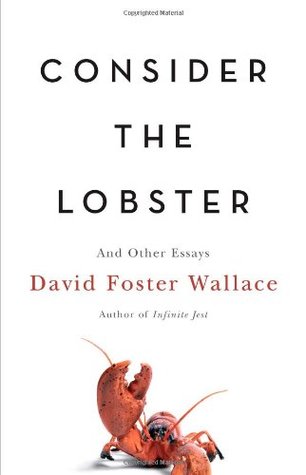
David Foster Wallace
“How Tracy Austin broke my heart” (1994)
in Consider the lobster and other stories
New York: Little, Brown and Company
pp. 164-181
ASIN: B00FORA1TO (Kindle edition)

Scanned version available on-line at psu.edu

James Weldon Johnson, Stranger than fiction (#Review)

Several months ago, I bookmarked a Library of America (LOA) Story of the Week offering – as I often do for later use – but, despite its being a very brief offering, I’ve only got to it now. It’s on James Weldon Johnson (1871–1938), and was timed, 17 June 2021, to synchronise with the 150th anniversary of his birth.

American readers here may know Johnson, but many of the rest of us probably don’t. Wikipedia describes him as an American writer and civil rights activist, but that hides a wealth of accomplishments. LOA, lists his achievements in a news item. He

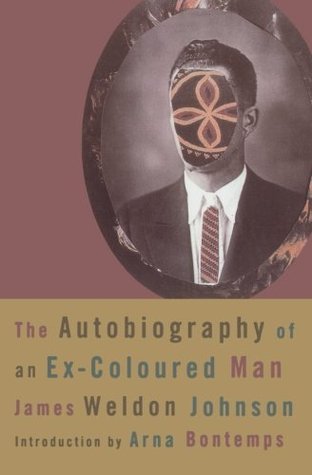
  • wrote one novel, The autobiography of an ex-colored man, “which is considered by many critics to be the first modern African American novel and a major inspiration for Harlem Renaissance writers”.
  • was a lawyer, the first African American from his county, or perhaps state, to pass the Florida bar exam.
  • was an educator, and president of the Florida State Teachers Association (for Black teachers).
  • was a songwriter who, with brother Rosamond and friend Bob Cole, wrote dozens of popular songs. Many ended up in Broadway musicals of the early 1900s. They also wrote two songs used for Theodore Roosevelt’s 1904 campaign. One of these, “Under the bamboo tree,” was a big national hit in 1902 and was later performed by Judy Garland and Margaret O’Brien in Meet Me in St. Louis). He and his brother wrote and composed the hymn “Lift every voice and sing,” also known as the “Black national anthem”.
  • was a diplomat, U. S. Consul in Venezuela (1906–1909) and in war-torn Nicaragua (1909–1912).
  • was a journalist at The New York Age, supervising its editorial page and writing a daily column for over ten years.
  • was an activist with the NAACP, who, in his role as field secretary, significantly increased the number of branches and the size of the membership.

LOA’s Story of the Week includes some biographical information that inspired his novel, and the text of his 1915 New York Age editorial which discussed the critical reaction to the novel.

“Stranger than fiction”

When I saw the title of this offering, I expected an essay, perhaps an entertaining one, on that old adage that “truth is stranger than fiction”, but I didn’t know the author then. What I got was something far more interesting.

LOA prefaces the essay, as usual, with some explanatory material. In this case, they start with two “dramatic experiences that would inform his writing and activism for the remainder of his life”. One occurred in 1895, when, as an enterprising new teacher (a black man, remember) he asked to visit a white school to see and compare practices. He did so, but apparently a few days later he learnt that his visit “had raised a hullabaloo”. Parents had objected to the presence of a “Black man” in their children’s classrooms. Johnson wrote that “The affair was fomented to such an extent that the board of education felt it necessary to hold a meeting to inquire into the matter and fix the responsibility for my action.” To their credit, the superintendent and the school’s principal stood their ground, and it all blew over.

The second involved his meeting a journalist in a park in 1901, at her request. She wanted to fact-check an article she was writing on the disproportionate damage done to Jacksonville’s Black neighbourhoods by the Great Fire. She and Johnson were confronted by “eight or ten militiamen in khaki with rifles and bayonets” who had “rushed to the city with a maddening tale of a Negro and a white woman meeting in the woods”. Again, it was resolved, but the ordeal left its mark.

Johnson’s novel, The autobiography of an ex-colored man (1912), which was inspired by experiences like these, has been described as the first fictional memoir by a black person. Set in late nineteenth to early twentieth century America, its protagonist is a young biracial man, known only as the “Ex-Colored Man”. Because of such experiences as witnessing a lynching, he decides to “pass” as white for safety and advancement reasons. The book chronicles his experiences and ambivalent feelings about his decision.

The book did not sell well initially, but sold very well three years later, after, says LOA, Johnson revealed himself as the author and “distributed several thousand copies of a glowing review that had appeared in Munsey’s Magazine“. This brings us, finally, to the essay, “Stranger than fiction”, which was published in 1915 in his daily column in The New York Age, where he was editor.

His aim was to give “a brief overview of the novel’s critical reception” but it was partly inspired, says LOA, by rumours that the estate of a wealthy woman publisher, Miriam (Frank) Leslie, was being contested by her late husband’s relatives on the grounds that she was the daughter of an enslaved women and therefore ‘her relatives had “no heritable blood”‘.

Johnson states at the beginning of his essay, that his book (novel)

produced a wide difference of critical opinion between reviewers on Northern and Southern publications.

Northern reviewers generally accepted the book as a human document, while Southern reviewers pronounced the theme of the story utterly impossible. A few of the Northern reviewers were in doubt as to whether the book was fact or fiction.

For many Northern reviewers, in other words, the work was so “real” they could barely believe it was fiction. (It doesn’t sound that, like Helen Garner’s critics, this bothered them.) Southern critics, on the other hand, asserted that the work was unbelievable because, writes Johnson,

the slightest tinge of African blood is discernible, if not in the complexion, then in some trait or characteristic betraying inferiority. This is, of course, laughable. Seven-tenths of those who read these lines know of one or more persons of colored blood who are “passing.”

As it turned out the Miriam Leslie rumours were unfounded, but Johnson at the time, believed it could have been true, and, if so, was “stranger than any fiction”. Which, ironically, just goes to prove the adage, whether the story was true or not!

Meanwhile, I was interested, though not surprised given how things are still playing out, in the disparity between Northern and Southern critical responses some 50 years or so after Abolition. Not strange at all, unfortunately.

James Weldon Johnson
“Stranger than fiction”
First published: New York Age, 1915
Available: Online at the Library of America

Monday musings on Australian literature: Posthumous publishing

The literary world is replete with works published posthumously. Jane Austen had two completed works published after she died, but there are many many others including Kafka, Tolkien and more recent giants like David Foster Wallace. In some cases, the writer had finished the work but time or some other reason resulted in its not being published in their lifetime. Austen’s two works are good examples. Northanger Abbey had been sold in 1803 to a publisher who never published it. It was bought back in 1816, and Austen worked further on it that year. Persuasion was completed that same year, which was the year of her death. Both were published months after her death through her brother. In other cases, as we discussed in last week’s post on unfinished works, writers specify that they don’t want their work published. Presumably, there are also cases where we just don’t know the creator’s thoughts. 

In 2018, The Conversation published an article on the ethics of posthumous publication, but, while it identifies ethical issues in relation to various authors, like Philip Larkin and WH Auden, it doesn’t fully grapple with them. It does, however, note that Auden’s literary executor, Edward Mendelson has written separately about his ethical dilemmas with regard to Auden’s wishes. For anyone interested in some stories, the article is worth checking out. The main point is that, as we discovered with Patrick White, it is most often the literary executor’s job to resolve the issue – and it isn’t easy.

This post shares a few examples of Australian posthumously published (mostly finished) works.

Across the ditch

Having said that, however, I’m going to start with New Zealand which is, after all, Antipodean, so close! (For those not in the know, “the ditch” refers to the Tasman Sea that separates Australia and New Zealand.)

My first example is the wonderful Janet Frame, and an interesting discussion on ABC RN’s The Book Show in 2008 about posthumous publication of Frame’s work. Presenter Ramona Koval discusses the posthumous release of literary works with Frame’s niece Pamela Gordon, chair of a charitable trust set up by Frame to manage her literary estate. Gordon said that she wished there’d been a “literary executor for dummies” guide to help her. Her job was facilitated by the fact that Frame believed in posthumous publishing, seeing it as “dignified”. Some of her works were not published in her lifetime for personal reasons. Frame also destroyed a lot of work that she felt was not up to being published. She also clearly indicated which poems she felt were finished. Frame wanted her poems published, and the first collection published after her death, The goose bath, was awarded New Zealand’s top poetry prize in 2007. Her 1963 novel, Towards another summer, and a 1974 novel, In the memorial room (Lisa’s review) have also been published, with, apparently, her prior approval.

My second example is an earlier, great New Zealand writer, Katherine Mansfield. She died suddenly in 1923, at the age of 34, of a pulmonary haemorrhage, leaving behind much unpublished work. Her husband, John Middleton Murry edited and published two short story collections, a volume of poems, a novella titled The aloe, and other collected writings. I’m guessing that dying so suddenly so young, she left no instructions and that we rely on her husband “knowing” her wishes.

My side of the ditch

I’ve written before about Patrick White’s literary executor, Barbara Mobbs, and her difficult decision to allow publication of White’s unfinished novel, The hanging garden. Literary executors have a challenging task, of which publishing unpublished works – my focus here – is only one aspect.

Many books, we are confident, were competed by their authors in the expectation of publication. Examples include my teenage favourite Nevil Shute’s Trustee from the tool room (1960); Morris West’s all but finalised The last confession (2000); Jacob Rosenberg’s The hollow tree (2009); Dorothy Porter’s poetry collection The bee hut (my review) and essay On passion (my review); Bryce Courtenay’s Jack of Diamonds (2012); Georgia Blain’s non-fiction The museum of words (2017); and Andrew McGahan’s The rich man’s house (2021). All were published within a year or two of their author’s death.

A different example, and one that may have better suited last week’s post, is Christina Stead’s I’m dying laughing, published in 1986. Wikipedia says that she worked on it on and off over decades between other works. One chapter, titled “UNO 1945”, was published in Southerly in 1962. A few years later, her New York agent wanted certain revisions, as did her British publisher. It appears that comments from an American friend about her handling of Hollywood radicals set off a long process of revision that she came to regret. The final book was put together by her literary executor, Ron Geering who says in the preface:

“What I inherited…was a huge mass of typescript ranging in finish from rough to polished and in length from page bits to different versions of whole chapters, along with piles of basic and supplementary material.”

There’s no suggestion here that Stead did not want it published.

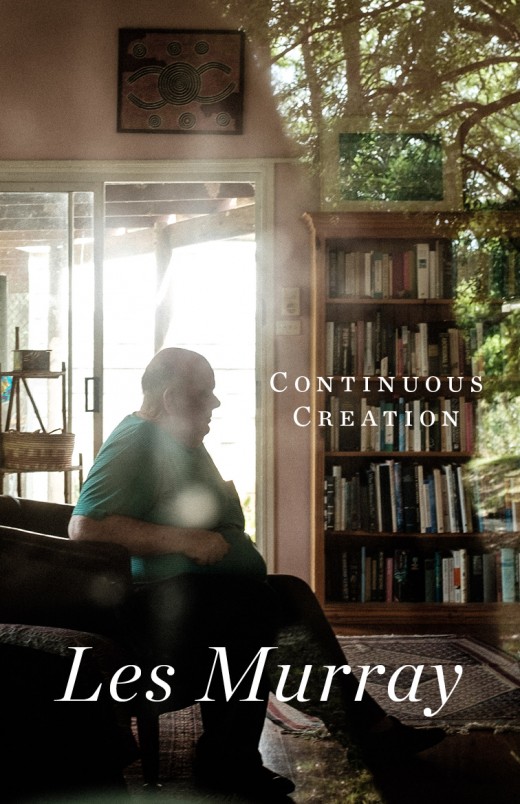
My last example is a book due for release next month, March 2022. It’s Continuous creation, a posthumous collection of poems by Les Murray. Publisher Black Inc says that the volume comprises “poems he was working on up to his death, as well as work uncovered from his scrapbooks and files”. Given his wife survived him, I assume she supports this publication.

Black Inc’s promotion for this book references the title poem, which, they write, calls up ‘the spirit of continuous creation, “out of all that vanishes and all that will outlast us”’.

“All that will outlast us”! Can’t think of a better conclusion for a post on posthumous publication.

Are you aware of reading posthumously published books, and does it make a difference to your reading experience?

Six degrees of separation, FROM No one is talking about this TO …

February already … and so another year starts to whizz by, or so it seems to me. Somehow, this Six Degrees theme just makes it all the more obvious as it comes around very quickly. But now, as it’s clear that I don’t have any small talk – or, alternatively I have too much – we’ll just get on with the main game. (Talking of games, wasn’t Australia’s summer of tennis great this year?!) Anyhow, if you don’t know this meme and how it works, please check meme host Kate’s blog – booksaremyfavouriteandbest.

The first rule is that Kate sets our starting book. This month, she’s chosen a book that was near the top of her Best of 2021 list, Patricia Lockwood’s No one is talking about this. I haven’t read it, so let’s push on …

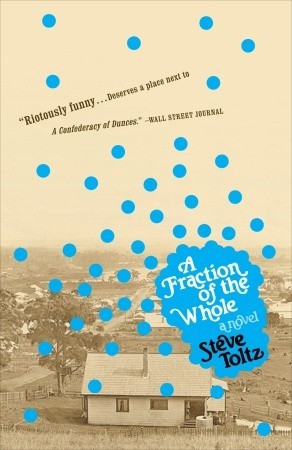
Steve Toltz, A fraction of the whole

As always, there were so many options for my first link, but I decided to go with the idea of debut novel shortlisted for the Booker Prize, which was the case for No one is talking about this. Many debut novels have been shortlisted for the Booker since it started, but one that I’ve reviewed here is Steve Toltz’s A fraction of the whole (my review). I’ve chosen it because it was a lively read and – well – because I like to remind us of older books that once made a splash.

Peter Temple, Truth

In 2019, ABR (the Australian Book Review) posted their Top 20 Aussie books of the 21st century, which seemed a bit silly given how early in the 21st century it was. However, it does provide me with an interesting link opportunity. Steve Toltz’s book came in at 17. At 16 was Peter Temple’s detective novel, Truth (my review).

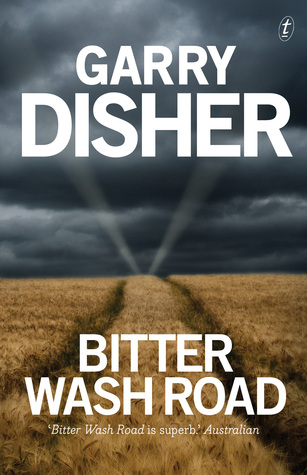
I’m not really a big reader of crime fiction, but I admit there’s some good writing in that genre, including good Australian writing. Truth was an International Winner of Germany’s prestigious literary prize for crime fiction, the  Deutscher Krimi Preis (German Crime Fiction Award). And so was Garry Disher’s Bitter Wash Road (my review). In fact, Disher has won this award a few times.

Book cover

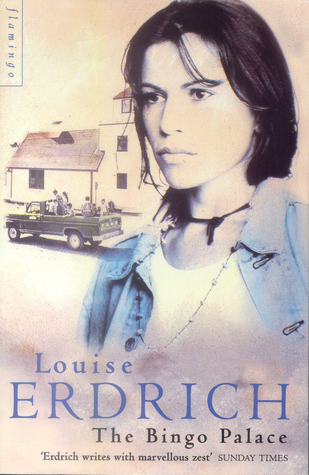
But, hmm, I’ve now linked three Australian books, so I would really like to get us overseas – in books, not just in awards! So, my next link concerns my TBR. Bitter Wash Road had been on my TBR for 8 years when I read it in 2021. A book that had been waiting much longer, from when I bought it in 1995 to when I read it in 2019, was Louise Erdrich’s The Bingo Palace (my review).

Book cover

Now, I’ve mentioned Louise Erdrich on my blog in another capacity besides for this book, and that was as an author who also owns a bookshop. Hers is Birchbark Books and Native Arts, in Minneapolis. Another American author who owns a book shop is Ann Patchett who hit big time with her novel Bel canto (read before blogging.) I read, loved and reviewed her essay (published as a booklet) on bookselling and bookshops, The bookshop strikes back.

And this leads me naturally to another essay by a novelist (and more) who worked in a bookshop, George Orwell’s “Bookshop memories” (my very short review). The essay draws from his work in a secondhand bookshop in London.

I rather like that I’ve gone from a book that deals, at least in part I believe, with the internet and the infiltration of social media into our lives with one about selling secondhand books, in which the author discusses people’s reading tastes! (And, for the first time, ever, I think, the male writers outnumber the female in my six links!)

Now, the usual: Have you read No one is talking about this? And, regardless, what would you link to?

Monday musings on Australian literature: Unfinished books (2)

“Literary history is replete with unfinished novels which ought never to have seen the light of day.” (Alan Taylor, Scotland’s The Herald.) 

Back in 2018, I wrote a Monday Musings post on unfinished novels. I was more interested there in why they were published and what the authors may have intended. This time, I’m focusing more on how reviewers have responded to reading unfinished novels.

I have read several unfinished novels over the years, Jane Austen’s The Watsons (my review) and Catharine, or the bower (my review), for example. As many of you know, another of her unfinished works, Sanditon, was recently developed into a television series. The less said about that the better, but I am horrified that a second series has now been commissioned from this, what, 11-chapter unfinished novel. It’s all about the money. Andrew Davies and his team are not the first to “finish” this novel, but my post is on the unfinished version. Reading the unadulterated work is always my preference, because my interest is in the writer and wanting to know them better, to see where they were heading, perhaps, or gain insight into the development of their ideas or their methodology.

On reading the unfinished

All this, though, is by way of introduction, since my Monday Musings focus is Australia.

So let’s start with Patrick White, and his unfinished novel The hanging garden (on my TBR). As I wrote in my first post, he had instructed his literary agent Barbara Mobbs to destroy all handwritten papers after his death. She didn’t, and eventually acquiesced to the requests and allowed a verbatim transcription of it to be published in 2012, the 100th anniversary of White’s birth.

Being a White novel, it was, of course, reviewed by many. James Hopkin, writing in the TLS Literary Supplement, described posthumous publication against the author’s wish as “questionable, if not distasteful”, but that didn’t stop him reading it. He concluded that, although unfinished, “it works as a self-sufficient novella, and a fine one at that. (So, in this case, the publisher may be vindicated.)” I’m not sure that’s a moral justification, but it is an artistic one! Alan Taylor, whose quote starts this post, agrees that it was worth publishing. He calls it “haunting and tantalising”, and says that “the feeling that remains after reading its 200-plus generously spaced pages is one of regret and sadness at its incompletion”.

Hopkin and Taylor aren’t Australian, but Michelle de Kretser is, and she starts her discussion with:

The publication of an unfinished draft is the writer’s version of that nightmare in which you find yourself naked in the street.

But, she doesn’t exactly address the moral issue either. Instead, she looks at it from an author’s perspective, writing that “White is manifest in this book – especially in the first half, where greatness marks every page.” But as this unfinished work progresses, she says

the sense of draft, barely perceptible earlier on, comes close to the surface. Most tellingly, the grand pavane of White’s style slows and slackens. In these pages, our dominion over the dead seems brutal – surely White would never have allowed the publication of this fragmented work.

Yet the coldblooded living gain.

Ultimately, she says, “it feels like a gift”.

I also mentioned George Johnston’s A cartload of clay in my previous post. It completes his My brother Jack trilogy, and was published in 1971, the year after his death in 1970. Responses to it represent the more common gamut of responses to reading unfinished works. John Lleonart who reviewed it in The Canberra Times called it “a mellow, often distinctly melancholy autobiographical essay”. He says that while Johnston had intended it to be a novel, its incomplete nature does not detract from it. “[T]he absence of a contrived ending is, indeed, a factor in the book’s impact as a human document”.

Papua New Guinea Post-Courier‘s reviewer only partially agreed, arguing that its incomplete nature makes it “inherently unsatisfying, though it constitutes a fine piece of poignant and reflective writing”.

Writing nearly 50 years later – in 2020 in The Guardian‘s Unmissables series (see my post) – writer Paul Daley says he has often reread the trilogy, and that this third, unfinished volume, “emerges with rereading as equally compelling, and as the most stylistically elegant and, without doubt, melancholic, of the trilogy”. But, the best line comes from Johnston’s biographer, Garry Kinnane, whom Daley quotes:

“Just as in autobiography, the most complete form of ending in autobiographical fiction is the unfinished work, in which the final interruption to the self-exploration has been made by death itself.”

Love it!

My last example comes from a writer who died very recently, in 2018, the crime fiction writer, Peter Temple. I’ve reviewed his Miles Franklin winning novel, Truth. In 2019, Text Publishing published The red hand: Stories, reflections and the last appearance of Jack Irish. It includes the unfinished Jack Irish novel found in Temple’s drawer. Titled High art, it is, says Text, a “substantial fragment” which “reveals a writer at the peak of his powers”.

Text shares some responses. ABR described it as “dazzling…instantly engaging” and Michael Robotham called it “vintage Temple with black humour, crackling dialogue, suspense and achingly beautiful descriptions…I kept turning the page and holding it up to the light, hoping for more words between the lines”. Love that, too.

But it’s Anna Creer, in The Canberra Times, who gets to the heart of the experience of reading an unfinished novel:

The delight of reading High art eventually turns to reading despair as it ends abruptly with a body being discovered in a drain.

This seems the perfect point to hand it over to you. Do you read unfinished novels, and if so, what is your experience?

Amy Witting, Isobel on the way to the corner shop (#BookReview)

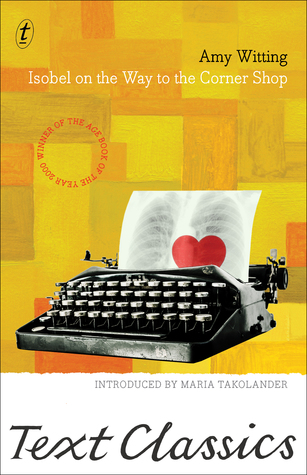
My first reading group book of the year, Amy Witting’s Isobel on the way to the corner shop, nicely doubles as a (late) contribution to Bill’s AWW Gen 4 week. Winner of the 1993 Patrick White Award, Amy Witting is one of those much-admired Australian writers who had not then and still has not received the full recognition she deserves. In her lifetime (1918-2001), she was admired by Patrick White, himself, and Thea Astley. Australian poet Kenneth Slessor is recorded as having said “tell that women I’ll publish any word she writes”.

Another admirer, Australia critic Peter Craven, argued that her form of realism wasn’t really accepted by the reading public until Helen Garner appeared on the scene, but for him “Witting was a great master of realism, a naturalist who could render a nuance in a line that might take a lesser writer a page”. Take for example this two sentence paragraph from our socially unconfident protagonist early in the novel:

The prison of other people’s eyes. No prison narrower.

So now, the book. Isobel on the way to the corner shop (1999) picks up the story of Isobel Callaghan that Witting had started in I for Isobel ten years earlier. You don’t need to have read the earlier book to enjoy and appreciate this one, because enough of Isobel’s past is given for us to have a sense of why she is the person we meet here.

“I have to step out into space”

The person we meet is a 21-year-old woman who, having received some encouragement from an editor, is struggling to establish herself as a writer. She’s poor, starving and isolated, having left her job after screaming at a colleague in “a rage”. She fears she’s going mad. I was engaged from the start by her strong sense of self, her vulnerability, and her determination to be independent, and I enjoyed every moment I spent with her. I felt anxious, as anxious as she did when she felt she was going mad, and just as relieved as she was when her illness was given a name – tuberculosis.

The first third of the novel introduces Isobel and takes us to the moment of her admission into Mornington Sanatorium in the Blue Mountains. In this section, some of the novel’s themes become apparent – one being the artist’s struggle to survive. Another concerns love. The novel starts with Isobel stalled over writing a love scene, because she doesn’t “know the first thing about it”. Not about parental, family love; not about romantic love. This, and her sense of herself as awkward and unlovable, cause her to make a big – and hurtful – mistake when a young man makes a gesture of real affection towards her.

Over the rest of this section of the novel, Isobel meets some people who show genuine kindness – love – towards her. Although the hospital makes her feel like a “parcel”, the section closes with a comforting touch from hospital volunteer Mrs Delaney, “the first time anyone had touched her in kindness”. Through the remainder of the novel, Isobel observes and experiences all sorts of expressions of love (and its opposite), including through a delightful little poetry discussion group at the sanatorium, which starts when Doctor Wang asks Isobel to explain Gerard Manley Hopkins to him.

In the final two-thirds of the novel, another theme that was nascent at the beginning, comes to the fore, and it’s to do with “being oneself”. Isobel’s sense of self is challenged at the sanatorium. It’s an inspired setting because it encompasses a microcosm of society: patients of a disease that doesn’t discriminate between rich and poor, their visitors, and the doctors, nurses and other staff with whom the patients come in contact. Finding your place in such a world, where you can be stuck for months, is not easy.

Isobel is particularly tested by her room-mate Val, a peevish, inflexible, and, she thinks, illiterate woman. Val is unhappy, and like many unhappy people, is self-absorbed. She “felt for no-one”. Try as she might, Isobel cannot get their relationship onto a comfortable footing:

Is it possible to cause so much misery to another human being, simply by being oneself? she wondered, feeling a reflection of that misery. No help for it; she must continue to be herself.

Maintaining your self is difficult, though, when you are “different”, as our funny, resourceful, and compassionate Isobel clearly is. At one point, when her recovery is threatened, she realises that she must be tougher, and so creates a new mantra for herself, “bastards get better”.

There is, surely, a hint of autobiography here, for Amy Witting’s name is a pseudonym, chosen to remind herself to “never give up on consciousness’, not be unwitting, but to always remain ‘witting'”.

Gradually Isobel does get better, physically and emotionally. She discovers, for example, that people from her old workplace cared deeply about her:

I have to live as if…I have to assume that I have some importance to other people. I have to live accordingly. I have to step out into space.

With this comes debts and responsibilities, something new for her to accommodate.

Peter Craven described Witting’s work as “a form of realism”, and “realism” sounds valid to me. The novel contains minimal drama of the narrative-arc kind. Instead, there’s astute, warm and sometimes wry, observation of ordinary people living their lives. Witting looks into the hearts and minds of human beings to understand who we are, and how we get on together with all our differences. She also offers some subtle social commentary about gender, race, poverty, class. These are not the main game, but they inform the realism inherent in the setting.

Ultimately, Isobel on the way to the corner shop is about how a young artist learns to maintain her integrity, her authenticity, while also behaving responsibly and compassionately. It is, in a way, about growing up, but it encompasses far more too.

Amy Witting
Isobel on the way to the corner shop
Melbourne: Text Classics, 2015 (orig. pub. 1999)
311 pp.
ISBN: 9781922182715

Monday musings on Australian literature: Untapped (The Australian Literary Heritage Project)

I have Lisa (ANZLitLovers) to thank for this Monday Musings because, commenting on my recent Margaret Barbalet post, she mentioned this Untapped project, which, embarrassingly, was unknown to me. Then, seeing our discussion, novelist Dorothy Johnston joined in, and offered to send me some information, which she did. So, I now have a copy of the launch announcement press release. This eased my embarrassment a little, as the project was announced two months ago, on 18 November 2021, and was launched on 6 December (at this gala event). Easy to miss, says she, at such a busy time of year!

Yes, yes, but what is it, I hear you all saying? Essentially, Untapped aims “to identify Australia’s lost literary treasures and bring them back to life”. In other words, it’s about bringing to the fore again those books that have been published in the past but are now out-of-print. The books are produced in eBook format, and are available for borrowing from libraries and purchase from several eBooksellers.

I like that it’s “a collaboration between authors, libraries and researchers”, and that “it creates a new income source for Australian authors, who currently have few options for getting their out-of-print titles available in libraries”. The project has some significant partners, including the Australian Society of Authors, National State and Territory Libraries, the Australian Library and Information Association and Ligature Press. 

What a visionary and practical project. I am particularly thrilled about it because it ties in somewhat with our reframing this year of the Australian Women Writers Challenge (AWW) to focus on forgotten and past women writers. The two activities don’t completely align: the new AWW is focusing on works published fifty or more years ago, whereas Untapped focuses on books that have gone out of print, and many of these are far more recent than 50 years old.

On the Untapped website, linked above, they have clearly outlined the steps:

  1. Identify missing books: it seems that the current collection comprises 161 books, which they describe as an “inclusive and diverse selection of lost books in need of rescue”.
  2. Find the authors and obtain the rights: this, I imagine, would have been particularly time consuming, tracking down the appropriate people to deal with – authors, estates and/or literary agents.
  3. Digitise the works: this involved scanning, then using OCR to convert the text, followed by careful proof-reading and scan quality checking. For this proofreading they focused on “hiring arts workers affected by COVID”. Then there’s all the work involved in (digital) publication, including design, metadata, royalty accounting, and uploading onto the library lending and other platforms.
  4. Promote the collection: this is where the libraries come into their own, promoting the collection in their various ways, and ensuring payment to the authors. Dorothy Johnston mentioned in her comment on my post that “we’re hoping to generate some publicity through the Geelong Regional Libraries this year”. She’d love to find any other “current or past writers living in or writing about Geelong” who might be covered by the collection. If you live in Geelong, keep an eye out for this.
  5. Collect the data and crunch the numbers: like any good project, its managers will analyse the sales and loan data. Their aim is “to understand the value of out-of-print rights to authors, the value of libraries’ book promotion efforts, and the relationship between library lending and sales”. They will feed this data, they say, “into public policy discussions about how we can best support Australian authors and literary culture”. They also hope the project might encourage new interest from commercial publishers. This research aspect is led by Rebecca Giblin, Associate Professor of Law, University of Melbourne.

As I understand it, the initial project involves this collection of 161 books, and the research will be based on this, but having created the infrastructure, they plan to “keep rescuing lost literary treasures” for as long as they have the resources to do so. The books will also be lodged at the National Library as part of its e-deposit scheme, ensuring that they’ll be available “for as long as libraries exist”.

It’s a great initiative that will spotlight work from beloved Australian authors and provide new access to those works. (Olivia Lanchester, CEO, Australian Society of Authors from Press Release)

The books

When Lisa mentioned the project, it was to say she’d bought Margaret Barbalet’s non-fiction book, Low gutter girl: The forgotten world of state wards, South Australia, 1887–1940. So, curious, I checked the site out, and bought Canberra tales, the anthology of short stories by Canberra’s Seven Writers (Margaret Barbalet, Sara Dowse, Suzanne Edgar, Marian Eldridge, Marion Halligan, Dorothy Horsfield, Dorothy Johnston) .

However, Lisa’s purchase should tell you something interesting about the collection, which is that it contains not only fiction. It includes a wide range of genres and forms, including novels, histories, memoirs, and poetry. The project also wanted a diverse collection, so there are works by First Nations author Anita Heiss, Greek-born Vogel/The Australian award winning author Jim Sakkas, and Lebanese-born writer and academic Abbas El-Zein, to name a few. Their books are all 21st century, but, there are also significantly older books, like Katharine Susannah Prichard’s Intimate strangers (1937) and M. Barnard Eldershaw’s Tomorrow and tomorrow and tomorrow (1947).

I thought, of course, to check my own library, the ACT Library Service, and found an announcement on their website. Not surprisingly, they draw attention to a Canberra connection, as Johnston would like to do in Geelong:

The books include some with a connection to Canberra, through the author or substantial Canberra-related content. For example: The golden dress by Marion Halligan, One for the master by Dorothy Johnston, The moth hunters by Josephine Flood, The schoonermaster’s dance by Alan Gould, and others.

I should add that all of Canberra’s Seven Writers are included.

So, a wonderful project. The question is, will it achieve its goal of ensuring the long tail of authors’ works stay available in a world where money not culture rules?