Novellas in November 2023: Week 4, The short and the long of it

This week’s question is the Novella version of Nonfiction November’s Book Pairings. It goes like this

Pair a novella with a nonfiction book or novel that deals with similar themes or topics.

I am doing several pairings with Jessica Au’s novella Cold enough for snow (my review), because although it’s a “little” book, it’s so rich.

  • Mother-daughter trip instigated by a daughter, novella-novel pairing: Larissa Behrendt’s novel, After story (my review), is about a daughter taking her mother on a literary tour of England. Behrendt’s novel, however, had a clearer resolution than Au’s complex “little” book in which the issues to be resolved are more subtle and internal.
  • Mother-daughter migration stories, novella-memoir pairing: I’m pairing three books here, Susan Varga’s Heddy and me (my review), Anna Rosner Blay’s Sister, sister (my review), and Halina Rubin’s Journeys with my mother (my review). These three hybrid biography-memoirs are all about post-war migrations, and in each the daughter is challenged by her mother, though in different ways. Sometimes it’s that the mother is hesitant to share a painful past, while in others the mother is a challenging personality. In Cold enough for snow, the issue seems to be a sense of distance or difference that the narrator feels with her migrant mother, and their respective expectations, and a desire to work that through.
  • Mother-daughter disconnect, novella-novella pairing: Elisa Shua Dusapin’s Winter in Sokcho (my review) is about a daughter who struggles to live up to her mother’s expectations and those of the society she lives in. Both daughters seem uncertain about their relationship with their mothers, and both have decisions to make about the way forward in their own lives. Both novellas have open endings.
  • Daughters questioning their relationships with their mothers, novella-memoir anthology pairing: Rebellious daughters (my review), edited by Maria Katsonis and Lee Kofman, contains stories about rebellions against mothers (and also some against fathers and grandmothers). Not all are resolved but as I wrote in my post, in most of the stories, age and experience eventually bring rapprochement: daughters come to understand their mothers (or whomever) a little more, while their mothers likewise learn to accept the daughter they have. In Au’s book, there is a sense that the daughter has come to understand her mother more but also to understand that there are limits to this understanding.

Do you have any pairing ideas?

Written for Novellas in November 2023

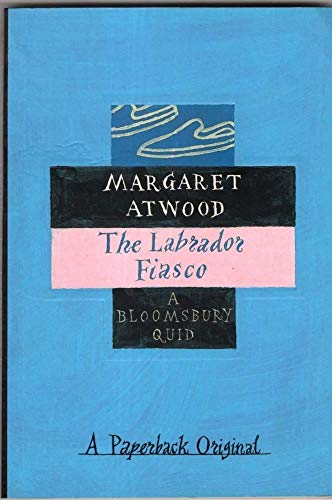
Margaret Atwood, The Labrador fiasco (#Review)

Although I am an Atwood fan from way back, I haven’t, to date, taken part in Marcie’s (Buried in Print) MARM (Margaret Atwood Reading Month) event. But I promised her I would this month, albeit with just one little short story probably, this one. I have had The Labrador fiasco on my “little book” TBR shelf since it was produced as a Bloomsbury Quid back in the 1996. I have no idea why I have not read all my little books, but, there you go!

Most of you will know Margaret Atwood (b. 1939). I read several of her books before blogging – including her dystopian novel, The handmaid’s tale; her historical fiction novels, Alias Grace and The blind assassin; and her more contemporary novels Cat’s eye and The robber bride – and I have more on my TBR. But, I have only reviewed her twice here, her novella, The Penelopiad (my review), and her recent poetry collection, Dearly (my review). Now, I bring you a short story. This woman is versatile.

As far as I can tell, “The Labrador fiasco” was first published in this edition. Many of my “little books” comprise previously published short prose works, but this doesn’t seem to be the case here. I have three other Bloomsbury Quids, two of which were previously published, with the other, Nadine Gordimer’s Harald, Claudia and the son Duncan (my review), also seeming to have been first published as a Quid. Interesting, but not relevant to my discussion of Atwood’s story, so let’s move on. The Quids, though, are gorgeous little books.

“The Labrador fiasco” is a “story-within-a-story” story. (Ha!) The framing story concerns the narrator and her aging father and mother. (The narrator’s sex is not provided, but let’s go with female as Atwood is female.) The father, in particular, is declining, having experienced a stroke six years before the story’s opening. It is told first person by the daughter, who regularly visits her parents.

The story within comes from Dillon Wallace’s The lure of the Labrador wild, published in 1905. Wallace was, says Wikipedia, “an American lawyer, outdoorsman, author of non-fiction, fiction and magazine articles” and this, his first book, was a bestseller. It tells of an exploratory trip through Labrador undertaken by Wallace and a man called Leonidas Hubbard, with their Cree Indian guide, George. The Cree bit is important as the Cree are not from the region they were travelling in. Anyhow, the aim was to explore a part of Labrador that hadn’t been explored by Europeans, with Hubbard wanting to “make his name”. However, as Wikipedia (and Atwood’s story) explains, they took the wrong river from the start, with tragic consequences.

Atwood’s story opens with:

It’s October; but which October? One of those Octobers, with quick intensities of light, their diminuendos, their red and orange leaves. My father is sitting in his armchair by the fire. He has on his black and white checked dressing gown, over his other clothes, and his old leather slippers, with his feet, propped up on a hassock. Therefore it must be evening.

There’s so much going on here, besides the gorgeously structure sentences. We are immediately put on the back foot with “which October”, and “it must be evening”, but at least the father is very much present. The uncertainty suggests that the story is being told from a later time. Whichever October it is, however, it is autumn – or fall – and that means the season of decline. Within a couple of paragraphs, we learn of the father’s stroke, and know he is declining. But, the question, “which October”, also hints at the October in the Wallace-Hubbard story when things have really started to sour – because not only is it cold of course, but our explorers have taken the wrong route and are running out of supplies.

This is the set up. As the story progresses, the narrator’s father, who was an experienced outdoorsman himself in his day, provides a running commentary on the explorers, with the narrator adding her own layer. “They took the wrong supplies”, the father says, pleased because he would have known what to take. However, our narrator wonders “what supplies could they have taken other than the wrong ones” … “No freeze-drying then” or “nylon vests”, for example.

“harsh and unmarked and jumbled”

What Margaret Atwood does in this story, then, is parallel the deterioration in the condition of the explorers as their expedition goes awry, with the narrator’s father’s decline as he ages. The explorers leave things behind, their feet suffer because they don’t have effective footwear. The father leaves hobbies behind, and says his feet are too sore to walk. The father thinks he would have done the expedition better, but he faces his own “forest” and in fact, like the explorers, he and his supporters are not fully equipped to deal with it.

And so it goes. In under 40 (very small) pages, Atwood combines commentary on a failed (colonial) expedition, conveying the poor planning and hubris of those involved, with a tender family story of an adult child and mother coping with a failing father. To do this she calls on her obvious love and knowledge of Canada’s history and “wilderness” (a contested term now, I know), and her keen interest in humans and how our lives play out.

We are all explorers, I think Atwood is saying, and the way, at least some of the time, can be “harsh and unmarked and jumbled”. It takes all our energy to traverse it. Good planning and the help of others can ease the way, but in the end, we each have to do it on our own. A clear-eyed, clever and tight story with an ending that encompasses genuine warmth with an acceptance of life’s realities. Beautiful.

Read for MARM 2023

Margaret Atwood
“The Labrador fiasco”
London: Bloomsbury, 1996 (A Bloomsbury Quid)
64pp.
ISBN: 9780747528890
Available online at Independent, 1996

Monday musings on Australian literature: Your 7-year-old self

Emma Ayres, Cadence

Ok, I admit it. This post’s link to Australian literature is tenuous, but there is a link, even though it’s not the subject of this post. The link is that the person who inspired this post, Ed Le Brocq, previously known as Emma Ayres, has written several books – memoirs, mostly – of which I’ve read and posted on one, Cadence. Since then, as Eddie/Ed Ayres and Ed Le Brocq (married name), he has published Danger music, Whole notes and Sound bites. None of these, however, have much to do with this post, though they all interest me.

Ed Le Brocq became known to many of us – starting back when he was Emma – as a radio announcer on our ABC Classic FM. She was hugely popular. Since then, she left radio, travelled some more, transitioned to Ed, and in 2019 returned to ABC Classic FM, doing the Weekend Breakfast show. I often listen in. This last weekend, he told a little story and asked us a question – and I thought, for a change of pace, that I would ask it of you too.

The story goes this way – but needs a little explanation first. As well as radio announcing, Ed Le Brocq performs music, and teaches it – the viola and cello. The story concerns a lesson he was conducting recently from his garage because his usual venue in a school wasn’t available. A mother walked by with her 7-year-old son and apparently the son was attracted to the music. He came into the garage, and asked, “What’s that you’re playing?” and, on being given the answer, said, “I want to play that too”. He will start lessons next year – on one of those two stringed instruments.

Ed was fascinated by the child’s recognition of something that he really wanted to do, and asked the radio audience whether they knew around that age what they wanted to do – and whether they’d done it. So:

Did you realise when you were around 7 years old (give or take a couple of years) what your interest or passion was, and is that what you ended up doing in some way or another?

It seems I did. When I was around 5, my father was President of the local Apex group (a service organisation roughly like Lions and Rotary). I was fascinated by his papers, and am reported as saying, “When you die, can I have your Apex stuff?” Jump a few years to when I was around 11, and I remember myself creating a little neighbourhood library, complete with Date Due notations in the back of my books. Around the age of 14, I encouraged my sister to help me write an encyclopaedia, starting with one article per letter (though we didn’t get far because adolescence hit!)

Is it any wonder that I ended up being a librarian-archivist – and that it was a career I loved?

Now, over to you …

Novellas in November 2023: Week 3, Broadening my horizons

This week’s question is new to me, and I like it. It goes:

Pick your top novellas in translation and think about new genres or authors you’ve been introduced to through novellas.

I love this question because it feels like I’ve read almost more novellas in translation than English language novellas. Is this because translation is such a difficult and expensive task that publishers tend to commission translations for shorter books more than for longer ones? But no, I don’t really think so. Just look at all those big Russian classics that have been translated – and translated more than once. My guess is something more simple, that perhaps some literary cultures value novellas more than others.

This idea is supported by something I read only a few months ago in Trove. The article, which appeared on 6 July 1907 in Sydney’s The Australian Star, cites an English writer named Basil Tozer, who had made a “plea for shorter novels”. He commented that

The habit of loading a story with indifferent descriptive passages still prevails to a great extent, though it might with considerable advantage be dispensed with. A beautiful woman loses her charm when every good point she possesses, from the creamy smoothness of her complexion to the alluring, curve of her eyebrow, is described separately and in detail; and in the same way a glorious scenic panorama metaphorically falls flat when every square mile of it is analysed and dissected. 

He says these “faults” are “commonest among young writers” but also occur “among some of our novelists who have served a long apprenticeship”. He doesn’t name these offending writers, but he does name the opposite, French writers like Daudet, Hugo and de Maupassant, whose writing includes no “superfluous verbiage”. These are, he admits, three of France’s most polished fiction writers, but even “the rank and file” French novelists “seldom err upon the side of overloading their work with unnecessary vocables and third-rate descriptive passages”. He argued that British novels would be strengthened if they were more condensed. That was over 100 years ago, but I wonder – without much evidence to support it – whether there really is something cultural in this?

Whatever … I can say that of the translated fiction I’ve read over the years, novellas represent a large proportion. This started way before blogging, and is not because I specifically chose to read novellas. They just seemed to be the books most often recommended to me.

So, before blogging, my favourites included Albert Camus’ The outsider (French, and which I did first read in French, as L’étranger, at school), Alexander Solzhenitsyn’s One day in the life of Ivan Denisovich (Russian), and Gabriel Garcia Marquez’s Chronicle of a death foretold (Colombian). These three have stuck with me over a long time. Marquez’s has such a mesmerising opening, “On the day they were going to kill him…”

Since blogging, I have read so many compelling translated novellas that I find it hard to choose, but I’ll name three, in alphabetical order by author, that have captured my interest:

Yuri Herrera, Signs preceding the end of the world
  • Yuri Herrera, Signs preceding the end of the world (Mexican, my review), because it deals with the Mexican-USA migration issue, but with an almost mythical tone that overlays it with a bigger story about crossings and transitions.
  • Patrick Modiano’s Sundays in August (French, my review), because of the carefully structured journey we are taken on, one that leaves us at the end with so many questions to think about, while also revealing enough about what had happened that we know its impact on the protagonist.
  • Sayaka Murata’s Convenience store woman (Japanese, my review), because of the way Murata gets into the head of her mystified outsider in a culture that values conformity.

I found it hard limiting myself to three but, it had to be done or I’d go on forever.

In terms of how these have broadened my horizons, well, there’s the obvious thing to do with reading different cultures. Herrera’s and Murata’s books deal with issues I know to be significant in their cultures, but it means something to read about them from artists working within the culture rather than from the perspective of the news. Modiano’s exploration of disappearance, loss and memory is less obviously a specifically French issue, but it does I think have roots in a postwar European sensibility.

Each book uses the novella form a bit differently, but each is characterised by a sustained tone which can denote a novella. By this I mean that novels, being longer, will often vary the tone because not to do so could become oppressive, whereas the intensity of a sustained tone (whatever that tone may be) is part of what makes a novella. I’m generalising of course, but this seems to be the case in the novellas I love.

As for the other part of the question. I don’t think I’ve been introduced to new genres through novellas, just to different ways of writing those genres, but I have certainly been introduced to many great new writers – like the three above, for a start. But, moving away from translation, I have been introduced to other writers too through their novellas, such as Edith Wharton through her intense Ethan Frome. From that introduction, I went on to fall in love with Edith Wharton.

Novellas … any whichway, I love them.

What about you?

Written for Novellas in November 2023

Finlay Lloyd 20/40 Publishing Prize 2023 Winning Books Launch with Conversation

I have written about Finlay Lloyd’s 20/40 Publishing Prize a few times now, so I hope I’m not imposing too much on your precious time. However, this weekend was the launch here in Canberra, and it involved a conversation led by a favourite Canberra journalist, Virginia Hausseger, with the two winning authors. I had to go.

The participants

Rebecca Burton and Kim Kelly are the two winners, and I’ve introduced them before, so just to recap, Burton is an editor and author of two young adult novels, while Kelly is also an editor and the author of twelve adult historical fiction novels.

Virginia Hausseger is, to use Wikipedia’s description, an “Australian journalist, academic advocate for gender equity, media commentator and television presenter”. She is well-known to Canberra audiences, having been our local ABC news presenter from 2001 to 2016.

Julian Davies did the introductions. He is the inspiring publisher and editor behind Finlay Lloyd, a company he runs with great heart and grace (or so it seems to me from the outside.)

The conversation

Before the conversation started proper, Julian provided some background to the prize. Human nature, he said, seems drawn to large things. Why else would we have things like the Big Potato! What is it about large things? He sees it related to the “tussle between quality and quantity” and thinks there’s something problematic in our tendency to admire the grand and overlook the miniature. (Yes!) He believes restrictions can liberate writers, and sees the novella form as perfect for this. It can encourage succinctness while allowing room for development. I don’t expect he had any argument about that in the room.

He reminded us that it was judged blind (by two old men and three young women). That it was won by published writers shows that those who have developed their craft are likely to shine through.

Then, Virginia took over …

On their novellas

Kim described her novella with beautiful succinctness saying it was set in 1922 Sydney in the wake of World War 1, just as the city was starting to wake up. It’s about grief, and about how recognising pain in the other leads to the young women rescuing each other. She added a little later that many novels have been written about the War, but not so many about after it, and even fewer about young women’s experience of that time.

She has written three novellas, and “kind of” knows at the beginning which form the story will be. The impetus for this one was wanting to impress a potential PhD supervisor. While researching Trove she saw the ad for the Room (which she included as an epigraph.) Virginia remarked that the closing pages set up a whole new story.

Rebecca said that hers was about two teenage sisters over six weeks of summer in 1986. The old sister, who is anorexic, has been admitted to hospital for bed-rest, and the younger sister visits her daily. It’s about what the sisters learn about each other, and the impact of this condition on the family.

She said that she hadn’t set out to write a novella, but she is comfortable with a word length which is shorter than the standard novel. Then she saw the prize! Writing adult fiction is a new genre for her, but she had stopped reading YA fiction and adores literary fiction. A friend suggested that she write what she reads. Sounds good advice to me.

On Ladies Rest and Writing Room

Kim explained that rest and writing rooms “were a thing” in the late 19th and early 20th centuries, for men and women. What is special about hers is that it was in a department store, and how it was advertised.

Dotty’s grief comes out in shopping addiction and behaving as though she had a death wish. She is so tied up in herself that she doesn’t notice her old schoolmate Clarinda. The book is built around the moment of recognition, that is, when Dotty “sees” Clarinda.

When Virginia commented on how well the “story gallops along” while still being “tight, descriptive, elegant”, Kim said that was the “magic of editorial process”. Also, she said, she knows that Sydney well.

On Ravenous girls

Answering where her story came from, Rebecca said that it was a story she had to write. Frankie had been with her for a long time, and a story about her childhood kept coming to her. The trickiness was not so much the 1986 summer story, but managing the way the time telescopes at the end. She wanted to nod at the years that go by after someone comes out of hospital.

When Virginia commented on how well she’d handled the scene of another girl post-hospital, providing an alternative glimpse of how it goes, Rebecca said she wanted to tell other stories because every story is different.

Young Frankie loves her sister, but is bewildered. An enlightening moment for her is when she realises that sister Justine is the only one allowed to suffer, that her own pain is not seen. She realises that the story she’s been told is not right. Hers is a story of loss, grief, sadness. She’s left to her own resources, and because her older sister is sick, she’s left with no role model.

As for Justine, she uses hunger to mute her desires. Rebecca said that her working title was Yearn, and quoted that great line from the novella, “I don’t want to want the things I want”. Justine feels shame for wanting things, and so starves herself for wanting them.

On the physical process of writing

Kim throws her whole self into a new project, trying to get it all down before she loses her emotional or imaginative connection. Then she goes away, coming back some time later to a “full tub of play dough” that she can then mould. She is able to quarantine the time to work this way because as a freelancer she can manage her time. She loves to be free to fly through the story.

Rebecca has a very different more measured process. She works part-time to a set roster, so has a “chipping away” process. Since her new job, she has created a ritual involving getting up an hour earlier than usual, making a cup of tea and writing for an hour. This helps her manage the peaks and troughs that happen with writing. If things go badly she can get up and go away, leaving it for the next time, and if they go well, she can get up feeling good! It’s important for her not to get obsessed with writing.

On the editing process

Rebecca said for her it went structural edit, then copy edit, then the final proofread. The delight of working with small publisher was that time was allowed for growth.

Kim seconded Rebecca’s comment about the delight of working with Julian, who “cares about words and ideas”. In her worklife as commercial fiction editor, time is of the essence, so she luxuriated in the “nurturing” experience of working with Julian.

On what’s next

Kim’s next project is her PhD, which will include a story about an ancestral grandfather who intersects with Dickens. It’s an idea she has had for a long time, but she will need to try Rebecca’s “chipping away” approach for this!

Rebecca has these characters in head, and wants to see these young girls into adulthood. This could mean three related novellas, the next set in 1993 with Justine in recovery and in her first relationship. She wants to explore recovery because some never move beyond “functional recovery”. The third book she’d like to be about Frankie in her 30s or 40s to see how things have worked out for her. Some of these futures are hinted at in Ravenous girls.

Virginia was an excellent, well-prepared and enthusiastic interviewer. She knew the books well and showed genuine interest in them and their authors.

There was no Q&A which suited me, as I had to rush off to get to my monthly Jane Austen meeting where we were to discuss the up-and-comers in Austen’s novels. However, I did have a very brief chat, as I was leaving, with the other “old man” judge, John Clanchy whose writing I love and who had commented on my recent novella post. He talked about his interest in the form and the choices writers need to make when working within it, such as which characters or stories to develop and which to leave by the wayside.

The Finlay Lloyd 20/40 Publishing Prize Winning Books of 2023 Launch
Harry Hartog Booksellers, Kambri Centre, ANU
Saturday, 18 November, 12.30-1.30pm

Kim Kelly, Ladies’ Rest and Writing Room (#BookReview)

Early in the month I reviewed the first of the two winners of Finlay Lloyd’s inaugural 20/40 Publishing Prize, Rebecca Burton’s Ravenous girls (my review). It was set in Sydney in the 1980s. Now, as promised, I bring you the other winner, Kim Kelly’s Ladies’ Rest and Writing Room. It is also set in Sydney, but in the early 1920s. Some of you will know Kim Kelly, as she has published around 12 novels, mostly historical fiction. Not only that but she was longlisted for the ARA Historical Novel Prize 2022 and shortlisted for the Viva La Novella 2021 prize with her novella, The rat catcher: A love story.

So, she has written novellas, before. A check on her GoodReads page revealed others, including what I think is her best known book, Wild chicory. So, she, like Rebecca Burton, is comfortable with the novella form (or length).

Finlay Lloyd describes the book on their website like this:

Two young women, brought up to expect conventional lives, are thrown together in unexpected circumstances. Each has suffered a devastating loss that challenges their belief in life and themselves. It’s rare to come across a work of deep psychological insight conveyed with such verve and lightness of touch.

As I said in my opening paragraph, Ladies’ Rest and Writing Room is set in 1920s Sydney. The title is explained in the first of two epigraphs. It comes from an advertisement in the Sydney Morning Herald, in 1922, for the Ladies’ Rest and Writing Room in Farmer’s department store. This “artistic room” was intended as a place of respite for busy shopping ladies. It was also where they could also write any “urgent notes” for “the very next mail”. Writing facilities were provided for the purpose. The room was, of course, intended for the well-heeled, as you paid a “nominal charge of 8d.” to avail yourself of its charming “rose shades”. The second epigraph comes from Sappho, which might or might not tell you something!

The story is told in from alternating third person perspectives of two young women. One is the apparently entitled Dotty, who comes from a wealthy business family and who uses the Room in the opening chapter. She is introduced, however, on the street outside where she plays chicken with a tram every Tuesday on her way to Farmer’s and its titular room. Why does she do this? We soon come to understand the pain this young woman, who seems on the outside to have it all, is dealing with. And it’s to do with World War 1, if you haven’t already guessed from the time setting.

The other young woman is down-on-her-luck Clarinda, who has just started work as the Room’s attendant. She went to school with Dotty, but Dotty, in her grief, doesn’t notice her, which doesn’t surprise Clarinda after her shooldays’ experiences with Dotty. Clarinda has her own sadness, partly stemming from losses in the War, but also from the fact that due to her father’s tragic death she and her mother are now on the proverbial hard times.

The narrative takes place over a few weeks encompassing Christmas, and comes to a head when Dotty’s pain becomes too much for her, resulting in a crisis in the Corset Salon (next door to the Ladies Rest and Writing Room). Clarinda steps in to protect Dotty, and, through what ensues, both young women grow. Clarinda treats Dotty with compassion and forgiveness, while Dotty wakes up to sadnesses in others.

What I most enjoyed about the book is its evocation of post WW1 1920s Sydney. Kim Kelly knows the place and the time well, and, despite the shortness of the novella form, she vividly captures a city and people in flux – the grief of wartime loss, the changing workforce as men return home after the war, the increasing migration, the excitement of change in the air, but with old social values and class structures still in place.

Clarinda, for example, was grateful for having finally landed a decently paid job:

It certainly beat unreliable casual waitressing at three shillings a luncheon, or three and six per dinner service, or sixty hours per week as a shop assistant at considerably less than two pounds, both of which she’d done, piecing together a living. All the better paying more respectable clerical positions for which she was qualified, were being given to returned soldiers, and that was fair enough, except that nothing fair had happened for Clarinda since her brothers were ripped from this life and …

So much is told in these words.

Kelly is also adept at characterisation, creating two well-differentiated characters in Dotty and Clarinda. They immediately come to life on the page, which is particularly important in a novella where there’s no time to waste. We care about them both, because we are privy to what’s going on for them, and thus to their isolation, even if those around them aren’t.

The writing and plotting are assured. Kelly is clearly experienced in writing historical fiction where description and rhetorical language are used to create the sort of atmosphere and tone needed to drive a plot forward. Kelly does this very well, and I quickly became engrossed in these two girls’ lives. It’s a novella that wears its heart on its sleeves, and I wondered at times whether some pulling back might have challenged us readers to delve into more of the complexities, and maybe leave us with more questions than answers. But, that would have been a different book. As it is, Ladies’ Rest and Writing Room is beautifully accessible and will hopefully attract more people to the novella form. It and Ravenous Girls would make excellent stocking stuffers for busy readers in your lives. And I don’t mean this condescendingly! I am referring to their perfect stocking-stuffer size!

As with all Finlay Lloyd books, the design is gorgeous, with an appealing monochromatic cover featuring a woman’s hands writing a letter. Very different to your usual historical fiction cover.

Ladies Rest and Writing Room is a good read about a significant and complicated time in our history. Like Ravenous girls, it is a compassionate book, this one about navigating deep loss and the grief that attends it, and, even more, about the importance of generosity in dealing with others. I wish these two books well and thank Finlay Lloyd for sponsoring such an appealing, targeted prize.

Read for Novellas in November. Lisa (ANZ Litlovers) and Theresa (Theresa Smith Writes) have reviewed both winners in one post, but I have done them separately.

Kim Kelly
Ladies’ Rest and Writing Room
Braidwood: Finlay Lloyd, 2023
122pp.
ISBN: 9780994516596

Prime Minister’s Literary Awards Winners, 2023, announced

The Winners of the the Prime Minister’s Literary Awards for 2023 were announced this evening.

The website says that 643 entries were received across six literary categories: fiction, non-fiction, young adult literature, children’s literature, poetry, and Australian history. Each shortlisted entry receives $5,000 with the winner of each category receiving $80,000. The awards are now being managed by Creative Australia, rather than by the Department of the Arts, which should provide the right arms’ length distance and avoid the problems of political interference which soured some of the early awards.

The event, which I attended in livestreamed form from the National Library, was slick but not superficial. Arts Minister Tony Burke inspired me once again, not only with his passion for the importance of the arts to Australia and his determination to entrench arts policy in government, but with his obvious personal engagement with arts across all forms. I’ve seen it before, and I saw it again. It’s a joy. As MC, Benjamin Law said, any Minister who takes poetry into the office has “got the vibe”.

Below is the shortlist for the three categories I am most interested in, with the winners marked in bold.

Fiction

  • Jessica Au, Cold enough for snow (my review)
  • George Haddad, Losing face
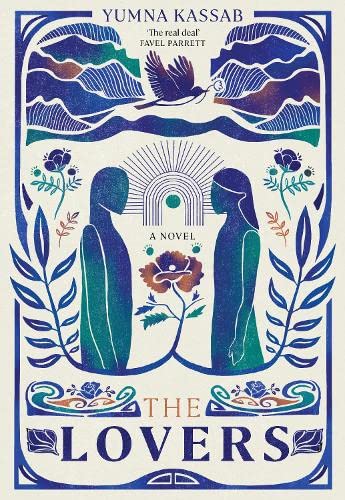
  • Yumna Kassab, The lovers 
  • Fiona McFarlane, The sun walks down
  • Paddy O’Reilly, Other houses (Lisa’s review) (on my TBR)

Non-fiction

  • Debra Dank, We come with this place (my review)
  • Louisa Lim, Indelible city: Dispossession and defiance in Hong Kong 
  • Brigitta Olubus, Shirley Hazzard: A writing life
  • Thom van Dooren, A world in a shell: Snail stories for a time of extinctions
  • Sam Vincent, My father and other animals: How I took on the family farm (Vincent said that he “wants to change perceptions about what Australian farmers can do and be” particularly regarding their relationships with First Nations people)

Australian history

  • Alan Atkinson, Elizabeth and John: The Macarthurs of Elizabeth Farm
  • Rohan Lloyd, Saving the Reef: The human story behind one of Australia’s greatest environmental treasures
  • Russell Marks, Black lives, white law: Locked up & locked out in Australia
  • Shannyn Palmer, Unmaking Angas Downs: Myth and history on a Central Australian pastoral station
  • Lachlan Strahan, Justice in Kelly Country: The story of the cop who hunted Australia’s most notorious bushrangers

Other category winners …

  • Poetry: Gavin Yuan Gau, At the altar of touch
  • Young Adult fiction: Sarah Winifred Searle, The greatest thing (Searle said during her acceptance speech, referencing how challenging the world is to navigate, “admit you’re scared even if you don’t have answers”.)
  • Children’s fiction: Jasmine Seymour, Open your heart to country

The complete shortlist with judges’ comments can be seen on the website. But I will say that the shortlist and the winners are impressively diverse, in who created the works and in their subject matter. So good to see.

Our lives are made more meaningful in the presence of a talented scribe. (Benjamin Law, closing the awards presentations)

Thoughts?

Chris Hammer in conversation with Jack Heath

Apologies for those of you expecting a Monday Musings. I did think about it, as this conversation turned out to be a bit of a Chris Hammer retrospective so it could have worked as one of my Monday Musings spotlight-on-an-author post. However, after considering my options, I decided to call this post what it is, a report of an author event. It was held at the wonderful Muse Canberra, a restaurant-cum-bookshop or vice versa, where co-owner Dan did the introductions before passing the baton to Jack Heath to conduct the conversation.

The participants

Chris Hammer is a multi-award-winning local Canberra author, who worked for 30 years as a journalist, during which he also published two nonfiction books. Since 2018, when he was 58, he has written six bestselling crime novels. (If he’d been around when I wrote my Late Bloomers post in 2011, he would have qualified – as the only man!) His first three novels (Scrublands, Silver, and Trust) feature the journalist Martin Scarsden, with the next three (Treasure and dirt, The tilt, and The seven) featuring a detective duo, Ivan Lucic and Nell Buchanan. The seven was the official subject of the conversation.

Jack Heath is also a local writer – of fiction for children/young adults and adults. He is definitely not a late bloomer, having published his debut novel, The lab, in 2006, when he was 20. Since then he has written around 40 science fiction and crime novels. His new book, Kill your husbands, is coming out now.

From these intros, I think you’ll be able to work out who’s who in the pic!

The conversation

I loved that Jack launched straight in, with little of the usual pleasantries. It was clear that they were comfortable with each other, which is probably not surprising, both being Canberra-based crime writers.

On moving from nonfiction to fiction 

Although his first novel only came out five years ago, Chris said that fiction had always been a passion. Like many writers, he has in his drawer a very bad one he wrote in his 20s (that will never see the light of day – unless, joked Jack, you don’t destroy it and your literary executor thinks otherwise! We all know some of those examples.) Chris said he didn’t have the talent or attention span for fiction when he was young, so he turned to journalism, but persistence pays off.

On dramatic openings

The seven starts with a bizarre death. Is this his modus operandi, Jack wondered. Chris’s answers to this and the next question were fantastic, taking us through his novels, and, at the same time, his development as a writer. I’m not sure I’ve ever attended such a lucid discussion of a writer’s oeuvre in one session before.

After giving a sly little plug to the premiere of the Scrublands TV series on Stan later this week, Chris said not all start like that, but most, including Scrublands, do. He finds it works effectively.

However, Scrublands did not start like that. He was six or seven drafts in before he decided to start with a prologue describing the murder. He was learning on the job, he said. The narrative then jumps a year with his journalist investigating the murder on its first anniversary.

With The Seven, the dramatic opening death marks the start of a contemporary story. The homicide detectives arrive. (The murder victim is an accountant. They are good victims, Chris said, because they have secrets. That got a laugh.) Anyhow, the killer is still on loose, so the detectives are in a race against time. But, there are two other storylines: a university student in the 1990s who decides to do his thesis on the history of irrigation (during which he finds some skeletons); letters from an Indigenous girl from 1913. The connection between them all is not clear until near the end.

On his voices

All Chris’ novels are set in Australia, and all but one are rural. Will this always be the case? Further, Scrublands, his debut novel, features a journalist, a bit like himself. It is set in the present, but gradually, through his later books, he has been moving back in time, and diversifying his characters. How did he get into voices that aren’t a middle-aged ex-journalist?

Chris described his development beautifully:

  • Scrublands, the first of his journalist series, has a simple structure, and is told completely chronologically.
  • Silver, the second in the series, has similar trajectory but there are flashbacks.
  • Trust, the third (and currently final) in the series, has two alternating points-of-view.
  • Treasure and dirt, the first of his detective duo (Ivan-Nell) series, has a dramatic prologue (like Scrublands) and alternating points-of-view. The duo start finding crimes in the past, and this got him into some exposition. However, writers are always told to show-not-tell, so in ….
  • The tilt, the second Ivan-Nell book, he decided not to use exposition, which meant needing to create voices from the past. The 1973 voice wasn’t a big stretch since he was alive then, but the 11-year-old boy from World War 2 was a challenge, so he created an old man looking back on his time as an 11-year-old. This novel has multiple (four, I think) points-of-view.
  • The Seven, the third Ivan-Nell book, also has multiple points-of-view from different times, but they include a 15 to 16-year-old Indigenous girl. Before I or anyone could ask the question, Chris said that we need diverse – including Indigenous – characters in books, otherwise it’s terra nullius all over again. But there’s the issue of appropriation, so he decided to tell her story through letters, which, he said, can be unreliable, given people “present” themselves through letters.

Each book, he told us, has built on the experience of the previous books, with the latest ones being “more accomplished”. This doesn’t necessarily mean they are better stories! Jack interrupted, though, with the comment that Chris just keeps getting better and better.

By this point in the session, I felt we were getting gold.

On second-guessing issues of the day

Jack noted that many of his books seem to have second-guessed coming issues of the day (such as reference to Afghanistan war crimes in 2018’s Scrublands, and irrigation corruption in The seven). How did he do it?

Some has been luck, some has come from keeping his ear to the ground (with his journalist friends). For example, rumours were just starting to appear regarding the SAS-Afghanistan war crimes when he was writing Scrublands, so he included that. Given it’s fiction, he didn’t have to be factual. Most of his books are set in rural Australia, where ongoing concerns are climate change and Indigenous dispossession. These are part of The seven. It’s not hard to write his stories, he said, because, given its history, “the Australian continent is a crime scene”. Touché. He added that “Crime writers often touch on matters of societal concern”.

However, the opal mines’ skulduggery in Treasure and dirt he made up, only to be told later that what he’d described really does happen.

On changing his setting

Most of his novels, except for Trust, are set in dying country towns, but The seven’s setting is a beautiful, tidy town. Was he playing against his “type”?

The answer in a single word was No – but he was looking for something new. An earlier novel had featured a lot of water, and he thought water-trading would be good to explore, but not in that book. The town in The seven is fictional, but is based on Leeton, which was planned by Canberra’s Griffins. It has circular layouts and lovely art deco buildings.

On being a nice guy!

Finally, Jack, saying what a nice guy Chris was, offered four reasons: 1. he’s not really nice, but is a villain; 2. he’s so successful, he can afford to be generous; 3. he came to success late, so he realises how lucky he is; and 4. he’s just always been very nice!

Having learnt from his two nonfiction books how hard it is to make a living from writing, Chris considers himself fortunate to be “living the dream”. Scrublands was life-changing, and he is very grateful. He is financially secure and doesn’t have to struggle for that work-life-writing balance that most writers do. Also, Australian crime writers are welcoming and collegial, and – unlike many journalists – have their egos under control!

Q & A

There was a brief Q&A, some of which required knowledge about Hammer’s earlier books.

  • On whether there will be more Ivan and Nell books, or a new tortured detective: The next book is another Ivan one, but he is thinking of bringing journalist Martin back. (The way this questioner started her question made Jack and Chris palpably nervous about spoilers!)
  • On whether he plots carefully: As I’ve heard authors say before, Chris said there are the “plotters” (like Jane Harper) and the “pantsers” (like himself). He has a setting, an idea, and a few plot lines, and then sees how it goes. If he doesn’t know where the plot is going, how can the reader, the implication being this is good in crime writing. He also wants his main character/s to have “skin in the game”. There is usually an emotional storyline, whose trajectory he knows, but the crime plotting is done constantly as he goes.
  • On his “silly” character names, which critics have commented on: If I understood correctly, he said that as he was writing Scrublands, he got a bit bored and created fun names. He feels sheepish about them now as he is stuck with them, the reason being he has many recurring characters, and can’t really have recurring characters with exotic names alongside new ones with plain names. Also, his editors didn’t complain, which they’d do if they disapproved. And, one reader told him that the distinctive names helped her keep track of who’s who.

A wonderfully lively session, one enjoyed also by Mr Gums who has read three of the novels, and bought a fourth from Muse.

Chris Hammer in conversation with Jack Heath
Muse (Food Wine Books)
Sunday, 12 November 2023, 3-4pm

Nonfiction November 2023: Choosing nonfiction AND Book pairings

My participation in Nonfiction November has been sporadic, but this year I have done Week 1, and am now combining Weeks 2 and 3, partly because there’s an element of repetition in my Week 2 responses.

Nonfiction November is hosted by several bloggers. This year, Week 2 – Choosing Nonfiction is hosted by Frances at Volatile Rune, and, my favourite, Week 3 – Book Pairings, by Liz at Adventures in Reading, Running and Working from Home.

According to the plan, Week 2 finished last Friday (10 November), and Week 3 commences tomorrow (Monday 13 November), so I am dragging the chain for the first and jumping the gun for the second, by posting today, Sunday 12 November.

Choosing Nonfiction

This week the questions relate to what sort of nonfiction we like to read. My answers will mostly be known to regular readers here, but there are some new twists on the questions.

What are you looking for when you pick up a nonfiction book?

Depending on the book and the topic, I am looking to learn something new, to increase my understanding of something I already know, and/or to have my perspective challenged (which might result in my changing that perspective, or, being able to better defend it.) The two books I named in my Week 1 post – Debra Danks’ We come with this place (my review) and JD Vance’s Hillbilly elegy (my review) – satisfied at least one of these criteria.

Dank’s book, in fact, satisfied all three – I learnt new things about First Nations history and culture; I better understand it, particularly in terms of connection to Country; and, as a result, I can better explain and defend my support for First Nations’ people’s fight for fairness.

Do you have a particular topic you’re attracted to?

I haven’t changed from what I’ve said before, which is that my overriding interests are literary biographies/memoirs, nature writing, and works about social justice/social history (which includes First Nations history and decolonisation, climate change and feminism.)

This year, as you already know, I’ve read very little nonfiction, but those I’ve read have been memoirs in the social justice/social history area.

Do you have a particular writing style that works best?

For want of a better word, I enjoy what is broadly called creative or narrative nonfiction. Because I love fiction, I like the writing to be engaging and evocative, which tends to mean writing that draws on some of the techniques of fiction to tell a nonfiction story. This does not mean playing with the facts, but making the facts, shall we say, accessible. Where a case is being argued, I want it to be clear and logical, not characterised by academese or jargon that is understood only by those in the know.

While this question doesn’t specifically ask it, I also like, where it’s appropriate, to know what sources have been used (either through an author’s note or footnotes/endnotes), and I LOVE an index. I know indexing is expensive, but, unless you are reading an eBook with search functionality, the value of a nonfiction book can be seriously diminished by the absence of an index.

When you look at a nonfiction book, does the title or cover influence you? If so, share a title or cover which you find striking.

I wouldn’t say I am influenced by titles and covers, because with nonfiction – for me, anyhow – content or subject matter is queen. However, this is not to say that a good titles and beautiful covers don’t enhance the experience, because they do.

Debra Dank’s We come with this place is a powerful title. It categorically announces that First Nations people were always here, that is, they WERE HERE when the settlers/invaders arrived. More than that, it suggests they are an intrinsic part of, if not essential to, this place. WE. COME. WITH. THIS. PLACE.

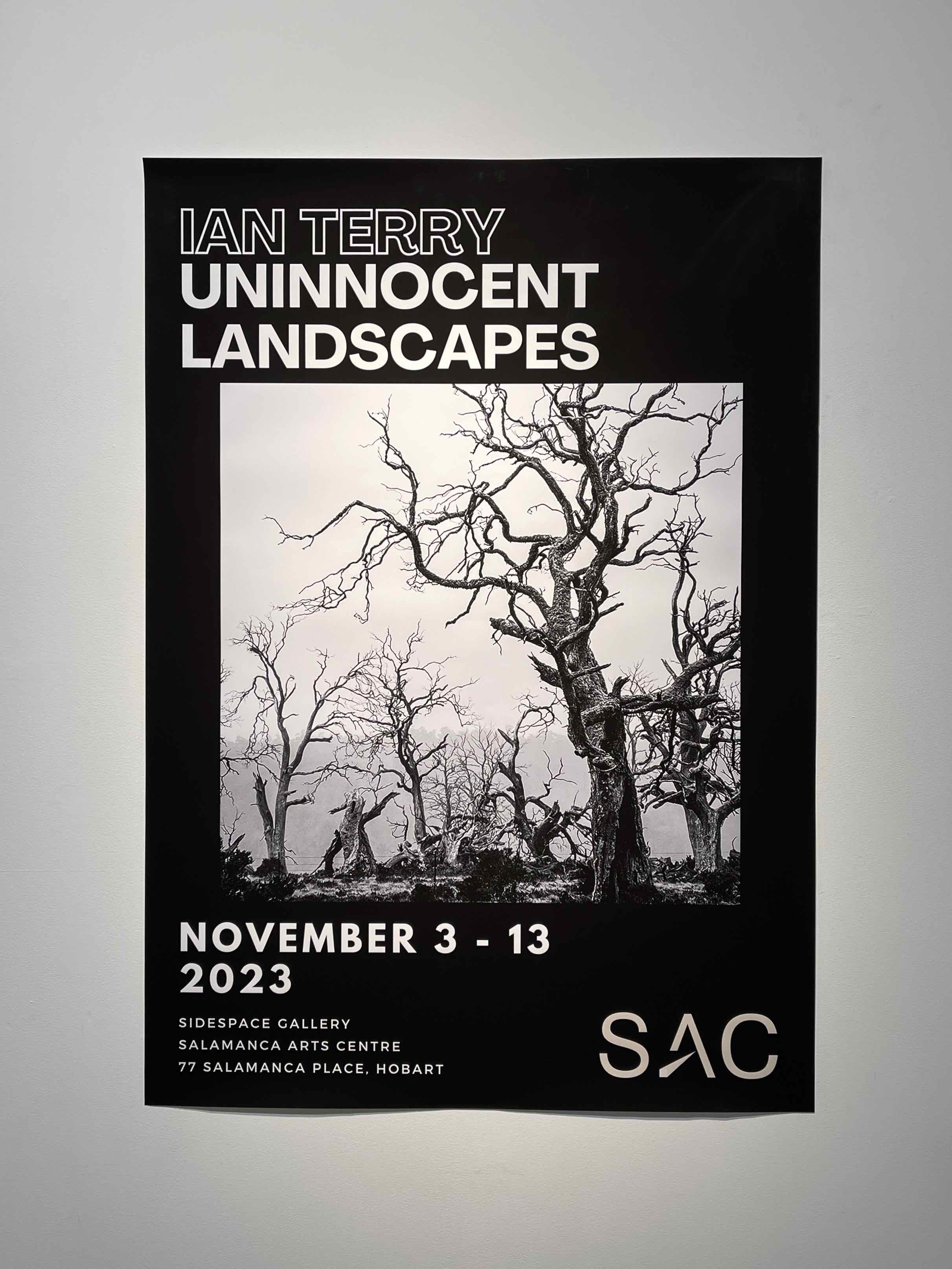
By brother Ian Terry’s book, Uninnocent landscapes, also has a strong title (but I will discuss that in my review). The book’s design and its cover are also glorious. The cover is striking in a minimalist restraint that also happens to be literal, in that it depicts Robinson’s journey that Ian followed.

Book Pairings

Our instruction is to “pair up a nonfiction book with a fiction title. Maybe it’s a historical novel and the real history in a nonfiction version, or a memoir and a novel, or a fiction book you’ve read and you would like recommendations for background reading. You can be as creative as you like! “

Okay, so my creativity will extend to two pairings:

Nonfiction read this year, paired with fiction from any year

Alexis Wright, Carpentaria

Debra Dank, We come with this place with Alexis Wright’s Carpentaria (my post). For a start, both books are set in neighbouring parts of northeast Australia, just south of the Gulf of Carpentaria. Secondly, both convey, in powerfully descriptive ways, the catastrophic dislocation experienced by First Nations peoples when they are separated from Country and/or when they are not able to interact with Country in the ways that are essential to their (and Country’s) wellbeing.

Fiction read this year, paired with nonfiction from any year

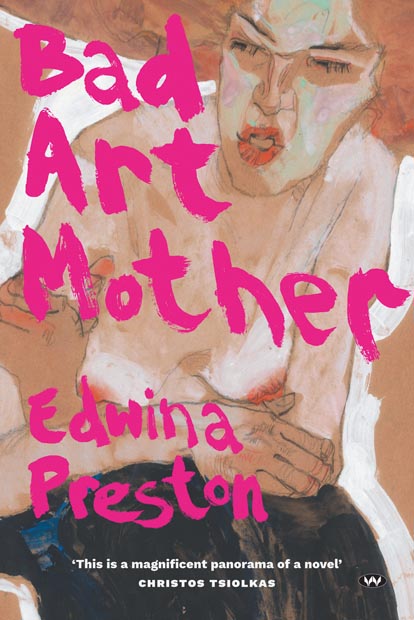
I have read a lot of First Nations and other non-white/BIPOC fiction this year, but I’ve already focused on First Nations writing in the post, so I’m changing tack, and am pairing Edwina Preston’s Bad art mother (my review) with Jane Sinclair’s memoir Shy love smiles and acid drops (my review), which I read early last year. Preston’s novel was inspired by several Australian artists (visual artists and writers) including the story of Sunday and John Reed’s adoption of Joy Hester’s son Sweeney. Jane Sinclair’s parents were part of the Reeds’ Heide Circle, and in her book Sinclair includes letters written by her mother to Sunday Reed, which include discussions of Sweeney. These are just two of the books I’ve read which deal with or reference in some way Heide. There are many more I haven’t read, as this Circle was not only fascinating but one of the most influential in Australia’s arts history, particular in terms of Modernism.

What would you pair (and/or do you have anything to share regarding the first questions)?

Novellas in November 2023: Week 2, What is a novella

The thing about these annual memes is that the questions became somewhat the same, which is fair enough as new bloggers appear on the scene as do new ideas. However, my challenge is whether I have anything to add to what I have written about novellas before? The answer is not a lot, but I did listen to the beginning of the 20/40 winners’ interviews on the Finlay Lloyd website. I didn’t listen for long, because it’s a combined interview and I haven’t finished reading the second book. My preference, where possible, is to gather and write my own thoughts before I hear other ideas (including those of the authors).

However, the interview started on the topic of novellas, and the two winners did have some interesting things to say about them which add to what I’ve said before. I’ll recap those ideas first by (re)sharing the Griffith Review’s Julianne Schultz on novellas. She said they are

stories that are longer and more complex than a short story, shorter than a novel, with fewer plot twists, but strong characters. Condensed tales that are intense, detailed, often grounded in the times, and perfectly designed for busy people to read in one sitting.

Most of the novella definitions out there say things like this – in more or less words, and with different emphases here and there. In the 20/40 Prize interviews, authors Kim Kelly and Rebecca Burton put their own interesting spins on it.

Kelly said novellas are books you can read in a couple of hours, without racing but also taking your time. Yes! Good call, I thought, because I do like to take my time with what I am reading, and this works well with novellas. I can take my time but not take forever! Kelly also commented on the value of novellas from the writer’s perspective. As a busy person, she says, she has little time for writing, but once a story “presents itself as a novella” she can see the finishing line and get there faster! I love insights like that into the practicalities of a busy writer’s life.

The interviewer and, more relevantly, the publisher, Julian Davies, made a point about structure, suggesting that a novella is long enough for the writer to develop something but not so long that such development can get away from them. Burton picked this up, saying that, with a novella, writers have time to develop but can still retain “a fleetingness”, a sense of “capturing a moment in time, a breath, a mood”.

Kate Jennings, Moral Hazard

Somewhat less poetically, Kate Jennings, as I recorded in my in praise of the “taker-outers” post, described novellas as “sinew and bone”, which Davies captured in the interview by using my favourite cliche, “less is more”.

I agree with all these definitions, but I’d like to add that novellas can also offer writers the possibility of experimentation. Writers can try things out without getting lost in excessive verbiage, or they can simply be experimental without being constrained by any expectations of form. I’m thinking, for example, of Ida Vitale’s Byobu (my review) or of Kate Jennings’ Snake (my review).

For this week 2 of the meme, we are also encouraged to suggest works that best capture the ‘spirit’ of a novella. I have done that before (Little Treasures and Classic Australian novellas), but let’s just say that in recent years I could add some new memorable books like Sayaka Murata’s Convenience store woman (my review) and Jessica Au’s Cold enough for snow (my review) which are condensed, intense, detailed tales focusing on a limited set of characters. But I could also add experimental books like Byobu, that aren’t that at all.

What about you?

Written for Novellas in November 2023