Rebecca Campbell, Arboreality (#BookReview)

Arboreality, by Canadian writer Rebecca Campbell, won the 2023 Ursula K. Le Guin Prize. However, not being much of a speculative fiction reader, I didn’t discover this book through this award. Fortunately, some bloggers I follow, like Bill (The Australian Legend), do follow this genre, and his review convinced me that this climate change dystopian work fits into the sort of speculative fiction that does interest me.

Before I talk about the book, however, a little about the prize. It was established in 2022, in honor of Ursula K. Le Guin, and is currently worth $25,000. It has some specific criteria: it’s an English-language award for a single work of “imaginative fiction”, and intends to honour authors who “can imagine real grounds for hope and see alternatives to how we live now”. This last bit is interesting – “real grounds for hope”. It reminds me of the Barbara Jefferis Award, which now seems to be in abeyance, but which was controversial because it stipulated that the winning work had to depict “women and girls in a positive way [my emph] or otherwise empowers the status of women and girls in society”. I don’t believe literature must offer hope or be positive, but I have no problem with awards sponsors making such stipulations.

So now, that out of the way, the book. It is set on Vancouver Island, a beautiful part of the world that I have visited. It’s novella in size, but, structurally, is best described as a collection of six inter-connected short stories:

  • “Special collections”
  • “Controlled burn”
  • “An important failure”
  • “Scion and root stocks”
  • “Pub food”
  • “Cathedral arboreal”

These stories are presented more or less chronologically, starting with the first two stories being set in the very near future (up to around 2050) with the last encompassing 2100. They are linked in various ways – by location; by characters (encompassing family and friends, ancestors and descendants, over time); and, as you’d expect, given the title, by trees, particularly but not exclusively, the arbutus and its mutant version, the golden arbutus. Each story focuses on a specific issue or idea and plays it out through personal stories, such as an academic saving books from a “crumbling” library (“Special collections”); a suburbanite trying to revive a devastated garden with local plants, as one-by-one his neighbours leave (“Controlled burn”); a luthier hunting for seasoned tonewood, via the black market if necessary, to make a Cremona-worthy violin (“An important failure”). These highly personalised stories are placed in context, through the addition of another voice – an omniscient narrator, in italicised sections – which conveys the wider ecological, economic and political picture. We see the land change through fire and rising sealevels; we hear of space colonisation; we learn of pandemics. It’s cleverly done, and although it requires concentration, I was more than willing to go with it because the vision Campbell presents is compelling in its awful believability. That, I think, is what telling a near-future story can achieve. It’s hard to pretend it won’t happen.

“What are we going to do?”

What makes this book so beautiful, however, is the way Campbell manages convey both absolute horror alongside a sense of hope born of human ingenuity, resilience, and sheer doggedness. Jude and Berenice, fighting a losing battle in their mission to save books, must constantly downgrade their expectations, which means becoming more and more selective about what is saved (and therefore also what is lost to human knowledge), but they don’t give up, and these books are seen in 2100. Similarly, Bernard, in his now empty suburb where gardens have died due to a watering ban, doggedly works to find plants that will live in his and neighbouring gardens, which we see, a few generations later in “Cathedral Arboreal”, has become a forest. And Mason’s “secret history” violin also appears in this last story in another generation. These people will not let go even though they are very aware of what has been lost, of what they have lost.

We’ve lived here for ten thousand years. Someone survived everything history threw at them, the fires and tsunamis, the earthquakes, the smallpox, the settlers. Empire. Capitalism. Someone’s going to survive this. (Benno, c. 2071, in “Scions and Root Stocks”)

The ecological story Campbell tells, alongside the human one, is fascinating, albeit probably more challenging to those of us who don’t know the plants of the region and their significance – the garry oak, the arbutus, the camas (lily), fireweed, Douglas fir, and so on. I know some of the plants she names, but I don’t know their particular role in the culture, their horticultural essence and value, or their symbolic meaning (if any any). Some I looked up, and some I didn’t, but certainly Campbell’s story is rich with interconnections here too, between past, present and future, and between Indigenous and non-Indigenous practices.

One of the meanings of “arboreality” is “of, relating to, or resembling a tree” which makes it a good literal title for a book in which trees stand for so much that is important to life – ecologically, culturally, and psychologically. But Campbell is also, perhaps, playing with the “sheltering” notion implied in “arbor” and “reality”.

The Ursula K. LeGuin Prize’s selection panel wrote:

Arboreality is a eulogy for the world as we know it. Rebecca Campbell’s extraordinary, deeply felt book explores the difficulties of the long hard project of survival. There are no heroes or villains here—only people making brave, difficult choices, out of hope and love for their community, for art, knowledge, and beauty. Arboreality imagines things that we haven’t yet considered about what can and will go wrong with our gardens, libraries, and archives if we don’t act now (maybe even if we do). In her masterful and profoundly ethical stories, Campbell asks us what might be saved, what must be saved, and what it will take to do so. 

‘What are we going to do?” asks Jude in the opening story, “Special collections”. Well might he ask. Arboreality is an astonishing book because of the way it imagines the dire, with all its attendant griefs, side-by-side with survival (and its attendant, hope). This makes it a bit discombobulating because we are constantly surprised by what happens next. The world is not beautiful, and life is tough, but people are surviving and working their way through what life has thrown at them. I don’t imagine Campbell intends us to think, “it’s alright then, let’s continue along our merry, destructive ways” but more that when (because we are, it seems, past “if”) we are confronted with the worst, humans can, and hopefully will, find ways through. The question is: is this the future we want?

Rebecca Campbell
Arboreality
Hamilton, Ca: Stelliform Press, 2022
128pp.
ISBN: 9781777682330 (eBook)

What would you recommend?

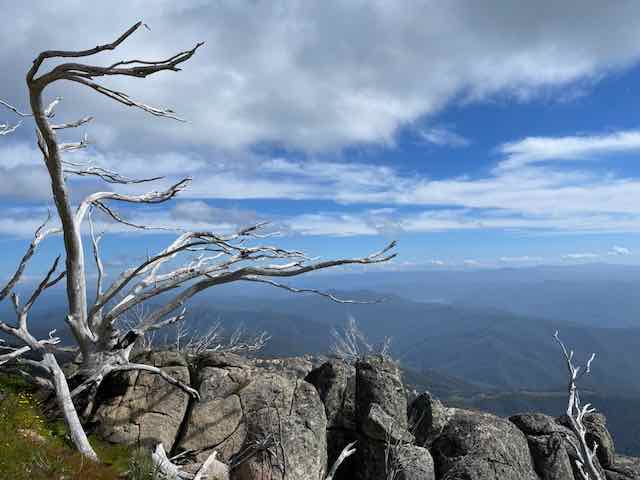
Last week, Mr Gums and I drove back from Melbourne where we had spent the holiday season with family. Having spent over two weeks in the city – very lovely because we saw family – I did want a little country respite before hitting our own (much smaller, admittedly) city. Bright, in Victoria’s Alpine Shire was our chosen destination and it was truly delightful. Mountains and rivers are my happy places.

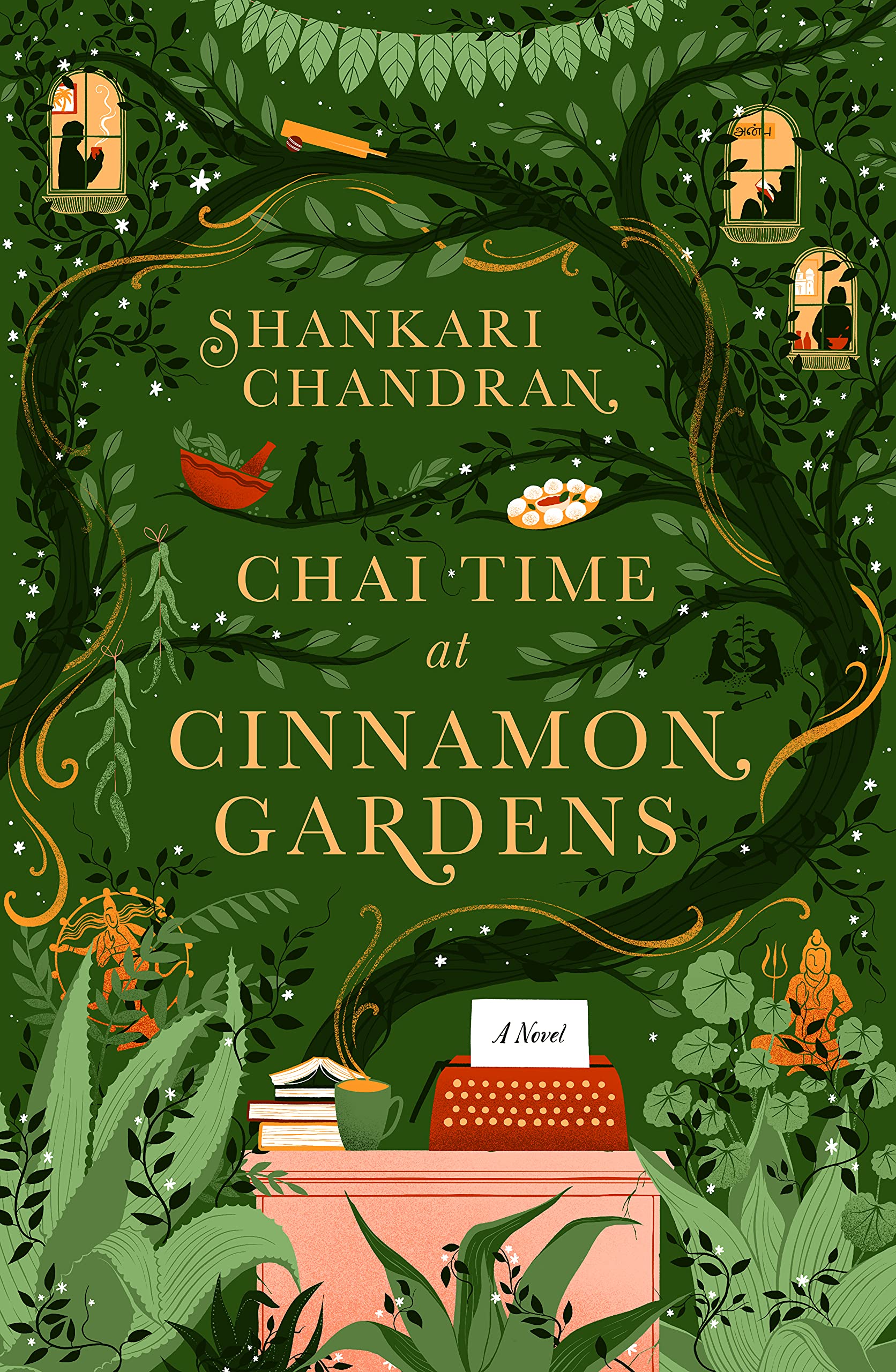
However, it wasn’t all road-tripping and bushwalking. The township of Bright has some good restaurants and, I noticed, a lovely little independent bookshop called, yes, The Bright Bookshop. I mean, you’d have to wouldn’t you? It’s a small shop but its inventory was excellent and with much to tempt me. But I just bought one book, Shankari Chandran’s Chai time at Cinnamon Gardens, which is on my reading group schedule this year.

None of this, though, is the point of my post. There was one other person browsing in the shop while I was there, and I overheard her asking for advice from the bookseller. She told him that her 18-year-old daughter wants to be a reader. She didn’t like science fiction, fantasy or dystopian novels, she said. In fact, she didn’t like anything involving suspension of disbelief. But the book couldn’t be “too literary” either, as her daughter preferred a nice linear story. Oh, and she wouldn’t read any books her sister read! I didn’t ask about historical fiction or crime, which is a shame, but the conversation kept spearing off, and I was running out of time.

However, I had to go, we did throw around a few ideas, including the American Curtis Sittenfeld, the Australian Diana Reid, Robbie Arnott’s Limberlost (“no”, said the mother to the bookseller), Jack Kerouac’s On the road (the mother didn’t think so, and nor did I), and older American writers like Anne Tyler (which the mother thought a possibility). The mother also suggested Sally Hepworth, whom I don’t know, and I wondered about other Aussies like Toni Jordan, Karen Viggers and Irma Gold – to name a few – who have written young women well. By the time I left, a decision hadn’t been made. But, my question to you – my litblogging community brains trust – is, what would you have suggested to get a wannabe reader keenly reading?

Over to you …

Monday musings on Australian Literature: Parramatta’s inaugural Laureate for Literature

This week’s Monday Musings is one I’ve been waiting to post ever since I saw the announcement a month ago. This time of year is so busy and I have my traditional little suite of posts that I wanted to keep to, so this post had to wait.

The announcement, as you have guessed from the post title, concerned the appointment of Parramatta’s first (or inaugural) Laureate for Literature. For those of you unfamiliar with Australia, or, with Sydney in particular, Parramatta is a suburb of western Sydney. It’s a big suburb, or, as Wikipedia describes it, “a big CBD”. It was home to the Dharug People for at least 30,000 years before the colonists started settling it in 1788, and was the setting for First Nations author Julie Janson’s historical novel Benevolence (my review). Set in colonial times, the ironically titled Benevolence opens in 1816, when a young motherless girl is handed over by her trusting father to the British to be taught English at the Parramatta Native Institution.

Parramatta is also the second location of a non-profit organisation called the Story Factory, whose aim is to “help Indigenous and disadvantaged school-aged children (generally 7 to 17 years old) to develop their writing and storytelling skills”. It started in Redfern in 2012, with the Parramatta site opening in 2018. Perhaps, though, I’ll leave this for another Monday Musings.

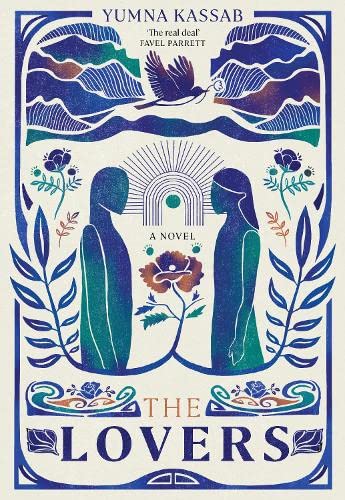
All this, however, is simply to set the scene for sharing the announcement made on 4 December 2023 that local Parramatta author, Yumna Kassab, had been made the inaugural Parramatta Laureate in Literature. This role is the result of a partnership between the Sydney Review of Books literary journal, the City of Parramatta, and Western Sydney University’s Writing and Society Research Centre. Their aim was to “select a highly regarded writer with links to the Parramatta region”, and who is “making an outstanding contribution to literature”. The expectation is for this person to “help animate a vision for the future of Parramatta as it cements its position as the true heart of global Sydney”. I’m not sure about the “true heart of global Sydney”. That’s perhaps a bit of a reach that other parts of Sydney might quibble about, but I love their vision of a laureate in literature as able to make a meaningful difference to a place.

The announcement goes on to say that Kassab ‘will receive a stipend of $50,000 to write what she describes as “a dictionary of Parramatta”, grounded in the city’s complex histories and diverse communities’. She will also run some writing workshops with local participants, and “advocate publicly for writing cultures”.

You can read the announcement at the link I’ve provided above, but I will just highlight two things. One is the comment by the Editor of the Sydney Review of Books, Dr James Jiang, that “She brings to the role exceptional talent, and the cosmopolitan sensibility and civic-mindedness that are hallmarks of the city’s culture and ambitions”. And the other is that, reading between the lines, I understand that applications for the role were called for, and that applicants were asked to suggest projects they would undertake. The announcement also shares the rest of the shortlist, which comprised Gary Dixon, Eda Gunaydin, Bilal Hafda, Fiona Murphy and Vivian Pham.

Who is Yumna Kassab?

Some of you will know of Kassab as, although she’s relatively new on the literary scene, she has garnered some excellent critical attention. According to various sites, including GoodReads and Giramondo which published her first book, she was born and raised in Western Sydney, and completed most of her schooling in Parramatta, “except for two formative years when she lived in Lebanon with her family”. She studied medical science at Macquarie University and neuroscience at Sydney University. 

She has written four works of fiction:

  • The house of Youssef (short story collection, 2019, Giramondo): listed for the Victorian Premier’s Literary Award, Queensland Literary Award, NSW Premier’s Literary Award, Readings Prize, and The Stella Prize (kimbofo’s review)
  • Australiana (novel, 2022, Ultimo)
  • The lovers (novel, 2023, Ultimo): shortlisted for the Miles Franklin Literary Award, the Prime Minister’s Literary Award for Fiction, and the Victorian Premier’s Award for Fiction
  • Politica (novel, 2024, Ultimo)

She has also written for newspapers and journals, including The Saturday Paper, Meanjin, Griffith Review, Kill Your Darlings, and the Sydney Review of Books.

Kassab’s themes seem to be family and relationships; and migration, class, and othering. Critics describe her work with terms like “unsparing”, “unnerving”, “poetic”, “unobtrusive realism”. Promoting her latest book, Politica, which is due out this month, Ultimo calls it “a powerful new novel that asks again if it’s possible to ever measure the personal cost of war.” Oh my … how relevant is that.

My question for you: Does a city or place (not a whole country) near you have a Laureate for Literature? If so, I’d love to hear your thoughts.

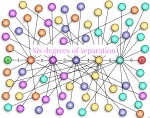
Six degrees of separation, FROM Tomorrow and tomorrow and tomorrow TO …

After taking a break from Six Degrees in December, I’m back at the beginning of 2024 to take part in this fun meme again. I hope you have all had a good holiday season and are ready for another year of good reading and discussing all things books. One different way of looking at books is through this meme. If you don’t know how this meme works, please check host Kate’s blog – booksaremyfavouriteandbest.

The first rule is that Kate sets our starting book. And, of course, we start the year with a book I haven’t read, though I have heard plenty about it, Gabrielle Zevin’s Tomorrow and tomorrow and tomorrow. GoodReads describes it as follows: “two friends–often in love, but never lovers–come together as creative partners in the world of video game design”.

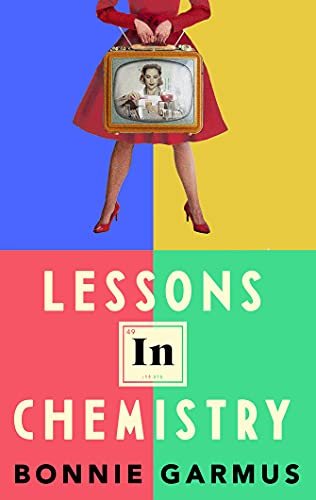
I don’t remember reading any books about video games, but I have read quite a few about friends. However, I am not going in that direction either because, quite serendipitously, my Californian friend shared in her letter this week the current “top ten checked out books in the NY public library system”. Number 2 was Zevin’s novel, but it was number 1 that caught my eye, as it’s a book I’ve read, Bonnie Garmus’ Lessons in chemistry (my review). How could I not make that my first link?

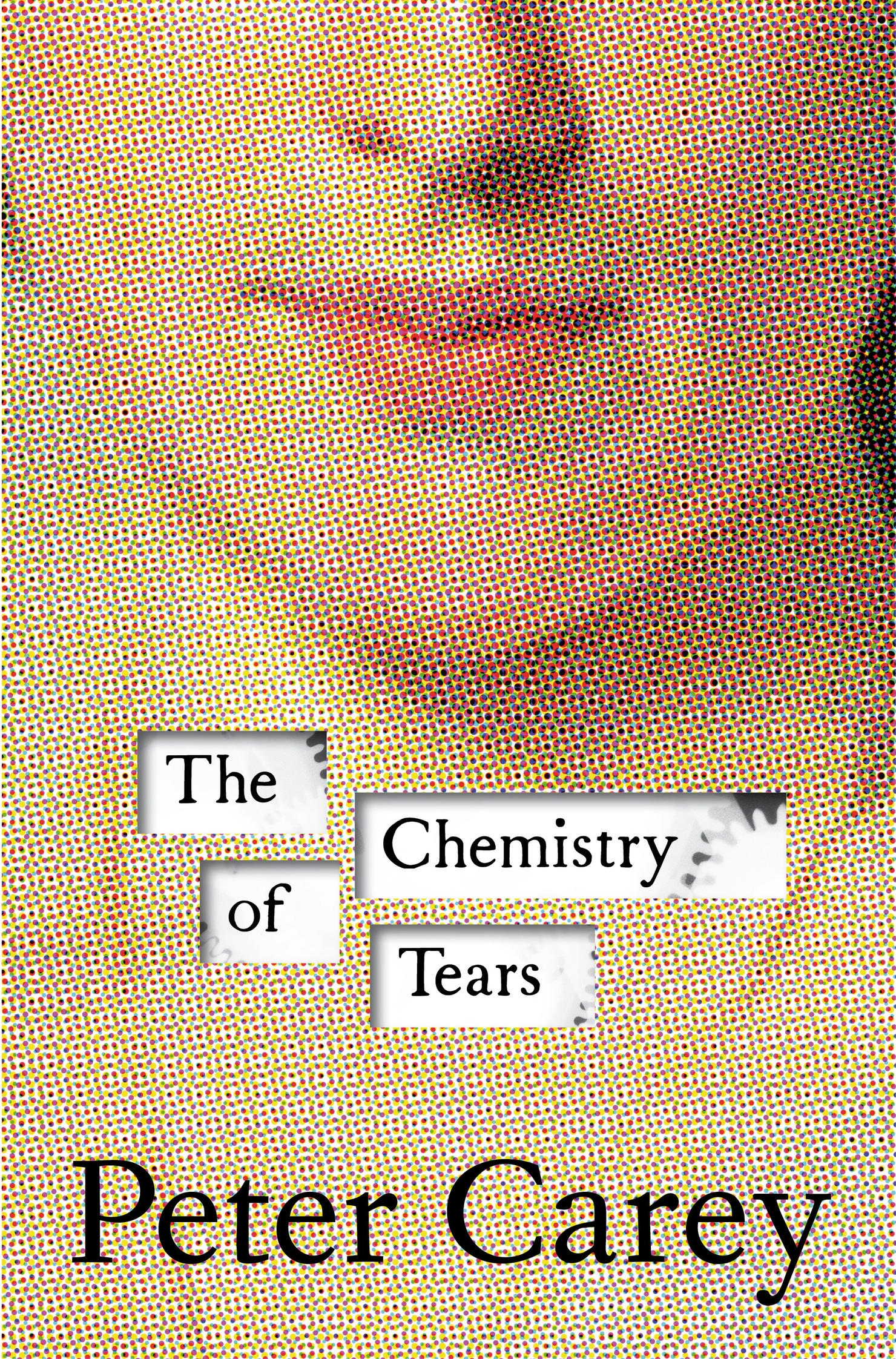
Peter Carey Chemistry of tears bookcover

For my next link I’m going with an obvious option – this is for you MR! – and linking on a word in the title. The word is “chemistry”, and the book is Peter Carey’s The chemistry of tears (my review). I commenced my review of that book by saying that when I think of Peter Carey, I often also think of Margaret Atwood, because both have quite varied oeuvres. Both take risks, trying new forms, voices and genres.

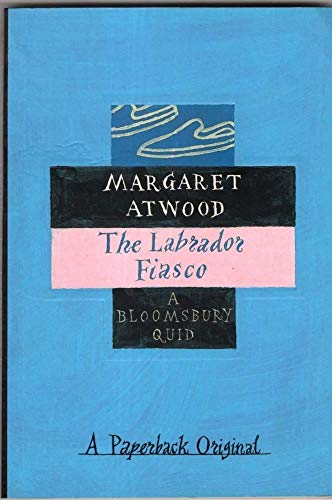
So, you won’t be surprised that my next link is to Margaret Atwood, and to the last work of hers I reviewed. This was The Labrador fiasco (my review), a short story I read for Buried in Print’s annual MARM event. It’s a story-within-a-story told in the voice of a son visiting his aging parents. But, I’m not linking on these ideas.

My edition of The Labrador fiasco was a little book, a Bloomsbury Quid. The first Bloomsbury Quid I reviewed for this blog was Nadine Gordimer’s Harald, Claudia and their son Duncan (my review). I could, though, have linked on the fact that both Atwood’s book and Gordimer’s feature parents and a son, albeit Atwood’s book is about a positive relationship while in Gordimer’s the son has committed a violent crime.

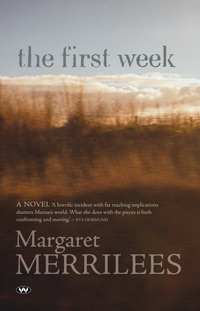
Margaret Merrilees, The first week

This leads us to my next link which is also a story (this one a novel) about a parent dealing with a son who has committed a violent act, Margaret Merrilees’ The first week (my review). In Merrilees’ story there is just the mother dealing with the aftermath, but, interestingly, in both stories there is also a race element.

For my final link, I’m sticking with parents coping with a problematic child, but in this case it’s a daughter who has been having an affair with a much older married man and who now appears to have run away. The book is Joan London’s The good parents (my review) and it deals, not just with parenting, but with the many choices we make in our lives, and their impacts.

I realised by the time I got to the end of my links that all six feature parents and children. In Lessons in chemistry, the main relationship is between mother and daughter, and The chemistry of tears hangs on a special gift commissioned by a father for his consumptive son. The rest you know from my notes on the links. We have travelled widely this month, though it may not be obvious here – from the USA to England and Germany, then to Canada and South Africa, finally ending up in Australia.

Now, the usual: Have you read Tomorrow and tomorrow and tomorrow? And, regardless, what would you link to?

Monday musings on Australian literature: Some New Releases in 2024

This year we start with my first Monday Musings post appearing on Tuesday! This is due to conflicting new year traditions – my Blogging Highlights post on 1 January, and my first Monday Musings being New Releases for the coming year. When 1 January is a Monday, I’m in trouble! I could have left this until next Monday, but I already have a post that’s been waiting to go, and I don’t want it to wait any longer, so Tuesday it is!

As before, I have drawn from the Sydney Morning Herald, where Jane Sullivan and the team has again done a wonderful job of surveying publishers large and small. This year, I have also used The Guardian’s list put together by Canberra Writers Festival director, Beejay Silcox. As always, I have also sussed out a few of my own! Also, this is Monday musings on Australian literature post, so my focus is Australian authors in areas of interest or relevance to me. This means I’ve not included non-Australian writers, nor all the Australian nonfiction. To see those, click on the SMH link.

Now, there are many ways to do this sort of list. Kim (Reading Matters) has posted a list of new releases by publication month, but, as is my wont, I’ve arranged mine by author, under some broad form headings.

Links on the authors’ names are to my posts on those authors.

Fiction

As always, not every book listed last year, ended up being published that year so a couple appear here again. And, also as always, I have read a very small number from last year’s list, but a few more are on my TBR and will be read this year. Here’s this year’s selection:

  • Jenny Ackland, Hurdy gurdy (June, A&U)
  • Alan Attwood, Houdini unbound (May, Melbourne Books)
  • Shirley Barrett, Mrs Hopkins (June, A&U): posthumous 
  • Anne Buist and Graeme Simsion, The glass house (April, Hachette)
  • Donna M Cameron, The rewilding (March, Transit Lounge)
  • Brian Castro, Ruins and fragments (late 2024, Giramondo)
  • Shankari Chandran, Safe haven (May, Ultimo)
  • Melanie Cheng, The burrow (September, Text).
  • Chairman Clift, The end of the morning (May, New South): posthumous autobiographical novel
  • Miranda Darling, Thunderhead (April, Scribe)
  • Michelle de KretserTheory and practice (November, Text) 
  • Francesca de Tores, Saltblood (April, Bloomsbury): pseudonym for Francesca Haig
  • Brooke Dunnell, Last best chance (April, Fremantle Press)
  • David Dyer, This kingdom of dust (October, Hamish Hamilton)
  • Rodney Hall, Vortex (Picador, October)
  • Anita Heiss, Dirrayawadha (August, Simon & Schuster): First Nations author
  • Julie Janson, Compassion (March, Magabala): First Nations author
  • Gail Jones, One another (February, Text)
  • Melanie Joosten, Like fire hearted suns (March, Ultimo)
  • Yumna Kassab, Politica (January, Ultimo)
  • Malcolm Knox, The first friend (October, A&U)
  • Siang Lu, Ghost cities (May, UQP)
  • Catherine McKinnon, To sing of war (May, Fourth Estate)
  • Stephen Orr, Shining like the sun (March, Wakefield Press)
  • Liam Pieper, Appreciation (March, PRH)
  • Diana Reid, untitled novel (second half of the year, (Ultimo)
  • Alice RobinsonIf you go (July, Affirm)
  • Jock Serong, Cherrywood (September, HarperCollins)
  • Jessica Tu, Honeyeater (July, A&U)
  • Karen Viggers, Sidelines (January, A&U)

SMH lists many books under Crimes and Thrillers, but this is not my area of expertise or major interest, so, do check SMH’s link if you are interested. I will, though, bring a few to your attention: .

  • Steven Carroll, Death of a foreign gentleman (April, HarperCollins): a new genre for Carroll
  • Garry Disher, Sanctuary (April, Text)
  • Sulari Gentill, The mystery writer (Ultimo, March)
  • Louise Milligan, Pheasants nest (March, Allen & Unwin): her first foray into fiction

Most of the sources I checked identified Debut Australian fiction and I think it’s useful to separate them out, so we don’t all wonder why the names don’t seem familiar:

  • Sharlene Allsopp, The great undoing (February, Ultimo): First Nations author
  • Katherine Allum, The skeleton house (June, Fremantle): Fogarty Literary Award winner
  • Susanna Begbie, The deed (May, Hachette): Richell Prize winner
  • Amy Brown, My brilliant sister (January or February, Scribner/Simon & Schuster): adult novel debut
  • Amanda Creely, Nameless (March, UWA): Dorothy Hewett Award shortlist
  • Belinda Cranston, The changing room (May, Transit Lounge)
  • Winnie Dunn, Dirt poor Islanders (March, Hachette)
  • Kyra Geddes, The story thief (May, Affirm)
  • Melissa Goode, Ordinary human love (May, Ultimo)
  • Kirsty Iltners, Depth of field (May, UWA): Dorothy Hewett Award winner
  • Katrina Kell, Chloe (February, Echo): adult novel debut
  • Finegan Kruckemeyer, The end and everything before it (July, Text)
  • Abbey Lay, Lead us not (March, PRH)
  • Bri Lee, The work (March, A&U): fiction debut
  • Murray Middleton, The degenerates (July, Text): full length novel debut
  • Deborah Pike, The players (April, Fremantle)
  • Raeden Richardson, No Church in the wild (April, Macmillan)
  • Linda Margolin Royal, The star on the grave (February, Affirm) 
  • Jordan Prosser, Big time (June, UQP)
  • Helen Signy, Maya’s dance (March, Simon & Schuster)
  • Ruby Todd, Bright objects (May, A&U): 2023 Victorian Premier’s unpublished manuscript award shortlist.

Short stories

  • Georgia Blain, We all lived in Bondi then (January, Scribe): posthumous
  • Ceridwen Dovey, Only the astronauts (July, PRH) 
  • John Richards, The Gorgon flower (April, UQP) 
  • Mykaela Saunders, Always will be (March, UQP): First Nations author
  • Ouyang Yu, The white cockatoo flowers: Stories (April, Transit Lounge)

Non-fiction

The newspapers include a wide range – and a large number – of new non-fiction books, and I found more in my own research, so I’m sharing a few that particularly caught my eye. Click the newspaper links for more.

Life-writing (very loosely defined, and selected to those focused mainly on the arts and activism)

  • Wayne Bergmann with Madelaine Dickie, Some people want to shoot me (March, Fremantle): First Nations memoir, focusing on native title
  • Tony Birch on Kim Scott (April, Black Inc “Writers on writers”)
  • Brooke Bland, Gulp, swallow: Essays on change (November, Upswell): memoir-in-essays “about family and friends, life and mortality, memory and forgetting”
  • Hermina Burns, Barbara Tucker: The art of being (February, MUP)
  • Samantha Faulkner (ed.), Growing up Torres Strait Islander in Australia (August, Black Inc)
  • Peter Goldsworthy, The Cancer Finishing School (March, PRH): “shares lessons from his incurable cancer diagnosis”
  • Jeremy Hill and Ronald Millar, No singing in gum trees: The honest life of Max Martin (no date, Wakefield Press)
  • Robert Manne, untitled political memoir (December, Black Inc)
  • Brenda Niall, Joan Lindsay: The hidden life of the woman who wrote Picnic at Hanging Rock (October, Text)
  • Brigitta Olubas and Susan Wyndham (ed), Shirley Hazzard and Elizabeth Harrower: The letters  (May, NewSouth)
  • Bruce Pascoe and Lyn Harwood, Black duck: A year at Yumburra (April, Thames & Hudson): First Nations memoir, about life on their farm
  • Magda Szubanski, untitled memoir (October, Text)
  • Tara June Winch on Alexis Wright (October, Black Inc “Writers on writers”)

History and other non-fiction (esp. social justice and environmental issues)

  • Larissa Behrendt, Weaving with words (November, UQP)
  • James Bradley, Deep water (April, PRH): eco-literature
  • Clint Bracknell and Kylie Bracknell, Shakespeare on the Noongar stage: Language revival and Hecate (May, Upswell): on Macbeth in Nyoongar language
  • Santilla Chingaipe, Black convicts: How slavery shaped colonised Australia (August, Scribner): examines the First Fleet, investigating the place of people of African descent in colonial Australia.
  • Simon Cleary, Everything is water (June, UQP): eco-literature
  • Anne Coombs, Our familiars: The meaning of animals in our lives (August, Upswell): “meditation on the awe-inspiring responsibility we take on with other living creatures”
  • Helen Garner, untitled nonfiction (July, Text): inspired by time spent with a grandson’s football team
  • Amy McQuire, Black witness: The power of Indigenous media (June, UQP)
  • Jasmin McGaughey and The Poets Voice (ed.), Words to sing the world alive (November, UQP): “leading writers discuss their favourite First Nations words”
  • Ellen van Neerven and Jeanine Leane (ed), Shapeshifting (October, UQP)
  • Amy Remeikis, The truth about nice (July, Hachette): on “the politics of civility – and its pernicious myths”
  • Clare Wright, The Yirrkala Bark Petition (October, Text): third in her Democracy trilogy

Poetry

Finally, for poetry lovers, I’ve sussed out a few more than were listed by the two newspapers, but even then haven’t listed them all. Poetry in Australian is flourishing, it seems:

  • Robert Adamson, Birds and fish: Life on the Hawkesbury (February, Upswell): posthumous
  • Alison Barton, Not telling (no date, Puncher & Wattmann): First Nations
  • Judith Beveridge, Tintinnabulum (August, Giramondo)
  • Judith Bishop, Circadia (May, UQP)
  • David Brooks, The other side of daylight (March, UQP)
  • Bonny Cassidy, Monument (February, Giramondo)
  • Nandi Chinna and Anne Poelina, Tossed up by the beak of a cormorant (Fremantle, July)
  • Robbie Coburn, Ghost poetry (January, Upswell)
  • Lloyd Jones, The empty grandstand (September, Upswell): New Zealander
  • John Kinsella, Spirals (March, UWA)
  • Jeanine Leane, Gawimarra gathering (February, UQP): First Nations
  • Nam Le, 36 ways of writing a Vietnamese poem (March, Scribner)
  • Kent McCarter, Fat chance (January, Upswell)
  • Kate Middleton, Television (February, Giramondo)
  • Jazz Money, The fire inside August, UQP): First Nations
  • Roslyn Orlando, Ekhō (February, Upswell)
  • Suneeta Peres da Costa, The prodigal (late 2024, Giramondo)
  • Nathan Shepherdson, soft meteorites (September, Upswell)
  • Elfie Shiosaki, Refugia (July, Magabala)
  • Anne-Marie Te Whiu (ed), Woven (February, Magabala/Red Room Poetry)

Anything here interest you?

Blogging highlights for 2023

As is my tradition, I have separated out my annual Reading highlights from my Blogging highlights, mainly because combining them would result in one very long post. I always do my Blogging Highlights on 1 January, which this year clashes with Monday Musings, unfortunately. All being well, I plan to do my usual first Monday Musings of the year tomorrow.

Top posts for 2023

Until recently the top of the ladder has been dominated by older posts, but in recent years there has been a gradual shift to more recent posts making it to the top. Last year, two posts published during the year made the Top Ten. This happened again this year. One (no. 6) is an obvious candidate, but the other (no. 2) is, as I wrote yesterday, a bit of a surprise.

Here is my 2023 Top Ten, in popularity order:

  1. Jack London, “War” (March 2010)
  2. Ambelin Kwaymullina, “Fifteen days on Mars” (from Unlimited futures)(January 2023) (Australian)
  3. Epiphany in Harrower’s “The fun of the fair” (essay by Emily Maguire) (January 2022) (Australian)
  4. Audrey Magee, The colony (September 2022)
  5. Ernest Hemingway, “Cat in the rain” (September 2022)
  6. Bonnie Garmus, Lessons in chemistry (June 2023)
  7. Barbara Baynton, “A dreamer” (January 2013) (Australian)
  8. Anthony Doerr, All the light we cannot see (September 2016)
  9. George Orwell, “How the poor die” (October 2010)
  10. Mark Twain, “A presidential candidate” (August 2016)

Observations:

  • Four of these posts (London, Maguire’s essay on Harrower, Baynton and Twain) were Top Tens last year, with three being Serial Top Tenners (London, Baynton, and Twain). Do all – including the relative newbie, the essay on Harrower – relate to school/university assignments?
  • Five posts were published in the last two years, which is a record. Some surprise me, but I suspect the popularity of my Garmus and Doerr posts is related to their screen adaptations released in 2023.
  • Five of this year’s Top Tens are Top Ten debuts, including the Garmus and Doerr. The sudden appearance here of my rather old Orwell post might be due to a recent flurry of books about Orwell, including Anna Funder’s Wifedom, but then, why that one of all my Orwell posts? Maybe there’s another reason, maybe it’s been set as a text? I’m pleased to see Magee’s novel here, and guess it’s just because this novel has been popular, but what about my relatively new Ernest Hemingway post? Why that one?
  • In 2021, six of the Top Ten posts were for full-length books, but as I wrote last year that was clearly an aberration, as in 2022 – and again this year – we returned to my more usual motley mix of mainly short stories/essays.

I also like to see how the posts written in the year fare, so here are the Top Ten 2023-published posts (excluding Monday Musings, event and meme posts):

My skewed reading year shows up strongly in these stats. I am intrigued that there was so much interest in my posts on stories by First Nations North Americans, particularly given Australians represent by far the most numerous visitors to my blog.

My most popular Monday Musings posts were essentially the same as last year: Books banned in Australia (June 2019); Some new releases (the 2023 version); The lost child motif (February 2011).

Random blogging stats

The searches

Help Books Clker.com
(Courtesy OCAL, via clker.com)

I love sharing some of the search terms used to reach my blog, Unfortunately, search term visibility is no longer what it used to be, but a few still get through for some reason. Certain browsers?

Some are probably assignment or book group related?

  • “david foster wallace word notes”
  • “key characteristics of australian literature in terra nullius by coleman”
  • “the colony audrey magee book club questions” and “the colony audrey magee what does title mean”
  • “characters in ripper by shelley burr”
  • “but being completely alone was a feeling”: searching this on my blog retrieves posts like Delia Owen’s Where crawdads sing and Tegan Bennett Daylight’s Six bedrooms, with Delia Owens being what they were looking for, as I quote this line, without the opening “but”.

Some are just general research:

  • “famous first sentences from Australian novels”

Then others seem to be looking for something very specific:

Book cover
  • ‘date of birth and “scott tucker”‘ and ‘husband and “scott tucker”’: these are probably looking for this Scott Tucker but they got Michelle Scott Tucker’s Elizabeth Macarthur’s biography instead.
  • “germaine greer care home” AND “germaine greer aged care”: we are still interested in Germaine Greer. Over the year I have had many hits from a site called mumsnet.com which linked to my 2022 Canberra Writers Festival post on her.
  • “very short stories convict fiction free”: this seems to find my Convict Literature tag, so tags do work!

Other stats

Overall, 2023 was another challenging year for me blog-wise and it shows in the stats. I only wrote 135 posts, which is the fewest number of posts per year that I’ve ever written and is well under my long term average of 153. However, my overall hits for the year increased by 17% on last year. Stats! Always a mystery.

The top ten countries visiting my blog vary slightly from last year: Australia (44%), the USA (27%), Britain, India, Canada, the Philippines, China, France, New Zealand, and Germany, in this order. The first four are the same, and then five of the next six are the same countries, in different order. However, Mexico dropped out to be replaced by New Zealand.

Challenges, memes, et al

I only do one regular meme, Kate’s (booksaremyfavouriteandbest) #sixdegreesofseparation, and in 2023 I did every month, except December. I occasionally do other memes – found under my “memes” category link – but you’ll find no others in 2023.

I also took part, to various degrees, in Bill’s (The Australian Legend) AWW Gen 5 – SFF, Nonfiction November (multiple bloggers), Novellas in November (Cathy of 746 books and Rebecca of Bookish Beck), the #YEAR Club (Kaggsy’s Bookish Rambling and Simon’s Stuck in a Book), Brona’s Aus Reading Month, Buried in Print’s MARM, and the William Trevor Reading Year (Cathy of 746 Books and Kim of Reading Matters). Most of these can be found via my “Reading weeks/months/years” category.

I do these because they align with my reading practice and goals. I’d love to do more, and I like the structured encouragement they provide for me to explore writers and works I would otherwise find hard to fit into my schedule.

And so, 2024 …

As always, thank you to all of you who commented on my blog this year – the regulars who hang in with me year in year out, and the newbies who have given me a shot. I hope you have enjoyed the community here enough to stay. I love those of you who comment. Thanks so much for being an active part of the community. But, a big thank you too to the lurkers. I really do appreciate your interest and support too.

I also want to thank all the hardworking bloggers out there. I’ve been a poor community member – again – this year, but I do appreciate you and enjoy reading your posts when I can. I look forward to more reading and great book talk in 2024.

Finally, huge thanks to the authors, publishers and booksellers who make it all possible – and who have proved yet again that the book is far from dead.

Roll on 2024 … a big year for my blog which will turn 15 in May. Meanwhile, Happy New Year everyone.

Reading highlights for 2023

With the year’s end, we come to annual highlights posts – my reading highlights post which I like to do on December 31, and my blogging highlights one on January 1. I do my Reading Highlights on the last day of the year, so I will have read (even if not reviewed) all the books I’m going to read in the year. I call it “highlights” because, as many of you will know, I don’t do a list of “best” or even, really, “favourite” books. Instead, I try to capture a picture of what my reading year looked like. I also include literary highlights, that is, reading-related activities which enhance my reading interests and knowledge.

Literary highlights

I got to a few literary events over the year, though by no means all I would have liked to. I was disappointed, though, to not get to any of this year’s Sydney Writers Festival: Live and Local events, partly because of my busy-ness but partly because I didn’t realise until too late that our usual venue had changed this year and I couldn’t seem to make the new multiple venues work in with my commitments.

Reading highlights

As I’ve said before, I don’t have specific reading goals, just some “rules of thumb”. These include reading women writers, reading more First Nations authors, reading some non-anglo literature, and reducing the TBR pile. In recent years, I haven’t made major inroads into any of these but … here’s the thing …

Last year I foreshadowed that this year could be a tricky one with our major downsizing project (along with regular trips to Melbourne) – and so it turned out to be. Decluttering and preparing our house for sale took until July, with our house being sold in mid-August. This was followed by a long settlement which saw us having to maintain the house and garden until early November. It’s been a truly long haul, but we got there. It’s just as well I love short stories because they are ideal for busy, distracted times, and as it turned out, they ended up forming a much larger percentage of my reading diet this year. And, a goodly proportion of that ended up being stories by First Nations authors. Not only did I read more First Nations authors than usual but I read more diversely I read several First Nations American authors, and I read some First Nations Australian speculative fiction – all in short story form.

Each year I present my highlights a bit differently, choosing approaches that I hope will capture the flavour and breadth my reading year. Here are this year’s observations which I hope might entertain, and maybe even enlighten, you. I start by focusing on works/writers/writing, and end with characters (mostly):

  • Great finds: A three-way tie between two (older) American works and one (more contemporary) French novel – African-American writer Gwendolyn Brooks’ wonderfully warm but pointed novella Maud Martha; American writer Susan Glaspell’s short story, “A jury of her peers”; and French Nobel prize-winner Patrick Modiano’s novel, Sundays in August.
  • Dearest to a librarian’s heart: Anthony Doerr’s Cloud cuckoo land made the librarians in my reading group cheer (as would “Special collections” in Rebecca Campbell’s Arboreaility, had they read it. Review to come, but here is Bill’s)
  • Most surprising speculative fiction: A bit of a misnomer because, almost by definition, speculative fiction is surprising, but the first work I read this year, Ambelin Kwaymullina’s short story, “Fifteen days on Mars“, was not only a great read but surprised me by being my most successful post written this year.
  • Most mystifying book: JD Vance’s Hillbilly elegy. How can someone with such a story end up aligning with you-know-who?
  • Truthtellers of the year: Many writers increased my understanding and thinking about First Nations’ issues this year but I’ll share two, First Nations Australian writer Debra Dank in We come with this place, and my (non-Indigenous) brother Ian Terry with his book and exhibition Uninnocent landscapes.
  • Weirdest voices: I love writers who can pull off writing from unusual or surprising perspectives, and I read two experts this year, both through their short story collections – Carmel Bird’s Love letter to Lola, and Chris Flynn’s Here be Leviathans. I love how these writers can use fresh voices to grapple with meaningful-to-me issues, including but not limited to climate change and the ecology.
  • Strongest women: There were many women in my reading diet this year who managed to steer a way through the patriarchal societies they found themselves in, but I’ll name three standouts, Briseis in Pat Barker’s retelling The women of Troy, Lucrezia de’ Medici in Maggie O’Farrell’s The marriage portrait, and Elizabeth Zott in Bonnie Garmus’ Lessons in chemistry.
  • Most challenged mother: Parenting is hard, so who am I to criticise, but patriarchy can make the lives of mothers particularly hard. There were several challenged mothers in my reading this year, such as Frankie’s mother in Rebecca Burton’s Ravenous girls, but the one who struggled most was poor Veda Grey in Edwina Preston’s Bad art mother.
  • Sweetest man: Most men are decent, and Ned in Robbie Arnott’s Limberlost, is one such, but there were some close runners-up, including Will in Eleanor Limprecht’s The coast.
  • Most clueless man: Cathal in Claire Keegan’s short story “So late in the day“.
  • Best neighbours: The quiet women in Susan Glaspell’s above-mentioned story mentioned have to be the winners here, but runners up are the neighbours in Holly Throsby’s Clarke. Gossipy yes, but when the chips are down they are there for you.
  • Most interesting sportspeople: The Tucson basketballers in Jack D. Forbes’ story “Only approved Indians can play made in USA” showed up their northern opponents by being able to speak their own language, but young pedestrian-cum-jockey, Johnny, in Robert Drewe’s Nimblefoot captured my heart.
  • Best trees: There is a beautiful old cottonwood tree in Leslie Marmon Silko’s story “The man to send rain clouds“, which took me back to my days America’s southwest, and Tasmania’s gorgeous huon pine features in Robbie Arnott’s Limberlost, but the trees that brought home humanity’s impact on the land won me over – in Ian Terry’s Uninnocent landscapes (colonialism), and Rebecca Campbell’s Arboreality (climate change)

Each of these books … is a door, a gateway to another place and time. (Anthony Doerr, Cloud Cuckoo Land, p. 216)

These are just some of 2023’s highlights in a very strange but, because of that, quite wonderful year of reading … I’m just sorry I can’t list them all.

Some stats …

I don’t read to achieve specific stats but, as I’ve already mentioned, I do have some reading preferences which I like to track. However, this year was so whacky in terms of those preferences, that I’m not even going to bother sharing them, except to reiterate two big positives to come out of the whackiness:

  • I read more short stories and novellas than usual (and I usually read a good number): over 60% of this year’s reading (as individual stories, collections, anthologies, and linked short stories)
  • I read more First Nations writers than usual (largely because I read several short stories by First Nations American writers): 30%

Sometimes strange years have silver linings.

Tomorrow, I will post my blogging highlights.

Meanwhile, a huge thanks to all of you who read my posts, engage in discussion, recommend more books and, most importantly, keep me on my toes. Our little community is special, to me! I wish you all an excellent 2024, and thank you so much for hanging in this year.

What were your 2023 reading or literary highlights?

William Trevor, The hill bachelors (#Review)

Well, Kim (Reading Matters) and Cathy’s (746 Books) “A year with William Trevor” project is all but over, and I’ve only done one post – on the titular story in the little The dressmaker’s child collection. The second story, “The hill bachelors” (as in bachelors living in the hills), was first published in his collection titled The hill bachelors.

William Trevor (1928-2016), as most of you will know, is an Irish writer of novels and novellas, short stories and plays. He is particularly good at writing about marginalised people, or those who are loners or outsiders, and writes authentically about them, regardless of their age or gender. “The hill bachelors” is another of these, though perhaps more a variation on the theme. Is the protagonist Paulie marginalised? In a sense perhaps? Is he a loner or outsider? Again, it depends on how you see him, and the choices he makes.

Trevor is one of those writers who lets the reader work out who’s who, what’s what, as we go. The first two paragraphs of this story describe a 68-year-old woman, wearing mourning clothes, waiting for “them” who will decide her future. Very little is overtly explained, but by the end of the second paragraph, we know that she has worked hard and got on with whatever life has thrown at her – and, it seems, she will continue to do so with a calm resignation.

Then, we are introduced to a man we come to realise is her 29-year-old son, Paulie. He is coming for his father’s funeral/wake. He is the youngest of five children, and had not had a good relationship with his “hard” father. It soon becomes apparent that the mother expects the children to work out what will happen to her now – and what will happen to her now, as soon becomes apparent, is that Paulie will return to the family farm. After all, “he was the bachelor of the family”, and his job as a lorry driver “wasn’t much”. However, to do this he will have to give up the woman he loved as she is not interested in a farm life.

While he is working out his notice back in town, his mother is helped by neighbours, the bachelor Hartigan and his sister. It is this sister who introduces the idea of the hill bachelors. She suggests that Paulie would not want to come back because

“It’s bachelors that’s in the hills now. Like himself,” Miss Hartigan added, jerking her bony hand in the direction of the yard, where her brother was up on a ladder, fixing a gutter support.
“Paulie’s not married either, though.”
“That’s what I’m saying to you. What I’m saying is would he want to stop that way?”

Seeing bewilderment in Paulie’s mother’s face, she goes on to explain that “the bachelors of the hills found it difficult to attract a wife to the modest farms they inherited”.

And so Paulie comes back. He “harboured no resentment … it was not the end of the world”. What was “the end of the world”, however, was hearing the woman he loved say that life on a farm did not attract her. He works hard, and he starts dating local women, but Miss Hartigan seems to have known whereof she spoke.

The story is told third person, through the alternating perspectives of the mother and Paulie. We hear what the the rest of the family thinks, or has done, mostly through Paulie’s and his mother’s thoughts and assumptions, through their deep knowledge of how their family works and of the rural traditions within which they live. There is a little dialogue, but not much. Paulie and his mother are both “types” and yet quietly individualised too.

There’s no big drama in this story, just ordinary people making the decisions that seem right at the time. Paulie’s mother is not unkind or demanding. Indeed, she offers to move in with a married daughter, and, in a little revelatory moment, Trevor lets on that she’d shed some private tears in her early days on the farm. She would do her best to make it easy for a new wife, unlike her own experience. However, marriage to a man from the hills has taught her passivity, to do what she’s told, so she resigns herself – as we are led, from the opening paragraphs, to expect she’d do – to see out her lot. Paulie, too, seems resigned, like his mother, to play out the role set for him, even if it means joining the titular hill bachelors.

All this makes it a far more complex story than it might seem on the surface. It means that, as much as we’d like to, it’s hard to see Paulie as a victim, because he does have a choice, difficult though it may be. But the pull of tradition and responsibility is strong, and while Paulie is aware of what is happening to him, he is resigned to it. Ultimately, as he himself realises, “guilt” and “goodness” have nothing to do with it, it just is what it is, “enduring, unchanging” – and he is not going to buck it.

Trevor thus leaves it for us to think about – to think what the different choices might mean for his mother, for Paulie, and, more widely, for the rural way of life that, regardless of their decisions or their own thoughts about it, does seem to be on its way out. It is up to us readers to ponder the bigger picture, to wonder where that will get him, them or the farm. After all, if he doesn’t marry, what will happen? In continuing their rural traditions, will anything be ultimately achieved, or will this be another sad little life?

Cathy (746 Books) has reviewed the collection.

William Trevor
“The hill bachelors”
in William Trevor, The dressmaker’s child
London: Penguin Books, 2005
pp. 21-39
ISBN: 9780141022536
(First published in The hill bachelors, 2000)

Monday musings on Australian literature: Some little recaps

It’s Christmas Day, so the the question was, do I do a Monday Musings post or not? Will anyone be looking at blogs. If you take part in this holiday season, I hope you are enjoying it in the way you most enjoy – with family, on your own, at the beach or in front of a fire, around a table or with plates on your laps somewhere comfortable. And, if it’s not a holiday season for you, well, then, you just might appreciate things continuing as normal.

But then, the next question was, what to post, because it needed, I felt to be something non-demanding. So, how about a couple of little recaps.

Recap 1: Top Ten Monday Musings posts

I started posting Monday Musings in August 2010, and since then have written 674 of them, making this one no. 675. I love writing them, though at times I leave it a bit late, and they end up being more rushed than I’d like. I can’t promise this will improve as life just seems to keep being busy, but I hope that even the ones that aren’t as comprehensive as I’d like offer some readers something to think about to look into further.

Now, though, I’m sharing the ten posts that have had the most all-time hits. Most of them are older posts – over half are ten plus years old – which is not surprising, I guess. However, in a sense I am surprised to find how many older posts still have a life. I wouldn’t necessarily call these Top Ten my best Monday Musings, and some feel dated to me now, but they are still attracting some attention. Here they are, with their all-time ranking (out of all my posts), and the year they were posted):

Recap 2: Australian Women Writers Challenge

Over the past decade or so, I have devoted my last Monday Musings of the year to the Australian Women Writers Challenge, largely because it was an actual challenge, so I would report on what I had read and on the challenge’s overall stats for that year. However, in January 2022, it changed from being a challenge to a blog/website devoted to promoting often under-recognised or overlooked women writers, from the 19th- and 20th-centuries. We want to bring them back to wider notice.

Barbara Baynton 1892
Baynton 1892 (Presumed Public Domain, via Wikipedia)

As in 2022, we continued this year to post twice a week: articles or reviews on Wednesdays, and actual writings by women, related where possible to the previous Wednesday’s post, on Fridays. While our change in focus resulted in a drop in stats (that is, in visits to the site) last year, they picked up this year, increasing by nearly 30%. I put this down to the hard work put in by Bill (The Australian Legend), our commissioning editor and writer of monthly posts, and to Challenge founder Elizabeth Lhuede, who prepares all the Friday posts, as well as doing her monthly post. We welcomed a fourth member to our team this year, Stacey Roberts (allforbiblichor), who is doing a PhD in Australian literature. It has been good having another head take part in our discussions and decisionmaking, and she wrote two fascinating posts on female domestic service in colonial women’s fiction, here and here.

Our most visited 2023-published post turned out to be mine on Barbara Baynton’s short story, A dreamer. I don’t take great credit for this, however, because I believe its popularity is due to the story being a set text.

The blog does take a lot of time, and we are currently talking about future plans. We expect to do things a little differently in 2024, but we will be continuing.

Recap 3: Books given for Christmas

This is probably not, technically, a recap, but what better day than this to share the titles of Australian books I gave as Christmas presents this year. They are not necessarily my favourites – indeed, I haven’t read them all – but were chosen to suit the recipients’ likes. (I hope I got it right.) Here they are:

  • Carmel Bird, Love letter to Lola (my review)
  • Rebecca Burton, Ravenous girls (my review)
  • Garry Disher, Consolation
  • Michael Fitzgerald, Late: A novel (Lisa’s review) (on my TBR)
  • Toni Jordan, Dinner with the Schnabels
  • Kim Kelly, Ladies Rest and Writing Room (my review)
  • Mori Ogai, The wild goose (not Australian, but translated to English by the Australian Meredith McKinney) (on my TBR)
  • Tracy Ryan, The queen’s apprenticeship (Lisa’s review) (on my TBR)
  • Benjamin Stevenson, Everyone in my family is a murderer
  • Ian Terry, Uninnocent landscapes (my review)
  • Emma Young, The disorganisation of Celia Stone

And, here I will leave it, as I don’t want to take too much away from my annual Reading and Blogging Highlights posts which are coming soon. In the meantime, I wish all of you reading this, all the best of the season, whether you celebrate it or not. I look forward to seeing you all on the other side, whenever you raise your heads again.

Ian Terry, Uninnocent landscapes (#BookReview)

This is my third post on my brother’s beautiful book, Uninnocent landscapes: Following George Augustus Robinson’s Big River Mission. My first post announced its publication, and my second was on the book’s launch and the opening of the accompanying exhibition. Finally, I come to my review post. Yes, you could call me biased, but this project has had so many accolades that I don’t feel my bias contradicts the general run of opinion. However, you must decide for yourselves.

Uninnocent landscapes, as I wrote in those previous posts, is the culmination of an idea Ian started thinking about around a decade ago, but that he actively worked on over the last two to three years. It involved his following the journey taken by George Augustus Robinson on his 1831/32 Big River Mission (brief description), which was a poorly conceived attempt to conciliate between settler and Aboriginal Tasmanians. As those versed in Tasmanian history know, it was a disaster, and effectively ended First People’s resistance in lutruwita/Tasmania (back then, anyhow!) For Ian, who has come to call lutruwita home, there is discomfort in reconciling his privileged life as a middle-class white man with the devastating impact of colonialism on Tasmania’s First Peoples. This is his truth-telling project – his questioning, as he describes it, of how non-Indigenous Tasmanians (and, by extension, all non-indigenous Australians) “come to terms with our privilege and its Janus face, the violent and continuing dispossession of palawa” (and, by extension, all First Nations people). And he found a unique way to do it, by combining the three big passions of his life (besides family) – history, photography and the bush – to produce this book. 

Uninnocent landscapes, then, contains a selection of Ian’s photographs accompanied by excerpts from Robinson’s text. It also contains an introduction by Tasmanian art historian, curator, essayist and commentator on identity and place, Greg Lehman (a descendant of the Trawulwuy people of north-east Tasmania), and five essays, the first and last by Ian, and three he commissioned from:

  • Rebecca Digney (manager, Aboriginal Land Council of Tasmania and proud pakana woman)
  • Nunami Sculthorpe-Green (activist/artist and proud palawa and Warlpiri woman)  
  • Roderic O’Connor (sixth-generation woolgrower and Connorville custodian)

These essays provide different perspectives on country and on colonialism’s impact on it. Together they work as a dialogue which encourages us to test our own thinking about what has happened in the past and how we might progress into the future.

“battered but still recognisable” (Nunami Sculthorpe-Green)

Ian explains in his first essay that the photographs were taken in a sprit of enquiry:

What memories do the landscapes of lutruwita/Tasmania hold? What stories are embedded in the rocks, the trees and grasses, the waters of rivers and lagoons? What could the landscape tell us about invasion, colonisation and the destruction of First People’s life and culture? What could it tell me about my own life here on this island?

The juxtaposition of Robinson’s text to Ian’s images offers literal, historical, symbolic and/or emotional readings of the photographs. They confront us with a colonial way of thinking about country that we haven’t fully shaken. Robinson’s reflection that “the whole of this country is peculiarly adapted for natives” is jolting, when you think about what this is really saying. Some excerpts reveal a man tired of his mission, while others show a sincere wish to be humane, but most of course are also overlaid with the arrogant confidence of the colonist. There is, though, also some humour, such as this:

I cautioned my natives and said if the whites saw them they would shoot them. They replied that they could see the whites first, and that they could not always shoot straight.

The image accompanying this text depicts a road passing through a fence on which is appended a security notice advising the area is under surveillance. It returns us to the reality that despite their knowledge, skills and confidence, the “natives” lost.

I’d love to share other examples of text and image, not to mention the thoughts of all the essayists, but instead, I’ll just say that this book provides a reading experience that is enlightening, provoking, and sobering.

When Ian first told me the title of the book, I thought it was inspired. He explains its origins in his opening essay. It comes from a conversation between two nature/landscape writers, the British Robert Macfarlane and the American Barry Lopez. Referencing the impact on the Slovenian landscape of war and atrocity, Macfarlane spoke of “a sense of the uninnocence of landscapes”. Nunami Sculthorpe-Green, however, expresses a different idea in her essay. She writes that “it is not the landscape that is uninnocent. It was not a party to the atrocities committed here, but a witness to them, and truly a victim itself”. Just reading these two opposing but sincerely felt ideas shows how important open and honest dialogue is if we are to understand each other. In some ways, the actual words are less important than the conversations they generate and what we learn through them.

It’s a big call, perhaps, to say Ian found a unique way to truth-tell, but I’m not the only one to see this project as original. One of those is Sculthorpe-Green who writes in her essay:

I do see this project as something different from the norm, in that it finally takes this story off the paper and re-centres our land as the storyteller and story keeper.

So yes, I’m hugely proud of what Ian has done. It’s a beautiful book that works aesthetically, intellectually and emotionally – and, more importantly, that moves the conversation forward. It’s a book that explores the depredations of the past, but that also contains hope. As Digney says at the end of her essay, “History resonates. We continue.”

Ian Terry
Uninnocent landscapes
Mt Nelson: OUTSIDE THE BOX / Earth Arts Rights, 2023
136pp.
ISBN: 9780646881058
Price $65, with all proceeds going to the Aboriginal Land Council of Tasmania’s Giving Land Back fund. You can order here (but supplies are dwindling).