Garry Disher, Wyatt (Guest post)

Some time ago I found in my mailbox a bundle of books from my lovely contacts at Text Publishing. Unfortunately, there were more books in the bundle than I could read at the time, and a couple were in genres I don’t generally read (though that’s not to say I wouldn’t read them if I had the time). So, like Lisa at ANZLitLovers and as I did for my last LibraryThing Early Reviewers copy of That Paris Year, I decided to use the Guest Post idea. For the LibraryThing guest post, the reviewer was my daughter, Hannah of Wayfaring Chocolate. This time, it’s my son, Evan. The book is Garry Disher‘s latest crime novel Wyatt, which won the 2010 Ned Kelly Award for Best Crime Fiction.

Evan read the novel while he was with us for Christmas. He has since returned to Melbourne (his home and the setting of the novel) and, while busy preparing for his flight to the USA tomorrow, made the time to please his mum by writing his review. I must say, it looks like the sort of crime novel I could enjoy. Thanks Evan …

Evan’s review of Wyatt, by Garry Disher

Gary Disher, Wyatt

Wyatt (Courtesy: Text Publishing)

Less a cops and robbers story than a robbers and robbers story, Wyatt is a new crime novel from the Australian author, Garry Disher. We are introduced to the protagonist and title character, Wyatt, as he is attempting to rob an extortionist. As one would expect in a good crime novel, it doesn’t go according to plan. Disher’s prose is terse and to the point, much like Wyatt himself, and the narrative races along, following a jewel heist and its aftermath. Set in Melbourne, which suddenly becomes dirtier and more sinister under Disher’s pen, Wyatt features many of the trappings of classic noir-ish, hard-boiled novels. This world is populated by seductive femme fatales, tough, if old-fashioned, men, and it will get the better of you if you don’t have your guard up. Wyatt is an aging, professional criminal, who is treated with reverence as a master within his field. He is cold, intelligent and calculating, yet sympathetic.

Surrounded by a host of characters, all dangerous in their own ways, Wyatt is pitted, almost indirectly over the course of the novel, against a French criminal much like him, and much his equal. However, to discuss more of the plot would be to spoil most of the fun. The pace rarely slows down, and the writing is taut and spare. The characters are archetypes, almost larger than life, but not overwritten. Disher has an invigorating, simple style. The violence, when it erupts, is abrupt and surprising and, without a hint of an overdrawn epilogue, the ending simply ends.  Wyatt is apparently the seventh book in a series featuring the title character. Despite having never read any of the others, and having a perhaps irrational bias against series in general, I am now eager to check out the others.

Garry Disher
Wyatt
Melbourne: Text Publishing, 2010
274pp.
ISBN:  9781921656811

(Review copy courtesy Text Publishing)

Monday musings on Australian literature: My top Australian reads of 2010

Eva Hornung, Dogboy

Dog Boy: Winner of 2010 Prime Minister's Literary Award (Courtesy: Text Publishing)

In last week’s Monday musings I said that this series would resume in the New Year. But then the thought occurred to me: this is an Australian focused litblog, so why don’t I divide my top reads of the year into those by Australian writers, and the rest? That decision made, it seemed logical to devote the last Monday musings of the year to my top Australian reads, so – surprise – here I am again.

I never read as many books in a year as I would like to, but this year I did manage to read a range of Australian writers, including some older works I’ve been wanting to get to. I hope to achieve similarly in 2011. You never know, 2011 might be the year I finally read Christina Stead.

I’ll list the books in alphabetical order under categories (some being very short categories as we are talking top reads here).

Top recent (post 2000) fiction:

  • Eva Hornung‘s Dog Boy: Won this year’s Prime Minister’s Literary Award. It’s a visceral read which contemplates the nature of humanity.
  • MJ Hyland‘s This is how. I’m not really sure that we can claim Hyland as Australian. She wasn’t born here, and she no longer lives here. She did however do some secondary and tertiary education here. This is the sort of writing I love. The writing is tight, the tone is beautifully controlled, and the central character is so complex that even by the end you are not completely sure who you have before you.
  • David Malouf‘s Ransom: Although I had some reservations about this book in terms of its point, I did love it nonetheless. Does that make sense? Malouf’s writing is beautiful, and I love his humanity. I guess that should be enough, eh?

Two other recent Australian novels I enjoyed this year were Alex Miller‘s Lovesong and Peter Carey‘s Parrot and Olivier in America.

Top older (pre 2000) fiction:

  • Thea Astley‘s: The multiple effects of rainshadow. A re-read. I love Astley’s “imagistic” writing. This is a multiple point-of-view novel set in early 20th century northern Queensland, and deals with the emotional and social consequences of living in a difficult place at a difficult time.
  • Martin Boyd‘s A difficult young man. Part of his semi-autobiographical trilogy, this book explores the challenges of living an artistic life, of being a different person in an extraordinary family in an ordinary world. Martin Boyd is a member of one of Australia’s leading creative families.
  • Katharine Susannah Prichard‘s The pioneers. Won the Hodder and Stoughton All Empire Literature Prize for Australasia in 1915. It’s an historical novel exploring pioneer Australia, particularly in relation to our convict heritage, but I’ll say more in the coming review.

Three other older Australian novels I particularly enjoyed this year were Kate JenningsSnake, Hanz Bergner’s Between sky and sea, and Ruth Park’s Missus.

Top short stories

Regular readers of this blog know that I enjoy short stories and try to include them in my regular reading schedule. Mostly, I read one-offs, but I also enjoy collections. I only read one collection of Australian short stories this year, but it was excellent and so easily qualifies for a top read:

  • Gretchen Shirm’s Having cried wolf. Shirm is a new Australian voice. I was impressed by the tight, controlled writing she demonstrated in this set of connected stories. I hope we see more of her.

Top non-fiction

As this is primarily a litblog, I don’t read a lot of non-fiction, but there were two standouts this year:

  • Kate Jennings’ Trouble: The evolution of a radical. This is the memoir you write when you are not writing a memoir. Jennings tells her story through thematically grouped writings from her past, each group introduced by current commentary. I loved her honesty and provocativeness.
  • Anna Krien’s Into the woods. A history – exposé really – of Tasmania’s logging history. Krien may not have been as objective as she set out to be, but the book is an insightful read nonetheless.

I am reading another Australian book at present, but I don’t expect it to quite qualify for this list – and, anyhow, this is the last Monday of the year so there you have it…

I’d love to know what your favourite Australian reads of the year were – or, if you didn’t read any, whether my list above has inspired you to read any next year!

Literary encounters, Australian style

I’ve been remiss. I could have solved some of your Christmas shopping challenges by telling you about two books which would be perfect gifts for readers: Shane Maloney and Chris Grosz’s Australian encounters, and Susannah Fullerton’s Brief encounters. Both have “encounters” in the title, but they use the word in slightly different ways, as you’ll see when you read on …

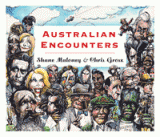
Australian encounters book cover

Book cover (Image: Courtesy Black Inc)

Maloney and Grosz’s book is the more light-hearted of the two, and just right for the Christmas season. Every encounter involves at least one Australian, but not all are literary. Some are a little tongue-in-cheek and a couple, even, are not between people. Take for example, Esperance and Skylab. (Australians will know what this is about!). Each encounter is given a page, with text by Australian novelist Shane Maloney, and a cartoon illustration by book illustrator Chris Grosz. I’ll choose just three* to share with you:

  • Australian novelist George Johnston and Canadian singer-songwriter Leonard Cohen (1960). Cohen (25 at the time) met Johnston (48) and his writer wife, Charmian Clift, in Greece. Johnston and Clift let Cohen stay in their spare room. Cohen says “They drank more than other people, they wrote more … they helped a great deal. They were an inspiration”.
  • Banjo Paterson and Rudyard Kipling (both of whom have been featured in this blog) (1900).  Paterson (36) sat next to Kipling at a dinner in South Africa, where Paterson was visiting to report on the Boer War. They apparently discussed politics and war, and must have hit it off because they met up again a year later in Kipling’s home in Sussex.
  • Robyn Davidson and Bruce Chatwin (1980). This was an organised encounter, and occurred in London. Chatwin had heard of Davidson (30) and her camel journey across the Australian desert. You can imagine what these two remote-area travel writers talked about, can’t you? Nomads was one topic, but politics was not. Chatwin apparently found politics boring and preferred to talk about (and mimic) people. Despite this, Davidson gave him contacts in Alice Springs which he would later use for his Australian travel book, Songlines.

This is an entertaining book, great for dipping into and discovering fun facts. I would have loved it if sources were provided for the information in the encounter descriptions, but this is not that kind of book. And, knowing now that these encounters took place, I can always research them myself.

Susannah Fullerton’s book, albeit called Brief encounters, is a longer tome and describes visits to Australia by 11 literati between 1836 and 1939. The book has an index and an extensive bibliography, satisfying my historian-self. The first visitor she covers is Charles Darwin, and the last HG Wells. In between are writers such as DH Lawrence (who wrote and set his novel Kangaroo only a couple of hours from where I live), Joseph Conrad, Agatha Christie (the only woman), Mark Twain and yes, even Rudyard Kipling.

Given Kipling appears in both books, I’ll use him as an example. Fullerton describes how Kipling came to visit Australia. It had its roots, she says, in an unhappy childhood and a consequent difficulty in forming relationships with women. He set off from England in 1891:

The ostensible reason he gave for the trip was that he was going to visit Robert Louis Stevenson in Samoa. What he desperately needed was to “get clean away and re-sort myself”.

His first experience of Australia was Tasmania – but only briefly – before he landed in Melbourne on 12 November. On 13 November, The Age newspaper reported him as saying:

This country is American, but remember it is secondhand American, there is an American tone on top of things, but it is not real. Dare say, bye and bye, you will get a tone of your own.

I find this quite fascinating because right now many of us feel there is an “American tone” to things in Australia, whereas back in the early to mid twentieth century the tone was distinctly British. Anyhow, Kipling said quite a bit in this early interview, both complimentary and not. His comments apparently “ruffled feathers” and he worked to smooth them over during the rest of his stay. While in Australia, he also briefly visited Sydney and Adelaide.

Now, here’s the interesting bit that ties us back to Maloney and Grosz’s book. He left Australia, Fullerton writes, rather “unenthusiastic about Australians” but this changed eight years later when he went to South Africa for the Boer War. There he met Australian troops and felt he had discovered “a new nation – Australia”. He is quoted as saying that he had never come across a “cleaner, simpler, saner, more adequate gang of men” and saw Australia as forging its own identity. Oh dear – why it is through war that our identity seems to be formed (at least in the eyes of others)?

Fullerton not only uses memoir, biographies and newspaper reports to track Kipling’s relationship with Australia, but she also quotes from his poetry and stories. One of the most significant of these is the ode he was asked to – and did – write for the Melbourne Shrine of Remembrance. The last verse includes the lines:

Then they returned to their desired land,
The kindly cities and plains where they were bred…

Clearly his view of Australia had softened. Fullerton concludes her Kipling chapter with:

Kipling spent only two weeks in Australia and saw very little of the country in that time. The visit may or may not have achieved his purpose of “re-sorting” himself. But it did leave a rich legacy – an ode, the beautiful poem “Lichtenberg” and a delightful explanation of how Australia’s most memorable animal, the kangaroo, came to look the way it does.

Fullerton’s book is well worth reading if you are interested in the authors she covers and/or in Australia as a literary destination! Lisa at ANZLitLovers agrees.

Shane Maloney and Chris Grosz
Australian encounters
Collingwood: Black Inc, 2010
111pp.
ISBN: 9781863955058
(Review copy supplied by Black Inc)

Susannah Fullerton
Brief Encounters: Literary Travellers in Australia 1836-1939
Sydney: Picador, 2009
396pp.
ISBN: 9781405039505
(Personal copy, signed by the author)

* I have left out the juicy bits – you’ll have to read the book yourself if you want to know those!

Monday musings on Australian literature: Australian Christmas imagery

As a 50-something Australian, I grew up with a big disconnect regarding Christmas. Our Christmas occurs in summer but the cards we received (and could buy) and the carols we sang (and still do) tended to be winter-focused. And then we discovered the carols by Wheeler and James. John Wheeler (lyricist) and William G James (composer) both worked for the ABC, our government-funded broadcaster. In the late 1940s-mid 1950s they wrote Christmas carols for Australians.

The most famous of the Wheeler-James carols is the “Carol of the birds”. Not only is it a lovely song, but its chorus includes, significantly, an indigenous Australian word, Orana, which means “welcome”. Our (sheet music) version of Wheeler and James’ Christmas carols comes in three sets of five carols:

  • Set 1 (1948): The three drovers; The silver stars are in the sky; Christmas Day; Carol of the birds; Christmas bush for His adorning.
  • Set 2 (1954): The day that Christ was born on; Christmas night; The little town where Christ was born; Sing Gloria; Noel-time.
  • Set 3 (1953*): The Christmas tree; Our lady of December; Golden day; Country carol (The oxen); Merry Christmas.
Paddocks in Lake George, 2005

Sheep in brown paddocks in Lake George, 2005

So, what makes these songs Australian? Most reference the Christian aspect of Christmas, as you can tell from some of the titles, but the important point is that they also evoke Australian colour and sound through celebrating our landscape, flora and fauna. Here are some examples:

The North wind is tossing the leaves,
The red dust is over the town;
The sparrows are under the eaves,
And the grass in the paddock is brown;
As we lift up our voices and sing
To the Christ-Child our Heavenly King.
(the beginning of  “Christmas Day”)

Friar birds sip the nectar of flowers,
Currawongs chant in wattle-tree bowers;
In the blue ranges Lorikeets calling-
Carol of the bushbirds rising and falling-
Chorus: Orana! Orana! Orana to Christmas Day
(Verse 3 and chorus of “Carol of the birds”)

When the sun’s a golden rose,
And the magpie carols clear,
You can say, and I can say,
On the summer morning,
Here at last is Christmas Day,
The day that Christ was born on…
(The beginning of “The Day that Christ was born on”)

Sheep in fold, Shine like gold,
As the day is dawning,
Riding by, Stockmen cry,
Welcome Christmas morning.
(Middle of first verse of “Merry Christmas”)

Interestingly, Geoff Strong, writing in The Age newspaper, believes that these songs have failed to endure, but I’m not so sure. Just because they don’t feature in shopping mall carol “musak” doesn’t mean that they’re forgotten. They are taught in schools, and recordings do exist of them. Most Australians, I believe, know at least a couple of them.

There are also more humorous, non-Christian-focused Australian Christmas songs. A couple of favourites are:

I hope you’ve enjoyed my little nod to the season. As this is the last Monday musings before Christmas, I wish all those who visit and comment on my blog, a very happy holiday season and a peaceful 2011. Monday musings will continue in the New Year.

* Don’t ask me why the date for Set 3 is before the date for Set 2, but that’s how it is.

POSTSCRIPT: The complete words to all the songs can be found on A Growing Delight’s blog.

Literary Societies of Sydney

Napoleon Sarony (1821-1896), english writer An...

Anthony Trollope. (Presumed Public Domain, by Napoleon Sarony, via Wikipedia)

Although I grew up in Queensland and New South Wales, and have spent most of my adult life in the Australian Capital Territory, it seems I have referred more in this blog to Melbourne (and Victoria), so now seems the time to balance it out a little. Why now? Because this week, in the December 2010 issue of the Jane Austen Society of Australia’s newsletter, Chronicle, I read about the Literary Societies of Sydney.

This is a new organisation, and its website describes it as follows:

The Literary Societies of Sydney is a loose federation of single-author literary societies in Sydney, formed to establish a presence online, to facilitate communication between those societies, and to encourage public contact with them. It is unfunded, and non-profit.

The single author societies it covers are (in alphabetical order by name of society):

Fascinating list, eh?  I don’t see any Australian author societies here like, say, a Miles Franklin Society, but I do love the fact that such societies as these exist. I wonder if they play the role that salons did in the past? (In fact, I sometimes wonder whether blogs operate a little like an online salon?) Certainly, for me, being a member of the Jane Austen Society of Australia provides an invaluable opportunity to share, debate and learn more about her books and ideas. Austenites, for example, can spend a lot of time arguing the case for (or against) Fanny Price, or discussing just how “bad” Frank Churchill is – not simply (or only) on the basis of personal preference, but also by looking at such things as literary traditions and social history. The society, with its wide membership, not to mention its events and publications, helps ensure that our discussions are informed ones.

Do you – or would you like to – belong to an author society (or two)? Why or why not?

Vale Ruth Park

“Harp in the South silenced: author Ruth Park dead at 93” confronted me this morning on page 3 of our daily newspaper. I guess it had to happen, but it is nonetheless sad to see such a grand dame of Australian literature leave us. I have referred to her several times on this blog, three of those times being focused specifically on her – reviews of Swords and crowns and rings, and Missus, and a Monday Musings dedicated to her – so that will give you some measure of my regard for her and, really, of her standing in Australia.

Susan Wyndham, who wrote the announcement I read, concluded with the following:

Park’s publisher at Penguin, Robert Sessions, once said that she was one of three older women who had a huge impact on him, along with the writer Thea Astley and the legendary editor Beatrice Davis. All have now died.

Astley and Park both had huge stature in Australian literature and they had that rare combination of talent and strength and humility, he said.

What more can I say, except, well done Ruth, we’ll miss you – but we’ll keep on reading you.

Alan Bennett, The uncommon reader

Light with bite is how I would describe Alan Bennett‘s delightful novella The uncommon reader. But, before I explain that further, a quick plot summary for those few who haven’t come across it. It explores what happens when Queen Elizabeth II stumbles across a mobile library on the palace grounds and becomes obsessed with books and reading. Bennett cheekily suggests what the impact might be on her family, staff and the politicians around her when reading becomes not only something she wants to do all the time (instead of her work) but also results in her starting to think and question.

One of the delightful things about the novel is that it can be read on several levels from the straight (a sweet story about the current English Queen discovering the thrill of reading late in her life) through the contemplative (a meditation on readers, reading and the value of literature) to the satirical (an expose of life in the palace, and more broadly of politics and those involved in the political process).

Take for example, reading. The Queen (in the book) says that: “Books are not about passing the time. They’re about other lives. Other worlds.” Fair enough, we all agree with that I’d say. But then there’s this, again from our newly enlightened reading Queen: “Books generally just confirm you in what you have, perhaps unwittingly, decided to do already. You go to a book to have your convictions corroborated. A book as it were closes the book.” Hmmm…Bennett’s Queen is one clever (and scary) lady!

Jokes at the expense of palace officials, politics and politicians abound. Nothing really new here but they are proffered with a light touch. The Queen, now talking about writing her own book, says “To enquire into the evidence for something on which you have already decided is the unacknowledged premise of every public enquiry, surely?” on which the Prime Minister thinks to himself “If this was to be the tone of what the Queen was planning to write there was no telling what she was going to say. ‘I think you would do better just to tell your story, ma’am'”.

This is no sentimental tale, but neither is it completely cynical (though some could see it that way). Sly is perhaps the best word to describe its ability to engage us with the humanity of the characters while skewering them and their (our) world at the same time. However, I won’t go on, except to say that the ironies, word play and allusions evident in the title give a clue to what is inside – and yet it can be read and enjoyed whether or not you pick up all, some or none of them. I’m sure I missed my share. But that’s okay, as I would be more than happy to read it again.

Alan Bennett
The uncommon reader
London: Faber and Faber, 2007
124pp
ISBN: 9781846680496

Note: I originally posted this on my reading group’s site but, since one of my online groups will be discussing this in the next quarter, I decided to post it over here too as a record of my current reading and discussions.

Monday musings on Australian literature: Aussie writers and Jane Austen

Jane Austen sketch by Cassandra

Cassandra's portrait of her sister, c. 1810

Funnily enough, I’m not the only Australian who loves Jane Austen – and so we too have our very own Jane Austen juggernaut. We see the films and miniseries, we have the Jane Austen Society of Australia – and we have academics and others researching and writing on all sorts of topics relating to her. Today, I thought I’d post about one of the lighter Australian-published books on her because it is, after all, that time of year when we tend to relax the brain power a little – or, at least, I do. The book is Jane Austen: Antipodean views (edited by Suzannah Fullerton and Anne Harbers).

I clearly remember when this book was published, nearly 10 years ago, because it included comments that I related to – that tickled me, in some cases – by some Aussie writers, and so this is what I’m going to share now.

The comment that made the greatest impression on me was the one from John Marsden, a popular and award-winning Australian children’s writer:

I’ve deliberately refrained from reading Persuasion, so that I would never get to the point where I had no more Jane Austens left to read. When the doctor, with grave countenance, gives me the news that I have only three months, the grief will be mitigated by delight that at last I am allowed to read Persuasion. In the meantime, I am avoiding crossing roads when busses are in sight.

Now, I can relate to this because I too saved a Jane Austen for quite a long time. Although I’d reread all of the others a few times, I was saving Mansfield Park for the same reason. Finally, a decade or so ago, I decided that I could put it off no longer (mainly because the Patricia Rozema film version was coming and I wanted to read the book first!). I’m glad I changed my mind and I hope Marsden has too, as rereading Jane Austen is as enjoyable, really, as reading her the first time. Why deny yourself that pleasure?

Close to that one is the following from one of my very favourite Australian writers, Elizabeth Jolley:

I find in old age, I have forgotten the novels, in particular the magic of being lifted into other lives and background. Re-reading is one of the Best Things of old age. Forgetfulness – it’s like having a present.

This one tickles me because my reading group often jokes that when we get to a certain age – and it’s moving rapidly closer – we’ll read the same book over and over because it’ll be new every time! I’ll be very happy if that one book is a Jane Austen…

My third favourite comment – and those of you who regularly read my blog will soon see why – comes from the mellifluous broadcaster and writer, Phillip Adams:

The longer I live the more bored and irritated I am by excess  – and the more grateful to find such a wide range of emotions, and such accuracy of observation, in the less-is-more prose of that remarkable woman.

“Less-is-more”. Exactly so! Need I say more?

There are many more comments along similar lines to those above but, just to be even-handed, I’ll end with the words of the award-winning but clearly unenlightened children’s book author and illustrator, Graeme Base:

Jane who?

The cheek of it!

Suzannah Fullerton and Anne Harbers (eds)
Jane Austen: Antipodean views
Neutral Bay: Wellington Lane Press, 2001
168pp
ISBN: 9780908022168

Animal Kingdom scoops the 2010 AFI Awards

Australia’s version of the Oscars – the AFI (Australian Film Institute) Awards – was held last night and, as my post title announces, Animal Kingdom (which I reviewed a few months ago) won, deservedly I think, almost every major category . The major awards were as follows:

BEST FILM: Animal Kingdom
BEST DIRECTION: David Michôd, Animal Kingdom
BEST ORIGINAL SCREENPLAY: David Michôd, Animal Kingdom
BEST ADAPTED SCREENPLAY: Stuart Beattie, Tomorrow When the War Began
BEST LEAD ACTOR: Ben Mendelsohn, Animal Kingdom
BEST LEAD ACTRESS: Jacki Weaver, Animal Kingdom
BEST SUPPORTING ACTOR: Joel Edgerton, Animal Kingdom
BEST SUPPORTING ACTRESS: Deborah Mailman, Bran Nue Dae (also reviewed)

BEST FEATURE LENGTH DOCUMENTARY: Contact

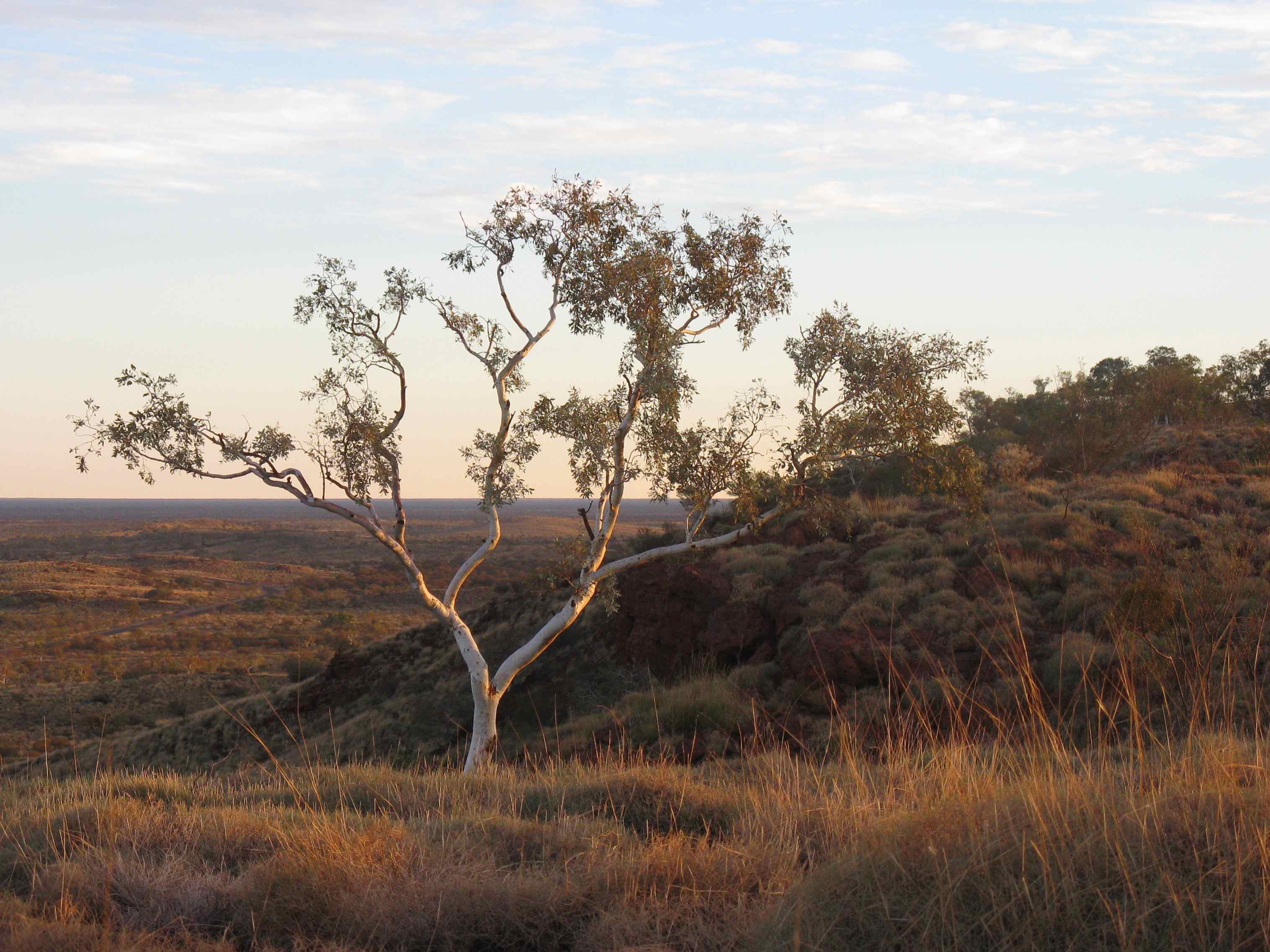
Pilbara, near Newman, WA

In the Pilbara (part of the homelands of the Martu people) taken by me in April this year.


Animal Kingdom is one of the grittiest films I’ve seen this year, while Bran Nue Dae has to have been the cheeriest. In between these two on the “grittiness” continuum is Bright Star, another favourite of mine from this year’s awards. It received multiple nominations and won in three categories: Best Cinematography (Greig Fraser), Best Production Design (Janet Patterson), and Best Costume Design (also Janet Patterson).

Finally, I was pleased to see that Contact won the Feature Length Documentary award. It tells the story of the first contact a group of indigenous Martu people had with white society in 1964. At the time, they were one of the last – if not the last – indigenous Australians to still be living traditionally with no knowledge of or contact with modern Australia. Amazing, eh? Just shows how big – and empty – Australia is.


Tracy Chevalier, Remarkable creatures

Bookcover

Cover image courtesy HarperCollins Australia

Most readers experience, I think, periods of reading synchronicity when we read books in close succession that are related in some way. I am experiencing such a period now as Tracy Chevalier‘s Remarkable creatures is the third book I’ve read recently to deal in some way with the first decades of the 19th century. The others are David Mitchell’s The thousand autumns of Jacob de Zoet and Peter Carey’s Parrot and Olivier in America.

Tracy Chevalier would not normally be high priority for me, but this book intrigued me because of its period and setting. You see, it is set in Lyme Regis in the early 1800s, and that rings a special bell for me! Yes, it’s to do with Jane Austen. Not only did she visit Lyme Regis, but she set a significant scene in Persuasion there*. So, my appetite was whetted.

But, I must say, I was somewhat disappointed. It’s not that I expected a lot, really, but I did expect a little more than I got. In other words, I didn’t expect exciting or innovative prose, but I did expect writing that wouldn’t bother me. However, it did, and this was mostly due to a lack of subtlety. The best writing shows, not tells, but there was way too much telling in this book, and it falls into two main types:

  • Giving “facts” that we should know. Here is Elizabeth over-explaining Mary’s calling her “Ma’am”, when she’d previously called her “Miss”:

And she was calling me “ma-am” now. Spinster or not, I had outgrown “miss”. Ladies were called “miss” while they still had a chance of marrying.

  • Describing something, such as a character’s emotions, when it should be (and usually is) apparent. Here is a bit of petulance that sounds rather silly in the first person voice of a supposedly mature Elizabeth:

As angry as I sounded, I was also secretly pleased that Colonel Birch had discovered the value of my fish enough to want one for himself.

(For a humorous review of an unsubtle book, do read Kerry, aka Hungry Like the Wolf, on Ken Follett’s The pillars of the earth.)

There are also a couple of rather gratuitous references to Jane Austen and her novels, gratuitous because the main characters don’t read novels and the reference to Austen adds nothing significant in terms of plot or characterisation. It’s as if Chevalier knew Austen went there and decided to draw on Austen’s current popularity by making the connection:

One of Miss Austen’s books had even featured Lyme Regis, but I did not read fiction and could not be persuaded to try it. Life itself was far messier, and did not end so tidily, with the heroine making the right match. We Philpot sisters were the very embodiment of that frayed life. I did not need novels to remind me of what I had missed.

Enough of all that, however. Let me give a quick rundown of the plot. It tells the story of two women who were fossil hunters in Lyme Regis in the first half of the nineteenth century. They were Mary Anning (1799-1847), a poor working class woman whose fossil finds helped change the course of paleontology, and Elizabeth Philpot (1780-1857), a gentlewoman who befriended Anning and who was particularly interested in fossil fish. Using known facts and novelistic licence, Chevalier has written an engaging story that focuses not only on the fossils and their impact on scientific and religious thinking of the time but also on the difficulties faced by women, particularly those unmarried like Philpot or unmarried and uneducated like Anning. Philpot says early in the novel that

… I had to find a passion: I was twenty-five years old, unlikely ever to marry, and in need of a hobby to fill my days. It is tedious being a lady sometimes.

Chevalier shows the financial precariousness of women, their lack of power, and how easily they can be exploited. Women, for example, were unable to belong to the Geological Society of London, and Mary’s collections (in particular) were written up in scientific journals by men, often with no credit given to her contribution. This is the real story of the novel and Chevalier captures well the circumscribed lives of women, and the challenges they faced in living independently. And yet, she undermines this by fabricating a jealous falling out between Elizabeth and Mary over a man. Did Chevalier really need to do this to make the story exciting?

That said, the characterisation is effective overall. She differentiates the two main characters not only by their very different voices, but also by creating a conceit for each of them. For Elizabeth it is her describing what people “lead with”. The forthright Mary, for example, leads with her eyes, while one of the foppish male characters leads, she says, with his hair. Good one, I thought! Mary’s conceit is being the “lightning girl”. The book begins with her being struck, but not killed, by lightning when she was a young girl. Lightning thereafter becomes a motif in her life for surprising or lucky events and for strong feelings.

Chevalier also writes some lovely descriptions – of people and landscapes:

While I accommodated her absence, a dull ache in my heart remained, like a fracture that, though healed, ever flares up during damp weather.

and

Lyme Regis is a town that has submitted to its geography rather than forced the land to submit to it …It is not planned, like Bath or Cheltenham or Brighton, but wriggles this way and that, as if trying to escape the hills and sea, and failing.

This is an enjoyable book for the glimpse it gives into the lives of two interesting and little known women, but the writing, for me, doesn’t quite do the story justice. For a more positive review, you may like to read Lisa’s at ANZLitLovers.

Tracy Chevalier
Remarkable creatures
London, HarperCollins, 2010
352pp.
ISBN: 9780007178384

*It is also the setting, of course, of John FowlesThe French lieutenant’s woman.