Monday musings on Australian literature: Australia’s difficult novels

A week or so ago I wrote a post about reading difficult novels. As I researched that post, I came across many lists of difficult novels, including the one I included at the end of the post. The interesting thing is that none of the lists I saw included any Australian novels, and yet they included novels from most of the other continents. Do we not have any, or, more likely, are we just not on the world literature radar enough? Anyhow, I thought I’d get the ball rolling and suggest a few possibilities:

  • Patrick White’s Voss. It’s logical to start with White, because, currently, he’s Australia’s only Nobel Prize winner for literature. (I’ll do the rest alphabetically!).I’m not sure that Voss is his most difficult novel, but it depends on your definition of difficult. White’s prose is dense, with complex sentence structures and intense, but vivid imagery. Many readers find Voss particularly hard to read, though, because of the spiritual communion between Voss in the desert and Laura in the city. However, it appealed to my teenage sense of romance and resulted in my falling love with White.
  • Thea Astley’s Drylands. I’ve read quite a few Astleys. After all, she’s one of my favourite writers. She has a reputation for being difficult, with her earliest novels being particularly so, but I’ve chosen her last because of its form and its sense of desperation. Writer Mandy Sayer, an admirer like me, agrees that she is not “an easy read”, saying that she is “at once poetic, quirky, and literary”. Her imagery can be over the top, and she doesn’t shy from exploring our brutality, but she has such a heart. Every Australian should read her.
  • Peter Carey’s Illywhacker. Carey is hard to pin down, as his books vary so greatly. It’s one of the reasons I like him. You never know what you are going to get, from the at times surreal, to something like True history of the Kelly gang with its 19th century vernacular, unpolished grammar and largely absent punctuation, to the complexly structured like Parrot and Olivier in America (my review) and The chemistry of tears (my review). I’ve chosen Illywhacker, not because it’s regarded as his hardest but because I haven’t read it (yet).
  • JM Coetzee’s Diary of a bad year (my review). Coetzee, in this book and its predecessor Elizabeth Costello, pushes the envelope in terms of “the novel”. Some argued that Elizabeth Costello was more a series of lectures than a novel. Diary of a bad year presents readers with a very specific challenge. How do you read it, with its three (two to begin with) concurrent strands running across the top, middle and bottom of the page? Do you read one strand and then come back and read the next? Or do you try to read them concurrently? This is one of those books that is a challenge to read for its unusual structure and for the interplay between ideas and story that the reader needs to tease out.
  • Gerald Murnane’s The plains (my review). As blogger M. Sarki has written, “There is nothing but difficulty in reading a book written by Gerald Murnane.  But the reading gives me an enormous amount of pleasure…”. Murnane is one of our most innovative writers. He’s a challenge to read – where am I?, what is he saying? – but there’s exhilaration in that. I need to read more of him.

I think five is probably a good start, particularly given I’ve rambled on about each one. Other writers well worth considering if you are looking for “difficult” Australian literature include Rodney Hall, Thomas Keneally (his early works), David Malouf, Frank Moorhouse, Christos Tsiolkas. Not all works by these writers are “difficult” but many are recognised to be so.

I’ve read works by each of the writers I’ve named, but I’m sure other Aussies could name some favourite writers and “difficult” novels too. Has anyone read, for example, Eleanor Dark’s Prelude to Christopher? I’d love to hear your thoughts on the matter. Let’s get our Aussies out there!
Jane Austen on reading novels

Jane Austen’s defence of the novel in Northanger Abbey is famous. Not only does the hero, Henry Tilney, tell the heroine Catherine, that:

The person, be it gentleman or lady, who has not pleasure in a good novel, must be intolerably stupid …

but Austen, in an authorial comment early in the book, says

… there seems almost a general wish of decrying the capacity and undervaluing the labour of the novelist, and of slighting the performances which have only genius, wit, and taste to recommend them. “I am no novel–reader — I seldom look into novels — Do not imagine that I often read novels — It is really very well for a novel.” Such is the common cant. “And what are you reading, Miss — ?” “Oh! It is only a novel!” replies the young lady, while she lays down her book with affected indifference, or momentary shame. “It is only Cecilia, or Camilla, or Belinda”; or, in short, only some work in which the greatest powers of the mind are displayed, in which the most thorough knowledge of human nature, the happiest delineation of its varieties, the liveliest effusions of wit and humour, are conveyed to the world in the best–chosen language.

This is Austen, though, and while she was passionate about the value of reading fiction, she also saw the other side. Not all novels, perhaps, are equal! And so, Catherine, a fan of the Gothic novel, is shown to be a rather silly novel reader, letting her imagination run too far and getting herself into trouble as a result. She does learn, though …

Northanger Abbey was published posthumously in 1817*. However, Austen wrote it in 1798/99, and revised it in 1803, when it was the first of hers to be sold to a publisher – Crosby & Co. They decided not to publish it, and it was bought back in 1816. Austen did further work on it before her death in 1817. My point though relates to the fact that the bulk of it was written in 1798/99. This is interesting, when you compare the excerpt above to this from her letter (no. 14) to her sister written on 18 December 1798:

I have received a very civil note from Mrs. Martin requesting my name as a Subscriber to her Library which opens the 14th of January, & my name, or rather Yours is accordingly given. My Mother finds the Money. …  As an inducement to subscribe Mrs. Martin tells us that her Collection is not to consist only of novels, but of every kind of Literature, & c. & c-She might have spared this pretension to our family; who are great Novel-readers & not ashamed of being so; – but it was necessary I suppose to the self-consequence of half her Subscribers.

Those comments “great Novel-readers & not ashamed of being so” and “The self-consequence of half her Subscribers” tell us very clearly that novel-reading in the late 1700s to early 1800s was seen by many as a frivolous activity. No wonder she, a beginning novelist, felt the need to defend her craft!

* Published in December 1817, but the imprint date is 1818.

Harriet Ann Jacobs, The lover (Review)

It’s a while since I read a story from the Library of America‘s (LOA) Story of the Week program, but when I saw Harriet Ann Jacobs’ story “The lover” appear in its list of Top 10 stories from 2013 I felt it was time to rectify my tardiness – particularly with the movie, 12 Years a Slave, about to be released here. This story is, in fact, a chapter from her memoir Incidents in the life of a slave girl.

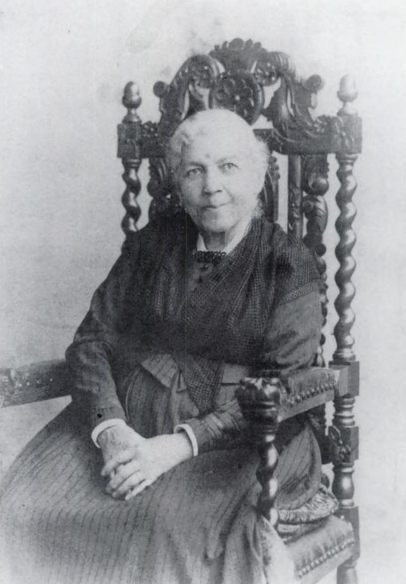
Harriet Ann Jacobs, 1894 (Presumed Public Domain, via Wikipedia)

Harriet Ann Jacobs, 1894 (Presumed Public Domain, via Wikipedia)

Last year was the bicentenary of Jacobs’ birth. Her mother died when she was 6 years old, making her an orphan-slave. Her first masters, LOA says, taught her to read and write, but that mistress died when Jacobs was 12, and she was left in the will to a 3-year-old! That brought her into “a household that introduced her to the true barbarities of slavery”. Jacobs eventually escaped to the north in 1842, when she was nearly 30 years old. Her memoir was published in 1861 by best-selling author of the time Lydia Marie Child, under the pseudonym, Linda Brent. According to LOA, the book and its author enjoyed some minor celebrity in the north at the time, but disappeared pretty quickly, probably due to its being “overwhelmed by the war and later by emancipation”.

LOA goes on to say that it was then “largely forgotten”. Most academics, they say, believed it had been written by Child, suggesting that it may have been “loosely based on Jacobs’s life but ‘too melodramatic’ … to be an actual slave narrative”. However, in 1971, historian Jean Fagan Yellin uncovered the truth of its authorship. She eventually published a biography of Jacobs in 2005, Harriet Jacobs: A life.

The chapter published by LOA as “The lover” gives us a sense of Jacobs’ feisty, resilient nature. It starts with:

Why does the slave ever love? Why allow the tendrils of the heart to twine around an object which may at any moment be wrenched away by the hand of violence? When separations come by the hand of death, the pious soul can bow in resignation, and say, “Not my will, but thine be done, O Lord?” But when the ruthless hand of man strikes the blow, regardless of the misery he causes, it is hard to be submissive. I did not reason thus when I was a young girl. Youth will be youth. I loved, and I indulged the hope that the dark clouds around me would turn out a bright thing. I forgot that in the land of my birth the shadows are too dense for light to penetrate.

I love the way this paragraph confirms that the young-in-love are the same at any time, in any place. Hopeful. Optimistic. How universal. But, how not universal was the situation Jacobs found herself in! She goes on to tell how she’d fallen in love with “a young colored carpenter; a free-born man” in her neighbourhood. She loved him “with all the ardor of a young girl’s first love”. He proposed to her and wanted to buy her from her masters.

Knowing her masters, Jacobs held out little hope for his success, but writes of how “this love-dream had been my support through many trials”. So, she enlisted a sympathetic white woman to plead her case. How nice to read that there were sympathetic white people. Of course the white woman had little to lose other than perhaps the respect and friendship of her peers. I won’t tell you the rest of the story. It’s short and is more powerful in her own words. You can read it at the link below.

A decade or so after her escape (a story in itself) to the North, and over some period of time, Jacobs wrote her book. Then, in the 1860s, she began a career as an activist newspaper journalist. She also worked as a relief worker amongst refugee slaves in Alexandria (Virginia). It was tough work – not only because of the work itself, but because Alexandria, on the border between North and South, had a largely secessionist population. The terrible conditions described by Scott Korb, associate editor of The Harriet Jacob Papers, in his articles “Harriet Jacobs’s First Assignment” and “Harriet Jacobs’s War” reminded me of Geraldine Brooks’ scenes of the Washington DC area in her novel March:

All I could notice was the blight of this place: the pigs wandering the street and dead horses bloating by the roadside … Washington is flooded by the ragged remnants of slavery, contraband cast up here to eke out what existence they may. I felt a pang for the little bootblacks, crying our for trade and going without …

So, I checked. Brooks did, it seems, draw from Jacobs’ book to create her slave character. Now I feel I should read Jacobs’ whole book.

Harriet Ann Jacobs
“The lover”
First published: As Chapter VII of her book, Incidents in the Life of a Slave Girl, 1861.
Available: Online at the Library of America

Forgiveness or Revenge, Love or Hatred?

This rather personal post departs somewhat from my usual fare – and replaces my usual Monday Musings, for a reason that will become obvious at the end.

Last week I saw the film The Railway Man. For those of you who haven’t seen or heard of it, it is about Eric Lomax, a British soldier who was fearfully tortured when he was a POW on the Burma Railway. Many years later he met and befriended the Japanese interpreter involved in his torture. I admit that I haven’t read his 1995 autobiography (also called The railway man), upon which the film is based, but in the film he says (and, in interviews, his second wife has quoted him as saying):

Sometimes, the hating has to stop.

I so admire this – this ability to stop hating and to forgive instead – just as I admired Izzeldin Abuelaish’s I shall not hate (2010), which I reviewed a couple of years ago. Abuelaish is the Palestinian who lost three daughters and a niece in an Israeli bomb attack on his home in Gaza. I quoted him in my review:

I believe in co-existence, not endless cycles of revenge and retribution. And possibly the hidden truth about Gaza can only sink in when it is conveyed by someone who does not hate.

Nelson Mandela would of course agree. In his autobiography, The long walk to freedom (1995), he wrote

No one is born hating another person because of the colour of his skin, his background, or his religion. People must learn to hate, and if they can learn to hate, they can be taught to love, for love comes more naturally to the human heart than its opposite.

Martin Luther King Jr

1964 (Courtesy Nobel.Org via Wikipedia)

There are many others – writers, philosophers, “ordinary” people who have suffered extraordinary things and, of course, Gandhi – who have spoken similarly, but I’ll end with the person I always name when I’m asked to name my “hero”. It’s Martin Luther King Jr – and today, Monday 20 January, is a federal public holiday in the USA dedicated to his memory, Martin Luther King Jr Day. One of the many things he said on the subject of hatred is:

Returning violence for violence multiplies violence, adding deeper darkness to a night already devoid of stars. Darkness cannot drive out darkness; only light can do that. Hate cannot drive out hate; only love can do that.*

“Civilisation and violence”, he said in his Nobel Prize acceptance speech, “are antithetical concepts”.

None of these people, from what I’ve read, came to their positions easily. It was hard work but, as Gandhi said, “the weak can never forgive. Forgiveness is the attribute of the strong”. I readily admit that I have never been tested in the way the people I’ve quoted here have been – but I hope that if ever I were, I would rise to their challenge, that I would turn hatred into love, or at least forgive rather than strive for vengeance!

If you are interested in the subject of forgiveness, particularly in reading about people who are its embodiment, you might like to check out The Forgiveness Project.

* This quote abounds on the web, but I took some time to track down its source. I eventually found the following: From “‘Where Do We Go From Here?’ as published in Where Do We Go from Here : Chaos or Community? (1967), p. 62; many statements in this book, or slight variants of them, were also part of his address ‘Where Do We Go From Here?’ …  A common variant appearing at least as early as 1968 has ‘Returning violence for violence multiplies violence…’ An early version of the speech as published in A Martin Luther King Treasury (1964), p. 173, has : ‘Returning hate for hate multiplies hate…'”

Reading difficult literature

I seem to have been reading a lot in recent weeks about reading, the end of reviewing, the future (or not) of the book, and so on. All interesting, though many revisiting familiar territory. One, though, particularly caught my eye. It was a post in Book Riot, by magazine editor/blogger/reviewer Greg Zimmerman, and was titled Our reading lives: Why I like difficult novels.

It’s not a long post. Zimmerman starts with David Foster Wallace’s notoriously difficult Infinite jest. He loved reading it, and says:

Readers read for dozens of different reasons. One of my favourite is to be challenged. Certainly, I don’t want most (or even 2 percent) of the novels I read to be as tough as Infinite jest. But I think spending a good amount of time with a book, really putting in some effort to piece it together, and coming out on the other side feeling like you’ve accomplished something is just so gratifying.

I’m sure you, like me, know exactly what he means. He next mentions Thomas Pynchon’s Gravity’s rainbow – which he found “really, really tough” – and then Eleanor Catton’s The luminaries. My eyes popped out at this point, as that’s the book I was about to start (and have, indeed, now started). While I knew it was long, I didn’t know it had a reputation for being difficult, but Zimmerman quotes others as saying it’s “long and demanding”, baffling”, even “an ingenious ourobouros“. Had I, I thought, left myself enough time to read it in time for reading group? Time will tell. Zimmerman took two weeks, he said, and that’s about how much time I’ve given myself.

The point I want to make though is that Zimmerman says that its difficulty is different. It’s “not like Pynchon because it’s really readable. And it’s not like DFW because it’s not digressive or purposefully superfluous”. Its difficulty comes from “the number of characters, how they’re all involved in the plot but from different perspectives and with different motivations, and the way the plot folds back upon itself several times”.

This got me thinking – not about The luminaries, as I’ll deal with that as I read it – but about my definitions of difficulty in novels. Dificulty is, I think, in the eye of the beholder, so I’ve come up with a few, not mutually exclusive definitions, which I thought I’d share (or, at least document for my own benefit!):

  • language and/or ideas are obscure and/or complex. A recent example for me is Gerald Murnane’s The plains (my review). It’s a short book but it demanded my complete attention. Miss a sentence and I was lost. I’m not sure I fully understood it, but I loved the challenge of trying to work out what Murnane was on about. Most of the world’s difficult books – those by Joyce, Pynchon, Faulkner, Woolf et al – probably fall into this category. These books may have little or no plot. They are the books in which you wonder “what the hell is going on?”
  • structure is complex or disconnected or full of digressions, making it tricky to pin down things like where, when and/or who at different points in the book. Some readers found this with Kim Scott’s That deadman dance (my review). They found all the shifting around, particularly in the beginning, disorienting. Laurence Sterne’s Tristram Shandy fits here, though it’s a long time since I read it. This point is closely related to the first one, and most of the authors I listed there spill over here too, I think.
  • large cast of characters (often combined with complex or convoluted plot). This is apparently the case with The luminaries. David Mitchell’s The thousand autumns of Jacob de Zoet (my review) is not overly convoluted but it has a large cast of characters, and keeping track of them is a challenge. Mitchell’s Cloud Atlas would fit here too, and in several of my categories I reckon.
  • unflagged transitions between “reality” and “magic” or “dream” or “spiritual” worlds. Gabriel Garcia Marquez, Haruki Murakami and our own Alexis Wright (my review of Carpentaria), to name a few, can trip us up with the way they slide between worlds. Alexis Wright, however, would argue that this only a problem if you have a western mindset. My solution is to go with the flow – and usually all will be revealed.
  • emotionally confronting, that is, the story is distressing or grim. This is not something that usually bothers me. While I do become emotional about characters and what happens to them, I like that literature lets me explore things I hope I never have to experience in life. Rohinton Mistry’s A fine balance is a novel that wears some readers down. For some it’s too depressing, and they give up. I found it ultimately uplifting, despite it all. JM Coetzee’s Disgrace fits here, as do Cormac McCarthy’s The road and Blood meridian, not to mention many Holocaust novels.
  • boring. It’s really hard to read a book that bores you. This is what put me off Great expectations when I first tried to read it in my early teens. I just couldn’t get interested. When I finally faced it again years later, I loved it. I think this might be the reason many readers give up on Louis de Berniere’s Captain Corelli’s mandolin. I loved the opening chapters, but he does take a while to get into the story proper.

Do you read “difficult” literature? If so, what do you find difficult and do you have any hints about how to approach such reading. Oh, and for a list of really tough books, check this list out.

Margaret Rose Stringer, And then like my dreams (Review)

Margaret Rose Stringer, And then like my dreams

Courtesy: Fremantle Press

I was, I have to admit, predisposed to like Margaret Rose Stringer’s memoir, And then like my dreams, before I opened the cover. Fortunately, I wasn’t disappointed, but not, as it turned out, for the reason I expected. Here’s why. Margaret Rose Stringer once worked as a continuity girl in the Australian film industry and she was married to stillsman (film stills photographer), Chic (Charles) Stringer. I spent many years of my career working with film stills, and I loved it. I was therefore looking forward to hearing an insider’s story. However, the book didn’t really spend a lot of time on industry talk, but Stringer is such an engaging writer that I didn’t care because, by the time I realised it, I was fully invested in her story about the love of her life.

“The love of her life”. This could suggest something rather schmaltzy but while Stringer is totally one-eyed about CS, as she calls her late husband, this is not a schmaltzy book, not really, not despite frequent adulatory proclamations of love. Part love-story, part grief-memoir, the book works because of Stringer herself – her honesty and her writing style. I don’t make a practice of reading about grief. However, over the years I have read Isabel Allende’s Paula (1994), Joan Didion’s The year of magical thinking (2005), and Marion Halligan’s autobiographical novel, The fog garden (2001), and haven’t regretted any of them. Of course, Didion, Allende and Halligan were all established writers when they wrote about their grief, whereas Stringer was not.

But, she could have been, because this book has a fresh, lively style despite its subject matter. In fact, I did say it was only part grief-memoir: while we are told in the first chapter – one-page long and simply titled “All of it” – that she met Chic Stringer when she was 31 years old and that he died 31 years later, much of the book is about these 31 years, of which only the last couple encompassed his dying. Theirs was, it seems, the perfect love story. Stringer briefly describes her childhood, particularly her difficult relationship with her mother, then her undirected, rather wild and unsettled early adulthood in which she was dogged by anxiety, panic attacks and clinical depression. She discovered late in her much-loved father’s life that he too suffered but apparently, while he recognised that Stringer, the fourth of five daughters, was similarly afflicted, he did not have the wisdom or knowledge to effectively help her. Chic, though, did – through love, patience and tolerance. Stringer visualises their relationship as a “truth tree” with the trunk comprising the fundamental fact that:

Chic really, really wanted and needed to look after me; and I really, really wanted and needed him to do it.

My feminist self was a little taken aback by this, but it became clear that Stringer is not, as this might suggest, submissive so much as in need of love and nurturing, which Chic provides. In fact she says:

The point is that I didn’t simply go along with  everything Chic wanted, because I loved him. Nono! – I retained my behavioural traits, because they were mine and they comprised me, even if they were less than totally attractive and desirable as traits go. After all, it was me he loved – not some paragon ….

She could, she said, be stroppy and unreasonable, and he could be bossy, but they made it work. I did feel she was a little too self-deprecating, too willing to put herself down at times, but she’s so thoroughly genuine that these niggles subsided.

Most of the book is about their life together: their work, particularly in the film industry and then the video production business they established when long-sightedness forced Chic out of his career; their various homes, including the one Chic built on Dangar Island in the Hawkesbury River; and their European travels, with some lovely stories about their passion for Placido Domingo. She refers us to their site European Travels with a Spouse for further information on their trips because, as she was reminded by her advisers, she was not writing a travel diary! Chic’s dying and her subsequent grief occupies only a small proportion of the whole.

What makes this memoir especially engaging is the style. Firstly, there’s her friendly, open voice. And then there are the quirky features, one of which is the use of script form to convey key scenes. Most of the book is written in first person, as you would expect, but these script scenes are written in third person. They relieve the intensity of the book and are, in fact, a little whimsical even when the point she wants to convey is serious. It’s the reverse what of Francesca Rendle-Short did in her fictional memoir Bite your tongue which she wrote primarily in the third person, using another name for herself, but occasionally inserted some first person commentary. For her, writing in third person enabled a distancing from the emotional intensity of a story she found “hard to tell”, whereas Stringer often uses these third person scenes to make an emotional point. Or, sometimes, just to tell a funny story. Stringer also uses footnotes entertainingly; she openly discusses the advice she received about memoir writing; and she tells her story through mostly short chapters with inspired titles like “Crust (Daily)”,  “Joy”, and  the ironic “Silver Tongue” in which she discusses Chic’s dislike of her “coarse utterance”.

Stringer is, of course, particularly moving when describing her grief, from her initial denial, through the last months of caring for a terminally ill partner, to feelings of “utter confusion” and madness afterwards. Joan Didion also wrote in her memoir of the mad – aka magical – thinking that attends grief. Stringer, in her inimitable style, is more direct and writes of her “mad-soup” brain.

Late in the book, Stringer says that part of her reason for writing was “to travel all the roads and pathways and sidealleys leading to and from grief”. She has achieved that, and more, because what she has written is a sad yet humorous, and ultimately wise book about the most meaningful thing in our lives – love.

awwchallenge2014Margaret Rose Stringer
And then like my dreams: A memoir
Fremantle: Fremantle Press, 2013
323pp.
ISBN: 9781922089021

(Review copy supplied by Fremantle Press)

Monday musings on Australian literature: Here come the men!

Women really have dominated the literary awards season in Australia over the last two years. In 2012, the majority of the awards were won by Anna Funder with All that I am and Gillian Mears with Foal’s bread. Last year it was mostly Michelle de Kretser with Questions of travel and Carrie Tiffany with Mateship with birds. ML Stedman also won an award with her The light between oceans. As well as all this, last year we had, for the first time ever, an all female shortlist for the Miles Franklin Award! Where, you may have been wondering, were the men?

Well, in their writing rooms it seems, beavering away, because by late last year their books started appearing in droves … and nice to see it is. I love reading fiction by women, but I also love reading fiction by men. Let’s face it, I love reading good fiction! Anyhow, I, and others like The Australian’s literary editor Stephen Romei, expect some strong showings by our male writers in this year’s award lists. Books like:

  • Richard Flanagan’s The narrow road to the deep north
  • Tom Keneally’s Shame and captives
  • Roger McDonald’s The following
  • Alex Miller’s Coal Creek
  • Christos Tsiolkas’ Barracuda
  • Tim Winton’s Eyrie

Stephen Romei predicts that Winton and Flanagan will battle it out, though says there are other strong contenders from a bumper year for Australian fiction. I will be reading Tsiolkas and Winton with my reading group over the next few months, and received Flanagan for Christmas. I am greatly looking forward to getting my teeth into these writers, each of whom I’ve reviewed before on this blog, and each of whom I respect and enjoy.

None of these, though, are debut authors. Every one has won and/or been shortlisted for the Miles Franklin at least once, and most, more than once. Of course it takes a little time for a debut to make it into public consciousness. However, you may remember that last year’s Miles Franklin Award shortlist of five titles contained three – yes, three – debut novels (Floundering, by Romy AshThe Beloved by Annah Faulkner, The Mountain by Drusilla Modjeska). That was healthy, and augurs well for the future, but I wonder if we’ll see any debut novels by male authors in the shortlists this year? While I don’t report regularly on awards, I’ll certainly be keeping an eye out for new authors appearing on the scene – or, indeed, for more established authors making their debut on the award lists.

Meanwhile, of course, I’ll continue to read Aussie women for the Australian Women Writers’ Challenge, including Hannah Kent’s debut novel Burial rites which could very well give the men a run for their money this year if the buzz surrounding this book is right.

2014 looks to be another exciting year for Australian fiction. How do you – Aussies and otherwise – see your reading shaping up for the year?

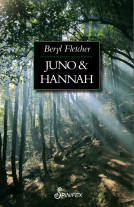
Beryl Fletcher, Juno and Hannah (Review)

Beryl Fletcher, Juno and Hannah

Courtesy: Spinifex Press

I’ve been pretty remiss in my blog regarding New Zealand literature. I have read and enjoyed several New Zealand novelists, such as Keri Hulme, Janet Frame and Fiona Kidman, but the only New Zealand writer I’ve reviewed here to date has been Lloyd Jones. And so I was both intrigued and pleased when Spinifex Press sent me Juno and Hannah by New Zealand writer, Beryl Fletcher.

I’m embarrassed to say that I hadn’t heard of Fletcher, but she has some form! Her first novel, The Word Burners, won the 1992 Commonwealth Writers’ Prize Best First Book for the Asia/Pacific region. Juno and Hannah is her fifth novel. She has also written a memoir and some short stories. The fact that four of her five novels have been published by Spinifex Press would suggest a feminist agenda but, while Juno and Hannah certainly has an element of women being challenged by patriarchal authority, it is not a preachy or proselytising book, any more than are the other Spinifex Press books I’ve reviewed. Rather, like them, its focus is women’s experience of the world.

Hmm … that’s a long introduction. Time to get to this particular world. Juno and Hannah is set in 1920s New Zealand. The eponymous sisters are living in a religious commune, and are without parents. Despite the fact that Juno’s name appears first in the title, Hannah is the older. Two things happen in the opening pages of the book which cause Hannah to “run away” with Juno. The first is that she is punished with a month’s isolation for saving a strange man from drowning by breathing life into him – and thereby arousing fears of witchcraft, of communing with the spirits. It’s a clearly unjust punishment from (the significantly named) Abraham, who claims to adhere to “the sacred principles of Christian justice”. The second thing is her hearing that the community plans “to get rid of” 14-years-old Juno, probably to an orphanage in town. Juno, you see, requires special care as she is not quite normal – and the so-called Christian community “can’t carry a non-productive member”. This sets up what is essentially a Gothic adventure tale in which Hannah, with the help of a strange assortment of others, searches for a secure home for Juno and herself.

The novel (novella, really) is a page turner. There are good guys and bad guys (including eugenicists who have their sights on the “mentally defective” Juno), but sometimes we can’t always be sure who are the good guys. Hannah, a resilient and loyal young women but one who experienced abandonment at an early age, finds it hard to trust anyone, including those who offer help. In this mix are Hannah’s mother, her father and his mistress, the man she’d saved, and his sister. There are all sorts of Gothic archetypes here – cottages in the wood, horses pushed to their limits, storms, secrets, a sanatorium. While the story is told third person, we see much of it through Hannah’s inexperienced eyes, so when she is unsettled, so are we. And rightly so, because the world is an uncertain place.

Fletcher’s style is plain, direct, and yet also poetic. It comprises mostly short sentences, which keep the plot moving but which are interspersed every now and then with more Gothic descriptions. These are particularly effective because they are not overdone:

When the southerly blew itself out, fog crept up from the river and devoured all before it. Not one leaf moved, not one bird sang. One by one the trees melted away. The fog brought a terrible silence outside her prison that emulated the social death within.

And:

Something had changed. The hut was withdrawing into itself; the fire had gone out, empty tins had been dropped onto the clay floor. She touched the glass chimney of the paraffin lamp. It was cold.

I enjoyed reading this book, but am having trouble writing about it. I think this is because the themes are carried primarily through the plot. By this I mean, they are conveyed by who does what with whom, who appears and disappears, who chases whom, and who helps whom. I don’t really want to explain too much for fear of giving the story away. Briefly, though, the main themes are resilience and trust. As a young vulnerable woman responsible for an even more vulnerable sister, Hannah needs to be resilient to survive the world she finds herself in. She also needs to trust, but she must temper this with wariness because the world is not a safe place. Another theme is the responsibility to protect weaker members of our society, as Hannah does for Juno, but as was not done for her when she was “abandoned” in the religious community. In fact, “abandonment” is another theme. And finally is the theme of nurturing. Clearly, Hannah nurtures her sister, but the theme is also conveyed through the act of bread-baking, which occurs throughout the novel. Hannah is good at it, so is her mother Eleanor. Providing bread to others in need is one of the final, reassuring images of the novel.

Juno and Hannah is a compelling read. There were times when the plot seemed to be slipping from my grasp. Loose ends perhaps, or maybe just part of the uncertain world Fletcher was creating.  It was never enough, however, to stop my being invested in Hannah and her trials. There’s something about Fletcher’s direct narrative style evoking an almost other-worldly setting that drew me in. I didn’t want to put it down.

awwchallenge2014Beryl Fletcher
Juno and Hannah
North Melbourne: Spinifex Press, 2013
174pp.
ISBN:9781742198750

(Review copy supplied by Spinifex Press)

NOTE: I have included this review in the Australian Women Writers Challenge because Fletcher’s primary publisher is Spinifex Press (and because someone before me has also included her!). I hope Fletcher and any New Zealand readers here aren’t offended!

Kathy Marks, Channelling Mannalargenna (Review)

A few weeks ago I wrote a Monday Musings about the Walkley Awards, noting some of the winners that particularly interested me. They included two awards for essays in the Griffith Review, one by Melissa Lucashenko, whose essay “Sinking below sight” I subsequently reviewed, and the other by Kathy Marks whose essay, “Channelling Mannalargenna” is the subject of this post. Both essays deal with indigenous topics but while Lucashenko, who won the award for Long Feature, has Aboriginal heritage, Marks, whose award was for Indigenous Affairs, is English. This adds an intriguing layer to her piece which is about the troubled issue of identity in indigenous Tasmania. Marks has, however, been writing about the Asia-Pacific region since 1999.

Like most Australians of my generation, I grew up believing that genocide had resulted in the elimination of indigenous people from Tasmania. Truganini, we were told, was the last “full-blood” Tasmanian Aboriginal person. She died in 1876. In 1978, the documentary, The last Tasmanian, made by filmmaker Tom Haydon and archaeologist Rhys Jones, popularised this idea. It is, however, not quite as simple as we’d been led to believe – and Marks’ essay chronicles the identification legacy left by a history of being discounted. The Walkley judges described the essay as follows:

An elegantly written essay about a community still wrestling daily with the act of colonisation. Adding poignancy is the hovering myth of extinction, Kathy Marks deftly draws the reader into the everyday of establishing Tasmanian Aboriginal identity, teasing out the tensions, but without seeking catharsis.

It’s a brave essay, I think, something that Marks herself recognises when she said on her win that “I was thrilled to receive the award, not least because of the challenging and sensitive nature of the subject matter.” Being brave, though, is surely the hallmark of a good journalist. And so, Marks tackles the thorny issue regarding the definition of indigeneity in Tasmania.

As I read the essay, I was reminded of remarks made by Anita Heiss in Am I black enough for you? on conflict within the indigenous community regarding Aboriginality. Heiss discusses the different ways people come by their Aboriginality and says:

What age and experience  moving around the country has given me is a better understanding of the complexities around individual and collective Aboriginal identity. One shouldn’t be too quick to judge others, especially when some of us have been fortunate to know who we are all our lives, and others haven’t.

And herein lies the rub in Tasmania. Because of the particular history of indigenous Tasmanians, family lines and connections have been broken, and so the way Tasmanians discover their Aboriginal background is highly varied. In her essay, Marks talks to many of the groups and factions existing in contemporary Tasmania, and describes the bitter lines that have been drawn between some of them. Some of these lines are so strongly defended that one group, the Tasmanian Aboriginal Centre (TAC) in particular, has taken legal action against people who have claimed indigenous heritage. Officially, the definition of Aboriginality in Tasmania is the same as that established by the Federal government – the three-pronged factors of ancestry, self-identification and being accepted by the indigenous community. The TAC, however, demands a family tree as part of this. Marks quotes Michael Mansell who argues that to be accepted as indigenous Tasmanian, people need to:

show that…their families, from every generation back to tribal, have always maintained their connection with being Aboriginal. So that excludes people who undoubtedly have Aboriginal descent but who have been brought up as white people… If there’s been a break in the generations, where someone lost contact, the Aboriginal community’s view is…you can’t revive it.

Not all can provide this unbroken connection. For example, indigenous Tasmanian academic, Greg Lehman, told Marks that people were not keen to admit to indigenous forbears in the 194os and 1950s. And then there’s the devastation – dislocation –  that occurred one hundred years earlier through George Arthur’s infamous Black Line and then George Augustus Robinson’s corralling of indigenous people at the so-called “friendly mission” Wybalenna on Flinders Island in the 1830s.

awwchallenge2014Looking from the outside, I find this conflict all very sad. It’s hard enough when indigenous people suffer rejection and discrimination from the white majority culture, but when it also comes from inside the community it must be devastating. Patsy Cameron, an indigenous Tasmanian whose bona-fide is accepted, would like to see a more inclusive approach. Marks quotes Cameron:

‘Even someone who hasn’t been active in their culture or in the politics of the day,’ she says, ‘it doesn’t make them any less Aboriginal. Anyone who can show their lineage, and their extended family acknowledges them as part of that family, we should be embracing them. We should be embracing people who have been lost, rather than chasing them away and doing to them the exact thing that non-Aboriginal people have done to us in the past: denying us our rights, our identity.’

I’ve only touched the surface of Marks’ essay. It’s an excellent read that starts with a brief history of indigenous relations in Tasmania, including some distressing anecdotes regarding discrimination, before exploring in some depth the essay’s central issue regarding Aboriginal identity. Fortunately, the essay is freely available online via the link below. If you have any specific or general interest in the topic I commend it to you.

Kathy Marks
“Channelling Mannalargenna: Surviving, belonging, challenging, enduring”
Published in the Griffith Review, Edition 39, 2013
Available: Online at the Griffith Review

Monday musings on Australian literature: Top Aussie book sales in 2013

This is, I suppose, another end of year round-up post – but one about bookselling in Australia, which is something I don’t usually write much about. However, since many of us love lists, I thought I’d share with you Australia’s top selling books for 2103:

  1. Jeff Kinney: Hard luck: Diary of a wimpy kid (UK, children’s)
  2. Jamie Oliver: Jamie’s 15 minute meals (UK, cookbook)
  3. Dan Brown: Inferno (US, fiction)
  4. Jamie Oliver: Save with Jamie (UK, cookbook)
  5. Andy Griffiths and Terry Denton: The 39-storey treehouse (Aus, children’s)
  6. Matthew Reilly: The tournament (Aus, fiction)
  7. Guinness world records 2014 (UK, reference)
  8. Sarah Wilson: I quit sugar (Aus, nonfiction)
  9. Ricky Ponting: Ponting at close of play (Aus, memoir)
  10. Jodi Picoult: The storyteller (USA, fiction)

It’s good to see some Aussies there, including popular children’s author Andy Griffiths and illustrator Terry Denton. I haven’t read Matthew Reilly but he has a reputation as a good story-teller in, mostly, the action and thriller genres.

Jason Steger, the Literary Editor of The Age and a regular panelist on the First Tuesday Bookclub, says of this year’s top ten:

The pulse rates of Australian readers were probably a bit slower last year, as the boom in erotic and dystopic fiction vanished, and old favourites such as Jamie Oliver, Jeff Kinney, Dan Brown and Matthew Reilly returned to dominate the national bestseller lists.

He is of course referring to the 2012 phenomena of E.L. James’ Fifty Shades of Grey trilogy, and Suzanne Collins’ Hunger Games. Apparently, without these juggernauts, overall sales were down in 2013 over 2012. According to Steger, the overall number of books sold dropped from 56.6 million to 54.1 million, resulting in a drop in value from $978 million to $917 million. Interesting isn’t it? What does this say about reading behaviour? That some people only read when a “huge” book appears on the scene. If everyone’s reading it, they will too, but otherwise reading is not for them? Is that the conclusion to draw from those figures, or am I missing something?

I can’t seem to find the fiction top ten for the year. I’m assuming that you have to pay Nielsen to get this information, but it seems telling that, while newspapers have reported (via journalists Blanche Clark and Jason Steger) on the overall top 10, no-one has listed, at least as far as I can find via Google, the fiction-specific list. The best that I could find was Steger, again, who reported that Tim Winton’s Eyrie (which I’ll be reading this year) was the best-performing literary novel. That says something about the Winton’s pull, as Eyrie wasn’t published until mid-October. Steger also reports that the Australian debut novels, Hannah Kent’s Burial rites (which I’ll also be reading this year) and Graeme Simsion’s The Rosie project (my review), both made the fiction top ten.  This is not surprising as they were probably the two biggest buzz books in the Australian literary firmament this year. However, I’m assuming that Steger’s singling out of these three books means that they are the only Aussies in the top to fiction list – and this means that the Miles Franklin award winning Questions of travel is not there.

None of this is earth shattering. We literary fiction readers know that the books we read rarely make general top 10s. It’s always interesting, however, to see what does. Were there any top 10 surprises in your neck of the woods?