Monday musings on Australian literature: In conversation with Black Words

Today* marks the first day of NAIDOC Week 2014, which will run through to July 13. In honour of this, and of Lisa’s Indigenous Literature Week at ANZLitLovers, I thought I’d devote this week’s Monday Musings to indigenous Australian writers – and specifically to Anita Heiss’s “In conversation with Blackwords” series.

This series is described on the AustLit website as follows:

In late 2013 Dr Anita Heiss sent a series of questions to contemporary Aboriginal and Torres Strait Islander writers. The responses she received are at times funny, sad, moving, and always deeply insightful. Universally an important piece of advice was to ‘Read, read, read’ if you want to write. As an ambassador for the Indigenous Literacy Foundation, Anita was very happy to see that advice coming from some of Australia’s most admired and read authors.

As far as I can understand from the website, some 20 interviews were gathered, and posted on the site between November 2013 and May 2014. The last interview (to date anyhow) is with Heiss herself. The writers interviewed include some well-known to me like Melissa Lucashenko, Kim Scott, and Bruce Pascoe, and some I’m not at all familiar with like Dub Leffler and Sue McPherson. Heiss starts by asking them about their mob and where they are from, and then asks them about their writing and their reading – about, in other words, all those things other readers and writers love to know.

I haven’t read all the interviews, as they are pretty extensive, but have at least dipped into most, and will read more in the coming days. Here, in no particular order, are some of the things they say:

Samuel Wagan Watson (internationally recognised poet and storyteller) said this in response to “what makes a good writer”:

As far as what makes a ‘good writer’ … I don’t know? I’m an ‘established writer’ yet I wouldn’t consider myself a ‘good’ writer. Should we define a ‘good writer’ as someone who publishes a novel every year or an artist who simply falls in love with language and is a skilled technician who writes a sentence now and then that simply smokes with pearly-wings of an epiphany in the midst of your mind’s eye?

Anyone who can write “smokes with pearly-wings of an epiphany in the midst of your mind’s eye” must surely make some claim to being a good writer?
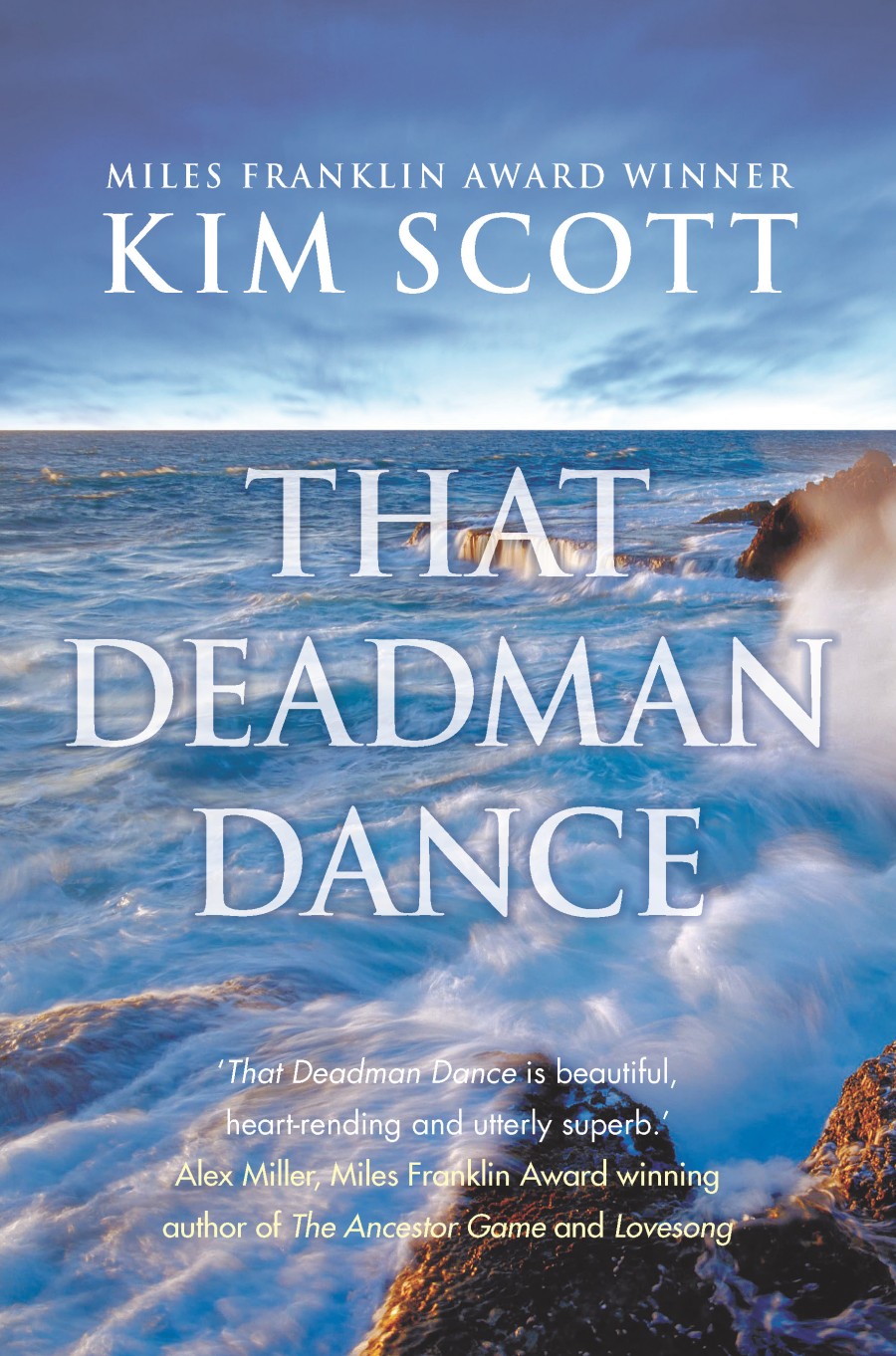
Kim Scott That Deadman Dance

(Courtesy Picador Australia)

Kim Scott (author of That deadman dance, among other things) said this about his aims as a writer:

To reach and connect. To provoke, sometimes. To transform, if only a little. As Elizabeth Jolley said, to provide ‘places where people may meet’.

To touch on greater truths. Language and stories shape the world; I sometimes want to flex and remake it again.

He’s won me over, first, by referring to one of my favourite writers, Elizabeth Jolley. But, I also like his desire to “touch on greater truths”. It’s not surprising that an indigenous writer might also want to “flex and remake” the world.

Ali Cobby Eckermann (poet, and author of Ruby Moonlight) offered this advice to writers:

My advice is to be creative! Turn the telly off and be creative. A half an hour each day has the capacity to achieve remarkable results. Be relentless, and find happiness in honouring your story, the legacy of your cultural knowledge.

Being creative, I think, is easier said than done, but I do love her suggestion to “find happiness in honouring your story”.

Ellen van Neerven (winner of David Unaipon Award in 2013) is a writer I hadn’t heard of before. She said in answer to “who do you write for?”:

Sometimes I could be writing for my younger self. I want people to feel less alone. I want people to feel less confused.

Now, that’s an answer from the heart.

Bruce Pascoe (writer of fiction, non-fiction and YA fiction). I had to finish with Pascoe’s response to the question about his writing process:

Get up, go into room and work arse off. Break for lunch, tour of vegetable garden, back into room. In good weather I write down by the river, especially if it’s a job I’m writing longhand. In my room I’ve got a growing gallery of dead Black friends to watch over me and all the birds who come to the door and want to know if it’s ok if they tell me a story. The Willy Wagtail is good but the Scrubwren is profound, the Powerful Owl haunting, the pelican a bit superior on occasions and the cormorants are always good for a laugh. I get a hell of a lot of story from birds and animals.

With such an imagination, you can sure see why he’s a prolific writer.

I plan a follow-up post on this series of conversations for next week’s Monday Musings to conclude NAIDOC Week.

* Hmm … just realised today is 7 July! NAIDOC Week started officially on 6 July!
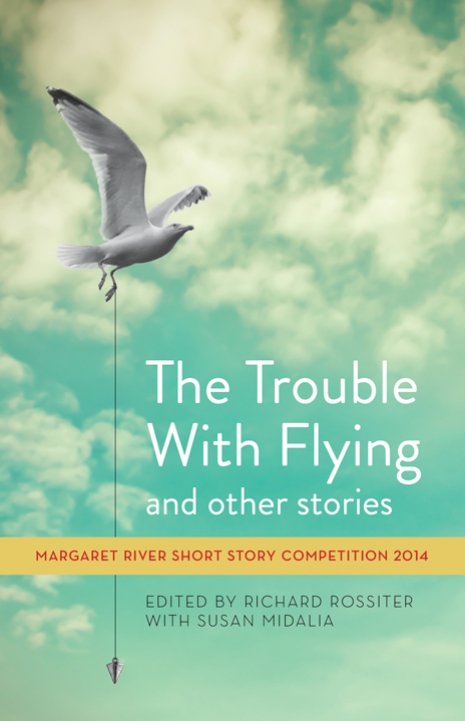
Richard Rossiter (ed), The trouble with flying and other stories (Review)

The trouble with flying book cover

Courtesy: Margaret River Press

The trouble with flying and other stories is the second collection I’ve read from the Margaret River Short Story Competition. I greatly enjoyed last year’s collection, Knitting and other stories, so was very happy to read this one. I’m pleased to see Margaret Press maintain its commitment to publishing stories from the competition, and hope that annual publication will help both the competition and the press, itself.

There were apparently 218 entries for the 2014 competition, which is somewhat fewer than last year’s 260 entries. Stories came from every state in Australia, as well as one from New Zealand. They include both new and experienced writers, many of whom have won awards and/or been published in some of Australia’s best literary journals. I was pleased to see that four of the 24 writers included in this volume, appeared in last year’s collection.

Last year, 20 of the 24 stories were by women, and the trend continues this year with 21 being by women. Presumably this roughly reflects the gender ratio of the overall entries. I wonder why this is? Is writing short stories something women who want to write feel they can juggle more easily with other responsibilities? Or? I’d love to know whether this is a common pattern, and why it might be.

Finally, before I get to the stories, I should say that of course the collection includes the winner, runner-up, and five highly commendeds, as well as the winner and two highly commendeds in the special award for writers from the South West (where Margaret River is located). They didn’t all accord with my favourites, but that’s the subjectivity of reading isn’t it?

Like last year’s collection, the title comes from winning story, Ruth Wyer’s “The trouble with flying”. In the bios, we are told that Wyer is “a fledgling writer from south-west Sydney”. Fledgling she may be, but she has a delightful way with words. It’s a story about transitions, about Rita, an unconfident young girl, moving from high school to TAFE. Intriguingly, Rita doesn’t appear until a few paragraphs in, which disconcerts the reader somewhat as to who this story is about. It is in fact quite an unsettling story, combining humour with pathos and a sense at the end that Rita may not break free of “the loosely bound fog” that she feels envelops her. Flying, in other words, is not easy. It’s a bit cute to say, I suppose, but in many of the stories the characters struggle to fly, to escape the concerns that mire them – and, in fact, some don’t.

One who doesn’t is the immigrant mother in Linda Brucesmith’s “A bedtime story”. Ridiculed by her husband one too many times, she leaves the house after midnight. Another mother in trouble is Annika in Cassie Hamer’s “A life in her hands”. Overwhelmed by a colicky baby – and oh, how I related to that – she decides that “escaping together would make them both much happier”. So, like the mother in “A bedtime story”, she heads to the sea. There, the kindness of one young man and the near tragedy of another shocks her to her senses and she feels “the euphoria of a lucky escape, a second chance”. Life for some, we realise, can often hang on little chances that determine the decisions we make.

A mother of a different kind is Tara in Lauren Foley’s entertainingly titled “Squiggly arse crack”. This is a bright, breezy story about an older single mother enjoying her “staycation”, that is, a brief shopping expedition away from her beloved child, Squig. To ensure she doesn’t change her mind about leaving him with her friend, she “sashays” out the front door without looking back, “pretending her neck is in an Elizabethan collar or pet lampshade”.

This is just one of the stories that departs from the resigned or melancholic tone that seems to be more common in short stories. Another upbeat story is Chinese-born Australian writer Isabelle Li’s “Red Saffron” about a feisty woman prepared to go after love. No shrinking violet, she. Announcing at the beginning of the story that

If poetry is language making love, then cooking must be food making love

she tells us that she’s cooking for Walter. She’s a poet and editor of a poetry magazine, and her aim is to seduce fellow poet Walter while her current lover, Richard, is away. This is a woman in charge of her destiny:

I know how sweet I am, in men’s eyes that follow my movements. I look younger than my age, with my dense hair and lustrous skin. I know they want to taste me on their tongue. But they are wrong: I’m no honeysuckle.

Glen Hunting’s Martha in “Martha and the Lesters” is spirited too. The story is told by Martha’s lodger, who is – no, not Lester. The Lesters are the spiders which proliferate in elderly Martha’s rather untidy home. Our narrator Roland, for that’s his name, describes the Lesters going about the business of life – reproducing, eating, sometimes other insects, sometimes each other. They play a complex role in the story. Martha feels blessed by their presence, and yet, as we see, their lives represent “gluttony and violence writ small”. Perhaps that’s the point. Unlike Martha’s children, they accept her, don’t judge her, and don’t pretend to be other than they are!

Continuing in the vein of positive stories is Kate Rotterham’s “Potholes” about a rather curmudgeonly, recently retired husband and father, Les, “who was surprisingly confident in diagnosing a range of mental disorders” in those around him, but who, delightfully, does a complete about-face at the end.

There are, though, some devastating stories such as Bindy Pritchard’s second-prize winner “Dying” about a rural mother with terminal cancer, and Leslie Thiele’s portrait of a man with dementia in “Catching trains to Frankston”. The challenge of ageing, in fact, appears several times in the collection. I enjoyed Kathy George’s story, “Walking the dog”, about a lonely old widower who, like Martha in Hunting’s story, is confronting the limits of his independence.

Not surprisingly, the collection encompasses many concerns currently facing Australians, with issues like ageing, cancer and fire appearing in several stories. Indigenous issues and our multicultural make-up also appear, albeit way less frequently, reflecting I’m guessing the backgrounds of the writers. It would be good to see more diversity here – but that is another discussion methinks.

And now for the apology. I would love to comment on every story in this collection, not only because each has something to offer but because I know writers (like all of us) love feedback. I can imagine, if I were a writer, coming to a review like this wondering whether my story would be featured. All I can say is that many of the stories, besides those I’ve chosen to write about here, touched me. I’m sorry I couldn’t mention them all.

“Practise senseless acts of beauty” is one of the instructions Harry (“Potholes”) reads in Ten Ways to a Happier Life. I’m so glad the writers in this volume had a go at their own “acts of beauty”. They’ve given me much to ponder.

Richard Rossiter, with Susan Midalia (Eds)
The trouble with flying and other stories: Margaret River Short Story Competition 2014
Witchcliffe: Margaret River Press, 2014
348pp.
ISBN: 9780987561527

(Review copy supplied by Margaret River Press)

Monday musings on Australian literature: Once more unto the breach

A little over three years ago, I wrote a Monday musings about the GAN (aka the Great Australian Novel) and the canon. I concluded with the questions: Do you think there is value to the idea of a canon? Or does it discourage wide and open-minded reading and coincidentally encourage a too narrow view of the culture it refers to? It generated an interesting discussion. I was reminded of it recently when I read Kerryn Goldsworthy’s 17-month-old essay “What we talk about when we talk about Australian literature” (Sydney Review of Books, 29 Jan 2013) and John Kinsella’s older article, cited by Goldsworthy, “An Australian canon will only damage Australian literature” (The Guardian, 9 March 2012).

Critic, editor, author Goldsworthy and poet, critic, editor Kinsella are both responding, at least in part, to statements by Text Publishing’s Michael Heyward, and others, about the loss of Australian classics. Both tackle the issue of defining Australian literature, and refer to the idea of a “canon”.

I won’t summarise all their arguments here: you can read their far more eloquent words yourselves at the links I’ve provided above. In essence, both support and encourage the teaching of Australian classics, but both also question the existence of, or wisdom of defining, a canon – for the very reasons I posed in my questions back in 2011. Kinsella puts it this way:

Setting out precisely which books should be taught, and thereby defining a single national literature, is liable to occlude its true diversity.

I’m inclined to agree that we should be cautious about the idea of a canon, without discounting it altogether.

Goldsworthy opens her essay by suggesting that Australian literature changed around 1988. I loved her “proof”! It’s to do with parody nights at the annual conference of the Association for the Study of Australian Literature (ASAL). Parody, of course, requires those on the receiving end knowing the references which, in the case of ASAL, means knowing Australian literature. Until around 1988, Goldsworthy writes, there was a “pretty stable Australian literature canon” of which, of course, ASAL conference attendees would be expected to be well-versed. They therefore “got” the parodies. However, from around 1988, she says, Australian literature started diversifying – which is, I think, a good thing – and academics started specialising. Common knowledge or recognition of our literary tradition started to wane.

This is not the only issue she mentions. A somewhat darker one has to do with politics and a reaction to the conservative cultural agenda of the John Howard era. She quotes Nicholas Jose who suggested that to avoid being co-opted into “a coercive agenda” involving teaching an approved canon, scholars opted for “a rupture … a clean break with a shameful past that was being recycled”.

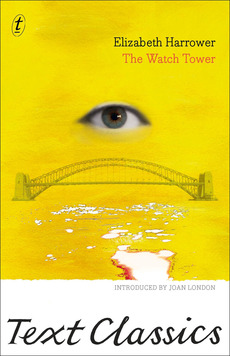
Elizabeth Harrower The watch tower

Cover for The watch tower (Courtesy: Text Publishing)

Enter, sometime down the track, Michael Heyward and his Text Classics. Goldsworthy provides a good analysis of the series, addressing some of the issues regarding selection that have come to my mind – because it is an idiosyncratic list that includes works one wouldn’t have expected and omits those one would. There are many reasons for this, the main ones being availability and marketability. None of this, though, for me or for Goldsworthy, destroys the value of the enterprise. It’s just that you have to understand the parameters and not draw invalid conclusions about “a canon” from the list.

Kinsella takes a related but somewhat different tack to Goldsworthy, partly because hers is longer and therefore broader in reach. He immediately hones in to the idea of canons. He argues that by foisting a defined set of works on students

we are blatantly gatekeeping: setting agendas of control and manipulation. The teacher becomes an extension of the state in more ways than being its employee or citizen.

He argues that a national literature be looked at with “flexibility and an openness to change and reassessment”. He then says something a little more provocative:

Australian ‘classics’ are too often limited to texts that work as affirmations of Australian identity: about being Australian, if not being in Australia. In fact, the much-lauded Miles Franklin award is unapologetically nationalistic: given to a “published novel or play portraying Australian life in any of its phases”. Which is not to say that the winning book has to be landscape-specific, but rather that it needs to deal with Australiannness in some way. That’s what “classics” are about in this context – and that’s what worries me.

Those of you who follow the Miles Franklin Award will know that this very issue of “Australianness” has often provided its biggest controversies. Kinsella’s concern is that focusing on “Australianness” equates with “nationalism”, as does, he fears, the creation of a canon. He says that, in focusing on a canon,

we run the risk of affirming the many other dubious tenets of any nationalism. Nationalism is about exclusion, about quarantine, about community in which consensus, the rights of all to have a say, are ceded to bodies of authority.

It’s a valid concern. Canons can change – and we can be committed to making our canon “diverse” – but the very act of selection does, unavoidably, make a statement. Of course, we can never not select when it comes to choosing what to teach or what we are individually going to read, but keeping the field from which we select open must be a good thing (even if that means parody nights have to go the way of the stone tablet!).

Meanwhile, Kinsella challenges us to seek out writing that doesn’t affirm received notions of “who we are”. I need, I know, to do better in this regard …

Delicious descriptions: Wallace Stegner on “what writers do”

In my recent review of Stegner’s last novel, Crossing to safety, I talked a little about the nature of art (in its wider meaning). I wanted to include the following excerpt but it was a little long, and anyhow, I felt it deserved its own post. So, here it is …

About two-thirds through the novel, Sid and Charity’s daughter suggests that Larry write a novel about them, but he demurs:

– Hallie, you’ve got the wrong idea of what writers do. They don’t understand any more than other people. They invent only plots they can resolve. They ask questions they can answer. Those aren’t people you see in books, those are constructs. Novels or biographies, it makes no difference. I couldn’t reproduce the real Sid and Charity Lang, much less explain them; and if I invented them I’d be falsifying something I don’t want to falsify.

– I thought fiction was the art of making truth out of faked materials.

– Sure. This would be making falsehood out of true materials.

This leads in to the quote on writing about quiet lives that I used in my review.

Stegner did, though, draw inspiration from people he knew. In fact, Crossing to safety was inspired by the friendship he and his wife had with a couple called the Grays. They all met at the University of Wisconsin and they summered together in Vermont many times (I believe). The Grays had died by the time the novel was published, but their children did see and approve the manuscript before it was published.

I like the fact that Stegner, who wrote biographies as well as fiction, doesn’t differentiate these two forms in terms of the creation of “character”. Unlike fiction, biographies may aim for “fact” – but the facts are still selected and interpreted resulting in a version of the subject, aren’t they?

I’m intrigued though by the idea that novelists only ask questions they can answer. I wonder whether they sometimes use fiction to explore questions they can’t answer?

Anyhow, I’d love to hear your perspectives on this – particularly if you are a writer.

Miles Franklin Award 2014

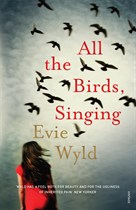
Evie Wyld, All the birds, singing

Courtesy: Random House Australia

Well, the Miles Franklin Award judges have announced the winner of the 2014 award, and it is Evie Wyld’s All the birds, singing – the only shortlisted book I’ve read! How lucky am I? Check my review, if you are interested.

I loved All the birds, singing, and agree with the judges that it is  “spare, yet pitch perfect”, and both “visceral and powerfully measured in tone”. It’s a story about coming to terms with the past, about redemption. As I said in my review, it’s not the first book to deal with this subject but it is tight, powerful, evocative.

From my understanding of the award, Wyld, now apparently permanently resident in England, meets the requirements which are that, to quote the press release, the work must be “of the highest literary merit” and present “Australian Life in any of its phases”. Wyld is a dual national with an Australian mother*, and does, I understand, return to Australia from time to time. However, I don’t believe the rules state that the winner must be resident in Australia, or be Australian. They do state that the book must be in English and must represent Australia in content. Wyld’s book, set partly in Australia and partly in England, meets both these requirements.

The other shortlisted titles were:

  • Richard Flanagan’s Narrow road to the deep north (on my TBR, and to be read late this year)
  • Fiona McFarlane’s The night guest
  • Cory Taylor’s My beautiful enemy
  • Alexis White’s The swan book (on my TBR)
  • Tim Winton’s Eyrie (on my TBR – unfortunately I was away when my reading group did this)

* I initially wrote here that she was born in Australia. I’ve seen so many stories about her origins and her relationship with Australia, but I understand now that she was born in England, has lived here, still has family here, and visits here. All this though is not relevant to the award, as I understand it.

Wallace Stegner, Crossing to safety (Review)

StegnerCrossingPenguinNearly two decades ago, I read Wallace Stegner’s Angle of repose. I loved it. Indeed, for many years I had the following quote from it on my work whiteboard: “Civilisations grow by agreements and accommodations and accretions, not by repudiations”. Not just civilisations, I thought, but marriages, teams, organisations. I like the way this man thinks. And so, when someone suggested my reading group do his last novel, Crossing to safety, I jumped at the chance. At last I could read that copy languishing on my TBR.

The tricky thing about discussing Crossing to safety is that it’s about many things – big ones like life, friendship, love, order versus chaos, and the nature of art (in its wider meaning), as well as more specific ones like academia and east-versus-west (in the US). I can only tackle a few of them in this post so will pick those, of course, that speak most to my enthusiasms. First, though, the plot.

Crossing to safety chronicles the 35-year friendship (amicitia) between two couples, which started in Madison, Wisconsin, in 1937. Charity and Sid Lang are a well-to-do couple, with two children, from the east, while Larry (who narrates the story) and Sally Morgan are a far poorer couple from the west. Both women are pregnant when the couples meet, and both men are working, on contract, in the English department of the university. The novel, though, doesn’t start with their meeting. It starts 35 years later, in 1972. Larry and Sally have been summoned, some 8 years after their last visit, to the Langs’ summer compound in Vermont, “the place where during the best times of our lives friendship had its home and happiness its headquarters”. Pretty soon we realise things are somewhat awry. Charity is “at death’s door”, hence the summons. We also learn that Sally is disabled, though since when we don’t know.

The story, then, is being told from 1972. Our narrator, Larry, is aware that:

Recollection, I have found, is usually about half-invention, and right now I realise that there is much about Sid and Charity Lang that I either invented or got secondhand.

This, together with the fact that Larry frequently comments and reflects on life, memory and art, gives the book a complexity without detracting from its being an engaging story about interesting people. Interesting? Did I say interesting?

This is not an adventure story (Larry, early in the novel)

One of the themes of the novel concerns the nature of art. Larry is a writer, so it’s not surprising that he’s interested in the creation and meaning of art. There are several discussions between the characters, as well as comments by the narrator, on the subject.

Around two-thirds through the novel Sid and Charity’s daughter Hallie asks Larry to write a novel about them. Larry demurs, pondering after the discussion:

How do you make a book that anyone will read out of lives as quiet as these? Where are the things that novelists seize upon and readers expect? Where is the high life, the conspicuous waste, the violence, the kinky sex, the death wish?

We are reminded of this a little later in the novel when the four, with their children off their hands, spend a sabbatical year in Italy, lapping up art and culture. Most people, they consider, have read Milton’s Paradise lost, but how many have read Paradise regained? Can art, they wonder, only be about “sin and suffering … the most universal human experiences”? Charity, naturally, dissents, arguing that “of course you could make great art out of happiness and goodness”. She argues that artists (including writers) found it “easier to get attention with demonstrations of treachery, malice, death, violence” but “art ought to set standards and provide models”.

This is pretty much what Stegner has done – not by creating boring paragons but by presenting characters who “made mistakes” but who “never tripped anyone up to gain an advantage”. Instead, they “jogged and panted it out the whole way”. In doing so, he explores what determines a worthy, or even just meaningful, life.

Order is the dream of man (Larry, quoting Henry Adams)

Early in the novel, Larry quotes historian Adams’ statement that “Chaos is the law of nature; order is the dream of man”. This is, I think, one of the major themes of the novel. It’s not for nothing that Charity is established as the supreme organiser. She has absolute faith – one that is never dimmed by evidence to the contrary – that “if you wanted something, you planned for it, worked for it, made it happen”. Time and again, though, Larry shows that

… you can plan all you want to … but within a single afternoon, within hours or minutes, everything you plan and everything you have fought to make yourself can be undone as a slug is undone when salt is poured on him. And right up to the moment when you find yourself dissolving into foam you can still believe yourself fine.

And so, illness happens, jobs are lost, wars start – and the dream of man comes asunder. We could call this fate, and at times Larry does, but I think, really, Stegner is more realist than fatalist. He, through Larry, recognises “the miserable failure of the law of nature to conform to the dream of man” but this is no breast-beating “woe-is-me” novel.

de Amicitia (Cicero, alluded to by Larry)

I don’t want to end on heaviness, so let’s get to the unifying theme, or idea, of the novel – friendship. It’s a friendship built on immense generosity – of spirit and of means. Charity and Sid welcome Sally and Larry into their heart and home. They are generous when Larry has early writing successes “where smaller spirits might let envy corrode liking”. They provide financial support (paid back, later, though not demanded) when polio strikes Sally. In return, Larry points Sid towards a job when Sid’s career flounders. And so on … all that you’d expect in a real friendship, in other words.

This is not to say it’s all smooth sailing. There are tensions, a serpent in Eden to use Larry’s metaphor. They are mainly caused by Charity’s unfulfilled ambitions for Sid and her over-organising nature that results, at times, in “a clash of temperament or will” that she always wins. Stegner writes some powerful scenes that, while not high drama in the big scheme of things, glue us readers to the spot. There is “painful ambiguity” in this friendship but it is underpinned by “uncomplicated love”. If you believe that’s possible, as I do, you will love this book.

How valid is the commission?

This is an unusual review for me because I’ve barely touched on aspects like the style and the structure. Both are interesting and deserve attention, but my patience with myself is running out! Early in the novel, Sid asks Larry about “that banal subject, fascinating to non-writers, of why writers write”. Are they “reporters, prophets, crazies, entertainers, preachers, judges, what” and “who appoints them?” They appoint themselves, they agree, but if so “how valid is the commission?” Good question. All I can say is that I’m glad Stegner appointed himself because he is one thoughtful, engaging writer.

Wallace Stegner
Crossing to safety
New York: Penguin Books, 1988
341pp
ISBN: 9780140133486

Monday musings on Australian literature: Red Room Poetry Object Competition 2014

Just a quick Monday Musings today but an interesting one I hope.

Red Room Poetry Object is a poetry-writing competition for Australian students in Years 3-10. It was created by The Red Room Company, which is a not-for-profit organisation that was established in 2003. It apparently grew out of the Red Room Radio Show. The company’s aim is to create “unusual and useful poetry projects which transform expectations of, and experiences with, poetry.” They want to make poetry more accessible,  especially to “those who face the greatest barriers to creative opportunities”. They run a wide variety of, mostly, public poetry projects of which the Red Room Poetry Object is just one.

The Red Room Poetry Object was first held, I think, in 2013. It involves young writers and their teachers submitting poems of 20 lines or less about objects that are special to them. What a great idea – it provides some level of structure and framework, while being very open as well. According to the website, the 2013 project involved 72 schools from Australia and New Zealand, and they published 1200 poems by students and teachers. You can read the students’ poems here. The winning poems were exhibited from November 2013 to February 2014 at Customs House in Sydney. Submissions for this year’s project are now open, and poems can be submitted until 19 September.

Can this Snow Gum in the Snowy Mountains be my object?

Can this spirit-moving Snow Gum in the Snowy Mountains be my object?

While, formally, a “talismanic object” is “an object that brings a person protection or good luck” (like coins, a ring or other piece of jewellery), for this project Red Room is looking for objects that are special to individual people, objects that “may not be worth anything to anybody else”,  that may only be precious or important to the writer (like a favourite teddy bear). The winning Secondary Student poem last year was “My book” while the winning Primary Student poem was “Nitro car”. It’s just ten lines, and concludes:

You have an engine in your head,
and wheels in your shoes
that’s why I love you.

(James, Year 6, Holy Saviour School, NSW, Winning Student Poem (Primary), 2013)

“Making the objects sing in a new way” is how one judge apparently described it.

The teacher’s resource book includes exercises for handing out to students. I particularly like the one on “Overcoming clichés and using specific imagery”. It encourages students to think of a clichéd image, such as “as blue as XXX” and to then replace it with a more apposite image. I was only thinking about clichés the other day, about the struggle to find fresh words to use in reviews. So hard … I think I’ll go off now and have a go at that exercise …

PS the Red Room Company ran an event at the Sydney Writers’ Festival this year, the culmination of a project, which received funding from the Australia Council, and which they coordinated with ARTAND Australia.


Winter Solstice: New Lights and Dark Chords

While Hobartians are enjoying a full-on festival – Dark Mofo – to celebrate the Winter Solstice, we here in the national capital have had our little celebration. Or, at least, Mr Gums and I attended one. There might be others going on that I know nothing about.

Winter Solstice: New Lights and Dark Chords was, hmmm, what exactly was it? Well, it was a program inspired by the solstice that combined story, poetry, astronomy and music to explore our responses to light and darkness. It was held at the National Library of Australia. Their promotion described it as follows:

White like black, like light and like darkness, connect literature, music, art, spirituality and science. Cultures around the world have been observing the winter solstice for thousands of years. Join us to celebrate the universal wonders of light and dark and their resonances through contemporary art, music and poetry …

That’s pretty much what it was … and this is how it went.

We arrived and entered the atmospherically darkened theatre before start time to find flautist Kiri Sollis and harpist Laura Tanata of the Griffyn Ensemble playing the opening movements of Polish composer Henryk Górecki’s moody, atmospheric Good Night (which I have heard them perform before). It was a moving opening, spoiled only by two women talking rather loudly, completely oblivious it seemed to the quiet, expressive performance going on in front of them.

The program then officially opened with a video “welcome to country” from Paul House. It was a longer “welcome” than we usually hear but I appreciated the exhortation for us to follow the law of the country which includes to “honour all people and parts of country, respect everything living and growing”. Should be simple, eh?

This was followed by our MC for the evening, actor Rhys Muldoon, reading a brief poem titled “Sunset” written by John Kinsella for the Luminous World exhibition currently running at the Library. Muldoon then introduced us to the aforementioned Paul House who told us the local indigenous story of the Seven Ice Maidens who, he said, are also known as Pleiades. It’s a creation story about ice and snow that integrated perfectly with the program and marked, I think, an important step on our reconciliation journey, at least in terms of my experience of such events.

House was followed by Helen Carroll, the curator of the “Luminous World – Contemporary art from the Wesfarmers Collection” exhibition currently at the National Library. Wesfarmers is a Western Australian corporation that has been collecting Australian (and now New Zealand) art for over three decades. Luminous World is a travelling exhibition of photos, painting and sculpture that has been formed around one idea – light. Carroll then showed several of her favourite pieces from the collection – such as David Stephenson’s intriguing “Star Drawing” photos, Gretchen Albrecht’s abstract expressionist “Sherbert Sky”, Howard Taylor’s austere “Bushfire Sun”, and Rosalie Gascoigne’s dramatic “Hung Fire”. Another was indigenous artist Timothy Cook’s yam dreaming painting “Kulama”. What did that have to do with the theme I wondered? But Carroll explained that it depicts the orange light around the moon which indicates that the yams are ready to eat. Carroll ended with two beautiful photographs by Bill Henson, the last being of Sardinia which perfectly conveyed, she said, “the poetry of light”. You can check out the exhibition online. Fremantle Press has produced a book of the exhibition, which includes the art works, essays and John Kinsella’s poetry.

AnalemmaJailbird

Analemma pattern in the sky (Courtesy: jailbird, using CC-BY-SA-2.0-de, via Wikipedia)

Next up was probably for me the most surprising – as in surprisingly interesting – part of the evening, astronomer and photographer David Malin who presented a talk titled “Casting light on the solstice: the stars as clock, calendar and compass”. I say surprising because I find astronomy beautiful but, like geology, mind-boggling.  Malin explained the science of the “solstice” and introduced me to the concept of the “analemma“, which is most commonly used for the curve that describes the Sun’s apparent motion, observed from a fixed position on the Earth (Wikipedia). He accompanied his talk with the first successful photo of an analemma taken by Dennis Di Cicco in 1978/9. I found it all beautiful and fascinating. Of course, this may not be new to you all, but for me it was a case of “you learn something new every day”!

Malin’s talk was followed by the Griffyn Ensemble performing the last movement of “Good Night”, with soprano Susan Ellis and the rest of the ensemble on percussion joining Kiri and Laura. You can hear another version of this piece, with piano instead of harp, online.

Muldoon returned with another poem by Kinsella, titled “The Universe”. I loved the line “When we are made, unmade, remade” for reminding us that we and the universe are never static. He then concluded the program with a well-known but apposite quote by Elizabeth Kübler-Ross:

People are like stained-glass windows. They sparkle and shine when the sun is out, but when the darkness sets in, their true beauty is revealed only if there is a light from within.

It was the perfect end to an enjoyably varied and nicely structured program – except that wasn’t quite the end, because we all filed out of the theatre and up to the National Library’s foyer, with its famous stained-glass windows, to partake of canapés and a choice of drinks, including ice wine*, mulled wine, hot apple cider. We went home warmed and enlightened!

* Coincidentally, I only discovered ice wine last month when we visited Canada’s best-known producer of ice wine, Pillitteri Estates Winery.

Australia’s first Arbor Day

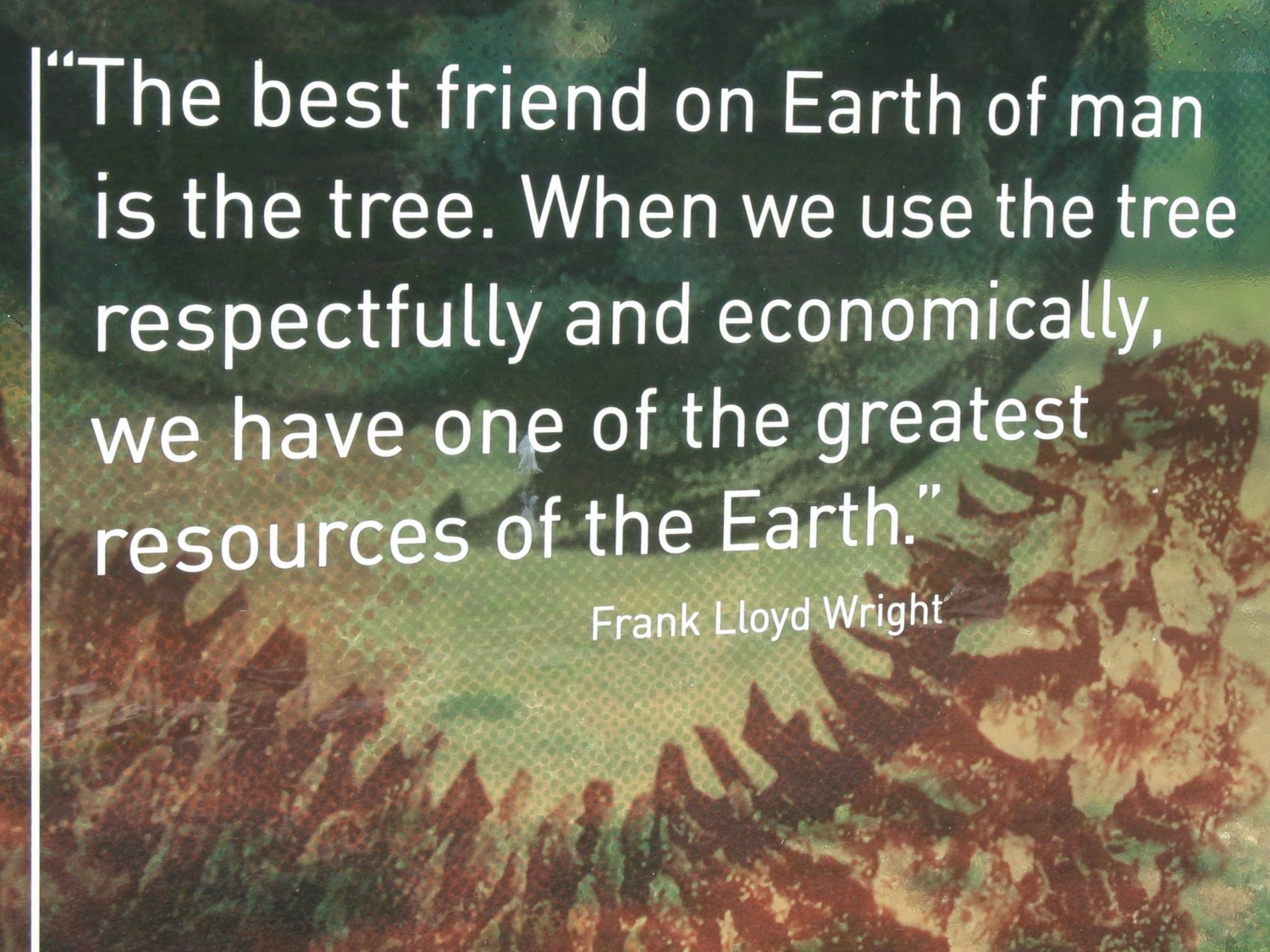
Frank Lloyd Wright tree quote
At the National Arboretum, Canberra

Do you ever wonder what a few generations hence will think about the way we do things? About how we put on our festivals and celebrations? Whether they will think how silly we look – and, I don’t mean “silly” in the ways we may have intended but “silly” in the sense of “cute” because, well, we just weren’t sophisticated like they are? I often do, and it came to mind again when I read last week about Australia’s first Arbor Day.

This post is a little out of the ordinary for me. It’s not (really) about a literary work and neither is it about a cultural event I’ve attended, but it is inspired by the Library of America story “About trees” that I reviewed last week. As I read that story, I was reminded of celebrating Arbor Day when I was young. So I did some research in the National Library of Australia’s Trove and discovered an article titled “Our first Arbor Day” in the South Australian Register of 20 June, 1889. What a little treasure it turned out to be!

First though, a brief history. While J Sterling Morton instigated Arbor Day in the USA, in Nebraska, in 1872, the first Arbor Day actually occurred, according to Wikipedia, in Spain in 1805 in a little village called Villanueva de la Sierra. It was the brainchild of a local priest who believed in “the importance of trees for health, hygiene, decoration, nature, environment and customs” (Naturalist Miguel Herrero Uceda). It came to Australia in 1889, though I was entertained to read in Prime Facts, published by the NSW Department of Primary Industry, that Australia’s first Arbor Day occurred 1890. Not so! That may have been the first in the east of the continent, but our first one did take place a year earlier.

The author of “Our first Arbor Day” tells us a bunch of interesting things about trees – about liberty trees and memorial trees in France and the USA, about the tree of knowledge and tree worship, and about the Town Clerk of London who created an avenue of trees in memory of the criminals “at whose executions he had assisted”! Our author continues that no encouragement to plant trees is needed in South Australia as:

The forestry influence is happily strong upon us in South Australia, and we are inclined to regard the man or boy [this is the nineteenth century I suppose!] who plants a tree in the light of a benefactor of the human race.

Good to hear! What’s interesting though is the type of trees named:

It would be a good thing to have the waste places of the colony covered with planes, or oaks, or pines, or whatever trees are best adapted to the condition of the case.

Hmm … it seems as though native trees weren’t considered as being “best adapted” for the place! Who said we were anglo-centric?

Our writer, like J. Sterling Morton, also recognises the relationship between trees and climate, stating that “the presence of trees tends to modify the climate”. S/he therefore approves of Arbor Day, and particularly of involving children, as it will “inculcate in them a conviction of the importance of the science of forestry.”

And this brings me back to the beginning of this post and, in fact, to the beginning of the article I’m discussing, because the article opens with a description of the tree planting ceremony in Adelaide. It went like this:

The Adelaide children start with a great flourish of trumpets from Victoria-square. Each school will be preceded by its band. The singers go before, the planters – who are to be decorated with rosettes – follow after. When the procession arrives on the ground the elect children, who are to plant trees, will be separated from their less favoured brethren. The schools will be divided into ‘squads’ — the planting squad and the non-planting squad. The planting squad is to be arranged with due care — one child to each hole. It may be hoped that a certain amount of fitness will be observed, and that every square hole will command the attendance of a square child. When the word is given, the trees will be planted, a great celebration will be over, and the children of the schools will have received a lesson on the value of arboriculture.

Can’t you just see it? The band, the singers and all those rosette-wearing, favoured, square children next to their square holes? The pride is palpable – just as we are proud today of our public events and ceremonies. Will we look as earnest and quaint to our descendants, do you think? Probably!


Monday musings on Australian literature: Barbara Baynton

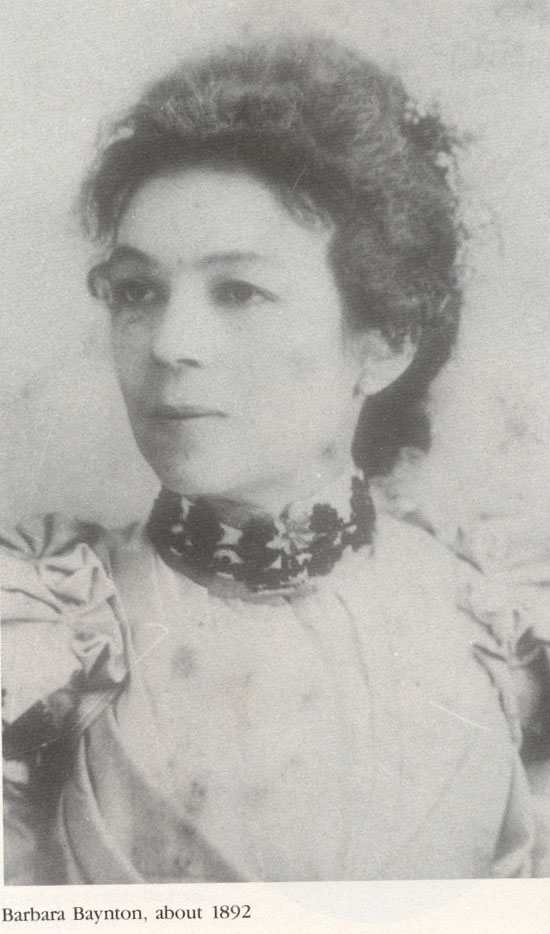
Barbara Baynton 1892

Baynton 1892 (Presumed Public Domain, via Wikipedia)

It’s a while since I’ve devoted a Monday Musings to an individual author – my last being, I think, Jessica Anderson back in February 2012 – and so I thought it was high time for another one, if only to mix the series up a bit! My choice for today is – well, you know who it is from the post’s title – Barbara Baynton. She is a worthy subject for several reasons. Let me count the ways. Firstly, she does not, outside of academia at least, receive the attention she deserves. Yes, she can be a little challenging to read, particularly in her use of the vernacular, but she was quite a pioneer in the subjects she discussed and in bucking some of the male traditions of her time regarding writing about the bush. Secondly, she was an interesting person worth knowing a little about. And thirdly, I recently finished reviewing the short stories in her collection, Bush studies. Baynton only published two books: Bush studies in 1902, and a novel, Human toll, in 1907. She did write stories, poems and articles after this, but there were no more books.

Rags to riches girl

So, who was this Barbara Baynton? It appears that she was pretty good at covering her tracks – at least earlier in her life. In a 1980 review of Barbara Baynton (Portable Australian Authors series), author Marian Eldridge wrote that the editors had cleared up the mystery surrounding her origins. This mystery was further clarified in a biography written in 1989 by her great grand-daughter, Australian actress, Penne Hackforth-Jones. Baynton was born in the Hunter region of New South Wales in 1857, and was married three times. She divorced her first husband, with whom she had three children, after he repeatedly left her isolated when he was “a-droving and a-drinking” (Ralph Elliott reviewing Hackforth-Jones’ book). In fact, he ran off with her niece. At this point, Baynton moved to Sydney where she, aged 33, married the 70-year-old wealthy doctor Thomas Baynton, who had employed her as a housekeeper. It was during this time of material comfort that Baynton started to write about the harsh life of the bush. After Thomas Baynton died in 1904, she moved to London with her daughter and it was here, wrote Hackforth-Jones, that “she rubbed out bits of her past she didn’t like and substituted the ones she did”, creating for herself quite an ancestry. During the war, she was generous to Australian soldiers, apparently lodging, overall, some 8,000 during their leave. On a visit to Australia in 1920, she spoke of the pain experienced by Australian mothers whose sons were sent to other side of the world:

Those mothers had not the wonderful hours when their sons were on leave. Their boys were strangers in London, and I know no lonelier place on this earth than London for the uninitiated. It is the Gethsemane of loneliness.

Many years later, in 1921, she married Lord Headley. Elliott writes that Headley was “a Muslim convert, engineer, sportsman” who “needed money for his decaying Irish estate.” Baynton, on the other hand, “coveted the coronet”. This marriage did not last long and ended in divorce. She returned to Australia, one last time, in 1928, and died in 1929.

Subtle like Proust, grim like Gorky!

Researching this post, I came across some interesting contemporary (or near-contemporary) assessments of her work. One, by Australian poet, essayist, critic and literary mentor, Nettie Palmer, appeared in the Brisbane Courier of 15 June 1929, a couple of weeks after her death. Palmer analyses Baynton’s writing, quoting a passage, and arguing that:

Baynton shows that there is no end to subtleties of human and even sub-human intercourse. The implications of that passage … make a scene as subtle as something in Proust.

Proust, eh? I’m afraid I don’t know Proust well enough to comment on that, but it’s an interesting comparison. Baynton is determined, she says, “to record the varied strands in our human nature” even though “her actual figures are usually derelicts in some forgotten corner of a bush that she shows as without comeliness”. She then writes that Scottish writer RB Cunninghame Graham likened her to contemporary Russian writers like Maxim Gorky (1868-1936) who was determined, according to Wikipedia, to “write the bitter truth”. That certainly sounds right! Take, for example, this contemporary review of Human Toll:

As a study in character of the morbid kind recent fiction has nothing to show equal in impressiveness to this picture of the beautiful, strenuous, high-wrought Ursula.

That was in 1907. In 1931, another unidentified writer is somewhat critical of Baynton’s grim realism, comparing her and Price Warung (see my review of his collection, Tales of the early days) with Henry Lawson and EG Dyson. Baynton and Warung, this writer says, “have not their breadth of vision, although they have a compensatory intensity to some extent”. Hmm … that “to some extent” rather reduces what little compliment there is in this statement, doesn’t it? This writer continues that:

“The Bulletin” encouraged the presentation of the raw and ruddy in bush sketches as an antidote to the sentimental. Yet it is no truer art to exclude the gentle and gracious side of life in the name of realism than to obliterate the harsh and repellant in the name of the romantic. Barbara Baynton is a grim realist, and her “Bush Studies” are powerful but unpleasant.

Who said, one could ask, that art must be pleasant? For this 1931 writer, Baynton’s story “Squeaker’s mate” (my review) is “more gruesome than Gorky”, and “The chosen vessel” (my review) “raises the question of art and the horrible”. Baynton, s/he says, paints “the backblocks in the colours of hell”. S/he would much prefer Henry Lawson’s more “human” stories. But, Lawson could be sentimental, as Marian Eldridge argues. You could never accuse Baynton of that!

But wait there’s more …

I can’t leave this brief introduction to Baynton, without mentioning something rather surprising – her anti-suffrage stance, which was mentioned in a couple of the articles I read. Indeed, one specifically commented that she would stand on a tub in Hyde Park to argue her case! So, I delved a little deeper, and found a recent article by Lucas Smith at sheilas.org.au. He tells us that she was one of the first women to divorce in the colony after laws were passed allowing women to file. And she was able to inherit Baynton’s estate in her own name because inheritance laws had recently changed. She was an independent woman. And, her stories demonstrate the awful powerlessness of women. So, why anti-suffrage? Well, Eldridge found the following statement by her in the Sydney Morning Herald in 1911:

It may sound disloyal to my sex, yet, it is a common truth; show me a woman in power, and I will show you a despot. Indeed, in my anti-suffrage canvass in London, my surest and most successful weapon was to just ask shopgirls, “Would you rather have a woman over you than a man?”

Oh dear … so simplistic, and unfortunately there is still an element of this attitude today. Anyhow, Smith concludes his article with a good question – and I’ll end my post with him:

She benefited from women’s rights struggles at every stage of her life – her divorce and her inheritance were the result of collective struggle – yet she seemingly never recognised this fact. Bush Studies portrays the fear and helplessness of early women settlers in a male-dominated colonial Australia better than any other book, yet Baynton was opposed to female suffrage, arguably the single-most important achievement of the modern women’s movement. Where is the line between the personal and the political drawn? This is the question Baynton’s story forces us to think about.

It sure does …