Miles Franklin Award 2016 Longlist

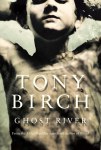
Tony Birch, Ghost riverI don’t always post the Miles Franklin Award Longlist, but having posted on the award in this week’s Monday Musings, I feel I’m on a roll! The longlist was announced the day after my post, so I thought I’d give it a couple of days before I bombarded you again!

Here is the list:

  • Tony Birch’s Ghost River (my review)
  • Stephen Daisley’s Coming rain
  • Peggy Frew’s Hope farm
  • Myfanwy Jones’ Leap
  • Mireille Juchau’s The world without us
  • Stephen Orr’s The hands: An Australian pastoral (my review)
  • AS Patrić’s Black rock white city
  • Lucy Treloar’s Salt Creek
  • Charlotte Wood’s The natural way of things

Some random observations:

  • Five of the nine longlisted books are by women writers. The Guardian, in its announcement of the award, wrote that “In 2009, the award came under fire for an all-male shortlist, but since then Miles Franklin longlists have comprised 41 women and 33 men.” This 2009 shortlist, together with a very poor showing for women over the history of the awards up to 2011, was a factor that led to the creation of the Stella Prize. Tara Moss wrote on her blog, back in 2011, that “Since the Miles Franklin Award began in 1957, a woman has won 13 times. Four times this woman was Thea Astley, but twice she shared the award. Since 2001 two women have won, from the pool of 10 awards.” Since then, as The Guardian says, women have fared significantly better, but that doesn’t mean vigilance isn’t still needed. No-one wants women to win on anything except merit. Recent pushes therefore are not about some sort of affirmative action, but about consciousness raising to ensure that biases – conscious or otherwise – don’t affect women’s writing being published in the first place or being taken seriously at awards’ time*.
  • Although on average I read more books by women than by men, I’ve only read two of the longlist and both are by men – proving that I’m not as one-sided as I might sometimes look!
  • Three of five books by women – those by Frew, Juchau and Wood – have also been shortlisted for the Stella Prize.
  • Lucy Treloar’s Salt Creek is a debut novel.

The shortlist will be announced in May, and the winner in June. As far as I can tell, no specific dates beyond that have been published, certainly not on any official sites.

* Oh, and I fully appreciate that women aren’t the only group of writers who could benefit by consciousness-raising. Indigenous writers, writers from other diverse backgrounds, experimental writers – all don’t feature well enough our major awards.

Monday musings on Australian literature: Miles Franklin Award, the first decade (1958-1967)

Miles Franklin

Miles Franklin, c. 1940s (Presumed Public Domain, via Wikipedia)

This month we expect to see the announcement of the Miles Franklin Award longlist. While it’s no longer Australia’s richest literary prize, it is still the best-known and, if you can measure such things, our most prestigious. It is managed by a Trustee using the estate left for that purpose by author Miles Franklin. It was first awarded in 1958 for a novel published in 1957. Until the late 1980s, the award was dated for the year of publication, not the year of granting the award as now.

Given that we are now in April and interest in the award will be hotting up again, I decided to potter around Trove and see what commentators and/or authors thought about it in its first decade. (See the Award’s official site if you’d like to see a complete list of winners.) My intention is not to give a potted history or a thorough analysis of the award’s early days but to share some interesting snippets which provide some insights into the life and times … Ready? Here goes …

Politics and the award

Where there’s kudos to be had, you’ll usually find a politician. It’s not surprising, therefore, that the first prize, worth £500, was given by the Prime Minister of the day, R.G. Menzies. That first winner was – fittingly, really – Patrick White’s Voss. I say fitting because White is also our first (and only to date) Nobel Prize Winner for Literature. Anyhow, The Canberra Times of 3 April reported on the ceremony:

Mr. Menzies said the novel in Australia was reaching maturity in a “turbulent activity of blossoming world literature.”

He said with the small encouragement being given by the Commonwealth literary board, “a career of art and literature” was an increasing possibility.

What do you think “turbulent activity of blossoming world literature” means? And, did careers in “art and literature” become more possible? I think the “Commonwealth literary board” refers to the Commonwealth Literary Fund, which underwent some changes in Menzies’ time.

In 1959, the award was won by Randolph Stow’s To the islands. Once again, there was a political response, albeit an indirect one. The Canberra Times of 24 April reported on Mr. Haylen (Labor MP for Parkes) speaking in the House of Representatives during the debate on the Universities Commission Bill:

He said it was a sorry state of affairs that of the 17 books that had been considered for the Miles Franklin award for 1958, only five had been printed in Australia.

The winning novel had been printed in England.

He said further assistance should go towards the establishment of a subsidised university printing press, similar to the Oxford and Cambridge University presses in England.

Fascinating. I have written before on the wonderful work done by our university presses. He also said the Commonwealth Government should support the establishment of a chair of Australian literature in every Australian university.

A posthumous award

The third book to receive the award was Vance Palmer’s The big fellow. Lisa (ANZLitLovers) has read it as part of her Miles Franklin reading project. She feels it’s not up to the standard of the first two winners, and wonders whether it was one of those lifetime achievement awards. Certainly, the Palmers were significant supporters of and contributors to Australia’s life of letters in the 1930s to 1950s.

The award was accepted by Palmer’s wife Nettie at the Adelaide Festival of the Arts, quite a contrast to the first award ceremony being “a literary gathering in the Rural Bank building” in Sydney.

Multiple wins

Patrick White Terrace

Patrick White Terrace, National Library of Australia

Several writers have won the award more than once, with two writers – Thea Astley and Tim Winton – winning four times. By the end of the award’s first decade, two writers had won it twice – Patrick White and yes, Thea Astley. In addition to his Voss win, White won the 1961 award with Riders in the chariot, and Astley won the 1962 and 1965 awards with The well dressed explorer and Slow natives.

The Canberra Times of 21 April quotes the judges on White’s Riders in the chariot:

 After reading, and re-reading this book, we have no hesitation in saying that it is a great novel, a novel that moves us to admiration for the creative impulse that has produced it. Its philosophy may not be original, but its people, their environment, and their actions are indisputably so.

They also describe what they believe to be its message, asking “is it not legitimate to expect a message from a work of this poetic and philosophical cast?” Yes, I think it is!

On Thea Astley’s second win, The slow natives, The Canberra Times of 22 April quoted the judges as saying that she was “A brilliant novelist with an inimitable style of her own”. But it was this in newspaper’s report that I found particularly interesting:

Most of the novels were well worth reading, and it was noted with interest that more writers than usual dealt with urban or country town themes, fewer with the outback and the aboriginal problem. There was more satire, more wit, and a considerable flavour of sophistication.

Noted by the judges I presume. Fewer dealt with “the outback and the aboriginal problem”. What to say to that except that it’s probably good to see writers moving onto more town and city themes than the outback, given where most people live, and, presuming that most of the writers were white, it’s also probably a positive thing that there were fewer books about “the aboriginal problem”! The thing about reading these older newspaper reports is the insight they provide into past attitudes.

The lesser-knowns

As always with awards, there are wins, like Vance Palmer’s, that haven’t remained in the public eye. I’ll share two others from the first decade. First is George Turner who shared the 1963 award with the better known Sumner Locke Elliot. Turner’s novel was The cupboard under the stairs. Once again Lisa comes to our aid with a review (and she liked this one better!). The Canberra Times wrote an article on 13 July a couple of months after the announcement. There is a reason for this belatedness. Apparently at the time of winning the award “it was impossible to obtain a copy in Australia”. Indeed, they say, “the first printing sold out so quickly that no copies ever reached Canberra”. This makes me think of MP Mr Haylen, and his desire for university presses, because Trove shows that Turner’s novel was first published in England. At least we don’t have that problem now!

The Canberra Times liked the book, which is about a farmer’s nervous breakdown. It has some faults they say, but overall “it is a compelling story, and as a study of madness it explores ground rarely covered in Australian literature.” Madness. That’s language we wouldn’t use now, isn’t it?

The other is Peter Mathers Trap, which, yes, Lisa has also reviewed. She found it hard going, but how wonderful that we have a review available online. Bloggers provide such an important service when they review older books! Thanks Lisa. Anyhow, according to The Canberra Times of 21 April, Mathers was living in London when his win was announced, and expressed surprise that he had won. Its story is pessimistic, Lisa says, pitting Melbourne’s slums and pubs against “glittering” society, and its main character, Jack Trap, is of mixed background, including indigenous Australian. Most reviewers, it seems, saw it as satire. However, Mathers, The Canberra Times says, “preferred not to call the novel a ‘satire’, but a ‘comic novel’ in the tradition of Irish writers from the 18th century down to Flan O’Brien, who died recently.” Hmm, an Australian Flan O’Brien. That has piqued my interest – in addition to the fact that I hadn’t heard of Mathers before (besides seeing him in Miles Franklin lists, that is).

… and finally

I did not specifically look for articles in The Canberra Times! It just so happens the most interesting articles that popped up in response to my search terms came from it. A comment on the quality of The Canberra Times or something to do with what papers have been digitised?

Delicious descriptions from Elizabeth Harrower’s Circles

Elizabeth Harrower, In certain circlesIn my recent review of Elizabeth Harrower’s In certain circles, I focused on the book’s form and overall themes, and warned that I’d produce a Delicious Descriptions to share some of her writing. So, here it is, organised by headings to keep it simple …

Gender

I didn’t focus on gender in my review, but this is Harrower, and it is one of her ongoing concerns. It was in The watch tower, where the powerlessness of neglected young women put them in danger’s way, psychological and physical, and it’s here, in this novel, where women’s choices are constrained by expectations and conventions.

I’ll just share one scene. It occurs when Zoe responds to Lily who doesn’t believe Zoe understands how some women put children first. Zoe feels she understands only too well:

‘What I do understand is that at any point in a woman’s life she may come across something like a cement pyramid in the middle of the road. Another person. People. She’s capable of sitting there, convinced that it would be impossible to forsake her position, till it becomes a private Thermopylae. This sort of block was probably designed for the survival of our species, but the cost’s high. What makes men superior is that they don’t – on the whole – stop functioning forever because of another person. They lack this built-in handicap, and are they lucky!’

Zoe is finally seeing the light – though where she sees this “built-in handicap” originating is not clear! She admits elsewhere that she’s been complicit in her dismantlement, that she’d “agreed to be devalued”, but she’s also aware that there are other drivers. It’s part of the complexity of this novel that nothing, including gender, is black-and-white.

Emotional states

Harrower captures her characters’ emotional states with breathtaking economy. Since they’re short I’ll give you a few examples.

Zoe, soon after meeting Stephen:

He despised her. An invisible hand dragged a steel rake across her body.

My, that’s visceral isn’t it?

Here is Anna during a conversation with Russell. By this time their unstated feelings for each other are starting to affect their ability to relate naturally:

Speaking in a tone of enormous objectivity, looking straight ahead, Anna felt her skeleton waver secretly, as though it were seaweed pressed about by movements of deepest seas, invisible on the glittering surface.

You feel the effort it takes her, here, to keep strong. I also love this description of Anna after the crisis:

Anna was stared at. As though by choice, she left her face undefended, and her trustfulness was felt by others as a gift of purest generosity, as a sort of honour.

By contrast, here is her brother Stephen around the same time, finally confronting the waste of his and Zoe’s relationship:

Like someone kidnapped and dragged across a frontier into a place where the language and laws were wholly unknown, he glanced about with a mix of desperation and bafflement.

Place

While the interior is Harrower’s focus, she can write exteriors beautifully, usually to reflect, or contrast, her characters’ emotions.

Anna, widowed not so long ago and wiser in affairs of the heart, talks to Zoe about time being short. Zoe, in the early rosy years of her marriage, doesn’t understand her, thinking:

This was the wrong moment for pensive utterances–a gorgeous, glowing evening with the beach down there suddenly deserted and the sand turning cool and white, and the calm harbour a bay of light, and the trees beatified by the late sunlight.

Blissful – and yet methinks the “cool and white” could also intimate the chill around the corner?

And here are Zoe and Stephen, after fifteen years of marriage:

They went along the beach and swam in Russell’s pool before anyone was awake. The sun rose swiftly and built a shifting honeycomb of light on the green floor of the pool. The early morning had a glassy fragility, and Zoe felt the link between herself and Stephen to have that same extreme fragility and transparency; a breath could shatter it. Stephen churned through the water. She shivered and pulled on her towelling coat, prudently absent from past and future.

I mean, really, that last sentence. It’s a kicker isn’t it?

This was not an easy post to write, not because it was hard to find good examples to share but because it was hard to choose from so many delicious descriptions. All I can say is that I hope those I’ve chosen are good enough to inspire you to read this book, if you haven’t already.

Elizabeth Harrower, In certain circles (Review)

Elizabeth Harrower, In certain circlesThere’s an interesting story behind Elizabeth Harrower’s last novel, In certain circles. It was all set for publication in 1971, following her very successful The watch tower (my review), when Harrower pulled it. Why? I wondered about this as I read it, and I have some ideas, but more on that anon. First, the story.

In certain circles chronicles the lives from youth until their forties of five people – well-to-do brother and sister Russell and Zoe Howard, orphans from an impoverished background Stephen and Anna Quayle, and Lily the teenage sweetheart and then wife of Russell. Part way through the novel, Stephen and Zoe also marry, as does Anna outside the circle. The story starts and ends with Zoe, but the perspective shifts a little along the way between the various characters. It’s a story of idealism and wasted opportunities, of the decisions we make (or don’t make) and their unintended consequences. It’s also about the way the past can drive those decisions. The setting is Sydney, not long after World War 2, though it’s never made explicit. Harrower is not interested in time and place, just people – who they are, why they do what they do, and how it impacts their deepest selves.

Commentators discussing Harrower invariably tell us that Australian literary luminaries Patrick White and Christina Stead praised her writing. You can see why – she writes with their intensity, probing deeply into the psyches of her characters to explore motive, feeling and behaviour. I’d also liken her to the recently deceased Anita Brookner, who, coincidentally, was born the same year as Harrower, 1928, and who also intensely explored the psyches of her characters.

The thing about Harrower’s writing here, though, is that while character is her focus, a strong sense of form underpins her style. The novel is, for example, presented in three clearly delineated parts, which facilitates time-jumps without the need for extensive explanation and gives it the narrative arc of a classic three-act drama.

So, Part 1 is set just after the war. Zoe is a bright, “fearless”, world-at-her-feet young seventeen-year-old, who often doesn’t mean what she says and is not known for her “social conscience”. She is, clearly, ready for a fall. A perfect Act 1 set up in other words. Big brother Russell, on the other hand, has been touched by experience, including being a prisoner-of-war, and has a more realistic perspective of the world. He sees disadvantage and he wants to right it. The opening scene is a tennis party at the Howards, to which Russell has invited the orphans and at which his fiancée Lily is also present. Our five characters are thus properly introduced to us and each other.

Part 2 starts eight years later, when Zoe is 25 years old and has just returned, upon her mother’s death, from a blossoming career in film and photography in Europe. The course of her life changes at this point, and she marries Stephen who is now in business with her brother Russell. She finds herself deeply in love with this man who, when she was 17, had both attracted and repelled her with his judgement of and opposition to her. In this part, the characters have settled into some sort of stable routine, but we readers see the cracks even if the characters themselves don’t. Take Zoe, our main character, for example:

Excessively, even for someone in love, Zoe had found a chameleon-like capacity for fitting herself to Stephen’s moods.

Hmm, we think … and this too:

From riding the crest of a wave, from taming tigers, she had turned into this new thing–a suppliant, but a suppliant with a purpose: all to be well with Stephen.

The conversations between them are chilling – because Zoe submits and submits her self to his views and ideas.

Meanwhile, Lily, for whom family is all (“it was not only a sort of pity Lily felt for anyone unrelated to her, but an involuntary antagonism”) and who has given up her career for her children, is becoming frustrated with Russell’s focus on a wider humanity. And Anna, now widowed, realises where her love truly lies – Russell.

Then comes Part 3, as it inevitably must. Zoe is nearly 40, and not happy. (We could have told her!) After 15 years of self-denial and subsuming her self to Stephen, she is a changed woman, to her detriment, and she knows it. That fall we assumed at the beginning has finally come – and not just for Zoe. The denouement is dramatic, rapid and effective in shaking up the characters’ complacencies and self-destructive compromises, just as you’d rightly expect in a narrative of this sort.

Besides this three-part structure, Harrower also employs form in her character handling. The novel starts with two sets of siblings and one outsider, Lily, but by the middle of part 2, they have re-formed into two couples and a different outsider, Anna. This rearranging of pairs-and-outsider creates parallels and counterpoints that keep the story tight and focused, exposing tensions and differences.

“wasted years”

But form, of course, is used for a purpose, which is to explore themes important to Harrower. In certain circles is not as claustrophobic or as chilling as The watch tower, but they have similar concerns, such as loneliness and a feeling of entrapment. These play out differently in In certain circles, where the focus is on wasted talents, through lack of opportunities, and wasted lives, through difficult pasts or poor decisions, but the result is the same – loneliness, desolation, and entrapment, conscious or otherwise.

Early in the novel, when she’s still 17, Zoe escapes a room of older people, “away from miserable white faces and wasted years”. Ironically, this is exactly how Zoe finds herself twenty odd years later, because Stephen has, “without the least desire to deflate or wound”, dissolved the last of her “ideas and ambitions”, leaving her trapped, demoralised, “detesting the person she had become”.

Zoe is not the only one. The other characters too find themselves having wasted at least some aspect of their lives, some because they can’t let go of (or are damaged by) the past, others because they honour decisions and commitments they’ve made.

There are many roads by which these characters come to the wasteland in their lives, and Harrower presents them with an acuity that is also generous. She doesn’t judge. Even when, at the beginning, Zoe is arrogant and self-involved, Harrower encourages us to like her because she’s lively and good-hearted rather than malicious. Stephen would be even easier for us to dislike, but his pain, his genuine love for his sister, and his obliviousness to “the damage he had done”, enable us to understand rather than hate him.

And now, here I am, way past when I should have finished this post, but having barely touched on the writing – and I should discuss it, because it is delicious. Harrower nails feelings, attitudes and motives with a pithiness that takes your breath away. Watch out for a Delicious Descriptions post!

So, returning to my opening para, why might Harrower have pulled her novel? I understand that she submitted it, pulled it and re-worked it, then submitted it again, and pulled it permanently. I can see why she may have done this: the drama that precipitates the resolution is a little far-fetched though she explains it well enough to make it work; Russell is comparatively shadowy even among the less developed characters; and occasionally the perspective feels a little clumsy or laboured, as if she hasn’t fully resolved how to bring all her personages into the frame as she desires. But, are these serious enough for the book not to have been published? I don’t think so. Neither did Text, and neither, we have to presume, did that original publisher. It is literature’s gain that this book has finally seen the light of day.

Lisa at ANZLitLovers also enjoyed the book.

awwchallenge2016Elizabeth Harrower
In certain circles
Melbourne: Text Publishing, 2014
250pp.
ISBN: 9781922182968
Monday musings on Australian literature: Some ad hoc awards

Okay, folks, so it’s Easter Monday here in Australia, and a public holiday. We have had family – from Melbourne and Hobart – up our way for the long weekend and so I’ve not had a lot of time to think about my Monday Musings post. However, a couple of recent literary awards have come to my attention, and are worth sharing – for different reasons.

An overseas award

We Aussies are always excited – yes, I know, cultural cringe – when one of ours wins a foreign award. It was big news when Patrick White won the Nobel Prize in 1973, and we’ve had a few Booker wins. Thomas Keneally won with Schindler’s Ark in 1982, and Peter Carey is one of the few authors to win it twice (Oscar and Lucinda in 1988, and True history of the Kelly Gang in 2001). DBC Pierre and Richard Flanagan have also won the Booker. It was big news too when Kate Grenville won the Orange (now Baileys) Prize with The idea of perfection in 2001.

And now, a couple of weeks ago, I read that Helen Garner had won an award I hadn’t heard of, the 2016 Windham Campbell Prize for Nonfiction. This prize is one of a suite of prizes established in the USA by writer and book collector Donald Windham, named for himself and his partner Sandy Campbell, who shared his passion for books. The Windham Campbell Prizes website describes the aims as being “to call attention to literary achievement and provide writers with the opportunity to focus on their work independent of financial concerns”. From what I can see on the website, the first prizes were awarded in 2013.

Helen Garner, This house of grief book cover

Courtesy: Text Publishing

As far as I can gather, each year three prizes are awarded in each of three categories: fiction, nonfiction and drama. Garner won one of the 2016 non-fiction prizes. The website describes her as one of Australia’s preeminent writers who “brings acute observations and narrative skill to bear on the conflicts and tragedies of contemporary Australian life”. The site continues that “ultimately, Garner finds truth in questions rather than in answers, in complexity rather than in simplicity, and in her own fervent belief that ‘there is something wild in humans’.” It also quotes Garner’s response to winning the award:

To be awarded a Windham-Campbell Prize for nonfiction validates in the most marvellously generous way the formal struggles that I’ve been engaged in over the past twenty years. It gives me the heart to keep going.

Not only the heart, but the money too I’m sure, as the prize is worth USD150,000. So often writers say that the money value of prizes enables them to continue writing. This should certainly do that for a year or so!

Supporting the independents

And then last week, Charlotte Wood won the overall 2016 Indie Book Awards with her latest novel The natural way of things. The debut fiction winner was Lucy Treloar’s Salt Creek, another book I need to read. These awards (there are other categories too) were created in 2008, and the winners are chosen, through voting, by independent booksellers.

My main aim in mentioning these awards, though, is to share some of Wood’s acceptance speech, which was published on publisher Allen & Unwin’s blog. It’s a thoughtful, generous speech, but its conclusion is inspired, comparing independent booksellers to global seed vaults*. She said:

In thinking about tonight, and Australia’s independent booksellers, it struck me that you are like that seed vault [the Svalbard Global Seed Vault]. You are storehouses for the kernels not only of our literary culture but our history, our music, our food culture, our health and legal and technological culture, our visual arts, our politics. You are the safety vault for the seeds of our country’s cultural and intellectual life, and your customers are the spreaders of those seeds out in the world.

A few years ago, the outlook for our independent bookselling scene looked gloomy. But like those seeds packed into the cold mountain in Norway, you have survived, you are thriving, and because of your noticing and care, your love of words and your determination to flourish, you have kept Australian literature and our culture alive and thriving too.

On behalf of us all, I thank you so very much.

What more can I say except support your independent booksellers. They are treasures.

* Reminding me, also, of Annabel Smith’s The ark (my review)

Please feel free to give a plug to your favourite independent bookseller in the comments below!

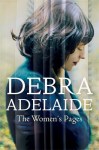
Debra Adelaide, The women’s pages (Review)

Debra Adelaide, The women's pagesWhen I started reading Debra Adelaide’s latest novel The women’s pages I thought, “Oh yes, here’s another interesting story about women’s lives, how their options are limited, etc etc. I’ll enjoy this but I wonder why it was longlisted for the Stella?” And then, a few chapters in, I started to realise that behind this “interesting story about women’s lives” was a fine and witty intelligence that was playing games with me, that was exploring ideas about creativity and writing, that was looking at how life imitates art (or is it vice versa), as well as at the lives of women! Needless to say, by the end I was fully engaged, enjoying every word while I eagerly turned this woman’s pages.

The embarrassing thing is that I haven’t read Adelaide before – well, that is, I haven’t read her fiction before. I have read some of her non-fiction. Her Australian women writers: A bibliographic guide was groundbreaking and is still highly valuable, and the book of critical essays which she edited, A bright and fiery troop: Australian women writers of the nineteenth century, is a significant work. She also edited and introduced Dymphna Cusack’s A window in the dark which I’ve reviewed here.

But her fiction? I’ve been remiss, but no more, because The women’s pages sure has me intrigued. It starts off straightforwardly enough with protagonist Ellis being asked to a 10th wedding anniversary barbecue. Adelaide sets the scene perfectly. It’s the 1960s and Ellis is a young domestically-competent mother who’s not happy in her marriage. She can’t imagine still being married to her (albeit perfectly decent) husband for another 8 years. So far so good – I’m interested. Then, chapter 2 introduces us to “not yet forty” Dove from current times. She is grieving for her mother and, we discover, is writing the story about Ellis. From here, the chapters alternate Ellis and Dove’s story until around halfway through the book where they start to intrude a little on each other, where in the same chapter we find Dove musing on where Ellis’s story is going or on how Ellis is exerting “maddening autonomy” on her story! What is going on, we start to wonder?

So, as well as being a story – and an authentic story at that – about women’s lives, The women’s pages is also a metafiction about the art and process of writing fiction. Here, for example, is Dove with a sort of writer’s block:

But Dove had run out of ideas. When the baby was born, she had a fair idea, but exactly where, and how, resisted her imagination. Doubtless because she had no experience in this respect, she could not bring herself to visualise a pregnancy and the birth of a baby. She knew this was nonsense, if she were to call herself a writer of fiction, and that she needed to do something about this, even if it simply meant googling the subject.

Write what you know, or else research! I enjoy these sorts of mind-games played by authors; I don’t mind being reminded of the author’s hand.

However, while the metafiction thread is an important part of the novel, there are other threads or themes. Motherhood is a major one. Childbirth and childrearing feature, but the overriding idea is that of missing mothers, the silences about them, the gaps they leave. Ellis’s mother had left her when she was a baby, and Dove was adopted (by a loving mother, but …).  A related thread is the new word to Ellis’s world, “feminism”. There are illegal abortions and adoptions, alongside women striving to develop careers. Ellis gets a job in the magazine industry. By the mid-1970s change is afoot. She senses “the whole country shifting around … with these tall god-like creatures [the Whitlams] in charge”, but she’s not fooled into believing “there was really such a thing as equality”. When she’s offered a promotion, her male boss tells her he expects “absolute commitment”, that is, there must be no “running off to get married, or taking time out to look after children”. Adelaide knows the decades of which she speaks, and her evocation of them is spot on.

Then there’s Adelaide’s exploration of imagination and invention, particularly in the metafiction thread. And this is where another important aspect of this novel comes into view – Emily Brontë’s Wuthering Heights. Brontë’s novel is introduced at the beginning of chapter 2, with Dove blaming it for her decision to write her novel about Ellis (whose name references Emily’s pseudonym Ellis Bell). The “gaps and shadowy images and half truths” in Wuthering Heights “had infected her [Dove’s] imagination” and out of it Ellis’ story emerged. For most of The women’s pages, Brontë’s novel acts as a sort of simmering undercurrent, surfacing every now and then, not always overtly, to impose an added layer on the narrative. But at the end, as Ellis’s complicated family background is finally revealed, it comes to the fore. We even have a Catherine, an Edgar and a Nell, but the parallels aren’t laboured.

Dove writes, around halfway through the novel, that

she had not meant to write the story of women, but that was how it had appeared, that was the only story in her head. The more she delved into the lives of her characters the more it was about missing or silent women and the more it seemed it was her job to find them and open their mouths and lay them across the pages. Ellis had stepped out of a longer story, one in which women were always grasping for some sense of authenticity, and in which mothers in particular were absent. Wuthering Heights had almost no mothers and certainly none whom you could say were good to any degree. They were all dead or dying, or simply blank spaces, unnamed and unacknowledged, as if their progeny – Heathcliff, Catherine, Hindley, Edgar, Nelly – had been produced by magic, or had just sprung up out of the earth …

I said in my opening paragraph that Adelaide’s writing is “witty”. I didn’t mean by this “funny”, though it is wryly amusing at times. No, I meant “knowing”, “astute”, “clever”. Adelaide’s development of Ellis and Dove’s story is beautifully controlled. The women’s pages could, in fact, be read as an expert’s guide on how to write a novel. More interesting to me, though, is the light it throws on the intense emotional investment novelists can make in their work, on the sometimes complex nexus between character and author:

What, Dove wondered, had she done? Or had she done it? Maybe it had happened exactly like this and she was merely recording the facts.

See what I mean? I imagine Adelaide had fun writing about Dove writing about Ellis.

This is a delicious read that engages both the mind and the heart, and has an ending that brings you up with a start. Yes, I can see why it was longlisted for the Stella.

awwchallenge2016Debra Adelaide
The women’s pages
Sydney: Picador, 2015
295pp
ISBN: 9781743535981

(Review copy courtesy Pan Macmillan Australia)

National Eucalypt Day

After writing my Monday Musings on World Poetry Day this week, I was surprised to discover that today, Wednesday 23rd March, is National Eucalypt Day. I had no idea we had such a day, which is probably not surprising as this is only its 3rd year. It is an initiative of the Bjarn K Dahl Trust and its aim is “to further raise awareness of eucalypts and celebrate the important place that they hold in the hearts and lives of Australians”.  I love that, of course.

The Bjarn K Dahl Trust is a philanthropic fund, that, according to their website, was “established from a bequest by Bjarn Dahl, a Norwegian Forester, who developed a true affinity with the Australian bush, and a particular love for the Silvertop Ash, Eucalyptus sieberi, and left his entire estate to establish the Trust”. Wow, eh? (The date of 23rd March was chosen for National Eucalypt Day because it was Dahl’s birthday. I wonder if he’s related to Roald Dahl?)

My quick Google search suggests that the day is taking off somewhat faster than poor old World Poetry Day – well, I found three events anyhow. Here in Canberra, the Australian National Botanic Gardens are celebrating Eucalypt Week, but today, THE day, they presented a talk titled “As Australian as a gum tree : An historical look at eucalypts in Australian culture”. (Unfortunately I was otherwise engaged, or I would have been there). The Royal Botanic Gardens in Victoria offered a Walk with an expert eucalypt botanist. Back in Canberra again, I discovered that, for some reason, the National Arboretum celebrated National Eucalypt Day on 18th March, with “a variety of short walks”. Better early than never, I suppose!

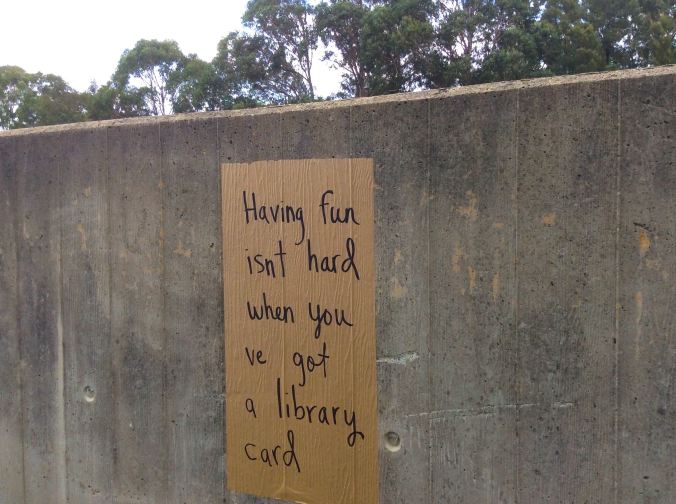
I have written about gum trees (our popular name for eucalypts) several times on this blog, so am not going regale you with more right now. Instead, I’m going to share a photo I took today in a carpark in Canberra’s NewActon Precinct. Peeping above the wall are, yes, eucalypts.

Library Card poster Nishi Car Park

Not the best photo – the light wasn’t great – but the conjunction of library-love and eucalypts was too good to resist.

Happy National Eucalypt Day everyone (and especially to the Resident Judge of Port Phillip whom I was meeting for drinks right after taking this photo! It’s been years since we caught up – and it was lovely).

Monday musings on Australian literature: World Poetry Day

Well, folks, Trove has let me down, which is a very rare occurrence when I’m doing historical research. I looked for the phrase “world poetry day” and I looked for all the words “world”, “poetry” and “day”, but nothing apparently relevant appeared. Hmmm, because …

Interestingly, a Google search did retrieve a photograph on flickr of a World Poetry Day function held in 1963 Australia. The photograph says “all rights reserved” so I can’t reproduce it here, but you can see it online. Clearly World Poetry Day has been known about here for some time, but, oh dear, it’s only poetry so why write about it in the newspapers, eh?

I did find a few more recent references to the day via Google (using “world poetry day Australia”, without the double quotes), such as:

  • an Australia Council for the Arts news item on World Poetry Day in 2013. The item says, among other the things, that the day is for us “to acknowledge the role of poets around the world who are unable to speak openly and freely and who strive to build a better world.” Amen to that.
  • a news item from the United Nations Information Centre in Canberra on World Poetry Day in 2014 stating that “One of the main objectives of the Day is to support linguistic diversity through poetic expression and to offer endangered languages the opportunity to be heard within their communities” but it doesn’t list any activities planned to achieve this in 2014 Australia.
  • an article in the Sydney Morning Herald titled “World Poetry Day 2015: a chance for children to embrace the power of words” but it doesn’t mention any events encouraging children to do just that.
  • a World Poetry Day program (Eureka!) for the 2015 World Poetry Day, fun by the Queensland Poetry Festival. The web page starts with a William Hazlitt quote: “Poetry is the universal language which the heart holds with nature and itself. He who has a contempt for poetry, cannot have much respect for himself, or for anything else.” I don’t see anything for the 2016 day.

That’s pretty much it for the first page of results on my Google search. I guess these results tell me that Trove let me down for a reason. There really doesn’t seem to be much interest in the day here. Most of those links about seem more lip service than commitment, don’t they?

Before I continue, a brief explanation of World Poetry Day. According to Wikipedia (and some of the links above), it was designated as 21 March by UNESCO in 1999. The day, though, has been celebrated for much much longer, often in October to align with the birthday of the birth of the Roman poet Virgil. The UK, says Wikipedia, still celebrates it in October. There is a Facebook Page for World Poetry Day, but I can see nothing on it for Australia in 2016.

And yet, Australia – like many countries – has a rich poetic tradition. We have, to name a very very few, the bush balladists of the 19th century, early twentieth century poets like CJ Dennis and Dame Mary Gilmore, indigenous poets like Oodgeroo Noonuccal, later poets such as Judith Wright, Dorothy Porter and our grand old man Les Murray, and new poets-cum-rappers like Omar Musa*. We have poetry events and slams, poetry prizes, poetry websites, poetry magazines and poetry in literary magazines, and publishers specialising in poetry. I’ve written about many of these over the life of this blog. (See my poetry tag which tags all my poetry-related posts, not just Australian.)

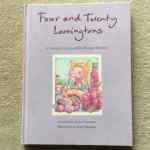
Cover, Four and twenty lamingtonsAmong the first works I read to my children when they were babies were poetry books – AA Milne (of course), Dr Seuss, TS Eliot’s Old Possum’s Book of Practical Cats, and poetry anthologies, of which I bought many. A favourite Australian one was Four and twenty lamingtons. And picture books too, many of which are told in verse. Poetry is such an easy way to introduce children to the fun of language and words and to reading together. Poetry like music is something you can introduce to babies from the beginning.

I’m going to keep this post short – give you an early mark this Monday! And, anyhow, I’m sure you’ve got my meaning.

But, just for a straw poll, no matter where you live, can you tell me whether you’ve heard of any World Poetry Day events in your neck of the woods?

* I hate naming names here, really, because there are so many wonderful Aussie poets I’d love to mention.

POSTSCRIPT: After I drafted this post, the UK-based International Business Time published, for this year’s World Poetry Day, a list of “Famous non-English poets you should read”. Not Australian, but of interest to us all. Check it out.

Delicious descriptions: Fiona Wright on writing and hunger

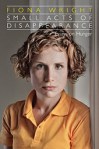
Fiona Wright, Small acts of disappearanceIn my recent review of Fiona Wright’s Small acts of disappearance, I focused on her analysis and her experience of anorexia, but, as I mentioned in the review, she was, already, a published writer. An award-winning poet for a start: her poetry collection, Knuckled, won the Dame Mary Gilmore Award for a first collection. Her poetry and essays have been published in several literary journals. Consequently, it’s not surprising that writing makes an appearance in Small acts …

In her essay, “In Hospital”, she writes:

I know now that the impulse I have to starve comes from exactly the same place as my impulse to write: hunger, like writing, is a mediator. It stand between me and the world, between my self and the things that might cause it harm. Hunger is addictive, and it is intensely sensual, pulling the body between extremes of hyper-alertness and a foggy trance-like dream state. And like writing, it lets me stand clear, separate and intact; it lets me stand on the outside. I spent years determined to stay on the outside.

Is this a common experience of writers, that it separates them from the world, I mean? I guess so, in a way, because writers tend to be observers – and it is hard to observe and be part of something at the same time, isn’t it?

In “In Miniatures”, she discusses how the enjoyment of miniatures involves narrowing one’s focus and attending to detail. However, “detail-oriented thinking” is psychologically related to hunger because the malnourished brain becomes intensely focused: the world shrinks, and becomes small enough to handle, to not be a threat. The trouble is, she writes:

detail has for so long been the stuff and substance of my poetry, my craft: the accrual of small, odd things, contradictory things, the things that undercut or illuminate the social world. It has always been detail that I’ve thought makes the worlds we write specific, poignant and, in essence, poetic. And it’s hard to contemplate that my writing, the thing I feel has kept me sane, may very well have been based on nothing more than cognitive pathology.

Hmmm … That “nothing more” is perhaps her being harsh on herself. I suspect that even if “detail-oriented thinking” is part of the anorexic pathology, Wright’s writing comes from a bigger part of herself too. But her fear that in losing hunger she may also lose her writing is palpable.

And then, in “In Group” she writes at length about John Berryman’s Recovery/Delusions, two books in one – his unfinished novel, Recovery, and a collection of poems, Delusions. Recovery is an autobiographical novel about an alcoholic man in a psychiatric hospital. Wright writes at length about Berryman’s character’s experience of group therapy and her own, and in so doing also discusses writing, its impulses and sources. I won’t share any more of this: it’s better that you read her book, rather than my ramblings on it!

Instead, I’ll conclude on one little point. Recovery is unfinished because John Berryman committed suicide while writing it. Wright comments:

the novel simply stops, in a suspension … Part of me thinks this is exactly as it should be: an unintentional but radical inconclusiveness, a denial of the three-act structure that biography is often made to fit …

Novel, biography, the same thing in the context of narrative, I suppose. Anyhow, this reminded me once again of EM Forster’s wish (in Aspects of the novel) for novels to be able to end when the novelist gets “muddled or bored”. Instead, he says, “most novels do fail here – there is this disastrous standstill while logic takes over the command from flesh and blood.”

Wright concludes her essay with her own intriguing idea about “logical and fixed conclusions” versus “the unfixed and uncontainable”, but I’m leaving it here. If you’re interested, you know what to do.

Fiona Wright, Small acts of disappearance (Review)

Fiona Wright, Small acts of disappearanceIt would be a rare person these days, from Western cultures anyhow, who didn’t have some brush with an eating disorder, whether through a friend, a family member, or personal experience. And yet it is one of our most misunderstood afflictions, which is where Fiona Wright’s Small acts of disappearance: Essays on hunger comes in. Wright, born in 1983, is a published poet. However, in her mid twenties, in her first hospital day program for her seriously low weight, she had to admit to herself that she was, indeed, one of “those women”, one of those women, that is, whom she’d always thought were “vain and selfish, shallow and somehow stupid”.

Now, many of you know that I am interested in form. Well, Small acts of disappearance is interesting in this regard. On the surface, it is what it says it is, a collection of essays, but it is also, in effect, a memoir of Wright’s experience of one of medicine’s most mystifying conditions, anorexia nervosa. There are ten essays, the title of each commencing with “in” as “In Colombo”, “In Hospital” and “In Hindsight”. This word “in” has a literal meaning, but its repetition also accentuates that she really is “in” something that she cannot, must not, distance herself from. While there is a loose sort of chronological drive to the essays, the first one, “In Colombo”, does not start at the beginning, not that there is, in these things, a clear beginning. She goes to Colombo as a newly graduated journalist in her early twenties, around three years after what she defines as the formal onset of her condition, but years before she commences any dedicated sort of treatment. It is in Colombo, however, when she thinks “things changed” and her “illness grew more complicated”, and so it is from here that she launches her set of essays exploring this “illness”.

There is, then, an idiosyncratic sort of chronology or narrative arc, which provides a structure for what is essentially a set of thematic essays. Linking them are some recurring threads, in addition to the condition itself of course. One of these relates to the paradoxical and perverse nature of the condition, and another to language. I’m going to be perverse and start with the second of these, language. Wright, being a writer, loves language, so as well as writing the book in her own gloriously clear and evocative language, she also shares the “new” language she learns. There’s the language of treatment (“In Increments”), for example, which she describes as “a jargon, that language that speaks only to the initiated, that carries with it its own definition of inclusion”, and the language of group therapy and recovery (“In Group”). She considers the implications of the language, of how it normalises the way the initiates communicate. Group language and behaviours, she explains, mean sufferers can identify each other, like it or not, outside treatment.

In my opening paragraph I suggested that anorexia nervosa is a misunderstood condition. Wright herself had believed that “those women” were vain and stupid. However, through years of treatment she comes to realise that the very opposite is true, that anorectics (her label) tend to be people (men and women) “who think too much and feel too keenly, who give too much to other people”. She says of the women she met in treatment that they were “some of the bravest but also most vulnerable that I had ever met”. The awful thing, the challenge for treatment, is the condition’s perverse and paradoxical nature. No matter which way you look at it, there’s likely to be a contradiction. Sufferers “fear death” and yet let their bodies destroy themselves; their desire for control often triggers the illness, but the illness, the hunger, wrests control from them and takes over; they want anonymity while their emaciated bodies draw attention to themselves; the pain of hunger numbs other pain; and, so on. Hunger, she writes, is addictive, heightening the senses, creating a feeling of “hyper-alertness”. It “feels so good” that “even now” on the road to recovery, she can miss it. Wright’s analysis of the psychology and pathology of eating disorders is clear and authentic.

While much of the book chronicles her personal experiences, Wright supports her impressions/findings with knowledge gleaned from reading and research. This gives the book a gravitas not usually found in the “sick-lit” (sub-)genre, to which this book may or may not belong, depending on the breadth of your definition. She describes the Minnesota Hunger Experiment, which was conducted during World War 2 on conscientious objectors to ascertain the physiological and psychological impacts of extended periods of starvation or malnutrition. She analyses fictional characters who exhibit disordered eating in novels by Christina Stead (For love alone), Tim Winton (Cloudstreet) and Carmel Bird (The Bluebird Cafe).

She also devotes an essay (“In miniature”) to miniatures, which themselves have a contradictory nature. They unsettle our perception, she writes, while also attracting us. So, she interrogates her love of miniatures from childhood, teasing out of this a pathology that desires to be small and that likes clear boundaries. She writes:

To be miniature, then, is to occupy space differently, and especially, pointedly, to have a different occupation of public space. We disturb it with our discrepancy, even as our smallness means that we occupy less of it. I think sometimes that the drive to hunger, the drive towards smallness, is about precisely this: we feel so uncertain, so anxious about our rightful place in the world, that we try to take up as little of it as possible. It is a drive to disappear that can only ever succeed in making us more prominent, more visible, because it makes us as different and offensive on the outside as we so often feel we are at heart.

And then, scarily, she describes how the crafting of miniatures takes “real skill, exceptional care, and time”. Oh dear. Hunger, she says, “narrows the world so minutely and completely” that it brings the world “back under our command”. But, “it is a false and contradictory kind of command … We possess the world, perhaps, but in the process we are dispossessed of our own selves.” It is a long way back, and as she makes clear in her book, she hasn’t yet quite worked out how to live “a full-sized life”.

I’ll close, logically, with her last essay “In Hindsight” which, in another structure, could have been the opening essay because in it she looks back, back, back to origins. In hindsight, she sees aspects of her childhood and adolescence that contained hints of what was to come. All along she’s told us that her disorder had a particular physical trigger when she was 19 years old, but here, in the last essay, she writes:

I’ve resisted telling this other story, I think, because I don’t want to hear it myself.

And then she exposes all those early signs, with such heart-breaking, self-exposing honesty. I’m not surprised Small acts of disappearance has made it to the Stella Prize shortlist. Wright offers us a clear-eyed, analytical but moving insider’s view of a devastating and still mystifying condition. It’s a gift of a book.

awwchallenge2016Fiona Wright
Small acts of disappearance: Essays on hunger
Artarmon: Giramondo, 2015
193pp.
ISBN: 9781922146939