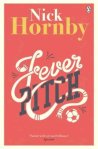
 You probably know all about the Six Degrees of Separation monthly “meme” by now, but here’s the gen for newbies. It’s currently hosted by Kate (booksaremyfavouriteandbest), who, each month, nominates a book from which we players create a chain of seven books, linking one from the other as the spirit moves. Unfortunately, once again, I haven’t read the starting book, Nick Hornby’s football fan-book Fever pitch, but our host Kate said (somewhere) that she thought it would be interesting to start with a book about sport – and I’m up for the challenge! As always (to date), I promise I’ve read all the books I select for my chain.
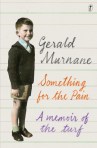 When I said above that I’m up for the challenge I meant it, because I immediately knew what my first link would be, Gerald Murnane’s delightful Something for the pain: A memoir of the turf (my review). It’s another memoir from a writer with passion for a sport. I enjoyed it for two reasons. I learnt a lot about Murnane, and I learnt about a sport I know nothing about – which is one of the joys of reading, isn’t it, learning about subjects you know nothing about?

A sport I know a little about – more as spectator than exponent – is swimming, and it is to a novel about swimming that I’m linking to next, Christos Tsiolkas’ Barracuda (my review). It tells the story of a young potential swimming champion from the “wrong” side of town being offered a scholarship to attend an elite school where he can be coached by a top swimming coach. The book is not so much about swimming as about the meaning of success and failure, and about what makes a good man.
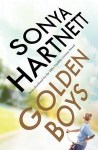 My next link sees me leaving the sport theme to draw on Barracuda’s idea of a boy from the wrong side of the tracks finding himself among the well-to-do. Sonya Hartnett’s Golden boys (my review) is about the reverse. A well-to-do family moves to a poorer neighbourhood and the two sons find themselves having to mix with the sons of a very different world. But, their real challenge is their father, who is the reason the family needed to move. It’s a disturbing book.
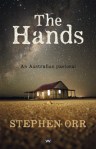 My next book is also about fathers and his sons. It was one of my favourite discoveries last year, Stephen Orr’s The hands (my review). Its evocation of a father’s relationship with his sons, and of the relationship between the two brothers, particularly through wonderfully authentic dialogue, impressed me greatly. It is set on a remote South Australian farm and deals with the stresses of modern farming in a dry land, stresses that are exacerbated by the spectre of climate change.
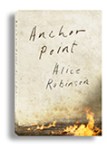 Another novel about farms and climate change that I enjoyed was Alice Robinson’s Anchor point (my review). This one, though, was more about a daughter and her father. Interestingly, in both The hands and Anchor point the mother is absent – albeit for different reasons. And now, because I really should, as I’ve said before, link to at least one non-Australian work, I’m going to conclude with another novel about a missing mother …
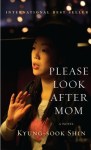 Kyung-sook Shin’s 2011 Man Asian Literary Prize winner, Please look after mom (or mother) (my review). Set in South Korea, it tells the story of a mother who goes missing. I loved it for a number of reasons: it’s set in a country whose literature I don’t know; it is told from multiple points of view and in different voices (first, second and third person); and it explores some themes that interest me including city versus country values, the importance of literacy and education, and those universal emotions of guilt and regret.
And so, here we are at the end. This is the first time that all my links have drawn on the content of the books. I don’t think I can link at all back to the first book, but we have played some sports along the way, visited a couple of farms, and got to know a few parents and their children. That’s pretty interesting – at least, I think so.
Have you read Fever pitch? And whether or not you have, what would you link to?








 Whispering Gums