Min Jin Lee, Pachinko (#BookReview)

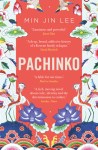
Min Jin Lee, PachinkoIf you are looking for a big, engrossing read that takes you into a little-known world, then I offer you Korean-American author Min Jin Lee’s Pachinko. It tells a story about the Korean diaspora in Japan over a period of 80 years, and was my reading group’s pick for August. There wasn’t a bored person in the room.

Interestingly though, several in the group had no idea what Pachinko was, so in case that’s the same for you, let’s get that out of the way first. It’s a sort of pinball-arcade game that is hugely popular in Japan. It’s a gambling game – a bit like our poker or slot machines – except that gambling is illegal in Japan so there is a complicated system of winning “prizes” which can be sold at a separate business for money! Pachinko parlours, which are highly visible in the entertainment districts of big cities, are dominated by Koreans – that is, their management and/or ownership is – which is where the title for Min Jin Lee’s book comes in.

Lee starts her novel in a small fishing village, Yeongdo in Busan, on the South Korean peninsula. It’s 1910, and a match is being made between Hoonie the cleft-palated, club-footed only son of a fisherman and his wife, and Yangjin, the 15-year-old daughter of a struggling family. A recipe for disaster you might expect, given the way historical sagas often go, except that Hoonie is a decent, loving man and Yangjin a hardworking, appreciative and loving young woman. They produce one daughter, Sunja, and it is her story – together with that of her family and friends – which forms the basis of Lee’s novel, until it closes in 1989.

The date 1910 was specifically chosen for the start of her novel because this is the year Japan annexed Korea, changing Koreans’ lives forever. With Koreans effectively belonging to Japan, many made the physical move there, believing their economic chances would be better, but most ended up in ghettos, living in poverty, and with minimal rights. Being Korean was, essentially, a passport to a second-class life, but they survived and this book chronicles their lives and spirit.

The first thing to say about Pachinko is that it’s a ripping read, covering four generations juggling life in a hostile land. We quickly become engaged in the lives of Sunja and her husband Isak as they move to Japan to live with his brother, Yoseb, and sister-in-law Kyunghee. Two children come, Isak is arrested (for preaching Christianity), and Sunja and Kyunghee join other Korean women selling kimchi and candy in an open market to help the family survive. Lee tells her story in straightforward, matter-of-fact language, with very few descriptive flourishes, which keeps the narrative moving without holding the reader up with extensive scene-setting. This description of Sunja’s second son, Mozasu, is a perfect example of Lee’s clear no-nonsense writing:

Mozasu had grown noticeably more attractive. He had his father’s purposeful gaze and welcoming smile. He liked to laugh, and this was one of the reasons why Goro liked the boy so much. Mozasu was enthusiastic, not prone to moodiness.

The rhythm is almost staccato at times, but never stilted. On occasion though, Lee will break out with something that is more evocative, and it can leave you breathless, such as this description of yakuza Hansu’s money-collector, Kim:

Hansu preferred Kim to do the collection because Kim was effective and unfailingly polite; he was the clean wrapper for a filthy deed.

The other interesting thing about Lee’s writing is that most of the big emotional events – marriages, births, and particularly deaths of which there are some awfully tragic ones – happen off-camera, and are reported to us in the same tone as the rest of the story. This is not the sort of storytelling you usually find in big family sagas, which love to squeeze out every emotional drop they can. I’d say this is because Lee’s goal is not to engage her readers in those sorts of emotions but to demonstrate the resilience and gutsiness of the people …

…. Because Koreans in Japan have had to be gutsy to survive in the face of being ostracised as aliens, of being treated as illiterate and filthy people, of being prevented from accessing higher level jobs. We, like the Koreans, are never allowed to forget their lack of status and, as a result, their reduced choices and opportunities.

It’s not surprising then that one of the themes is parents wanting education for their children, seeing that as a passport for a better future. Sunja’s son Noa wants to go to university, and later Noa’s brother Mozasu, himself not keen on schooling, sees education as a path out, preferably to America, for his son, Solomon. It’s not easy though. Korean children are bullied and ostracised at school, and are not encouraged to go to university. Only the dedicated make it through. The rest – like Mozasu – have to find work, which Mozasu does, luckily, albeit in a Pachinko Parlour. This, to his brother Noa’s disgust, becomes his career, but he becomes a wealthy man. Wealthy perhaps, but still Korean! He says to his friend Haruki:

In Seoul, people like me get called Japanese bastards, and in Japan, I’m just another dirty Korean no matter how much money I make or how nice I am.

And this brings me to my next theme, that of home. Lee provides three epigraphs in the novel, one for each of its parts, and the first one comes from Dickens: “Home is a name, a word, it is a strong one; stronger than magician ever spoke, or spirit answered to, in strongest conjuration”. It’s clear throughout the novel that our Koreans in Japan are homeless – reviled in Japan, they also no longer belong in Korea, particularly the succeeding generations that were born in Japan. As our omniscient narrator says at one point:

There was always talk of Koreans going back home, but in a way, all of them had lost the home in their minds for good.

And so, in this book, characters need to find their own sense of “home” which is, in most cases, family. It is in this context – and I think I can say this without spoiling anything – that we might understand Solomon’s decision at the end and Noa’s tragedy.

The third theme is perhaps the most obvious one, as it relates to the title, which clearly has metaphorical as well as literal readings. I’ll let Mozasu explain it:

Mozasu believed that life was like this game where the player could adjust the dials yet also expect the uncertainty of factors he couldn’t control. He understood why his customers wanted to play something that looked fixed but which also left room for randomness and hope.

However, here’s the thing. This is such a big, baggy monster that every reader is going to come up with different themes, different emphases. Lee herself, in an interview included with my edition, talks about her themes as “forgiveness, loss, desire, aspiration, failure, duty, and faith”. And, of course, all those are there too!

So, to sum up, Pachinko is a wonderful read about an engaging cast of characters. It provides a broad historical sweep of a region many of us could know more about, and it exposes the situation faced for a century or more by alien Koreans in Japan. It is also a book about human beings, one that never quite plays to type, that doesn’t opt for the easy marks. Instead, it is suffused with a clear-eyed humanity which encompasses the best and worst in people, and lets the reader make his or her own assessment. As I said, a thoroughly engrossing read.

Min Jin Lee
Pachinko
Head of Zeus, 2017
ISBN: 9781786691347 (e-Book)

Monday musings on Australian literature: Tasmanian Writers Centre

Continuing my little series on our writers centres, I’ve chosen the Tasmanian Writers Centre for my next post, largely because it is holding its Tasmania Writers and Readers Festival next month. Might as well give that a plug in case for my Tasmanian readers, though I’m sure they know!

The Tasmanian Writers Centre was established in 1998 and must have one of the loveliest locations in Australia, the Salamanca Arts Centre. It has a lovely bright webpage which announces that its aim is

Supporting writers to tell powerful stories, connecting with readers and building sustainable careers.

To do this, the Centre does the sorts of things that other writers centres do, and as before I’ll list their main programs …

A Writer’s Journey

Danielle Wood, Mothers Grimm, book coverThis seems to be an annual program comprising monthly workshops, with the overall topic changing each year. In 2017, the topic is “the challenges and rewards of a variety of non-fiction formats. Topics include memoir and life writing, environmental journalism, how to research for non-fiction and freelance feature writing.” The presenters include Danielle Wood (whose memorable Mothers Grimm I’ve reviewed here), Anna Krien (whom I’ve reviewed here a few times and whose topic was, appropriately, Environmental writing and journalism), and Maria Tumarkin.

Erica Bell Mentorship Program

This program, which started in 2016, provides “one-on-one mentorship with an established writer over a six month period.” Applicants submit a 10,000 wd excerpt from their manuscript and a letter explaining why they believe they would benefit from a professional mentor. Unfortunately, for nosey me, the site doesn’t say who the professional mentor/s might be.

Young Writers Program

The Centre seems to have an active program for supporting and encouraging young writers:

  • Twitch: This is the overall name the Centre gives to its youth program. It includes workshops, “Hot Desk residencies”, and the Young Writer in the City program.
  • Young Writer in the City: I came across the first year of this program on a visit to Hobart in 2015, and wrote about it then. The idea was that writers, under 30 years old, would set up “their chairs, laptops and notepads in the midst of shoppers and surrounds to compose essays between 1500 and 5000 words”. It was apparently successful, because after that first one in Hobart, the project has been offered in Launceston, Devonport and, most recently, Glenorchy. You can find links to some of the recent writing on the project’s page. One, for example, found her inspiration for writing about MONA in her childhood love of Charlie and the Chocolate Factory, in “Willy Wonka and his fascinating factory full of wonder and surprises”. Anyone who has been to MONA could understand that reference.

Emerging Tasmanian Aboriginal Writers Award

This award is being offered for the first time in 2017 – as part of the Festival. It is open to writers 16 years and older, and offers prize money of $1200. The lovely thing is that it accepts a wide variety of writing forms: poems or songs, short fiction, non-fiction (essay, autobiographical or biographical work), a play excerpt, or an illustrated story. There are different length limits depending on the form.

Tasmanian Writers and Readers Festival

Tasmania’s festival is a biennial one, and like most such festivals includes “masterclasses, discussion forums, spoken word events, children’s programs”. It’s nice, I think, that it’s framed as a “writers and readers” festival. This year’s festival runs from September 14 to 17. At this year’s festival, masterclasses are being run by writers like Bradley Trevor Greive, Ashley Hay, Arnold Zable, and Alec Patrić (on Advanced Short Fiction). There’s also a delightful sounding session titled “Miles and Stella in Conversation”. Of course, I had to read more about that one, and this is what it said: “What do two prize-winning authors talk about when they talk about writing? Alec Patrić (2016 Miles Franklin winner) and Heather Rose (2017 Stella Prize winner) quiz each other on words, prizes, literature and life. A unique opportunity to get an inside glimpse into the friendship of writers.” This is followed by, in parentheses, the note that “(Cosmopolitans and Bellinis on sale for this session.)” Is there something I don’t know? Did our Miles love these cocktails? And what if I’d prefer a simple glass of wine? What a hoot.

It is also at this Festival that the shortlist for the biennial Tasmanian Premier’s Literary Awards will be announced – so, we’ll be looking out for that. The winners will be announced in November.

Canberra Writers Festival, 2017, Day 2, Pt 3: A panel of millennials

Unfortunately – for me, anyhow – this will be my last post on the Festival, as that cold I hoped (unrealistically) to hold at bay would not be held. Consequently, for both my benefit and that of others, I decided to keep my snivelling self at home on Day 3. I’m very disappointed however, as I was very keen to attend a few events, including one titled Re-imagining Christina Stead. It was a rare session on a “classic” Australian writer and I’d love to have supported it (though hopefully, it didn’t need supporting!) And of course, I wanted to hear what the three panelists had to say.

Griffith Review: the Millennials strike back: Yolande Norris, Cameron Muir, Anna Snoekstra, Frances Flanagan, and Michael Newton

Griffith Review 56

Griffith Review 56

Having last year attended a lively session on the plight of the millennials, I was interested to see another session this year on them – and decided, as a baby-boomer, that I could face another beating! Seriously, though, as a parent of millennials, I am interested in their view of the world, and this session, drawing as it did from the excellent Griffith Review, seemed worth attending.

Convenor Cameron Muir introduced the session by saying that the Griffith Review editor, Julianne Shultz, conceived Millennials strike back edition in lead-up to last year’s Federal election. She wanted not to engage in the generation blame game but simply to give millennials (those born from around 1981 to around 2000) a voice. The issue, like all Griffth Reviews, contains a mix of essays, fiction, poetry and memoir pieces. The panelists all had pieces in the issue:

  • Frances Flanagan (Essay) “A consensus for care”
  • Michael Newton (Essay) “Unpaid opportunities”
  • Yolande Norris (Memoir) “Navigating life in art” (in the online edition only)
  • Anna Snoekstra (Short story) “The view from up here”

Muir then noted that a major theme in the panelists’ pieces (and perhaps in the edition as a whole?) is work, and he asked them to comment. Norris, who contributed a memoir to the edition, talked about the challenge of managing her identity as a mother and as a worker, which is an issue, in fact, that many of us baby-boomers also grappled with. It wasn’t easy then, and it still isn’t now – unfortunately. She wondered what you do when you’ve achieved the “template for life”, house and child/ren.

Newton, whose piece was an essay, talked about the broader structural issues concerning how work is changing. Insecurity (precarity) in work, he said, results in pressure and can engender anxiety, which can breed depression. Millennials in this situation worry about whether to look for another job, whether they can earn a living wage. Why, he asked, are the real structural problems being hidden under arguments about smashed avo and kidadulthood? These arguments dismiss policy concerns of Millennials.

Snoekstra, whose piece is a short story, said that she calls herself a writer in social situations, but in fact she also works as a nanny. She talked about her generation’s concern with buying a house: do they buy a house meaning they can’t go on holidays, have to take a job they don’t like, or do they decide they won’t follow that path?

Flanagan, who like Newton contributed an essay, focused more on the longterm, but also looked back into history, drawing on Hannah Arendt’s division of human activity into three categories: labour, work and action. She suggested this might provide a model for how we view work. She wanted, she said, to meditate on how modern capitalism conceals the action of power. There has been insecure work in past, she said, but there were ways to resolve those, including the introduction of award wages. Today, though, she argues, work precarity is individualised and private. (There are no labour lines, today, for example, just people “waiting for a text message that will signal the prospect of work or its absence.”) Society is no longer offering careers but fragmented work. She then moved onto discussing the kind of work we value – and this is where the title of her essay “A consensus for care” makes sense.

She talked about the cyclical nature of work, writing in her essay:

While our current age is not alone in taking the maintenance of our physical and social spaces for granted, we have certainly given it a twenty-first-century neoliberal spin. Many early childhood educators earn so little that they cannot afford to buy a house or have children of their own, despite significant post-secondary qualifications. Aged carers are paid so poorly they risk poverty. People with jobs in the world of work and action who take time away to care for elderly parents or young children are punished for their ‘choice’, not just once through foregone income but twice as a result of a grotesque superannuation system that magnifies wage gaps in retirement. Through neoliberal goggles, labour is not recognised as the essential foundation for civilisation but rather a cost burden on the public purse that should rightly be turned into a profit-making opportunity. Treasurer Scott Morrison, speaking at the ACOSS National Conference in 2016, said, ‘What I am basically saying is that welfare must become a good deal for investors –for private investors. We have to make it a good deal, for the returns to be there.’

(What can you say to that!) Arendt, she said, would not apply the idea of “returns” to this sort of activity, but to “work” that produces – well – products. Flanagan suggests that we need to look at the kind of society and care we want. She pointed to Norway’s collectivist view of responsibility, and argued that we should put care and education at the heart of our society. We need to look at values, rather than costs, and look back for values to the mid-twentieth century and earlier rather than to the last 30 or 40 years. In other words, rather than to the time during which I spent my working life. Oh, how I remember the dispiriting slide into measuring and costing things which cannot and/or should not be costed. Things like, for example, the cultural collections in our museums, archives and libraries. We saw it happening but felt powerless to change it.

And so the discussion continued, teasing out issues regarding mental health (captured chillingly, said Flanagan, in Snoekstra’s story), the separation of public and private life (in that Millennials seem very public, sharing all, but their worries are private), the need to develop support networks for work, the prevalence of toxic attitudes online particularly from disgruntled men.

On this issue of disgruntled men, Newton commented in the past men assumed they would find a partner without too much effort, but that this is not the same for the current generation of young men which can build resentment. He also noted that the hollowing out of work in manufacturing, caused largely by automation, leaves men having to consider care work. However, they don’t value this “feminised work” so, he said, the whole idea of “work” needs to be rethought.

Muir concluded by asking them what they would say to the next generation:

  • Norris said this was tricky because projections are impossible, but developing and maintaining connections is important.
  • Flanagan said that she would argue that technology is just a tool, and that there are still questions about power. She suggested people should learn from mentors and mentor in turn.
  • Newton started, laughingly, by saying he recently had to explain the significance of Princess Di to his younger work colleagues. Seriously, though, he’d want to say that work is not an end in itself, but that they should look at values.
  • Snoekstra said that she was thinking of writing YA books, and was advised to write short books, with action at beginning, due to shortened attention spans, but then discovered that 12-14 year old girls are reading Nancy Drew!

Q&A

Could unions help? For baby-boomers they facilitated collective bargaining, and gave a sense of empowerment. Flanagan said that Australia has the worst anti-trade union laws in the democratic world. She works for United Voice, a large trade union, and said they need to use social networks to deal with mass desegregation of workforce.

Is the Universal Base Income a workable solution? It was agreed that carers should be remunerated, and the small surveys done to date does not show that it reduces the desire to find other work.

What are the implications of the drive to project yourself, that if it’s not on Facebook, it didn’t happen, that “it’s not ok to be not ok”. Norris felt that there is some pushback to this now, that people are becoming willing to show cracks. Flanagan said that for us to mature we need to create a caring society.

The commentary about housing focuses on Sydney and Melbourne but what about growing regional areas where housing can be cheaper. Is a trend happening? Our panelists generally thought there was, although some of the “trendy” places are quickly becoming expensive or built out. And, Australia is probably likely to remain a largely urbanised, centralised nation.

And there ended, somewhat over time, an excellent session that did not generation blame but that attempted instead to identify the issues and find solutions.

Canberra Writers Festival, 2017, Day 2, Pt 2: Two book launches

At last year’s festival, I attended a few excellent book launches, and so decided to do so again. Authors need all the support they can get after all.

Book launch: Ian Burnet: Where Australia collides with Asia

Burnet and Burdon

Burnet and Burdon

The first of today’s two launches was for a book with a very long title, by geologist Ian Burnet. It’s Where Australia collides with Asia: The epic voyages of Joseph Banks, Charles Darwin, Alfred Russel Wallace and the origin of the Origin of species. I haven’t heard of Burnet before, though he’s written a few books, and nor have I heard of the publisher, Rosenburg Publishing who produce “a small non-fiction list, concentrating mainly on history and natural history.”

So, that was interesting for a start. The book was launched by Sally Burdon of the Asia Bookroom here in Canberra.

I couldn’t possibly share all the information Burnet imparted to us about the four voyages he covers in the book. A lot of it is well-known, so well-known in fact that Burnet had been wanting to write about Alfred Russel Wallace, his hero, for a long time, but he couldn’t find an angle to make it worthwhile. The thing is that I didn’t know who this Wallace was.

The publisher’s website explains his importance. Wallace

realized that the Lombok Strait in Indonesia represents the biogeographical boundary between the fauna of Asia and those of Australasia. On the Asian side are elephants, tigers, primates and specific birds. On the Australasian side are marsupials such as the possum-like cuscus and the Aru wallaby, as well as birds specific to Australia such as white cockatoos, brush turkeys and the spectacular Birds of Paradise. It was tectonic plate movement that brought these disparate worlds together and it was Alfred Russel Wallace’s ‘Letter from Ternate’ that forced Charles Darwin to finally publish his landmark work On the Origin of Species.

This strait is apparently well-known in certain circles as The Wallace Line.

Burnet explained that the aha moment came when he was sailing in the strait and saw melaleucas, one of the unique species that supports Wallace and Darwin’s theory. He realised that this Australian connection was the story he could tell. (He found some other Australian connections, too, including Darwin’s contemplating his ideas about the origin of the species on the banks of Cox River, and the role of ornithologist John Gould in identifying adaptation in finches.)

An interesting point he made – one relevant to my write-up of the historical fiction session yesterday, even though this is non-fiction – is that it was the easiest book to research. Essentially all the critical documents he needed – letters, diaries etc by the main players – are digitised and available online. Way to go librarians and curators!

It was a lovely launch, and I learnt some things I hadn’t known before, which is always a plus.

Book launch: Stephanie Buckle: Habits of silence

I had identified this launch as one I wanted to attend, partly because the book is by a local author but even more because publisher Finlay Lloyd has sent me a copy of the book to review. Julian Davies, Finlay Lloyd publisher, introduced John Clanchy, whose gorgeous short story collection, Six, I’ve reviewed and who works with Finlay Lloyd as a manuscript assessor and editor.

Clanchy did a grand job of launching Buckle’s debut short story collection, Habits of silence. He explained that he met Buckle 10 years ago in a writers’ group, and talked about her achievements: some of the fourteen stories in this collection have been published before, have won prizes, and/or have been in editions of Best Australian stories. In other words, he said, she’s a writer with some cred (though he didn’t use that word.) She has worked at her craft, he said, even rewriting some prizewinning stories for this publication. (Interestingly, in a throwaway line, he mentioned that she has written a novel about the Canberra fires, From the ashes, but I don’t believe it’s been published as this is her debut book.)

Anyhow, Clanchy then discussed the book itself. He talked about the relevance of the low-light, empty urban streetscape on the cover, and said that it and the recurrence of words like “silence” and “wordless” provide a clue to the content. And this, he suggested, revolves around communication, about how it can break down, about the positive and negative impacts of silence. Silence, he said, can be positive, but with Buckle, things don’t stay the same, and smooth waters can turn turbulent.

Silence can be voluntary or involuntary. Two stories are about a stroke, which forces involuntary silence. He read an excerpt from one of these stroke stories. And then read from the second story in the book, “sex and money”, which is about voluntary silence, about silence being used aggressively by a wife who is not receiving the love and attention she desires. Both readings showed a gorgeous insight into human nature, and an ability to present it economically, as you’d expect in a short story.

Davies then returned to introduce Buckle. He reiterated her willingness to work on stories, suggesting this is partly a salute to being older, to the associated ability and willingness to produce stories of psychological subtlety. He then introduced Buckle to the podium.

Buckle said that the book was a long time coming, and that she never thought her first book would be a short story collection, given their general unpopularity. (Thank goodness for small publishers like Finlay Lloyd who take risks on unusual or less popular forms.) However, she loves short stories she said, particularly those of 2,500 to 3,000 words. You can’t hide in short story, and you can tease out a single idea. But, addressing the comment about her working on her stories, she said the hard thing is to know when to stop! I guess most writers – even bloggers – understand that!

She then read from two of her stories, from “us and them” which is set in a 1970s psychiatric hospital, and “the man on a path” which is about an older woman, widowed and lonely, going on holiday to a place she used to go with her husband. As she walks, all she sees are couples, until she sees a man alone walking towards her. The excerpt she read about what happens next was tantalising.

I so look forward to reading this book – but it will be a little while before it reaches the top of the pile.

Canberra Writers Festival 2017, Day 2, Pt 1: A conversation with Tony Jones

Choices, choices. Such a surfeit of riches across such dispersed venues made today a difficult one. In the end I had to make the tough decision to not see Jane Rawson, whose session was across the lake, though it broke my heart. My decision was made harder by the fact that as I was drafting this intro over my lunch break, a tweet came through promoting the event. Wah, but I’m trying to keep a cold at bay so being sensible about rushing around was the way to go.

But now, I’m going to have to try to emulate those historical fiction writers who need to leave out much of their research, otherwise I’ll be here all night – and I have things to do, books to read. Even so, I’m going to break this post into three parts.

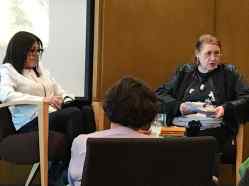
Crime: Tony Jones with Krysia Kitch

Kitch and Jones

Kitch and Jones

Writers can’t always avoid controversy, particularly if they are political journalists, and so it was for Tony Jones who was attending the festival to discuss his new book, Twentieth man. Outside the venue was a small group of protesters holding a placard that said “Phony Tony, Propaganda through Plagiarism”. They believe the book is anti-Croatian, and that it plagiarises, writes Ina Vukic on her blog, “a Yugoslav era work of Propaganda titled Dvadeseti čovjek (the Twentieth Man) written by Đorđe Ličina”. I can’t comment on the propaganda aspect, because I haven’t read the book, but in his talk Jones mentioned that there has been speculation that there was a twelfth man in the Bugojno group which carried out an attack in Yugoslavia in 1972. So he decided to create a fictional twelfth man who survived the attack. And that’s all I’ll say about the protest, which Jones referred to a couple of times during the conversation.

Twentieth man is Jones fictional debut, and the first question turned on a favourite topic of mine, genre. Well it’s not that I love “genre” per se but I do enjoy discussions about definitions because they can help us tease out expectations. The question was, is this crime (as it was described for the Festival) or political thriller? Jones skirted answering this decisively by saying that it’s thrilling, it has crimes and it’s about politics! Fair enough. As the conversation progressed, I decided a third genre (or, perhaps, sub-genre) could be considered, historical crime! (Though again that raises the spectre from yesterday’s session about when is “history”.)

We’ll return to history later, but first something about the plot. It starts with the bombing of two Yugoslav Travel Agencies in Sydney in 1972 and ends with an assassination attempt on the Yugoslav prime minister. (Jones told us this so I don’t think it’s a spoiler!) Jones spent some time talking about the inspiration for the novel, at the same time giving us a refresher on fairly recent Australian political history.

Convenor Kitch from the National Portrait Gallery then referred to the Festival’s theme of Power, Politics, Passion and asked Jones what he thought about the power of the past over the present. Jones responded by referring to a quote often attributed to Mark Twain that:

“History doesn’t repeat itself but it often rhymes.”

He then talked more about the historical background to the novel, and about subsequent reporting and actions through the 1980s, 1990s and into the present, which prove that “history resonates again and again, it rhymes”.

Kitch mentioned how the shift of power between individuals is a major part of book. She said she loved his visceral descriptions of fear, and asked how he did it. Jones flippantly responded that he works at the ABC, but then, more seriously, said that he used his imagination … and that he could draw on some tricky situations he’d been in as a journalist.

This led to more conversation about the process of writing, such as his decision to mix “real” people with fictional ones. After all, he said, Tolstoy did it! He said he likes novels which deal with real history and fictional characters, and named James Ellroy’s novel on the Kennedy assassination, American tabloid, and Marlon James’ Booker prize-winning A brief history of seven killings exploring the assassination attempt on Bob Marley.

He also talked about researching and using documentary evidence to support his story, saying that the novel is fictional (of course) “but as close to real” as he could get. He’s not claiming it’s history but hopes it will encourage its readers to “reflect on the past”.

Kitch asked him about pacing – including the role of the moments of solitude for the characters – and also about his use of landscape to support his themes and characterisation.

Jones also mentioned the role of respected Australian publisher and editor Richard Walsh who offered to look over his manuscript. He told Jones there were two or more books there. So, folks, there will be a sequel!

There was so much more but this is getting long and I’ve covered the main issues I wanted to. There was discussion about the passion part of the Festival’s theme. First, Jones is clearly passionate about the topic. But, also, there’s a Romeo and Juliet style love story between the young Jewish journalist and the Croation hero/antihero.

Finally, Jones talked about the role of Canberra in the book, saying the city is “the star of this novel”. He thinks it provides a good picture of Canberra and its inhabitants at the time it is set. This was a blatant pitch to the locals as, he admitted, he’d been told to do!

There were some intelligent questions, but really, I must finish here, and will do so on Jones’ final words that Twentieth man is “a novel, largely a work of imagination but based on real events”.

Canberra Writers Festival 2017, Day 1: A panel and a conversation

It’s on again – the newly revamped Canberra Writers Festival, I mean. Due to a family commitment in Melbourne, from which I only returned at midday today, I didn’t get to some of the first day’s prime events. I missed, for example, a conversation with Graeme Simsion. I also missed a wonderful sounding panel titled Women in the Media, featuring Kathy Lette, Katherine Murphy, Virginia Haussegger.

The Festival’s theme – fitting for the nation’s capital – is Power, Politics, Passion, but my sessions today were more traditional writers festival fare.

Grasping the past: Tracy Chevalier, Amy Gottlieb and Rachel Seiffert in conversation with Gillian Polack

CWF, Polcak, Gottleib, Chevalier, Seiffert

From left: Polack, Gottleib, Chevalier, Seiffert

I chose this session because these writers interest me, as did the topic, historical fiction, which was one of the themes running through last year’s festival.

For those of you who don’t know the panelists, they were:

  • Gillian Polack (convenor): an historian and speculative fiction writer.
  • Amy Gottlieb: novelist and poet, whose debut novel, The beautiful possible, was published in February 2016.
  • Tracy Chevalier: novelist, most famous for The girl with the pearl earring but who has written 9 novels including Remarkable creatures which I’ve reviewed.
  • Rachel Seiffert: novelist, the daughter of an Australian-born father and German mother. She’s published three novels, of which the first, The dark room, was shortlisted for the Booker Prize.

What was excellent about this session is that it didn’t traverse the common issue of plausibility and authenticity. Instead, our jetlagged convenor wanted them to talk about how they transform their research into fiction. She was interested more in the process. It took a little while to get there but the discussion along the way was enjoyable anyhow!

A couple of issues were toyed with as the panelists grappled with the question. One of these related to the label itself. Gottleib, for example, said she didn’t see herself as an historical fiction novelist. It was the marketing people who labelled her book as such – because of its historical setting. Chevalier raised the issue of definition. When is a setting historical, she asked? Is her novel set in the mid 1970s historical? Seiffert agreed with Gottleib regarding the marketers applying the label, and suggested that historical fiction is seen as “more serious”. That intrigued my friend and me – and was immediately picked up by Chevalier who said that in England historical fiction tends to be seen as genre, and in opposition to serious literary fiction!

What came though strongly throughout the discussion is that these writers do not necessarily see themselves as historical fiction writers but simply as writers!

Meanwhile, Polack returned to her question regarding transforming historical research to fiction, by asking a more specific question regarding how they get their food research into their novels. This resulted in a detailed response from Chevalier who talked about her research process. She said that she can’t write about a period until she knows what people eat, how they eat, when they eat, what they sat on to eat, and so on. In other words, she needs to know what her characters would do on a day-to-day basis. And, here’s the challenge! She has to know this detail to create her period but she can’t tell it all in her novel. This is, as she clearly knows, one of the major criticisms levelled at historical fiction writers, i.e., that they can’t resist including their research, whether or not it’s not critical to the story.

Gottleib, though, starts with character. She knows the story – for example her character was going to leave Nazi Germany, travel to India, and then move to America. Once she knows this, she has to apply the scaffolding – to find out how he made this journey. This requires research. Seiffert, on the other hand, starts with the story first, being inspired, for example, by case studies and essays of people who resisted the Nazis.

Polack then asked the panel how they can do that thing that historians can’t, namely they can bring back erased people from past (such as women or servants), they can right wrongs or address flaws in past. How do they do this she asked?

Gottleib reiterated her interest in character, in their motivations, dreams, and longings. The history for her comes later. Chevalier referred to the book she made her name on – The girl with a pearl earring. She said she likes making things up, so she goes for the gaps – in the “real” story – and tries to fill them in. She likes to give voice to others, to their interior or emotional life. She is not about truth and facts, she said but about the emotional truth of the times. Seiffert referred to Kate Grenville’s The secret river and her feeling the need to write Searching for The secret river. It was as though she’d felt she’d “committed the sin of writing historical fiction” which is clearly something Seiffert felt she didn’t need to do.

Chevalier commented at this point that she has a huge respect for historians; she relies on them.

Polack then moved onto the thorny issue of avoiding cultural and historical bias when writing about a time different from their own. Chevalier said she was always on the look out for 21st century attitudes in her characters. She had to remember in Girl that a 17th century maid would have no feelings of social or economic empowerment.

Seiffert, who has written two books about the Third Reich, took this a bit further explaining that her character in A boy in winter doesn’t know the Holocaust is proceeding but the readers do. She had to fight that, showing that he had to make choices not knowing the full story, while the readers do know. You need, in other words, not to give characters foreknowledge.

Gottleib said that she handles this issue by having a narrator. She said that Latin-American fiction and Gabriel Garcia Marquez  got her into writing fiction, because she loved his multiple layering of stories. The narrator is her “out” of this mire.

This led Polack to raise the issue of their narratorial choices – past versus present tense, and 1st, 2nd or 3rd person. These are the most important things a writer must choose, said Chevalier. If they get it right, readers don’t notice. She started writing in first person, because she found it easier, but she said that the ability to handle third person is the sign of a more mature writer!

Seiffert said she wrote two historical novels using the present tense, because she wanted to situate reader in the time of the novel. The most interesting thing, she said, is that even when you don’t act there is a consequence.

Polack asked then about how fiction writers set up a conversation with history. Gottleib said her novel revealed a conversation, and that it turned out to be different to the one she thought she was having. Chevalier said that writing historical fiction can set up “an alchemy or magic that is hard to explain”.

Q&A

There were a couple of questions from the audience but I’ll just share the one concerning whether they have start with ideas they want to explore or whether the themes appear more serendipitously. Gottleib said that yes, hers is a novel of ideas but that she had to work to ensure the ideas didn’t overwhelm the characters. Seiffert said she has done this, as has Chevalier, but she said you have to avoid preaching.

Overall, this was an interesting discussion which explored historical fiction more from the practitioner’s end than from the reader’s response aspect, as I’ve often seen.

COMMENT: My friend and I did discuss the “cultural and historical bias” issue a little. We believe that there have always been iconoclastic thinkers. The challenge for the author, when creating these, is to know they are doing so and be able to justify it.

Authors and agents: Linda Tate and Valerie Parv

Linda Tate and Valerie Parv

From left: Linda Tate and Valerie Parv

I’m not a professional writer, and so don’t plan to employ an agent, but I chose this session – a conversation between author Valerie Parv and her agent Linda Tate – because I am interested in the business of writing, in how writers manage the bigger picture.

It was a very nicely presented session. Tate and Parv clearly know each other well and work well together, but beyond that, it was clear that they’d work-shopped their session so it flowed easily, and informatively without feeling artificial.

I’m not going to summarise it in depth, but will say that they focused on the role of an agent, arguing that the point is not how you publish – indie or traditional, through apps like Radish, or by repackaging older works, and so on  – but that you publish. Agents can help with the publishing aspect of writing. They can help with other business aspects too, such as managing the writer’s diary, ensuring s/he isn’t taken advantage of. They can also free up the writer’s time to do what writers do best – which is write.

One thing writers do need to do, though, they argued is to have a social media presence, and to have such a presence BEFORE they offer a manuscript for publication. Publishers want to know what the writer can offer, above the actual work, because it is these extras which can often sway a publisher. A writer needs a brand, needs to know what s/he wants to be known for, what his or her niche is.

They also warned about contracts, including the importance of IP. Their advice regarding contracts was always consider the worst case, and not to sign anything they can’t live with in the worst case.

This was all teased out with examples, but in the end this was the message – the writer writes, the manager handles the business. As was the point that, no matter how well agent and writer get on, it is a business relationship. The agent can only work for a writer if it’s commercially worthwhile for the agent (obviously!)

Oh, and they gave a lovely plug to the ACT Writers Centre which they described as one of the most pro-active in the country! Nice eh.

A worthwhile session – even for amateur me – although I did notice that there was no discussion of the payment aspect of the relationship.

Monday musings on Australian literature: Bushfire fiction

Karenlee Thompson, Flame tipLast week I reviewed Karenlee Thompson’s short story collection, Flame tip, which was inspired by (if “inspired” is quite the right word here) the horrendous Tasmanian bushfires of 1967. Lisa at ANZLitlovers had also reviewed this book, and in discussion on her post we discussed the apparent dearth of books on a topic so critical in Australian life. I thought the topic warranted a Monday Musings. Maybe readers here will come up with some more titles that we haven’t thought of!

In 2015, researcher at the ARC Centre of Excellence for the History of Emotions, Grace Moore wrote an article for The Conversation titled “Bushfires are burning bright in Australian letters and life”. She starts by noting that

Historically, bushfires have played an important role in Australian literature, adding a touch of exoticism in fiction written for readers back in Europe, while also offering insights into the dangers faced by settler communities.

She says that novelists and short story writers from as early as the 1850s referred to fires, often using them as “a melodramatic device to resolve romance plots.” A “heroic rescue from swirling flames (themselves an outlet for the smouldering passions of the protagonists)” would be used to bring together “characters whose marriage would have been considered unsuitable ‘back home’ on the other side of the world.” She names Ellen Clacy as one such writer – though her best known book, A Lady’s Visit to the Gold Diggings of Australia in 1852–1853, is a non-fiction account of the goldfields. I couldn’t find an example online of the sort of story Moore describes.

However, by the 1880s, she writes, “as settlers became better acquainted with the devastation that fire could cause in the outback, bushfire narratives became bleaker and more menacing”. Instead of settlers successfully defending their homes, stories started to describe “suicides, traumatic flashbacks and apocalyptic visions” (like J.S. Borlase’s Twelve miles broad1885) or “devastating environmental impact” (such as H. Hudson’s story, The phantom herd, 1907).

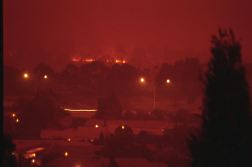
Canberra fires, 2003, taken from opposite our house

In another article Moore is quoted as saying, that in the 20th century fire became “increasingly tied to the nation and resistance”. When fire threatens people’s property, or towns or lives, she said, “it is like a micro war on Australian soil, one that acts as a call to arms for members of the community to fight for their own and their neighbours’ safety”.

Moore had (or has), in fact, been researching fires for some time, and was involved, back in 2013, in a two-day conference held by the Centre, called “Fire stories”. One of the papers was by John Schauble titled “Lost in the flames? The missing great Australian bushfire novel”. The abstract for the paper says:

Bushfire might have been expected to produce a great Australian storyteller, but curiously it has not. While this quintessentially Australian disaster looms large in the popular imagination, bushfires are largely absent from the nation’s fictional narrative. Fire finds expression in the visual arts, poetry and particularly in children’s literature, but novels and even short fiction in which bushfire is central to the narrative are a rarity. Even cataclysmic events such as Ash Wednesday and Black Saturday – that triggered a flurry of other literary activity – have largely failed to ignite the imagination of fiction writers. Fiction has largely been eclipsed by factual accounts, while other forms of literary expression of fire have flourished. A strong tradition of juvenile literature has not translated into adult genres.

Interesting, eh? Why is this?

Now, I hadn’t heard of Schauble before – he’s a CFA volunteer  advisor to Victoria’s Fire Services Commissioner – but he’s been interested in this topic for sometime. Back in 2002, he wrote an article for The Age on our relationship to bushfires, and said something similar to what he said in 2013:

Despite the great tragedies of fire in the Australian bush, just a handful of novels use bushfire as the central theme. A few poignant short stories – Henry Lawson’s The Fire at Ross’s Farm, John Morrison’s The Children, and Robert Drewe’s Radiant Heat – are noteworthy, along with the occasional poem.

Curiously, bushfires have been seen as been as more suitably the stuff of children’s literature. A succession of well-known children’s authors – Ivan Southall, Colin Thiele, Mavis Thorpe Clarke, Alan Aldous and Roger Vaughan-Carr – have used bushfire as the theme of at least one work.

He said more, including quoting loved Australian cartoonist, Michael Leunig, but you can read the article yourself if you are interested.

Peter Temple, Truth

My point is that it is into this environment that Karenlee Thompson’s collection has been released. I can point to other recent books I’ve read which mention fire – including Gillian Mears’ Foal’s bread (my review), Alice Robinson’s Anchor Point (my review), Peter Temple’s Truth (my review), and Jane Rawson’s dystopian novel A wrong turn at the Office of Unmade Lists (my review). None of these revolve around fire, but in a couple fire is significant.

Anchor Point is one of these, containing a major fire partway through the novel. It starts:

Laura looked where he pointed. A line of crimson flames was rising over the crest of a distant hill. Burning storeys high, licking the sky, starving. More than spot fires, the land was alight.

This is followed by several pages of terror. Then, when it’s over:

How depressing it was to live for months in a singular palette: grey, charcoal, black. It was strange to consider what had gone up in smoke and what had survived. There seemed no logic to it …

And fire comes to the city at the end – because Anchor Point is, among other things, a cli-fi novel.

So, things are changing. Just this year, Eliza Henry-Jones published her second novel Ache (see Lisa’s review). This novel’s subject matter is the impact of bushfire on individuals and communities. Lisa tells us that Henry-Jones wrote her Honours thesis on “the representation of bushfire trauma in fiction”. Lisa has reviewed a couple of other books in which fires feature significantly: Roger McDonald’s 1996 book about an arsonist, The Slap (Lisa’s review), Amanda Lohrey’s 2009 novella Vertigo (Lisa’s review), and Lexi Landsman’s 2016 novel The ties that bind (Lisa’s review).

Things, in other words, seem to be changing. I wonder why now? We have always had  devastating fires in this country, but is climate change increasing their frequency and therefore bringing the issue once again to the fore? I haven’t read these recent novels, so I can’t really comment on what approach they are taking to exploring fires in Australia. Are they focusing, for example, on grief and trauma, or community and nationhood, or environmental politics and climate change?  Or, is there no observable trend in this contemporary writing?

Do you have any thoughts on this topic? If you’re not Australian, do you have any comments about your country’s literature relating to – hmm – disasters that are common to your shores?

Karenlee Thompson, Flame tip: Short fictions (#BookReview)

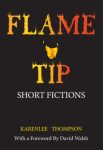
Karenlee Thompson, Flame tipShort story anthologies usually have some sort of organising principle – a theme, perhaps, such as Australian love stories, or a prize, such as the Margaret River Short Story Competition – but single author collections tend to be looser. Not so Karenlee Thompson’s Flame tip which she describes as containing “creative writing pieces that weave in and around the Tasmanian bushfires of 1967”. These fires, she writes, “left 62 people dead, 900 injured and over 7,000 homeless in a single day”.

With subject matter like this, you might think Flame tip would be distressing to read – and there is that. But Thompson manages to vary the tone enough, by injecting the occasional bit of humour and satire for example, to lighten the melancholy of the heavier stories. This humour, in fact, starts with David Walsh’s idiosyncratic (we would expect no less) introduction. He tells us he remembers the day – 7 February – because it was his first day of school, and his Mum forgot to pick him up. She “forgot” because she was fighting a fire on their back fence, but Walsh wonders whether this was a “viable excuse” or whether she chose to “triage the back fence over her weird and difficult son”. Whatever the reason, Walsh’s family lost neither home nor persons – unlike some of the characters in Thompson’s book.

So now, the book. Karenlee says in her introduction that it’s a collection to be “dipped into at random” and that her aim is “to present the truth ‘under the mask of fiction’ (to borrow from Gao Xingjian), revealing nuances of character and place, as well as repercussions that are often difficult to expose through nonfiction”. This is exactly what she achieves. Some of the stories are told from the point of view of people who experienced the day – who lost loved ones or property – and some are told by later generations. Sometimes the impact of the fires is direct and obvious, such as the wife who lost the love of her life (“Like a wall”), while elsewhere it is far less direct, such as the fickle lover in “Love, what is thy name?” whose grandparents lost their home in the fires.

Many of the stories of loss – the loss of a husband, parent or friend – are the sorts of stories you’d expect. I don’t mean by that, however, that they’re clichéd or uninteresting, but just that in such a collection you’d expect such stories of loss. Thompson ensures her stories are interesting by personalising the loss, and by creating “real” characters rather than the heroes and saints you tend to get in the media. An example is the betrayed wife in “A bird in the oven” who was 12 years old when she lost her mother in the fire and who took “a long time growing up”. Another is “The keeper of the satchel”, a man more damaged by his mother’s lack of love than by her death.

There are positive stories too, such as the young girl in “Jack Frost” who finds love. And there are surprising stories. One is “Medusa One Snake”, about how a family of birds manipulates fire to locate prey (the fleeing animals, “a mobile smorgasbord”). Another is “Degustation” about a woman on a date with the perfectly-named Augustus from a family which “had bought up all the available charred and rubble-ridden farms in the district, after the fire had rendered the singed locals almost comatose with shock”. There’s always someone ready to make a buck out of other people’s pain!

The issue of form … short fictions

The book is subtitled “short fictions”, and Thompson describes it as a collection of “creative writing pieces”. In other words, the term “short stories” isn’t used. There are “traditional” short stories here, but the collection also includes other “pieces”. There’s the shape poem “Flame”, an epistolary story (“Love, what is thy name”), and the piece titled “Lost” which riffs on lost-and-found ads. In it Margaret Groombell writes:

Lost

A life

Including: four-bedroom weatherboard home with indoor amenities, a much loved border collie answering to the name of Richie, a sense of security, linen and cutlery, a priceless hand-painted jardinière, stamp collection gathered and assembled over three generations, pink shower cap studded with daisies, deck of hand-painted burlesque playing cards, a position of some standing in the community, 2 striped deck chairs …

And so on. The random ordering of “items” here – “a sense of security” next to “linen and cutlery” – beautifully conveys the dislocation, the disorder, that such loss generates.

Another piece, “Annabelle, just looking”, plays with the idea of personal ads, but it’s an extended ad in which 72-year-old Annabelle explains her needs and why she’s where she is. She describes herself. She’s “never considered Botox or any of that other rubbish”, she says:

My forehead, therefore, is less like a flat screen TV and more like a topographical map. Life has surprised me, frightened me, delighted me – it’s all there in plain sight, writ large for the world to see.

Her demands aren’t many, but she hates “open fires”.

My final example is the short two-pager, “Cross stitch”, about Nettie who’s lost everything, but is surrounded by the macrame and aprons

made with altruistic fervour, no doubt, by women and girls who wanted to give her something to help her settle into a tiny house that had nothing from her life before.

I love the way Thompson, in piece after piece, breaks down popular notions about fires and their aftermath, and shows us the more likely reality.

So far, I’ve focused on the bushfire theme, but one of the lovely things about this collection is how Thompson interweaves other ideas into it. In “Like a wall” and “Jack Frost” she tackles racism and community prejudices. And in “Degustation” she satirises fine dining – degustation menus in particular – as well as the arrogance and sense of entitlement of the wealthy. It’s a delightful, funny story. Indeed, Thompson’s writing overall has a light touch, with a keen eye for the absurd.

Flame tip is a serious collection about a serious subject, and it could so easily have become heavy. However, by varying form, voice and tone, Thompson has produced a book that not only sustains our interest but that, despite its subject matter, is enjoyable to read. And that’s no mean feat.

Lisa (ANZLitLovers) also enjoyed the book

aww2017 badgeKarenlee Thompson
Flame tip: Short fictions
Melbourne: Hybrid Publishers, 2017
166pp.
ISBN: 978 1 925272 73 4

(Review copy courtesy Hybrid Publishers)

Monday musings on Australian literature: Northern Territory Writers’ Centre

Back in June, I wrote a post on the ACT Writers Centre, and indicated then that I would gradually write about other state centres. So, today I am writing about the other pseudo-state aka territory centre, the Northern Territory Writers’ Centre. I’ve chosen this as my second one because I think the Northern Territory is often overlooked in terms of cultural activity – and yet, there’s clearly quite a lot going on in this region.

On its website, the NT Writers’ Centre describes its goals:

The NT Writers Centre encourages vibrant literary activity in the Northern Territory, developing and supporting writers in all genres at all stages of their careers. We value quality NT writing as a unique component of Australia’s literary wealth and recognise Indigenous writers and storytellers as a core component of this.

Its main activities are:

  • NT Writers’ Festival, its “cornerstone event”, which alternates between Darwin & Alice Springs
  • Territory Read, its biennial book awards
  • Andrew McMillan Memorial Residency and Eco House Residency, which are two writers residencies
  • Workshops and other events

NT Writers’ Festival

This year the Festival was held in Alice Springs, in May. Its theme was Crossings/Iwerre-atherre (with Iwerre-atherre being an Arrernte, word for “two roads meeting, neither blocking nor erasing the other; two-way learning or travelling together.” Speakers included Kim Mahood and Bruce Pascoe (both of whom I’ve reviewed on my blog), plus many indigenous and other writers (including Indonesian writer, Agustinus Wibowo.) A lovely diverse line-up.

Olive Pink Botanic Garden

Olive Pink Botanic Garden

This year they also, for the first time, shared festival sessions via live streaming to “libraries and other venues across the NT.” A great initiative, but I wonder how successful this was – technologically, I mean.

Many of the events were held in the gorgeous Olive Pink Botanic Garden, which I’ve visited a couple of times. One event, for example, was titled “Up with the Birds: Poetry readings at the café”. I reckon I could have made that, as it wasn’t too early at 8am! The poets were Anthony Lawrence, Meg Mooney, Bruce Pascoe, Kaye Aldenhoven, and the poems were apparently about “how our feathered companions have crossed the hearts and minds of poets.”

Territory Read (and other literary prizes)

These are biennial awards, with the next ones due in 2018. They are not wealthy awards, with the total prize money offered in 2016 being $9000, and are only offered for works by NT residents. The awards are:

  • Chief Minister’s Book of the Year Award: can be won by a book in any genre. The 2016 prize of $5000 was won jointly by Clare Atkins for Nona and Me (published by Black Inc.) and Mary Anne Butler for Highway of Lost Hearts (published by Currency Press)
  • Best Non-Fiction: for non-fiction prose: for any non-fiction prose work.
  • Best Young Adult or Children’s Fiction: for a published book in either genre, and they say that if a picture book wins, the prize money is split between author and illustrator.

The Writers Centre supports or contributes to other literary competitions, including, for example, the Darwin Poetry Cup. In fact, from reading their site, and searching the ‘net, I sense that poetry is quite a going thing in the Territory. Australian Poetry, for example, supports (or, has supported) a Cafe Poet residency in the above-mentioned Olive Pink Botanic Garden.

Writers Residencies

The two residencies they offer are:

  • the Eco House Residency at the Darwin Botanical Gardens which is for “all writers outside Darwin” and is a three-week residency which involves staying in “an old-style elevated house” inside the Gardens.
  • the Andrew McMillan Memorial Residency which is “open to any emerging writer who is an NT Writers’ Centre member” (or, a member of any other of the national writers centres). It’s funded by a bequest from writer/journalist/museum Andrew McMillan, and is at Larrimah which is a tiny settlement around 500 kilometres south from Darwin. McMillan often stayed here to write away from distractions.

I was intrigued to note that, as well as work on their project, the writers from both residencies must “write a 500-word blog post for the NT Writers’ Centre website”.

Workshops, etc

Like all writers centres, the NT Writers’ Centre runs all sorts of workshops, and they are clearly aware that writers need to be skilled for contemporary consumers of literature. So, for example, one of this year’s workshops was on podcasting, and was run in conjunction with the 2017 Darwin Fringe Festival. The end result was Podcasts from the Fringe.

Another upcoming workshop uses modern technology to reach writers, which is probably particularly important in such a relatively large but sparsely populated state. It’s an online writing group, which will run for three months from September 2017. It’s for writers in all genres or forms, will provide feedback, and is about “drafting, reflection and constructive criticism in a structured and supportive online setting.”

I’ve enjoyed this little foray into another part of Australia and discovering what seems to be another vibrant literary environment … I hope you’ve enjoyed it too.

Susan Varga, Rupture (#BookReview)

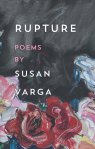
Susan Varga, RuptureFinally, eight months after receiving Susan Varga’s poetry collection, Rupture, I’ve finished it. The delay had nothing to do with the quality of the book, but just with my ineffectiveness at keeping up with review books. I apologise to Susan Varga and all the other authors and publishers whose books I still have to get to!

Now, I have reviewed Susan Varga’s excellent award-winning memoir Heddy and me, and Varga, until recently, saw herself primarily as a prose writer. However, circumstances – indeed, those which drive this collection – led her to try her hand at poetry. These circumstances were her suffering a significant stroke, a “rupture” in her life, in other words.

And speaking of words, they are Varga’s raison d’être. In the early aftermath of her stroke “sounds, words, sentences/disappear like tumbleweed”. Devastated, she writes with bitter irony:

With a stroke of the pen
My writer’s life erased.
(from “Afterstroke”).

But, this is not a bitter book (reminding me a little of Dorothy Porter’s The bee hut). Rather, it’s a warm, accessible book about one woman’s experience of a debilitating illness, and of the life that follows, some of it the direct result of the stroke (such as having to move to a new house where she won’t have to struggle with “uneven ground, steep hills”) but some of it the experience of any older woman, or any person walking a dog, or any human being, really.

The collection is divided into 6 thematic sections, including “I Masterstroke”, “II The New House Poems” and “IV Alone in the City”. One of the themes that runs through them is the role of words and books in her life. She writes, in the opening poem of the second section:

Help me, words –
You always have.
(from “First poem”)

Then there’s the description of her library, “a dreamed-of space”, which any booklover could relate to:

The shelves are messy, random,
incomplete, much like a life.
Weighty classics still waiting,
faded Penguins, scribbled-over texts.
Small print I can’t read anymore
(from “The Library”)

But later, in the last section of the book, there’s the poem “Refuge”, which commemorates the 40th anniversary of a women’s refuge. In it she wonders about the value of words versus actions. She had always thought words mattered most, that they “enshrine action … trapping action beyond its brief life”. However, in the face of continued violence against women, she starts to question her faith in words, wondering whether it’s “Action … which truly transforms”. Eventually, though, she decides that the two work hand-in-hand, with words operating as “subterranean weapons/torpedoes, depth charges” which can erupt into action.

The poems range in tone from melancholic to humorous, and there’s a nice variety in form too, including a few haiku. Varga’s control of these more technical features – tone, style, form – help maintain the reader’s interest. The poems’ content is also diverse covering what is a pretty normal range of responses to serious illness – sadness for what’s happened and nostalgia for what’s been lost, fear for the future and anger too, but also hope and of course gratitude for those, particularly her partner Annie, who have helped.

Desert grevillea, not coastal, but similar

There are also love poems to Annie; gentle, perhaps somewhat sentimental, odes to the dogs who weave themselves into one’s being; and more traditional but still gorgeous nature poems:

Delicate ears of coastal grevilleas dance,
lemon, gold, cream, every kind of red,
tiny antennae curled into the breeze.
(from “Spring in Brunswick Heads, 2013. To Julia Gillard”)

I’m sorry I took so long to read Rupture. It’s a warm, generous and intelligent read in which Varga shares the trauma of debilitating illness and the joys to be found in life, regardless. This is a collection about resilience, but it also shows that, in the end, words did not desert her, and that poetry is as much her domain as prose. Best though, that you see for yourself.

aww2017 badgeSusan Varga
Rupture: Poems 2012-2015
Crawley: UWA Publishing, 2016
95pp.
ISBN: 9781742589091

(Review copy courtesy the author)