Monday musings on Australian literature: Australian Women Writers Challenge 2017

aww2017 badgeAs has become tradition, I’m devoting my last Monday Musings of the year to the Australian Women Writers Challenge*. But, this time, my last Monday Musings also coincides with Christmas Day, so I wish a happy, peaceful holiday season to all my readers here who celebrate this time of year, however or whatever you celebrate.

Now, on with the show … This year has been an active one at the Challenge with a significantly increased number of reviews, in my area at least. We’ve also, with the help of new Challenge volunteer Theresa Smith (of Theresa Smith writes), published a large number of interviews with authors in our Spotlight series and, through connections made by Challenge founder Elizabeth Lhuede, published several posts on classic Australian women writers. In other words, we are extending the content on the blog to make it a broader resource beyond our round-ups and the reviews database which is, of course, the backbone of the challenge. The database now contains reviews for over 4,400 books across all forms and genres of Australian women’s writing, from all periods. This represents an increase of over 20% on last year’s total. Another good achievement.

Once again the Challenge ran some special events during the year, achieved some milestones, and introduced some new initiatives. These include:

  • Spotlights: Throughout the year we posted a variety of Spotlights – Saturday and Sunday Spotlights comprised author interviews (of which I did two, with Sara Dowse and Dorothy Johnston), Small Press Spotlights in which we featured some of Australia’s small publishing houses), and spotlights on classic women authors, like Ada Cambridge.
  • Facebook Page: Our Facebook Page – Reading Australian Women Writers – which was created last year, continues to attract readers wanting to share their latest Aussie women writers’ reads.
  • Bingo: We ran our second Bingo challenge – two in fact, one general, one classic – but I let it slip. Next year I will try a reminder system, although I’m not keen to overfill my blog with non-review content.
  • New releases: We are playing with how to capture and promote upcoming releases. We haven’t settled on the perfect process yet. Watch the blog for more on this.
  • Diversity: Once again author and researcher Jessica White coordinated a series of guest posts by “diverse” writers. There were posts by writers living with mental illness, by lesbian/queer writers, and others. These sorts of posts help make the AWW blog stand out from the crowd.

My personal round-up for the year

Let’s start with the facts, followed by some commentary. By the end of the year I will have posted 30 reviews for the challenge, the same as last year. Here they are, with links to my reviews:
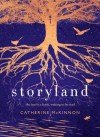
Catherine McKinnon, StorylandFICTION

Rebekah Clarkson, Barking dogsSHORT STORIES

POETRY and VERSE NOVELS

Gabrielle Carey, Moving among strangersNON-FICTION

I’ve noticed an interesting trend over the last three years in my Aussie women’s reading – a noticeable decrease in the proportion of novels:  48% in 2015, 40% in 2016, and just 34% this year. I’m not sure why this is, but I have been aware of reading more non-fiction this year – more by accident than on purpose. The types of novels I read changed from last year too, with very few debut novels this year as against nearly half last year, and two classics as against none last year!

Indigenous writers represented 10% of my total, with two books by Ali Cobby Eckermann and one by Ellen van Neerven. And memoir featured significantly – again – in my non-fiction reading, though they weren’t all your traditional memoir, one being an essay anthology, and two being what I would call “hybrids”. Overall, I’m reasonably satisfied with the diversity of my contribution – though I could always do better.

Anyhow, if you’d like to know more, check out the challenge here. The 2018 sign up form is ready, so do consider joining us. All readers are welcome. I’ll be there again (this being my sign-up post).  The challenge is also on Facebook, Twitter (@auswomenwriters), GoodReads and Google+.

Finally, a big thanks to Theresa, Elizabeth and the rest of the team – including my longtime online bookgroup friend Janine Rizzetti (Resident Judge of Port Phillip), who joined us this year. Once again it has been a positive experience, which is a credit to the willingness and flexibility of those involved. See you in 2018.

* This challenge was instigated by Elizabeth Lhuede in 2012 in response to concerns in Australian literary circles about the lack of recognition for women writers. I am one of the challenge’s volunteers – with responsibility for the Literary and Classics area.
My reading group’s top picks for 2017

Jane Fletcher Geniesse, Passionate nomad, book coverThis year was my reading group’s 30th year, and for the first time ever we decided to vote on our top picks for the year. Will it become a tradition? Who knows? Anyhow, in the spirit of end-of-year lists, I thought you might be interested to see the result, because you will know some of these books.

First, though, here’s what we read in the order we read them (with links to my reviews). I missed one when I was travelling – unfortunately:

And now, the winners …

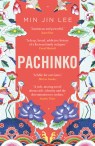
Min Jin Lee, PachinkoAll eleven of our currently active members voted. We had to name our top three picks, which resulted in 32 votes being cast (as one member only voted for two books). The top vote-getters are:

  1. Pachinko, by Min Jin Lee (7 votes)
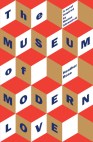
  2. The museum of modern love, by Heather Rose (6 votes)
  3. Black rock white city, by AS Patrić (5 votes)

Highly commended were Nutshell by Ian McEwan (3 votes), and Our souls at night by Kent Haruf (3 votes). In other words, five books received 24 of the 32 votes cast, which is pretty decisive, don’t you think?

Heather Rose, The museum of modern loveBut of course, this is not a scientific survey. Votes were all given equal weight, even where people indicated an order of preference, and not everyone read every book, which means different people voted from different “pools”. If all had read every book Pachinko may have had even more votes (because my memory tells me that every one, or almost everyone, who read it voted for it.)

A few, including yours truly, tried to sneak in some extra “votes” but these were rejected by the returning officer (who happened to be yours truly!) These “extras” were for Stan Grant’s Talking to my country, Kent Haruf’s Our souls at night, Kim Mahood’s Position doubtful and AS Patrić’s Black rock white city.
 
AS Patric, Black rock white cityInterestingly, a few commented that there wasn’t one book in our schedule that they didn’t enjoy. Now, that’s an achievement! Of course, sometimes disagreement can engender the best discussions, but this year’s selection contained such meaty and/or “big” books that there always seemed to be issues to tease out.
Selected comments (accompanying the votes)
  • PACHINKO: Most members who commented on this one liked it for the cultural history it provides about Koreans in Japan, something which few us knew much about. One member added that  “the story was told so very well without pathos but with sympathy for the victims.”
  • THE MUSEUM OF MODERN LOVE: Comments on this included that it was revealing about “Abramovic the artist and the relationship with her audience”, with one member saying  “it was almost perfect. It satisfied on so many levels”.
  • BLACK ROCK WHITE CITY: Two members were uncertain about this to start with, one saying “I wasn’t really expecting to enjoy it but found I was totally absorbed very quickly” and another that “I started with low expectations and his beautiful writing won me over.” In the end, all who voted for it agreed, I’d say, with the member who called it “a fabulous and quirky story related to the migrant experience .”
  • NUTSHELL: The two members who commented on this one wrote “beautiful writing and a very innovative theme, makes me look at foetuses in a different way” and “clever, quirky and a lot of fun.”
  • OUR SOULS AT NIGHT: As for this one, if you’ve read Haruf you won’t be surprised at comments describing it as “a real gem”, as “deceptively simple with big themes and big heart.”

And next year, do I hear you ask?

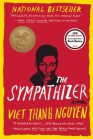
Viet Thanh Nguyen, The sympathizerWe choose our schedule twice a year, so here are our books for the first half of 2018:
  • Rabih Alameddine’s An unnecessary woman
  • Viet Thanh Nguyen’s The sympathizer (which most of you know I’ve already read)
  • Claire Coleman’s Terra nullius 
  • Helen Garner night: read any from Garner’s oeuvre (an experiment. We’ve done poetry nights where we bring a poem or two to share, but never something like this.)
  • Richard Flanagan’s First person
  • Randolph Stow’s The merry-go-round in the sea (our classic, because we always like to do at least one)

If you are in a reading group – face-to-face or online – I’d love to hear your highlights and/or what you plan to read in 2018.

Reading Bingo 2017

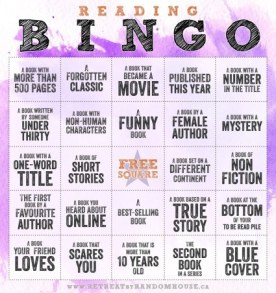
Reading Bingo 2017Are you getting sick of memes and lists? If so, just ignore this post and come back when the silly season is over because it seems that we book bloggers can’t help ourselves at this time of year. Today’s meme is a bingo asking us to name books we’ve read this year that meet categories on a bingo card – and it’s a big one with TWENTY-FIVE categories. I got the card from Lisa (ANZLitLovers).

Like most bloggers I have not read to the bingo card, but have tried, after the event, to squish my reading into the card. There are, therefore, a couple of fudges, which I hope you’ll accept. But if you don’t, what are you going to do? Unsubscribe? I hope not!

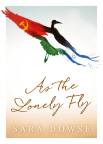
Sara Dowse, As the lonely blyA book with more than 500 pages: As it turns out I didn’t read one that was more than 500 pages though I read at least three that were between 450 and 500 pages, so I’m choosing the Australian one of those three, Sara Dowse’s As the lonely fly (my review), about Jewish migration, big dreams and the Jewish state in Israel.

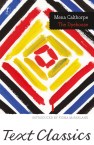
Mena Calthorpe, The dyehouseA forgotten classic: Mena Calthorpe’s The dyehouse (my review), which was (re)published by Text. They thought it was so special they made in their 100th book in their Classics series. If you haven’t read it, consider doing so, particularly if you like social realist novels about the lives of workers.

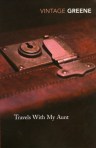
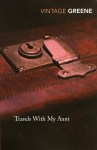
Graham Greene, Travels with my auntA book that became a movie: I have a few of those in my reading this year – and they are mostly classics. The one I’m choosing is Graham Greene’s Travels with my aunt (my review) which, unlike the ones I didn’t choose, I haven’t seen!! I did however read it!

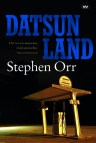
Stephen Orr, DatsunlandA book published this year: I’ve read several new releases this year, mostly review copies. I’m choosing Stephen Orr’s Datsunland (my review) because I do like a collection of short stories, and I’ve read a few good’uns this year. I’ll be reviewing my third Orr book, his newest release, within the next few months.

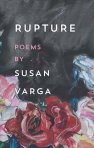
Susan Varga, RuptureA book with a number in the title: This proved strangely difficult this year, but luckily one book I read had numbers in its subtitle, Susan Varga’s moving poetry collection, Rupture: Poems 2012-2015 (my review). I do hope this isn’t a fudge – the numbers are on the title page even if not on the cover!

Louise Mack, The world is roundA book written by an author under thirty: Normally this would be hard, but history tells me that Louise Mack was 26 when her book The world is round (my review) was published in 1896. This book was nearly my “forgotten classic” until I needed something here!

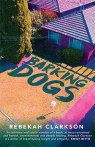
Rebekah Clarkson, Barking dogsA book with non-human characters: I was initially challenged by this one, until I remembered Rebekah Clarkson’s interconnected short story collection Barking dogs (my review) in which Jasper the barking dog recurs a few times, eventually providing the catalyst for a devastating action.

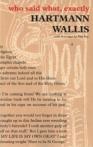
Hartmann Wallis, Who said what exactlyA funny book: I don’t read a lot of funny-haha books, but many of the books I read make me laugh. Take Hartmann Wallis’ Who said what exactly (my review), for example. If my review doesn’t enable you to see the humour, try reading Robin Wallace-Crabbe’s comment.

Carmel Bird, Family skeletonA book by a female author: Now this is a hard one – not! I have an embarrassment of riches here, so I’m going to go with one of the doyennes of the Australian literary scene, Carmel Bird and her clever Family skeleton (my review).

Emily Maguire, An isolated incidentA book with a mystery: Well, let’s choose an actual mystery book here, albeit a literary one in which the mystery is really not the main point. I’m talking about Emily Maguire’s An isolated incident (my review).

Ian McEwan, NutshellA book with a one-word title: I have a few options here, but I’ll go with the one I used in a recent Six Degrees post, Ian McEwan’s Nutshell (my review). Such an intriguing book with an unusual choice of narrator.

Stephanie Buckle, Habits of silenceA book of short stories: As a short story enthusiast I have a few options here too, so am choosing the last one I reviewed, Stephanie Buckle’s Habits of silence (my review). It’s a (lovely) debut collection, so I’d like to give it this extra shout-out.

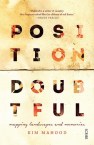
Kim Mahood, Position doubtfulA free square: So many to choose from, but I’ll nominate the book that I waited months to read until my reading group did it, Kim Mahood’s thoughtful memoir, Position doubtful (my review), about being Australian and relating to this land that belonged to someone else first.

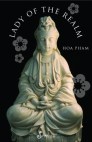
Hoa Pham, Lady of the realmA book set on a different continent: I read several books set in different parts of the world, but, quite coincidentally, two of them were set partly or completely in Vietnam. I’m choosing the one set completely there, Hoa Pham’s Lady of the realm (my review).

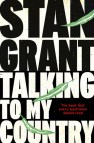
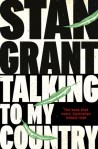
Stan Grant, Talking to my countryA book of non-fiction: Again, so many to choose from, but Stan Grant’s Talking to my country (my review) works as a sort-of companion to Position doubtful, in that it’s by a descendant of one of those original owners. He firmly but generously talks about what it has meant for his people to have been so summarily displaced by us!

Northerner Abbey illus br Brock

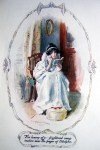
From Ch. 9, illus. by CE Brock)

The first book by a favourite author: Most of you know who my favourite author is (though I have a few really) – Jane Austen. I’m fudging here, because her first book to be published was Sense and sensibility, but the first sold to a publisher (who then didn’t publish it) was Northanger Abbey (my posts). I just so happen to have re-read it this year (200 years after its eventual posthumous publication).

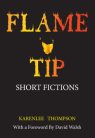
Karenlee Thompson, Flame tipA book you heard about online: Like most readers, I hear about many books online, but one I know I FIRST heard about online is Karenlee Thompson’s book of short fiction, Flame tip (my review), which was inspired by Tasmania’s bushfire of 1967.

Min Jin Lee, PachinkoA best-selling book: Hmmm, I don’t tend to read best-sellers, but I think Min Jin Lee’s Pachinko (my review) is such in the USA, where it was named one of the New York Times Book Review’s 10 Best Books of 2017.

Heather Rose, The museum of modern loveA book based on a true story: My choice here is one of my top reads of the year, Heather Rose’s The Museum of Modern Love (my review). Such a stimulating excursion into ideas about art, love and home.

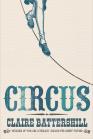
Claire Battershill, CircusA book at the bottom of my TBR pile: Now which TBR pile do they mean? And what does bottom mean? I have no idea but one of my TBR reads this year was a wonderful collection of short stories given to me by Daughter Gums in 2014, Circus (my review), by Canadian writer Claire Battershill.

Viet Thanh Nguyen, The sympathizerA book your friend loves: This is easy. My dear American friend gave me Viet Thanh Nguyen’s The sympathizer (my review) because she loved it. I did too.

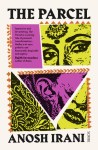
Anos Irani, The scribeA book that scares you: When I think of this category, I don’t think mystery or horror genre, but books with ideas that scare me. I’ve several to choose from, but I’ll go with Anosh Irani’s The parcel (my review) for its devastating evocation of how cruelly people can treat others, and how intolerant people can be of difference.

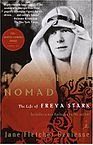
Jane Fletcher Geniesse, Passionate nomad, book coverA book that is more than ten years old: Again I have a few of these, but some have already appeared in this list, so I’ll go with Jane Fletcher Gienesse’s Passionate nomad: The life of Freya Stark (my review) which was first published in 1999.

The second book in a series: I almost never read series, and certainly haven’t read anything in a series this year so FAIL. I can’t complete the Bingo card!

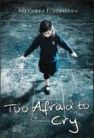
Ali Cobby Eckermann, Too afraid to cryA book with a blue cover: Woo-hoo, this category enables me to include one of the two books I read this year by Ali Cobby Eckermann, her memoir Too afraid to cry (my review).

So there you have it … a long post. Did you make it to the end? I can’t expect you to complete the bingo card in the comments, but how about choosing one category to highlight a book you’ve read this year that you think deserves a shout-out?

Monday musings on Australian literature: Pulp fiction, 1940s to 1970s

This post was inspired by the Pulp Fiction exhibition* at the Canberra Museum and Art Gallery that ran from August to October this year. The exhibition used materials from two collectors, Graeme Flanagan (d. 2015) and James Doig, who also wrote the accompanying booklet. Doig says that Flanagan “amassed one of the most significant collections of Australian pulp fiction paperbacks”. He also collected original cover art, and in 1994 wrote Australian vintage paperback guide, which was apparently the first detailed book about Australian pulp fiction and is still an authority on the subject.

Most of you probably know what pulp fiction is, but if you don’t, it encompasses cheaply produced “mass market paperbacks and digests” in popular genres such as Westerns, crime, romance, adventure, science fiction and horror. Printed on “pulp” paper, they were not made to last and were poorly regarded by the literati of the time. But, of course, they were part of Australia’s reading culture and are now being recognised for the cultural objects they are. Because of their cheap production and disposability, however, they can be tricky to find – and, says, Doig, even Australia’s legal deposit libraries don’t hold complete collections.

Doig starts by referring to an article in the Tribune titled “I spent a week in a literary sewer” by journalist Rex Chiplin who wrote about the “muck” – “the pornography, sex, sadism, brutality and illiteracy” – being sold weekly on Australian newsstands. He wanted to find out where it all came from – but I wanted to find out who Rex Chiplin was. Well, I found out, via a blog called Ethical Martini, that he was a communist, which is not surprising because, as most Australians would know, the Tribune was the Communist Party of Australia’s newspaper.

Apparently Chiplin was called before Australia’s version of the USA’s McCarthy hearings, the Royal Commission on Espionage (1954-55), but the tidbit I want to share is Ethical Martini’s quoting another communist journalist, David McKnight, on Chiplin. McKnight wrote:

One unusual piece of exposure journalism was the pamphlet, “Facts Behind the Liquor Commission”, printed by the Communist Party of Australia at its underground printery which set out to expose capitalism in the shape of the ‘brewery barons’. Written by a journalist (probably Rex Chiplin) who had a racy turn of phrase (‘Bottled beer was as rare as a bankrupt Vice Squad sergeant’) the pamphlet incidentally exposed corruption in the labour movement…

It’s the “racy turn of phrase” that caught my attention, because it is certainly in evidence in the “sewer article” where he describes, for example, the directors of a magazine publishing company, American-Australasian, as “all North Shore pukka sahibs.” A little further on he describes a magazine called Action Detective Stories as “good wholesome literature for homicidal maniacs and similar unfortunates”. He criticises these “sewer” magazines’ forays into political commentary about the Korean War and Soviet behaviour in southeast Asia – but, I’m getting offtrack, so let me just share what he writes about Consolidated Press:

Consolidated Press, Frank Packer’s organisation … publishes a host of crime, sex and violence comics and the Phantom and Star paper-covered novels. Phantoms and Stars are direct reprints, lurid covers and all, of American gutter novelettes which are churned out by the score in “pulp factories.”

By reprinting they apparently circumvented import restrictions. Doig says that “Phantom Books … reprinted more than 300 of the best American crime novels between 1953 and 1961 and is a highly desirable series.”

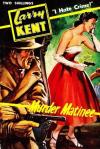
Larry Kent, Murder MatineeAnother company named and shamed by Chiplin was Cleveland, which our mate Doig says is the only pulp publisher still active (in Australia) today – focusing these days on westerns. Cleveland was also known for the Larry Kent I hate crime series which “was named after a 1950s Sydney radio show [preserved at the National Film and Sound Archive] about a hard-boiled New York detective”. The radio series commenced in 1950, and its popularity inspired, says The Thrilling Detective website, Cleveland “to try their hand at some Larry Kent novels”. They were written by American expat Don Haring through “an arrangement” with the radio producer. The first series of these monthly novelettes commenced in April 1954.

The Thrilling Detective explains that:

over 400 Larry Kent novels and novelettes were pumped out under the Larry Kent byline in the next thirty years, and supposedly, as late as the 1990s, the series was still being produced in Scandinavia. The covers usually featured paintings of leggy, full-figured babes and sported such snappy (and often exclamation mark-endowed) titles as Kill Me a Little!, This Way, Sucker!, Cute Heat!, Dig Me a Dame! and Stand Up and Die! Add on the 150 or so radio shows, and our Larry turns out to be one of the hardest working eyes around…
If you, like me, ever give pulp fiction a thought, it is probably for these covers, “lurid” though Chiplin thought they were. As The Thrilling Detective says:
Although the books were decidedly hokey pulp affairs, and by no means great literature, the covers themselves have a gorgeously cheesy flavour, and are now quite collectible. In fact, most of the web sites featuring Kent deal as much with the covers than the contents of the books.

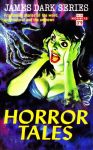
Horror tales, illustrated by Frank Benier

Illus. Frank Benier

Doig says that selling these books, which happened at stalls and newsagents on street corners and railway stations, was a competitive business. So “the cover was all important, the more colourful and garish the better.” He names some of the illustrators who did these covers – Stan Pitt and Walter Stackpoole (for Cleveland), and Col Cameron and cartoonist Frank Benier (for Horwitz). It is these covers as much as anything which now make these books highly sought after – and highly exhibitable!

Have you ever read any pulp fiction – or, even, are you a collector? I’d love to know.

* Images from the exhibition can be seen on Pinterest.

Amy Witting, Afterplay (#Review)

Amy Witting’s first novel wasn’t published until 1977, when she was 59 years old, which is why she appeared in my late bloomers post a few years ago. She went on to publish five more novels after that – two of which I read and enjoyed long before blogging – and she was an accomplished short story writer and poet.

An interesting piece of Witting trivia is that in the 1960s she taught at the same high school in Sydney as Thea Astley, who was a few years younger. Astley encouraged her to submit a short story to the New Yorker, which duly published it. Wikipedia tells us that Australian poet Kenneth Slessor once said “tell that women I’ll publish any word she writes”. And critic Peter Craven argues that her form of realism wasn’t really accepted by the reading public until Helen Garner appeared on the scene.

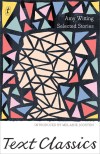
Amy Witting, Selected stories

“Afterplay” is not in this collection!

All this is to say that although Witting has never had the level of recognition enjoyed by writers like Astley, Jolley and Garner, she was well-regarded in literary circles, and is being brought to our notice again through Text Classics. This year they added three of her books – The visit (her first), A change in the lighting (which my reading group did back in the 1990s), and Selected stories – to their list. Discussing the publication of her stories, they said they could not include them all as they wanted to keep the book to a manageable size. However, as a little tempter, they decided to publish one of her stories, “Afterplay”, online, describing it as “a bite-sized taste of Witting’s short-form genius”. This has given me a wonderful opportunity to include her on my blog – and with a story you can read too. Win-win, as they say!

“Afterplay” provides an excellent introduction to Witting’s writing for a number of reasons. It’s a good example of the realism which Peter Craven sees as her métier; it exemplifies her spare, direct style; and its subject matter reflects her main writing interest, relationship-focused stories in domestic settings. It is also, at less than 1,500 words, a short short-story, and, according to Text, demonstrates “Witting’s masterly economy”.

“Afterplay” focuses on “two young women”, Judith and Geraldine, and their response to Geraldine’s break-up with Ken ten days previously. The problem is that her way of breaking up was to walk out leaving a note on the kitchen table, and he, not expecting this to happen, wants to talk to her. Judith thinks Geraldine should, but Geraldine is resisting all his attempts to contact her, telling Judith that she “can’t stand confrontation. Never could.”

The thing about this story, which is told third person, is the way Witting subtly shifts perspective between the two women, and only gives us Ken’s perspective through Judith reporting a phone conversation as it takes place. There is also a little back story about Geraldine’s previous relationship which seems to have ended with, or just before, the man’s death (by suicide is the implication). The effect of all this is to keep the reader a little uncertain, a little off-balance. We are not given the full picture from any of the perspectives, so our antennae keep pointing in different directions as we try to work out where our sympathies should lie. In the end, I think, my sympathy went mostly to the poor friend caught in the middle!

There’s some cheeky humour here – including little innuendoes about sex as a sport. Ken was “proficient at all sports, never missed a goal”, and of course the title “afterplay” brings to mind “foreplay” (which was not, apparently, Ken’s forte, albeit he’s “a sweet-tempered man”.) However, there is one awkward part where Geraldine tells Judith some things about the break-up that she surely already knows. You could argue, perhaps, that at times like these people do tell and retell their experiences, but it did feel a little clumsy.

Regardless, “Afterplay” is a beautifully crafted little (in size, not in value) story. But, don’t take my word for it. At only 1500 words and available on-line, how about you read it too – and let me know what you think.

aww2017 badgeAmy Witting
“Afterplay”
First published (I think): Quadrant 39 (5), May 1995
Available online at Text Publishing.

Monday musings on Australian literature: ABC RN presenters name their 2017 summer picks

Well, folks, it’s getting to the time of year when people start producing lists, and so, as last year, I’ll be joining the fray, starting this week with books recommended by ABC Radio National’s presenters – the bookworms amongst them, anyhow – for us to read over the coming summer.

However, as last year, not all chose Aussie books, but this post is in my Monday Musings on Australian Literature series, so what to do? Last year I decided to share them all, starting with the Aussie reads, and I’ve decided to do the same this year. After all, the things Aussies read form part of our literary culture don’t they?

Notwithstanding the above, I was disappointed last year when only two (TWO!) of the 18 presenters chose books by Australian authors. (The two books were Stan Grant’s Talking to my country and Helen Garner’s Everywhere I look, both of which I’ve read)I’m consequently thrilled that the number is far greater this year, with SIX (that is, nearly half) of the 14 presenters choosing Australian authors. Here they are:

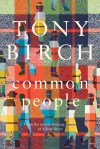
  • Tony Birch, Common peopleMichael Cathcart (Books and Arts): Tony Birch’s Common people. Birch recently won the Patrick White Award, and his novels Blood and Ghost River were both shortlisted for significant Australian literary awards. Common people, however, is his (latest) collection of short stories. Cathcart says that the stories “take us into the lives of very ordinary people — often people who are doing it tough — and open up the pain, the wit and the twinkle of their worlds. Tony’s wisdom and goodwill are beyond politics. His prose breathes with humanity”. How I love short stories, and this sounds like another great collection.
  • Andrew Ford (Music Show): Ashley Hay’s A hundred small lessons. This is Hay’s third novel, her second The railwayman’s wife having won or been nominated for several literary awards.) Ford says that Hay’s writing “is so simple and precise, at first you fail to notice how powerful it is” and says that “the main character in the book is Brisbane — actually, two Brisbanes, 50 years apart, culturally different in so many ways, yet both sticky, subtropical, and prone to flooding”.
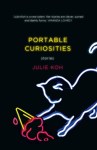
  • Ann Jones (Off Track): Julie Koh’s Portable curiosities. Koh is a critically well-regarded short story writer, and this, her first full collection, has received many accolades including her being named a 2017 Sydney Morning Herald Best Young Australian Novelist (though the “novelist” nomenclature is a bit weird.) Jones makes the collection sound great, when she says “The stories are dark and make fun of hipsters. In fact, in gorgeous and believable flow, Koh unleashes a portmanteau of fables, which take on body image, racism, father-son relationships and cat cafes.”
  • Sarah Kanowski (Books and Arts): Tex Perkins’ (with Stuart Coupe) Tex. Unlike many of the presenters it seems – see my summation below – Kanowski took the “summer read” recommendation seriously in choosing this memoir of Australian rock musician Tex Perkins. She said “In Tex, he is self-deprecating but not apologetic: yes he’s drunk too much, been an idiot, sabotaged his chances of commercial success, but he has also made great music and, above all, had fun. There are nobler aims in life and wiser books, but if you’re sitting on a beach towel with a beer this summer Tex will serve you brilliantly.”
  • Amanda Smith (Life Matters)Sarah Krasnostein’s The trauma cleaner. This is a biography of an amazing – but ordinary – person, Sandra Pankhurst, who was born a boy, “was adopted into an abusive family”, and then married, as a man, before deciding to live as a woman. It just so happens she also works as a trauma cleaner, that is, one who “cleans up crime scenes after the police have finished” and who  “also sorts things out after ‘unattended deaths’.” Smith says that not only is the book a “tribute to a life-force” is “a story told more beautifully than you can possibly imagine.”
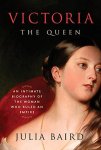
  • Julia Barid, Victoria the queenRobyn Williams (Science Show and Ockham’s Razor): Julia Baird’s Victoria the Queen. Williams noted that in 2017 he’d mostly read books by women, with this biography of Queen Victoria being his best book of the year. He bought it because he loves Julia Baird’s journalism, is “impressed by her range, deep learning and clarity”. He says that this biography “surprises, informs with real scholarship and tells a huge story with a light touch. When I finished I felt as if my brain had grown an extra layer.” I wouldn’t mind an extra layer in my brain, I must say!

Four chose British authors:

  • Joe Gelonesi (Philosopher’s Zone): Stephen Mumford’s Glimpse of light: New meditations on first philosophy (non-fiction)
  • Patricia Karvelas (RN Drive, and the The Party Room podcast): Natalie Haynes’ The children of Jocasta (fiction, Greek myths retold through the women characters)
  • Keri Phillips (Rear Vision): Tim Harford’s Fifty things that made the modern economy (non-fiction)
  • Andrew West (Religion and Ethics Report): David Goodhart’s The road to somewhere: The populist revolt and the future of politics (non-fiction)

And four chose American authors:

  • Kate Evans (Books and Arts): Jennifer Egan’s Manhattan Beach (novel)
  • Antony Funnell (Future Tense): Sarah Sentilles’ Draw your weapons (non-fiction)
  • Natasha Mitchell (Science Friction): Oliver Sacks’ The river of consciousness (non-fiction, collection of essays)
  • Scott Stephens (The Minefield: Noah Feldman’s The three lives of James Madison (non-fiction).

Julie Koh, Portable curiositiesSo, a more even spread than last year’s, but still oh-so-very Western-based. Last year, only ONE presenter chose a non-Western book, with all the rest choosing, as this year, Australian, British and American. This year there’s not even one non-Western book. However, both years, an indigenous author was chosen – just one, but that’s something. And, the choice of Julie Koh provides some nod to diversity too, as she’s the Australian-born daughter of Chinese-Malaysian parents.

The biggest difference this year, besides the significant increase in Aussie picks, is in the fiction-non-fiction ratio. Last year NINE (that is 50%) of the choices were for fiction (all novels), but this year only FIVE (35%) are, and of these, two are novels, two are short story collections, and one a collection of myths. This sort of selection is probably not what most readers might expect when looking for summer reads, but our ABC RN presenters are clearly a serious lot!

What ONE book would you recommend from your 2017 reads for, let’s be inclusive and say holiday, not summer, reading?

A year in first lines, 2017

How is that I, a non-meme-doing blogger, suddenly find myself doing memes, like the Six Degrees one? I can’t explain it exactly, but I think it happens when the meme encourages me to think about my reading or blogging. So, when Lisa (ANZLitLovers) reminded me of this end-of-year meme, that she was reminded of by Jane at Beyond Eden Rock, I decided to give it a go. To play, you “Take the first line of each month’s post over the past year and see what it tells you about your blogging year.” (I think this means the FIRST line of the FIRST post in each month.) Apparently, the idea started with The Indextrious Reader.

Now, I have cheated a little on this meme because I found that of the twelve first posts of the month, six were the Six Degrees of Separation meme, and two were my Monday Musings on Australian Literature series. This happened because I post, on average, thirteen posts a month, so there’s good probability that Six Degrees, which occurs on the first Saturday of the month, or Monday Musings, which occur every Monday, will be the first post of the month. Sharing these posts wouldn’t give a good overview of my blog, so I’ve chosen the first post of the month that is not a Six Degrees or Monday Musings one.

So, my first lines …

January: Reading highlights for 2016: 

And so we finally say goodbye to a year many of us would like to forget, but before we do, I would like to share my 2016 reading highlights.

February: Delicious descriptions: Freya Stark on a studied absence of curiosity: 

Usually I post a Delicious Description after my main post on the book in question, but I’m reversing my practice this time, for no other reason than time.

Graham Greene, Travels with my auntMarch: Graham Greene, Travels with my aunt: 

Every year, my reading group aims to do at least one classic – usually something from the nineteenth century – but this year someone suggested Graham Greene.

April: Janette Turner Hospital’s Orpheus lost: 

Last year I did a mini-review of Elizabeth Jolley’s An innocent gentleman using some scrappy notes from when I read the book long before blogging.

May: William Temple Hornaday, The bird tragedy of Laysan Island: 

William Temple Hornaday (1854-1937), whose article “The bird tragedy of Laysan Island” was a recent Library of America (LOA) Story of the Week offering, is a tricky man to write about.

June 2017: Linda Neill, All is given: 

Linda Neil’s second book, All is given, is subtitled “a memoir in songs”.

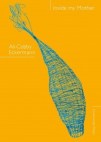
Ali Cobby Eckermann, Inside my motherJuly: Ali Cobby Eckermann, Inside my mother: 

Ali Cobby Eckermann, a Yankunytjatjara/Kokatha woman, has featured a few times on this blog, including in my review of her verse novel, Ruby Moonlight, and my Monday Musings post on her winning the valuable Windham-Campbell Prize this year.

August: Hartman Wallis, Who said what, exactly: 

Never mind Hartmann Wallis’ question Who said what, exactly, I want to know who Hartmann Wallis is, exactly!

September: Phil Day, A chink in a daisy-chain: 

You’ve “met” Phil Day, author of A chink in a daisy-chain, here before.

October: Catherine McKinnon, Storyland: 

It is still somewhat controversial for non-indigenous Australian authors to include indigenous characters and concerns in their fiction, as Catherine McKinnon does in Storyland.

Stan Grant, Talking to my countryNovember: Stan Grant, Talking to my country: 

History is, in a way, the main subject of my reading group’s October book, Stan Grant’s Talking to my country.

December: Unbreakable: Conversation with Jelena Dokic: 

If you are a fan of professional tennis you will probably have heard of Jelena Dokic who hit the world stage during the 1999 Wimbledon Championships.

The question is, as Lisa asked herself, do these first lines give you a good sense of my blog and of my reading interests. Well, I’d say yes and no …

Yes, because:

  • my reading each year includes some classics, such as Graham Greene’s Travels with my aunt.
  • my focus is Australian literature and this is clearly evident in the list above.
  • I am aiming to increase my coverage of indigenous Australian literature, and this is evidenced here by Ali Cobby Eckermann in July and Stan Grant in November.
  • each year I read a selection of offerings from the Library of America, and there’s one here, William Temple Hornaday’s “The bird tragedy of Laysan Island”.
  • I enjoy reading left-of-field books, such as those published by Finlay Lloyd, exemplified here by Hartmann Wallis’ Who said what, exactly and Phil Day’s A chink in a daisy-chain.
  • I report on my reading group’s reads, including, here, Graham Greene’s Travels with my aunt and Stan Grant’s Talking to my country.
  • I try to attend literary events and author talks, such as December’s conversation with Jelena Dokic (which in itself is not wonderfully indicative of my literary events, but it’s the one that popped up!)
  • I mix my reading forms and genres, across non-fiction and fiction, so in this list are memoirs, a biography, novels, an essay, and a classic.
  • I try to mix up my opening sentences, and I think there’s some evidence of that here (but you can tell me how successful you think I’ve been!)
  • I run some series on my blog, the main one being Monday Musings of Australian Literature, but another being Delicious Descriptions (which you can see in February).

And no, because:

  • I generally read more women authors than men, but the mix here is pretty even.
  • I do read some translated and diverse writing, but there are none here, besides the indigenous writers.
  • One of the forms I love to read are short stories, and they are not represented at all in this set of posts.

Overall though, my first lines have captured my blog reasonably well … I’d say. 

Betty McLellan, Ann Hannah, my (un)remarkable grandmother: A psychological biography (#BookReview)

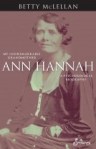
BettyMcLellanAnnHannahBetty McLellan’s Ann Hannah, my (un)remarkable grandmother: A psychological biography disconcerted me at first. I’d never heard of a psychological biography (which, I presume, is the same as psychobiography) so I was intrigued by McLellan’s discussion in the Introduction of her decision to use this approach. I did feel, for a chapter or two that she was drawing a long bow, but I persevered and it was worth the effort.

McLellan commences her Introduction by telling us a little about who Ann Hannah Stickley was and why she decided to write the book. As you’ll have gathered from the title, Ann Hannah was her grandmother. Born in 1881, and emigrating to Australia with four children when she was 40, Ann Hannah was, writes McLellan, “an unremarkable woman who lived an unremarkable life and died an unremarkable death” (albeit at the, I’d say, remarkable age of 97!) However, McLellan came to realise, long after Ann Hannah had died, that this grandmother, who was already living with her family when she was born and who was still there when she left home at nineteen, was worth investigating. She sensed that her grandmother had had a “remarkable resilience” and wanted to know how she’d done it. But how was she to explore this, given her grandmother had been dead for nearly 40 years?

The problem was that she knew relatively little about this quiet, practical, hardworking woman, and that there was no one left who might have known more. So what, she questioned, “would be the best literary device to use to record her story, explore my own reactions to it and analyse it in terms of its relevance for other women?” A straight biography would not work, for the reasons already given. Consequently, she turned to this new-to-me genre of psychological biography which “seeks to discover a subject through analysis of their political pronouncements, decisions, writing, behaviour or art”. Ann Hannah, being a private, “ordinary”, person had none of those, but she did have a number of sayings – didn’t all our grandmothers? It is through these that McLellan decided to analyse Ann Hannah, “with a view to uncovering the deeper meaning behind her words” and in so doing to not only understand her grandmother more, but, among other things, “to present her as a representative of many women born in her time and circumstance”. It’s a big ask …

McLellan, a psychotherapist and feminist activist who has written other books, does this by taking each saying, explaining its meaning and how her grandmother had used it, and then exploring its wider implications or connotations. What exactly she explores is largely driven by the saying. The saying in Chapter 2, for example, is “I’m a Londoner”, and so McLellan explores – through historical and sociopolitical lenses – what life was like in the parts of London where Ann Hannah had lived until her migration to Australia in 1921.  She was uneducated, and part of “the working poor”. But, this was also the time of the women’s suffrage movement, which McLellan describes in some detail. Ann Hannah, she says, had never indicated she was aware of the “political machinations” going on around her, so in one sense we could question McLellan’s inclusion of the history here. However, McLellan concludes the chapter by saying her grandmother had lived her life as a “strong, determined woman”. It could be argued that this was in part made possible by the sociopolitical environments she found herself in.

By contrast, Chapter 4’s saying is “‘e was a wickid man” [ “wickid” being spelt that way to capture Ann Hannah’s pronunciation]. It deals with Ann Hannah’s second husband’s violence and sexual abuse of his step-daughter, as well as of Ann Hannah, herself, and one of their daughters. Here, not surprisingly, McLellan looks more at psychiatry, psychology and the law, than history and politics. She describes the lack of recourse women had during the time Ann Hannah lived, and concludes that her grandmother’s only choice, really, was to “accept her lot” and get on with it, which is exactly what she did. (Not surprisingly, Ann Hannah said it was “the ‘appiest day of my life when ‘e died”!)

These are just two of the six chapters exploring Ann Hannah’s sayings. Two others deal with the experience of migration and of the loss of a child, both of which particularly engaged my interest.

Overall, the approach makes for a somewhat disjointed book, skipping as it does around different fields of human knowledge and experience. Nonetheless, it all works reasonably well because there are unifying threads to which McLellan returns, one being Ann Hannah herself, and the other McLellan’s feminist perspective. I say “reasonably” well because there were times when, due I’m sure to lack of information, Ann Hannah seemed to slip though my fingers. I wanted, I suppose, a more traditional biography! Given that McLellan explained why she couldn’t produce that, it’s unreasonable of me to criticise the book for what it’s not, so I won’t. I’ll just say that it’s what I would have liked!

The real question is, then, does McLellan’s decision to write a psychological biography of her grandmother work? Does it provide, in other words, some useful insights into women’s lived experience, as McLellan intended? I think it does – and does so in a way that not only illuminates the past, but also contributes to our understanding of the present and why things are the way they are today. A different but interesting read.

aww2017 badgeBetty McLellan
Ann Hannah, my (un)remarkable grandmother: A psychological biography
Mission Beach: Spinifex Press, 2017
150pp.
ISBN: 9781925581287

(Review copy courtesy Spinifex Press)

Helen Garner, Why she broke: The woman, her children and the lake (#Review)

Three years ago I reviewed Helen Garner’s This house of grief about Robert Farquharson who drove his car into a dam in Victoria, resulting in the deaths of his three sons. It’s a grim grim story, so you might wonder why I am now writing about her essay “Why she broke: The woman, her children and the lake” about Akon Guode who, in 2015, drove her car into a lake in Victoria resulting in the deaths of three of the four children inside.

There are two reasons, the main one being that this essay was, last week, awarded the Walkley Award (about which I’ve written before) for Feature Writing Long (over 4000 words). I hadn’t read the article when it was published in June this year, and probably wouldn’t have read it now, except for this award. What, I wondered, when I heard the news, made this essay, on a topic so seemingly similar to her recent book, worthy of the Walkley Award? The other reason is that although there are similarities – both parents drove their cars into water resulting in the deaths of children – there is a big difference. One parent was a father, and the other a mother. I wanted to know what, if anything, Garner would make of that in her analysis.

I’ll start two-thirds through the essay, where Garner quotes Guode’s defence counsel using a statement made to the Victorian Law Commission in 2004:

While men kill to control or punish their children or partner, women kill children because they cannot cope with the extreme difficulties that they encounter in trying to care for their children.

Given the current political climate – Harvey Weinstein, Don Bourke, et al – this statement must surely be read as part of that bigger picture concerning women’s powerlessness.

In the first part of the essay, Garner describes Guode’s life. She was a Sudanese refugee to Australia who had been married as a teenager but had then lost her husband in the civil war there. In that culture women cannot remarry, but remain a possession of their husband’s family. Guode’s third child was fathered by a brother-in-law. Eventually, after more trauma in Africa, she was sponsored to come to Australia by another of her late husband’s brothers, Manyang. Her life here became difficult in a different way, with her bearing four children to this already married man. At the time of the incident she had seven children.

Garner details the difficulties of Guode’s life, including the traumatic birth of her seventh child, and her struggle to care for her family while also sending money back to family in Africa. To her, this was an obligation, but at the committal hearing, Garner writes, a local community leader said that “It is not an obligation. I would call it a moral duty”! Not surprisingly Garner’s reaction to this is that “under the circumstances this seems like a very fine distinction”! This sort of word play – “obligation” versus “moral duty” – can make such a mockery of the law (or of its practitioners), can’t it?

There was of course discussion during the hearing of Guode’s mental state, with the judge suggesting that “something dramatic” must have triggered her action. The psychiatrist, however, argued that “it can just be the ebb and flow of human suffering, and the person reaching the threshold at which they can … no longer go on.”

But Garner also proposes a possible “trigger event” that went back 16 months to the last traumatic birth. Postnatal haemorrhaging was so bad she was close to needing a hysterectomy. Guode initially refused treatment. Garner writes that she was

prepared to risk bleeding to death on a hospital gurney rather than consent to the surgical removal of the sole symbol of her worth, the site of her only dignity and power: her womb?

Surely, a woman whose life had lost all meaning apart from her motherhood would kill her children only in a fit of madness.

Garner also discusses the technicalities of infanticide versus murder in Victorian law, and Guode’s counsel’s argument that all three deaths should be viewed through “the prism of infanticide”, which would result in a lesser sentence, even though only one of the children met the age criterion. Her eventual sentence makes clear that he didn’t win his argument.

What makes this essay so good, besides the analysis, is Garner’s writing. Here she is on a jury trial versus a plea hearing (which this was):

If a full-bore jury trial is a symphony, a plea hearing is a string quartet. Its purpose seems to be to clear a space in which the quality of mercy might at least be contemplated. There is something moving in its quiet thoughtfulness, the intensity of its focus, the murmuring voices of judge and counsel, the absence of melodrama or posturing. It’s the law in action, working to fit the dry, clean planes of reason to the jagged edges of human wildness and suffering.

That last sentence! Breathtaking. It reminds me once again what an excellent essayist Garner is, and it’s not just for her style. She has the ability to take us on a journey, leading us logically, and empathically, to consider values and ethics, without ever being didactic.

In this essay, it’s her concluding comments and final question regarding mercy which gets to the nub of it. It concerns the idea of “mother”, which she calls “this great thundering archetype with the power to stop the intellect in its tracks”. Read Garner’s essay, and/or this report in The Age, and see what you think. I don’t envy Justice Lasry’s job, but I know, based on what I’ve read, where my intellect goes.

aww2017 badgeHelen Garner
“Why she broke: The woman, her children and the lake”
The Monthly, June 2017
Available online

Monday musings on Australian literature: Interviews with Aussie writers

Those of you who read my December Six Degrees meme will know that the starting book was Stephen King’s It. Not surprisingly, a couple of bloggers – Kate (booksaremyfavouriteandbest) and Lisa (anzlitlovers) – made their first link Stephen King’s On writing. Lisa then went on to link to an Australian book on writing, Kate Grenville’s The writing book.

Now, I’ve written about Aussie writers on writing before, so I thought that in this post I’d share some books containing interviews with Aussie writers, which I’ll list in order of publication.

Jennifer Ellison’s Rooms of their own (1986)

Ellison’s book, of course, takes its title from Virginia Woolf’s wonderful, pleading book on behalf of women creators. It comprises interviews Ellison conducted with significant writers at the time: Blanche d’Alpuget, Jessica Anderson, Thea Astley, Jean Bedford, Sara Dowse, Beverley Farmer, Helen Garner, Kate Grenville, Elizabeth Jolley, Gabrielle Lord, Olga Masters, and Georgia Savage.

Naturally, the gender issue is explored, but other issues relating to writing, publishing and the role of writers in society are also discussed. I often refer to it.

Candida Baker’s Yacker: Australian writers talk about their work, Vols 1, 2 and 3 (1986, 1989 and 1990)

Candida Baker, Yacker 3The three volumes of Yacker were the result of author-editor-festival director Candida Baker’s multi-year interview project which was inspired by the Paris Review’s “on writing” interviews. By the end of the project she had interviewed 36 Australian writers, representing a wonderful resource – both on writers no longer with us, and on the early or mid-careers of writers still here. Her interviewees were:

  • Yacker: Christina Stead, Peter Carey, Nicholas Hasluck, David Foster, Helen Garner, Blanche D’Alpuget, Dorothy Hewett, Elizabeth Jolley, David Malouf, Thomas Shapcott, Thea Astley and David Williamson.
  • Yacker 2: Jessica Anderson, Marjorie Barnard, Sumner Locke Elliot, Barbara Hanrahan, Jack Hibberd, Thomas Keneally, Ray Lawler, Roger McDonald, Gerald Murnane, Les A. Murray, Janette Turner Hospital and Kath Walker (Oodgeroo Noonuccal).
  • Yacker 3: Randolph Stow, A.D. Hope, Glenda Adams, Kate Grenville, Peter Porter, Robert Drewe, Peter Corris, Louis Nowra, John Tranter, Frank Moorehouse, C.J. Koch and Gwen Harwood.

Kate Grenville and Sue Woolfe’s Making stories: How ten Australian novels were written (1993)

This book takes a slightly different tack to the other books in today’s post in that it comprises authors discussing a particular book, demonstrating their creative process. The authors and books included are: Jessica Anderson’s The commandant (my review), Peter Carey’s Oscar and Lucinda, Helen Garner’s The children’s Bach (my review), Kate Grenville’s Lilian’s story, David Ireland’s A woman of the future, Elizabeth Jolley’s Mr Scobie’s riddle, Thomas Keneally’s The chant of Jimmie Blacksmith, Finola Moorhead’s Remember the tarantella, Patrick White’s Memoirs of many in one, and Sue Woolf’s Painted woman.

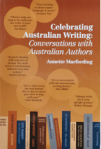
Annette Marfording’s Celebrating Australian Writing: Conversations with Australian Authors (2015)

Regular readers here might remember this book, as I’ve published several posts inspired by the interviews contained within. Marfording was, for several years program director for the Bellingen Writers Festival. She was also a radio presenter for the Bellingen community radio station, 2 bbb fm, on which these interviews were aired from around 2009 to 2014.  Her aim was, she said,

not to produce interviews “like those commonly done, focusing primarily on an author’s latest book. I wanted to inform listeners of their body of work, strengths – as I saw them – writing methods and work associated with their lives as authors, such as judging literary awards, editing short story collections, reviewing other writers’ works.”

Her interviewees are: Robert Dessaix, Cate Kennedy, David Malouf, Gregory Day, Charlotte Wood, Georgia Blain, Kate Howarth, Kristina Olsson, Larissa Behrendt, Debra Adelaide, Alex Miller, Kevin Rabalais, Di Morrissey, Peter Goldsworthy, Robert Drewe, Jon Bauer, Bryce Courtenay, Chris Womersley, Marele Day, Michael Robotham, and Barry Maitland.

In a really lovely, generous gesture, Marfording has directed that all profits from the sale of the book go to the Indigenous Literacy Foundation. A worthy cause and one that I support too.

Charlotte Wood’s The writer’s room: Conversations about writing (2016)

Wood’s book draws on interviews she did for her digital or on-line journal, also called The writer’s room, which ran from 2013 to December 2015. She, like Baker, was inspired by the Paris Review, and wanted to use their model which allowed writers to review and change the edited transcript of their interview. Her reason was that “having been interviewed about my own work so many times and then been embarrassed by my awkward words in print, I wanted ‘my’ writers to know that they would have complete and final control over anything that appeared in the magazine.” In the end, she says, they changed very little, mainly making “small but important clarifications” or expanding something “they’d been oblique about” or making statements or opinions more “definite”.

Because her project started in 2013, her interviewees include very recent writers on the Australian scene. The book contains a selection of the interviews she did: Tegan Bennett Daylight, James Bradley, Lloyd Jones (New Zealand writer), Malcolm Knox, Margo Lanagan, Amanda Lohrey, Joan London, Wayne Macauley, Emily Perkins, Kim Scott, Craig Sherbourne and Christos Tsiolkas.

*****

So, seven books containing interviews with writers, books that I believe provide a valuable contribution to Australia’s literary culture. And yet Marfording, in the Introduction to her self-published book, writes that publishers told her that “books of interviews don’t sell”. Who says, I want to know. I have bought three of the seven books I’ve listed here and wish that I’d bought them all!

What about you? Are you interested in reading interviews with authors?