Monday musings on Australian literature: Bush Sketcher (Intro)

I was uncertain about whether to title this post The Australasian or “Bush Sketcher”, but have decided on the latter. However, I will start by introducing The Australasian!

The Australasian was a weekly newspaper established in 1864 by the merger of three Melbourne weeklies, and later incorporating a couple of other publications, including, in 1889, the monthly Australasian Sketcher with Pen and Pencil. The Australasian was the weekend companion to the Argus, and lasted until 1946 when it became the Australasian Post. That publication had a bit of a chequered history, but lasted until 2002 (albeit named, by then, Aussie Post.)

The reason, though, that I checked all this out was because of a regular column or section in the Australasian called “Bush Sketcher” as it was under this banner that Katharine Susannah Prichard’s short stories, “The bridge” and “Christmas tree”, were published (links are to my recent posts). It was when I saw the second story appear under the banner that I decided to check out this “Bush Sketcher” business. Through my best Trove jiggery-pokery (without spending hours), I think I can say that this “Bush Sketcher” column ran from around 1895 to 1925.

Bush Sketcher

Ernest Reid, Australian station storiesArticles ranged from 600 to 3000 or so words, with most being in the vicinity of 1500 to 2500 words, so this was more than a “column”. All the articles have by-lines, but many are pseudonyms (like Bushwoman, Millewa and Coriander) or just initials (such as J.A.M., A.H., and R.V.L). However, as we already know, some authors, like Katharine Susannah Prichard, are fully identified. Another well-known author who came up in my search was Daisy M Bates. Other lesser known writers (to me) include Hetty Ralph-Baker, Ernest Reid (whose short stories from The Argus and The Australasian were published in 1930 in a collection titled Australian station stories), and  E.S. Sorenson (novelist, poet and short story writer who appears in the Australian Dictionary of Biography). So, a varied bunch.

The content is varied too as a random selection of article titles shows:

  • “Aboriginal relationships” (Daisy M Bates – a detailed description of Western Australian Aboriginal kinship systems, written in 1922)
  • “Racing in the never never” (Bushwoman)
  • “A day at Bushvale” (Coriander)
  • “Far north blacks” (Hetty Ralph-Baker – but this article is barely legible, so worn or faded is it)
  • “The old station” (Ernest Reid)
  • “Sundowners” (ES Sorenson)

And, not only is the content varied, but the form also: some of the articles are short stories, while others are more journalistic or slices-of-life non-fiction.

I will return to “Bush Sketcher” in future as there’s some fascinating material here, but will close by sharing one …

“Women’s work in the North West”

Written by A.H. and published on 18 December, 1920, this article is written by the mistress of a station homestead. Focusing on wash-day, it describes the work undertaken by women in managing a homestead – though in fact the women whose work is mostly described is that of the Aboriginal women (or “gins” as she calls them). I think A.H. is being genuinely inclusive in her title, “women’s work”.

The homestead is set in the Kimberley area and provides insight into life there. The story starts with a somewhat purple but highly evocative description of the landscape around the station, then tells us that it’s wash-day. The arrival of the indigenous women reminds her that there’s no time to waste:

The women, running up with their shouts, laughter, and repartee to their lazier men folk, warn us that if the great mountain of soiled clothes in the laundry is to be clean goods by noon we too must be on the move.

She tells us how they all wear white in the house! Really? In the red-earthed north-west! And she describes the women: “Hebe, our bed room girl [who] has been well trained for her work from the age of ten …The other women … were all older – Chatterbox, the children’s nurse; Chloe, the dining room and pantry maid; Mirabon, the kitchen help; and old Biddy, Hebe’s mother, a general utility, able to clean windows, wash down verandahs, and help in the laundry.” She describes the challenges involved in keeping them on task, including bribing them with “a tin of apricots”.

However, once she’s got the women started on the washing, she writes that:

I can safely go in now to the half-past 6 breakfast, which is spread on the shady verandah. The children are in their nursery, the netted in end of the vine-covered verandah, where a swing and a hammock, a rocking horse, and boxes of bricks, with slates and pencils, minister to their amusement and interest through the long hot day. Every one, native and white, has a siesta from 12 till 3 in the afternoon, noon. Breakfast is taken at 6 or half-past, tiffin (a light meal of cakes and tea or coffee), at 10, lunch at 12, (a light meal also); afternoon tea at half-past 4; and dinner at half-past 7. Such are our rules, and these vary little among the station homesteads between the Gascoyne and Marble Bar, Broome, Derby, and Wyndham.

So, we get a lovely time-table of station-life.

The whole thing is paternalistic as you’d expect from the times – at one stage she calls the women “happy creatures” – but A.H. is not totally closed-minded to indigenous lives and ways. I was fascinated by this:

When the copper has its first consignment, the women pause for a drink of cold tea and a nice repast of broiled frogs, which Topsy a 10-year-old Coorie, has brought up smoking hot from the camp, and they do not look untempting, lying well browned on a mass of gum leaves in the boat shaped Tar-doo, which serves the natives as a tray. With a sleight of hand quite wonderful the frog is stripped of its brown coat, attendant ashes, and in the same movement the shrunken “innards,” leaving only the succulent limbs, which are swallowed as we swallow oysters.

She also describes some of the lively repartee with Chloe who, though under our writer’s control, is not afraid to express her frustration, telling A.H., “Missis too much wongi wongi: make black-fella woman bad fella”. Then, having given this “frank opinion”, she gets back to work “on the tubs.”

Particularly interesting, though, is A.H.’s concluding paragraph:

The natives who belong to the territory taken up by the squatter become, by an arrangement with the Government, his indentured servants. He is responsible for their upkeep. A liberal scale of diet is specified by the Protector of Aborigines, who also sends an agent from time to time on surprise visits to see that all regulations are fairly kept.

That, I suppose, is to reassure the city-readers that all is properly managed and happy on the stations.

There is of course so much we, a century later, could read into this wash-day slice-of-life, but I’m not going to say the obvious here. My point really is to show what a rich source “Bush Sketcher” is for providing insight into Australian outback life – including values, attitudes and language – at the beginning of the Twentieth Century. I’ll be back with more …
Non-fiction November 2018, Weeks 4 and 5

Non-fiction November 2018Well, bizarrely, I did the first three weeks from 2016 for my first Non-fiction November of 2018 post! I won’t revisit those – they’re similar topics to this year’s anyhow – but I’m back on track for this post. Non-fiction November, if you haven’t guessed, involves celebrating non-fiction for the month, with each week focusing on a specific issue, question or topic. This year’s meme is being hosted by Katie (Doing Dewey), Kim (Sophisticated Dorkiness), Rennie (What’s Nonfiction), Julz (JulzReads), and Sarah (Sarah’s Bookshelves). 

As with my first post which covered weeks 1 to 3, I’m combining weeks 4 and 5 into one post and am publishing it during the weekend between the two weeks.

Week 4: (Nov. 19 to 23) – Reads Like Fiction (Rennie @ What’s Nonfiction)

This topic essentially asks whether we like a form of non-fiction called “narrative” or “creative non-fiction”, which Wikipedia describes as “writing that uses literary styles and techniques to create factually accurate narratives.”

Well, in a word, yes – I do – very much. If that makes me sound soft, then so be it, but I’d argue that non-fiction writer using literary styles and techniques to engage readers doesn’t automatically weaken the seriousness or worthiness of their content. Commenting on a previous post of mine, historian Yvonne Perkins quoted historian Penny Russell who said that “Writing history… is a creative art. It requires empathy, intuition, a keen sense of drama and pathos, a distinct narrative flair.”

Helen Garner, This house of grief book cover

So, who (or what) are my favourites? One of the internationally recognised exponents of this form is the Australian writer, Helen Garner, whom I started reading long before blogging. Her books Joe Cinque’s consolation and This house of grief are excellent examples, and she influenced, I believe, younger Australian writers, like Chloe Hooper (The tall man) and Anna Krien (Into the woods and Night games). In these books the narrative drive comes from the writer’s involvement in the “story”, in their taking us along in their thinking and investigation. And to be not entirely ethnocentric, I’ll name one excellent non-Australian author I’ve read, albeit some years ago – Erik Larson and his book Isaac’s storm.

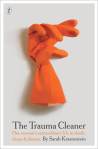
Michelle Scott Tucker, Elizabeth MacarthurTurning to this year, most of my non-fiction reading has been biography, which lends itself to this “creative” approach though not all biographers do adopt it. Two that I’ve read this year did, however, Sarah Krasnostein’s The trauma cleaner and Michelle Scott Tucker’s Elizabeth Macarthur: A life at the edge of the world. Krasnostein achieves it by being part of the journey, by using a creative structure interweaving her subject’s past with her present life, and by evocative language which uses the sort of imagery more common in fiction. Tucker, on the other hand, takes the more traditional straight chronological approach, but she encourages us to engage with Elizabeth Macarthur the woman, rather than present her to us as a fait accompli. There are gaps in Macarthur’s story. For example, we might know what happened, but not, perhaps, how or why, so Tucker uses her imagination – and makes it clear she’s doing to – to consider the situation. Here’s an example:

No. The most likely source is Elizabeth Macarthur, once more trying to mitigate her husband’s wilder misjudgements. But we have to imagine it: a hushed yet heated conversation with Edward to send him flying out after Oakes and then a vain attempt to placate and soothe John …

This is a thoroughly researched and documented biography, but written with a narrative, dare I say, novelist’s flair.

Week 5: (Nov. 26 to 30) – New to My TBR (Katie @ Doing Dewey)

Unfortunately, like last year, and although I’ve been reading several participants’ posts, I haven’t added anything to my TBR as a result of these November posts, because – and it’s a big because – I have so much already on that pile, including, most recently:

  • Peter Ackroyd’s Dominion (History of England V)
  • Elizabeth Kleinhenz’s Germaine: The life of Germaine Greer (about which I have also posted recently)
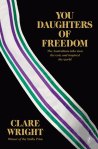
  • Clare Wright’s You daughters of freedom (currently reading, and about which I have already posted)

However, if I were looking for book ideas, I’d probably go back to some of “expert” posts. What a variety of topics – from Kate (booksaremyfavouriteandbest) on Empathy to Debbie (ExUrbanis) on Downsizing and Making Major Life Changes, from Buried In Print’s call for good non-fiction books on Indigenous Storytellers to Brona (Brona’s books) wanting more on the French Revolution (which reminds me that I must go recommend something!) To name just a few!

Meanwhile, I’d love your comments on any of the above, but particularly your thoughts on non-fiction that reads like fiction. Do you like it? And if so, do you have any you’d recommend?

Katharine Susannah Prichard, Christmas tree (#Review)

Katharine Susannah Prichard

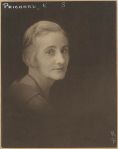
Prichard, by May Moore (Presumed Public Domain, State Library of NSW)

Commenting on my recent post on Katharine Susannah Prichard’s short story “The bridge”, Prichard biographer Nathan Hobby, pointed us to an online version in Trove of her short story, “Christmas Tree”, which he describes as the best of her early work. It’s about farmers, droughts and banks. Seemed very appropriate (to us in Australia right now, anyhow) so of course I checked it out. (And I corrected the OCR-introduced errors while doing so – hope I caught them all.)

So, “Christmas tree”. Published in The Australasian in 1919, it was, according to writer Glen Phillips, the first of Prichard’s stories to be translated – into Chinese in the 1920s! Fascinating eh? It would be interesting to know who read it and what they made of it.

“Christmas tree” tells the story of Western Australian wheatbelt famers Jinny and George Gillard, and is told third person, primarily through the eyes of Jinny who, at the start, is standing at her back door, reminiscing about their thirty years on the farm. The story starts:

Against the dim blue of the summer sky the Christmas trees had thrown their blossoming crests; they lay along the horizon like a drift of clouds, fluted and curled, pure gold.

The trees stood irregularly in the dry, scrubby land of the plain beyond Gillard’s fences to the north of Laughing Lakes homestead. Their trunks were not visible from the backdoor of the house to where Jinny Gillard stood, her eyes on that distant line of yellow blossom. But she was not thinking of the dark, heavy trees which put on an appearance of such opulent beauty at Christmas time. Her thoughts glanced from them and wandered listlessly, ravelling and unravellin, fretted, anxious, thoughts, old hopes, despairs, bitter, weary, and faint, sweet memories.

This year’s crops were, in fact, better than they had been for years, but it’s all too late – it is not they who will be benefiting from this year’s wheat but the bank.

It’s a sad story, but realistic rather than melodramatic. It’s about hard work and bad luck. Jinny knows they are not the only ones who have struggled. Some have had better luck than George who had sown “lightly when a good season happened along, or heavily when the rain kept off, and so had lost both ways” but some are also in George and Jinny’s predicament. The second part of the story concerns a Christmas party underwritten by one Christopher Tregear, who was chairman of the Great Western’s board of directors and “supposed to be one of the wealthiest men in the State”. Many farmers did business with Great Western, “thinking Tregear’s position in it would guarantee them from harsh treatment. But it had not.” Not for George, not for many others, and yet, here they all are, sees Jinny, dancing and singing with him, though “he was not a good friend of theirs.” Of course, we don’t get Tregear’s point of view, but there’s a sense that with the good season coming, compromises could have been reached.

This story is enjoyable on several fronts. Its realism means it conveys the facts without the histrionics that can sometimes distance readers. The realism also makes more effective the underlying theme that with more loyalty and less greed from the men with money, more farmers could survive the bad seasons. But it’s also enjoyable because of the tight, focused writing – from the sly irony behind the parasitic Christmas trees, and the names of the Gillards’ properties, Laughing Lakes and Everlasting, through the evocative descriptive writing, to the pointed repetition of the Gillards’ mantra “Crack hardy … I’m crackin'”.

“Christmas tree” is a story that hasn’t dated. It’s as relevant now as it was 100 years ago when it was first published – stoicism and dignity never go out of date, and we are still challenged by the role capitalist structures play in people’s lives and livelihoods. Another good read from Prichard – but that’s not surprising.

AWW Badge 2018Katharine Susannah Prichard
“Christmas tree”
First published: The Australasian, 20 December 1919
Also published in Potch and colour, Angus & Robertson, 1944
Available: Online at Trove

Apology: I posted this an hour or so ago with the wrong short story title, so have deleted that post, and republished with the right title, otherwise we’ll all get confused (including Google!)

Monday musings on Australian literature: University of Canberra Book of the Year 2019

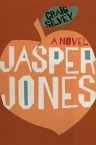
Jasper Jones, by Craig SilveyI have written about the University of Canberra’s Book of the Year initiative, twice – in 2012 when it was initiated, and again in 2014, when I checked to see whether the program was continuing. I am thrilled to say that earlier this month I heard the announcement of 2019’s book, so the program continues still. This book will be the 7th in the program.

Before I announce next year’s book, though, a quick refresher about the program. It involves the University providing a selected book, free, to all “commencing students” regardless of their subjects, as well as to all staff, academic and otherwise. The book is required reading, and teaching staff are expected to incorporate the book somewhere in their programs.

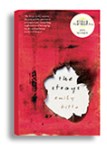
Emily BItto, The strays, book coverThe books are not always Australian, which is a shame given this is an excellent opportunity to introduce students to Australian literature. Also, and perhaps this sounds contradictory, while the genres and subject matter vary somewhat, there’s not a lot of diversity in terms of writers. No indigenous writer, no writer from a non-white/non-English language background, for example. Here is the list, to this year:

2013: Jasper Jones, by Craig Silvey (my review)
2014: Room, by Emma Donoghue
2015: The Rosie Project, by Graeme Simsion (my review)
2016: The strays, by Emily Bitto (my review)
2017: The white earth, by Andrew McGahan
2018: Do Androids dream of electric sheep? by Philip K. Dick

Professor Klomp describes the goals:

The UC Book Project is a fantastic initiative that introduces commencing students to intellectual life before their studies officially begin, encouraging early engagement with UC online resources, and informal learning and sharing among all new students.

It also promotes interaction and engagement among staff and students with a common topic to chat about around campus.

UC Book for 2019

In October, the University announced the shortlist, which are, this year, all recent Australian books. Good decision – and again some varied content, but, notwithstanding Bobis, not particularly diverse. It really is time, I think, to see some indigenous Australian writing chosen.

The announcement says that the judging panel, which comprises “Professor Klomp, the University Librarian, a Professor of Creative Writing, authors, media personalities and students”, is provided the shortlist from which to select “a book that is appealing to our wide range of students”. This year’s shortlist (including main “awards” credentials) was:

  • Merlinda Bobis’ Locust girlNew South Wales Premier’s Literary Award (Christina Stead Prize for Fiction); Juan C. Laya Philippine National Book Award (Best Novel in English)
  • Felicity Castagna’s No more boats: Miles Franklin Literary Award (Shortlist)
  • Peggy Frew’s Hope Farm: Barbara Jefferis Award (Winner); Miles Franklin Literary Award (Shortlist), Stella Prize (Shortlist)
  • Bram Presser’s The book of dirt: NSW Premier’s Literary Awards (Christina Stead Prize for Fiction); NSW Premier’s Literary Awards (UTS Glenda Adams Award for New Writing); NSW Premier’s Literary Awards (The People’s Choice Award); Voss Literary Prize (Shortlist)
  • Lucy Treloar’s Salt Creek: Dobbie Award for Best New Writer (Winner); Miles Franklin Literary Award (Shortlist); Walter Scott Prize for Historical Fiction (Shortlist)
  • Josephine Wilson’s Extinctions: Miles Franklin Literary Award (Winner); Prime Minister’s Literary Awards for Fiction (Shortlist)
  • Charlotte Wood’s The natural way of things (my review): Prime Minister’s Literary Award for Fiction (Joint Winner); Stella Prize (Winner); Miles Franklin Literary Award (Shortlist); Barbara Jefferis Award (Shortlist); Voss Literary Prize (Shortlist); plus short listing for the NSW Premier’s Literary Awards, Queensland Literary Awards and Victorian Premier’s Literary Awards.

Charlotte Wood, The natural way of thingsAnd the winner is: Charlotte Wood’s The natural way of things. A provocative and probably challenging choice for many – but one that should stimulate great discussions about all sorts of ideas, values and topics. UC’s Press Release announcing the selection says that Professor Klomp “hopes that the book with engage a wide audience with its universal themes of power, morality, judgement and friendship.” Remembering the strong and varied reactions in my reading group – about everything from style and characterisation to meaning and themes – I’d love to hear the students and staff discuss this one.

I’d love to hear you thoughts about the book choices, or the program itself?

Katharine Susannah Prichard, The bridge (#Review)

Time for another post on a short story available online, but not, this time, from the Library of America. Indeed, it’s not even American, but one of our own – Katharine Susannah Prichard’s (KSP) “The bridge”. As far as I can tell it has been published at least three times: in 1917 in the Weekly Times Annual; in 1940 in The ABC Weekly, which is where I found it; and in 1944 in a collection titled Potch and colour, about which Prichard biographer Nathan Hobby has posted.

Writing about Potch and colour, Hobby says that

Katharine wrote some incredible short stories. I would go as far as to say that I think the form suited her better than the novel, even if she is not as remembered for it. This collection mainly includes stories originally published in journals after her first collection, Kiss On the Lips (1932), but the first appearance of some of them still needs to be established. One story, at least, is quite early – “The Bridge”; I found a newspaper copy of it on Trove from 1917 (unfortunately, it’s not one of her “incredible” stories…).

Hobby then identifies three short stories from the collection as particularly worth commenting on. The first is titled “The siren on Sandy’s Gap” and Hobby says it “manages to be both humorous and an astute critique of marriage.” It’s about Susan – the siren – and her refusal to do “what they [men] say.” The second, “Flight”, is about the forced removal of mixed-race Aboriginal children from their homes, and the third, “The Christmas tree”, is about banks failing wheatfarmers during the Depression.

Now, before I get to “The bridge” a little from KSP herself. In 1967, Angus and Robertson published Happiness: Selected short stories by Katharine Susannah Prichard. It includes two of Hobby’s favourite stories from Potch and colour, but not “The bridge”. Most interesting, though, is Prichard’s Foreword. She talks of her various inspirations, including Thomas Carlyle, and says that Guy de Maupassant’s “Contes Normands” gave her “the short story technique, which, more or less unconsciously” influenced her story telling.

Defending herself against a criticism of her “loose and slipshod English”, she says that she purposefully used “the living speech of our people … making the context of a sentence give the meaning of an unusual word or phrase.” She quotes a Professor Holme who praises her style as responding to the need of her characters, and Nettie Palmer’s statement that her writing “made us remember that there was nothing so well worth writing about as the loves, conflicts, and sufferings of our own people”. Including all this in her short Foreword suggests that she felt the need to defend herself. Anyhow, she concludes with:

All the stories were inspired by an intimate sympathy with men and women in the comedy and tragedy of their lives.

So, “The bridge.” It’s not, perhaps, “incredible”, but it is moving – and reminds me, a little, of some stories by Kate Chopin and Edith Wharton. It’s a brief story about the building of a bridge in southeast Victoria by a young man called Bryant and his off-sider Charley. The main action concerns the opening of the bridge, and the wedding that takes place immediately afterwards.

The story commences with Bryant and Charley reminiscing about some of the challenges they faced in building the bridge. It had taken a year to build, and without any loss of life:

“They’ve got a notion in some parts of the world, a life’s got to go into a bridge if she’s to going to wear,” he [Bryant] mused. “I’m mighty glad no one’s been killed or hurt on our bridge, Charley … and she’s a good bridge … as good a little wooden bridge as there is in the country.”

However, a flood crisis had threatened the bridge. To save it, Bryant needed horses but local farmer Joe Gaines would not help out – until Bryant tried a bit of psychology involving a pretty young woman working in Gaines’ kitchen. He got his horses, but at a great cost to that young woman, unbeknownst to him but discovered by Charley later at the wedding.

It’s a tight little story – about single-minded ambition and sexual jealousy set against female generosity and sacrifice – with a sting in the tail that ironically comments on Bryant’s belief about his bridge. I can see the influence of Guy de Maupassant here – and Prichard’s interest in the lives of women. You can read it at the link below.

AWW Badge 2018Katharine Susannah Prichard
“The bridge”
First published: Weekly Times Annual, 3 November 1917
Also published in The ABC Weekly, 24 August 1940, and in the collection,
Potch and colour, Angus & Robertson, 1944
Available: Online at Trove

Emily O’Grady, The yellow house (#BookReview)

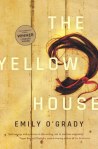
Emily O'Grady, The yellow house

Although Emily O’Grady’s debut novel The yellow house won this year’s prestigious The Australian/Vogel’s Literary Award for unpublished manuscripts by authors under 35, I wasn’t sure at first that I was going to like it. I think this was because I was feeling I’d read a surfeit of books this year about young people living challenging lives in rural settings – Charlie Archbold’s Mallee boys (my review), Jenny Ackland’s Little gods (my review) and Sofie Laguna’s The choke (my review). I wasn’t sure this was going to have anything new to offer.

However, it wasn’t long before ten-year-old Cub’s voice got me in and I realised that this book had a different spin again, which is that it explores how families of violent or sociopathic criminals, like serial killers, cope in the long years after it all comes to light. It’s a coming-of-age story, in a way, but a very different one. Cub, then, is our narrator. She lives on a “lonely property bordering an abandoned cattle farm and knackery” (back blurb) with her twin bother Wally, her 17-year-old brother Cassie whom she adores, and her parents, Colin and Christine. Within sight of their home is “the yellow house” in which her maternal grandfather, Les, had lived. He had died two years before the Cub and Wally were born – and in the prologue we learn that he had been a serial murderer of young women. The prologue closes with a now wiser Cub telling us:

Now, I know everything he did trickled down and created us all, because it turned out he was the god of all our lives.

So we know at the beginning something that Cub doesn’t know when the narrative “really” starts. Why does O’Grady take this approach? I’m guessing it’s to focus us less on that plot. We know what Cub doesn’t know – or at least enough of it. We can therefore focus on how a family lives with this knowledge rather than on trying to work out, as Cub has to do, what the secret is. It makes Cub a perfect naive narrator: she has the curiosity and loyalty of a child but lacks the wisdom necessary to make the right calls. There’s an added complexity to Cub’s situation which increases her isolation: everyone else in the family knows, including her twin brother. Cub wasn’t told because she’s a girl. It’s no coincidence that she, Coralie, has a baby-ish nickname, while her twin brother doesn’t.

The novel proper starts when Cub is approaching 11 years old, and her aunt, Helena, and 11-and-a-half-year-old cousin, Tilly, move into the yellow house. Tilly’s father, Dermott, we’ve already been told, had driven his car into the dam some time ago and died. It is Helena and Tilly’s appearance which sparks the events that play out in the rest of the novel, events that are “driven” by that violent forbear whose “rotten blood” is in their veins, whose legacy they struggle to shake off.

It’s a horrifying novel. We realise early on that the family is ostracised by the community in which they live, and is struggling emotionally. Cub’s Dad does his best to keep them together but is ill-equipped for the challenge he faces, while her Mum also does her best in her own way, but regularly takes to her bed, with various malaises, many depression-based presumably. Cub and Wally have no other friends at school, something Cub doesn’t fully cotton on to, but we do:

The kids at school were strange; Wally and I played by ourselves at lunchtime, always paired up when we did partner work.

Cub is consequently desperate to make Tilly, so close in age, her friend:

I tried to think of something else to say. I knew we had one chance to make a good impression and I didn’t want to waste it. But the silence felt as deep as the dam, impossible to swim out of. I was annoyed at myself for not practising with the girls at school. I should’ve been prepared.

But, it never quite works. Tilly, dangerously – she’s too much like her mother, Cub’s Mum hints at one stage – is more interested in boys. And, there are boys – besides Wally. There’s Cassie, and his creepy friend Ian. Tilly, like Cub, doesn’t know the story of the “yellow house” and her mother is determined to keep it that way.

The story develops slowly, chillingly, and, it feels, inevitably, as the secrets, parental inadequacy, community prejudice and cold opportunism combine to result in … I’d like to say more, but perhaps should not spoil the plot.

This is not a novel in which everything is explained – as can be typical of naive narrator stories – but there seems to be a specific intention here. At least, I’d say that O’Grady’s aim is not to tease out all the possibilities and permutations of the situation, nor to follow the more usual crime fiction path of restoring order out of chaos. Instead, it’s to encourages us, at each point, to consider what might be happening, why it might be happening, and what might make (or have made) it happen differently. That gives the book a power that those more traditional crime novels don’t have.

Besides this open-endedness which kept me engaged and pondering throughout, there’s O’Grady’s writing. It’s not tricky. There’s quite a bit of dialogue and simple description of what’s going on, as you’d expect, rather than a lot of reflection, but O’Grady has some lovely turns of phrase. At one point Cub is near Cassie’s friend Ian:

Now that I was right up close to him I didn’t know what to do; it was like my brain was wrapped in sticky tape and I couldn’t think properly.

The language and imagery, as this example shows, are appropriate for Cub’s age. And there’s the “yellow house” itself. Yellow has so many connotations. It can suggest something warm, bright, cheery, hopeful, but is also the colour of cowardice and deceit, and can convey sickness. The contrast between these positive and negative meanings of the title underpin the novel’s horror.

Why read this novel? There’s the obvious reason that it explores a subject that many of us must wonder about when we hear of violent crimes – how does the wider family cope, what happens to them? And there’s the associated reason that in so doing it might encourage us to think more empathetically if we found such a family in our midst. But, besides that, it’s an engaging debut novel by a new young writer from whom we will hopefully hear more. It’s always exciting to be in there at the start.

Lisa (ANZLitLovers) also liked this book.

AWW Badge 2018

Emily O’Grady
The yellow house
Crows Nest: Allen & Unwin, 2018
314pp.
ISBN: 9781760632854

(Review copy courtesy Allen & Unwin)

Monday musings on Australian literature: Barbara Jefferis Award and negative depictions of women

A month ago, blogger Kim Forrester (Reading Matters) tweeted “I’ve stopped reading books where a woman being murdered is the plot point. Let’s change the story.” I thought this was interesting, but didn’t think a lot about it at the time because I read very little crime (though I do watch some). However, I was reminded of it when, last week, Lisa (ANZLitLovers) brought my attention to this year’s Barbara Jefferis Award and the judging panel’s comment on the submitted books – but first some background.

The Barbara Jefferis Award has very specific criteria:

“the best novel written by an Australian author that depicts women and girls in a positive way or otherwise empowers the status of women and girls in society”.

In other words, it is not the sex of the writer that’s relevant here (nor, in fact, the genre). This award is for books about women and girls, but it must also present them in a positive or empowering way. It was controversial at the time it was established. I remember it well because I created the Wikipedia article on it. I noted that journalist and literary editor Susan Wyndham had asked whether Australia needed a new fiction award encouraging ‘positive’ portrayals of women and girls, or whether it’s “an outdated gesture in a post-feminist culture rich with female authors, characters and readers?” And then I continued with:

Several writers have supported the award, including Tom Keneally, Helen Garner, Frank Moorhouse, Gerald Murnane, Anne Deveson, Kerryn Goldsworthy and Brian Castro. However, writer and critic, Andrew Reimer dislikes the idea of focusing on “social agenda” over “novelist’s skill and imagination”, and novelist Emily McGuire agreed, stating that she doesn’t “like the idea of judging fiction based on its message”. Author and critic, Debra Adelaide, expressed her concern that the award might encourage “safe and constrained” writing and wondered whether “we are getting to the point where we have more awards than publishing opportunities”.

Libby Angel, The trapeze actJumping ten or so years later to the 2018 award, here is The Sydney Morning Herald’s report after the announcement of Libby Angel’s The trapeze act as winner:

Among a record number of books entered for the $55,000 Barbara Jefferis Award, a surprising number featured domestic violence, death or the subjugation of women, according to judge Sandra Yates, running contrary to the prize’s explicit criteria.

The first three books Yates read from the longlist saw one woman burnt at the stake, one woman pushed off a cliff and the other a victim of domestic violence.

“We were surprised, I have to say, that so many even in the longlist seemed to have such dark, negative portrayals of women in them,” she said. “We [women] don’t need any more books about our capacity to endure, I think we have established that.”

Reporting this, Lisa commented “So I am not the only one sick-and-tired of the current crop of misery memoirs and novels featuring women as victims…”

I don’t feel as strongly as Lisa about the “current crop” of books, but I am interested in the wider issue at play here, which I’d break down into three main questions:

  • How do we define positive, empowering representation?
  • Is there, currently, a prevalence of negative representations?
  • Should writers conform to a “social agenda”?

I’m not sure whether there is a definition for the judges to work with – and would be interested to hear from Dorothy Johnston who wrote a guest post here on judging this award –  but I’d define positive, or empowering depictions of women and girls as those in which women are able to exert some sort of agency in their lives. This could include Lisa’s “misery memoirs” if, as often happens, they end with the woman rising above the challenges (the violence, the abuse, the poverty, the illness – whatever the initial misery is) to take control. There can be a fine line here, though, between Yates’ notion of “enduring” and the idea of being, or becoming, empowered.

To be simplistic, we could say that, in the context of this award’s requirements, there are three “types” of books depicting women: those whose portrayals are positive (or, “ultimately” positive); those whose portrayals are neutral, that is, they are just about women getting on with the normal business of life; and those in which woman are essentially victims, with no agency to improve their lot.

Looking at the novels I’ve read that feature women and/or girls and were published between 1 January 2016 and 31 December 2017, I would say that most – by my definition, anyhow – would fall into the first two “types”. These books include:

  • Carmel Bird’s Family skeleton (my review)
  • Diana Blackwood’s Chaconne (my review)
  • John Clanchy’s Sisters (my review)
  • Claire Coleman’s Terra nullius (my review)
  • Madelaine Dickie’s Troppo (my review) (shortlisted for the Barbara Jefferis’ Award)
  • Michelle de Kretser’s The life to come (my review)
  • Sara Dowse’s As the lonely fly (my review)
  • Glenda Guest’s A week in the life of Cassandra Aberline (my review)
  • Sofie Laguna’s The choke (my review)
  • Catherine Mackinnon’s Storyland (my review)
  • Emily Maguire’s An isolated incident (my review)
  • Josephine Rowe’s A loving, faithful animal (my review)
  • Anna Spargo-Ryan’s The paper house (my review)
  • Ariella van Luyn’s Treading the air (my review)

Not all of these are simple, positive depictions, but their women are not all victims, albeit some are certainly challenged by the decisions they’ve made. I know from experience, however, that my definition of “positive” is not universal, and that I see hope where others don’t. Laguna’s The choke, for example, is undeniably grim – but Laguna believes in offering hope, and, whether or not you like the ending, it is intended to be hopeful.

The only book I’ve read from this period which, by my definition, would not meet the Award’s positive depiction criterion is Mirandi Riwoe’s The fish girl (my review). That girl tries, but is ultimately powerless and so done in by men with power over her.

So, I don’t necessarily agree that the majority of current books – at least those I’ve read – focus on women as victims. Many of the female protagonists may commence as victims – like Laguna’s Justine or the two protagonists in Charlotte Wood’s The natural way of things (published in 2015) – but most of the books are about confronting problems, not simply succumbing to them and enduring.

As for whether writers should conform to a social agenda, my simplistic answer is no. But that doesn’t mean that a social-agenda based award is, in itself, wrong. It just means that it would be unwise for an author to write to an award whose requirements didn’t align with what they wanted to say. We have in fact many social-agenda oriented awards – the Stella Prize and the David Unaipon Award being just two examples.

How would you define “positive depiction”, and what do you think about the current crop of novels (regardless of where you live)?

Non-fiction November 2018, Weeks 1 to 3

I’m not sure how long Non-fiction November has been happening in the blogosphere, but I first became aware of it last year. It runs for a month, with a different set of questions posed for each week of the month. Last year I concatenated my responses into two posts, one for weeks 1 to 3, and the other for weeks 4 to 5. I’m going to do the same this year.

The meme is jointly hosted this year by Katie (Doing Dewey), Lory (Emerald City Book Review), Sarah (Sarah’s Book Shelves), Rachel (Hibernator’s Library) and Julz (Julz Reads).

Week 1: (Oct 31-Nov 4) (KatieYour Year in Nonfiction: 

There are several questions for this week, but, like last year, I’m just going to answer a couple …

What was your favorite nonfiction read of the year?

Now, last year, I read a disproportionate amount of non-fiction (in terms of my reading preferences, that is), and said that I would like to right the balance somewhat this year. I like non-fiction – a lot – but I don’t want it to overtake fiction as it nearly did last year. Well, this year I sure have righted it, with, so far, non-fiction representing around 15% of my reading to date – mostly biographies and autobiographies/memoirs.

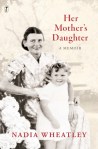
There are three standouts: Michelle Scott Tucker’s Elizabeth Macarthur: A life at the edge of the world (my review), Nadia Wheatley’s Her mother’s daughter (my review), and Sarah Krasnostein’s The trauma cleaner (my review). If I were forced to choose just one, I would have to go for The trauma cleaner for the sheer chutzpah of its subject against terrible odds and for the clever structure Krasnostein uses to tell the story.

What is one topic or type of nonfiction you haven’t read enough of yet? 

The same as last year – literary biographies – closely followed by Australian history.

Week 2: (Nov 7 – 11) – (Rachel) Choosing Nonfiction

Again, there are several questions and I’ll share them all: What are you looking for when you pick up a nonfiction book? Do you have a particular topic you’re attracted to? Do you have a particular writing style that works best? When you look at a nonfiction book, does the title or cover influence you? If so, share a title or cover which you find striking.

Book cover, The forgotten rebels of EurekaThese are complex questions that could take a whole post, but I’m going to keep it succinct, with the following answer encompassing the first three questions above! The two main things I look for in a non-fiction book are subject matter and engaging style. For example, I like biographies (particularly of writers and achieving women) and Australian history, but I don’t like dry factual this-happened-and-then-that-happened writing. I particularly like something called creative non-fiction. However, while I want to be engaged, I also want to feel that the writing is authoritative so I like to see the author’s sources. Clare Wright’s histories, such as The forgotten rebels of Eureka (my review) and You daughters of freedom, are excellent examples. Wright writes with the narrative instincts of a novelist and yet her claims and statements are thoroughly cited.

Covers are never hugely important to me in selecting books. Of course, a good cover can catch my eye, but I will never buy a book by its cover. With fiction, it’s the author or a recommendation from a person I respect, that will decide me once I’ve seen the book. With non-fiction, the cover is even less important to me, which is just as well, because in general I’ve found non-fiction covers to be less interesting. Non-fiction covers seem more literal, more determined to capture the “facts” of the book – an image of the subject of the biography for example or of a war scene for a war history – whereas fiction covers can get a little more creative and look to capture an emotional response rather than depict content.

PS I also like Helen Garner’s non-fiction. She could write about grass growing and I’d be there.

Week 3: (Nov 14 – 18) – (Sarah) Book Pairing

I’m a bit ahead of the game here, but as I’ll be away from November 14 to 16, I’m going to sneak in my response now. The challenge is to pair up a nonfiction book with a fiction one – via whatever sort of connection seems fit. I loved this challenge last year, and found it fun again this year.

My pair is:

Yes, it is Clare Wright’s latest history, You daughters of freedom, which I’m still reading, and EM Forster’s Howard’s End which I reviewed just a week or so ago. You daughters of freedom is about the achievement of women’s suffrage in Australia, from the late 19th to early 20th century, and the role Australian suffragists played in worldwide suffrage movements, particularly in England.

Howards End was published in 1910, and its two main female characters, Margaret and Helen Schlegel, are well aware of and support women’s suffrage, though, as you’d expect from their personalities, Margaret is the one who is clearer about its meaning and impact. The novel opens with Helen writing from Howards End where Mr Wilcox easily demolishes her arguments for suffrage and equality:

He says the most horrid things about women’s suffrage so nicely, and when I said I believed in equality he just folded his arms and gave me such a setting down as I’ve never had. … I never felt so ashamed of myself in my life. I couldn’t point to a time when men had been equal, or even to a time when the wish to be equal and made them happier in other ways. I couldn’t say a word. I had just picked up the notion that equality is good from some book – probably from poetry, or you.

Later, when Margaret holds a luncheon party in Mrs Wilcox’s honour, suffrage and women’s rights come up. Margaret sees the issue as wider than just “the vote”:

“Aren’t we differing on something much wider, Mrs. Wilcox? Whether women are to remain what they have been since the dawn of history; or whether, since men have moved forward so far, they too may move forward a little now. I say they may…”

Howards End provides a fascinating study of England during this time of political and social change – and gender is one of the issues which recurs throughout.

Margaret Merrilees, Big rough stones (#BookReview)

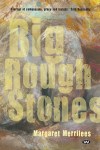
Margaret Merrilees, Big rough stonesIn her latest novel Big rough stones, Margaret Merrilees seems to have done for Australian lesbians what Armistead Maupin did for the American gay community in his Tales of the city series. It is the story, spanning roughly three decades from around 1970s on, of a character named Ro and her lesbian sisterhood in Adelaide. In so doing, it also encompasses some of the feminist activism and sociopolitical concerns of those decades.

Now, Merrilees has appeared here before – with her debut novel The first week (my review) and in my post on her essay about non-indigenous writers writing about indigenous people. I’ll return to this point later …

The novel’s title comes from Miriel Lenore’s poem, “the walls of lesbos”, which is quoted at the beginning of the book. It starts:

to build a lesbian wall
take big rough stones

don’t cut to fit

The poem concludes with the idea that the strength of the wall lies in the combination of the places where the stones touch and the gaps between. This idea perfectly encapsulates the relationships in Big rough stones, because there’s a real sense of a bunch of different individuals who support each other for the long haul. There are points at which they meet. They share political beliefs, for a start, and they share their lives (sometimes as lovers, sometimes in share houses, sometimes in work). But there are also the gaps, those individual differences that either make a community stronger or break it apart. Here, they make it stronger.

Ro, we soon realise, is not the easiest person to live with, not always the most responsible or reliable person, but she’s “sturdy and energetic, descended from a Welsh pit pony and a dour Scot.” She’s idealistic, passionate, and will give things a go. She’s our focal point. The novel is told third person but mostly through her perspective. However, we also get to know several of her friends and lovers, sometimes through her eyes, but sometimes we pop into their heads for a brief while too.

Besides this occasionally shifting third-person point of view, the novel also has an interesting, almost circular, 4-part structure: Now, A while ago, A long time ago, Now. At the novel’s opening – in Now – Ro is in her 60s and learns that she has terminal cancer (so, no spoiler here). We also learn that, at this stage in her life, she wishes she still had someone called Gerry in it. We then move back in her life, eventually reaching “a long time ago” where we meet Gerry and discover why she is no longer in Ro’s life. It’s a sad story. In the final “Now”, Ro is in the terminal stages of her cancer, being cared for by her friends. We see just how strongly that wall has been built. The story reminded me just a bit of Helen Garner’s The spare room – not that Ro tries ineffective alternative medicine, but in the challenges her friends face in caring for a seriously ill person. It isn’t easy.

So, the book is about relationships – lesbian ones, yes, but there’s much that’s universal here too. However, it is also about the times – about political ideals and feminist activism, about the environment and climate change. Several of the women, including Ro, work in a Shelter for abused women. They work as a collective, and we share in some of the struggles of making such arrangements work. We sit in on a collective meeting, after Ro has missed a shift without calling in. There’s discussion and dissension about Ro’s commitment, with one member suggesting this might not be the job for her. Lovely, loyal Maddie speaks up:

I don’t like this. We’ve never been into sacking people or any of that sort of patriarchal shit.’

‘Maybe that’s our problem,’ said Tilda. ‘The place would run a lot more efficiently if we were.’

But this was going a bit too far for the others.

‘No, that’s completely against what we value,’ said the oldest member. ‘People always come first, and that includes workers. It’s up to us to honour Ro’s strengths and figure out how to work with her.’

Ro herself was struck by Tilda’s echo of her own thought. We should have a few more rules, she wanted to say.

She doesn’t say it, though. Instead, she concedes that she was wrong, and offers to work on her relationship with Tilda. An uneasy truce is achieved!

Another quote from the novel that has been used in its promotion provides a good sense of what Ro and her friends were about:

‘You thought feminism would stop violence against women,’ said Julia. ‘And that would stop war. And stop people trashing the Earth. You tried.’

‘Not alone,’ said Ro modestly. ‘I had help.’

Truth-telling

I want to end, however, with Merrilees’ concern about representing indigenous Australians in our stories. Here’s something I quoted from her in my previous post:

To write about Australia, particularly rural Australia, without mentioning the Aboriginal presence (current or historical) is to distort reality, to perpetuate the terra nullius lie. However, for a non-Aboriginal writer to write about Aboriginal people is to run the risk of “appropriating” Aboriginal experience; speaking on behalf of … There’s been too much of that already.

This, as I see it, relates to the issue of truth-telling. There’s the formal truth-telling – via, say, a truth-telling and reconciliation commission – but there’s also the more informal truth-telling that we can all do. Truth-telling is about all Australians coming to a “shared understanding of our history”, which includes “the acceptance of mass killings, incarceration, forced removal from land and forced removal of Aboriginal and Torres Strait Islander children from their families”. The now standard welcome or acknowledgement of country statements are part of this.

So, in Big rough stones, Merrilees has taken a sensitive approach. She does not, here, as she did in The first week, have an indigenous character, but she acknowledges indigenous Australians by showing her characters being aware of the “truths”. For example, Alby, one of Ro’s friends gets a job at a mine. Ro is horrified, and says:

‘Shit, Alby. How could you? Mining. Probably on Aboriginal land.’

‘Certainly on Aboriginal land. The whole country is Aboriginal land. This pub is on Aboriginal land.’

True! On another occasion, after a protest in Alice Springs against Pine Gap, Ro ends up in gaol for a night. The cells are disgusting and Ro finds it hard to engage in the political debate about the US base:

The walls were covered in graffiti. The misery and degradation of the previous occupants hung in the air, a miasma, shockingly brutal. The protest about the US base lost its urgency. Here was racism, fundamental, elemental, an Australian truth most of them had never seen before. Not close up. This they should protest about.

She realises that:

She and the others had privilege that no Aboriginal prisoner ever had. They could give up their resistance and walk away any time. And eventually they did.

I think she has hit on a way of not continuing terra nullius but, at the same time, also not appropriating indigenous experience. It may not work in all situations, but here, with politically aware characters, it does.

Fundamentally, Big rough stones is a straightforward, accessible story with a lot of dialogue that keeps the story moving along – but this is not all it is. Like Tales of the city, it offers a realistic, but warm-hearted portrayal of a time and place, with all the attendant personal and political messiness. An engaging read.

Lisa (ANZLitLovers) also liked this novel.

AWW Badge 2018Margaret Merrilees
Big rough stones
Mile End: Wakefield Press, 2018
278pp.
ISBN: 9781743055526

(Review copy courtesy Wakefield Press.)

Monday musings on Australian literature: Reading for Reconciliation

Funny sometimes how Monday Musings topics suddenly appear to me. I was researching for a future post, when I came across a site called Reading for Reconciliation – and couldn’t go past it for today’s post.

However, the site’s Home Page needs a bit of unpicking. It has a heading, “Finalists in 2012 Queensland Reconciliation Awards”, followed by text which reads “More than a ‘book club’ – we celebrated our 10th Anniversary in August 2014.” At first, I thought the page was going to list the 2012 finalists, but then I realised that they were saying that their bookclub was a finalist in the 2012 awards? Duh, silly me! Anyhow, the accompanying text tells us that the group:

  • is diverse in background and age, and has no political or religious affiliations; and
  • seeks “to expand our knowledge and understanding of current issues impacting on Australia’s First Peoples by reading and discussing works in an informal, friendly setting”.

They are a Brisbane group, which meets every 6 weeks or so – and they welcome new readers. The way they work is for members to take turns in leading discussion of the chosen book, with this leader being expected “to provide some extra background or context, focus the discussion, etc.” I’d be there if I lived in the Brisbane area. A bit more Googling uncovered the fact that they seem to run under the banner of Reconciliation Queensland Incorporated.

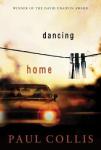
Paul Collis, Dancing homeAnyhow, next on the home page is the list of books they’ve scheduled for 2018:

  • John Newton, The oldest foods on earth
  • Damien Freeman & Shirleen Morris, The forgotten people
  • Anita Heiss, Barbed wire & cherry blossoms
  • Mark Tedeschi, Murder at Myall Creek
  • Mark Moran, Serious whitefella stuff
  • Mark McKenna, From the edge
  • Nonie Sharp, No ordinary judgement
  • Paul Collis, Dancing Home

A varied list, and one that contains some titles and authors I don’t know. However, the best thing about this site is that they also have a page listing every book they’ve discussed since they started in 2004. That’s a great resource for anyone else wanting to read for reconciliation (or start such a group!) It’s worth noting that the books they read aren’t all by indigenous Australians, and they include fiction and non-fiction. They’ve read books by indigenous authors like Kim Scott and Anita Heiss, Bruce Pascoe and Jeanine Leane, for example, all of whom you have met here. Non-indigenous writers they’ve read include novelist Kate Grenville and historians Henry Reynolds and Ann Curthoys.

Understanding the past to comprehend the present

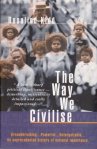
Rosalind Kidd, The way we civiliseAnyhow, I kept Googling, as I wanted to find out how this group started, and up popped an article titled “Six Books for Reconciliation Week” on an Amnesty International site! The article is by the group’s founder Helen Carrick. She starts:

In a Brisbane suburban lounge room in 2004, a diverse group aged from their 20s to 70s gathered to discuss Ros Kidd’s ‘The way we civilize’, which Professor Marcia Langton has described as a “ground-breaking history in the lives of Aboriginal people.”

They may have been diverse but their reason for meeting was not. They “all wished to learn more about Australia’s shared history – all regretted this hadn’t been learned at school.” They believe that they need to understand the past, in order to comprehend the present.

Carrick then describes the group’s history to date – including moving its home from members’ lounge rooms – and lists some of its highlights, including:

  • being a finalist in those awards I mentioned above!
  • establishing their website
  • having authors attend some meetings to discuss their books
  • the establishment of similar groups in Logan City (still Qld – you can see their 2016 list here) and Lismore (NSW)

And with this, I’ll end, making it a short Monday Musings for us all. I’ll just say that it’s great seeing a group like this – and not just seeing it, but seeing it survive for more than a decade and seeing the idea copied by others. Meanwhile, if you’re interested but can’t join a group, there’s always Lisa (ANZLitLovers)’s Indigenous Reading Week. From little things, big things grow – hopefully.

Do you take part in any reading for reconciliation programs?