Having enjoyed doing our top picks last year, my reading group decided to repeat the exercise this year. I’m assuming that, in the spirit of end-of-year lists, you might be interested to see the results, particularly as you will all know at least some of these books.
I’ll start, though, by listing what we read in the order we read them (with links to my reviews):
- An unnecessary woman, by Rabih Alameddine (novel, Lebanese-born American author, set in Beirut)
- The sympathizer, by Viet Thanh Nguyen (novel, Vietnamese-born American author)
- Terra nullius, by Claire G. Coleman (novel, indigenous Australian author)
- Helen Garner night (read any from Garner’s oeuvre): I read The Last days at Chez Nous and Two friends
- First person, by Richard Flanagan (novel, Australian author)
- The merry-go-round in the sea, by Randolph Stow (classic novel, Australian author)
- The life to come, by Michelle de Kretser (novel, Sri Lankan-born Australian author)
- Austerlitz, by WG Sebald (translated novel, German author)
- The choke, by Sofie Laguna (novel, Australian author)
- Howard’s End, by EM Forster (classic novel, English author)
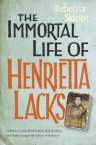
- The immortal life of Henrietta Lacks, by Rebecca Skloot (non-fiction, American author)
We returned to our fiction roots this year. Last year four of our eleven books were non-fiction, but this year only one was (except that for our Helen Garner night there was, not surprisingly, a mix of fiction and non-fiction.) This re-balancing mirrors my own reading this year.
And now, the winners …
 Eleven of our twelve currently active members voted. We had to name our top three picks, which resulted in 31 votes being cast (one member casting just one vote). The results were:
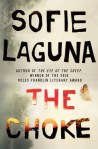
1. The choke, by Sofie Laguna (6 votes)
2. The immortal life of Henrietta Lacks, by Rebecca Skloot (5 votes)
3. The sympathizer, by Viet Thanh Nguyen; The merry-go-round in the sea, by Randolph Stow; and Austerlitz, by WG Sebald (4 votes each)
Highly commended: An unnecessary woman, by Rabih Alameddine (3 votes).
In other words, six of our eleven books received 26 of the 31 votes cast, which is similarly decisive to last year’s figures. It’s interesting, given that most books were liked
Of course, this is not a scientific survey. Votes were all given equal weight, even where people indicated an order of preference, and not everyone read every book, which means different people voted from different “pools”.
Anyhow, a reasonably varied lot. Of the five which shared the top three positions, we had two Aussies, two Americans (albeit one Vietnamese born), two women, one translated fiction, one classic and one non-fiction. No indigenous writer, though we did read one.
- The choke: Two of the comments focused on the naive narrator, one saying “rivetting read and clever use of naïve narrator”; and one referred to its emotional impact, saying “harrowing but brilliant and insightful.”
- The immortal life of Henrietta Lacks: The doctor in our midst said, simply, “every medico should read it”, while another member was more expansive, saying, “What a marvellous account of a scientific breakthrough, within the real challenges of black lives, and this family in particular. A nuanced account of a continuing ethical dilemma.”
- The sympathizer: Most of us commented on its offering a different, valuable, perspective on The Vietnam (or American) War. One member elaborated: “The bleak humor and cleverness of the writing showed why it won the Pulitzer, but it was the extraordinary character leading through a war and revolution that really made it something new and challenging.”
- The merry-go-round-in-the-sea: The two commenters said “Sophisticated, layered autobiographical novel; lovely, involving descriptions of rural Australian life; beautifully developed complex characters; humour” and “So glad to have read this superb Australian author, whose depiction of landscape, and his torn relationship with Australia and his family was truly beautiful.” Couldn’t have said it better myself.
- Austerlitz: Both commenters noted the “dense writing” with one adding that it was “a great feat of imagination” and the other referring to its “amazingly sustained mesmeric tone.”
If you are interested in our schedule for next year, I have already posted that in my most recent My Literary Week post.
And a bonus!
A good friend of mine – we met over 40 years ago in library school – has just told me her reading group’s Top Picks for the year. She’s happy for me to share them – so we’ll start with the books her group read this year:
- The dry, by Jane Harper (novel, Australian author)
- The good life by Hugh Mackay (non-fiction, Australian author)
- The rules of backyard cricket, by Jock Serong (novel, Australian author)
- And the mountains echoed, by Khaled Hasseini (novel, Afghan-born American author)
- The rip, by Robert Drewe (short story collection, Australian author)
- Lincoln in the Bardo, by George Saunders (novel, American author)
- The good people, by Hannah Kent (novel, Australian author)
- The light between the oceans, by M L Stedman (novel, Australian author)
- Warlight, by Michael Ondaatje (novel, Sri Lankan-born Canadian writer)
- The shepherd’s hut, by Tim Winton (novel, Australian author)
It’s amazing isn’t it, how two reading groups comprising women of a similar age living in the same region, end up reading completely different books! So many books, I suppose.
 Anyhow, their top picks were:
- The shepherd’s hut, by Tim Winton
- Warlight, by Michael Ondaatje
- The rules of backyard cricket, by Jock Serong
So, all fiction, all male, two Aussies, and none read by my group! But, all worthy books for reading groups, and all books I’d very happily read. Just saying – in case your group is looking around for books to read!
If you are in a reading group – face-to-face or online – would you care to share your 2018 highlights?








 Whispering Gums