Six degrees of separation, FROM The French Lieutenant’s woman TO …

Another year, but Six Degrees just keeps on keeping on – or, at least, I’ve decided to keep on keeping on with it for the moment. The Six Degrees of Separation meme is currently hosted by Kate (booksaremyfavouriteandbest). Click on the link on her blog-name to see her explanation of how it works.

John Fowles, French Lieutenant's womanHmmm … we are starting off the year well. Kate has chosen an old favourite for the first book of the year, John Fowles’ The French lieutenant’s woman, but I have not read it. Like most people, though, I have seen it, so that’s better than nothing. You may wonder why I have chosen a Czech cover for my illustration, but all will become clear in the next para …
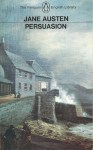
Jane Austen, PersuasionIf you know The French lieutenant’s woman and you know me, my first link will be obvious. I’d like to have been more creative, but couldn’t resist being obvious on this occasion. My link in other words is to Jane Austen’s Persuasion (my review) which has a major scene occurring on the Cobb at Lyme Regis. The Cobb is seen clearly on the Czech cover for Fowles’ book, which is set in Lyme Regis.
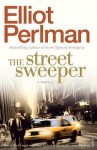
Elliot Perlman, The street sweeperNow, Austen’s main character in Persuasion is the lovely Anne Elliot. She’s a thoughtful but strong, moral person, and I reckon that if she were alive now, she’d rather enjoy the writing of a thoughtful but strong, moral Australian writer whose first name is her last, Elliot Perlman, so it’s to his The street sweeper (my review) that I’m linking next. Fundamentally, it’s about what makes a good person, something that matters to Anne Elliot too.

Rodney Hall, A stolen seasonAnyhow, Elliot Perlman has a new novel coming out in 2019, which is exciting because he’s not what you call prolific, but he always confronts challenging, timely issues. Another established and respected male author who excited me by having a new work come out last year was Rodney Hall. I reviewed that book, A stolen season, very recently.
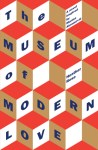
Heather Rose, The museum of modern loveA stolen season comprises three loosely connected stories, one of which concerns a man who builds an art gallery to exhibit some very special but confronting art. His values are then affected by that art. Heather Rose’s novel The Museum of Modern Love (my review) is about a rather confronting – or at least unusual – performance art piece by Marina Abramović. The art affects Rose’s characters too – in various ways. (Oh, and in a funny synchronicity, Rose has a new novel coming out this year.)

Raphael Jerusalmy, EvacuationStaying on the art theme, Raphaël Jersualmy’s Evacuation (my review) has three artists at its centre: a filmmaker, a writer, and a visual artist. While not specifically about art, the novel pits these artists, their art and the choices they make against the war around them.

Viet Thanh Nguyen, The sympathizerNot surprisingly, given its title, Evacuation commences with an evacuation, one which the three main characters eschew. Another novel which commences with an evacuation – one which most of the main characters are, by contrast very keen to be part of, so keen in fact there’s some skullduggery involved – is Viet Thanh Nguyen’s The sympathizer (my review).

So, this month we started in England (albeit with a French connection lurking in the background) and ended in Vietnam (which has its own French connection!) We spent quite a bit of time in America (as Perlman’s and Rose’s books are set there, and the central section of Nguyen’s book is based there too.) However, we also visited Australia, Israel and, briefly, Belize. Very cosmopolitan we’ve been! Four of my six books were by men, like last month.

Now, over to you: Have you read The French lieutenant’s woman? And, regardless, what would you link to? 

Blogging highlights for 2018

Here is the last of my year-end trifecta (the others being my Australian Women Writers’ Challenge wrap-up and Reading highlights posts). This is my self-indulgent post, as I like to document trends on my blog for my own record – so do ignore it if you like.

Top posts for 2018

Barbara Baynton 1892

Baynton 1892 (Presumed Public Domain, via Wikipedia)

I’m intrigued by how little change there is in my top posts. Some have been there for a few years. Almost all are for posts that are over 5 years old.

Here’s my Top Ten, by number of hits in 2018:

Now the usual analysis. Firstly, only two Australian posts appear in the Top Ten, two fewer than last year, as both Hannah Kent’s Burial rites and Barbara Baynton’s The chosen vessel dropped out. Meanwhile, Red Dog just keeps on keeping on. Unbelievable.

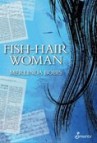
Merlinda Bobis Fish-hair woman

Intriguing that Mark Twain’s “A presidential candidate” suddenly popped into the Top Ten. Anything to do with … you know who, I wonder? And, Alice Munro and Jack London also made their way into the list. So, as last year, short stories and essays (seven of them) dominate my top ten. This must surely be because they are set texts?

Several Australian works appear in the next ten, and they are an eclectic lot: Barbara Baynton’s “The chosen vessel”, Merlinda Bobis’ Fish-hair woman, Bruce Pascoe’s Dark emu, Shaun Tan’s Eric, and Jeanine Leane’s Purple threads.

Mirandi Riwoe, The fish girlUnlike last year, my most popular 2018-written post – ranking 23rd – was not for an Australian work, but W Somerset Maugham’s short story “The four Dutchmen”. However, I read it as preparation for my review of an Australian work, Mirandi Riwoe’s The fish girl – and, guess what was the next most popular 2018 post (52nd)? You guessed it, The fish girl. It was closely followed by Claire G. Coleman’s Terra nullius (55th).

For the Monday Musings fans amongst you, my most popular Monday Musings posts were: Novels set in Sydney (posted November 2015); Australian Gothic (19th century) (posted December 2012); and Some new releases in 2018 (posted January 2018). The first two were 1st and 3rd last year.

Random blogging stats

I always share some of the searches that find my blog, so here’s a selection of this year’s:

  • last year several searches included the words analysis or reading guide, but this year the word “summary” was very popular. What does this shift say?
  • searches such as proper way to order food and “I’ll do” order restaurant linguist!: you know what post they retrieve. Apparently a lot of people say “I’ll do” when ordering food!
  • what does the book “the hate race reveal about Australian society”: hmm, sounds like it comes straight from a school assignment question, don’t you think?
  • how to reach and take problems: I have no idea what this was looking for, or, indeed, what it found.
  • salmon gums bakery: I do hope they found the bakery, wherever it is.
  • tara moss tits: oh dear, oh dear…

Other stats. I wrote slightly more posts this year, averaging 14 posts per month, one more than last year’s 13. I think 13-15 posts a month is about right for me.

Australia, the USA, and Britain, in that order, were the top three countries visiting my blog, with Canada regaining its fourth position from India which had edged out Canada last year. The Philippines remains 6th, largely, I think, because of interest in my review of Merlinda Bobis’ Fish-hair woman.

My most active commenters (based on the last 1000 comments, says WordPress) were Lisa (ANZLitLovers), Bill (The Australian Legend), Brian (Babbling Books), Pam (Travellin’ Penguin), Ian Darling, and Buried in Print. As always, a big thanks to them and to all of you who comment. I particularly appreciate the always respectful conversations when we disagree. And thanks the the rest of you too. Whether or not you comment, I love that you visit my blog.

Challenges, memes and other things

I only do one challenge, the AWW Challenge which I wrapped up this week. (Here’s the Sign Up page if you’d like to join us). And I only do one regular Meme, #sixdegreesofseparation run by Kate (booksaremyfavouriteandbest), but I occasionally do others. You can see all the memes I do on my “memes” category link.

I also took part in Bill’s (The Australian Legend) AWW Gen 1 Week, and Lisa’s (ANZLitLovers) Indigenous Literature Week and Elizabeth Jolley Week.

My biggest highlight of the year, though, was being asked once again to be the blogging mentor for a program sponsored by the ACT Writers Centre, the National Library of Australia and the Street Theatre. The program was re-titled to New Territory but its aim remains: “to stoke cultural conversations in the ACT”. I enjoyed working with Amy over the second half of the year. If you’re a regular reader here you will have seen our wrap-up posts (Amy’s and mine). Do check out Amy’s blog, The Armchair Critic. Her thoughtfulness about what she reads and sees makes for excellent reading and she’d love to hear your opinions.

And so to 2019 …

To conclude, a big thanks to everyone who read, commented on and/or “liked” my blog last year – and to all the other wonderful bloggers out there, even though I don’t always manage to visit everyone as much as I’d like. Some people find the Internet and Social Media cruel and unwelcoming, but I don’t find that in our litblogging corner of cyberspace where discussions are lively but respectful (in my experience anyhow.)

And so, I wish you all happy reading in 2019, and look forward to discussing books with you here or there!

Finally, as I concluded last year, a very big thanks to the authors who write the books, and to the publishers and booksellers who get the books out there. I hope 2019 will be satisfying for us all.

Reading highlights for 2018

If you are a regular here you’ll know that my Reading Highlights post, which is my answer to those Top Reads posts that many bloggers do, will not contain an ordered list of the books I considered my “best” of the year. I find that just too hard to do (though I did make a stab at it on Amy’s blog last month.) I prefer to talk about “highlights”, that is, those books and events that made my reading year worthwhile.

Literary highlights

Literary highlights mean literary events, and there were many wonderful ones in Canberra this year. I didn’t get to near as many as I’d wish, but I enjoyed those I did attend:

  • Festival Muse: Muse is a cafe, bookshop and event venue, and a popular haunt for Canberra book people. For the second year running they held, in March, their Muse Festival. It’s a busy time of year and a long weekend, so I only attended the opening session, Turn Me On. The aim was for the five speakers to share “the lightbulb moments and hidden drivers” behind what turned them on (of course). The speakers included old hands, like journalist Michael Brissenden, and the up-and-coming, like feminist writer Zoya Patel. A wonderful event.
  • Sydney Writers Festival live streams some of its sessions to regional locations, and Canberra was one of those in 2018. I attended three sessions: Conflicting narratives, Annabel Crabb’s BooKwiz, and Emily Wilson on Translating the Odyssey. How wonderful modern technology is when it facilitates events like this.
  • Canberra Writers Festival about which I wrote six posts. You can find them by clicking this link and then selecting those posts for the 2018 festival.
  • Author interviews/conversations of which I only attended a few of the many offered, but those I attended were nicely varied: Robyn Cadwallader, Nadia Wheatley, and Elizabeth Kleinhenz.
  • Annual lectures: the NLA’s Seymour Biography Lecture, given by broadcaster Richard Fidler; and Manning Clark House’s Dymphna Clark Lecture given by historian Clare Wright. As last year, we had supper at Muse after both lectures.

Reading highlights

And here, as in previous years, is where I share some observations about my reading this year. These aren’t necessarily my “top” reads, but all were good ones:

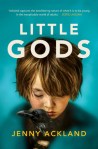
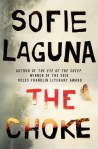
  • Strange synchronicities (1): Setting: The universe, as I mentioned in one of the posts, is clearly telling me to make good on my plan to visit the Mallee region because every second book I read this year – well, I’m exaggerating a little – seemed to be set in the Mallee or near it: Jenny Ackland’s Little gods, Charlie Archbold’s Mallee boys, Sofie Laguna’s The choke, Emily O’Grady’s The yellow house, and Sue Williams’ Live and let fry. I’m not sure that these books presented the Mallee in its best light – there were a lot of struggling families – but this flat, hot and dry, somewhat remote, self-contained region made an excellent backdrop for drama.
  • Strange synchronicities (2): Narrator: I read a lot of child narrators/protagonists, most of them from the Mallee! How did that happen? Sue Williams’ Live and let fry is the exception, but to the remaining four Mallee-area novels, I add three others featuring young protagonists: Nick Earls’ LA-set novella, NoHo, Wendy Scarfe’s Adelaide-based novel The day they shot Edward and a book I’ve just finished but won’t post until 2019, Jarrah Dundler’s northern NSW set Hey brother. All but two of these were adult fiction. Writing child narrators for adults, without becoming sentimental or being simplistic, is a challenge, but when done well – like, for example, Sofie Laguna’s The choke – these voices add a depth that can open our eyes to the impact of adult actions and/or enable us to see adult behaviour from a different perspective.
  • Exotic places I may never get to, like Beirut in Rabih Alameddine’s An unnecessary woman, and Tel Aviv in Raphaël Jerusalmy’s Evacuation. These two books were revelations, in very different ways, and I’d highly recommend both.
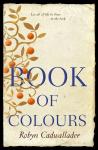
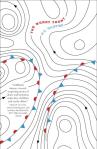
  • Great covers: Covers aren’t ultimately important to me, but I do love gorgeous ones. Two particularly caught my attention this year: Robyn Cadwallader’s Book of colours which conveys a sense of mediaeval lusciousness appropriate to its subject matter while also being modern, clean, fresh; and HC Gildfind’s The worry front which is inspired by the front lines on a weather map. So evocative, so metaphorical.
  • Interesting finds: I read three early twentieth century short stories, two from Trove, “The bridge” (1917) and “Christmas tree” (1919) by Katharine Susannah Prichard, and one sent to my by Pam (Travellin’ Penguin), “The hand” (1924) by ML (Mollie) Skinner. I love reading these writers from the past.
  • Biggest surprise (1): I didn’t plan to read Sarah Krasnostein’s The trauma cleaner because I expected it to be one of those sensationalist stories, but how wrong I was. It’s an intelligently written respectful book about a warm and complex person well worthy of a biographer’s time.
  • Biggest surprise (2): I couldn’t believe that such a dense, contemplative book as WG Sebald’s Austerlitz could be a page-turner, but it was.
  • The odd man: I don’t mean by this that the men themselves were odd but that there weren’t many of them in my reading diet this year. However, I loved reading Rodney Hall again, with his provocative A stolen seasonRichard Flanagan’s First person was an engaging and intriguing read too, and John Clanchy’s novel about women, Sisters, was right up my alley. Then there was the daddy of them all – well, I mean, one of the great writers from the past – EM Forster. Loved re-reading Howard’s end.
  • The ones that got away, or, the books I really wanted to read, but didn’t. There are too many of them, but two that really bother me are Jane Rawson’s From the wreck, and Gerald Murnane’s Border districts.

Michelle Scott Tucker, Elizabeth MacarthurThere were many more great books. Michelle Scott Tucker’s biography of Elizabeth Macarthur was excellent, both informative and engaging, as was Clare Wright’s You daughters of freedom. I read several Australian classics, and was impressed again by works by some of our older, fearless women writers – Carmel Bird, Helen Garner, and the late Elizabeth Jolley.

Some stats …

And here is where there are some surprises (for me, anyhow):

  • 80% of my reading was fiction, short stories and novels (versus 53% in 2017): I said last year that I wanted to rebalance the fiction-nonfiction ratio towards more fiction. I sure did it – and then some!
  • 70% of the authors were women (versus 73% in 2017,  65% in 2016, and 67% in 2015): I like to read women writers and reading them is one of my specific reading interests, but 70% is a little higher than it need be. I’m not unhappy though!
  • 18% were NOT by Australian writers (versus 35% last year and 32% in 2016): Last year, I said that roughly one-third non-Australian, two-thirds Australian felt like a fair ratio. Less than 20%, however, does not feel “balanced” and I’d like to redress it next year.
  • 28% were published before 2000 (similar to last year’s 31%): I’m happy with this.
  • 35% were published in 2018, which seems reasonable.

Last year, I noted that I don’t set reading goals – except a general one of trying, vainly, to reduce the TBR pile – but I did say that I’d like to lift my fiction ratio. I did achieve that. I also increased my TBR reading by 100% – meaning I read 6 books from the TBR pile (defined as books I’ve owned for over a year) compared with 3 in 2017. Woo hoo!

Overall, another good reading year containing some excellent reads. I’m grateful for all of you who read my posts, engage in discussion, recommend more books and, generally, be all-round great people to talk with. Thank you for being here.

I wish you all a wonderful 2019.

What were your reading or literary highlights for the year?

Monday musings on Australian literature: Australian Women Writers Challenge 2018

AWW Badge 2018As has become tradition, I’m devoting my last Monday Musings of the year to the Australian Women Writers Challenge* – but, this year it coincides with New Year’s Eve. When this post goes live, who knows what revelry I’ll be up to! Hmm … I can but hope! Seriously, though, I wish all you wonderful Whispering Gums followers an excellent 2019 in whatever form you would like that to take. I also want to thank you for supporting my blog with your visits and comments. You make this blog such an enjoyable experience for me.

Now, the challenge … it has continued to go very well. In my area of Literary and Classics, we consolidated 2017’s impressive increase in the number of reviews posted, with roughly the same number posted again this year. Theresa Smith (of Theresa Smith writes), continued to oversee the day-to-day management of the blog, enabling Challenge founder Elizabeth Lhuede to be less hands-on. Elizabeth is, however, still an active presence, particularly when it comes to resolving technical issues, reviewing our policies (such as “do we need to update our definition of historical fiction”?), and so on. The database now contains reviews for nearly 5,200 books across all forms and genres, from all periods, of Australian women’s writing. This means that the number of books reviewed on our database increased by 800 books – a 17% increase. Most of these were new releases but older books were also added, making the database particularly rich for readers interested in the long tail!

Most years, I’ve shared some highlights from the Challenge, but this year was more one of consolidation than of many new happenings, so, in the interests of keeping this post short and to the point, I’ll move straight on to reporting on the reviews I contributed for the year.

My personal round-up for the year

Let’s start with the facts, followed by some commentary. I posted 34 reviews for the challenge, four more than I did in 2016 and 2017, but one, admittedly, was a guest post. Here they are, with links to my reviews:

Jenny Ackland, Little godsFICTION

CHILDREN’S PICTURE BOOKS

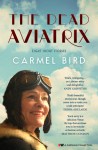
Carmel Bird, Dead aviatrixSHORT STORIES

SCRIPTS

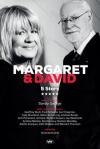
Amanda Duthie, Margaret and DavidNON-FICTION

This year I reversed the trend of previous years which saw me reading fewer and fewer novels for the Challenge – 48% in 2015, 40% in 2016, and only 34% in 2017 – compared with other forms of writing. This year, however, novels comprised over 55% of my AWW challenge reading, which proportion more closely reflects my reading preferences.

I read no poetry or verse novels this year, but I did read two plays by Garner. I also read fewer short story collections or anthologies, but I did read more Classics, including individual short stories. I’d love to read more of those. My non-fiction reading was more diverse – that is, significantly fewer memoirs than last year.

Claire G Coleman, Terra nulliusI’m disappointed that I only read two books this year by Indigenous Australian women – Claire G. Coleman’s novel and Marie Munkara’s memoir. I’d like to improve this next year – and have two right now on the “definitely-will-be-read pile”, so that’s a start.

Anyhow, if you’d like to know more about the Challenge, check it out here. We are also on Facebook, Twitter (@auswomenwriters), GoodReads and Google+. Do consider joining us. All readers are welcome.

Finally, a big thanks again to Theresa, Elizabeth and the rest of the team. I love being part of this challenge, partly because I believe in its goals but also because the people involved are so willing and cooperative. They are a pleasure to work with. See you in 2019.

And so, on to 2019

AWW Challenge 2019 BadgeThe 2019 sign up form is ready, so this is also my Sign Up post for next year. As always, I’m nominating myself for the Franklin level, which is to read 10 books by Australian women and post reviews for at least 6 of those. I expect, of course, to exceed this.

* This challenge was instigated by Elizabeth Lhuede in 2012 in response to concerns in Australian literary circles about the lack of recognition for women writers. I have been one of the challenge’s volunteers since 2013, being responsible for the Literary and Classics areas.

Maria Tumarkin, Axiomatic (Guest post by Amanda) (#BookReview)

I am thrilled to host this post by Amanda who responded to my call on the Australian Women Writers Challenge for a review of Maria Tumarkin’s Axiomatic, which won the Best Writing Award in this year’s Melbourne Prize for Literature awards. However, Amanda does not have a place to post reviews on-line, so we agreed that I would post it here so it can then be added to the AWW database. Thanks very much Amanda!

Amanda notes that Tumarkin has her own web page, and that Axiomatic has also been shortlisted for the Victorian Premier’s Literary Awards to be announced at the end of Jan 2019.

Amanda’s review

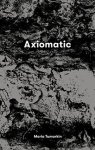
Maria Tumarkin, AxiomaticHaving lived outside Australia for several decades I had not heard of Tumarkin.  A professor in Creative Writing at Melbourne University, she is the author of several non-fiction titles, Axiomatic being her 4th and her first with Brow Books publishing – an independent, not-for-profit publisher dedicated to innovative writing at about marginalised topics.

At the time of this review, Axiomatic had won the Melbourne Prize for Literature’s 2018 Best Writing Award. And Axiomatic is great writing but it is also flawed.

More like a compilation of long essays, the title is derived from 5 axioms which are the themes driving each section of the book. The writer then goes on through the essays to dispel the axiom through a collection of real life case studies and experiences.

She opens with her strongest and most heart-wrenching piece “Time Heals All Wounds” about teenage suicide in Australia. Tumarkin’s writing is a powerful composite of investigative journalism, analytical thinking and literary technique. Brutal and unflinching – delivering a  punch to the gut – Tumarkin is able to conjure in the mind’s eye all the complexities and nuances of grief, love and survival  through snippets of conversation and quotidian details. She includes numerous references to contemporary writers, classical literature, Greek mythology and philosophers, deftly combining both fiction and non-fiction.

In terms of critiques – and there are a few – the writing never lets up. There is no pause, no distraction, no break in the narrative for the reader apart from what is self-imposed. Sentences have been meticulously crafted and her writing sings, but it’s hard to appreciate it all because Axiomatic is so unrelenting.

Tumarkin’s arguments are also often convoluted. She veers off on tangents at the slightest provocation and then expands these into auxiliary sections. Her analysis is at its best in the first three sections when dealing with complex social issues, and is less effective and more self-indulgent when focusing on her personal friendships and relationships. (The last section – “You Can’t Enter the Same River” – seems out of place). The book is uneven in quality.

Axiomatic is not balanced nor fair in its judgments. Some would question Tumarkin’s right to take a position on any of these subject but, as she states herself, this has never stopped her in the past, and it certainly doesn’t now. She likes “to kick the floorboards out from under her readers”, so are the shock techniques of her writing her key selling points? If so, she is selling short the stories of these survivors.

Reasoning aside, what Axiomatic lacks from a visceral perspective is hope. Fictitious happy endings are overrated, but hope is not. Tumarkin puts forth unattainable Utopian standards both for society and its participants in order to fix its ills, and therefore Axiomatic is ultimately nihilistic.

As a reader, the one question I have is – what does Tumarkin wish to achieve with this book? She paints in grim detail an Australian society bereft with failings. The unsung heroes rallying against the system and circumstances are alone. But these problems of teenage suicide, poverty, abuse ,corruption and inadequate systems are perennial and  can be made about many countries.

There are no easy solutions to these problems. Tumarkin does not have the answers. Most readers will be both devastated and frustrated with the pieces – is it meant to serve as a rally cry for the rest of us to do more to rectify these issues? You can’t read Axiomatic and not be moved – but then what do you do with this awareness?

If you’ve read Axiomatic, Amanda and I would love to know what you think about it, and Tumarkin’s intentions?

AWW Badge 2018Maria Tumarkin
Axiomatic
Brow Books, 2018
201pp.
ISBN: 9781925704051

New Territory Litbloggers’ Year in Review, 2018

When my 2018 New Territory blogging mentee Amy (of The Armchair Critic) suggested that we do some sort of joint end-of-year blog post I loved the idea. The only question was what would we talk about, and how would we do it? It wasn’t too hard to decide former, as the subject matter was obvious: we would write about our favourites reads of this year, what we’d like to read over summer, and the ACT Writers Centre’s New Territory program which brought us together

As for how, we tossed around various formats, but settled on something simple: each of us would write a post responding to our agreed topics, and would then post the other person’s answers on our own blog. This means that you can read Amy’s responses below, and mine on Amy’s blog.

I do hope you enjoy Amy’s thoughts. We would both love to hear your comments on her reading.

Amy’s highlights

Best Fiction

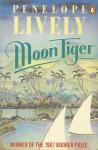
Penelope Lively, Moon tiger

I’ve managed to narrow it down to three. All of them happen to have won prizes but this is a coincidence; I take an interest in prizes but I don’t let my reading habits be defined by them. First up is Moon Tiger by Penelope Lively. This won the Booker Prize in 1987. It tells the story of Claudia, a journalist, who mentally revisits her life as she is dying. The fluidity of Lively’s prose reminds me of Virginia Woolf, and, like Woolf, it encapsulates multiple perspectives of the same event. It is a short book but extremely dense, though in a good way – it is emotionally and historically rich, spanning events throughout the twentieth century including the second world war.

My other favourite novel was The bookshop by Penelope Fitzgerald which coincidentally is also a previous Booker winner. I read it after seeing the movie, which I reviewed on my blog. I loved Fitzgerald’s witty turn of phrase and the sense of quiet devastation that her understated prose leaves you with. A hard-hitting meditation on justice, personal culpability and the cost of pursuing a life in art.

My final fiction read is The museum of modern love by Heather Rose which won the 2017 Stella Prize. This book centres around a performance work at MONA in New York by Marina Abramovic and weaves aspects of Abramovic’s life with the contemporary life of the protagonist, Arky Levin, whose wife is seriously ill. It explores themes including the purpose of art, and the nature of human connection.

Best Non-fiction

Again I have to pick the top three. First up is Murder without a motive by the Saturday Paper’s chief correspondent Mart McKenzie Murray. Murray investigates the murder of schoolgirl Rebecca Ryle in Perth’s northern suburbs in 2004, and how her family manages to live in the knowledge of what happened to her. Mckenzie-Murray and I both grew up in Perth’s northern suburbs around where the murder took place, so I identified strongly with his (not so flattering) evocations of it. What clinched the book for me was how Mckenzie-Murray explored how the life trajectory of Ryle’s murderer was conditioned by his stultifying surroundings which were characterised by toxic masculinity.

Next up is Draw your weapons by Sarah Sentilles. I heard Sentilles at this year’s Adelaide Writer’s Week, and I highly recommend these podcasts for summer listening. Sentilles, a pacifist and former art history professor, writes about the ethical entanglements we all have with our society’s violent structures, and how we can take both a moral and practical stand against being implicated in perpetuating such violence. The book is held together by the stories of two men; a conscientious objector from World War Two and a soldier who worked at Abu Graib. Saying a book changed your life can be a throwaway line, but in this case it is true.

Lastly is Small wrongs: How we say sorry in life, love and the law by Kate Rossmanith. Rossmanith is an academic with degrees in theatre and anthropology. The book is “hybrid,” as she examines remorsefulness and redemption in her own life, as well as in other spheres such as the law. Her writing is beautiful and she is brutally honest about her own actions, which is very compelling and refreshing. I literally could not put this book down.

Best biography

I reviewed Do oysters get bored by Rozanna Lilley for New Territory. Lilley is such a talented writer, and I enjoyed the way she teased out her complicated relationships with her parents and the artistic community she grew up surrounded by. As I wrote in my review, I really believe Lilley has done Australian society a major service by demonstrating the moral conundrums and aftermath of artists’ delusional or egocentric behaviour.

My other favourite was Twin by Allen Shawn. Shawn is a composer and musician whose father was William Shawn, the long-serving editor of the New Yorker. Like his father, Allen has many anxieties and phobias which he has also written about. Twin is an account of how Shawn’s autistic twin sister Mary was removed from the family at the age of five and has spent her life in an institution. The dynamics of Shawn’s family are complex – there is a major twist about his parents’ relationship, and it really demonstrates the extent to which self-deception and sacrifice, mostly on the part of mothers, are necessary to maintain a bearable home life. Shawn’s writing is poetic and devastating.

Highlights of my summer reading list

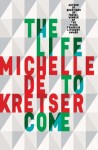
  • Michelle de Kretser, The life to comeThe life to come by Michelle de Kretser and No more boats by Felicity Castagna: I heard these two authors together at Adelaide Writers Week and am really looking forward to getting into their work
  • The helpline by Katherine Collett: Collett is co-creator of the podcast The First Time and this is her first book. Apparently it is hilarious, and revolves around a mathematician who works on a senior citizens’ helpline …
  • Shell by Kristina Olsson: set during the building of the Opera House, a building I am fascinated by. It is billed as a moving reflection on art and shame.
  • Giving up the ghost by Hilary Mantel: I came across this while researching Mantel’s views on historical fiction for my first New Territory piece. It is about her relationship with her family history.
  • Any ordinary day by Leigh Sales: I picked this up in a bookshop and was totally compelled by the first few pages.

What has New Territory meant to me?

New Territory has been great for many reasons. I’ve spent time with the amazing Sue Terry and have built relationships with the wonderful staff at the ACT Writers Centre, whose advice I really value. I’ve been exposed to rehearsals at The Street and have come to understand what it takes to produce theatre. I have attended some great events at the National Library, not to mention being able to speak to Rozanna Lilley courtesy of the Canberra Writers Festival.

From a craft point of view it was helpful to have the experience of being edited, and seeing how a good editor can really improve your work. I was also really privileged to attend the Hard Copy conference, where I heard from writers, agents and publishers about the publishing industry and how to get people to read your writing. This was invaluable, and helped me develop my goals for next year, which include pitching to a writers festival as a presenter, and networking with the writing community both online and at events.

Books given and received for Christmas, in 2018

In what is becoming a Boxing Day tradition – I have many end-of-year traditions it seems – I am doing, again, a post on the books I gave and received this Christmas. There weren’t many as it’s becoming hard to pick the right books for people, somehow, even though we are a reading family.

Robert Drewe, The true colour of the seaHere are the books I gave:

  • For Ma Gums, something different from the word and dictionary oriented books of recent years: Robert Drewe’s short story. collection, The true colour of the sea, because she enjoys a good short story.
  • For Son Gums, who likes something a bit humorous or edgy: Andrew Sean Greer’s Pulitzer prize-winner Less.
  • For new Grandson Gums, who is going to love books whether he likes it or not, a few books including Alison Lester’s Kissed by the moon.
  • For Brother Gums: Nana Kwame Adjei-Brenyah’s Friday black, because it’s hard to find something he hasn’t read and I was hoping this would be that thing!
  • For Sister-in-law Gums: Sukegawa’s Sweet bean paste, because a bit of sweetness is just what the doctor ordered.
  • For the other Sister-in-Law Gums: Sukegawa’s Sweet bean paste, because she enjoys Asian literature.
  • For Gums’ Californian friend, to whom I always like to send something Aussie: Michelle de Kretser’s The life to come (my review), because I think many of its issues are universal to other Western nations.

Deborah Hopkinson, Ordinary, extraordinary Jane AustenAs for what I received, a small but much appreciated selection:

  • From Parent Gums: Trent Dalton’s Boy swallows universe, because I put it on my list as it’s my reading group’s next read.
  • From Brother and Sister-in-law Gums: Maria Tumarkin’s Axiomatic, because my bother loved it and thinks I will too.
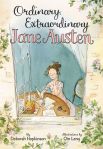
  • From a good friend who knows me well: Deborah Hopkinson’s gorgeous children’s picture book biography Ordinary, extraordinary Jane Austen: The story of six novels, three notebooks, a writing box, and one clever girl, because, well, that’s obvious isn’t it!

What about you? Any Christmas book news you care to report?

Monday musings on Australian literature: ABC RN presenters name their 2018 summer picks

Last Monday, I posted the best picks for 2018 by ABC RN’s Book Show presenters and some of their guests. I considered not posting at all this Monday. After all, it’s Christmas Eve and most of us are busy, but then, yesterday, I saw that the ABC had posted “2018’s best summer reads” recommended by their Hub on Books and Bookshelf program presenters. Of course, I couldn’t resist.

Unlike last week’s post, though, where I justified giving equal weight to all the picks, this week I’m going to prioritise their Aussie selections, and then mention the rest at the end. Seems fair enough for this Monday Musings series!

So, just four of the eleven picks were by Aussies, and they are:

  • Michael Mohammed Ahmed’s The lebs (Hachette): Sarah L’Estrange , producer of The Hub on Books, says that “There’s a lot of violence, homophobia and sexism in the novel — the author doesn’t recoil from an honest portrayal of life through the eyes of his protagonist” but that it is also “a lyrical, at times comical and often challenging read”.
  • Melissa Lucashenko’s Too much lip (UQP) which is on my TBR and I’ll be getting to it soon, maybe in summer!: Kate Evans of The Bookshelf, calls it “a cracking tale of family dynamics” that has “a touch of magic that’s light enough to feel entirely real, and keep readers reaching for words like ‘tough’ and ‘uncompromising’.” (Lisa has reviewed.)
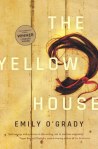
  • Emily O'Grady, The yellow houseEmily O’Grady’s The yellow house (Allen & Unwin) (my review): The Hub on Books’ Claire Nicholls describes it as “a chilling book that explores the different ways that trauma resonates through a family.”
  • Tracy Sorensen’s The lucky galah (Picador Australia): Sarah L’Estrange said that “While it might sound kooky, the novel is written in a warm, vivid and charming manner. Who knew that galahs could provide insight into 1960s Australian family dynamics?” (Lisa has reviewed and while it’s not her top pick, she thinks debut author Sorensen has promise.)

Interestingly, of last year’s six Aussie picks, I had read none at the time, and have picked up only one since, Sarah Krasnostein’s The trauma cleaner (my review). However, this year, I have already read one, as I’ve mentioned, and will be reading at least one other very soon.

Anyhow, the other picks were:

  • English writer Pat Barker’s The silence of the girls
  • American writer Amy Bloom’s White houses
  • Northern Irish writer Anna Burns Booker prize winner The milkman
  • American writer Andrew Sean Greer’s Pulitzer prize-winner Less
  • Chinese-born American writer Ling Ma’s Severance (which was published here by Text)
  • Indian writer Anuradha Roy’s All the lives we never lived
  • Canadian debut novelist Katherena Vermette’s The break (published here by Allen & Unwin).

While there was a preponderance of non-Aussie books in their picks, the selection as a whole feels more diverse than last year’s, with Arab-Australian writer Ahmed and indigenous Australian Lucashenko making up two of the four Aussie selections, and the rest not being your mainstream English and American writers (not to cast aspersions on the quality of the writing from those writers!) How great, for example to see a Canadian debut author here. The versatile Vermette is from Winnipeg and is of Métis descent, a group I hadn’t heard of before.

I should make a point here about my reference to diversity. My raising the issue is somewhat equivalent to discussion about quotas or not for increasing diversity in workplaces, in parliament, etc. I believe in merit, but I also believe that merit is often not judged in a fair playing field. This means that equally meritorious writing (however we define that) from non-dominant culture writers does not necessarily get equal exposure, because, for example, publishers, agents, and even, if they do get published, readers, do not take a “risk” on them. The more we talk about the issue, the more, I hope, the opportunities will be equalled.

Anyhow, if you are wondering about my picks, I’ll be joining the fray next week when 2019 arrives … I know you can hardly wait!

Meanwhile, have you read any of these books, and would you support the presenters’ recommendations for them?

Rodney Hall, A stolen season (#BookReview)

Rodney Hall, A stolen seasonRodney Hall is one of those Australian authors who deserves more attention than he seems to get. Consequently, I’m thrilled to at last include him in my blog, with his latest novel A stolen season. I was introduced to Hall back in the late 1980s when my reading group read his surprising novel, Just relations, and I’ve also read another surprising novel by him, The day we had Hitler home. Hall is good at surprising, because A stolen season isn’t exactly run-of-the-mill, either, in terms of its characters and set-up.

It’s a tricksy book comprising three different, more-or-less alternating, story-lines. The chapters go like this: Adam and Bridget, Marianna, Adam and Bridget, John Philip, Adam and Bridget, Marianna, Adam and Bridget. Adam and Bridget, then, form the driving story, and there seems to be no connection between the three sets of characters for a very, very long time. Indeed, by the middle story, John Philip, the only literal connection is a minor character from the first Adam-and-Bridget chapter appearing as a rather minor character in this one. Later, a similarly loose, not-exactly-direct, connection occurs between Adam and Marianna. What gives, we wonder? Who are Marianna and John Philip? Why are we also reading about them? And, will they all ever actually meet, as we expect in novels like this? Well, all I’ll say is that Hall does not, as is probably his wont, do the expected. No, I’ll say more in fact: if we focus our energies on worrying about this structural plot issue, we risk missing what’s important, which is the overarching idea that gradually reveals itself, an idea relating to money and power, and to the way they can not only deceive but actively generate inhumane/anti-human values.

The main story, Adam and Bridget’s, centres on soldier Adam. He returns from fighting with the Coalition of the Willing in Iraq so severely damaged that he can only live, get around, by means of an exoskeleton (the “Contraption”) that is activated and controlled by his brain, something which Hall explains at the end is not complete science fiction. Adam and Bridget’s story is surprising from the beginning, because, while we realise that this injured soldier, Adam, whom we’ve just met, has a wife, we don’t realise, until he arrives home, that the marriage was essentially over by the time he’d gone to war. This was not because they hated each other but because they’d married on a whim – “it seemed a fun thing to do at the time, but they were just kids and kidding” – and the marriage had run its course. Unfortunately for Bridget, she had never got around to legally leaving Adam after he had physically left her to go to war, because it had never seemed necessary. Now what was she to do?

Adam and Bridget’s story is darkly humorous, but also deeply moving, not least because Hall imbues them with a humanity that we can relate to and recognise. They embody the sorts of inner conflicts anyone would experience in a situation like this – Adam, desiring his wife but incapable of achieving what he most wants, wants, genuinely, generously, to set her free, and Bridget, feeling trapped but empathetic, increasingly tender, wants to do the right thing by this decent strong man. Hall writes their story – writes all of the stories in fact – from the individual characters’ third person points of view. Not only does this make for engrossing reading, but it reveals Hall to be a writer who knows, fundamentally, what makes us human.

Meanwhile, Marianna, a German-born Australian, is on the run in Belize after discovering that her husband had seriously deceived her and was implicated in the greed that underpinned what we Australians call the GFC. While Adam and Bridget’s story is the most personal one, hers is the more mysterious, mystical one. Why is she in Belize, and what does she want with the Mayan pyramid? It’s all to do with numbers, mathematics, and end-of-the world predictions. Hers is the hardest story to pin down, because of its more mystical quest. She sees the temple:

… the structural puzzle of steps and platforms on all sides forming a pyramid crowned by a little room with a single doorway–like the lonely eye of the soul.

Marianna gets it. With neither front nor back, nor left nor right, the geometry is inward looking.

And then there’s John Philip, 70-something, indolent and mega wealthy from family money, who suddenly finds himself in possession of a strange bequest – a long-lost book of “the” artist Turner’s erotic sketches of female pudenda. What he does with these is to thumb his nose at his family in a stylish but shockingly public way while, at the same time, making a statement about art. His is the central or peak story to and from which the other chapters formally if not narratively move. It is satiric, rather than tragic, and has a guffaw-producing, conversation-ending last line, but, in placing him at the centre of his story, Hall is surely presenting his manifesto on the meaning and role of art. John Philip realises:

‘The thing about art’–he finds words for the revelation taking shape in his mind–is that art can be a gift. It’s for whoever sees what it is. That’s what makes it art in the first place.’ He probes deeper. ‘I suppose that also makes it political. I mean, if you can’t stop it speaking the truth.’

Back to Adam and Bridget. What is so special about their story is the way Hall weaves the political into the personal so closely that they are almost indistinguishable. It is here that the “cost” of war is plain to see; it is here that the “money” theme – the idea that “the accountants” are at “the wheel” – is played out to its bitter end; and yet, it is also here that people’s ability to be quietly heroic in the only important way, in our treatment of each other, is laid bare. It’s an astonishing novel about some specific issues of our time, namely the Iraq War and the GFC, and about those wider questions concerning being human and the meaning of art.

Now, however, I’m kicking myself, because this book deserves a wider audience than I’ve seen it getting – and, unfortunately, its turn came up on my reading pile at the slowest time of year for blog reading. It’s a time when readers might peruse various “best-of” lists, but, at least as I’ve observed in previous years, pay less attention to more serious posts. This is a real shame, because both Rodney Hall and this, his latest book, deserve some real attention. It’s a book that will pay the reader who likes to take time to ponder in spades.

Lisa (ANZLitLovers) also enjoyed this book.

Rodney Hall
A stolen season
Sydney: Picador, 2018
342pp.
ISBN: 9781760555443

(Review copy courtesy Pan Macmillan Australia)

My reading group’s top picks for 2018

Having enjoyed doing our top picks last year, my reading group decided to repeat the exercise this year. I’m assuming that, in the spirit of end-of-year lists, you might be interested to see the results, particularly as you will all know at least some of these books.

I’ll start, though, by listing what we read in the order we read them (with links to my reviews):

We returned to our fiction roots this year. Last year four of our eleven books were non-fiction, but this year only one was (except that for our Helen Garner night there was, not surprisingly, a mix of fiction and non-fiction.) This re-balancing mirrors my own reading this year.

And now, the winners …

Sofie Laguna, The chokeEleven of our twelve currently active members voted. We had to name our top three picks, which resulted in 31 votes being cast (one member casting just one vote). The results were:

1. The choke, by Sofie Laguna (6 votes)
2. The immortal life of Henrietta Lacks, by Rebecca Skloot (5 votes)
3. The sympathizer, by Viet Thanh Nguyen; The merry-go-round in the sea, by Randolph Stow; and Austerlitz, by WG Sebald (4 votes each)

Highly commended: An unnecessary woman, by Rabih Alameddine (3 votes).

In other words, six of our eleven books received 26 of the 31 votes cast, which is similarly decisive to last year’s figures. It’s interesting, given that most books were liked

Of course, this is not a scientific survey. Votes were all given equal weight, even where people indicated an order of preference, and not everyone read every book, which means different people voted from different “pools”. 

Anyhow, a reasonably varied lot. Of the five which shared the top three positions, we had two Aussies, two Americans (albeit one Vietnamese born), two women, one translated fiction, one classic and one non-fiction. No indigenous writer, though we did read one.

Selected comments (accompanying the votes)
  • The choke: Two of the comments focused on the naive narrator, one saying “rivetting read and clever use of naïve narrator”;  and one referred to its emotional impact, saying “harrowing but brilliant and insightful.”
  • The immortal life of Henrietta Lacks: The doctor in our midst said, simply, “every medico should read it”, while another member was more expansive, saying, “What a marvellous account of a scientific breakthrough, within the real challenges of black lives, and this family in particular. A nuanced account of a continuing ethical dilemma.”
  • The sympathizer: Most of us commented on its offering a different, valuable, perspective on The Vietnam (or American) War. One member elaborated: “The bleak humor and cleverness of the writing showed why it won the Pulitzer, but it was the extraordinary character leading through a war and revolution that really made it something new and challenging.”
  • The merry-go-round-in-the-sea: The two commenters said “Sophisticated, layered autobiographical novel; lovely, involving descriptions of rural Australian life;  beautifully developed complex characters; humour” and “So glad to have read this superb Australian author, whose depiction of landscape, and his torn relationship with Australia and his family was truly beautiful.” Couldn’t have said it better myself.
  • Austerlitz: Both commenters noted the “dense writing” with one adding that it was “a great feat of imagination” and the other referring to its “amazingly sustained mesmeric tone.”

If you are interested in our schedule for next year, I have already posted that in my most recent My Literary Week post.

And a bonus!

A good friend of mine – we met over 40 years ago in library school – has just told me her reading group’s Top Picks for the year. She’s happy for me to share them – so we’ll start with the books her group read this year:

  • The dry, by Jane Harper (novel, Australian author)
  • The good life by Hugh Mackay (non-fiction, Australian author)
  • The rules of backyard cricket, by Jock Serong (novel, Australian author)
  • And the mountains echoed, by Khaled Hasseini (novel, Afghan-born American author)
  • The rip, by Robert Drewe (short story collection, Australian author)
  • Lincoln in the Bardo, by George Saunders (novel, American author)
  • The good people, by Hannah Kent (novel, Australian author)
  • The light between the oceans, by M L Stedman (novel, Australian author)
  • Warlight, by Michael Ondaatje (novel, Sri Lankan-born Canadian writer)
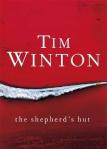
  • The shepherd’s hut, by Tim Winton (novel, Australian author)

It’s amazing isn’t it, how two reading groups comprising women of a similar age living in the same region, end up reading completely different books! So many books, I suppose.

Tim Winton, The shepherd's hutAnyhow, their top picks were:

  1. The shepherd’s hut, by Tim Winton
  2. Warlight, by Michael Ondaatje
  3. The rules of backyard cricket, by Jock Serong

So, all fiction, all male, two Aussies, and none read by my group! But, all worthy books for reading groups, and all books I’d very happily read. Just saying – in case your group is looking around for books to read!

If you are in a reading group – face-to-face or online – would you care to share your 2018 highlights?