Jane Austen, Emma (Vol. 1, redux 2025)

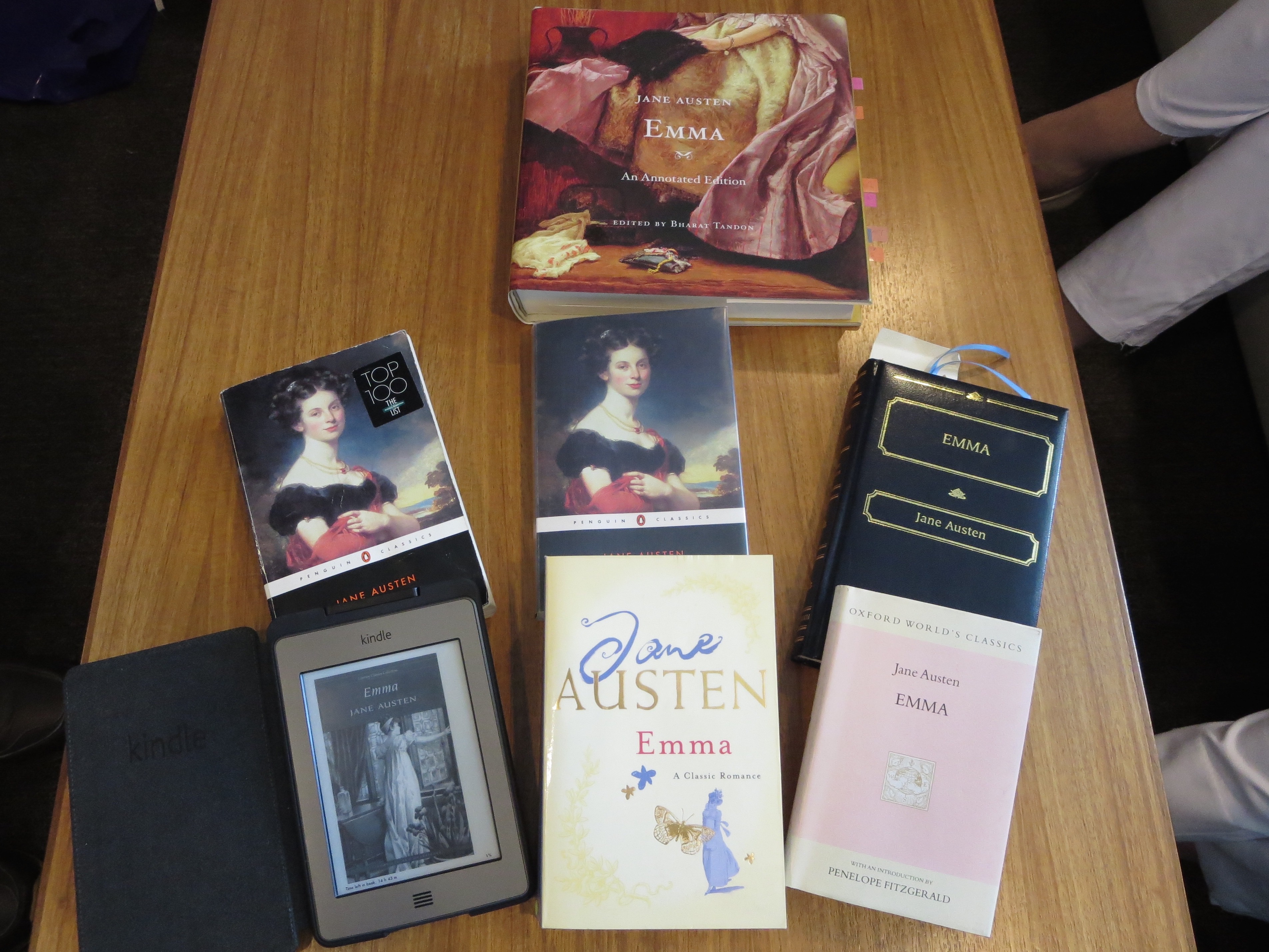
EmmaCovers

As long-time readers here will know, my Jane Austen group did a slow read of Austen’s novels over several years, starting in 2011. In 2022, we decided it was time to repeat the exercise, and are again reading them chronologically, one each year, making 2025 Emma’s turn.

Our slow reads involve reading and discussing the chosen novel, a volume at a time. We “try” to read as though we don’t know what happens next, to help us focus closely on what we think Austen is doing. Of course, we can’t read like a first-time reader, but it’s a useful discipline.

We always wonder whether this time, after so many reads, we will see anything new or fresh. But, we always do. Just the march of time, with its impact on our knowledge, experience and tastes, means we see the books differently. Take Emma, for example …

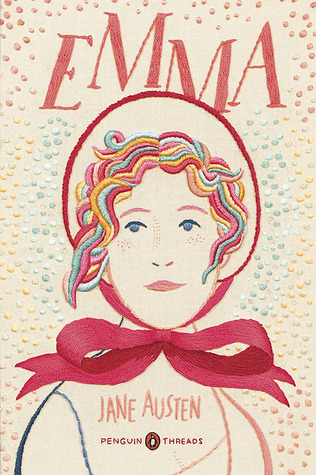
Jane Austen, Emma, Penguin

A few re-reads ago, what stood out for me was its beautiful plotting. There’s barely a word or action that doesn’t imply or lead to something telling, even if we are unaware at the time. From my last major re-read, in 2015, I noticed how often the word “friend” or the notion of “friendship” was appearing. The novel starts with Emma losing her governess-then-companion Miss Taylor to marriage. They’ll remain friends but Emma is left alone with her gentle but fussy father. So, she nurtures a friendship with the 17-year-old Harriet. In my post on rereading Volume 1, I explored the idea of friendship, and then watched in Volumes 2 and 3 to see whether the idea continued. It did. This is not to say that what we might identify in a slow read will overtake previous ideas, but that these re-reads enable us to tease out more of the details, which usually results in a deeper understanding of the whole.

So, what would I find this time? I did consider choosing something to look for, like the role of letters or music in the novel, but decided to just see what played out. Sure enough, something popped up, the idea of young people lacking guidance. It relates to issues like character development and to themes like parenting. And, I found it all there in the first few chapters.

The novel begins:

Emma Woodhouse, handsome, clever, and rich, with a comfortable home and happy disposition, seemed to unite some of the best blessings of existence; and had lived nearly twenty-one years in the world with very little to distress or vex her.

This can be teased out in many ways, but, remembering that “very little to distress or vex her”, I’m focusing on where Austen goes next. As explained above, the novel opens with Emma’s governess-then-companion Miss Taylor having just married, so Emma, who lost her mother when she was very young, is left alone with her “valetudinarian” father, “a nervous man, easily depressed”. She indulges him, as only a devoted daughter can, but otherwise, she is untrammelled. Austen describes her life, to this point, in the third and fourth paragraphs:

Emma doing just what she liked; highly esteeming Miss Taylor’s judgment, but directed chiefly by her own.

The real evils indeed of Emma’s situation were the power of having rather too much of her own way, and a disposition to think a little too well of herself.

And there it is, “directed chiefly by her own [judgement]”. Neither Emma’s “nervous” father nor the mildly-tempered Miss Taylor/Mrs Weston question or guide her. However, in the same chapter, we learn that there is one who does, her brother-in-law Mr Knightley, “a sensible man about seven or eight and twenty”. Austen writes that:

Mr. Knightley, in fact, was one of the few people who could see faults in Emma Woodhouse, and the only one who ever told her of them …

We see several examples of his chiding her in Volume 1, including about her interference in Harriet’s response to a marriage proposal. We also see him discussing Emma with Mrs Weston, telling her that she had been a good companion to Emma but had also been better at submitting her will to Emma than in giving Emma the “complete education” he thinks she needed.

Now, moving on to Chapter 2, we hear of another young person, the three or four and twenty, Frank Churchill. His mother, too, had died when he was very young, and, for a number of reasons, he

was given up to the care and the wealth of the Churchills [aunt and uncle], and he had only his own comfort to seek, and his own situation to improve as he could.

The implication here is that he too had been left to his own devices with little guidance other than “his own comfort”. It occurred to me, during this reading, that he is being set up as a parallel and perhaps eventual foil to Emma. But, hold that thought, because Frank does not physically appear in Volume 1. There is, however, a telling discussion at the end of the Volume about his not coming to Highbury to meet his father’s new wife, Mrs Weston. Mr Knightley – note, it’s him again – argues that while Frank’s aunt and uncle are given as the reason:

There is one thing, Emma, which a man can always do, if he chooses, and that is, his duty.

Frank simply needed to use the “tone of decision becoming a man”, and there would have been “no opposition”.

Finally, there is a third example, the aforementioned Harriet Smith, who is introduced in Chapter 4. She

certainly was not clever, but she had a sweet, docile, grateful disposition; was totally free from conceit; and only desiring to be guided by any one she looked up to.

The natural child of an unknown person who had paid for her schooling and now for her boarding at that school, Harriet has no parent to guide her, only school teachers – and now, the flawed Emma. By the end of Volume 1, it is not going well for Harriet, who has lost one real and one imagined suitor due to Emma’s guidance.

So, as Volume 1 progresses through its 18 chapters, we see some of the fallout of Emma’s being a law unto herself and ignoring the wisdom of others. I look forward to seeing if this idea is followed through in Volume 2. Is it important to Austen’s world view? Watch this space …

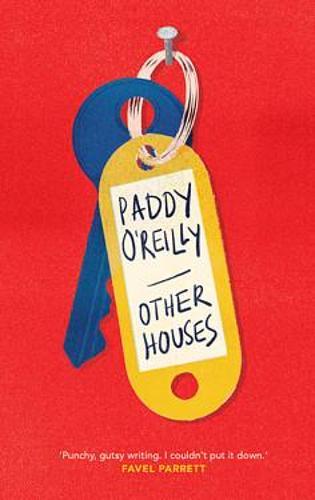
Paddy O’Reilly, Other houses (#BookReview)

It’s not totally coincidental that this week’s Monday Musings post was about a publisher of realist or social novels, that is, of novels which aim to explore social problems of their time. My reading group’s March book, Paddy O’Reilly’s Other houses, belongs to this tradition. I have been wanting to read it since it was published in 2022.

Searches of the Internet, including of Wikipedia, retrieve various definitions of the social novel (also called social problem or social protest or social justice novel), but they essentially agree that these are works of fiction which tackle some sort of inequality, prejudice, or injustice, through the experiences of their characters, and that their intention is to encourage social change. In Other houses, O’Reilly interrogates the idea of social mobility. Her protagonists, Lily and Janks, are “battlers“, working class people who struggle payday to payday, but they want more for their now 15-year-old daughter, Jewelee, who had started to run wild, heading down the path of delinquency.

“Good people live here” (Lily)

So, they move from their working class suburb to one they “could barely afford”, and enrol Jewelee in “a good school”. Jewelee might now behave as though she’s “too good” for her “bogan” parents, but they believe it was worth it. The problem is, Janks, now working in a food-factory, has mysteriously disappeared. The novel opens with Lily driving through her old neighbourhood at night, hoping to find Janks there. “Good people live here”, she says. “They try”.

From here the novel is told in the alternating first person voices of Lily and Janks, with Lily’s story occupying the greater part of the narrative. Having worked as a supermarket cashier in her old home, she is now a cleaner, which is where the title comes in. The novel is beautifully constructed around the cleaning jobs Lily does with her cleaning partner, the older, and wearing out, Shannon. While they clean houses, Lily reflects on her current and past lives, on the “entitled” Jewelee, on the lives and aspirations of the people they clean for, all the while worrying about Janks, and trying to find him. She prints “have you seen” leaflets and scours all the places he might possibly be. She does not believe he has deserted her willingly.

And, we know that he hasn’t. Having borrowed money from a bikie gang, he’d been “snatched” off the street, and coerced into paying off the loan by doing a job for them. The novel’s plot comes from this: will Janks get the job done, without being caught, and be allowed to return safely to the life they are building? Many of us in the group called this book a page-turner, but some disagreed. The plot is too straightforward, they said. It doesn’t have the breath-catching twists and turns of a thriller. Others of us, however, define page-turners differently. Ours don’t require an edge-of-the-seat plot. Rather, they are books that compel us on, because of the characters, or the writing, or the ideas, or the plot, or any combination of these. What do you think?

“Things, world, wrong” (Shannon)

Anyhow, there is a plot – whether you see it as a page-turning one or not – and there is also lightness, despite the seriousness of the protagonists’ plight. Much of the lightness comes from the house-cleaning scenes. Lily and Shannon name the houses they clean, such as the House of Hands (with its profusion of chrome dirtied by sticky hands), the House of Doom (whose owners see the world as “blighted”), Horror House (inhabited by a hoarder), and Lily’s favourite, the House of Light (which lets the sun shine in). They share their thoughts about the inhabitants and the lives they know (or think) they lead. If anyone knows how we live, it’s likely to be cleaners, eh? Lily’s and Shannon’s perspectives – their observations, opinions and reflections on how others live – are what gives this book its real heart.

Lily speaks with the dignity of a worker, when she says:

We know things no one else knows about our clients. I sometimes pick up objects in the places we clean – a vase, a notebook, a scarf … I give them attention, these things that I believe hold meaning for someone … It’s my moment of saying what I can’t say to their faces. I respect what you hold dear, even when you’re rude to me or barely acknowledge I exist. (p. 30)

Meanwhile, the older Shannon has her own mantra for how things are going, says Lily:

Something has gone wrong in the world … Shannon uses it about the eating habits for the population, the number of appliances in the kitchens we clean, leaf blowers, hair straighteners, so-called superfoods, weird weather events, toilets that wash your bottom, plastic wrapping on fruit that already has its own natural wrapping, quiz shows where she disagrees with the answers, tap water sold in plastic bottles and so much more. (p. 29)

Most definitions of the social novel say “through the experiences of their characters”, and this is true here. Telling her story through the experiences of Lily, Shannon and Janks enables O’Reilly to show what she wants to explore, without being didactic. Through these authentic characters we come to see just what the much-touted upward social mobility really is, means, and feels like. We see Lily and Janks recognising that the poverty faced daily in their old working class suburb results in lives that are lived on the edge with little opportunity to improve one’s chances, but we also see that it’s not easy to simply transplant yourselves into a different life and, essentially, culture:

Tonight my water-stained ceiling and the creeping draught taunt me that although we’ve adjusted to living here, it might be because we brought things with us when we crossed: rental damp and rot, clothes that fall apart, bank accounts that bounce between payday and zero. (p. 74)

For Lily, Broadie feels like “home” and it’s where she returns to find a solution to the problem of the missing Janks.

Other houses is a slim and accessible book, but it offers no simple answers. Rather than support the comfortable view that upward social mobility is the answer to the problems posed by socioeconomic inequity, it asks us to consider instead, how do we overcome the problems caused by inequity – indeed, how do we remove inequity – without expecting people to give up everything they hold dear about where they come from? It’s a quietly provocative novel that speaks to one of the most urgent issues of our time.

Paddy O’Reilly
Other houses
South Melbourne: Affirm Press, 2022
245pp.
ISBN: 9781922626950

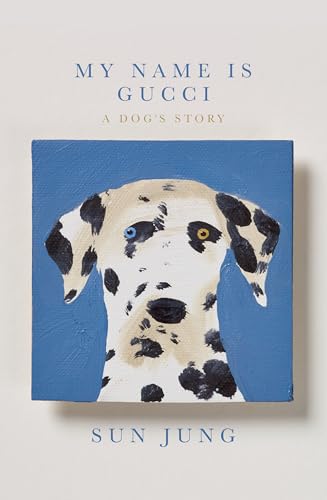
Sun Jung, My name is Gucci (#BookReview)

Some reading synchronicities – those coincidental connections that happen between books we read in a short period of time – are zeitgeist-related. For example, grief is not my go-to, but it is a common theme in contemporary writing so it’s not entirely remarkable that I have written three reviews since January about books focused on grief. What is remarkable is that, in the same period, I have read two books, written nearly 80 years apart, which are told from the perspective of dogs. This surely takes synchronicity to a whole new level – wouldn’t you agree?

A canine perspective is, however, where the synchronicity ends, because Dusty (my review) is told third person through two main voices, Dusty’s and his owner’s, and Dusty is very much a dog. He has no knowledge beyond what he knows as a dog. Gucci, in Sun Jung’s My name is Gucci, is something very different. Not only is he the novel’s sole first person narrator, but he has been reincarnated many times, so has a wealth of knowledge and experience way beyond that of a typical dog. Indeed, as he tells us, he is a “sage”, and an erudite one at that. Now, before you click away, thinking non-human narrators and ideas of reincarnation are not for you, do read on, because Jung makes this work, creating a story that is not only charming and often delightfully humorous, but also thoughtful about life and the connections we make.

Gucci is a Dalmation-like bitzer. At the book’s opening, he is five-years-old and living in a Singaporean animal shelter. He’d given up ever being rescued, when, seemingly out of the blue, “she” appears, and whisks him off to Sydney. Is this destiny? This never-named she, it turns out, has been connected to Gucci, in earlier lives, through their inyeon. Inyeon, the book’s glossary explains, is “Karmic relation or destiny”, but in fact our two are connected through the rarer form of “perpetual-inyeon”. This is “a persistently recurring Karmic relation between two beings through their numerous past lives”, one built on the understanding that “interactions must be mutually beneficial”. Gucci tells us:

I have been reborn three times during her present life; interestingly, and quite unusually, all three rebirth were dogs and all had one absolute karmic duty – to help her to collect and rekindle the shattered smithereens of inyeon that she had long lost.

Notwithstanding this idea of inyeon, the obvious question is, of course, why choose a dog as narrator. Telling a story through a non-human character is not only not easy, it’s a risk, so why? I don’t know Jung’s reasons, but the driver must surely be that unusual narrators have something useful to offer – tone, maybe, or experience or a different way of thinking. Gucci meets all of these. He has some painful things to share about her life, but does so in a lighter tone, which feels more acceptable from a non-human character. Further, as a dog who has experienced the world differently from humans, he can offer different insights into her experiences, not to mention those of humans in general. And, finally, he can illuminate important things about human-animal relationships.

“nothing is absurd”

My name is Gucci is not a hard read, but it does require concentration because we move back and forth in time, in her life, as it intersects with Gucci’s lives – as Nari, the Jindo dog, who dies in an accident when she is 9; as General, the Sapsal-cross dog, who was forced to work as a fighting dog, and is euthanased when she is 13; and of course as Gucci in her present life, now helping her confront and perhaps reconcile the traumas of her past. She had a difficult childhood in Korea, which is where Nari and General know her. The product of an adulterous union between a married man and a melancholic young woman (jageun umma), she is removed from this birth mother when she is 4 years old to live with her father’s wife (keun umma). Keun umma accepts her, with kindness and love, but not so keun umma’s mother, the “old hyena”, who is cruel to this “filthy child” brought into her home.

The time shifting, then, occurs between her past life in Korea, with Nari and General, and her current life in Sydney’s Kings Cross and Darlinghurst, where she is married to an Irishman, but haunted by her past. It’s no surprise to Gucci that she is a “horror novelist … [of] … spinechilling and gory urban mythologies”. In telling his and her story, Gucci is often insouciant if not downright playful, but he is also wise and philosophical, as he guides her and us through the challenges of coping with past experiences which threaten to undermine the present.

Closely associated with this idea of past and present is that of “destiny”. It is a constant thread in the book, and it discomforted me a little, perhaps because as a Westerner, the idea of destiny doesn’t sit easily with my world view. However, if we reframe it to encompass the way past experiences impact present and future actions, then it works – for me, and for the book, where the idea of fate/destiny/luck is variously respected, or upended or foiled, or treated sceptically by her Irish husband. There’s no one answer – just perspective and tolerance for difference.

Much of this story is serious. Bad things happened to her in her childhood, and Gucci reflects on the hows and whys. Early on, she is ostracised at school because of her “impure heritage”. Thinking back to their Seoul home in the suburb of Itaewon, which means “village of strangers”, Gucci wonders “what is being strange or different? Different to what?” Why do humans demonise, or make fun of, those who are different? My name is Gucci is full of good questions and wise ideas, but they are not laboured. Instead, Gucci keeps the story moving forward, with warmth and compassion, leavened by humour that is, at times, lightly satirical. There is a delightful scene when she takes her young Irish boyfriend to Korea, and, after a boozy night they go out for a “hangover cure” breakfast:

Bleary-eyed and with a severe hangover, he could not believe his misfortune as he stared at the abalone congee bowl.

Finally, there are the stories about human-animal relationships. Some of the funniest scenes in the book come from these, such as the Kings Cross apartment dog-wars, between dog-lovers and dog-haters. But there are tough stories too, like the sport of dog-fighting which destroys General’s life. This book pays tribute to the importance of our relationships with our animals.

Early on, Gucci forestalls our potential scepticism about his story by claiming that “if you look at everything in the world as connected by the complex web of inyeon, nothing is absurd”. Well, I have a high tolerance for the absurd, anyhow, but even if I didn’t, Gucci is such a delightful guide that I was in for the duration. If you want to read something that’s meaningful but doesn’t weigh you down, try this one.

Sun Jung
My name is Gucci: A dog’s story
Melbourne: Transit Lounge, 2024
254pp.
ISBN: 9781923023178

(Review copy courtesy Transit Lounge, via Scott Eathorne, Quikmark Media)

Andra Putnis, Stories my grandmothers didn’t tell me (#BookReview)

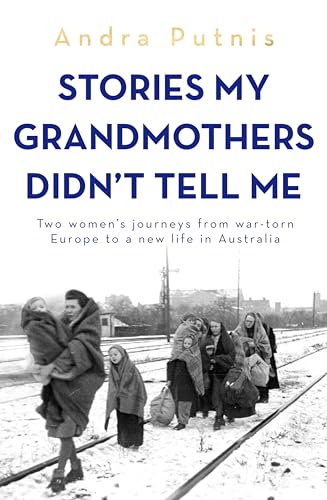
Cover

Local writer Andra Putnis’ book, Stories my grandmothers didn’t tell me: Two women’s journeys from war-torn Europe to a new life in Australia, was my reading group’s February read. Not only was it highly recommended by two members who had read it, but we were told the author would be happy to attend our meeting if we chose it. That was an offer too good to pass up, so we scheduled it.

We’ve had a few authors attend our meetings over the years, and it has always been worthwhile. Yes, it risks constraining discussion if people have any reservations about the book, but that has never really been a problem, either because there haven’t been serious reservations or because the value of having the author present has far outweighed any perceived impact on free discussion. In Putnis’ case, the story is so powerful and so well-told that it was unlikely there’d be any reservations that wouldn’t turn into questions about why or how she wrote her story.

“hidden pasts, still very much present”

Stories my grandmothers didn’t tell me is a family biography centring on the author’s two Latvian-born grandmothers, her maternal Grandma Milda (1913-1997) and paternal Nanna Aline (1924-2021). Teenage Aline was separated from her parents around 1942 to go serve in Germany’s war-time labour force. Meanwhile, in late 1944, with the war ending and the Soviet army looking set to return, 7-months pregnant Milda left Latvia with her parents and 18-month old son, enduring a tough, desperate journey. Both women ended up in UNRRA-managed Displaced Persons camps in Germany, where they experienced years of hardship before arriving in Australia in late 1949/1950. Milda, and later Aline, settled in Newcastle in the early 1950s, and met there through its tight-knit Latvian migrant community.

That’s the rough outline, but of course their stories – what they endured – are far more complicated, and Putnis wanted to understand. She told us that as a young child she had a sense of Latvia as almost an unreal fairytale place with beautiful forests, music and dancing, but she had also sensed, through family murmurs, a darker side, one that encompassed sadness and pain not only about Latvia but also about the family’s own story. She likened it to being on a boat, where you can see the surface but have no idea of what lies in the deeps below. She feared, as a granddaughter, that it wasn’t her place to go there, and worried about upsetting people. However, she did go there because she wanted to know and because Nanna Aline was willing. But, she said, she was always cognisant of just how far a granddaughter – even an older one – could, or should, go.

“moving between darkness and light”

I have read several hybrid war-related biography/memoirs written by family members, and this one is as good as any of them. This is not only because of the power of the story, and the honesty with which it is told – but also because of the structure Putnis uses. It is told chronologically, which is logical, but through the voices of Milda and Aline interspersed with those of others including, of course, Putnis’s own. I wanted to know about this and Putnis was happy to explain.

The structure was driven by Aline who told her story chronologically. She had thought deeply about and “understood the arc of her life”, said Putnis. So, with this in hand, Putnis started to piece Milda’s story – which was gathered less systematically – along the same lines. The challenge came in making the “weave” work, in getting the balance right, between them and their stories, and the wider historical, community and family framework.

Putnis worked on her book for nearly 20 years – with the occasional gap when life took over. Aline lived a long life so Putnis was able to spend a lot of time with her. Aline had also had the toughest life, particularly in terms of her personal choices and circumstances. Our hearts went out to her. Milda, on the other hand, died when Putnis was 19 years old, before she started working on her book. However, Milda had lived for nearly a decade with Putnis’s family, so Putnis had spent a lot of time talking with her, getting to know her. Putnis enhances both stories with information gleaned from conversations with other close family members, from secondary reading, and from primary research through letters, in archives, and so on.

The result is a coherent story of these two women told from more than one perspective, which has the effect of varying the intensity as we read – of mixing the light and the dark – and of enhancing authenticity, because the perspectives reinforce each other. It’s sophisticated and highly readable.

“the world is in tears” (Aline’s father)

It is a powerful and often heart-rending story, and it is to Putnis’s credit that she is able to convey both the individual personalities of her very different grandmothers and the universality of their experiences. Their experience of living under multiple invasions is both personal but, as we know too devastatingly well, political and general. Same for their experience of living in camps for years – of having your life on hold while you just survive. And for their experience of being migrants – “reffos” – in 1950s Australia. The negatives abound, with any positives achieved being hard fought. It’s a lesson in how ordinary lives are changed irrevocably by political actions way out of their control.

So, the book raises many questions – about the past and about what is happening now. Putnis also specifically raises the issue of protecting children, and I wanted to know about this too, because, given our knowledge of intergenerational trauma, how do you protect children from horror without laying them more open to ongoing trauma within? There is no easy answer, we concluded, but awareness and consideration about where to draw the line can only help.

Finally, Stories my grandmothers didn’t tell me, is fundamentally a book about the importance – and limits – of stories. Early on Putnis talks to Aline about her project, and Aline is clear about her intentions:

Alright then, I don’t remember everything. But I have my own point of view. Some old Latvian women go on about how wonderful things were before the war … You heard these stories? Well, it was not always like that. Not all the boys were good and I was not as kind to my māte [mother] as I should have been. If you want that story, you are talking to the wrong grandma.

Aline was brave, and this is a brave book about survival that doesn’t shy away from the tough and sad stories. But, more importantly, it conveys something about stories, which is that individual stories are very important, but they are not the whole story. In other words, the more stories we have the better picture we have – of history, and of the complexity of humanity that makes us who and what we are.

Putnis concludes with Aline’s funeral, and shares the words she spoke, which also encapsulate this book:

Nanna taught me nothing less than what it means to be human, to earn the grace and wisdom that come from surviving darkness and celebrating light.

I’d like to tell more stories about the book, including about Milda and the strong woman she was, but this post is long enough, so I’ll just encourage you to read the book for yourselves.

Andra Putnis
Stories my grandmothers didn’t tell me: Two women’s journeys from war-torn Europe to a new life in Australia
Crows Nest: Allen & Unwin, 2024
292pp.
ISBN: 9781761471322

Frank Dalby Davison, Dusty (#BookReview)

It’s a strange coincidence that my second review for Bill’s Gen 1-3 Aussie male writers week is for a novel titled Dusty, when my first was for a short story titled “Dust”. One of those funny little readerly synchronicities. The title, however, is about the only synchronicity because, although both stories allude to the dusty Australian landscape, Casey’s short story is about miners’ lung dust disease while Davison’s novel is about a part-kelpie part-dingo named Dusty.

A bit about Frank Dalby Davison

Davison (1893-1970) was best known as a novelist and short story writer, and was a significant figure in Australian literary circles of his time. There are useful articles for him in Wikipedia, and the Australian dictionary of biography, and I plan to devote a Monday Musings to him soon. Meanwhile, as background to this post, it’s relevant to say that he was born and schooled in Melbourne, but left school in his early teens to work on his father’s farm near Kinglake. The family moved to the United States in 1909, when he was 16. After working there in the printing trade, he travelled more, eventually enlisting for World War 1 in England. After the war, he took up a Soldier Settlement selection near Injune, in central western Queensland. 

Davison wrote several novels, but his best known is probably Man-shy (1931), which won the Australian Literature Society Gold Medal. Featuring a red heifer, it was my introduction to Davison in my first year of high school in the 1960s. Dusty (1946) is also about an animal – this time a dog – and has been in my sights for some time. Both novels drew on his experiences in Injune. AustLit reports that the manuscript of Dusty, ‘entered under the title “Stranger”, and the pen-name “Tarboy”, won the Melbourne Argus and Australasian Post 500 pound Novel Competition in 1946′. 

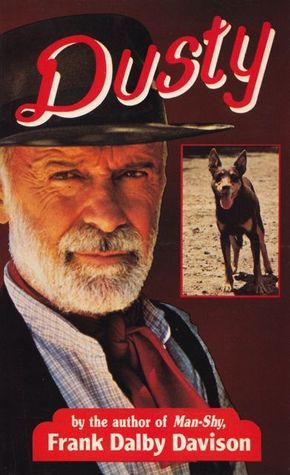
Dusty

At the end of my edition of Dusty is a promotion for Man-shy which quotes from H.M. Green, the literary historian who inspired Bill’s “generations”. Green writes:

Although other novelists have made animals their principal characters and drawn them realistically, Davison is the first to make a serious attempt to get inside their minds. The red heifer and the mob of wild cattle to which she belongs stand for the spirit of freedom and dogged, untameable resistance; their struggle is made extraordinarily real to us … Davison has a genuine and individual talent.

This could equally apply to Dusty, which tells the story of a dog, sired by a kelpie to a dingo mother. Violently wrenched from his lair when he was a few weeks old, he is sold to a decent man, a bushman named Tom. Tom is no fool. He recognises the mixed blood, but also sees potential in the pup, and trains him to become a champion sheep dog. Their bond is strong but is tested when Dusty’s “dingo blood” starts asserting itself, and he turns sheep-killer by night. This will not do, and Tom knows it. The novel, however, does not play out quite the way you’d expect, and we are left guessing until the end about what will, indeed, happen to Dusty.

That’s the plot, but like many plots it doesn’t tell you much about what the book is really about, or what makes it a good read. Told in three parts, Dusty is a realist novel, detailing life on Australian sheep stations and cattle properties, and told mostly through the perspectives of Tom and Dusty. Yes, you heard right, Dusty, the dog. I was completely engaged because not only is there none of the sentimentality common in stories about a man and a dog, but there’s also nothing anthropomorphic in the dog’s point-of-view. He feels pure dog, which I thought quite a feat. Early on, for example, Tom, having previously given Dusty his dinner without ceremony, puts the food down and starts some training:

Then followed a series of mystifying events. A hand appeared just above the dish and twitched, giving forth a series of soft snapping sounds; then there was a little soft whispering, and then a voice that, like the hand, kept repeating a small noise over and over again. He could make nothing of it …

This dog’s-eye view of the world, based on his experiences to date, continues through the novel.

Soon, though, bigger issues are at play involving the two parts of Dusty’s being, “the ancient battle between conflicting heredities, and between early influence and present environment; the mother against the father, nature against art”. Then Davison adds something interesting. The dingo is the product of nature, while the kelpie, the working dog, is “a product of art”. But, Davison adds, “nature, if man fails in toil or vigilance, hastens to reclaim her own”.

In other words, beneath this deeply interesting story about a man, his dog and outback farming, is a wider story about “nature”, or the essence of our beings. Contained within Dusty is the struggle between the two forces – that of freedom, of following his instinct, and that of living by his training, by rules and responsibilities. After Dusty’s dingo side becomes apparent to all, Tom knows what must be done but chooses to change his life rather than kill his dog. He becomes a self-employed possum scalper in cattle country, and finds, “without meaning any ingratitude for past kindnesses”, that he relishes his new situation in which he is invited to share a meal as “a guest and not just the hired man”. In other words, as a possum scalper, Tom is freer to be his own man.

But, while I think Tom’s life is part of this wider theme, the main focus is animals, and the idea that, in them, “is a whole scheme of values outside those familiar” to us.

There is no easy ending for Tom and Dusty, and we are left, three paragraphs from the end, with a dingo howl, “a cry of mournfulness and dark mirth, of drollery and love and hate and longing, of the joy and sorrow of life, of the will to live, of mockery and despair”.

Dusty is not a didactic book. There is no moralising, no subjective pronouncements about choices. Instead, with its objective tone, and plain but expressive prose, it feels more elemental, something that examines the essence of who we are and what we do to live. And that makes it feel timeless.

Frank Dalby Davison
Dusty
Sydney: Angus & Robertson, 1983 (Arkon ed., orig. 1946)
244pp.
ISBN: 0207133891


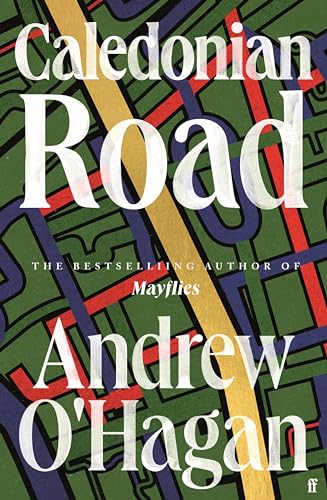
Andrew O’Hagan, Caledonian Road (#BookReview)

When my reading group started back in 1988, most of us were time-poor mothers so we had a rule-of-thumb that our books could not be longer than 350 pages. Those days, however, are long gone, and some time ago we agreed that our January (aka summer) read could be a BIG book. Last year, for example, it was Demon Copperhead (my review). This year, some were keen to read Andrew O’Hagan’s Caledonian Road, so that’s what we scheduled.

My problem is that while it’s summer, January is also tennis season. I don’t watch much sport, but I do love the tennis. Reading a big book while trying to keep up with the tennis is always a challenge. As is the fact that, as most of you know, I love short books. Give me a novella and I’m (usually) happy. However, I also love my reading group, and so I gave myself extra time and got stuck in. I was immediately engaged. The protagonist, fifty-two year old Campbell Flynn, art historian, writer and academic, captured me. There was a certain Jane Austen tone to the opening:

Tall and sharp at fifty-two, Campbell Flynn was a tinderbox in a Savile Row suit, a man who believed his childhood was so far behind him that all its threats had vanished.

Ha! He certainly was a tinderbox, as he was about to slowly implode. Further, as we soon discover, his childhood was not at all behind him, and is implicated in his unravelling. The first paragraph ends with some foreshadowing telling us that the first of his “huge mistakes” was not to “take people half as seriously as they took themselves”, with the second being “the proof copy” he had in his briefcase.

It is Thursday 20 May 2021, so the first wave of the pandemic is over but its long shadow provides a quiet background to the novel which is told over five parts, from Spring 2021 to Winter 2022, concluding around the time of the invasion of Ukraine in February 2022.

Now, back to my reading journey. I was interested, but as I read on, following the ups and increasing downs of Campbell’s life, along with those of an ever-growing cast of characters, there was a point where I started to baulk. It felt like a long wallowing in the ills of the modern western world. Did I need 640 pages of it? And then it clicked. I realised I was reading a modern take on the 19th century “condition-of-England” novel. These novels, as the The Victorian Web explains, “sought to engage directly with the contemporary social and political issues with a focus on the representation of class, gender, and labour relations, as well as on social unrest and the growing antagonism between the rich and the poor in England”. We’re talking Dickens’ “big” novels, Elizabeth Gaskell’s North and south and Mary Barton, and so on. I loved them.

“a deep dive into the era’s shallows” (Campbell)

These novels have to be big, because a nation’s “condition” does not comprise one issue but a network of them, and this is what O’Hagan pulls apart in Caledonian Road. Through a cast of around 60 characters, O’Hagan explores a grab bag of the various ills we read about every day, with a British spin. All the big issues are here, including toxic masculinity; intergenerational wars; racism; modern technology with its related concerns like security, privacy, hacking, and digital identity; disruption as activist action; financial corruption and malfeasance; foreign interference; and human trafficking. Grab bag these might sound, but they are overlaid and connected by the traditional biggies – class, entitlement and privilege, economic inequality, and now, globalisation.

There’s a lot going on, but O’Hagan’s characters are vividly drawn, the plot is compelling if complicated, it is satirical in tone, and the language is so captivating that I enjoyed reading it after all. It is, necessarily, a disjointed read with the narrative constantly switching between the different storylines that make the whole, but I found I didn’t need the cast of characters helpfully provided at the beginning because the context always made clear who they were.

Before I return to the subject matter, I must share a couple of perfect character descriptions. First is Milo, a person whom Campbell doesn’t take seriously enough, and second is Candy, Campbell’s sister-in-law, the fey do-gooder wife of the egregious Duke of Kendal:

The young man had edges and they often glinted on the blade of his charm. (p. 76)
and
Candy stood like an emaciated meerkat looking out for an opportunity to enthuse. (p. 262)

So now, back to the “condition-of-England” idea. The characters range across the breadth of British society, from twenty-somethings to eighty-somethings, and include MPs, aristocrats, academics, journalists, business people, actors, criminals, activists, do-gooders, hackers, landowners, renters, gang members, migrants, factory workers, and lorry drivers. But, what most of them have in common is an idea of what England is. The most poignant comes from the migrants, like Polish Mrs Krupa and her son’s undocumented employee, also Polish, Jakub. As Jakub’s life, under the control of human-traffickers-cum-drug-lords, starts looking different to what he expected, he begins “to wonder if England was anything like the myth he … had bought into”.

O’Hagan, then, explores with clarity and a healthy sense of irony, today’s England (or Britain). The flawed but self-questioning Campbell – increasingly conflicted by his middle-class success and working-class origins – is our guide through a story in which hope, promise and sincerity are set against hypocrisy, greed and hatred. Desperate to remain relevant to the times, and to be a decent person, Campbell lets his guard down, allowing the driven, idealistic Milo into his life. Both are complex characters, who test our moral compass. Others not so much, like the aristocratic Duke of Kendal and Lord Scullion, the Russian oligarch Aleksandr Bykov, the corrupt billionaire William Byre, and the criminal Bozydar, all of whom, indirectly or directly, slash and burn those around them. In between are the decent, including women like Campbell’s wife Elizabeth and sister Moira, and the powerless, like rapper Travis and undocumented migrant worker Jakub.

Towards the end of the novel, the unravelling Campbell, who has become “lost in the sprawling web of it all”, inverts my favourite EM Forster quote when he reflects to himself, “only disconnect”. It’s a paradox. Campbell’s survival will depend on disconnecting from all that is wrong in his world (technologically and personally), while hanging tight – keeping connected, in other words – to all that is good. Ultimately, while O’Hagan paints a grim picture of what is wrong – the superficial, the hypocritical, the greedy and the cruel – in England, he also leaves us with a glimmer of hope. There are good people and they can prevail – but, will they, is the question we are left with.

PS Caledonian Road, being a big book, invites multiple responses. You can read those by Brona and Jonathan, who approached it from different angles and perspectives.

Andrew O’Hagan
Caledonian Road
London: Faber & Faber, 2024
642pp.
ISBN: 9780571381388 (Kindle edition.)

Reading highlights for 2024

And suddenly it’s the end of the year again, meaning time for the annual highlights posts. For me, this means posting my reading highlights on December 31, and blogging highlights on January 1. I do my Reading Highlights on the last day of the year, so I will have read (even if not reviewed) all the books I’m going to read in the year, and I call it “highlights” because, as most of you know, I don’t do “best” or even, really, “favourite” books. Instead, I try to capture a picture of my reading year. I also include literary highlights, that is, reading-related activities which enhance my reading interests and knowledge.

Literary highlights

This mostly comprises my favourite literary events of the year. I never get to all that I would like – not even close – but those I attend I enjoy. Even where the books or authors may not be my favourite genre or topic, there is always something to learn from writers and other readers.

  • Canberra Writers Festival: I attended six sessions this year, and you can find my write-ups on them (plus previous festival sessions) on my Canberra Writers Festival tag. I attended conversations with Rodney Hall, Emily Maguire, Catherine McKinnon, Charlotte Wood, Robbie Arnott, and Anita Heiss, as well as a lively panel on the art and role of the critic.
  • Awards events: I attended fewer awards events this year, just two live ones: ACT Literary Awards; and the Finlay Lloyd 20/40 Winners Launch and Conversation with Authors.
  • Book launches and author conversations: I attended the same number as last year, and most were part of the The Canberra Times/ ANU Meet the Author series: Brigitta Olubas and Susan Wyndham (with Julianne Lamond); Sulari Gentill and Chris Hammer (with Anna Creer); Shankari Chandran (with Karen Viggers); and Karen Viggers (with Alex Sloan). I can’t believe I didn’t get to more, but my records tell me that I didn’t!
  • Podcasts: I am not a big podcast follower, mainly because I prefer not to be constantly plugged in. When I walk, I walk in peace. When I do housework, I listen to music. When I drive locally, I listen to the radio, but when we drive long distance we often listen to podcasts – and this year we’ve focused on Secrets from the Green Room. Targeted primarily to writers, the episodes have much to offer readers who like to understand how it all works – the writing, the editing, the publishing, the promotion, and so on.

Reading highlights

As usual, I didn’t set reading goals, but kept my basic “rules of thumb”, which are to give focus to Australian and women writers, include First Nations authors and translated literature in my list, and reduce the TBR pile.

2023 was a very strange year – our downsizing year – and it showed in my reading, which was unusually high in short stories and low in nonfiction. This year saw me return to something like my usual pattern, but not quite. Short stories, for example, remained a higher proportion of my reading. This works fine in this new phase of my life which involves frequent trips to Melbourne to see family and spend time with grandchildren.

But now the highlights … each year I present them a bit differently, choosing approaches that I hope will capture the flavour and breadth of my reading year. Here are this year’s observations from my reading:

The characters

  • Mothers in extremis: Mothers aways feature in my reading, but this year’s included some seriously challenged ones: Al Campbell’s The keepers, about a mother of two autistic sons; Jane Caro’s The mother, about the mother of a daughter subjected to coercive control by her husband; and Marion Halligan’s memoir Words for Lucy (review coming), about a mother’s grief for a daughter who died too young.
  • Young people in extremis: Life is rarely easy for the young, but Lucy Mushita’s Chinongwa and Barbara Kingsolver’s Demon Copperhead have more than their youth and inexperience to contend with. The system is stacked against them. In Karen Viggers’ Sidelines, on the other hand, the issue starts closer to home. It’s the parents who need to take a look at themselves.
  • It’s never too late: Rachel Matthews’ middle-aged characters in Never look desperate show that romance is not just for the young.
  • The oldies have it: Older characters have shone in this year’s reading. Besides those in Matthews’, Caro’s and Halligan’s books, I enjoyed the stoic 80-year-old Wilf in Stephen Orr’s Shining like the sun, matriarch Maya in Shankari Chandran’s Chai time at Cinnamon Gardens, the aging Zelda in Michael Fitzgerald’s Late, and Nunez’s determined narrator in The vulnerables. Not only did they show that “Life” doesn’t stop when you age, but that, while age might bring some wisdom, it doesn’t bring all the answers.
  • Most unlikable character: Sometimes there are characters you just want to shake (not that I would ever shake a person of course!) and this year, self-pitying Deidre in Karen Jennings’ Crooked seeds wins the award. If only she’d read Dale Carnegie’s How to win friends and influence people!
  • The odd couple: Odd couples are not unusual in romance, but privileged-on-the-run Jagger and eco-warrior Nia make a fetching pair in Donna Cameron’s The rewilding.
  • Most naive characters: This goes to most of the characters in P.S. Cottier and N.G. Hartland’s The thirty-one legs of Vladimir Putin. What were they thinking!
  • Don’t forget the animals: Animals are rarely forgettable when writers create them, and I certainly couldn’t forget Sigrid Nunez’s miniature macaw Eureka, Carmel Bird’s cat Arabella, and definitely not all those mice in Charlotte Wood’s Stone Yard devotional.

The subject matter

  • Writers’ lives: I always enjoy reading literary biographies and memoirs, and this year I read three very different works, from Sean Doyle’s more traditional Australia’s trailblazing first novelist: John Lang to more personal, hybrid takes in Nell Stevens’ Mrs Gaskell and me, and Anna Funder’s Wifedom.
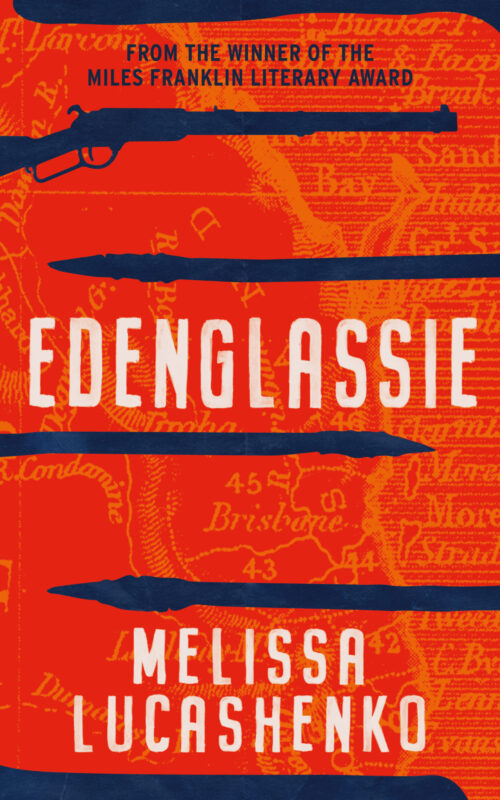
  • Truthtellers of the year: I used this category last year, and I think it’s a keeper because truthtelling, particularly regarding the “colonial project”, is not done. This year’s highlights include First Nations Australian Melissa Lucashenko’s Edenglassie, and two from North America, Thomas King’s “Borders” and Sherman Alexie’s “War dances“, each of which added different layers to the truths we need to hear.
  • Vividly rendered places will always get me in, and this year three were skilfully evoked, the Monaro (in Charlotte Wood’s Stone Yard devotional), Naples (in Shirley Hazzard’s The bay of noon), and the South West Coastal Path (in Raynor Winn’s The salt path).
  • Only fools have answers“: the best writing for me is that which leaves us with questions. Many of this year’s reads did just that, but leading the way was surely Richard Flanagan’s Question 7.

The reading life

  • Good things come to those who wait: Gail Jones has been on my must-read list (and in my TBR) since Sixty lights was published in 2004. Finally, this year I read a novel by her, Salonika burning. It must not be my last.
  • Re-find of the year: Having not read a Shirley Hazzard novel for many years, I loved finding the opportunity to read The bay of noon for Novellas in November and the #1970 Year Club
  • Re-reads of the year: Of course these were by Jane Austen, Mansfield Park and her novella, Lady Susan.

Only when I was young did I believe that it was important to remember what happened in every novel I read. Now I know the truth: what matters is what you experience while reading, the states of feeling that the story evokes, the questions that rise to your mind, rather than the fictional events described. (Sigrid Nunez, The vulnerables)

Some stats …

While I don’t read to achieve specific stats but, I do have some reading preferences which I like to track, but it’s boring to repeat them all each year. So let’s just say that

  • 85% of this year’s reading was fiction and 75% of my authors were women, both of which are higher than my long-term average.
  • Nearly 50% of this year’s reading comprised works written before 2000, which is also higher recent percentages.
  • 58% of this year’s authors were Australian.
  • Last year’s big downsizing project saw short stories and novellas comprising over 60% of my year’s reading. This halved in 2024 to just over 30%.
  • 11% of this year’s reading was by First Nations writers, largely due to my reading several short stories by First Nations American writers.

I read only two books from my actual TBR – Nell Stevens’ Mrs Gaskell and me and Gail Jones’ Salonika burning – but I will add to this Shirley Hazzard’s The bay of noon, which has been on my virtual TBR for many years.

Tomorrow, I (hope to) post my blogging highlights.

Meanwhile, I’ll repeat my usual end-of-year huge thanks to all of you who read my posts, engage in discussion, recommend more books and support our little litblogging community. It is special. I wish you all an excellent, book-filled and peaceful 2025.

What were your 2024 reading or literary highlights?

My reading group’s favourites for 2024

Once again, I am sharing my reading group’s top picks for the year, because I know I’m not the only one who enjoys hearing about other reading groups.

I’ll start by sharing what we read in the order we read them (with links on titles to my reviews):

This year’s schedule was rather less diverse than we’ve done for a while, with eight of our eleven authors being Australian. (Next year will see some “correction” to this.) Last year we read only four Australian women, while this year we read seven (plus an Australian man). We did, however, schedule a classic (Vonnegut) which we omitted to do last year, but we read no books in translation, which is a bit ethnocentric of us. We read more nonfiction than we have for a while, with books by Flanagan, Funder and Winn, and we read fewer male authors, just two. However, despite the list looking less diverse from the author origin point of view, it is more diverse in subject matter, with nothing like the concentration we had last year on the status and condition of women’s lives. If I were pushed to name a flavour for this year, I’d say that there was a strong serving of (socio)political and/or philosophical issues in this year’s books.

The winners …

This year all eleven of our regularly attending members voted, meaning the maximum a book could get was 11 votes, and that there were 33 votes all up. The rules were the same. We had to name our three favourite works, and all were given equal weighting. This year, unlike last year, the top three positions were closely fought and we ended up with three clear winners. Last year, there was a runaway winner, and then two second and two third place getters. 2024’s top three places were:

  1. Demon Copperhead by Barbara Kingsolver (8 votes)
  2. Edenglassie by Melissa Lucashenko (7 votes)
  3. Stone Yard devotional by Charlotte Wood (6 votes )

Last year, the highly-commendeds right behind the two third place getters, but this year, the next two books were a few votes behind, at three votes each: Question 7 by Richard Flanagan and Chai time at Cinnamon Gardens by Shankari Chandran.

As for my three picks, it was very tough (as it usually is). I got something out of every book I read, and many will stay with me for a long time, but, like last year, the group’s number 1 pick was not in my top three. This is not to say I didn’t like Demon Copperhead, because I did very much, but that I loved something else more. My three books, in alphabetical order, were Marion Halligan’s Wishbone, Melissa Lucashenko’s Edenglassie, and Charlotte Wood’s Stone Yard devotional. I chose these because Halligan just knows human beings and uses wit and humour to show us ourselves; because Lucashenko tells us our history from a First Nations perspective and does it with fierce honesty but also with humour and generosity; and because Wood explores the place of stillness, silence, solitude, contemplation in our noisy, troubling world.

Selected comments

Not everyone included comments with their picks, and not all books received comments, but here’s a flavour of what was said:

  • Demon Copperhead: Commenters used superlatives like “huge”, “outstanding”, “brilliant”, “powerful” but also commented on its exploration of poverty and disadvantage, and its relevance to now.
  • Edenglassie: Commenters focused on the value, the importance, of seeing our history through a First Nations perspective, and how it brought our intellectual knowledge to life.
  • Stone Yard devotional: Commenters talked about its gorgeous evocation of place (as we all know the Monaro), and loved its sparseness, introspection, meditativeness, its exploration of solitude and silence.
  • Chai time at Cinnamon Gardens: Commenters liked its exposing the traumas involved in human movement, of its mix of politics, culture and human suffering, with one calling Chandran a “true story-teller”.

I’d love to hear your thoughts, particularly if you were in a reading group this year. What did your group read and love?

Marion Halligan, Wishbone (#BookReview)

My reading group’s last meeting of the year took the form of a tribute to Marion Halligan, who died earlier this year and who had generously attended our meeting when we discussed her Valley of grace (my review). We have done this once before with Helen Garner (albeit she hadn’t died) and it worked well. The process is that we choose something we want to read and share our thoughts with the group. I have read several of Halligan’s books, but I have a few on my TBR, so of course I chose one of those, Wishbone, her fourth novel, published in 1994.

Before I share my thoughts on that, I thought you might like to know what everyone read. Ten members attended the meeting. Some read two books, while others chose a short story or article. It is, after all, a busy time of year. The novels read were, in chronological order, Wishbone (1), The golden dress (2), The fog garden (1), Valley of grace (1), Goodbye sweetheart (2). Three people read her most recent memoir, Words for Lucy, while others read selections from Canberra tales (“Most mortal enemy”), The taste of memory (the first piece), Canberra Red (“A city of mind”), and Shooting the fox (“Shooting the fox”). In other words, we read widely across her oeuvre, resulting in an enjoyable – and occasionally excitable – meeting as we teased out some of her themes and ideas, including how much of her fiction was drawn from life!

“who knows what the hell is going on”

So now, Wishbone. It tells the story of a woman, Emmanuelle, her “motley family”, and the wishes they have for themselves. The novel starts with a young, passionate Emmanuelle having an affair with a married man, but it soon jumps some years hence when she is now married (to a man named Lance), and living in well-heeled Sydney with two children, Maud and William. The rest of the novel follows a period in the lives of these four and others in their close circle – friends, family and employees. During this time, we experience a life-threatening stroke, extra-marital affairs, mistaken assumptions, and a suspicious death, all set within perfectly rendered scenes of domesticity. Halligan can make you gasp with her audaciousness.

As I was reading this novel, a light dawned for me about why I so often use Jane Austen as a benchmark for writing I love. I do like all sorts of writing, but I am particularly drawn to writing that exposes human nature with wit, irony and a generous spirit. This is what Austen does, and this is also what Halligan does. Wishbone is a generous story about messy human lives. Halligan writes with a knowingness about those deep-down thoughts, wishes, and desires we all have, but she is also forgiving about her characters’ foibles and less admirable traits and behaviours. In Wishbone, she explores the tension between our wishes – particularly regarding love – and living with what you’ve got.

There’s something of a fatalist element, here, in the sense that we think we have choice in all this, but choice proves in fact to be elusive. Things happen that we have no control over. Late in the novel, as Emmanuelle sits around the kitchen table with her two children and au pair Mel, in what looks to be a cosy domestic scene, a question – which is both literal and existential – is suddenly proffered, “who knows what the hell is going on”. Who indeed? (And who is asking the question? Emmanuelle, surely, but there’s also an omniscient voice overlaying the characters’ perspectives. At least I believe so. Wishbone slides seamlessly between voices and perspectives in a way that never loses the reader, but that ensures we see multiple sides of things.)

This brings me to style, and how Halligan does what she does. Halligan is a born short-story writer. As I started Wishbone, I almost wondered whether I was reading a book of short stories. Every chapter is gorgeously titled and most felt like they could stand on their own as little nuggets from a life. The opening chapter, The Glade, tells of Emmanuelle’s youthful affair with her married man. It starts:

The difficulty of a love affair between a young woman and a married man may be its logistics. Where can they go? He lives with his wife. She lives with her parents.

They can’t afford hotels, and anyhow it’s too risky as the town is small, but Brian knows “a good place”, a little glade under a cliff. Whenever Brian thinks of going to the glade, he whistles Handel’s tune, “Where e’er you walk”, which “always gladdened his wife’s heart, because she knew her husband was feeling cheerful”. Halligan’s discussion of this song, Brian’s behaviour, and the wife’s response is delicious in more ways than this little irony, but I will just share Halligan’s nailing the point, with “the song told her about the walking and the sitting but what she didn’t know about was the lying”. Just think of the double meaning in that last word! This writing just makes you splutter.

From here, the plot unfolds quietly but surely. Hints are dropped but aren’t heavy-handed, so we are still surprised when certain events occur, which brings me to the title, and its reference to wishes. In the third chapter, The Man in the Train, there is a mostly mundane discussion about wishes until the chapter’s titular, and unnamed, “man” asks Emmanuelle what she would wish for. Her answer?

I would wish for the gift of making dangerous choices.

As the novel progresses, various characters express their wishes. Emmanuelle’s friend Susie idly wishes she were a widow, while au pair Mel wishes she were beautiful. Emmanuelle wants more passion from her husband, while chauffeur Stuart wants money. And so on … What these characters learn, you won’t be surprised to hear, is that their seemingly ordinary, or common, wishes often carry a danger that is not expected. You know that saying, “be careful what you wish for”. But Halligan’s book is no simple moral tale. What Emmanuelle realises near the end, in fact, is that all choices can be dangerous. Susie asks her:

Have you ever wished Lance dead?
I’ve wished him different.
And did that come true?
Not in ways that I’d have chosen.

Where does this leave us? We won’t stop wishing, and we certainly can’t stop making choices, but we can think about our choices and be realistic about the outcomes, whether they are the expected or unexpected ones. In the end, Emmanuelle probably has the answer:

being alive is like reading a book. You might think you’ve got a fair idea of the plot but you don’t actually know what’s going to happen next, you’re as much a mystery to yourself as a character in a novel. Perhaps the secret is just to keep turning the pages.

Reading Wishbone has reminded me how much I enjoy Halligan. I must get back to that TBR.

Marion Halligan
Wishbone
Port Melbourne: William Heinemann Australia, 1994
235pp.
ISBN: 0855615974

Raynor Winn, The salt path (#BookReview)

While my reading group’s main fare is fiction, we do include nonfiction in the mix. In fact, this year has been unusual as we’ve scheduled three nonfiction books – Richard Flanagan’s Question 7 (my review), Anna Funder’s Wifedom (my review), and, last month, Raynor Winn’s The salt path. I can’t recollect how The salt path came to be chosen, and nor could the 8 (of our 11) members who attended the meeting, but we weren’t about to complain.

Many of you will know this book already, given it became a bestseller after its publication in 2018. It was shortlisted for some major awards, and won the inaugural RSL Christopher Bland Prize (which I would call a “late bloomer” prize.) However, in case it escaped your notice, I will briefly summarise it. The book opens with two disasters befalling author Raynor and and her husband of 32 years, Moth. He is diagnosed with a rare, terminal degenerative disease called CBD (corticobasal degeneration) and, in an ultimately unjust court case, they lose their home which was also their livelihood. They have nothing but each other (and their two children who, fortunately, are young adults linving away from home). What do you do in a situation like this? You decide to walk England’s challenging 630-mile South West Coast Path, wild camping most of the way. That’s what.

Although it’s essentially a memoir, The salt path is better described as a road story that combines memoir, nature writing and social commentary. I would also argue that it’s a work of creative nonfiction, partly because of its strong narrative arc (albeit this is not uncommon in memoir and travel writing) but also because it includes dialogue (which, given there’s no evidence to the contrary, has presumably been recreated for the book). The result is a book which interweaves description, anecdote, personal reflection, social commentary and dialogue in a way that maintains our interest because it never bogs down in one mode or another. The balance Winn achieves is not only between these modes, but also in tone, which moves between serious and scared, melancholic and thoughtful, and light and humorous.

“you’ve felt the hand of nature … you’re salted” (woman on path)

I want to explore a little more how the combination of memoir and road story works to tell Winn’s story. Memoir, by definition, deals with a particular issue or time period in a person’s life. This gives the story a natural trajectory which conveys how that issue is handled or progresses – and/or what happens over that chosen time – until some sort of resolution or conclusion is reached. A road story has an even more obvious or natural narrative arc – the beginning of the trip, the middle with all the events and challenges met on the way, and the trip’s end (which may or may not be the originally intended one.)

So, in The salt path, the memoir, with its central issues being Moth’s illness and their homelessness, is framed by the road story, which describes the physical journey, that is, the landscape they walk through, and their experience of walking and wild camping. As in most road stories, we meet characters along the way, some positive or helpful, some amusing, and others negative or obstructive. And, as is also common in travel literature, we are introduced to issues that are relevant to the places travelled through. In this case they include conflicting ideas about heritage, conservation and the role of the National Trust in the communities and regions along the path.

There is, then, a lot to this book and while it works well as a coherent whole, some parts, of course, left a stronger impression than others. The strongest was their experience of the path, particularly given its recognised toughness combined with their impecunious state, inexpert preparation, and Moth’s ill-health. They were often hungry, wet and cold, and they walked at half the pace of Paddy Dillon whose guidebook they followed, but as time wore on Moth’s health improved. Why is a question never fully answered because they didn’t know why. Years later, he is still alive, still with the condition. Their strong interpersonal connection sustains them when little else does! And there is always the nature. This is Winn’s first book but she can clearly write. Her descriptions of the environment – the wildlife, the landscape, the vegetation, the sea – and of their feelings as they walk through it are perfect, like:

“A hidden land of weather and rock, remote and isolated. Unchanged through millennia yet constantly changed by the sea and the sky, a contradiction at the western edge. Unmoved by time or man, this ancient land was draining our strength and self-will, bending us to acceptance of the shaping elements.”

“The moon climbed into a clear sky, just past full, polishing the landscape in tones of grey and silver.”

After some time of walking the path, they start to look weathered – peeling skin, ragged clothes, and so on. It is around this time that they meet a woman who recognises the look. She tells them “you’ve felt the hand of nature … you’re salted”. Winn’s title is more than a literal description of a sea-swept path. It is also about being part of the nature, the life, they walk through.

From early in the book, however, another theme is introduced that threads through the book – homelessness. Obviously, it occupied Winn’s mind because they were suddenly homeless, but as the book progresses, she supplements their personal experience of being homeless with facts and figures. The facts are sobering, but they are made powerful by Raynor and Moth’s firsthand experience. For example, very quickly they became cautious about being honest about their circumstances, because it affected people’s attitudes to them:

“We could be homeless, having sold our home and put money in the bank, and be inspirational. Or we could be homeless, having lost our home and become penniless, and be social pariahs.” 

All sorts of other thoughts and issues arise, as you would expect on a long walk. Another is the aformentioned issue of protecting heritage and the environment, and the role of the National Trust. Locals complain about National Trust restrictions affecting their traditional jobs, but she also sees all the money coming in from the resultant tourism and senses “a strong whiff of hypocrisy”. In an area dug up for clay-mines, she discusses the various approaches taken after the mines have gone. One is creating an attraction like the Eden Project. Returning the land to its original state seems the least likely option, because “no tourist is going to pay to walk over a meadow with a leaflet that says, ‘You’d never know it, but this used to be a mine.’” By contrast, there’s the town of Tyneham that had been requisitioned during World War Two, and where

Strangely enough, limited public access, a lack of intensive farming and the occasional blasting by small-arms fire has allowed wildlife and vegetation to thrive throughout the ranges. A form of khaki conservation that no one expected to be the outcome when the villagers left their homes as part of the war effort.

Of course, insights into the land – into the many ways it has been used, modified and re-used – are common to those who walk, and land-loving Raynor Winn is no exception. Her observations are idiosyncratic to her. Readers may not always agree, but she is real and honest.

There is much more to say, but I’ll conclude on the personal, because this is ultimately a personal journey as much as a physical one. Winn starts off, somewhat angry but mostly scared (very scared about her beloved Moth dying) and deeply worried about the future and whether they are doing the right thing. Slowly though, as Moth’s symptoms seem to subside, and as time passes, she senses change in herself

I was no longer striving, fighting to change the unchangeable, not clenching in anxiety at the life we’d been unable to hold on to, or angry at an authoritarian system too bureaucratic to see the truth. A new season had crept into me, a softer season of acceptance.

I don’t think it’s a spoiler to say that The salt path is a book about reality, not miracles but not tragedy either. Its interest lies in the particular situation this couple finds themselves in, in the path itself, and in Winn’s ability to write about it all with warmth, humour and honesty.

So, how did my reading group like it? Very much overall. Depending on our own experiences and perspectives, we varied in our reaction to the different decisions they took, but as lovers of the environment we all appreciated the description of the walk, and as lovers of “stories” we enjoyed the anecdotes about the people they met. Of course, we had questions, and there were little niggles – some didn’t always like the tone, and some couldn’t believe the couple’s poor preparation and apparent lack of sunscreen! But the discussion we had was excellent. So, a good book all round.

Brona also reviewed this book (nearer its publication!)

Raynor Winn
The salt path
Penguin, 2018
273pp
ASIN: ‎ B0793GXSBL
ISBN: 9781405937528