Nhulunbuy Primary School, I saw we saw (#BookReview)

Book coverA week or so ago, I wrote a post to commemorate this year’s Indigenous Literacy Day. In that post I noted that the book I saw we saw was going to be launched at the Sydney Opera House that day. It was written and illustrated by students from Nhulunbuy Primary School, up on the Gove Peninsula, and a number of them were going to read and perform from the original Yolŋu Matha language version, Nha Nhunu Nhanjal?, at the launch. I ordered my own copy of the book that day.

The books – the original Yolŋu Matha version, launched at this year’s Garma Festival, and the English version – were published by the Indigenous Literacy Foundation, which describes itself as a “national book industry charity”. Their aim is to “reduce the disadvantage experienced by children in remote indigenous communities in Australia, by lifting literacy levels and instilling a lifelong love of reading”. These two books came out of their Community Literacy Project, and were produced through a series of workshops with illustrator Ann Haddon and teacher-librarian Ann James, with local Yolŋu elders helping develop the story.

So, the English-version book. It begins with a brief introduction telling us that the Yolŋu people of north-east Arnhem Land represent one of the largest indigenous groups in Australia. Their main language is Yolŋu Matha, which, it explains, has twelve sub-languages, each with its own name. It also tells us that, for most Yolngu children, English is their second (or even third or fourth) language. I saw we saw, the English language version of their book, is, by definition, written in English, but it uses words from the Dhaŋa sublanguage to name the actual “things” seen. This is a lovely, effective way of introducing indigenous language to non-indigenous people (as recommended at the Identity session of the Canberra Writers Festival). However, this approach also creates a bit of a challenge for the reader – what is being seen, and how do you pronounce it?

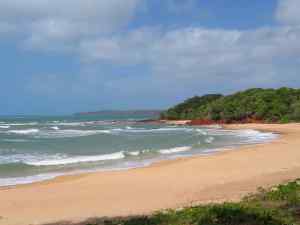
Beach, north-east Arnhem Land

Beach, north-east Arnhem Land

Well, there is quite a bit of help for us in this. First, the text and illustrations provide a lot of clues. “I see a waṯu grab a stick from a man” is accompanied by quite a busy drawing with birds, fish, turtle, jellyfish, and a person fishing, but there is also a picture of a dog with a stick in its mouth. So, waṯu is dog! Sometimes, however, it’s not so easy to get it exactly right, either because of the busy-ness of the picture or the (delightful) naiveté of the children’s drawings. You can usually guess, but can be uncertain, nonetheless. In these cases, the illustration on the last page of the story, which shows most of the creatures with their English names, provides most of the answers. Finally, there is also the online Yolŋu dictionary which, in fact, I used to obtain the necessary diacritics since, funnily enough, they are not available on my Apple keyboard!

That’s the “what is being seen” problem solved, but what about the pronunciation issue? How would you pronounce ŋurula (seagull)? Or mirinyiŋu (whale)? This one is easily solved. At the front of the book is a QR code. You hold your tablet or smart phone camera over that to be taken to a website where you can hear the story read by child-speakers of the language. The whole story only takes 3 minutes or so. Of course, being able to then say the words yourself will take some practice.

The story itself is simple, traditional picture-book style. The pages alternate between “I saw …” and “We saw …”, with each “I saw – We saw” pair forming a rhyming couplet:

I saw a maranydjalk leaping high
We saw a ŋurula soaring in the sky

It’s a delightful book. The rhymes are comfortable, not forced; the illustrations are appealing, particularly to young people; and story introduces readers to the rich natural environment of Arnhem Land region. It also conveys the pride the young authors and illustrators have in their country. It would be a wonderful book to use in primary school classrooms. It’s certainly one I look forward to reading to Grandson Gums when he’s a little older (and I’ve practised my Yolŋu Matha).

You can purchase this book directly from the Indigenous Literacy Foundation, for $24.99.

AWW Challenge 2019 BadgeNhulunbuy Primary School students, with Ann James and Ann Haddon
I saw we saw
Broadway: Indigenous Literacy Foundation, 2019
40pp.
ISBN: 9780648155492


Jocelyn Moorhouse, Unconditional love: A memoir of filmmaking and motherhood (#BookReview)

Book coverAlthough it is quite a traditional memoir, style-wise, Jocelyn Moorhouse’s Unconditional love: A memoir of filmmaking and motherhood is particularly interesting for a couple of reasons. Firstly, she’s an artist who had a happy childhood. Who knew that could happen? Secondly, while most memoirs focus on one aspect of the writer’s life – such as their career (sport, for example), their trauma (childhood abuse, perhaps), their activity (like travel) – Moorhouse intertwines two ostensibly distinct parts of her life, her filmmaking career and her life as a mother.

Jocelyn Moorhouse will be known to many filmgoers as the director of the critically successful Proof, How to make an American quilt, and The dressmaker. She is also the wife of PJ Hogan who directed Muriel’s wedding, My best friend’s wedding, and Peter Pan. This is one amazing couple. Not only have they each made critically successful films, but they are lifetime creative and life partners, working on and/or supporting each other’s movies, negotiating the logistics of parenthood, and so on. They have made it work for over 30 years, in a way that few do. That’s impressive.

It could all, then, have been pretty idyllic, but life rarely turns out that way, and for Moorhouse and Hogan it didn’t. The reason is that of Moorhouse and Hogan’s four children, the middle two are autistic. This resulted in an 18-year hiatus in her filmmaking career, although during that time she kept her hand in, mostly working in some way with PJ on his projects. The book, then, tells both stories, the development of her career from her early studies in media and drama at Rusden State College and then at the Australian Film and Television School, where she met Hogan, and her very particular and demanding life as the mother of two autistic children.

She shares the emotions of giving birth to two gorgeous children only to have them regress around two years of age, as is apparently typical with autism, into unhappy, and therefore difficult children. I say unhappy because it is clear that the children suddenly find the world confusing and frustrating. Their language and communication skills regress so they resort to screaming and crying, and other difficult behaviours. Moorhouse talks about the shock of diagnosis, the therapies they try, including the ones that work (for them), and the logistics of running a family whose life is peripatetic and dependent on the next film job coming along.

Moorhouse, the experienced storyteller (and in fact problem-solver), tells her story carefully. It’s not until halfway through the novel that she brings us to her growing uneasiness about her second daughter, Lily, and Lily’s diagnosis. It’s a tough chapter, because it was a shock to her. She realises that her discussion of causes, not to mention possible preventions and cures, could upset some readers:

I am aware that some of the readers of this book may be autistic themselves and could possibly find this chapter upsetting. Please understand that I wasn’t rejecting Lily because of her autism. If you keep reading, you will discover that I love her autism and her brother’s too. But twenty years ago I was afraid for Lily’s future …

It is tricky to write about issues like this, without offending unintentionally. It’s a long “journey”, to use current terminology, that she and her family go on. And it’s a hard one. Late in the book she says that it took her years to realise that a lot of the pain she was feeling stemmed from “an internal war between my instinct to cling to the dreams about life, and my need to accept the truth”. By the end, she and PJ learn to rebuild their dreams for Lily and Jack, and she learns to balance her need to work against the family’s needs.

This brings me to her career. I enjoyed reading about that, about her own films and the insight she gave me into a film director’s work in general. I worked with film – from an archival point of view – and met various film industry people over the years, but I still learnt much about just what a director does from this book, such as the amount of script work they (might) do, the work involved in casting, choosing location and designing sets, and so on. Each director has his/her own way of doing things, it’s clear, but I greatly enjoyed reading about Moorhouse’s experiences – the wins and losses, the need to be philosophical about those that got away or didn’t go to plan.

Style-wise, Unconditional love is a straightforward chronological memoir, told in plain language, making it an accessible read. A lovely, though not unusual thing she does, is to begin each chapter with a quote. They come from diverse sources, including filmmakers (like Ingmar Ingmar Bergman and Frederico Fellini), writers (like Virginia Woolf and Maya Angelou), people who treat or have autism (like Oliver Sacks and Temple Grandin), and artists (like Marc Chagall). The opening quote, for the introduction, comes from Margaret Atwood, saying that, “in the end, we’ll all become stories”, which seems perfect for both a memoir and a filmmaker.

This is a generous memoir, rather than a tell-all one. There’s little name-dropping, though of course names are dropped because that’s the business she and Hogan are in. There are references to relationship and financial challenges – you’d be surprised if there weren’t any – but these aren’t dwelt upon. She also seems careful to not intrude unnecessarily on her children’s rights to their own lives, particularly as they get older.

Unconditional love is a book that will appeal to readers interested in Australian filmmakers, to those interested in families with autistic members, but most to anyone interested in a story that shares the challenges of a life but focuses more on the solutions.

AWW Challenge 2019 BadgeJocelyn Moorhouse
Unconditional love: A memoir of filmmaking and motherhood
Melbourne: Text Publishing, 2019
296pp.
ISBN: 9781925773484

(Review copy courtesy Text Publishing)

Grace L. Chao and Amanda Ambinder Shapiro, Bookclub social: A reader’s guide to online book clubs (#BookReview)

BookcoverBack in 2016, I completed a survey about online bookclubs, and answered some supplementary questions about “my” sort of club. I also took part in a follow-up telephone interview with the two American researchers involved, Grace Chao and Amanda Shapiro. Now, three years later, they have completed their research and self-published it in their book, Bookclub social: A reader’s guide to online book clubs. Of course I bought it, because although it’s some time since I’ve been active in online book clubs (or, OBCs), I am interested in reading communities of all sorts.

Chao and Shapiro explain their research process in the opening chapter. They describe their work as an ethnography, and so used “anthropological methodology”. This involved the survey (for which they received 840 responses, a 22% response rate), followed-up by in-depth interviews with around 100 participants, and participant observation of a number of clubs in operation. They divide the clubs into seven genres:

  • Classics (which includes Literary)
  • Erotica
  • General Reader
  • Horror
  • Mystery/Thriller
  • Romance
  • Sci-fi

You won’t be surprised to hear that I slotted into the Classics group.

Anyhow, in this chapter they explain their aim as being to look at “how the nature of community is being redefined and shaped in the digital age”. I wouldn’t say, necessarily, that what they found was surprising – at least not in terms of my own experience of such clubs – but the book makes some cogent points about how international online communities can work, what they can offer, and some of the challenges they face too.

Of course, Chao and Shapiro found that, overall, female readers dominate most of the clubs, which is similar to face-to-face clubs, although in certain genres, like sci-fi, men are involved in greater numbers than in others. They found that people join these clubs to converse about books, “to deepen and enhance their reading experience”, and often, to seek both intellectual and social outlets. Face-to-face clubs can do these too, but OBCs can offer more.

For example, and this is something that I particularly liked, in a traditional face-to-face book club, there is limited time for discussion, usually just an hour or so. As Chao and Shapiro put it, these groups require “a faster thought process where there is less time to analyze or to react”. In an OBC, you can read a comment by another reader, mull it over, and write a response in an hour, a day, or whenever (within the rules or practices of the club.) I learnt so much during my 10 years or so of active involvement in these clubs.

However, it’s not only the extended time-frame which enables deeper or more expansive discussion. The global nature of these clubs allows for a more “diverse cultural exchange of perspectives and opinions”. This diversity can be generational, gender, racial, ethnic, socioeconomic, political and/or religious based.

For some readers, Chao and Shapiro found, OBCs represented the only outlet available to them for book discussion. These are readers who live in countries/places/situations where “a shared reading culture is not prioritized” (or, even, approved of), or who read genres (like Erotica) for which it is not always easy to find local reading communities, or who, for some reason (such as being housebound), are unable to access activities like face-to-face reading groups.

A propos the first group, Chao and Shapiro write that “for members from more restrictive cultures and communities, a virtual shared reading community could be their first foray into a community which allows personal expression and choice”. They include some moving stories about such readers, mostly women, who are desperate to be part of a reading community. A member of a Romance bookclub told Chao and Shapiro about a member from Pakistan, who was being pressured to marry “an elderly gentleman”:

Shortly thereafter, she told us that her family was not allowing her to post in the group anymore and even restricting her access to the internet. In her last post, she wrote: ‘Think of me.’ I didn’t know what to do. We never realized the risk she was taking by being a member of our book club. Through our book discussions, she was exposed to different cultures, religions, politics, morals, and values; she was able to speak her mind freely, things we take for granted in Western society. It’s like the club was deemed a bad influence…

Stories like this are saddening, but not surprising.

They note, in fact, that the social aspects of these clubs disprove the popular misconception that OBC members are “anti-social because they prefer online to face-to-face interactions”. Socialisation does take place, they say, with “intricate networks of friendships” being created across “national borders, time zones, and cultural barriers”. Here I’ll share a quote from the book that I’m sure another survey participant wrote about me:

I met another gal from Australia when she and her hubby were visiting here. We went to a great museum in Los Angeles.

Mr Gums and I did indeed meet two OBC friends of mine, and we had a lovely day at the J. Paul Getty Museum in Los Angeles. My OBC experience has had a significant and ongoing influence on my life, even though I am no longer active.

The book is logically structured, with the main body comprising chapters focusing on specific questions, such as Who’s in charge? (on the role of moderators) and Who’s anchoring the club? (on the role of core members). Other chapters explore social connection in OBCs, how they create virtual safe havens, their role in exposing members to new ideas, and the way they are able to create a sense of belonging among members. Chao and Shapiro support these discussions with evidence from their field research and from relevant academic writings by anthropologists, sociologists, information scientists, and others. The chapters are carefully footnoted and there is an extensive list of references at the end.

I’m not sure whether what they found can be extrapolated to other online communities and the book ends with advice about OBCs rather than making such extrapolations, but they do make some cogent points about the way OBC’s support and promote diversity and inclusivity, and they identify the main factors that make these sorts of communities work (or not). For these reasons, Bookclub social is a worthwhile read, as well as, for me at least, an enjoyable one.

Grace L. Chao and Amanda Ambinder Shapiro
Bookclub social: A reader’s guide to online book clubs
BookBaby, 2019
ISBN (ebook): 9781543947526

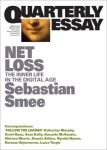
Sebastian Smee, Net loss: The inner life in the digital age (#BookReview)

Book CoverIf you’ve been reading my blog recently, you’ll already know why I am reviewing Sebastian Smee’s Quarterly Essay edition, “Net loss: The inner life in the digital age”, but to briefly recap, it’s because it inspired a member of my reading group to recommend we read Anton Chekhov’s short story, “The lady with the little dog”. What wonderful paths a reading life can take, eh?

Smee’s aim in his essay is, he says,

to dig into this idea that we all have an inner life with its own history of metamorphosis – rich, complex and often obscure, even to ourselves, but essential to who we are. It is a part of us we neglect at our peril. I am interested in it because of my sense that, as we live more and more of our lives online and attached to our phones, and as we are battered and buffeted by all the informational, corporate and political surges of contemporary life, this notion of an elusive but somehow sustaining inner self is eroding.

He commences the essay, though, by admitting that he uses social media – a lot. And not only that, he also admits that he knows that he is “handing out information about myself to people whose motives I can’t know. I feel I should be bothered by this, but I’m not, particularly.” He’s not bothered because they know only know “superficial stuff” about him, such as his phone number and age, what sports teams he supports, the music he listens to and where he does the weekly food shop. From all this, he  says, they can probably guess how he’ll vote, but, he says, and this is a big but, “they cannot know my inner life”.

This is where Chekhov’s “The lady with the little dog” comes in because Gurov discusses his inner and outer lives, making clear that the inner life is where “everything that was essential, of interest and of value to him, everything that made the kernel of his life, was hidden from other people”.

The digital age is, as Smee says, making huge incursions into our lives. Children, “from a young age, are encouraged to present performative versions of themselves online” and, for all of us, “it gets harder to be alone with ourselves or to pick up a book; harder still to stay with it”. This is true – to a degree – though there are many of us who do carve out alone-times for ourselves. For me, this includes never being plugged in when I walk. That is definitely my alone-time. As is my yoga time, and bed-time when my phone is in another room, while my book is with me!

But, what is this inner life? How do we define it? Smee says it includes “apprehensions of beauty, your intimations of death, what is going on inside you when you are in love, or when your whole being is in turmoil”. He feels that, today, “we can no longer assume that it has its own reality. To the extent that it exists at all, it seems to have no place in public discourse. Even in discussions of art, it is ignored, thwarted, factored out”. Hmm, I haven’t consciously thought about whether, when discussing the arts, we refer to our inner lives, whether we share our innermost feelings about what we see, hear or read, but I’d have thought we do. Yet, if Smee is right about what he calls “the obscurity and unknowability of our inner selves”, then have we ever?

Anyhow, Smee explores what “self” is and how various writers and artists have viewed it. Chekhov’s Gurov, for example, felt a tension between his inner and outer lives; while American filmmakers Lizzie Fitch and Ryan Trecartin, he says, portray our identity, our inner selves, as something flexible, as something messy, splintered, and defined by our relationships with each other.

Smee talks about the effect of social media, like Facebook, on our selves. Trustworthy studies, like one in the American Journal of Epidemiology, he says, “find that use of Facebook correlates with diminished wellbeing, both physical and mental”. Correlation doesn’t mean causation of course but the implication is there. Smee returns to his question about how much companies like Facebook really know about us, about how accurate their profiles are.

He talks throughout the essay about algorithms, because that is how social media software works. Their algorithms that deal “with big and disparate data sets can see patterns where they couldn’t previously be detected”. This has “proved incredibly useful in business, medicine and elsewhere”. However, these algorithms “still struggle to cope with the messiness and idiosyncrasy that inhere in individual human beings.” Can they, will they ever be able to, gain access to our inner lives? It’s hard to say, he says, because “individual reality is beyond quantification. And cause and effect are always more complex than we like to think”.

Throughout his discussion, Smee draws mostly on writers and artists, rather than on philosophers and psychologists, to explore his topic, to exemplify his arguments. And so to this question of quantifying individual reality, he turns to Cézanne, who conveys in his art that

life … is not hierarchical, like a newspaper article, or linear, like an algorithm. It is fluid and multifaceted … Instead of cause and effect, there are only clusters of interlocking circumstances which mysteriously give rise to new circumstances.

Will, I wonder, this inherent instability save us – and our inner lives?

Social media will, of course, continue to keep trying to access our selves. One way they do so is by trying to capture as much of our attention as they can. And yet, Smee goes on to argue, our inner lives, “the very things that move us the most”, are, in fact, “the hardest to share”. Chekhov knew it was hard to do. Moreover, he knew that sharing our inner selves “can also be a betrayal of the primary, inward experience.” Touché.

Smee also makes an important distinction between private and inner life. Privacy is linked to political freedom (and power), he says, “to what you do and think away from the interested, potentially controlling eyes of others”. It’s “a shallow concept”. Inner life, on the other hand, as he argues throughout the essay, “may be elusive and impossible to define”.

And yet, says Smee, it’s this inner life that can erupt into hate, as we see played out on social media, the trolling, the never-ending vindictiveness. He references Frances Bacon’s paintings, arguing that they “dramatise a tension between the psyche’s darker compulsions and a pressure felt within civilised society to conform, to stifle emotions, not to lash out.”

Do we want these inner lives unleashed? (In a way, though, we then know what people really think?!) However, the question that most interests Smee is why are these negative aspects of our inner lives being unleashed? He suggests that it’s what all the artists (the filmmakers, writers and painters) he quotes are expressing – “an apprehension that we are alone”. This is where, Smee proposes, social media comes in with a solution:

One response to this panic, it seems to me, is to disperse ourselves, by being as widely visible as possible. Social media, and the internet generally, make this feel possible, to an unprecedented degree. They allow us to lay before the world (in the hope that the world will be watching) the things we love, the things we hate, and a mediated image of our lives that can seem to rescue us from the threat of oblivion.

But, to really protect our inner lives, he believes, we need the converse: “to pay attention again to our solitude, daring to hope that we might connect that solitude to the solitude of others.”

So where does the essay leave us? Early on he argues that

Once nurtured in secret, protected by norms of discretion or a presumption of mystery, this ‘inner’ self today feels [my emph] harshly illuminated and remorselessly externalised, and at the same time flattened, constricted and quantified.

It’s easy for us to say, yes, yes, yes, this is so, but I wonder whether this too is just a feeling? And whether, in truth, our inner lives remain as obscure and unknowable as Smee describes in the essay – and therefore as rich as ever? Net loss is a fascinating essay to read – particularly for “arty” types who love allusions to writers and artists. He makes pertinent points about the way social media operates and gives us much to think about regarding the inner life, but in the end leaves us with more questions than answers – which is perfectly alright. The one immutable, however, is that whatever we think is happening, the inner life is worth protecting.

Lisa (ANZLitlovers) reviewed this, as did Amy (The Armchair Critic) who discusses it at some depth including delving into what Smee doesn’t do.

Sebastian Smee
“Net loss: The inner life in the digital age”
in Quarterly Essay, No. 72
Collingwood: Black Inc, 2018
98pp.
ISBN: 9781743820698

Stan Grant, On identity (#BookReview)

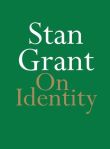
Book coverStan Grant seems to be the indigenous-person-du-jour here in Australia. I don’t say this disrespectfully, which I fear is how it may come across given Grant’s views “on identity”, but it feels true – particularly if you watch or listen to the ABC. He pops up regularly on shows, sometimes as presenter, other times as interviewee. He therefore needs no introduction for Aussies. For everyone else, though, a brief introduction. Grant is described in the bio at the front of his book, On identity, as “a self-described Indigenous Australian who counts himself among the Wiradjuri, Kamilaroi, Dharrawal and Irish.” The bio goes on to say that “his  identities embrace all and exclude none“. He is also a Walkley Award-winning journalist (see my Monday Musings on this award), and the author of Talking to my country, which I reviewed a couple of years ago.
Grant could also be described as a (modern) Renaissance man. I say this because of the way he synthesises his wide range of reading – including philosophy, history, psychology, history, anthropology, and literature – into coherent ideas that support his arguments. He did this orally at the conversation event I attended a couple of months ago, and he does it in this long-form essay called On identity.

In my post on that event, I wrote that his main point about identity was its tendency to exclusivity. In On identity, he explores this “exclusivity”, and its ramifications, starting with those boxes we see on all sorts of forms – including the census – that asks whether you are of Aboriginal or Torres Strait Islander descent. As a person with a keen interest in the pros and cons of “labelling”, I’m aware of the obvious implication of this, that is, that it marks or separates people out. However, as Grant points out, it also, in cases where heritage is mixed (like Grant’s, like many indigenous people’s), forces them to deny other aspects of themselves, to exclude other members of their families.

And so it forces Grant, for example, to deny his Irish grandmother Ivy.

If I mark yes on that identity box, then that is who I am; definitively, there is no ambiguity. I will have made a choice that colour, race, culture, whatever these things are, they matter to me more than my grandmother.

Through her, through this conversation about ticking boxes, Grant introduces his theme of “love”, of growing up surrounded by unconditional love, and how a focus on “identity” becomes a cold substitute for what truly sustains and binds, love. Now, this might sound a bit corny, or simplistic, but bear with me …

Grant then leads us through his argument. He discusses the work and ideas of Noongar author Kim Scott, whose trajectory as an indigenous person, Grant admits, has been quite different from his own. Grant grew up knowing he was indigenous. Scott, on the other hand, was raised with very little contact with Noongar people. On discovering his ancestry and wanting to know more, he felt forced to make a choice – was he black or white? And that decision, Scott writes in his family history, Kayang & me, was a “political imperative”. There are no references to “love” in this book, writes Grant, which confirms, he says, “what I have come to believe is true: identity – exclusive identity – has no space for love”.

Grant “deeply” admires Scott, but feels sad that “in writing himself back into a Noongar identity … it isn’t love that calls him, but politics”. Scott is not oblivious to this, worrying that his decision may strand his children in “no man’s land”, making them targets from both sides of “a historical, racial fault-line”. This concern leads Grant back to his mantra that “identity does not liberate: it binds”. He talks about other writers including Jewish ones (like Kafka) and Irish (like Yeats), about their attitudes to the problematic and limiting notion of “identity”. James Joyce’s Stephen Dedalus, he says, “knows if he is to write anything he must find freedom; he must shake loose the chains of identity.”

Grant turns to other writers of colour, who have found their “identity” limiting. Toni Morrison sees that the “very serious function of racism” is to distract, preventing you “from doing your work”. Writing for her, says Grant, “has been the struggle to live free from the white gaze”. Similarly, James Baldwin sought to be “free of identity” by going to France:

Baldwin did not wish to escape being black, but he desperately wanted to be rid of other people’s ideas of blackness.

Unfortunately, Baldwin returned to the USA, and got caught up in black protest. Thus, argues Grant, the man “who had been raised in the church … had forgotten the lessons of his own childhood. He had forgotten about love”:

When Baldwin turned to politics, his words lost no power–perhaps they grew more powerful–but he made the worst bargain I think a writer can make: he swapped freedom for identity and the identity writer can only write propaganda.

Strong words, for another day, perhaps! For Grant, it is the Baldwin of France he returns to “because he taught me that a black man could have the world”.

And here, really, is the paradox that I see in Grant’s argument. It’s sophisticated, erudite, and elegantly written. He makes a strong case for his belief that identity binds rather than frees, and that in so binding, if this makes sense, it keeps people divided. But, I’m not sure that he answers for me what can be done about the division (that is, the oppression of people on the basis of race, colour, religion, gender, sexuality, etc) that has given rise to “identity” in the first place. It’s all very well to point to the limitations of and the problems inherent in the politics of identity, but what is the answer to the underlying problem?

Grant returns at the end of the essay to love. He discusses the relationship between totalitarianism and love. Antebellum America, Nazi Germany, Pol Pot’s Cambodia and other regimes, he writes, turn unity (collective identity) into totality, and “crush love because it is the surest way to crush freedom”. What he means by this is that “we banish love, when we no longer see ourselves in each other”, when “we see instead an enemy”.

So, Grant eschews any identity that would cage him, any identity that would deny any aspect of himself or that would pit himself against others. But, acknowledging at last my paradox, he does admit that there are privileges in identity – whiteness, masculinity, sexuality – which need to be called out. It’s just that they are political, and he’s not about politics*. All he’ll say is that “we find no liberation behind walls”. Amen to that!

On identity is not simple reading. Neither does it provide answers to the “identity” problem. But what I like about it is that it offers a way to think about identity that is positive not negative, that would bring us together, not divide us. Where to next?

Lisa (ANZLitLovers) and Janine (Resident Judge of Port Philip) have also posted on this book.

* What he actually says is: “I have no desire to be the writer of politics” p. 95.

BannerStan Grant
On identity (Little books on big ideas)
Carlton: Melbourne University Press, 2019
95pp.
ISBN: 9780522875522

Tony Birch, The white girl (#BookReview)

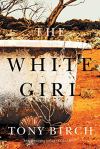
Book coverWe need more novels like Tony Birch’s The white girl and Melissa Lucashenko’s Too much lip. This is not to say that we don’t need all the wonderful Indigenous Australian literature I’ve read and reviewed here over the years, but some of the books, as excellent (and as beloved by me) as they are, can be more challenging to read. The white girl and Too much lip, on the other hand, are accessible, page-turning novels that have the capacity to reach a wide audience, but will they? I sure hope so, because the truths they tell are crucial for all Australians to know if we are to ever become a more mature and united nation.
In other words, it’s not only for their page-turning quality, that I paired these two novels. They have some other similarities, which I’ll briefly address before focusing on The white girl. Both novels are set in rural areas, though Birch’s novel also spends some time in the city, and both have female protagonists, though Birch’s Odette is a grandmother while Lucashenko’s Kerry is a 30-something, not-yet-settled woman. Most importantly, though, both reference long-term issues (the aforementioned truths) that have affected indigenous lives for generations, including, of course, the stolen generations, dispossession and powerlessness, past atrocities, and entrenched institutional discrimination.

However, beyond these, the novels are very different. For a start, Birch’s The white girl, being set in the 1960s, fits into the historical fiction genre whilst Lucashenko’s novel is contemporary. Moreover, Lucashenko’s is more complex and has more humour, albeit of the black sort, than Birch’s more straight drama, so let’s now get to it. Unlike Birch’s previous novel, Ghost river, which is set in Melbourne, The white girl, is set in a fictional town, Deane, and an unnamed city. This effectively universalises the story to suit any part of Australia, making it difficult to shrug off the issues as not relevant to our own places.

The basic plot of The white girl concerns Odette’s determination to save her grand-daughter, Sissy, from falling under the control of white authorities, because this novel is set at a time in Australia when indigenous people came under the Act, an act which meant they could not travel away from where they lived without permission. It also meant that the state was legal guardian of children like Sissy. Things come to a head for Odette and Sissy when a new and more officious policeman, Sergeant Lowe, comes to town to replace the alcoholic, and generally more laissez-faire Bill Shea. Odette feels the time is ripe to reunite Sissy with her mother, Lila, who had left soon after Sissy was born, and who, Odette realises some way into the story, had good reason to disappear.

Birch has set his novel at a time of transition. It’s well into the Menzies era, and indigenous people are becoming more actively engaged in fighting for their rights. Sergeant Lowe, though, is not impressed. When Odette approaches him for the necessary permissions to travel, he refuses, telling her (with the about-to-retire Shea also in his hearing):

‘The whole business of native welfare has been neglected in this district for many years. I will not allow it to continue. Your people need certainty, just as we do, as officers of the Crown. None of this is helped, of course, by those trouble-makers arguing for citizenship of behalf of your people.’

The divisive language (“your people”) and the assertion of absolute power (“I will not allow it to continue”) reflect classic colonial behaviours that ramp up the level of threat felt by Odette. This threat is exacerbated by the presence of a brutal white family in the district, the Kanes, comprising a father and two sons. Lowe is somewhat aware of their trouble-making, but only insofar as it affects another white person in the district, the gentle, brain-damaged Henry who owns the local junkyard. To some extent the book’s characters are stereotypical, but Birch’s story-telling is such that they don’t become – at least not unreasonably so – caricatures. This is partly because they are fleshed out with back-stories. It’s not particularly complex story-telling – the back stories, for example, are common ones – but the novel is believable, perhaps because they are common.

As Lucashenko does in Too much lip, Birch also references traditional culture and its ongoing role in people’s lives. Odette, like many indigenous people, listens to messages from birds (“a morning doesn’t pass without one of them speaking to me”) and to the “old people” from whom she believes her strength comes. Birch also beautifully conveys indigenous people’s resourcefulness in the face of a dominant white culture. For example, Odette’s father tells her, when she’s a young girl, why she should sing in the mission church even though they don’t believe in “their God”:

‘Because it’s best to keep them fellas happy, keep their meanness down.’

And Odette’s response, when asked for her “tribal name” by a patronising white woman who offers her piece-work employment as a card artist, provides a typical example of indigenous response to such self-interested nosiness:

It never failed to surprise Odette how white people were always going on about uplifting Aboriginal people, yet they would demand information about the old ways when it suited them. She looked over to the honey jar sitting on the bread board and read the label to herself. It sounded tribal enough. ‘We’re the Bilga people, ‘ she explained. ‘That’s my tribe. The Bilgas.’

What Birch shows, then, is that survival for indigenous people was (and mostly still is) quite a cat-and-mouse game. It involves “taking a chance with these white people”. This is a risk, Odette and her friends realise, but is often all they have. And that, I think, is the main message Birch wants to leave with his non-indigenous readers. The question is, can we rise to the challenge, and be trusted? Are we prepared to heed the truths being shared? So far, I’d say, the jury is still out.

Lisa (ANZLitLovers) also liked this book. Read for ANZLitLovers ILW2019.

Banner

Tony Birch
The white girl
St Lucia: UQP, 2019
265pp.
ISBN: 9780702260384

(Review copy courtesy UQP)

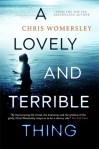
Chris Womersley, A lovely and terrible thing (#BookReview)

Book coverDescribed as “twenty macabre and deliciously enjoyable stories for readers of Fiona McFarlane and Lauren Groff”, Chris Womersley’s newest book – his debut collection of short stories – wasn’t necessarily a natural fit for me. I haven’t read Lauren Groff, but I have read and really liked Fiona McFarlane’s clever, memorable, The night guest (my review). However, the macabre is not something I naturally gravitate to. Still, I did like The great unknown (my review), edited by Angela Meyer, and I have been wanting to read Chris Womersley for some time, so I decided to put aside my reservations and give it a shot. I’m glad I did, because although there certainly is an element of the macabre here, the stories aren’t all so macabre that I felt the need to strap in for a shivery ride as the promos were also suggesting. This is not meant to put off those who like shivery rides, but to encourage those who don’t. It’s meant to say, in other words, that there’s something for most readers here.

The stories, in other words, do offer some variety. Most are told in first person male voices, but these voices range from children to teens to grown men, from sons and fathers, to brothers and friends, to husbands. There’s a hunchback, a junkie or two – and three stories use female voices. Despite this variety, however, there is an overall similarity in tone – somewhat melancholic, somewhat reflective. Many, in fact, are stories about something that happened in the past so they have that tone of – hmm, regret, or, if not that, of an uneasiness that has carried through to the present. Or sometimes, it’s just resignation. If you like nostalgia, this is not for you, as the first story makes clear:

My God, those suburban evenings, so full of hope and all its little victims. (“Headful of bees”)

So, what are they about? Fundamentally, and not surprisingly, they are about relationships – families, friends, neighbours, strangers, and, particularly, fathers and sons. Many relationships are under some sort of internal or external stress, or are unusual in some way. Most of these stories can be simply weird and, in some cases, even hopeful. But in other relationships, there’s power at play, and it is more often in these that the macabre, if not downright horror, ensues. In some stories, then, like the opening “Headful of bees”, a young person is mystified by the behaviour of an adult neighbour, while in others, such as the second one, “The house of special purpose”, a well-intentioned or naive person is cruelly taken advantage of by those who wield power.

The stories have been ordered in a way that manages our emotions. The truly macabre stories are interspersed with others, which reduces tension a little but also keeps us guessing. Will this story, we wonder, disturb and unnerve, or simply sadden us? There are a few truly shocking stories, and they include my favourites. Naming them, however, would spoil their impact. As one character, not from one of these stories, says:

You think you know people, but they always have something hidden away. It’s an awful lesson, corrosive … (“The age of terror”)

Fortunately, the collection ends on a story that, while containing tragedy, also offers hope about humanity. It’s not a happy story, but neither is it a complete downer, so we close the book feeling at least a little reassured that our journey has not been completely in vain.

Of course, there’s more to enjoying this book than the variety in and challenge of its stories. There’s also the writing. Womersley’s plotting and language is exquisite. I enjoyed his wordplays, and his use of metaphor. In “The middle of nowhere”, the drug-addicted protagonists are both literally and spiritually lost, and in “Growing pain”, a young adolescent girl’s grief and sense of alienation is manifested in a strange, physical way. Water features in many of the stories, as is signalled by the epigram from Moby Dick which ends with “as everybody knows meditation and water are wedded forever”. However, as everyone also knows, water is a paradoxical element – “another dimension, a netherworld” – that can both give and take. And so it is in these stories. Some of the most gruesome of them have water (or a place of water) at their core.

I said above that the stories are about relationships, which they are, but of course these relationships are explored through stories that deal with the things that confront us as humans. There are grieving parents and children, and people with regrets and failed aspirations. There are dreamers, junkies and mentally ill people. There’s birth and death, there’s deep love and desire for true connection, but there’s also revenge, child abuse and cruelty. Many of the stories explore, in some way, “the chasm that exists in all of us – between who we imagine ourselves to be and the person we truly are” (“The mare’s nest”). A character in “Dark the water, so deep the night” tells the young protagonist that “We tell stories to impose order upon the world, to give things meaning. To give us hope.” If there’s one thing we learn here, it’s that stories, on their own, can’t impose order. More often, they illuminate the chaos!

Of course, I didn’t love them all equally, and there is, as I’ve already said, some sameness to them. The tone is similar, and many are told by a narrator remembering the past. Also, many of the protagonists are young people trying to comprehend the adults around them, though there are older protagonists, including a 79-year-old woman in “The age of terror”.

However, I didn’t find one of them boring. This is not surprising because, although A lovely and terrible thing is Womersley’s first collection, he has been writing short stories for a long time. Sixteen of the twenty here, in fact, have been published before, from 2006 on, in some of the best literary magazines around, including Granta, Meanjin, The Griffith Review. Not a bad record, eh? The stories are, to be a little corny, lovely and terrible things. They take us, as another title in the collection suggests, to “the very edge of things”. What I like about them is that they do this with such control that, even when they push us to the limit, they feel true. Highly recommended.

Chris Womersley
A lovely and terrible thing: Short story collection
Sydney: Picador, 2019
270pp.
ISBN:

(Review copy courtesy Pan Macmillan Australia)

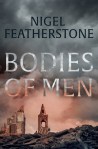
Nigel Featherstone, Bodies of men (#BookReview)

Nigel Featherstone, Bodies of menNigel Featherstone’s latest novel, Bodies of men, is a brave book – and not because it’s a World War 2 story about love between two soldiers at at time when such relationships were taboo, though there is that. No, I mean, because it’s a World War 2 story that was inspired by Featherstone’s three-month writer-in-residence stint at the Australian Defence Force Academy, in 2013. That’s not particularly brave, you are probably thinking, but wait, there’s more. What’s brave is that this novel, this story inspired by that residency, is about some darker sides of war – it’s about deserters, and violence from your own side, for a start … It’s certainly not about heroics, or, to be accurate, not the sort of heroics you’d expect. Courage, it shows, comes in many forms.

Here is what self-described pacifist Featherstone wrote in his blog two months into his residency:

I came here with the idea of exploring ‘masculinity in times of conflict’ …  Perhaps, like always, I’m being driven by that central question: what does it mean to be a good man, which, of course, is almost exactly the same as asking, what does it mean to be a good person?  But the military, especially the Australian kind of military, is all about men, isn’t it, the warrior, that iconic ‘digger’, that myth of our country, that brave saviour of everything we’re meant to stand for (whatever that is).

Those men who could do no wrong.  Except I don’t believe that for a second.

So, what did Featherstone actually write? It’s the story of two Australian soldiers from Sydney. William is from a conservative, well-to-do North Shore Sydney family, with a Member of Parliament father, while James comes from a poorer working class family, with a widowed mother who runs a shop but who’s also a socialist, a pacifist, and committed to helping homeless people. The boys had met and spent a few times together in their youth, but had lost touch for some years – until they find themselves in Egypt in 1941.

The novel opens with a reconnaissance that turns into an ambush. At an important moment, William, just off the boat, prevaricates, but James, there with a different military section, takes the initiative, and saves the day. The men vaguely recognise each other – “The officer”, thinks James, “does look familiar … but no it can’t be” – but have no opportunity to follow up, each returning immediately to their sections. From here the narrative, told third person from the alternating perspectives of William and James, follows the two men on their different paths. William, soon to be a lieutenant, is sent to manage a training camp in the desert. Believing he needs to redeem himself from that first experience of action, he sees this as an opportunity. He excels as a leader of men, finding the right balance between toughness and friendliness, but is dogged by his cold father’s voice, and worries about his ability to be the man his father expects. However, his mind is on that young man he glimpsed. Meanwhile, James goes AWOL on a military motorbike, which he crashes. Luckily, a family takes him in, a family which has its own tricky background and secrets, but James is just the right person to not rock their boat, so a warm relationship develops.

It’s not long before William works out a way of tracking James down. The story is told chronologically, but with frequent flashbacks which fill in that boyhood friendship. It was short, but intense. Both felt it, but William, in particular, struggled to understand it. It is therefore James, who, upon their renewed acquaintance, takes the lead – and the novel becomes, in part, a love story. Featherstone finds the right balance, here, conveying their tenderness and warmth, without sentimentality. We are never allowed to forget that this is war-time, and that both William and James are taking serious risks in their desire to be together.

However, this is not simply a boy-meets-boy, boy-loses-boy, boy-finds-boy again story. As mentioned above, Featherstone’s goal was to explore what it means to be a good man, against the backdrop of war. We do see some action, besides that opening scene, and there is an over-riding sense that something sinister could happen at any moment, but the main theme concerns men and their reactions to their circumstances – soldiers, men in hiding, men displaced, men in resistance. Each of these men provides the reader with a perspective on how men might choose to be. Courage and risk-taking, passion for a cause, recklessness, fear, commitment to helping others, tenderness and kindness – all of these come into play as the story progresses. And, as in all good novels, there are no simple answers. A love story this might be, but a genre romance or war-story it’s not.

How does Featherstone achieve this? Well, sometimes it’s hard to pinpoint these things, isn’t it? In a later post on his blog, Featherstone says that he wrote 38 drafts. You can tell this, and yet you can’t tell. You can tell, because you can feel the craft in the book. You can’t tell, because it also feels organic, not overworked. There’s skill in that. This skill includes the characterisation. William and James are sensitively fleshed out, well individuated, and grow through their experiences. But there are other characters too, including two strong women characters. James’ grounded, supportive mother is one, and open-minded Yetta, the woman who cares for James after his accident is another. It is she who articulates some of the novel’s main messages, including:

‘People must care for people. It’s not more complicated than that.’

There’s skill also in the narrative structure. The novel has a lightly episodic touch, with little breaks marked on the paper between “scenes”, but the story nonetheless flows. These breaks simply provide a way for the narrative to be progressed without unnecessary explication.

And, of course, there’s the writing. It’s spare, and yet perfectly evocative – of life at William’s desert camp, of the nervous busy-ness of war-time Alexandria where wells of quietness can also be found, and of William and James’ love. Here’s an example showing the edgy sort of tone Featherstone creates:

But now, something new: he was – he and James both were – sliding into the back seat of a car. They were being driven along one of Alexandria’s palm-lined boulevards; before long they were surrounded by blackness. William wound down his window and was about to yell, BUGGER THE WAR! – the night was getting away from him – but he managed to drag the words back down to where they belonged, in the pit of his gut.

Bodies of men, then, is a war novel that questions war. But, it is told with a generous touch that doesn’t undermine or betray those who choose to go. It’s a page-turner, underpinned by a fundamental understanding of humanity. It’s a very good read.

Nigel Featherstone
Bodies of men
Sydney: Hachette Australia, 2019
324pp.
ISBN: 9780733640704


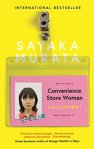
Sayaka Murata, Convenience store woman (#BookReview)

Book coverConvenience store woman, which won Japan’s prestigious Akutagawa Prize, is Sayaka Murata’s 10th novel, but her first translated into English. Hopefully, it won’t be the last. A rather unusual book, it elicited a stimulating discussion at my reading group last week.

The convenience store woman of the title is 36-year-old Keiko Furukawa. She isn’t “normal”, and her family worries she will never fit in to society. However, when 18 years old, she obtains work at a newly opened Smile Mart convenience store, and quickly feels comfortable, undertaking routine daily tasks, and following the store’s rules. Eighteen years later, she’s still there. This is not seen as a valid situation for a woman of Keiko’s now mature age. Why isn’t she married? And why doesn’t she have a better job? Then she meets another convenience store worker, the also, but differently, nonconformist Shiraha, and she thinks she can solve both their problems by having him move in with her.

It’s a short book, at just 176-pages in the print edition, and is told first person. Now, for those of you who remember my recent discussion of first person voices, Convenience store woman is a perfect example of an effective use of first person. The main theme is the push for conformity, the push to follow the expected narrative of a life, but our narrator, Keiko, is not, for whatever reason, able (or willing) to conform. This theme is particularly relevant to Japan, which has a reputation for conformity and group behaviour, but it’s also universally relevant, because many societies, my own included, are not good at coping with people who stray from the “norm”.

So, Keiko is different. She’s been different all her life. She knows it, and she’s mystified. She’s particularly mystified by the way people often behave which seems counter to logic, and also by the way people cheer up when they think she’s behaving “normally”. An example of the former happens in her childhood, which she tells us via flashback. There’s a schoolyard fight. The kids call for the fight to stop, so she goes to the toolshed, gets a spade and bashes one of the kids with it. Everyone is horrified,

“But everyone was saying to stop Yamazaki-kun and Aoki-kun fighting! I just thought that would be the quickest way to do it,” I explained patiently. Why on earth were they so angry? I just didn’t get it.

An example of the latter occurs after she invites Shiraha to live at her place. Everyone assumes they are in a relationship. “They were all so ecstatic”, she wondered, she says, “whether they’d lost their minds”. Listening to her friends “go on”, she says,

was like hearing them talk about a couple of total strangers. They seemed to have the story wrapped up between them. It was about characters who had the same names as we did, but who had absolutely nothing to do with me or Shiraha.

There it is – the expected story or narrative of life!

Of her convenience store colleagues, she says:

I was shocked by their reaction. As a convenience store worker, I couldn’t believe they were putting gossip about store workers before a promotion in which chicken skewers that usually sold at 130 yen were to be put on sale at the special price of 110 yen. What on earth had happened to the pair of them?

As you can see there’s a good deal of humour in this book. You can also see why this story could only be told first person. Any other voice would risk undermining Keiko’s authenticity, her reality.

So, for Keiko, it’s “convenient” having Shiraha at her place. Everyone is happy for her, and she likes that “they’ve stopped poking their nose into my business”.

However, while Keiko, for all her strangeness, is a likeable character, Shiraha is not. He has no desire to work, and takes advantage of her wish to appear “normal”, even though it satisfies his need for the same. He excuses his laziness by criticising society and its unfair gender expectations on men:

“Naturally, your job in a convenience store isn’t enough to support me. With you working there and me jobless, I’m the one they’ll criticize. Society hasn’t dragged itself out of the Stone Age yet, and they’ll always blame the man. But if you could just get a proper job, Furukura, they won’t victimize me anymore and it’ll be good for you, too, so we’d be killing two birds with one stone.”

Worse, he’s arrogant and cruel:

“I did it! I got away! Everything’s okay for the time being. There’s no way you’ll be getting pregnant, no chance of me ever penetrating a woman like you, after all.”

Actually, he only “got away” because Keiko had the idea of his moving in. Fortunately, she has no interest in sex, so his comment falls on flat ears – but we notice it.

The novel, then, hinges on the idea of normality, with the word “normal” recurring throughout the novel. Early on, Keiko realises that “the normal world has no room for exceptions and always quietly eliminates foreign objects”. This is why, it dawns on her, her family wishes to “cure” her. She is therefore grateful for the convenience store, where she can operate as “a normal cog in society” – until her age makes it no longer “normal”. The charming Shiraha has his own take:

“People who are considered normal enjoy putting those who aren’t on trial, you know. But if you kick me out now, they’ll judge you even more harshly, so you have no choice but to keep me around.” Shiraha gave a thin laugh. “I always did want revenge, on women who are allowed to become parasites just because they’re women. I always thought to myself that I’d be a parasite one day. That’d show them. And I’m going to be a parasite on you, Furukura, whatever it takes.”

Shiraha shows us that Murata’s understanding of deviations from the norm is nuanced, not simplistic.

Anyhow, later in the novel, after her sister asks “How can we make you normal?”, Keiko comes to recognise that her sister is happier seeing her as “normal”, albeit with “a lot of problems”,

than she is having an abnormal sister for whom everything is fine. For her, normality—however messy—is far more comprehensible.

In the end, Keiko does resolve her conundrum regarding how to live in a way that is true to herself. It is inspired, in fact, by the convenience store, which I think we can read as a microcosm of society. She suggests that “a convenience store is not merely a place where customers come to buy practical necessities, it has to be somewhere they can enjoy and take pleasure in discovering things they like”. She can play a role in that.

Convenience store woman is a wonderful read. Perfect in tone and voice, and fearless in its exploration of the confining nature of “normality”, it forces us to look beyond, and imagine other lives and ways of being.

Sayaka Murata
Convenience store woman
Translated by Ginny Tapley Takemori
London: Portobello Books, 2016 (trans. ed. 2018)
eISBN: 9781846276859

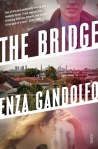
Enza Gandolfo, The bridge (#Bookreview)

Book coverIf there are people I admire more than any others, it’s those who are able to empathise with, and forgive, someone who has done them great wrong. This complex question of forgiveness – of self and of others – is one of the issues explored in Enza Gandolfo’s Stella Prize short-listed novel, The bridge. However, it’s only one aspect of this intelligent, moving book.

Melburnians, and Australians of a certain age, will remember the West Gate Bridge disaster in 1970. The bridge collapsed during construction, killing 35 and injuring 18 of the 60 workers there at the time. It was, and still is I believe, Australia’s worst industrial accident, and it frames Gandolfo’s book. The novel starts in 1970, introducing us to 22-year-old Italian-born Antonello and his workmates, another Italian Sam, and Slav (whose nickname conveys his origins). Gandolfo quickly sets up the scene – the bonding between these men, and something of their lives and aspirations – before describing the collapse in the next chapter. She captures the horror of those hours in clear, descriptive, but not overblown language that perfectly captures the shock, panic and emotion of the event for all who experienced it – the workers, their families and those in the vicinity.

Antonello survives, but some of his friends don’t, and nor does his boss, Bob, who’d been “like a father” to him. Antonello, along with Bob and his mates, had started to realise that things weren’t right, but, as a rigger, he had no formal responsibility for what happened. However, guilt and trauma attach to him. His lovely relationship with his young wife Paolina survives, but is never quite the same. Gandolfo conveys so well how devastating to a life – to lives – a traumatic event can be, how life can change in a moment. You understand why, these days, counsellors are immediately sent in when tragedies occur.

The book then jumps, in Chapter 4, to 2009, and we meet 19-year-old Jo. Like Antonello she belongs to the working class. She lives in a rather dilapidated weatherboard house near the bridge, with her single supermarket worker mother, Mandy. She is in her last year of school, and has a best friend, Ashleigh, who comes from a comfortable middle-class family where the mother is a high school principal. Jo is the needier of the two, Ashleigh being more clever, more confident, and increasingly more involved with her boyfriend. Jo feels she’s losing her.

And now, here’s the challenge reviewers face. How much to give away of the story. What happens next, happens before a third of the novel is over, and you see it coming, but nonetheless it’s a shock, so I won’t give it away. (I note that some reviewers have, and some haven’t.) Let’s just say that a tragedy ensues and Jo is responsible – and, as it turns out, her friend Ashleigh is Antonello’s grand-daughter.

So, given I’ve decided not to spoil the plot, how best to discuss the rest of the novel, which still has over 250 pages to go?

Well, I could talk about the writing and characterisation. The novel is told chronologically, in third person, from multiple perspectives – from Antonello and Jo of course, but also Mandy, a legal aid lawyer Sarah, and a few others later in the novel. Gandolfo captures their feelings with such sensitivity and realism that by the time the novel is over we feel we know them. We experience their emotions, and go through their thought processes with them as they ponder what’s happened and whether they can possibly keep living in the face of their respective tragedies. It feels so true – and because of that, it breaks our hearts, more than once.

Then there’s the bridge. Its prime meaning here is literal, of course, but it is a gift to a writer because bridges can represent so many things – positive or negative, or, paradoxically both – that are reflected in this novel. They can symbolise progress, for example, but West Gate, which would bring two worlds closer together, was not seen positively by all:

“We don’t want those rich bastards coming over to the west”, was the general sentiment.

Bridges can also suggest connection and transition. In this novel, transition encompasses the idea of social mobility, which West Gate exposes, but it can also mean the transitions individuals make psychologically. It is this latter, often aided by the good connections that can occur between people, that ultimately brings some redemption in the novel.

This brings me to Gandolfo’s themes. Antonello, who has suffered from PTSD since the accident, realises late in the novel that his friend Sam, who had become a union activist, had made the more positive choice. It takes him a long time but finally he learns the lesson:

For years, the most persistent impulse was towards death; a desire to stop living … But life didn’t stop. It went on whether you lived it or not. You have to choose life. This is what he needed to tell them – if you stop living, you may as well die. If you stop living, you aren’t going to be able to love again, and everyone you know will pay for that, everyone.

Empathetic Paolina has always known this, but it’s a lesson that comes hard to the other characters. Anger, revenge, guilt – depending on their role in the events that occur – overwhelm them. And it is Antonello who is the lynchpin. He is able to help Jo, telling her that the best thing she can do is forgive herself and allow herself to live. Similarly, he encourages his own family not to succumb to the sadness, anger and bitterness which brought him such waste and pain.

Enza Gandolfo’s achievement is impressive. She presents us with a bunch of flawed – as in ordinary – characters, and she puts them in terrible but not unrealistic situations. She then has them experience all the emotions that you would expect. And she doesn’t judge. Instead, she makes us feel, confronting us to think about how we would react, and hoping that we will come to the same conclusion that Antonello does.

A character I’ve only briefly mentioned is Sarah, Jo’s legal aid lawyer. She talks about the storytelling aspect of trials:

That was the danger of a good story: you could elicit pity and empathy for even the worst sociopath … Sarah believed telling good stories, the ones people listened to and were swayed by, was a responsibility. It worried her that some people did not take it seriously enough.

It’s not a big leap, I’d say, to suggest that Gandolfo would extend this responsibility to novelists – and in The bridge, she shows what a responsible story can look like. Such a novel.

Lisa (ANZLitLovers) was also moved by this book.

AWW Challenge 2019 BadgeEnza Gandolfo
The bridge
Brunswick: Scribe, 2018
375pp.
ISBN: 9781925713015