Charlotte Wood, The weekend (#BookReview)

Book coverAfter reading the first few pages of Charlotte Wood’s latest novel, The weekend, I was starting to wonder how on earth these women, with “their same scratchy old ways”, could be described as “dearest friends”. They seemed so different, and so irritated or, sometimes, cowed by each other’s differences. Where was their point of connection I wondered, besides their late friend Sylvie?

But, let’s start at the beginning. My edition’s back cover describes the set up beautifully: “Four older women have a lifelong friendship of the best kind: loving, practical, frank and steadfast. But when Sylvie dies, the ground shifts dangerously for the other three. Can they survive together without her?” Well, they are going to find out, because the book concerns a weekend – a Christmas weekend, in fact – in which the remaining three come to Sylvie’s beach-house to clean it out for sale. It’s a thankless task at the best of times, so when you get three very different, but still grieving personalities doing it, the stage is set for tension, at the very least.

Who then are these three? There’s retired restaurateur Jude who has had a married lover for over forty years; public intellectual Wendy whose much loved husband died many years ago and who now has the frail, demented dog Finn in tow; and out-of-work actor Adele whose relationship has just fallen apart, leaving her homeless. Wood sets the scene, and establishes their characters perfectly through describing their journey to and arrival at the beach-house (much like the opening title sequence for another house-party story, The big chill.) We quickly learn that Jude is organised, task-focused, financially comfortable and disdainful of other people’s frailties; that Wendy is disorganised and soft, but emotional and loyal; and that vain but always optimistic Adele is seen by her friends as “the child” of the group. While Wendy and Jude work at their Jude-assigned tasks, she can be found reminiscing over Sylvie’s LP collection.

Over the weekend, the women’s friendship is tested to its limits. Early on, Wendy reflects that “it was exhausting, being friends”, while Adele remembers their early years of friendship, and how they “saw their best selves in each other”. But, how honest are they, can they be, should they be with each other? Adele ponders early, that “it was dangerous business, truth-telling”. Over the weekend, of course, some truths come out – what they think about each other, and truths that were supposed to be secrets. And yet, the friendship holds fast:

Because what was friendship, after forty years? What would it be after fifty or sixty? It was a mystery. It was immutable, a force as deep and invitable as the vibration of the ocean coming to her through the sand.

“simple creatureliness”

However, there is a fourth main character in this story – the aforementioned Finn whom Wendy brings with her knowing full well that Jude would not be impressed. But what was she to do? Living alone and unwilling to euthanise him, she had no option. Utterly frail in body and mind, he is a significant character – or, at least, plays a significant role – in the book. This role is bifold. Firstly, we gain more information about the women’s characters and their attitudes to aging and death through their attitudes and reactions to him. His physical and mental frailty, his incontinence, deafness and blindness, confront the women with their own mortality. No-nonsense Jude doesn’t want him and his mess around, and thinks, frankly, he should be put down. She is barely aware of Finn’s importance to Wendy. Adele isn’t enamoured but more tolerant and understanding, while Wendy, for whom Finn was a lifeline after her husband’s death, finds it impossible to think about euthanasia. His presence throughout the novel sometimes mirrors, sometimes opposes the women’s volatile emotional states.

But, the other more interesting role played by Finn has to do with one of the novel’s over-riding themes, one triggered by ageing. It’s the question of what have I lived for, what have I achieved, when have I “finished [my] turn”? Wendy and Adele, for example, both feel they have more to achieve. For Wendy, it’s the intellectual idea she feels she’s moving towards, “the place she had always felt was there waiting for her”, and for Adele, it’s “clawing back her one great moment on the stage”. Jude’s life is more about “gathering experience, formulating opinions, developing ideas” to “fold away and save for” those times her married lover is able to see her. So, the underlying question is: When you no longer have those seemingly limitless goals of youth, what goals do you have, where do they come from, and what happens when you, perhaps, run out of goals or purpose? Finn offers this opposite – “simple creatureliness”, or, just being. This issue of goals and purpose is, I believe, one of the biggest challenges of ageing – alongside the obvious physical ones – and I love that Wood takes it on.

However, she doesn’t stop there, because her women also confront other ageing-related issues – increasing homelessness for older women, the threat of loneliness that often attends age, and coping with technological and cultural change not to mention with children who start to parent you.

To keep this story and its tensions focused, Wood uses the house-party setting, as many other authors have done before including John Clanchy in his novel Sisters (my review). I didn’t much like the melodramatic party scene, involving two interlopers, that occurs near the end, but this is a common trope, I think, in the house-party sub-genre. Overall, I loved the writing. It’s tight. We shift seamlessly between the characters without getting lost, each one nicely differentiated, and there are some spot-on images:

Every time Jude had to hold her tongue, every time she didn’t tell Wendy she should pay him the kindness of letting him die, she felt falsehood pulled tighter like a plastic bag, closer, closer over her mouth and nose. She couldn’t bear it.

AND

Outside the cicadas were filling the still summer air with sound. You must shed the dead skin … The bush was full of insects and snakes reborn, shining with newness. The dried carapaces rustled as the resurrected creatures slithered out of, away from, their dead selves. You had to struggle free from what had protected you.

By now, you may be thinking that this a grim book, but while its intent is serious, Wood’s touch is light, using some humour – sometimes generous, sometimes satirical or ironic – in the telling. This humour – as in the scene describing Adele, in the park, having just peed, running into a theatre producer – keeps these women real and relatable, and the tone edging to hopeful.

You would think that The weekend would be the perfect pick for my reading group, given we are all women not much younger than Wood’s protagonists and that many of us have been friends for thirty years plus. And yet, the responses of the twelve members present at our meeting were mixed. One group was ambivalent, arguing that the characters were too much like types, while the other loved it, believing it captured the dynamics of longtime women’s friendships with heart and humour. You know which group I belonged to – for all the reasons I’ve described above.

Lisa (ANZLitLovers) also enjoyed the book.
Challenge logoCharlotte Wood
The weekend
Sydney: Allen & Unwin, 2019
256pp.
ISBN: 9781760292010

(Review copy courtesy Allen & Unwin)

Steven Carroll, The lost life (#BookReview)

Audiobook coverLast year, Mr Gums and I bought a new car to replace our loved but aging 15-year-old Subaru Forester. We’ve been keen to move into the hybrid world but wanted to stay with the SUV-style for various practical reasons, so, as soon as a reasonably-priced hybrid SUV appeared on the market here – the Toyota RAV4 – we were in, and so far so good. However, the real reason I’m sharing this is because another impetus for buying a new car was all the new technology, including the audio systems that enable you to play music – and books – via your phones. And so it was that I borrowed my first ever e-audiobook from our local library, Steven Carroll’s The lost life. The technology worked a treat.
Long-term readers here know that I’m not a huge fan of audiobooks, for reasons I’ve explained before. Fortunately, the reader here, Deirdre Rubenstein, did an excellent job. She was expressive, appropriately English-sounding, but read more than played the characters. That helps a lot.

So now, the book. I chose it for two reasons – it was short, making it a good test case, and it was by Aussie author Steven Carroll, whom I haven’t read yet, and whose Eliot Quartet series I’ve been wanting to read. The lost life, the first book in this series, is inspired by the poem “Burnt Norton”, the first of Eliot’s Four Quartets. Makes sense, huh! “Burnt Norton” was published in 1935, and most of Carroll’s novel is set in September 1934. The novel is framed by the story of Eliot and Emily Hale*, who did, in fact, visit Burnt Norton manor in 1934, but their love is paralleled by that of a young couple, 18-year-old Catherine and 22-year-old Daniel. Eliot, himself, is a fairly shadowy figure in the story, with the focus here being on Miss Hale and Catherine.

The story starts at Burnt Norton, a country estate to which Catherine and Daniel have gone for a romantic picnic and maybe a swim. It’s summer, and Carroll beautifully evokes the passion beating in the “ardent” young Catherine’s breast as she looks forward to further development of their physical relationship, which has not yet been consummated. But, they are interrupted by the appearance of two older people, who turn out to be, of course, Eliot and Miss Hale, and they scurry away because they are trespassing. However, they do observe, from behind the shrubs, a little lovers’ ceremony between the older couple, one that Daniel later violates, fortunately unbeknownst to Eliot and Miss Hale, but distressing to Catherine.

Here, I might pause and refer to the poem which inspired this novel. It starts:

Time present and time past
Are both perhaps present in time future,
And time future contained in time past.

A little later come the lines that I remember so well from my university days:

At the still point of the turning world. Neither flesh nor fleshless;
Neither from nor towards; at the still point, there the dance is,
But neither arrest nor movement.

I don’t know what it is about Eliot’s lines that move me so, but I think it’s their almost confounding spareness and mesmerising rhythm. Putting that aside though, it’s this sense of timelessness, of past, present and future being tied to the here and now, of both stillness and movement, of almost suspended animation too, that pervades Carroll’s novel as the protagonists work through their ideas about love and life.

“a felt experience”

Now, Catherine and Miss Hale know each other, as Catherine’s summer job is cleaning the house in which Miss Hale is staying. The plot is, to a degree, predictable. However, it is not the point. The point is how the characters react and feel about what happens. This is an introspective novel in which the two women reflect on love, their own attitudes to it, and what they see, or think they see, in each other. Miss Hale sees her young self in Catherine, her eighteen-year-old self whose disappointment she does not what to see repeated, while Catherine sees wisdom but also sadness in Miss Hale. She comes to realise, in fact, that Miss Hale, who describes her love with Eliot as “a different kind of love”, is a virgin. It is this experience of love, this mystery that endows a special knowledge, that drives the plot.

There is, though, so much to this novel. The tone is gorgeously melancholic, mirroring the poem that inspired it. Carroll also uses images from the poem – sunlight, roses, light – to suffuse his book with a sense of lost time. Repetitions like “young man of whom great things were expected”, “ardent ways”, and “the woman who won’t let go long after she has any right” add to the melancholic tone, while also anchoring our understanding of the characters.

There is also a link drawn between performance and reality. Catherine sometimes feels she is in a play or story, and this contributes to the theme of “the lost life”. Literally, it is the life Miss Hale lost by waiting all those years for Eliot rather grabbing life herself, but more broadly it can encompass all those lives we never have. Even if we, as Miss Hale realises we should, “grasp our moments as they arrive”, there will always be other lives not taken or lived. As Eliot writes in “Burnt Norton”:

Footfalls echo in the memory
Down the passage which we did not take
Towards the door we never opened.

Ironically, Catherine, who delivers “a felt experience” for Miss Hale, becomes an actor who can “deliver a felt experience on cue”, offering up other lives to her audiences, while living her own moments as they arrive. It’s an inspired conclusion to a book about love, living, and the biggest of them all, time.

Lisa (ANZLitLovers) loved this book.

Steven Smith
The lost life (Audio)
(Read by Deirdre Rubenstein)
Bolinda Audio, 2010 (Orig. pub. 2009)
5:57 e-audiobook (Unabridged)
ISBN: 9781742333830

* Check Wikipedia for more on the relationship between Eliot and Hale.

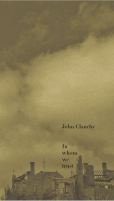
John Clanchy, In whom we trust (#BookReview)

Book coverMy first question when I read a book of historical fiction is why? And so it was for John Clanchy’s latest novel In whom we trust, which is set in Victoria around World War 1, albeit is not about the war. It is, in fact, about a Catholic home for orphaned children, St Barnabas, and three people associated with it, visiting chaplain Father Pearse, and two young people, inmate Thomas Stuart and scullery maid Molly Preston. Of course, when I say “about” St Barnabas, I don’t really mean that. St Barnabas frames the novel, provides its context, but the novel itself is about something far more complex, which gets me back to my opening question, why?
Now there are, to my mind, two main responses to historical fiction. One is to see it as something in the past, something that we might learn from but that overall we can leave firmly in the past. The other is to see its relevance to the present, to look at past actions or events, with the perspective of time, in order to reflect on now. This response also brings in those universals we like to talk about, those things about us that history (or time) doesn’t change. John Clanchy’s In whom we trust demands this second response: it asks us to look at the institutional abuse of children and its long history, and to see the human factors that enabled it then right on through to now. As Hilary Mantel has said, “all historical fiction is really contemporary fiction; you write out of your own time.”

In his Author’s Note and Acknowledgement, Clanchy thanks publisher Finlay Lloyd for “taking on a difficult book such as this”. What “difficult” does he mean? The difficult content or the difficulty of its execution? Probably both. The content is, of course, difficult. We have St Barnabas run by the tortured and torturing Brother Stanislaus. He is the epitome of the old-school hell-fire-and-damnation Brother. Ravaged by the Church’s constraints (particularly abstinence), he twists the scriptures, the theology, to justify his abuse of those in his care, who include, of course, Thomas and Molly.

However, this book is also “difficult” in its construction, which is not the same as saying that it’s difficult to read, because the story flows beautifully, despite frequent changes in voice or perspective. The story is told from three main – and easily differentiated – points of view: the third person subjective perspectives of Father Pearse and Thomas, and the first person voice of Molly via her diary.

The narrative is framed by a meeting between Thomas and Pearse, at the latter’s parish in Sale, some three years after the abuse had occurred. Gradually, through their conversations and private reflections, and through the insertion of Molly’s diary entries, the back story comes out and Thomas’s request of Pearse is revealed. At this point the diary entries finish and the narrative moves into a simpler chronology as Pearse works to fulfil his promise to Thomas, who has by now enlisted and wants this thing done before he leaves. What he wants done cannot right the wrongs of the past but will hopefully help prevent them continuing in the future. And that’s about all I’ll say about the plot.

“the strange, savage world”

That Clanchy can make such subject matter both engrossing and deeply moving is down to his writing and his understanding of humanity. The novel opens in Father Pearse’s head:

‘There was a boy came while you were out, Father Pearse,’ Mrs Reilly said. And stood.
The woman wanted strangling.

I loved this. So simple, but already we’ve learnt a lot, the main thing being, as the rest of the chapter confirms, that Father Pearse is not your warm-hearted priest. He’s an impatient, easily irritated one, so, when the boy, Thomas, appears, we are predisposed to like him more than we like Pearse. As the novel progresses, Thomas firmly but gently brings Pearse around to being – to use modern parlance – the best version of himself! In other words, Pearse, who is not a bad man, just a weak, cowardly one who “means no real harm”, is brought to see the right and humane thing to do.

This doesn’t come easily though. He is suspicious of and resistant to this trouble-making Thomas. He doesn’t trust him! And here is cornerstone of the novel, trust (as you might have guessed from the novel’s title.) There are many layers of trust in the novel. Clanchy shows how trust develops between people, such as between Molly and Thomas, between Thomas and his indigenous friend from St Barnabas Benton, and, eventually, between Pearse and Thomas. There is trust in authority and institutions, such as that St Barnabas will care for the children entrusted to it. There is trust in forms and rituals, like the confessional. And there is trust that people will do what they promise or undertake to do. All of these – their successes and failures, and the nuances surrounding them – are explored in this novel. The reality of the challenge becomes clear to Pearse late in the novel:

Trust. That was the crux of it. How was anyone meant to find a path through this forest of competing trusts?

Muddying this path are competing – or, shall we just call a spade a spade and say twisted – values and priorities. These include the age-old issue of abstinence and the inviolability of the confessional, and the need, as Pearse’s Bishop makes perfectly clear, to protect “our Mother Church”.

Through all this, Clanchy weaves a compelling, painfully true story about human beings – weak ones, arrogant ones, damaged ones, wise ones, loyal ones. Of all these people, it’s the young Thomas who has the clearest vision. He has, recognises Pearse, the

trick of putting his finger on truths so obvious that most other people, in search for something which redounded more to their own credit, looked right past.

And now, before I conclude, something about the writing, because it is this, alongside Clanchy’s understanding of human motivations and relationships, that make this “difficult” book also a pleasure to read. Clanchy’s ability to nail his points with a few words can take your breath away:

… then Thomas Stuart was equally checked by the massive theological boulder which the priest now rolled into his path.

AND

The crimson cloth of the Bishop’s patience was rapidly becoming threadbare.

The vernacular he creates for Molly’s diary – including words like “tumple” and “fumply” – gives her colour and character. There’s also some clever word play and light ironic touches, not to mention the little biblical in-joke about doubting Thomas, because in this book it’s the priest who doubts Thomas more than vice versa. Indeed, it’s the careful, sure way Clanchy develops the see-sawing doubting-trusting relationship between Pearse and Thomas that provides the novel’s backbone and interest.

There are of course no simple answers to the dilemma facing Father Pearse, and the ending we get is the only one it could be. It’s to Clanchy’s credit that he doesn’t opt for the easy feel-good fix. There are wins along the way but Clanchy knows, and we know, that it would be morally suspect and historically inaccurate to provide the ending we’d like. In whom we trust is a powerful and wonderful read.

John Clanchy
In whom we trust
Braidwood: Finlay Lloyd, 2019
251pp
ISBN: 9780994516558

(Review copy courtesy Finlay Lloyd)

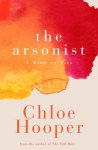
Chloe Hooper, The arsonist: A mind on fire (#BookReview)

Chloe Hooper, The ArsonistIt may not have been the most sensible decision to read Chloe Hooper’s book, The arsonist, during Australia’s worst-ever bushfire week, but in fact I picked it up a few days before the crisis became evident, and once I started I couldn’t put it down. The arsonist tells the story of the man arrested and tried for one of the major fires in the Black Saturday series of bushfires that ravaged much of Victoria in February 2009. I have often wondered how you identify how and where a fire started. Hooper answers much of this.

However, what made this book unputdownable was that Hooper adopted, as she did in The tall man, the narrative (or creative) nonfiction style to tell her story, and proved herself, again, to be a skilled exponent of this genre. For those not sure about this genre, Lee Gutkind’s definition, quoted in Wikipedia, is a good start: “Ultimately, the primary goal of the creative nonfiction writer is to communicate information, just like a reporter, but to shape it in a way that reads like fiction.” In other words, the information must be true or factual, but presented like a story.

Car in fire burnt bush

Bush, eastern Victoria, 9 mths after Black Saturday, 2009

Hooper structures her story like a classic three-act drama: I The detectives, II The lawyers, III The courtroom, followed by the Coda. She provides the facts – the whos, whens, wheres and whys – as much as they are known, but forms them into a narrative. So, after an opening paragraph which evocatively describes a fire-destroyed bush landscape, the second paragraph reads:

At the intersection of two nondescript roads, Detective Sergeant Adam Henry sits in his car taking in a puzzle. On one side of Glendonald Road, the timber plantation is untouched: pristine Pinus radiata, all sown at the same time, growing in immaculate green lines. On the other side, near where the road forms a T with a track named Jellef’s Outlet, stand rows of Eucalyptus globulus, the common blue gum cultivated the world over to make printer paper. All torched, as far as the eye can see. On Saturday 7 February 2009, around 1.30pm, a fire started somewhere near here and now, late on Sunday afternoon, it is still burning several kilometres away.

You can see, in this, that we are being invited in to see what her “character” Detective Henry is seeing, but we are also given very specific facts. The next paragraph, provides some personal background to this first “character” in her story:

Detective Henry has a new baby, his first, a week out of hospital. The night before, he had been called back from paternity leave for a 6 am meeting …

As Part I progresses, we meet other police officers and forensic experts; we travel with them as they investigate the fire itself and then follow leads to the most likely suspect; and we are with them as they interview this suspect and arrest him for the crime. We also meet many victims who lost family members and/or property. Their stories are heartrending – excruciating, in fact, as I wrote in the margins – and were particularly hard to read, with similar losses occurring in Australia right now.

Using a similar narrative technique in Part II – providing facts, and describing the “characters” and their feelings – Hooper then introduces us to the Legal Aid lawyers, or one lawyer in particular, brought in to defend the accused. As she does this, our allegiance and sympathies shift a bit from the hardworking police to the hardworking lawyer – and, perhaps even, to her client who, only now, at this point in his life, is finally diagnosed as autistic, which provides a previously missing context for his strange responses and behaviours. And then, finally, in the third “act” or part, these two – the police and the legal team – come head to head in court, with our allegiances swaying between the two as they tussle it out, until the jury delivers its verdict.

The Coda, “set” some years later, contains Hooper’s reflections on the aftermath and some commentary on the process. For example, it’s clear that she had researched the case, had visited the fire region many times, including soon after the arrest, and had interviewed many of the participants, but, like Helen Garner in her three major narrative nonfiction works, had not managed to speak to the person at the centre, in this case, Brendan Sokaluk, the arsonist. Her request is refused, for understandable reasons. She was, she writes, both “disappointed” and “relieved”. Would speaking to him, she wonders, answer the book’s central question of “why”, and, even if he were able to explain why,

would understanding why Brendan lit a fire make the next deliberate inferno any more explicable? Or preventable? I now know there isn’t a standardised Arsonist. There isn’t a distinct part of the brain marked by a flame. There is only a person who feels spiteful, or lonely, or anxious, or enraged, or bored, or humiliated: all the things that can set a mind – any mind – on fire.

And there, I suppose, is the multiple tragedy of this story: the tragedy of a man ridiculed and bullied all his life for being different; the tragedy of a community that isn’t very good at managing people who are different; the tragedy of the conflagration (in this case a fire, but it could be anything) that can result when the two collide; and the overriding tragedy that there are no simple answers to arson.

Now, I fear you might think that I have given the “story” away and that you therefore need not read it. But, you don’t read The arsonist for the “story”. After all, this is nonfiction and the basic “story” is known. You read it for the insights that a fine mind (not a mind on fire!) like Hooper’s can bring to the situation. What she brings is both clarity about the facts and a nuanced understanding of what they mean. The arsonist is, as everyone’s been saying, an excellent read.

Lisa’s (ANZLitLovers) review of this book includes information from a festival conversation session featuring Hooper.

Challenge logoChloe Hooper
The arsonist: A mind of fire
Hamish Hamilton, 2018
254pp.
ISBN: 9780670078189

Sharlene Teo, Ponti (Guest post by Rosalind Moran) (#BookReview)

Last year as in the two previous years of the ACT Litbloggers/New Territory program, I offered the participants the opportunity to write a guest post for my blog. As a result Emma Gibson wrote a post on Randolph Stow’s Tourmaline, while Amy Walters suggested we do a 2018 Year in Review posts on each other’s blogs. This year, Rosalind Moran (check out her website) offered a book review on Singaporean author, Sharlene Teo, which of course I accepted as I’m happy to increase the diversity of authors covered on my blog.

Here is Rosalind’s post …

Book coverI haven’t read many books by Singaporean authors. Nevertheless, I am always keen to read more writing from beyond the traditional confines of the Anglosphere. So when I stumbled across Ponti in a bookstore after payday, I thought: why not?
Ponti was already vaguely on my radar. The debut novel had its London-based Singaporean author win the 2016 Deborah Rogers Writers’ Award before even being published (the award serves to support authors as they finish their first book). Since being released, it has been shortlisted for multiple prizes. Even Ian McEwan called the book “remarkable”. Naturally, my interest was piqued.

Ponti explores the lives of three interconnected women. There’s the cold and beautiful Amisa, who evokes the archetype of an enchantress; her pinched and unhappy daughter, Szu, who struggles to connect with others, least of all her mother; and Szu’s schoolmate, the privileged and acerbic Circe. As Amisa wallows in bitterness and begins to waste away, Szu and Circe develop a claustrophobic friendship – one that leaves Circe reckoning with her memories of it long after it has ended.

The novels switches between the perspectives of the three characters as well as between different points in time in their shared and separate histories. One quickly realises this book is focused not so much on detailing elaborate plotlines, but rather on deepening its characters. That said, it remains an engaging read throughout, simply owing to the compelling nature of the three women telling the story. What’s really behind each of their unique states of unhappiness, and how do their futures unfurl?

As the story unfolds, Amisa’s history emerges as the strongest plotline, perhaps because her experiences sow the environment in which Szu and Circe’s own troubles flourish. Indeed, she is the novel’s pivotal character, with her flaws, frustrations and traumas colouring all those with whom she comes into contact – and she is intriguing from the start. An unearthly beauty, she is introduced to the reader as a reclusive former actress, one of waning fame, whose defining moment was that of playing the lead in a trilogy of cult horror movies: Ponti 1, 2 and 3. Her role as the Pontianak, a predatory monster disguised as a beautiful woman, also comes to mirror her ongoing experience of moving through the world. Amisa is simultaneously desired and despised, even by her own family, and is ultimately a restless figure. She also effectively comes to haunt Szu and Circe.

I enjoyed many aspects of Ponti. Teo’s writing is strong and evocative, with characters frequently seeing their surrounds through a tinge of disgust and criticism; while these emotions do not in themselves make the writing strong, they do render it visceral and memorable. It was a pleasure to read a book where the characters’ homes, from the Malaysian village where Amisa grows up to the cosmopolitan Singapore, were drawn so distinctly. Through these strong descriptions, the book also manages to voice a subtle critique of how quickly and irreversibly the south-east Asian metropolis has changed over a few short decades, bringing both pressures and opportunities. In this sense, Pontiis a treat.

Characterisation is also a highlight of the novel – indeed, one could argue the novel is essentially one large exercise in characterisation. Teo’s focus on her characters’ interiorities makes them lifelike and compelling. Their interpersonal relationships, which often blur the boundaries between love, hate, and co-dependency, are also striking, with Szu and Circe’s friendship in particular standing out. Teo is masterful in her depiction of teen angst and complex female friendships, to the degree that her writing brings to mind a grungier Elena Ferrante. I also greatly enjoyed the book’s exploration of Indonesian and Malay mythology through the figure of the Pontianak, and the way this is used as a springboard into an exploration of broader ideas around perceptions of women and how they relate to men.

In the end, the novel’s only real shortcoming was – regrettably – the plot. For most of the book, this didn’t matter: the writing and characters are deeply engaging and I enjoyed simply following the story as it unfolded. Towards the end, however, it became clear the book was not going to resolve several of the questions that had helped build tension and momentum throughout its pages, or at least not do so adequately. In this sense, Ponti feels somewhat like a missed opportunity – because while ambiguity and character-driven plot can be done well, in this case, the story ended up feeling rushed in its final pages and retrospectively underdeveloped as a whole. It’s a shame, considering the book’s characters, setting, and writing are all so strong.

Nevertheless, Ponti remains an intriguing and thought-provoking read, and one that will rightly earn Sharlene Teo many avid fans; while her debut novel may not be perfect, it’s still well worth reading and suggests a great deal of promise. I’ll certainly be keeping an eye out for whatever she writes next.

Sharlene Teo
Ponti
London: Simon & Schuster, 2019
304pp.
ISBN-13: 978-1501173127

Thanks to Rosalind for an engaging and interesting review. Novel endings are a challenge, we know. Just ask EM Forster who wrote about it in Aspects of the novel. How many authors have changed the endings – even Jane Austen did for Persuasion – and how many readers question endings? Rosalind and I would love your thoughts on her review and/or on endings in general.

Melanie Myers, Meet me at Lennon’s (#BookReview)

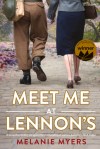
Book coverI was keen to read Melanie Myers’ debut novel, Meet me at Lennon’s, because it is set during the Brisbane of my mother’s early teens, that is, wartime Brisbane when her school, Somerville House, was commandeered in 1942 by the Australian Military Forces and served as a US Army Headquarters for the rest of the war. I grew up knowing this story, so was keen to see what Myers made of it, particularly since not many literary fiction novels, as far as I know, have tackled Brisbane during those times. Ariella van Luyn spends some time there in Treading air (my review) and David Malouf’s semi-autobiographical novel Johnno, which I read a long time ago, covers those years. However, being five years younger than my mum, Malouf was only 11 when the war ended, so his perspective is necessarily different.
Myers’ focus is the lives of women during those strange, heady days when women experienced new freedoms through filling the jobs left by men. Added to this was the excitement and glamour of the American GIs in town resulting in increased socialising at bars, like the titular Lennon’s Hotel, and dance venues, like the Trocadero.

It’s something isn’t it? It’s hard not to get caught up in the fever of having a common purpose. Uniforms everywhere and everyone feeling what they’re doing is important and useful. And the Americans, let’s not forget them. For all their braggadocio, they’ve certainly brought a touch of glamour to our little colonial outpost. (April 1943. p. 233/4)

But it was a dark time too. It was a time of austerity and rationing. There was tension between the Australian men and the Americans whose cashed-up glamour, with their gifts of “nylons” and fur coats, attracted the women. There was racism towards black American soldiers. And there was sexual violence against women. This is the complex world that Myers explores in her historical novel, Meet me at Lennon’s.

However, this novel is not straight historical fiction because Myers has taken the increasingly-common dual narrative approach, alternating between the 1940s and the present, when protagonist Olivia Wells is struggling, not only with her PhD on the life of a now-forgotten feminist author Gloria Graham, but also with her abusive (as it turns out) boyfriend, Sam, and the reappearance of her estranged father. Just like her 1940s counterparts, Olivia meets an American man. The stage is set in chapter 1 …

You might be getting a glimmer now of why Myers chose the dual narrative approach? It serves to compare the lives of women in the 1940s with those of women now, asking us to consider what, if anything, has changed? Myers undertook extensive research into wartime Brisbane, looking particularly at police and newspaper reports of crimes against women, as well as the infamous Battle of Brisbane. She uses this research to create stories of several young women in the 1940s, stories she winds around a plot based on an unsolved crime – the River Girl murder. Through these women we learn, for example, that crimes by Americans were mostly passed to their Military Police and quietly handled, with justice rarely being obtained for the victim. Such was the River Girl’s fate. Can Olivia and her friends solve it now? There is, then, also a mystery at the heart of this novel.

Myers does a lovely job of recreating the times. Her characters not only engaged me, but they felt authentic. There’s sturdy sensible Alice, who, having worked pre-war as a house-maid for rich people, sees the opportunity, now that she’s in a well-paid job, to buy a fur coat, just like her former employer had owned. To her horror, however, she soon realises that fur coats were “the gift of choice for women whom American servicemen ‘favoured'”. There’s Gwendolyn, engaged to the uninspiring Robert, but now having fun, as the much more exciting Dolly, with the “energetic” Corporal Charles Feely. There are several more, including those in the present time. One of the book’s challenges is keeping track of the characters and clocking the clues that might connect them.

Myers plays about a bit with her dual chronologies. Chapter 4, for example, is divided into three sections, September 1942, July 1942, then August 1942. The aim, I assume, is to reduce the focus on plot tensions, by preparing us for characters’ actions and feelings. In September 1942, Alice burns the above-mentioned fur coat she buys in July 1942. She also remembers a violent act by her brother when they are children, which prepares us for meeting him in August. And Chapter 12 is set in 1993, when we meet again, as an older woman, Alice’s friend Val from 1942. It works fine – and indeed meeting the lively Val again in 1993 provides some light relief, while also moving the more serious issues on.

The writing is generally sure and expressive. Myers writes some evocative descriptions, such as “a confident early sun fixed on warming the rest of the day ahead” and “the vaulted plaster ceiling of Reckitt’s blue was badly deteriorated and hadn’t felt the caress of a paintbrush in decades”. However, for me at least, she does overdo the similes. While, individually, most are fresh, they often felt irrelevant and distracting, such as “like a starlet’s eyelids, the brownout covers …”, “unfolding like a crumpled flamingo, Clio …”, and “the details landed like clumps of pelted sand.” Too much, I’m afraid.

Meet me at Lennon’s, which won the Queensland Literary Awards’ Glendower Award for an Emerging Writer in 2018, is a good and meaningful read about a significant and little covered period in Australia’s and Brisbane’s history. Early in the novel, Olivia’s American acquaintance Tobias refers to the racist segregation of black American soldiers during the war years, and sees a wider relevance:

“A place has got to come to terms with its ugly history, is what I think. Otherwise it metastasises like a cancer cell. And from what I understand, ugly history goes back a lot further here than just the war.” (p. 10)

In the end though, it’s the lives of women which are the central concern of this novel. The final chapter commences with a letter written by Rhia (Gloria Graham) in 1975. She admits that she had hoped to “undo” what had been done to Olive, the River Girl. However, she comes to realise that “there are some evils that no art form can make better, fix or even soothe”. Perhaps she’s right, but novels like this can keep the important issues front and centre – and there’s value in that.

Theresa Smith also appreciated this novel.

AWW Challenge 2019 BadgeMelanie Myers
Meet me at Lennon’s
St Lucia: UQP, 2019
265pp.
ISBN: 9780702262616

(Review copy courtesy UQP)

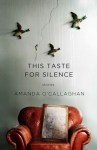
Amanda O’Callaghan, This taste for silence (#BookReview)

Book coverShort story collections are rarely recognised in literary fiction awards, but Amanda O’Callaghan’s debut collection, This taste for silence, was shortlisted for this year’s Readings Prize for New Australian Fiction. The judges described it as “inventive in its themes and by an author unafraid to enfold her readers into unsettling reading experiences”. I would agree. This taste for silence is full of unusual turns that force us to see an issue or event from a different – and often unsettling – angle.
In an interview conducted by Readings, O’Callaghan says:

I certainly did not write these stories with any theme in mind, although once I saw the whole manuscript it was clear that themes were emerging all on their own. It soon became apparent that I liked writing about people with secrets. Your description of “unspoken histories” is perhaps closer to the mark; I do like thinking and writing about characters who, for a variety of reasons, cannot articulate how they feel, or what’s happened to them. Or what they’ve done.

As a result, this collection has been given an over-riding title – which I rather like – rather than being  titled for one of the stories contained within. Like O’Callaghan’s interviewer above, I too would have said that the book is more about unsaid things than about secrets, though of course, the former often implies or results in the latter. Some of these unsaid things may be deliberately so – or deliberately withheld for a time – while others are things, as O’Callaghan says above, that people can’t easily articulate.

So, to describe the book. It contains twenty-one stories, ranging  from flash or micro fiction pieces to the last and longest story, “The painting”, which runs for 40 pages. Fifteen of the stories have been published before, many through flash fiction competitions. Two of the longer stories were published in the (sadly) now-defunct Review of Australian Fiction. One of these is the opening story, “A widow’s snow”. It provides a perfect introduction to the collection because not only does it introduce the reader to the main ideas O’Callaghan explores in the collection, but it also exemplifies her skilled command over narrative. By this I mean the way she can string the reader along with little hints about what is really happening without ever letting our focus drift away from character to plot. Plot is not the important thing for O’Callaghan. Rather, it’s how, as Eddie ponders in “The painting”, characters cope with the “endings of things”.

Endings, then, are a thread in this collection, and, let’s not be coy about it, by “endings” I mean death, because most of the stories deal with death in some way. Murder, suicide, euthanasia, drowning, miscarriage, war deaths – along with the more usual deaths from illness – occur. Most of these deaths, though, don’t occur in the actual story. Two deaths, for example, are referred to in “A widow’s snow”, but both have happened before the story commences. The story starts lightly enough:

Roger, Maureen decided, is the kind of man who would appreciate an old-fashioned pudding. She flicked through the best of her recipe books, toyed with ideas like apple tart with a rich pastry crust – Gerald’s favourite, so not really an option – and all manner of sponges, even soufflés. She braved the mole-eyed newsagent (twice divorced, blinking at the door for a new, early-rising wife) and bought a couple of cookery magazines.

What an assured start to a story – and to a collection. There’s the humour, the hints about Roger’s character and Maureen’s hopes, and the straight but evocative language. The domestic details in the unfolding of this surprisingly shocking story are on point, skewering character and nailing the tone perfectly. In this story, it’s Roger who has the secret and Maureen who must decide how she’s going to cope with it. After this story, we know to be prepared for anything, and yet, I was still surprised, more than once, as I read on.

“A widow’s story”, told third person, is one of the longer pieces. It’s followed by a flash fiction piece, “Un uncommon occurrence”, which won the Allingham Flash Fiction Competition in 2015. (You can read it on their site.) This story is told second person and is, ironically, about what women are so often told is a “common” happening. You can probably guess what this is. The third story, “The turn”, is also told second person. It won the Carmel Bird Award for New Crime Writing, also in 2015. This is quite a macabre story, one that unsettles the reader by encouraging us to engage with the narrator until we get to the point where have to accept that we’ve been taken in … and yet, even then, we are forced to think around all the corners.

And so the stories continue, introducing us to a wide cast of people, young and old, male and female, some of them confronted with the ordinary, and others with the extraordinary. One of the impressive things about this collection, in fact, is the variety of characters and situations O’Callaghan presents to explore these gaps and silences. One of the stories I loved – which I won’t name so it won’t be spoiled if you read it – is told in the voice of a hoarder. As in most of the stories, its narrator’s true situation is only slowly revealed, in this case because she knows her behaviour is not socially acceptable. Once again, we are encouraged to see her from multiple angles rather than from the more usual, and simplistic, judgemental one.

The interesting question hanging over most of the collection’s characters is when or whether to speak the unspoken. Roger, in the first story, seems to decide that if there’s going to be a future in his burgeoning relationship with the titular widow, he needs to come clean. Other narrators, most of them first person, can’t help but let their story out, sometimes in a confessional tone, sometimes to relieve or share their pain. The practical, can-do Justin in “Legacy”, for example, is permanently scarred by his good deed, pondering “who would have thought practicality could be such a deadly characteristic?” The underlying point to the collection, then, is that unsaid things are tricky – left unsaid they can burn you up or lock you out from others, but, sometimes, saying them can have the same result.

So This taste for silence is a compelling but provocative book that forces us to confront the silences in our lives, to consider them from multiple perspectives and ask whether they work for ill or good. Our hoarder, for example, thinks the latter. Her story ends with her returning to her silent ways: “The house feels glad again, released. It hums with the joy of things ending”. Is it reasonable for us to disagree, much as we might like to? I suggest you read the book to see what you think.

AWW Challenge 2019 BadgeAmanda O’Callaghan
This taste for silence
St Lucia: UQP, 2019
197pp.
ISBN: 9780702260377

(Review copy courtesy UQP)

Kim Scott, Katherine’s tropical housing precinct 1946-1956 (#BookReview)

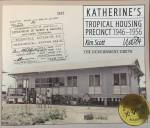
Book CoverDo you have a favourite house that you lived in? I do. It’s the lovely old Queenslander my family lived in for most of my primary school years. It was in Sandgate, Brisbane, and I still have vivid memories of those days, and that house and garden. Kim Scott, the author of Katherine’s tropical housing precinct 1946-1956, also has such a house, the one her family moved into in Katherine when she was three years old. It was a 1956-built Type D1 N.T.A. (Northern Territory Administration) house and she loved it so much that many years later, she bought herself a similar house, a Type L “New Series” house.
The thing about these houses – like my Queenslander – is that they were built for the tropical climate. For a start, they were elevated, and had louvres, both of which facilitate the management of airflow so essential to cooling. The effect of this is that they are comfortable to live in – and are energy efficient – but what Scott most loves is “the feeling of the outside coming in” that comes with this design. It’s none too soon, I’d say, to produce a book about building environmentally-suited houses, particularly when, even in Katherine apparently, the ubiquitous brick house has been taking over. Scott is very aware of this as she writes in her introduction:

My hope is that the historical significance of these first, high quality, permanent houses, which are a key part of Katherine’s housing career will be recognised. Additionally, I hope they might spark some interest in the construction of houses that are more suitable for living in the tropics and for the remote living conditions of outlying communities. Houses that use easily available, sustainable materials and are designed with a smaller footprint, specifically to make the most of the environment, as an alternative to the brick and concrete housing built today.

Now, a book like this risks being very dry but, while a lot of information is imparted in this just-over-100-page book, Scott’s personal engagement with the subject enables her to inject the book with some local flavour, with a sense of who lived in (including her own family) and built these houses. The book is logically structured, and liberally illustrated as you really want in a book like this. There are copies of original plans, old and contemporary photographs, and artist’s illustrations by Scott herself. The book starts with a brief history of tropical architecture in Australia, including the work of Beni Burnett in Darwin in the 1930s. (We loved seeing his houses there, in Myilly Point.) She then writes about land ownership in Katherine and the Commonwealth government’s housing program for Katherine, before getting onto more practical matters:

  • the house designs and plans;
  • the building contractors;
  • the building materials; and
  • the provision of essential services (like water, electricity, sewerage and rubbish collection).

In her final chapter, “Living in Commonwealth houses”, she shares her family’s experience of living in these houses, using both her own memories and documentary and verbal evidence from her family.

Scott also refers, at times, to the “local Aboriginal people”, noting, for example, some ongoing hurts “from Aboriginal families who owned titled property in Katherine but could not produce the title after the war, so lost their land”. Early in the book she notes that there is no heritage protection for the government tropical houses still remaining in Katherine. Maybe this book will provide an argument for rectifying this oversight!

It’s clear that this book was a real labour of love, one that Scott worked on for a long time. One of the things I greatly enjoyed about reading it was her sharing of her research process, not only because it was interesting but because it also assures the reader that the work is as authoritative as she could make it. There were many reasons why the book took a long time to write, one of which was being told, falsely as it turned out, that the original houseplans for these government designed and built houses had been lost during Cyclone Tracy. She engaged family members in the on-the-ground information gathering process in Katherine; she scoured archives and libraries in Adelaide, Melbourne, Brisbane, Canberra and Perth, as well as Darwin; and she read books on the subject, such as David Bridgman’s on Beni Burnett (BCG Burnett, architect). I loved her comment, after describing yet another serendipitous discovery, that she “was beginning to feel the whole process was dependent on the serendipity phenomenon”. I suspect that research is often like this, particularly in the early stages of projects that don’t have obvious (or easily available) paths to follow.

In her Conclusion, Scott returns to the points I quoted from her Introduction, but this time with a more personal spin. She writes:

If we had continued to build tropical housing that was specifically designed for Katherine’s climate, we would today have a town with a unique architectural style. One that perhaps may have drawn more people to our town and projected a more open, inclusive image of Katherine. I have seen the town develop from elevated, open homes with little privacy and security, with windows and doors flung open, to solid brick houses with their thick walls and windows tightly shut and barred. I know what image I would rather see.

Katherine’s tropical housing precinct 1946-1956 is a self-published book, but Scott has done the sensible thing and used a graphic designer and an editor. The result is a book that is nicely produced and that makes an excellent contribution to both the history of Northern Territory architecture and the local history of Katherine. Scott’s labour of love has, I’d say, borne worthwhile fruit of which she can be proud.

AWW Challenge 2019 BadgeKim Scott
Katherine’s tropical housing precinct 1946-1956
Katherine: Kim Scott, 2019
103pp.
ISBN: 9781642045420

Elizabeth Kuiper, Little stones (#BookReview)

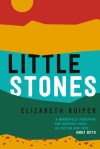
Book coverAnnouncing their 2019 longlist back in February (see my post), the Stella Prize judges said that they “wished for more representations of otherness and diversity from publishers: narratives from outside Australia, from and featuring women of colour, LGBTQIA stories, Indigenous stories, more subversion, more difference”. Elizabeth Kuiper’s debut novel, Little stones, may not exactly fulfil this wish for subversion and difference, but it is set in Zimbabwe, and that’s certainly a start.
The main story concerns 11-year-old Hannah’s life as the daughter of divorced parents – and what ensues when her mother decides to leave Zimbabwe, wanting to take her daughter with her. Her father’s up till then somewhat controlled anger against her mother intensifies, and he does all he can to prevent this happening, despite the fact that he has shown little commitment to the real business of loving and rearing a child.

It’s not a particularly new story, but this one has an added layer; it’s the early 2000s and Hannah and her parents are middle-class white Zimbabweans living under Robert Mugabe’s increasingly violent regime. Life is not easy for her family, which includes her tobacco-farmer grandparents, with African nationalism ramping up against what Hannah comes to recognise as “crushing colonisation”.

The story is told first person by Hannah, and this is both its strength and weakness. Strength because Hannah, though intelligent and observant for her age, is a naive narrator. She can only see through an 11-year-old’s eyes, while we, of course, know or can guess what is really happening, whether this is the political violence and corruption happening in the background (and sometimes even closer) or the more personal conflict happening between her parents. So, for example, early in the novel she hears her mother and grandparents talking, yet again, about the Warvets, whom she understands to be “a big family who wanted to steal farms from everyone in Zimbabwe”. Finally, she insists on being heard:

Mum,’ I insisted. ‘I don’t want us to give our farm away to another family.’
‘Another family?’ Mum sought clarification.
‘The Warvets.”
Mum looked around the room, first at Nana, then Grandpa, and let out a sigh. She explained to me that the War Vets were not an extended family. They are a large group of people called the ‘War Veterans’ who mobilised to take back what they saw as their land.

The naive narrator voice achieves a few things. It conveys how unsettling it is for children to be living under stresses that they don’t fully understand, but it can also keep the tension down a little because the full horrors are not made explicit to us (albeit we can guess them.) Hannah is a lovely character, whose special and sustaining relationships with her best friend Diana Chigumba and the family’s Shona housekeeper (not “maid” says her mother) Gogo, are delightfully conveyed. She can, being 11, be naughty, but she’s at heart a sensitive, loving, well-adjusted child.

However, this voice can be a weakness too. It’s difficult to sustain the voice of a child – and unfortunately, perhaps, I’ve just read Tim Winton’s The shepherd’s hut which does it extremely well. Here, I felt that at times Kuiper’s Hannah used language and concepts that an 11-year-old would not use. We are told she’s intelligent, and good with language, but still I wasn’t always convinced. Here, for example, she talks about the guardianship court case her mother is fighting:

In the past, I would have tried to offer whatever morsel of advice I could manage, but as the court case progressed I came to realise that most of the time she was talking about herself, and so I absorbed her rhetorical questions as a necessary and cathartic part of the process for her.

This, and examples like it, seem rather sophisticated to me in both expression and idea. The question is, are we supposed to believe that this is 11-year-old Hannah telling the story as it happened or older Hannah telling the story? I’m not sure it’s always completely clear, but I felt it was intended to be the former.

All this brings me to the question of whether Kuiper’s story would have been better told as a memoir, because I understand that the novel is, like most debut novels, autobiographical. Of course, I don’t know where the facts of her life end and the fiction begins, but it’s a question that I pondered as I read. And, also of course, memoir would bring its own challenges for Kuiper that she may not have wanted to confront. I don’t blame her for that.

Anyhow, this is a minor quibble if you are prepared to go with the flow, which I decided to do. Kuiper handles well the challenge of conveying the difficulty of the situation for Hannah’s family as white Zimbabweans in an increasingly tense and dangerous atmosphere. She shows that it’s not all about race, or simply about race. There’s the issue of different races – Shona versus Matabele – and there’s class. Hannah’s best friend Diana, for example, comes from a well-to-do black family. Kuiper also handles convincingly the parallel, and perhaps most significant for Hannah, issue of separated parents wrangling over their daughter. The descriptions of Hannah’s father’s increasing manipulation of the system to get his way are infuriating if not chilling – but oh so real. Hannah, in fact, has to grow up fast if she is to survive this dual personal and political unrest she finds herself in.

Little stones is, then, essentially, a coming-of-age story, which also works as a Young Adult-Adult crossover novel. It offers something special to readers in both these areas because its perspective is a rare one for us to read here; because it is told with a lovely vitality and attention to the details of a life lived under complex political and personal circumstances; and because it manages to tread that fine line that shows rather than judges. And that, I think, is impressive.

Lisa (ANZLitLovers) also enjoyed this book.

AWW Challenge 2019 BadgeElizabeth Kuiper
Little stones
St Lucia: UQP, 2019
264pp.
ISBN: 9780702262548

(Review copy courtesy UQP)

Tim Winton, The shepherd’s hut (#BookReview)

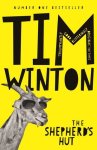
Book coverTim Winton and Christos Tsiolkas have to be Australia’s foremost contemporary writers about men and boys, Tsiolkas doing for urban/surburban males what Winton does for small town/rural ones. Winton’s latest novel, The shepherd’s hut, continues his exploration of males in extremis. It’s strong, gritty, page-turning, and yet reflective too, which is not easy to pull-off.

The shepherd’s hut is the story of a teenage boy who goes on the run after finding his violent father dead, crushed under the car in the garage. He thinks he’ll be blamed, and he’s not hanging around to find out. With the exception of Lee who lives in Magnet – she’s symbolically and literally his magnet – he’s friendless, so it’s to Magnet that he heads, on foot across the Western Australian desert. And thus the adventure begins, except that the novel starts at the end of that adventure – or the beginning of the next adventure – take your pick. Here are the last few sentences of the opening two pages:

For the first time in me life I know what I want and I have what it takes to get me there. If you never experienced that I feel sorry for you.

But it wasn’t always like this. I been through fire to get here. I seen things and done things and had shit done to me you couldn’t barely credit. So be happy for me. And for fucksake don’t get in my way.

What an impressive opening. The tone, and thus the character, is defiant. There’s the hint of trials that have been confronted. There’s the in-your-face vernacular language. And there’s the sense of something ending and something else beginning. Where is this book going to go, we wonder, so we turn the page – and we find ourselves in the past, at the beginning, we suspect, of whatever it is that he has just come through.

Soon enough, we learn that our boy is Jaxie Clackton, that his mother had died not too long ago from cancer, and that he is living with his violent father. Jaxie himself is, not surprisingly, prone to bullying and violence himself, but, really, all he wants is peace:

all a person wants is feeling safe. Peace, that’s all I’m after.

Can this angry boy, can anyone who has grown up surrounded by violence, really remake themselves? That is the question.

The shepherd’s hut is, essentially, a road story, albeit one done on foot. Jaxie heads out into the wheatbelt, steering clear of the highway. The exposed, pared-back landscape provides the perfect backdrop for Jaxie’s emotions as he struggles to survive in the wheatbelt-mining-desert country in which he finds himself. It’s not easy to hide out there where “you stick out like a rat on a birthday cake”, let alone find food and water, but Jaxie has to survive, physically, mentally and spiritually, if he is to achieve his goal. Winton’s descriptions of Jaxie’s journey – the landscape, what he needs to do to sustain himself – are graphic and visceral.

Eventually, Jaxie finds another human being out there, exiled Irish priest Fintan MacGillis. Jaxie is naturally suspicious – given all he’s heard about “pedos” and “kiddy-fiddlers” – but gradually a bond, sometimes uneasy but nonetheless strong and mutually beneficial, forms between these two outsiders. Jaxie’s energy and passion provide a foil for Fintan’s wiser more experienced understanding of the world. There is a sort of biblical feeling to all this – a forty-days-in-the-desert vibe – as these two serve out their “exiles”.

There is a lot we are not told. Exactly why Fintan is there is never fully explained (but it’s not for kiddy-fiddling), and whether anyone is really after Jaxie is never confirmed. This information is not important to the story being told, which is … well, what is it about?

“I know what I am now” (Jaxie)

On the surface, it is about violence – particularly about domestic violence and its impact on those so abused, like our Jaxie. But, this is Winton, and while his novels chronicle social conditions, exposing society’s failings, his main interest tends to something deeper – call it biblical, theological, or spiritual. So, to focus on Jaxie, our protagonist, I’d argue that his time in the desert – both alone and then with Fintan – do result in some spiritual  growth for him. One of the motifs running through the book concerns goats – why? Well, we could read Jaxie as a scapegoat. Literally, and perhaps even symbolically. We know he’s on the run because he believes he’ll be blamed for his father’s death, but is it going too far to also read him, damaged young man that he is, as a scapegoat for the violence enacted by society? We can certainly read the outcast, somewhat flawed priest Fintan, who, significantly, lives in the titular shepherd’s hut, as his spiritual guide. Indeed, Fintan describes the landscape in which they find themselves as “penitential”.

In the novel’s opening two pages, Jaxie, on his way out of the desert, describes himself as having “hoofed it like a dirty goat all these weeks and months”, but, he says, “I’m no kind of beast anymore”. It is both his time in the desert and the, dare I call it, ministrations of Fintan, which bring him to this new sense of self. Late in the novel, before the final drama that brings their time in the desert to its conclusion, Fintan says to Jaxie, “I suspect that God is what you do, not what or who you believe in”. When the crisis comes, Jaxie sees himself as an “instrument of God”, but my, it’s not a particularly pretty one!

In other words, none of this is as neat as we might like. Fintan is a complex shepherd, and Jaxie a problematic subject of his shepherding. There are no simple solutions, and there are no perfect beings, but there are people who are prepared to go through fire (or the desert, as the case may be) in order to come to a better understanding of themselves. “I know what I am now”, Jaxie says at the end, but whether he achieves the peace he believes is coming, whether he, with his “for fucksake don’t get in my way” attitude, is truly capable of achieving it, is the question we are left with. I’d like to think so.

Jaxie, then, is an original, compelling character whose edgy energy wins you over despite yourself. He challenges us to consider how violence plays out in contemporary society, and forces us to confront what this violence does to us. Through him, Winton asks whether redemption is possible and, more importantly, what that might look like. The shepherd’s hut is a book I could read many times and find something new to consider every time. That makes it a special read.

Tim Winton
The shepherd’s hut
Penguin Random House Australia, 2019 (orig. ed. 2018)
266pp.
ISBN: 9780143795490