Monday musings on Australian literature: 1937 in fiction

Once again it’s Karen’s (Kaggsy’s Bookish Rambling) and Simon’s (Stuck in a Book) “Year Club” week. This time the year is 1937, and it runs from today, 15th to 21st April. As I’ve been doing for a while now, I am devoting my Monday Musings to the week.

If the 1960s, from which our last “year” came, were exciting for many of us, the late 1930s were very different, particularly for those living in Europe. Of the 1930s, in general, Wikipedia writes that “the decade was defined by a global economic and political crisis that culminated in the Second World War”. For my purposes here, that just about says it all. It certainly provides a flavour for what concerned the major writers of the period. Realist fiction was still in force, and in Australia writers like Marjorie Barnard, Flora Eldershaw, Frank Dalby Davison, Eleanor Dark, and Katharine Susannah Prichard were expressing their ideas about social and economic injustice, for example. Many were pacifists, and many supported or worked for the trade union movement. It was, generally, an unsettled time, here and abroad. (By way of contrast, the best-selling book in the USA in 1937 was, apparently, Gone with the wind! But this was also the time of John Steinbeck, et al!)

I found books published across all forms, but as my focus here is Australian fiction, I’m just sharing a selection of novels published in 1937:

There were very few literary awards at the time, but the ALS Gold Medal went to Seaforth Mackenzie’s The young desire it. He is now among the least known of the authors listed above.

Writers born this year include novelist Colleen McCullough (died 2015) and political scientist and writer Don Aitkin (died 2022). I didn’t find many deaths, but novelist Catherine Martin (born, 1848) died this year.

Finally, also in 1937, the Commonwealth Literature Censorship Board replaced the Book Censorship Advisory Committee. It temporarily lifted the ban on James Joyce’s Ulysses – only to re-apply it again in 1941 after pressure from church groups.

The state of the art

As always, I checked Trove to see what newspapers were saying about Australian literature, fiction in particular. In addition to references to specific books and events, what I found overall was concern about the state of Australian literature, along with discussions about causes and remedies. This is similar to 1936, which I wrote about in my Monday Musings for the 1936 Club, so I’ll try to supplement – rather than repeat – what found then.

One issue discussed several times through the year concerned the importance of a good critical culture, so that’s my focus for this post. The Telegraph (14 April) took up this issue, arguing that the “leading articles” papers publish at the end of the week, versus the reviews published during the week, make a “considered contribution” to “strengthening … literary values among the numerous readers who look to the daily Press for guidance among a vast and ever-changing array of books”. The article comments on the importance not of comparing (“grading”) writers, but of offering

a consideration of their absolute quality as writers. The practice of relative appraisal too often leads to confusion where the authors considered are admittedly worthy of critical study, but derive their literary strength from different sources. The wise newspaper critic of fiction — it is with fiction that for the moment we are primarily concerned — is he who endeavours to establish the qualities which explain his attraction to, or repulsion from, a writer and then evaluates those qualities by the degree and consistency of his own sensibility.

That’s a nice, clear description of criticism – to establish one’s criteria and then evaluate them.

The Telegraph makes the point that Australia is capable of producing good literature. It believes that while achievement is uneven across the different forms, there is “no cause for pessimism about the future of Australian literature”. Indeed, the article says that:

A country that has produced, among living novelists*, Henry Handel Richardson, Vance Palmer, Katherine Susannah Prichard, Miles Franklin, Helen Simpson, the Barnard-Eldershaw combination, and Brian Penton is not deficient in generative power …

And adds that more writers could be added to this list.

Meanwhile, “Norbar” (Dr Norman Bartlett) in The West Australian (7 August) also discussed critical culture, observing that

One of the great disadvantages under which those in Australia who are genuinely interested in national literature suffer is the lack of guidance. Other national literatures have reliable historical and critical signposts. 

His point was that in Great Britain, for example, “reputable literary periodicals, with critical traditions”, help readers make choices. Critics, he admits, “are often wrong, and commercialism has tainted the trade of criticism, but there is a tradition of judgment”. No-one, he says, who is interested in Virginia Woolf would buy books by romance novelist Ethel M. Dell. He then discusses the work of two critics, the American expert on Australia, C. Hartley Grattan, and the Australian, H.M. Green. Speaking of Grattan, Norbar makes an important point about the role of critics:

To accept him as a guide is not to accept his judgments, but he serves the purpose that competent introductions to English literature serve, by erecting signposts in the wilderness of letters.

In other words, it’s not the “absolute” lists of names that are important but the guide they provide to the literary landscape – and, thus, presumably, encouragement for debate.

The final two articles I’ll refer to come from The Age. The first (18 September) is ascribed to R.G. (presumably, the academic and founding editor of Southerly, Robert Guy Howarth), and the second (2 October) is a response from poet and critic, Furnley Maurice (Frank Wilmot), who takes offence at R.G.’s analysis of the state of Australian literature.

R.G. commences by arguing that:

Contrary to the opinions of some critics, Australian literature is not a dependent off-shoot of English literature, but is a vital entity in process of achieving expression of its individuality.

He has very clear opinions about the development of a truly Australian literature, much of which we would agree with now. He talks about its needing to pursue its own course, to be released “from the curb of nineteenth century influences, which have so long entrammelled imagination and held it in subservience to traditional forms and ideas”. While he names some writing that he believes is truly Australian, such as that of Henry Lawson, he believes things have stagnated:

Lack of canonical criticism is responsible to an unfortunate degree for this stagnation, because contemporary Australian criticism stands equivocally in the midst of several schools of thought. A false standard of values has been created by the persistent determination of many commentators to include everything written since Wentworth’s “Australasia” in the category of literature.

Unfortunately, as well as taking criticism to task, he also finds failings in Australian writers! Some have attempted to capture Australian experience, he says, but have failed, and he gives his reasons. These Maurice does not like, so he fights back:

One fact to bear in mind is that the shortcomings of our criticism are as great as the shortcomings of the writing, if not greater. The chief fault of the criticism is one that “R.G.” appears to share — that of making sweeping general statements and giving no particulars. Surely our writers have not all “failed because they lacked technical equipment,” because they “chose banal themes,” or because they “did not possess the basic culture necessary!” Such statements would suggest that “R.G.” has the bad national habit of forming definite opinions before he assembles the facts.
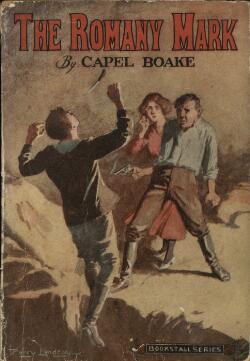
Take that, R.G! He then goes on to identify what he sees as quality Australian literature, and includes* Price Warung, Vance Palmer, Brent of Bin Bin (Miles Franklin), Martin Mills (Martin Boyd), M Barnard Eldershaw, Eleanor Dark and Capel Boake. He challenges R.G. to provide evidence for his statements, and then discusses “the facts” as he sees them, identifying the “difficulties” and “practical conditions” under which Australian writers “must work”.  

He is pleased though that ‘”R.G.” supports a proper national principle in writing even if he has not much to say for the work done to date’. 

While I think Maurice over-reacted somewhat, as R.G. makes some good sense, both writers have something useful to add to the debate, and if you are interested, the articles make good reading. Meanwhile, I will close here – but may very well write a second post next Monday.

* Links are to my post/s on these writers.

Sources

  • 1937 in Australian Literature (Wikipedia)
  • Joy Hooton and Harry Heseltine, Annals of Australian literature, 2nd ed. OUP, 1992

Previous Monday Musings for the “years”: 1929, 1936, 1954, 1940 and 1962.

Do you plan to take part in the 1937 Club – and if so how?
Six degrees of separation, FROM Rough guide to Japan TO …

I am back in the land of the Wurundjeri Wandoon people of the Greater Kulin Nation, that is, in my part of Melbourne, because not only was it Easter last weekend, but we wanted to take my Californian friend on a road trip through some of New South Wales and Victoria. We saw some great sights, but right now it’s time to get onto the meme … If you don’t know how the #SixDegrees meme works, please check host Kate’s blog – booksaremyfavouriteandbest.

The first rule is that Kate sets our starting book. This month she set a fun challenge: we had to choose a travel guide from our bookshelves! What fun. I chose the Rough guide to Japan, and – woo hoo – I found an image on GoodReads of the cover of my 2011 edition. That wasn’t our first visit to Japan, as we’d been twice before, but that was when we bought the guide, because … well read on …

I decided not to go the obvious route – a book by a Japanese writer – because who wants to go the obvious route? Instead, I’m linking on Kindle books. The Rough guide to Japan was the second book I bought for my Kindle, thinking that an eTravelGuide would be so much easier to manage. Well, yes – and no – but that’s for another day. Meanwhile, the first eBook I bought was Jane Austen’s Sense and sensibility (one of my posts)! Yes, I already had a couple of copies of it, but you can never have too much Austen, and, anyhow, because I know it well, it was a good book on which to test using eReaders. Wouldn’t you say?

Horace Walpole, The castle of Otranto

Sticking with the Kindle theme – and a bit of personal history – the third book I bought for my Kindle was another classic, Horace Walpole’s The castle of Otranto (my review), because, also in 2011, my Jane Austen group decided to discuss a Gothic novel of our choice. (This image is not my Kindle edition.)

Louis Nowra, Into that forest

OK, I’ve probably bored you enough now with my Kindle history, so my next link is on Gothic novels. I’m choosing a Australian gothic novel, Louis Nowra’s Into that forest (my review), which is set in the late 19th century, and tells the story of two young girls who find themselves lost in the bush (forest), and are taken in by a Tasmanian Tiger.

Eva Hornung, Dogboy

They are, in other words, feral children. My next link is another Australian book about feral children, Eva Hornung’s Dog boy (my review), which is about a boy taken in by a dog – but in Moscow, would you believe!

Book Cover

And now I’m going to do one of those nice, clear, obvious links that MR will like because it’s on a word in the title, dog! My link is to Louis de Bernieres’ Red dog (my post on the book and movie) which was inspired by the story of a real dog which roamed the Pilbara region of Western Australia through the 1970s.

Murakami, Blind willow, sleeping woman

Finally, because we had to go there, and legend has it – at least in the film – that Red Dog did, we are going to end in Japan. I haven’t reviewed as much Japanese literature on my blog as I would like, despite its being a favourite of mine, but the first work of fiction I posted on here was Haruki Murakami’s short story collection, Blind willow, sleeping woman (my post) so that is my final link.

I do hope you enjoyed this month’s journey, because I had fun putting it together – and for once we did come full circle.

Now, (sort of) the usual: Do you have a favourite travel guide on your shelves? And, if so, what would you link to? If not, then I’d love you to comment on whatever takes your fancy!

Six degrees of separation, FROM Tom Lake TO …

Last #SixDegrees I was in the land of the Wurundjeri Wandoon people of the Greater Kulin Nation, that is in my part of Melbourne, but this month, I’m home in Ngunnawal/Ngambri country. Where will I be next month? Time will tell – and do you care? So let’s get to the meme. If you don’t know how this #SixDegrees meme works, please check host Kate’s blog – booksaremyfavouriteandbest.

The first rule is that Kate sets our starting book. And this month it is, of course, one I haven’t read. I’m told, however, that it’s well worth my considering, so that I’ll do. It’s Ann Patchett’s Tom Lake.

Now, I had several goes at this meme, but they didn’t lead to where I wanted to end, so, I decided to do one of my #SixDegrees poems. Here goes (with links on titles going to my posts on those books):

Tom Lake*
was discussing Question 7
with Elizabeth Finch,
when Chinongwa cried out,
What if Things fall apart?
Never fear, they replied, there’s a Crossing to safety
in the Valley of Grace.

With thanks to Ann Patchett, Richard Flanagan, Julian Barnes, Lucy Mushita, Chinua Achebe, Wallace Stegner and the inspirational and much-loved Marion Halligan. Her funeral was held yesterday, and I wanted to end this #Six Degrees on this beautiful book by her – after sharing some books that ask big questions.

* And yes, I know Tom Lake is not a person, but for my purposes “he” is. It’s called artistic licence!

I used more filling words than I like to do with these poems, but it’s the best I could do.

We’ve travelled far this month – to North America, Britain, Africa, and Australia – and I’m 50:50 on author gender. How good is that?

Now, the usual: Have you read Tom Lake? And, regardless, what would you link to?

Six degrees of separation, FROM Demon Copperhead TO …

I am back in the land of the Wurundjeri Wandoon people of the Greater Kulin Nation, which means I’m back in my part of Melbourne for our family’s annual February birthday season. (Three have their birthdays between the 3rd and 9th, inclusive.) It all starts today, that means, but I did have time to prepare my Six Degrees in advance. If you don’t know how this meme works, please check host Kate’s blog – booksaremyfavouriteandbest.

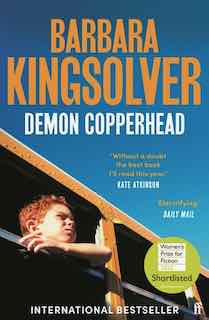
The first rule is that Kate sets our starting book. Every now and then she mixes it up and doesn’t set a specific book. This month is one of those, with our assignment being to make our starting book the one we ended our January links on or the last one we read in January. Barbara Kingsolver’s Demon Copperhead is the last book I completed in January – for my reading group on Tuesday 29th – though I didn’t post my review until the first of February.

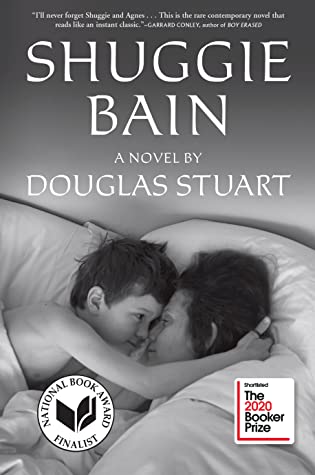
When I started reading Demon Copperhead I was immediately reminded of JD Vance’s memoir Hillbilly elegy. That’s an obvious link given Vance also grew up as a “poor hillbilly”. However, I was also reminded of another novel about a boy growing up poor with an addicted mother, albeit an alcoholic in this case. That book is Douglas Stuart’s Shuggie Bain (my review) so that’s my first link. Shuggie is a very different boy, but he captured my heart just as Demon Copperhead did.

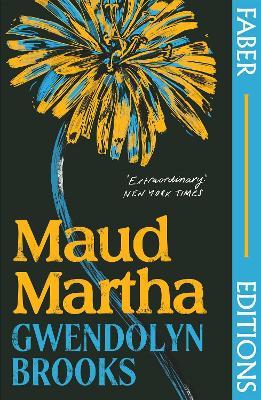
Both Demon Copperhead and Shuggie Bain are titled for their protagonists, who grow up during the course of the book. Another novel I read which is named for a young protagonist who grows up during the book is Gwendolyn Brooks’ Maud Martha (my review). All three of these young characters have much to contend with in their young lives. But now, we are moving on from characters to …

Laurie Steed, You belong here

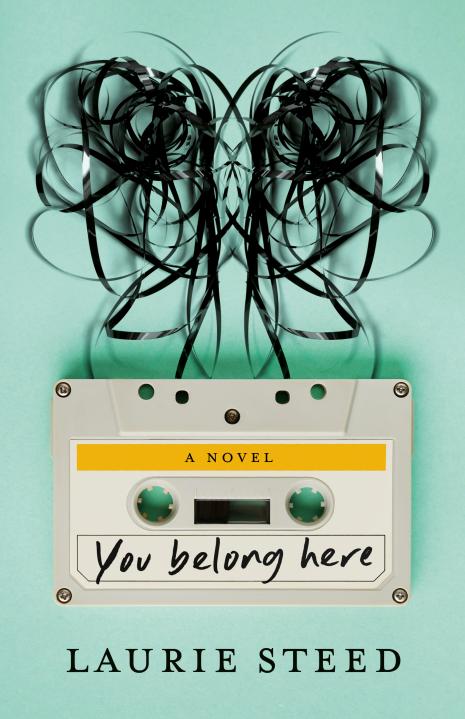
Form. Maud Martha is a novella told through vignettes from the titular character’s life. Another book I’ve read which tells the story of a family through vignettes is Western Australian author Laurie Steed’s You belong here (my review). Maud Martha covers around two decades in 100 pages, while You belong here covers around four decades in two hundred and fifty pages.

Book cover

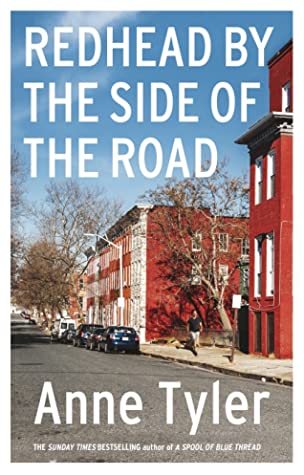
The back cover blurb of Steed’s novel describes it as having “all the dysfunction of an Anne Tyler novel, but with a distinctly Australian feel.” I’ve read and thoroughly enjoyed a few Anne Tyler novels over the years, but only one since I started blogging, so that’s my next link, Anne Tyler’s Redhead by the side of the road (my review).

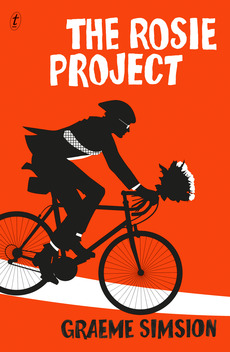
Simsion, The Rosie Project

Tyler’s protagonist, Micah Mortimer, is a routine-driven character who has trouble forming deep relationships with people. Another routine-driven character who doesn’t find romance, in particular, easy is Don Tillman in Graeme Simsion’s popular Rosie series, so it’s to the first in this series, The Rosie project (my review), that I’m linking next.

For my final link, we are staying in Australia, and I’m using one of those more tricksy links, namely the birth year of the authors. Susan Johnson, whose Life in seven mistakes (my review) I’m making my last link, was born the same year as Simsion. Like many of the books this month its subject matter is problematical families. Such, though, is the common stuff of fiction, eh?

We haven’t travelled far this month, spending most of it in the USA or Australia – with one little foray to Scotland. We’ve also stayed within the last century. I’ll see if I can be more exciting next month.

Now, the usual: Have you read Demon Copperhead? And, regardless, what would you link to?

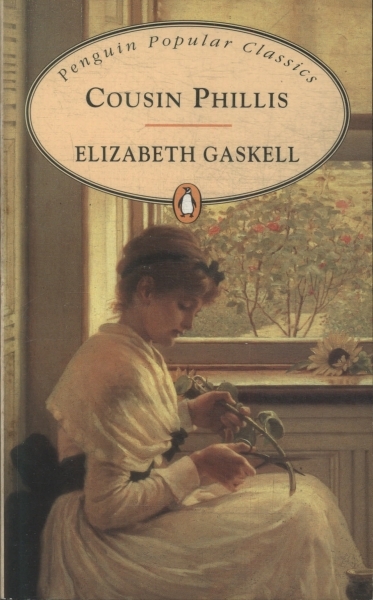
Elizabeth Gaskell, Lizzie Leigh AND Cousin Phillis (#BookReviews)

This year, Bill (The Australian Legend) has framed his usual January “Gen” (short for generation) week, as Gen 0. Zero? How can that be? Well, let’s get it from the horse’s mouth. Bill says, “I am using ‘Gen 0’ as a designation for those writers – necessarily not Australian – whose work influenced, predated or paralleled the first wave feminists of AWW Gen 1”. In other words, we are looking at mostly 19th century writers – like Charlotte Bronte, Elizabeth Gaskell, and Charlotte Perkins Gilman.

Bill’s list is just a start. I would add Kate Chopin in there too, but more discussion and expansion of Bill’s list will presumably happen over the week, so I’ll get on to Mrs – or Elizabeth – Gaskell.

My Gaskell journey started in my teens when my mother, seeing my enthusiasm for Jane Austen, suggested I read Mrs (as she was on the book) Gaskell’s Cranford. From there I read North and south, Wives and daughters, and Ruth – all before blogging. I had hoped to read her first novel, Mary Barton, for this week, but when I saw how tight my reading schedule was this month, I decided to go for a novella (in the end, two novellas) instead. As it turned out, Bill has already posted on one of them, Cousin Phillis.

The Independent Woman

Bill’s AWW Gen weeks, which started back in 2018, draw from his thesis that “a case can be made for a parallel myth” to that of historian Russell Ward’s male-dominated Lone Hand. It features “the Independent Woman, who makes her way without, and often despite, men”. He is talking Australian women, of course, but for Gen 0 we are looking at what was happening elsewhere that may have affected, or simply parallel, what was happening in Australia. Elizabeth Gaskell is a perfect example, because, despite being a wife and mother of four daughters, she managed to forge a career for herself as a writer of novels, short stories, and biography.

She could do this for a few reasons, including the fact that the church she belonged to, and married into, was the dissenting, non-conformist Unitarian church, and that her minister husband William Gaskell was himself a writer and poet. He was also, according to Wikipedia, “a charity worker and pioneer in education of the working class”. It’s no surprise, then, that Gaskell’s themes, as Bill succinctly puts in it his post on Cousin Phillis, encompassed “dissenting religion and the plight of the poor, as well as strong women characters”, are all important themes in her work.”

Her fiction falls broadly into to main strands – the “ghost” stories, and the “social novel“. It is into the latter that Lizzie Leigh and Cousin Phillis fall.

Lizzie Leigh

Lizzie Leigh, published in 1855, is the simpler, shorter, of the two novellas, and its themes remind me of the 1853-published Ruth. It starts with the death of the “hard, stern, and inflexible” husband and father, James Leigh, who says to his wife on his deathbed “‘I forgive her, Anne! May God forgive me!’” We soon learn that the “her” being forgiven is their fallen daughter “Lizzie” whom he’d disinherited.

With her husband gone, Anne decides to rent out the farm for a year and go to Manchester with her two sons, the 21-year-old responsible Will who sees things his father’s way and the much younger Tom. She wants to find Lizzie.

The rest of the novella concerns her search for Lizzie, and the difference of opinion between her idea of religion – a forgiving, New Testament-based one – and Will’s. He is prepared to support his mother, for a year anyhow, but he believes Lizzie is dead and, further, that her sin brings shame on the family. When he meets an angelic young woman, he’s convinced that her knowing about Lizzie will spoil his chances with her. But things are not as he sees them, and his mother, who had been a submissive wife, starts to express her own beliefs, and commands him to listen to her on tolerance and forgiveness:

She stood, no longer, as the meek, imploring, gentle mother, but firm and dignified, as if the interpreter of God’s will.

So, two independent women here – Gaskell the writer and Anne Leigh the character.

Cousin Phillis

This novella, originally serialised in The Cornell Magazine (1863-64), is briefly introduced in my Delphi edition with “many critics agree that Cousin Phillis is Gaskell’s crowning achievement in short fiction”. It is a longer, somewhat more complex tale, and is, essentially, a coming-of-age story in which 19-year-old Paul, and his 17-year-old second cousin, Phillis – both only children – learn some tough lessons.

The story is told first person by Paul, who speaks from later in his life about when, as a young man, he had obtained a job in a country town working to an engineer in a railway building company. He begins visiting some previously unknown relations, the aforementioned Phillis and her Nonconformist clergyman-farmer father and plain-thinking mother. You might be expecting a romance to develop between these two, but quite early on Paul decides that Phillis is not for him. Not only is she still, strangely, wearing a childish pinafore, but she is taller and, like her father, bookish, which makes him feel inferior. This will not do, so they quickly fall into a sibling-like relationship, and Paul slots comfortably into their lives whenever he can. Well and good.

However, there is another man in the story, Paul’s supervisor, Mr Holdsworth, whom he hero-worships. Paul describes him as “really a fine fellow in a good number of ways”, adding that “I might have fallen into much worse hands”, which of course makes us wonder whether this is an ironic hint. As it turns out, yes and no. Heartbreak does ensue, and Paul, with well-intentioned naïveté, plays a role in bringing this about. But, he should not shoulder the full blame because we, like guilt-ridden Paul and sensible servant Betty, have seen how much her parents have babied Phillis: ‘”the child” is always their name for her when they talk on her between themselves’, says Betty.

Most of the action takes place on Phillis’ family farm, with Gaskell beautifully rendering rural life, while also introducing readers to the increasing industrialisation, bringing hints of the social change she portrayed with more depth in North and south‘s exploration of rural tradition versus modern values.

Gaskell also conveys some of her progressive views on religion. Early on, Mr Holdsworth asks Paul about his cousins:

How do preaching and farming seem to get on together? If the minister turns out to be practical as well as reverend, I shall begin to respect him.

Towards the end of the story, when Phillis is critically ill, her father is visited by some local ministers who preach their punitive religion to him, suggesting he consider “what sins” had brought this trial upon him, and

whether you may not have been too much given up to your farm and your cattle; whether this world’s learning has not puffed you up to vain conceit and neglect of the things of God; whether you have not made an idol of your daughter?’

Our minister will have none of it. He will confess his sins to God, but, he says

‘I hold with Christ that afflictions are not sent by God in wrath as penalties for sin.
‘Is that orthodox, Brother Robinson?’ asked the third minister, in a deferential tone of inquiry.

The ending, while not tragic, is open, which works well for me, though according to Wikipedia, she had considered adding two more parts to this four-part story. All up, another good read from the independent Mrs Gaskell!

Elizabeth Gaskell
Lizzie Leigh (1855) and Cousin Phillis (1864, available online)
in Complete works of Elizabeth Gaskell (illustrated)
Hastings (UK): Delphi Classics, 2015 (Version 5)

Six degrees of separation, FROM Tomorrow and tomorrow and tomorrow TO …

After taking a break from Six Degrees in December, I’m back at the beginning of 2024 to take part in this fun meme again. I hope you have all had a good holiday season and are ready for another year of good reading and discussing all things books. One different way of looking at books is through this meme. If you don’t know how this meme works, please check host Kate’s blog – booksaremyfavouriteandbest.

The first rule is that Kate sets our starting book. And, of course, we start the year with a book I haven’t read, though I have heard plenty about it, Gabrielle Zevin’s Tomorrow and tomorrow and tomorrow. GoodReads describes it as follows: “two friends–often in love, but never lovers–come together as creative partners in the world of video game design”.

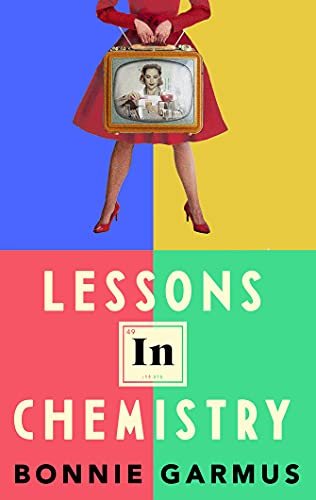
I don’t remember reading any books about video games, but I have read quite a few about friends. However, I am not going in that direction either because, quite serendipitously, my Californian friend shared in her letter this week the current “top ten checked out books in the NY public library system”. Number 2 was Zevin’s novel, but it was number 1 that caught my eye, as it’s a book I’ve read, Bonnie Garmus’ Lessons in chemistry (my review). How could I not make that my first link?

Peter Carey Chemistry of tears bookcover

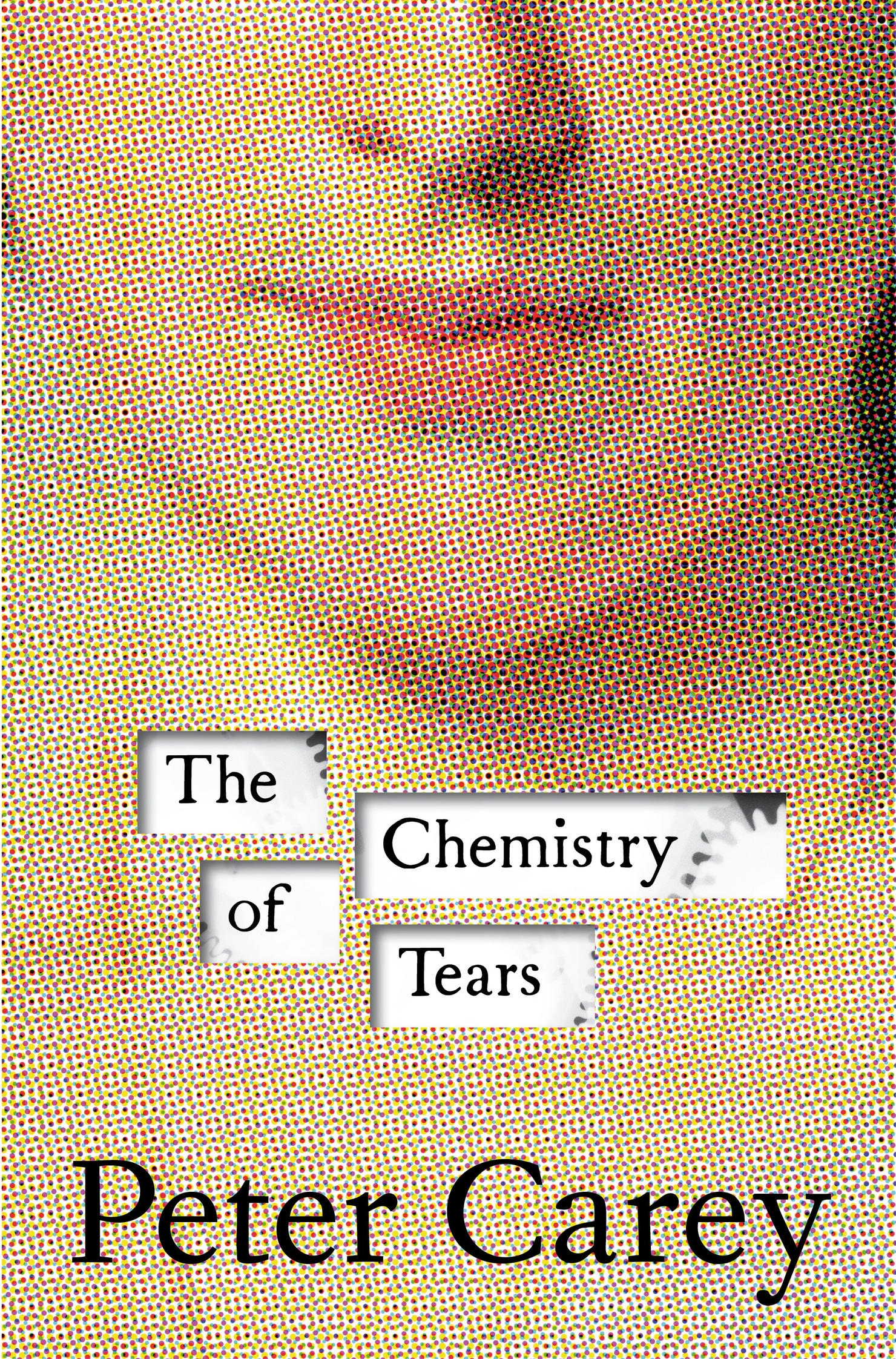
For my next link I’m going with an obvious option – this is for you MR! – and linking on a word in the title. The word is “chemistry”, and the book is Peter Carey’s The chemistry of tears (my review). I commenced my review of that book by saying that when I think of Peter Carey, I often also think of Margaret Atwood, because both have quite varied oeuvres. Both take risks, trying new forms, voices and genres.

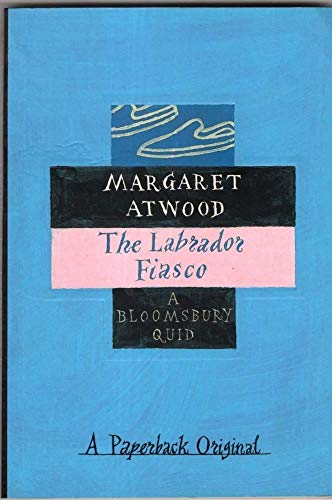
So, you won’t be surprised that my next link is to Margaret Atwood, and to the last work of hers I reviewed. This was The Labrador fiasco (my review), a short story I read for Buried in Print’s annual MARM event. It’s a story-within-a-story told in the voice of a son visiting his aging parents. But, I’m not linking on these ideas.

My edition of The Labrador fiasco was a little book, a Bloomsbury Quid. The first Bloomsbury Quid I reviewed for this blog was Nadine Gordimer’s Harald, Claudia and their son Duncan (my review). I could, though, have linked on the fact that both Atwood’s book and Gordimer’s feature parents and a son, albeit Atwood’s book is about a positive relationship while in Gordimer’s the son has committed a violent crime.

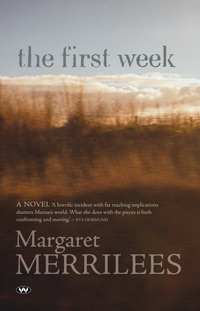
Margaret Merrilees, The first week

This leads us to my next link which is also a story (this one a novel) about a parent dealing with a son who has committed a violent act, Margaret Merrilees’ The first week (my review). In Merrilees’ story there is just the mother dealing with the aftermath, but, interestingly, in both stories there is also a race element.

For my final link, I’m sticking with parents coping with a problematic child, but in this case it’s a daughter who has been having an affair with a much older married man and who now appears to have run away. The book is Joan London’s The good parents (my review) and it deals, not just with parenting, but with the many choices we make in our lives, and their impacts.

I realised by the time I got to the end of my links that all six feature parents and children. In Lessons in chemistry, the main relationship is between mother and daughter, and The chemistry of tears hangs on a special gift commissioned by a father for his consumptive son. The rest you know from my notes on the links. We have travelled widely this month, though it may not be obvious here – from the USA to England and Germany, then to Canada and South Africa, finally ending up in Australia.

Now, the usual: Have you read Tomorrow and tomorrow and tomorrow? And, regardless, what would you link to?

Blogging highlights for 2023

As is my tradition, I have separated out my annual Reading highlights from my Blogging highlights, mainly because combining them would result in one very long post. I always do my Blogging Highlights on 1 January, which this year clashes with Monday Musings, unfortunately. All being well, I plan to do my usual first Monday Musings of the year tomorrow.

Top posts for 2023

Until recently the top of the ladder has been dominated by older posts, but in recent years there has been a gradual shift to more recent posts making it to the top. Last year, two posts published during the year made the Top Ten. This happened again this year. One (no. 6) is an obvious candidate, but the other (no. 2) is, as I wrote yesterday, a bit of a surprise.

Here is my 2023 Top Ten, in popularity order:

  1. Jack London, “War” (March 2010)
  2. Ambelin Kwaymullina, “Fifteen days on Mars” (from Unlimited futures)(January 2023) (Australian)
  3. Epiphany in Harrower’s “The fun of the fair” (essay by Emily Maguire) (January 2022) (Australian)
  4. Audrey Magee, The colony (September 2022)
  5. Ernest Hemingway, “Cat in the rain” (September 2022)
  6. Bonnie Garmus, Lessons in chemistry (June 2023)
  7. Barbara Baynton, “A dreamer” (January 2013) (Australian)
  8. Anthony Doerr, All the light we cannot see (September 2016)
  9. George Orwell, “How the poor die” (October 2010)
  10. Mark Twain, “A presidential candidate” (August 2016)

Observations:

  • Four of these posts (London, Maguire’s essay on Harrower, Baynton and Twain) were Top Tens last year, with three being Serial Top Tenners (London, Baynton, and Twain). Do all – including the relative newbie, the essay on Harrower – relate to school/university assignments?
  • Five posts were published in the last two years, which is a record. Some surprise me, but I suspect the popularity of my Garmus and Doerr posts is related to their screen adaptations released in 2023.
  • Five of this year’s Top Tens are Top Ten debuts, including the Garmus and Doerr. The sudden appearance here of my rather old Orwell post might be due to a recent flurry of books about Orwell, including Anna Funder’s Wifedom, but then, why that one of all my Orwell posts? Maybe there’s another reason, maybe it’s been set as a text? I’m pleased to see Magee’s novel here, and guess it’s just because this novel has been popular, but what about my relatively new Ernest Hemingway post? Why that one?
  • In 2021, six of the Top Ten posts were for full-length books, but as I wrote last year that was clearly an aberration, as in 2022 – and again this year – we returned to my more usual motley mix of mainly short stories/essays.

I also like to see how the posts written in the year fare, so here are the Top Ten 2023-published posts (excluding Monday Musings, event and meme posts):

My skewed reading year shows up strongly in these stats. I am intrigued that there was so much interest in my posts on stories by First Nations North Americans, particularly given Australians represent by far the most numerous visitors to my blog.

My most popular Monday Musings posts were essentially the same as last year: Books banned in Australia (June 2019); Some new releases (the 2023 version); The lost child motif (February 2011).

Random blogging stats

The searches

Help Books Clker.com
(Courtesy OCAL, via clker.com)

I love sharing some of the search terms used to reach my blog, Unfortunately, search term visibility is no longer what it used to be, but a few still get through for some reason. Certain browsers?

Some are probably assignment or book group related?

  • “david foster wallace word notes”
  • “key characteristics of australian literature in terra nullius by coleman”
  • “the colony audrey magee book club questions” and “the colony audrey magee what does title mean”
  • “characters in ripper by shelley burr”
  • “but being completely alone was a feeling”: searching this on my blog retrieves posts like Delia Owen’s Where crawdads sing and Tegan Bennett Daylight’s Six bedrooms, with Delia Owens being what they were looking for, as I quote this line, without the opening “but”.

Some are just general research:

  • “famous first sentences from Australian novels”

Then others seem to be looking for something very specific:

Book cover
  • ‘date of birth and “scott tucker”‘ and ‘husband and “scott tucker”’: these are probably looking for this Scott Tucker but they got Michelle Scott Tucker’s Elizabeth Macarthur’s biography instead.
  • “germaine greer care home” AND “germaine greer aged care”: we are still interested in Germaine Greer. Over the year I have had many hits from a site called mumsnet.com which linked to my 2022 Canberra Writers Festival post on her.
  • “very short stories convict fiction free”: this seems to find my Convict Literature tag, so tags do work!

Other stats

Overall, 2023 was another challenging year for me blog-wise and it shows in the stats. I only wrote 135 posts, which is the fewest number of posts per year that I’ve ever written and is well under my long term average of 153. However, my overall hits for the year increased by 17% on last year. Stats! Always a mystery.

The top ten countries visiting my blog vary slightly from last year: Australia (44%), the USA (27%), Britain, India, Canada, the Philippines, China, France, New Zealand, and Germany, in this order. The first four are the same, and then five of the next six are the same countries, in different order. However, Mexico dropped out to be replaced by New Zealand.

Challenges, memes, et al

I only do one regular meme, Kate’s (booksaremyfavouriteandbest) #sixdegreesofseparation, and in 2023 I did every month, except December. I occasionally do other memes – found under my “memes” category link – but you’ll find no others in 2023.

I also took part, to various degrees, in Bill’s (The Australian Legend) AWW Gen 5 – SFF, Nonfiction November (multiple bloggers), Novellas in November (Cathy of 746 books and Rebecca of Bookish Beck), the #YEAR Club (Kaggsy’s Bookish Rambling and Simon’s Stuck in a Book), Brona’s Aus Reading Month, Buried in Print’s MARM, and the William Trevor Reading Year (Cathy of 746 Books and Kim of Reading Matters). Most of these can be found via my “Reading weeks/months/years” category.

I do these because they align with my reading practice and goals. I’d love to do more, and I like the structured encouragement they provide for me to explore writers and works I would otherwise find hard to fit into my schedule.

And so, 2024 …

As always, thank you to all of you who commented on my blog this year – the regulars who hang in with me year in year out, and the newbies who have given me a shot. I hope you have enjoyed the community here enough to stay. I love those of you who comment. Thanks so much for being an active part of the community. But, a big thank you too to the lurkers. I really do appreciate your interest and support too.

I also want to thank all the hardworking bloggers out there. I’ve been a poor community member – again – this year, but I do appreciate you and enjoy reading your posts when I can. I look forward to more reading and great book talk in 2024.

Finally, huge thanks to the authors, publishers and booksellers who make it all possible – and who have proved yet again that the book is far from dead.

Roll on 2024 … a big year for my blog which will turn 15 in May. Meanwhile, Happy New Year everyone.

Reading highlights for 2023

With the year’s end, we come to annual highlights posts – my reading highlights post which I like to do on December 31, and my blogging highlights one on January 1. I do my Reading Highlights on the last day of the year, so I will have read (even if not reviewed) all the books I’m going to read in the year. I call it “highlights” because, as many of you will know, I don’t do a list of “best” or even, really, “favourite” books. Instead, I try to capture a picture of what my reading year looked like. I also include literary highlights, that is, reading-related activities which enhance my reading interests and knowledge.

Literary highlights

I got to a few literary events over the year, though by no means all I would have liked to. I was disappointed, though, to not get to any of this year’s Sydney Writers Festival: Live and Local events, partly because of my busy-ness but partly because I didn’t realise until too late that our usual venue had changed this year and I couldn’t seem to make the new multiple venues work in with my commitments.

Reading highlights

As I’ve said before, I don’t have specific reading goals, just some “rules of thumb”. These include reading women writers, reading more First Nations authors, reading some non-anglo literature, and reducing the TBR pile. In recent years, I haven’t made major inroads into any of these but … here’s the thing …

Last year I foreshadowed that this year could be a tricky one with our major downsizing project (along with regular trips to Melbourne) – and so it turned out to be. Decluttering and preparing our house for sale took until July, with our house being sold in mid-August. This was followed by a long settlement which saw us having to maintain the house and garden until early November. It’s been a truly long haul, but we got there. It’s just as well I love short stories because they are ideal for busy, distracted times, and as it turned out, they ended up forming a much larger percentage of my reading diet this year. And, a goodly proportion of that ended up being stories by First Nations authors. Not only did I read more First Nations authors than usual but I read more diversely I read several First Nations American authors, and I read some First Nations Australian speculative fiction – all in short story form.

Each year I present my highlights a bit differently, choosing approaches that I hope will capture the flavour and breadth my reading year. Here are this year’s observations which I hope might entertain, and maybe even enlighten, you. I start by focusing on works/writers/writing, and end with characters (mostly):

  • Great finds: A three-way tie between two (older) American works and one (more contemporary) French novel – African-American writer Gwendolyn Brooks’ wonderfully warm but pointed novella Maud Martha; American writer Susan Glaspell’s short story, “A jury of her peers”; and French Nobel prize-winner Patrick Modiano’s novel, Sundays in August.
  • Dearest to a librarian’s heart: Anthony Doerr’s Cloud cuckoo land made the librarians in my reading group cheer (as would “Special collections” in Rebecca Campbell’s Arboreaility, had they read it. Review to come, but here is Bill’s)
  • Most surprising speculative fiction: A bit of a misnomer because, almost by definition, speculative fiction is surprising, but the first work I read this year, Ambelin Kwaymullina’s short story, “Fifteen days on Mars“, was not only a great read but surprised me by being my most successful post written this year.
  • Most mystifying book: JD Vance’s Hillbilly elegy. How can someone with such a story end up aligning with you-know-who?
  • Truthtellers of the year: Many writers increased my understanding and thinking about First Nations’ issues this year but I’ll share two, First Nations Australian writer Debra Dank in We come with this place, and my (non-Indigenous) brother Ian Terry with his book and exhibition Uninnocent landscapes.
  • Weirdest voices: I love writers who can pull off writing from unusual or surprising perspectives, and I read two experts this year, both through their short story collections – Carmel Bird’s Love letter to Lola, and Chris Flynn’s Here be Leviathans. I love how these writers can use fresh voices to grapple with meaningful-to-me issues, including but not limited to climate change and the ecology.
  • Strongest women: There were many women in my reading diet this year who managed to steer a way through the patriarchal societies they found themselves in, but I’ll name three standouts, Briseis in Pat Barker’s retelling The women of Troy, Lucrezia de’ Medici in Maggie O’Farrell’s The marriage portrait, and Elizabeth Zott in Bonnie Garmus’ Lessons in chemistry.
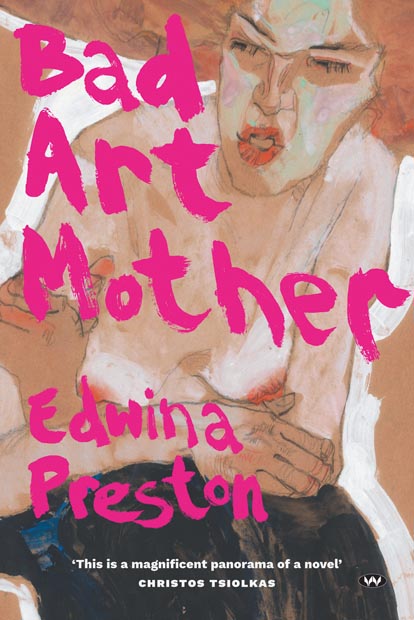
  • Most challenged mother: Parenting is hard, so who am I to criticise, but patriarchy can make the lives of mothers particularly hard. There were several challenged mothers in my reading this year, such as Frankie’s mother in Rebecca Burton’s Ravenous girls, but the one who struggled most was poor Veda Grey in Edwina Preston’s Bad art mother.
  • Sweetest man: Most men are decent, and Ned in Robbie Arnott’s Limberlost, is one such, but there were some close runners-up, including Will in Eleanor Limprecht’s The coast.
  • Most clueless man: Cathal in Claire Keegan’s short story “So late in the day“.
  • Best neighbours: The quiet women in Susan Glaspell’s above-mentioned story mentioned have to be the winners here, but runners up are the neighbours in Holly Throsby’s Clarke. Gossipy yes, but when the chips are down they are there for you.
  • Most interesting sportspeople: The Tucson basketballers in Jack D. Forbes’ story “Only approved Indians can play made in USA” showed up their northern opponents by being able to speak their own language, but young pedestrian-cum-jockey, Johnny, in Robert Drewe’s Nimblefoot captured my heart.
  • Best trees: There is a beautiful old cottonwood tree in Leslie Marmon Silko’s story “The man to send rain clouds“, which took me back to my days America’s southwest, and Tasmania’s gorgeous huon pine features in Robbie Arnott’s Limberlost, but the trees that brought home humanity’s impact on the land won me over – in Ian Terry’s Uninnocent landscapes (colonialism), and Rebecca Campbell’s Arboreality (climate change)

Each of these books … is a door, a gateway to another place and time. (Anthony Doerr, Cloud Cuckoo Land, p. 216)

These are just some of 2023’s highlights in a very strange but, because of that, quite wonderful year of reading … I’m just sorry I can’t list them all.

Some stats …

I don’t read to achieve specific stats but, as I’ve already mentioned, I do have some reading preferences which I like to track. However, this year was so whacky in terms of those preferences, that I’m not even going to bother sharing them, except to reiterate two big positives to come out of the whackiness:

  • I read more short stories and novellas than usual (and I usually read a good number): over 60% of this year’s reading (as individual stories, collections, anthologies, and linked short stories)
  • I read more First Nations writers than usual (largely because I read several short stories by First Nations American writers): 30%

Sometimes strange years have silver linings.

Tomorrow, I will post my blogging highlights.

Meanwhile, a huge thanks to all of you who read my posts, engage in discussion, recommend more books and, most importantly, keep me on my toes. Our little community is special, to me! I wish you all an excellent 2024, and thank you so much for hanging in this year.

What were your 2023 reading or literary highlights?

William Trevor, The hill bachelors (#Review)

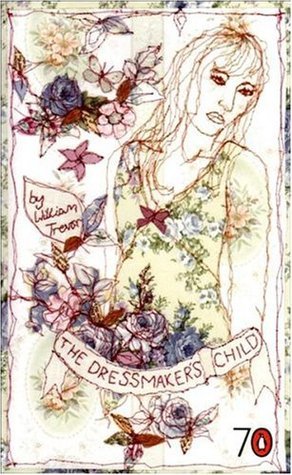
Well, Kim (Reading Matters) and Cathy’s (746 Books) “A year with William Trevor” project is all but over, and I’ve only done one post – on the titular story in the little The dressmaker’s child collection. The second story, “The hill bachelors” (as in bachelors living in the hills), was first published in his collection titled The hill bachelors.

William Trevor (1928-2016), as most of you will know, is an Irish writer of novels and novellas, short stories and plays. He is particularly good at writing about marginalised people, or those who are loners or outsiders, and writes authentically about them, regardless of their age or gender. “The hill bachelors” is another of these, though perhaps more a variation on the theme. Is the protagonist Paulie marginalised? In a sense perhaps? Is he a loner or outsider? Again, it depends on how you see him, and the choices he makes.

Trevor is one of those writers who lets the reader work out who’s who, what’s what, as we go. The first two paragraphs of this story describe a 68-year-old woman, wearing mourning clothes, waiting for “them” who will decide her future. Very little is overtly explained, but by the end of the second paragraph, we know that she has worked hard and got on with whatever life has thrown at her – and, it seems, she will continue to do so with a calm resignation.

Then, we are introduced to a man we come to realise is her 29-year-old son, Paulie. He is coming for his father’s funeral/wake. He is the youngest of five children, and had not had a good relationship with his “hard” father. It soon becomes apparent that the mother expects the children to work out what will happen to her now – and what will happen to her now, as soon becomes apparent, is that Paulie will return to the family farm. After all, “he was the bachelor of the family”, and his job as a lorry driver “wasn’t much”. However, to do this he will have to give up the woman he loved as she is not interested in a farm life.

While he is working out his notice back in town, his mother is helped by neighbours, the bachelor Hartigan and his sister. It is this sister who introduces the idea of the hill bachelors. She suggests that Paulie would not want to come back because

“It’s bachelors that’s in the hills now. Like himself,” Miss Hartigan added, jerking her bony hand in the direction of the yard, where her brother was up on a ladder, fixing a gutter support.
“Paulie’s not married either, though.”
“That’s what I’m saying to you. What I’m saying is would he want to stop that way?”

Seeing bewilderment in Paulie’s mother’s face, she goes on to explain that “the bachelors of the hills found it difficult to attract a wife to the modest farms they inherited”.

And so Paulie comes back. He “harboured no resentment … it was not the end of the world”. What was “the end of the world”, however, was hearing the woman he loved say that life on a farm did not attract her. He works hard, and he starts dating local women, but Miss Hartigan seems to have known whereof she spoke.

The story is told third person, through the alternating perspectives of the mother and Paulie. We hear what the the rest of the family thinks, or has done, mostly through Paulie’s and his mother’s thoughts and assumptions, through their deep knowledge of how their family works and of the rural traditions within which they live. There is a little dialogue, but not much. Paulie and his mother are both “types” and yet quietly individualised too.

There’s no big drama in this story, just ordinary people making the decisions that seem right at the time. Paulie’s mother is not unkind or demanding. Indeed, she offers to move in with a married daughter, and, in a little revelatory moment, Trevor lets on that she’d shed some private tears in her early days on the farm. She would do her best to make it easy for a new wife, unlike her own experience. However, marriage to a man from the hills has taught her passivity, to do what she’s told, so she resigns herself – as we are led, from the opening paragraphs, to expect she’d do – to see out her lot. Paulie, too, seems resigned, like his mother, to play out the role set for him, even if it means joining the titular hill bachelors.

All this makes it a far more complex story than it might seem on the surface. It means that, as much as we’d like to, it’s hard to see Paulie as a victim, because he does have a choice, difficult though it may be. But the pull of tradition and responsibility is strong, and while Paulie is aware of what is happening to him, he is resigned to it. Ultimately, as he himself realises, “guilt” and “goodness” have nothing to do with it, it just is what it is, “enduring, unchanging” – and he is not going to buck it.

Trevor thus leaves it for us to think about – to think what the different choices might mean for his mother, for Paulie, and, more widely, for the rural way of life that, regardless of their decisions or their own thoughts about it, does seem to be on its way out. It is up to us readers to ponder the bigger picture, to wonder where that will get him, them or the farm. After all, if he doesn’t marry, what will happen? In continuing their rural traditions, will anything be ultimately achieved, or will this be another sad little life?

Cathy (746 Books) has reviewed the collection.

William Trevor
“The hill bachelors”
in William Trevor, The dressmaker’s child
London: Penguin Books, 2005
pp. 21-39
ISBN: 9780141022536
(First published in The hill bachelors, 2000)

Novellas in November 2023: Week 5, New to my TBR

You will of course have realised that November is somewhat over, but in the blogosphere we are pretty flexible – at least I think we are – so I am going to do this final Novellas in November post more than a week into December.

The final theme for the month is that we talk about the novellas we’ve added to our TBR since the month began. I strongly resist adding any new books to my TBR, but my willpower failed me – partly because I am partial to novellas.

So, here goes, in alphabetical order by title, some of the books that captured my attention around the month:

  • Rebecca Campbell, Arboreality: Bill Holloway (The Australian Legend) posted on this before NovNov but it is a novella, it attracted my attention and I am in fact reading it right now.
  • Michael Fitzgerald, Late: Lisa (ANZLitLovers) posted on this and I also have it in my review pile to read. It sounds right up my alley, and I have bought it as a Christmas gift for a family member too.
  • Natalia Ginzburg’s The dry heart: Claire (Word by Word) posted on this one, describing it as “this brilliant, page turning feminist classic, originally penned in 1947”. How could I not be in?
  • Margo Glantz, The remains: Claire (Word by Word) posted this before NovNov but it is a novella so I am including it here. She commenced her post by describing it as an “incredible literary masterpiece. A lyrical elegy of tempo rubato.” This and the rest of her review captured my attention.
  • Hans Keilson, Comedy in a minor key: Cathy (746 Books) wrote that this is about “citizens risking their lives to harbour Jews in Nazi-occupied Netherlands but deals with this serious theme with a lightness of touch.” I know some readers don’t like a light touch applied to deadly serious subjects like this, but I do. Sometimes a light touch makes a bigger impact, in fact.
  • Elizabeth Lowry, The chosen: Bookish Beck reviewed this, not in the month, but, during the month, she paired Thomas Hardy’s wife Emma’s memoir Some recollections with Lowry’s novella. Lowry’s book, says Beck, “examines Thomas Hardy’s relationship with his first wife, Emma Gifford”. I like Hardy, so this of course caught my attention
  • Janet Malcolm, The journalist and the murderer: Cathy (746 Books) wrote on this before NovNov, but it caught my attention because I have been wanting to read Malcolm ever since I discovered that Helen Garner admires her. Any one Helen Garner admires is of interest to me. In this book Malcolm apparently explores the relationship between journalist and subject, particularly when that subject is a murderer.
  • Joyce Carol Oates, Black water: Lisa (The Short Story Editor) recommended this book on my NovNov week 2 post calling it “the most quintessential novella on my shelf”. I have read an Oates novella, Beasts (my review), but not this one.

Eight books, one of which I am reading now. I’m not sure how many more I will read, but at least I have now got them on my list?

Has Novella November affected your TBR pile this year?

Written for Novellas in November 2023