Australian Women Writers 2019 Challenge completed

As has become tradition, I’m writing my completion post for the Australian Women Writer’s Challenge, around the middle of the year, though I will continue to contribute until the year’s end, and do a final round-up then.

I signed up, as always, for the top-level, Franklin, which involves reading 10 books and reviewing at least 6, and as always I’ve exceeded this. In fact, by June 30, I had contributed 16 reviews to the challenge, including 3 guest posts by Amanda.

Here’s my list in alphabetical order (by author), with the links on the titles being to my reviews:

This slideshow requires JavaScript.

AWW Challenge 2019 BadgeIn last year’s completion post, I said that I didn’t have specific goals for the rest of that year but that I’d like to read more indigenous writers, more classics, and more from my TBR pile. These continue to be my non-goal goals, but I’ve not done particularly well with them so far this year, but I have read two classic writers (Capel Boake and Louise Mack) and I’ve also read three works by indigenous writers, two of which are anthologies. I’m pleased with all this, and hope to read more indigenous authors, in particular, men as well as women, as the year progresses. And, I’ve returned to my preferred fiction/non-fiction ratio, with 9 of my 13 being novels and short stories. Around 2/3 is my comfort zone!

I’m also pleased to include, this year, three guest posts by Amanda who offered to do these reviews to fill gaps in the Challenge. As Amanda doesn’t have her own blog, and didn’t want to review on GoodReads (another option for our participants), I happily offered her my blog for the purpose.

Watch out for my 2019 AWW Challenge wrap-up post for the year’s full story!
Six degrees of separation, FROM Where the wild things are TO …

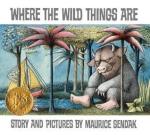
Book coverWell, I’ve found the solution to breaking my record of not having read one Six Degrees starting book this year: suggest a book to Kate and hope she likes it! I did, and she did, and so it is that I have read this month’s starting book, Maurice Sendak’s picture book classic, Where the wild things are. I figured it might help a few other people too who have found themselves embarrassed, month after month, like me. Haha!

I plan to have a little fun with this one, but first the formalities. The Six Degrees of Separation meme is currently run by Kate, and you can read all the rules on her blog – booksaremyfavouriteandbest.

So, here goes (on the assumption that you all know the story):

Where is Max?

Well, he went

Into the woods

of the Midnight empire,

where he went Troppo with all his wild friends.

They danced around the Cold sassy tree,

and created a rumpus throwing Big rough stones.

But, in truth, in a Nutshell shall we say,

Where they really were all the time was –

Storyland.

(Links on titles are to my posts.)

This slideshow requires JavaScript.

(Those of you who can count will have noticed that I’ve cheated. There are 7 books in my chain. But, I couldn’t bear to leave any out, so I gave myself recommender’s licence and kept them all. Anyone care to take me on?!)

If not, let’s move on to my usual questions. Have you read Where the wild things are? And, regardless, what would you link to? 

Six degrees of separation, FROM Murmur TO …

And still it continues, and by this I mean my unbroken record this year of not having read the Six Degrees of Separation meme starting book. Who is to blame for this parlous state of affairs? Not me, of course – haha – but our meme leader Kate! I forgive her, though, and direct you to her blog – booksaremyfavouriteandbest – for the meme’s rules. Fortunately, you can trust that I’ve read my selections in the chain.

Book coverSo, this month’s starting book is Will Eaves’ Murmur. Not only have I not read it, but I had never heard of it. It is apparently inspired by the life of the mathematician Alan Turing, who among other things was instrumentally involved in Britain’s cypher-breaking work at Bletchley Park during World War 2.Lesley Lebkowicz, The Petrov Poems

It’s a bit of a stretch, perhaps, but from here I’m going to link to Lesley Lebkowicz’s historical fiction verse novel, The Petrov poems (my review). It tells the story of the Petrovs, who were Russian spies operating in Canberra during the earlier years of the Cold War. Early in his career, Vladimir Petrov was a cypher clerk!

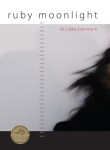
Ali Cobby Eckermann, Ruby MoonlightMy next link moves to form, not content. It’s Ali Cobby Eckermann’s verse novel, Ruby Moonlight (my review), which is, in fact, another historical fiction work, though not based on “real people. It’s about an Aboriginal teenage girl, Ruby Moonlight, whose family is massacred by white settlers, and who, in her lonely wanderings, meets another lonely person, Miner Jack.

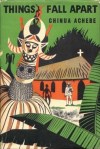
Chinua Achebe, Things fall apart

Ruby Moonlight’s subtitle is “a novel of the impact of colonisation in mid-north South Australia around 1880”. Another novel about the impact of colonisation, but this one set in Africa, is the modern classic, Chinua Achebe’s Things fall apart (my review). It’s rather different from Eckermann’s book, but it also offers a thoughtful rather than simplistic exploration of how colonialism can play out.

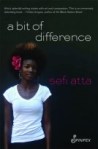
Sefi Atta, A bit of differenceChinua Achebe is Nigerian – though he wrote in English. Another Nigerian writer I’ve reviewed here, and who also writes in English, is Sefi Atta with her novel A bit of difference (my review). It is set in England, though, and its subject matter is very different. Its protagonist is an accountant at an international charitable foundation. Her job is to audit the organisations that receive its grants.

Jordan Fall GirlGrants provide the link to my next novel, Toni Jordan’s chick lit novel, Fall girl (my review). It’s about a young woman con artist trying to extract grant money from a young man representing his wealthy family’s trust. (Though, as is the way of cons, all is not as it seems.)

Cover for Amor Towles A gentleman in MoscowNow, if you are a reader who keeps an eye on the publishing environment, you’ve probably seen the discussions in recent years about book covers featuring women’s backs or headless women (of which Fall girl, in fact, has both). I’ve reviewed a couple of other novels featuring the backs of women, but I also have one featuring a man’s back, so rather than perpetuate anonymous women, I’m choosing the man! Hence, I give you Amor Towles’ A gentleman in Moscow (my review)!

I had fun with this challenge, partly because it took me a little more time than usual to get it going. However, I love that we’ve been to England, Australia, Nigeria and Russia. Four of my six writers are women – not unusual for my chain – and three are writers of colour, which pleases me.

Have you read Murmur? Would you recommend it, and, regardless, what would you link to? 

Ten Year Blogiversary Giveaway Winners

And so, as promised, I drew the two winners of my one year blogiverary giveaway yesterday, May 10, but I was out of town, so decided to way until I returned home to my proper computing facilities, to write the announcement post.

There were 11 entries in the non-Australian draw and 16 in the Australian draw, and, would you believe that the random number generator at mathgoodies.com generated 5 in both draws! That’s random for you.

The winners are, therefore:

  • 5A (Australian-based address): Louise Allan
  • 5N (Non-Australian address): Nancy Elin
Help Books Clker.com

(Courtesy OCAL, via clker.com)

Congratulations to Louise and Nancy, and commiseration to everyone else. I wish you could all have won, though that would have dented my wallet a little too much! Thanks everyone for playing along, and for all your good wishes for my ten years. You never know, I might run another one for a future anniversary.

Now, to claim your surprise prizes Louise and Nancy, you will need to send me your postal address for delivery of your book by midnight (AEST) on 18 May 2019. (My email address as at the bottom of my Who am I? page.)

If either or both of you don’t email me by the given date then I will re-draw a new winner for the prize/s.

Meanwhile, I will get on to selecting your special prizes!

Six degrees of separation, FROM The dry TO …

Well, my record for 2019’s Six Degrees of Separation meme continues, that is, I still haven’t read a starting book! By comparison, last year I’d read three of the first five (which may have been a record in the opposite direction!) However, I have always read the books in my chain. And now before I share my chain, the formalities, which are simple:  if you don’t know the rules of the meme, please click on meme leader Kate’s blog name – booksaremyfavouriteandbest – and you will find them.

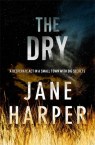
Book cover of Jane Harper's The DrySo, this month’s starting book is Jane Harper’s The dry, a book which got her career off to a rip-roaring start, and that’s been followed by two more, Force of nature and The lost man. These are all in the crime genre, I believe, which is not a genre I gravitate to.

Book coverThere are some books that “everyone” reads, but that I don’t, for various reasons, usually to do with genre. Occasionally though, something happens to change my mind. This may happen one day with The Dry, but for today’s post, I’m choosing Vicki Laveau-Harvie’s The erratics (my review), which won this year’s Stella Prize. It had not been on my TBR list, but winning the prize tipped it over … and, of course, I’m glad it did.

Emma Ayres, CadenceNow, The erratics was written by an Australian-based writer who was born in Canada. Another memoir written by an Australian-based writer who was born elsewhere (this time, England) is Emma (now Eddie) Ayres’ Cadence: Travels with music (my review). This is a travel memoir in which Ayres cycled from England to Hong Kong with her violin.

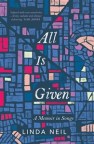
Linda Neil, All is given, coverSticking with memoirs, though I promise we’ll leave them soon, I’m choosing another travel memoir with a music focus, Linda Neil’s All is given: A memoir in songs (my review). Neil describes her travels in the usual and unusual places, the songs she wrote and how music helped her make connections she may never have made otherwise.

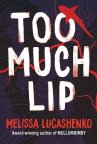
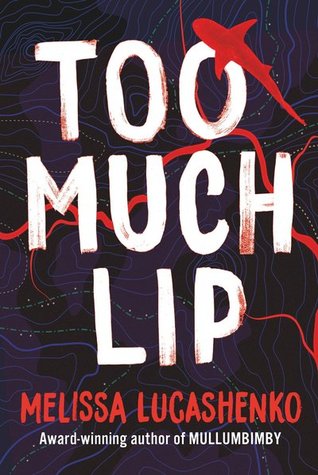
Melissa Lucashenko, Too Much LipAnd now, finally, we move onto fiction! Neil’s book came to me as a review copy from the wonderful UQP (the University of Queensland Press). The most recent book I reviewed from them is Melissa Lucashenko’s Too much lip (my review). It’s another excellent book from UQP, which has a marvellous track record in publishing indigenous Australian writers.

Oh, oh! I’m back to memoirs! You would think from this post that memoirs comprise the bulk of my reading! Not so. Just under 8% of my reviews are for memoirs. ‘Nuff said? Now, on with the chain … Lucashenko is the most recent indigenous Australian author I’ve read and reviewed. The first book by an indigenous Australian author that I read for my blog was Boori Monty Pryor’s Maybe tomorrow (my review), in June 2009, just one month into my blog.

Anita Heiss Paris DreamingBoori Monty Pryor was an author ambassador in Australia’s 2012 National Year of Reading program. Many authors from around Australia were nominated as ambassadors, but I’m going to end this chain on another indigenous Australian author who was one of these ambassadors, Anita Heiss. You’ll be pleased to know, however, that although I’ve read a memoir by her, one that came out in 2012 no less, I’m going to choose her novel, Paris dreaming (my review), because I heard her speak about it at the Canberra Readers Festival in 2012. Fair enough?

Hmmm … we’ve been everywhere this month, starting in Canada, then travelling all over the globe with Ayres and Neil, before landing in Australia, albeit ending on a foray to Paris with the Aussie protagonist of our last book. And for those who like chains to end in circles, you may like to know that the author of my opening book, The erratics, lived in France, before moving to Australia!

… over to you: Have you read The dry? And, regardless, what would you link to? 

Ten Year Blogiversary for Whispering Gums, with a Giveaway

Today, my blog turns 10! I can hardly believe it. I really didn’t expect to be still writing it ten years on when I started way back there in May 2009, but it can become addictive, as many of you know yourselves!

I must say that I started shyly. I was nervous about sharing my opinions/ideas publicly, so I did very little to advertise myself, but you can’t be on-line for 10 years without becoming at least a little known, or so I’ve discovered. Fortunately, the responses have been positive and supportive. Litblogs, in fact, are remarkable for the absence of nastiness, proving that people can be polite on-line even when they don’t always agree.

Some highlights

So, I have written over 1600 posts, or, around 13.5 a month, which is not a stupendous number, but a comfortable rate for me. Of these, 442 have been Monday Musings’ posts which I started in mid-2010 as an experiment. Never did I believe I would still be finding topics to write about nearly nine years later, but the interest of readers here has encouraged me to continue. I have hosted a number of guest posts – and thank the generosity of those writers who wrote those posts – and I’ve guest-posted for others. I’ve taken part in other bloggers’ reading weeks and memes, and am also involved in administering or editing four or five other blogs.

Whispering Gums has been archived on the National Library of Australia’s web archive, Pandora, since 2012, which means it will be there, along with other litblogs, for researchers of the future who are interested in how we in the early 21st century shared books and reading, how we communicated on-line, and what we said about our literary culture and environment. I was “freshly pressed” in November 2010 – for a travel-oriented post (hmm) – resulting in my biggest single day of hits ever. (I don’t believe WordPress does this anymore.)

Because of my blog, I have been involved from the start, as a mentor, in the ACT Writers Centre’s arts blogging program. This is a joy, which brings me to the best highlight of all ….

My blog has introduced me to some wonderful people – bloggers, readers, writers, publishers – who have enhanced my understanding of literary culture immeasurably. I won’t name names because I’m sure to miss one, but you know who you are – don’t you? You mean a lot to me. Talking with other readers, as well as with practitioners and professionals in the arts, has added depth and breadth (too) to my own reading experience. I love that I’ve read and engaged with bloggers on every continent – oops, I lie, I don’t think I’ve ever engaged with a blogger from Antarctica! I’m not sure that Emperor Penguins read, though it would certainly give them something to do while they stand around nurturing those eggs!

Finally, for those who joined me later in the piece, here is a link to my first post which explains my name.

This slideshow requires JavaScript.

To mark this anniversary

To express my gratitude to all of you who have made this blogging journey such a fun and meaningful one, I would like to do a book giveaway, in fact, two book giveaways – one to an Australian-based reader and another to a non-Australian-based one. The book I send to each winner will be a surprise, making this a bit of a lucky dip.

The rules. Express your interest in the comments below, noting whether your postal address is Australian or not, and early on May 10 (in my AEST-zone), I’ll draw from each list using a random number generator. If you win, you will need to provide me with your mailing address (privately) as specified in the post announcing the winner. If you don’t, I’ll redraw. We can’t let a book gift go to waste, after all.

Meanwhile, a huge thanks to you all. You make this blog what it is – well, the positive things about it, anyhow. The rest, as they say, is mine! I look forward to sharing more with you in the future.


Six degrees of separation, FROM How to be both TO …

I don’t think I’ve read one Six Degrees of Separation meme starting book yet this year! But that hasn’t stopped me giving it a go. Who said you have to read a book to write about it! Many a student has known that’s not necessary! (Never fear though, I always read the books I review on my blog. I’m not that brazen!) But now, before we get onto the post proper, I need to tell you to click on meme leader Kate’s blog name – booksaremyfavouriteandbest – if you don’t know the rules.
Ali Smith, How to be bothSo, this month’s starting book is Ali Smith’s How to be both, a book I’d love to read, particularly given I read and loved, long before blogging, her second novel, Hotel world. Smith is an inventive writer, and this book was shortlisted for and/or won several prizes, including, in 2015, the Bailey’s Women’s Prize for Fiction

Eimear McBride, A girl is a half-formed thingI have, over the years, read several of the winners of this Women’s Prize (under its various names), one of which being the 2014 winner, Eimear McBride’s moving, confronting, A girl is a half-formed thing (my review). It tells of a dysfunctional Irish family, comprising a mother, a daughter (the titular “girl”), and her brother whose mental capacity has been compromised due to surgery for brain cancer when he was young. Our girl is emotionally neglected as the mother struggles to care for her son’s needs.

Sarah Kanake, Sing Fox to meAnother novel exploring the impact on a sibling of living with a disabled brother is Sarah Kanake’s Sing fox to me (my review), though in this book the challenge is Down Syndrome and the brother is a twin. Kanake’s book is set in Tasmania, and with its forbidding – and mysterious – forest setting, it falls within a sub-genre we know here as Tasmanian Gothic.

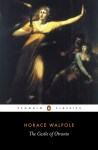
Horace Walpole, The castle of OtrantoNow it just so happens that I’ve read, since blogging, the book generally regarded as the first Gothic novel, Horace Walpole’s The castle of Otranto (my review). It’s quite a story, about the lord of a castle who … well, I’m not going to spoil it here, am I?

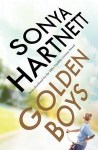
Sonya Hartnett, Golden boysBut, we all love a castle don’t we – even scary Gothic ones. We don’t have many castles in Australia – not surprisingly, given our relatively short built-history – but Sonya Hartnett does use a castle motif in her novel Golden boys (my review). There’s no real castle in her suburban setting but one of the main characters starts to

see that the world is a castle, and that a child lives in just one room of it. It’s only as you grow up that you realise the castle is vast and has countless false floors and hidden doors and underground tunnels …

I liked that metaphor, particularly because it suggests that life can be pretty “gothic” at times!
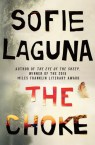
Sofie Laguna, The chokeSonya Hartnett is an Australian author who has managed to successfully straddle writing for children and adults. Another Aussie who has done this is Sofie Laguna, and it’s to her most recent book for adults, The choke (my review), that I’m linking next. The choke refers, literally, to the Barmah choke in the Murray River – a place where the river narrows  and then pushes through, creating a paradoxical metaphor for both being squeezed and for pushing forward. It’s also, for protagonist Justine, a place of escape and tranquility.

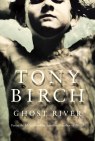
Tony Birch, Ghost riverTony Birch’s Ghost river (my review) is a semi-autobiographical novel which, too, is set on a river – and a river which also has a physical presence as well as a spiritual and metaphorical one. This novel, though, has an additional environmental story about saving the river from a freeway development.

So, this month, I’m back to my usual gender division of four women and two men, and to my strong focus on Australia, with only two forays (excluding the starting book) to the United Kingdom. We’ve also spent almost all our time in the contemporary era, with a quick dip of our toes into Walpole’s 18th century. Not very varied I’m afraid, so

… over to you: Have you read How to be both? And, regardless, what would you link to? 

My literary week (15), readings and readers

As regular readers here know, my “literary week” posts are irregular affairs, usually inspired by something I really want to share (or document for my own benefit!) And so it is this week …

Reading Boochani in public … and related thoughts

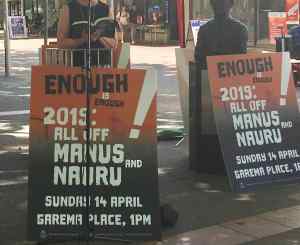
Public reading No Friend but the Mountains

I was especially pleased, given the events in Christchurch last Friday week, that I’d been asked to take part in an all-day public reading of the book No friend but the mountains, written by Kurdish-Iranian poet and Manus Island detainee, Behrouz Boochani. The reading was organised by local writer (and ex-work colleague) Sarah St Vincent Welch, with the support of the Canberra Refugee Action Committee. It took place in Canberra’s Garema Place on Thursday March 21, which happened to be World Poetry Day and World Harmony Day. The reading started at 8.15am and went through into the early hours of the evening, with my 10-minute slot taking place in the early afternoon. It was a privilege to be one of the 60 readers, most of whom were local poets, taking part in the event.

As we all know, it’s strange how events and ideas can coalesce. We have, here in Australia, a current affairs television program called The Drum. It’s a panel discussion show and, earlier this week, in the wake of Christchurch, they had an all-Muslim women panel. It was confronting, but it reinforced the ideas that are also embedded in Growing up Aboriginal in Australia (my review), and that also reflect the experience of the detainees. Each situation is different in specifics and history, but Muslims, indigenous people, and asylum-seekers know what it is like to be reviled. Each member of these groups wakes up each and every day, wondering what act of prejudice or hatred they might confront*. It’s truly appalling.

If only naysayers and decisionmakers would stop, listen and/or read, and imagine walking, for just a moment even, in another’s shoes, they might think again about their actions. This is not about class or religion or wealth or education (though they are implicated in the bigger picture), but about human feeling. I know I speak from a position of fortune – I can’t change that – but I can try to do my bit to lessen the load.

Readings

Two of my recent posts resulted in short story recommendations that I thought worth sharing, though I haven’t yet had time to follow them up myself:

  • Ian Darling, commenting on my post on Rudyard Kipling’s story “The Janeites”, recommended an earlier Kipling story, “Mary Postgate” (available online), originally published in 1915. Ian describes it as “a fearful mixture of hate and compassion.” Sounds eerily relevant doesn’t it?
  • Lisa (ANZLitLovers), commenting on my Monday Musings post on the NSW Premier’s Translation Prize, recommended an Indonesian short story translated by one of this year’s shortlistees, Harry Aveling. The story is “The biography of a newborn baby” and is by Raudal Tanjung Banua (available online).

I will try to read them in the next week or so, once I’ve read this week’s reading group book!

Readers

Readers are interesting beasts really (and I use the term affectionately!) We differ greatly in what we like to read, what we think is good, what we think is worth reading. I was interested to read, after writing my post on Melissa Lucashenko’s Too much lip, Karen Wyld’s very thorough review in the Sydney Review of Books. Late in the review she comments on the challenge for readers:

Melissa Lucashenko, Too Much Lip

Too Much Lip is, of course, not the first novel to include family violence or to expose its colonial roots. There are, however, risks with telling stories like these. Non-Indigenous readers could fail to recognise the strength of culture to mitigate intergenerational trauma, and not understand its roots in colonial violence and systemic racism. Some readers might see the Salters through an over-used deficit model, or believe they have the solutions to ‘fix’ Indigenous families. Instead, the Salters’ story shows how ineffective governments have been in trying to patch up the wounds of colonisation through paternalistic and draconian approaches. Some readers might find it hard to grapple with the violence in this novel. And some might find it hard to forgive the Salter siblings’ creative disregard for the law. It’s important to remember that this book is a piece of fiction but it is grounded in reality.

If there is a risk of non-Indigenous readers misconstruing parts of this novel, how can First Nations writers mitigate such risks? In most cases they can’t, and they shouldn’t have to. The responsibility of interpretation and the heavy lifting of expanding one’s worldviews and letting go of ingrained prejudices lies with the reader [my emphasis].

Too much lip is an exciting read, but it is also a confronting one that can easily lend itself to judgement if not moralising. I love that Wyld discusses this potential head on.

Quote of the week

I included a Quote of the Week in my last literary week post, and can’t resist including one again. It comes from Rudyard Kipling’s “The Janeites” (linked above):

“… there’s no one to touch Jane when you’re in a tight place. …”

I’m sure I don’t need to tell you what this means, even if you haven’t read the post!

* Well, asylum-seeker detainees probably have a good idea, as every day brings the same, but I think you take my point.

Six degrees of separation, FROM The arsonist TO …

Our ever-creative meme-leader Kate has chosen well for this month’s Six Degrees of Separation meme (which, as you probably know by now, you can find more about if you click on her blog name: booksaremyfavouriteandbest).

Chloe Hooper, The ArsonistI said she’s chosen well – even though it’s a book I haven’t read – because it’s been longlisted for this year’s Stella Prize, because I do have it on my TBR, and because everyone I know who has read it so far has liked it. The book is Chloe Hooper’s The arsonist. It’s a work of creative non-fiction, and chronicles the investigation into the man behind Victoria’s horrific Black Saturday fires back in 2009.

Karenlee Thompson, Flame tipAs usual, the starting book got my creative juices flowing. There were several options, the most obvious being to Chloe Hooper’s powerful book, The tall man. However, I decided to choose another obvious link, Karenlee Thompson’s short fiction collection Flame tip (my review). The stories in this book are all inspired by Tasmania’s terrible bushfires of 1967.

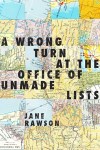
Jane Rawson, A wrong turn at the office of unmade listsWhere to next? With two books about bushfires in Australia, I must say that my thoughts turned to climate change, and although I’ve mentioned this book in Six Degrees before I couldn’t go past Jane Rawson’s A wrong turn at the Office of Unmade Lists (my review). This novel opens with its protagonist Caddy living rough, having lost her husband and home in a heatwave-induced fire a couple of years previously. It’s a powerful, genre-bending novel. But, I think that’s enough of fires, don’t you?

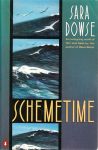
Sara Dowse SchemetimeSo, my next book links on setting. Rawson’s book is set in two places – 2030s Melbourne and 1990s California – San Francisco, to be exact. Now, Sara Dowse’s Schemetime (my review) is also set in California, but Los Angeles. This little shift down the road, though, seems apposite given this week was Oscars week, and that her main character is an Australian filmmaker wanting to make it big in Hollywood.

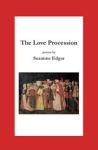
Suzanne Edgar, The love processionNow, Sara Dowse was a member of the famed Canberra Seven. Another writer in this group, and whom I’ve not mentioned to date in Six Degrees, is the poet Suzanne Edgar whose collection The love procession I reviewed some years back. It’s a gorgeous collection of poems about all sorts of love, romantic and otherwise. The title of this collection was inspired by a Renaissance painting, “Love procession” (attributed to Marco del Buono and Giovanni di Apollonio, from the 1440s.)

FL Smalls 7: Carmel Bird's Fair Game

Another book whose title was inspired by a work of art (and whose cover also features that work of art) is Carmel Bird’s Fair game (my review). Her art work is an 1832 lithograph by Alfred Ducôte. Its full title is “E-migration, or a flight of fair game”. This is a small, witty, but serious book about the 200 young women who were sent from England to Van Diemen’s Land in 1832 on the Princess Royal with the purpose of becoming wives and servants in a society where men significantly outnumbered women

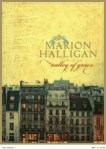
Marion Halligan Valley of graceMy final link could be inspired by that history, focusing perhaps on women and misogyny, but instead I’m going back to the image. Bird writes in her book that the image had fascinated her ever since it was sent to her as a postcard by Lucy Halligan – who happens to be Marion Halligan’s daughter. This, together with the fact that she’s another member of the Canberra Seven, and is also a friend of Carmel Bird’s, makes Halligan the perfect choice for my final link. The book is Marion Halligan’s Valley of Grace (my review). I can’t think of a better book to end a chain that started with tragedy than this one about love and children set in that beautiful city, Paris.

Somehow, I’ve included only women writers this month – and all Australian ones at that – but I stand unrepentant! We spent most of our time in Australia, with a couple of forays to the USA, until, finally, in the last book we made it to Europe. There has, though, been variety in the writing, with the books covering both fiction and non-fiction, novels and short stories, and even poetry!!

Now, over to you: Have you read The arsonist? And, regardless, what would you link to? 

Six degrees of separation, FROM Fight Club TO …

Kate has chosen a doozy for this month’s Six Degrees of Separation meme (about which you can find more if you click on her blog name: booksaremyfavouriteandbest). Meanwhile, assuming you have done that or that you already understand the meme, I’m getting on with the show.

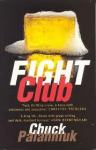
Chuck Palahniuk, Fight ClubLike last month, we are starting with a book that I haven’t read but have seen. I’m glad I saw it but I don’t necessarily want to read it or more of the author’s books. The book is, as you’ll have seen from the post’s title, Chuck Palahniuk’s Fight Club. It’s an example of transgressive fiction of which I’ve read a little, but that’s not where I’m going with my first link. (Neither, you’ll be surprised to know, will I be linking this month to she who needs no introduction!)

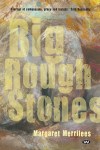
Margaret Merrilees, Big rough stonesThere were so many ways I thought of linking from Fight Club, including a sneaky one to my Jane, in fact. (If you must know it was on the idea of cult fiction!) But, in the end, I decided to go with the idea of rules. Anyone who knows Fight Club knows that the club had rules. Well, rules also came up in a recent book I read, Margaret Merrilees’ Big rough stones (my review), when the collective of women running a women’s shelter discuss how to respond to a misdemeanour by Ro, the protagonist.

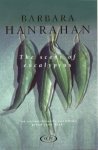
Barbara Hanrahan, The scent of eucalyptusNow, Big rough stones is a women-centric novel set primarily in Adelaide. Another women-centric novel set in that city is Barbara Hanrahan’s The scent of eucalyptus (my review). Her women, though, form a very different sort of “collective” – they are her mother, grandmother and aunt – and her (autobiographical) novel is about her growing up, rather than about her adult life.

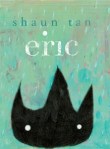
Shaun Tan, Eric coverHowever, Hanrahan did, in fact, have a very interesting adult life because she was an artist (printmaker, in particular) as well as a novelist. She died too young, of cancer, at the age of 52. Another artist who also writes is Shaun Tan. Unfortunately, I have not written much by him here, but I have posted on Eric (my review), which is a little book that was excerpted from his well-reviewed, beautifully illustrated story collection, Tales from outer suburbia.

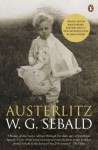
WG Sebald, AusterlitzEric is about a “strange” (as you can tell from the book cover) foreign exchange student who comes to stay with a family in suburbia. The story is about feeling and being “other”. It’s delightfully whimsical – with a point. Another book about feeling “other” – but one that is intense rather than whimsical – is WG Sebald’s Austerlitz (my review). I love seeing how the same, fundamental “universal truth” can be explored in so many different ways.

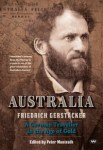
Friedrich Gerstacker, AustraliaSebald was a German writer, but unfortunately I haven’t read many German writers here although I do have a few on my physical TBR piles. I have, though, read Friedrich Gerstäcker’s Australia: A German traveller in the Age of Gold (my review). That was an eye-opening read about a German traveller-explorer in mid-nineteenth century Australia – eye-opening for its content, but also for reminding me of how many stories there are out there, waiting to tell us about other lives and times, stories that need publishers like Wakefield Press, in this instance, to bring them to new generations.

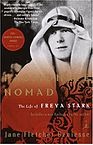
Jane Fletcher Geniesse, Passionate nomad, book coverAnother eye-opening story about another place and time – and that I also read in 2017, when I read Gerstäcker – is Jane Fletcher Geniesse’s biography, Passionate nomad: The life of Freya Stark (my review). What a woman Stark was – living and traveling as she did in the Arabic states from the late 1920s to the mid 1940s, in particular, and being, in fact, one of the first non-Arabians to travel through the southern Arabian deserts.

We’ve travelled quite a bit this month, starting in America, then visiting Australia (including Outer Suburbia) and Europe, before finishing in the Middle East. We’ve met some intrepid people – real and fictional – and have heard from three male and three female writers (excluding the starting book).

Now, over to you: Have you read Fight Club? And, regardless, what would you link to?