Six degrees of separation, FROM Wolfe Island TO …

It’s March, so soon? Oh well, at least we have another Six Degrees of Separation to look forward to. As always, for those of you who don’t know this meme and how it works, please check out meme host Kate’s blog – booksaremyfavouriteandbest.

Once again, but I’m used to this now, I haven’t read Kate’s starting book, Wolfe Island by Lucy Treloar. I am, I must say, more embarrassed about this than usual, because Treloar is an Australian woman writer and I do like to support them!

But now, crunch-time. Because life has been busy lately, I am going to be lazy. Not only am I going to make this post short and sweet, but all my links will be on words in the title or author’s name, with a little bit of poetic licence taken along the way.

Book coverSo, we start with Lucy Treloar’s Wolfe Island

and immediately time-shift back to Tudor England and Hilary Mantel’s Wolf Hall (my review).

From here, we return to our times and Rodney Hall’s A stolen season (my review).

Now, I just can’t let “stolen” pass without referencing Carmel Bird’s (ed) The stolen children: Their stories (my review).

Children takes me to Helen Garner’s The children’s Bach (my review) …

at which point I beg your forgiveness, because we are going to Rebekah Clarkson’s Barking dogs (my review).

Dogs! Now there’s an embarrassment of riches. Since blogging, I’ve read several books with “dog” in their title, so which to choose? I thought, in the interest of gender diversity, that I should choose one by a male writer, but in fact most of them have been written by men, so, I’m just going to spin the dice and land on … Andrew O’Hagan’s The life and opinions of Maf the dog and of his friend Marilyn Monroe (my review). I mean how can you resist a title like that!

So, short and sweet as promised. What more can I say, except …

And now, the usual: Have you read Wolfe Island? And, regardless, what would you link to? 

POSTSCRIPT: This went out with last month’s title – that’s what you get for being lazy and copying old posts!

Ros Collins, Rosa: Memories with licence (Author’s response)

Book cover

Last October, I reviewed a book by Ros Collins titled Rosa: Memories with licence. As the title suggests, this book is not quite memoir, but neither is it really fiction. My post generated quite some discussion from commenters, which resulted in my saying “Maybe Ros will comment here and answer the questions”. Unfortunately, just as her book was launched, Ros had a sudden hip fracture, resulting in hospitalisation. Now, getting back to normal, she has contacted me saying she’d love to respond to the comments, but that it was long. I suggested making it a separate post. I do hope those commenters see it, and read what she has to say.

First, though, for those interested, she writes that she is well into “a new book based on [her late husband] Alan’s 19th century ancestors. It will be creative non-fiction.” Love it! And now …

Author with her bookFrom Ros Collins …

Some background

My first book, Solly’s girl (2015) was as factually accurate as I was able to research. It was intended to complement my husband Alan’s memoir Alva’s boy (2008). Even before that, he had used his terrible childhood experiences in autobiographical fiction, namely The boys from Bondi which is now part 1 of his trilogy, A promised land? (2001). The eminent critic Fay Zwicky called that ‘a psalm to life’.  It seemed an essential task for me to complete the history of our two families.

Rosa developed out of a number of short stories which undoubtedly accounts for the third person-first person dichotomy. My publisher Louis de Vries and editor Anna Blay at Hybrid, dealt with the anomalies with enormous patience. Three chapters, “Jellied eels”, “Sheyn Meydl” and “Rimonim” were part of my work for an online course in short story writing that I undertook in 2017. By the time I’d read William Trevor, Raymond Carver, Hemingway and many other masters of the genre, I knew it was not for me.

However, ‘Creative non-fiction’ had great appeal. “Ultimately, the primary goal of the creative nonfiction writer is to communicate information, just like a reporter, but to shape it in a way that reads like fiction.” (Gutkind, Lee. The best creative nonfiction, Vol. 1). I embarked on Rosa with enthusiasm and a great desire to entertain. Like Alan, I also believe in the  power of humour and only wish I had greater skills.

Response to the comments

 ‘… worn out with fictionalised Australian Jewish memoirs…’  was one I could easily relate to. I was director of Makor Jewish Community Library (now the Lamm Jewish Library of Australia). One of my proudest achievements was to establish the ‘Write your Story’ program whereby I hoped the community ‘would be able to write its own history’. To date more than 150 memoirs have been published. I believe the comprise the largest such series in the world. Inevitably, as Melbourne has so many Holocaust survivor families, the tragedy of the Shoah features prominently. It is however a multicultural series: memoirs have been written about Jewish life in Egypt, Argentina, England – and Australia.

So as far as Australian Jewish literature is concerned, it seems to be overwhelmingly preoccupied with Holocaust memoir or peeks into the exotic world of heavy duty orthodoxy. Sephardi or Spanish-Jewish history has also afforded subjects for writers: People of the book comes to mind.  But Anglo-Australian-Jewish writing is very limited. One of your commentators mentioned Judah Waten. He mentored Alan and urged him to write his first book of short stories, Troubles (1983), which was highly commended in the Alan Marshall awards.  Waten, Morris Lurie, Serge Liberman, et al, born here or not, all write out of the European tradition; the migrant/survivor experience is very much to the fore. Alan’s ancestors arrived either on a convict transport or later as free settlers in the 1800s and Rosa (me of course) is British, a ‘ten-pound Pom’ who in the 1950s wore white gloves to visit the ‘city’. Anglos. And this difference makes for confusion. It’s unlikely that your readers are familiar with communal conflicts but I’ll just open the subject by pointing out that the Jewish Anglo community in Australia was ‘more British than the British’. For many of them the mother country was still considered ‘home’, and ‘the Empire’ really mattered! The ‘reffos’ – the migrants – were often disparaged, even despised. To get a picture, don’t bother with the history books, read Alan, much more digestible and he makes the reader laugh as well as cry.

Your readers mention the Americans and British including towering figures such as Roth and Jacobson, both of whom are favourites of mine. They would doubtless be puzzled by the fact that many local Jews couldn’t warm to Jacobson’s The Finkler question [see my review] which I greatly admire. I imagine it’s the British connection. I understand how difficult it is for the mythical ‘general reader’ to come to grips with Jewish lit in all its complex variety. It helps to remember the profoundly different histories. Australian, American and British Jews are far from being all of a piece. Howard Jacobson for example has been exasperated by critics who have called him ‘the British Phillip Roth’; he retorts that Jane Austen is a far greater influence. Australian reviewers have found shades of Dickens in Alan’s work.

I’d like to  mention some helpful titles which have impressed me, authors who have made me think about identity and heritage, my place ‘down here at the bottom of the world’ as I said in 1957.

On being Jewish by Rabbi Julia Neuberger is straightforward, accessible and sensible. Baroness Neuberger, a member of the House of Lords, is a Reform rabbi (the first woman to head her own congregation in Britain), a tireless worker for social justice and progressive values. She’s younger than me but we share some knowledge of Anglo-Jewish life in the 1950s. Her ancestry is German-Jewish; her ‘British-ness’ is rather like my own.

Jews and words by the eminent Israeli writer Amos Oz and his daughter, historian Fania Oz-Salzberger, is a wonderful ‘blend of storytelling and scholarship, conversation and argument’; it also includes some great jokes.  What I like so much about this book is the way the authors introduce themselves:  At this early stage we need to say loud and clear what kind of Jews we are.  Both of us are secular Jewish Israelis. And then this, As Jewish atheists, we take religion to be a great human invention. ‘Jewish atheists’ must be very confusing for some  readers!  

Closer to home is Australian genesis: Jewish convicts and settlers 1788-1850 (1974) by J. S.  Levi and G. Bergman. It is eminently readable and beautifully illustrated. It should never have been allowed to go out of print but most libraries will have a copy. Rabbi John Levi is of ‘Anglo’ heritage and is a most sensitive and compassionate scholar. His reference book, These are the names: Jewish lives in Australia 1788-1850 (2013) is an invaluable guide to the lives of the more than 1600 Jews who came to Australia in that early period. It has been fascinating for me to read the transcript of the trial at the Old Bailey of ‘our’ 17-year old convict. He became a respectable citizen in Goulburn and the local ‘Hebrew congregation’ would meet in his store for ‘champagne suppers’ to celebrate Royal Family events back in the mother country.

An essential guide to Australian-Jewish literature is Serge Liberman’s monumental Bibliography of Australian Judaica (2011).

Did I have a ‘plan’?  Was it all ‘true’?  Did I want to protect others?  No, yes and no. I wrote Rosa because I wanted to. Isn’t that how most writers operate? The events I’ve dramatized are true but obviously I am unable to replicate conversations that took place in the past. ‘Licence’ was a word suggested to me by my kind mentor Karenlee Thompson who has written so movingly about bush fires in Flame Tip [see my review].  For example, I know my maternal grandfather went AWOL from the army of Czar Alexander and I’m guessing he was forcibly conscripted like so many other little Jewish boys at the age of 12 and couldn’t contemplate another 25 years of army life. I know he received letters from his sister in Kiev until in 1941 they suddenly ceased, and I’m assuming my great-aunt perished with 34,000 others in the massacre at the ravine of Babi Yar. And, as I write in the book, I have no wish ever to set foot in Eastern Europe. Israel is another very different matter.

Sue, you conclude your review with a most perceptive paragraph:  Rosa, then, is a warm-hearted, open-minded “memoir” written by an Anglo-Australian Jewish woman for whom being Jewish, as for many I believe, is as much, if not more, about history and heritage as god and religion. In this book, Collins interrogates her family’s past, and her late husband’s story, in order to come to a better understanding of herself, and of what she would like to pass on to the next generation. This book is testament to that soul-searching, and makes good reading for anyone interested in the life-long business of forming identity, Jewish or otherwise.

I never set out to be an apologist for my heritage and it has been a surprise to learn that so many readers have found Rosa ‘enlightening’, an opportunity to see the variety in my community. The misconceptions are often funny but also appalling at a time when intolerance and racism are on the rise in this ‘lucky country’.  So I shall end here with two stories about electricians:

My electrician who is an intelligent much-travelled man asked me: Won’t you get into trouble with your rabbi for not wearing a wig? He was amazed that I laughed and even more surprised to learn that rabbis really have little authority – they’re teachers – and although I seldom attend a service I cannot be disenfranchised.

My son’s electrician had a much more sinister question. Pointing to the mezuzah on the doorpost of my son’s house he asked:  It’s full of blood, isn’t it?  My son, completely secular, Vietnam vet, non-kosher, a painter – and a proud Jew – replied:  Of  course it isn’t, there’s little piece of paper inside with a prayer and blessing written on it; I’ll take it down and show you. But the electrician was horrified:  Ooh no, don’t do that, we’d better not touch.

And that, Sue, is how it all starts with rubbish like that, words that lead to swastika flags in Beulah and book burning …

If in Rosa I can open some windows I think it’s a good thing.

And so do I. Thanks very much Ros for appearing out of the blue with this warm, open and informative response to the comments on my post. I look forward to seeing your next book!

Six degrees of separation, FROM Fleishman is in trouble TO …

Here we are at our second Six Degrees of Separation meme of 2020. For those of you who don’t know what this meme is and how it works, please check out meme host Kate’s blog – booksaremyfavouriteandbest.

Once again, but I’m used to this now, I haven’t read Kate’s starting book, Fleishman is in trouble by Taffy Brodesser-Akner. However, I devised a lovely – well, I think it was – chain for it. Then, as the fires and smoke in my area just got worse and worse this week, I decided to go off script and riff off the title to create my own theme for this post, Australia is in trouble! I’m not going to link my books, but just share six that I’ve read which address, in some way, climate change.

In his 1946 essay, “Why I write”, George Orwell lists four main purposes for writing, the fourth being:

Political purpose: Using the word ‘political’ in the widest possible sense. Desire to push the world in a certain direction, to alter other peoples’ idea of the kind of society that they should strive after. Once again, no book is genuinely free from political bias. The opinion that art should have nothing to do with politics is itself a political attitude.

The other purposes, if you want to know, are “sheer egoism”, “aesthetic enthusiasm”, and “historical impulse”. Orwell goes on to say that “in a peaceful age I might have written ornate or merely descriptive books, and might have remained almost unaware of my political loyalties. As it is I have been forced into becoming a sort of pamphleteer.” Of course his times were different, so his issue – totalitarianism – is different to the ones confronting us now (though, then again, perhaps not!) Anyhow, my point is that in this post I’m going to share six works by writers who also write with a political purpose.

Melissa Lucashenko’s “How green is my valley” (2006) (my review): an essay in Griffith Review’s climate-change-focused issue (12), Hot air: How nigh’s the end. Indigenous writer, Lucashenko addresses climate change, recognising that many non-Indigenous Australians also love the land. She suggests that a “bicultural” approach, which spans the chasm “between industrial and indigenous views of the ‘good life’ and what constitutes a proper society”, would be a good place to start.

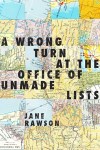
Jane Rawson’s A wrong turn at the Office of Unmade Lists (2013) (my review): set in a bleak climate-damaged Melbourne of 2030, where it’s very hot, and clean water is harder to come by and more expensive than beer. Its main protagonist, Caddy, is living rough, having lost her husband and home in a heatwave-induced fire a couple of years before the novel opens.

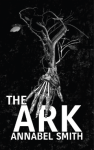
Annabel Smith’s The ark (2014) (my review): set in the 2040s, during, as Smith describes it, “a post-peak oil crisis. The polar ice caps have melted. Crops are failing. People are starving and freezing to death.” Interestingly, given my George Orwell intro, a major theme of this novel is how, in such a world, charismatic-despotic leaders can come to the fore.

Alice Robinson’s Anchor point (2015) (my review): a family drama, but one framed by farming and the land. Climate change hangs over this novel, with its depiction of father Bruce and daughter Laura struggling against drought, bushfires and land degradation to keep their farm going. By 2018 (a little into the future at the time the novel was written), Laura has given up the struggle, because “the climate had long stopped being something she understood”.

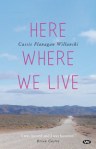
Cassie Flanagan Willanski’s Here where we live (2016) (my review): a collection of short stories about the relationships between non-Indigenous and Indigenous Australians, and the relationship both have with the land. Although not specifically a cli-fi book, concern about land, the environment, and climate change suffuses the stories. In the last story, a terrible storm occurs, and a character says:

‘It’s climate change, of course,’ you say knowingly. ‘They say that these one-hundred year storms are occurring so frequently now that the name no longer bears any meaning. But we need to keep the name so that we can understand that this kind of storm is so severe it should only occur once every hundred years. We need the name so we understand that something has gone wrong.’

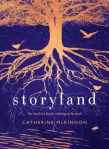
Catherine McKinnon’s Storyland (2017) (my review): set in the Illawarra region south of Sydney, and tells the story of the Australian continent, post-white settlement, from 1796 to 2717. One of its five time-periods is 2033 in which climate-change has caused utter devastation to the land and a dystopia is playing out.

So, a different Six Degrees post, and one not necessarily featuring all the most obvious Australian climate-related books. Although all mine are by women, men have written some too. It’s just that I haven’t read them. The main point is that writers are addressing this issue, doing their best “to push” all to see that Australia is in trouble. The question is whether the people who need to read them are in fact reading them?

And now, the usual: Have you read Fleishman is in trouble? And, regardless, what would you link to? 

Sharlene Teo, Ponti (Guest post by Rosalind Moran) (#BookReview)

Last year as in the two previous years of the ACT Litbloggers/New Territory program, I offered the participants the opportunity to write a guest post for my blog. As a result Emma Gibson wrote a post on Randolph Stow’s Tourmaline, while Amy Walters suggested we do a 2018 Year in Review posts on each other’s blogs. This year, Rosalind Moran (check out her website) offered a book review on Singaporean author, Sharlene Teo, which of course I accepted as I’m happy to increase the diversity of authors covered on my blog.

Here is Rosalind’s post …

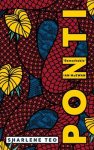
Book coverI haven’t read many books by Singaporean authors. Nevertheless, I am always keen to read more writing from beyond the traditional confines of the Anglosphere. So when I stumbled across Ponti in a bookstore after payday, I thought: why not?
Ponti was already vaguely on my radar. The debut novel had its London-based Singaporean author win the 2016 Deborah Rogers Writers’ Award before even being published (the award serves to support authors as they finish their first book). Since being released, it has been shortlisted for multiple prizes. Even Ian McEwan called the book “remarkable”. Naturally, my interest was piqued.

Ponti explores the lives of three interconnected women. There’s the cold and beautiful Amisa, who evokes the archetype of an enchantress; her pinched and unhappy daughter, Szu, who struggles to connect with others, least of all her mother; and Szu’s schoolmate, the privileged and acerbic Circe. As Amisa wallows in bitterness and begins to waste away, Szu and Circe develop a claustrophobic friendship – one that leaves Circe reckoning with her memories of it long after it has ended.

The novels switches between the perspectives of the three characters as well as between different points in time in their shared and separate histories. One quickly realises this book is focused not so much on detailing elaborate plotlines, but rather on deepening its characters. That said, it remains an engaging read throughout, simply owing to the compelling nature of the three women telling the story. What’s really behind each of their unique states of unhappiness, and how do their futures unfurl?

As the story unfolds, Amisa’s history emerges as the strongest plotline, perhaps because her experiences sow the environment in which Szu and Circe’s own troubles flourish. Indeed, she is the novel’s pivotal character, with her flaws, frustrations and traumas colouring all those with whom she comes into contact – and she is intriguing from the start. An unearthly beauty, she is introduced to the reader as a reclusive former actress, one of waning fame, whose defining moment was that of playing the lead in a trilogy of cult horror movies: Ponti 1, 2 and 3. Her role as the Pontianak, a predatory monster disguised as a beautiful woman, also comes to mirror her ongoing experience of moving through the world. Amisa is simultaneously desired and despised, even by her own family, and is ultimately a restless figure. She also effectively comes to haunt Szu and Circe.

I enjoyed many aspects of Ponti. Teo’s writing is strong and evocative, with characters frequently seeing their surrounds through a tinge of disgust and criticism; while these emotions do not in themselves make the writing strong, they do render it visceral and memorable. It was a pleasure to read a book where the characters’ homes, from the Malaysian village where Amisa grows up to the cosmopolitan Singapore, were drawn so distinctly. Through these strong descriptions, the book also manages to voice a subtle critique of how quickly and irreversibly the south-east Asian metropolis has changed over a few short decades, bringing both pressures and opportunities. In this sense, Pontiis a treat.

Characterisation is also a highlight of the novel – indeed, one could argue the novel is essentially one large exercise in characterisation. Teo’s focus on her characters’ interiorities makes them lifelike and compelling. Their interpersonal relationships, which often blur the boundaries between love, hate, and co-dependency, are also striking, with Szu and Circe’s friendship in particular standing out. Teo is masterful in her depiction of teen angst and complex female friendships, to the degree that her writing brings to mind a grungier Elena Ferrante. I also greatly enjoyed the book’s exploration of Indonesian and Malay mythology through the figure of the Pontianak, and the way this is used as a springboard into an exploration of broader ideas around perceptions of women and how they relate to men.

In the end, the novel’s only real shortcoming was – regrettably – the plot. For most of the book, this didn’t matter: the writing and characters are deeply engaging and I enjoyed simply following the story as it unfolded. Towards the end, however, it became clear the book was not going to resolve several of the questions that had helped build tension and momentum throughout its pages, or at least not do so adequately. In this sense, Ponti feels somewhat like a missed opportunity – because while ambiguity and character-driven plot can be done well, in this case, the story ended up feeling rushed in its final pages and retrospectively underdeveloped as a whole. It’s a shame, considering the book’s characters, setting, and writing are all so strong.

Nevertheless, Ponti remains an intriguing and thought-provoking read, and one that will rightly earn Sharlene Teo many avid fans; while her debut novel may not be perfect, it’s still well worth reading and suggests a great deal of promise. I’ll certainly be keeping an eye out for whatever she writes next.

Sharlene Teo
Ponti
London: Simon & Schuster, 2019
304pp.
ISBN-13: 978-1501173127

Thanks to Rosalind for an engaging and interesting review. Novel endings are a challenge, we know. Just ask EM Forster who wrote about it in Aspects of the novel. How many authors have changed the endings – even Jane Austen did for Persuasion – and how many readers question endings? Rosalind and I would love your thoughts on her review and/or on endings in general.

Six degrees of separation, FROM Daisy Jones and the Six TO …

I do love the sound of 2020. It has a lovely ring to it. It’s also the year that Father Gums will turn 100. However, that will be May. Right now, it’s time to kick off the first Six Degrees of Separation meme of the year. This meme for those of you who don’t know it is explained in detail on our meme host Kate’s blog – booksaremyfavouriteandbest.

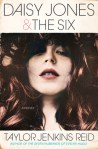
Book coverI’m starting this year the same as I did last year, that is, with Kate choosing a book I haven’t read. Indeed I haven’t even heard of Taylor Jenkin’s Reid book, Daisy Jones and the Six, which is a novel about the rise and fall of a fictional 1970s rock band.

For my first link, I’m sticking with the theme of rock music, and choosing Nigel Featherstone’s novella, The beach volcano (my review). However, Featherstone’s novel, while featuring a successful rock musician – Canning aka Mick Dark – is not so much about Canning’s musical career as his return home after a long absence for his father’s 80th birthday, intent on getting answers to some longstanding family secrets and, thus, resolve underlying conflicts.
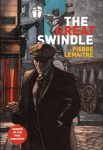
Pierre Lemaitre, The great swindleFeatherstone’s Canning returns home because he wants to improve his relationship with his family, and father. Not so for Édouard Péricourt in Pierre Lemaître’s The great swindle (my review). Severely wounded in World War 1, and the son of a dominating father, he flat refuses to return home to resolve those unresolved conflicts!

Julian Davies, Crow mellow Book coverAnd here, sticking, unusually for me, with content, I’m going to link on something a bit tenuous. Édouard Péricourt was so disfigured in the war that he wears increasingly bizarre but often beautiful masks rather than let people see his face. Masks feature in Julian Davies’ novel Crow mellow (my review), but via a masked ball that takes place in a country house/bush retreat where artists are staying with their patrons and admirers.

Charlotte Wood, The natural way of thingsCrow mellow belongs, then, to a sub-genre known as country house novels. While you couldn’t call my next link a country house, exactly, but the characters in Charlotte Wood’s The natural way of things (my review) are all stuck together in a sort of labour camp in the country somewhere. No masked-ball fun there!

Emily BItto, The strays, book coverThe natural way of things won the Stella Prize in 2016. The 2015 winner was a sort of country house novel too, Emily Bitto’s The strays (my review) which is about an artist’s colony in Victoria, inspired by the Reeds and their Heide group. Yes, I know I’m stretching the country house friendship a bit, but why not?
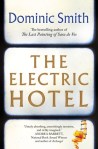
Book coverSo, where to from here? How about another book which was inspired by artists, albeit of a different type? Dominic Smith’s The electric hotel (my review) was inspired by the silent film pioneers of the early twentieth century. Its protagonist, Claude Ballard, is fictional, like Bitto’s Trenthams, but it does directly reference real artists as well, such as the Lumière Brothers and Thomas Edison.
So, a different sort of chain for me because all the main links are content-related (with an additional link between Wood and Bitto on the Stella Prize.) Interestingly, I’ve realised that most of the books deal with artists of some sort – painters, musicians, filmmakers, and mask-makers. Four of my six authors are male, which is not common for me, and all of my linked authors, except Pierre Lemaître, are Australian (albeit Smith now lives in the USA). Oh, and all are set post 1900.

And now, my usual questions: Have you read Daisy Jones and the Six? And, regardless, what would you link to? 

Blogging highlights for 2019

Here is the last of my traditional year-end trifecta (the others being my Australian Women Writers’ Challenge wrap-up and Reading highlights posts). This is very self-indulgent, I know, but it interests me!

Top posts for 2019

There hasn’t been a huge change in my top posts – several posts have remained in the list for several years now, and seven of the ten were published over 5 years ago. However, this year has seen a bit of shift, as you’ll see in my comments below.

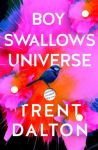
Trent Dalton, Boy swallows universeHere’s my 2019 Top Ten, by number of hits:
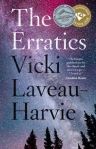
So, the shift. Mainly it’s that I have a new record with six Australian posts appearing in the Top Ten, four more than last year, and two more than the previous record of four. Barbara Baynton is an established regular, though which work/s change from year to year. Last year it was “Squeaker’s mate” while this year “The chosen vessel” returns to the Top Ten. Meanwhile, Red Dog, is here yet again, proving itself to be true blue! However, the BIG news is that for the first time an Australian book has actually topped the Top Ten, Trent Dalton’s Boy swallows universe. This is the same book that was my reading group’s top pick of the year.

Fascinatingly, Mark Twain’s “A presidential candidate”, which popped into the Top Ten last year, has remained there this year. As I said last year, does this have anything to do with you know who? Short stories and essays still feature strongly, but there are just four this year, versus seven last.

Four Australian posts appear in the next ten, and they are an eclectic lot. Two are for works, Barbara Baynton’s “Squeaker’s mate” and Vicki-Laveau-Harvie’s The erratics, and two are author-based posts, Vale Andrew McGahn (1966-2019) and Helen Garner on writers and writing.

Book coverI also like to note how well the posts actually written in the year ranked. Last year the first one came in at 23. This year, the winner, my Boy swallows universe post, romped in at number 1, with more than double the hits of the second ranked post. My next most popular 2019-written posts ranked 15th (Vale Andrew McGahan (1966-2019)) and 18th (Vicki Laveau-Harvie, The erratics). So, three from 2019 in the top 20. Unheard of!

For the Monday Musings fans amongst you, my most popular Monday Musings posts were:

Australian Gothic and Novels set in Sydney were second and first, respectively last year, with 2018’s new release post being third! Not a big change in substance, then. This suggests that our blogs are long-term resources, as well as places for current discussion.

Random blogging stats

The searches

Here’s a selection of 2019’s searches that found my blog:

  • many searches, not surprisingly, related to this year’s top post: the searches included (in order of frequency) boy swallows universe discussion questions, your end is a dead blue wrenboy swallows universe quotes, and boy swallows universe meaning. There were also various permutations of wording searching the meaning of red phone in the book! It’s interesting to see what people might be looking for besides straight reviews.
  • last year I noted that the word “summary” was popular in searches, more so than the previous year’s popular word “analysis“. This year, however, they were more neck and neck.
  • there are people out there clearly looking to prove Dark emu wrong, as some of the more popular searches had wording like dark emu debunked, critics of dark emu and, would you believe, critical reviews of black emu book. This last one suggests that people didn’t know exactly what they are searching for but had been told the work is no good. I don’t think my post would have satisfied them. Anyhow, I’m guessing it’s all these people who helped push this post into the Top Ten this year.
  • although my post on What to say when you order food at a restaurant is still among my Top Posts, there were fewer actual searches recorded for this one. A couple, however, are entertaining. One is: what to do if food is not the way you ordered. I’m not sure my post would have helped that person either. And another: why to say hi at restaurant. Why indeed!
  • I think I can guess what Australian poetry fraud was looking for, the Ern Malley affair.
  • and then, there are always the homework questions like: do you think that john muir made an effective argument for saving the redwoods? why or why not?

I should add the proviso here that many many search terms are not exposed to us bloggers, so the terms I’m sharing above are a small subset.

Other stats

I wrote four fewer posts in 2019 than in 2018, averaging just under 14 posts per month – and yet the traffic on my blog increased by more than 20% over last year. (Then again, last year’s traffic was somewhat lower than the previous year. It’s all a mystery to me!)

Merlinda Bobis Fish-hair womanAustralia, the USA, and Britain, in that order, were the top three countries visiting my blog, as in 2018. In 2017, India was fourth and Canada fifth, while in 2018, the order was reversed. This year, India regained its upper hand over Canada! The Philippines remains 6th for at least the third year, largely, I think, because of interest in Merlinda Bobis’ Fish-hair woman.
I’d like to thank all of you who commented on my blog this year. My comments count increased by around 7% in 2019, which is satisfying because the respectful conversations we have here are very special to me. I particularly want to thank Lisa (ANZLitLovers) and Bill (The Australian Legend) who tolerate, both on my blog and theirs, much contrariness from me. Their tolerance and forbearance (not to mention that of the rest of you who come back here again and again) is a true measure of how positive and respectful social media can be.

Challenges, memes and other things

I only do one challenge, the AWW Challenge, which I wrapped up this week. And I only do one regular Meme, #sixdegreesofseparation run by Kate (booksaremyfavouriteandbest), but I occasionally do others. You can see all the memes I’ve done on my “memes” category link.

I also took part in Lisa’s (ANZLitLovers) Indigenous Literature Week, Bill’s (The Australian Legend) AWW Gen 1 Week, and, more casually, in Nonfiction November run by a group of bloggers, because these all relate closely to my reading interests.

Each year I like to host some guest posts with this year’s coming from Amanda who mostly reviewed titles that were missing from the AWW challenge database, and my brother Ian, who wrote two posts on his attendance at the Hobart Writers’ Festival. To read them, click this link and look at those posted in 2019. A big thanks to Amanda and Ian for their contributions.

A major highlight of the year, though, was my continued involvement as blogging mentor for the New Territory  program sponsored by the ACT Writers Centre, the National Library of Australia, the Canberra Writers Festival and the Street Theatre. The program’s aim is primarily “to stoke cultural conversations in the ACT”. I enjoyed working with Shelley Burr and Rosalind Moran over the second half of the year.

And so, 2020 …

To conclude, a big thanks again to everyone who read, commented on and/or “liked” my blog last year – and to all the other wonderful bloggers out there, even though I don’t always manage to visit everyone as much as I’d like. I wish you all good reading in 2020, and look forward to discussing books with you here or there!

Finally, as I say every year, a very big thanks to the authors who write the books, and to the publishers and booksellers who get the books out there. I hope 2020 will be positive for us all.

Reading highlights for 2019

Regular readers will know that my Reading Highlights post is my answer to other bloggers’ Top Reads posts. It does not contain a ranked list of the books I considered my “best” of the year, because I prefer to talk about “highlights”, which I define as those books and events that made my reading year worthwhile.

I don’t set reading goals, but I do have certain “rules of thumb”, such as trying to reduce the TBR pile, increase my reading of indigenous authors, and read some non-anglo literature. How do you think I went?

Literary highlights

Literary highlights really means literary events, and there were some inspiring ones this year:

  • Festival Muse: for the third year running, Muse (cafe/bookshop/event venue beloved by Canberra’s booklovers) held, in March, their Festival. It’s a busy time of year and a long weekend, but I had booked to attend the opening, as I always do, and one other event. Unfortunately, a family member’s hospitalisation meant we had to miss the opening, but I did get to Alice Pung in conversation.
  • Sydney Writers Festival has been live streaming selected sessions to regional locations – like Canberra – for a few years now. I attended three in 2019: Boys to Men: The masculinity crisis; Andrew Sean Greer in conversation about Less; and “I do not want to see this in print”.
  • Canberra Writers Festival about which I wrote 7 posts: to find them click this link and select the 2019 festival posts.
  • Simpson and White

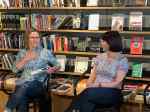
    Simpson (L) and White (R), Muse, 2 Nov 2019

    Author interviews/conversations: I only got to a few of the many, many offered: Jane Caro, Frank Bongiorno, Stan Grant, Jessica White and Helen Garner.

  • Book launches: Two of the book launches I attended this year were particularly special because it was perfectly obvious that the authors involved were surrounded by a large, warm and enthusiastic group of people who cared deeply about them and their work: Nigel Featherstone’s Bodies of men (my review) and Madelaine Dickie’s Red can origami (on my TBR).
  • The Constructive Critic panel: this was the year I relented and finally said yes to a request to take part in a festival panel. It was part of the Design Canberra Festival, and I did manage to write it up, here.

Reading highlights

As in previous years, I’m sharing some random observations about the year’s reading, without ranking them in any way. Just know that I’d be happy to recommend all those I mention here:

  • The locals: Canberra is said to punch above its weight in terms of, per capita, the number of authors we have here. I don’t know whether this is statistically substantiated, but we are certainly well endowed! This year I read the latest novels by two of our well-published authors, Nigel Featherstone and Karen Viggers. (I also met Kaaron Warren, who is a multi-award winning author in genres I don’t read, speculative fiction and horror.)
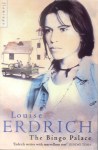
  • The “dreaded” TBR: I didn’t make impressive inroads into the TBR, but I did reduce it by four, including two highlights, Louise Erdrich’s above-named book, and Marilynne Robinson’s Gilead. Can I improve next year?
  • Memoirs with a difference: There is a tried-and-true formula for memoirs in which the writer relates a trauma and how they’ve risen above it, or, if they’re celebrities and sportspeople, write tell-alls about their successes and failures. These memoirs have value, but are not my chosen fare. I prefer those that do something a bit different, like, say, Jessica White’s hybrid biography-memoir, Hearing Maud, and Ros Collins’ Rosa: Memories with licence in which she teases us about whether the book is indeed memoir or fiction. Or, like those which share experiences in order to educate readers. These can be off-putting if not handled well. Fortunately, Neil H Atkinson in The last wild west and David Brooks in The grass library managed to do just this, about racism and animal rights, respectively.
  • The book I wasn’t planning to read: Still on the subject of memoirs, I hadn’t planned to read Vicki Laveau-Harvie’s The erratics, feeling it was going to be a bit too much of the rise-above-a-trauma style, but when it won the Stella Prize, I decided to give it a go – and was rewarded for my effort.
  • Some interesting voices: This year didn’t produce any unusual narrators like fetuses or skeletons, but Sayaka Murata’s mystified yet open Convenience store woman is an engaging narrator who encourages us to think about people who don’t meet societal expectations. Trent Dalton and Tim Winton sustained powerful young male voices in Boy swallows universe and The shepherd’s hut, while Amor Towles’ A gentleman in Moscow was one of the most charming narrators I’ve read for some time.
  • Forgotten Australians: Bill’s (The Australian Legend) annual AWW Gen weeks provide the perfect opportunity for me to feed my love of past Aussie women writers. This year Louise Mack and Capel Boake had their turn.
  • Older Americans: This year also saw me read some older, excellent American novels – the already-mentioned Marilynne Robinson’s Gilead and Mary McCarthy’s The group.
  • Death, be not proud: Amanda O’Callaghan, in her debut short story collection This taste for silence, writes about death in more ways that you could think possible, and yet leave you wanting more.
  • Out of left field came Kim Scott’s nicely researched local history, Katherine’s tropical housing precinct 1946-1956.
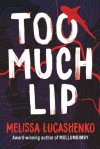
  • The book I’ve recommended the most: Melissa Lucashenko’s Too much lip is a perfect example of how to create engaging but flawed characters, and how to tackle deeply political issues with both humour and passion.
  • The one that got away: as always, there are the books that got away, which included, this year, Behrouz Boochani’s No friend but the mountains. It is still sitting in my TBR pile, accusingly.

These are just some of this year’s worthwhile reads.

Some stats …

I don’t read to achieve specific stats, but I like to keep an eye on what I’m doing to ensure some balance, all the while maintaining my particular interest in women and Australian writers:

  • 70% of my reading was fiction, short stories and novels (versus 80% in 2018): Around 75% is my rule of thumb, so I’m happy!
  • 64% were by women (making my average for the last five years, 2015-2019, 68%): As women writers are an important priority for me, without wanting to be exclusively so, this proportion seems reasonable.
  • 28% were NOT by Australian writers (versus 18% in 2018): Last year, I said I wanted to redress the balance to be something more like my previous one-third non-Australian, two-thirds Australian, and I got close.
  • 24% were published before 2000 (rather less than for the last two years which hovered around 30%): While this is ok, I’d really like to read more older books.
  • 34% were published in 2019 (similar to last year), which pleases me, because I don’t want all my reading to be current.

Overall, it was a good reading year in terms of what I read, but less so in terms of how much. Life got in the way moreso than usual! As always, I’m grateful for all of you who read my posts, engage in discussion, recommend more books and, generally, be all-round great people to talk with. Thank you for being here.

I wish you all an excellent 2020.

What were your reading or literary highlights for the year?

Monday musings on Australian literature: Australian Women Writers Challenge 2019

AWW Challenge 2019 BadgeFor some years now, I have devoted my last Monday Musings of the year to the Australian Women Writers Challenge* – and this year I am continuing that tradition! Sorry, if you hoped for something else. With the New Year – I love the sound of 2020 – just two days away, I wish all you wonderful Whispering Gums followers a wonderful year to come in whatever form you would like that to take.Thank you, too, for supporting my blog with your visits and comments.

Now, the challenge … it has continued to go very well. The full database now contains reviews for nearly 6,100 books across all forms and genres, from all periods, of Australian women’s writing. This means that the number of books reviewed on our database increased in 2019 by 900 books, or 17%, which is about the same increase as last year. In my area of Literary and Classics, we had roughly the same number of reviews posted as last year.

My personal round-up for the year

It was not, I have to say, my best Challenge year, as I posted only 25 reviews over the year, about 25% less than last year. I’m not sure how that happened, but c’est la vie. It was clearly a different sort of reading year. Anyhow, here they are, with links to my reviews:

Book coverFICTION

Book coverSHORT STORIES

ANTHOLOGIES

Book coverCHILDREN’S PICTURE BOOKS

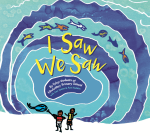
  • Nhulunbuy Primary School, with Ann James and Ann Haddon, I saw, we saw (picture book)

NON-FICTION

Book coverThis year, fiction (including short stories) represented around 57% of my AWW challenge reading, which is similar to last year. I read no poetry or verse novels again this year, and I read fewer Classics than last. However, I did read three classic short stories by Capel Boake for Bill’s (The Australian Legend) Gen 2 week as well as Louise Mack’s novel. On the plus side, I read more indigenous writing this year – two anthologies, a picture book, and Melissa Lucashenko’s Miles Franklin award-winning Too much lip (as well as some male authors who shall not be mentioned here!)

If you’d like to know more about the Challenge, check it out here. We are also on Facebook, Twitter (@auswomenwriters), and GoodReads. Do consider joining us. All readers are welcome.

Finally, a big thanks again to Theresa, Elizabeth and the rest of the team. I love being part of this challenge, not only because it equates with my reading goals but also because the people involved are such a pleasure to work with. See you in 2020.

And so, 2020

Challenge logoThe 2020 sign up form is ready, so this is also my Sign Up post for next year. As always, I’m nominating myself for the Franklin level, which is to read 10 books by Australian women and post reviews for at least 6 of those. I expect, of course, to exceed this.

Do you plan to sign up?

* This challenge was instigated by Elizabeth Lhuede in 2012 in response to concerns in Australian literary circles about the lack of recognition for women writers. I have been one of the challenge’s volunteers since 2013. Theresa Smith (of Theresa Smith writes) now oversees the day-to-day management of the blog, but Elizabeth is still an active presence.

Six degrees of separation, FROM Sanditon TO …

And so we come to the last Six Degrees of Separation meme of the year, and Kate has chosen a special book (for me anyhow) as our starting book. However, first, I need to tell you that if you are new to blogging, and don’t know what this meme is about, please check host Kate’s blog – booksaremyfavouriteandbest.

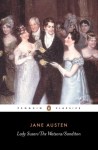
Jane Austen, Lady Susan, The Watsons, SanditonLast month’s starting book, Lewis Carroll’s Alice’s adventures in Wonderland, is of course a classic. This month’s would have been a classic I’m sure, if only the author had managed to finish it. The book is Sanditon (my review) and it was written – well, 11 chapters anyhow – by Jane Austen. Kate chose it, as you probably know, because Andrew Davies’ television adaptation (of his version of the completed story) is currently being broadcast. Of course I have read it, more than once …. making five the number of starting books I’ve read this year.
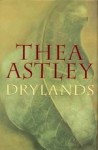
Thea Astley, DrylandsFor my first link, I’m choosing Thea Astley’s Drylands (my review) which might sound surprising, though, like Austen’s book it is set in a small (non-urban) community. However, the reason I’m linking to it is not that, but because Drylands was Astley’s last novel (albeit she managed to finish hers before she died.)
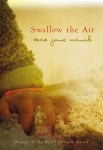
Tara June Winch, Swallow the airNow, Drylands has an unusual form. It is a novel, really, but it can read like a collection of short stories, which are written by someone called Janet. Another novel that can also be described as a collection of short stories, though not quite as tricksy in form as Astley’s, is Tara June Winch’s Swallow the air (my review). Coincidentally, it is a debut novel (as opposed to Astley’s swan song one!)
Karen Viggers, The orchardist's daughterAnd here I’m going to change tack and move from Australia to France. Tara June Winch now lives in France, and has for some years. An Australian author who sells very well in France is, in fact, local Canberra writer, Karen Viggers. Her novel, The orchardist’s daughter (my review), has, like her previous novels, been translated into French. Its title is Le Bruissement des feuilles, which is, in English, The rustle of leaves. Hmm… I could link to another book published with a different title overseas, but we’re going to (sort of) stay in France …

John Clanchy, Sisters… and link to a book by an Australian writer (another Canberran in fact) that was drafted at a writer’s retreat in France and published by the people, La Muse, who are behind that retreat. The author is John Clanchy and his book, Sisters (my review).
So far I’ve been a bit nationalistic in my French links, so next I’m linking to a book by – an English writer! Did I trick you there? However, it is about French people, Caroline Moorhead’s biography Dancing to the precipice: The life of Lucie De La Tour Du Pin, Eyewitness to an era (my review)which is set before, during and after the French Revolution.
Pierre Lemaitre, The great swindleAnd finally, because of course I had to do it, a book actually written in France by a French writer. I’ve read a handful of French writers since I started blogging, so the choice was a bit of a challenge. However, given the flamboyance of some of the French aristocracy covered by Moorehead in her book, I thought perhaps Pierre LeMaitre’s novel,The great swindle (my review), with its damaged but flamboyant character, Édouard Péricourt, would be the best match. (These last two books could also be linked by the fact that I probably wouldn’t have read them had they not been chosen by my reading group!)

So, we started in England with Austen, before moving to Australia. We then dallied a little longer in Australia, but with French connections, before finally landing in France. We have covered over two centuries in our travels, and have, as often seems to be the case with my Six Degrees, met four women and two men authors.

And now, my usual questions: Have you read Sanditon? And, regardless, what would you link to? 

Non-fiction November 2019, Weeks 4 to 5

Meme logoAs for my first Nonfiction November post this year, I am concatenating my last two posts, and posting them in the middle of the two weeks.

The meme is jointly hosted by Julz (Julz Reads) (Week 1), Sarah (Sarah’s Book Shelves) (Week 2), Katie (Doing Dewey) (Week 3), Leanne (ShelfAware) (Week 4) and Rennie (What’s Nonfiction) (Week 5).

Week 4: (Nov. 18 to 22) Leann (Shelf Aware) Nonfiction favourites:

What makes a book you’ve read one of your favorites. Is the topic pretty much all that matters? Are there particular ways a story can be told or particular writing styles that you love? Do you look for a light, humorous approach or do you prefer a more serious tone? 

I’ll start with what I don’t look for, which is tone. That is, I don’t look for any particular tone over another. The important thing is that the tone matches the subject. I am not put off by serious, sad or confronting tones, but I can also enjoy (who doesn’t) a humorous tone. I also don’t gravitate to memoir, though I do read a select few each year. This year, for example, I’ve read Ros Collins’ Rosa: Memories with licence (my review), Anita Heiss’s anthology Growing up Aboriginal in Australia (my review), Vicki Laveau-Harris’ The erratics (my review),  and Jocelyn Moorhouse’s Unconditional love (my review).

What I do look for are subject matter and author’s approach or style. My favourite subject matter would have to be literary biography (and to a slightly lesser degree, literary memoir) but none of this year’s books have been such. I like essays, of which I’ve read a few this year, some stand-alone, some in collections. And I particularly like reading authors who explore form, who don’t stick to the tried-and-true. This doesn’t mean I don’t read and enjoy the tried-and-true if it’s well-written and a topic I’m interested in. Two standout non-fiction books this year for me were:

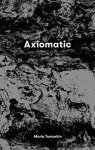
  • Maria Tumarkin’s Axiomatic (my review), which she says is not a collection of essays, though I’m not sure what else to call it. This is a humane, provocative books that forces us to rethink those axioms, those cliches that we too often resort to in an effort to not confront uncomfortable truths and situations.
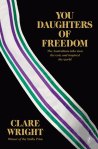
  • Clare Wright’s You daughters of freedom (my review) for its well-researched but highly readable history of the women’s suffrage movement in that late nineteenth to early twentieth centuries, and Australia’s significant role in it. Wright has done a wonderful job of bringing a hidden history to the fore.

Note: I have only included books I’ve read from November 2018 to October 2019. Any read this month will be in the running for 2020’s meme!

Week 5: (Nov. 25 to 29) Rennie (What’s Nonfiction) New to my TBR:

It’s been a month full of amazing nonfiction books! Which ones have made it onto your TBR? Be sure to link back to the original blogger who posted about that book!

I’m afraid that I haven’t really had time to take note of many books posted by other meme posters, though I have read several posts. So, I’m listing here a small selection of non-fiction books I am keen to read, not just ones that have appeared via this year’s meme:

  • Larissa Behrendt’s Finding Eliza: Power and colonial storytelling, which is in fact old on my TBR but which I’m going to make a concerted effort to read by next Nonfiction November.
  • Peter Carey’s Wrong about Japan, because I love Japan and am interested in what Peter Carey has to say. Brona (Brona’s Books) posted about this in her Be the Expert post.
  • Annie Cossins’ The baby farmers, because I’m interested in colonial Australian women’s history. Shelleyrae (Book’d Out) included this in her Be the Expert post.
  • Paul Genoni and Tanya Dalziell’s Half the perfect world: Writers, dreamers and drifters on Hydra, 1955–1964, which won this year’s Prime Minister’s Literary Award for Nonfiction. It’s about the post-war international artist community on the Greek island of Hydra, which included our Aussie literary couple, Charmian Clift and George Johnston.
  • Chloe Hooper’s The arsonist, which has been shortlisted for several awards and has been on my TBR most of this year. It seems an absolute must given the early start to this year’s bushfire season here down under.

And there you have it. Another Nonfiction November completed in two posts. I apologise for not giving it the attention it deserves, but I am glad I was stimulated by the meme to spend a little time thinking about nonfiction this month.

Any nonfiction favourites you’d like to share? (Not that my TBR pile needs them, mind you, but other readers might like to hear of them!)