Bill curates: Monday musings on Australian literature: The future of Australian literature

Bill curates is an occasional series where I delve into Sue’s vast archive, stretching back to May 2009, and choose a post for us to revisit. During the latter part of January we will look at some of Sue’s older posts which have relevance to my Australian Women Writers Gen 3 Week, Part II,17-23 Jan, 2021

Gen 3 covers the period from the end of WWI to the end of the 1950s, so first up I’ve chosen a Monday Musings from 22 Nov 2010 on Vance Palmer’s thoughts, in 1935, on the Future of Australian Literature. Doubly relevant as I began Gen 2 with a review of Palmer’s Legend of the Nineties. 

_______________________________

My original post titled: “Monday musings on Australian literature: The future of Australian literature”

‘If their [Australian writers’] work is so interesting,’ comes the query, ‘why isn’t it known here [London]?’

This query was put to Australian novelist and literary figure, Vance Palmer, in 1935! When I read it, I couldn’t help thinking plus ça change. A few months ago I wrote on Hilary McPhee‘s concern about the continued low profile of Australian literature overseas. She said that, while the situation has improved since the 1980s when she first wrote on the issue, it is uneven because Australian writers are “cherry-picked”. In other words, Tim Winton, Peter Carey and maybe David Malouf are known, but who else?

Anyhow, back to Palmer and 1935. His response to the question was

No use to reply that it [Australian writers’ work] is hardly known on their native heath!

That was probably so … and during the 1930s and 1940s, Vance and his wife Nettie Palmer, along with writers like Flora EldershawMarjorie Barnard and Frank Dalby Davison worked hard to raise awareness in Australia of Australian literature, and to secure good funding support for writers. The Palmers personally mentored writers like Eldershaw, Barnard and Davison. Nettie Palmer, in particular, corresponded regularly with writers, advising and encouraging them. Vance Palmer wrote for newspapers and journals, and lectured widely, on Australian literature.

Why do we need a national literature?

In the article “The future of Australian literature”, Palmer discusses why it’s important to have a national literature. He asks, “Why all this fuss about having a literature of our own? Why waste time writing books when ‘all the best and the latest’ can be imported from overseas?” His answer is not surprising to we readers:

The answer, of course, is that books which are revelations of our own life can’t be imported, and that they are necessary to our full growth. … since the world is divided into nations and societies, it is necessary that these shall find their own forms of expression, each subtly different from the others.

… we have to discover ourselves – our character, the character of the country, the particular kind of society that has developed here – and this can only be done through the searching explorations of literature. It is one of the limitations of the human mind that it can never grasp things fully till they are presented through the medium of art. The ordinary world is a chaos, a kaleidoscope, full of swift, meaningless impressions that efface one another; the world of a well-pondered novel or drama is designed as an orderly microcosm where people and things are shown their true significance. And so, unless a country has its life fully mirrored in books it will not show a very rich intelligence in the business of living.

He goes on to suggest that through literature, we

  • learn to understand and adjust to our surroundings or landscape (the physical, I suppose). In Australia at that time this meant learning “to live with our bonny earth with a spirit of affection. It is not the same haggard landscape our ancestors looked on with loathing” but has its own beauty in its, for example, wattle and gums.
  • discover our roots, find out who we are (what he calls, the social). In Australia at that time, that included exploring themes of exile and immigration, “the theme of the vanishing race, with its wild charm and its tragic doom”, and themes related to Australia-at-war and coping with universal economic conditions.
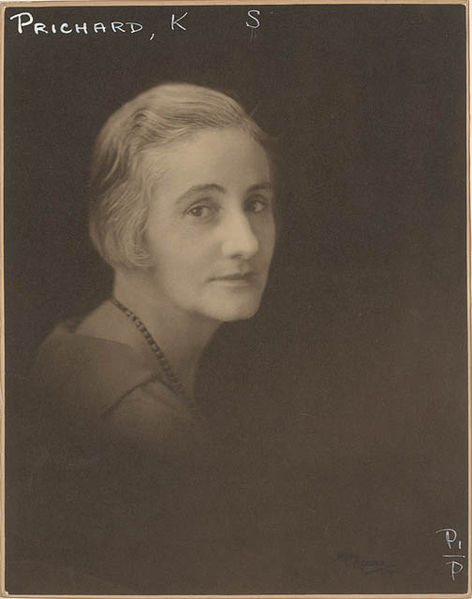
Katharine Susannah Prichard
Katharine Susannah Prichard (1927/8) (Courtesy: State Library of New South Wales [Public domain], via Wikimedia Commons)

He argues that change was occurring, that a national literature was developing – and gave many examples including works by those mentioned above, as well as writers like Katharine Susannah Prichard and Christina Stead.  He suggests that one of the reasons for improvement was the growth of publishing in Australia. What these publishers produce might be uneven in quantity and literary value, he said, “but at least they have taken the Australian background for granted, and that has marked an advance”. However, he bemoans the lack of “lively and intelligent [literary] criticism” which he believes is essential to writers finding “their proper audience”.

Palmer concludes positively, believing that there has been “a bubbling in our drought-scaled springs”. He says that the new literary pulse will have a significant impact on Australia in the next 50 years and will “quicken its imagination, stimulate its powers of introspection, and make it as interesting to itself as every country should be”.

There’s a lot to think about here – in terms of how Australian literature has progressed (within and without the country) and how we see the role of national literatures in our more globalised world. How important is national literature? My answer is that while nationalism, taken to exclusionist extremes, can be rather scary, we still do need to understand our own little corners of the world, in both their local, unique and their wider, universal meanings and implications.

What do you think? And how important is it, particularly with so many writers on the move, to define nationality?

Vance Palmer
“The future of Australian literature”
First published in The Age, February 9, 1935
Availability: Online

_____________________________________

When we finished the Bill Curates series a few months ago, Bill and I discussed reviving it occasionally, and thought one such occasion might be his AWW Gen 3 Week. So, here we are again. Bill has chosen three for us to post for his Week, with this one seeming the best one to go live on Day 1. We’d love you to join us in the project!

Meanwhile, we would love to hear your thoughts – and, particularly, whether you have ever read any Vance Palmer.
Blogging highlights for 2020

Finally, the last of my traditional and very self-indulgent year-end trifecta (which includes my Australian Women Writers’ Challenge wrap-up and Reading highlights posts).

But, before I launch into my usual analysis, I must send a huge shout-out to Bill (The Australian Legend) for the astonishing effort he put in this year to help me keep my blog going during the sad months of my mother’s late-diagnosed illness and death. He coordinated four Monday Musings guest posts (from Lisa, Kate and Michelle, as well as himself, even proposing topics in case they needed inspiration). And, inspired by Karen’s (BookerTalk) post on reblogging, he curated a series of reblogged posts from my early days, which we titled Bill curates. It was a stellar effort and I’m immensely grateful to him (and to Lisa, Michelle and Kate) for helping me out during those times. It may sound silly but it significantly helped my well-being to have these posts lined up to keep my beloved blog ticking along. Thanks Bill.

Top posts for 2020

Until last year, my top posts have changed minimally, but last year’s little shift has held – a little! However, there is still a set of “usual suspects” posts reappearing year after year, and it’s still true that most of the posts are over 5 years old. Whatever these top posts are, though, I always wonder why them? Some are probably set school texts, but the rest?

Trent Dalton, Boy swallows universe

Here’s my 2020 Top Ten, ordered by number of hits:

None of these were actually published in 2020, which is the norm except for last year’s little aberration when Trent Dalton hit the top spot. What other observations can I make?

  • Red Dog has slipped out of the Top Ten (into the Top Twenty) for the first time since it was published in 2011.
  • Last year’s record of six Australian posts in the Top Ten did not last, but Australians still make a showing!
  • Barbara Baynton continues to be an established Top Ten regular.
  • Why is ABR’s Top Twenty list here? Were locked-down readers looking for reading recommendations? And, old Stegner and Greene posts are new here. Why them? Good lockdown reading?
  • Mark Twain’s “A presidential candidate”, which popped into the Top Ten in 2018 and remained there in 2019, appears again, but has risen to 2nd spot! I wonder why?!
  • Short stories and essays still feature strongly, with four again this year.

Four Australian posts appear in the next ten, as in 2019, but they are all different. Barbara Baynton remains, just with a different story, “A dreamer”! The others are Shaun Tan’s Eric, the slowly-slipping Red dog, and, out-of-the-blue it seems to me, a 2014 Delicious descriptions: Clare Wright’s sources on the Australian landscape.

Book cover

But what about posts actually written in 2020? How did they fare? After last year’s little aberration, this year returned to normal (whatever that is) with my top-ranked 2020-written post coming quite down the list. Here are the Top Ten 2020-published posts (excluding Monday Musings) – an eclectic bunch that tells us, what?:

My most popular Monday Musings posts were:

My New Releases posts seem popular, having featured the last two years. Australian Gothic has also featured in the top three for a few years. But, I’m surprised to see Allen & Unwin’s House of Books, which was only published in July, appearing as the third most popular Monday Musings this year.

Random blogging stats

The searches

One of my favourite parts of this highlights post is sharing some of the search terms used to reach my blog, but this year that aspect of the end-of-year stats has been flakey. However, I did glean a few that might interest – and hopefully, entertain – you.

Book Cover
  • several searches seemed to be for a school or college assignment about Sherwood Anderson’s short story “Adventure”. The searches included: who should be blame for alice’s tragedy; alice is the one to be blamed for her tragedy. do you agree?; explain. adventure sherwood anderson; and explain the significance of the title ‘adventure’ by anderson. Don’t you love how some have just typed in the whole question?
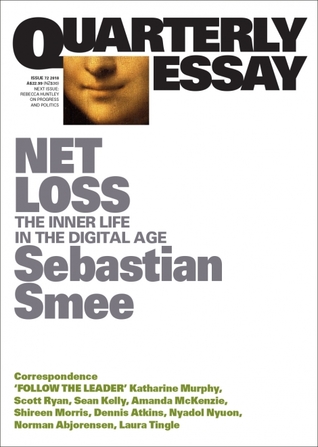
  • I have reviewed an essay by Sebastian Smee but I don’t think that will have helped this searcher: does wellesley have a non-credit on-line course taught by sebastian smee
  • relevant to this year’s second top post, here is one search: what type of satire is mark twain’s a presidential candidates 
  • and, my favourite: word association. what comes into your mind about australian literature? You know what I’m going to ask: What words come to your mind when you think about Aussie lit?

Other stats

I wrote thirteen (nearly 8%) fewer posts in 2020 than in 2019, averaging under 13 posts per month. This resulted in a small drop in my blog traffic.

Merlinda Bobis Fish-hair woman

Australia, the USA, Britain, in that order, continue to be the top three countries visiting my blog. The next three slots went, respectively, to India, the Philippines and Canada. India has been fourth for two of the last three years but, this year, the Philippines jumped from its usual 6th place to 5th, edging out Canada. This is largely due to Philippine-born Merlinda Bobis’ Fish-hair woman.

I’d like to thank all of you who commented on my blog this year. I’m thrilled that, although my blog traffic dropped a little this year, my comments count increased by 12%, which is heart-warming because the conversations have to be one of blogging’s biggest delights. The friendly but fearless sharing of sometimes opposing ideas – you know who you are! – demonstrates that social media can be positive and respectful.

Challenges, memes and other things

I only do one challenge, the AWW Challenge, which I wrapped up last week, and one regular meme, #sixdegreesofseparation run by Kate (booksaremyfavouriteandbest). I occasionally do others, which you can find on my “memes” category link.

I also took part in Lisa’s (ANZLitLovers) Indigenous Literature and Thea Astley weeks, Bill’s (The Australian Legend) AWW Gen 3 Week, and, more casually, in Nonfiction November, because all these align with my reading practice.

Each year, I like to host some guest posts but I have already mentioned these in my opening paragraph. You can find them at this link.

Being blogging mentor for the New Territory  program has been a major highlight over recent years. It was set to continue, until you-know-what. I don’t know whether it will return next year. Meanwhile, I have enjoyed following the writings of several “alumni” who are continuing their literary reviewing and criticism journeys. Rosalind Moran’s well-timed Overland post on the value (or not) of lists, caught the eye of several bloggers over the last month! Amy Walters has revamped her website to include links to her other writings, and Angharad has continued to be an active blogger as well as occasionally writing other articles. Shelley Burr, on the other hand, won a Debut Dagger for her Aussie noir unpublished manuscript, Wake. How lucky am I to know these great young women.

And so, 2021 …

As I say every year, a big thanks to everyone who read, commented on and/or “liked” my blog last year – and to all you other wonderful bloggers out there. I’m really sorry that I don’t always manage to visit everyone as much as I’d like. I wish you all good reading in 2021, and look forward to discussing books with you at your place or mine!

Finally, huge thanks to the authors, publishers and booksellers who make it all possible (and who have put up with my extreme tardiness this year). Let’s hope 2021 will be better for us all.

Six degrees of separation, FROM Hamnet … TO …

Woo hoo! A New Year at last after what has really been a doozy for us all, in one way or another. So glad to see the back of it. I hope you all had a lovely Christmas wherever you were and however you were able to spend it. Now though to that thing that stayed with us unchanged all through 2020, come hail or shine, come fire or covid, and that thing of course is our Six Degrees of Separation meme. If you don’t know this meme and how it works, please check out meme host Kate’s blog – booksaremyfavouriteandbest.

Book cover

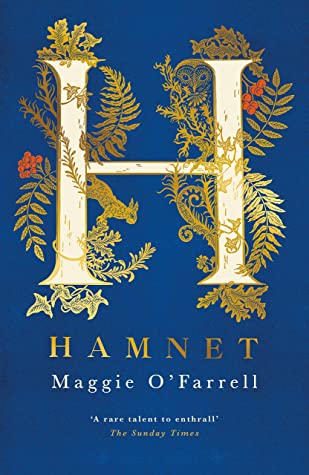
The first rule is that Kate sets our starting book. This month, she’s chosen a book was one of many readers’ loved books last year – Maggie O’Farrell’s Hamnet! I haven’t read it – but what’s new? I wouldn’t be averse to reading it, I must say, because its topic of Shakespeare’s son, Hamnet, who died in his youth, sounds intriguing.

Book cover

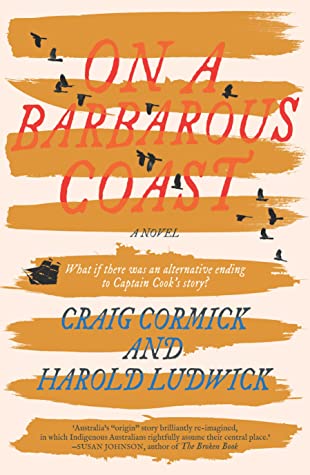
There are various directions I could go in, but I’ve chosen a pretty obvious one, a book that, like Hamnet, is historical fiction breathing life into a marginal historical figure. The book is Craig Cormick and Harold Ludwick’s On a barbarous coast (my review), and the figure, James Mario Magra. Magra was a midshipman on the Endeavour and is believed to have authored an anonymous journal about that journey. Cormick drew from that journal for his characterisation of Magra.

Dorothy Johnston, Through a camel's eye

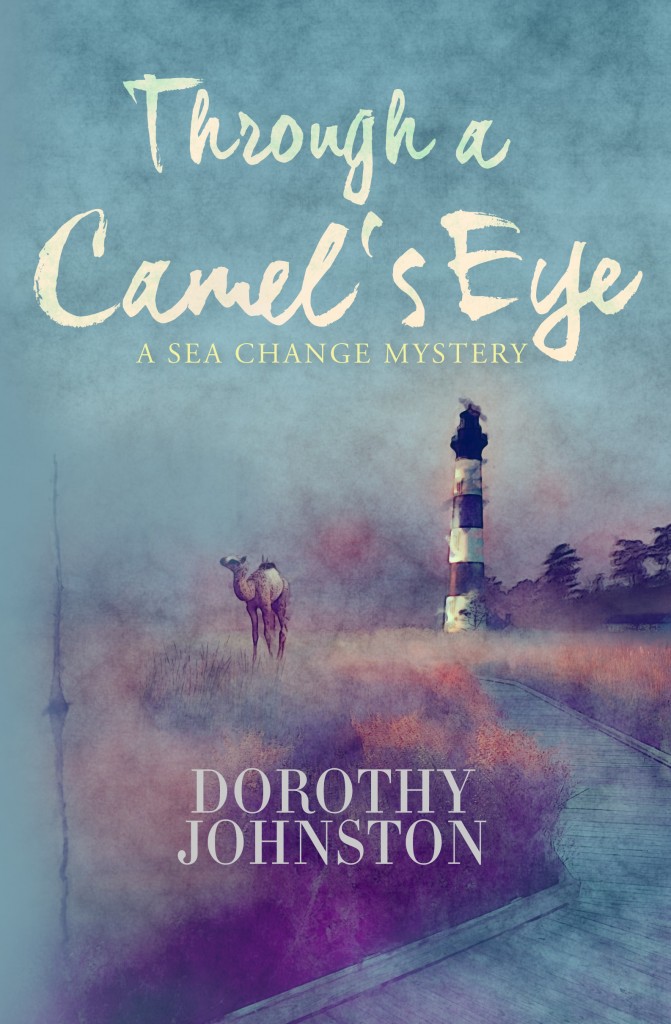
Staying with the coastal theme – but shifting time (to the contemporary not colonial era), setting (to southern Victoria, not Far North Queensland), and genres (to crime not historical fiction) – I’m linking to Dorothy Johnston’s Through a camel’s eye (my review). This novel introduces Constable Chris Blackie, meaning that …

Through a camel’s eye is the first of Johnston’s latest series, her Sea-change Mysteries. I’m not, as you know, a big reader of series, but in 2020 I did read the first in another series, Steven Carroll’s The lost life (my review), which starts his Eliot Quartet series.

I’m being a bit cheeky with my next link because I’m taking us to a literary app, rather than a book, The waste land app for TS Eliot’s poem cycle of the same name (my review). This was an exciting foray into the possibilities of using apps for the reading and study of literature, but I’m not sure it has taken off. It was, I’d say, expensive to produce and may just not have got the market size they needed. A shame. (The pic here is of a book edition of the poem, not of the app!)

Winterson, Oranges are not the only fruit, book cover

The Wasteland app contains many academics, writers and actors reading, critiquing and reflecting on this major poem. One of those involved was the English novelist Jeanette Winterson, so it’s to her book Oranges are not the only fruit (my review) that I am linking next.

Francesa Rendle-Short book cover Bite your tongue

Jeanette Winterson has quite a bit in common with our Francesca Rendle-Short, but the most relevant to my link here is that both were raised by mothers who were religious zealots. Oranges are not the only fruit is a semi-autobiographical novel, while Bite your tongue (my review) is a sort of hybrid fiction/memoir, but both cover protagonist-daughters’ struggles against highly restrictive maternal upbringings.

Coincidentally, we’ve somehow ended up on a topic – religion and God – relevant to last month’s starting book, Judy Blume’s Are you there God? It’s me Margaret.

So, this month, half of my books are by men and half by women. We haven’t travelled far, staying in Australia except for a trip in the middle to England, but we have traversed a couple of centuries. I do like how we started with the starting book’s lovely cool blue cover and ended with Rendle-Short’s fiery one. I hope that’s not telling us something about the year to come!

Now, the usual: Have you read Hamnet? And, regardless, what would you link to?

Reading highlights for 2020

For newbies here, my annual Reading Highlights post is my answer to other bloggers’ Top Reads posts. In other words, I don’t do a ranked list of the books I consider my year’s “best”, but instead share my “highlights”, which I define as those books and events that made my reading year worthwhile.

I don’t, as I say each year, set reading goals, but do have certain “rules of thumb”, including trying to reduce the TBR pile, increase my reading of indigenous authors, and read some non-anglo literature. This year though has been an annus horribilis for me – of which COVID-19 was only a part. Consequently, I didn’t make great inroads into any of these … as you’ll see.

Literary highlights

My literary highlights, aka literary events, were different this year, given the pandemic’s early (and ongoing) presence in the year, However, going on-line, while a less personal experience, had its pluses:

Book cover
  • Writing War panel discussion: This in-person event was changed into a Zoom one. As it included local writer Nigel Featherstone on his book, Bodies of men, I loved being able to attend!
  • Writers in Residence: This tightly run online festival aimed to give exposure to some emerging writers, and it worked a treat.
  • Melbourne Writers Festival: Covid-19 had some silver linings, including enabling me to attend, at last, some Melbourne Writers Festival events. I only attended two sessions, one on short stories and the other a lecture by Alexis Wright, but they were both so stimulating.
  • Yarra Valley Writers Festival: Another silver lining saw me able to attend sessions of the inaugural Yarra Valley Writers Festival. Session topics were wide-ranging, such as climate change and crime. I wrote four posts.
  • Author interviews/book launches: I only got to a few of the many offered: Heidi Sze, Sara Dowse, Robert Dessaix and Ramona Koval (the last two from Yarra Valley Writers Festival’s New Release Sundays program).

Reading highlights

Book cover

This is where I share some random observations about the year’s reading, rather than a ranked list. That said, I’d happily recommend all I mention here:

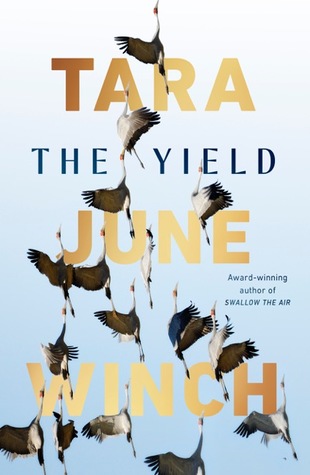
  • Indigenous authors: Each year I try to ensure my reading diet includes a few indigenous authors. This year I didn’t quite achieve the number I did last year, but I did read three novels, Tara June Winch’s Miles Franklin Award-winning The yield, Julie Janson’s Benevolence, and the collaborative On a barbarous coast by Craig Cormick and Indigenous writer Harold Ludwick – plus Archie Roach’s memoir, Tell my why.
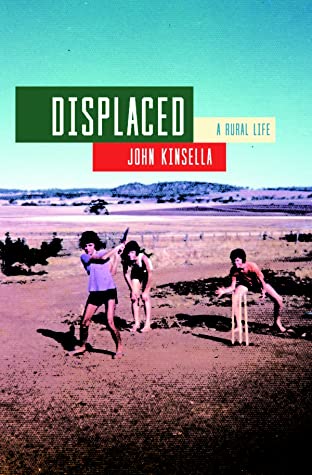
  • The year of single-word titles: I can’t remember when I read so many books with single word titles, titles not even preceded by an article, like Benevolence, Bruny, Damascus, Displaced, Mammoth, Murmurations, and Unsettled. I like the possibilities contained in direct, simple-sounding titles like these.
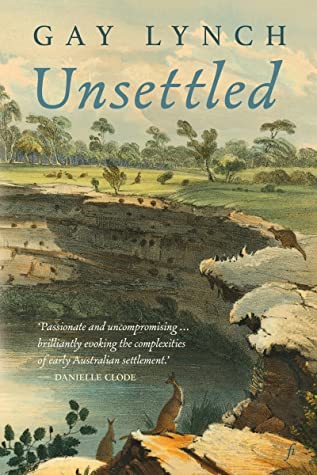
  • Rethinking colonial Australia: Completely serendipitously, I read a few books this year by Indigenous and non-Indigenous writers that attempted to correct the white-version of Australia’s colonisation that many of us grew up with: Craig Cormick and Harold Ludwick’s On a barbarous coast; Julie Janson’s Benevolence; and Gay Lynch’s Unsettled. Poet John Kinsella’s memoir, Displaced, also addresses these issues, albeit within a contemporary framework. And, at a tangent, Madeleine Dickie’s contemporary novel Red can origami hinges on this colonial dispossession to explore the complex relationships and exploitation behind mining in northwest Australia.
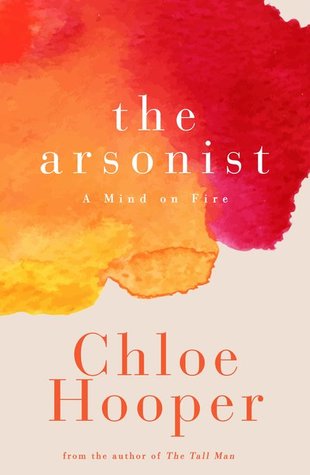
  • That “accusing” TBR (which I define as books waiting for more than 12 months): This year I read 5, one more than last year, so, a win. The highlights were Ruth Park and D’Arcy Niland’s collaborative memoir, The drums go bang! and Chloe Hooper’s The arsonist.
  • Returning to an old favourite author: Looking for books for my mum to read, I chose, among others, Anne Tyler’s Redhead by the side of the road. She wanted to read it, but her time ran out. However, I read it, and Tyler’s quirky world was just the right thing at the time. Other favourite authors I returned to this year included Thea Astley (An item from the late news), Jane Austen (Juvenilia Vol. 1), and Helen Garner (Yellow notebook).
  • Out of left field from Brother Gums came Sue Lovegrove and Adrienne Eberhard’s nourishing art-poetry book, The voice of water, and, from my reading group, Balli Kaur Jaswal’s cheekily titled Erotic stories for Punjabi widows.
  • Observing contemporary Australia: My reading always includes books that interrogate contemporary life, and two stand out from this year, Carmel Bird’s wry, satirical Field of poppies about a retired couple’s failed escape from the city, and Charlotte Wood’s The weekend about older women and friendship.
  • Other people’s lives: Biographies and memoirs are always part of my reading fare. Two standouts this year were Desley Deacon’s thorough and beautifully designed biography of Judith Anderson, and Rick Morton’s heart-rending but not self-indulgent memoir, One hundred years of dirt.
  • Some interesting voices: Each year seems to produce an unusual narrator or two – a foetus or skeleton, perhaps. This year produced another variation, with Chris Flynn’s Mammoth narrated by, yes, the fossil of a 13,000-year-old mastodon. It was more enjoyable than I expected.
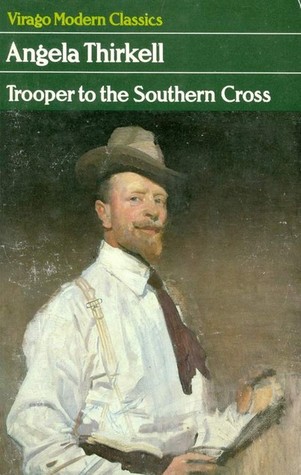
  • Surprise of the year: I read a couple of books for Bill’s (The Australian Legend) AWW Gen3 week but Angela Thirkell’s Trooper to the Southern Cross took the cake. I didn’t know what to expect, and was both surprised and entertained by what I got.
  • The quiet achiever: A beautiful, perceptive book that just didn’t get the recognition it deserves is John Clanchy’s historical novel exploring clerical abuse of children, In whom we trust.
  • The book most relevant to me this year won’t surprise those who know my year: Griffith Review 68, Getting on. It’s enlightening, informative, and even, at times, inspiring, about all things ageing!
Book cover

These are just some of 2020’s worthwhile reads.

Some stats …

I don’t read to achieve specific stats, but I like to keep an eye on what I’m doing to ensure some balance, all the while maintaining my particular interest in women and Australian writers:

  • 63% of my reading was fiction, short stories and novels (70% in 2019 and 80% in 2018): Around 75% is my rule of thumb, so this is quite a bit lower. Not sure why, but these things happen!
  • 80% were by women which is significantly higher than my 2015-2019 average of 68%: This is a bigger weighting than the 65-70% I prefer. Some of this 80% includes collaborations with male writers and editors.
  • 18% were NOT by Australian writers (28% in 2019 and 18% in 2018): I would like the balance to be something more like one-third non-Australian, two-thirds Australian, so this is a regression on last year’s achievement, but this year was an aberration overall so I’m not going to beat myself up. It is what it is.
  • 15% were published before 2000 (significantly less than for the last three years which hovered around 30%): Too low. I really like to read more older books.
  • 22% were published in 2020 (rather less than last year), which pleases me, because (obviously) I don’t want all my reading to be the latest books.

Overall, it was a disappointing reading year, in which much of my reading was driven by review books and my reading group. Both of these resulted in some good reads, and I don’t for a moment regret them, but my personal circumstances meant I did less self-directed reading and that was a bit frustrating. I hope I can get back to a more even keel in 2021.

As always, I’m grateful to all of you who read my posts, engage in discussion, recommend more books and, generally, be all-round great people to talk with. You know I love you!

I wish you all an excellent 2021, and thank you so much for hanging in this year.

What were your 2020 reading or literary highlights?

Monday musings on Australian literature: Australian Women Writers Challenge 2020

AWW Challenge 2019 Badge

Once again I am devoting my last Monday Musings of the year to the Australian Women Writers Challenge*. Last year in my opening paragraph, I wrote that I loved the sound of 2020 – and I wished you all a wonderful year to come in whatever form you would like that to take. My, oh my, little did we expect what was going to eventuate (which for me included a personal loss in addition to the impacts of the pandemic and other catastrophes). I no longer like the sound of 2020, and fervently hope 2021 turns out much better for us all. And so, may you all have a positive and fulfilling 2021.

Now, the challenge … it has continued to go very well. The full database now contains reviews for nearly 7,000 books across all forms and genres, from all periods, of Australian women’s writing. This means that the number of books reviewed on our database increased in 2020 by 900 books, which is about the same number added as last year, or just under 15%.

My personal round-up for the year

This year, for obvious reasons, was not my best Challenge year. I posted only 26 reviews relevant to the Challenge over the year, about the same as last year which was also a strange year (but differently). I feel disappointed about all this, but such is life. Anyhow, here they are, with links to my reviews:

Fiction

Book cover

Short stories

Book cover

Anthologies/Essays

Non-fiction

Book cover

This year, fiction (including short stories) represented around 61% of my AWW challenge reading, which is a little more than last year and a bit closer to my preferred ratio. I read three Classics. Two were novels and one a memoir, and they were read for Bill’s (The Australian Legend) Gen 3 week and Lisa’s (ANZLitLovers) Thea Astley week. Thanks to Bill and Lisa for the impetus to read these books, because they added a special depth ! In terms of that problematic word “diversity”, I read two novels by Indigenous Australian women, and one translated novel by an Iranian-born Australian writer.

Chloe Hooper, The Arsonist

My non-fiction reading was eclectic, featuring biography and memoir of course, a work of creative or narrative nonfiction, a beautiful collaboration between an artist and a poet, and, unusually for me, also two books that could be seen to be in the self-help vein.

If you’d like to know more about the Challenge, check it out here. We are also on Facebook, Twitter (@auswomenwriters), and GoodReads. Do consider joining us. All readers are welcome.

Finally, as always, a big thanks again to Theresa, Elizabeth and the rest of the team. I (still) love being part of this challenge, partly because equating with my reading goals it is not really a challenge, and also because I enjoy working with the people involved. See you in 2021.

And so, 2021

Challenge logo

The 2021 sign up form is ready, so this is also my Sign Up post for next year. As always, I’m nominating myself for the Franklin level, which is to read 10 books by Australian women and post reviews for at least 6 of those. I expect, of course, to exceed this.

Do you plan to sign up?

* This challenge was instigated by Elizabeth Lhuede in 2012 in response to concerns in Australian literary circles about the lack of recognition for women writers. I have been one of the challenge’s volunteers since 2013. Theresa Smith (of Theresa Smith writes) now oversees the day-to-day management of the blog, but Elizabeth is still an active presence.

My life in books 2020

As I started reading other people’s contributions, I said that I might play the “my life in books” meme – and I have not decided that I will! So, thanks to Lisa for bringing it to my attention and to Annabookbel for managing this fun meme.

It’s a simple meme, and goes like this:

Using only books you have read this year (2020), answer these prompts. Try not to repeat a book title. (Links in the titles will take you to my reviews where they exist)

Book cover

I’m sorry about the paucity of images, but darned if I could get the columned gallery work in block editor. WordPress’s support page said that even if you choose the number of columns you want “Your images will automatically arrange themselves to look good no matter how many columns you select.” Well, no thanks, WP. I want the columns to do what I want them to do and not what you think looks nice! (I think it’s to do with desktops vs tablets vs phones, but the end result is no control at all, it seems to me.)

Six degrees of separation, FROM Are you there, Margaret … TO …

And so, suddenly, it’s December and the last Six Degrees post of the year. What will 2021 bring. This time last year we could never have imagined what 2020 was going to be for us. I hope we don’t have another one like it again, but … it’s not over yet isn it? Anyhow, on to this month’s Six Degrees of Separation meme.  But first, if you don’t know this meme and how it works, please check out meme host Kate’s blog – booksaremyfavouriteandbest.

The first rule is that Kate sets our starting book. This month, she’s chosen a book that’s celebrating its 50th birthday this year – Judy Blume’s Are you there God? It’s me Margaret! I haven’t read it, though I know that Judy Blume is a huge favourite with young adults, or was, in those early days of her writing when YA was a relatively new genre.

What to do? I could go with another book celebrating its 50th anniversary, or a YA novel, but I’m going to look at questions, specifically How, What, When, Where, Why and Who, though many of my titles aren’t actually questions. They just start with a word that often starts a question. Sorry, but you’ll have to live with that, and that the links are simply from one of these words to the next! (BTW See notesinthemargin’s last six degrees post on questions in titles.)

Book cover

So, HOW. Melissa Lucashenko’s essay (not Richard Llewellyn’s novel), “How green was my valley?” (my review) appeared in Griffith Review’s Hot Air issue. It’s an excellent essay that talks about climate change, indigenous Australian culture, and the possibilities of connection between Indigenous and settler Australians to save our country.

Book cover

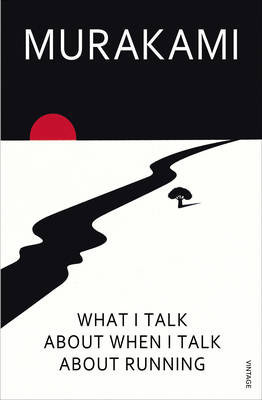
WHAT. For “what” I go to a favourite writer whom I haven’t read for a while, Haruki Murakami. I love memoirs that aren’t quite memoirs, and Murakami’s What I talk about when I talk about running (my review) is such a book. It purports to be about his running, but you learn a lot more besides.

Book cover

WHEN. My next book is another memoir, but a traditional one this time, white Zimbabwean writer Peter Godwin’s When a crocodile eats the sun (my review). It’s a tough book about a tough place, Robert Mugabe’s Zimbabwe.

Book cover

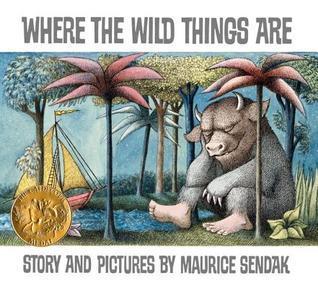
WHERE. This was my biggest challenge, as I’ve not reviewed any book starting with “where”. I nearly cheated and used Helen Garner’s EveryWHERE I look, but then remembered that I had suggested to Kate that we start a Six Degrees chain with Maurice Sendak’s Where the wild things are, so, why not get more mileage out of that! Otherwise, I could have used Delia Owens’ Where the crawdads sing, which my reading group has scheduled for next year.

Book cover

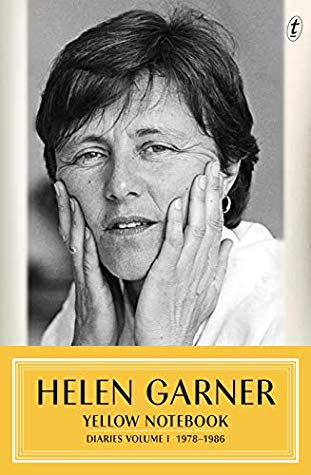
WHY. One reason for not “cheating” with Helen Garner’s Everywhere I look, was that my “why” link was going to be Garner. It’s her powerful Walkely-award-winning essay, “Why she broke: the woman, her children and the lake” (my review). It appeared in The monthly in 2017, and is an interesting companion piece to her earlier longform work, This house of grief. (It doesn’t appear in Yellow notebook, which I’ve used here for its pic of Garner!)

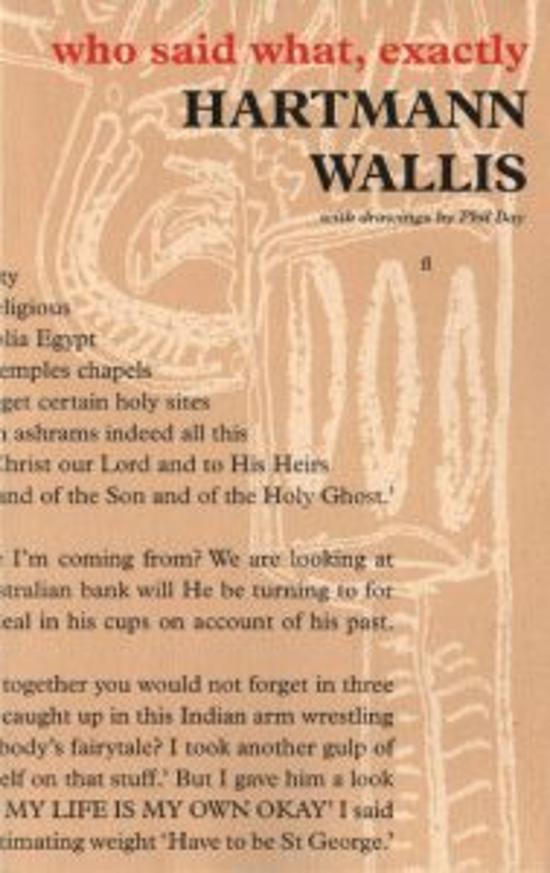
Hartmann Wallis, Who said what exactly

WHO. Like my “How” choice, my “who” title is a real question, though the import of the question is possibly obscure. I’m talking Hartman Wallis’ Who said what, exactly? (my review). It’s a cheeky and challenging book, but, given this month’s starting book, I must share this line from one of the book’s poems:

‘Think about it God is dead 

Hmm … what would Judy Blume’s Margaret say?

So, exactly reversing my usual Six degrees posts, four of my six links here are by men. However, like last month, we have travelled a bit, to Australia, Japan, Africa and the USA. We have also considered, one way or another, quite a few questions, and have, somehow, returned to God. Seems like a good point on which to close this year’s Six degrees. Thanks, Kate, for another enjoyable set of starting books. All being well, I’ll be back in 2021.

Now, the usual: Have you read Are you there God? It’s me Margaret!? And, regardless, what would you link to?

Monday musings on Australian literature: Nonfiction November

Every November for a few years now, a group of bloggers have coordinated a focus on nonfiction for bloggers in November. They set up a plan of topics, one per week, with a different blogger being responsible for each week, as follows: Leann (Week 1) (Shelf Aware), Julie (Week 2) (Julz Reads),  Rennie (Week 3) (What’s Nonfiction), and Katie (week 4) (Doing Dewey).

This year’s schedule was:

  • Week 1: Your Year in nonfiction, involves looking at our nonfiction reading this year, thinking about our favourites or topics that have particularly interest us or books we’ve most recommended.
  • Week 2: Book pairing, involves pairing a nonfiction book with a fiction title (on whatever criteria you like).
  • Week 3: Be the expert/Ask the expert/Become the expert, involves, as it sounds, reflecting our own expertise, asking others to help with books about something we’d like to know, or choosing our own reading plan for something we’d like to learn.
  • Week 4: New to my TBR, involves – well, it’s obvious isn’t it, except the idea is that they’re books that participating bloggers have posted about.

Now, I have taken part in this week – in a sporadic sort of way – before, writing two combination posts in the Novembers of the last three years. I planned to do the same this year, but haven’t! So, instead, I’ve decided to do one post for my last Monday Musings of the month, which means of course that I’ve added an extra criterion: all the nonfiction I talk about has to be Australian. Here goes.

Your year in nonfiction

Chloe Hooper, The Arsonist

I haven’t read a lot of nonfiction this year – I haven’t read a lot this year, full stop – but most of the nonfiction I’ve read has been by Australian writers. For Week 1, I’m going to choose three books, that I have already or would thoroughly recommend to others.

  • Chloe Hooper’s The arsonist (my review): another excellent sociopolitical true-crime exploration by Hooper, this time of an arsonist behind Victoira’s catastrophic Black Saturday fires in 2009.
  • Rick Morton’s One hundred years of dirt (my review): I have since taken more interest in his journalistic writings in The Saturday Paper.
  • Helen Garner’s Yellow notebooks: Diaries, Volume 1, 1978-1987 (my review): the first volume of Garner’s edited diaries that will be published over the coming years. I loved the insights it provides into her writing practice, her way of seeing the world, and her thoughts about all manner of subjects (including herself!)

Book pairing

Book cover

This one was easy because I paired them in my review of the novel I’m pairing here. I paired Gay Lynch’s historical novel, Unsettled (my review), with poet John Kinsella’s memoir Displaced (my review).

This pairing is both superficial and complex. It’s superficial because both have single-word titles which encompass multiple meanings that are both literal and metaphorical. However, it is complex because these are very different books – in form and subject matter. But, fundamentally, both deal with colonialism, with the settlement of Australia by Britain, and with the ramifications of that for both the colonisers and the colonised.

Be/Ask/Become the expert

Regular readers here will know something of my year and will not be surprised that ageing is the topic of most interest to me this year. It’s one that I’ve been interested in for a while but that has become a matter of rather more immediate relevance this year, with the death of my lovely nonagenarian mother and the move of my centenarian father into aged care. So, for this section I feel I’m a bit of an expert, but would like to become more of an expert too!

Book cover

Consequently, I was one of those who supported adding Griffith Review’s issue on ageing, Getting on (issue no. 68) (my review) to my reading group’s schedule this year. The book, as I’ve come to expect from Griffith Reviews, did not disappoint with its excellent collection of thoughtful and informative reportage, alongside memoirs and fictional responses to the subject.

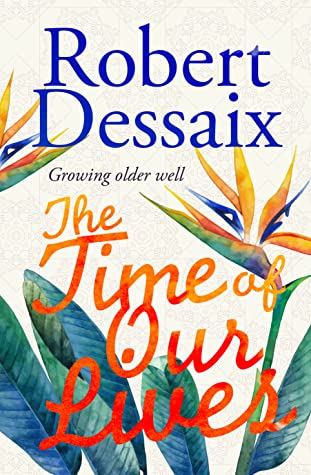
I do of course want to increase my knowledge of this subject, which is also becoming closer to me personally! Consequently, I would like to read Robert Dessaix’s latest book, The time of our lives, about which I posted recently after zoom-attending a Yarra Valley Writers Festival event on this book.

I would love to hear of any other nonfiction books you’ve read on the subject that you would recommend.

New to my TBR

I don’t read a lot of biographies, though every year I read a few, including, this year, Desley Deacon’s thoroughly researched and beautifully produced book on Judith Anderson (my review). My main biographical interest, however, are literary biographies, and a few have been published this year that interest me. They have been posted on by bloggers but I didn’t notice them in Nonfiction November posts:

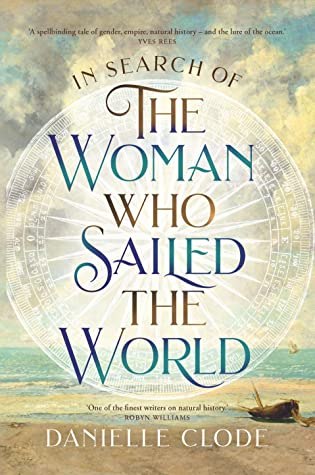
And, Lisa (ANZLitLovers), in her My Year in Nonfiction post, mentioned a couple of books that interest me: Danielle Clode’s The woman who sailed the world, and Debra Adelaide’s Innocent reader (which is already on my TBR).

And that, in the nick of time, is my contribution to Nonfiction November 2020.

I’d love to hear about your nonfiction interests and highlights this year.

Six degrees of separation, FROM The bingo palace TO …

Two months into spring here down under, and we are enjoying a wetter spring than usual. I don’t love rain, but my has it resulted in lovely spring blossoms, and we do need our dams to be filled – which they are! Now though, onto today’s business, this month’s Six Degrees of Separation meme.  As always, if you don’t know this meme and how it works, please check out meme host Kate’s blog – booksaremyfavouriteandbest.

And the first rule, of course, is that Kate sets our starting book, and this month, as she did a year or so ago, she told us to start this month’s chain with last linked book from our last Six Degrees post, which, woo-hoo, means another starting book I’ve read!

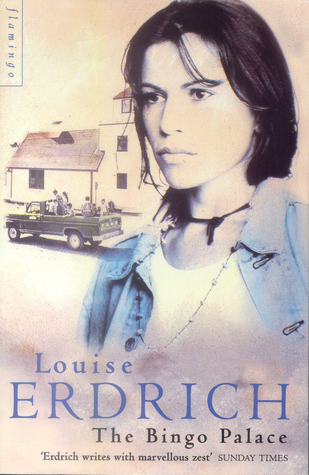
Book cover

So, the book I ended last month’s chain with was Louise Erdrich’s The bingo palace (my review), which is inspired by the fact that gambling is a major source of income for many Native American communities, a way in which they can support themselves (albeit also comes with problems).

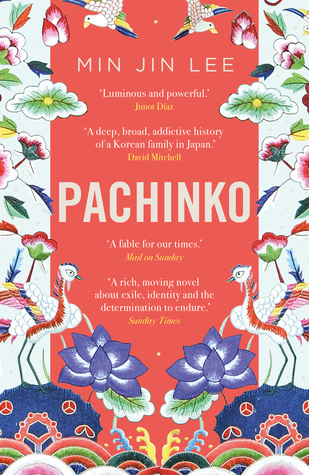
Min Jin Lee, Pachinko

Another community for which gambling can operate as a survival mechanism are the Koreans in Japan who run most of the Pachinko parlours in that country. This story is covered in Min Jin Lee’s originally named Pachinko (my review).

Richard Lloyd Parry’s The people who eat darkness (my review) is a non-fiction true crime work which explores the problematic position of Koreans in Japan, one which can have, as here, dire consequences.

Keeping with the Korean theme but moving over to South Korea itself, my next link is to a book I read for the now-defunct 2011 Man Asian Literary Prize, Kyung-Sook Shin’s Please look after mom [or mother, if you read the non-American edition] (my review).
Yan Lianke's Dream of Ding Village

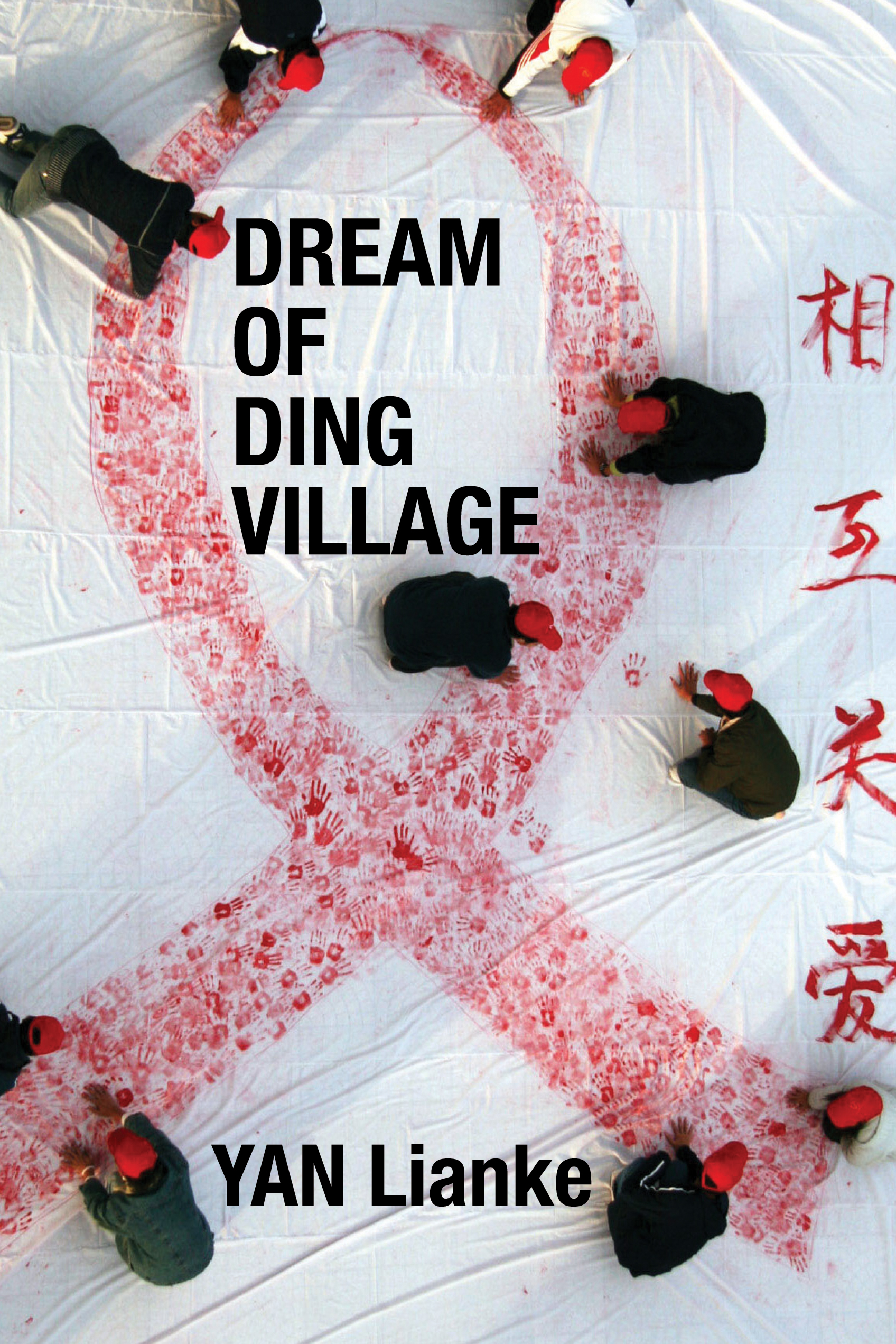
For my next link, I’m moving from setting and subject (though am staying in Asia), to another book I read for the 2011 Man Asian Literary Prize shadow jury, Yan Lianke’s Dream of Ding Village (my review).

Courtney Collins, The burial

Finally, we land in Australia, with Courtney Collins‘ historical novel The burial (my review), which was inspired inspired by the life of Jessie Hickman, an Australian woman bushranger. That, however, is not the link – obviously. The link is that both novels have dead child narrators, though Collins’ is a very young baby.

John Lang, The forgers wife

For my final link, I’m sticking with “wild” Australia, but this time with a book written at the time it is set, John Lang’s The forger’s wife (my review). It deals with the rough and tumble of life in the colony, and of course, that includes bushrangers!

As frequently happens with my Six degrees posts, four of my six links are books by women. However, we have travelled a bit this time – from America to Japan to South Korea and thence China, before finally landing in Australia. The authors have been diverse too, though the two books set in Japan were not by Japanese writers! Go figure, as they say!

Now, the usual: Have you read The bingo palace? And, regardless, what would you link to? 

Bill curates: Monday musings on Indigenous Australian writers

Bill curates is an occasional series where I delve into Sue’s vast archive, stretching back to May 2009, and choose a post for us to revisit.

The feature of Whispering Gums that we all most look forward to is Monday Musings. But when did they start? It took me a while to locate – WordPress really needs the ability to scroll through post Titles by Date – but it turns out Sue put up the first one on 9 Aug. 2010 (here). Check it out, it’s only short, not much more than a statement of intent. No. 2 (here) covers 5 Australian novels, of which two would have to be my all time least favourite. So I’ve chosen for today, No. 3, from 23 Aug. 2009.
_______________________

My original post titled: “Monday musings on Australian literature: Indigenous writers”

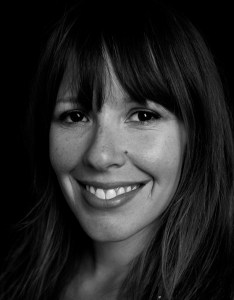
Tara June Winch

Tara June Winch (Courtesy: Friend of subject, via Wikipedia, using CC-BY-SA 3.0)

It’s important I think that my third post be on our indigenous writers. Again it’s going to be pretty idiosyncratic as my reading in this area has been scattered, not for lack of interest so much as the old “so many books” issue that we all know only too well. I was first introduced to indigenous writing at high school where I had two inspirational teachers who encouraged us to think seriously about human rights. It was then that I bought Oodgeroo Noonuccal’s (or Kath Walker as she was then) book of poetry, My people.

In my first Monday Musings post, I mentioned David Unaipon who is generally recognised as the first published indigenous Australian author. However, it was Oodgeroo Noonuccal, with her book of poetry, We are going (1964), who heralded contemporary indigenous Australian writing. So let’s start with her.

Oodgeroo Noonuccal My people (1970, poetry)

Noonuccal’s poetry is largely political. She wrote to right the wrongs which indigenous Australians confronted every day: the racism, the white-colonial-slanted history, the lack of land rights, and so on. Much of her poetry is therefore strong but accessible “protest” poetry. My people collects poems from her first two books and includes new works as well. Here are just a few lines to give you a sense of what she was about:

… Do not ask of us
To be deserters, to disown our mother,
To change the unchangeable.
The gum cannot be trained into an oak.
(from “Assimilaton – No!”)

Gumtree in the city street,
Hard bitumen around your feet,
Rather you should be
In the cool world of leafy forest walls
And wild bird calls.
(from “Municipal gum”)

I love the way she uses gums to represent her people – who they are, where they should be. Some of the poems are angry, some are conciliatory, and others celebrate her culture. I loved the book then, and I still value it now.

Sally Morgan My place (1987, memoir)

The next book in my collection, chronologically speaking, is Sally Morgan’s memoir My place. Sally Morgan is primarily an artist but her memoir became a best seller when it was first published. In it she chronicles how she discovered at the age of 15 years old that her colour did not come from an Indian but  an Aboriginal background, and her subsequent investigations into her family’s rather controversial story. I don’t want to go into the controversy here. Rather, the point I’d like to make is her story-telling: it is warm, funny, and thoroughly engaging.

Women of the centre (1990, short life-stories); Black chicks talking (2002, short life-stories produced in film, book, theatre and art)

Telling stories is an intrinsic part of Indigenous Australian culture. It’s how traditions have been passed on for 40,000 years or more. It’s probably simplistic to draw parallels between traditional story-telling and the telling of stories in general. After all, we all love stories. Nonetheless it is certainly clear from the little experience I’ve had and the reading I’ve done, that story-telling is an intrinsic part of Indigenous Australian culture and is becoming an important way of sharing their experience with the rest of us. This was powerfully done in Bringing them home: The stolen generation report of 1997 which contained not only the history of the separation of children from their parents and recommendations for the future, but many many first person stories which drove the drier points home.

Two books that I’ve read which contain personal stories by indigenous women are Women of the centre and Black chicks talking. The introduction to the former states that its aim is to help we non-Aboriginal Australian readers to understand lives that are so different from our own and “to provide personal written histories for the descendants of the women involved”. This latter is becoming an urgent issue in indigenous communities today – the capturing of story before more is lost. In Black chicks talking Leah Purcell interviews nine Aboriginal woman – some urban, some rural, some well-known, some not – about their lives. Another wonderful read.

Life stories/memoirs represent, in fact, a significant component of indigenous literature. Another work worth mentioning, though I’ve only seen the film and not read the book (shame on me!), is Doris Pilkington’s “stolen generation” story of her mother’s capture and subsequent escape involving an astonishing trek home, Follow the Rabbit-Proof Fence.

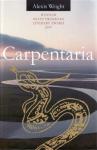
Alexis Wright Carpentaria (2006); Tara June Winch Swallow the air (2006); Marie Munkara Every secret thing (2009)

Finally, a brief mention of three recent fictional works, two of which I’m ashamed to say are still in my TBR pile. These are the two David Unaipon Award winners by Tara June Winch (reviewed since then) and Marie Munkara (reviewed since then). If you are interested in the latter, please check Musings of a Literary Dilettante’s review.

I have though read Alexis Wright’s Miles Franklin Award-winning Carpentaria (my post). It’s set in a fictitious place, tellingly called Desperance, in northern Australia. Its focus is colonialism (ie European invasion of the land), and conflict within black communities about how to respond. To explore these, Wright touches on lot of ground, including land rights, deaths in custody, mining rights, boat people, and petrol sniffing to name just a few. She flips between the real and the magical, she uses language that is image-rich and often playful, and she tells some very funny stories. It’s a big, wild and rather complex read that manages in the end to be hopeful despite itself.

This is just a small introduction to the wealth of Australia’s indigenous literature. It won’t be the last time I write about it. I will also in the future post on white Australians who have written about Aboriginal Australians, writers like Thomas Keneally who wrote The chant of Jimmie Blacksmith but who now says he wouldn’t presume to write in the voice of an Indigenous Australian. A vexed question really. I believe there should be no “rules” for writers of fiction and yet, sometimes perhaps, it is best not to appropriate voices not your own. But that is a question for another day…

Meanwhile, back to Alexis Wright – and stories:

Old stories circulating around the Pricklebush were full of the utmost intrigues concerning the world. Legends of the sea were told in instalments every time you walked in the door of some old person’s house. Stories lasted months on end, and if you did not visit often, you would never know how the story ended. (Carpentaria, p. 479)

____________________

I’m not surprised – and am glad – that Bill chose this one from my early Monday Musings, because this is an area of Australian literature that is dear to his and my hearts (and to Lisa’s who runs her Indigenous Literature Week each year.) And phew, I’m glad I’ve since read those two novels that were on my TBR back there in 2010.

[You can find all my Monday Musings by clicking on the Monday Musings category, or this link]

Would you, wherever you are, like to recommend any indigenous writers?