Six degrees of separation, FROM Rules of civility … TO …

I started last January’s Six Degrees with “Woo hoo! A New Year at last after what has really been a doozy for us all, in one way or another. So glad to see the back of it”. Little did we know – still, there was no harm in hoping for better. Regardless of what the year brought us, I hope you all had an excellent Christmas wherever you were and however you were able to spend it. And, given this year’s first Six Degrees of Separation meme actually happens on New Year’s Day, now’s the time to also wish you every good thing for 2022. Now, on with the show. If you don’t know this meme and how it works, please check meme host Kate’s blog – booksaremyfavouriteandbest.
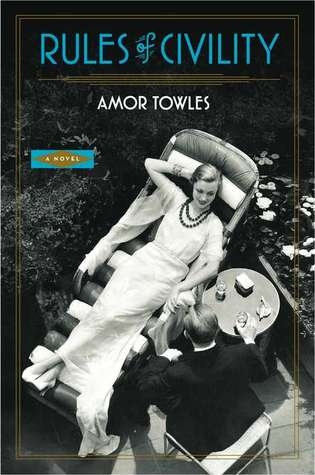
The first rule is that Kate sets our starting book. This month, she’s chosen a book that’s on my TBR (given to me by my wonderful Californian friend, in fact) and that I want to read, Amor Towles’ Rules of civility. One day!
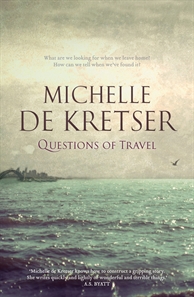
I’m going to start the year’s links by being a bit silly, and so my link is on a three-word title with “of” in the middle. I was surprised to find I had quite a bit of choice – including Book of colours and Field of poppies – but the title that felt closest in flavour to Towles’ is Michelle de Kretser’s Questions of travel (my review). This novel inspired and challenged me in so many ways.
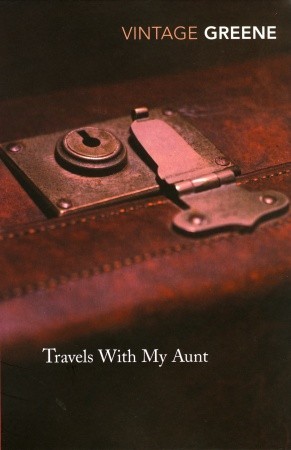
Graham Greene, Travels with my aunt

Staying with the idea of travel, I’m linking to a novel whose title starts with “travel”, Graham Greene’s Travels with my aunt (my review). I loved reading Greene again after a long hiatus. It was because my reading group selected it as our “classic” pick for 2017.

William Makepeace Thackeray, Barry Lyndon

So, my next link is my reading group’s 2016 “classic” pick … a book that I didn’t enjoy so much, though it had its moments, William Makepeace Thackeray’s The luck of Barry Lyndon (my review). (For those of you who think I LOVE every book I read – think again!)
Book cover

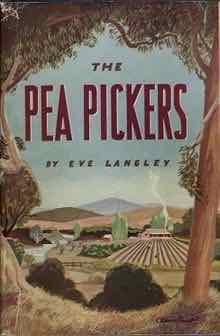
The luck of Barry Lyndon is a good example of a traditional – classic – picaresque novel. When I wrote my post on Eve Langley’s 20th century novel, The pea pickers (my review), I observed that it had elements of the picaresque, and so it is on that idea that I chose it for my next link.
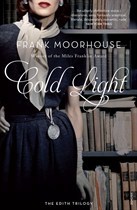
Frank Moorhouse, Cold Light

The two sisters in The pea pickers take to the road, finding work as they can, while exploring the country. In order to find work in those times – the 1920s – when women rarely went on such adventures, and for safety reasons, they dressed in men’s clothes and adopted male names. Ambrose in Frank Moorhouse’s Cold light (my review), however, cross-dresses (in the mid 20th century) because he likes to do so, and fortunatelyfor him the wonderful Edith doesn’t mind.

Marilynne Robinson, Gilead

Aussie readers will know that Cold light is the third book in what is known as the “Edith trilogy”, so I decided to take the trilogy idea for my last link. I initially thought to choose the third in a trilogy – for a strong link (if some links can be stronger than others) – but, despite having a candidate or two, I decided for various reasons (including a change of continent) to go with Marilynne Robinson’s trilogy, which starts with Gilead (my review).

Coincidentally, we’ve ended up in the country where we started – the USA – but instead of 1930s New York, we’ve moved to 1950s Iowa (in the midwest). Between these books, we’ve travelled more than usual – after all, two of the links are books about travel – and we’ve gone back to 1844. We’ve also visited various 20th century decades, and dipped our toes in the current century. We’ve met ne’er-do-wells and ministers, earnest young woman and cross-dressing diplomats, as well as travellers and migrants. We’ve seen it all – or, at least, a lot.

I like, too, that I’ve started the year with half of my books by men and half by women. How very even of me!

Now, the usual: Have you read Rules of civility? And, regardless, what would you link to?
Reading highlights for 2021

Regulars know that my annual Reading Highlights post is my version of a Top Reads post. It’s my way of sharing highlights from my reading year without actually ranking books or nominating a “best” which I just can’t do.

I don’t, as I say each year, set reading goals, but my “rules of thumb” include trying to reduce the TBR pile, increasing my reading of Indigenous authors, and reading some non-anglo literature. This year was another difficult one – of which COVID-19 was only a part. Consequently, once again, I didn’t make great inroads into these … but there were highlights.

Literary highlights

My literary highlights, aka literary events, were, for the same obvious reasons as last year, mostly online – except that I seemed to attend fewer than last year. I don’t think it was that I was Zoomed-out so much as that times just didn’t seem to suit. However, those I attended were excellent:

  • Sydney Writers Festival: Live and Local: Many online festivals – some solely online, and some hybrid – were offered over the year, but I only attended a couple of sessions from the now well-established Sydney Writers Festival streamed series: one featuring Sarah Krasnostein in conversation with Maria Tumarkin, and the other Richard Flanagan with Laura Tingle.
  • F*ck Covid: An online literary affair: This event, organised by the ACT Writers Centre, was a mini-festival. It comprised two sessions, both convened by Nigel Featherstone: one featured established authors (Irma Gold and Mark Brandi) and the other, emerging authors (Shu-Ling Chua and Sneha Lees). It was a most enjoyable and enlightening afternoon.
  • Stella: The Stella Prize is coming up for its 10th year – can you believe it – so they put on a little online celebratory event, Stella … 10 Years. It featured three previous winning or short-listed authors – Carrie Tiffany, Emily Bitto and Claire G. Coleman. It was brief, but I liked that the questions were a little different to the usual ones you get at a book launch.
  • Author interviews/book launches: With COVID-19 abounding, there weren’t many in-person book launches, but we did get to a couple: Irma Gold’s debut novel The breaking, and Omar Musa’s gorgeous book, Killernova.

Reading highlights

What follows here are highlights based on what I love about – or in my – reading.

So, I love …

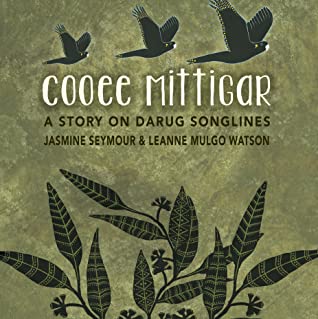
  • reading First Nations Australian authors: Each year I try to ensure my reading diet includes First Nations authors, and this year I read quite a variety: Jasmine Seymour and Leanne Mulgo Watson’s Cooee mittigar (picture book), Carl Merrison and Hakea Hustler’s Black cockatoo (children’s/YA novel), Nardi Simpson’s Song of the crocodile (novel), Adam Thompson’s Born into this (short story collection), Alf Taylor’s God, the devil and me and Cindy Solonec’s Debesa (memoirs).
  • it when my reading connects in some way: This year, for example, Sarah Krasnostein’s The believer and Alison Croggon’s Monsters, both referenced the idea of living with uncertainty in a way that made me stop and think, but more interesting was the link between Krasnostein’s nonfiction book on believers and Helen Meany’s novelistic exploration of belief, truth and authenticity in Every day is Gertie Day.
  • reading essays: I read many this year, including three by George Orwell, as well as essay collections, like The best Australian science writing 2020, which is always a stimulating read.
  • Australian novels that address contemporary life and issues: Favourites this year include Irma Gold’s The breaking, Malcolm Knox’s satirical Bluebird, Helen Meany’s above named novel. Interestingly, there were not so many climate change dystopias in my reading this year.
  • reading short stories: I read some engaging collections this year, including one from Mumbai authorJayant Kaikini (No presents please) and some debut Australian collections, Marian Matta’s Life, bound, Margaret Hickey’s Rural dreams and First Nation’s Adam Thompson’s collection.
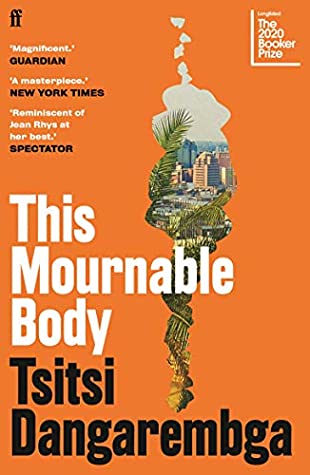
  • coming across writing that stray from the mould: I didn’t have any talking foetuses, skeletons or fossils, this year, but I did read a second-person book, Tsitisi Dangarembga’s This mournable body, which movingly captured its protagonist’s uncertainty. I also read Bernadine Evaristo’s syntactically different Girl, woman, other which looked off-putting with its almost completely absent punctuation but which, in fact, flowed beautifully. Loved it.
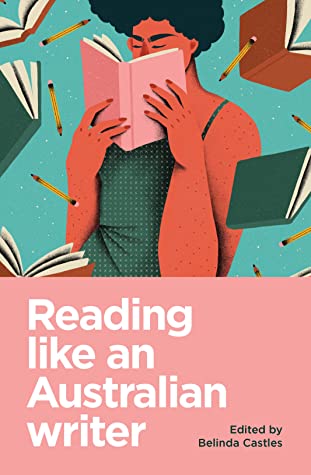
  • reading writers on other writers: I read some excellent commentary by writers on other writers this year: two books from the Writers on Writers series (Jensen’s warm but informative tribute to Kate Jennings and Stan Grant’s honest discussion of Thomas Keneally), and three essays from Belinda Castles’ Reading like an Australian writer.
  • reducing the “dreaded” TBR (which I define as books waiting for more than 12 months): I started off the year with a bang, reading four worth-waiting-for books in the first four months – Angela Savage’s Mother of Pearl, Elizabeth Harrower’s The long prospect, Garry Disher’s Bitter Wash Road, and Trevor Shearston’s Hare’s fur – but I then fell in a heap. The result is that my TBR grew significantly over the year. Wah!
  • rereading loved books: I rarely find the opportunity to reread, but this year, I actually managed a few. There were classics by Jane Austen and Anthony Trollope, but the one I want to highlight is Sara Dowse’s West Block. I’d been wanting to re-read it for some time, and was not disappointed as I loved reacquainting myself with its original approach and still-relevant content.

And then there were the little misses!

  • The one that got away: I was astonished to discover, when writing my Reading Group favourites post, that I had missed reviewing our first book of the year, Anthony Trollope’s Barchester Towers. I realised why – the meeting was a week after my Dad died – but I can’t believe that I wasn’t even aware that I hadn’t reviewed it. Such is the discombobulation wrought by grief.
  • The one I started but have not (yet) finished: I started reading Jess Hill’s 2020 Stella winner, See what you made me do, on my Kindle, very early in the year. It’s a good read, but I only read it when I’m out and about about, and there’s been less out-and-abouting this year, meaning that at the end of the year, it remains unfinished.

These are just some of 2021’s highlights. I wish I could name them all.

Some stats …

As for actual stats, I don’t read to achieve specific stats, but I do have some reading preferences and like to keep an eye on what I’m doing to keep me honest to myself! So, how did I go?

I like …

  • to read fiction most: 62% of my reading was fiction (short stories and novels) which is less than recent years, albeit only just less than last year’s 63%. Around 75% is my rule of thumb, plucked out of thin air I admit, but, the fact is, there’s some great non-fiction around so, well, I read a bit more of it this year!
  • to give precedence to women: 65% of the works I read this year were by women which is better than last year’s aberrant 80%, and more like what I think is a fair thing! This includes collaborations with male writers and editors.
  • to read non-Australian as well as Australian writers: 27% of this year’s reading was NOT by Australian writers, which is close enough to my goal of around one-third non-Australian, two-thirds Australian.
  • to read older books: 25% of the works I read were published before 2000, which is more than last year, and closer to the longer-term average of around 30%. I will try to lift this a bit more.
  • to support new releases: 25% of this year’s reads were published in 2021, which is similar to last year. I think this is fair!

Overall, it was a great reading year in terms of quality reads, but not so great in terms of quantity. As in 2020, my personal circumstances, in addition to the disruptions caused by COVID-19, meant I did less self-directed reading than I would have liked and that was a bit frustrating. Here’s hoping for a better 2022, for all of us.

Meanwhile, a huge thanks to all of you who read my posts, engage in discussion, recommend more books and, generally, be both thoughtful and fun people. Our little community is special, to me!

I wish you all an excellent 2022, and thank you once again for hanging in this year.

What were your 2021 reading or literary highlights?

Monday musings on Australian literature: Australian Women Writers Challenge 2021

Challenge logo

For the last time, I am devoting my last Monday Musings of the year to the Australian Women Writers Challenge ( in its current form at least, see below). What a couple of years we’ve had. It’s hard to know whether it has affected the challenge or not but, anecdotally, our numbers did not increase over a period when more people were stuck at home. Were we too discombobulated to focus on reading or were many of our participants too tired from the challenges of working from home and home-schooling to read and review as well? I look forward in the future to seeing what sociologists and other researchers make of these years and how we behaved.

Anyhow, the challenge … it has continued to go very well. The full database now contains reviews for nearly 7,700 different books across all forms and genres, from all periods, of Australian women’s writing. This means that the number of books reviewed on our database increased in 2021 by nearly 700 books, less than the number added last year, but still a healthy 10% increase to the database.

My personal round-up for the year

These last two years have not been stellar ones for me, so my posting to the challenge was down (mirroring the overall trajectory for the challenge!) I posted only 23 reviews to the Challenge over the year, a few less than last year, but I did also read three essays I didn’t post to the challenge. I will include them here as they were by women and appeared in a book edited by a woman, Belinda Castles’ Reading like an Australian writer. I’m disappointed in my reading achievements this year, but it is what it is! Here they are, with links to my reviews:

Fiction

Non-fiction

Anthologies/Essays

This year, fiction (including short stories) represented around 53% of my AWW challenge reading, which is a little less than last year’s 61%, and only two were classics by my loose definitions. One, Elizabeth Harrower’s, was read for Bill’s (The Australian Legend) Gen 4 week (Part 1). As always, I appreciate the impetus to read books from the past, because they do not deserve to be forgotten! In terms of that problematic word “diversity”, I read four books by First Nations Australia women.

My non-fiction reading was even more heavily slanted towards memoir/life-writing than usual, though the essays shift the balance a little, with a focus there on writing about writing.

Finally, as always, a big thanks to Theresa, Elizabeth and the rest of the team. I have loved being part of this challenge, partly of course because it equates with my reading goals so has never really been a challenge, but also because it’s been a generous and supportive team working on an important goal.

And so, 2022

Challenge logo

Most of you will know that this challenge was instigated by Elizabeth Lhuede in 2012 in response to concerns in Australian literary circles about the lack of recognition for women writers. I have been involved as a volunteer since 2013. In many ways, we feel that ten years on, the goal has been achieved, as women writers seem to be well-established on Australia’s literary scene, at least by observable measures.

Partly for this reason, the challenge will change tack in 2022 and focus on past and often under-recognised or overlooked women writers, from the 19th- and 20th-centuries. The new team overseeing this new phase comprises Elizabeth, Bill (The Australian Legend) and me. We plan to offer articles and reviews about earlier writers, and publish their actual writings – in full or excerpt form, as appropriate. We three feel that Australia’s rich heritage of Australian women’s writing hasn’t been fully explored and we’re keen to nudge it a bit more into the limelight.

This does not mean that the always popular contemporary aspect of the challenge will cease, but it will now be carried through our Facebook groups, Love Reading Books by Aussie Women and Australian Women Writers News and Events. Please join those groups if you are interested and haven’t already joined them.

Meanwhile, you will hear more about AWW 2022, when we get going in February.

My year in books 2021

I did this meme last year but wasn’t really thinking of doing it this year. However, here I am on Christmas morning with, for the first time in decades, nothing much to do until we head out to lunch, so why not? The thing about these memes is that they remind us of some of the great reads we’ve had over the year, and that’s a good thing.

Lisa says she thinks it was Annabel at Annabookbel who led the way in 2020 with this annual Christmas meme… Karen at Booker Talk reminded her and would have reminded me too, except I saw Lisa’s first, and I like that she seems to have added in a “lockdown” question.

Here are the rules: Using only books you have read this year (2021), answer these questions. Try not to repeat a book title. Links in the titles will take you to my reviews.

In high school I was  This mournable body (Tsitsi Dangarembga) … because, you know, puberty and bodies aren’t a happy match.

People might be surprised by A mouthful of petals (Wendy and Allan Scarfe) … because, well, wouldn’t you?

I will never be The believer (Sarah Krasnostein) … at least, not of most of the kinds in this book.

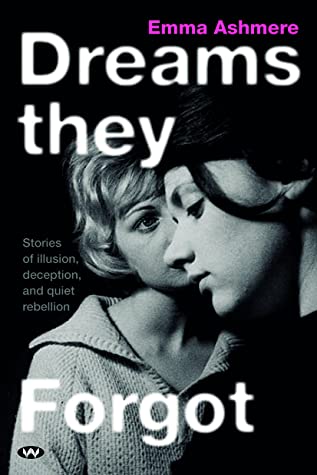
My life in lockdown was like Dreams they forgot (Emma Ashmere) … self-explanatory!

My fantasy job is (in) West Block (Sara Dowse) … because it’s a gracious old building and I love working in gracious buildings.

At the end of a long day I need (a) Bluebird (Malcolm Knox) rather than (a) Black cockatoo (Carl Merrison and Hakea Hustler) … the happiness of the bluebird without the raucousness of the cockatoo.

I hate (being) The long prospect (Elizabeth Harrower) … because I’d rather be on the shortlist!

I wish I had A different kind of seeing (Marie Younan and Jill Sanguinetti) … because who couldn’t do with a new way of seeing in their lives?

My family reunions are Where the heart is (Irma Gold and Susannah Crispe) … because family just is.

At a party you’d find me with Girl, woman, other (Bernadine Evaristo) … because, sorry men, but woman do make safe company when there’s drink around.

I’ve never been to Bitter Wash Road (Garry Disher) … and am not sure I want to, either.

A happy day includesRural dreams (Margaret Hickey) … because, although I’m a small city-big town sort of girl, I do love to dream of the country.

Motto I live by None of us alone (Jonathan Shaw) … no man (or woman) is an island, and I like it that way.

On my bucket list is (exploring) Where the crawdads sing (Delia Owens) … when we can travel again (and if that happens in my lifetime).

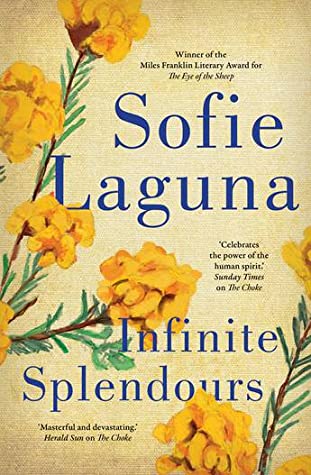
In my next life I want to have Infinite splendours (Sofie Laguna) … wouldn’t you?

Sorry, but you only get two images, after two attempts to get a slideshow in. Methinks there might be a limit to the number of images in a slideshow and I exceeded it. Whatever, it wasn’t happening.

Anyhow, it’s time to get ready for my Christmas day’s activities, so I hope you all enjoy this little response to the meme, and, even more, that you have a peaceful, healthy, and happy holiday season wherever you are.

Six degrees of separation, FROM Ethan Frome TO …

And suddenly it is the last Six Degrees of the year. Once again, I’ve had fun with this meme – with doing my own and seeing what others have done. Thanks muchly to Kate for running the meme and offering us such a varied selection of titles to start from. For those of you new to this meme, please check her blog – booksaremyfavouriteandbest – to see how it works.

We start with the book chosen by Kate, and this month it’s Edith Wharton’s Ethan Frome. I read this book in 1991, and loved it (gut-wrenching though it is.) It started me on a Wharton reading journey that I am still on because, not only did she write many novels, but she was also a prolific short story writer and journalist. I’ve reviewed a couple of her short pieces on my blog. Wharton also created one of my all-time favourite female character names, Undine Spragg (The custom of the country). How good is that!

Anyhow, as you will all be aware, we have hit the silly season, and time is short – for me to write posts and you to read them – so this month I’m doing a title-based “poem”, again. The links are to my reviews.

For Ethan Frome,
A very normal man,
Things fall apart
when Love and freindship collide,
and one In whom we trust
becomes A window in the dark.
Such is The love procession.

With thanks to our sponsor authors, in order: Vincenzo Cerami, Chinua Achebe, Jane Austen, John Clanchy, Dymphna Cusack, and Suzanne Edgar.

  • Vincenzo Cerami, A very normal man
  • Chinua Achebe, Things fall apart
  • jane Austen, Love and Freindship
  • Book cover
  • Dymphna Cusack, A window in the dark
  • Suzanne Edgar, The love procession

(Apologies for the variable image sizes, mostly due to the Gutenberg Gallery editor. I’m not keen to try reloading resized images into my media library with no surety of that fixing it! So, it’s either this or nothing folks!)

So, this month we have travelled the globe – at least to North America, Europe, Britain, Africa and Australia, and we’ve achieved gender quality with three male and three female authors. What better way to end the year.

Now, the usual: Have you read “Ethan Frome“? And, regardless, what would you link to it?

Nonfiction November 2021: New additions to my TBR

Week 5 of Nonfiction November … whew, made it to the end, and it wasn’t so hard!

Nonfiction November, as of course you know, is hosted by several bloggers, with week 5 hosted by Jaymi at The OCBookGirl:

It’s been a month full of amazing nonfiction books! Which ones have made it onto YOUR TBR? Do we have any of the same ones?

Be sure to link back to the original blogger who posted about that book!

I wrote in my first Nonfiction November post that I wasn’t looking to add to my TBR, but of course it can’t help but happen. Over the month I’ve seen many, many books that appealed to me and that I’d love to read, but I really can’t add increase my TBR. However, I couldn’t call myself a keen reader if I didn’t add just a couple, so here are a few that REALLY tempted me:

Book cover
  • Graphic nonfiction: I commented on Words and Peace Emma’s post that I am not much of a graphic fiction reader, let alone graphic nonfiction, but some of the books she listed did grab my attention, like Grant Snider’s I will judge you by your bookshelf. What reader doesn’t sneakily do this from time to time?
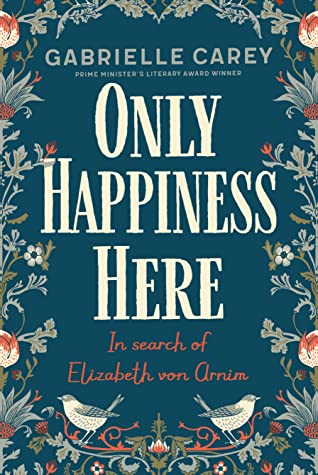
  • Literary biography: I do love literary biography, and a few came up this month. Mallika (Literary Potpourri) gave me Paula Byrne’s The adventures of Barbara Pym; Brona (This Reading Life) gave me one I already had in my sights, Gabrielle Carey’s Only happiness here (on Elizabeth von Arnim); and didn’t someone share Bernadette Brennan’s Leaping into waterfalls about Gillian Mears? If not, they should have, because I want to read it, so I’m including it here.
  • Nature writing – Trees: With a name like Whispering Gums I have to be a bit of a sucker for trees, so I did love Readerbuzz Deb’s Be the expert post on trees. Every book in her list appealed, from forest bathing to books discussing famous trees.
  • More nature writing: Brona also gave me (in the previously-linked post) a book that deviates somewhat from my usual reading, but that I thought might capture my reading group’s attention for our schedule next year. It didn’t, but I’ll keep it on my list: Raynor Winn’s The salt path. And, Kate (booksaremyfavouriteandbest) reminded me that I still want to read Rebecca Giggs’ Fathoms (about whales).
  • Social issues/Race: Liz (Adventures in reading, running and working from home) shared two books that provoked much thought for her (and for others whom I know have read them): Robin DiAngelo’s White fragility and Layla F. Saad’s Me and white supremacy.

A small list, I know, but more than I intended, to which I owe a big thanks (I think) to the 5 hosts of Nonfiction November 2021 – and all the bloggers who took part and shared your reading. It’s been fun, and edifying!

And now, I’d love to hear whether you added any books to your TBR pile from our blogosphere Nonfiction November month?

Nonfiction November 2021: Stranger than fiction

Week 4 of Nonfiction November … rolling right along …

Nonfiction November, as you surely know by now, is hosted by several bloggers, with week 4 hosted by Christopher at Plucked from the Stacks:

This week we’re focusing on all the great nonfiction books that *almost* don’t seem real. A sports biography involving overcoming massive obstacles, a profile on a bizarre scam, a look into the natural wonders in our world—basically, if it makes your jaw drop, you can highlight it for this week’s topic.

This is a new addition to the Nonfiction November weekly prompts, which is exciting, even for me who hasn’t done this month assiduously in the past. But, how to respond?

What comes to my mind when I think “stranger than fiction” are those coincidences (and the like) that happen in real life that a fiction writer could never get away with. Christopher, though, has taken a broader view, including things like “overcoming massive obstacles”. My problem is that although I’ve read the same amount of nonfiction this year, as last, none of it really seems to fit his description, but I’ll see what I can do about fitting my reading to the theme.

Stranger than fiction: 1, Overcoming massive obstacles

Wendy and Allan Scarfe had to overcome many political, personal and cultural obstacles in supporting a poor Indian village,particualrly in terms of improving educational opportunities, in their memoir, A mouthful of petals (my review).

But, when I think about overcoming obstacles in my reading this year, I have to go to Marie Younan, and her memoir A different kind of seeing (my review).

The story of how she lost her eyesight – the coincidences and lack of knowledge, among other things, that resulted in her losing her eyesight when a young child, and then the ongoing ramifications of this which meant that she did not get the right treatment, later, which may have restored some of her eyesight – is a tragic story.

The story of how she finally managed to migrate to Australia to join her family, having been rejected more than once because of her blindness, is a disgraceful indictment on Australia’s immigration system.

The story of how she, as an adult, found a person (or, he found her), who recognised her needs and who nurtured and gently pushed her into becoming literate – to learn Braille, mix with people, learn English – so that she eventually found employment and became independent, is an inspirational story.

So, yes, Marie Younan had to overcome massive obstacles to get to where she is today. It’s a story that would be hard to make believable in fiction.

Stranger than fiction: 2, Diary as therapy?

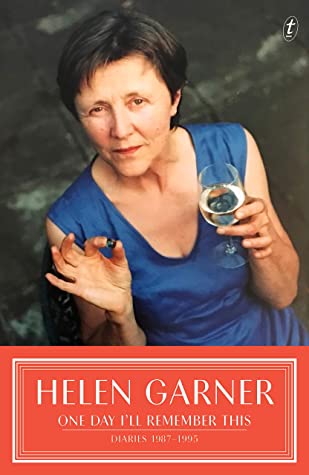
Thinking about this topic, though, I realised that Garner’s diaries are perfect, besides the irony of reading her actual diaries when her novels, her fiction, have been criticised as “just” her diaries. Does this make the point moot?

If I soldier on, though, I am a little anxious about what I’m going to say next, because I am presuming to criticise another person’s life choice, in this case Garner’s “strange” relationship with “V”. He is the man who becomes her husband during the second volume of her diaries, One day I’ll remember this (my review). I feel anxious, but I also feel it’s ok because Garner wrote about it, and because we know the outcome, so I’m not exactly saying anything new.

The point is that the relationship turned out disastrously for Garner, and anyone reading the diary could surely see that coming. If this were fiction – besides Garner’s of course, her diaries being the stuff of her fiction, says she cheekily – I would have been hard-pressed to believe the relationship. There just seemed to be too much angst, too much difference between them, for it to work.

However, here’s the thing. What do we write in diaries? Mostly our angst? Of course, diarists will occasionally write the really happy stuff, and, those diarists who are writers, will also often jot down ideas, observations and inspirations. Mostly, though, we write out our angst. We get it out of our hearts and onto the page, which makes us feel better. Diary as therapy, in other words. Taking Garner’s diaries in this context, and knowing too that she’s edited them, we cannot presume to know the whole of her relationship with “V”. However, looking at it purely on the basis of what we read, the fact that they ever married does seem “stranger than fiction”. I think that’s fair enough for me to write.

And now, I’d love to hear how YOU would answer this question. Sock it to me! I’ll believe you!

S-S-S Snake, Kate Jennings’ Snake, that is

I thoroughly enjoyed Tegan Bennett Daylight’s essay on Helen Garner’s Cosmo cosmolino (1992) in Reading like an Australian writer. Consequently, I plan, over time, to read and share other essays in this book – at least those discussing books I’ve reviewed here. As it happens, there is an essay by Debra Adelaide on Kate Jennings’ Snake (my review), and it’s the perfect next cab off the rank. Not only have I already posted this year on Erik Jensen’s longer essay on the book in the Writers on writers series, but Snake is a novella, so I’m using this post as a contribution to Cathy’s (746books) Novellas in November. I hope that’s not too cheeky.

I’ll start, though, by introducing Debra Adelaide. A novelist with a few books under her belt, including The women’s pages which I’ve reviewed, she first became known to me through her work on early Australian women writers, her Bibliography of Australian women’s literature, 1795-1990 (1991) and A bright and fiery troop: Australian women writers of the nineteenth century (1988). Like many writers, she also teaches creative writing, and Snake is one of the texts she regularly sets.

So Snake – for those who don’t know – draws from Jennings’ life, and tells the story of a lively, imaginative woman, Irene, who marries a decent but boring man, Rex. It cannot work, and the consequences are dire.

Jensen’s and Adelaide’s essays are very different. This is partly because Jensen’s, being in the Writers on writers series, focuses on the writer, whilst Adelaide’s in Reading like an Australian writer focuses on the reading and writing. Not surprisingly, the approach Adelaide takes is closer to mine – except that her writerly perspective is more astute, centred and expository.

The elastic novella

Early in her essay, Adelaide specifically address its form as a novella, saying that Snake demonstrates “how wonderfully elastic the novella can be”. In Snake‘s case, it is “so elastic that it can almost be prose poetry”. It is also “audaciously” abbreviated. She’s right – this is one spare novel.

Adelaide identifies three main reasons that she sets this text for her students – “its poetic brevity, its ‘experimental’ form, and its intriguing, sometimes maddening, allusions to and quotes from numerous literary and cultural references”.

It is, she says, the perfect set text, because it can be easily read in one night and remembered, but,

Brevity does not mean simplicity: its complex themes ripple out and take their time before finally landing on the muddy shores of our imagination.

This is what makes Snake such a good and memorable read.

The three s’s

Adelaide divides her essay into three main sections, those three s’s in the title: Structure; Serpents; and Scenes, sex and Serena McGarry.

I love discussions of structure, because structure can so often help inform the meaning. When a short novel like Snake has a complex structure, it is worth taking note. Adelaide talks about her own method of writing and wonders about Jennings’ approach. She doesn’t know how Jennings works, but she does say that this novel

opened up my eyes to the possibilities of writing a novel that was straightforward yet clever in structure, that was stripped back to its narrative bones, and yet at the same time managed to be multilayered, dense, poetic and unforgettable.

She discusses the novel’s four-part structure, and explains how, although the book is primarily about the mother Irene, it manages to convey the POVs of all four characters, thus “deftly” delivering a portrait of the whole family. Simultaneoulsy, with its use of second person at the beginning and end, “it offers a powerful sense of everyperson”. I love this analysis. I also enjoyed her further discussion of second person, which accords with some of my assumptions about this voice. One of the points she makes is how second person makes (can make) the reader complicit, which is one of the reasons Madeleine Dickie used it in Red can origami (my post).

Adelaide also briefly discusses an issue that fascinates her, as it does me – “the unlikable character in fiction”. Irene is “remote, ruthless and selfish”, and yet, despite Snake‘s “staccato delivery and disparate parts”, Jennings manages to maintain the focus on Irene “without alienating us from her”.

However, the section I most enjoyed is Adelaide’s discussion of Serpents. She references DH Lawrence’s poem “Snake”, which Jennings quotes from in the novella, and Henry Lawson’s short story “The drover’s wife”. She also references Jensen’s discussion of snakes, because, of course, he discussed them too. The point is that snakes are both metaphorical (the cause of the original fall of humankind, and so on) and actual (a real threat to vulnerable children, dogs and women.)

And so, the heart of Jennings’ Snake lies in, says Adelaide, “the universal fear of the serpent, that potent post-lapsarian symbol of all evil and danger”. All associations with snakes race through our minds, she says, as we read this novel. This is one of the ways a spare novel can lay down meaning on top of meaning.

In the third section, Adelaide discusses Jennings’ “scrupulous clarity”, using a few examples from the novel. One is the murder-suicide of Serena McGarry and her husband. Adelaide explores how much, in less than 100 words, Jennings conveys about Serena, and its implications for Irene. Adelaide makes the point that these “marvellously condensed” scenes “contain entire longer stories within them”. She sometimes uses them as springboards for students to develop their own stories. I would add that this sort of writing can make a book a great reading group book because it encourages readers to think about characters – who they are, why they are who they are, and why the writer has written them this way. Endless discussion can ensue!

Adelaide concludes by saying that Snake is “a novel that replays re-readings well out of proportion to its size”. I second that.

Debra Adelaide
“Structure, serpents and Serena McGarry: Kate Jennings’ Snake
in Belinda Castles (ed), Reading like an Australian writer
Sydney: NewSouth, 2021
pp. 219-232
ISBN: 9781742236704

Nonfiction November 2021: Be the expert, etc

Week 3 of Nonfiction November … a record, for me!

Nonfiction November, as you know, is hosted by several bloggers, with Week 3: (November 15-19) – Be the expert/Ask the expert/Become the expert hosted by Veronica at The Thousand Book Project: Three ways to join in this week! You can either share 3 or more books on a single topic that you have read and can recommend (be the expert), you can put the call out for good nonfiction on a specific topic that you have been dying to read (ask the expert), or you can create your own list of books on a topic that you’d like to read (become the expert). 

I’ve done this particular Nonfiction November theme three times before: in 2020 I focused on ageing; in 2019 it was Indigenous Australian rights and lives; and in 2017 it was memoirs on the experience of racism. What to do this year? Hybrid memoir/biographies? Literary biography? Both these interest me, and I have some expertise in them, but I think I’ll go a bit left-field and do Climate Change. While I try to keep informed about climate change, I am certainly NOT an expert.

Become the expert

If I had to choose three books to read, these three seem like good places to start:

Christiana Figueres and Tom Rivett-Carnac’s The future we choose: The stubborn optimist’s guide to the climate crisis (2020): The authors led negotiations for the United Nations during the 2015 Paris Agreement of 2015. I like the idea of a book that’s stubbornly optimistic, because that’s me too. (I know, I know, what am I thinking in the face of too much evidence to the contrary!) 

Tim Flannery’s The climate cure: Solving the climate emergency in the era of COVID-19 (2020): It’s on my TBR for a start. It’s by an Australian scientist who has been writing and acting on this topic for decades. Not only is this his latest, but it encompasses discussion of how the pandemic has affected the climate debate and climate action.

Jane Rawson and James Whitmore’s Surviving and living with climate change (2015): This is an older book now, but it’s Australian and I know from Lisa (her review) that it is packed full of practical strategies which, I’m presuming, will still be valid even if there are now newer strategies for us to also consider. That’s the thing with climate change, isn’t it – things keep changing!

Ask the expert

However, I’m not an expert on what is around on this subject matter, but I do know a blogger who is, Stefanie of A Stone in the River. Some of you may know her from the So Many Books blog, but a few years ago Stefanie switched to focusing on “the Climate Emergency, transitioning to post-fossil fuel zero carbon life, bicycling, gardening, books, community, interbeing, wonder and joy”. As well as sharing her own knowledge and practice about living as green and clean as she can, she also shares books, articles and links to a wide range of relevant information. She’s my go-to blogging expert on the topic.

However, there’s also Marcie, at Buried in Print. She reads broadly but one of her reading projects is Read the Change which encompasses her reading on a range of current issues, including human rights and eco-literature. Marcie also wrote an excellent article, “Rewriting the climate apocalypse” for Herizons, a Canadian feminist magazine. It explores recent non-fiction and fiction writings by women on the environmental crisis. It’s an excellent read and, while I know this is a #nonfictionnovember post, I did like this from Kai Minosh Pyle:

I could try to write a nonfiction piece explaining those things, but sometimes a story lets you get at tangled-up issues in a more nuanced way.

Yes! It sometimes can … but, still, I do like nonfiction too!

Also, I’d love to see what expertise you have or would like to develop – if you’d like to play along.

Nonfiction November 2021: Book pairings

Week 2 of Nonfiction November and I’m still here, playing along.

Nonfiction November, as you know, is hosted by several bloggers, with Week 2: (November 8-12) – Book pairings, hosted by Katie at Doing Dewey. This week we need to “pair up a nonfiction book with a fiction title. It can be a “If you loved this book, read this!” or just two titles that you think would go well together. Maybe it’s a historical novel and you’d like to get the real history by reading a nonfiction version of the story”. 

The no-brainer

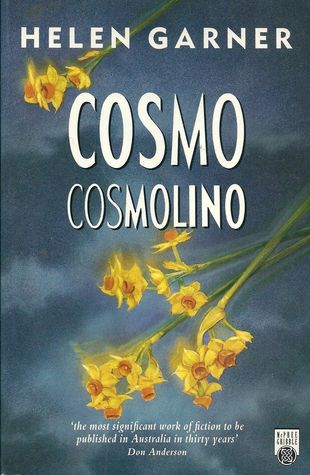
If I were just going to do one pairing, it would be a no-brainer, but it’s not really “if you loved this, read this”. Nor is it just two titles that I think would go together, and it’s definitely not pairing historical fiction with the history of the same topic. Nope, my pair comprises a book in which an author talks about her writing another one. If you’ve been reading my blog recently you’ll guess what I’m talking about, as I’m pairing volume 2 of Helen Garner’s diaries, One day I’ll remember this (my review), which I read this year, with one of the books she discusses in these diaries, Cosmo cosmolino. I have written two posts on this novel, a less than thorough review, years ago, and, recently, a consideration inspired by the diaries. I enjoyed the insights Garner provided into writing this, her most challenging novel (in terms of form) and most different (in terms of subject matter).

Helen Garner, Cosmo cosmolino

The unusual thing is that I could make several somewhat similar pairings from this year, as I’ve read other books discussing specific works. So, I could also pair Erik Jensen’s On Kate Jennings (my review) with the novel he talks about, Snake (my review), or Stan Grant’s On Thomas Keneally (my review) with the Keneally’s novel that he discusses, The chant of Jimmie Blacksmith (read before blogging). I could also pair Chrystopher Spicer’s Cyclone country: The language of place and disaster in Australian literature (my review) with one of a few books he discusses that I’ve read. But I won’t!

Instead, in the spirit of this meme, I feel I should challenge myself at least a little before ending this post, so here is …

Another pairing

I read a couple of memoirs this year that could be paired with novels, but I’ll just choose one, Marie Younan’s A different kind of seeing (my review). This tells the story of her life as a blind, illiterate Assyrian migrant to Melbourne, Australia, and how, with the help of various migrant services, she met other people, learnt English, obtained satisfying and meaningful employment, and ended up writing her memoir with the help of her English teacher, Jill Sanguinetti.

Book cover

I’m pairing this with an English-set novel, Balli Kaur Jaswal’s Erotic stories for Punjabi widows (my review), which, on the surface, sounds very different from Younan’s story. It’s about a young English-born Punjabi woman who obtains a job teaching writing to immigrant Punjabi widows in Southall, the heart of London’s Punjabi community. It’s a romcom but it also confronts some very real, very dangerous, difficulties that migrant women face in that culture. While these Punjabi women’s challenges were very different to those faced by Younan, both books provide insight into how hard it can be for immigrants, particularly immigrant women, to find their place in a new country.

For those of you doing Nonfiction November, I’ll see your pairings I’m sure, but, if you’re not, I’d love to see what you would pair – if you’d like to play along.