Six degrees of separation, FROM Rodham TO …

Woo hoo, it’s spring here down under, and in my street we have yellow wattles and daffodils blooming, plus pink prunus trees and white Manchurian pears. Bright spots in difficult times, and it does the heart good. However, I’m not here to talk about that but for this months Six Degrees of Separation meme.  As always, if you don’t know this meme and how it works, please check out meme host Kate’s blog – booksaremyfavouriteandbest.
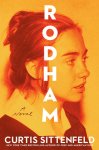
Book coverOnce again, the starting book is one I haven’t read, though unlike last month’s, I have heard of the author. The book is American author Curtis Sittenfeld’s Rodham. According to GoodReads it “imagines a deeply compelling what-might-have-been: What if Hillary Rodham hadn’t married Bill Clinton?” However, this is not where I’m going to go.

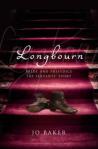
Jo Baker, LongbournI said that I have heard of Curtis Sittenfeld, and the reason is because of her involvement in The Austen Project, her contribution being Eligible, a retelling of Jane Austen’s Pride and prejudice. My first link is from this to another retelling of Pride and prejudice, Jo Baker’s Longbourn (my review).

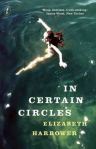
Elizabeth Harrower, In certain circlesLongbourn was, I discovered, one of many books presented in England’s BBC4’s Books at Bedtime program. I was surprised to discover that another book broadcast on this program was our own (I mean Australia’s own) Elizabeth Harrower’s In certain circles (my review). How great is that!

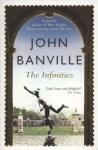
And now, just to mix it up a bit, I’m going to link on circles and the fact that the circle is a symbol of infinity. This brought me to John Banville’s The infinities (my review). 

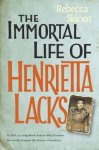
Rebecca Skloot, The immortal life of Henrietta LacksTwo main characters in The infinities can be described as infinite, meaning, in part, that they are immortal – the gods Hermes and Zeus. Gods aren’t the only things that are immortal. Cells can be too, as I learnt in Rebecca Skloot’s fascinating, heartrending, The immortal life of Henrietta Lacks (my review).

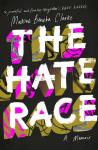
Maxine Beneba Clarke, The hate raceThe story of African-American Henrietta Lacks’ cells should be a good one. After all, her cells have gone on to produce some significant medical advances. However, the way the cells were taken and used is a story of both ingrained medical arrogance and ongoing racism whereby the human behind these cells and her family were continually ignored and discounted. A closer-to-home book about the experience of racism is Maxine Beneba Clarke’s The hate race (my review).

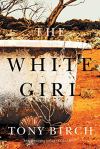
Book coverMaxine Beneba Clarke’s heritage is mixed, her mother being Guyanese and her father Jamaican (Caribbean). Indigenous Australian author Tony Birch, like many of us, has mixed heritage. He claims a Barbadian (Caribbean) convict amongst his ancestry! I can’t resist making that my last link, though I could also link on the fact that Birch’s writing deals with racism. His most recent novel, The white girl (my review), deals very specifically with racism in contemporary rural and urban Australia.

I’ve been very narrow in my travels this month, staying in English-speaking countries, and keeping (mostly) to the last 100 years. I’ve returned to my usual gender breakdown – two men and four women. I started with what has been described as a “what if” imaginary novel, but I ended, unfortunately, with a novel that is far too real.

Now the usual: Have you read Rodham? And, regardless, what would you link to? 
Six degrees of separation, FROM How to do nothing TO …

I am so glad to see that two thirds of winter is officially over. It’s been a horrible year, for all of us really, so a bit of warmth and spring rebirth (here down under) would be very welcome, eh? Meanwhile, I’ll entertain myself with things like the Six Degrees of Separation meme.  If you don’t know this meme and how it works, please check out meme host Kate’s blog – booksaremyfavouriteandbest.

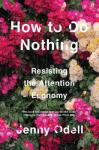
Book coverAugust’s starting book is yet another I haven’t read. Indeed, not only have I not read it, I’ve never heard of it or its author, which is not surprising because, as far as I can tell, it’s a sort of critique of how capitalist forces are driving us all more and more to perform, produce, to be forever doing something, or, as one GoodReads reviewer wrote, on “on how the attention economy and hustle culture is affecting our lives”. The book is Jennifer Odell’s How to do nothing: Resisting the attention economy.

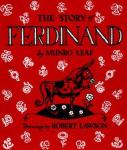
Book coverNow, I’m going to break with my usual practice and start with a book I’ve read but not reviewed on my blog, because this book is the. perfect. book. about. doing. nothing. What’s more, it was published in 1936, so this idea is not new, folks! The book is Munro Leaf’s now classic children’s book, The story of Ferdinand. Why don’t you take a moment to stop and smell the flowers before you read on!

Book cover

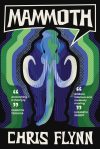
My next link is a bit of a leap, because it’s not about a bull, nor about doing nothing, and nor is it set in Spain, but it is about a BIG animal, a mammoth in fact. Yes, my next link is to my most recent review, Chris Flynn’s Mammoth (my review).

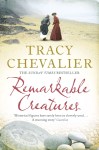
Tracy Chevalier, Remarkable creaturesTracy Chevalier’s Remarkable creatures (my review) is an obvious next link, because it is about fossils, albeit not narrated by fossils. However, it is historical fiction about the early nineteenth century fossil collector, Mary Anning who lived in Lyme. I didn’t love the book, but I must say that the story it told – the historical truth contained within it – has stayed with me.

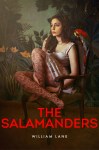
Book coverKeeping with the nature theme, and a coastal setting, I’m going to take us to  William Lane’s The salamanders (my review), part of which is set on the New South Wales coast. While this book is not about fossils, salamander fossils do date back to the Middle Jurassic period in England (and Kyrgyzstan), which is, of course, part of the broader Jurassic period to which Mary Anning’s finds belong.

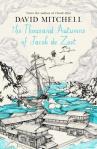
David Mitchell, The thousand autumns of Jacob de PoetThe story of The salamanders is founded in an artist’s colony, and all the relationships and dysfunctions that such groups can generate. In a very loose link, I’m taking us to David Mitchell’s The thousand autumns of Jacob de Zoet (my review) which concerns a different sort of colony, this one a colony of traders and their slaves on Dejima Island, Nagasaki, Japan. The traders work for the Dutch East India Company, and, as you can imagine, relationships are challenging.

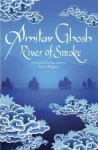
Amitav Ghosh, River of smokeAnother book which deals with European trading in the East Asian region – this time by Britain’s East India Company – is Amitav Ghosh’s River of smoke (my review), the second book in his Ibis trilogy. It is set mostly in Canton in the late 1830s, and explores the lead up to the first Opium War. Hmm, are we back to smelling flowers?

So, a much more travelled chain than usual this month, with visits all over the world, but particularly to  Spain, America, England, Japan and China – as well as Australia. Unusually, too, almost all of this month’s authors are men. What was I thinking?

Now the usual: Have you read How to do nothing? And, regardless, what would you link to? 

Six degrees of separation, FROM What I loved TO …

Half the year is over – and what an awful year it has been, generally and personally. I’d like to try to put the first half behind me (without ever forgetting the special person who left my life during it and whose 91st birthday would, in fact, have been today) and look to a more positive second half. Let’s see what we can do with this month’s Six Degrees of Separation meme.  If you are new to blogging and don’t know this meme and how it works, please check out meme host Kate’s blog – booksaremyfavouriteandbest.

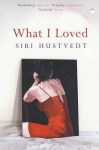
Book coverJuly’s starting book is another I haven’t read. Indeed, I haven’t read any of her books, but if I did, this is the one I’d choose. The book is American writer Siri Hustvedt’s What I loved.

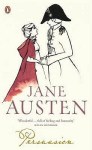
Jane Austen, PersuasionSiri Hustvedt is, I read a long time ago, a Jane Austen fan, so my first link is Jane Austen’s Persuasion (my reviews of volume 1 and volume 2) because Hustvedt wrote the introduction to the Folio edition of this novel. If you are a Jane Austen fan, like me, you will buy multiple versions of her novels just for the introductions. (For this reason, I’ll be adding my mum’s editions to my already multiple edition Austen library.)

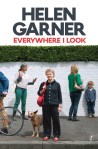
Helen Garner, Everywhere I lookAnother novelist who loves Jane Austen – they are legion in fact – is Helen Garner. She wrote about Austen in her collection of essays, Everywhere I look (my review).

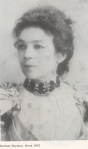
Barbara Baynton 1892

Baynton 1892 (PD, via Wikipedia)

Garner, in fact, wrote about quite a few writers in that collection, including Tim Winton and Elizabeth Jolley, but the one I am going to link to next is a much older writer, Barbara Baynton, and her short story “The chosen vessel”, (my review). Garner says she has never got over it. It’s a powerful story, that’s for sure.

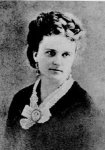
Kate Chopin

Kate Chopin (PD, via Wikipedia)

There are many short stories and novels I have never got over, though quite a few of them are from pre-blogging times. However, there’s a short story from my blogging times that affected me deeply and that I keep returning to. The writer is the American Kate Chopin, and the story “Désirée’s baby” (my review). Its underlying themes about race and gender are distressingly still too relevant today (or, do I mean still too distressingly relevant!)

Maxine Beneba Clarke, The hate raceRacism is an issue that we just can’t seem to resolve. Why is it that we can’t all see and respect each other as equal human beings? I have read many books over the years – fiction and non-fiction – that deal with race. However, I’m going to return to Australia, and Maxine Beneba Clarke’s The hate race (my review), for my fifth link, because her aim was to show “the extreme toll that casual, overt and institutionalised racism can take: the way it erodes us all”. It “erodes us all”: this is a lesson we are all still learning.

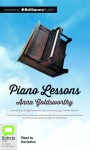
Book coverWhere to from here? Can I be a little less heavy for my last link? The hate race is a memoir about Clarke’s experience of growing up. I hope it’s not disrespectful to conclude with a very different, and rather happier memoir about growing up, Anna Goldsworthy’s Piano lessons (my review). Goldsworthy had her challenges – who doesn’t – but nothing like those faced by Clarke.

So, an unusual chain this month, because it includes two short stories, a book of essays, two memoirs, and just one novel. My links have stayed mostly in Australia, but I have popped over to early 19th century England and late 19th century USA. All this month’s writers are women.

Now the usual: Have you read What I loved? And, regardless, what would you link to? 

Six degrees of separation, FROM Normal people TO …

My time is tight right now and my mind distracted, but I did want to continue Six Degrees, which as you know is a meme currently run by Kate, and you can read all the rules on her blog – booksaremyfavouriteandbest.

Her June selection is Sally Rooney’s Normal people, which I have not, once again, read. I am going to keep it brief.

So, here goes:

Normal people

Call me

to take

Two steps forward.

But,

Everywhere I look,

I see

Signs preceding the end of the world.

Maybe tomorrow?

Regardless,

Yours truly,

The still deceived.

(Links on titles are to my posts.)

How nice it would be if our recent experience of cooperation (here in Australia, anyhow) did encourage us to take two steps forward into a new way of being and doing and relating.

And now my usual questions. Have you read Normal people? And, regardless, what would you link to? 

Six degrees of separation, FROM The Road TO …

We are now through one-third of the year. Can you believe it. It’s been quite a blur here in Australia with our worst bushfire season in decades being followed almost immediately by the pandemic. It’s hard to feel that the year has started, and yet, here we are in May already. Last month, I noted that the starting book was the first of the year’s Six Degrees of Separation starting books that I’ve read. Well, I’m thrilled to announce to all who are fascinated by such things that I’ve also read this month’s starting book, albeit before blogging. If you are new to blogging and don’t know this meme and how it works, please check out meme host Kate’s blog – booksaremyfavouriteandbest.

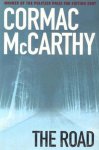
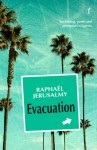
Book coverNow to May’s starting book, the 2007 Pulitzer Prize winning novel by America’s Cormac McCarthy The road. If you haven’t read it, let me tell you that it’s a mesmerising, post-apocalyptic dystopian novel. I loved it, partly because its writing is so spare (see my discussion of spare early in my blog.) It’s about a father and son who walk alone through a burned, destroyed America. They are heading to the coast, though to what they don’t know. Now, I’ve decided to do something a little different in this post: I plan to link every book back to this one. In other words, each book will be about something people do “on the road”, which means, of course, that each book will also link to each other!Raphael Jerusalmy, Evacuation

My first book is French writer Raphaël Jerusalmy’s Israel-set novel, Evacuation (my review). It is also a road trip novel, but it involves twenty-something Naor driving his mother from her kibbutz back to Tel Aviv. As they drive he tells her what happened in Tel Aviv, after he, his girlfriend, and his grandfather, had jumped off the bus that was to take them out of the city, as part of a mandatory evacuation process.

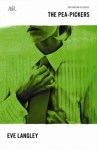
Eve Langley, the pea-pickersAnother, very different road trip underpins Australian writer Eve Langley’s The pea-pickers (my review). Here, two sisters dress as men and take men’s names, Steve and Blue, in order to work as agricultural labourers in Gippsland. The book chronicles their experiences, work, relationships and lessons learnt, over a few seasons, as they travel through Gippsland and greater Victoria.

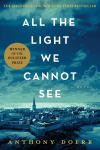
Anthony Doerr, All the light we cannot seeWhile road trips aren’t the backbone of my next book, American writer Anthony Doerr’s Pulitzer prize-winning novel All the light we cannot see (my review), they do feature quite strongly. Young Marie Laure is taken by her father from Paris to the Brittany coast’s Saint-Malo after the Germans invade Paris in 1940. Meanwhile, the orphan German boy, Werner, becomes a master at building and fixing radios, which results in his being taken on the road through Germany and into Russia to track Resistance workers through their radio transmissions.

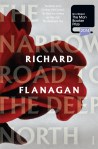
Book coverStaying in war-time but moving to a different sort of road, I am taking us to the Thai-Burma railroad as told by Australian writer Richard Flanagan in his Booker Prize-winning novel, The narrow road to the deep north (my review). I don’t think I need to justify this one any more, except to add that there is a dramatic road trip through a bush-fire at the end, giving this book double-linking credit!

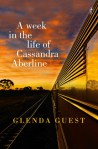
Glenda Guest, A week in the life of Cassandra AberlineHaving mentioned railroads, I’ll stay with them and link to Australian writer Glenda Guest’s A week in the life of Cassandra Aberline (my review). Having been recently diagnosed with Alzheimer’s, Guest’s Sydney-based protagonist Cassie decides to return to her childhood home in Perth in order to resolve the situation that had resulted in her fleeing many decades ago. She chooses the train as her method of travel, because that was the way she’d left, and it would also give her time to think through her situation. This is a true “journey” novel.

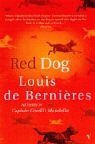
Book CoverChoosing my final book proved a challenge: I had many to choose from, many I wanted to highlight. In the end I decided to stay in Australia, and go a bit lighthearted. The book is English writer Louis de Berniere’s Western Australia-set Red dog (my review). My post on this book and film is among my all-time most popular posts. The story is about how a stray dog, the titular Red Dog, decides on John as his master and it then chronicles Red Dog’s various adventures in the mining communities of the Pilbara, much of it travelling in John’s truck. It also tracks Red Dog’s search for John through Australia and even into Japan, via road, train and ship. A road story with a difference!

So, a simple chain this month in terms of linking strategies, but I enjoyed looking at some of the ways “the road” has been used by novelists to chronicle journeys, whether they be actively chosen, or forced upon people.

Now the usual: Have you read The road? And, regardless, what would you link to? 
Six degrees of separation, FROM Stasiland TO …

It’s April and finally the first starting book for 2020’s Six Degrees of Separation that I’ve read. If you are new to blogging and don’t know this meme and how it works, please check out meme host Kate’s blog – booksaremyfavouriteandbest.

Anna Funder's Stasiland bookcoverNow to April’s starting book, the critically acclaimed, multi-translated, award-winning nonfiction book by Australia’s Anna Funder Stasiland (my review). Have you read it? If you haven’t do consider it because it’s not the sort of book to go out of date.

Janette Turner Hospital, Orpheus lostStasiland tells the stories of Stasi officers and collaborators and of those who suffered at the hands of the Stasi in the then East Germany. Largely because of this book, Mr Gums and I made a point of going to Leipzig in 2013 and visiting the Stasi’s Runde Ecke headquarters there. Anyhow, in announcing this book, Kate described it as a “classic on tyranny and resistance”. There are so many books that can link from that, so I’ll be interested to see what my co-meme-players do. I’ve decided to choose a related aspect, surveillance, which was fundamental to the Stasi’s tyrannical practices, and link to Janette Turner Hospital’s Orpheus lost (my review).Book cover

From here, I could take a cheery turn and link on, music, say, or the classics, but I’m going to stick with serious themes. Orpheus lost is partly about how terrorism leads to fear, surveillance and the loss of freedoms. Hospital was interested, she said, in the trading of civil liberties for safety in the post-9/11 world. However, I don’t want to spend all this post on this issue, so I’m making a cheeky jump to David Brooks’ The grass library (my review). It’s an animal rights focused memoir in which one of the main “characters” is Orpheus the lamb!

Bidda Jones and Julian Davies, BacklashFrom here it’s a very simple jump to another animal rights book, this one about the live export business, Bidda Jones and Julian Davies’ Backlash: Australia’s conflict of values over live exports (my review). I remember that when he sent the book to me, co-author and publisher Julian Davies described it as the most important book they’d published.

Book coverSo, I’m going to stick now with Julian Davies, or, at least, with his publishing company Finlay Lloyd, and link to the latest book of theirs published, John Clanchy’s In whom we trust (my review). One of the commenters on my post – someone who knows the author – described it as “an origin story” for the Royal Commission into Institutional Responses to Child Sexual Abuse. It is about child abuse, but is also about, as commenter David wrote, “the institutional tension between the Brother’s and Clergy power structure within the Church”. It’s a powerful, but deeply human read.

Rebecca Skloot, The immortal life of Henrietta LacksTrust, as Clanchy shows, is in short supply between powerful institutions and those who have no power and who, by rights, should be able to trust those who are not only able to but who morally should protect and support them. Rebecca Skloot had to work very hard to gain the trust of African-American Henrietta Lacks’ poverty-stricken family to write her scientific biography The immortal life of Henrietta Lacks (my review). This book is both a fascinating story of scientific discovery and a horrifying story of the abuse of people’s trust and, in fact, their rights.

Elliot Perlman, The street sweeperI am going to stay in America for last book, albeit the author is Australian, Elliot Perlman. The street sweeper (my review) is about many things, but the titular character is street sweeper Lamont Williams, an African-American, who has just started work as a janitor at a cancer hospital in a pilot program for ex-convicts. He is innocent of the crime that put him in jail but his colour and poverty meant he didn’t have a chance. This book which links the Holocaust to Civil Rights in America is fundamentally about moral responsibility – which, of course, is not what the Stasi practised at all!

I have stuck with politically charged books this month – and why not given the important role writers play in keeping us honest. So, I am going to conclude with Orwell from his essay, “Why I write”:

What I have most wanted to do throughout the past ten years is to make political writing into an art. My starting point is always a feeling of partisanship, a sense of injustice. When I sit down to write a book, I do not say to myself, ‘I am going to produce a work of art’. I write it because there is some lie that I want to expose, some fact to which I want to draw attention, and my initial concern is to get a hearing. But I could not do the work of writing a book, or even a long magazine article, if it were not also an aesthetic experience.

PS I wrote and scheduled this before COVID-19 restrictions took hold internationally. I decided not to rethink my post in the light of that but to leave you with what initially inspired me! However, I’ll add that I wonder what writers will make of COVID-19. When will the first COVID-19 novel appear? From where and from whom will it come, and what will be the take?

Anyhow, now the usual: Have you read Stasiland? And, regardless, what would you link to? 

Six degrees of separation, FROM Wolfe Island TO …

It’s March, so soon? Oh well, at least we have another Six Degrees of Separation to look forward to. As always, for those of you who don’t know this meme and how it works, please check out meme host Kate’s blog – booksaremyfavouriteandbest.

Once again, but I’m used to this now, I haven’t read Kate’s starting book, Wolfe Island by Lucy Treloar. I am, I must say, more embarrassed about this than usual, because Treloar is an Australian woman writer and I do like to support them!

But now, crunch-time. Because life has been busy lately, I am going to be lazy. Not only am I going to make this post short and sweet, but all my links will be on words in the title or author’s name, with a little bit of poetic licence taken along the way.

Book coverSo, we start with Lucy Treloar’s Wolfe Island

and immediately time-shift back to Tudor England and Hilary Mantel’s Wolf Hall (my review).

From here, we return to our times and Rodney Hall’s A stolen season (my review).

Now, I just can’t let “stolen” pass without referencing Carmel Bird’s (ed) The stolen children: Their stories (my review).

Children takes me to Helen Garner’s The children’s Bach (my review) …

at which point I beg your forgiveness, because we are going to Rebekah Clarkson’s Barking dogs (my review).

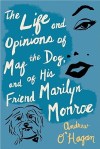
Dogs! Now there’s an embarrassment of riches. Since blogging, I’ve read several books with “dog” in their title, so which to choose? I thought, in the interest of gender diversity, that I should choose one by a male writer, but in fact most of them have been written by men, so, I’m just going to spin the dice and land on … Andrew O’Hagan’s The life and opinions of Maf the dog and of his friend Marilyn Monroe (my review). I mean how can you resist a title like that!

So, short and sweet as promised. What more can I say, except …

And now, the usual: Have you read Wolfe Island? And, regardless, what would you link to? 
POSTSCRIPT: This went out with last month’s title – that’s what you get for being lazy and copying old posts!

Six degrees of separation, FROM Fleishman is in trouble TO …

Here we are at our second Six Degrees of Separation meme of 2020. For those of you who don’t know what this meme is and how it works, please check out meme host Kate’s blog – booksaremyfavouriteandbest.

Once again, but I’m used to this now, I haven’t read Kate’s starting book, Fleishman is in trouble by Taffy Brodesser-Akner. However, I devised a lovely – well, I think it was – chain for it. Then, as the fires and smoke in my area just got worse and worse this week, I decided to go off script and riff off the title to create my own theme for this post, Australia is in trouble! I’m not going to link my books, but just share six that I’ve read which address, in some way, climate change.

In his 1946 essay, “Why I write”, George Orwell lists four main purposes for writing, the fourth being:

Political purpose: Using the word ‘political’ in the widest possible sense. Desire to push the world in a certain direction, to alter other peoples’ idea of the kind of society that they should strive after. Once again, no book is genuinely free from political bias. The opinion that art should have nothing to do with politics is itself a political attitude.

The other purposes, if you want to know, are “sheer egoism”, “aesthetic enthusiasm”, and “historical impulse”. Orwell goes on to say that “in a peaceful age I might have written ornate or merely descriptive books, and might have remained almost unaware of my political loyalties. As it is I have been forced into becoming a sort of pamphleteer.” Of course his times were different, so his issue – totalitarianism – is different to the ones confronting us now (though, then again, perhaps not!) Anyhow, my point is that in this post I’m going to share six works by writers who also write with a political purpose.

Melissa Lucashenko’s “How green is my valley” (2006) (my review): an essay in Griffith Review’s climate-change-focused issue (12), Hot air: How nigh’s the end. Indigenous writer, Lucashenko addresses climate change, recognising that many non-Indigenous Australians also love the land. She suggests that a “bicultural” approach, which spans the chasm “between industrial and indigenous views of the ‘good life’ and what constitutes a proper society”, would be a good place to start.

Jane Rawson’s A wrong turn at the Office of Unmade Lists (2013) (my review): set in a bleak climate-damaged Melbourne of 2030, where it’s very hot, and clean water is harder to come by and more expensive than beer. Its main protagonist, Caddy, is living rough, having lost her husband and home in a heatwave-induced fire a couple of years before the novel opens.

Annabel Smith’s The ark (2014) (my review): set in the 2040s, during, as Smith describes it, “a post-peak oil crisis. The polar ice caps have melted. Crops are failing. People are starving and freezing to death.” Interestingly, given my George Orwell intro, a major theme of this novel is how, in such a world, charismatic-despotic leaders can come to the fore.

Alice Robinson’s Anchor point (2015) (my review): a family drama, but one framed by farming and the land. Climate change hangs over this novel, with its depiction of father Bruce and daughter Laura struggling against drought, bushfires and land degradation to keep their farm going. By 2018 (a little into the future at the time the novel was written), Laura has given up the struggle, because “the climate had long stopped being something she understood”.

Cassie Flanagan Willanski’s Here where we live (2016) (my review): a collection of short stories about the relationships between non-Indigenous and Indigenous Australians, and the relationship both have with the land. Although not specifically a cli-fi book, concern about land, the environment, and climate change suffuses the stories. In the last story, a terrible storm occurs, and a character says:

‘It’s climate change, of course,’ you say knowingly. ‘They say that these one-hundred year storms are occurring so frequently now that the name no longer bears any meaning. But we need to keep the name so that we can understand that this kind of storm is so severe it should only occur once every hundred years. We need the name so we understand that something has gone wrong.’

Catherine McKinnon’s Storyland (2017) (my review): set in the Illawarra region south of Sydney, and tells the story of the Australian continent, post-white settlement, from 1796 to 2717. One of its five time-periods is 2033 in which climate-change has caused utter devastation to the land and a dystopia is playing out.

So, a different Six Degrees post, and one not necessarily featuring all the most obvious Australian climate-related books. Although all mine are by women, men have written some too. It’s just that I haven’t read them. The main point is that writers are addressing this issue, doing their best “to push” all to see that Australia is in trouble. The question is whether the people who need to read them are in fact reading them?

And now, the usual: Have you read Fleishman is in trouble? And, regardless, what would you link to? 
Six degrees of separation, FROM Daisy Jones and the Six TO …

I do love the sound of 2020. It has a lovely ring to it. It’s also the year that Father Gums will turn 100. However, that will be May. Right now, it’s time to kick off the first Six Degrees of Separation meme of the year. This meme for those of you who don’t know it is explained in detail on our meme host Kate’s blog – booksaremyfavouriteandbest.

Book coverI’m starting this year the same as I did last year, that is, with Kate choosing a book I haven’t read. Indeed I haven’t even heard of Taylor Jenkin’s Reid book, Daisy Jones and the Six, which is a novel about the rise and fall of a fictional 1970s rock band.

For my first link, I’m sticking with the theme of rock music, and choosing Nigel Featherstone’s novella, The beach volcano (my review). However, Featherstone’s novel, while featuring a successful rock musician – Canning aka Mick Dark – is not so much about Canning’s musical career as his return home after a long absence for his father’s 80th birthday, intent on getting answers to some longstanding family secrets and, thus, resolve underlying conflicts.

Pierre Lemaitre, The great swindleFeatherstone’s Canning returns home because he wants to improve his relationship with his family, and father. Not so for Édouard Péricourt in Pierre Lemaître’s The great swindle (my review). Severely wounded in World War 1, and the son of a dominating father, he flat refuses to return home to resolve those unresolved conflicts!

Julian Davies, Crow mellow Book coverAnd here, sticking, unusually for me, with content, I’m going to link on something a bit tenuous. Édouard Péricourt was so disfigured in the war that he wears increasingly bizarre but often beautiful masks rather than let people see his face. Masks feature in Julian Davies’ novel Crow mellow (my review), but via a masked ball that takes place in a country house/bush retreat where artists are staying with their patrons and admirers.

Charlotte Wood, The natural way of thingsCrow mellow belongs, then, to a sub-genre known as country house novels. While you couldn’t call my next link a country house, exactly, but the characters in Charlotte Wood’s The natural way of things (my review) are all stuck together in a sort of labour camp in the country somewhere. No masked-ball fun there!

Emily BItto, The strays, book coverThe natural way of things won the Stella Prize in 2016. The 2015 winner was a sort of country house novel too, Emily Bitto’s The strays (my review) which is about an artist’s colony in Victoria, inspired by the Reeds and their Heide group. Yes, I know I’m stretching the country house friendship a bit, but why not?

Book coverSo, where to from here? How about another book which was inspired by artists, albeit of a different type? Dominic Smith’s The electric hotel (my review) was inspired by the silent film pioneers of the early twentieth century. Its protagonist, Claude Ballard, is fictional, like Bitto’s Trenthams, but it does directly reference real artists as well, such as the Lumière Brothers and Thomas Edison.

So, a different sort of chain for me because all the main links are content-related (with an additional link between Wood and Bitto on the Stella Prize.) Interestingly, I’ve realised that most of the books deal with artists of some sort – painters, musicians, filmmakers, and mask-makers. Four of my six authors are male, which is not common for me, and all of my linked authors, except Pierre Lemaître, are Australian (albeit Smith now lives in the USA). Oh, and all are set post 1900.

And now, my usual questions: Have you read Daisy Jones and the Six? And, regardless, what would you link to? 
Six degrees of separation, FROM Sanditon TO …

And so we come to the last Six Degrees of Separation meme of the year, and Kate has chosen a special book (for me anyhow) as our starting book. However, first, I need to tell you that if you are new to blogging, and don’t know what this meme is about, please check host Kate’s blog – booksaremyfavouriteandbest.

Jane Austen, Lady Susan, The Watsons, SanditonLast month’s starting book, Lewis Carroll’s Alice’s adventures in Wonderland, is of course a classic. This month’s would have been a classic I’m sure, if only the author had managed to finish it. The book is Sanditon (my review) and it was written – well, 11 chapters anyhow – by Jane Austen. Kate chose it, as you probably know, because Andrew Davies’ television adaptation (of his version of the completed story) is currently being broadcast. Of course I have read it, more than once …. making five the number of starting books I’ve read this year.

Thea Astley, DrylandsFor my first link, I’m choosing Thea Astley’s Drylands (my review) which might sound surprising, though, like Austen’s book it is set in a small (non-urban) community. However, the reason I’m linking to it is not that, but because Drylands was Astley’s last novel (albeit she managed to finish hers before she died.)

Tara June Winch, Swallow the airNow, Drylands has an unusual form. It is a novel, really, but it can read like a collection of short stories, which are written by someone called Janet. Another novel that can also be described as a collection of short stories, though not quite as tricksy in form as Astley’s, is Tara June Winch’s Swallow the air (my review). Coincidentally, it is a debut novel (as opposed to Astley’s swan song one!)

Karen Viggers, The orchardist's daughterAnd here I’m going to change tack and move from Australia to France. Tara June Winch now lives in France, and has for some years. An Australian author who sells very well in France is, in fact, local Canberra writer, Karen Viggers. Her novel, The orchardist’s daughter (my review), has, like her previous novels, been translated into French. Its title is Le Bruissement des feuilles, which is, in English, The rustle of leaves. Hmm… I could link to another book published with a different title overseas, but we’re going to (sort of) stay in France …

John Clanchy, Sisters… and link to a book by an Australian writer (another Canberran in fact) that was drafted at a writer’s retreat in France and published by the people, La Muse, who are behind that retreat. The author is John Clanchy and his book, Sisters (my review).

So far I’ve been a bit nationalistic in my French links, so next I’m linking to a book by – an English writer! Did I trick you there? However, it is about French people, Caroline Moorhead’s biography Dancing to the precipice: The life of Lucie De La Tour Du Pin, Eyewitness to an era (my review)which is set before, during and after the French Revolution.

Pierre Lemaitre, The great swindleAnd finally, because of course I had to do it, a book actually written in France by a French writer. I’ve read a handful of French writers since I started blogging, so the choice was a bit of a challenge. However, given the flamboyance of some of the French aristocracy covered by Moorehead in her book, I thought perhaps Pierre LeMaitre’s novel,The great swindle (my review), with its damaged but flamboyant character, Édouard Péricourt, would be the best match. (These last two books could also be linked by the fact that I probably wouldn’t have read them had they not been chosen by my reading group!)

So, we started in England with Austen, before moving to Australia. We then dallied a little longer in Australia, but with French connections, before finally landing in France. We have covered over two centuries in our travels, and have, as often seems to be the case with my Six Degrees, met four women and two men authors.

And now, my usual questions: Have you read Sanditon? And, regardless, what would you link to?