How is that I, a non-meme-doing blogger, suddenly find myself doing memes, like the Six Degrees one? I can’t explain it exactly, but I think it happens when the meme encourages me to think about my reading or blogging. So, when Lisa (ANZLitLovers) reminded me of this end-of-year meme, that she was reminded of by Jane at Beyond Eden Rock, I decided to give it a go. To play, you “Take the first line of each month’s post over the past year and see what it tells you about your blogging year.” (I think this means the FIRST line of the FIRST post in each month.) Apparently, the idea started with The Indextrious Reader.
Now, I have cheated a little on this meme because I found that of the twelve first posts of the month, six were the Six Degrees of Separation meme, and two were my Monday Musings on Australian Literature series. This happened because I post, on average, thirteen posts a month, so there’s good probability that Six Degrees, which occurs on the first Saturday of the month, or Monday Musings, which occur every Monday, will be the first post of the month. Sharing these posts wouldn’t give a good overview of my blog, so I’ve chosen the first post of the month that is not a Six Degrees or Monday Musings one.
So, my first lines …
January: Reading highlights for 2016:
And so we finally say goodbye to a year many of us would like to forget, but before we do, I would like to share my 2016 reading highlights.
February: Delicious descriptions: Freya Stark on a studied absence of curiosity:
Usually I post a Delicious Description after my main post on the book in question, but I’m reversing my practice this time, for no other reason than time.
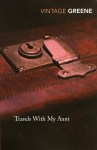 March: Graham Greene, Travels with my aunt:
Every year, my reading group aims to do at least one classic – usually something from the nineteenth century – but this year someone suggested Graham Greene.
April: Janette Turner Hospital’s Orpheus lost:
Last year I did a mini-review of Elizabeth Jolley’s An innocent gentleman using some scrappy notes from when I read the book long before blogging.
May: William Temple Hornaday, The bird tragedy of Laysan Island:
William Temple Hornaday (1854-1937), whose article “The bird tragedy of Laysan Island” was a recent Library of America (LOA) Story of the Week offering, is a tricky man to write about.
June 2017: Linda Neill, All is given:
Linda Neil’s second book, All is given, is subtitled “a memoir in songs”.
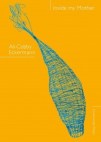 July: Ali Cobby Eckermann, Inside my mother:
Ali Cobby Eckermann, a Yankunytjatjara/Kokatha woman, has featured a few times on this blog, including in my review of her verse novel, Ruby Moonlight, and my Monday Musings post on her winning the valuable Windham-Campbell Prize this year.
August: Hartman Wallis, Who said what, exactly:
Never mind Hartmann Wallis’ question Who said what, exactly, I want to know who Hartmann Wallis is, exactly!
September: Phil Day, A chink in a daisy-chain:
You’ve “met” Phil Day, author of A chink in a daisy-chain, here before.
October: Catherine McKinnon, Storyland:
It is still somewhat controversial for non-indigenous Australian authors to include indigenous characters and concerns in their fiction, as Catherine McKinnon does in Storyland.
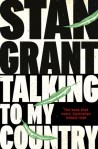 November: Stan Grant, Talking to my country:
History is, in a way, the main subject of my reading group’s October book, Stan Grant’s Talking to my country.
December: Unbreakable: Conversation with Jelena Dokic:
If you are a fan of professional tennis you will probably have heard of Jelena Dokic who hit the world stage during the 1999 Wimbledon Championships.
The question is, as Lisa asked herself, do these first lines give you a good sense of my blog and of my reading interests. Well, I’d say yes and no …
Yes, because:
- my reading each year includes some classics, such as Graham Greene’s Travels with my aunt.
- my focus is Australian literature and this is clearly evident in the list above.
- I am aiming to increase my coverage of indigenous Australian literature, and this is evidenced here by Ali Cobby Eckermann in July and Stan Grant in November.
- each year I read a selection of offerings from the Library of America, and there’s one here, William Temple Hornaday’s “The bird tragedy of Laysan Island”.
- I enjoy reading left-of-field books, such as those published by Finlay Lloyd, exemplified here by Hartmann Wallis’ Who said what, exactly and Phil Day’s A chink in a daisy-chain.
- I report on my reading group’s reads, including, here, Graham Greene’s Travels with my aunt and Stan Grant’s Talking to my country.
- I try to attend literary events and author talks, such as December’s conversation with Jelena Dokic (which in itself is not wonderfully indicative of my literary events, but it’s the one that popped up!)
- I mix my reading forms and genres, across non-fiction and fiction, so in this list are memoirs, a biography, novels, an essay, and a classic.
- I try to mix up my opening sentences, and I think there’s some evidence of that here (but you can tell me how successful you think I’ve been!)
- I run some series on my blog, the main one being Monday Musings of Australian Literature, but another being Delicious Descriptions (which you can see in February).
And no, because:
- I generally read more women authors than men, but the mix here is pretty even.
- I do read some translated and diverse writing, but there are none here, besides the indigenous writers.
- One of the forms I love to read are short stories, and they are not represented at all in this set of posts.
Overall though, my first lines have captured my blog reasonably well … I’d say.

















 Whispering Gums