Delicious descriptions: Gay Lynch on place, in colonial South Australia

Book cover

In my recent post on Gay Lynch’s historical fiction novel, Unsettled, I spent so much time writing about it, that I didn’t share any quotes as I usually do, so I’m using a Delicious Descriptions post to share just a couple of descriptions of the setting, which is around Gambierton/Mt Gambier in South Australia.

In one scene, Rosanna is looking for a lost child – a deft use by Lynch of the “lost child” motif common in colonial Australian literature – and comes across “a formidable rock-face … pigface flowers rioting across its surface.”

Her head spins when she finally looks down, searching the red rings like the contours of cut gum that encircle the unbroken walls of the crater. A wagtail aggravates a flock of swallows, resting on their tails and diving off, riding invisible currents over the startling void. Not a flutter of childish frilly clothing. Father Woods and Skelly have long conversations about the Pleistocene period when molten lava cooled forming the solid parts of the south-east landscape and great seas retreated, leaving behind corals and small crustacaens. Moorecke has told Rosanna Booandik stories about giant Craitbul’s cooking mound, for that is what she calls it.

In this little excerpt Lynch not only describes the physical landscape, but she conveys Western and Indigenous understandings of it. She doesn’t presume to tell Indigenous stories but she lets us know that other stories about the land exist. She also conveys here the relationship Father Julian Tenison-Woods (a real historical character) and Rosanna’s brother, Skelly, have concerning exploring and documenting the natural environment.

My second choice describes a ride Rosanna takes, with Moorecke, to the shipwrecked Admella (which many of you know was also featured in Jane Rawson’s 2017 novel From the wreck):

Moorecke directs Rosanna due west. Up to his girth in water, skirting sinkholes, Lucifer crosses deep bogs. They pass through long grasses, scrub and stands of black-wood. He takes logs in his stride with Moorecke jolting like a post office package, hands on his haunches, and Rosanna standing on the balls of her toes in the stirrups. They curve their backs against the stiff salt wind like crooked trees–like carratum, Moorecke says. A swamp harrier drops before them and screams as it rises, a scrabbling creature dangling from its talons.

White mist settles like a ration-blanket around their shoulders. They approach the sea, making their way with caution past sink-holes and through limestone-littered clearings. Sea heath and spear grass cling to the dunes. Lucifer begins to flag. Fingers stiff with cold, Rosanna lengthens his reins. The hollow roar of the sea reminds her that she has seen these limestone cliffs undercut by ferocious waves on a ride with Edwin. ‘I know this place. There is a spring.’

‘No stopping here.’ Moorecke lifts Rosanna’s hair to bellow in her ear. ‘Blackfellas’ caves’.

Once again the landscape is described, but Lynch imbues it with a disturbing sense to prepare us for the horror they are about to confront. Again, too, there is reference to Indigenous culture, and the implication that some places are sacred and should not be visited. In such ways do historical novelists show rather than didactically tell the things they want us to understand.

Any thoughts?

Gay Lynch, Unsettled, ligatu.re, 2019.

Monday musings on Australian literature: Modern sensibilities and Historical fiction

Book cover

Following last week’s Monday Musings, and my recent review of Gay Lynch’s historical novel, Unsettled, I thought it might be worth teasing out the fraught issue of “modern sensibilities” in this genre.

By teasing out, I mean that this will not be a thorough analysis of the topic so much as my sharing a few ideas and thoughts for you to respond to with your own.

I was inspired, of course, by Bill (The Australian Legend) – who wouldn’t be! – when he commented on my review of Unsettled that “I’m glad that she included the Boandik people and that they had some input. I suspect though that Rosanna has modern sensibilities when it comes to Indigenous relations.”

I could research the journals and letters of women at the time to see what discernment there might have been among those women, but most likely women from oppressed groups like Rosanna’s are not well represented in the papers held in libraries and archives. For a start, many may not have been able to read, though Rosanna could. Those who could read would have, like Rosanna, struggled to afford paper. Writing journals and letters was probably rare for them.

Consequently, I’ve decided to tackle the wider issue, rather than try to prove this particular one.

Why do people write historical fiction? I quoted HNSA in last week’s post as saying that historical fiction presents “an authentic world which can enrich a reader’s understanding of real historical personages, eras and events”.

Lynch made it clear in her Acknowledgements, as I wrote in my post, that she wanted to “to materialise Lynch girls” who were absent in all meaningful ways from the record. She noted that their “lack of documentation and therefore their invisibility reflect their early settlement status on the frontier.” So, how to do this without documentation? And how are we to assess this?

Let’s start with what we want from historical fiction? What I want is light to be thrown on issues relevant to now. Sure, stories can be fun for their own sake, but I like my stories to have something more. I want to be challenged to think about how things were, and how they affect or reflect how things are. In other words, I want to get at the “truth” of history. The thing of course is that the “truth” of history does change with the times, whether we like it or not.

Right now, in Australia, historical “truth” includes issues like the invisibility and powerlessness of women, and the dispossession of Indigenous people. It hasn’t always been so. There was a time when historical “truth” focused on what many of us now view as the ANZAC myth. There was a time when the story of early settlement was only about the hardship faced by and the achievements of the white settlers. And, so on … history may be based on facts but how those facts are interpreted, which facts are interpreted, who is interpreting them and why, makes all the difference.

In a past post, I included the following from novelist Jose Saramago’s The Elephant’s Journey (2008):

It must be said that history is always selective, and discriminatory too, selecting from life only what society deems to be historical and scorning the rest, which is precisely where we might find the true explanation of facts, of things, of wretched reality itself. In truth, I say to you, it is better to be a novelist, a fiction writer, a liar.

The novelist, then, can explore “truths” that society may scorn (reject) as not being “historical” or, I would add, that is not readily available on the historical record. However, how do you convey historical “truths” in situations where they come with a lack of record, with minimal evidence or facts. If you are powerless and dispossessed you are unlikely to leave a verifiable mark. How, in this circumstance, do you convince your readers that your characters and/or story are authentic as well as true?

Authors, I’d argue, have to start by presenting the times and characters in ways that feel authentic; they have to get enough of the “facts” right that we are happy to go along with what might be less easy to verify. Then, they have to present an interpretation of the facts that makes sense according to what we believe or know to be true.

I have been interested in this issue for some time, and have shared on this blog the thoughts of various novelists expressed at events I’ve attended. I thought I’d reiterate some here.

Robyn Cadwallader, The anchoress

Robyn Cadwallader, who has written two mediaeval historical novels, The anchoress (my review) and Book of colours (my review), spoke of her interest in ordinary women and how they “managed to find value in their lives within the constraints” of their times. She spoke of the challenges of making these women’s gains and achievement believable for those times, of not wanting to “damage” them “by presenting them differently from what they are”.

Rachel Seiffert, who has written historical fiction about the Third Reich, spoke about how her character in A boy in winter doesn’t know the Holocaust is proceeding. Her challenge was to show that he had to make choices not knowing the full story, which the readers do know.

(Seiffert’s point here is relevant to the idea that we should only read fiction written at the time it is about. As she says, people at the time do not “know” their whole time. They cannot therefore provide the perspective we gain in retrospect, and which historians and historical novelists offer us.)

Roslyn Russell, Maria Returns Barbados to Mansfield Park

Historian and historical fiction novelist (Maria returns: Barbados to Mansfield Park), Ros Russell, spoke about ethical responsibilities, saying that historians must not distort what they find. They must be true to their sources, but she always looks out for things that might say something different to the prevailing narrative.

In the end, the issue of “modern sensibility”, particularly where the author has rendered the period authentically, comes down to the reader. We have to decide whether that authenticity includes the novel’s characters sounding just like prevailing views of their era, or whether we accept that there were always people who “bucked” that prevailing view.

As you probably know, I’m with the latter group. So, if I’m happy with the overall authenticity, I’m prepared to give novelists the benefit of the doubt if their characters express views that seem to be “modern”. So-called “modern” ideas don’t pop out of nowhere, after all …

Now, over to you … where do you stand on this issue?

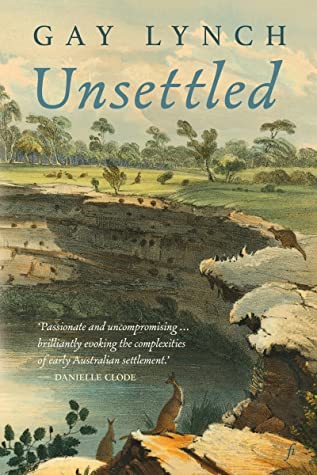
Gay Lynch, Unsettled (#BookReview)

Coincidentally, my first review after this week’s Monday Musings on historical fiction happens to be a work of historical fiction, Gay Lynch’s cleverly titled Unsettled. Consequently, I’m going to start there, that is, talking about the form.

Well, more or less, because I should at least give you a sense of its subject. It is set primarily in South Australia’s Gambierton (later Mt Gambier) from the 1859 to 1880, with most of the action taking place in the 1860s. It’s the story of an Irish family, the Lynches, who migrated to Australia in 1848. The Lynches, as you might have guessed from the author’s name, are based on her husband’s family. Unsettled explores their story primarily through two fictional characters, Rosanna and her younger brother Skelly.

… in the spirit of the story

Which brings me to the genre. In her Acknowledgements, Lynch provides some useful insights into the book. Firstly, regarding intention, she says that she specifically wanted “to materialise Lynch girls, absent from every family anecdote and official documents, church, state and school, apart from their birth documents … the girls’ lack of documentation and therefore their invisibility reflect their early settlement status on the frontier.” The challenge, of course, in “materialising” invisible characters from the past is to make them real, and avoid anachronism. This is difficult when records are few, but I think there are enough records of frontier women in general to validate Lynch’s conception here.

Lynch also addresses where she has changed Lynch family “facts”, such as their and their employers’ names. She also says that her two main characters, Rosanna and Skelly, “exist only in [her] imagination”, but “her lived experience as Lynch wife and mother, verifiable historical events, and historical Lynch antecedents” offered her “the connective tissue” needed for their fictional lives.

She goes on to say that “in the spirit of historical fiction” she has kept close to official records so that the characters drawn from life are as “true” as she can make them, but that “in the spirit of story, some events may not be verifiable”. That, of course, is historical fiction; it’s about fleshing out lives and times with story, where the facts are not known or are minimal.

Finally, she addresses her inclusion of the local Boandik people, an issue we often discuss here. She writes that they “tell their own South-East story – they still live on that once dangerous frontier, on land they never ceded – of their attempted eviction and genocide”. She says she “benefitted from knowledge shared by Boandik custodian Ken Jones”, conversed “with Boandik linguist linguist David Moon”, and was supported in addressing “important questions about voice and Indigenous historicity”. As I’ve said before, it’s really up to the Boandik people to say whether they agree with their representation, but Lynch has, it seems, done the right thing: she has included them in her narrative (in an appropriate way) and has conferred with the people she ought about doing so.

I’ve spent a bit of time on this I know, but it’s important with historical fiction to be very clear about what it is we are reading. I’m not an expert in South Australian settler history, but I feel Lynch has provided me with enough here, in addition to the knowledge I do have, to reassure me that her story is a valid one, so let’s get to that …

“now that the country is settled”

Nearly halfway through the novel, Rosanna converses with her employer, the hard, English station-owner, Mr Ashby. He is searching for some local Indigenous people who, he believes, have been “filching” from him. Rosanna, who has befriended the young local woman, Moorecke, tells him that Moorecke “belongs on this land”. She adds, hoping to throw him “off the scent”, that she rarely sees “Blacks, now that the the country is settled.”

Here, and throughout the novel, Lynch layers meanings in brief exchanges. Implied in this little scene, for example, are multiple power imbalances – between settlers and the original inhabitants, between the landowning English and the oppressed Irish, and between man and woman. And of course, overlaying this is the fraught idea of being “settled” and all its connotations, political and personal, physical and emotional. “Now that the country is settled” implies of course that it was “unsettled” before. This novel, with its title, “Unsettled”, keeps this foundational wound front and centre in our minds, which, dare I say, “unsettles” us.

This layering of meaning is one of the reasons I found the book an enjoyable read, because I enjoy such thoughtful, provocative writing, but the enjoyment here is compounded by the characters, particularly Rosanna and Skelly. Both are well individualised, with the novel’s third person perspective shifting mainly between them.

Over the course of the novel, Rosanna is our guide to what happens on the frontier. She works for the landowning Ashbys; she spends time with and learns from Moorecke of the Boandik people; she rides with the poet Adam Lindsay Gordon and confesses to Father Tenison Woods. She falls in love naively, makes many mistakes big and small, can be mean and tender, but she is a warm, courageous young woman who is determined to make her way authentically through a world which pays little attention to the dreams, let alone rights, of women. A world, in fact, in which “men are dangerous creatures if thwarted”.

Skelly, her sensitive and somewhat frail younger brother, is both foil and support to Rosanna. Their relationship contains the typical sibling tensions, but love and loyalty underpin it. It is what happens to Skelly at a school in Melbourne that propels Rosanna’s actions which provide the novel’s opening drama.

As is common in historical fiction, Lynch uses a family drama to drive the narrative forward and engage our emotions and interest. Lynch also imbues her story with references to both Australian and English literature of the times. For keen-reader Rosanna, Anthony Trollope’s Irish heroine Feemy Macdermot, from his first novel The Macdermots of Ballycloran, offers lessons to heed.

The main work that threads through the novel, however, is Edward Geoghegan’s play The Hibernian father, which was a popularly performed tragedy in mid- to late-nineteenth century Australia. It tells a tragic story of the Lynches of Galway, whence our own Lynches had come. The tragedy distresses our young Lynches, and threatens to destabilise them as they struggle to forge their lives without failing in the same catastrophic way. Rosanna’s father Garrick Lynch reassures his family that “it’s an ancient story … from bloody times”, but the irony is that “bloody times” are still with them.

In the end, all of this has one goal, to serve the real point of Lynch’s story, the complicated politics of settlement, oppression and dispossession, the injustices of colonialism. As Rosanna becomes aware, during an interaction with her employer Mrs Ashby, “living on the edge of civilisation unsettles everyone”. Gay Lynch’s book does the same – and that, I’m sure, was her intent.

Challenge logo

Gay Lynch
Unsettled
Balmain: ligatu.re, 2019
421pp.
ISBN: 9781925883237

(Review copy courtesy the author.)
Monday musings on Australian literature: Supporting genres, 1: Historical fiction

While my prime focus here is literary and classic fiction, I do also delve into other forms (like biography, autobiography/memoirs, poetry, history), and other genres (like crime, dystopian fiction, and historical fiction). So, I’ve decided to start a little MM subseries on other genres and forms, starting with historical fiction. My aim is less to analyse the genre itself, than to share some of the ways in which it is supported in Australia.

I’m starting with historical fiction because of the recently announced longlist for the inaugural ARA Historical Novel Prize, which Lisa (ANZLitLovers) posted on recently. Let’s start with the prize’s home, the …

Historical Novel Society of Australasia (HNSA)

HNRA describes itself as

the third arm of the international Historical Novel Society, and is recognised as the home of the historical fiction genre in Australasia. The Society promotes the writing, reading and publication of historical fiction … Our events showcase the best literary talent and enable readers, writers and publishing professionals to celebrate the genre.

They consider historical fiction

to be important to both the entertainment and education of readers as it contributes to the knowledge of the reader and provides a valid perspective beyond the viewpoint of the historian. Both the imagination and dedication of historical novelists present an authentic world which can enrich a reader’s understanding of real historical personages, eras and events.

The secret River cover

While I agree that there is an educative aspect, we readers need to appreciate what sort of education we’re getting. We can’t expect certifiable facts but can expect insight into how things were or might have been. My favourite historical fiction, though, does more; it explores the past in a way that throws light on the present. I find the statement that historical fiction provides “a valid perspective beyond the viewpoint of the historian” interesting in light of The secret river controversy. Beyond? I think alongside might be better?

Anyhow, on the ARA Historical Fiction Prize page, they define historical fiction. It:

  • means novels written at least 50 years after the events described, or written by someone who was not alive at the time of the events and who therefore approaches them only by research.
  • can include historical mystery, historical romance, historical fantasy, and historical fiction written for children and young adults; and also alternate history, pseudo histories, time-slip novels, multiple-time novels, and parallel narrative novels with flexibility to crossover between eras stretching from 50 years or more in the past until contemporary times.

HNSA has now held three biennial conferences – in 2015, 2017 and 2019. They also offer a suite of prizes/awards of which the new ARA Historical Novel Prize is “the crown jewel”. The others are the ARA HNSA Short Story Contest and the TCW HNSA First Pages Pitch Contest. They also offered a Colleen McCullough Residency on Norfolk Island in 2019, and this year instituted the Elizabeth Jane Corbett Mentorship for Young Adult historical novelists (that is, for previously unpublished writers of young adult fiction, not for writers who are young adults1)

ARA Historical Novel Prize

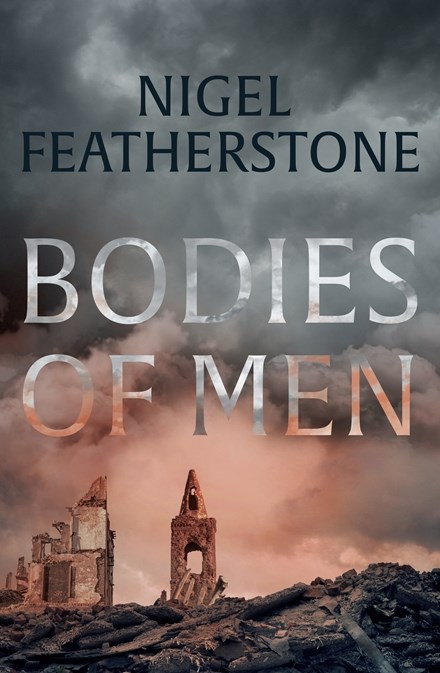
Nigel Featherstone, Bodies of men

This prize, which is supported (fascinatingly) by a building and facilities company, the ARA Group, is worth $60,000, with $50,000 going to the winner, and $5,000 each to two short-listed writers. It is open to Australian and New Zealand writers. The longlist was announced on 6 October, with the shortlist of 3 books to be announced 28 October, and the winner on 10 November.

The inaugural 2020 longlist is:

  • Sienna Brown’s Master of my fate 
  • Nigel Featherstone’s Bodies of men (my review)
  • Catherine Jinks’ Shepherd
  • Mirandi Riwoe’s Stone Sky Gold Mountain (want to read, Theresa’s review)
  • Dominic Smith’s The Electric Hotel (my review)
  • Christos Tsiolkas’ Damascus (my review)
  • Pip Williams’ The Dictionary of lost words (on my TBR, Lisa’s review)
  • Tara June Winch’s The yield (my review)

Surprisingly for me, I have read half of them!

HNSA Conferences

In 2019, the conference included a full-day academic stream, focusing on the overall conference theme of History repeats. There were three panels through the day: Genre and gender; Genre and the discourse of history; and War and conflict. Abstracts of the papers can be found at the link above.

Jessica Anderson, The commandant Book cover

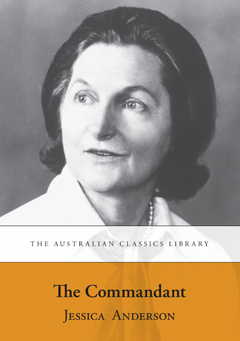
One of the papers was “‘the truth of the book’: Jessica Anderson’s The Commandant as a work of biofiction, Merran Williams“. I have reviewed this book, which is Anderson’s only historical fiction work. In her abstract, Williams says that “Historical novels have the ability to provide unique insights into untold histories” and that

Anderson subverted the traditional biofiction of a man of importance by feminising the masculine history of Patrick Logan and the Moreton Bay convict settlement and telling much of his story from the point-of-view of the soldiers’ female family members. I focus on her fiercely forensic approach to historical research and how she applied this to her writing practice to produce a work of historical biofiction that shines a light on a foundational period of Australian history.

This is a stream of the conference I’d love to attend if it ever came my way.

AWW Challenge

Challenge logo

Many of you know that I have been involved in the Australian Women Writers Challenge pretty much from its inception. It collects on-line reviews by contributors of any books – all forms and genres – written by Australian women. At regular intervals, mostly monthly or bimonthly, volunteers post round-ups of reviews contributed in the previous period for specific genres/forms. Our current Historical Fiction volunteer is Theresa Smith (Theresa Smith Writes.)

You can find her Historical Fiction round-ups at the AWW site. The Books Reviewed search page will find all contributors’ reviews posted to the challenge. The site comprises an excellent resource for reviews on books published recently and in the past, because our reviewers read widely.

Other

The Nib Literary Award could be seen to support this genre in a broad way, because, although its winners tend to be non-fiction, its aims are to celebrate excellence in research, including in fiction.

Courtney Collins, The burial

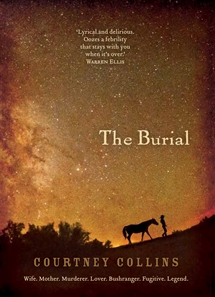
There is also an interesting international site called historicalnovels.info which devotes a page to Australasia. It’s uncomfortably simplistic in its understanding, offering this about Indigenous Australians regarding historical fiction: “Native Australians, dubbed Aborigines by European settlers, did not fare well as colonization spread, but modern novelists recognize the positive aspects of their culture”. However, for readers looking for a list of Aussie historical fiction books, there’s something here. The list includes classic and contemporary novels – including writers like Eleanor Dark and Brian Castro! I learnt a few things, including that Courtney Collins’ The burial (my review) was published in the USA as The untold.

I’d love to hear what you think about historical fiction – even you Bill! – particularly regarding whether you like and why or why not?

Bill curates: Monday musings on Indigenous Australian writers

Bill curates is an occasional series where I delve into Sue’s vast archive, stretching back to May 2009, and choose a post for us to revisit.

The feature of Whispering Gums that we all most look forward to is Monday Musings. But when did they start? It took me a while to locate – WordPress really needs the ability to scroll through post Titles by Date – but it turns out Sue put up the first one on 9 Aug. 2010 (here). Check it out, it’s only short, not much more than a statement of intent. No. 2 (here) covers 5 Australian novels, of which two would have to be my all time least favourite. So I’ve chosen for today, No. 3, from 23 Aug. 2009.
_______________________

My original post titled: “Monday musings on Australian literature: Indigenous writers”

Tara June Winch

Tara June Winch (Courtesy: Friend of subject, via Wikipedia, using CC-BY-SA 3.0)

It’s important I think that my third post be on our indigenous writers. Again it’s going to be pretty idiosyncratic as my reading in this area has been scattered, not for lack of interest so much as the old “so many books” issue that we all know only too well. I was first introduced to indigenous writing at high school where I had two inspirational teachers who encouraged us to think seriously about human rights. It was then that I bought Oodgeroo Noonuccal’s (or Kath Walker as she was then) book of poetry, My people.

In my first Monday Musings post, I mentioned David Unaipon who is generally recognised as the first published indigenous Australian author. However, it was Oodgeroo Noonuccal, with her book of poetry, We are going (1964), who heralded contemporary indigenous Australian writing. So let’s start with her.

Oodgeroo Noonuccal My people (1970, poetry)

Noonuccal’s poetry is largely political. She wrote to right the wrongs which indigenous Australians confronted every day: the racism, the white-colonial-slanted history, the lack of land rights, and so on. Much of her poetry is therefore strong but accessible “protest” poetry. My people collects poems from her first two books and includes new works as well. Here are just a few lines to give you a sense of what she was about:

… Do not ask of us
To be deserters, to disown our mother,
To change the unchangeable.
The gum cannot be trained into an oak.
(from “Assimilaton – No!”)

Gumtree in the city street,
Hard bitumen around your feet,
Rather you should be
In the cool world of leafy forest walls
And wild bird calls.
(from “Municipal gum”)

I love the way she uses gums to represent her people – who they are, where they should be. Some of the poems are angry, some are conciliatory, and others celebrate her culture. I loved the book then, and I still value it now.

Sally Morgan My place (1987, memoir)

The next book in my collection, chronologically speaking, is Sally Morgan’s memoir My place. Sally Morgan is primarily an artist but her memoir became a best seller when it was first published. In it she chronicles how she discovered at the age of 15 years old that her colour did not come from an Indian but  an Aboriginal background, and her subsequent investigations into her family’s rather controversial story. I don’t want to go into the controversy here. Rather, the point I’d like to make is her story-telling: it is warm, funny, and thoroughly engaging.

Women of the centre (1990, short life-stories); Black chicks talking (2002, short life-stories produced in film, book, theatre and art)

Telling stories is an intrinsic part of Indigenous Australian culture. It’s how traditions have been passed on for 40,000 years or more. It’s probably simplistic to draw parallels between traditional story-telling and the telling of stories in general. After all, we all love stories. Nonetheless it is certainly clear from the little experience I’ve had and the reading I’ve done, that story-telling is an intrinsic part of Indigenous Australian culture and is becoming an important way of sharing their experience with the rest of us. This was powerfully done in Bringing them home: The stolen generation report of 1997 which contained not only the history of the separation of children from their parents and recommendations for the future, but many many first person stories which drove the drier points home.

Two books that I’ve read which contain personal stories by indigenous women are Women of the centre and Black chicks talking. The introduction to the former states that its aim is to help we non-Aboriginal Australian readers to understand lives that are so different from our own and “to provide personal written histories for the descendants of the women involved”. This latter is becoming an urgent issue in indigenous communities today – the capturing of story before more is lost. In Black chicks talking Leah Purcell interviews nine Aboriginal woman – some urban, some rural, some well-known, some not – about their lives. Another wonderful read.

Life stories/memoirs represent, in fact, a significant component of indigenous literature. Another work worth mentioning, though I’ve only seen the film and not read the book (shame on me!), is Doris Pilkington’s “stolen generation” story of her mother’s capture and subsequent escape involving an astonishing trek home, Follow the Rabbit-Proof Fence.

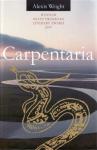
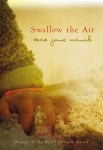
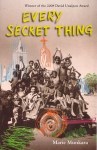
Alexis Wright Carpentaria (2006); Tara June Winch Swallow the air (2006); Marie Munkara Every secret thing (2009)

Finally, a brief mention of three recent fictional works, two of which I’m ashamed to say are still in my TBR pile. These are the two David Unaipon Award winners by Tara June Winch (reviewed since then) and Marie Munkara (reviewed since then). If you are interested in the latter, please check Musings of a Literary Dilettante’s review.

I have though read Alexis Wright’s Miles Franklin Award-winning Carpentaria (my post). It’s set in a fictitious place, tellingly called Desperance, in northern Australia. Its focus is colonialism (ie European invasion of the land), and conflict within black communities about how to respond. To explore these, Wright touches on lot of ground, including land rights, deaths in custody, mining rights, boat people, and petrol sniffing to name just a few. She flips between the real and the magical, she uses language that is image-rich and often playful, and she tells some very funny stories. It’s a big, wild and rather complex read that manages in the end to be hopeful despite itself.

This is just a small introduction to the wealth of Australia’s indigenous literature. It won’t be the last time I write about it. I will also in the future post on white Australians who have written about Aboriginal Australians, writers like Thomas Keneally who wrote The chant of Jimmie Blacksmith but who now says he wouldn’t presume to write in the voice of an Indigenous Australian. A vexed question really. I believe there should be no “rules” for writers of fiction and yet, sometimes perhaps, it is best not to appropriate voices not your own. But that is a question for another day…

Meanwhile, back to Alexis Wright – and stories:

Old stories circulating around the Pricklebush were full of the utmost intrigues concerning the world. Legends of the sea were told in instalments every time you walked in the door of some old person’s house. Stories lasted months on end, and if you did not visit often, you would never know how the story ended. (Carpentaria, p. 479)

____________________

I’m not surprised – and am glad – that Bill chose this one from my early Monday Musings, because this is an area of Australian literature that is dear to his and my hearts (and to Lisa’s who runs her Indigenous Literature Week each year.) And phew, I’m glad I’ve since read those two novels that were on my TBR back there in 2010.

[You can find all my Monday Musings by clicking on the Monday Musings category, or this link]

Would you, wherever you are, like to recommend any indigenous writers?

Monday musings on Australian literature: Alison Lester

Saturday, as I noted in my Six Degrees of Separation post, was National Bookshop or Love Your Bookshop Day in Australia (and in Great Britain too, it seems). For last year’s day, I wrote a post on author-owned/managed bookshops, most of which were located in places other than Australia. The exception was Australian children’s author and illustrator, Alison Lester, so I thought she deserved a little feature post today.

Alison Lester has appeared in my blog a few times, but the first was the most significant, because it was when she and Boori (Monty) Prior were named our first two Children’s Laureates. She was also mentioned briefly in my post referencing the 2018 National Bookshop Day, when Daughter Gums bought a Lester book for a baby shower she was attending! It’s time, then, to give her a little bit of a profile here, even though children’s literature is a sideline focus here.

As I wrote in my Children’s Laureate post, I first became aware of Lester through my own children. As I wrote then, she’s an author/illustrator best known for her picture books, though she has also illustrated chapter books for other writers and written a couple of young adult novels. The first book that she both wrote and illustrated herself was 1985’s Clive eats alligators.

Book cover

This means that Lester was just starting out when my children were young, so most of her children’s books have been published after my children left that stage of their reading lives. But, we did have some favourites, including Rosie sips spiders (1988), Imagine (1989) and Magic beach (1990). As our children grew we also enjoyed Robin Klein’s chapter book, Thingnapped, which was illustrated by Lester.

Lester, like all the best children’s book authors and illustrators has a lovely sense of fun while also conveying important values to children, such as respecting difference, a critical value at a time when rejecting other seems to be on the rise again. Indeed, as her website says, “her picture books mix imaginary worlds with everyday life, encouraging children to believe in themselves and celebrate the differences that make them special”.

Jonathan Shaw of Me fail? I fly has discussed Alison Lester’s books several times on his blog in his Ruby Reads series where he discusses the books he reads to his granddaughter. Lester’s books featured by Jonathan to date are:

  • Clive eats alligators (1985), which features seven children going about their daily lives, except that “Clive eats alligators”. You’ll have to read it to discover that that means! Jonathan says that the fun in this book lies in tracing any one of these children through the book to see “how their interests play out in the different contexts: the girl who loves horses, the bookish boy” and so on. Rosie sips spiders, which Daughter Gums loved, follows the same children in more adventures through life. Lester fans will get a giggle when, in this Rosie book, they read that “Clive jumps in Alligator Creek.”
  • Are we there yet? (2005), a picture book about – yes, you’ve guessed it – family car travel. Jonathan says that her images are “completely beguiling”. Maybe this is why it was the first book given to a child from Dolly Parton’s Imagination Reading Library.
  • Kissed by the moon (2013), about a baby, the night, and nature. Jonathan writes that “pragmatically speaking, I guess it’s a bedtime read, but Alison Lester knows how to put words together, and how to make images, that reach in and touch your heart”.
  • My dog Bigsy (2015), which is one of those books in which the feature character wanders around a farm, meeting other animals, like, for example, Pat Hutchins’ fabulous Rosie’s walk. I haven’t read this Lester yet, but Jonathan says that Lester does it well. I think I’ll be getting it for Grandson Gums.

Thanks Jonathan for posting on these books – for the Australian Women Writers’ Challenge where we have appreciated these posts, and so I could use them here! Very thoughtful of you!

Lester has been shortlisted for, or won, Children’s Book or Picture Book of the Year awards several times over the years. She has also won the Dromkeen Medal for services to Australian literature, and was the first children’s writer to be awarded the valuable Melbourne Prize for Literature. She has been shortlisted for the international Astrid Lindgren Memorial Prize. And, of course, she is an active promotor of Aussie children’s literature, including being that Children’s Laureate role and being an Ambassador for the Indigenous Literacy Foundation.

Lester, born 1952, was a farm girl, and still rides a horse when she can. Adventure, that features in her stories, is in her DNA it seems (something I think I missed!) So, I wasn’t surprised to read that in 2005 she went to Antarctica as an Australian Antarctic Arts Fellow. You can read her Antarctic Diary on her website.

Alison Lester Gallery

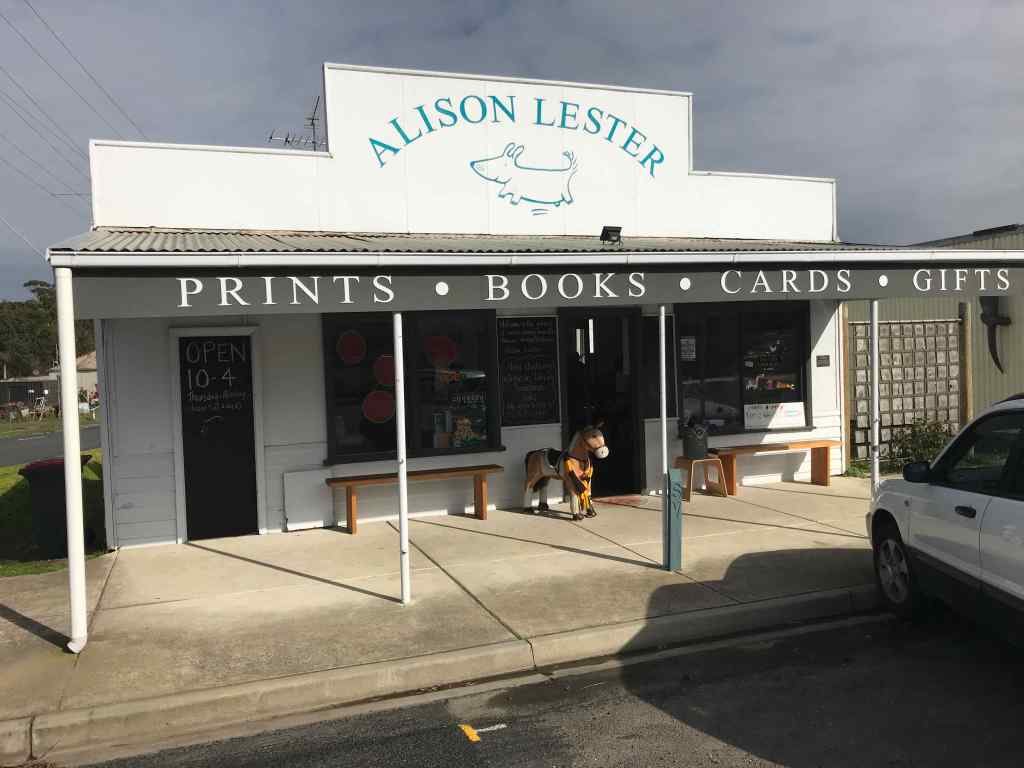
Now to Lester’s bookshop. It is, I have to admit, not like the others. Located in the gorgeous Victorian town of Fish Creek, near where Lester was born, it is more a “gallery” than a bookshop, and is devoted solely to her work. We have been there, and it is a light, airy, welcoming place that sells her books, cards and other merchandise, and also prints of many of her illustrations. It also has lounges where you can sit and read her books.

So, a rare post for me, given its focus is children’s literature, but most of us here started our reading lives when we were very young, and if we’ve had children or grandchildren we’ve done our best to share that love down the generations.

I’d love to hear about your favourite children’s authors. Who did you love as a child and/or who have you loved reading to children in your life?

Monday musings on Australian literature: Nib Literary Award

The Mark & Evette Moran Nib Literary Award is a somewhat unusual award that I’ve been receiving notifications about for years, but have never posted specifically on (though Lisa of ANZLitLovers has.) It’s unusual for a couple of reasons. One is that its focus is on celebrating “excellence in research and writing in Australia”, and the other is, as the website also says, that it is “the only major [national] literary award of its kind presented by a local council”.

The award was established in 2002 as the Nib Waverley Library Award for Literature, but was renamed The Mark & Evette Moran Nib Literary Award in 2017 to recognise the Morans’ significant sponsorship of the award. Exactly who initiated it is a little unclear, but it seems that the Australian author and playwright Alex Buzo (1944-2006), who lived near and prolifically used Waverley Library, and Chris Haywood, Patron of the Friends of Waverley Library*, were instrumental. (I love seeing a Friends’ group involved in something like this.)

The award is open to all Australian writers regardless of their experience, chosen subject matter or genre. The judging criteria are: excellence in research, high level of literary merit, readability and value to the community. These are interesting criteria and reflect, I understand, the ethos, passions and goals of both Alex Buzo and the Waverley Council. Announcing the 2019 award, City Hub Sydney suggested that these are the only awards given out for research and the writing process itself rather than just for the finished product. The shortlist and winner are chosen by an independent panel of three judges, of which Alex Buzo was one in its first few years.

There are additional prizes, but again their history is a little uncertain:

  • Alex Buzo Shortlist Prize of $1000 to each shortlisted author (added in 2006?)
  • The Military History Prize of $3000, supported by the Bondi Junction, North Bondi, and Rose Bay RSL Sub-Branches to commemorate the ANZAC centenary, “for a work that illustrates the service and sacrifice of Australian service men and women, families or the broader home front, during or in relation to any threat(s) of war” (added 2015?)
  • People’s Choice Prize of $1000 (added in 2017?)

Book cover, The forgotten rebels of EurekaI haven’t been able to find anything about the 2020 Military History Prize, so am not sure about its continuation or, at least, its being awarded this year.
Winners

  • 2002 Tim Low, The new nature (nature/science writing)
  • 2003 Barry Hill, Broken song: TGH Strehlow and Aboriginal possession (biography)
  • 2004 Geoffrey Blainey, Black kettle and full moon: Daily life in a vanished Australia (social history)
  • 2005 Helen Garner, Joe Cinque’s consolation (true crime)
  • 2006 Gideon Haigh, Asbestos house (business writing/company history)
  • 2007 John Bailey, Mr Stuart’s track: The forgotten life of Australia’s greatest explorer (biography)
  • 2008 Christopher Koch, The memory room (novel) (Lisa’s review)
  • 2009 Robert Gray, The land I came through last (autobiography)
  • 2010 Andrew Tink, William Charles Wentworth (biography)
  • 2011 Delia Falconer, Sydney (history/travel)
  • 2012 Jane Gleeson‐White, Double entry: How the merchants of Venice created modern finance (business writing/history)
  • 2013 Gideon Haigh, On Warne (biography)
  • 2014 Clare Wright, The forgotten rebels of Eureka (Text) (history) (my review)
  • 2015 Erik Jensen, Acute misfortune: The life and death of Adam Cullen (biography) (Lisa’s review)
  • 2016 Rachel Landers, Who bombed the Hilton (investigative writing/political history)
  • 2017 Kate Cole‐Adams, Anaesthesia: The gift of oblivion and the mystery of consciousness (science writing/memoir)
  • 2018 Helen Lewis, The dead still cry: The story of a combat cameraman (biography) (Lisa’s review)
  • 2019 Nadia Wheatley, Her mother’s daughter: A memoir (hybrid biography/memoir) (my review)Nadia Wheatley, Her mother's daughter

I have read just three, but only two since blogging. It’s interesting, but not surprising, that although the criteria encompass all “genres”, only one of the winning books, to date, has been fiction. We have talked about the role of research in fiction here many times. I would love to see this award grapple with that a little more. There were a couple of novels in the 2020 longlist, including Heather Rose’s Bruny (my review) and Julie Janson’s Benevolence (on my TBR).

In the various announcements I’ve read online, I’ve seen little in the way of judge’s comments, so I don’t know how they’ve assessed the winning books in terms of the criteria, that is, their “excellence in research, high level of literary merit, readability and value to the community”. It would be really interesting to know, for example, what they mean by “readability” and “value to the community”.

Overall, though, I love that this award exists. It’s quite a testament to Waverley Council and its supporters that it has survived, now, for 19 years.

Are you aware of this award, and, regardless, what do you think about its criteria?

* See Nib Waverley’s Alex Buzo page and Wikipedia.

Carol Lefevre, Murmurations (#BookReview)

Book coverMurmurations is a beautiful, evocative word, and Carol Lefevre’s latest book, titled Murmurations, does beautiful, thoughtful justice to it. It is though an unusual book. Styled by its author as a novella, it reads on the surface like a collection of short stories, except that the stories are not only connected by the various characters who pop in and out, but by an overarching mystery concerning one of them, Erris Cleary, whose funeral occurs in the first of the eight stories.
Murumuration is, you may know, the collective noun for a flock of starlings, something I discussed in my 2016 post on Helen Macdonald’s essay “The human flock”. She says starlings flock for protection (out of fear), to signpost where they are to other starlings, and for warmth. Lefevre provides, as an epigraph for her book, an image of a murmuration and the following quote from a paper on starling flocks:

The change in the behavioural state of one animal affects and is affected by that of all other animals in the group, no matter how large the group is.

These ideas are all reflected, in some way, in Lefevre’s book. But, the book also has another idea as Lefevre explains in her acknowledgements, and that is that each story was inspired by a different Edward Hopper painting. If you know his paintings – like “Automat” which inspires the first story – you will know that although they are set in real places, they have a certain paradoxical other-worldliness, which entwines bleakness with a sort of dreamy expectation. This tone also pervades Lefevre’s book.

Murmurations starts with “After the island”. Here, young doctor’s secretary Emily considers the funeral of her employer’s wife, the 53-year-old Erris Cleary. She remembers some mysterious messages that had occasionally broken through the doctor’s patient note recordings, messages that implied Erris was in danger. The book ends with “Paper Boats”, in which two neighbours, Amanda and Magda, discuss Erris’ death, with Amanda going on to write a short story about it. Erris Cleary, then, is the link that joins the stories.

The six stories that come between these opening and closing ones are all, like the two just mentioned, told third person from different characters’ perspectives. All are women except for the titular (and penultimate) story, “Murmurations”, which features a young man. His, Arthur’s, story is the only one in which we finally “meet” Erris as a living woman. Four of the remaining five stories feature women who moved in Erris’ circle – Claire, Fiona, Jeanie and Delia – with the fifth one featuring Lizbie who had a complicated and ultimately tragic relationship with two sons from this circle. She is also the daughter of the final story’s Amanda.

Each story focuses on the dark little accommodations or disturbances in its protagonist’s life. Marriage breakdown, looming dementia, suicide and other events threaten to – and usually do – destabilise the characters. There is a sense of quiet desperation in the stories, even in those that look to be alright on the surface. Claire (“Little Buddhas everywhere”) clings to the husband who has remarried. She relies on his sense of responsibility, not to mention her faith in her inherent lovability, to keep him looking after her as well as his new family, while Jeanie (“The lives we lost”) is thrown by the fact that the man she married admits years later that he hadn’t loved her then, though he did now. Delia (“This moment is your life”) is starting to lose her mind. She appreciates her second husband but seems to have married the same sort of controlling man she had the first time. And so on.

These are, mostly, the quiet little tragedies of life, the ones that never make the newspapers but that are all around us – if we only knew what questions to ask. As one character or another appears in the story of another, we see the possibilities for impacting each other – as in a murmuration. The overarching tragedy is that for all their apparent connections, no one seems to really see what is happening to the others or to have the time, or even the desire, perhaps, to genuinely care. This is beautifully illustrated in Jeanie’s story. She moves in with her cousin but they can’t connect:

Neither cousin understands what the other is saying. Though they speak the same language, words, sentences, turn opaque when they attempt to describe their lives.

The implication seems to be that this little murmuration of women is a surface one only, with little protection or warmth afforded to the individual members.

The exception is the mysterious Erris who, in the titular story, speaks to the young Arthur, working in her garden. She offers him the chance to fly:

… and a note, addressed to him, scribbled on a page torn from a blind notebook: Fly away, Arthur. Fly far, be free. Erris.

Around the edges of the paper, cloud shapes were filled with dozens of small, dark, pencilled birds.

The book is beautifully structured to suggest complex layers of links between the stories and characters, layers that would only multiply, I suspect on multiple readings.  The first story’s Emily, for example, is a young girl from the Star of Bethlehem children’s home. Then, after five stories about women linked through neighbourhood lives to Erris, we come to the aforementioned young Arthur. He also comes from the Star of Bethlehem children’s home and was a friend of Emily’s. Will these two, despite lacking the opportunities the others have presumably had, make a better fist of their lives?

The final story adds another dimension. In converting Erris’ death and the mystery surrounding it into a short story that she submits to The New Yorker, Amanda hopes to achieve her writing goal:

to hit one true note. A note that will make sense of something, perhaps of everything, a note that will crack the obliterating silence once and for all.

Can fiction, Lefevre seems to be asking, make the difference? Can we, through fiction, see the connections that we don’t always see in the real lives around us? If it’s fiction like this, written with such clarity and heart, I believe it can.

Challenge logoCarol Lefevre
Murmurations
North Geelong: Spinifex, 2020
108pp.
ISBN: 9781925950083

(Review copy courtesy Spinifex Press)

Monday musings on Australian literature: Urban vs Suburban

Responding to my Monday Musings 10th anniversary post question regarding topics readers might like to see covered, Sue wrote that “there’s so much emphasis on regional writing which is wonderful – since I live outside the cities – but I think urban based fiction could be interesting”. 

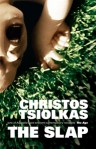
Book coverI’ve been pondering this for a long time, in fact, but I’ve kept shying away from it because it’s such a big topic. There are so many questions to answer, before we even get started, beginning with what we mean by “urban”. Sue mentions Garner, Tennant, Park and Tsiolkas as examples of writers who could be considered. Now, Tennant’s Ride on stranger (1943) and Tell morning this (1967), Park’s The harp in the south (1948), and Garner’s Monkey grip (1977) are all clearly urban. That is, they are set in inner city areas. However, do we include suburb-set novels, like Tsiolkas’ The slap (2008) or, say, Patrick White’s The solid mandala (1968), in our definition of urban? Is there a difference, subtle or not so subtle, in the way novels set in inner city areas play out versus those set in the suburbs? I have a feeling there is.
However, Google wasn’t much help. I did find various bits and pieces, including reference to a “new” urban fiction or street lit genre which is, apparently, largely written by African-American writers, and, says the  Wikipedia article, is “as much defined by the socio-economic realities and culture of its characters as the urban setting. The tone for urban fiction is usually dark, focusing on the underside of city living”. This article, like others I saw about this “new” genre, is somewhat patchy but it does identify what seems integral to urban  literature as I see it, which is that it’s “usually dark, focusing on the underside of city living”.

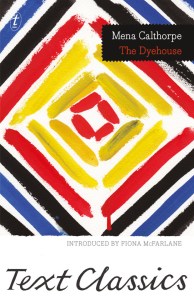
Mena Calthorpe, The dyehouse“Underside” here is the operative word, and refers, for me, to those “socio-economic realities”, Wikipedia mentions. Urban fiction tends (and I am generalising) to be about poverty and the various challenges and ills that occur in such an environment – marginalisation (of workers, women, migrants, and so on), crime, drugs, poor health, insecure accommodation, and so on – most of which stem from a sense of powerlessness. These are the sorts of issues variously confronted by Tennant, Park and Garner, and by other “urban” books I’ve reviewed here like William Lane’s The workingman’s paradise (1892) and Mena Calthorpe’s The dyehouse (1961). Many of these novels are – or owe much to – the social realist tradition. Christina Stead’s Seven poor men of Sydney (1934) also fits here.
If we look at urban-set historical fiction, this general trend seems to hold true. Wendy Scarfe’s Hunger town (2014), Eleanor Limprecht’s Long Bay (2015), Emma Ashmere’s The floating garden (2015), and Janet Lee’s The killing of Louisa (2018), for example, all tell of poor and/or marginalised people, from the late 19th century to the 1930s.

There are exceptions, however. Literature, after all, is not a binary affair. So, not all urban-set novels are about poverty and socio-economic challenges. Ada Cambridge’s novels like The three Miss Kings (1883) and A woman’s friendship (1889), Tasma’s Uncle Piper of Piper’s Hill (1888), and Dymphna Cusack’s Jungfrau (1936) are set amongst more comfortable and/or often more educated people. They tend to deal with more personal stories to do with family, marriage and self-determination, particularly for women.

Suburban fiction, on the other hand, is not necessarily cheerier, but the concerns can be different. Almost by definition, its focus tends to be the middle class, and it can be more existential because these characters are not struggling for material survival. So, for example, it can be about alienation and spiritual emptiness. Patrick White is a good example, with The solid mandala being a favourite of mine. Elizabeth Harrower’s The watch tower is a psychologically dark novel about young girls left to fend for themselves, so has a nod to the realist urban novels, but the crisis these young women face is of another ilk altogether.

Christos Tsiolkas, The slapAnother common topic in suburban novels is family – often family dysfunction. Tim Winton’s Cloudstreet (1991), set in Perth’s suburbs, is probably the Australian suburban novel of the last few decades, though its protagonists are “battlers” rather than the middle class, and the story is told against the backdrop of history over a few decades. Christos Tsiolkas’ The slap also fits into these family-focused books, but again it’s overlaid with contemporary issues like class, sexuality, and ethnicity.

Steven Carroll’s six Glenroy novels (2001-2019), which I haven’t read, is a series set in Melbourne suburbia. Fairfax literary editor Jason Steger says that these

books have ensured that suburban life has been beautifully chronicled in Carroll’s distinctive style and is ensured a place in Australian literary heritage.

Steger reports that Carroll had read little fiction set in Australian suburbia, besides George Johnston’s My brother Jack (1964). Carroll sees suburban fiction this way

… taking the suburbs, the evolution of the suburb, and ordinary people living in that suburb and looking at the evolution of that place and the people simultaneously and acquiring a panoramic view of the whole thing over a series of novels.

He doesn’t say, though, what that “panoramic” view might be – and therefore how these books might fit into my discussion here!

Anyhow, moving on, the preoccupations and self-absorption of middle class suburbanites is ripe for satire – of which Carmel Bird’s Family skeleton (2015) is a perfect example.

Coming-of-age novels are often set – not surprisingly – in the suburbs, like Craig Silvey’s Jasper Jones (2009), Sonya Hartnett’s Golden boys (2014), and Trent Dalton’s Boy swallows universe (2018).

Elizabeth Harrower The watch towerThen, there are the outliers. Where to put Elizabeth Jolley’s novels, many of which are set in  suburbs? Many of her characters are alienated or anxious, so perhaps they are a development of the Patrick White tradition? Amy Witting, Marion Halligan and Jessica Anderson have also set novels in cities and suburbs, some with a wry edge, and many dealing with the challenges women face in navigating contemporary life. And then there’s Sara Dowse’s West block – about to be reissued – which is probably unique here, with its life-within-the-bureaucracy context.
When the fiction – urban or suburban – is set affects the subject matter. Late nineteenth to early twentieth century novels, for example, started to discuss the role and rights of women, aligning with the suffrage and nascent feminist movements. In novels set since World War II, we start to see migration coming to the fore. Madeleine St John’s The women in black (1993) covers both women’s movement issues, and the positive impact of European migration on Australia, in the 1950s. Later novels though deal with some of the uglier aspects of migration – with discrimination and persecution – such as AS Patrić’s Black rock white city (2015).

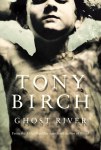
Tony Birch, Ghost riverWe are also seeing some urban-suburban set Indigenous novels, like Tony Birch’s Ghost river (2015). These tend to be politically-charged, reminiscent in intent if not necessarily in style, of those earlier twentieth century realist novels.
I have made some wild generalisations here, and my coverage of Aussie lit is superficial, but I hope I’ve stimulated some discussion. I also hope Sue is happy with my attempt to meet her request!

(Links on titles are to my reviews. I haven’t linked other blog reviews, because there are too many, but you know where to look!)

Talking with my Dad: Wattles and Jimmy Woodsers

As many of you know, my father turned 100 this year, and three weeks later, my mother died. Life is sad, but Dad and I are soldiering along – with support of course from Mr Gums, not to mention family elsewhere in Australia. What is amazing, though, is how often new little pieces of information, or insights into Dad’s life, are still cropping up! I’m sharing a couple here, to document them for myself and because they might interest readers here too.

Wattle Day

Image of Golden Wattle

Acacia pycnantha or Golden Wattle, by Melburnian (CC BY-SA 3.0).

Wattle Day, as most Australians now know, occurs on 1 September, celebrating the first day of spring here downunder. The golden wattle (acacia pycnantha), which was included in Australia’s coat of arms in 1912, is just one of many wattle species found around Australia, but most tend to blossom in late winter to early spring. Wikipedia provides the complicated origins of Wattle Day, but by the 1910s it seems, most states in Australia were celebrating it, though it wasn’t a nationally gazetted day until 1992.

So, on this year’s Wattle Day, as I was visiting my Dad, he burst into song, with these opening verses:

The bush was grey
A week to-day
(Olive-green and brown and grey);
But now the spring has come this way,
With blossoms for the wattle.

It seems to be
A fairy tree;
It dances to a melody,
And sings a little song to me
(The graceful, swaying wattle)

– by Veronica Mason

I was astonished. I’d never heard this song. Indeed, I had only become aware of Wattle Day relatively recently. However, on discussing the Day with my patchwork-now-coffee group, I discovered that all present, except one other, were very familiar with Wattle Day. What? Then the penny dropped. My father was born in 1920, and most of this group were born in the late 1930s to 1940. The “one other” was, like me, born in the 1950s. So, on thinking about it, I realised that they were born during times of pro-Australian nationalism, whilst that other and I grew up during a period of cultural cringe, a time when we turned away from things Australian.

Wikipedia helped confirmed this. Referencing Libby Robin, Wikipedia advises that “the day was originally intended to promote patriotism for the new nation of Australia”. I sussed out Libby Robin’s article, “Nationalising Australia: Wattle Days in Australia”, in which she talks about the linking of nature with nationalism. After discussing some of the various nature days that were created, she writes that

Wattle Day was the most aesthetic and human-centred of the three ‘days of nature’, and its influence waned as the century wore on. In the 1930s and later the Gould League went from strength to strength. Arbor Day had a steady and strong following, reinventing itself in the 1990s as ‘Arbor Week’. But Wattle Day changed in the early 1930s, eventually fading away altogether. A Wattle Day League limped on in Victoria until the mid-1960s, but the other states were no longer interested.

So, those born in the first half of the twentieth century were well familiar with the day – and its various songs and poems – while those of us born mid-century have only discovered it in recent years, with its revival and 1992 gazetting. Thanks Dad for the song – and the inspiration to suss out Wattle Day a little more.

A Jimmy Woodser

And then, just this week, Dad mentioned a “Jimmy Woodser”! I looked blank! Do you know what a Jimmy Woodser is, because I sure didn’t!

Barcroft Boake portrait

Barcroft Boake, by George Lambert, pre 1913, Public Domain.

So, back to Google I went. I found several references, but this one on Time Gents (Australian Pub Project) blog is particularly good. The post starts by saying:

Jimmy Woodser is a name given to a man who drinks alone, or a drink consumed alone. The name is thought to come from a poem by Barcroft Boake, published in The Bulletin on May 7 1892, about a fictional Jimmy Wood from Britian [sic] who is determined to end the practice of ‘shouting’ (buying rounds of drinks for a group of mates), by drinking alone.

“One man one liquor! though I have to die
A martyr to my faith, that′s Jimmy Wood, sir.”

“Jimmy Wood, sir” to “Jimmy Woodser”!

Barcroft Boake (1866-1892) was an Australian poet best known for his poem “Where the dead men lie”. (In a little digression, I have posted on, and reviewed works by, his niece Capel Boake.)

Back, though, to Jimmy Woodser. There is an alternative anecdotal version of the term’s origin provided in The Brisbane Courier (May 11, 1926), which dates it to the 1860s and a story about two rival publicans. There’s another one in the Dungog Chronicle (July 14, 1942), while this one in Adelaide’s The Mail (7 July, 1945) provides a rundown of several theories. Without doing more research I can’t confirm which is right, but the meaning doesn’t change. (In a fun little aside, the Glen Innes Examiner and General Advertiser (11 May, 1906) has an article titled ‘A “Jimmy Woodser” Club’ about the creation of the Non Shouting Club, in Araluen, near where I live. Its aim was to reduce the drunkenness that they believed shouting encouraged!)

Meanwhile, Time Gents go on to share a poem by Henry Lawson, titled “The old Jimmy Woodser” (c. 1899). They suggest it could be about a Wollongong character, Billy Fitzpatrick. Its first verse is:

The old Jimmy Woodser comes into the bar
Unwelcomed, unnoticed, unknown,
Too old and too odd to be drunk with, by far;
So he glides to the end where the lunch baskets are
And they say that he tipples alone.

“Too old and too odd to be drunk with, by far”. Well, my Dad is pretty old, but I’ll have a drink with him any day – and look out for more little treasures like this to research and share.