Fridays with Featherstone, Part 4: On writing and admired writers

Today, I bring you the final part of Susan Errington’s Wet Ink interview with Nigel Featherstone. In this part Nigel talks primarily about some of the writers he admires or who have inspired him – and how they relate to his writing. I love the fact that many of the writers Nigel admires are also favourites of mine, such as … but no, if I tell you now that will spoil the interview. Read on …

INTERVIEWER

You seem interested in troubled or fractured families, especially in Remnants. Is the family dynamic something you want to expand on in future writing and perhaps bring to the forefront?

FEATHERSTONE 

Families are both fascinating and frightening.  As a writer I’m asking, what makes up a family?  It’s not just husband and wife and two children.  A family can be a group of people living in a share-house.  It can be a rock band.  It can be three kids on a road-trip.  It can be an old woman and her twenty cats; Eva Hornung explored human-animal relationships as family in her extraordinary novel Dog Boy.  Families can be forces for good, and forces for evil; more often than not, they are both at once – this is what Anne Enright was doing in her Man Booker prize-winning The Gathering.  Whenever I hear someone say that family is ‘the bedrock’ of society I want to reach for my pen and get to writing.  Family might be the traditional bedrock in terms of procreation, but it certainly isn’t the emotional bedrock for many individuals.

INTERVIEWER

Your Australian families lack the hysteria of Patrick White’s and remind me more of the quiet honesty of Randolf Stow’s. What’s important to you in creating a family in your work?

FEATHERSTONE

You’re not the first person to mention Randolf Stow in relation to my stories, and it always fills me with a warm inner glow.  I read The Merry-Go-Round in the Sea back in high-school and I was rapt, and that rapture has continued after all these years – and I haven’t read it since, although recently I bought another copy and it’s on the bedside-table pile.  Quiet honesty.  I like that.  Is that what attracted me to Stow?  Who can tell?  In terms of technics, what’s important in creating a fictional family is life, depth of character, and conflict.  It’s also important, I think, for the family to want something, resolution, revelation, salvation, disintegration, even if they don’t know it.

INTERVIEWER

Who are the important novelists for you?

FEATHERSTONE

J.M. CoetzeeDisgrace is the perfect contemporary novel.  Colm ToibinThe Blackwater Lightship, a story about three generations of Irish women, is told in the simplest, most direct voice, but it dives so confidently into the depths.  Alan Hollinghurst – the language in The Line of Beauty never ceases to amaze me, and the author is invariably hilarious.  Kazuo IshiguroA Pale View of Hills and The Remains of the Day are two gorgeous novels, both being vast wells of intimacy.  Graham SwiftLast Orders is a novel I return to regularly.  Morris WestEminence is built around a terrific what if (what if the next Pope was agnostic?).  Truman CapoteIn Cold Blood is a book that has had a huge impact on me because it’s the portrait of friendship and family and landscape.  Harper Lee – the burning desire for justice in To Kill A Mockingbird.  The verse-novelist Dorothy Porter – what she could conjure on the page!  Helen Garner – although not fiction, Joe Cinque’s Consolation shows all the hallmarks of what makes a novel.  It may appear odd in this company, but Flann O’Brien’s The Third Policeman is the most audacious of stories.  The names Tolstoy and Chekhov have to appear in this paragraph.  As does Flaubert’s; Madame Bovary is the truly great novel.

INTERVIEWER

Writing is a tough and often lonely gig.  Where do you draw your inspiration?

FEATHERSTONE 

From the things that happen around me, or happen around other people.  That makes it sound easy.  You’re right: it’s not.  There are days when I’d like to chuck it all away, but my life would be dreary without writing and reading.  And music.

INTERVIEWER

What are you working on at present?

FEATHERSTONE

Nigel Featherstone, I'm ready now

Cover (Courtesy: Blemish Books)

Going back to where we started, the second of those Launceston novellas is being published by Blemish Books in November this year*, so over the coming months I’ll be working on the nips and tucks required by the publisher (it’s already been through quite a few rounds of these), getting the story as perfect as humanly possible.  What can I tell you about it?  Perhaps, after all this talk about men and their trials and tribulations of forming relationships and trying to have meaningful lives, it might be a surprise to tell you that this second novella, which is called I’m Ready Now, is a story about a mother and son.  The mother has reached a fork in her life, and so has the son, and both are in the midst of making decisions that will change the course of their lives and their relationship(s).  It’s told from both points of view, and I enjoyed writing the mother as much as the son, perhaps even more so.  And I’m always working on short stories, and creative journalism.  And, yes, there’s a bigger project but I can’t talk about that because I’ll jinx it.  But for the next few months, much of whatever brain-power I have will be occupied with bringing I’m Ready Now into the world.

* This interview was prepared many months ago for publication in Wet Ink during 2012. Readers of this blog will know that I’m ready now was indeed published in November and reviewed by me that month.

If you missed Part 1, click here, for Part 2 here, and for Part 3 here.

Thanks again to Susan Errington for supporting my running this interview after the demise of Wet Ink. I’m sorry that Wet Ink no longer exists, but it’s been a pleasure to share this great interview with readers here.

Fridays with Featherstone will finish next Friday with my follow-up interview with Nigel…
Highlights of 2012: Notable reads for 2012

To complete my 2012 round-up triumvirate, which started with my blogging highlights and was followed by my Australian Women Writers challenge wrap-up, this post documents my notable reads of the year. If you are sick of me and my round-ups, I won’t be offended if you click away now!

Like last year, I’m not doing a top 10, because I find defining “top” reads such a movable feast. I would really like to list almost everything I read! So, again, I’m listing my notable reads under categories to give a flavour of this year’s reading life. Last year’s categories were based on review clichés and jargon, but this year I’m going to just make up my own, as whim takes me. Here goes, in no particular order:

Most disappointing read: PD James’ Death comes to Pemberley. It’s not that it was a bad book, exactly, but I’m not much of a crime reader and I don’t tend to read Jane Austen sequels/spin-offs, and I just felt this didn’t cut it, mainly because Elizabeth and Darcy didn’t ring true. They were flat, there was no chemistry. Without that, it was lost.

Most surprising read: Fergus Hume’s The mystery of a hansom cab. What did I say about not reading crime? Well, that’s partly why this was my most surprising read, because it is a late nineteenth century Australian crime novel and I loved it. It provided such a great social history of Melbourne of the period – and was a rollicking good read as well. Quite coincidentally a new telemovie adaptation was broadcast late in the year, and I enjoyed that too.

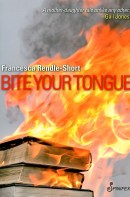
Francesa Rendle-Short book cover Bite your tongue

Bite your tongue Bookcover (Courtesy: Spinifex Press)

Bravest book: Francesca Rendle-Short’s Bite your tongue. I loved the creative way Rendle-Short went about telling her uncomfortable story via a fictional-memoir. This book is an example of what Rebecca Giggs meant when she talked about writers finding new modes of authority by which they can describe (and we can find valid) how the world “actually” is.

Most inspiring book: Izzeldin Abuelaish’s I shall not hate. What can I say? Abuelaish’s ability to rise above a pain that no parent should face, the death of his daughters in a targeted terrorist attack, and continue to argue for peace and reconciliation between Palestinians and Israelis should be a lesson to us all. I have never liked the idea of revenge, but also have never had my philosophy seriously tested. He has and shows that it is possible to see things a different way.

Favourite e-Book: Willa Cather’s My Antonia. I didn’t read many e-Books this year, but this e-notated version of an American classic was special. While I had some reservations about a couple of the features, overall the e-notation enhanced my reading and, anyhow, it’s a great novel. A re-read for me, and I’d read it again (if I had the time!)

Book scoring most “hits”: Julian Barnes’ The sense of an ending. This popularity was quite a surprise. I was fairly late – given its 2011 Man Booker Prize win – to read and review it, and yet my post seems to score high in Google searches. Why, I have no idea, but there you go! I’m happy to list it in my “notable reads” because, besides its being popular with the search engines, I liked it.

Favourite classic: Elizabeth Harrower’s The watch tower. I read a few “classics” this year – novels and short stories – and enjoyed them all. There’s something about reading good writers from the past – for learning about the world they were writing in, and for providing a different perspective on our own world (if that makes sense). Harrower’s novel is so of its time and place and yet is absolutely universal in its study of power and control in intimate relationships.

Favourite translated novel: Yan Lianke’s Dream of Ding Village. This was one of the books I read for the Shadow Man Asian prize earlier in the year. I also liked the winning book Kyung-Sook Shin’s Please look after mother and several others but, as time has gone on, it’s Ding Village that most often comes back to me. A great study of power and greed, with personal and political implications.

Favourite recent Australian book: Gillian Mears’ Foals’ bread. What can I say? This is one of those books that hits you in the guts. It’s about character, passion (of all sorts), and the ambiguities in human relationships – and Mears nails it.

Favourite short story: Paddy O’Reilly’s “The salesman”. This was very hard, so much so that I nearly decided not to create a category for it. I read several great short stories in 2012 but I had not read O’Reilly before and I was impressed by her control of the form. It’s a powerful story about deprivation, racism and the violence that lies just, only just, below the surface. It’s both subtle and unsubtle at the same time.

That’s 10. I could go on with more categories but I won’t bore you any further. Before I go, though, I’ll just, because I can, give a special mention to those writers who are published by the little presses and who deserve wider notice: Nigel Featherstone (Blemish Books), Catherine McNamara (Indigo Dreams) who has a collection of literary short stories coming out in 2013 to follow her 2012 commercial novel, and Michael Sala (Affirm Press).

Monday musings on Australian literature: Australian Women Writers’ Challenge 2012 Round-up

Australian Women Writers Challenge 2012 Badge

(Design: Book’dout – Shelleyrae)

It seems fitting that my last Monday musings for 2012 be devoted to the Australian Women Writers Challenge, partly because it turned out to be quite a significant event in Australia’s literary calendar for the year, and partly because I introduced it in my first Monday musings of the year. The challenge was instigated by Elizabeth Lhuede in response to growing concern in Australian literary circles about lack of recognition* for women writers here. This concern resulted in several tangible actions, besides this challenge, including the creation of the Stella Prize and the first Meanjin Tournament of Books being dedicated to novels by Australian women.

Elizabeth, I know, had no comprehension when she started the challenge of just how successful it would be. Not only did it end the year with around 350 participants, who wrote around 1500 reviews for over 550 authors, but it received significant recognition from multiple quarters, including:

  • Huffington Post, for which Elizabeth was asked to write an article
  • ABC Radio National, on which the challenge was mentioned at least once
  • The National Year of Reading, 2012, which recognised it as an activity in their program
  • Many bookshops, libraries and authors (too many to list), who got behind the challenge and promoted it on their blogs/sites

The challenge has infiltrated social media. It can be found on Facebook, Twitter (@auswomenwriters), and GoodReads, as well as on its dedicated website and blog. It has built up such momentum that it will continue in 2013, with a team to help Elizabeth manage it. I have agreed to be part of that team, with responsibility for the “Literary” area. If it sounds like the sort of challenge for you, please sign up here: Australian Women Writers Challenge 2013.

As I explained in yesterday’s highlights post, this is my first ever challenge. I’ve discovered that it is normal to do a round-up post at the end of a challenge, so here’s mine. I signed up for the Franklin-fantastic Dabbler level, that is, that I’d read (and review) at least 10 books by Australian women writers in more than one genre. I’m therefore listing them by category/genre (but please understand that the groupings are very loose and pretty arbitrary! They are indicative only).

CONTEMPORARY FICTION

HISTORICAL FICTION

CLASSIC FICTION

NON-FICTION

ESSAYS

SHORT STORIES AND POETRY

What did I learn from the challenge? Principally that there’s a whole world of Aussie women writers out there that I knew little or nothing about. They are beavering away in genres I tend not to read and they have big followings, many of whom posted their reviews on the challenge site. The existence of this band of writers was one of the reasons Elizabeth started the challenge, because she knew they were scarcely known outside their specialised fields. I suppose this is the case with all reading categories: we tend not to know what’s going on outside our sphere of interest. But, I’m glad to have had my eyes opened, even if I’m unlikely to greatly change my reading habits. So much to read … and all that, eh?

* Somewhat ironically, this year two books by Australian women – Anna Funder’s All that I am and Gillian Mears’ Foal’s bread – pretty well scooped our top literary awards. While I like to see awards spread around a bit because there’s a lot of quality out there, it was good to see these two wonderful writers receive such clear recognition.

Finally …

A big thanks to all you readers who add so much to my blogging experience. I truly appreciate the encouragement you give me by visiting, by “liking”, and best of all by commenting. I hope you have all had a satisfying 2012 and wish you every good thing, bookish and otherwise, for 2013.

Highlights of 2012: Blogging and the Reading Life

It’s been a busy year chez Gums and so I’ve decided to write two highlight posts – one listing some favourite reads, and this one for other blogging and reading highlights. Here, in no particular order, they are …

The challenge to do when you don’t do challenges

I decided when I started blogging that I wouldn’t take part in challenges, much as some intrigued me. I wanted to be mistress of my own reading choices and not get drawn into “having” to read something to comply with a challenge. But then, along came the Australian Women Writers Challenge, and I couldn’t say no. It’s a bit of a cheat, really, to say I’ve engaged in a challenge because reading Australian women writers is not a challenge for me. It’s what I do anyhow, it’s my reading preference. And so, readers, I completed the challenge – and will take part again next year. Look for tomorrow’s Monday Musings for my challenge wrap-up …

Other blogging activities

This year I took part in two other blogger-initiated literary activities. One was the Shadow Man Asian Literary Prize team (which actually started in late 2011 but ran through the first quarter of 2012). With a team of 6 (Lisa, Fay , Matt, Stu and Mark), we reviewed the full longlist and chose our winning book, Kyung-Sook Shin’s Please look after mother, which was also chosen by the official judges. It was a great experience, and some of the books I read will be among this year’s reading highlights. However, I have not joined the team this year because I knew I wouldn’t be able to keep up. I’m missing reading some great books though, I know.

The other activity was the Bah-Humbook virtual gift exchange instigated by Guy Savage and Emma. My exchange partner was Stu (see Shadow Man Asian team above!). Stu chose two fascinating sounding books for me, so you can expect reviews of these in the coming months!

Blogging highlights

It has been a pretty exciting year for Whispering Gums blog. Firstly, I finally decided in October to buy my own domain name so that I’m now the proud owner of “whisperinggums.com”. It doesn’t mean much really – except that Google “lost” me for a few months – but it somehow feels more authentic. I’m still hosted by WordPress, giving me, for my needs, the best of both worlds.

Around the same time, an excerpt of my review of Gillian Mears‘ wonderful novel Foals’ bread was included, along with those from another blog (Reading Matters) and several newspaper/magazine reviewers, in the front pages of the “C” paperback edition of the novel.

And then, in December, my blog was added to the Pandora web archive by the National Library of Australia, meaning that, if I ever disappear, my blog will be available online in perpetuity (or until a librarian decides to deselect it!).

Literary events

I attended a number of literary events this year … though never as many as I’d like to! The highlight was probably the inaugural Canberra Readers’ Festival. With writers like Kate Grenville, Anita Heiss and Frank Moorhouse speaking, it had to be a winner, and it was. We Canberrans hope it continues next year.

I also attended the Prime Ministers’ Literary Prize post-announcement panel, and the launches of The invisible thread anthology, Nigel Featherstone’s novella I’m ready now and Suzanne Edgar’s poetry collection Love procession.

Reading goals

This heading is a bit of a misnomer, as I don’t set formal reading goals. However, I do have in my mind works and authors I’d like to read, and this year I achieved an important one, Gerald Murnane. He’s been on the Australian literary scene for a few decades but I had never managed to read him until now. And why now? Because of Text Publishing’s new Text Classics series – the publication of which is another highlight of my reading year. Text has made available, at a good price, a wonderful and diverse collection of Australian classics. I’m glad I finally met this goal, and look forward to more Murnane in my reading future.

Red Dog

I wrote a post in September about the number of ways people were reaching my blog by asking about the film Red Dog, particularly by asking whether Red Dog dies in the movie. Three months later – and some sixteen months after my review – my Red Dog post is still in my top five posts for the year. That movie seems to have really hit a chord. This doesn’t mean I am now going to tell you the answer, but I’m sorry to tell you that Koko, who played Red Dog in the movie, died this month. He was only 7 and had, apparently, won awards for his role. I didn’t even know there were awards for animal stars but apparently there are. All I can say is, Vale Red Dog, oops, I mean Vale Koko!

And that’s about it from me for my blogging/reading life highlights of the year. I’d love to hear if you have any highlights of the literary or blogging kind that you’d like to share …

Fridays with Featherstone, Part 3: Using the Arts and Landscape in fiction

Today, I bring you the third part of Nigel Featherstone’s Wet Ink interview with Susan Errington. One of the things that stands out in the two novellas I’ve read by Featherstone is the way he uses the arts. Even though the title of the first novella, Fall on me, is a direct reference to the REM song of the same name, Featherstone’s use of and allusion to the arts is not heavy-handed in his writing. It’s there however, suggesting that a life that incorporates the arts is important to him. And don’t we all (readers here, at least) agree! In this part of the interview, Susan talks with Nigel about the way he uses the arts in his writing, and they talk a little at the end of landscape as well. I was intrigued when I first read the interview to discover that Featherstone grew up in the part of Sydney that I spent my teen years in. Small world. Anyhow, here goes part 3 …

INTERVIEWER

In Fall on Me, the main character, Lou, must deal with his son’s decision to open his art exhibition, which consists of naked photos of his seventeen-year-old body. What attracted you to this idea?

FEATHERSTONE

Three years ago I attended a final-year student exhibition at the Canberra School of Art. One of the pieces was a large photo – a self-portrait – of a young man dressed as a woman reclining on a bed in a dilapidated house. I became aware that two friends of mine – a husband-and-wife couple – were standing next to me. I said, ‘Isn’t this a striking image?’ And they replied, ‘We’re glad you think so because our nephew is the artist.’ That set off my imagination: were the aunt and uncle at the exhibition because the young man’s parents had refused to attend? Back home later that night I jotted all this down in my journal. When I was in Launceston I rediscovered the idea and still felt curious about it. In the planning of the story, the young man became a high-school student, because that would be more dangerous. Enter Luke Bard, who’s someone else I’d like, because he too refuses to be anyone but himself.

INTERVIEWER

Nakedness has often proved to be dangerous terrain for visual artists over the centuries and still is. What are you saying about this in your novella?

FEATHERSTONE

Some people have commented that in Fall on Me I’m drawing on the whole Bill Henson saga. I don’t recall Bill Henson cropping up in my thinking at any point during the writing and editing of the novella. To make the story have impact, Luke Bard simply had to do the most radical and, yes, dangerous thing he could: which was display photos of his naked body in public. But why is this dangerous? Why are we so hung about images of naked bodies, no matter what the age? I think it taps into something deep within us that makes us feel terribly uncomfortable. As I worked on Fall on Me, and reworked it, I realised that Luke’s nakedness was less a physical act and more a symbolic act: it was all about being revealing, not so much himself, but his father. While we’re on the topic, I was surprised how some readers initially found Luke’s actions – and his father’s actions – quite difficult to accept, but, thankfully, it all seemed to make sense at the novella’s conclusion. That’s my mission as a writer: to gently lead people into the darkness and show that there’s not a lot to be scared about.

INTERVIEWER

A number of writers have spoken of the importance of visual art to their writing; I’m thinking of Steven Carroll and John Banville, for example, where visual art has an important part to play in their stories just as photography does in your novella. Robert Hughes is an art critic but also a poet, essayist and biographer. Patrick White actually wanted to be a painter. Why is your character Luke a photographer and not, say, a performance poet?

FEATHERSTONE

The short answer is that I think I can imagine how a photographer’s brain might work; who can imagine a performance-poet’s brain? Also, for Fall on Me to come together, I needed to put in the reader’s mind the images that Luke had made of himself, and I did this by describing them to the best of my ability. A better writer than me might have been able to achieve this through having Luke use performed words rather than pictures.

INTERVIEWER

Are the visual arts integral to your writing or is it simply that words have lost the power to shock?

FEATHERSTONE

Oh words can shock. They’ve always been able to shock, and they’ll continue to be able to shock. You only have to look at a cleverly crafted newspaper headline or a sound-bite prepared for a politician to see how words can deal blows. However, I’m also a fan of visual art, particularly photographs – there’s nothing like a haunting black and white image. And there’s a parallel between photography and writing: both start with the blank page and through artistry people and/or places come to life and a story is told. I’m going to use that word again: both are magic.

INTERVIEWER

Remnants is much more about the revealing power of words, in personal letters and secret novels for example. What are you trying to say there?

FEATHERSTONE

When I wrote Remnants, which was between 2000 and 2005, letter-writing was still a part of my life, albeit a rapidly fading part, so it felt natural to bring letters into the story. Also, I was writing about people in their seventies and eighties – they’d be well and truly in their nineties now – and most people of that generation would have collected boxes or suitcases of handwritten correspondence. More broadly, as each day goes by, I’m astounded by how story-telling is an integral part of life. A status update on Facebook or a few flicked off words on Twitter or a brief piece of correspondence sent by the increasingly old-fashioned email is about character and event, if not story, as rudimentary as it may be. And it’s all to do with words and how they’re used.

INTERVIEWER

Fall on Me is the title of an REM song and this band’s music is important to the character, Lou. I think writers who refer to contemporary music are quite brave because they risk dating their work or limiting their audience. Tell us about your decision to use this music and whether it is also important to you.

FEATHERSTONE

During the writing of the first draft, REM’s pop-song gem ‘Fall on Me’ just – well – fell into the story. I’ve always liked the song, but I wouldn’t say it’s one of my all-time favourites, or one I’ve played regularly; it just seemed to fit Lou and his life. But as the writing of the story progressed, the song became more and more important, until by the end it had become a physical presence in the story, before it eventually took over the whole thing and demanded to be the title. Shockingly, it wasn’t until after the novella was published that I understood it had a deeper meaning: Lou lost his wife through tragic circumstances and he is, in effect, saying to her, fall on me and I’ll save you. Now that I have even more distance from the making of the story, I realise that it’s an example of character being very real to the author, even if the author doesn’t know it at the time.

INTERVIEWER

What is the role of music in your writing generally?

FEATHERSTONE

Music is the foundation of my life – it means the world to me. But I don’t write to music; I get too distracted. However, if I’m trying to get in a certain mood to write, or trying to bring to a story a certain aesthetic, I might listen to a particular song or piece of music, but it’s always turned off as soon as the pen goes down on the page. Just to prove that every project is different, I wrote some of the drafts of Remnants to Arvo Part’s Alina. It is such simple and repetitive music that I was able to play it and still hear the words in my head. I think I needed it to access the sense of longing that was required for the novel.

INTERVIEWER

In Remnants the different landscapes are a powerful presence and richly described. It seems as if the changes in landscape are reflecting the mood and action of the novel. Was this your intention?

FEATHERSTONE

My childhood was spent exploring the wild edges of the Ku-ring-gai Chase National Park, the sea-and-sand-scapes of the northern beaches, and the almost prehistoric Blue Mountains. Even today, as I drive around the Southern Tablelands, I’m struck by the character of the landscape, its moods, its reticence, but always the amplification of self. As a writer, I’m interested in place as character as much as I am in human beings as character. Remnants was set in a small village in the Blue Mountains that I know very well; in a way I spent the first eighteen years of my life there. The vast majority of the story is concerned with the train trip from Perth back to the Mountains, so the narrative becomes a cross-section through the heart of the nation.

Look for Part 4 next Friday …

If you missed Part 1, click here, and for Part 2, here.

Thea Astley, Hunting the wild pineapple (Review)

Thea Astley‘s “Hunting the wild pineapple” is both a short story and the title of a collection of connected short stories (that includes, of course, the title story). Today I am going to write on the short story as it’s one of the 16 included in the current Meanjin Tournament of Books – and it has made it through to the second round.

“Hunting the wild pineapple” is the third story of eight, which are all narrated by a man called Leverson. It is set in far North Queensland in a place called Mango, which she writes about again in her 1987 novel, It’s raining in Mango. In this story, Leverson, accompanied by the American Mrs Crystal Bellamy who is “impossibly researching the human geography of the north for a nonsense thesis”, is visiting a pineapple farmer called Pasmore. Pasmore, while waiting for a lobster to thaw for dinner, takes his guests on a somewhat alcohol-fuelled car-ride, first to hunt for wild pineapples and then to visit his two migrant farm workers, “the two”.

It is pretty vintage Astley, at least mid-career Astley as I know her, with its lush, evocative, “imagistic” (as she once described it) language and its focus on inequitable human relationships in which one group, usually white men, wield power over another – women, migrants, and (though not in this particular story) indigenous people.

The story is set in the 1970s, and is characterised by satire and irony. Leverson describes Pasmore as

a well-intentioned buddy who wanted to prove we’re not all grubbing away at soil up here, that we’re smooth, polished, and have swung quite nicely, ta ever so, into the sophisticated seventies.

So smooth that outside the house we are left gawking at a whopping heart-shaped swimming-pool filled with blue tears that blinked as a woman (his wife?) plunged from sight.

See what I mean about the language? It’s packed with images and ideas that rub somewhat uncomfortably against each other. In Astley, discomforting language is de rigueur; it, more than plot or characterisation, is the tool she uses to unsettle us, to shock us out of our comfort zone and force us to confront the unkindness, the viciousness, if not the downright violence that she sees lurking beneath the surface of human interactions. (I admit now that I don’t always get it on a rational level, but it rarely fails to move me.) In this story, the relationships she spears with her pineapples are those between husband and wife (Mr Pasmore and Tubs), employer and worker (Mr Pasmore and migrant workers, Tom and Georgy), and even between colleagues (Tom and Georgy).

And yet, it’s Astley’s language that has got her most into trouble, because it is heavily imagistic (not at all spare, until perhaps her very last works which were a little sparer, comparatively speaking) and some readers and critics don’t like it. Here, for example, is Leverson on Pasmore presenting his hunted down, “huge humped” pineapple to Mrs Bellamy:

… he tattooed her arms with spikes; the head spears stabbed her skin. He lit, post-coitally I think nastily, a cigarette.

Not very subtle, eh, but effective in its hints of sex, power and violence. Similarly, here is Pasmore knocking on the door of “the two”, he

drummed a neat riff on the wall beside the open front door, the over-familiar, paternalistic-presumptuous tat-a-tat, tat-tat, and emitted hearty cries of boss-lure …

Writer and critic Kerryn Goldsworthy, like me, likes Astley. She says*:

I love Thea Astley’s writing and always have. I love its densely woven grammar, its ingrained humour, its uncompromising politics, its demented metaphors, and its undimmed outrage at human folly, stupidity and greed. I love the way that even at its most savage and despairing, it has always had a suggestion of redemptive energy working away somewhere in the plot, no matter how subterranean, outmaneuvered or comprehensively beaten down….

This story is a good example of the Astley that Goldsworthy and I like. There’s a savage bite to it, but there’s also the slightest hint of the opposite. I wonder how far it will get in Meanjin’s tournament.

Thea Astley
“Hunting the wild pineapple”
in Hunting the wild pineapple and other related stories
Ringwood: Penguin Books, 1979, pp. 63-76
175pp.
ISBN: 9780140058437

* from “Undimmed Outrage”, Australian Book Review, Sept 1999, Issue no 214.

Humbook Christmas Gift to Stu of Winston’s Dad

I squeezed in at the last moment! What, you ask, did I squeeze into? Well, the Humbook Christmas Gift exchange. This is a virtual gift exchange that Guy Savage (of His Futile Preoccupations) and Emma (of Book Around The Corner) did last year. They enjoyed it so much they decided to invite their blogging friends join in this year. And so, I did – with thanks to Lisa of ANZLitLovers who tweeted the suggestion that I pair with Stu of Winston’s Dad. I jumped at the chance – with the secret hope that Stu might “gift” me a couple of translated books.  Fortunately for me, Stu was happy to be my copinaute …

… and so here I am, on Christmas Day, sending Stu my gift. But, shh … he’s probably still asleep over there on the other side of the world. Please don’t tell him what I’ve got him. I want it to be a surprise.

Is this making sense? No? Well, the idea is that I choose two books that I think Stu will like and post it here on my blog. Stu will do the same for me (when he gets up!*). My job then is to find copies of the books Stu has chosen for me, read them, and review them. But, as Emma and Guy reassure us, there’s no Humbook Police out there making us read the chosen books. It’s up to us … just like it is with any Christmas book we receive.

So, what did I choose for Stu? I didn’t of course want to select something he’d read so I checked his blog and it seems he’s read two Australian novels, since he started blogging anyhow, Christos TsiolkasThe slap and Tim Winton‘s Breath. I thought it might be interesting to choose an older book and a recent one, and I wanted to choose one written by a woman and one by a man.  Now, because I don’t want to keep poor Stu waiting any longer, here are my two “gifts” for him:

  • Joan London‘s Gilgamesh: This book, published in 2001, won The Age Book of the Year Award and was shortlisted for the Miles Franklin Award. I’ve recommended it to a few non-Aussies and they’ve liked it. I love this book for its language and mesmerising tone. It starts – in England, in fact (hello Stu!) – near the end of the first world war, and then moves to Western Australia, and then to Europe. It’s about place, dislocation, and the old meeting the new. It’s a reflective sort of novel. I think Stu will like it. Of course, the challenge with books of a certain age is availability, but I’ve checked The Book Depository and they have it. Phew!
  • Nam Le‘s The boat: I struggled about my second choice. I considered David Malouf, Murray Bail, Patrick White, Gerald Murnane, or the crime writer Peter Temple. I nearly chose Elliot Perlman’s The street sweeper, but I decided to go with something contemporary and have chosen the young Vietnamese-Australian author, Nam Le, and his book of short stories, The boat. Interestingly, like the novel I selected, it is not all set in Australia. In fact most of it is set elsewhere but I think Stu will be tickled by the fact that it’s been translated into many languages. The first story has autobiographical elements, and the last story draws on his father’s experience as a “boat person”.

Somehow I’ve chosen books I read before I started blogging, which is a shame in a way as I can’t share my reviews, but I think they make good introductions for Stu to the breadth of Australian writing. I hope he enjoys them.

Merry Christmas Stu from Down Under! Thanks for being happy to be my copinaute in this exchange. I look forward to seeing what you come up with for me … and will do my best to read them.

* Actually, when Stu gets up he’ll probably open his “real” presents and take Winston for a walk. Like me, he’s sure to have scheduled his post containing my “gifts” a while ago.

Monday Musings on Australian Literature: A challenge or two

Since this week’s Monday Musings falls on Christmas Eve I’m departing a little from the intention of this series. In fact, today’s post is not about Australian literature at all – though you can make it so if you’d like! Instead, I’m going to suggest a couple of literary challenges that you might like to wrap your heads around – individually or collectively – over the holiday season. Just for fun. Here goes …

Help Books Clker.com

(Courtesy OCAL, via clker.com)

The Novel Sentence Game

This is best played with a defined number of titles – such as your top ten of the year, or the last ten or so books you read with your reading group, or a literary prize shortlist, or some other set you’d like to come up with. My reading group has played this a couple of times at our end-of-year Christmas do, using the books we’d read that year. It goes like this: Write a single sentence using all the titles of the set of books you define. The winner – if you want to go that far – is the one who manages to make a comprehensible sentence with as few additional words as possible. It can be fun, but is definitely a challenge – so much so that the rebel members of our group made up new rules to suit themselves! Anything goes as long as you have fun …

Haiku Review

This game was inspired by the book that came out a few years ago – One hundred great books in haiku. The idea, if you haven’t worked out already, is to write a review (or simply summarise the plot) of a book in haiku form. A haiku, as most of you know I expect, is essentially a three line poem comprising 5-7-5 syllables.

Here, for example, is the haiku I wrote on Lloyd JonesMr Pip:

Matilda reads Pip
And has great expectations.
Life has other plans.

5-word Review

Even harder, perhaps, is this challenge inspired (a few years ago) by the Australian television show, the First Tuesday Book Club. The challenge is self-evident. Here is one from their website back in 2008 for Louis de Berniere’s Birds without wings: “Despite the title, it soars”.

I can think of other challenges, such as writing a drabble review or trying a lipogram, but this’ll do for now … However, if you have some literary challenges to share, I, and I’m sure others here, would love to hear them.

Meanwhile, I have cooking and gift-wrapping to do. Christmas waits for no women. Before I go, though, I’d like to wish all those who stop by here a very merry Christmas. May you all receive many wonderful books to read and the time to read them …

Fridays with Featherstone, Part 2: Writing about men

Today, as promised last week, I bring you the second part of Nigel Featherstone’s Wet Ink interview with Susan Errington. But first, a brief intro. Back in early November, Nigel wrote a guest post for my Monday Musings series on writing about family, on how this is what he finds himself writing about. In this part of the interview, Susan talks with Nigel about his writing about relationships, and particularly his writing about men. Read on …

INTERVIEWER

Your first novel Remnants asks the big questions about life’s meaning. Fall on Me seems to be on a more intimate scale, about the relationship between a father and son. Do you agree? Tell us about the different development of these works.

FEATHERSTONE

Remnants began as a manuscript developed during my studies for a Master of Creative Arts (Creative Writing) at the University of Wollongong, which I completed in 2001. The idea was to pit a conservative older brother against a radical younger brother and send them across Australia in the Indian-Pacific train. But after graduation, the characters and their story wouldn’t leave me alone, so for five years I kept working on the manuscript, until Ian Templeman at the now defunct Pandanus Books accepted it for publication. The novel has a quote from George Bernard Shaw as an epigraph: ‘Man can climb to the highest mountains; but he cannot dwell there long.’ I wrote the book during the long, twisted guts of John Howard’s reign over Australia, and even though it’s a gentle tale it’s a rallying against the one-eyed – and treacherously arrogant – culture of wealth that was so prevalent at the time (and hasn’t really abated). Where Remnants took six years from idea to bookshelf, the first draft of Fall on Me was written in seven days during that crazy month in Launceston, and then reworked over eighteen months before it was published at the end of 2011; it was a quick gestation. And you’re right: it’s a more intimate book. Being a novella its stage is necessarily smaller, focussing on a father-son relationship under strain. Perhaps there’s something about Tasmania that’s in Fall on Me, a sense of smallness, inwardness even.

INTERVIEWER

Central to your work is the variety of male relationships, fathers, sons, brothers, friends, colleagues, lovers, husbands or partners. These relationships are sharply and distinctly drawn and matter a great deal to your characters. Why do you explore these relations so deeply in your work?

FEATHERSTONE

I’ve always been nosy about what makes men tick. I’m the youngest of three brothers. I went to an all-boys private school on the north shore of Sydney, although it was sufficiently enlightened to have girls for the final two years. Growing up in the seventies and eighties, those post-women’s-movement decades, might have given me a sense that women were – at last – able to claim what was rightfully theirs. As a result, perhaps, some men have been asking themselves: where do we fit in, what are we meant to be, how are we to contribute? I’m not sure that they’ve found the answers. As a writer, I’m interested in the grey areas (it’s my middle name – literally), so I want to know how men relate to each other: unreconstructed men, reconstructed men, gay men who find themselves attracted to women, straight men who find themselves having an intense relationship with another man. Having said that, I’m interested in the feminine as much as the masculine. The feminine is alluring, because it feels powerful, whereas there’s a flatness to masculinity that can be difficult to penetrate.

INTERVIEWER

Why do they matter to you?

FEATHERSTONE

Well, they say it’s important to write about what you know. More seriously, I think I’m writing about what I’d like to know better. I think gender and sexuality is endlessly intriguing; it’s rarely black and white, and it always makes rich pickings for fiction.

INTERVIEWER

Do you believe male relationships have been neglected in literature or overshadowed by female ones?

FEATHERSTONE

The only way I can answer this question is by saying that as reader I look for life on the page, or, as James Wood in How Fiction Works calls it, “lifeness”. It doesn’t matter whether the story is about men and men or men and women or women and women. As a reader I want to be moved. As a writer I want to move readers. I’m not aiming to address any kind of imbalance.

INTERVIEWER

Do male writers often view this as a difficult or even dangerous area?

FEATHERSTONE

I don’t know what male writers consider difficult or dangerous, but someone like Christos Tsiolkas has shown that stories that traverse the full spectrum of gender and sexuality can be popular.

INTERVIEWER

In Fall on Me, the principle character Lou grapples with the idea that his son is open to male influences beyond his parental one, in this case the artist Marlow. Yet as a character Marlow has already left Launceston and the novel. Why remove him before the action starts?

FEATHERSTONE

Good old Lou – the more I think about him, the more people ask about him, the more I love him. He’s someone I’d enjoy being with in person: he’s open-minded and progressive, but also aware of his limits, even elements of his thinking that are conservative; he knows he’s a contradiction; he also fights to be himself, and will fight for everyone else to have that right. But to your question. Sometimes in smaller communities someone – including an artist – can have a profound impact. For the past two years I’ve lived in Goulburn, a regional town on the Southern Tablelands of New South Wales, so I’ve been able to observe how some individuals can have considerable influence. In Fall on Me, Marlow flies over from London to live in Launceston for a month; he plays his role of inspiring people and then leaves. Luke, an intelligent but impressionable teenager, is stirred to take risks, very real risks, which may put his somewhat precarious family-life in danger. In the writing of the novella I was keen to explore the father-son relationship more than the artist-boy relationship, so the novella starts with Lou being forced to find out what his son has done.

INTERVIEWER

In Remnants, the role of absent but influential male is played by the dead father. Are you saying something about male power here?

FEATHERSTONE

I think I’m saying more about the power of the past than male power, or any kind of gender power. The novel’s main character, Mitchell Granville, a retired barrister, has gone through his life believing that he’s done the right thing by his father, who wanted his younger son out of the family and never to return. However, during the course of the story, Mitchell is forced to realise that he did the wrong thing. There’s a line in the novel that I’ve never forgotten: ‘obedience breeds loneliness’. (It may seem big-headed to quote dialogue that I’ve written, and perhaps it is, but in this case I feel as though the dialogue is the novel’s, and that novel no longer feels like mine.) To me, I was writing about how sometimes it can take us years, decades even, to find the right path by being disobedient. And sometimes it’s important to disobey men, and sometimes it’s important to disobey women.

INTERVIEWER

By contrast your female characters in both novels are very nice people, some might say too nice to be true. How do you develop a female character in your writing?

FEATHERSTONE

This is probably a fair criticism of my work and perhaps one day I will do something about it. In my own life, my closest female friends are such strong women, witty and clever and independent and brave and tenacious and – sometimes – contrary. They are loving, and they can be sweet, but I’d hardly call them nice because they’d hate me for it. In terms of writing, regardless of the character’s gender, it all comes down to this: what sort of people need to be in the story so that it becomes breathtakingly alive? When a character is working they have a spirit, a moral fibre, and a sense of history. I’m not the kind of writer that has a checklist of characteristics: black hair, short of stature, a pink plastic ring on the left-hand forefinger, that kind of thing. As much as possible I try to go with instinct: who am I really seeing in my mind’s eye? Perhaps my mind’s eye is better at seeing men than women.

Look for Part 3 next Friday …

Monday musings on Australian literature: Last minute Aussie lit shopping ideas

Wrapped Gift (Courtesy OCAL, via clker.com)

Wrapped Gift (Courtesy OCAL, via clker.com)

This is not my post on 2012 reading highlights … that will come at the end of the year … but, with Christmas just a week away, I thought I’d offer up some Aussie lit suggestions for your lovers-of-literature friends. Some of these may be tricky to find at this short notice – and these are by no means the only great bookish gift ideas – but I’m throwing them out there anyhow, so here goes.

For the Patrick White lover (or the Patrick White virgin): Patrick White’s Happy Valley. Published for the first time since its original publication, as part of the new Text Classics series, this is a treasure. I haven’t finished it yet, and it will be a little while before I get to write up a review, but nearly halfway in I can see why Grahame Greene described is as “one of the most mature first novels in recent years”. As I’m reading it, I’m pondering what is it that makes great writing, writing that makes you go “ah, how can something so simple sound so good”. I haven’t worked it out yet, but I’m enjoying the challenge … This is a book that belies the fear that White is hard. He’s not, not really … and for a Patrick White virgin Happy Valley is a highly accessible read and a good introduction to White’s concerns.

For a gift that will last all year: a subscription to the new-ish literary magazine, Kill Your Darlings. This is a gorgeous publication to hold, easy to carry around to read in those spare moments, and is also available in electronic version. This is just one of several Australian literary magazines around, and others would do the job I’m sure, but I am partial to this little publication.

For the person who’s a little scared of poetry: Suzanne Edgar’s Love procession from Gininderra Press. Poet Melinda Smith has said that “If a poem can’t speak to a person of ordinary intelligence without the help of a literature academic, the poet isn’t doing a proper job.” I defy anyone to argue that Edgar, in this often wry sometimes sad collection, isn’t doing her job.

For the indie supporting reader: a book from one of our wonderful SPUNC publishers, such as a Nigel Featherstone novella from Blemish books, or a “long story short” collection like Irma Gold’s Two steps forward from Affirm Press, or Francesca Rendle-Short’s Bite your tongue from Spinifex Press, or … well, if you want more ideas, just go to the SPUNC site and see what you can find.

For the non-fiction reader: Anna Funder’s Stasiland. A few years old now, I admit, and there has been some great non-fiction published this year. But it took me a long time to get to read Stasiland and now I have I’m like a born-again! I want everyone to read it! And, you never know, if you’re on a budget and are happy to give a secondhand book, then this could be a goer.

And last, but definitely not least …

For the gift-giver running out of time: think electronic! Many of the ideas I’ve listed above can be acquired in electronic version because this seems to be the year that Australian publishers – of journals and of books – embraced electronic publishing big time. Australian works can be found through a range of outlets – both local (online bookshops and publisher’s own sites) and international (like Amazon).

So, it’s not too late to wow someone in your circle with a great piece of Australian literature … but it will be soon if you don’t get onto it now. Happy shopping!