Monday musings on Australian literature: Aussie books I read in 1998

And now for something completely different for Monday Musings, a post about books I read a long time ago! It was inspired by the Canadian-based Debbie of ExUrbanis who has a series of posts on her blog on what she read in the past. I figured 1998 would be a good place to start – because it’s long enough ago to reflect reading of a different time, and I have reasonable, though not perfect, records of what I read back then. However, I’m just going to share my Aussie reads.

So, a few comments, before I tell you what I read. In 1998, I had two children in school, was job-sharing, was on the primary school board – and my bookgroup had been going for 10 years. Life was busy. These facts affected not only how many books I read, but also what I read:

  • Five of the eight Aussie books I read were read for my reading group. We have always aimed to include a good representation of Australian authors in our reading diet.
  • The gender split was 50:50, reflecting my ongoing interest in reading women’s writing. (The overall gender split in my reading for that year was just over 50% women writers, but in my reading group component of that, nearly two-thirds were by women, reflecting our ongoing interest in women writers.)
  • Two of the Aussie books I recorded as having read were Young Adult books, which I read as part of my involvement in my children’s reading. I say “recorded” because I would have read more Aussie young adult and children’s books, but didn’t record them in my diary.

So, what Aussie books did I read in 1998?
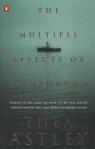
Thea Astley, The multiple effects of rainshadowMy records show that I read 8 books by Australian authors, though it’s possible I missed recording the odd book … I’ll list them in alphabetical order by author.

  • Thea Astley’s The multiple effects of rain shadow (1996, novel) (my review): Read with my reading group, this is the only book of the set that I’ve re-read – and that I’ve re-read since blogging, hence a review link for it. I love Astley as regular readers among you know, and this book’s study of the 1930 Palm Island tragedy, is a great example of her writing and of her concerns for outsiders and underdogs.
  • Gillian Bouras’ A stranger here (1996, novel): Also read with my reading group, this novel is an autobiographical story of Bouras’ experience as the wife of a Greek husband, living in Greece. As I recollect, we all enjoyed the exotic nature of her experience within another culture, but we could also relate to the more universal challenges of being mother and wife.
  • Peter Carey’s Jack Maggs (1997, novel): My reading group has read several books by Carey over the years, but this work of historical fiction which explored Charles Dickens’ character of Magwitch (from Great expectations) is among the more popular of his that we’ve done. It won the Miles Franklin Award.
  • Robert Dessaix’s A mother’s disgrace (1994, autobiography/memoir): And this, I read on my own! I’m not sure how well-known Dessaix is known outside of Australia, but this was his first book. He has gone on to write other memoirs, as well as novels and other works of non-fiction. A mother’s disgrace tells the story of his childhood as an adopted person, and, as Wikipedia describes it, “his journey to an alternative sexuality”. Many of us Aussies have enjoyed his contributions on such ABC radio programs as Books and writing and Lingua Franca.
  • Delia Falconer’s The service of clouds (1997, novel): Another reading group read, this was Falconer’s debut novel. It’s an historical novel set in the Blue Mountains. As I recollect, we had mixed reactions to it, but I do remember its gorgeous descriptions of a part of Australia I love. (I’m a mountains person!)
  • James Maloney’s A bridge to Wiseman’s Cove (1996, young adult novel): The first of the two Aussie young adult novels I recorded for this year, it’s about a 15-year-old boy, and his travails after his mother disappears. I remember enjoying its description of small beach-town life and the characters there, but can’t say much else about it. I also read, around this time, two books by Maloney in his Gracey trilogy (1993, 1994 and 1998). Set in southwest Queensland, the protagonists have indigenous Australian backgrounds. A non-indigenous Australian is unlikely to write such books now, but I remember finding these moving. We had little else to read on the topic then.
  • David Malouf’s An imaginary life (1978, novel): Now this is where I must admit something shameful! I’ve read six of Malouf’s nine novels to date, and have loved them all – well, all except this one. It was another reading group book, and I can still remember the meeting! It tells the story of the Roman poet Ovid, and it won the NSW Premier’s Literary Award for Fiction. Most of my reading group liked it. I can’t explain why I didn’t, given my love of Malouf’s work in general, but I think it was one of those timing things. I was just too tired to put the necessary energy into it.
  • Christobel Mattingley’s No gun for Asmir (1993, children’s-young adult biography): Publisher Penguin’s website says “War has come to Asmir’s home in Sarajevo. He is torn from his father, his home and everything he has known. He becomes a refugee. This is a story of courage you will never forget.” While I forget the details now, I haven’t forgotten its power, nor the fact that such a book was written for young people.

Do you keep records of your reading? Do you remember your highlights of 1998?

Monday musings on Australian literature: Unfinished books

Regular readers here will recognise that this post was inspired by my recent posts on Jane Austen’s unfinished novels, The Watsons and Sanditon. They made me think more generally about unfinished novels, and who is interested in them. I thought it might be fun to write about this, referencing Australian literature. But first, lest this sound too esoteric, it’s worth noting that literature is peppered with such books, including Charles Dickens’ The mystery of Edwin Drood, Herman Melville’s Billy Budd, Edith Wharton’s The buccaneers and F Scott Fitzgerald’s The last tycoon. Wikipedia even has a category for unfinished novels.

Googling the topic revealed an article in The Spectator by critic-and-novelist Philip Hensher titled “Why we love unfinished art”. His focus is visual art, but some of his ideas can be applied more broadly. He lists the main reasons works are unfinished: the creator dies, the patron or commissioner doesn’t pay up (which is more applicable to art and music), or the creator loses interest. Whatever the reason, though, he says:

Since classical times, their appeal has been understood, and artists have had to accept that what they leave unfinished may be exposed to the public, and may even be more admired than their finished productions.

I’m not sure that the last point about being “more admired” applies much to literature – at least not in my experience – but the first point about artists accepting that “what they leave unfinished may be exposed to the public” does. I don’t believe Patrick White accepted it when he asked that his unfinished work not be posthumously published. Nor did English writer Terry Pratchett. Claire Squires, in her article “Should authors’ unfinished works be completed?” in The Conversation, writes that:

it was his wish that any unfinished works remained unpublished, and so he instructed that the hard drive containing his remaining works be crushed by a steamroller.

And so, that’s exactly what happened.

All this begs the question, though, of why we want to read such works? Squires says, referencing Austen, Dickens and F. Scott Fitzgerald, that

their unfinished texts add to our accumulated knowledge of their writing, their rich imagination, and the development of their thinking.

Patrick White, The hanging garden

That’s certainly so for me, and for my Jane Austen group. And it’s why, in the end, White’s literary executor Barbara Mobbs gave in to requests that White’s unfinished novel, The hanging garden, be published.

The trickier question, for me anyhow, relates to completions of these works by others. I’m far less interested in these, because it’s the original author’s writing that I want to see, not someone else’s attempt to emulate it and/or guess where the unfinished work was going. However, completion is quite an industry. For example, Tolkien’s son has worked on finishing his father’s works, and Stig Larsson’s executors have commissioned a ghostwriter to create new works using his characters. There’s clearly money in it … but it also serves fans who don’t want to let go.

Some Aussie authors and their unfinished works

  • George Johnston’s A cartload of clay: the third in Johnston’s Meredith trilogy, A cartload of clay was published posthumously, the year after Johnston’s death. Wikipedia quotes reviewer John Lleonart as saying the novel “is a mellow, often distinctly melancholy autobiographical essay. Johnston had intended it to be a novel but the fact that it is structurally incomplete does not detract from it. The absence of a contrived ending is, indeed, a factor in the book’s impact as a human document…” So, it was published as is, and there’s nothing to suggest that Johnston asked for it not to be published.
  • Eve Langley: Langley left behind ten unpublished novels that are housed at Sydney’s Mitchell Library. There have been many attempts to publish them, but permission has been refused by Langley’s daughter. However, in 1999, Lucy Frost published her book Wilde Eve, which is a “memoir” of Langley that she constructed from Langley’s unpublished writings. Bill (The Australian Legend) has written about this book.
  • Henry Handel Richardson’s Myself when young: this memoir, which the Australian Dictionary of Biography says is not reliable, was unfinished at Richardson’s death in 1946, and was published two years later. It apparently ends on her marriage to Professor Robertson, and was fleshed out with notes from her husband’s diaries and an essay on her art. I found no evidence that she did not want it published.
  • Arthur Upfield’s The Lake Frome monster: detective fiction writer Upfield is not the typical author to appear on my blog, but he was an Australian author and has an unfinished novel so is relevant here! It was published posthumously, using the manuscript and copious notes Upfield left “for this purpose”.
  • Patrick White’s The hanging garden: as mentioned above, this unfinished novel by Australia’s – to date – only Nobel Laureate for Literature was published despite White’s request that his unpublished work not be published posthumously. Literary executor Mobbs agreed to its publication to commemorate the centenary of White’s birth, and justified her decision by saying that White had burnt much of his writing before his death, but not this one, suggesting he may not have felt as strongly about it! Well, who knows, but of course the literary world is very pleased to have this work which, the front matter tells us, was “transcribed from Patrick White’s handwritten manuscript and, in the absence of a living author to consult, not edited.” So, it is his work, unadulterated, uncompleted-by-others. I must read my copy soon …

And now I’ll finish with novelist David Francis’ conclusion in his article on The hanging garden, in the Los Angeles Review of Books:

I, for one, am grateful that those 50,000 words have been laid out for us, unadorned, like an almost-ripe bowl of cherries. While it was likely tempting for editors to cover White’s pages with their own red ink, the Venus de Milo does just fine as it was found, without prosthetic arms, and Shubert’s [sic] Unfinished Symphony is pretty splendid as it is.

I know just what he means.

Are you interested in reading unfinished novels – either in their original form or as completed by others?

Monday musings on Australian literature: Literary awards’ judging panels

Alexis Wright, TrackerIn my Stella Awards post last week, I shared an excerpt from winner Alexis Wright’s acceptance speech in which she applauded the diversity in this year’s shortlist, noting that it included “Indonesia, Iran and Sri Lanka, as well as two Aboriginal writers.” In that post, I also quoted Stella’s Executive Director, Aviva Tuffield, as saying Stella still has work to do “in terms of diversity”. That’s true – for all of us – but Stella has made a good start.

Now, I’m not going to do thorough research here of the achievements regarding diversity in our recent awards. For a start, just defining diversity is tricky enough. There’s gender, sexual identity, ethnicity and indigeneity, disabilities (or different abilities) of all sorts, and much more to consider. Then, there’s the issue of measurement. An easy measure would be percentage of representation in the population versus percentage of being listed for or winning awards. With gender, we know that women are roughly half the population, so you would think that they should comprise, over a reasonable time period, roughly half the listed and winning authors for awards. But, is this the most appropriate measure, and can we easily measure it for all diversities?

Regardless, we would accept, I think, that diversity, however we measure it, still has a way to go. What methods, then, can we use to improve it. Special awards, like the Stella, is one approach – and there are many others – but in this post, I’d like to consider the composition of the judging panels. First though, I need to clarify that I recognise that while we want to increase diversity, the downside is that to do this we need to label – and not everyone wants to be labelled. So, I won’t get my discussion here completely right I think, and further, I apologise if I offend anyone. It’s not my intention to do so.

Now, to look at some panels …

The Stella Prize does a reasonable job. Because it is an award for women writers, its five-person judging panels tend to be dominated by women with, admittedly, anglo-women tending to predominate. But in 2018 there was a man, critic James Ley, and the women included an Australian-born woman of Chinese-Malaysian heritage, Julie Koh, and a gay indigenous writer, Ellen van Neerven. In 2017, the man was, author and broadcaster, Benjamin Law, who happens to also be gay and of Malaysian background, and the women included an indigenous woman, the academic and editor, Sandra Phillips. Similarly in 2016, the panel included a man, critic Georgie Williamson, a woman Alice Pung, whose parents were Cambodian refugees, and another woman, Suzy Wilson, not indigenous as far as I know, but the founder of the Indigenous Literacy Foundation.

By contrast, the 2017 Fiction and Poetry panel for the Prime Minister’s Literary Awards looks all anglo to me, albeit the five-person panel was strong on women members, with four women and one man. Their previous panels are similar, except the gender balance has favoured men. Similarly the 2018 Miles Franklin Literary Award’s five-person panel looks all anglo too, with two men and three women, albeit of diverse professions – academics, a journalist, a bookseller and the mandated Mitchell Library librarian!

On the other hand, there’s the panel for the 2018 New South Wales Premier’s Literary Awards. It’s a large one comprising 16 people. Presumably subsets of these judge different categories of the awards, so it’s difficult to identify who will judge the Christina Stead Award for Fiction which, for comparative purposes, is the one I’m interested in. However, let’s just look at the 16. It includes seven men and nine women. Of the men, at least one is indigenous, the journalist and broadcaster Daniel Browning, and the others include a man from an Indian background, and a Muslim. Of the women, at least one is indigenous, the author Melissa Lucashenko, and another is the Singaporean-born poet Eileen Chong. So, some attempt at diversity here.

The page for the 2018 Victorian Premier’s Literary Awards, which have already been announced, provides panel breakdowns for the main categories. The fiction panel comprised four people, all women, and included the indigenous author, Jeanine Leane, and reviewer Thuy On whose name suggests an Asian background, but I don’t know for a fact.

So, overall, looking at these very few recent examples, women are certainly well represented on the panels, but from the information I have (as bios aren’t readily available for all judges and where they are they don’t always provide the “labelling” information needed for my post), other “sorts” of diversity is more hit-and-miss.

This is, obviously, a very brief and patchy survey. There’s a major research project here, looking at panel composition, comparing them against their choices, and so on – but this is not something I can commit to. My aim is simply to raise the issue, than argue a definitive case. I don’t want to denigrate all the hard-working judges out there – a job I, for one, would hate. But, we do need to consider that no matter how qualified the judges are, no matter how fair they try to be, diversity of background and experience is needed to mitigate the problem (or appearance, even) of unconscious bias. I would, therefore, love to see more diversity on the panels.

Interestingly, I didn’t, in my brief research, find a lot of commentary about the composition of judging panels, from a diversity point of view. However, I did find one, regarding the ages of the judges, from the ABC’s Books and Arts Daily on last year’s Miles Franklin shortlist. Another diversity issue to consider:

The book is beautifully written. Its emotional terrain will register most effectively with older readers. A younger judging panel would look elsewhere for a winner. But this is a judging panel in which four of the five judges are over 50.

So grumpy Fred is in with a chance.

Just for the record, Grumpy Fred (Josephine Wilson’s Extinctions) did indeed win.

Do you have any experience or knowledge you can add to the discussion – and, anyhow, what do you think? Is this issue important?

Monday musings on Australian literature: #8wordstory

Do you like writing challenges?

Last year I started a Monday Musings sub-series on Australia’s state writers centres. So far I’ve written on four, and I should be getting on with it. However, I can’t resist returning, today, to the Queensland Writers’ Centre (previous post) to share a wonderful campaign they ran late last year. Called #8wordstory, it asked participants to pen a story in 8 words. The response was astonishing.

#8wordstory ran, officially, from 30 October to 26 November last year, and, as they say on their About page, involved asking “everyone, young or old, writer and non-writer alike, to share a story …”. The project was a partnership with three companies, but most significantly with goa.com, a large Queensland billboard and signage company, who have a Community Partnership Program. Are you getting the picture? Because what happened was that each week 20 8-word-stories were selected by the judge – author Nick Earls – and displayed on digital billboards around Brisbane, and via QWC’s social media, such as Twitter (which is where I discovered it, and add it to my list of ideas for Monday Musings.)

In a Books + Publishing report on 27 November – the day after the campaign ended – the QWC is quoted as saying that it “surpassed all expectations with over 10,000 entries submitted”. This report goes on to say that the entrants included “the entrants were New York Times bestselling authors, Australian award-winning writers, Australian and international publishing houses, the Queensland Police Service and hundreds of school children.” Wow, eh?

So, why 8 words? QWC explains this on the above-mentioned About page. They say that “a billboard gives you a few seconds to read, register, and understand. And 8 words gives you just enough canvas to make an impact. It is the perfect number where storytelling and advertising meet.” They provided Tips for people to help them get started, tips which look generally useful as well as to the goal of writing a story in 8 words. The tips are (and they are further elaborated on their page):

  • Start with a simple idea: this and the next tip, in particular, make me think of haiku
  • One thing should happen
  • Don’t use too many characters: haha, sounds sensible to me, otherwise your story might be all people and no action.
  • Find an emotional tone
  • Use all your senses
  • Write long first, then take out unnecessary words: sounds like my blog post writing! Except I don’t take out enough words, I know.
  • Punctuate or perish: all I can say to this is Yes, Yes, Yes!
  • Make every word count: well, yes.

They also had a special page of advice and resources for schools.

And, of course, they have a page listing ALL the stories, though when I say page, I actually mean 83 of them, presented in reverse order of submission. The stories apparently had to be written to one of four themes – Home, Love, Change, Play. There is a search box at the bottom of each story page, though it doesn’t work as well as I’d like it to.

I’m not sure about copyright, but I’ll share just a few assuming that it’s OK as long as I don’t share them all!

Surrounded by complete idiots. Damn those mirrored walls. (Donny Hawthorne, Change)

I woke with wings, stolen in a dream. (Isobelle Carmody, Change)

Once upon a time there was the earth … (@julescdr, Home)

Holding her fractured cheek she said “I’m sorry”. (Rebecca Hafner, Home)

In the pages, another world is my home. (JWilliams, Home)

You shouldn’t confuse ‘Don’t! Stop!’ with ‘Don’t stop’. (Lynne Lumsden Green, Love)

Your letters in the compost. The roses blooming. (Nike Sulway, Love)

He complimented her smile and then erased it. (jessicalim, Love)

Words can inspire and words can destroy. Choose. (Byron, 12, Love)

Can we all fit in the band wagon? (Jane Meehan, Play)

All seven numbers! Panicked, she swallowed the form. (@KrissyKneen, Play)

With confidence he plays the cards he’s dealt. (@VacenTaylor, Play)

Some are by published authors known to me – Isobelle Carmody, Nike Sulway and Krissy Kneen  – but the others I chose because they attracted my attention in my random browse and offer some variety in terms of tone and intent.

Author Jessica White (whose Entitlement I’ve reviewed here) blogged about her #8wordstory, which was selected for a billboard. Check it out to see the inspiration and how it looked. And Queensland crime author, MT Ellis, also blogged her billboarded story.

If you’d like to make your comment an 8wordstory, I’d love it. But if, like me, you suffer from verbal diarrhoea, don’t let that stop you commenting. I’d love to hear your thoughts regardless …

Monday musings on Australian literature: Novels retelling other literary works

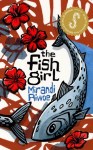
Mirandi Riwoe, The fish girlThose who read my blog regularly will guess what inspired this post – Mirandi Riwoe’s The fish girl (my review), which is her response to W. Somerset Maugham’s short story “The four fat Dutchmen” (my review). It got me thinking about how many other Australian novelists have done this sort of thing …

However, when you start researching this topic, my what a rabbit-hole you find! Firstly, what do you search under? Do you use words like “tribute” or “homage”. Well, no, because I wasn’t necessarily seeking novels which celebrate the original in that positive sense. Other search terms I tried were “responding to” (but even though I entered “novels responding to novels”, I mostly got hits about how readers respond to literature), “retelling”, “reworking”, and “riffing”. All these retrieved a variety of hits that contributed something, although when I added the term “Australian” into the mix, the results petered out somewhat. I also scouted around Wikipedia thinking surely there was something there to help me. I found various “list” pages, such as List of modernized adaptations of old literature and List of books based on works, but these were limited in their value, partly because they weren’t very comprehensive. However, during my Wikipedia travels, I did find a new term which is pretty perfect, I think, Parallel novels. One of the sources given for this article was from the West Milford Township Library, which defines the parallel novel:

A parallel novel owes its basic structure to a work by a different author. It can borrow a character and fill in his story, mirror an “old” plot or blend the characters of one book with those of another.

There is also, of course, the term “fan-fiction” but it’s somewhat tangential to what I was looking for – and is, to my mind, a separate group, albeit with some overlapping.

So, what was I looking for? Something more one-off, like, say, Lloyd Jones’ Mr Pip (Great expectations), Jane Smiley’s One thousand acres (King Lear), Jean Rhys’ The wide Sargasso Sea (Jane Eyre), or Margaret Atwood’s The penelopiad (Homer’s Odyssey) (my review), all of which I’ve read and enjoyed. In other words, I wasn’t looking for novelists who had jumped on the bandwagon of a famous name (like Jane Austen, for example) or who wanted to continue a story they loved just because they loved the story or its characters. No, I was looking for novelists who wanted to explore a story from a different angle, often with some political or philosophical intent, though not necessarily so. There is, of course, a fine line in all this, and I certainly don’t want to offend authors who engage in the more popular style of “retellings”. After all, they’ve written a novel, which is more than I’ve done!

A few Australian parallel novels

I have read all the (few) books I list below, but some before blogging. If there’s a link on the book title, it’s to my review.

Geraldine Brooks’ March (Louisa May Alcott’s Little women): Brooks answers the question of what was the sisters’ father, Mr March, doing while he was away from home at the Civil War? It enabled Brooks, who is married to Civil War tragic Horowitz, to look at the Civil War from the point of view of an idealistic minister. He confronts the cruelty of war, not to mention his own failings, and learns that there are no simple answers to the rights and wrongs of war.

Peter Carey’s Jack Maggs (Charles Dickens’ Great expectations): As Brooks does in March, Carey fills in the story of a largely absent character in the original, the convict Magwitch. By having him return from the penal colony as a successful man, Carey forces readers to question issues like class, success and the power of money.

David Malouf Ransom

UK edition cover

David Malouf’s Ransom (section of the Iliad Books 22-24): Now, I have to admit that while I loved this book because Malouf writes so beautifully and so compassionately, I did wonder a little why he decided to write it. This is because, unlike the previous two books I’ve listed, he does not, as far as I can tell, retell the story in any major way, though he does flesh it out more, and in so doing, I suppose, he gives it a new slant. He also introduces a new character, Somax the cart driver, who provides an opportunity for Malouf to further develop Priam’s character. In the end, I decided that the book is about daring to dream – regardless of whether you are successful or not – and about the power (importance) of stories.

Mirandi Riwoe’s The fish girl (W. Somerset Maugham’s “The four fat Dutchmen”): As I wrote in my very recent review, Riwoe tells the story of the Maugham’s nameless, mistreated Malay girl, from the girl’s perspective. Although Riwoe tells her story third person – as against Maugham’s observational first person narrator – she gets into Mina’s head and creates in her a lively, resilient but ultimately naive and, more importantly, powerless young woman who is no match for the men who control the colonial and traditional worlds in which she lives.

Roslyn Russell, Maria Returns Barbados to Mansfield ParkRoslyn Russell’s Maria returns: Barbados to Mansfield Park (Jane Austen’s Mansfield Park): Russell’s book falls to some degree in the fan-fiction category, but it also works as parallel literature because it picks up the story of the disgraced Maria Bertram and imagines what might have happened to her. Could she redeem herself? Russell uses Maria as an excuse to explore the slavery issue, which is tantalisingly referred to in Mansfield Park but not explored. It’s a point of ongoing (some might say endless) fascination for readers and critics of this intriguing Austen novel!

There is a question germane to all this, which is whether you need to have read the original before you read the retelling. I’d argue that the work must stand on its own, as I think the above novels do. Knowing the original should surely enhance the read – besides that little fillip of pride when you recognise an allusion! – but it shouldn’t make the read.

What do you think? And, while we’re at it, are you interested in parallel novels? If you are, I’d love to hear your favourites.

Monday musings on Australian literature: Some Australian adventurers (1)

Hands up who likes to travel? And keep your hands up if you like to read travel writing! This post is especially for you. I’ve numbered it (1), because I’m drawing primarily from a book, which I think could warrant a few posts.

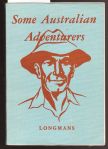
Edith Moodie Heddle ed., Some Australian adventurers

1957 edition

The book I’m using is another of those that I retrieved from my aunt’s house when Mr Gums and I were clearing. The book is titled, yes, Some Australian adventurers, and was edited by someone called Enid Moodie Heddle, so let’s start with her. Wikipedia says she was an “Australian poet and writer for children”, but she did more than that. Wikipedia says that she joined Longmans publishing house in 1935 where she worked as an educational adviser until 1946, at which time she was appointed Education Manager. In this job, to 1960, she “oversaw the publication of textbooks for schools and universities.” Some Australian adventurers was published by Longmans, Green and Co. in 1944.

Heddle wrote the brief introduction to Some Australian adventurers. She says its aim is “to catch something of the spirit of adventure and joy in discovery which seem to us to be not only characteristic of the majority of the writers here represented, but also of Australians as a race”. Hmm … Australians are known to like travelling, but is it a racial characteristic? She goes on to say that

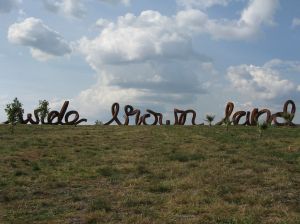
Wide Brown Land sculpture

Wide Brown Land (National Arboretum)

From our British ancestry we have inherited qualities which, no doubt, make us turn eagerly to far horizons, and even our own wide brown land* is not enough for most of us. Like the writers of these extracts, we would walk “the wind-wide ways”* of the world and see strange sights and meet strange people, from the Northern Lights to Antarctic snows. If this is impossible for us, the next best thing is to read of action by others. Here, then, are some accounts of real and imaginary adventures from the legendary wanderings of the aboriginal, at home in the land of the Southern Cross long before the white man came, to modern tales of land, sea and air.

The first thing to say is that these sentiments are very much of their time, so I’m not going to comment on ideas like the “qualities” Aussies “inherited” from “our British ancestry”. As readers, though, we would still agree with the idea that if you can’t travel “the next best thing” is to read other people’s travel writing. And, it is interesting, given the era, that she references Indigenous Australian stories, about which more below.

The last thing I’ll share from her introduction is her discussion of her chosen extracts, from which she says

we may learn, if we wish, something of what goes to build up tradition, of what makes for riches in experience, of what stuff is life.

I love this language, and her aspirations for the book. She emphasises that it comprises fragments from larger wholes, and is thus a “prelude to adventure”. To help further adventuring, she provides bibliographical details for the works excerpted, plus additional reading suggestions.

The book is then divided into thematic sections:

  • In the land of Mirrabooka: from K. Langloh Parker
  • The white intruders: from Eleanor Dark, Elizabeth Bussell, William Hatfield, Ion L. Idriess
  • Animals and men: from Frank Dalby Davison, Vance Palmer, Hedley Herbert Finalyson
  • Further afield: from Jack Gordon Hides, Sir Douglas Mawson, Sir George Hubert Wilkins, C.E. Kingsford-Smith, Alan J. Villiers, Wilfred G. Burchett
  • Strange encounters: from Jack McLaren, Frederic Wood Jones, Walter Murdoch
  • Story and character: from Henry Lawson (twice)

The thing that struck me about the table of contents is that it contains many writers I don’t know. Further investigation explained it, however. Most, though not all, of those I don’t know wrote non-fiction, such as Hedley Herbert Finalyson, Jack Gordon Hides and Jack McLaren. My guess is that non-fiction writers disappear from view faster than fiction ones? Anyhow, some of these new people are interesting, as are the familiar ones. I look forward to sharing some of them in future Monday Musings.

K. Langloh Parker

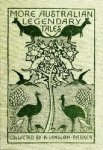
K Langloh Parker, More Australian Legendary Tales

First published 1898

I’m going to conclude with K. Langloh Parker because she has the opening section of the book to herself! She was, in fact, Catherine Eliza Somerville Stow (1856-1940). She was born (and died) in South Australia but spent time in the nineteenth century in New South Wales where she recorded the stories or legends of the local Ualarai people. Introducing Parker, Heddle writes that

The first adventurers of whom we know in Australia, the land of Mirrabooka, the Southern Cross, were the Australian Aboriginals. Even now we have much to learn of their customs and culture.

She continues that Parker has done a great service “by collecting their legends and retelling them in English in a way as near as possible to the original”. Wikipedia, writing in our time, says that “her testimony is one of the best accounts of the beliefs and stories of an Aboriginal people in north-west New South Wales at that time. However, her accounts reflect European attitudes of the time.” Not surprisingly.

The interesting thing to me, though, is that Heddle recognised the importance and relevance of Indigenous Australian stories to her book. It’s also interesting though that she presumably didn’t have access to Indigenous versions of these stories. Her further reading suggestions are also all by non-Indigenous writers. She says that the book from which her extract “Beereeun the mirage maker” comes was illustrated (uncredited I believe) by an Indigenous artist. Wikipedia says that the Indigenous artist Tommy McRae illustrated the first volume, Australian legendary tales, but doesn’t mention his illustrating the second. It’s likely though that he did, as the same people were involved in producing both.

Australian legendary tales, but not More Australian legendary tales, is available at Project Gutenberg Australia.

* Aussies will recognise “wide brown land” as alluding to Dorothea Mackellar’s poem “My country”. Fewer of us, I think, including me, would recognise “wind-wide ways”, which she encloses in quote marks. It comes from a poem called “The bush” by Bernard O’Dowd, who has been mentioned here a couple of times, first in my Monday Musings about most popular poets and novelists in 1927.

Monday musings on Australian literature: Mollie Skinner and DH Lawrence

I promised this post in yesterday’s review of Mollie Skinner’s short story, “The hand”, but have since been reminded that Bill (The Australian Legend) has already written about Skinner’s relationship with Lawrence. I’ve decided to continue with my plan, not only because it interests me, but because I hope to add to the discussion.

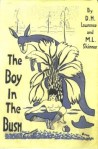
DH Lawrence, ML Skinner, The boy in the bush

First US edition, Thomas Seltzer, 1924

So, I suggest that you read Bill’s post (linked above), because I plan to avoid repeating what he’s said. However, you do need a little groundwork, and it is this. In 1922 Mollie Skinner was running a guest-house and nursing-home in Darlington, Western Australia, to which the newly arrived DH Lawrence, and his wife Frieda, had gone to stay. The end result of this meeting was the co-written novel, The boy in the bush. (You can read Bill’s review of this, too, on his blog.)

To avoid repeating Bill’s information which uses Paul Eggert’s introduction in the novel’s 1990 edition, I am drawing from – yes, you guessed it – my newspaper research in Trove, where I found some more contemporary commentary to complement Bill’s work. Contemporary commentary comes, of course, with the biases of the time, but is fascinating, both in spite of and because of that. Unfortunately, as is the way with newspapers, not all the articles have bylines.

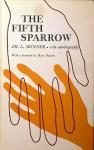
ML Skinner, The fifth sparrowHaving said all this, the first article I’m using is not quite contemporary, having been written in 1973, and does have a byline, Maurice Dunlevy. He is writing because of a new Heinemann edition of the book, and seems to draw his information from Mollie Skinner’s autobiography, The fifth sparrow, which Bill’s Paul Eggert also uses, and from the Heinemann edition’s introduction by Professor Harry T Moore. (There is, it appears, no lack of critical analysis of this work!) Dunlevy notes the existence of previous writings on the pair, but also says that:

We can certainly be more sure of our facts than the reviewers were a half-century ago when they thought that Mollie Skinner was a man.

Presumably this was because she is cited on the book as ML not Mollie Skinner – though it’s pretty clear that she was well-known in her birth state of Western Australia. Interestingly, some editions of the book don’t have her name on the cover at all.

Anyhow, Dunlevy quotes Skinner’s description of Lawrence as:

a man-boy with the little red beard, scarlet lips, strange eyes flashing with amused lights, and an upright body held with dignity.

Dunlevy goes on the describe how the novel came about – Skinner’s showing Lawrence some of her work, his expressing approval of her writing and suggesting she write about a particular topic, and her eventually sending him her manuscript of the novel she called The house of Ellis.

He then reports that:

Lawrence thought the book had “good stuff” in it, but was “without unity or harmony”, “without form, like the world before Creation”. He offered to re-cast it and have it published under their joint names.

This recasting, apparently, included recasting the hero, Jack (who was based on Mollie’s brother) to be “not quite so absolutely blameless an angel”. This included his coming to believe he was entitled to two wives. Dunlevy reports that Mollie cried when she read of this change! He also writes that Lawrence recast what was essentially “a conventional, parochial romance of an English boy sent to Australia for a social gaffe” and who then turns hero, into

a much more complex and universal story, the story of an Englishman responding to the new freedoms, the new challenges, the new possibilities for living an unconventional life on a frontier not bogged down by traditions. It is also one of the few good examples of an “Australian” version of that situation so familiar in American literature: a boy’s initiation into manhood.

Nonetheless, Professor Moore does say:

The writing throughout is distinctly Lawrencean and the book should rank as a Lawrence novel, though Mollie Skinner’s extremely important contribution should be noted”.

But what of more contemporary commentary? As Bill noted, it did tend to be more parochial. Here’s one from a paragraph on Publications Received in Western Australia’s The Great Southern Herald (14 March 1925). The writer suggests that Skinner wrote all the lovely descriptive material, perfectly capturing “the scenery and scents of the bush” about Perth and Fremantle, but:

the narrative itself is a discredit to the Australians it attempts to depict. It is a story of sordidness and immorality with the characters speaking a mixture of Bowery and Cockney slang. The one thing, beyond all others, that the average Australian is remarkable for, is the purity of his diction, in this respect being far above the average Englishman, and it is an insult to characterise him as speaking the awful polygot which appears in “The Boy in the Bush.” The opening chapters of the book grip one with their descriptive power … [and] … stamp the writer as one who knows and loves the West. Of the rest of the story, the less said the better.

I do love the comment about the “average Australian” being “remarkable” for “the purity of his diction.” I’m not sure I’ve heard that said before. Anyhow, the writer concludes that Skinner “will shortly publish The Black Swan, written without collaboration, and which should offer better proof of her literary powers”!

Someone called Norbar, writing a little later in 1938, is a little more even-handed, writing:

STRANGELY different from other West Australian authors is Miss Mollie Skinner. Her work has an elusive character which is difficult to grasp. Its naivete, lack of discipline and neglect of construction have led many to dismiss it as worthless, yet the hypercritical D. H. Lawrence, one of the greatest figures in 20th century English literature, not only praised her first book but collaborated with her in a second and urged her to complete a third. Miss Skinner’s collaboration with Lawrence in “The Boy in the Bush,” however, besides dragging her into the type of controversy which would not normally have been associated with her work, has unduly overshadowed her own originality.

Norbar then says, confirming his criticism at the beginning of this paragraph, that it’s easy to find fault in her books but that “in none of them does she fall into the facile pattern of stock character and situation which fills the lending libraries.” After some further discussion of Skinner’s collaboration with Lawrence, and of some of her later works, s/he concludes with the following assessment, which is a good a place on which to conclude this discussion:

In Miss Skinner’s novels we find her considerable originality, spiritual perception and feeling use of words circumscribed at every turn by almost school-girl conceptions of situation and character, probably an unconscious legacy from a mid-Victorian middleclass sensibility which has lingered among the old families of Australia long after its wane in England. Whatever contempt men like Lawrence might feel for English intellectual aridness, Miss Skinner would have benefited from early introduction into a circle invigorated by the new realism inspired from Scandinavia and France, even if she had had to slough it off afterwards. But literary and spiritual currents had little effect on the respectable classes of Australia and Miss Skinner’s training and traditions were against her turning to the democratic crudity of the working class, the salvation of many Australian writers. She has, consequently, been left high and dry and her work bears the marks of her isolation.

An interesting insight into some thinking of the critics/reviewers of the day, n’est-ce pas? There are some things here worth teasing out another time.

Monday musings on Australian literature: Contemporary Australian literary translators

Today’s Monday Musings was inspired by the shortlisting for the 2018 Stella Prize of Iranian-born Australian-based writer Shokoofeh Azar’s The enlightenment of the greengage tree. I first came across this book when Lisa (ANZLitLovers) reviewed it last August, commenting in her opening paragraph that the novel “is an exciting development in Australian publishing” because it was written in Persian by Azar and translated into English by Adrien Kijek for publication by Wild Dingo Press. I wonder how many other speakers of non-English languages in Australia would like to write – or do write – but are closed off from the majority of us because of a lack of support and money for translation?

I have written about translation here several times before, but in this post I want to specifically name some current Australian literary translators, many of whom are based in our universities. We do, in fact, have many literary translators, but I’m going to select just a few – somewhat randomly – to give a sense of the breadth of translators we have here.

Stuart Cooke and Juan Garrido Salgado

Sydney-born Cooke has lived in Hobart and Latin America, but is currently a lecturer in creative writing and literary studies at Brisbane’s Griffith University. The various bios I’ve seen for him describe him as a poet, critic and translator. I’ve picked him because one of his translation interests is the Aboriginal song poem. In 2014 he published a translation of George Dyuŋgayan’s Bulu line: a West Kimberley song cycle. His other translation interest is, apparently, Spanish. In 2007 his translation of Juan Garrido Salgado’s Once poemas, Septiembre 1973 was published.

And, just to complicate things a bit, this Juan Garrido Salgado is a Chilean immigrant to Australia (1990). His poems, says Red Room Poetry, have been widely translated, and he himself has translated works by Australian poets – John Kinsella, Mike Ladd, Judith Beveridge, Dorothy Porter and MTC Cronin – into Spanish. He has also translated five Aboriginal poets into Spanish for Espejo de tierra/Earth mirror poetry anthology (2008)!

Linda Jaivin

When I chose this post, one of the two translators to pop into my head – before I went to Google – was Linda Jaivin whose Quarterly Essay, Found in translation, reviewed a few years ago. American-born, she did Chinese studies at university in Rhode Island before spending time in Taiwan and Hong Kong. She’s perhaps a bit of a ring-in here because she doesn’t seem to have translated novels or other sorts of books, but she is a professional translator whose work has included subtitling (into English) Chinese films like Farewell My Concubine. She has written a memoir, The monkey and the dragon, about her experience as a translator in China. And, she’s an associate of the Australian Centre on China in the World at the Australian National University.

Meredith McKinney

Ogai Mori, The Wild GooseThe other Australian translator I remembered, before Googling, was Meredith McKinney. The daughter of the great Australian poet Judith Wright, she has made a name in her own right as an expert in and translator of Japanese language and literature. She lived in Japan for a couple of decades but is now a visiting fellow in the Japan Centre at the Australian National University where she teaches Japanese-English translation. She has translated both classic and modern Japanese novels and short story collections. You can see a pretty comprehensive list at GoodReads. Her translation of Furui Yoshikichi’s Ravine and other stories won the 2000 Japan-US Friendship Commission Translation Award.  A few years ago I bought her translation of The wild goose by Ōgai Mori (Finlay Lloyd) but it still, unfortunately, languishes on the TBR.

Ton-That Quynh-Du

Pham Thi Hoai, The crystal messengerVietnamese-born Ton-that Quynh-Du came to Australia in 1972 under a Colombo Plan Scholarship. He has worked as a translator, court interpreter, and as an academic at Deakin University, Monash University and the Australian National University. His translation of Pham Thi Hoai’s novel The crystal messenger – a book that has been on my bedside TBR for some years now – won the 2000 Victorian Premier’s Award for literary translation. (This award is now, unfortunately, defunct. I believe it was called the SBS/Dinny O’Hearn Prize for Literary Translation, and was only awarded three times, in 1997, 2000 and 2003. What a shame.) His translation of this same author’s collection of short stories, Sunday menu, won the 2007 ACT Book of The Year Award. While he mostly translates into English he also does some translation into Vietnamese (as does Pham Thi Hoai, who now lives in Germany)

Kevin Windle

I chose Kevin Windle as my fifth example because I found, via Google, that last year, 2017, he won a rather prestigious award, albeit one not known to most of us Australians. It’s only awarded every three years by the International Federation of Translators (FIT), and is the Aurora Borealis Prize for Outstanding Translation of Non-Fiction Literature. A press release said that “his work, translating into English from nearly a dozen different languages, and across a wide range of subject areas, is described by his supporters as ‘reliably brilliant’.” How I’d love to be descried as “reliably brilliant”! London-born Windle has worked at the University of Queensland but is now emeritus fellow in the School of Literature, Languages, and Linguistics at the Australian National University, where his expertise is in Translation Studies and Russian. Indeed, the Words Without Borders website states that in 2014 he was awarded the inaugural AALITRA prize for literary translation from Spanish, and in 2015, second prize in the John Dryden competition for a translation from Polish. Although the Aurora Borealis Award was for non-fiction, he has apparently translated fiction, drama, literary biography, and linguistics and ancient history texts.

The above-mentioned press release for Kevin Windle’s Aurora Borealis win notes that the award aims

to promote the translation of fiction literature and non-fiction, improve the quality thereof and draw attention to the role of translators in bringing the peoples of the world closer together in terms of culture.

And that seems a perfect point on which to end, I think.

Do you read translated literature? I’d love to hear your favourites – or anything else you have to say about translation.

Monday musings on Australian literature: Young Writers Awards

Yesterday’s post on young writer Ben Smith Noble’s prize-winning short story, “The sands of time” inspired today’s post. I’ve written about several prizes over the years – the big ones, and the more targeted ones – but not prizes for Young Writers. It’s a tricky topic to write about. There’s the definition of “young” and there’s the fact that there are many “small” prizes offered (that is offered within small spheres like a school or other contained group). My focus here is to pick out some of the bigger – more encompassing – prizes, and also to show some of the variety in the prizes being offered.

These prizes range from those offered for a piece of work submitted for competition to awards for published writing. The more adult young writers prizes (if that makes sense) define young writers as those under 35 or 30 years of age, while other prizes can be offered for age ranges. I’ll list a selection of awards, in alphabetical order.

Per Capita Young Writers’ Prize

I nearly didn’t include this prize because their website is so minimal. It says, for example, to “Click below to see winning entries from this year and previous years” but I could see nothing “below” to click on. However, it’s an intriguing award that’s been going for a few years, it seems, so I decided to include it. It is for Australians aged 25 years and under, and is “designed to encourage young people to think about the major public policy challenges facing Australia.” Weighty matter! The judging criteria includes, as well as the more usual ones of originality and writing quality, “the potential public benefit of the ideas put forward.” In 2014 the winner received $3,000 plus some sort of international travel. You can read a 2017 prize-winner on the writer Michael Dello-Iacovo’s website.

Scribe Nonfiction Prize for Young Writers (Nonfiction)

Established in 2013, this prize is seen as a development award aimed at fostering “talented writers aged 30 and under writing longform work.” Writer submit  entries of between 5,000 and 10,000 words “across all nonfiction genres, including memoir, journalism, essay, and creative nonfiction.” The winner receives cash ($3000 in 2017), mentorship and some Scribe books. Shortlisted writers receive some Scribe books, but also feedback on their entry and the opportunity to attend a masterclass. Pretty good eh? The prize makes their aim of fostering talent real.

SLQ Young Writers Award (Short Story)

An annual short story award, around 20 years old, for Queensland writers aged between 15 and 25. Prizes are offered in two age categories: aged 18 – 25 (short stories up to 2,500 words); aged 15 – 17 (short stories up to 1,500 words). In each of these, there is one winner and one runner-up, and four highly commended entries. Past winners include Benjamin Law, Tara June Winch and Romy Ash. You can read all the past winning, runner-up and highly commended stories online.

Sydney Morning Herald Best Young Australian Novelists (Fiction)

Emily Maguire, An isolated incidentEstablished in 1997 by former literary editor Susan Wyndham, this award which aims to recognise “emerging talent” is made to writers who were 35 years or under when their book was published. It’s become a well-regarded award and is quite a feather in a writer’s cap to be called a Sydney Morning Herald Best Young Australian Novelist. More than one writer is named each year. An example is Emily Maguire who won the award in 2010 (Smoke in the room) and 2013 (Fishing for tigers). She went on in 2017 to be shortlisted for the Stella Prize, the Miles Franklin Literary Award and the Ned Kelly Award for An isolated incident (my review). You can see a list of the winners over the first 20 years, 1997 to 2016, online.

John Marsden & Hachette Australia Prize for Young Writers (Fiction, Nonfiction and Poetry)

Named for and supported by one of Australia’s most successful writers for youth, John Marsden, this prize is “an annual developmental award open exclusively to Australian secondary school students.” This award is made in three categories: fiction, nonfiction and poetry. Winners receive cash ($500 in 2017), a selection of Hachette YA books, publication of their work on the Express Media website and their names printed in the youth literary journal Voiceworks. You can read the winning 2017 works online.

Young Tasmanian Writers’ Prize

Tasmania 40 South Issue 78Run jointly by Forty South Publishing and the Tasmanian Association for Teachers of English, this is a literary competition for Tasmanian high school students, in two age categories, Senior Section (Years 10 to 12) and Junior Section (Years 7 to 9). They do, it appears, provide a theme/themes, as this entry form for 2018 shows. The winners in the two sections receive $300 and their story published in Tasmania 40° South, and the runners-up receive a $30 bookshop voucher. This is the one, as you’ve probably realised, won by Ben Noble Smith.

Young Writers’ Award (Picture Book and Short Story)

As far as I can tell this is a brand new award which started in 2017 and for which the first winner will be announced this week. It’s been established by the Redgum Book Club and is geared to children aged between 9 and 13 years of age, to “develop their writing skills and find their unique voice through storytelling.” They want it to be an accessible activity that can be  incorporated into a school’s writing program, so they provide a Teacher’s Toolbox on their site. There are two categories: picture book (up to 250 words plus illustrations) and short story (800 to 1000 words). Winners will receive a $250 Redgum book voucher, and the shortlisted writers a $150 voucher.

And there are many more awards – including other state-based awards and at least one for indigenous youth. For information about these and others, please visit a wonderful post by teacher and writer Melinda Tognini on her blog Treefall Writing.

I had no idea there was this variety around. I’d love to know if you have had any experience of young writers’ awards or know of any not listed here? (If you are not Australian please share any you know of from your country.)

Monday musings on Australian literature: Aurealis Awards for Speculative Fiction

Those of you who know my lack of interest in science fiction might be surprised to see a post dedicated to the genre here. However, I do like to be more representative in my Monday Musings series. If that means sometimes moving into areas that are out of my comfort zone, then so be it. And now seems to be an appropriate time to do so in this instance, because this year’s Aurealis shortlist has been released and it contains some books that interest me.

First, though, a little background. According to the website, the awards were established “in 1995 by Chimaera Publications, the publishers of Aurealis magazine, to recognise the achievements of Australian science fiction, fantasy and horror writers.” Their aim is to complement the Annual Australian National Science Fiction Convention’s Ditmar Awards and various other literary awards, but they delve deeper into the genre by distinguishing different types of speculative fiction – science fiction, fantasy and horror.

Their “rules” explain their criteria. They see themselves as “first and foremost a literary award”, so “literary merit, originality and contribution to the genre are of paramount importance in selecting the shortlisted works”. In other words, genre elements alone are not enough for shortlisting. Regarding genre definitions, they say that “a problematic definition of what makes a work of a particular genre” should not “bar an excellent book that contains appropriate elements of that genre”. They prefer “an inclusive view of what genre markers may include”. So, while they provide guidelines for their three named types of speculative fiction, these are not meant to be proscriptive. Rather, fluidity and inclusivity is their goal. This broad view is probably why there are a few books on this year’s list that interest me.

Over the years, award categories have come and gone, but the end result is that, today, the list is extensive. Their 2017 awards are for:

  • Best children’s fiction
  • Best graphic novel/illustrated work
  • Best young adult short story
  • Best horror short story
  • Best horror novella
  • Best fantasy short story
  • Best fantasy novella
  • Best science fiction short story
  • Best science novella
  • Best collection
  • Best anthology
  • Best young adult novel
  • Best horror novel
  • Best fantasy novel
  • Best science fiction novel

Phew! I love that they cover their three “types” in novel, novella and short story forms, and that they separately recognise children and young adult works, and collections and anthologies. It’s comprehensive, and it’s clearly successful because these awards have now survived more than two decades.

There is also the Convenor’s Award for Excellence. It’s something a little different, being awarded at the discretion of the convenors for “a particular achievement in speculative fiction or related areas” that doesn’t necessarily fit into award categories. ” It can be given to “a work of non-fiction, artwork, film, television, electronic or multimedia work, or one that brings credit or attention to the speculative fiction genres.” There’s no shortlist, and people can self-nominate. Again, if you’re interested to see the sorts of works being considered this year, do check the website.

Interestingly, I can’t find anything on their site about what the winners win, which makes me think it is more for the glory than for monetary gain.

Selected shortlist titles for the 2017 Awards

Given the large number of awards made, I’m not going to list the complete shortlist, but if you’re interested check out their  announcement. However, I’d like to identify a few that caught my eye.

Firstly, there are a few authors in the list who have appeared here, such as short story writer Deborah Sheldon (see my review of her 300 degree days and other stories). There are also popular children’s and young adult writer Garth Nix, local writer Kaaron Warren, and several writers I’ve learnt about through the Australian Women Writers Challenge, such as Kate Forsyth, Margo Lanagan and Tansy Rayner Roberts. I don’t feel quite so out of my comfort zone now that I recognise some names!

Claire G Coleman, Terra nulliusBut, this year’s shortlist also contains some specific titles that interest me:

  • Lois Murphy’s Soon, published by Transit Lounge (for Best Horror Novel). It won the Tasmanian Premier’s Prize for Unpublished Manuscript. Lisa reviewed it and found it compelling.
  • Claire G Coleman’s Terra Nullius, published by Hachette Australia (for Best Science Fiction Novel). This debut genre-bending novel by an indigenous writer (who identifies with the South Coast Noongar people of Western Australia) has also been longlisted for the Stella Prize. The judges wrote that “Coleman’s punchy prose is insistent throughout, its energy unflagging”. My reading group will be reading this in March so you can expect a review here in a month.
  • Krissy Kneen’s An Uncertain Grace, published by Text Publishing (for Best Science Fiction Novel). I’ve read one of her novels, Steeplechase (my review) and am intrigued to read more of her. An uncertain grace has also been longlisted for the Stella Prize (link above). The judges’ report begins with “Krissy Kneen does not simply perform the difficult feat of writing wittily about sex, she does so with aplomb. An Uncertain Grace is a formally ingenious and often amusing novel that combines eroticism and science fiction with a playful spirit of intellectual inquisitiveness.”
  • Jane Rawson’s From the Wreck, published by Transit Lounge (for Best Science Fiction Novel). I loved Rawson’s A wrong turn at the Office of Unmade Lists (my review) and am very keen to read this latest book of hers which, I believe, crosses historical and science fiction genres. I rather thought it might have been longlisted for the Stella, but that didn’t happen.

These awards are clearly sought after. This year 800 entries were submitted across the 15 categories. The winners will be announced at an awards ceremony over the Easter long weekend during the Swancon convention in Perth.

Does speculative fiction have a place in your reading preferences? If so, how?