Monday musings on Australian literature: New Territory 2019

New Territory LogoFor the third year I am a mentor for the ACT Writers’ Centre arts writing program, which was called in its first year, ACT Lit-bloggers of the Future program, but rebadged last year as New Territory or, Adventures in Arts Writing. It was broadened then to include theatre, when the Street Theatre joined the National Library of Australia and the Canberra Writers Festival as program partners.

I’ve greatly enjoyed my role, as I’ve met some wonderful people – Angharad and Emma in 2017, and Amy in 2018. This year, we increased the number of participants to three, but one has since withdrawn due to being offered work in Kyrgyzstan! Canberra, Kyrgyzstan, Kyrgyzstan, Canberra … What would you choose?

So, to recap the program before I introduce this year’s participants. Its overall aim, as the Writers Centre says, is to develop:

a deeper conversation about the arts: why we make art, how do we engage in art, and to what end? We aim to develop the arts writers, thinkers and provocateurs of the future.

This is done by providing for the selected emerging ACT-region writers to attend events at the National Library of Australia, the Street Theatre and the Canberra Writers Festival, and post their responses (which “document/explore/critique the experience”) on a blog. And this year, we have a dedicated New Territory Blog for the writers. It is still managed by the Writers Centre, but is separate from their own blogWe expect each blogger to write around 6 posts over the 6 or so months that the program runs. The Writers Centre plans to populate this blog with all the posts that have been written for the program since its inception.

The three writers were chosen in May, and the program is now well under way, so I’d like to introduce the two continuing writers to you:

  • Shelley Burr is working on a novel, and took part in the ACT Writers Centre’s well-regarded Hard Copy program last year (the same program, though a different year of course, that helped Michelle Scott Tucker with her biography of Elizabeth Macarthur, which I’ve reviewed.) She is particularly interested in what she calls “drought noir”, which term sounds perfect for some of the crime coming out of Australia at present. Shelley has had her writing place well in the Stockholm Writers Festival First Pages program. She hasn’t posted to the blog yet as she wants to focus on the Canberra Writers Festival, which takes place at the end of August.
  • Rosalind Moran already has quite a CV, having written for anthologies, websites, and journals including Meanjin, Overland, Feminartsy, Demos, and Writer’s Edit. She has also featured in several festivals – the Emerging Writers’ Festival, the National Young Writers’ Festival, the National Multicultural Festival, and Noted Festival. Oh, and she’s the co-founder of a new literary venture, Cicerone Journal. Rosalind has already written three posts on the blog: on the National Library’s Inked cartoon exhibition; on a puppet show titled BRUCE at the Street Theatre; and on a play at the Street Theatre, A Doll’s House, Part 2. Rosalind has her own website, here.

As in previous years, I plan to ask Shelley and Rosalind whether they’d like to write a guest post here during the program. Regardless, I will also report back later in the year, but meanwhile please do check out their posts on the blog (linked above).

Until then, thanks again to the ACT Writers Centre, the National Library of Australia, the Street Theatre and the Canberra Writers Festival for sponsoring this program – and a special thanks to author Nigel Featherstone for initiating and overseeing this program. I love being involved. I reckon I gain as much, if not more, from meeting and talking with other local arts writing enthusiasts, as they do from my involvement.

Previous posts on the program:

Monday musings on Australian literature: Listen to Indigenous Australian authors

BannerSome years, I’ve written an indigenous Australian focused Monday Musings post to start and conclude NAIDOC Week and Lisa’s ANZLitLovers Indigenous Literature Week. I have been researching a topic for this year’s second post, but it’s taking longer than I expected, so have decided to hold it over to next year. Meanwhile, having committed to a second post, I decided to change tack and instead share some podcasts comprising interviews with Indigenous Australian authors …

So, I’ve put together a sample list of interviews conducted this year with Indigenous Australian writers. They are from ABC RN programs (AWAYE!, The Book Show, and Conversations) and The Wheeler Centre. You can search those sites for earlier interviews with these, and other writers.

I am listing them alphabetically by author to make it easy for you to see if your favourite is here! And I am providing website links, but most if not all of these will be available through podcast services on tablets and smart phones.

Tony Birch

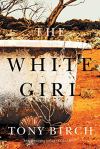
Fighting for family in Tony Birch’s The White Girl, The Book Show, (ABC RN), 24 June 2019, 17mins

Book coverBirch speaks to Claire Nichols “about trauma, bravery and writing stories of the past” regarding his latest book The white girl (my review) He discusses, among other things, the “contradictory and unpredictable” way in which the Act (which limited the freedom of indigenous people to travel, and made children wards of the state) was enforced in towns, and how this increased the level of insecurity and anxiety felt by indigenous people, somehting experienced by his character Odette Brown. The reason for this unpredictability could be incompetence in the local police, or the presence of a genuinely benign policeman, or because there was no law in the place or town.

Stan Grant

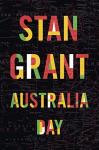
Book coverConversations: Stan GrantConversations (ABC RN), 24 April 2019, 52mins

Coinciding with the publication of his latest book Australia Day (about which I reported in another conversation with him), Grant talks with Richard Fidler about his book, and specifically his thoughts about the push to “change the date” of Australia Day. He believes, as the show’s promo says, “that … for now, 26 January is all that we are and all that we are not” and thinks that there are deeper questions to discuss about who we are than simply changing the date. I like his comment on protest – his dislike of “certainty” and of “slogans” – because I feel similarly uncomfortable, much as I agree with the heart of most protests. “I like to live in the space between ideas”, he says.

Melissa Lucashenko

Melissa Lucashenko in conversation at Sydney Writers Festival, AWAYE! (ABC RN), 11 May 2019, 33mins

Melissa Lucashenko, Too Much LipConversation with AWAYE!’s Daniel Bowning, including Lucashenko reading from Too much lip (my review). The show’s promo says “we talk about our grannies, the meaning of place, the role of humour in serious literary work, the fetishisation of Black suffering and why she would never kill off one of her characters.” Lucashenko talks about how the book is about oppressed people (of whatever ilk) standing up. (As she says on another podcast, “if you don’t fight you lose”.) Because she included some negative depiction of indigenous lives (particularly black-on-black violence), she expected backlash from the black community, but it hasn’t come. She feared being honest about this issue at this time in Australia’s history – was it the right time, she wondered – but then realised that “silence is violence”. She says the job of the writer being “to see what’s going on and write about it”.  Oh, and she wanted to write a funny book – which she certainly did.

Other interviews with Lucashenko on this book are available on ABC RN’s The Book Show, including one after its Miles Franklin shortlisting (12 July 2019, 10mins).

Bruce Pascoe

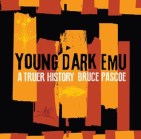
Book coverA truer history of Australia, AWAYE!, 25 May 2019, 12mins

Pascoe talks about Young dark emu, his junior version of his bestselling Dark emu (my review). It includes a reading by Pascoe from the book. He talks about the importance of teaching the true history of Australia to young people in schools, arguing that “ignorance makes you scared, knowledge makes you wonder”.

Alison Whittaker

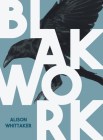
Book coverAlison Whittaker in conversation at Sydney Writers Festival, AWAYE!, 18 May 2019, 32mins

Whittaker talks about (and reads from) her latest work, Blakwork, reviewed for Lisa’s ILW week by Bill and Brona. She talks about the “transformative power of poetry” and says her aim is “to provoke and upset white readers because they are the main readers” of poetry. This issue, that we middle class, white, educated people are the main readers of indigenous writing, is something I often think about. It’s a complex interaction, methinks. Whittaker talks about the paradox of using the English language, the language of the imperialists, to convey feelings and ideas from a very different culture.

An aside. I appreciated her discussion of the word “important” as in, “an important book”. I agree with her dislike of it, and avoid it in my reviews, albeit the temptation can be great. She says that “important is not an interesting thing to say”. The challenge for me, often, is to find the “interesting thing to say” that is also succinct!

Tara June Winch

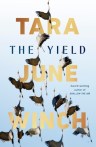
Book coverDocumenting ‘the old language’ in Tara June Winch’s The Yield, The Book Show (ABC RN), 15 July

Winch talks to Claire Nichols about her new book, The yield (reviewed by Lisa/ANZlitLovers), and also reads from the book. In the book, the character Albert Gondiwindi is writing a dictionary of Wiradjuri language. He says that “every person around should learn the word for country in the old language, the first language – because that is the way to all time, to time travel!” Given the current interest in reviving indigenous languages, and the criticality of using our own language to express our own culture, this book sounds really timely.

Alexis Wright

Alexis Wright, TrackerAlexis Wright in conversation with Elizabeth McCarthy, Books and Arts at Montalto, The Wheeler Centre, 14 January 2019 (though recorded in 2018), 1hr 3mins

Wright talks to Elizabeth McCarthy about her collective biography Tracker, which won the 2018 Stella Prize and the Non-Fiction Book Award in the Queensland Literary Awards. The interview focuses mostly on Tracker Tilmouth himself, rather than on the form of the book, and the approach Wright took to writing it.

Do you listen to literary podcasts? If so, I’d love to hear your favourites.

Monday musings on Australian literature: early Indigenous Australian literature

BannerSince 2013, I’ve written an indigenous Australian focused Monday Musings post to coincide with NAIDOC Week and Lisa’s ANZLitLovers Indigenous Literature Week. NAIDOC Week, for non-Aussies out there, occurs across Australia each July “to celebrate the history, culture and achievements of Aboriginal and Torres Strait Islander peoples”. One way litbloggers can recognise and celebrate it is to read indigenous Australian writers and contribute to the list of reviews maintained by Lisa on her blog. (Lisa also accepts reviews of indigenous authors from other nations.)

NAIDOC Week LogoThis year’s NAIDOC Week theme is VOICE, TREATY, TRUTH. How better to celebrate this than through a post on early indigenous Australian literature which, like that of today, aimed to share truths about indigenous Australian experience. It’s a tricky topic because it’s only been relatively recently that indigenous Australian stories (novels, poetry, short stories, plays, memoirs) have been published. However, indigenous people have been writing since the early days of the colony.

This post can only be a brief introduction. The best source for the topic is, I believe, the Macquarie Pen anthology of Aboriginal literature (2008), edited by Anita Heiss and Peter Minter. Indigenous Australian academic Mick Dodson writes in the Foreword that it contains “a range of works that any serious student of Aboriginal history, life and culture will find valuable”. It also, he says, encapsulates Aboriginal “political and cultural activisms”.

The anthology starts with the first-known piece of written text in English by an Aboriginal author, a letter written by Bennelong in 1796 not long after he returned from England. Editors Heiss and Minter write that the anthology contains

writing ranging from the journalism, petitions and political letters of the nineteenth and early twentieth centuries, to the works of poetry and prose that are recognised widely today as significant contributions to the literature of the world.

They go on to say that “Aboriginal literary writing grew directly from a complex and ancient wellspring of oral and visual communication and exchange”. This is something that at least some non-indigenous Australians recognised. FS, writes in The Age in 1938, for example, about indigenous Australian “rock literature” or “picture writing”. FS is responding to a planned German scientific expedition to northwest Australia which was intending, among other things, to “study … rock carvings, cave paintings and similar work on wood to ascertain whether it is a desultory art or a method of writing” [my emph.] S/he believes this goal is unnecessary, because the “rock literature” clearly demonstrates that indigenous Australians have had a “literature” long pre-dating the English language.

Anyhow, back to Heiss and Minter who discuss the necessary nexus between the literary and the political in indigenous literature. They note that 19th century Aboriginal literature primarily comprised “genres that are common to political discourse” – letters, petitions and chronicles – and that between Federation and the 1960s, political manifestos and pronouncements of Aboriginal activist organisations were added to these genres.

David Unaipon (State Library of NSW, Public Domain)

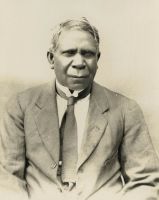
It wasn’t until 1929, in fact, that the first book by an indigenous Australian writer was published, David Unaipon’s Native legends. A report of the book’s publication appeared in January 1930 in South Australia’s Border Chronicle. The reviewer says (using the sort of tone and language typical of the time):

Not long since there entered the editorial den a full blood aboriginal who said, in that “moistened” voice that the Australian abo always wears, that he was distributing the only book ever written by an Australian aboriginal in the English language … The legends are told in English that will cause wonder in anyone who has tried to master any speech other than his mother tongue. Claudian, the Latin poet, was born an Egyptian, educated as a Greek, and the world has marvelled ever since that he became one of the great masters of Roman speech. Yet Unaipon, is in his way, as great a marvel as Claudian, since his natural atmosphere differs more widely from that in which he works than did the civilization of Claudian’s Egypt and Greece differ from that of Rome. The style of David’s writing is correct by all the formal rules, but differs widely from ordinary written speech. His legends are fairy tales in color, and in “The Song of Hun garrda”, which is an invocation to the God of Fire, he gets into a highly poetic region. Likewise, he is mysticc and writes of “earthly body subjective consciousness”, “earthly life experience”, as if those things had a real meaning to him, which is more than can be said of some of those who talk on such matters in their native speech. It is an interesting little contribution to Australian letters.

Heiss and Minter say the book is “literary in its adaptation of his cultural imagination to particular modes of authorship and narration”. They see his pioneering role in the development of indigenous literature, saying he “gave subsequent Aboriginal writers a significant precedent by which to imagine their authorship of a culturally grounded future literature”.

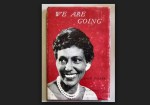
Book coverIt would be over thirty years before another book by an indigenous writer was published, although during that time “letters, reports and petitions” continued to be written in support of “Aboriginal rights and constitutional transformation”. One of these activists was the poet and activist, Kath Walker (later Oodgeroo Noonuccal), and she was the author of that second book. Published in 1964, We are going was mistakenly described by The Canberra Times as “the first book written by an Australian aborigine”. Heiss and Minter again note its pioneering role, saying it “marks the arrival of Aboriginal poetry as one of the most important genres in contemporary Aboriginal political and creative literature.”

It took more time, however, before indigenous writers got a firm foothold. Heiss and Minter argue that it wasn’t until the late 1980s that “Aboriginal writing was firmly established as a major force in Australian letters. David Headon writing in the ANU’s Woroni in 1990 would agree:

Certainly Aboriginal literature is a growth industry of substantial proportions. The sheer number and range of books now available is all the more surprising when one considers that the first [!] published work by an Aboriginal writer, Oodgeroo Noonuccal’s (Kath Walker’s) book of poems, We Are Going, was published in 1964, and at the beginning of the 1980s the only black writers with any kind of national profile were Walker, Jack Davis, Kevin Gilbert, Mudrooroo Narogin (Colin Johnson) and possibly Bobbi Merritt and Faith Bandler. None of these were well-known outside their community. Australian literature has been profoundly altered by the emergence of so many Aboriginal texts in the last 10 hectic years.

He reviews an unknown-to-me 1990 anthology, the gorgeously titled Paperbark. It predates Heiss and Minter’s Macquarie anthology by nearly two decades. Published by the University of Queensland Press and described by them as “the first collection to span the diverse range of Black Australian writings”, it includes writings from the 1840s to 1990. The Aboriginal and Islander authors include “David Unaipon, Oodgeroo Noonuccal, Gerry Bostock, Ruby Langford, Robert Bropho, Jack Davis, Hyllus Maris, William Ferguson, Sally Morgan, Mudrooroo Narogin and Archie Weller.” Like the Macquarie anthology, it also includes “community writings such as petitions and letters”.

Headon’s review is well worth reading for his references to writings, many of which are new to me, but I’m going to leave him on his following point:

Books like Paperbark are in the vanguard of what will surely be one of the great (Australian) cultural debates of this decade: how long can an ex-colony like Australia allow some of its universities to continue to indulge their colonial habits? How long will Old and Middle English, 17th- and 18th-century English literature be the literature major staples at our universities? When will the dominant pressure be post-colonial? Change, Paperbark proclaims, is afoot.

Good question! Interestingly, in 1984, the ANU did offer a 10-week adult education course in ‘Aboriginal Literature’. It may, of course, have only been run that year.

Anyhow, I hope you have enjoyed this little introduction to what I’ll call the first wave of indigenous Australian writing.

Past NAIDOC Week-related Monday Musings

Monday musings on Australian literature: the Australian Common Reader

The Australian Common Reader is, says its website, “a world-leading database of digitised reading records” which “contains thousands of records of library borrowers between 1860 and 1918.” Initiated by Western Australia’s Curtin University professor Tim Dolin in 2008*, it was acquired by ANU in 2013, and is managed by its Centre for Digital Humanities Research. It was officially launched two weeks ago on June 18 – a fact which was brought to my attention by Bill (The Australian Legend.) Thanks Bill.

The libraries whose circulation records are in the database include:

  • Collie Mechanics’ Institute (WA)
  • Lambton Mechanics’ and Miners’ Institute (Newcastle, NSW)
  • Maitland Institute (Yorke Peninsula, SA)
  • Port Germein Institute (regional SA)
  • Rosedale Mechanics’ Institute (Gippsland, Vic)
  • South Australian Institute (Adelaide, SA)

These are all, I understand, mechanics’ institutes (about which I’ve written before), and are mostly located in mining towns and farming communities. Although these institutes were set up to support worker education and recreation, members of the public could also join.

The database is publicly accessible, making it a rich resource, surely, for all sorts of researchers. Certainly, Dr Julieanne Lamond, who manages the project, argues that we are lucky to have it.

The database has been designed, she says, to facilitate researchers sifting through pages of records to create a picture of Australia’s borrowing and literary history. You can search the database on:

  • Borrower occupation
  • Borrower gender
  • Book title
  • Book author
  • Borrower name

This means, Lamond said, that “you can see what the local doctor or politicians were reading, what books and authors were popular, and a library’s most prolific borrowers”. As a result “we can see that doctors were borrowing more books than solicitors and butchers were reading more than engineers.” (Hmm … I’m feeling quite glad that I’m not a big library user right now! Seriously though, this is pretty fascinating.)

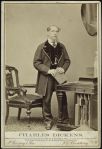
Charles Dicken, c1860

Dickens, c. 1860 (Presumed Public Domain, via Wikipedia)

Stephanie Convery, writing for The Guardian Weekly, reported on the launch and says that the records tell us, for example, that:

Australian butchers in the 19th century preferred to read thrillers, miners loved novels about horse racing, while the most popular author among doctors – and the Adelaide working class in 1861 – was Charles Dickens.

Lamond points out that the records include Mathew Charlton, one of the earliest leaders of the Australian Labor Party. He was, she says, “quite an avid reader, making a total of 264 loans over a 10-year period” and “his favourite author appears to have been Edward Phillips Oppenheim, an English novelist known for writing thrillers.” Oppenheim is, in fact, the second most borrowed author in the database.

She said that the website shows Australians were diverse in their reading habits. They read Dickens, for example, but they also read the latest magazines. They read Australian fiction, as well as overseas authors. And, probably just like now, some were avid readers, while others would “borrow the same book over and over again.”

The records show that male borrowers far exceeded women, but Lamond argues that this is probably due to the sorts of libraries they were. Interestingly, she says, the data “shows that men and women read very widely across all these kinds of genres that now we think of as being quite gendered.”

Nonetheless, the data does show some different favourites. The most popular book for women was On the wings of the wind by Welsh author Anne Adaliza Puddicombe who used the male pen name of Allen Raine. She was one of the bestselling authors of the time, apparently. Woo hoo, though, women reading women! In fact, their research shows that four of the top five works borrowed by women were written by women!

By contrast, the most popular reading for men was a weekly magazine – Household Words which was edited by Charles Dickens (and about which I have also written before.) It was specifically aimed, as I quoted in my post, at “the masses” and it intended to both entertain and “shape discussion and debate on the important social questions of the time”. I love discovering that it was, indeed, popular among the people it was created for.

Overall, Lamond, quoted by Convery, says that

“People’s reading was very diverse, much more diverse than I think most of our reading is now. These people just read incredibly widely. They were reading sporting novels and political thrillers, they were reading George Eliot and Jane Austen at the same time.”

(Hmm, is she basing this comparison regarding diversity today on any evidence? Anecdotally, and defending my era, I’d say there’s a lot of diversity in today’s reading today!)

Convey makes a few other observations, including that:

  • miners were the most abundant profession represented in the data, making up nearly 13%, with the most prolific borrower being a South Australian miner named John Pellew, who borrowed 877 books from the Port Germein Institute.
  • fiction was, overall, more borrowed than non-fiction.
  • the most popularly borrowed author was Cornish Christian novelist Joseph Hocking, reflecting, perhaps the preponderance of Cornish and Welsh miners in the borrowing communities.

Lamond hopes to obtain funding to digitise more records to broaden our insight into reading habits of the past. She notes that they don’t have good data about metropolitan reading, and that these records are not really in existence:

“The stars have to align for these kinds of records to survive because often they were run by volunteer management committees, and they sat in boxes in people’s attics; they threw them out; they burnt down – a lot of historical library records have gone up in smoke, literally.”

Don’t you hate hearing about the destruction of records?

A little example

Anyhow, of course, I had to have a little play in the database myself, so I looked at the Borrower by Occupation. They are listed in order of quantity, starting with Miners (5,666 borrowings) and ending with six occupations represented by 1 borrowing, including “Authoress” and “Tea merchant”. However, it looks like the occupations were entered “free text” and that the ANU has not tried to concatenate them in any way, so, for example, there are State School Teachers, School Teachers and School Masters (and maybe even more permutations).

Using the “visualisation” option, I found state school teacher, Frances Cairns, who borrowed 326 books, of which 318 were fiction. The author she borrowed most was Scottish author and minister, George MacDonald, but I was delighted to see that she also borrowed a book by the cheeky Australian author Elizabeth von Arnim. One of the eight non-fiction works she borrowed was Daniel Crawford’s Thinking black, which, says Wikipedia, “was recommended reading for those Europeans who wanted to work in partnership with, rather than over, Africans.” I wonder what was behind this? The visualisation option was fun, but probably more useful is the fact that you can also download spreadsheets of your searches to do further analysis.

And here I will close on this fascinating project, but do have a play if you are interested,

* Another report says that the database commenced in 2001! Who knows? Maybe both are right, and it’s a matter of defining “start”?

Monday musings on Australian literature: Books banned in Australia

Book coverThis week, my reading group will be discussing an American classic, Mary McCarthy’s The group. Published in 1963, it sat on the New York Times best-selling list for five months. It also has the honour of having been banned in Australia! I realised that I’ve never done a Monday Musings on banned books, so now seemed a good time …

Last year, in Banned Books Week, The Canberra Times’ Karen Hardy wrote on the subject. She quotes Meredith Duncan, Library Manager at the ANU, as saying that the main type of books that used to be banned in Australia were those “seen as obscene”. She told Hardy that our attitudinal changes towards sex and sexuality have shaped literary censorship over the years:

“In the introduction to one of the editions we have here of the Kamasutra, which was banned in Australia for many years, reads ‘This is only to be read by married men or medical professionals’.

“A lot of censorship revolved around the idea of women taking charge, a lot of men weren’t comfortable with that.”

As times changed, she said, “homosexuality became a hot topic”.

However, as a National Archives of Australia (NAA) blog post says:

Literary and scholarly works made up only a small proportion of the publications banned by Australian Customs. The bulk of prohibited imports were pulp fiction novels, comics, magazines and pornographic material. These items were considered to be a threat, not only to our morals, but also to Australia’s literary standards. They were banned by Customs under special provisions introduced in 1938 to address the growing number of cheap books and magazines entering the country.

Consequently, in the 1940s and 1950s, those popular pulp fiction crime and detective thrillers with their “themes of both sex and violence” were frequently banned by Customs. (Do check out the blog post to see a selection of these, such as Darcy Glinto’s Road floozie!) Adult magazines, too, “were often subject to blanket prohibitions lasting years”. Playboy, for example, was banned here from 1955 to 1960.

Most of the information below comes from posts on the NAA’s Banned blog which they published over 2013. It is worth checking out, as it includes a wonderful selection of primary source documents. Use this Books page link to check out individual banned books.

Ten books banned in Australia

  • James Baldwin’s Another country: partially banned in 1963, until 1966, allowed only for “the serious minded student or reader”. Among the comments made by Kenneth Binns, of the Literature Censorship Board, was that the description of a homosexual incident “on pages 367-375 would both shock and offend the average Australian reader for he is not as sex conditioned as are readers in most other countries”. (Oh, we innocent little Aussies!) He was also concerned that a ban might “even be associated with Australia’s misunderstood ‘White Australia’ policy and her refusal to support UN condemnation of South African Apartheid”. (Poor misunderstood Australia!)
  • William Burroughs’ Naked Lunch: banned 1960 to 1973. The last work of fiction to be banned in Australia, it was banned for being “hard-core pornography”. It was reviewed by the Commonwealth Literature Censorship Board in 1963 after Clem Christesen, Meanjin’s founder, applied to import the novel. The Board allowed Christesen’s request but unanimously agreed to retain the ban on the general sale of the book. Chairman Kenneth Binns said that “there is no need to note any particularly objectionable scene or passage for the book is so full of them and the general writing so extremely coarse that one need only consider the general character and tone”.
  • Aldous Huxley’s Brave new world: banned 1932 to 1937. Ireland was the only other country to ban it. The ban, says the NAA, was supported “with great gusto by church-related associations and temperance movements” but opposed by librarians (of course) and publishers. The NAA writes that the ban was lifted after the appointment of an Appeal Censor, and that “a sexually permissive culture did not follow, nor did a seditious and morally bankrupt one”. (Funny that!)
  • DH Lawrence’s Lady Chatterley’s lover: banned 1928 to 1965, for, says Duncan, being “sexually obscene, with explicit relationships”.
  • Mary McCarthy’s The group: banned in Australia, Italy and Ireland, says Wikipedia, for “being offensive to public morals.”
  • Grace Metalius’ Peyton Place: banned 1957 to 1971, after initial approval and dissension within the Board. Positive comments about its depiction of small-town America were set against opinions like those of, yes, Kenneth Binns. He thought the novel’s “profanity and obscene expressions” were excessive, and wrote that “It is unfortunate that Mrs Metalious is so flustered with sex, for she often writes well”.
  • Vladimir Nabokov’s Lolita: banned 1955 to 1965, though in 1964 its prohibition was appealed when the ANU’s Dr Bob Brissenden added it as a text for his course on American literature. Apparently, a member of the Liberal and Country Party State Council “wondered why students should not study books such as the Bible, or works by Milton, Shakespeare and Dickens” even though this was a course in American literature!
  • Philip Roth’s Portnoy’s complaint: banned 1969 to 1971, and the last work of fiction to be taken to court in Australia. The National Literature Board of Review called it “obscene”, “filthy”, while Chipman of the Department of Customs and Excise noted that it was a bestseller in the America where “permissiveness is unlimited”. (Take that, Americans!) However, literary experts, including Patrick White, argued that it had merits. Its banning history is interesting regarding the role of the states.
  • JD Salinger’s Catcher in the rye: banned 1956 to 1957, although it had been circulating in Australia since publication in 1951. Talk about after the horse bolting! As with most bannings, it resulted in discussion in the media. The Sydney Morning Herald wrote in 1957, that “this country has one of the most arbitrary – and perhaps one of the most inefficient – systems of book censorship in the world”. The Commonwealth Literature Board could, but didn’t have to, review books banned by Customs. In this case, the Board had “no hesitation” in releasing it!
  • Kathleen Winsor’s Forever Amber: banned 1945 to 1958, for its “crude and obvious appeal to the sexual instinct”, for lacking literary merit and over-emphasising sex. Customs Minister Senator Richard Keane said, “The Almighty did not give the people eyes to read that kind of rubbish”.

Counter-arguments for not banning, or for lifting bans, included practical ones, such as that the book was too expensive for many readers, and that the book was not likely to be of popular interest. (Of course, if they banned it, it would certainly become so!)

Finally, Karen Hardy reminded us in 2018 that there are several non-fiction titles still banned in Australia, including two guide books – Dr Philip Nitschke’s voluntary euthanasia one, The peaceful pill handbook, and The anarchist cookbook, on how to make explosives and weapons, and manufacture drugs. Further, some books remain restricted. Bret Easton Ellis’ 1991 novel, American psycho, for example, cannot be bought in Queensland by those under the age of 18.

As a librarian, I support the freedom to read (freedom of information.)

Comments anyone?

Monday musings on Australian literature: Irish-Australian writers

With yesterday being Bloomsday – at which Lisa (ANZLitLovers) took part in a reading marathon – I thought it might be interesting to talk about writers in Australia who have an Irish background. But, how to define this? Wikipedia lists hundreds of Irish-Australians, although not all are writers of course!

The Irish were among the first of colonial Australia’s immigrants. As Wikipedia describes it they came from the late eighteenth century on, as criminals, as prisoners of war, such as from the 1798 Irish Rebellion, and as settlers fleeing the Irish famine and the harsh years that followed. By the late 19th century Irish-Australians constituted up to a third of the country’s population – though definitions, here, are tricky. Certainly Wikipedia’s definition is pretty broad, so I’ve decided to narrow it to writers whose “Irishness” goes no further back than grandparents.

In popular imagination – and perpetrated by the Ned Kelly story – they were seen as the underdogs in colonial Australia, often oppressed and discriminated against. And there was some truth to that, related in particular to the persecution of Catholics in Australia, versus the “approved” Protestantism of the English. However, many Irish also thrived in the colony, and reached senior positions in the society. It’s a complex story, and is nicely summarised in an essay by National Museum of Australia curator Richard Reid.

Meanwhile, onto some writers, listed in chronological order of their birth.

Joseph Furphy (1843-1912)

Book coverFurphy, who used the pen-name Tom Collins, is often described as the father of the Australian novel. He was the son of Irish-born Samuel, a tenant farmer who migrated to Australia in 1840. Furphy’s most famous book, Such is life, published in 1903, is a fictional account of, says Wikipedia, “the life of rural dwellers, including bullock drivers, squatters and itinerant travellers, in southern New South Wales and Victoria, during the 1880s”. Its title comes from what are believed to be last words of our most famous Aussie Irishman, Ned Kelly.

I must say that I assumed that our slang term, “furphy” (meaning “tall story”) came from him. Seems likely doesn’t it? However, apparently, scholars believe it probably originated with water carts, produced by J. Furphy & Sons, which was owned by Furphy’s brother John. Interestingly, though, Such is life probably contains the first written usage of the Australian and New Zealand idiom “ropeable”.

Christopher Brennan (1870-1932)

Australian poet and literary critic, Brennan, was born to Christopher and Mary Ann, both of whom had migrated from Ireland. Brennan has appeared a couple of times on my blog, most recently as a poet admired by that American professor, Bruce Sutherland, who championed the study of Australian literature in the USA.

Brennan lived a colourful life, marrying a German woman he’d met while living in Berlin on a scholarship, then later divorcing her and living with Violet Stringer who died in an accident a few years later, in 1925. That year he had also been removed from his associate professorship at the University of Sydney University, due to his divorce (shocking, of course, in those days) and to his increasing drunkenness.

Brennan is regarded as one of Australia’s top poets, with his contribution being recognised in the Christopher Brennan Award.

Mary Durack (1913-1994)

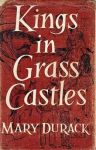
Book coverAuthor Mary Durack is best known for her Australian history classic, Kings in grass castles, about her family’s pioneering role in the Kimberley pastoral industry. The family’s story, as told in her book, starts with her grandfather, Patrick Durack (born 1834), who emigrated to Australia from Ireland in 1853 with his struggling tenant-farmer family.

I have reviewed Brenda Niall’s biography of Mary and her controversial sister, Elizabeth, True north: The story of Mary and Elizabeth Durack.

Jessica Anderson (1916-2010)

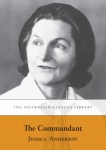
Jessica Anderson, The commandant Book coverAnd now we come to someone whom I’ve actually reviewed here, Jessica Anderson. Her father was the youngest of a large Irish family, and the only one born in Australia after the family emigrated here. Wikipedia says that Anderson’s mother, Alice, came from a staunch Anglican family, and disapproved of her marriage to the Irish Catholic Charles. Alice’s mother, for the rest of her life, refused to see Charles or any of her grandchildren. (Such is the power of prejudice, eh!)

The two novels of hers that I’ve reviewed here are her third (and her only historical fiction), The commandant, and her final one, One of the wattle birds. I read her best known novel, Tirra Lirra by the river, long before blogging. The commandant is about the real Scottish-born penal settlement commandant Patrick Logan (who was reputed to be strict-to-the-point-of-cruelty), his Irish-born wife, Letitia O’Beirne of Sligo, and her sister Frances. (Letitia did have a sister who lived with them, Hannah, but Anderson’s Frances, is, I believe, fictional.)

Thomas Keneally (b. 1935)

And finally, to round up this little list, is the well-known writer with a very Irish name, Thomas (or Tom) Keneally). Wikipedia says that both Keneally’s parents were born to Irish fathers. Apparently Keneally was known by that very Irish name “Mick” until he started publishing, at which point his publisher advised him to use his “real” first name.

Keneally is a prolific writer, and has won the Miles Franklin Literary Award, twice, as well as the Booker Prize for Schindler’s ark.

Wikipedia quotes Australian academic Peter Pierce as saying of Keneally, that

Keneally can sometimes seem the nearest that we have to a Balzac of our literature; he is in his own rich and idiosyncratic ways the author of an Australian ‘human comedy’.

Unfortunately, while I’ve read some of his work, and have mentioned him here before, I have not read any since blogging.

You’ll have noticed that, despite the title for this post, I haven’t tried to draw any conclusions about the impact of these writers’ Irishness on their work. I’ve simply taken the opportunity of Bloomsday to highlight what is a very long-standing tradition of Irish contribution to Australian literary culture. Oh, and to say, that it’s not all about Ned Kelly!

I’d love you to share any of your favourite Irish-background authors, in the comments.

Monday musings on Australian literature: Some queer Australian writing

Well, it’s Gay (or LGBT) Pride month in the USA, and since I don’t think we have a specific national month here, I thought I’d give a little shout out to some of our queer writers. Now, I’m not sure about labelling, but Readings bookshop posted three years ago on “queer reads”, while Wikipedia has a category called Australian LGBT Writers and the Australian Women Writers challenge has a list for Lesbian and Queer Women Writers. I have settled on queer for the title of this post, which I hope is acceptable.

That was the first decision. The next concerned how to narrow this post down to something that would be interesting but not too long. This involved some arbitrary decisions. One was to focus on fiction (including verse novels). This means no memoirs or other forms of writing. The other was to focus on content rather than the writer. In other words, I think it’s worth sharing some works that put queer people in the picture, because too often their stories are hidden. The more we see that everyone’s stories have similar truths – recognising of course that some of us don’t have to hide, or face discrimination and abuse – the better our world can be. However, even with this narrowing, there are too many books, so I’ll be focusing mostly on books I’ve reviewed here, with a ring-in!

So, here’s a small selection in alphabetical order:

Nigel Featherstone, Bodies of men

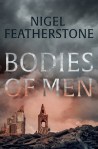
Nigel Featherstone’s Bodies of men (my review): The most recently reviewed book in this list, Bodies of men is primarily a story about men and war, about what being a man is. But it is also a love story between two men, at a time when such relationships were taboo. However, while the relationship and its challenges are important, they are not, really, the defining issue that the two male protagonists confront in the novel.

Susan Hawthorne’s Limen (my review): A verse novel about two women on a camping trip, this focuses on issues and challenges external to the nature of their relationship, on changes and thresholds, physical and perhaps spiritual, to be faced.

Margaret Merrilees, Big rough stones

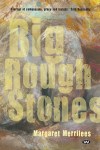
Margaret Merrilees’ Big rough stones (my review): Spanning roughly three decades from around 1970s on, this novel tells the lives of Ro and her lesbian sisterhood in Adelaide. While Ro’s romantic relationships form part of her story, this book more widely encompasses the feminist activism and sociopolitical concerns of those decades.

Dorothy Porter’s Monkey maskFirst published in 1997, this verse novel can, I think, be called a classic. Because I haven’t, to my shame, read it, I’m going to quote for you part of the blurb at GoodReads: “Fuelled by homicide, betrayal, and a femme fatale to go to hell for, The Monkey’s Mask is an erotic mystery novel written in verse. But forget what you know about poetry. This is not a love sonnet. From one of Australia’s most innovative writers, The Monkey’s Mask drives headfirst into murder, manipulation, and the consuming power of sex, and is a thriller to make other whodunnits seem mild”.

Ellen van Neerven, Heat and light, book cover

Ellen van Neerven’s Heat and light (my review): This complex book, with its three separate sections, explores all sorts of indentities, with, in the middle section, a very clever exploration of “othering”. The Readings post mentioned above describes it as follows: “Many of the characters are queer and Neerven writes about sexuality with a light touch that never feels forced.”

So, a small selection, but a varied and, I think, interesting one.

Now, before I conclude, I want to discuss what was really the first decision I made in writing this post – whether to write it at all. I’m still not sure it’s the right thing to do, and yet, promoting “diversity” is seen as a good thing. Diversity, in this sense, means, recognising that people vary in such ways as “race, ethnicity, gender, gender identity, sexual orientation, age, social class, physical ability or attributes, religious or ethical values system, national origin, and political beliefs”. And promoting “diversity”, of course, is seen as a good thing because, historically, the majority – white heterosexual men, in particular – have controlled the stories that are told about who we are. I get this. It’s why I like to read widely. But I’m also uncomfortable labelling people, because it feels like slotting people into boxes, suggesting that that label is all they are. So, in the interests of balance, I refer you to this excellent post by novelist Andrea Goldsmith on her blog on the whole practice of labelling LGBTQI people. She makes sense to me, and makes me almost decide to pull this post. But, I’ve written it, and I’m hoping it serves a purpose, so I’ve decided to leave it here.

What do you think?

Monday musings on Australian literature: American apologist for Australian literature

If you read my 1965 series Monday Musings post on literary visitors, you will know the subject of this post. It’s Professor Bruce Sutherland, who was credited with establishing one of the first university courses on Australian literature in the USA (at Pennsylvania State University, in 1942) and who became the first American Professor of Australian Writing in 1950. He was regarded as a pioneer in promoting the study of “Commonwealth literature.”

Tischler, writing about Sutherland in Antipodes, says that, originally a medievalist, he was converted, saying that “Nowadays, I prefer to feel the keen wind of the contemporary world blowing through my study windows.”

Hume Mystery of a Hansom CabSo, he offered his course for the first time in 1942, just after Pearl Harbor was attacked. Australian books were hard come by in the American market, and with the war, they became “almost impossible to import”. Tischler says that at the time he started the course there were four Australian titles in the Penn. State Library:

  • John Boyle O’Reilly’s Life … with complete poems
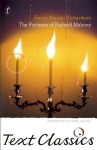
  • Henry Handel Richardson’s The fortunes of Richard Mahony
  • E.W. Horning’s Stingaree 
  • Fergus Hume’s The mystery of a hansom cab (my review)

I wonder how many Aussies know all these? I’ve only vaguely heard of two of them: O’Reilly and Hornung. Anyhow, Sutherland began collecting Australian literature, resulting in Penn. State having “one of the best research collections outside Australia”. Carter and Osborne write that Sutherland’s teaching and his collection of Australian books “became a touchstone for the organised study of Australian literature in America”.

His first courses, Tischler says, relied heavily on a Henry Lawson short story collection, a poetry collection, Katharine Susannah Prichard’s Moon of desire, Richardson’s The fortunes of Richard Mahony, Miles Franklin’s All that swagger, and Kylie Tennant’s Battlers. She praises this selection for its “openness” and “willingness to include women as well as men, popular and classically shaped pieces, modern and nineteenth-century titles.”

In 1945, Sutherland wrote an article titled “Australian books and American readers” for America’s The Library Quarterly. He listed some of his favorites, says Tischler,

noting that Richardson was “perhaps the greatest living Australian novelist”. Others, whose works he cites are Marcus Clarke, Lawson, Joseph Furphy, Prichard, Christina Stead, Tennant, Eleanor Dark, Edith Littleton [sic], and Xavier Herbert.

Edith Littleton? Ah, it’s Edith Lyttleton, who wrote as GB Lancaster. She won the ALS Gold Medal in 1933, but seems to have lived mostly in New Zealand.

In a Meanjin article in 1950, Sutherland described his course, explaining that he examined the general movements in Australian literature, using materials, writes Tischler, “covering history, geography, explorations, flora and fauna, customs and manners, travel, biography, and literary criticism”. He included all the major forms – novels, short stories, poetry, plays, and essays. Tischler suggests he was teaching at a good time, being before the explosion in opposing ideas about literary criticism. He could, she writes, “simply bring his interest in social, historical, and biographical criticism to bear on his criticism, rather than limiting himself to the text as the “New Critics” might have done, or questioning the text and its voice as the “Deconstructionists” might have done later on.”

Sutherland did visit Australia, as we know from my Monday Musings. His first trip, though, was not 1965, but 1951 on a Fulbright scholarship to study A.G. Stephens, that long-term editor of The Bulletin “whom he considered Australia’s foremost literary critic.” Sutherland was apparently an affable man who could get on with all sorts of people. Tischler quotes the Sydney Telegraph as saying that he looks like “the young Abe Lincoln, speaks like a college educated Gary Cooper, and has the homespun simplicity of Will Rogers.” He became good friends with Miles Franklin.

“There is more to Australian literature than most Australians realise” (Sutherland, 1952)

He also – and many of us won’t be surprised by this – found that Australia’s university students back then were mainly interested in “a classical, academic course of study” which limited their engagement with their own literature and culture. Sutherland’s response was to take “on the role of apologist and critic” for our literature! Nice that someone did, eh?

Things did improve, he noticed, over time. Nonetheless, in the second issue of Australian Literary Studies, in 1963, he noted that although there is literary criticism in Australia “no Australian author is in danger of being smothered under an avalanche of critical commentary”. Hmm …

In his Meanjin article “An American looks at Australian literature”, Sutherland, Tischler explains, said he was looking for an “indigenous” literature, “an honest and sincere attempt at self-expression in Australia”. Australia had “no Emerson, no Hawthorne, no Melville, no Poe, no Whitman” all of whom “combined a knowledge of old world culture with new world conditions”. But, it did have, he said, Shaw Neilson and Christopher Brennan. Also, Henry Kingsley was “a rough Australian equivalent to Fenimore Cooper”; and “in For the term of his natural life” could be found, he said, some of the moral indignation that produced Uncle Tom’s cabin”. He believed that there were many other parallels “among local colour and regional writers of both countries”. Indeed, he said, “Tom Collins could well have been an Australian Mark Twain had he been recognized soon enough and given the backing and encouragement that Twain received from the common man in America.” Darn it, eh!

Book coverI hope you’ve enjoyed this little portrait. I’ve loved discovering this American enthusiast for our literature. I’ll finish with comments he made about one of his favourite Australian authors, Henry Handel Richardson, after her death. He said (reported The Argus in 1946) that she’d been “snubbed by her old school and ignored for many years by the [Australian] reading public” but that “she nonetheless regarded herself as Australian” which was demonstrated by “her choice of Australia as the background for most of her work.” Of The fortunes of Richard Mahony, he wrote

in this family chronicle she reached her highest peak as a writer, as an analyst of character, and as a proponent of tragedy that is Shakespearian.

Oh, to have such a supporter, eh?

Sources:

  • Book news: American Tribute (1946, July 27). The Argus. p. 15.
  • Carter, David and Bruce Osborne. Australian books and authors in the American marketplace 1840s–1940s. Sydney University Press, 2018. p. 338.
  • Praise for Australian literature (1952, June 17). The Age. p. 2.
  • Sutherland, Bruce. ‘Review by Bruce Sutherland.’ Australian Literary Studies, vol. 1, no. 2, 1963.
  • Tischler, Nancy. ‘Bruce Sutherland and images of Australia.’ Antipodes, vol. 7, no. 2, Dec. 1993, pp. 135-138.

Monday musings on Australian literature: Britannica Australia Awards

While researching my recent 1965 Monday Musings posts, I came across a new award to me – the Britannica Australia Awards (also known as the Encyclopaedia Britannica Australia Awards). Of course, I wanted to find out more about them. It was tricky. They have Wikipedia article, but The Canberra Times came good via Trove, and there is a paragraph about them in the Oxford companion to Australian literature, so I have enough to share with you.

The awards were sponsored by, obviously, the Encyclopaedia Britannica, to recognise, says the Oxford companion, “outstanding achievement in Australia” and “Australian-American links”. They were only offered from 1964 to 1973. From 1964 to 1967, they were made for the arts, education, literature, medicine and science; and from 1968 to 1973 for the arts, science and humanities. In this post I’m focusing on literature/the humanities. The award included money (initially £5,000), a medal and a citation.

1964: Judith Wright

The first literature winner was poet Judith Wright, who received it “for her wide-ranging and permanent contribution to Australian literature”. According to The Canberra Times, the citation said her work “was already part of Australia’s history. Both readers and other writers were richer in experience because of what she had done.”

Wright has been mentioned several times in this blog, with my main reference being in another Monday Musings post, on Capital Women Poets.

1965: Robert D. Fitzgerald and Professor A. D. Hope

The 1965 award was shared by two poets, AD Hope and Robert Fitzgerald. The Canberra Times reported that Hope “had been named on the occasion of the publication of his book of critical essays, The cave and the spring, and in recognition of his considerable achievement as poet, literary critic and teacher”. Chair of the literature committee, Clement Semmler, said that:

As a critic he is lively and controversial and he has earned the respect of his fellow teachers and intelligent readers, for his determined efforts to re-evaluate accepted literary convention.

Robert D Fitzgerald, the other recipient, was recognised for “his substantial contribution to Australian poetry over many years”.

1966: Julian Randolph Stow and Hal Porter
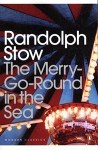
Randolph Stow, The merry-go-round in the seaThe 1966 award was also shared – and at last we have an author I’ve reviewed here, Randolph Stow. The Canberra Times reports this award, as follows:

Mr Hal Porter, novelist, short-story writer, playwright and poet, shared the literature award for his contributions to Australian writings, particularly his two most recent publications, The cats of Venice and The paper chase.

Randolph Stow’s award was made on the merits of his published works since 1956, including his latest novel, The merry-go-round in the sea (my review).

1967: Not awarded

You can’t have an award – even a short-lived one – without a controversy, it seems, and so it was that the Britannica Australia Awards had one. The Canberra Timescolumnist Gang Gang reported that Professor Alec Hope, himself a recipient of the Britannica Award, said ‘that the decision to deprive author Christina Stead of the 1967 award because she was not an Australian author (though born here) was “absolutely bloody nonsense”.’

Hope, naming other Australian writers, like Henry Handel Richardson, who had made their homes outside Australia, said that

Christina Stead made her reputation as an Australian writer and although she left Australia 40 years ago (at the age of 26) she belonged to the world of English-speaking literature. Writers, he added, shouldn’t be subject to the test of whether they are ‘Canadian’ or ‘Australian’ enough to achieve recognition.

However, unknown-to-me journalist and writer Marien Dreyer disagreed:
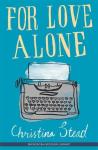
Book cover“Chrisina [sic] Stead is undoubtedly a fine and prolific author by any standards — but she has lived for too long outside Australia to qualify. She left Australia for America in 1928 and since then our country has experienced two world wars, a world economic depression, and is greatly changed from the Australia she knew nearly 40 years ago”.

Like Stow, Stead has appeared here a few times, including my review of her novel For love alone.

1968: Douglas Stewart

I was introduced to Douglas Stewart, the poet, playwright and literary editor who won the 1968 award, at high school through his verse play about Scott’s tragic expedition to Antartica, The fire on the snow. I have also read his daughter’s biography/memoir Autobiography of my mother about his wife and her mother, the artist Margaret Coen. I didn’t find anything more than a brief announcement of this award in The Canberra Times. Stewart and Coen moved in circles which included several writers I’ve mentioned here, including Rosemary Dobson and David Campbell.

1969: Keith Hancock

1969’s winner, Keith Hancock, was an historian. According to The Canberra Times columnist Maurice Dunlevy, he said, on being advised of this award, “Well I had to wait a long time for Father Christmas to come to me”. Haha! Love that. He was 71.

If you are interested in Hancock, check out the article because Dunlevy gives a decent potted history of the man. On Hancock’s work as an historian, Dunlevy writes that

he sees his role as that of seeker, not seer. His job is not to answer questions but to know how to look for them. “Inquiry and narration – that is my craft”, he once wrote.

and that he wasn’t impressed by the modern “ordeal by thesis” type of history. Instead, said Dunlevy,

he emphasises that history is about life, “The man who chooses theory may write a valuable monograph on monopolistic competition . . . the man who chooses life will write history.”

I’d love to hear what contemporary historians think of his work now.

1970: CB Christesen

Clem Christesen, 1970’s winner, is best known as a literary editor. Not only did he found one of Australia’s most significant literary journals, Meanjin, in 1940, but he was its editor until 1974. He was influential in the careers of many of Australia’s mid-twentieth century writers, including the award’s first recipient for literature, Judith Wright. Again, I found nothing about his winning the award in my Trove search.

1971: Douglas Pike

As for Christesen, I don’t have a report on 1971’s winner, Douglas Pike, but I did found an obituary by Jacqueline Rees in 1974. Professor Pike was also an historian, but his greatest claim to fame was his work as a general editor of the Australian dictionary of biography, for which he received the Britannica award. The report said that he saw this award as “recognition not so much for his own work as for the project as a whole”. Nice.

1972: James McAuley

Poets seem to have won the lion’s share of this award – not a complaint, just an observation. James McAuley, the 1972 winner, was described by The Canberra Times as “Professor of English at the University of Tasmania and a prominent poet and literary spokesman”.

McAuley is quoted as saying at the presentation event

that Australia was second only to the US in the amount of talent it had among poets.

He was not enthusiastic about contemporary English poets. They have had very little to offer in recent years, he said. “Much the same could be said for the Russians”.

Ha! Perhaps the awards committees agreed, and this is why poets did so well!

1973: AD Trendall

The last award went to a new name for me, AD Trendall. Another Professor, he was Master of University House at the ANU, here in Canberra, from 1954 to 1969, but was resident Fellow at Melbourne’s La Trobe University at the time of winning the award.

The Canberra Times provides some brief information about him, saying that

He has written and published many works on archaeology, specialising in the Roman and Greek origin and has been a contributor to many overseas and Australian journals.

To conclude, it’s clear that this award had, as you might expect given its sponsorship, a scholarly tenor, which may explain why “literature” was broadened to “the humanities” (even though I’d argue that most writing in the humanities can be defined as literature.) Why it stopped, I don’t know. It might be there somewhere in Trove, but it didn’t pop up in first few pages retrieved by my various searches.

Another long post, I know, and probably only of interest to a few of you, but I did want to document these awards usefully.
Monday musings on Australian literature: Two Aussie writers in 1965

Continuing last week’s 1965 theme, this post discusses two articles on two Aussie writers who published books that year. I chose them because I think they are instructive examples of book reviewing.

Thomas Keneally

Cover illustration

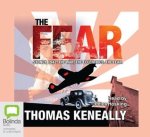
Audiobook edition

Thomas Keneally, born in 1935, is a prolific Australian author with a long (and still continuing) career. He was shortlisted for the Booker prize four times between 1972 and 1982, one of which he won, and he was shortlisted for the Miles Franklin three times between 1967 and 2003, two of which he won. These were for seven different books! That’s impressive. However, the book reviewed by Maurice Dunlevey in The Canberra Times in 1965 was not one of these. It was for his second novel, The fear.

The reviewer was Maurice Dunlevy and he compares Keneally’s book with Things as they are by American author, Paul Horgan. Both, he said, were about the loss of innocence in boyhood, and both were true to this type of writing. They were also, he continued, “similar in that they deal with Catholic boyhood. That, however, is where the similarity ends.”

Horgan is successful, handling the subject “with a sensitivity surprising from a writer best known for fat volumes of historical fiction and a Pulitzer Prizewinning history”:

Horgan knows exactly what his subject is and he deals with it imaginatively and economically.

In contrast, he describes Keneally’s book as

a novel in search of a subject. Keneally doesn’t know where he is going and his characters don’t know where to take him.

The only imagination displayed in this book is that reportorial kind we expect from the great Australian tradition, the novel written under a coolibah tree.

He then goes on to (vividly) explain this tradition: it requires that

the coolibah tree should be accurately described, branch by bloody branch. The novelist must be there, on the flamin’ spot, mate, so that he can report on the tree and the nearby jumbuck with photo-graphic accuracy.

Anyone who has read ten Australian novels has read seven that were written under this realistic coolibah tree with a thumbnail dipped in the tar of experience.

The problem is that these novels are not “illuminated by imagination; they are enchained, bolted, riveted to experience — the novelist’s own actual physical experience.” These authors, in other words, focus so much on writing about things they have experienced that they are not, in fact, “writing a novel but filing a fact-filled feature story”.

Then he says something that regular readers know would interest me:

But facts are facts and truth often has nothing to do with them. Truth in literature is usually born of the imagination. It is possible that it has some relationship with facts, with hard-earned experience, but it never slavishly follows their dictates.

Events, he continues, don’t just “fall” into the necessary literary form; “they don’t impart their significance to us simply because we record them accurately.” They need to be “moulded in a unique, personal vision”.

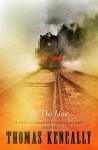
Cover illustrationUnfortunately, Keneally does too much reporting of events, it seems. There is no “vision of the world”, “no sense of direction, no consistent subject or theme”, just “the reporter’s eye for inconsequential detail”. Dunlevy’s assessment is that The fear reads more like “a collection of notes for a novel, perhaps fragments of an autobiography”.

I don’t know what Keneally thought at the time, but I do know that he can be reflective, rather than defensive, about his earlier work. Sydney Morning Herald literary editor, Susan Wyndham, wrote in 2013 that Keneally has described The fear “dismissively as the obligatory account of a novelist’s childhood.” (Interestingly he republished/rewrote it in 1989 as By the line.)

Nancy Cato

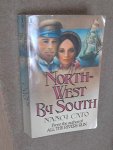
Cover illustrationNovelist Nancy Cato was one of the writers that last week’s Soviet author, Daniil Granin, met. The Canberra Times article, I read, is by John Graham, who reviews her latest novel, North-west by south. I chose this article for Graham’s thoughtful commentary on Cato. He starts by calling her “a curious phenomenon in Australian literature, a feminist without a formed social outlook.”

He compares her with her more literary contemporaries — Eleanor Dark, Kylie Tennant, Eve Langley and Dorothy Hewett. He says they

have all expressed definite views on society through their novels. Mostly, they are militant socialist rather than purely feminist ideas, a tradition of political awareness handed down to them by Mary Gilmore and Katherine Susannah Pritchard.

But, he says, Cato has never

been drawn into this dynasty. She is closer to the individuality of Judith Wright and Rosemary Dobson in her poetry, much more aggressively feminist in her novels.

However, he continues, she never fully developed her feminism “in the social sense”, and consciously kept away from “political awareness”. Delie in her Murray River trilogy has the pioneering spirit that comes from one side of Australia’s “feminist tradition”, he writes, but she doesn’t have the social viewpoint that might have made her “a memorable figure”. (Little did he know that actor Sigrid Thornton would make her memorable via the TV miniseries, All the rivers run, in 1983!)

Seriously, though, he continues to say that Cato “has found a welcome new theme in the historical novel”, Lady Franklin, about whom I’ve written here before. Graham suggests that Franklin suits Cato much better  than Delie:

Lady Franklin’s feminism is of the same activist variety, but much more capable of development through her position as a Governor’s wife. She also has the virtue of reality, a considerable advantage for a writer with limited powers of character development.

Oh dear, that’s a backhander isn’t it! Anyhow, he goes on to detail how Cato makes a better fist of this protagonist in terms of feminism, and says that

Miss Cato handles all these subtleties with impressive dexterity, indicating a considerable technical development since she laid Delie to rest.

It’s not perfect, though, because Cato “has still not controlled her tendency, to rush from one event to another without pausing for significance”. He gives examples, such as her handling of Mathinna, the indigenous girl adopted by the Franklins. He feels that Cato became “so enmeshed in the historical details that the book is not satisfactory either as a character study of an unusual woman or as an examination of Franklin’s governorship”. Handling their historical research is, of course, a common challenge for historical fiction writers.

Graham details other gaps, suggesting for example that Lady Franklin and her husband’s efforts “to better the conditions of the convicts and to solve the problem of the disappearing Aborigines are treated so scantily that they might better have been eliminated altogether”. This aspect of the Franklins’ lives is a tricky topic that many have tried since Cato (and I list some of them in my post linked above.)

However, he also has positive things to say, calling it Nancy Cato’s “best novel so far” and suggesting it “indicates a direction in which a writer of her talents and limitations might develop further”. It’s the sort of review a writer may or may not like, but it’s clear, detailed and respectful.

So, I hope you’ve enjoyed these little dips into 1965 Australia via its newspapers. I have!