Bill curates is an occasional series where I delve into Sue’s vast archive, stretching back to May 2009, and choose a post for us to revisit.
My original post titled: “Monday musings on Australian literature: Indigenous writers”
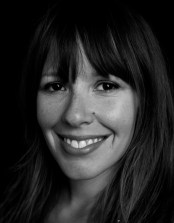
Tara June Winch (Courtesy: Friend of subject, via Wikipedia, using CC-BY-SA 3.0)
It’s important I think that my third post be on our indigenous writers. Again it’s going to be pretty idiosyncratic as my reading in this area has been scattered, not for lack of interest so much as the old “so many books” issue that we all know only too well. I was first introduced to indigenous writing at high school where I had two inspirational teachers who encouraged us to think seriously about human rights. It was then that I bought Oodgeroo Noonuccal’s (or Kath Walker as she was then) book of poetry, My people.
In my first Monday Musings post, I mentioned David Unaipon who is generally recognised as the first published indigenous Australian author. However, it was Oodgeroo Noonuccal, with her book of poetry, We are going (1964), who heralded contemporary indigenous Australian writing. So let’s start with her.
Oodgeroo Noonuccal My people (1970, poetry)
Noonuccal’s poetry is largely political. She wrote to right the wrongs which indigenous Australians confronted every day: the racism, the white-colonial-slanted history, the lack of land rights, and so on. Much of her poetry is therefore strong but accessible “protest” poetry. My people collects poems from her first two books and includes new works as well. Here are just a few lines to give you a sense of what she was about:
… Do not ask of us
To be deserters, to disown our mother,
To change the unchangeable.
The gum cannot be trained into an oak.
(from “Assimilaton – No!”)Gumtree in the city street,
Hard bitumen around your feet,
Rather you should be
In the cool world of leafy forest walls
And wild bird calls.
(from “Municipal gum”)
I love the way she uses gums to represent her people – who they are, where they should be. Some of the poems are angry, some are conciliatory, and others celebrate her culture. I loved the book then, and I still value it now.
Sally Morgan My place (1987, memoir)
The next book in my collection, chronologically speaking, is Sally Morgan’s memoir My place. Sally Morgan is primarily an artist but her memoir became a best seller when it was first published. In it she chronicles how she discovered at the age of 15 years old that her colour did not come from an Indian but an Aboriginal background, and her subsequent investigations into her family’s rather controversial story. I don’t want to go into the controversy here. Rather, the point I’d like to make is her story-telling: it is warm, funny, and thoroughly engaging.
Women of the centre (1990, short life-stories); Black chicks talking (2002, short life-stories produced in film, book, theatre and art)
Telling stories is an intrinsic part of Indigenous Australian culture. It’s how traditions have been passed on for 40,000 years or more. It’s probably simplistic to draw parallels between traditional story-telling and the telling of stories in general. After all, we all love stories. Nonetheless it is certainly clear from the little experience I’ve had and the reading I’ve done, that story-telling is an intrinsic part of Indigenous Australian culture and is becoming an important way of sharing their experience with the rest of us. This was powerfully done in Bringing them home: The stolen generation report of 1997 which contained not only the history of the separation of children from their parents and recommendations for the future, but many many first person stories which drove the drier points home.
Two books that I’ve read which contain personal stories by indigenous women are Women of the centre and Black chicks talking. The introduction to the former states that its aim is to help we non-Aboriginal Australian readers to understand lives that are so different from our own and “to provide personal written histories for the descendants of the women involved”. This latter is becoming an urgent issue in indigenous communities today – the capturing of story before more is lost. In Black chicks talking Leah Purcell interviews nine Aboriginal woman – some urban, some rural, some well-known, some not – about their lives. Another wonderful read.
Life stories/memoirs represent, in fact, a significant component of indigenous literature. Another work worth mentioning, though I’ve only seen the film and not read the book (shame on me!), is Doris Pilkington’s “stolen generation” story of her mother’s capture and subsequent escape involving an astonishing trek home, Follow the Rabbit-Proof Fence.
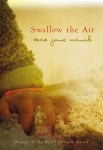
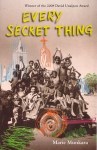
Alexis Wright Carpentaria (2006); Tara June Winch Swallow the air (2006); Marie Munkara Every secret thing (2009)
Finally, a brief mention of three recent fictional works, two of which I’m ashamed to say are still in my TBR pile. These are the two David Unaipon Award winners by Tara June Winch (reviewed since then) and Marie Munkara (reviewed since then). If you are interested in the latter, please check Musings of a Literary Dilettante’s review.
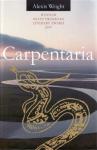
I have though read Alexis Wright’s Miles Franklin Award-winning Carpentaria (my post). It’s set in a fictitious place, tellingly called Desperance, in northern Australia. Its focus is colonialism (ie European invasion of the land), and conflict within black communities about how to respond. To explore these, Wright touches on lot of ground, including land rights, deaths in custody, mining rights, boat people, and petrol sniffing to name just a few. She flips between the real and the magical, she uses language that is image-rich and often playful, and she tells some very funny stories. It’s a big, wild and rather complex read that manages in the end to be hopeful despite itself.
This is just a small introduction to the wealth of Australia’s indigenous literature. It won’t be the last time I write about it. I will also in the future post on white Australians who have written about Aboriginal Australians, writers like Thomas Keneally who wrote The chant of Jimmie Blacksmith but who now says he wouldn’t presume to write in the voice of an Indigenous Australian. A vexed question really. I believe there should be no “rules” for writers of fiction and yet, sometimes perhaps, it is best not to appropriate voices not your own. But that is a question for another day…
Meanwhile, back to Alexis Wright – and stories:
Old stories circulating around the Pricklebush were full of the utmost intrigues concerning the world. Legends of the sea were told in instalments every time you walked in the door of some old person’s house. Stories lasted months on end, and if you did not visit often, you would never know how the story ended. (Carpentaria, p. 479)
____________________
I’m not surprised – and am glad – that Bill chose this one from my early Monday Musings, because this is an area of Australian literature that is dear to his and my hearts (and to Lisa’s who runs her Indigenous Literature Week each year.) And phew, I’m glad I’ve since read those two novels that were on my TBR back there in 2010.
[You can find all my Monday Musings by clicking on the Monday Musings category, or this link]
Would you, wherever you are, like to recommend any indigenous writers?
 I haven’t been able to find anything about the 2020 Military History Prize, so am not sure about its continuation or, at least, its being awarded this year.
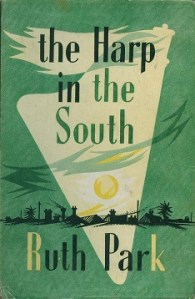 I’ve been pondering this for a long time, in fact, but I’ve kept shying away from it because it’s such a big topic. There are so many questions to answer, before we even get started, beginning with what we mean by “urban”. Sue mentions Garner, Tennant, Park and Tsiolkas as examples of writers who could be considered. Now, Tennant’s Ride on stranger (1943) and Tell morning this (1967), Park’s The harp in the south (1948), and Garner’s Monkey grip (1977) are all clearly urban. That is, they are set in inner city areas. However, do we include suburb-set novels, like Tsiolkas’
 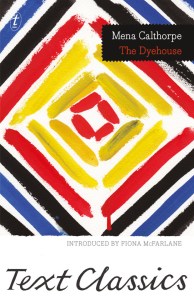 “Underside” here is the operative word, and refers, for me, to those “socio-economic realities”, Wikipedia mentions. Urban fiction tends (and I am generalising) to be about poverty and the various challenges and ills that occur in such an environment – marginalisation (of workers, women, migrants, and so on), crime, drugs, poor health, insecure accommodation, and so on – most of which stem from a sense of powerlessness. These are the sorts of issues variously confronted by Tennant, Park and Garner, and by other “urban” books I’ve reviewed here like William Lane’s
  Another common topic in suburban novels is family – often family dysfunction. Tim Winton’s Cloudstreet (1991), set in Perth’s suburbs, is probably the Australian suburban novel of the last few decades, though its protagonists are “battlers” rather than the middle class, and the story is told against the backdrop of history over a few decades. Christos Tsiolkas’ The slap also fits into these family-focused books, but again it’s overlaid with contemporary issues like class, sexuality, and ethnicity.
 Then, there are the outliers. Where to put Elizabeth Jolley’s novels, many of which are set in suburbs? Many of her characters are alienated or anxious, so perhaps they are a development of the Patrick White tradition? Amy Witting, Marion Halligan and Jessica Anderson have also set novels in cities and suburbs, some with a wry edge, and many dealing with the challenges women face in navigating contemporary life. And then there’s Sara Dowse’s West block – about to be reissued – which is probably unique here, with its life-within-the-bureaucracy context.
 We are also seeing some urban-suburban set Indigenous novels, like Tony Birch’s
  They sound and look highly self-promotional, but who teaches their courses? Well, there are some well-known names there, including published (many of them internationally successful) Australian authors, such as
  Considering this concept, The Conversation authors Larissa McLean Davies, Sarah E. Truman, Jessica Gannaway and Lucy Buzacott, came up with their list of five books for young Australians. They are:
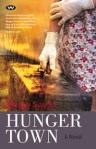 In many cases, authors refer to libraries or librarians positively, often to establish a character as thoughtful, considered, intelligent, open-minded. Craig Silvey’s Charlie in Jasper Jones (
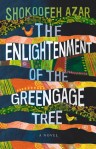 In the opening chapter of Shokoofeh Azar’s The enlightenment of the greengage tree (
 Jolley talks about library-book tickets, prerequisites for borrowing library books. Carmel Bird’s The Bluebird Cafe features another library based on a private collection – The Charles Dickens Library, which is classified as a “national treasure” – but there’s also reference to a library-book reading barmaid who gets “so bored” on her days off “when there’s nothing to read”. I haven’t read this novel, but the excerpts on Google Books show me it’s another delightful, cheeky Bird. Commenting on Angela’s request for this post, Carmel also mentioned her novel The white garden. GoodReads describes it as follows:
 Dymphna Cusack also mentions a library building in her debut novel Jungfrau (
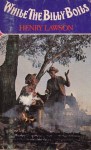 By all accounts, Louisa Lawson was quite a force. A poet, writer and publisher, as well as a suffragist and feminist, she was fully engaged in the country’s literary and political life, but is most remembered now for the latter, particularly her feminist causes.
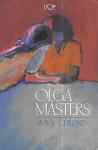 Both Olga and her son Chris Masters were journralists. Chris still is. Olga commenced work as a journalist when she was only 15 years old, but through her relatively short career, she also wrote novels, short stories and drama. Her career as a published writer of fiction was very brief, with The home girls short story collection being published in 1982 and Loving daughters, her wonderful first novel, published in 1984. It is Australian literature’s loss that she died just as her fiction career was taking off.
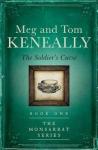 Multi-award-winning author Thomas (Tom) Keneally has published over 40 novels, from his 1964 debut novel, The place at Whitton, to his most recent 2020 novel, The Dickens boy. He is best known for his Booker prize-winning novel, Schindler’s ark, which was adapted to the Academy Award winning film, Schindler’s list.

 Whispering Gums