Monday musings on Australian literature: A view from 1930

Today, another post in my occasional series of posts about Australian literature from the 1920s to the 1940s, this one featuring two critics of the time, HM Green (1881-1962) and Nettie Palmer (1885-1964).

To do this, I’m using, primarily, a 1930 review in The Adelaide Advertiser of HM Green’s book, An outline of Australian literature, and a 1930 article the The West Australian by Nettie Palmer on the sudden flowering of the Australian novel. Both articles offer a brief survey of the Australian novel to date, with Palmer’s providing an update on “now”.

Green

The Advertiser’s reviewer notes that Green’s work is “admirably done”, and “covers all noteworthy ‘creative literature’—verse, prose, fiction, plays, and essays—from the earliest date to two years ago”. S/he goes on to name the works Green admires (with, given the paper’s location, a special reference to South Australia). The reviewer identifies two South Australian-relevant writers. One is Mrs Aeneas Gun’s We of the Never Never, which, Green admits, is “void of plot as are the lives of most people” but which, our reviewer says, is “one of the most popular of Australian books, perhaps because the lives of most people have so much in common with those of its characters”. The other is new to me, William Hay. Green has criticisms, but he also allows The escape of Sir William Heans to be “one of the most notable novels Australia has produced”. Our reviewer believes the same praise could be applied to Hay’s “fine story of the convict days” Herridge of Reality Swamp

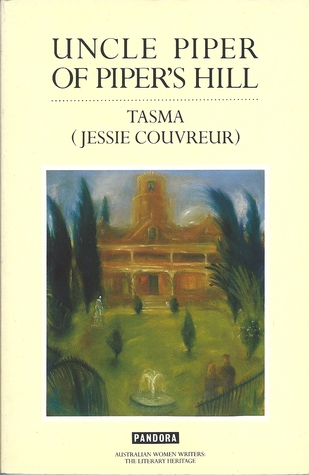
Tasma, Uncle Piper of Piper's Hill

After this, the only writers our reviewer mentions from Green’s book are women, starting with Rosa Praed, Tasma, and Ada Cambridge. S/he writes that “in spite of the pains [they] lavished on their work, they are probably to the present generation not much more than names”. Green apparently wrote that Cambridge was in “some respects, ahead of her time, and though many of her advanced opinions have now been accepted, we are not quite ready for all even yet.” Our reviewer continues that Cambridge’s ability to feel “so poignantly the wrongs of the world enabled her, as the author [Green] says, to pierce deeper into the heart of humanity than most Australian writers have done”.

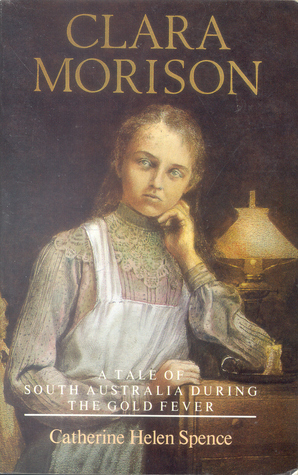
Our reviewer concludes with a whole paragraph on Catherine Helen Spence who, s/he writes, “bears a name not so conspicuous as it ought to be in Australian literature”, primarily because of her political activity. However, s/he writes ‘so competent a literary judge as the late Chief Justice Way … paid her the compliment … of describing her writings on proportional representation as “real literature for their terseness, strength, and brilliancy”.’ Green also praises Spence’s work:

The first and best, Clara Morrison [sic], written in the fifties, has, like the rest, been out of print undeservedly, if its merits are as great as Mr. Green says. It does not always follow that an omnivorous reader is a master of the pen; but Miss Spence was one of the best read women of her day, and as a novelist learned her craft from the greatest writers of her own sex in the nineteenth century, and had intelligence enough to perceive their faults and steer clear of them.

Unfortunately, my understanding of Green’s view is rather limited, here, so please just treat this as a taster. I’ll return to him again one day, because his was an important voice at the time.

Palmer

Palmer argues in her article that until the early 1920s, “the novel in Australia was a matter for apology”, but that there had recently been unexpected advances – in “the right direction”. 

She then does a bit of a recap starting with the early novels, of which only a few were still in circulation, including:

obviously, Clarke’s Term of his natural life and Boldrewood’s Robbery under arms, less obviously, some novels by Mrs. Campbell Praed, ‘Tasma’ and Ada Cambridge.

She then makes the interesting comment that there were others “with considerable power and importance” but they “were hardly novels in form”, like Tom Collins’ “remarkable omnium gatherum of the Riverina in the ‘eighties, Such is life“, and “such of Lawson’s short stories as were lightly linked together by their theme”.

Then come more women, with, around 1900, Miles Franklin’s “vivid, sardonic yet girlish confession, My brilliant career“, Barbara Baynton’s “painful, remorseless Human toll“, and a bit later, Katharine Prichard’s Pioneers (my review), followed by her “much more serious and original book, Black opal in 1920″, which had, to the time of writing, “never been well distributed and recognised”. There was not much else “except for commercial novels that were without roots either in the soil of Australia or in that of art”. 

Palmer never pulled any punches! She continued, “looking round us we saw, on the whole, desert”. The causes were clear, a major one being authors depending on “English publishers who naturally preferred to please English readers by giving them no Australian books except those showing, Australia as another America, a wild-west in which an English hero (magazine type) would have monstrous, adventures showing the superior prowess of his race”. The results was that

authors who desired to write simply and truly, of life in Australia as they knew it were hampered, to the point of paralysis, by a sense of hostility. No one wanted their books in advance. No one wants any new art form, handling new subject matter, until it has come into existence — and often not then!

But, she argues, things were starting to change by 1924. The first volume of Henry Handel Richardson‘s “great trilogy” (Australia felix) had appeared in 1917, but the second, The way home, was published in 1925. However, it received little notice in Australia, as “the air was not kindly yet to a genuine work”. However, soon after, Katharine Prichard’s “Working Bullocks, radiant, with awareness of the timber country and its challenging beauty” came out. Its “artistic ‘seriousness'”, she said, “made it more possible for other serious books to be recognised in Australia; and this has actually come about”.

These new novels included Martin Mills’ The Montforts, Vance Palmer’s psychological study The Man Hamilton, and the third volume of Henry Handel Richardson’s trilogy, Ultima Thule, which she described as having “deep literary significance”. A “particularly responsible London critic” called it a masterpiece, and she praised it herself, as being “symphonic in form, with sustained, and developed themes”. The trilogy was received so well by “serious readers in England, the Continent and America”, she felt, that it raised the status of Australian literature.
Book cover

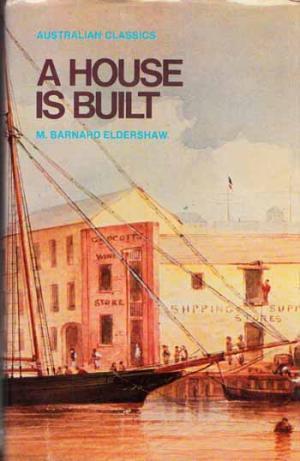
But there’s more! Richard Mahony typified “the misfit”, but types of characters were also appearing, such as “pioneers who could take what advantages there were in the new world about them”. M. Barnard. Eldershaw’s A house is built features such a character. She also praises Brent of Bin Bin’s Up the country and Ten Creeks Run, which contain complex, full lives. And she makes the point I quoted a couple of months ago, about the lack of exploration of “aboriginal life of Australia” and Prichard’s Coonardoo.

Conclusions

So, did Green and Palmer agree about Australian fiction to that point? To some degree – particularly regarding those turn of the century women writers – but I did only read a review of Green (not Green himself) as Bill (The Australian Legend has). Also, Green’s book is a more encyclopaedic one about Australian literature while Palmer’s article focuses specifically on the novel.

Touchstone in his review of Green’s Outline in Melbourne’s The Herald shares Green’s assessment of what’s characteristic of Australian versus overseas literature:

“an independence of spirit, a kind of humorous disillusion, a careless willingness to take a risk, a slightly sardonic good nature and a certain underlying hardness of texture,” but, “in all but the best of it there is a lack of intellectual content, as compared, with work of similar level overseas.” 

This last point is, I think, where Palmer was seeing change in the mid-1920s, which is about when Green’s work finishes. Palmer concluded, with some relief it seems, that “we begin to have books that we can send abroad as our contribution to the literary world in the important form of the novel, the development of character by narrative”.

Note: Bill, Lisa and others have reviewed many of the books listed here. Please check their blogs if you are interested.
Monday musings on Australian literature: Commonwealth Writers Prize (now defunct)

March 8 this year is a packed one. Of course, it is always International Women’s Day, but the second Monday in March is also Canberra Day here in the ACT, Labour Day in Victoria, and Commonwealth Day in, yes, the Commonwealth. It is not a public holiday in most places, but I decided it could inspire this week’s Monday Musings!

Some of you will have come across the Commonwealth Writers’ Prize before. It was established by the Commonwealth Foundation in 1987, as a successor to their Commonwealth Poetry Prize. This Foundation was itself established in 1966 by CHOGM (the Commonwealth Heads of Government). As its Wikipedia page, says

the Commonwealth Secretariat was established [1965] to support the political endeavours of the Commonwealth, the “Foundation was brought into being in the hope that it would give further substance to the old truism that the Commonwealth is as much an association of peoples as of governments”.

In other words, it focuses on the social, cultural, professional and other more locally-focused aspects of the Commonwealth. This includes, the Wikipedia pages also says, “to help to create national professional societies as part of a general process of “deanglicization”. This sounds a bit quaint now, but maybe that’s because much of this “deanglicisation” has been achieved. Has it? Anyhow, another of its formal goals was “to aid the broadening of experience through the printed word”. Hence, I assume, the various literary prizes.

The first was the Commonwealth Poetry Prize, which was succeeded in 1987 by today’s focus, the Commonwealth Writers Prize. This prize had two components – Best Book (1987–2011) and Best First Book (1989–2011). They were awarded for four regions: Africa, Caribbean and Canada, South Asia and Europe, and South East Asia and Pacific. There were winners in each category, Best Book and Best First Book, for each region, and from these, overall Best Book and Best First Book winners were chosen. In 2011, this award was discontinued. A new cultural programme was launched, with a new prize, the Commonwealth Short Story Prize, which is still going.

Anyhow, as most of us love lists, I thought I’d share the Australian winners of the Best Book and Best First Book awards over the duration of the award. Australia was in the Southeast Asia and South Pacific region, which comprised Australia, Brunei Darussalam, Fiji Islands, Kiribati, Malaysia, Nauru, New Zealand, Papua New Guinea, Samoa, Singapore, Solomon Islands, Tonga, Tuvalu, and Vanuatu.

So, the lists … bolded titles were overall winners for the year. Also, please note that I’m not being ethnocentric, just true to the Aussie Lit focus of Monday Musings! You can see all the prizes on the website.

Best Book

Kim Scott That Deadman Dance
  • 2011: Kim Scott’s The deadman dance (my review)
  • 2009: Christos Tsiolkas’ The slap (my review)
  • 2008: Steven Carroll’s The time we have taken
  • 2006: Kate Grenville’s The secret river
  • 2005: Andrew McGahan’s The white earth
  • 2004: Michelle de Kretser’s The Hamilton case
  • 2003: Sonya Hartnett’s Of a boy
  • 2002: Richard Flanagan’s Gould’s book of fish
  • 2001: Peter Carey’s True history of the Kelly Gang
  • 2000: Lily Brett’s Too many men
  • 1999: Murray Bail’s Eucalyptus
  • 1998: Peter Carey’s Jack Maggs
  • 1997: Sue Woolfe’s Leaning towards infinity
  • 1996: Gillian Mears’ The grass sister
  • 1995: Tim Winton’s The riders
  • 1994: David Malouf’s Remembering Babylon
  • 1993: Alex Miller’s The ancestor game
  • 1991: David Malouf’s The great world
  • 1990: Robert Drewe’s The bay of contented men
  • 1988: George Turner’s The sea and summer
  • 1987: Blanche d’Alpuget’s Winter in Jerusalem (shared with a NZ book)

You will see that Australia won the lion’s share of these prizes (21 of 25). The exceptions were 2010 won by a Samoan writer, 2007 and 1989 by a New Zealand writer, and 1992 by a Samoan-New Zealand writer. Things were a little different for the Best First Book award …

Best First Book

Book cover
  • 2010: Glenda Guest’s Siddon Rock
  • 2008: Karen Foxlee’s The anatomy of wings
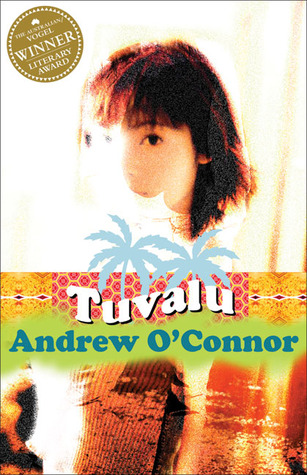
  • 2007: Andrew O’Connor’s Tuvalu
  • 2005: Larissa Behrendt’s Home
  • 2004: Nada Azar Jarrar’s Somewhere, home
  • 2002: Meaghan Delahunt’s In the blue house
  • 2001: Arabella Edge’s The company
  • 1998: Emma Tom’s Deadset
  • 1995: Adib Khan’s Seasonal adjustments
  • 1994: Fotini Epanomitis’ The mule’s foal
  • 1993: Andrew McGahan’s Praise
  • 1991: Thea Welsh’s The story of the year of 1912 in the village of Elza Darzins
  • 1989: Gillian Mears’ Ride a cock horse

So, fewer won by Australians here (13 of 23), and another country involved too: 2011, 2009, 2000, 1999, 1996, 1992, and 1990 by New Zealand writers; 2006 and 2003 by Malaysian writers; and 1997 by a Samoan writer.

There’s another interesting thing here. All of the winners of the Best Book award continued to be published and be well-known after their win. This is not the case with the Best First Book winners where a few have not become well-known on the literary scene (though many have continued to write and publish, some now overseas).

I have read many of the Best Books, and a few of the Best First Books, but mostly before blogging. Interestingly, the Best Books reflect the very “white” focus in Australian literary awards at the time (with a couple of exceptions), while the Best First Books reflect greater diversity. I wonder whether this fact is behind the Foundation’s change to focusing on short stories, because the aim seems to have also changed from “simply” recognising achievement to developing, promoting and encouraging writers. The prize, they say,

is open to writers who have had little or no work published and particularly aimed at those places with little or no publishing industry. The prize aims to bring writing from these countries to the attention of an international audience. The stories need to be in English, but can be translated from other languages.

What do you think about all this?

Monday musings on Australian literature: Mining in Australian fiction

I was inspired to write this post by Bill’s (The Australian Legend) post on Catherine Helen Spence’s novel Clara Morison whose subtitle is “a tale of South Australia during the gold fever”. Mining is one of Australia’s biggest industries. Iron, copper, coal, silver, gold, zinc, bauxite and opals have all played significant roles in Australia’s economy and thus in the lives of many Australians. But, how often has it featured in our fiction?

The funny thing is that when I think of mining in fiction, my first thoughts don’t go to Australian novels, but to books like Richard Llewellyn’s coal mining classic How green was my valley, and Wallace Stegner’s Angle of repose about white settlers in the American West. This post, then, is as much a brains-trust fishing expedition as it is an informative one, but I plan to throw a few thoughts into the mix.

Nineteenth to mid-twentieth century

Catherine Helen Spence’s Clara Morison was published in 1854, and, as Bill writes, a major stream is the mining story, including the loss of men from South Australia’s copper mine to the excitement of the Victorian goldfields.

Katharine Susannah Prichard wrote several novels about mines, mining and/or mining towns, starting with her third novel, Black opal (1921). Set in an opal mining settlement, Falling Star Ridge, it draws from New South Wales’ Lightning Ridge where she’d spent some months. Prichard biographer, Nathan Hobby, discusses it on his blog. He says that by the time she wrote this novel Prichard “had committed to communism, and the influence is evident”. For example, she “paints a picture” of the settlement as a “workers’ utopia”. Prichard’s Goldfields trilogy (The Roaring Nineties, 1946; Golden Miles, 1948; and Winged Seeds, 1950) came later. It chronicles life in Kalgoorlie from the the discovery of gold up to the early 1940s when Prichard lived there. Hobby has also written on his blog about these books, focusing particularly on the political impetus behind their writing.

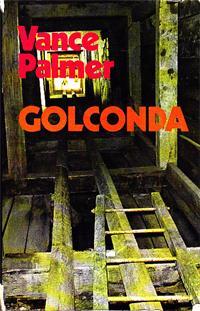
Vance Palmer also wrote a mining trilogy – the Golconda trilogy: Golconda (1948), Seedtime (1957) and The big fellow (1959). They tell the story of a mining town – one I once knew well, Mount Isa – from the time it was a mountain of silver and lead through to the established town. Deborah Jordan (in the Queensland Historical Atlas) writes that the characters include Macy Donovan, who begins as an obscure union organiser in early Golconda, but ends up the premier of Queensland, and Christy who “embodies the dying prophetic vision of the socialists of the 1890s”. Palmer, she says, was apparently fascinated by political leadership, especially those leaders who emerged from the ranks.

Mid to late twentieth century

Thea Ashley, It's raining in Mango

Another author who has written more than once about mines and mining towns is Thea Astley, though not as intensively as Prichard and Palmer. An item from the late news (1982) (my review) is set in the dying town of Allbut, which was once a thriving mining centre. Mining is not the focus – indeed I don’t mention it in my review – but its aftermath, the directionless machismo simmering in the town, underpins the novel. A few years later, Astley wrote It’s raining in Mango (1987), a four-generation story set in north Queensland, which I read around the time it came out. It covers a lot of ground, but includes references to the massacre of Indigenous people by goldfield diggers in the 1860s.

I’m guessing that miners and mining feature in outback-set commercial fiction, but this is not my area my expertise. However, my research suggests, for example, that Bryce Courtenay, who had worked in mines in South Africa, has two brothers working on goldfields, among other places, in his novel, Tommo and Hawk.

Twenty-first century

Historical fiction, which has been part of most of the novels/trilogies I’ve described above, continued into the 21st century. Mirandi Riwoe’s Big sky stone mountain (2020) explores the experience of Chinese people in late nineteenth Australia, including on the Queensland goldfields. Gail Jones’ latest novel, Our shadows (2020), takes us back to Kalgoorlie. It’s apparently a three-generation story starting with the discovery of gold there in 1893. Guardian reviewer Bec Kavanagh says that “Jones tells a story of gold and greed that goes beyond myth and folklore, deep into a family trying to reconcile their past with the present”.

Book cover

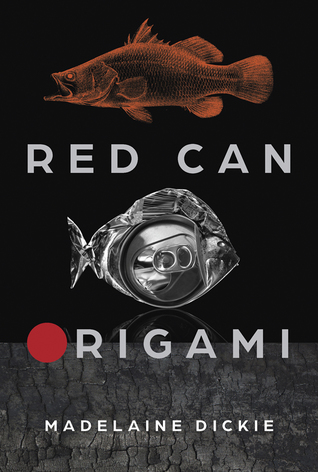
However, one of the biggest contemporary issues facing mining in Australia is the right traditional owners of Aboriginal land have to make agreements with mining companies concerning use of their land. It’s encouraging to see this issue appearing in modern novels. Mining and rights is the main focus of non-Indigenous writer Madeleine Dickie’s 2019 novel, Red can origami (my review). Dickie explores the issue from multiple perspectives – indigenous, environmental, political and personal.

Book cover

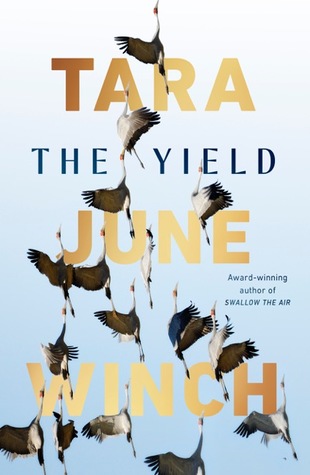
But, importantly, mining is also covered by Indigenous Australian writers. Maggie Nolan, writing in Australian Literary Studies, argues that while Alexis Wright’s Carpentaria (my review) “can be, and has been, read in a range of ways, … the impacts of mining are central to any understanding” of it. She says that “few commentators have focused on the centrality of mining in the story”, to which I must hold up my hand, though when I thought of this topic, Carpentaria immediately came to mind. Mining also features in Tara June Winch’s The yield (my review). When August returns home for her grandfather “Poppy” Albert’s funeral, she discovers that a mining company is staking its claim. Ellen van Neerven, writing in the Australian Book Review argues that “The Yield is an anti-mining novel for the present day in the wake of the approval of the Adani coal mine in central Queensland”.

I’ll stop here, but I’ll just observe that politics – labour issues, environmental issues, indigenous land rights issues, for example – features in most of the fiction I’ve listed here. What does that say about Australia’s relationship with the mining upon which so much of our wealth depends?

What are your thoughts, and do you have more examples (from whichever country you come from) of mining novels?

Monday musings on Australian literature: World Radio Day

2021 marks the tenth anniversary of World Radio Day. Hands up if you knew that? I didn’t, even though I like listening to the radio, and do in fact listen to it most days.

Some background

An initiative, apparently, of the Spanish Radio Academy, World Radio Day was proclaimed by UNESCO in 2011, and was unanimously endorsed by the United Nations in 2012 as a UN Day. February 13 was chosen because this was the date, in 1946, that United Nations Radio was established.

The Day’s aims are to raise greater awareness among the public and the media of the importance of radio, to encourage decision-makers to establish and provide access to information through radio, and to enhance networking and international cooperation among broadcasters.

On its page for this year’s World Radio Day, UNESCO says:

Radio is a powerful medium for celebrating humanity in all its diversity and constitutes a platform for democratic discourse. At the global level, radio remains the most widely consumed medium. This unique ability to reach out the widest audience means radio can shape a society’s experience of diversity, stand as an arena for all voices to speak out, be represented and heard. Radio stations should serve diverse communities, offering a wide variety of programs, viewpoints and content, and reflect the diversity of audiences in their organizations and operations. 

2021 themes

As with most UN Days, World Radio Day is celebrated each year through specific themes. In 2020, it was Radio and Diversity, while in 2021 it is New World, New Radio – Evolution, Innovation, Connection:

  • Evolution. The world changes, radio evolves: focusing on radio’s resilience and sustainability.
  • Innovation. The world changes, radio adapts and innovates: focusing on radio’s need to adapt to new technologies to remain “the go-to medium of mobility, accessible” to everyone, everywhere.
  • Connection. The world changes, radio connects: focuses on the service radio provides, in times of, for example, natural disasters, socio-economic crises, and epidemics.

In a blog post promoting the day, Being Agency discusses the state of radio in Australia, particularly regarding the impact on radio of “the rise of on-demand audio.” It’s worth reading, if you are interested, but essentially they argue that, just as video didn’t kill radio despite all prognostications that it would, nor is podcasting and on-demand audio doing so now:

The problem with assuming that on-demand audio (like podcasts) is replacing radio, is the idea that the two formats are mutually exclusive. As a medium with more than a century of history, radio is known for evolving, innovating and adapting as the world changes, and the global shift to digital is no exception.

… radio shows are the most popular podcast category in Australia, accounting for 101.3 million downloads in 2020 out of a total 420.8 million, according to the Australian Podcast Ranker.

AktiMateMini Speaker (1 of 2), with iPod and Internet Radio

They also note that, given its ability to serve society “at times of crisis”, radio (particularly local ABC radio) was a crucial source of information during Australia’s 2019-20 bushfire season, and then through the current COVID-19 pandemic.

They discuss radio’s embracing the digital world, saying that people are listening to radio on a wide variety of devices. They have no crystal ball -“who knows what will happen tomorrow”, they say – but “the industry is definitely doing what it has done for decades and adapting in response to rapid technology changes”.

For more on radio in Australia, check out the National Film and Sound Archive’s page.

Radio and Australian literature

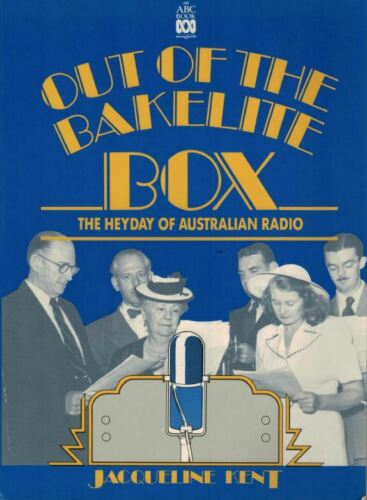
From its early days, radio has had a relationship with “literature”, first through radio serials and plays, and gradually also through book readings. There were also stories created especially for children, such as Ruth Park’s The muddleheaded wombat. Radio was, in its heyday, a major source of entertainment as well as of information. Jacqueline Kent, whose latest book is the biography, Vida, wrote a history of Australian radio, Out of the bakelite box (1983, revised 1990). She devotes a chapter – “You have to write your head off” – to the writers, noting that

… the people who wrote radio scripts for a living in the days of the bakelite box didn’t spend any time musing about their craft. People like Kay Keavney, Richard Lane, Peter Yeldham, Sumner Locke Elliott, Morris West, Eleanor Witcombe (see my Monday Musings), James Workman and dozens of others just put their heads down and worked at the typewriters or dictating machines. The result was that Australian radio produced some of the fastest and most professional radio script writers in the world.

I’m not sure on what she bases that final assessment but it is certainly the case that Australia produced many, many serials and plays in radio’s heyday. Many of these writers – some of them you’ll have recognised – went on to write in other forms, including novels, for the stage, and of course for television, but they told Kent that writing for radio provided an excellent training ground. Peter Yeldham comments that it taught “discipline … and the ability to create stories” while Kay Keavney said that for a writer, “radio was a marvellous medium” because it demanded so much of the imagination.

As well as providing entertainment for audiences, and work for writers, early radio also actively encouraged creativity, particularly in children. The ABC’s Argonauts program is best known for this. Kent writes

Many people who are now well known in the arts submitted their first poems, drawings, paintings or musical pieces as Argonauts. It’s a long, long list, and it includes poet and reviewer Fay Zwicky, critic and author Humphrey McQueen … Michael Dransfield, who was one of Australia’s most talented and promising young poets until his tragic death in 1973, was a senior prize-winner in the literature section of the [Argonauts’] Commonwealth Awards.

Like all media, of course, radio has had to change with the times. Gradually the serials and the plays decreased but book readings – a radio version of the audio-book – continued for some time. These days – in terms of spoken (not music) radio anyhow – information is god it seems, so now, instead of hearing plays and stories, we hear “about” them through programs like the ABC’s The Book Show, The Stage Show and Bookshelf. Instead of having opportunities to practise their craft, writers get to spruik their output! Better? Worse? Or, just different?

Finally …

I’ll end with Audrey Azoulay, UNESCO’s Director-General, who said that “More than ever, we need this universal humanist medium”. It supports the right to information and freedom of expression. Without radio, fundamental freedoms and cultural diversity “would be weakened … since community radio stations are the voices of the voiceless”. 

 What do you think? Is radio important to you? Is it living up to its potential?

Monday musings on Australian literature: FAW Activities (1)

FAW, or, the Fellowship of Australian Writers, was established in Sydney in 1928. Its exact origins are uncertain but the Oxford Companion of Australian Literature believes that the poet Dame Mary Gilmore was encouraged by another poet Roderic Quinn, to hold a meeting of writers. Poet, critic and professor of literature John Le Gay Brereton became the president. I have written before about the triumvirate – Marjorie Barnard, Flora Eldershaw and Frank Dalby Davison – who were actively involved in the Fellowship in its early days. Indeed, in 1937, Davison was elected President, and Eldershaw, one of the vice-presidents.

My aim today is not to discuss the origins, but I will just share this from an early 1929 newspaper report about the Association’s early days:

it is evident, that before very long the organisation, in a numerical sense, will be remarkably representative, and in a position to increase in a practical way the popularity of Australian literature. At the present time local unattached writers, with very few exceptions, have an extremely hard row to hoe, but it is hoped that the efforts of the Fellowship, will materially alter this position and open up new avenues of hope and actual success.

Now to today’s topic which is to have a look at what events and talks FAW ran for its members over its first decade, from 1928 to 1937. I found the information in Trove, of course, mostly from announcements of coming meetings rather than reports of meetings held, so the detail is minimal.

Most of the “events” in these early years were part of their regular meetings, rather than being offered as separate events (like today’s festivals, workshops, and so on). And most were speakers, but there were also discussions, readings and performances. Below is a small selection of those I found, with the year-links being to the appropriate newspaper article.

Talks and papers

The talks and papers varied, with the most common topics being the lives of writers or other figures in the arts, the practice of writing, and the state of the Australian literary scene. I’ve listed my selection alphabetically by speaker.

  • Fred Broomfield, a journalist, on “Henry Lawson and his critics” (1930): according to the ADB “Tradition has it that Broomfield accepted Henry Lawson’s first Bulletin contribution”.
  • Jack Adrian Clapin, a solicitor, on literature and copyright laws (1929)
  • Winifred Hamilton on “Critics and Gloom” (1929)
  • Professor Le Gay Brereton on “Some Australian books” (1931)
  • Dr. G. Mackaness, President of FAW, on the progress made in the quality and quantity of Australian art and literature (I wonder what he said?) (1932)
  • Dorothy Mannix and John Longden, of Cinesound Studio, and Eric Bedford, of United Artists, on “Writing for the Talkies” (1935)
  • Sydney Elliott Napier, writer and poet, on “Books, Libraries, and Places I Have Visited.” (1930)
  • Rev. Father Eris O’Brien, “an authority on early Australian literature”, on “The Work of Dr. Ullathorne” (1930)
  • Very Rev. Dr. M. J. O’Reilly on “John O’Brien” (author of Round the Boree Log“): A report on this meeting said that “Dr. O’Reilly said that O’Brien’s poetry was not great. It provided recreation, however, and also preserved the image of the old type of Irish settler”. Is this a case of being damned with faint praise? (1931)
  • Peardon Pearce Packham on the life of past Bulletin editor, JF Archibald (1929)
  • Roderic Quinn on his associations and friendships with various Australian writers and editors (1929)
  • Steele Rudd on “How I wrote On our selection” (1929)
  • Sir Keith Smith, who, with his brother Ross, was the first to fly from England to Australia, on “The Pen and the ‘Plane” (sounds intriguing, eh?) (1931)
  • Percy Reginald Stephenson, writer, publisher and political activist, on “The Future of Literature in Australia” (1932)
  • E. M. Tildesley, honorary secretary of the British Drama League, on “The British Drama League and the Australian Dramatist” (1937)

There was an interesting report of a 1933 meeting. It’s not clear whether the meeting comprised a discussion or three papers, but it notes that:

  • Cecil Mann, journalist and short story writer, said, regarding what editors wanted that “there were no standards; it was all a matter of appropriateness. Each paper had an inner spiritual character, and every freelance writer must make an acquaintance with this if he hoped to have his articles accented”.
  • Percy Reginald Stephenson said that ‘there was no recipe for a “best seller.”‘ He said that only one book in a hundred was a good seller, and only five or six out of 15,000 published became best sellers. “To be successful, he said, books must be deliberately constructed, filled with inspiration, and polished and repolished before they were published. The public was not interested in anything not original, and the publisher was not running a correspondence course in authorship. The author must sub-edit his work, knock out about one-third of his words, “ring the bell” every five chapters, and round off a great character.” (Your heard it here!)
  • Eric Baume, journalist, novelist and radio personality, suggested there things were currently good for the freelance writers, that was “a greater call for Australian stories”, and that “Australian short stories were just as vital as those from elsewhere”.

Performances, readings, etc

Other sorts of meetings included discussions and debates. At an early 1929 meeting “an enthusiastic discussion took place on ways and means of winning the Australian public over to a practical interest in Australian literature”, and in 1936 the Fellowship debated the Sydney University Union on “That literature should be romantic rather than realistic.”‘ I would love to have been there!

There were also play readings (such as in 1930, the reading of Harry Tighe’s four-act play, Open Spaces), short story readings, poetry recitations, and even, sometimes, musical performances.

In 1931, FAW was behind a benefit concert for “distressed Australian authors”. Supporting Australian authors, particularly those who were struggling at the end of their lives, was an important FAW objective (at least from my past FAW research).

And now a question for you: Do you think literature “should be romantic rather than realistic”?

Monday musings on Australian literature: Contemporary responses to Coonardoo

Book cover

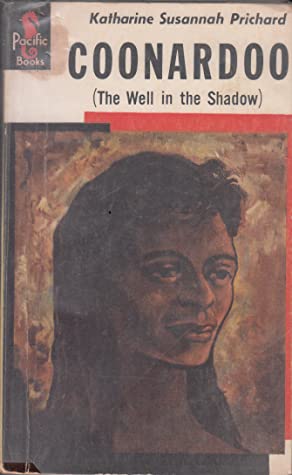
Ask and you shall receive, they say, and so when Lisa (ANZLitLovers) expressed interest in what Prichard’s contemporaries thought of her novel Coonardoo, I thought I’d love to know too. However, I’m sure Nathan Hobby will cover this in some detail in his upcoming biography of Katharine Susannah Prichard. I don’t want spoil that, so will keep this to a brief survey of some of the reactions I found in Trove.

First though I was horrified by the frequency with which Prichard’s name was spelt incorrectly. This must have driven Hobby mad in his research. She is frequently written as KathErine, not KathArine, and occasionally Catherine, and even Kathleen. Really? Then, there’s her last name, which was often reported as PriTchard not Prichard. It must have driven HER mad too, at the time. Sometimes, too, her married name, Mrs Hugo Throssell, is used.

Because I was looking for contemporary responses, I narrowed my search to 1928 to 1930, covering the time when Coonardoo won the Bulletin Prize (shared with M. Barnard Eldershaw’s A house is built). Most of the pieces I read came from literary and book pages (or B.P.s), with a couple of more extended articles or reviews, and one or two letters to the editor to round out the response!

Humourless and sordid

I’ll start with the comments relating to ideas about what literature should be, or, should not be: it should not be, many argued, grim, humourless or sordid. Heaven forbid, it seems, that writers address society’s serious issues. Much better to entertain with romance and humour. Of course, those can leaven serious books, I know, but we shouldn’t eschew grim pieces – Barbara Baynton is a good example – which can make important points.

A.T.C., writing in Perth’s Sunday Times (27 January 1929), calls Coonardoo “sordid and utterly destitute of romance”. Socialist and journalist S.A. Rosa writing in The Labor Daily (10 August 1929) was also critical:

Both Coonardoo and Hugh wasted their lives. Why? Is it really necessary, too, that there should be a persistent atmosphere of gloom in a novel dealing with Australian life in the interior? Is there no humor in such a life?

In Perth’s The Daily News (3 August 1929, the Books and Authors writer compares Coonardoo unfavourably with its Bulletin prize-winning mate:

‘A House Is Built’ is the more enjoyable, and the more robustly Australian than the sun-dried desolation of Katharine Prichard’s unhappy story of the North-West.

There are more, including “Austral” in Adelaide’s The Advertiser (4 September 1929):

I, at any rate, have never read a book which combines so much dreariness, sordidness, and monotony with such an utter lack of humor.

 Not all were so negative, however. The West Australian‘s (27 July 1929) Book Reviews page writer accepts that “there is a good deal that is undeniably squalid” in Prichard’s image of station life in the North-West, but argues that there is also great descriptive beauty and profound knowledge of “the Australian aboriginal in his native state”. (See below for more on this issue.)

Representative?

Closely related to the above criticisms, and often contained in the same article, were accusations that the book is not representative of the bush. Some of these express concern that books like Coonardoo gave a bad impression of Australia for overseas readers, particularly the English. They are defensive about Australia, wanting to maintain the notion of “the wonderful personality of the outback man, his unbounded generosity, his unconventional hospitality, his self-sacrificing bravery and unostentatious generosity” (Capricornian, 10 October 1929).

A.T.C. (mentioned above) comments in the same piece on the Coonardoo‘s being published:

There should be a foreword in the book pointing out that it is but a phase of life in the North-west of Western Australia, and does not picture the real white social existence in that part of WA. It deals with the natives and their contact with rather dissolute whites … The pity of it is that a book of this nature will be accepted in England as typical of the country …

Similarly, the writer in Rockhampton’s The Capricornian (25 July 1929), quotes a friend in England, “a journalist of no mean order and a clever writer of book reviews”: 

‘If that is the class of story that is going to win the big Australian prizes I think it’s a darn bad advertisement for Australia, and Australians generally, and I’ll be frank, give me the failures rather than another “Coonardoo.” I would hesitate to think all Aussies were like the hero, or treated the natives so, and from comments heard from moving about amongst people, it does not appeal. It opens strongly but its end is woeful, almost disgusting.”

The aforementioned “Austral” picks up this theme too:

Australian life is not the dreary, hopeless affair outsiders are given to understand it to be, nor are our outback people the cheerless, despondent creatures such as some of our writers seem to delight in depicting. It is a pity that this type of literature should be given to the world as typical of the life and people of our glorious country, and I for one, being Australian born, of Australian parents, feel exceedingly resentful of the slurs which are cast upon both our country and our people.

“Austral” goes on to criticise Australian writers who ignore “the beauty and wonders of our great continent, the courage, cheerful optimism, and achievement of its outback people” to focus on “the gloomy, the sordid, and the depressing”.

It appears that there was some excited discussion among the B.P.s about Prichard’s depiction of “half-castes”, with various columnists weighing in with (unsupported) “facts”. One in The Capricornian (19 September 1929) argued that

One man of this class is often responsible for the existence of perhaps, a dozen or more half-castes, so why write a book that may lead strangers to believe the practice is common? Further, the book is devoid of humour and a book to be really entertaining must have, at least, a little humour. Mrs. Gunn’s “We of the Never Never” is absolutely true to life. It also has a vein of humour and there is not even the most delicate hint of such a being as the half-caste. 

Who said a book has to be “entertaining” (however we define that overused word)?

Again, not everyone agreed. The Ladies Realm writer (Adelaide’s Chronicle, 1 August 1929) claims that “the story is a truthful reflection of the lot of the pastoralist when seasons are against him”. Similarly, HH Ryall, in Sydney’s Evening News (12 October 1929), says

Brutal, lecherous individuals exist in every country where white men live among black, brown, or yellow. But then, so do others, who understand them, and play fair. […]

Australians should be proud of Mrs. Prichard’s effort to interpret for the outside world this outback phase of their country’s development. “We of the Never Never” left a fragrant memory. “Coonardoo” is not a pleasant sequel, but it is a story that demanded to be written.

On the “natives”

This brings me to commentary on Prichard’s treatment of Indigenous Australians in her book, but first it’s worth mentioning that Prichard’s research primarily comprised observation of station life, and information from white men. She is quoted:

‘About two years ago, […] I spent some time on an isolated cattle station in the NorthWest, and took the opportunity of gaining material for my book by studying the natives at close quarters. I wished to be as accurate as possible, and obtained very valuable help from Mr. Ernest Mitchell, inspector of aborigines for the whole of this State. Mr. Mitchell has been closely associated with the blacks for 30 years or more and is a recognised authority on the subject.’

She also says in this article that she “benefited by the long experience of Mr. James Withnell, a well known squatter, who had helped her with particulars of native songs and folk-lore. Through his aid she had been able to obtain the actual words of aboriginal songs, always a difficult task, and had incorporated such songs in her story.”

An “inspector of aborigines” and a “squatter”. This would not, of course, be acceptable now.

Some of the commentary is shocking, such as:

  • the previously cited SA Rosa who suggested that “it may be that it is easier to plumb the depth of the character of a member of a primitive race than of a race more complex”.
  • the previously cited Ladies Realm article which comments that “the lot of Coonardoo is sad reading at the last, but her young days reflect the childishly happy mind of the contented aboriginal”.
  • “Bush-Woman” who wrote in a letter to the editor in Adelaide’s Register (27 December 1928) that “at present there is far too much rash, sentimental sympathy for the blacks. Taken en masse, they are talking animals with a fair sprinkling of the types depicted in Coonardoo, which it takes a couple of generations of careful handling and working to produce. 

Not everyone thought like this, however. The West Australian (10 May 1930) quotes from a review in The New York Times, including this:

Nevertheless, ‘Coonardoo’ stands as a forceful piece of social documentation and bids fair to do for Australia what ‘Uncle Tom’s Cabin’ did for America, and Mrs. Millin is doing for South Africa— to make the white race face the facts of its treatment and study of the black descendants of the aborigines, through an authentic piece of national literature which raises a parochial problem to the level of the universal.

Finally, there’s our own Nettie Palmer who, in an extended essay on the state of Australian literature, included a paragraph on Coonardoo, commenting that in all the books she discussed, there was “hardly … a glance at the aboriginal life of Australia. It remained,” she writes, “for Katharine Prichard, in her Coonardoo, to experiment with this theme”.

This is a superficial response to Lisa, but that’s ok, because Nathan Hobby is coming! We just have to be patient a little longer. Meanwhile, I hope you enjoyed this little taste of what the popular media, at least, was saying.

A belated contribution to Bill’s AWW Gen 3 Week.

Monday musings on Australian literature: Realism and Modernism

Now that’s an aspirational title for you, and one that I will not live up to in terms of expectations. However, I wanted to write something for Bill (The Australian Legend)’s AWW Gen 3 Week (Part 2). As its focus is, primarily, Realism and Modernism in Australian literature from post-WW1 to 1960, and, as my plan is to contribute a review of an Elizabeth Harrower novel, I figured I could leap into this Realism-Modernism murk and see what I could find!

Essentially, of course, most of us readers just want to read good books, and not worry too much about the trends and “isms” that the academics love, but it is sometimes interesting to think about them – at least a little. Bill has written clearly on the subject on his AWW Gen 3 page, so I’m just going to add a few thoughts and ideas that I’ve gleaned from around the place.

Mena Calthorpe, The dyehouse

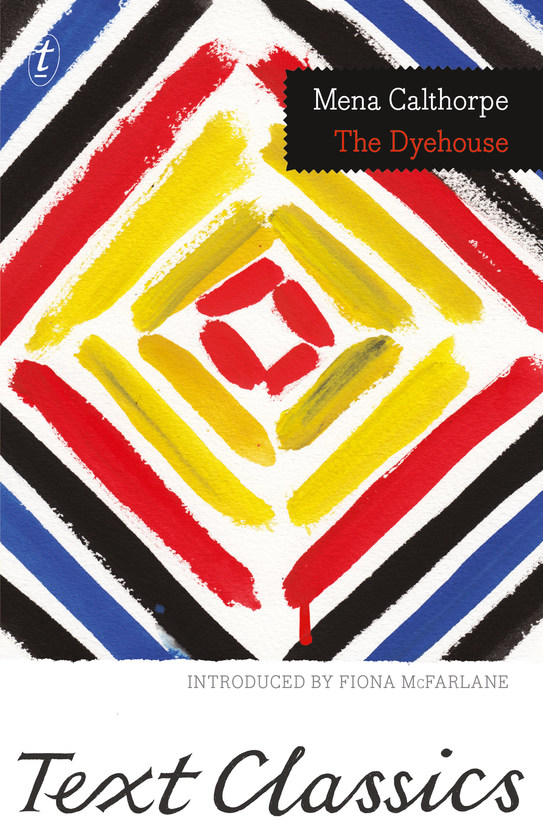
Realism – social realism, which is really what we are talking about here – is fundamentally a sociopolitical movement which was concerned about the oppression of the working class by capitalist forces. Its drivers are social rather than psychological, group-focused rather than individual-based. It was the main fictional approach of the first half of the twentieth century, and was a driving feature of Australian literature of the 1920s to 1950s. Mena Calthorpe’s The dyehouse (my review), published in 1961 but set in the mid-1950s, is a good example. In my post, I noted that the characters are types, reflecting the various “players” in the worker-capitalist struggle, but are also authentic, psychologically real human beings which helps make it such a good read. There’s no escaping the fact, though, that Calthorpe’s intent is political.

Book cover

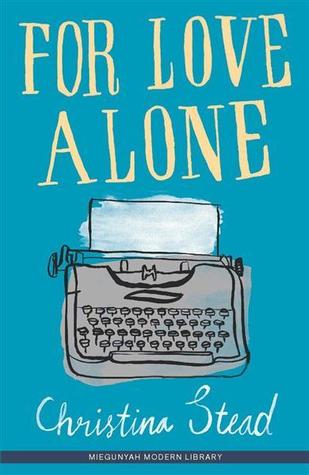
Modernism, on the other hand, focuses more on the individual – on, as Bill quotes, “decay and a growing alienation of the individual. The machinery of modern society is perceived as impersonal, capitalist, and antagonistic to the artistic impulse”. A significant exponent of modernism in Australia was Patrick White. A whole slew of Australian women writers are identified with Realism, but there’s also a good representation of them who worked in the Modernist style, such as Christina Stead, Eve Langley and Elizabeth Harrower (all of whom I’ve reviewed here.) Modernism, the theory goes I believe, eschewed realism.

Realism, or Modernism – or, both?

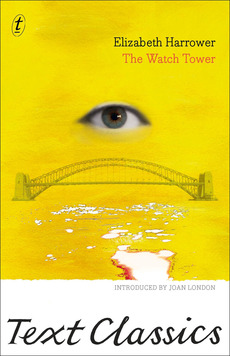
However, as with all things, real life doesn’t always suit theory, and writers, in particular, don’t always “know” that they are supposed fit the prescriptions of the theorists! So, it was with interest that I read an article about Elizabeth Harrower that discussed this very problem. The article, which appeared in Australian Literary Studies, 15 (3) 1992, is by Nicholas Mansfield, and is titled “‘The Only Russian in Sydney’: Modernism and Realism in The Watch Tower“. Mansfield opens with

Elizabeth Harrower The watch tower

In the post-war period, the dichotomy between Realism and Modernism seemed to summarise all the important rivalries in Australian fiction — nationalist enthusiasm and political responsibility lined up against cosmopolitan sophistication and formalist experimentation. Given the approximate and tendentious nature of the terms of this dichotomy, it was inevitable that writing that could not fall easily into one or other of its broad categories would be met with some uncertainty and perhaps eventually ignored. The aim of this article is to show how a novel which met such a fate, Elizabeth Harrower’s The Watch Tower, both discusses and defies the simple dichotomy that Australian literary critics in the 1960s were so keen to maintain as their paradigm.

It’s a long article, but the gist is that while there is a Realist aspect to Harrower’s novel – a study of power, and a quest for freedom – it is Modernist by refusing to “definitively explain the basis of power” and by refusing to rely on an “essential truth”, on, I suppose, an absolute reason or answer. These refusals “radically contradict the traditional purposes of Realism” which he called “the most social and rational of all literary modes”. Mansfield argues that

Harrower’s novel, like the work of Christina Stead before her and Helen Garner after her, attempted to subject the techniques and concerns of the traditional social novel — especially the question of the nature and function of domestic power — to the self-consciousness that modernism demanded, without giving in to the temptations of either formalist machismo or realist belligerence.

Mansfield believes, however, that because Harrower’s novel combined “Realist” issues with more “Modern” responses, it confounded critics of the time:

Harrower’s novel not only rejected the quest for essential truth that had such poignancy for writers and readers of fiction in Australia at this time, but also confounded the binary opposition on which much criticism rested. For these reasons, even when it was positive, the critical reception of this novel was tentative, and soon ended in uncertainty and silence.

A case of critics trying to make the work fit the theory, rather than look at the work on its own terms? Anyhow, it probably didn’t help, as he also implies, that Harrower was a woman writing about women’s experience.

Interestingly, I also found an article (from Studies in Classic Australian fiction) that outlined why Patrick White’s works, which can look like “traditional, bulky, realist fiction”, are modernist. The writer, Michael Wilding, however, also admits that White “is playing with the realist tradition”, that he “gestures at realism” which he then denies or inverts. Voss, of course, is an excellent example of this, but Wilding discusses several White novels to support his argument.

I like Wilding’s definition of realism, as:

a committed left-wing realist mode: democratic in its sympathies, egalitarian in its perceptions, naturalistic in its causality and motivation, precise and laconic in its verbal manner.

However, while naming Katharine Susannah Prichard and Vance Palmer as purveyors of this style, he also includes Christina Stead! Just shows the limits of theory?

The question is …

Jane Rawson, A wrong turn at the office of unmade lists

Does all this mean anything? Well, not to our individual reading experiences I think. But, if we believe the arts are (partly) about reflecting and/or responding to our times, then these “trends” mirror what was happening. Social realism recognised a growing concern with the inequalities and oppression wrought on people by increasing industrialisation under capitalism, while modernism reflected a sense of alienation and meaninglessness that the times (progress, industrialisation, war, technology, urbanisation) were effecting in people. In current times, we are seeing, for example, a rise of “cli-fi” and climate-related dystopian literature in response to you-know-what. Literature, in other words, tells us about ourselves and these theories are a way of articulating that.

Anyhow, back to Bill. It will be interesting to consider how these traditions “behave” as we move into Bill’s Gen 4 next year. Meanwhile, I’ll just say that both these “isms” appeal to me. I love the reformist heart behind realist novels, but there’s also that part of me that relates to the modernist’s sense of alienation in an uncomprehending and incomprehensible world. I didn’t fall in love with TS Eliot in my youth for nothing!

Monday musings on Australian literature: Selected early high country history

As some of you know, I am currently having a little summer break in Australia’s high country, based in Thredbo in Kosciuszko National Park. This is an annual trek for Mr Gums and me, and I have written about it occasionally before. I thought I’d do so again for this week’s Monday Musings, from an historical angle. It’s just a soupçon, because I’m too busy holidaying to do more!

Bundian Way

The Bundian Way is, says its website, “an ancient pathway for Aboriginal people from Yuin, Ngarigo, Jaitmathang, Bidawal Country that provided safe passage between the coast and the high country”. 

The project to document and develop it as a community resource is an ambitious one that, say the organisers, is not about native title, but about acknowledging “Aboriginal cultural heritage values in the historic landscape” and that “these are symbolised by the old pathways”. Surveying the Way commenced in 2010, and was conducted, says Wikipedia, by the Eden Aboriginal Land Council and naturalist John Blay (who has subsequently written On track: Searching out the Bundian Way, 2015). They identified the 265-kilometre route (though the length varies a bit according to the source) using, for example, historical records like 19th century survey reports and journals. The website notes early interactions with Europeans, and the role played by journals:

The old Aboriginal people showed the European ‘explorers’ the pathways (e.g. Ryrie 1840 journals and maps; Robinson 1844-5) and permitted use of the country in the earliest days by highland Scots shepherds, and the horsemen and cattlemen who followed (Watson 1984).

I came across the Bundian Way in an article in the December 2020 issue of the free The Snowpost magazine. It describes the Way as “a shared history pathway” “that was the easiest path from the Monaro to the coastal plains”. It includes places associated with Aboriginal whaling and springtime ceremonies in Twofold Bay on the south coast, and Aboriginal bogong moth hunting and ceremonies in the high country in summer. The article notes that there is still evidence along the route of “old land management … in its Aboriginal landscapes”, which presumably was also used in the survey.

The Snowpost (possibly using Wikipedia) also notes the role played by the controversial Chief Protector of Aborigines GA Robinson in all this. Wikipedia cites John Blay as saying that Robinson recorded the story of Al.mil.gong who walked from Omeo to present his new corroboree to his kin at Bilgalera on Twofold Bay on 14 August 1844. The important thing is not who provides the information, but that we have the information, eh? The Snowpost also records that geologist WB Clarke, who explored around here in 1852, recorded Indigenous people’s description of the Bundian Pass. Unfortunately, his writings and Robinson’s don’t appear to be available on Project Gutenberg Australia.

Finally, the Snowy-Monaro Regional Council makes the point that:

This walking track is older than the silk roads and was used the Aboriginal people for trading, ceremonies, family gatherings and caring for country for thousands of years.

Georg von Neumayer

Also active in Australia around the middle of the nineteenth century, like Robinson and Clarke, was the German polar explorer and scientist Georg Neumayer or Georg Balthasar von Neumayer. Tim Flannery writes in his book, The explorers, that “the exploration of the Australian Alps seems inextricably linked with Germans and Poles: Lhotsky, Strzelecki, Neumayer and von Guérard”. Neumayer, who was interested in “terrestrial magnetism, hydrography and meteorology”, conducted a magnetic survey of “the colony of Victoria”. In doing so, he visited the summit of Mt Kosciuszko in November-December, 1862, with his assistant Edward Brinkmann and the artist Eugène von Guérard. Flannery writes that Neumayer’s account of this trip “provides a terrifying example of Australia’s fickle alpine weather”. Flannery also says that the Von Guérard painted “one of his most memorable works [of Mt Kosciuszko] from the view he obtained on that dramatic November day”. You can see a version on the Art Gallery of New South Wales website.

Flannery quotes Neumayer as saying that

The vegetation near the camping place [which overlooked the Manroo Plains and Thredbo River] reminds one very much of that of the Alps except that the strange look of the dwarf gum trees introduces rather a new feature.

I suspect it’s true that alpine regions can look very similar – except for vegetation! Neumayer also notes that

M. de Guérard, meanwhile, had seated himself on the summit, which affords a beautiful view of the mountainous country of New South Wales and Victoria, as well as the plains of the Murray River, and was taking a sketch of the scenery when, just as I was completing my observations, he called out that it appeared to him a heavy storm was approaching from the New South Wales side.

What follows is a rather terrifying description of coping with this storm, during which Edward Brinkmann (who was looking after some of Neumayer’s instruments) got lost. This was around 18 November 1962, I think. Despite looking hard for him, they could not find him.

Neumayer writes on 3 December 1862

The day very hot, and a haze, caused by bushfires, over the whole sky, so that nothing of the fine mountain scenery was visible.

Such is the alpine environment – blizzard one day, bushfire the next. Anyhow, Neumayer and von Guérard

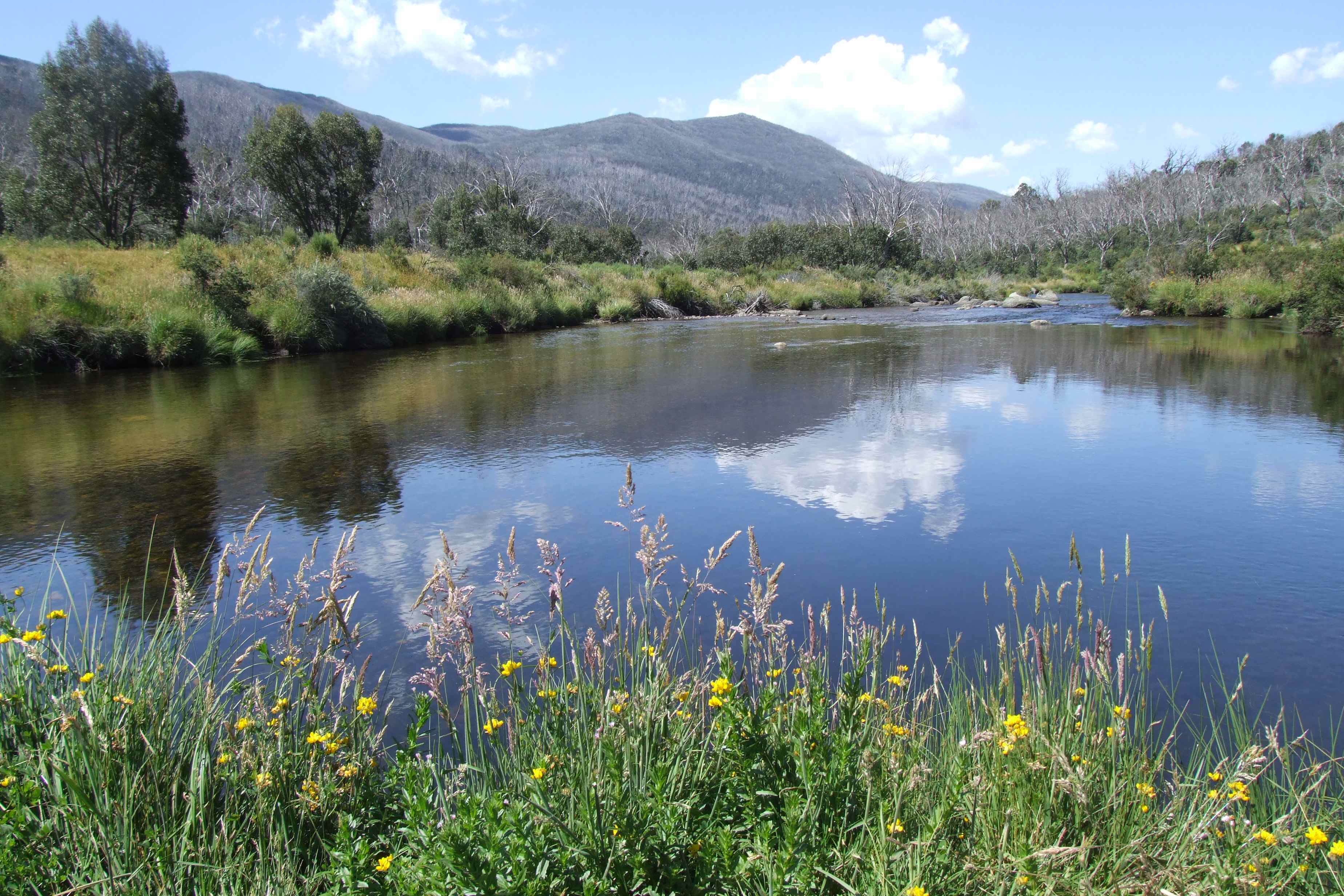
Thredbo River, Kosciuszko National Park
Thredbo River (on a nice day), Kosciuszko National Park)

Went to the police court, but could hear nothing of him, so that the last hope of his safety was now quite destroyed. Sat down to dinner, and had hardly done so when the lost man made his appearance in a most deplorable condition, having been without food and clothes for some time. My conjectures as to the route he had taken proved to be correct. Soon after leaving us on Mt Kosciusko, he endeavoured to return but missed the track to the camp and descended into the valley of the Thredbo River. For two days he wandered on, with scarcely anything to eat, until he fell in with some diggers in a lonely valley, who behaved most kindly to him and assisted him in making his way to Kiandra. … I cannot quit this most annoying affair without expressing my appreciation of Edward’s courageous behaviour, after separating from our party, and of the skill and care he bestowed upon the instruments entrusted to his charge; for the fine mountain barometer Fortin II did not receive the least injury during the whole of this rough and perilous journey.

I love that Neumayer seems to have cared both about Brinkmann AND his instruments!

Monday musings on Australian literature: Some New Releases in 2021

For some years now, I’ve made my first Monday Musings of the year, a “new releases” post. As in previous years, my list is mostly drawn from the Sydney Morning Herald, whose writers do a wonderful job of checking out publishers large and small, but I have found a couple of extras on my own! Also, remember, as this is Monday musings on Australian literature post, it will be limited to Australian authors (listed alphabetically.) Do click on the SMH link to see the full list, which includes non-Aussies, Aussies I haven’t selected, and additional info about some of the books.

Links on the authors’ names are to my posts on them.

Fiction

Last year, I listed 24 fiction works plus a few new voices and short story collections, and read only TWO (par for last year’s course, really) – but I will be reading some more of them in the next few months.

Book cover
  • Pip Adams, Nothing to see (March, Giramondo)
  • Michael Mohammed Ahmad, The other half of you (June, Hachette)
  • Larissa Behrendt, After story (July, QUP)
  • Emily Bitto, Menagerie (second half, A&U)
  • Steven Carroll, O (February, Fourth Estate)
  • Claire G. Coleman, Enclave (October, Hachette)
  • Paul Daley, Jesustown (August, Allen & Unwin) 
  • Michelle de Kretser, Scary monsters (“a flip book”, second half of 2021, Allen & Unwin)
  • Briohny Doyle, Echolalia (June, Vintage)
  • Nikki Gemmell, The ripping tree (April, Fourth Estate)
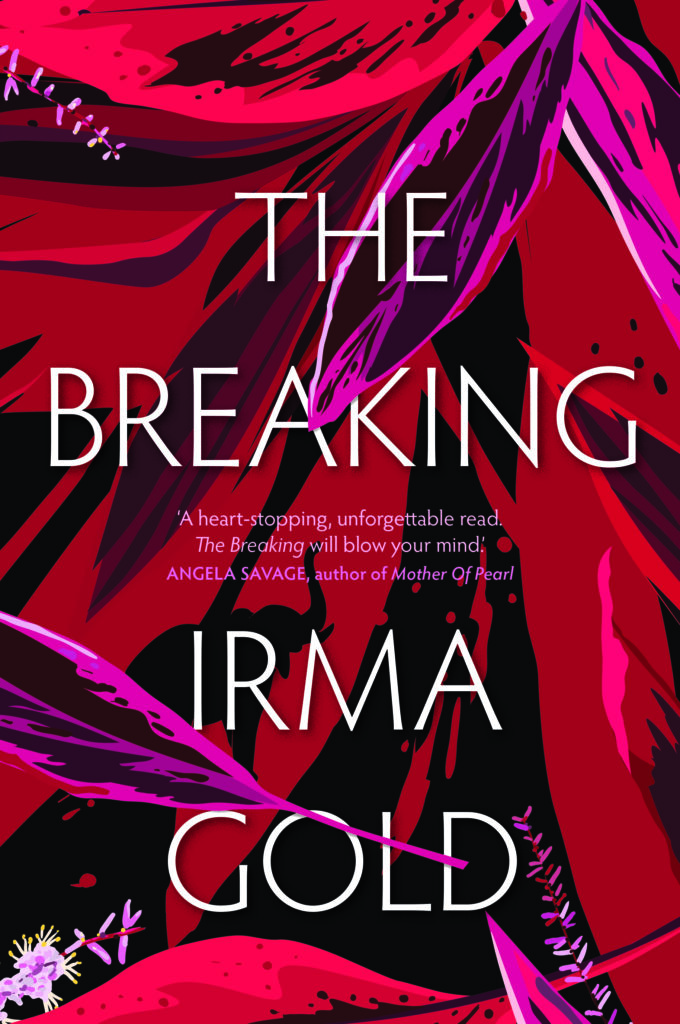
  • Irma Gold, The breaking (March, MidnightSun)
  • Chris Hammer, no title yet (second half, Allen & Unwin) (my token crime inclusion!)
  • John Kinsella, Pushing back (February, Transit Lounge)
  • Jamie Marina Lau, Gunk baby (May, Hachette) (and I have to include the description: it’s “about a budding entrepreneur who opens an ear-cleaning business in the local mall”)
  • Charlotte McConaghy, Once there were wolves (August, Hamish Hamilton)
  • Emily Maguire, Love objects (April, Allen & Unwin)
  • Sophie Masson, The ghost squad (yes, I know, YA, but – February, MidnightSun)
  • Jennifer Mills, Airwaves (August, Picador)
  • Kate Morton, no title yet (second half, Allen & Unwin)
  • Stephen Orr, Sincerely, Ethel Malley (April, Wakefield Press)
  • Debra Oswald, The family doctor (March, A&U)
  • Alice Pung, One hundred days (June, Black Inc.)
  • Trevor Shearston, The beach caves (February, Scribe)
  • Graeme Simsion and Anne Buist, Two steps onward (collaborative novel, March, Text)
  • Claire Thomas, The performance (March, Hachette)
  • Christos Tsiolkas, (“auto-fiction”, second half, Allen & Unwin)

I’m surprised to find that many more authors from this year’s list are already on my blog than ever before, which sort of makes me feel I’m getting somewhere!

SMH also lists “new voices” (including new forms for established voices):

  • Ella Baxter, New animal (February, Allen & Unwin)
  • Hannah Bent, When things are alive they hum (second half, Ultimo Press)
  • Barry Divola, Driving Stevie Fracasso (March, HarperCollins) (music journalist/short story writer)
  • Max Easton, Leaving the plain (TBA, Giramondo)
  • Martin McKenzie-Murray, The speech writer (Scribe, February) (journalist)
  • L.P McMahon, As swallows fly (March, Ventura)
  • Jacqueline Maley, The truth about her (April, Fourth Estate) (journalist)
  • Campbell Mattinson, We were not men (June, Fourth Estate) (wine writer)
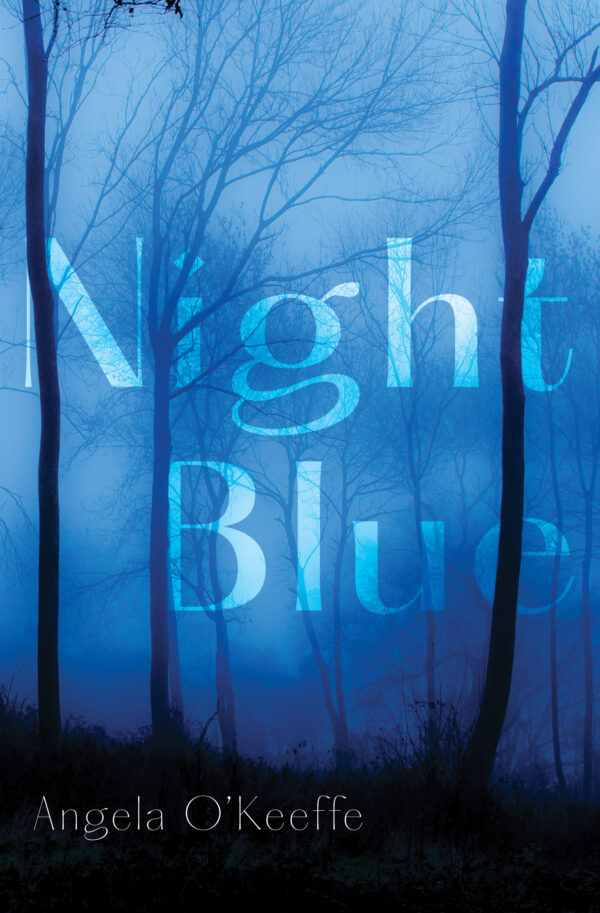
  • Angela O’Keeffe, Night blue (May, Transit) (here’s one for next year’s “interesting narrative voices” – the narrator is Pollock’s Blue Poles painting!)
  • Sophie Overett, The rabbits (July, Michael Joseph)
  • Madeleine Ryan, A room called Earth (March, Scribe)
  • Emma Spurr, A million things (March, Text)

Short stories

  • Tony Birch, Dark as last night (August, UQP)
  • Te-Ping Chen, Land of big numbers (March, Scribner)
  • Paige Clark, She is haunted and other stories (August, A&U).  
  • Melissa Manning, Smokehouse (April, UQP)
  • Adam Thompson, Born into this (February, UQP) 
  • Chloe Wilson, Hold your fire (March, Simon & Schuster)

Non-fiction

SMH provides a long long list of new non-fiction books covering a huge range of topics, so my two lists are highly selective.

Life-writing (loosely defined)

  • Emma Alberici, Rewrite the story (September, Hardie Grant): memoir.
  • Alison Croggon, Monsters: A reckoning (March, Scribe): hybrid memoir/essay (award-winning essayist).
  • Carly Findlay (ed.) Growing up disabled (February, Black Inc.): from the Growing Up series.
  • Clementine Ford, How we love (second half, Allen & Unwin): memoir about love, motherhood and her family.
  • Evelyn Juers, The dancer (TBA, Giramondo): biography of Philippa Cullen, that was listed in my 2020 new releases and is listed again but still without a date.
  • Nathan Hobby, biography of Katharine Susannah Prichard (first half, MUP)
  • Eleanor Hogan, Into the loneliness (March, NewSouth): biography of Daisy Bates and Ernestine Hill
  • Yumiko Kadota, Emotional female (March, Viking): memoir about the challenges of being a young female surgeon in an often toxic environment.
  • Sarah Krasnostein, The believer (March, Text): faith and conviction in six people.
  • Joyce Morgan, The Countless from Kirribilli (July, Allen & Unwin): biography of Elizabeth von Arnim. I can’t believe there is a third book coming out in reasonably short time about this author, with whom I fell in love way back in the 1980s. 
  • Rick Morton, My year of living vulnerably (March, HarperCollins): follow-up memoir.
  • Fiona Murphy, The shape of sound (March, Text): memoir about being deaf, by an emerging writer admired by Jessica White and Angela Savage.
  • Christine Skyes, Gough and me (May, Ventura): memoir about the role Gough Whitlam played in her life.
  • Alf Taylor, God, the devil and me (February, Magabala): Memoir
  • Robert Wainwright, The diva and the duc (second half, A&U): biography of soprano Nellie Melba.
  • David Williamson, untitled autobiography (October, HarperCollins). 
  • Charlotte Wood, Inner life (second half, A&U): expanding her essay on “the creative process, inspiration and hard work”. 

SMH lists a number of biographies coming out on politicians, past and present, and memoirs by current political figures, but let’s give ourselves a break from parliamentary politics today. (You can check out the SMH link, of course, if you are interested.)

History and other non-fiction

  • Santilla Chingaipe, Black convict (July, Picador): convicts of African descent transported to the Australian penal colonies.
  • Helen Garner, presumably the next diary volume (Text)
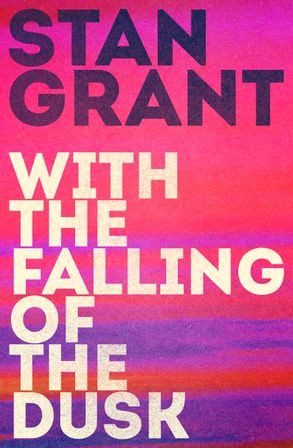
  • Stan Grant, With the falling of the dusk (April, HarperCollins): “the challenges facing our world”. 
  • David Hunt, Girt nation (November, Black Inc.): third instalment after Girt and True girt.
  • Bri Lee, Brains (second half, Allen & Unwin): the structural inequalities behind elite institutions.
  • Mark McKenna, Return to Uluru (March, Black Inc.): starts from the 1934 shooting at Uluru of Aboriginal man Yokunnuna by white policeman Bill McKinnon.
  • David Marr, A family business (October, Black Inc.): Queensland’s frontier massacres in the 19th century. 
  • Henry Reynolds Truth-telling (February, NewSouth): First Nations sovereignty and the importance of the Uluru Statement from the Heart. 

SMH also identifies some special current-interest topics being written about, including:

  • Last year’s bushfires: Bronwyn Adcock, Currowan (August, Black Inc.); Danielle Celermajer, Summertime (February, Hamish Hamilton); Greg Mullins, Firestorm (September, Viking Australia); John Pickrell, Flames of extinction (March, NewSouth); and Michael Rowland (ed), Black summer (January, ABC Books).
  • Climate change: Richard Beasley, Dead in the water (February, Allen & Unwin); Jonica Newby, Beyond climate grief (NewSouth); Gabrielle Chan, Why you should give a f— about farming (August, Vintage); and Ian Lowe, Long half life (August, Monash).
  • COVID-19 (of course): Ross Garnaut, Reset (February, La Trobe); Hugh McKay, The loving country (May, A&U); Duncan McNab, The Ruby Princess (February, Macmillan); and Norman Swan, So you think you know what’s good for you (July, Hachette).
  • Politics and current affairs: David Brophy, China panic (June, La Trobe); Zoe Daniel and Roscoe Whalan, Greetings from Trumpland (February, ABC Books); Zareh Ghazarian and Katrina Lee-Koo (ed), Gender politics: Navigating political leadership in Australia (May, NewSouth); Nicholas Jose and Benjamin Madden (ed), Antipodean China (February, Giramondo); Peter van Onselen and Wayne Errington, How good is Scott Morrison? (March, Hachette); and Trevor Watson and Melissa Roberts (ed), The Beijing Bureau (May, Hardie Grant).

Does anything here interest you?

Monday musings on Australian literature: Australian Women Writers Challenge 2020

AWW Challenge 2019 Badge

Once again I am devoting my last Monday Musings of the year to the Australian Women Writers Challenge*. Last year in my opening paragraph, I wrote that I loved the sound of 2020 – and I wished you all a wonderful year to come in whatever form you would like that to take. My, oh my, little did we expect what was going to eventuate (which for me included a personal loss in addition to the impacts of the pandemic and other catastrophes). I no longer like the sound of 2020, and fervently hope 2021 turns out much better for us all. And so, may you all have a positive and fulfilling 2021.

Now, the challenge … it has continued to go very well. The full database now contains reviews for nearly 7,000 books across all forms and genres, from all periods, of Australian women’s writing. This means that the number of books reviewed on our database increased in 2020 by 900 books, which is about the same number added as last year, or just under 15%.

My personal round-up for the year

This year, for obvious reasons, was not my best Challenge year. I posted only 26 reviews relevant to the Challenge over the year, about the same as last year which was also a strange year (but differently). I feel disappointed about all this, but such is life. Anyhow, here they are, with links to my reviews:

Fiction

Book cover

Short stories

Book cover

Anthologies/Essays

Non-fiction

Book cover

This year, fiction (including short stories) represented around 61% of my AWW challenge reading, which is a little more than last year and a bit closer to my preferred ratio. I read three Classics. Two were novels and one a memoir, and they were read for Bill’s (The Australian Legend) Gen 3 week and Lisa’s (ANZLitLovers) Thea Astley week. Thanks to Bill and Lisa for the impetus to read these books, because they added a special depth ! In terms of that problematic word “diversity”, I read two novels by Indigenous Australian women, and one translated novel by an Iranian-born Australian writer.

Chloe Hooper, The Arsonist

My non-fiction reading was eclectic, featuring biography and memoir of course, a work of creative or narrative nonfiction, a beautiful collaboration between an artist and a poet, and, unusually for me, also two books that could be seen to be in the self-help vein.

If you’d like to know more about the Challenge, check it out here. We are also on Facebook, Twitter (@auswomenwriters), and GoodReads. Do consider joining us. All readers are welcome.

Finally, as always, a big thanks again to Theresa, Elizabeth and the rest of the team. I (still) love being part of this challenge, partly because equating with my reading goals it is not really a challenge, and also because I enjoy working with the people involved. See you in 2021.

And so, 2021

Challenge logo

The 2021 sign up form is ready, so this is also my Sign Up post for next year. As always, I’m nominating myself for the Franklin level, which is to read 10 books by Australian women and post reviews for at least 6 of those. I expect, of course, to exceed this.

Do you plan to sign up?

* This challenge was instigated by Elizabeth Lhuede in 2012 in response to concerns in Australian literary circles about the lack of recognition for women writers. I have been one of the challenge’s volunteers since 2013. Theresa Smith (of Theresa Smith writes) now oversees the day-to-day management of the blog, but Elizabeth is still an active presence.