Monday musings on Australian literature: Writers’ notebooks

If you’ve attended writers festivals, you are sure to have heard writers talk of using notebooks to jot down ideas on the run, to record conversations overheard on public transport, cafes, etc, to capture the thoughts of the writers they read, and so on. These notebooks are not works of art in themselves, but part of a writer’s toolbox for creating their art – except, of course, writers being writers can turn anything into art, if they set their minds to it.

Some time ago, an article appeared in The Guardian on writers’ notebooks. It starts by discussing:

the way notebooks seem to offer access to hidden origins, and to the creative processes by which works we value come into being. Notebooks record early versions and impulses, and though sometimes the writer has an eye to posterity, the privacy of self-communing allows things that can’t be shared with others to be said, within what Coleridge, one of the great notebook-keepers, called in 1808 a “Dear Book! Sole Confidant of a breaking Heart”. For Virginia Woolf, her notebook helped to “discover real things beneath the show”; flashes of perception, phrases, half-formed and potential ideas …

The article was written by American Professor Philip Horne, who commissioned ten authors to write new stories based on “germs” left behind by Henry James in his notebooks. That book has been published, Tales from a master’s notebook: Stories Henry James never wrote. (Anyone read it?) Apparently, Horne is also editing an edition of James’ notebooks.

I’ve digressed a little – into American writers, and third-party-edited notebooks – when I really want to focus on Australian writers. But, sorry, I’m going to digress again, this time to lithub.com staff writer, Dustin Illingworth:

Few literary artifacts remain as consistently enigmatic as the author’s journal. … The very names we employ—the aforementioned “journal,” the stuffy “diary,” the tepid “notebook”—are failures of imagination, if not outright misreadings. Staid synopses and ossified lives these are not. Rather, what we find within their pages are wild, shapeless, violent things; elegant confessions and intricate codes; portraits of anguish; topographies of mind. Prayers, experiments, lists, rivalries, and rages are all at home here, interbred, inextricable from one another. A piece of petty gossip sits astride a transcendent realization. A proclamation of self-loathing becomes a paean to literary art. News of publication shares the page with the most banal errands imaginable.

Perfect, including his reference to nomenclature – journal, diary, notebook. Writing courses specifically recommend keeping a “writers notebook”, but writers themselves – if they do it at all – keep diaries, journals, notebooks, even loose pieces of paper like backs of envelopes. Many of these eventually find their way into libraries and archives.

Here, though, my focus is those that are published – by the writers themselves, not posthumously by academics or other editors. These works are clearly part of a writer’s oeuvre – and I’m calling them “notebooks”. They tend to be highly edited and somewhat different from traditional diaries, which, of course, can also be carefully edited. But, these “notebooks” have minimal diary framework, in terms of day-by-day dear-diary accounting.

Selected Aussie writers’ notebooks

I don’t know how many writers have published the sort of “notebooks” I’m talking about, but I have three on my shelves, to get the discussion going.

The first one, chronologically in terms of publication, is the most unusual, Beverley Farmer’s A body of water (1990). I’ve had it on my TBR since it came out. How embarrassing. Luckily for you, though, Lisa has reviewed it, so do go there if you are interested. Meanwhile, I’ll just make a few comments. I bought it because I loved Farmer’s writing, and looking at it again – as I have many times over the years – I feel the urge to dive in, but, no, on with this post.

Farmer’s book takes place over a year from February 1987 to the next February. The thirteen journal chapters are named for the month, but what makes this notebook a little different is that interspersed between the months are five short stories. The content of the journal chapters, however, is very much as described in the quotes above. There are references to her life (particularly her relationship angst), to books she is reading, to her own writing, to her environment. I am, cheekily, going to quote from Lisa’s review, because – well, you’ll see why later:

Farmer reads Alice Munro, and makes notes about the structure of her stories; she goes to the Spoleto Festival (forerunner of the Melbourne Festival) and brings home the books of A.S. Byatt from which to learn.  She wishes she had the insouciance of Olga Masters, she admires the ‘spirals within spirals’ in V.S. Naipaul’s The Enigma of Arrival (p192) and she reads and re-reads cherished authors, to ‘rebuild and restore’ (p169) finding a ‘fearful symmetry and sureness of touch’ in Jessica Anderson’s Tirra Lirra by the River (p219).
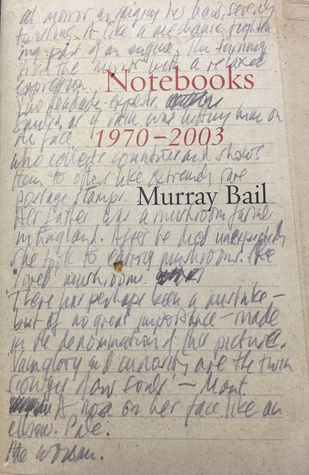
My second book is actually called a notebook – Notebooks 1970-2003 (2005) – and it’s by Murray Bail. I bought it because I like Bail and was intrigued by this notebook form, but I haven’t read it yet, either. It has just two parts: London June 1970-November 1974 and Sydney September 1988-November 2003.

It is more spare than Farmer’s and Garner’s books, but that in itself provides insight into him, as well as its content sharing what he’s observing, reading, thinking about. Here’s something quite random:

Strolling from one picture to another in art galleries, even commercial ones, I am assailed by literary ideas which beg to be resolved.
Book cover

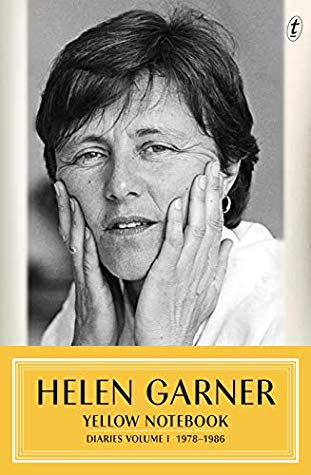
And finally, the book – or books – that inspired this post, Helen Garner’s first two volumes of her diaries, Yellow notebook: Diaries Volume I 1978–1986 (my review) and One day I’ll remember this: Diaries Volume II 1987–1995. Interestingly, the first one is called “notebook” and “diaries” while the second one is just “diaries”. I am including them here because the content, though arranged by year, looks like a collection of snippets, rather than a traditional diary.

In my review of volume 1, I focused on Garner’s writing about other writers, such as Elizabeth Jolley. In volume 2, she mentions other writers again, of course. One of these is – yes – Alice Munro, whom Lisa says Farmer also mentions. Here’s Garner:

Alice Munro is deceptively naturalistic. All that present tense, detail of clothes, household matters, then two or three pages in there’s a gear change and everything gets deeper and more wildly resonant. She doesn’t answer the questions she makes you ask. She wants you to walk away anxious.

Anyone who knows Garner and/or Bail will know that they were married (1992-2000) during the periods covered by their “notebooks”, and Bail certainly appears in Garner’s. But, more on that when I review it.

Why read these notebooks?

For me it’s because although, fundamentally, the text is the thing, I do think that understanding something about the writer can enhance what we get out of our reading.

Garner’s notebooks are a perfect example, because she writes much about what she thinks it worth writing about and what sort of writing she strives for. She wants, for example, to understand “what people do to each other”, and she writes of striving to let “the language tell the story”, and of “trying to trim adjectives without losing the sensuous detail they afford”. Of V/Bail, she admires “the bright freshness of his writing, its muscle, its dazzling turns. Carved free of cliché. Scrubbed till it hurts.”

There are many reasons for reading these notebooks, but another big one is discovering what our favourite writers read and what they think about what they are reading, as Lisa shares from Farmer. Here is Bail, being his spare self:

Emerson’s ‘Self reliance’: line by line, blow by blow.

I remained seated and immediately read through it again.

There is also just the joy of reading their writing. These notebooks are full of insights and descriptions that make you stop, but if I start sharing them, I’ll never stop. Instead, I’ll end with Farmer from near the beginning of her book. She’s writing about her “new phase of writing”:

This new writing: I want it to be an interweaving of visual images–more open, loose and rich, and free of angst. And if I keep a notebook this time …

Have you read any writer’s notebooks?
Monday musings on Australian literature: Novelistic re-imaginings

Years ago I read a Guardian article titled “Top 10 novels inspired by Shakespeare”. Written by Sally O’Reilly, it started with “Shakespeare famously customised existing plots when writing his plays, and added to them an acute perception of human experience which gave them universal significance.” I thought, then, that it might be fun to share a few Australian novels that customise or are inspired by existing plots from well-known works. There are many, of course, because it is a popular thing to do, so I just plan to get the ball rolling from some of the books I’ve reviewed here, and then throw it to the rest of you to share those you’ve read, Australian and otherwise.

Janette Turner Hospital, Orpheus lost

When I started thinking about this topic, I immediately thought of relevant books I’ve read over the last couple of decades, like Jane Smiley’s One thousand acres (Shakespeare’s King Lear), Lloyd Jones’ Mr Pip (Dickens’ Great expectations), and, of course, Jean Rhys’ The wide Sargasso Sea (Charlotte Bronte’s Jane Eyre). None of these are Australian, however, but they might clue you into the challenge I had in titling this post, because “re-imaginings” come in many forms. Examples include retelling a story from a different perspective, setting the story in a different place and time, and providing prequels or sequels to a story. Some stick closely to the original story and characters while others are more in the “loosely inspired” or “loosely based on” category. The variations are endless.

Why do writers do this? There’s probably a different answer for every writer, but some reasons do seem to recur. One is the desire to tell a story from a different perspective, such as, for example, a feminist one to redress the problematic views of an earlier time. Another is to bring a story that the writer thinks has something important to say to a modern audience. We don’t always know exactly why writers decide to do this, but, like most readers, I like to have a guess.

And yet, I have to admit that I tend to be anxious about them. Do I know the original, and if not, should I read it first? What if I don’t want to read it first? Should I still read the re-imagining. If I do know the original, will I remember it well enough to understand the author’s intentions? More often than not, it works out fine, whether I’ve read the original or not – but I never learn my lesson, and next time, I go through it all again.

Mirandi Riwoe, The fish girl

Anyhow, here is a random few that I’ve reviewed on my blog. I’m listing them alphabetically by author. I did consider trying to categorise them – but decided that would take me down a rabbit-hole!

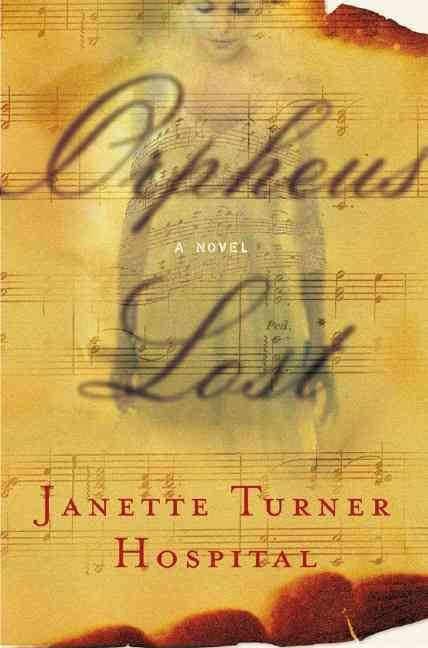
  • Janet Turner Hospital’s Orpheus lost (2007) (my review): reimagines the Orpheus story, with a feminist perspective, making the woman the would-be rescuer.
  • David Malouf’s Ransom (2009) (my review): re-visions the section of the Iliad in which Priam visits Achilles to ask for his son’s body back. Malouf said he wanted to suggest a new kind of human, non-heroic consciousness, by having Priam “do something extraordinary”.
  • Mirandi Riwoe’s The fish girl (2018) (my review): a “post-colonial response” to Somerset Maugham’s short story “The four Dutchmen”. She gives the girl a backstory, and explores it from the perspective of the colonised, particularly colonised young women. She shows that young women were pawns in both the hands of colonial powers and of their own men.
  • Roslyn Russell’s Maria returns: Barbados to Mansfield Park (2014) (my review): an imagined sequel to Jane Austen’s Mansfield Park, in which Russell redeems the banished adulteress Maria Bertram and “runs with” the hints regarding slavery in Austen’s novel.
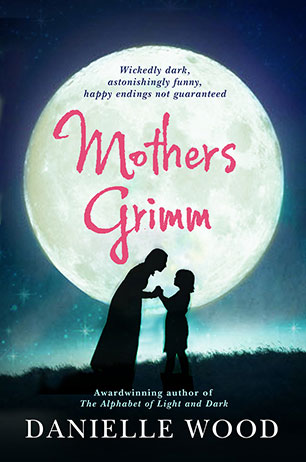
  • Danielle Wood’s Mothers Grimm (2014) (my review): re-visions some Grimm Brothers’ fairytales – “Rapunzel“, “Hansel and Gretel“, “Sleeping Beauty“, and “The Goose Girl“ – to reflect on and question contemporary motherhood.

Geraldine Brooks’ March (2006), which I read before blogging, is another well-known Australian example. She takes the absent father from Little women, Mr March, and creates story about him, focusing on his role in the Civil War.

Danielle Wood, Mothers Grimm, book cover

Not surprisingly, classics (in both senses of the words), myths and fairy-tales feature strongly in these re-imaginings because they provide a springboard that doesn’t have to be explained to the reader. The exception, in my list, is Riwoe’s The fish girl which takes a Somerset Maugham short story. Maugham is well-known, of course, but not necessarily the short story used here. We could, however, call it the exception that proves the rule, in that in the end these works do need to stand on their own, with the original work adding depth for those who know it, rather than being a prerequisite.

What do you think? And, have you read novelistic re-imaginings? Do you like them, and why or why not? We’d love to hear from you.

Monday musings on Australian literature: 2021 Mark and Evette Moran Nib Literary Award shortlist

Once again I am using my Monday Musings post to make an awards announcement, though I prefer not to. However, I am breaking my rule-of-thumb so soon again for a few reasons: I spent too much time on yesterday’s Living under Covid-19 post leaving less time for today’s post; I have a zoom Tai Chi class this evening; and, the Mark and Evette Moran Nib Literary Award shortlist was announced today. I hope this doesn’t disappoint those of you who enjoy my more usual MM posts (however you define that), but it’s the best I have for you today! It has inspired a future MM post, but you’ll have to wait to see what that is.

Now, you may remember that the longlist for this year’s Nib award was a very long one – 18 titles. I wondered how they were going to whittle it down, and to how many. Before I share their decision, I’ll remind you that this award celebrates “excellence in research and writing”. It is not limited by genre, though given the research focus, nonfiction always features heavily.

Wonderfully, all shortlisted authors automatically win the Alex Buzo Shortlist Prize, of $1000, each. So, a big congratulations to them. And now …

The shortlist

Book cover
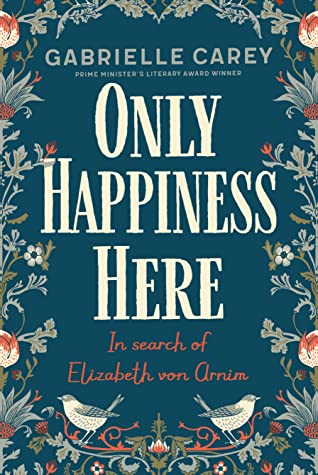
  • Gabrielle Carey‘s Only happiness here: In search of Elizabeth von Arnim (biography/memoir) (on my wishlist) (Brona’s review)
  • Kate Holden’s The winter road: A story of legacy, land and a killing at Croppa Creek (nonfiction/environment)
  • Ramona Koval’s A letter to Layla: Travels to our deep past and near future (nonfiction)
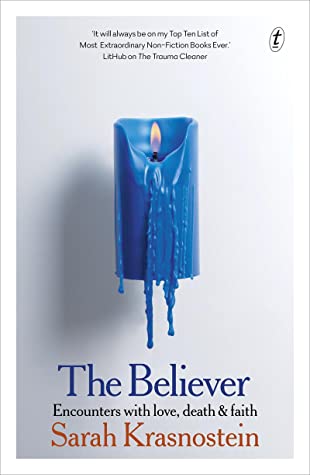
  • Sarah Krasnostein’s The believer: Encounters with love, death & faith (nonfiction/religion) (on my TBR)
  • Tim Olsen’s Son of the brush (nonfiction/memoir)
  • Luke Stegemann’s Amnesia Road, landscape, violence and memory (nonfiction/history) (Janine’s review)

Unfortunately, only one of the five books from the longlist that I had on my TBR – I identified four in my longlist post, and bought another since – made it through. However, that one l will definitely read this year, whether it wins or not.

Head judge Jamie Grant said that

This year’s Nib shortlist has been chosen from the largest and most diverse field that the prize has yet known. There are biographies, true crime stories, philosophical meditations, and personal memoirs among the shortlisted books, a variety the judges hope will include as many different readers as possible.

It certainly was diverse in terms of content, and in terms of author gender, but it could be more diverse regarding author background. I wonder if the lack of diversity in this aspect is due to authors not being aware of this prize. Hopefully, posts like this will help improve its visibility.

The judges for the 2021 award are Katerina Cosgrove (author), Jamie Grant (poet and editor), and Lee Kofman (author and editor).

Finally, I should add that there is a People’s Choice prize, which is now open for voting. It is worth $2,500, and all who vote will go into a draw to win a Nib Award prize pack containing all six of this year’s shortlisted books and $100 voucher from Nib Award community partners, Gertrude & Alice Bookstore Cafe. You can Cast Your Vote here!

The overall Winner ($20,000) and the People’s Choice Prize will be announced on 24 November.

Many of you commented on the longlist … any further thoughts now?

Monday musings on Australian literature: Supporting genres, 4: Literary nonfiction

Continuing my little Monday Musings sub-series on “supporting” genres, I’m turning next to a rather “rubbery” genre, literary nonfiction. It is tricky to define – and partly for that reason, it is not obviously well supported.

Literary nonfiction goes by a few other names including creative nonfiction and narrative nonfiction. This last one provides a bit of a clue to its definition, which is that it generally refers to non-fiction writing that uses some of the techniques of fiction, particularly, but not only, in terms of narrative style. Wikipedia defines it as “a genre of writing that uses literary styles and techniques to create factually accurate narratives.” It quotes Lee Gutkind, who founded Creative Nonfiction magazine:

“Ultimately, the primary goal of the creative nonfiction writer is to communicate information, just like a reporter, but to shape it in a way that reads like fiction.”

In other words, it aims for a prose style that is more entertaining (but not at the expense of fact.) In my review of Anna Funder’s Stasiland, I wrote that she “uses some of the literary techniques – relating to structure, voice and language – more commonly found in fiction to tell her story”.

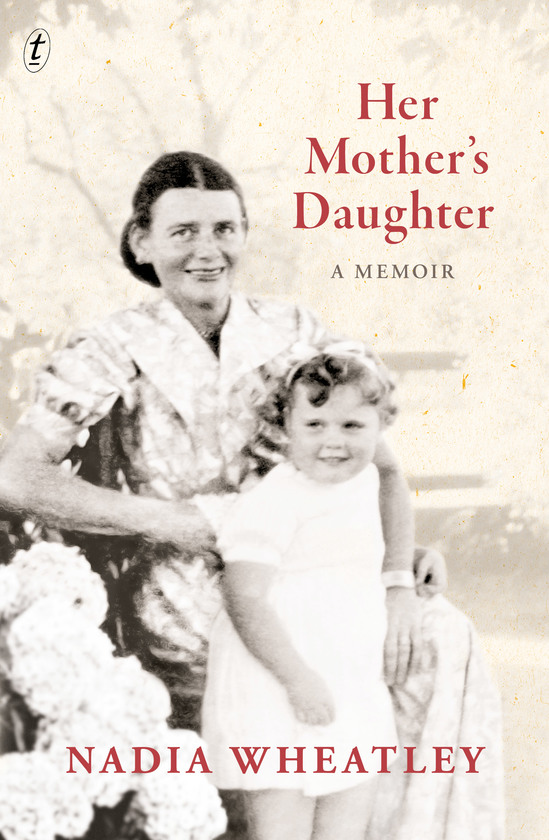
Well-known Australian writers in this “genre” include Helen Garner, Chloe Hooper, Anna Krien, Anna Funder and Sarah Krasnostein, all of whom I’ve read. It is a grey area, though, and I suspect each of us would draw the line at different places. However, I would include essay collections by Fiona Wright and Maria Tumarkin, and many hybrid memoir/biographies, like Nadia Wheatley’s Her mother’s daughter (my review)? Historians who write for general audiences rather than academia might also be included. I’m thinking here of Clare Wright and Inga Clendinnen, as possibilities. What do you think?

Prizes

For some genres – literary fiction and crime for example – awards/prizes are a major source of support (in terms of money and recognition) but this is less so for literary nonfiction.

Anna Funder's Stasiland bookcover

Back in 2004, Anna Funder’s Stasiland (my review) won the Samuel Johnson Prize for Nonfiction. Now renamed the Baillie Gifford Prize for Non-Fiction, it is, says Wikipedia, “an annual British book prize for the best non-fiction writing in the English language”. Not surprisingly, winners include works from this literary nonfiction “genre”. Another winner I’ve reviewed here (though it’s not Australian) is Helen Macdonald’s H is for hawk (my review). Australians have not featured highly in this award.

In Australia, several of the state awards include a nonfiction category, and these have been won by literary nonfiction, though they compete with other forms of nonfiction like histories, biographies and other forms of life-writing, essays, and so on.

Major Australian Nonfiction Literary Prizes

None of the awards listed here are specifically for “literary nonfiction” but these are awards which may be won by such books.

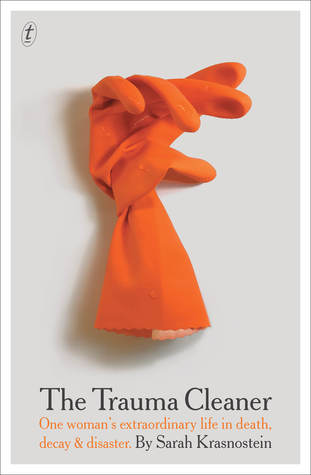
Sarah Krasnostein, The trauma cleaner

Also relevant are awards that are not “specifically” nonfiction:

Nadia Wheatley, Her mother's daughter
  • Mark and Evette Moran Nib Literary Award: this award for “excellence in research” and “in writing” has been won by books in this genre, like Helen Garner’s Joe Cinque’s consolation (2005) and Nadia Wheatley’s Her mother’s daughter (2019).
  • Stella Prize: while this multi-genre/multi-form prize has more often been won by fiction, nonfiction – and particularly literary nonfiction – does feature in its long- and shortlists. Rebecca Giggs’ Fathoms, for example, was shortlisted in 2021.

But, is there more?

The issue, though, for writers is what support do they get when they come up with an idea? Are the sorts of fellowships, grants and writer’s residencies that fiction writers can access also around for nonfiction writers? Well, yes, there are, such as:

  • Neilma Sidney Literary Travel Fund is an unusual award that is open not just to writers but also to “literary sector workers”. It recognises the importance of travel to writing and literary careers. Awardees have included writers researching nonfiction topics – and, despite COVID, it is still being offered, with a round being made in June this year. To give some examples, in 2018, the aformentioned Rebecca Giggs received a grant for expenses related to a writing residency at the Rachel Carson Centre for Environment and Society in Munich, Germany. And, in November 2019, Tamara Lazaroff received some funds to research her experimental narrative non-fiction memoir Hermit girls on De Witt Island, Tasmania. 
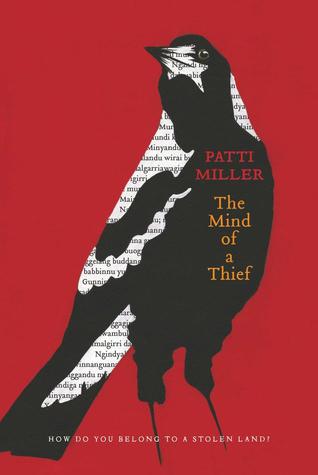
  • Varuna Writers House Residencies are open to “committed writers from all genres”. With around 160 residencies a year, the alumni is extensive, but they include Gail Bell whose The poison principle (on my TBR) won the 2002 NSW Premier’s Prize for Non-Fiction and Patti Miller whose complex memoir, The mind of a thief, was longlisted for the 2013 Stella Prize.

There are more, but these two provide a good start.

Do you read literary nonfiction? If so, would you care to share some favourites?

Previous supporting genre posts: 1. Historical fiction; 2. Short stories; 3. Biography

Monday musings on Australian literature: the Australian 9/11 novel

With the 20th anniversary of 9/11 having been commemorated on the weekend, I thought I might explore how 9/11 affected – if at all – Australian fiction. Before I start, though, I have two provisos: one is that my focus will be fiction, not literature, or culture more widely; and two is that, like many of my Monday Musings posts, this will not be a comprehensively researched post, but one intended to throw out some ideas that we all might like to think and share our ideas about.

So, here goes, starting with …

What, if anything, is the 9/11 novel?

I didn’t find a definitive answer, but I’d say the “genre” encompasses novels which speak directly of 9/11 and those which are (or which seem to be, even) inspired by it.

Arin Keeble, from Nottingham Trent University, discussed these novels in The Conversation back in 2016, in an article titled “Why the 9/11 novel has been such a contested and troubled genre”. Keeble discusses the intense debate that these novels engendered, including the concern by some that the focus on 9/11 has “undercut the complex prehistories and aftermaths of 9/11, giving it inflated importance in the world narrative”. He notes that the novels that came out around 2006/7, by Don DeLillo, Claire Messud, Jay McInerney and Ken Kalfus, all explored the event through marriage and relationship narratives. He quotes from a critique by Pankaj Mishra, who wondered whether we are “meant to think of marital discord as a metaphor for post-9/11 America?” Keeble writes that Mishra and others criticised these novels ‘for their “failure” to engage with otherness and the geopolitics of 9/11’. Other critics and commentators weighed in, disagreeing. Read the article – it’s short – if you are interested.

The point that Keeble makes is that, regardless of how “polarised” the debate became, the impact was to ascribe “great importance to the 9/11 novel” and, as a result, to reinforce “the idea of 9/11 as a defining moment”. Writers like Zadie Smith, however, saw this emphasis on 9/11 as an example of “American exceptionalism”.

Other novels did come out with a more political and/or international bent, like Mohsin Hamid’s powerful The reluctant fundamentalist, but marriage and relationships are still at their centre, and they “continue to explore the way privileged Americans absorb and respond to trauma”. Keeble concludes on a book that he believes most aligns with Zadie Smith’s views, Thomas Pynchon’s Bleeding edge which “goes the furthest in challenging the singular importance attached to 9/11 in its intertwined historical narrative, weaving in the significance of the collapse of the dotcom bubble in 2000 and a history of the internet’s transition from an anarchic to a completely corporate space”.

I have read several non-Australian books “inspired” by 9/11, from Don DeLillo’s Falling man (2007) and Jonathan Safran Foer’s Extremely loud and incredibly close (2005) to Ian McEwan’s Saturday (2005) and the aforementioned The reluctant fundamentalist (2007). Each is quite different, but Hamid’s is particularly memorable because of its point of view and the tone he sustains throughout.

Unfortunately, none of this furthers my 9/11-in-Australian-fiction topic. My excuse is that it was in The Conversation and it provides a good introduction.

And, in Australia?

However, some Australian novelists have contributed to the genre. This 2010 article published in JASAL by Jen Webb sounds interesting, from its abstract:

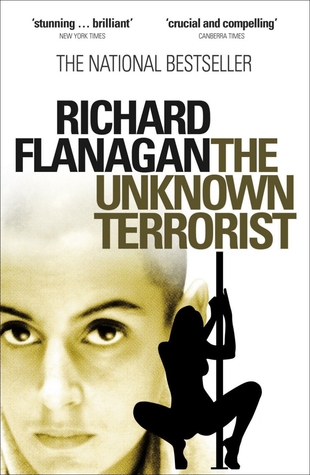
Australian fiction is, arguably, as diverse as the fiction of any other culture or era. But in a globalised world, though the stories we tell may remain inflected by the local context, they will necessarily be informed by transnational relations and geopolitical events. Like writers in the USA, UK, Afghanistan and elsewhere, some Australian novelists have taken arms against a sea of troubles, and produced work that directly and consciously engages that new genre, the post September 11 novel. Only a small number of Australian novels have been published in this genre – perhaps inevitably, given our distance from the scene – and they can be read as relying on the familiar features of the thriller, the detective, or the citygrrl genres that readers find attractive. However, I will suggest that they do more than this. In a reading of Andrew McGahan’s Underground, and Richard Flanagan’s The unknown terrorist, I will discuss the ways in which a very local ‘accent’ is coloured by broader forces, and what contributions we can offer, here at the foot of the world, to the ongoing conflicts and human rights abuses in the hemisphere above us. 

Regrettably, I don’t know what ways and contributions he discusses, so we’ll just have to guess. Meanwhile, I have read Flanagan’s novel, and will throw two other novels into the mix, though they’re not set in Australia, Janette Turner Hospital’s Due preparations for the plague (2003) and Orpheus lost (my review) (2007).

Richard Carr, in ‘”A world of … risk, passion, intensity, and tragedy”: The post-9/11 Australian novel’ (Antipodes, 23 (1), June 2009), mentions the novels by Hospital, Flanagan (2006) and McGahan (2006), but adds two I didn’t know, A.L. McCann’s Subtopia (2005) and Linda Jaivin’s The infernal optimist (2006). He says that all these novels:

entered a world attuned to the destructive potential of the terrorist and wary of the terrorist desire to wreak havoc.

In fact, the terrorist as a symbol of a New Australia defined against an older, safer country is a recurring thematic pattern.

Carr discusses the novels, individually, and, while they are all different, they express some commonalities regarding our “contemporary obsession with terrorism”. To simplify muchly, these include fear of other (often encouraged by government) and lying about other, which result in actions like the scapegoating or oppression of innocent people and increasing reduction in liberty.

Carr also draws some broader conclusions – remember he was writing in 2009 – that I found interesting, and still relevant. He proposes that this obsession

sublimates long-standing sources of guilt and fear: the taking of the land from its rightful owners, the cruelty of the founding penal system, the inhumanity of the treatment accorded Aborigines into the present-day. Whatever the reason … Australian has followed America’s lead in assigning national security its highest priority and identifying the terrorist as the primary threat to that goal.

Do you have any thoughts about this and/or the 9/11 novel?

Monday musings on Australian literature: Islands in Australian literature

“No man is an island” wrote John Donne, recognising, to put it very simply, that we are better together than alone. Right now, Australians are experiencing “island-ship” in multiple ways, because not only are we an island geographically, but also practically, given travel in and out is extremely limited. Moreover, many of us on the eastern seaboard are “islands” in the spiritual/emotional sense, since we are in lockdown and isolated from family and friends. This seemed like the perfect opportunity to write a post about islands, given, on the positive side, dreaming about islands has long conveyed a lovely sense of escape and peace.

These thoughts were inspired by a blog post link sent to me a few days ago by a friend and reader of my blog. It was on best books about islands in literature. Islands can be powerful places and metaphors (à la Donne) in literature, so I thought it would be interesting to look at some Aussie island-set books.

The “best books” bloggers name a few reasons islands make good subjects. For example, islands offer an opportunity to observe society in miniature, where you can “encounter communities at their most intense and intricate”. They also say that “islands are perfect settings for origin stories: places where characters can be formed before moving into the larger and often hostile world”.

Randolph Stow, To the islands

They mention “fabulist” stories about islands, and stories about island summers (and the ensuing fun and freedom, presumably!) In children’s literature, “islands are playgrounds or places ripe for adventure”, but islands can also be the setting for “stark, survivalist fiction”. They name YA novel Geraldine McCaughrean’s Where the world ends, but surely William Golding’s Lord of the flies is the most obvious example?

In a nutshell, I’d say that islands tend to function as either places of exile and isolation (forced or chosen) or places of escape (from problems elsewhere and/or to freedom.) These islands can be physical places and/or metaphorical ones.

Selected Aussie island-based books

  • Thea Astley’s The multiple effects of rain shadow (1996) (my review): Set on Northern Queensland’s Palm Island, which was, in the late 1920s to 30s, used as a dumping ground for Indigenous Australians deemed to be “problems”, the novel is based on an historical event in which the white superintendent, grieving over at the recent death of his wife, runs amok, setting fire to buildings (including his own home in which his children were sleeping). 
  • Peggy Frew’s Islands (2019) (Bill’s review): Set on Phillip Island east of Melbourne, an island I have in fact visited and which, apparently has been important to a few generations of Frew’s family. For her, I understand, the island means freedom, however, in the novel, I suspect the island has a more complex role as being, also, a place of isolation.
  • Ben Hobson’s Snake Island (2019) (Theresa’s review): Described as a literary thriller, this book is about a father’s sense of responsibility for a son who has behaved badly. Nothing I’ve read about it explains the “island” of the title. Anyone? It is set in rural Victoria so I’m guessing the title is symbolic or metaphorical, but I don’t know.
  • Ion L. Idriess’ Isles of despair (1947) and The wild white man of Badu (1950): These two novels, set on islands in northern Australia, are historical fiction written by one of Australia’s most popular mid-twentieth century writers. Isles of despair, according to Wikipedia, is based on “the true story of Barbara Thomson, a white woman who was the sole survivor of a shipwreck and was raised by Coral Sea islanders, before being rescued in 1849″, while The wild white man of Badu is about two convicts who escape from Norfolk Island and end up on Torres Strait’s Badu Island.
  • Heather Rose’s Bruny (2019) (my review): About Tasmania’s Bruny Island, this is trickier to classify in terms of traditional island literature, except that Bruny’s character as a place of beauty and escape is being threatened by development. It is a political novel, and Bruny is seen as the thin end of the wedge for Tasmania, and …
  • Jock Serong’s The burning island (2020) (Lisa’s review): Another work of historical fiction, Serong’s novel is based on an actual shipwreck, the Britomart, which foundered in 1839 off Tasmania’s Preservation Island. In terms of our island theme, a review in The Sydney Morning Herald says that “Preservation Island’s community is depicted as an embattled refuge from the demands of religious evangelists and voracious government paternalism”, so, again, an isolated place, but one offering some hopes of freedom?
  • ML Stedman’s The light between oceans (2012) (Janine’s review): This lighthouse-on-an-island novel was an international bestseller. I saw the movie, but haven’t read the book. It’s about a decision a couple makes which can be contained on an island (off Western Australia), but when they return to the mainland those decisions – those secrets – must face reality. Many bloggers reviewed this but I’ve chosen Janine’s because she confronts the island issue: “The setting in a lighthouse on an island is important too.  Not only does the mechanics of the plot hang on the logistics of infrequent contact between the lighthouse and the mainland, but the emotional and ethical question at the heart of the book relies on isolation as well.”
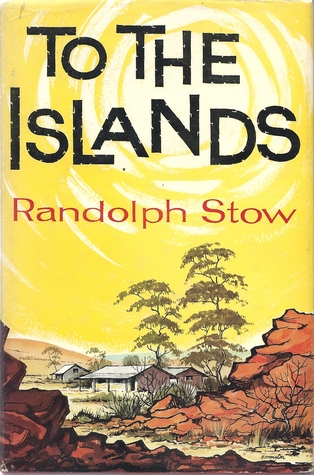
  • Randolph Stow’s To the islands (1958) (Kim’s review): An Australian classic set in northwest Australia that I’m embarrassed to say I haven’t read. However, as far as I can tell, the “islands” in this book are “symbolic” or “metaphoric” in that, says Suzie Gibson in The Conversation, they represent “a world outside one’s knowledge and body” to which we should be looking.
  • Adam Thompson’s Born into this (2021) (my review): Thompson is from the island of Tasmania, but many of his stories are set on islands off this island, and that’s why I’ve included it here. Some of the stories are about escape and isolation, some about caring for country, some about both – and more.
  • Lucy Treloar’s Wolfe Island (2019) (Theresa’s review): An Australian book set on an island of the USA’s northeast coast, this novel seems to be a quintessential island novel about escape and sanctuary, physical and emotional.

And now, of course, over to you to tell us about your favourite island books, Aussie or otherwise.

Monday musings on Australian literature: 2021 Mark and Evette Moran Nib Literary Award longlist

I only occasionally use my Monday Musings post to make awards announcements. Today is one of those occasions, because the Nib Literary Awards longlist was announced today and I did want to share it, as it’s one of Australia’s quieter but yet interesting awards.

I have written about it before and in that post you can read about about its origins and intentions but, in a nutshell, it celebrates “excellence in research and writing”. It is not limited by genre, though given the research focus, nonfiction always features heavily.

The Nib, which celebrates its 20th anniversary this year, is managed by Sydney’s Waverley Council. It is, according to the email announcement I received, the “only major literary award of its kind presented by a local council”. Whether you like awards or not, this represents an impressive and meaningful commitment to Australia’s literary culture, wouldn’t you say?

Anyhow, the judges for the 2021 award are Katerina Cosgrove (author), Jamie Grant (poet and editor), and Lee Kofman (author and editor). They worked their way through 150 nominations, with their judging criteria being “high literary merit, readability and value to the community”.

The longlist

Book cover
  • Bill Birtles‘ The truth about China: Propaganda, patriotism and the search for answers (nonfiction/political)
  • Tanya Bretherton’s The husband poisoner: Suburban women who killed in post-World War II Sydney (nonfiction/true crime) (Kim’s review)
  • Gabrielle Carey‘s Only happiness here: In search of Elizabeth von Arnim (biography/memoir) (on my wishlist) (Brona’s review)
  • Alison Croggon’s Monsters: A reckoning (nonfiction/memoir) (on my TBR)
  • Sarah Dingle’s Brave new humans: The dirty reality of donor conception (nonfiction/science)
  • Richard Fidler’s The golden maze (nonfiction/history)
  • Tim Flannery’s The climate cure: Solving the climate emergency in the era of COVID-19 (nonfiction/environment) (on my TBR)
  • Anthony Ham’s The last lions of Africa: Stories from the frontline in the battle to save a species (nonfiction/environment)
  • Kate Holden’s The winter road: A story of legacy, land and a killing at Croppa Creek (nonfiction/environment)
  • Zoe Holman’s Where the water ends: Seeking refuge in Fortress Europe (nonfiction/refugees) (Lisa’s review)
  • Ramona Koval’s A letter to Layla: Travels to our deep past and near future (nonfiction)
  • Sarah Krasnostein’s The believer: Encounters with love, death & faith (nonfiction/religion) (on my TBR)
  • Bri Lee’s Who gets to be smart: Privilege, power and knowledge (nonfiction/sociopolitics)
  • Mark McKenna’s Return to Uluru (nonfiction/racial politics) (on my TBR) (Janine’s review)
  • Tim Olsen’s Son of the brush (nonfiction/memoir)
  • Dymphna Stella Rees’ A paper inheritance (nonfiction/biography)
  • Rebecca Starford’s The imitator (fiction)
  • Luke Stegemann’s Amnesia Road, landscape, violence and memory (nonfiction/history) (Janine’s review)

At 18 titles, this is a long longlist. Eleven of the 18 are by women, but beyond that it’s not a particularly diverse list in terms of authors. It would be great to see that change. However, thinking of “value to the community”, it does encompass several of our important contemporary political issues including the environment (climate change and species extinction), refugees, racial politics and difficult histories. Four books fall into the life-writing category. There is only one work of fiction, which is probably why very few of these books have been reviewed by the bloggers I follow. We are mostly a fiction-focused lot!

The shortlist will be announced in late September, with the overall Winner ($20,000) and the People’s Choice Prize being announced in November.

Do you have any thoughts on this list?

Monday musings on Australian literature: a “grim continent”?

These are grim times, so you might have assumed that our current predicament is today’s topic, but no, we are going back to 1929. My, if there was a grim time, 1929 heralded such a one. However, it’s not the Depression I’m going to either. In fact, the article I found in Trove, which inspired this post, was written in July 1929, and published in Adelaide’s The Advertiser on 31 August, that is, before the big crash.

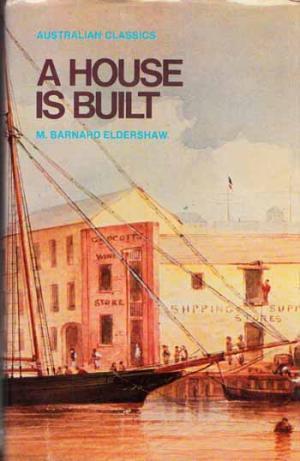
What, then, was the grim continent – and why? You’ll have realised, given this is my Monday Musings on Australian literature, that it’s Australia – and you’d be right. The article was written by “a Special Correspondent London” and it discusses three recently published novels: James Tucker’s The adventures of Ralph Rashleigh, M. Barnard Eldershaw’s A house is built, and Katharine Susannah Prichard’s Coonardoo

As an aside, would you believe that the authors of these books were not named in the article. Moreover, the first book’s author, whom I didn’t know so had to go looking, wasn’t named in an article announcing its serialisation. I’ve said it before and I’ll probably say it again: the author is the important thing! Books don’t appear out of thin air. They come out of darned hard work, and the author should be noted and remembered.

Anyhow, back to the “grim continent”. The article focuses mostly on the outback, so I’ll deal first with M. Barnard Eldershaw’s urban novel, which, as many of you know, shared the inaugural The Bulletin prize, in 1928, with Prichard’s Coonardoo.

Book cover

The article commences by telling us that “because of its unusual character and the starkness of its pictures of Australian life in the convict days”, The adventures of Ralph Rashleigh was receiving the most attention by the reviewers. However, Mr. Arnold Bennett, “who reviews books in the intervals of writing them, prefers to lavish his praise on A house is built“. He wrote in the Evening Standard that Barnard Eldershaw’s book is

“beyond question, a very notable novel … an extraordinary book … a major phenomenon of modern fiction. Not one scene not three scenes, but many scenes in it are magnificent.”

Bennett apparently spent a whole column praising the book. Our Special Correspondent says:

“It is Mr. Bennett’s pleasant habit to describe with gusto the things he likes; nevertheless, the joint authors of A house is built should be gratified by such commendation from such a quarter”.

I reckon! (I do like the “describe with gusto”, and the little hint that this is perhaps not proper critic style!)

The article’s main focus, however, is a column in the Evening News by another novelist-critic, J. B. Priestley, “a sound critic of the younger school”. Priestley wrote about all three books in his column, which he headed “The grim continent”. Our correspondent wrote that he concluded his piece:

with the interesting confession that all the stories he has read about Australia and the Australian bush have succeeded in depressing him. He quoted with approval the complaint of a character in Coonardoo, that “it’s all so ugly and empty,” and added that there must be something desolating about the raw emptiness of the bush, a something not friendly to literature. 

Our correspondent, however, suggests that this sense of the bush is “an emanation of literature rather than of the bush itself”. S/he suggests that many of those who know the bush do not find it ugly, cruel and cheerless:

Mr. Priestley writes from a purely literary knowledge of Australia, and if he feels so depressed about the country, his range of reading must have been restricted to the authors who, in Marcus Clarke-Henry Lawson tradition, have emphasised the more sombre aspects of pioneering and bush life.

Book cover

S/he goes on to suggest that Priestley and his ilk could try other authors who offer “authentic” accounts of the outback, like “Mrs. Aeneas Gunn’s We of the Never Never in which the humor and beauty, as well as the tragedy of the bush are admirably brought out.” S/he also disputes the evocation of the bush in Coonardoo:

The bush, comprehending in that vague term the vast pastoral spaces of inland Australia, is far from being the perennial abode of misery and despair: a region inhabited by sullen despairing people who are for ever yearning (in the words of the woman in “Coonardoo”) to “get away from it all.” 

S/he romanticises, somewhat, the “folk” who “fight the stern and sometimes losing battle with Nature”, arguing you can’t help but “admire their courage, cheerfulness, and steadfastness of character”. We don’t know who this “special correspondent” is, or what experience they have had. However, s/he does make the point that the “bush,” is not all of Australia, that there are “millions of people living in the Australian towns and cities” who know little or nothing of the bush.  

Finally, s/he turns to “the convict tradition” which is the subject of James Tucker’s The adventures of Ralph Rashleigh, and which

survives in Australia for literary purposes only; a fading echo of old, unhappy far-off things. The bad old days provide excellent material for novels of the romantically historical type, or for grim pieces of literature like “The Adventures of Ralph Rashleigh.” 

S/he concludes by applauding the fact that “good Australian literary work” is being appreciated in London, but says

It is not so agreeable to find one or two sombre aspects of Australian life stressed as if they were representative of the whole. 

S/he suggests that should J.B. Priestley ever visit Australia, he would find “a land, not of grimness and gloom, but of color and sunshine”. Moreover, s/he asserts

contact with its people and conditions will provide an effective antidote to the depression with which some of its literature seems to fill him.

I’m not sure whether to laugh or cry at that.

Anyhow, I enjoyed the article for revealing that Australian literature was being read and paid significant attention in 1920s England, and for its perspective on our ongoing discussion about the “the bush” and Australian literature. There’s a defensiveness, and a romanticisation, that you often find in expats, as I presume “special correspondent” is, but s/he makes some important points too, one being a disconnect between what people were writing and/or reading, and the reality of contemporary Australian life.

For Aussie readers in particular: whether you agree or not that there was such a disconnect, do you think we have matured to the point now where there is more alignment between who we are and what we are writing?

Monday musings on Australian literature: Supporting genres, 3: Biography

Time for another in my little Monday Musings sub-series on “supporting” genres. I’ve chosen Biography for this one, since the 2021 National Biography Award winner will be announced this month.

However, I have written quite a bit about Australian biography before:

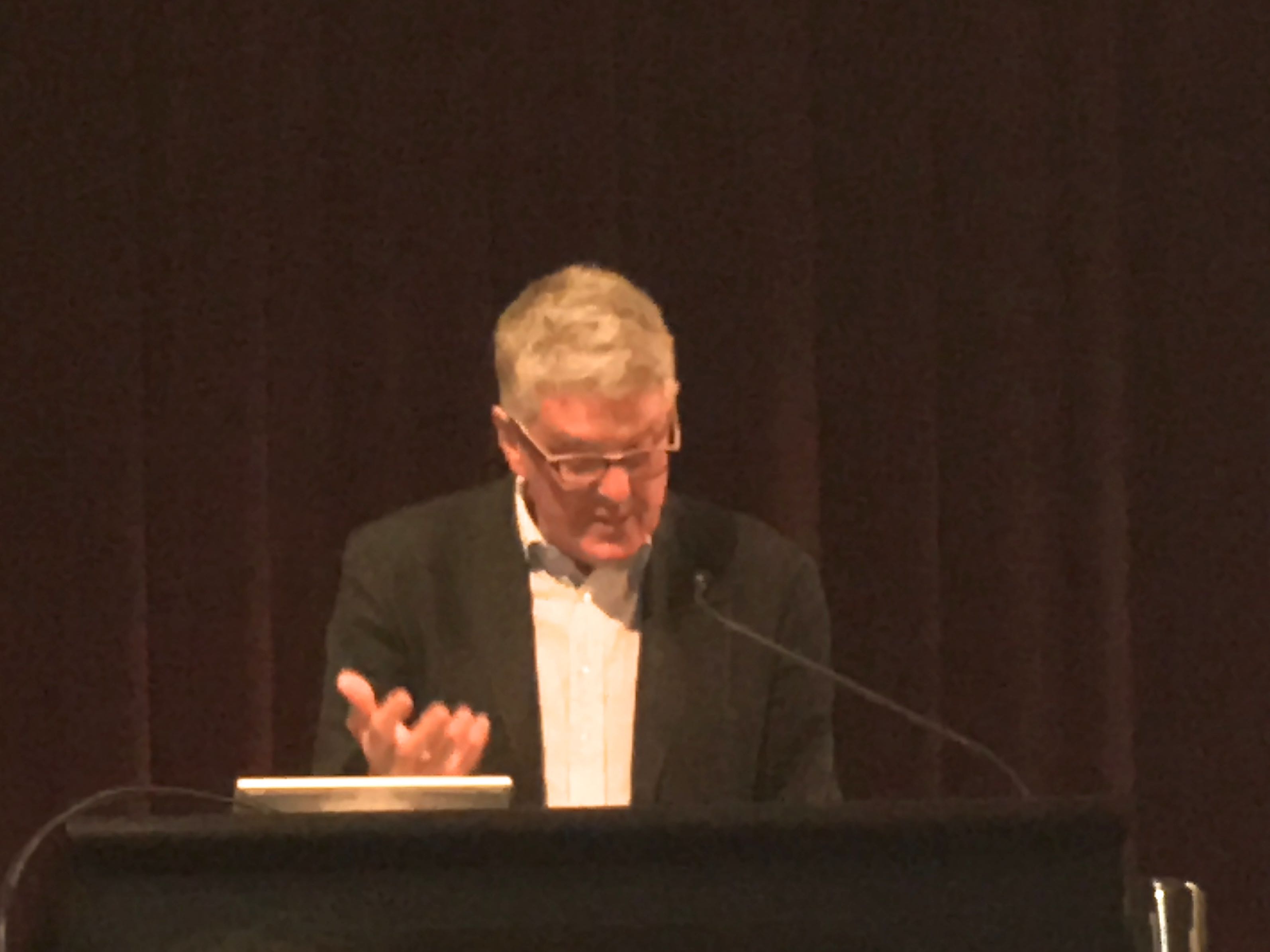
David Marr, NLA Seymour Lecture, Sept 2016

Given all this, you might think that this post is superfluous, but I figured that it’s helpful to put all these together in one post as a resource for myself (and maybe for others too?) These posts provide significance evidence for the support of and interest in biography in Australia – and they mean that the rest of this post will be a bit different to the first two “supporting genre” posts.

Definition

You may have noticed that I described the Seymour Biography Lecture as “devoted to life-writing” – and here’s the rub, because there is quite a blurring of definitions when we talk about “biography” these days. Traditionally, biography has been seen as a detailed description of a person’s life written by a third person. Autobiography, on the other hand, is the story of a person’s life, written by that person. Then there’s memoir which focuses on a particular aspect or period of a person’s life, and is written, again, by that person. All of these come under the banner of “life-writing”. The problem is that, for example, the Seymour Biography Award is called “biography” but the lectures are, in fact, broader. Indeed, the first lecture we went to was given by Robert Drewe who has written, and who thus talked about, memoir.

This is fine but the nomenclature is strange, don’t you think? Even our National Biography Award is, actually, a national life writing award. It “celebrates excellence in biography, autobiography and memoir writing” says the Award website. Interestingly, though, while all these forms feature regularly in the shortlists, traditional biographies have tended to be the winners. A recent exception was Behrouz Boochani’s No friend but the mountains.

Life-writing now

Life-writing is big business. Search online and you will find many companies offering to help you write your life story, or to write your life story for you. You will also find courses on life-writing. Daughter Gums did one a few years ago at the ACT Writers Centre taught by memoirist Benjamin Law.

The Fellowship of Australian Writers NSW (FAWNSW) has an excellent page on the subject written by Dr Rae Luckie. They quote from La Trobe University’s description of its Unit for Studies in Biography and Autobiography.

Life writing is now one of the most dynamic and rapidly developing fields of international scholarship. It includes not just biography and autobiography, but also diaries, journals, letters, and the use of life narrative in various disciplines: history, anthropology, sociology, politics, business and leadership studies, sport, and others… In addition to its high academic profile, life writing generates great interest among the general public: works of biography and autobiography sell in vast numbers.

Nadia Wheatley, Her mother's daughter

Luckie talks about changes in the field, saying that “writers whose work is included under the umbrella of ‘life writing’ have broken traditional auto/biographical boundaries”. She mentions works I read before blogging, like Inga Clendinnen’s Tiger’s eye, Helen Garner’s Joe Cinque’s consolation, and, even, Robert Dessaix’s “autobiographical novel” Night letters! While I enjoy the traditional biography, and have reviewed several here, I am not averse to reading writers who play with the form, like the hybrid-biography-memoirs I’ve reviewed (such as Nadia Wheatley’s Her mother’s daughter and Gabrielle Carey’s Moving among strangers)

The biggest change, though, is probably that academic historians are now embracing the form in a way they hadn’t previously. If you are interested in a discussion of the topic, check out this in the first issue of the Australian Journal of Biography and History. The authors comment on the fact that “there are now prizes to encourage biographical writing, lectures that feature prominent biographers, biography research centres and courses in universities, public conferences and so on.” Another interesting point they make is the significant role biography played in feminist history.

Biography – and life-writing – are now serious, as well as, marketable business. You heard it here!

Zeitgeist, or Serendipity?

Book cover

And now for something completely different. It concerns those funny coincidences which happen in the literary firmament, like when David Lodge’s Author, author and Colm Tóibín’s The master, which are novels about Henry James, both came out in 2004. What was that about?

Well, I’ve noticed another strange coincidence: the recent publication of Jennifer Walker’s Elizabeth of the German Garden: A biography of Elizabeth Von Arnim (2017), Gabrielle Carey’s Only happiness here: In search of Elizabeth von Arnim (2020) and Joyce Morgan’s The Countess from Kirribilli: The mysterious and free-spirited literary sensation who beguiled the world (2021). Many of you, I know, have heard of Elizabeth von Arnim. Her best-known works are the satirically humorous Elizabeth and her German Garden and the popular Enchanted April which was made into a successful feature film starring many of our favourite grand dames of English theatre. For those of you who don’t know her, though, she’s a British novelist who was born in Sydney (Kirribilli) in 1866, but who moved to England with her family when she was three and never lived here again. Her connection with Australia is therefore tenuous, but she was a wonderful character who moved among the biggest literary movers and shakers of her time. I devoured many of her novels, and a memoir, back in the 80s and 90s when Virago published her. Why this flurry of interest now? (Not that I disagree.)

Do you read biography? If so, care to share some favourites?

Previous supporting genre posts: 1. Historical fiction; 2. Short stories

Monday musings on Australian literature: Poetry Month 2021

I have posted on World Poetry Day, which occurs in March, several times in recent years. And I have written about Australian poetry various times, including about the Red Room Company (or, Red Room Poetry). Their vision is very simple: “to make poetry in meaningful ways”. They have initiated and supported various projects over the years, and have now come up with a new one, Poetry Month. It seems the perfect topic for another Monday Musings on poetry in Australia.

Many of you are probably aware that the US has various months dedicated to literary/humanities/justice issues, like Black History Month in February. One of these is their National Poetry Month which has been going now since 1996. I’ve often thought it would be good for Australia to emulate some of these. We do have NAIDOC Week, of course, but that could be a month, eh? Anyhow, now Red Room has initiated a Poetry Month which is exciting:

Our goal is to increase access, awareness, value and visibility of poetry in all its forms and for all audiences. The inaugural Poetry Month will be held during August 2021 with the aim of an ongoing annual celebration.

What are they doing?

A lot, in fact. They say that they have

an electrifying lineup of poetic collaborations, daily poems and writing prompts, online workshops, poetic residencies and live to live-streamed showcases, designed to engage everyone – from veteran poetry lovers to the (for now!) uninitiated.

There is a calendar. They have 8 poetry ambassadors, who are an eclectic and appropriately diverse bunch: Yasmin Abdel-Magied, Tenzin Choegyal, Peter FitzSimons, Dr Karl Kruszelnicki, Stephen Oliver, Grace Tame, Megan Wilding.

My love of reading and writing poetry is guided by a lifelong attraction to the seemingly simple and unadorned.

~ Tony Birch

Specific events are …

  • 30in30 daily poetry commissions: every day there are/will be “new original text/video poems, poet reflections and writing prompts from some of the country’s leading poets, authors, spoken word artists and playwrights”. They can be accessed on the site, and on social media (with the hashtag #30in30). Today, for example, there’s a 2-minute video from First Nations author, Tony Birch, on what poetry means to him. He talks of poems that can have new meanings each time you read them. 30in30 will include commissions from their larger Fair Trade project which involved First Nations poets from around the world.
  • Line Break: a weekly online show, on Tuesdays through August, 7pm AEST, on Facebook and YouTube, providing previews from feature poets, publishers, spoken word artists, and musicians, and more.
  • Poets in Residence: a program, supported by City of Sydney (how great is that). The poets were to be located at Green Square Library “for a period of writing, reading and performing poetry on site, engaging the general public in various ways and showcasing COS library collections”. Unfortunately, Sydney’s current lockdown has forced the postponement of this.
  • Showcases: a “raft” of live and online events across the country, including the inaugural Poetry Month Gala supported by The Wheeler Centre. Click on the Showcases link to see events from, indeed, around the country, including in South Australia and Western Australia.
  • Workshops: weekly online workshops, on Wednesday nights 7-9pm, via Zoom, catering “for all poets at all levels … anywhere in Australia”, with the topics being “stripping poetry back, breath and beatboxing, the intersection of poetry and comedy, and a special older emerging voices workshop”. They suggest a donation of $10. The workshop leaders are Sarah Temporal, Hope One, Vidya Rajan and Tony Birch.

What an exciting-sounding and diverse program.

Here is a taster … Australian of the Year, Grace Tame, with her strong 30in30 contribution, “Hard pressed”.

A little value add from me …

If you are looking for contemporary Australian poetry, you could start with two independent publishers:

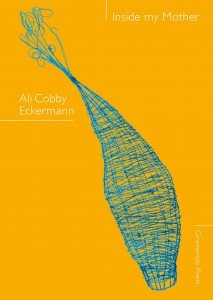
Ali Cobby Eckermann, Inside my mother
  • Giramondo, which published Jonathan Shaw’s chapbook that I reviewed recently). They have also published Ali Cobby Eckermann, Jennifer Maiden, Gerald Murnane, Gig Ryan, Fiona Wright, and so many more known and unknown to me.
  • Pitt Street Poetry, which published Lesley Lebkowicz’s The Petrov poems (my review) and Melinda Smith’s Drag down to unlock or place an emergency call, which won the 2014 Prime Minister’s Literary Award for poetry. They have also published Eileen Chong, John Foulcher, Peter Goldsworthy, Geoff Page, and Chris Wallace-Crabbe, to name some of the better known (to me) from their stable.

There is also the Australian Poetry Library, about which I’ve written before. It now contains, the website says, “tens of thousands of poems from hundreds of Australian poets”. You can read poems free online, but if you want to download and print poems, there is “a small fee, part of which is returned to the poets via CAL, the Copyright Agency Limited”. This resource is particularly geared to teaching poetry, but is available to anyone.

Lesley Lebkowicz, The Petrov Poems

If you are looking for Australian bloggers who write about poetry, try Jonathan Shaw at Me fail? I fly. This link will take you to his poetry tagged posts, of which there is now a substantial number. Also, blogger Brona (This Reading Life) is planning to support the month, so if you don’t already subscribe to her blog, do check her out if you are interested in poetry and/or in what Red Room is trying to do for Australian poetry.

Finally, you can also find poetry reviews in the Australian Women Writers database.

And now my question: do you have a favourite poem to share with us? (And do you, like Tony Birch, go back to it again and again, and find something different each time?)