Monday musings on Australian literature: Poetry Month 2022 and Verse novels

Having launched their Poetry Month in 2021 which I wrote about at the time, Red Room Company (or, Red Room Poetry) clearly felt it was successful, because they are back again this year with another Poetry Month. Its aim is to “increase access, awareness and visibility of poetry in all its forms and for all audiences”, and it will run throughout the month of August.

From what I can tell, they are following a similar plan to last year with their 30in30 daily poetry commissions, poetry ambassadors, online workshops, prizes and residencies, and more. Do check their page, which includes a link to a calendar, to find ways in which you can take part, or, simply, introduce yourself to some new poets and poems.

Meanwhile, I thought I’d celebrate the month by writing a little tribute to verse novels.

Verse novels

When I decided to write this post, I found a good introduction to verse novels at The Australian Poetry Library. However, when I checked the link I’d saved, it said “currently unavailable”. I will share what it said, but you may not be able to find it online any more. (They do still have a Facebook page.)

A verse novel tells a long and complex story with many characters, much as a prose novel would, through the medium of narrative verse. The verse may be blank verse in the manner of Shakespeare, or free verse, or (less often) formal rhymed verse of any type.

The ancient epics were verse novels, of a sort, and so were the Alexandrian epyllia such as Apollonius’ Argonautica, but the modern verse novel, like the novel itself, is a fashion that found a large audience in the nineteenth-century: Don Juan (Byron), Amours de Voyage (Arthur Hugh Clough), The Ring and the Book (Robert Browning).

Movies, paperback novels and television seem to have killed it off in the early twentieth century, but it found a strong revival after the 1970s: Another life (Derek Walcott), The golden gate (Vikram Seth) and The changing light at Sandover (James Merrill).

Notable Australian verse novelists are Alan Wearne, Dorothy Porter, Les Murray, Steven Herrick and John Tranter.

A selection of Australian verse novels
Susan Hawthorne, Limen, book cover

Wikipedia’s article on the form provides a brief history, going back to epics like Gilgamesh. After appearing to have declined with Modernism, it has, Wikipedia continues, “undergone a remarkable revival” since the 1960s-70s, and is particularly popular in the Caribbean, Australia and New Zealand. I wonder why these particular regions?

I should add, though, that verse novels do have a longer history in Australia than this later 20th century revival suggests. CJ Dennis’ The songs of a Sentimental Bloke (1915) and The moods of Ginger Mick (1916)(my post) are earlier, and very popular, examples.

Of course, I did a little search of Trove, but, given the form’s apparent recent revival and the fact that Trove is not so useful yet for recent decades, I didn’t find much. However, I was intrigued to find reference to a satirical work called Solstice, by 20-year-old Matt Rubenstein. It was shortlisted for The Australian-Vogel award (in 1994, I presume). Sen, writing in The Canberra Times, was reasonably positive, saying that “the narrative has its share of sentimental blokes as well as philosophers like the homeless Arthur, and the relationships and issues it explores are treated relevantly as well as entertainingly. It could start a verse-novel cult. Could, I said.”

I’m not sure that there’s been quite a cult, but my little list below confirms some level of ongoing popularity in Australia. But, back to Rubenstein’s Solstice, I also found through Trove that it had been adapted by the author into a play to be performed at the Adelaide Festival of Arts in 1996, with Kate Ceberano as the featured singer. That says something about the quality of the work. I note that the play is available from Ligature Digital Publishing.

Anyhow, I do enjoy a verse novel, and have reviewed several on my blog, as have some other Aussie litbloggers. Here is a selection of some of the verse novels we have reviewed on our blogs:

  • Ali Cobby Eckermann, Ruby Moonlight (2012) (my post, and Lisa’s): this is particularly interesting because it is a First Nations historical fiction verse novel. It is a moving, and generous read.
  • Lesley Lebkowicz, The Petrov poems (2013) (my post): also historical fiction, this work tells the story of the Petrov affair providing a personal perspective on a very political event.
  • Susan Hawthorne, Limen (2013) (my post): Hawthorne’s quiet yet forceful work explores women going camping, the threats and vulnerabilities that confront them, and how they navigate the lines that appear.
  • Geoff Page, The scarring (1999) (my post): Page has written other verse novels, including Freehold, which I have also read, but The scarring is particularly strong and gut-wrenching about war, the mistakes people make, and the power men can wield over women.
  • Dorothy Porter, El Dorado (2007) (Brona): Porter’s last verse novel is described by Brona as “another dark crime story with a psychological twist”.
  • Dorothy Porter, The monkey’s mask (1994) (Brona): Porter’s most famous verse novel is also a psychological crime story, and, says Brona is “gritty, exciting & passionate”. It surely qualifies now as a classic, particularly given it is taught in schools and universities. It was also adapted for a feature film.
  • Alan Wearne, The night markets (1986) (Bill): this book was highly praised when it came out, and won significant awards including the ALS Gold Medal and the National Book Council Award. Bill knew Wearne at school, and has read this book a few times “because it feels so intensely familiar”. The Canberra Times reported on its ALS Gold Medal win, saying the judges ‘were impressed by the ambition and confidence with which Wearne approached his task. The novel’s subject, political and social change in the past two decades, had rarely been approached, they said, and its verse form was “bold and exciting”‘.

Readings Bookshop has provided lists of Australian and non-Australian children’s and YA verse novels, for those of you interested in these audiences.

Do you read verse novels? And if so, care to share your favourites (Aussie or otherwise)?
Monday musings on Australian literature: on 1922: 6, Great Australian novel (again)

The things you find in Trove! As l was trawling Trove for my 1922-project earlier this year, I came across a reference to the Great Australian novel. Just one. So, I put it aside, thinking it would be a neat, quick little post for a busy week like this one. Little did I know …

Before writing this post, I thought I should do one more quick little search. Nothing much came up, except that buried in one of the few articles my search retrieved was a reference to a book titled The luck of 1825 by Horace B. Pithouse. Launceston’s Daily Telegraph (18 November), wrote that “the rough draft of the MS was originally sent for sake of a criticism to the de Garis Great Australian novel competition”. The de Garis Great Novel Competition? Ever heard of it? I certainly hadn’t.

So, I decided to do an Internet search, and up popped the Australian Dictionary of Biography (ADB) with an article on one Clement John De Garis (1884-1936). Heard of him? I certainly hadn’t.

However, he was quite a character, and you can read about him at the link on his name above. In a nutshell, ADB lists his occupations as aviator, financier/investor, novelist, produce merchant, and short story writer, and describes him as “a man of effervescent charm and superhuman energy—a ‘prince of ballyhoo'”. Born in Mildura, he got involved in the dried fruit industry and was entrepreneurial in developing and promoting the product. But, it didn’t stop there. ADB writes that his “ambitions took on a manic quality and he began to see himself as all things to all men. A self-constituted patron of the arts, he launched a Great Australian Novel Competition”. This competition was advertised in 1919 with a closing date in early 1920. Hobart’s World (3 January 1920) promoted the competition, which had three prizes (£300 for first, £150 second, and £100 third). The goal was a “really great Australian novel”; the writer had to be Australian born; and “the story must be typically Australian”, which did not mean that ‘”local color” must be that of a shearing shed, or of the thirsty tracks in the Never Never.’

A humorist named “Dip-Tin” in Western Australia’s The Moora Herald and Midland Districts Advocate (5 May 1920) promoted it in verse, and included this on the potential subject matter:

There’ll be yarns about Ned Kelly. 
And Judge Bevan, and Oenpelli— 
Bet your life! 
And be sure each central figure 
Will become a dinkum digger, 
Plus a wife. 

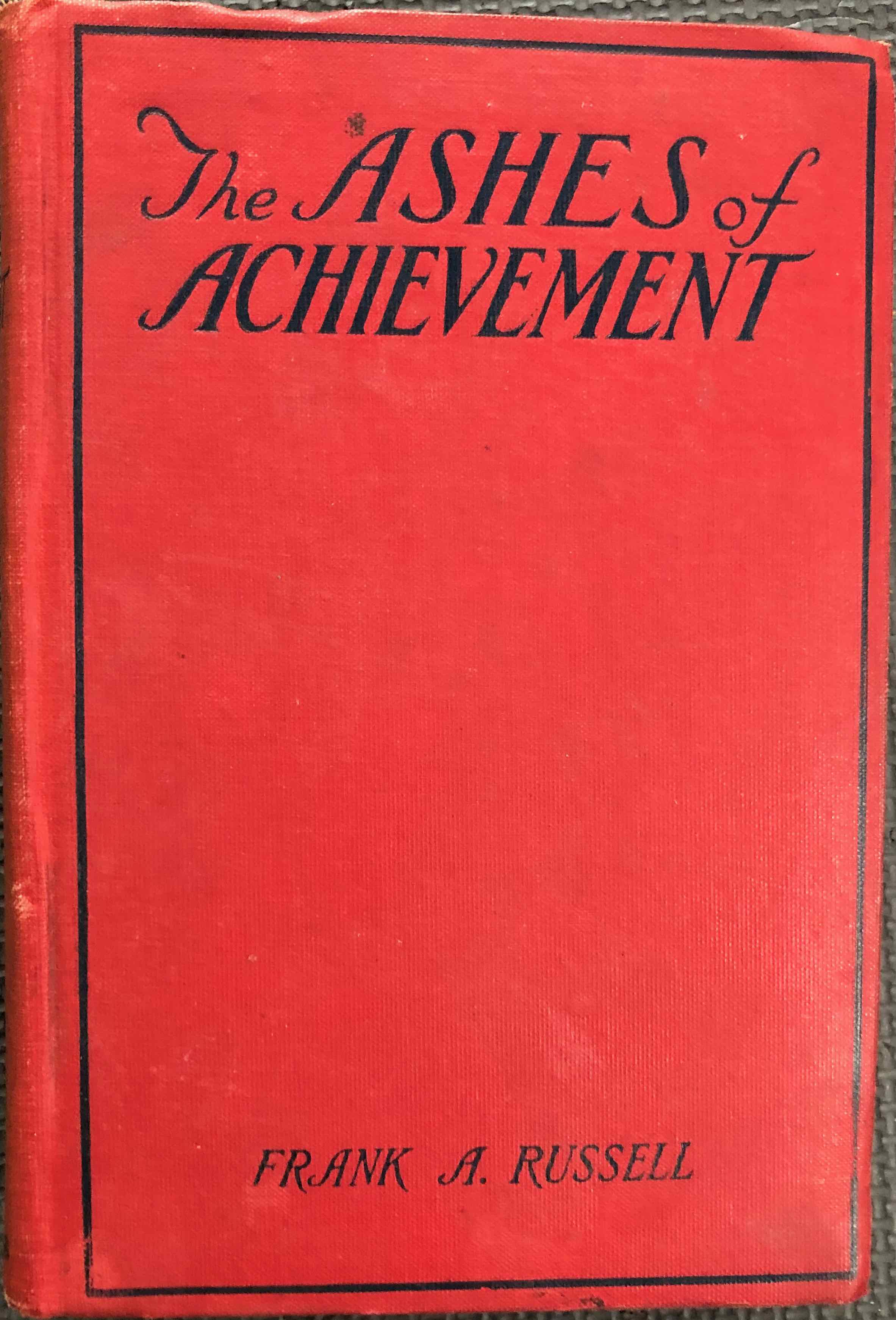
Late in 1920, the winner was announced – Frank A Russell’s The ashes of achievement. Heard of it? No, nor have I! And that’s not surprising because the reviews, overall, were poor. Take this one (with an unreadable by-line) in Perth’s The Call (31 December 1920), titled ‘When DeGaris slept! The prize Australian novel candidly reviewed. A literary “Dud” – which isn’t brilliant – and isn’t even Australian’. You get the gist. The writer critiques the book’s failure at length, exposing its weaknesses in subject-matter, characterisation and language. If you’d like to know how to thoroughly pan a book, here is a good example, and if what he (I think it’s a Hector) says about it is right, his assessment is fair enough. Hector (?) concludes that:

With the publicity that has been given it The ashes of achievement will probably be widely read. But it will not be remembered.

The Queenslander (1 January 1920) agrees with The Call, albeit with brevity:

The C.J. DeGaris Publishing Company is worthy of commendation for its courage and confidence, because the work of publishing in these days is a very expensive business, but if the remaining novels are not better than The ashes of achievement the effort to enhance the literature of Australia will not be very considerable. There is more real Australian atmosphere in a few chapters of a score of other Australian novels than in the whole of Mr. Russell’s very long and mediocre production. The test of a novel lies in its atmosphere and character studies, but while in the 30 chapters of “The Ashes of Achievement” one is continually meeting new characters, and as suddenly dropping them, there is none of any outstanding merit …

I did find one positive report – in Perth’s The Southern Argus and Wagin-Arthur Express (8 January 1920) – but it was cursory:

Under such circumstances [that is, winning this prize] one would naturally expect a good novel, and one is not disappointed. The ashes of achievement is an Australian novel, by an Australian author, and not flavored with gum leaves to make it so. It maintains the reader’s interest from beginning to the end, and will rank amongst the best of international novels.

Fair point about the “gum leaves”, but …

I’ll leave De Garis here, and will get to the article from Smith’s Weekly (16 December 1922) that inspired this post. It starts by saying that ‘about once a week in our “esteemed contemporaries,” Australian authors are adjured to write the Great Australian Novel’ and goes on, tongue-in-cheek, to explain why it’s so difficult. It’s because, for example, Australian heroes and heroines can’t match the English versions with their titles and valets, and rose-leaf skin. Further,

No British hero or heroine has to work. Readers dislike working heroes and heroines. They know all about work without reading about it. 

Smith’s writer concludes:

Instead of picturesque characters, ivy-clad ruins and dear old London, we have galvanised-iron, bank managers, kerosene-tins, gum-trees, the golden wattle-bloom, shearers’ strikes, drought, the W.C.T.U., the blue, blue sky (over-worked), the last-lady-help-but-one, Old Pardon the son of Reprieve, Clancy of the Overflow, and dear old Woop Woop.

That is all the material we have. Personally, I don’t see how we can make the Great Australian Novel out of it. 

Love it … the less said about the Great Australian novel the better, I reckon.

This was the sixth post in my 1922 series.

Previous 1922 posts: 1. Bookstall Co; 2. Reviewers on Australianness; 3. ALS Women’s night; 4. Adventure novels; 5. Art books

Monday musings on Australian literature: on 1922: 5, Art books

As I wrote in my fourth 1922-themed post, some genres and forms kept popping up in the articles I was reading about Australian literature. One was the adventure genre which I featured in the last post. That wasn’t particularly surprising, but today’s topic, art, is another matter.

However, before we get onto that, a note about by-lines. I’ve had it in mind for some time to do a Monday Musings post on by-lines. I probably will one day, but I need to do more research. One of the issues is that many of the articles I read in Trove have no by-lines, while those that do are often pseudonyms – and my, are some of them difficult to identify. There are two relevant to this post – Narrung who appears in the Sydney Mail (and Smith’s Weekly) and J. Penn in Adelaide’s The Register. I haven’t identified either of them yet, so if you know anything, please say so in the comments.

Now, onto art … I was intrigued to see such focus on writing about art, but I suppose I shouldn’t be, as the 1920s was a lively time in Australian art when Modernism, along with other exciting new styles and approaches, was taking hold.

Art in Australia

Issue no. 4

It’s not often that whole journals are reviewed these days – though there are exceptions, like the Griffith Review. I was surprised then to see how often Art in Australia was featured in 1922. The journal, which was published from 1916 to 1942, had a chequered publication history. Wikipedia explains that it had four “series”: (1) No.1, 1916 – No.11, 1921; (2) New Series Vol.1. No.1. (February 1922) – Vol.1. No.2 (May 1922); (3) Third Series No.1 (August 1922) – No.81 (November 1940); (4) Series 4, No.1 (March 1941) – No.6 (June 1942).

Two of the articles I read came from early 1922, and they discuss Issue no. 11. Penn, writing in Adelaide’s The Register (7 January), starts by saying that the introduction to the eleventh issue of this “fine literary and artistic serial … confirms an opinion frequently expressed in The Register Literary Page that the publication of such beautiful works as have emanated from the enthusiastic publishers in Sydney must … have been largely a labour of love”.  Penn says this because after this issue the new version will be a larger (newspaper-style?) format and produced less frequently.

The eleventh issue “is one of the best”, Penn says. It contains reproductions from artists like the Lindsays, Arthur Streeton, and G. W. Lambert, and literary contents from people like Lionel Lindsay, Sydney Ure Smith (the journal’s editor), Zora Cross, A. G. Stephens, and Christopher Brennan. Those of you interested in the history of Australian literature will recognise some names here like Cross, Stephens and Brennan.

The writer in Melbourne’s The Argus (21 January) also talked about this issue, but focuses on describing some of the art works produced within its pages. S/he writes, for example, that:

George Lambert is represented by his head of Miss Mollie Dangar, a pencil sketch that most critics would probably prefer to his “Bush Landscape,” reproduced in this number, though one must make liberal allowances, of course, for the loss inevitable in all coloured process work. 

The issue also includes “Red Gum Tree” by George Streeton (presumably a typo for Arthur). The article concludes by advising of the changed format to come. It will be “in larger size, though there will be fewer plates. The price will be only half that charged now, but the publishers say that there will be no diminution in quality.”

Late in the year, Adelaide’s The Mail (2 December) wrote about the November 1922 issue of Art in Australia, from the third series, but starts by commenting on the journal as a whole:

Once in each quarter the soul of Australia is nourished and kept alive by the group of artistic and literary spirits who under the name of “Art in Australia, Ltd.,” register the vitality and departures of art and the arts in Australia to-day.

I love the belief that “the soul of Australia” is “nourished and kept alive” by a “group of artistic and literary spirits”. The writer argues that, while painting in Australia can’t “yet compare in range and extent of output with English resource”, this journal “can proudly take its place beside the older Studio“. Not only is it “accomplished in its colour reproduction” but it has “a freshness and virility characteristically Australian”.

Moreover, the issue is, the writer continues, “possessed especially of literary strength centring upon living and candid appreciations of Henry Lawson on the part of A. G. Stephens and J. Le Gay Brereton”. Melbourne’s National Gallery director, L. Bernard Hall, writes on aesthetics, and someone called “F. Bennicke Hart deals suggestively with the prospect before Australian music, stressing the propriety of at any rate continuity with the British spirit”. (Hmm…) There are also “characteristically caustic comments and epigrams” from Norman Lindsay, and poetry from writers like Dorothea Mackellar and Leon Gellert. And much more, but you get the gist of the breadth of the arts covered by the journal.

The writer concludes that “the duty and privilege” of all who support progress in Australian art is to not only support the journal, but introduce it to others.

Art books

Newspapers in 1922 also carried articles about art books, but Narrung, in the Sydney Mail (28 June) starts by discussing the book production industry in Australia, noting that books produced here had been of poor quality: “the less said about them the better; no library would care to own them, and they remain a sad record of ignoble effort and artistic failure”. Meanwhile, overseas, beautiful books were being produced, books that “should have set a great example locally for those who had eyes to see and admire”. Angus and Robertson’s and The Bulletin had produced some beautiful books, but they were made overseas.

Then, Narrung writes,

after a long period of sterility the subscription edition of “Satyrs and sunlight,” by Norman Lindsay and Hugh McGrae, made its appearance some 10 or 12 years ago, and until recently remained probably the handsomest example of a book ever turned out in Australia.

After a few more years, books of “great artistic merit” finally started to be produced here, like Elves and fairies by Ida Rentoul Outhwaite, The art of Fred McCubbin, and the famous catalogue, the first Hilder book. Suddenly, Australian publishers, including Art in Australia, were publishing beautiful books, albeit many being limited or subscription editions. A particularly beautiful example, according to Narrung, was Norman Lindsay and Leon Gallery’s The Isle of San. Narrung concludes with:

The fact remains that when some local artist or author is singled out nowadays for a special edition the result is always a delight, and Australian books, like other of our products, compare with the best of the world’s market.

The writer in Melbourne’s The Herald (2 December) also takes up this issue of publishing beautiful books, saying that “every painter whose work is worthy gains nowadays the recognition for which, in the past, genius often strove vainly”. S/he reviews The art of Sara Levi, published in 1922, calling it an “attractive portfolio”. Sara Levi was a nature painter, and was involved in several art societies at the time. “Brighton Beach”, a “charming picture” that was included in this volume, apparently fetched $4,400 in 1990, the highest price she’s fetched to date.

A superficial survey, but I’m enjoying learning (and sharing) these little insights into literary Australia of a century ago.

Previous 1922 posts: 1. Bookstall Co; 2. Reviewers on Australianness; 3. ALS Women’s night; 4. Adventure novels

Monday musings on Australian literature: Magabala Books

2022 National NAIDOC logo

Lisa’s (ANZLitLovers) 2022 First Nations Reading Week and this year’s NAIDOC Week officially ended yesterday. However, as I’ve done before, I’m bookending those events with Monday Musings posts – with this week’s topic being the pioneering publisher, Magabala Books.

Magabala Books have been operating for over 40 years – as they share on their website. (I do love it when organisations make space for telling their history on their websites, and am really frustrated when they don’t. Do you feel the same?)

Origins

I’ve linked to their About us page above, but in a nutshell, their origin can be found in 1984 when “more than 500 Aboriginal Elders and leaders met at a cultural festival in Ngumpan” in Western Australia’s Kimberley region, to discuss how they could keep culture strong and protect cultural and intellectual property”. The result was the establishment of the Kimberley Aboriginal Law and Culture Centre (KALACC), which laid the ground for Magabala Books. 

“Magabala’s beginnings”, they say, “were part of the wider movement of Aboriginal self-determination occurring in the 80s”, a time when Australia was “just beginning to reveal its interest in Aboriginal and Torres Strait Islander culture”.

Magabala’s first book, Mayi: Some Bush Fruits of the West Kimberley by Merrilee Lands, was published in 1987, and this was soon followed by Glenyse Ward’s highly-acclaimed autobiography, Wandering girl. In March 1990, Magabala Books became an independent registered Indigenous Corporation. It is governed by a Board comprising Kimberley Aboriginal educators, business professionals and creative practitioners.

Their Vision and Purpose is:

To inspire and empower Indigenous people to share their stories. To celebrate the talent and diversity of Australian Indigenous voices through the publication of quality literature. (website)

They achieve this not only by publishing books on and by First Nations Australians, but they also create and deliver a wide range of cultural projects geared at ensuring stories of value continue to be available into the future, and they offer a number of awards and scholarships which support their commitment to nurturing and celebrating First Nations talent.

Recognition

On their website, they describe themselves as “Australia’s leading Indigenous publisher”, and they list some of their achievements. Here’s a selection, from that and my own search of Trove and the web:

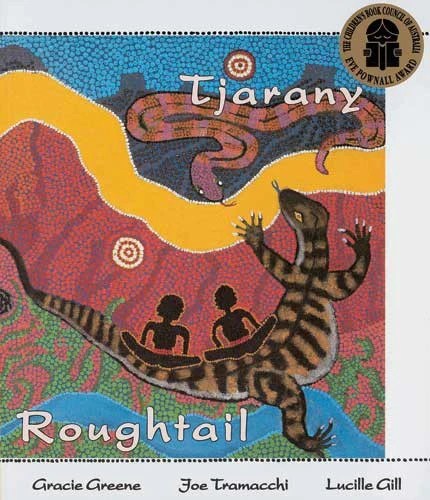
  • 1993: Magabala Books publication Tjarany Roughtail won the Children’s Book Council of Australia’s inaugural Eve Pownall Award for Information Books (and other awards including the NSW Premier’s Literary Awards Book of the Year) 
  • 2017 and 2019: shortlisted for Small Publisher of the Year (Australian Book Industry Awards)
  • 2019: the fastest growing independent small publisher in Australia
  • 2020: awarded the Small Publisher of the Year (Australian Book Industry Awards)
  • 2020 and 2021: listed as a candidate for the Astrid Lindgren Memorial Award, a prestigious international children’s literary award

I’m not sure whether Tjarany Roughtail, by Gracie Greene, Joe Tramacchi and Lucille Gill, is their first award-winner, but it will have been one of the first. Since then many of their books have been shortlisted for or won significant Australian literary awards, proving that Magabala truly is a force in Australian publishing. If you’d like to check out some of the books that have been recognised by the literary awards circuit, click on their Award Winning and Notable page.

Their books

On their About Us page, they say that since beginning they have published “more than 250 titles by Aboriginal and Torres Strait Islander authors, artists and illustrators from across Australia”, of which I’ve read several. Their authors include Bruce Pascoe, Alexis Wright, Ali Cobby-Eckermann and Alison Whittaker. Currently, they publish around “15 new titles annually across a range of genres: children’s picture books, memoir, fiction (junior, YA and adult), non-fiction, graphic novels, social history and poetry” and I’ve read several over the years. They are also committed to maintaining “a substantial backlist in print” which is great to see. (And, it’s clearly true because that 1993 award-winning book, Tjarany Roughtail is still listed on their inventory).

Anyhow, I thought I’d delve a little into Trove to see what I could find about early responses to them and their work – recognising of course that the post-1987 period is still in copyright so most newspapers have not yet been digitised.

I was interested to find their existence was noted early on. Moya Costello started her review in Sydney’s Tribune wrote in 1988 with:

Some books turn your head around. For me, two such books have been by Aborigines. Only two because I am just beginning to read Aboriginal writing, and because we’re just at the beginning of a great swell of Aboriginal writing being published in Australia.

And then, she writes, comes a third book, Glenyse Ward’s Wandering girl. She wishes “books like this had been around when I was at school. I have missed this history of my own country. (My own country?)” She is not the only reviewer to recognise the history we have missed. Anyhow, she then identifies the publisher:

You haven’t heard of Magabala Books? Let me introduce you. Based in Broome, WA, Magabala books publishes writings by Aboriginal people. It’s been funded by Bicentennial money — but if you’ve heard the publishers speak, and if you’ve read Magabala publications, would you quibble?

In 1989, Canberra-based author Marian Eldridge reviewed in The Canberra Times two First Nations books, one being Magabala’s Raparapa: Stories from the Fitzroy River drovers by Eric Lawford, Jock Shandley, Jimmy Bird, Ivan Watson, Peter Clancy, John Watson, Lochy Green, Harry Watson and Barney Barnes. They are important, she writes, because both are “told by Aborigines from an Aboriginal point of view” and “what they have to say is part of Australia’s history that has been far too long neglected”. Again, we we see in a mainstream newspaper, recognition of history we’ve missed. Interestingly, a new edition of Raparapa was published by Magabala in 2011.

Eldridge goes on to say about Raparapa that:

Until now, books about the cattle industry in northern Australia have been written by white people. Raparapa, instigated by John Watson, formerly Fitzroy River stockman and later chairman of the Kimberley Land Council, helps to right the balance.

Jess Walker also reviewed this book in 1989 in Tribune, and concurs, saying the book

is much more than just a collection of interesting anecdotes. It’s a very rich and stimulating book which fulfills the objectives John Watson set for it – to communicate to other Australians the full extent of Aboriginal involvement in one of Australia’s most important primary industries, and to help explain Aborigines’ relationship to land. Raparapa also preserves the stories of an older generation of men for the benefit of the younger Aboriginal people. 

I found quite a bit more, but I will close with a report by Robert Hefner in The Canberra Times in 1990. He quotes Pat Torres, a First Nations writer and artist (among other things), who was on Magabala’s management committee. She described their basic aim as being

to foster the oral history and stories of the Kimberley and put it into a form which is accessible to a lot of people. We encourage the training of Aboriginal people in the area of publishing, and we encourage local artists to contribute their drawings to illustrate the stories. But basically our aim is to foster and maintain Aboriginal culture and history . 

As Magabala Books say on their current website, they want “to ensure Indigenous people control their own stories [my emph], and that the benefits flow back to the right people”. It seems that they are not only achieving that, but are also getting those stories out to the wider Australian public. Finally, we are learning the history so many of us missed.

For Lisa’s 2022 First Nations Reading Week

Click here here for previous ILW/FNRW/NAIDOC Week-related Monday Musings.

Monday musings on Australian literature: First Nations Australian poets

2022 National NAIDOC logo

Yesterday was the start of Lisa’s (ANZLitLovers) 2022 First Nations Reading Week which coincides of course with NAIDOC Week. As has become my practice, I’m devoting this week’s Monday Musings to the cause.

NAIDOC Week’s theme this year is Get Up! Stand Up! Show Up! Its focus is encouraging First Nations people to continue “getting up, standing up, and showing up” to achieve “systemic change” and to “narrow the gap between aspiration and reality, good intent and outcome”. They also say,

The relationship between Aboriginal and Torres Strait Islander peoples and non‑Indigenous Australians needs to be based on justice, equity, and the proper recognition of Aboriginal and Torres Strait Islander peoples’ rights.

I would like to think that our blogs help in some way by sharing our engagement with First Nations Australian writing, and hopefully inspiring others to engage too. There is a lot of truth-telling in First Nations writing and I greatly appreciate what I am learning. Although it can be confronting at times, it is exciting to feel my understanding expanding and deepening.

Book cover

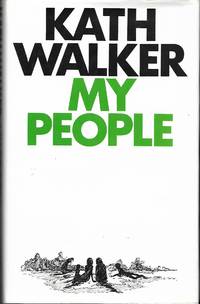
And this brings me to this post, because my introduction to First Nations Australians’ experience and thinking came through poetry. It was in my teens in the late 1960s. I had become interested in racial inequality, and discovered the work of Kath Walker, as she was known then.

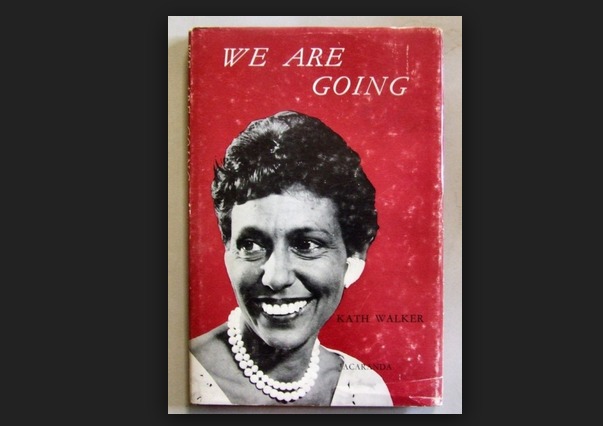
Kath Walker was, of course, Oodgeroo Noonuccal (1920-1993). According to the Macquarie Pen anthology of Aboriginal literature, edited by Anita Heiss and Peter Minter, Walker “readopted her tribal name” in 1988 “as a protest against Australia’s Bicentenary celebrations and a symbol of her Aboriginal pride”. Heiss and Minter say that her 1964-published collection, We are going, “was the first book of poetry by an Aboriginal writer and the first book by an Aboriginal woman”.

Book cover

For Poetry Month last year, you may remember that I asked people to share their favourite poem (or poems). One of mine was Oodgeroo Noonuccal’s “We are going”, and I see that it is one of the eight that Heiss and Minter selected for their anthology. As they say in their introduction to her, “Oodgeroo was politically active from the late 1940s and became one of the most prominent Aboriginal voices”. Her poetry reflected her politics, as is common among poets from marginalised, disempowered people. Poetry, after all, is a powerful tool. It can make points succinctly, and do so in ways that you want to repeat. Listen to the end of “We are going” – the repetition, the rhythm and tone it creates, and the final line. Wham!

We are nature and the past, all the old ways 
Gone now and scattered. 
The scrubs are gone, the hunting and the laughter. 
The eagle is gone, the emu and the kangaroo are gone from this place. 
The bora ring is gone. 
The corroboree is gone. 
And we are going.

Oodgeroo varied her style, and often used rhyme, but here she uses free verse to such rhetorical effect.

I’m embarrassed to say that I didn’t read much First Nations poetry again for a few decades, until I read contemporary poets like Ellen Van Neerven, Ali Cobby Eckermann and, right now, Evelyn Araluen. However, First Nations people were writing poetry right through, and Heiss and Minter include many in their anthology. These writers include Jack Davis (1917-2000), who wrote a poem titled “Walker (For Kath)”. It starts, “Fight on, Sister, fight on/Stir them with your ice”.

Then, there’s Kevin Gilbert (1933-1993) and his daughter Kerry Reed-Gilbert (1956-2019), and Lionel Fogarty (b. 1958), who also wrote a poem for Oodgeroo titled “Kath Walker”. It starts, allusively, with “We are coming, even going”. There’s Tony Birch (b. 1957), some of whose prose I’ve reviewed, and Sam Wagan Watson (b. 1972), son of novelist Sam Watson (1952-2019).

There are writers I don’t know so well, like Lisa Bellear (1961-2006), who, say Heiss and Minter, was a “notably political poet”. (But, then, how many weren’t and aren’t.) Her poem, “Women’s liberation”, speaks to that issue of the movement being largely for and by white middle-class women. It’s witty and pointed. You can read it at Poetry International.

“got something for you to swallow”

(from “Gather”, by Evelyn Araluen)

I have, though, written on First Nations poetry in this blog. My post on the digital publication, Writing black, that was edited by Ellen Van Neerven, includes references to several of the poets I’ve named above, including Kerry Reed-Gilbert and Lionel Fogarty. I enjoyed Writing black especially because it introduced me to some of these voices I’d heard of but had not yet read.

Book cover

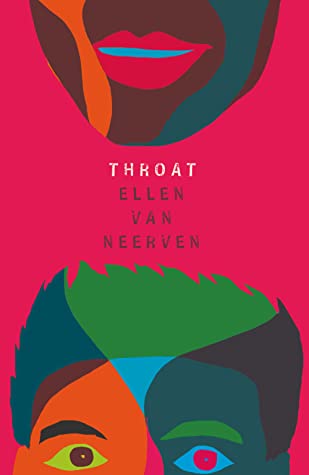
Ellen van Neerven is a well-recognised First Nations poet. Indeed, she was caught up in a controversy when her poem, “Mango”, unbeknownst to her I believe, was included in an HSC exam a few years ago. You know you have arrived on the Australian literary scene when you’ve been embroiled in a controversy. Anyhow, her second poetry collection, Throat, was shortlisted for several literary awards. Jonathan Shaw (Me fail? I fly) has reviewed it, describing it as “a rich, accessible, many-faceted collection from a strong, challenging and self-questioning voice”.

Another collection I haven’t read is Alison Whittaker’s BlakWork, which won the 2019 Judith Wright Calanthe Award. Bill (The Australian Legend) and Brona (Brona’s Books) have both reviewed it. Brona, in particular, connected with it.

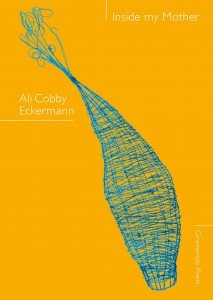
Ali Cobby Eckermann, Inside my mother

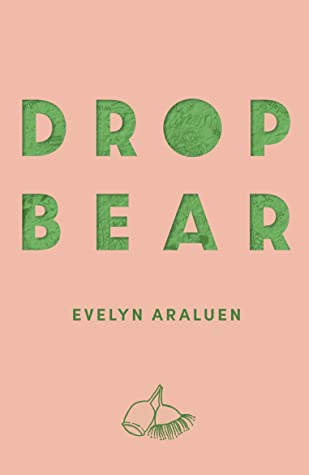
However, I have read some contemporary First Nations poetry, including Ali Cobby Eckermann’s historical fiction verse novel Ruby Moonlight (my review) and her collection Inside my mother (my review). I’m currently reading Evelyn Araluen’s 2022 Stella Prize winning Drop Bear, which Brona has reviewed. Like much First Nations poetry it’s political and powerful, but is also witty.

This has been a brief and selective survey. There are many First Nations poets I haven’t mentioned, but if you are interested to hear what First Nations people are thinking, you won’t go wrong if you check out some of their poetry. I hope this post offers those interested some ways in.

Do you have any favourite First Nations poets – or, even, poems?

Written for Lisa’s First Nations Reading Week

Click here here for my previous ILW/FNRW/NAIDOC Week-related Monday Musings.

Monday musings on Australian literature: Frank Moorhouse (1938-2022)

Frank Moorhouse was one of the grand old men of Australian literature, so when I learned that he’d died yesterday, I knew I had to change my plan for this week’s Monday Musings to feature him. Wikipedia’s introduction to him gives you a sense why I’ve described him as I have: “He won major Australian national prizes for the short story, the novel, the essay, and for script writing. His work has been published in the United Kingdom, France, and the United States and also translated into German, Spanish, Chinese, Japanese, Serbian, and Swedish”. Today, he is best known for his Edith trilogy – Grand days, Dark palace and Cold light – the middle of which earned him a Miles Franklin award, but his legacy extends deeper than that.

A major legacy

I first became aware of Moorhouse back in 1975 when I was beginning my librarianship career. It was due to a court case known as University of New South Wales v Moorhouse which concerned the use of photocopying machines to photocopy “infringing portions” of a work in copyright. Wikijuris summarises it nicely if you are interested. The High Court unanimously found that, although the copying was done by a student, the Unviersity was liable for “authorising” infringement. It was a groundbreaking case whose legacy continues today.

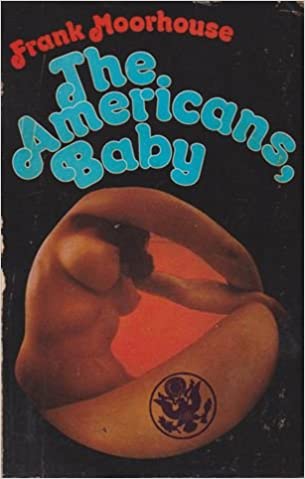
The Copyright Agency also tells the story. They explain that Moorhouse was determined to achieve “respect and financial recognition for Australian creators”. He gave permission for his book, The Americans’ Baby, “to be used in a copyright test case” which, the Agency says, has ensured that, today, nearly 50 years later, “creators are fairly remunerated for their work in a digital environment that provides millions of students with access to high quality educational material”. Moreover, the case also resulted in a recognition that “an agency would be needed to collect the royalties generated by the copying of materials to distribute payments to creators”. That agency was the Copyright Agency, which was established in May 1974 for this purpose.

You can imagine that this was exciting stuff for a new, philosophically engaged librarian – we wanted to support creators but we also believed in the importance of libraries being able to provide access to the material students needed. Good copyright law should achieve both and here a fair (acceptable) balance has probably been struck – though I’m sure both sides will have arguments for more.

But of course …

For most readers, Moorhouse’s legacy is in his writing. He was born in Nowra, New South Wales, a beautiful spot less than three hours’ drive from where I live. On leaving school, he began work in 1955 with newspapers, first as a copy boy, and then as reporter and editor. His first short story, “The young girl and the American sailor”, was published in Southerly magazine when he was 18 years old, and he went on to be published in some of Australia’s best literary magazines after that.

In the 1970s he became a full-time fiction writer but he also wrote essays, short stories, journalism and film, radio and TV scripts. He was also, with Clive James, Germaine Greer and Robert Hughes, part of the “Sydney Push” (about which I wrote in my review of Richard Appleton’s memoir, Appo.) It was a bohemian, libertarian movement with a strong anti-right wing underpinning. He has led or been heavily involved in many of Australia’s significant writerly organisations, including the Australian Copyright Agency, the Australian Society of Authors and the Australian Journalists’ Association. In 1985, he was appointed a Member of the Order of Australia for service to Australian literature.

Writing about his death in The Guardian, Sian Cain says this about his work:

Moorhouse wrote prolifically and with irreverence and humour of his passions – food, drink, travel, sex and gender. Early in his fiction, and later in his 2005 memoir, Martini, he wrote frankly about his own bisexuality and androgyny. In his writing, he said, he wanted to explore “the idea of intimacy without family – now that procreation is not the only thing that gives sex meaning”.

Tim Barlass wrote something similar in The Sydney Morning Herald:

Moorhouse lived and wrote about the good life – in both senses of the phrase, sometimes paradoxically. With a passion for fine food, cocktails and justice, he fearlessly wrote about the things essential to him.

Frank Moorhouse, Cold Light

If didn’t know all that about Frank Moorhouse, I have only to think back to Edith (particularly to Cold Light which I read after I started blogging) to see how it could be true! Edith, Ambrose and their friends knew how to work and play hard. My review of the novel was a little measured, but it is also one of those books that has remained with me. You never know, when you finish a novel, which ones will hang around in the mind for the long run.

I understand that a biography by Catharine Lumby is coming very soon. Barlass quotes her response to his death:

 “Frank Moorhouse was a literary legend. It was an incredible privilege to have a friendship with him and be his biographer. As always, Frank had to have the last word. I started writing the conclusion to his biography this morning and learnt that he had died.”

I can’t think of a better place to end, except to add that I look forward to her biography of this colourful but serious man. Vale Frank Moorhouse.

Monday musings on Australian literature: Warm Winter Read

For several years now, Cathy of 746 books has been running a 20 Books of Summer challenge, which many Southern Hemisphere bloggers re-frame as “of Winter”. It’s a great initiative, and this year has over 120 participants. You go, Cathy! However, for something closer to home that’s geared to this winter, I thought I’d share with you Warm Winter Read. It is an initiative of Public Libraries Victoria, and I read about it on Angela Savage’s blog. Well-known as an author, Angela is also the CEO of Public Libraries Victoria.

As a retired librarian, I love checking out what libraries are doing – and when they encourage reading AND Australian authors and books, then I’m on side.

The program’s aim, Angela says, is “to encourage readers to develop a daily reading habit by tracking the days they read over June and July 2022”. It has been taken up by most of Victoria’s library services, and involves an app – the Beanstack app (here) – through which participants can log daily reading, take part in optional challenges and share book reviews. Apparently the optional challenges include things like, Angela writes, “read outside your home; read aloud to a pet, person or plant; and talk about what you’re reading in person or online”.

This is all great, but I’m mainly sharing it with you because the campaign has eight ambassadors, who are all “high-profile” Victorian authors. Each of these was asked to recommend four books to get readers started (although people can read any books). There are apparently bookmarks for each author, containing their recommendations.

The ambassadors are a diverse bunch (links on their names are to my posts on them) and so are their recommended books, which range across a wide variety of forms and genres, fiction and non-fiction. Their recommendations are:

  • Maxine Beneba Clarke: Maria Takolander’s Trigger warning; Claire G. Coleman’s Lies, damned lies; Alice Pung’s One hundred days; Ennis Cehić’s Sadvertising
  • Claire G Coleman: Omar Sakr’s Son of sin; Maxine Beneba Clarke’s How decent folk behave; Ellen van Neerven and Rafeif Ismail’s (ed), Unlimited futures; Evelyn Araluen’s Drop bear
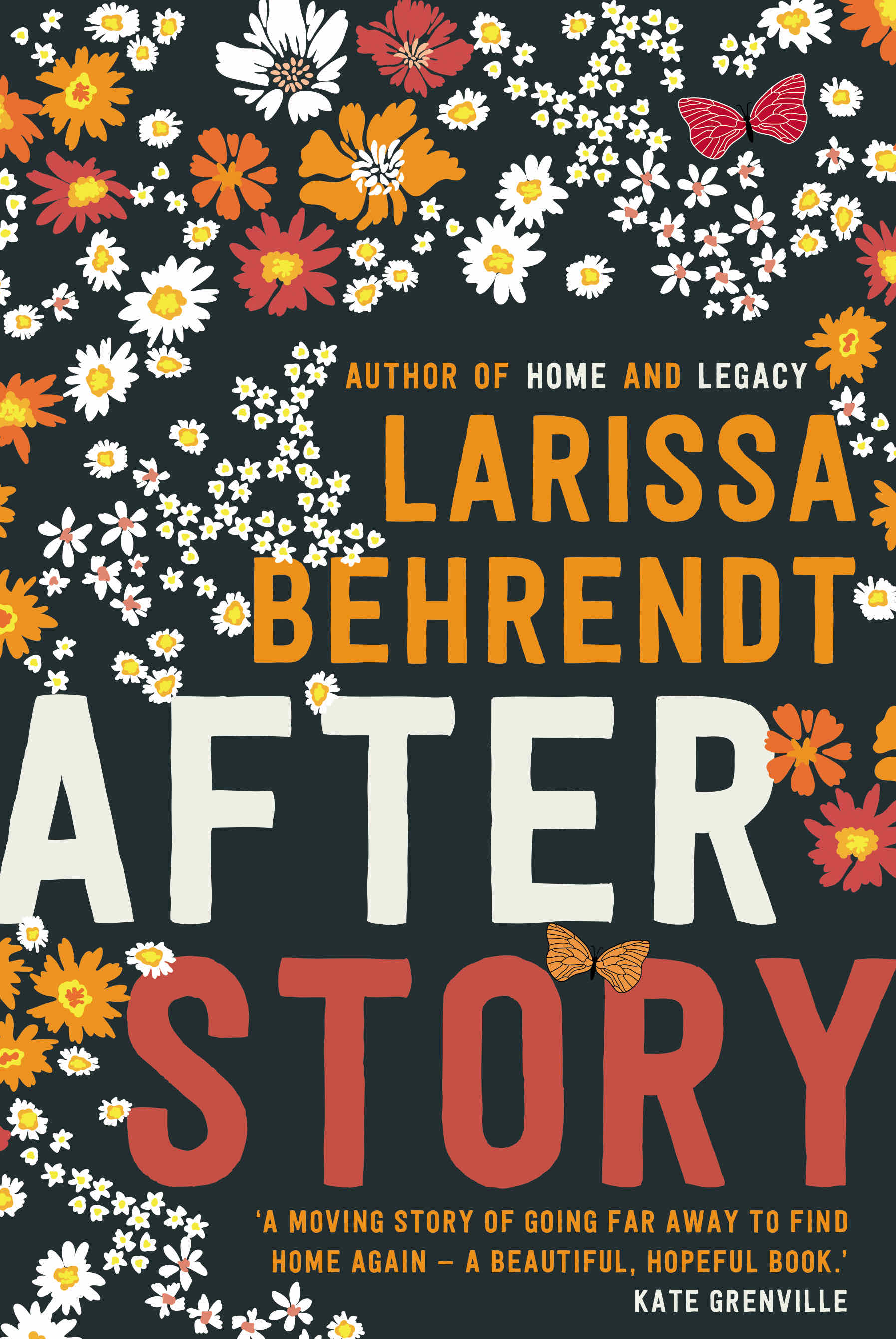
  • Helen Garner: Sean O’Beirne’s A couple of things before the end; David Owen Kelly’s State of origin; Larissa Behrendt’s After story; Gabbie Stroud’s Teacher
  • Jane Harper: Sally Hepworth’s The younger wife; Karina Kilmore’s Where the truth lies; Kate Mildenhall’s The mother fault; Benjamin Stevenson’s Everyone in my family has killed someone
  • Toni Jordan: Genevieve Novak’s No hard feelings; Emily Spurr’s A million things; R.W.R. McDonald’s The Nancys; Paddy O’Reilly’s Other people’s houses
  • Rebecca Lim: Amani Haydar’s The mother wound; Trent Jamieson’s Day boy; Cixin Liu’s The three-body problem; Emma Viskic’s Resurrection Bay
  • Jock Serong: Emma Viskic’s Those who perish; Robert Gott’s The orchard thieves; Emily Brugman’s The islands; Michael Winkler’s Grimmish
  • Christos Tsiolkas: Emily Bitto’s Wild abandon; Angela Savage’s Mother of Pearl; Andy Jackson’s Music our bodies can’t hold; Judith Brett’s The enigmatic Mr Deakin

I have not heard of all these books, let alone read them, but I can see that the list offers something for most readers and should kickstart some thinking about what to read.

Different library services are promoting the program in different ways. Here are some: Goldfields Libraries; Hume Libraries; and Yarra Plenty Regional Library. BUT as I pottered around some of the sites, I also picked up other things that libraries are doing. For example, the Warrnambool Library advertises that it can help members access their vaccination certificates. What a great service for the less technologically proficient in our communities. I love how modern public libraries are comprehending and expressing their role as community information centres.

Also, in some communities, the local newspaper has got behind the program too. What about this one from the Shepparton News:

Come into your local library to check out a Warm Winter Read. You’ll find hot romances, spicy thrillers and toasty tales of fun and adventure. You can register and log your participation via the Beanstack website at www.plv.beanstack.orgor by downloading the Beanstack Tracker app from the Google Play Store or Apple App Store.

For readers who prefer ‘old-school’, pick up a tracking sheet from your local library. Lots of challenges to keep the next few months interesting.

And here I will leave you. This is a pretty short and simple Monday Musings, partly because I have joined the growing number of bloggers who have contracted COVID-19. So, while I’m not very sick, thanks to being fully vaccinated, I’m also not wonderfully chipper and need now to go take a nap!

Meanwhile, here’s a job for you: what would you have recommended if you’d been asked to suggest four books for a program like this? (And if you’re not Aussie, you can choose non-Aussie books!)

Monday musings on Australian literature: on 1922: 4, Adventure novels

Continuing my 1922-themed posts, it became clear as I delved into Trove that certain genres or forms kept recurring in the reviews and articles I was reading about Australian literature. I plan to share them over the next few 1922 posts, starting with adventure in this post.

You might remember that my first 1922-themed post was on the N.S.W. Bookstall Co. Adventure novels, it seems, were among their popular fare. A brief article in The Australian Worker (22 February) discusses a couple such novels, but starts by saying that the N.S.W. Bookstall Co.

continues to deliver the goods, and as the goods, in the shape of vigorous yarns by Australian writers, appear to be selling well enough to make a further continuation certain, the company can be congratulated in believing years ago that local talent would make good if it were given the chance hitherto denied it.

Adventure novels

Some of you might remember a recent Monday Musings I did on Australia’s favourite genres, in which I reported that a Swiss-based study had determined that Adventure and Classics were our favourites. I won’t revisit that now, as you can read the post and its source information yourself if you’d like, but I was surprised that Adventure seemed so popular now. I am not so surprised, however, given the still relative newness of the Australian settler colony in 1922, that adventure was popular then. What did surprise me, however, was that, despite the longstanding strength of the bush myth, the bush was not the main setting I found – but I did find a few.

One was titled The black opal. I don’t know how many novels have been titled The black opal, but they abound, including Katharine Susannah Prichard’s of 1921. In 1922, however, there was one by journalist-cum-novelist Jack North. The Northern Territory Times and Gazette (16 September) writes that it is sub-titled “A story of Australian love and adventure”, but that

it is more than that. Notwithstanding the melodramatic incident which Percy Lindsay selected for his cover design, The black opal is a wholesome, well-written novel in which the lure of the bush triumphs over the glamor of the city.

I think “Jack North” might be a pseudonym. He had written, at that time, two other popular novels, Harry Dale’s Grand National and The son of the bush, plus, apparently, scenarios for the “movies”. (The article writer used those quotation marks for this clearly still strange new medium.)

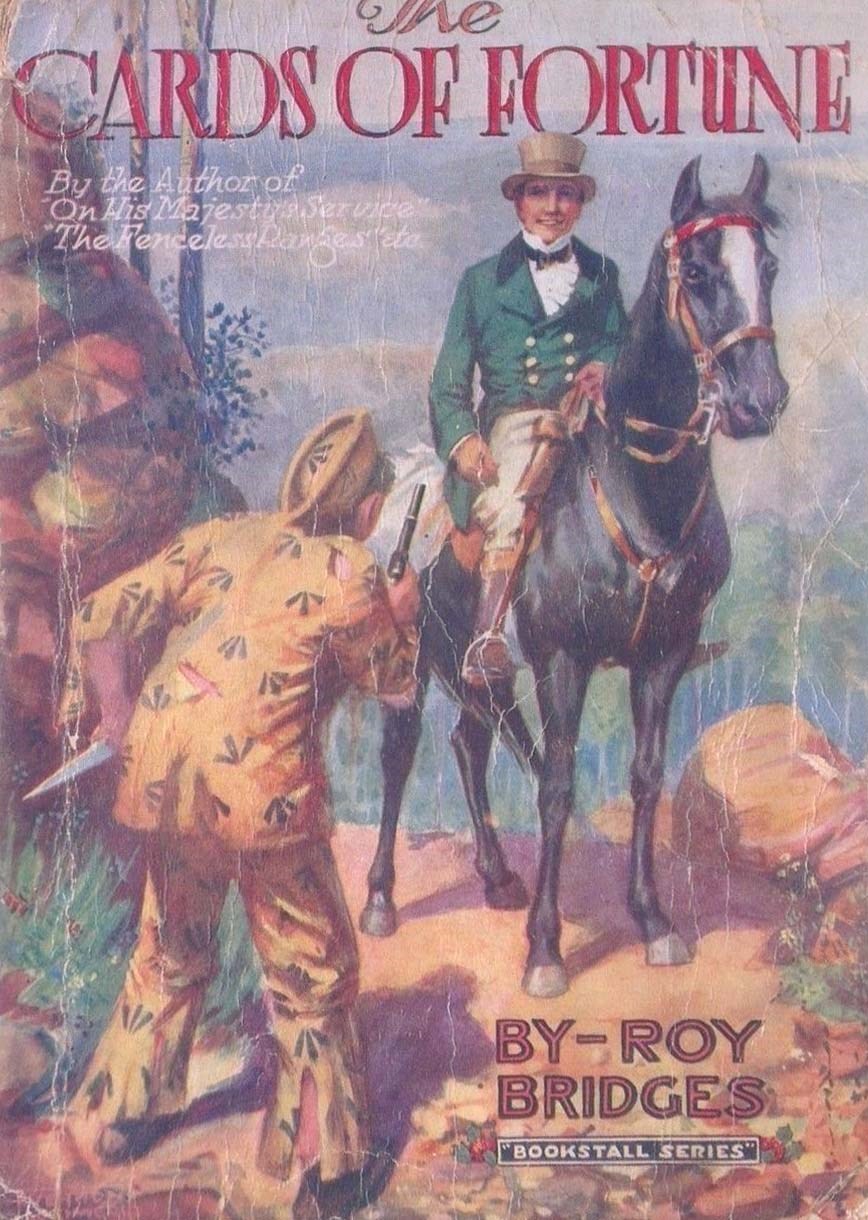
A more traditional-sounding bush-adventure novel is Roy Bridges’ historical fiction, The cards of fortune, which the writer in the Kandina and Wallaroo Times (20 December), says is set in “the stirring days of the first settlement in Tasmania”. (Not sure all would call those days “stirring”, at least with a positive connotation!) It is, says the writer, “an appealing love story which is developed with the aid of stirring adventure”. (There’s “stirring” again”.) The novel, about a bushranger hunt, is described as a “bright little story of the early days”. Adventure novels are, I guess, escapist!

Island adventure novels

The most common adventure novels I found, however, were island adventures, which I think could qualify as a sub-genre?

The Australian Worker article I mentioned in this post’s opening briefly discusses two novels, S.W. Powell’s Hermit Island and Jack McLaren’s Feathers of heaven. The reviewer clearly admires the publisher, but not necessarily these books. They are both set to the northeast of Australia, and, s/he says,

are big-bulged with thrilling adventures in those places where the codes of life, to put it mildly, are not exactly of the parlor or the Sunday school variety.

They hope “this island type of yarn won’t be overdone”, because, they say

There’s plenty of love, and adventure, and goodness, and badness in Australia without going north-east in a boat to look for these elements of a readable story.

I will digress briefly here to say a little about Jack McLaren (1884-1954), because he was quite a prolific and popular writer. According to Wikipedia, he wrote novels based on his own experiences and was renowned for his “authenticity of background”. The son of a minister, he apparently ran away from school when he was 16, and worked as a cabin boy and seaman before landing in North Queensland in 1902. For the next 10 years he worked and travelled around the islands north and northeast of Australia, like Fiji, Java, New Guinea, Malaya and the Solomon Islands. He wrote for The Bulletin before turning to novels in 1919. Feathers in heaven was around his 7th novel.

The writer in the Kadina and Wallaroo Times (8 March) says that McLaren was one of Australia’s most popular authors. Feathers in heaven, this writer says, “is a novel of stirring adventure written round the illegal hunting of New Guinea’s beautiful birds-of-paradise … [and] … of course there is a girl in the story”. For this writer, the novel offers “wholesome adventure”.

Our Kadina and Wallaroo Times writer also discusses Powell’s Hermit Island, identifying it as being “of the Islands adventure class”, and set “off the beaten track” in Tahiti. It involves suspicion of piracy, for which there is “circumstantial evidence” and “develops rapidly to a wholly unexpected climax”. Sydney’s Sun (12 February), reviewing the same novel, makes a strong point about its Australian quality, starting the review with:

For a fine adventure story, neatly told, it is not always necessary to go overseas. Here is an Australian author, S. W. Powell, who knows the knack. Hermit Island is excellent value … The yarn is as capably done and as well imagined as any that comes out of California, and it has the advantage of speaking our own Australian language. 

S.W. Powell had, at the time, written four popular island-adventure novels. The genre was clearly a goer back in the 1920s.

Another reviewer, this time in the Northern Territory Times and Gazette (18 July), discusses Powell’s The pearls of Cheong Tah. Like the previous reviewers, this one comments on Powell’s inclusion of humour in his novels – along with tragedy and romance.

Some random concluding observations

Did you notice the focus on “wholesome”? “Little” things like this provide such insight into their times.

Also, I struggled to find cover images. These books may have been popular, but most were cheap paperbacks and have not, apparently, survived well. Neither have the literary reputations of most of their authors. As always, it’s interesting to see how popular authors of a time fare over the long term. Could it be argued that the more popular a work, the greater the likelihood of appealing to more ephemeral interests and tastes and therefore of dating?

Previous 1922 posts: 1. Bookstall Co; 2. Reviewers on Australianness; 3. ALS Women’s night

Monday musings on Australian literature: on 1922: 3, ALS Women’s Night

Continuing my 1922-themed posts, I was intrigued that, in 1922, the Australian Literature Society held a Women’s Night. This Society was formed in Melbourne in 1899, with the aim of encouraging both the study of Australian literature and Australian authors.

According to the National Library the Society:

  • held regular meetings which included talks, recitations, readings of unpublished works, musical items and reviews
  • established a general library of first editions and important Australian works which it maintained for nearly eighty years.
  • published a journal Corroboree from 1921 to 23

In 1928, it established the ALS Gold Medal to be awarded to the author of the best novel published in the previous year. The first winner was Martin Boyd’s The Montforts, but that, obviously, came after 1922! What also came later was that this society merged in 1982 with the Association for the Study of Australian Literature, which continues to award the ALS Gold Medal.

Now, back to 1922, and the Society’s Women’s Night. I’ve had a little look at Trove for 1920 and 1921, and while there are references to women’s topics being discussed at ALS meetings, it seems that 1922 may have been the first time they devoted a night to Women’s writing.

As far as I’ve been able to ascertain, there were just two papers presented: Australian Women Prose Writers, by Mrs Vernon Williams, and Australian Women Poets, by Elsie Cole. Before I share the idea that inspired this post, I did find mentions of Women’s Nights in 1927 and 1929. In 1927, The Age (July 12) reports that there was a paper on Stella Miles Franklin, followed by some readings and recitations of works by women, while in 1929, The Age (July 15), again, reported that the night would ‘take the form of a debate, the subject, being “Australia is Lacking in a Back Ground to Inspire Romantic Writing”‘.

And now, back to 1922 again. The report in Table Talk (August 3) reported that Elsie Cole’s paper on the poets said that “We had reason to be proud, if critical, of our present output of women’s work” and that “the prospect for the immediate future was encouraging”. Unfortunately, none of the reports I read gave any details about the content of the papers, so what, for example, were the criticisms?

As for Mrs. Vernon Williams’* paper on the prose writers, they reported her saying that “one outstanding feature of the Australian novel is its purity” but they didn’t elaborate. Williams also apparently said that the Australian novel was full of sincerity and the glamour of romance.

The report shared one other idea from the talk, which was that:

In the early days of Australian literature the output of women writers was more prolific than that of men writers, because the opening of a new continent did not give men opportunity to concentrate their activities in that direction.

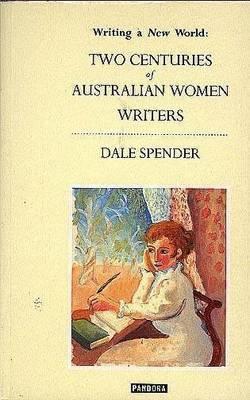
I haven’t seen this specifically articulated before, and would love to know exactly what she was talking about. The first “Australian-made novel” novel, Henry Savery’s Quintus Servinton (my post), was published in 1830, with the first novel by a woman published in Australia, Anna Maria Bunn’s The guardian, appearing in 1838. But, “the output of women writers” did start before this. Dale Spender writes, in Writing a New World: Two centuries of Australian women writers (see Bill’s post), that from very early on women wrote letters and

women’s ‘world of letters’ provides an alternative and rich resource of information. Women’s thoughts and feelings find expression in a literature which stands as a repository for women’s consciousness and a record of their endurance in the strange land. So the letters of Elizabeth Macarthur and Rachel Henning, for example, tell a story of settlement, create heroines of stature who experience a series of adventures which could readily and reassuringly be recounted ‘back home’; but at the same time these letters plot personal struggles with independence and identity. Miles Franklin begins My Brilliant Career at the point at which Elizabeth Macarthur and Rachel Henning leave off …

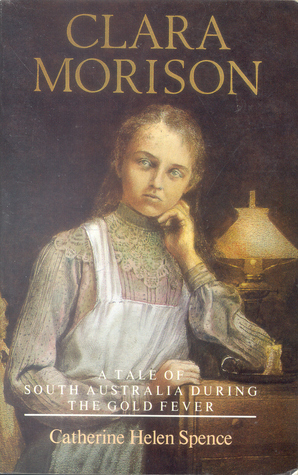
Women’s letters and journals, as Spender shows, provided a rich and important literature, but novels by women did start appearing by the middle of the century with Catherine Helen Spence’s Clara Morison in 1854, and Louisa Atkinson’s Gertrude the Emigrant in 1857. Ellen Davitt followed with a crime novel in 1864, and then, in the 1880s, novels by Ada Cambridge, Rosa Praed, Tasma, and others were published.

Presumably it’s to these novelists that Williams refers, but, to suggest that, somehow, men had less opportunity to write in the colony’s first century feels like a backhanded compliment – as if women’s lives were easy, and men’s not. However, her recognition of the depth of women’s writing tradition is notable. It’s a recognition that got lost by the middle of the 20th century and that we are still trying to recover now. I must try to access Williams’ paper.

* AustLit explains that Mrs Vernon Williams is the writing name for Elvie Williams, the wife of Vernon Williams, who was “a member of the Australian Literature Society, Melbourne”. She had two articles, “Australian Women Novelists, Parts 1 and 2”, published in two consecutive issues of Corroboree : The Journal of the Australian Literature Society, vol. 1 nos. 10-11, July-August 1922, but they aren’t available online.

Previous 1922 posts: 1. Bookstall Co; 2. Reviewers on Australianness

Monday musings on Australian literature: The Red Witch

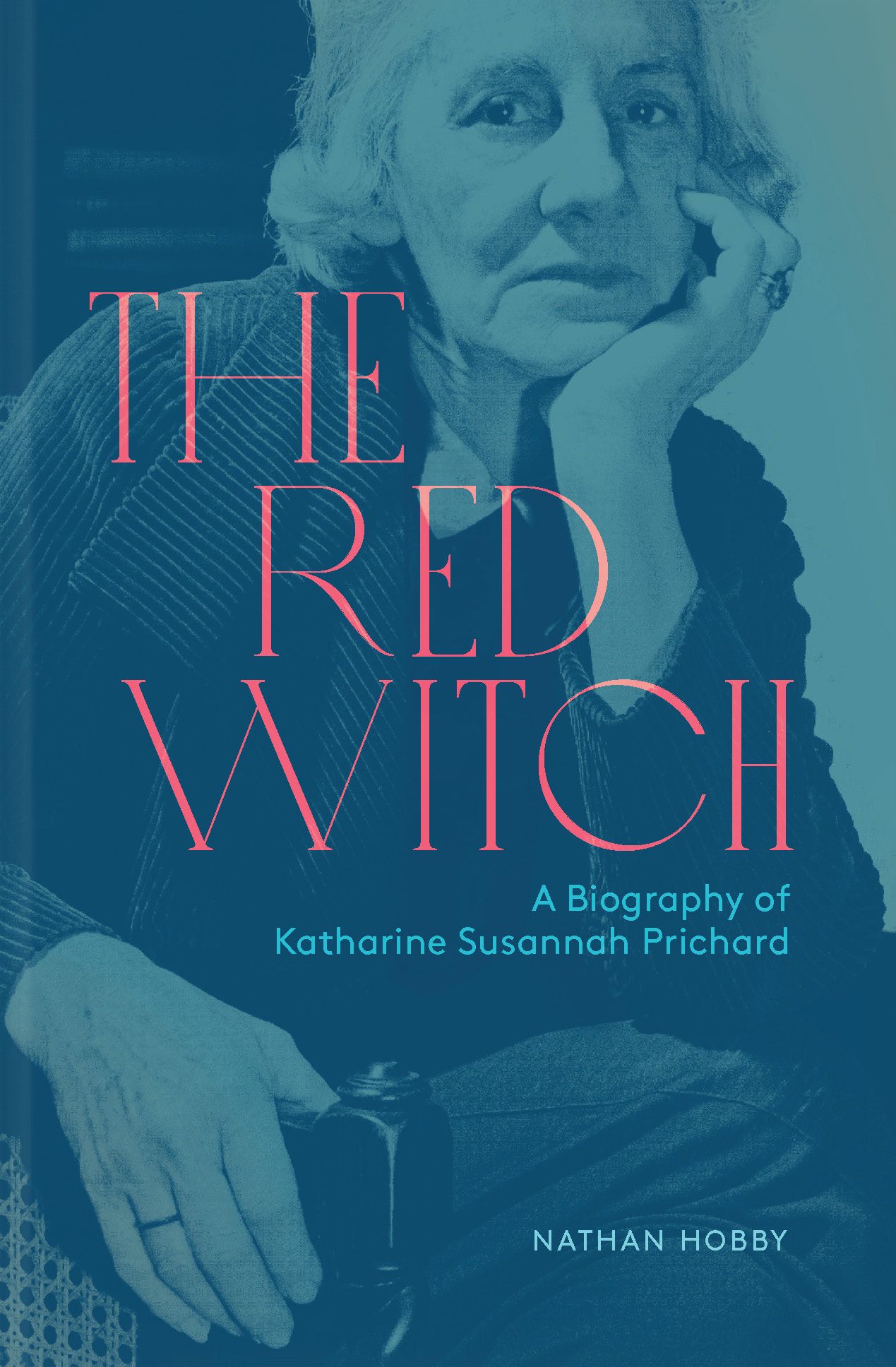
Last week, I attended the online launch of Nathan Hobby’s biography, The red witch: A biography of Katharine Susannah Prichard. It was beautifully emceed by Lisa Hill, of ANZLitLovers, and involved three speakers, Karen Throssell, award-winning poet and the only grandchild of Prichard; Nathan Hollier, the publisher; and, of course, the author himself, Nathan Hobby.

A brief intro

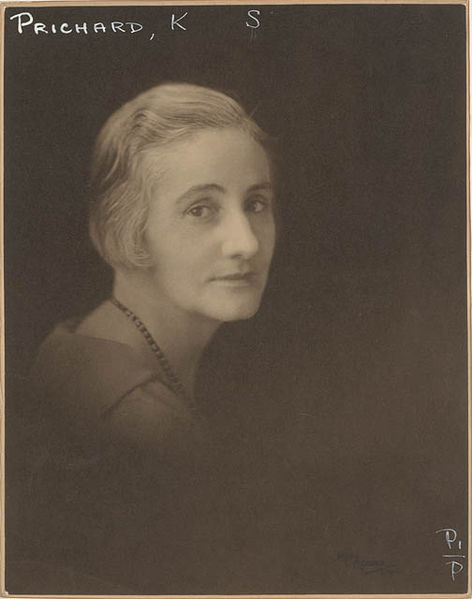
Katharine Susannah Prichard
KSP, 1927/8 (Courtesy: State Library of NSW, via Wikimedia Commons)

Katharine Susannah Prichard (1883-1969) has to be among Australia’s most interesting and significant writers. I first read her in my teens when, keen on civil rights and concerned about racial discrimination, I read her novel Coonardoo. I loved it, though I’m sure my response was naive and typical of those earnest times. However, I never forgot Prichard.

She wrote thirteen novels, a memoir, plays, reportage, poetry and short stories. She won the Australian section of Hodder & Stoughton’s All-Empire novel competition with The Pioneers (1915) (my review), and in 1929, Coonardoo shared the Bulletin’s Novel prize with M. Barnard Eldershaw’s A house is built. She was also a founding member of the Communist Party of Australia, which brought her notoriety that dogged her through life.

So much is known about her, and yet so little, because, although we have her son’s Ric’s 1975 biography, Wild weeds and wind flowers, there has not been a comprehensive biography – until now.

The launch

Before I share the highlights of the launch, I’ll reiterate a comment I made on my post on contemporary responses to Coonardoo, because it speaks to the challenges faced by KSP researchers. I wrote:

I was horrified by the frequency with which Prichard’s name was spelt incorrectly. This must have driven Hobby mad in his research. She is frequently written as KathErine, not KathArine, and occasionally Catherine, and even Kathleen. Really? Then, there’s her last name, which was often reported as PriTchard not Prichard. It must have driven HER mad too, at the time. Sometimes, too, her married name, Mrs Hugo Throssell, is used.

It is truly astonishing how often her name was – and still is – got wrong.

So now, the launch …

After the usual introductory comments and acknowledgement of country, Lisa introduced the three speakers, and then were were off, starting with Karen Throssell who had the honours of formally launching the book.

Karen referred to the title, suggesting the word “witch” connotes independent women who defy convention, which accurately captures her grandmother. (An aside, I remember when Nathan asked us bloggers to vote on the titles he was considering for his planned biography, long before he had a publisher. None of them was The red witch, but what an inspired title it is.)

Anyhow, Karen went on to read her poem “My fairy godmother” about her doting gran, the “wild Bohemian”, KSP. She mentioned the challenge over the years of protecting her family’s reputation, referencing her recently published book about her father, The crime of not knowing your crime: Ric Throssell against ASIO.

Karen then turned to Nathan’s biography. She initially feared he was focused on some of the personal secrets in Prichard’s life, but was pleased that his biography does, in fact, focus on KSP’s intellectual and political ideas more than her “private peccadillos”. What she likes most about the biography is Nathan’s detailing the “journey of the individual books” including KSP’s travel to the places in which her books were set. She also likes his coverage of the various books’ reception, particularly of Coonardoo, which she described as an “act of literary empathy”.

She declared the book launched and the floor (or screen) was handed over to Melbourne University Press’s publisher, Nathan Hollier. He spoke briefly, noting that early reviews had praised Nathan’s “capacity to write and tell a story … with felicity … without overt authorial intrusion”. Books, he said, are not ephemeral, and he believes this one will stand test of time as a resource for literature, culture, history, and Australians generally.

Then it was Nathan Hobby’s turn. After introductory acknowledgements, he got onto talking about the process and challenges of writing the biography. Given the reputational issues that have dogged KSP’s family, he said he had been apprehensive because he was aware of the pain that had been caused to the family by scholars and others.

He was grateful that the publisher let him go to 150,000 words. (As we bloggers who followed the project on Nathan’s blog for several years know, this was still a challenge, because he was initially keen on a three-volume biography. But, I suspect it’s a good decision, and maybe Nathan can now write a bunch of articles using all those treasures he had to cut!)

He talked about the value of the Internet for modern research, praising, in particular, Trove. It was especially useful for him as a Western Australian, and even more when the pandemic and travel restrictions hit. It would be utopia, he said, to have all of Australia’s archives digitised. Yes!

Nathan talked a little about the art of writing biography, and referred to some other biographers, but I didn’t catch the names. He talked about the challenge of resolving contradictions in your subject, and quoted one writer – if I’ve got this right – as describing biography as the “art of human betrayal in words”. In terms of writing his own, he said he had to juggle the constant tension between the chronological and the thematic. He also talked about the style of biography which involves the “biographer on a quest”. He suggested this works well when there is not much material, such as Brian Matthews’ Louisa, on Louisa Lawson, but this was not a problem he faced with KSP! He said that his aim was to show “a lived life”.

Oh, and he thanked all his supporters for their encouragement and camaraderie.

Q & A

There were several questions, but I’m just sharing some:

  • On deciding what to cut and what to keep in the editing: his criteria were how the material related to the bigger picture, its literary and political significance, and whether it explained who she was and/or her work
  • His favourite KSP work: perhaps Coonardoo, but he also has a soft spot for the Wild oats of Han. KSP saw The roaring nineties as her most important work.
  • On what KSP would make of Russia today: Russia is not really a Communist nation today; he can’t see she’d like Russia or Putin.
  • Most exciting moment: many Eureka moments, often little things like finding a grocery receipt from their honeymoon in Hugo Throssell’s papers.
  • Most challenging moment: different types of challenges, such as technical ones in accessing material, and writing ones like determining a structure.
  • Difference in public reception of KSP and Jean Devanny (from academic Carole Ferrier): Devanny would probably answer in terms of class. Ferrier commented on the rivalry between the two: Devanny felt KSP had been “taken up” by the Community Party. KSP’s image was “respectable” whilst Devanny’s was “disreputable”. Ferrier said the women encompass some of the issues faced by women as revolutionaries.

A big thanks to all for a smoothly-run and engaging launch. Now to read the book …

Further reading