Shirley Hazzard, The bay of noon (#BookReview)

Shirley Hazzard’s novella, The bay of noon, has been in my sights for a long time, but finally, this Novellas-in-November year, I managed to get it out of my sights and into my hands. It’s the first of two novellas I read for the month, but the second to review. Such was my November (and we are now well into December!)

Published in 1970, The bay of noon was Hazzard’s second novel. It was one of six books nominated for the Lost Man Booker Prize in 2010. This was a special award created to, in effect, right a wrong which occurred when a change in the Booker Prize rules resulted in books published in 1970 missing out on a chance for Booker glory. The award was decided by public vote, with JG Farrell’s Troubles emerging the victor.

I’ve read three books by Hazzard before blogging, but since then I’ve just read one short story – “The picnic” – for the 1962 Club. In my post on that story, I referred to a review in The Guardian of Shirley Hazzard’s Collected stories. The reviewer Stephanie Merritt writes that “Hazzard’s recurring themes here – enlarged upon in her novels – are love, self-knowledge and disappointment”.

This is true of The bay of noon, which tells of a young Jenny, who, though born in England, had been sent to Cape Town with other young children to escape the Blitz. Post-war she was reunited with her older brother but, realising that her love for him was unhealthy, she leaves England to take up a job with NATO in Naples, bringing me to another of Hazzard’s recurring themes, that of young women leaving home to find their place. I understand from her biography that Hazzard herself worked for NATO in Naples in the timeframe this book is set, so she knows whereof she writes – which is not to say that she is writing her life. This is fiction, so while Hazzard draws on her own experiences, Jenny’s story is not hers.

Anyhow, we are in Naples, and it is some years after World War II, the mid 1950s in fact. Hazzard loved Italy, and her description of Naples at this time is imbued with a love born of knowing a place authentically, not as a sightseer. Naples is poor, and damaged both by war and a Mt Vesuvius eruption in 1944. Hazzard’s evocation of the city is a joy to read. A “through the looking-glass” city of both “apartness” and “continuity”, it also provides a moody, sometimes metaphoric, backdrop for our newcomer Jenny.

The storyline is straightforward. Knowing no-one outside of her work, Jenny follows up a letter of introduction to the charming and welcoming writer Gioconda, whose married lover, and Roman film director, Gianni, she also meets. Soon, however, through her work, Jenny also comes to know a Scotsman, Justin Tulloch, and a relationship of sorts develops between them. These relationships, and how they play out – with their mysteries and betrayals – form the nub of the story, but they are not what the novel is about. That is not so straightforward, but there are clues.

The title offers one clue, particularly, for me, the idea of “noon” as a time when the sun is at its highest, when the light is brightest, and so, perhaps representing a moment of clarity and, perhaps, also, of transition or change? Another clue is in the epigraph from Auden’s “Goodbye to the mezzogiorno” and in the opening paragraphs, both of which encompass ideas about memory and experience. The story is told first person through Jenny’s eyes, and there is a sense as the novel progresses of her working through an experience. Or, perhaps, not so much “working through” as allowing the passage of time to do its work. In the opening paragraphs, Jenny speaks of experiences building up “until you literally sink under them” but is also aware that, with the passage of time, memory, which was once “clouded with effects and what seemed to be their causes”, can become protective. As Auden concludes his poem:

… though one cannot always
Remember exactly why one has been happy,
There is no forgetting that one was.

But of course, not all memories are happy – and time can’t make them so. Gioconda, who had suffered loss, says

‘When people say of their tragedies, “I don’t often think of it now”, what they mean is it has entered permanently into their thoughts, and colours everything…’ (p. 67)

Just prior to this, she admits:

‘When I talk of it this way, now, to you, it all comes out as if there were some sequence, some logic, instead of moods, contradictions, alternatives. The design imposes itself afterwards. And is false, must be false.’ (p. 66)

It’s a curious but beguiling novel. The writing has a formal, intellectual – almost dispassionate, and sometimes elegiac – tone. It feels as though it belongs to a much earlier time, earlier in a way than the time in which it is set. This works somehow, partly because of Hazzard’s clear and measured prose, partly because the characters themselves seem to belong to an earlier time, and partly because Jenny is telling us the story from some time in the future.

As I read The bay of noon, I kept trying to place it within a wider literary tradition. It belongs, in part, to those stories about young people being taken under the wing by more experienced elders. Jenny observes the world she is drawn into, gradually becoming a more active and confident player in it. However, an Englishwoman, she remains an outsider, so retains her observer status which, over time enables her to see some realities she had missed in the first flush.

This is not a simple coming-of-age story, as it might look on the surface. Jenny is not an ingenue, but neither is she, at the start, experienced enough to understand the complex emotions and tragedies her older friends have experienced. Moreover, Hazzard has set the novel in a time that was itself complex, as Europe, and Naples specifically, was emerging from the war and – hmmm, was what? I wanted to say remaking itself, but that’s not the sense we get of Naples. It’s more one of being itself.

Towards the end, Jenny, reflecting on that past time in Naples, likens it to a

vineyard that had been left to flourish intact … among the deadly apartment buildings, not so much showing how it was as what has happened to it.

And that is the book’s ultimate meaning for me. It is not about who we are, what we hoped for, or where we have arrived, but about, in the closing words of the novel, “how we came”. Life, in other words, is a process, a journey that doesn’t always take us where we plan or expect.

Read for Novellas in November. Also read by Brona for the month. Read very late for the 1970 Year Club run by Karen (Kaggsy’s Bookish Ramblings) and Simon (Stuck in a Book)

Shirley Hazzard
The bay of noon
ISBN: 9781860494543
Virago Press, 2005 (originally published 1970)
182pp.

My reading group’s favourites for 2024

Once again, I am sharing my reading group’s top picks for the year, because I know I’m not the only one who enjoys hearing about other reading groups.

I’ll start by sharing what we read in the order we read them (with links on titles to my reviews):

This year’s schedule was rather less diverse than we’ve done for a while, with eight of our eleven authors being Australian. (Next year will see some “correction” to this.) Last year we read only four Australian women, while this year we read seven (plus an Australian man). We did, however, schedule a classic (Vonnegut) which we omitted to do last year, but we read no books in translation, which is a bit ethnocentric of us. We read more nonfiction than we have for a while, with books by Flanagan, Funder and Winn, and we read fewer male authors, just two. However, despite the list looking less diverse from the author origin point of view, it is more diverse in subject matter, with nothing like the concentration we had last year on the status and condition of women’s lives. If I were pushed to name a flavour for this year, I’d say that there was a strong serving of (socio)political and/or philosophical issues in this year’s books.

The winners …

This year all eleven of our regularly attending members voted, meaning the maximum a book could get was 11 votes, and that there were 33 votes all up. The rules were the same. We had to name our three favourite works, and all were given equal weighting. This year, unlike last year, the top three positions were closely fought and we ended up with three clear winners. Last year, there was a runaway winner, and then two second and two third place getters. 2024’s top three places were:

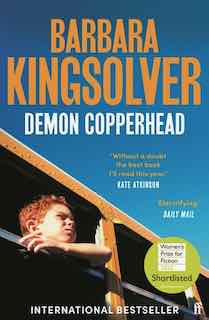
  1. Demon Copperhead by Barbara Kingsolver (8 votes)
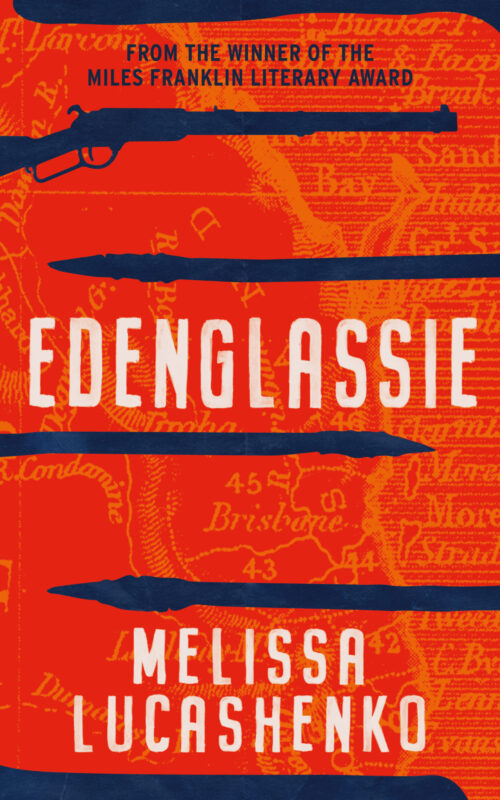
  2. Edenglassie by Melissa Lucashenko (7 votes)
  3. Stone Yard devotional by Charlotte Wood (6 votes )

Last year, the highly-commendeds right behind the two third place getters, but this year, the next two books were a few votes behind, at three votes each: Question 7 by Richard Flanagan and Chai time at Cinnamon Gardens by Shankari Chandran.

As for my three picks, it was very tough (as it usually is). I got something out of every book I read, and many will stay with me for a long time, but, like last year, the group’s number 1 pick was not in my top three. This is not to say I didn’t like Demon Copperhead, because I did very much, but that I loved something else more. My three books, in alphabetical order, were Marion Halligan’s Wishbone, Melissa Lucashenko’s Edenglassie, and Charlotte Wood’s Stone Yard devotional. I chose these because Halligan just knows human beings and uses wit and humour to show us ourselves; because Lucashenko tells us our history from a First Nations perspective and does it with fierce honesty but also with humour and generosity; and because Wood explores the place of stillness, silence, solitude, contemplation in our noisy, troubling world.

Selected comments

Not everyone included comments with their picks, and not all books received comments, but here’s a flavour of what was said:

  • Demon Copperhead: Commenters used superlatives like “huge”, “outstanding”, “brilliant”, “powerful” but also commented on its exploration of poverty and disadvantage, and its relevance to now.
  • Edenglassie: Commenters focused on the value, the importance, of seeing our history through a First Nations perspective, and how it brought our intellectual knowledge to life.
  • Stone Yard devotional: Commenters talked about its gorgeous evocation of place (as we all know the Monaro), and loved its sparseness, introspection, meditativeness, its exploration of solitude and silence.
  • Chai time at Cinnamon Gardens: Commenters liked its exposing the traumas involved in human movement, of its mix of politics, culture and human suffering, with one calling Chandran a “true story-teller”.

I’d love to hear your thoughts, particularly if you were in a reading group this year. What did your group read and love?

Monday musings on Australian literature: Australia’s bestsellers, Black Friday week 2024

With thanks to Colin Steele – Canberra’s wonderful Meet The Author convenor, who is also one of my major sources of literary news – I have another list for you, this one of the top selling books in this year’s Black Friday sales. Black Friday is a post-Thanksgiving Day sales event with a long and complicated history in the USA, which Wikipedia explains in detail if you are interested. Australia has no Thanksgiving Day so, how do these things happen? (That’s a rhetorical question, folks). And how does Black FRIDAY become Black WEEK or so? (Another rhetorical question.)

Wikipedia also explains that it came to Australia in the 2010s, with Apple Inc being an early promoter of Black Friday deals. However it happened, and whenever it happened, today, if you enter “book sales black friday Australia” into your search engine you will get myriad results from the big well-known online places like fishpond, booktopia and amazon, through the shopfront/online booksellers like QBD, Dymocks and Big W, to publishers like Penguin Books Australia and specialist organisations like the Children’s Book Council of Australia. Everyone, it seems, had Black Friday book sales.

There are many ways we can think about this – in terms of capitalism and the encroachment of American culture, for example – but when it comes to books, there is a silver lining if it results in more people buying books they otherwise may not have. I’ll leave that for you to think about (and maybe discuss in the comments). Meanwhile, whatever we might think, it has presented another interesting way (for those of us who love statistics) to see what people are buying – presumably not only for themselves but for Christmas gifts.

Colin obtained this list from (the pay-walled) Books+Publishing, on Friday, 6 December 2024. They reported that according to Nielsen BookData, 2024 Black Friday–week sales ‘saw volume sales in the Australian book market 40% higher than the average weekly sales in the four weeks prior’, with sales volume in the week of Black Friday up 4% compared to the week of the retail promotion in 2023.

Australia’s bestsellers during Black Friday week, ranked by copies sold from 24 to 30 November 2024, were:

Top five overall bestsellers

  1. Nagi Maehashi, RecipeTin Eats: Tonight (Macmillan): Australian
  2. Guinness world records 2025 (Guinness World Records)
  3. Lee Child & Andrew Child, In too deep (Bantam)
  4. John Farnham & Poppy Stockell, The Voice inside (Hachette): Australian
  5. Liane Moriarty, Here one moment (Macmillan): Australian

Top five adult fiction

  1. Lee Child & Andrew Child, In too deep (Bantam)
  2. Liane Moriarty, Here one moment (Macmillan): Australian
  3. Carissa Broadbent, The songbird and the heart of stone (Tor Bramble)
  4. Richard Osman, We solve murders (Viking)
  5. Sally Rooney, Intermezzo (Faber)

Top five adult nonfiction

  1. Nagi Maehashi, RecipeTin Eats: Tonight (Macmillan): Australian
  2. Guinness world records 2025 (Guinness World Records)
  3. John Farnham & Poppy Stockell, The Voice inside (Hachette): Australian
  4. Nagi Maehashi, RecipeTin Eats: Dinner (Macmillan): Australian
  5. Helen Garner, The season (Text): Australian

While I’m sure Australia’s booksellers were pleased with the sales, and will hope that these sales continue through the holiday season, and while it’s good to see a strong showing of Australian writers in the non-fiction list, it is disappointing to see Australian writers all but absent from the fiction list. The crime novels in the list aren’t Australian, nor the fantasy. Even the one literary fiction work is not Australian. Why is that? Why do more people want to read Sally Rooney than the recent works of Charlotte Wood, or Melissa Lucashenko, or Robbie Arnott, or any of our many other wonderful writers of literary fiction?

Any thoughts?

Six degrees of separation, FROM Sandwich TO …

And here we are again at the last Six Degrees of the year. I’m not going to say the obvious about time, as you are all thinking it anyhow, I’m sure. Instead, I will just wish you the best of the season. I hope it’s a contented and peaceful one for you all. Now, on with the show … as always, if you don’t know how the #SixDegrees meme works, please check host Kate’s blog – booksaremyfavouriteandbest.

The first rule is that Kate sets our starting book. This month, it’s another book I haven’t read. Indeed it’s one I hadn’t even heard of, but it was chosen because it’s a beach read (and here, down under, it’s beach-time!) The book is Sandwich by Catherine Newman, and it’s about a family’s annual vacation to Cape Cod in northeast USA.

Annie Dillard, The Maytrees

As frequently happens, I considered many options – beach read, a book about someone in the sandwich generation, a book with food in the title, a book by Anne Patchett who appears on the front cover, and so on. However, in the end I went with location, Cape Cod, and a family story, though my choice is a about a family which has lived on Cape Cod for generations rather than one which just visits there, The Maytrees, by Annie Dillard (my review).

Min Jin Lee, Pachinko

As best as I could determine, The Maytrees tells the story of a family over a period of around 60 years from the 1920s/30s to the 1990s. Min Jin Lee’s Pachinko (my review) is another family saga which spans most of the 20th century, from 1910 to 1989. It starts in a fishing village in Korea, before moving to Japan. (Provincetown in Cape Cod was also well known for fishing, though I suspect tourism might be its main industry now.)

Hoa Pham, Lady of the realm

Fishing village is my next link. Hoa Pham’s The lady of the realm (my review) opens in 1962, by introducing the protagonist Liên, who, as a young girl, has a prescient dream that the Viet Minh will come and destroy her fishing village. And thus starts a novel which explores the suffering wrought by war. The lady of the realm, like Pachinko and The Maytrees, spans multiple decades (albeit, in this case, in just 90 pages!)

Viet Thanh Nguyen, The sympathizer

Another book I’ve read about the Vietnam War is Viet Thanh Nguyen’s Pulitzer Prize winning novel, The Sympathizer (my review). Quite coincidentally, I read it back in 2017 straight after reading The lady of the realm. They make, I said, an interesting pairing because both deal with the Vietnam (or American) War and its aftermath, both are written in first person from a Vietnamese character’s point of view, and both question what happens when revolutions win. But, the similarity ended there.

One of the reasons The Sympathizer differs from The lady of the realm, is that The Sympathizer is a satirical novel. Another anti-war satirical novel is Kurt Vonnegut’s now classic Slaughterhouse-Five (my review), so that’s an obvious next link – and I’ll leave it at that.

Book cover

Vonnegut’s Billy Pilgrim spends time in a Dresden prisoner-of-war camp, the titular Slaughterhouse-Five, a place to which he keeps returning in the novel (unless he’s escaped to the alien Tralfalmadore). Dorrigo in Richard Flanagan’s The narrow road to the deep north (my review) also spends time in a POW camp – in the same war, but on the Thai-Burma Railway. It seems the right link to conclude on, though I did, briefly, consider a more tricksy link related to my reading group.

So, we started with Kate’s book in Cape Cod America, and stayed there for the next book before travelling more broadly in Asia, Europe, Australia and some more in the USA (though not necessarily in this order). Four of today’s writers are American born or based, with just two, Hoa Pham and Richard Flanagan, being Australian born. The gender split is 50:50, which is unusual for me. But we have, unfortunately, spent too much time thinking about war, so let’s not any more. Instead, I’ll reiterate my opening wish for you all to have a wonderful holiday season, and leave you with my usual question …

Have you read Sandwich and, regardless, what would you link to?

Novellas in November 2024, Part 2 (New to my TBR)

November is over and, as I expected, I didn’t get to post much for Novellas in November. However, I did read a couple of novellas and started another short form work (ie nonfiction), and, more to the point, I did read some participants’ posts which resulted in my noting some “New to my TBR” options.

Last year I listed 8 “New to my TBR” options and, unusually for me, I actually read two of them. They were:

New to my TBR:

  • Jon Fosse, Aliss at the fire (translated by Damion Searles) (orig. pub 2003): Brona of This Reading Life was mesmerised by this book in which an elderly woman reflects on the disappearance of her husband some twenty-five years before, after taking his rowboat out into the fjord.
  • Pascal Garnier, Boxes (translated by Melanie Florence) (orig. pub. 2012?): Kimbofo of Reading Matters didn’t like this as much as other books she’s read by Garnier, but I’m intrigued. Strangely, given my interest in Fosse’s book, it’s about, says kimbofo, “a middle-aged man reeling from his young wife Emma’s sudden disappearance”. It appears that journalist Emma fails to return home from a work trip and is presumed dead.
  • Paul Griffiths, Tomb guardians (2021): Lisa of ANZLitLovers makes this story – about the guardians of the tomb from which Christ’s Resurrection took place – sound both interesting and entertaining.
  • Jean-Patrick Manchette, No room at the morgue (translated by Alyson Waters) (orig. pub. 1973): host Cathy of 746 Books attracted me to this one by describing it as French noir which “blends a taut mystery with a trenchant sense of ennui and regret”.
  • Hiroko Oyamada, The factory (translated by David Boyd) (2010): Karen of Booker Talk posted on this and caught my attention, partly because it’s Japanese, but more because factory settings intrigue me and she describes it as unsettling and bordering on the absurd. 
  • Evelyn Waugh, Love among the ruins (1953): Judith Stove commenting on my Part 1 post, recommended this dystopian novella. She write that “Waugh covers a lot of themes – the ‘ruins’ of the title, criminal rehabilitation, and the transformative power of love – as well as the assisted-death industry. Plenty of themes with relevance to our time!” It’s a while since I’ve read Waugh, and this appeals and sounds manageable in my time-poor life!

There are probably others but given my track record for actually reading books I spy, I think this is enough. Maybe some of them caught your eye too? I see that two caught host Cathy’s eye. Check out her post to see which ones! I must say that she reminded me that I’d also been attracted to Kate’s post on Carys Davies’ Clear, but I am not going to (formally, anyhow) add it to my list. It’s long enough.

Regardless, has Novella November affected your TBR pile this year?

Written for Novellas in November 2024. Thanks as always to Cathy and Rebecca for hosting this special month.

Monday musings on Australian literature: Books set at the beach

Summer has formally started here in the Southern Hemisphere, and in Australia that means (for most people), the beach. We have gorgeous beaches here – not that they are my go-to place – so I thought to share some books set at the beach, by the sea. Some of these may also be “beach reads” (see my post on that concept), but that idea, whatever it means to you, is not what is driving this selection. Rather, I’ve chosen these books for the different ways they explore the beach – or, the idea of the beach – in Australian culture.

This is a very selective list, and I’m presenting it in order of publication.

Beach set books

Nevil Shute, On the beach

Nevil Shute, On the beach (1957, read before blogging): Shute’s classic apocalyptic novel needs, surely, no introduction. It is perhaps a cheeky inclusion here as it is not so much set “on the beach” but in Melbourne where some of the last people alive on earth are awaiting death from radiation following a nuclear war in the Northern Hemisphere. The idea of beach, in fact, is more metaphoric, or allusive, than literal, though most covers show beach and/or sea scenes. This book keeps on keeping on. Only last year, Alexander Howard wrote in The Conversation that the Sydney Theatre Company was presenting the first stage adaptation, and commented that

Shute’s vision of humanity’s self-inflicted destruction is eerily resonant in our time of climate emergency. The nuclear threat remains, too, in our perilous historical moment of democratic backsliding and failing nuclear states.

Kathy Lette and Gabriel Carey, Puberty blues (1979, seen – but not read – before blogging): one of our most famous beach-set books, this is a coming-of-age novel about two friends growing up on Sydney’s beaches, and coming up against the gendered nature of the surfing community, where girls are accepted only so long as they support the males. Lette has described 70s surfing culture as “tribal and brutal”.

Robert Drewe, The bodysurfers

Robert Drewe, The bodysurfers (1983, on my TBR): Drewe regularly features the beach and/or the sea in his writing. Many of his books are titled for beach and sea themes. His novels and and short story collections include The rip, The drowner, and The true colour of the sea; his memoir is titled The shark net; and he edited an anthology titled The Penguin book of the beach. The bodysurfers is more a collection of interconnected short stories than a novel. According to the back cover blurb of my edition, it is “set among the surf and sandhills of the Australian beach – and the tidal changes of three generations of the Lang family”. Like many of the books I’m including here, it has been adapted to other media, in this case to film, television, radio and the theatre! I read the first two stories some time ago and loved the writing. I intend to finish it one day, which is why it is still on my bedside table.

George Turner, The sea and summer (1987): like Shute’s novel, this is not exactly set on the beach, but this dystopian novel by Miles Franklin award-winner Turner is about climate change and the sea flooding the city – Melbourne again, in fact. Fourtriplezed, who comments on my blog occasionally, has reviewed this novel on goodreads. The book, he says, conveys a “dystopian nightmare” characterised by “greenhouse induced floods that make large tracts unlivable, worldwide economic collapse, over population, mass starvation”. He quotes from the novel:

“This is Elwood and there was a beach here once. I used to paddle here. Then the water came up and there were the storm years and the pollution, and the water became too filthy.”

Tim Winton, Breath (2008, my post): like Puberty blues, Breath is set amongst surfers, though on the Western Australian coast. Also like Puberty blues, it’s not so much about surfing as the cultural issues around it. In this case, the protagonist is male, and the focus is masculinity and risk-taking, and how the choices you make follow you. Winton, like Drewe, writes frequently about the beach and the sea but never simply. The sea and surfing offer necessary rejuvenation for Winton the person, but writer Winton uses it effectively to explore the themes that concern him about family and love, values and responsibility, lost males, and the environment.

Malcolm Knox, Bluebird (2020, my review): a satirical novel set in a beachside suburb. I wrote in my post that it looks like a satire on all those beach communities that pepper Australia’s coasts – the middle-aged men who prefer surfing to working, the country-club set, the councils which sell out to developers, small-town racism and gay-bashing, and so on. However, I suggested that while a beach-town might be the setting, its satire is broader, reaching into wider aspects of contemporary Australian life – dysfunctional men and broken families, development, aged care, banking, local government, and so on. In other words, given Australians’ love for the beach, such a place makes the perfect, relatable, setting for his satire …

That seems a good point on which to end this little selection. The beach in Australia can mean and reference so many aspects of our lives and national psyche, from escape and relaxation through the many ways we relate, behave and think to apocalypse and dystopia.

Do you have favourite beach-set books, Australian or otherwise?

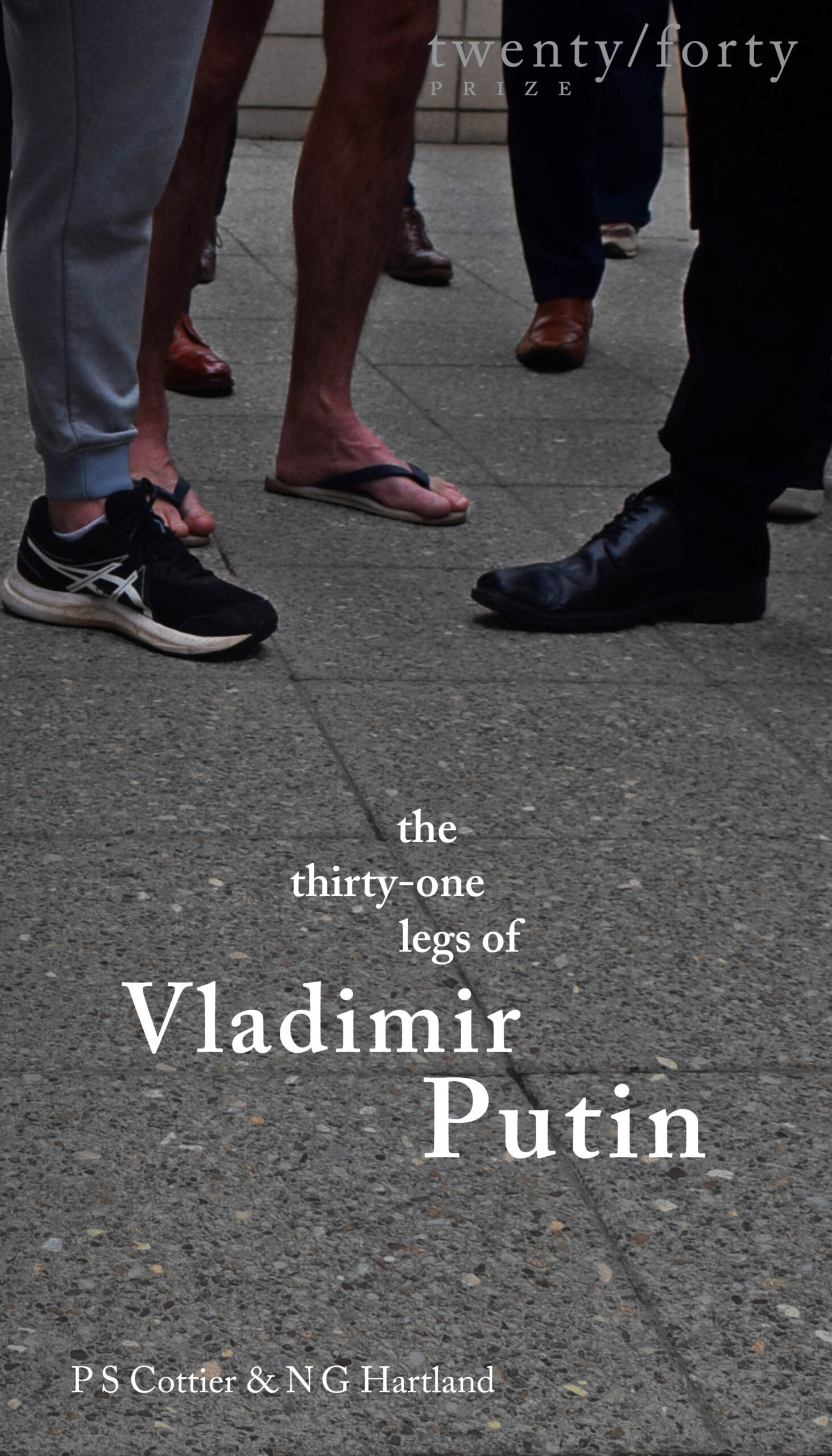
PS Cottier and NG Hartland, The thirty-one legs of Vladimir Putin (#BookReview)

Earlier this month, I posted on a conversation with the winners of the 2024 Finlay Lloyd 20/40 Publishing Prize, P S Cottier and N G Hartland, who wrote The thirty-one legs of Vladimir Putin, and Sonya Voumard, who wrote Tremor. On the surface, these books look very different, but conversation facilitator, Sally Pryor, found some similarities suggesting both explore ideas related to identity, one’s place in the world, and how we can be captured and defined by the systems within which we live. Having now read Cottier and Hartland’s novella, and having started Voumard’s memoir, I can see she has a point.

If you didn’t read my conversation post, you may be wondering what the heck this book with its curious title is about. Besides the fact that it’s a novella, which I love, I was attracted to it from the moment I saw it on the shortlist because the description said it “spirits us away on a comedic journey into a world where the reality and absurdity of political power are increasingly indistinguishable”. That sounded just too delicious and I was glad to see it win.

Ok, so I still haven’t told you what it’s about, but be patient, I’m getting there. The novella was inspired, said Cottier and Hartland, by the idea that there are such things as Putin “body doubles”. There is even a Wikipedia page about this “theory” so it is a thing, as they say! The titular “thirty-one legs” belong to 16 of these body doubles whose stories are told in the book. Sixteen, you ask? That doesn’t compute from 31? True, but one of the doubles only has one leg! How can that be, you might also ask, how can a “double” of two-legged Putin only have one leg? Good question, and I won’t give it away, but let’s just say that the idea epitomises the absurdity of the notion.

Now, this is a collaborative novel, and if I understood correctly from the conversation, Cottier and Hartland started by “pushing out” individual Putins. In fact, the novella reads rather like a set of interconnected short stories because each Putin stands alone, with minimal connection between them except they are all Putin doubles and most of them assume there must be others. However, there is a narrative arc to the whole. Each Putin tells us something about their recruitment and its impact on their lives, with some threads recurring through the different Putins, depending on their location and personality. Two Putins also bookend the story. Surfing Putin, Dave McDermott in Western Australia, opens the book in the Prologue and concludes it with his own story, while English Putin Samuel Chatswood starts off the stories proper, and returns with the penultimate story. Each chapter is titled with the name and location of a Putin, so we have, for example, “Maja Dahl, Oslo, Norway”, “Richie ‘The Putin’ Rogers, Cirencester, England”, “Joppe Stoepke, The Hague, Netherlands”, and “Andrei Galkin, Rostov-on-Don, Russia”.

The set-up, or plot, is simple. People from around the world who look like Putin have been recruited to act as Putin doubles should they be so needed. This recruitment has happened over twenty years, but the book is set post the Ukraine invasion, so our doubles suspect they will not be called upon to play Putin. Some are quite edgy about this, while others are more phlegmatic. For all of them, though, being paid – because paid they are, monthly, from an anonymous bank account – comes with questions, if not challenges.

Our first fully-fledged Putin, Samuel Chatswood from London, sets the scene. He tells us about his fears about being a double. Not only is he frequently teased about his resemblance to Putin and asked “why anyone would want to invade Ukraine?”, but he’s anxious because he has been increasingly getting dark looks from strangers since the Skripal poisoning. However, having recently spied another lookalike, he is “comforted” by the idea that “whatever suspicion and recriminations are possible, they are less likely to entangle me if I’m not the only Putin lookalike”. He also heralds the denouement, when he returns to find that such comfort might have been misplaced.

We meet all sorts of Putins, from the fearful, through the deluded, and the thoughtful, to the confident or more upbeat, but all ponder what being a Putin double means for them. For some their own identity gets lost in the role, and some are confused, or at least perplexed, about what’s expected of them. For others, like the resourceful Chilean, Sebastian Soto, it’s a business proposition, while several capitalise on their lookalike-ness. Steve Pinebrother in “International Waters”, for example, not only makes money, secretly, as a double but, publicly, as a performer on a cruise ship. Each one is beautifully individuated, and I find it hard to pick a favourite. There’s much humour in many of their stories, but there’s pathos too, particularly with those who get lost in – or fearful about – their roles. Life is not simple when you accept money without clarity, eh?

“the butterfly of truth does not need questions to emerge from its cocoon of facts”

So, what’s the takeaway. An obvious one is contemporary culture’s focus on appearance and its willingness to monetise looks without much substance behind it. But another is murkier. This novella, I’m tempted to say, could be read as an allegory of the changing world order. No matter where the Putins live, recent changes are unsettling them. The ground is shifting and they (we?) don’t know how to react. Do they bury their heads in the sand, believing it will be alright? Do they wait for the inevitable or, try to withdraw? Or do they take action, and if so, what action can they take? For French Putin, Hugo Fournier,

It matters not, I conclude, what is reality and what is an extravagant theory from a feverish mind. The answer of course is that I should trust no one. I am the only Putin who can, and will, look after me.

Is such isolationism the answer? Through their various Putins, Cottier and Hartland pose serious questions, including, what do we believe and what we can or should we do?

The thirty-one legs of Vladimir Putin is an audacious “what if” story. Its episodic approach works well in the novella form. Were the book much longer, the conceit would, I think, start to lose its freshness. As it is, there are enough Putins to provide a variety of stories, without becoming repetitive. The tone is light enough to be highly entertaining, but the content is informed and thoughtful enough to engage our minds. This book would make a perfect Christmas stocking stuffer, which is not to say I put it on a par with chocolates and scratchies, but that it is small in size, well-priced, physically lovely, and a thoroughly absorbing read.

Read for Novellas in November.

PS Cottier and NG Hartland
The thirty-one legs of Vladimir Putin
Braidwood: Finlay Lloyd, 2024
115pp.
ISBN: 9780645927016

Review copy courtesy Finlay Lloyd.

Marion Halligan, Wishbone (#BookReview)

My reading group’s last meeting of the year took the form of a tribute to Marion Halligan, who died earlier this year and who had generously attended our meeting when we discussed her Valley of grace (my review). We have done this once before with Helen Garner (albeit she hadn’t died) and it worked well. The process is that we choose something we want to read and share our thoughts with the group. I have read several of Halligan’s books, but I have a few on my TBR, so of course I chose one of those, Wishbone, her fourth novel, published in 1994.

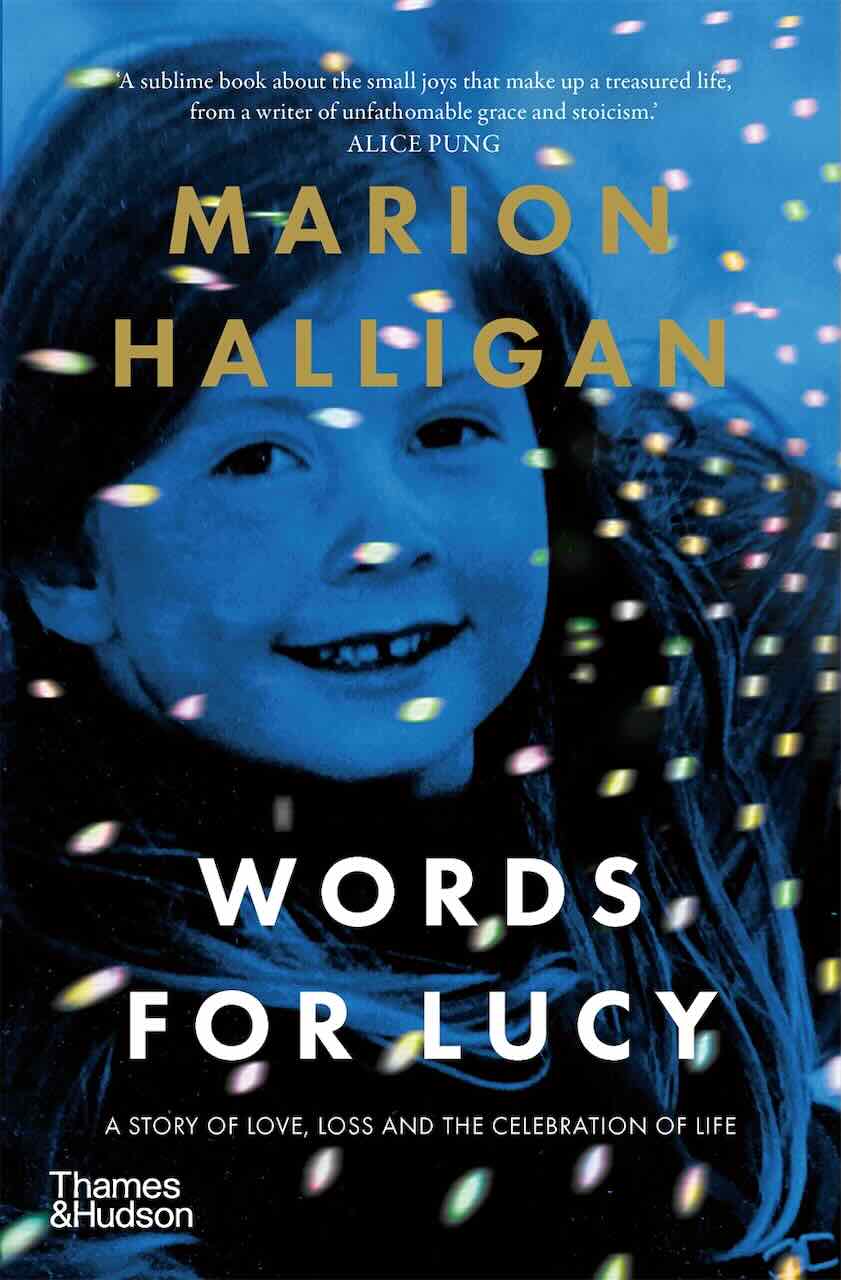
Before I share my thoughts on that, I thought you might like to know what everyone read. Ten members attended the meeting. Some read two books, while others chose a short story or article. It is, after all, a busy time of year. The novels read were, in chronological order, Wishbone (1), The golden dress (2), The fog garden (1), Valley of grace (1), Goodbye sweetheart (2). Three people read her most recent memoir, Words for Lucy, while others read selections from Canberra tales (“Most mortal enemy”), The taste of memory (the first piece), Canberra Red (“A city of mind”), and Shooting the fox (“Shooting the fox”). In other words, we read widely across her oeuvre, resulting in an enjoyable – and occasionally excitable – meeting as we teased out some of her themes and ideas, including how much of her fiction was drawn from life!

“who knows what the hell is going on”

So now, Wishbone. It tells the story of a woman, Emmanuelle, her “motley family”, and the wishes they have for themselves. The novel starts with a young, passionate Emmanuelle having an affair with a married man, but it soon jumps some years hence when she is now married (to a man named Lance), and living in well-heeled Sydney with two children, Maud and William. The rest of the novel follows a period in the lives of these four and others in their close circle – friends, family and employees. During this time, we experience a life-threatening stroke, extra-marital affairs, mistaken assumptions, and a suspicious death, all set within perfectly rendered scenes of domesticity. Halligan can make you gasp with her audaciousness.

As I was reading this novel, a light dawned for me about why I so often use Jane Austen as a benchmark for writing I love. I do like all sorts of writing, but I am particularly drawn to writing that exposes human nature with wit, irony and a generous spirit. This is what Austen does, and this is also what Halligan does. Wishbone is a generous story about messy human lives. Halligan writes with a knowingness about those deep-down thoughts, wishes, and desires we all have, but she is also forgiving about her characters’ foibles and less admirable traits and behaviours. In Wishbone, she explores the tension between our wishes – particularly regarding love – and living with what you’ve got.

There’s something of a fatalist element, here, in the sense that we think we have choice in all this, but choice proves in fact to be elusive. Things happen that we have no control over. Late in the novel, as Emmanuelle sits around the kitchen table with her two children and au pair Mel, in what looks to be a cosy domestic scene, a question – which is both literal and existential – is suddenly proffered, “who knows what the hell is going on”. Who indeed? (And who is asking the question? Emmanuelle, surely, but there’s also an omniscient voice overlaying the characters’ perspectives. At least I believe so. Wishbone slides seamlessly between voices and perspectives in a way that never loses the reader, but that ensures we see multiple sides of things.)

This brings me to style, and how Halligan does what she does. Halligan is a born short-story writer. As I started Wishbone, I almost wondered whether I was reading a book of short stories. Every chapter is gorgeously titled and most felt like they could stand on their own as little nuggets from a life. The opening chapter, The Glade, tells of Emmanuelle’s youthful affair with her married man. It starts:

The difficulty of a love affair between a young woman and a married man may be its logistics. Where can they go? He lives with his wife. She lives with her parents.

They can’t afford hotels, and anyhow it’s too risky as the town is small, but Brian knows “a good place”, a little glade under a cliff. Whenever Brian thinks of going to the glade, he whistles Handel’s tune, “Where e’er you walk”, which “always gladdened his wife’s heart, because she knew her husband was feeling cheerful”. Halligan’s discussion of this song, Brian’s behaviour, and the wife’s response is delicious in more ways than this little irony, but I will just share Halligan’s nailing the point, with “the song told her about the walking and the sitting but what she didn’t know about was the lying”. Just think of the double meaning in that last word! This writing just makes you splutter.

From here, the plot unfolds quietly but surely. Hints are dropped but aren’t heavy-handed, so we are still surprised when certain events occur, which brings me to the title, and its reference to wishes. In the third chapter, The Man in the Train, there is a mostly mundane discussion about wishes until the chapter’s titular, and unnamed, “man” asks Emmanuelle what she would wish for. Her answer?

I would wish for the gift of making dangerous choices.

As the novel progresses, various characters express their wishes. Emmanuelle’s friend Susie idly wishes she were a widow, while au pair Mel wishes she were beautiful. Emmanuelle wants more passion from her husband, while chauffeur Stuart wants money. And so on … What these characters learn, you won’t be surprised to hear, is that their seemingly ordinary, or common, wishes often carry a danger that is not expected. You know that saying, “be careful what you wish for”. But Halligan’s book is no simple moral tale. What Emmanuelle realises near the end, in fact, is that all choices can be dangerous. Susie asks her:

Have you ever wished Lance dead?
I’ve wished him different.
And did that come true?
Not in ways that I’d have chosen.

Where does this leave us? We won’t stop wishing, and we certainly can’t stop making choices, but we can think about our choices and be realistic about the outcomes, whether they are the expected or unexpected ones. In the end, Emmanuelle probably has the answer:

being alive is like reading a book. You might think you’ve got a fair idea of the plot but you don’t actually know what’s going to happen next, you’re as much a mystery to yourself as a character in a novel. Perhaps the secret is just to keep turning the pages.

Reading Wishbone has reminded me how much I enjoy Halligan. I must get back to that TBR.

Marion Halligan
Wishbone
Port Melbourne: William Heinemann Australia, 1994
235pp.
ISBN: 0855615974

Monday musings on Australian literature: Writers in the news (1)

Australian writers have been capturing attention – here and overseas – in the last few months. I’ve been noting these stories as they’ve popped up, and kept planning to post on them, but somehow, time just slipped by and more stories kept coming. Consequently, most Aussie readers here will know most of these news items by now, but there might be a surprise, and, anyhow, I’m hoping they might interest non-Aussie readers of my blog. (I am numbering this post because I just might be inspired to write another one sometime.)

Alexis Wright’s multiple awards

This year, Alexis Wright has won several significant literary awards. She was awarded the Stella Prize in March and the Miles Franklin Prize in August for Praiseworthy, making her the first author to win these two prizes in one year. (Each of these is worth $60,000). In May, it was also announced that she’d won the UK’s James Tait Black Prize for Fiction (worth 10,000 British pounds or $19,000), also for Praiseworthy. Then, this month, she was awarded the triennial Melbourne Prize for Literature which is a body-of-work prize to a writer who has made an “outstanding contribution to Australian literature and to cultural and intellectual life”. It too is worth $60,000.

Melissa Lucashenko’s multiple awards

Lucashenko, like Wright, is no stranger to literary awards, but this year, she too has taken out several significant awards, all of them for her first work of historical fiction, Edenglassie (my review): the $100,000 ARA Historical Novel Prize, the $50,000 Margaret and Colin Roderick Literary award; the $30,000 Queensland Premier’s Award for a Work of State Significance, and the $25,000  Premier’s Prize for Fiction. She also won the Fiction award in this year’s Indie Book Awards.

Richard Flanagan’s prize and ethical stand

Another recently announced award is Richard Flanagan winning UK’s 2024 Baillie Gifford Prize for Nonfiction for his most recent book Question 7 (my review). This prize is worth £50,000 (or, AUD97,000). If you’ve heard this news, you will also know, as the ABC reported, that Flanagan had pre-recorded his acceptance speech because he was trekking in the Tasmanian wilderness at the time. In this speech, he said he had “delayed” accepting the prize money until sponsor Baillie Gifford put forward a plan to reduce its investment in fossil fuels and increase investment in renewable energy. Flanagan said that “on that day, I will be grateful not only for this generous gift, but for the knowledge that by coming together in good faith, with respect and goodwill, it remains possible yet to make this world better.”

Flanagan is not a rose-coloured glasses idealist. He is not asking for the world, but simply for a plan. The ABC quotes him further:

“… were I not to speak of the terrifying impact fossil fuels are having on my island home, that same vanishing world that spurred me to write Question 7, I would be untrue to the spirit of my book.

[BUT]

“The world is complex. These matters are difficult. None of us are clean. All of us are complicit. Major booksellers that sell my books are owned by oil companies, major publishers that publish my friends are owned by fascists and authoritarians … As each of us is guilty, each of us too bears a responsibility to act.”

I like this honesty and realism. Let’s see what happens next. Will a writer’s stand – which compounds what I believe is already increasing criticism of Baillie Gifford – see a company decide it too can make a stand?

Jessica Au’s novella to be filmed

Meanwhile, in non-award news, Jessica Au’s award-wining (ha!) novella, Cold enough for snow (my review), is to be made into a film. According to Variety it will be a U.K.-Japan-Australia-Hong Kong co-production and filming will begin “in fall 2025” (which presumably means next September to December). I first read about it on publisher Giramondo’s Instagram account. They quoted theatre veteran-debut director Jemima James,

I hope the film, like the book, creates space for audiences to think and feel deeply about the important people in their lives, about the relationships that are central to them …I hope it provokes shifts of perspective, new understanding, new compassion for the people they love, however complex or complicated that love might be!

Gail Jones’ Lifetime Achievement Award

I also saw on Instagram – this time Text Publishing’s account – that Gail Jones had received Creative Australia’s Award for Lifetime Achievement in Literature. In other words I’m bookending, more or less, this news post with body-of-work awards. As Text writes, the award “recognises her impressive body of work, and her ongoing mentoring of young writers”.

Creative Australia’s website tells me that Jones was one of “eleven leading artists to receive 2024 Creative Australia Awards”.  They quote their CEO, Adrian Collette AM:

‘It is our immense honour to celebrate these remarkable artists whose work is making an impact in communities across the nation. Each of the recipients contributes their unique voice to our cultural story.’

I recently reviewed Jones’ novel Salonika burning (my review) but I have more on my TBR.

Any comments on these news items? Or, indeed, do you have any to add? (Not that my aim here is to be comprehensive. That would be impossible!)

Nonfiction November 2024, Weeks 1-3

My participation in Nonfiction November tends to be sporadic. Last year, I wrote some weekly and some combined posts, but I did address the weekly questions conscientiously. However, the prompt questions are, I think, much the same this year and my answers would be very similar, so I’m not going to be as thorough this post. I will just respond to Week 1 (My year in nonfiction) and Week 3 (Book pairings) because the responses to these will be different every year.

Week 1: Your year in Nonfiction

Heather (Based on a True Story) hosted this week, which is described as follows:

Celebrate your year of nonfiction. What books have you read? What were your favorites? Have you had a favorite topic? Is there a topic you want to read about more?  What are you hoping to get out of participating in Nonfiction November?

This Nonfiction November year runs, by my definition, from 1 November 2023 to 31 October 2024. My nonfiction reading has been varied, though much of it did involve some sort of life writing – biography, memoir, and hybrids of the two. Two biography-memoir hybrids that I enjoyed this year were specifically related to the literary biography field that is my favourite type of nonfiction. The books were Anna Funder’s Wifedom: Mrs Orwell’s invisible life (2023, my review) and Nell Stevens’ Mrs Gaskell and me: Two women, two love stories, two centuries apart (2022, my review). Both had personal – hmm, agendas is too strong a word so – drivers behind their author’s decision to write about the life of their subject.

Late last year, I posted on my brother Ian Terry’s book, Uninnocent landscapes (my post). It’s a truth-telling project for which Ian followed the journey taken by George Augustus Robinson on his 1831/32 Big River Mission (brief description), which was a poorly conceived attempt to conciliate between settler and Aboriginal Tasmanians. In his book Ian accompanies his photographs with excerpts from Robinson’s text.

I did read other nonfiction, but I’ll end with two, one that I finished and one I’m currently reading. The finished one is Richard Flanagan’s Question 7 (my review). It was a great read; it stimulated an excellent reading group discussion; and it has just won the Baillie Gifford Prize for Non-Fiction, which is worth £50,000. (As some of you may have heard – see The Guardian – Flanagan said in his acceptance speech that he would not accept the prize money “until the fund manager shares a plan to reduce its investment in fossil fuel extraction and increase investments in renewables”. This is putting your money where your mouth is. I applaud him.)

The one I’m currently reading – slowly, between other books – is Hazzard and Harrower: The letters by Brigitta Olubas and Susan Wyndham (see my author conversation post). It is an engrossing mix of personal life “stuff”, and observations on such things as politics at the time (such as Watergate in the USA and the election of Whitlam in Australia) and writers and writing. I’ve just enjoyed some discussion about criticism, which reminded me of that panel I attended at the Canberra Writers Festival. The panel discussed, for example, the idea that criticism can be a work in its own right. Shirley Hazzard, on the other hand, writes to Elizabeth Harrower that “I rarely read criticism, and have little interest in it as a genre [my emph.], only for the occasional statement or essay that rings true and wants books to be good, rather than showing relief & satisfaction when they’re not”.

Week 3: Book Pairings

Liz (Adventures is Reading, Running and Working from Home) hosts this week, and explains it thus:

Pair up a nonfiction book with a fiction title (or whatever you want to pair up). Maybe it’s a historical novel and the real history in a nonfiction version, or a memoir and a novel, or a fiction book you’ve read and you would like recommendations for background reading. Or two books on two different areas have chimed and have a link. You can be as creative as you like!

This is my favourite part of Nonfiction November, because, like the #SixDegrees meme, it’s fun to think about. I’m giving you three pairs.

Reconciliation and truth-telling

I’ve already mentioned Ian Terry’s Uninnocent landscapes. Essentially, it looks at colonialism’s impact on country, through photographs of the landscape today, excerpts from the historical record, and essays by First Nations Tasmanians and a farmer living on the land. I will pair this with Melissa Lucashenko’s first work of historical fiction, Edenglassie (my review) in which she asks, among other things, what if colonialism had been done differently.

Letter-writing

I can’t resist pairing Brigitta Olubas’ and Susan Wyndham’s Hazzard and Harrower: The letters with Jane Austen’s epistolary novel Lady Susan (my review). I know, I’m shameless – any opportunity to mention my Jane!

Genre-bending

The Guardian article mentioned above describes Richard Flanagan’s Question 7 as “part-memoir, part-novel, part-history”. If that’s not a genre-bending work of nonfiction I don’t know what is. So, I thought to pair it with a genre-bending work of fiction (or, at least, not nonfiction), but which one? I think Evelyn Araluen’s Dropbear (my review) is the perfect match. Winner of the 2022 Stella Prize, it is a collection that combines poetry and prose/memoir, and that, like Flanagan’s work, draws from Araluen’s own life to ask questions that are well worth asking.

What would you pair (and/or do you have anything to share regarding your year in nonfiction)?