Australian poets have had a reputation for being a cantankerous lot, though whether this is still true I don’t know. However, what is true is that the announcement by the Australian Government in 2023 that it would appoint a National Poet Laureate was not met by poets (or the literati) with universal acclaim. And why should it be? These sorts of appointments have their pros and cons. On balance, though, I’d like to think the pros have it – at least until proven otherwise.
Here is what the Creative Australia website says about the initiative, which is part of the Federal Government’s 2023 Revive National Cultural Policy:
The National Poet Laureate is a three‑year appointment that recognises an outstanding Australian poet whose work and cultural contribution have shaped contemporary poetry and its readership. The Laureate serves as a respected public spokesperson and champion for Australian poetry, highlighting its diversity, richness and cultural significance.
The interesting thing here is that the first point is not what the role is but that the position constitutes a recognition, “it recognises an outstanding Australian poet …” Then, the role is given, which is to serve as “a respected public spokesperson and champion for Australian poetry”. So, what will have priority in the choosing? Recognising a poet or the poet’s ability to perform the nominated role? And what does being a “spokesperson and champion for Australian poetry”mean? Perhaps this is splitting hairs, but words – including their order – do matter.
I understand there’s much talk about it in poetry circles, to which I am not a party, so I am going to focus on one poet’s thoughts. However, if you are in Melbourne this weekend, a session at the Melbourne Writers Festival is devoted to the topic. Titled Whose Poet Laureate Is It, Anyway?: The Peter Steele Poetry Conversation, it features Maxine Beneba Clarke, who served as the University of Melbourne’s inaugural Poet in Residence, Michael Pedersen, who is the current Edinburgh Makar (Poet Laureate), and Chris Tse, who was Aotearoa New Zealand Poet Laureate, 2022-25. The session description says they will “discuss the purpose of a poet laureate through the lens of their own experiences and consider what poet laureates offer the communities they serve”. I’d love to be there.
“An anodyne laureate is of no use to anyone”
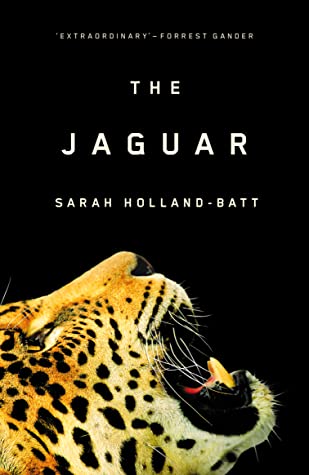
Meanwhile, I’ll share some thoughts published by Sarah Holland-Batt, who won the Stella Prize in 2023 for her collection, The jaguar. She wrote an essay* titled “The poet in the public arena” for the Sydney Review of Books (30 September 2024). SRB introduces the essay with:
“Surveying poet laureateships throughout history and across the world, Sarah Holland-Batt argues for the benefits of an Australian iteration – one that might galvanise the institutional support required to restore poetry to its place in civic life”.
This is a long essay but worth reading. Holland-Batt argues that there are two over-riding problems that a poet laureateship might help address: the lowly statue of poetry in Australia and the lowly stature of Australian literature abroad.
She tells us that we have had a poet laureate before – a convict named Michael Massey Robinson, back in 1818. Describing his brief and colourful trajectory, Holland-Batt says that his story encourages us to think about what happens to poetry, which is inherently “contrarian” and “thrives precisely because it isn’t subjected to utilitarian demands”, when it is “asked to serve a civic [often sycophantic] function”. She also suggests that a Robinson-style laureateship could lead us to see poetry’s function “as some unholy mixture of history and hagiography”.
Holland-Batt then tracks the history of laureates in England, starting with Dryden, noting the changing roles and expectations, and pointing out crucial points. Tennyson, for example, signalled “a shift in emphasis from satisfying the monarchy to speaking for and to the nation”, which resulted in “the idea of the laureateship as a form of public rather than royal recognition” taking root. Many laureates struggled with the role, but, monarchist Ted Hughes wasn’t too troubled about “summoning royal poems”. His important contribution, though, was focusing on children and writing verse for them, which cemented “the idea of public outreach” as central to laureateship.
Succeeding laureates “continued to champion” this public role, including commenting on contemporary issues and, often, eschewing writing commemorative poems. The current laureate, Simon Armitage, is also interested in generating “more interest in poetry among readers”. He has written commemorative poems (such as for the Queen’s Platinum jubilee) but also supports causes like “suicide prevention, conservation, and cancer research”.
Holland-Batt surveys other poetry appointments around the British Isles, noting in particular that the Scottish and Welsh positions include writing poetry in, and celebrating, their languages.
In the United States, the Poet Laureate was initially a more scholarly role but is now more “outreach” focused. It has few formal requirements, giving “laureates maximal freedom to shape the role according to their own passions and interests”. New Zealand, on the other hand, has a poet laureate whose role is more rigidly prescriptive, including having “to work towards a new collection” alongside “the general obligation to raise national awareness of the value of reading and writing poetry”. Other countries, like Canada and South Africa, also have laureates.
Now to Australia and the potential of a laureate. Holland-Batt argues that a poet laureateship:
- is “an exercise in the public humanities“, meaning it can help democratise the “appreciation and understanding of poetry”, bringing it to “ordinary spaces” away from its reputation for being “writing for cognoscenti”. A laureate could improve the presence of Australian writing, advocate for poetry, and even “help attract more cultural philanthropy to the literature sector”.
- can make “civic contributions” by increasing “public awareness and understanding of causes like conservation or mental health” not to mention teaching Australians about their own poetic history, though the challenge would be “to teach a course to the nation that nobody’s signed up for”. True!
- can play “an important role in celebrating and preserving what is distinctive about a place and its rhythms of thought, vernacular and speech, and, importantly its languages”, as Scotland and Wales have shown. This brings in First Nations poets. She admits that “a laureateship is … irretrievably a nationalistic project” but doesn’t have to be “jingoistic”. A laureate should be free to interrogate national ideas and myths, but can only speak from an individual, not collective, perspective. They cannot “please everybody … An anodyne laureate is of no use to anyone”.
Holland-Batt discusses at some length the challenges and potential pitfalls for a poet laureate in a country that is inexperienced with such a role. But, just as literary prizes regularly “prompt a predictable glut of opining about literary merit, a laureateship will also serve as a barometer of public taste and value”. In terms of who might be chosen, she says, pointedly, that Australia has “never been short of poets … only of poetry readers”!
She argues that the role should have “few expectations: less prescription, and more latitude given to the disposition and inclination of each individual laureate”. And each appointee should be free “to reenvisage it afresh”.
I’ve only touched on some of the pitfalls she explores. Ultimately, having done the thinking, she believes that a laureateship “will do more good for the cause of poetry in Australia than harm”. It would expose, “the wilful neglect that poetry has been subjected to … and the precarity of Australian literature more generally”. She elaborates on her evidence for this – from practical things like redlining poetry sales and poets’ low incomes to general issues like “the sorry state of Australian literature within the academy”.
She also questions some features of the laureateship as currently described, particularly its emphasis on “mentoring ‘up and coming’ poets”, arguing that
the laureate’s objective first and foremost must be to champion the reading of poetry, because it’s readers and readers alone who can make poetry more sustainable in the long term.
She ends on a strong statement about the value of poetry and the risks we are facing today of “losing the ability to interpret the meaning and nuances of language … of forgetting how to properly read … [and] … of losing the ability to feel the sheer joy of what our language is capable of, pushed to its limits”.
The essay, while detailed, is also, understandably, general. For example, she mentions the issue of language, and the idea that “a laureateship may prove a vital charge for First Nations poets who go on to take up the role”. Yes, but we have multiple languages not just one, and how often would a First Nations poet be appointed? She does not get into the weeds about the diversity of poetry. Would a slam poet be the go, for example?
All this is a big ask for a laureateship, but that’s no reason not to try. All it needs, and I don’t say this lightly, is some generosity, open mindedness, and the right person (from the many possibilities) to get us going. I am truly excited to see what happens.
For another view – not completely oppositional, but questioning some of the angles Holland-Batt has raised – check out academic Peter Fitzpatrick’s article in The Conversation (18 September 2024), “What is Australia looking for in its inaugural poet laureate?”
I’d love to know what you think, whether you are in a country that has a current laureate, or if you are an Australian who has thoughts on the issue.
* Originally delivered as a keynote titled “The Writer in the Public Arena: Implications of a Poet Laureate for Australia” at the University of Technology, Sydney on 20 September 2024.


I like the idea of a poet laureate, but haven’t thought about what that might entail or what it might look like. We now have an Australian children’s laureate who seems to spend a lot of their 2yr term visiting schools, libraries and Indigenous communities with/for the ILF.
Is that what they envisage for a poet laureate – mentoring and teaching with young people perhaps? Or more performance stuff like poetry readings and recitals. In both cases not every personality type would be suitable for or desire this accolade?
Thanks Brona. Yes I’ve heard of the Children’s laureate of course but also of course I’ve not seen much of what they do!
I’m wondering whether our poet laureate might have that overall goal – be a champion for Australian poetry, highlighting its diversity, richness and cultural significance – but what they do might vary depending on individual skills? I would like that flexibility. But they’d have to have some outreach ability?
There’s a poet laureate in the northern Ontario city we’re currently living in, which surprised me a little as I’d associated it with capital cities (Ottawa, Toronto, etc.); the program has just been announced as being under review (so the current poet’s term has been unexpectedly extended by a single year… I think it’s a two-year term normally) and I imagine it’s necessary to tweak these efforts regularly, what with funding issues and all of that.
Thanks Marcie. Have you been aware of the poet laureate? What have they done, or been expected to do?
I remember a public reading, library displays featuring their work, and they have been in attendance at the annual literary festival (which ran into funding problems and related issues that seemingly haven’t been resolved). But we don’t have a car and don’t taxi to events often, so there could well have been other events I’ve not noted.
Thanks Marcie … that gives me an idea of role and visibility.