A year ago I finally wrote a post on the UNESCO Cities of Literature, focusing on Melbourne’s designation as UNESCO’s second such city in 2008, and Hobart’s addition as Australia’s second city in 2023. The full list is available online at the Cities of Literature website.
As I wrote in that post, the criteria against which cities are assessed aren’t specifically listed, but the Cities of Literature website says that these Cities “share similar characteristics”, which presumably draw from the criteria. The characteristics are:
- Quality, quantity and diversity of publishing in the city
- Quality and quantity of educational programmes focusing on domestic or foreign literature at primary, secondary and tertiary levels
- Literature, drama and/or poetry playing an important role in the city
- Hosting literary events and festivals which promote domestic and foreign literature
- Existence of libraries, bookstores and public or private cultural centres which preserve, promote and disseminate domestic and foreign literature
- Involvement by the publishing sector in translating literary works from diverse national languages and foreign literature
- Active involvement of traditional and new media in promoting literature and strengthening the market for literary products.
Again, in last year’s post, I shared that UNESCO has pages for some of the cities. Melbourne’s (Naarm) commences with:
Celebrated for its vibrant literary culture, Melbourne supports a diverse range of writers, a prosperous publishing industry, a successful culture of independent bookselling, a wide variety of literary organisations, a well-established culture of reading and is actively involved in many events and festivals.
In addition to this, Melbourne has its own City of Literature website, in which it describes what this means and what Melbourne does to support literature and reading.
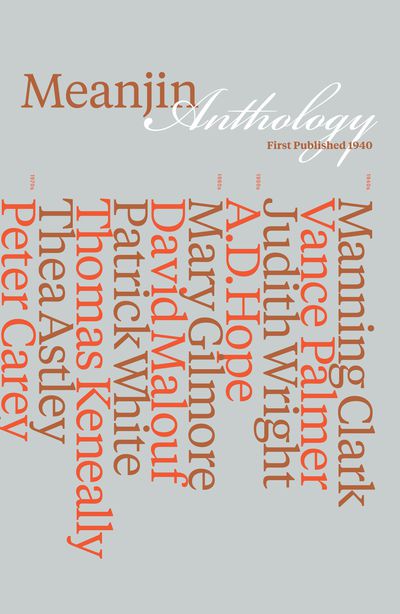
Now here’s the thing, and why I am writing this post today, Melbourne’s credentials are currently being questioned by some of its own, for a couple of very good reasons. Last year, Melbourne University Press announced that it would cease publication of one of Australia’s longest-running literary magazines, Meanjin, at the end of 2025. Established in Brisbane in 1940, Meanjin had been published in Melbourne since 1945. This was devastating news to the literary community, because this magazine is one of our treasures, for both its history and what it still does. Fortunately, a last minute reprieve has seen Meanjin return to its originating state with the Queensland University of Technology acquiring it early this year. This is great for Meanjin, but it does nothing for the City of Literature.
And then, in January of this year, Writers Victoria (about which I have written before in my writers centre series) was told it would not receive the funding it had been receiving from the State Government (via Creative Victoria). It was given emergency funding to help it survive through to June 30, but no more after that. As Angela Glindemann wrote in The Conversation, the loss of this centre – if it cannot change the government’s mind or obtain other funding – “would make Victoria (whose capital, Melbourne, is a UNESCO City of Literature) the only mainland state without a state government-funded peak organisation for writers”.
In the last three months, I have heard several literary commentators, besides The Conversation’s Glindemann, raise the issue of Melbourne’s City of Literature status in relation to these literary losses. The others include literary journalist Jason Steger (who was Literary Editor for Melbourne’s The Age newspaper), authors and podcasters Irma Gold and Karen Viggers (in Secrets from the Green Room, Season 7 Episode 79), and academic Patrick Stokes in ArtsHub.
Steger wrote earlier this month in his weekly emailed newsletter:
It’s dismally ironic that in Melbourne, Writers Victoria has been denied funding by the state government. Ironic because in 2008 Melbourne became only the second UNESCO City of Literature, but now could become the only state capital in Australia not to have an organisation that supports its writers.
[…]
Why are writers organisations important? Because they give crucial support to writers at all stages of their careers. They provide information, resources, workshops and plenty more. They also employ writers to conduct workshops and teach. In 2025 Writers Victoria employed 70 tutors, paying $50,000 in fees.
Irma Gold and Karen Viggers in their podcast speak from personal experience about the value of writers organisations to their careers, as does Toni Jordan in The Conversation’s article. These three writers (as did others I quoted in my Writers Victoria post) see writers centres as critical to supporting emerging writers and to the ongoing education of established writers. (Worryingly, The Conversation says that Writers Victoria is not the only one to confront threats to its existence in recent times.)
Stokes brings into his argument a recent controversy involving the State Library of Victoria and its direction, about which you can read at the ArtsHub link I’ve provided. Here I will simply share Stokes’ main point which is that
A library that is reduced to a museum has lost its inherent function. Likewise, the City of Literature designation shouldn’t turn a city into a sort of literary museum, a celebration of past glories now preserved under glass or atop marble plinths. It needs to reflect a commitment that’s as much forward-directed as backward. Cities of Literature ought to be as much about the books that are not yet written as the ones that already are.
I’m not sure that these actions would – or should – affect Melbourne’s City of Literature status, but they are a worry, on their own and as potentially indicative of a trend (particularly in Victoria right now) to cutting support for the arts. If you are a Victorian resident, you can sign a petition to the Victorian Parliament requesting it to “reverse the decision to cut state funding to Writers Victoria”. The petition is open until late April.
Thoughts?
 Whispering Gums
Seattle is a fine city, and Iowa City has had a considerable effect on American writing, but that they should be the US Cities of Literature and New York City not is just odd. Suppose the challenge were to name a dozen writers who have lived and worked in that city. A true student of publishing could get to a dozen for Iowa City, I imagine. Only a local historian could name a dozen for Seattle. The kids who sat in the back row and slept through high school English could get to a dozen for New York and keep going.
And one could say the same thing for Manchester over London.
Fair point George. And Australia’s only Nobel Prize Winner for Literature, Patrick White, was from Sydney, which is and was home to many of our fine writers. The crucial point in all this, though is that it’s the city which applies to be named such. You would have to think that NY and London, perhaps, have not applied.
The other thing is that it’s not so much about the writers in the past and present produced by the city but what the city is actively doing now to encourage and support literary culture in its widest meaning, and into the future. You would have to presume the cities you name are active in that way, and if so, I come back to the question of whether they have applied. They may not see any benefit in being so named?
Canadian here! Right now, especially, I think it is so important to question and stand up against decisions that reduce people’s cultural exposure. We need the arts and we need to fund the arts, not only for the good of the artists but for the health of our cultures and societies. Thank you for posting this!
Thanks Lisa. I nearly said “right now” but then I thought that in a sense it’s always “right now” – during COVID it was, during the GFC it was, and so on. We all need it but yet governments rarely recognise it.
Victoria is giving free public transport travel to seniors on the weekend. We already get cheap fares. Why not use that money for the arts?
As a former director of Writers Victoria I have a lot of thoughts on this. Arts funding is deeply flawed, the vulnerability of an organisation to the cessation of one source of funding being a case in point. Cultural organisations with limited capacity to raise their own funds need reliable, sustainable funding, not to compete in a constrained, often punitive environment. And administratively, there is so much more that can be done to support small cultural organisations. But I was part of successive reviews that said the same thing to government and nothing has changed. So…
Thanks very much Angela – I was hoping you’d say something. And everything you say makes sense. It’s outrageous – I was thinking the way governments so often do this only to backflip when the community fights back feels deeply cynical. And $150,000 is so small.
Melbourne obviously doesn’t want of deserve the title. This might be the City of Bendigo’s big chance. They could restore the School of Mines circular library to its former glory; reference writers like Gerald Murnane (who should have won the Nobel) who grew up there (Tamarisk Row); other great central Victorian writers like Tasma (Kyneton) and Joseph Furphy (Kyneton and Shepparton); open a writers centre; they could go mad and invite a Palestinian to the next Writers Week.
Cheeky Bill … but I like it!!
It’s all so disappointing. I think the whole Melbourne scene has declined for the reasons you listed, as well as all the stuff that has gone on with writers festivals (honestly, the MWF program for this year feels thin).
Thanks Kate. I’ll hadn’t checked the MWF’s program because I can rarely attend, but I will now. That’s a shame if it doesn’t excite you. Is it partly doe to the recent festival ructions in Bendigo and Adelaide? Is the Festival playing safe? Or is it that fewer writers are wanting to travel? Or, do you have ideas?
I think it’s a couple of things. Firstly, they shifted the date (from August to May) and, as a result caused unnecessary clashes with other festivals (and a lot of ill-feeling). Notably, the Wheeler Centre used to run a thing called Mayhem, where they hosted a number of international writers that were already touring Australia for the Sydney Writers Festival. Now that the SWF and the MWF follow each other, you would expect that the internationals could do both (we used to get a fresh batch when it was held in August). In previous years, the internationals have done both festivals but this year, SWF has a great international lineup but Melbourne’s is very light-on. If I was choosing between festivals, I’d be going to Sydney.
The other factor (and I don’t know all the details here, just whispers), the board of the MWF has been a bit unsettled – I think that is somewhat evident given the revolving door of directors.
Thanks Kate. I wondered about MWF being unsettled but didn’t know this about the leadership.
I wonder why they’ve brought it forward given all this and that they haven’t built on SWF.
I cannot talk about the Melbourne scene, but friends who work in various art depts in various Sydney uni’s are all talking about the funding cuts across all the art degrees atm. Right now it pays to be in engineering or any of the data/ai fields.
So disappointing isn’t Brona.
Very!
I can’t click “like” on that!
Why are your literary establishments losing funding? I learned yesterday that my local NPR station is no longer receiving any government funding, so it’s all donation based now. That’s not good. Oddly, the most specific news coverage I hear about Republicans that isn’t a knee-jerk reaction comes from NPR. It’s a great place to hear from diverse political voices—and now it’s got no funding.
Good question Melanie, and there’s probably no simple answer other than budget bottom line pressure and the arts always being among the earliest out when money is tight despite the valuable and demonstrable role the arts play in society! I used to listen almost solely to NPR and PBS when we lived in the US, and we do get PBS News here which we look at every now and then. I have heard about the funding cut. Terrible.
I heard a rumour that Fremantle was preparing a bid to become a UNESCO City of Literature… it’s partly why it ran its first lit festival last September. There are so many writers from this part of the world and some strong indie presses, so it makes sense. But I’m guessing funding is going to be an issue. With fossil fuel sponsorships increasingly untenable, and most organisations reluctant to invest in something without measurable returns, culture often struggles to secure support.
Oh interesting kimbofo – nice that the city wants to. That’s a big start I reckon. But the lack of support is depressing isn’t it?
Interesting reading through the comments here, which give a sense of just how complicated all of this really is. The simplest action one can take is to invest in what matters. Not to simply say, indie litmags are important and indie publishers are important and local lit events are important and independent news reporting is important… but to take measurable actions that support those views. If you can’t afford to subscribe to the lit mags/sites/channels/events, then access what you can without fees and discuss/share/promote. If you can’t afford to donate to festivals and events, volunteer your time and skills whether officially or unofficially. (Your series of posts on festival events are excellent in this regard, for instance. Are there as many comments and shares for those posts as there are for this one? There should be!)
Great points Marcie … a good literary culture should accommodate all this shouldn’t it – all interests, skills and hip pockets.
Re my festival posts, it varies, but some do which is encouraging to me that the work is worth it.