And so the year rolls on. It’s the first Saturday in April, so here I am again with another Six Degrees. It’s autumn here and we are starting to feel the change in the air. Time to get out my cool weather wardrobe again, more’s the pity! Now, I’ll get onto it … but first, if you don’t know how the #SixDegrees meme works, please check Kate’s blog – booksaremyfavouriteandbest.
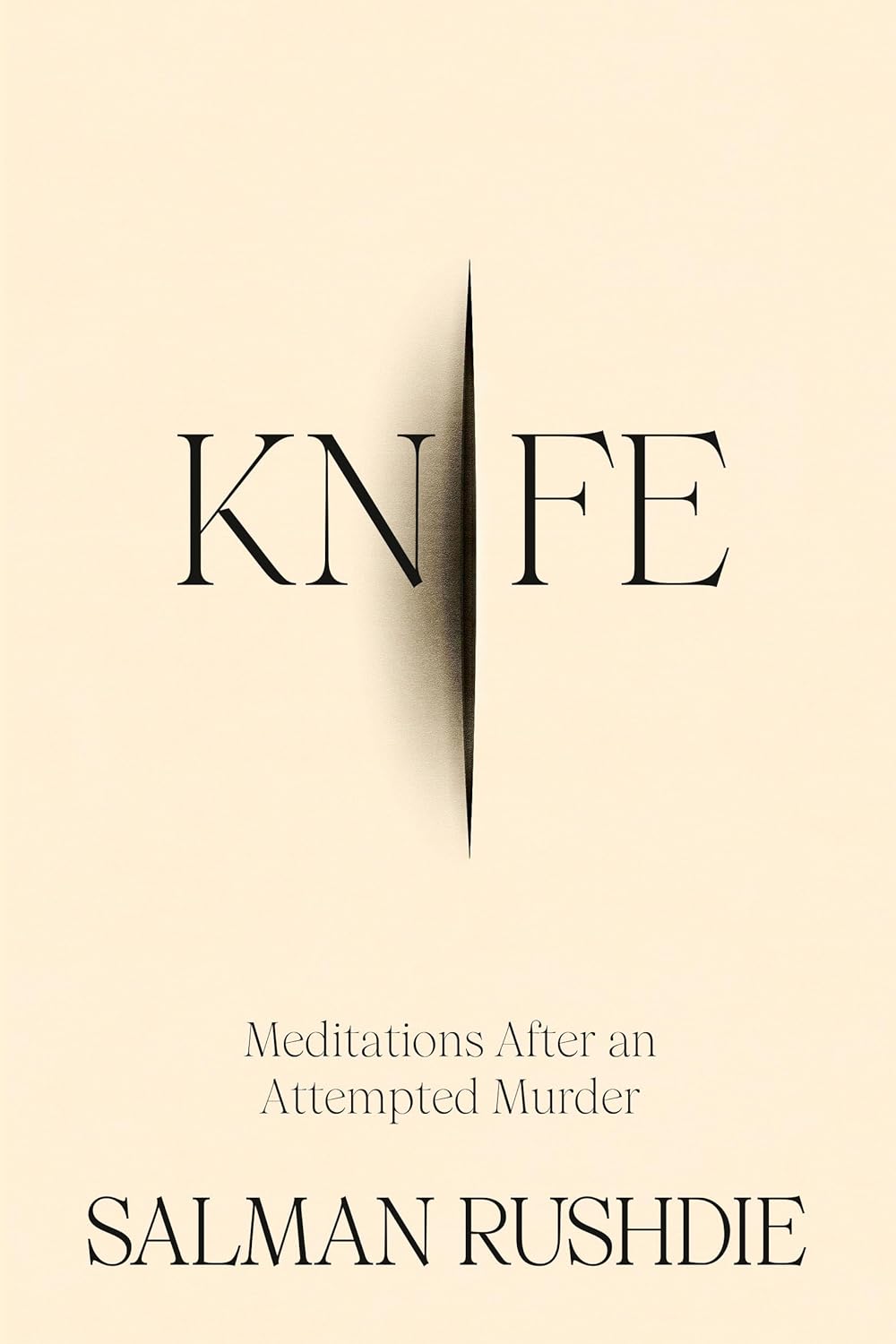
The first rule is that Kate sets our starting book. This month, it’s a book I would like to read, Salman Rushdie’s memoir, Knife, in which he shares his experience of a traumatic knife attack, some thirty years after that fatwa that was ordered against him. It’s “a reminder”, says GoodReads, “of literature’s capacity to make sense of the unthinkable, an intimate and life-affirming meditation on life, loss, love, art—and finding the strength to stand up again”.
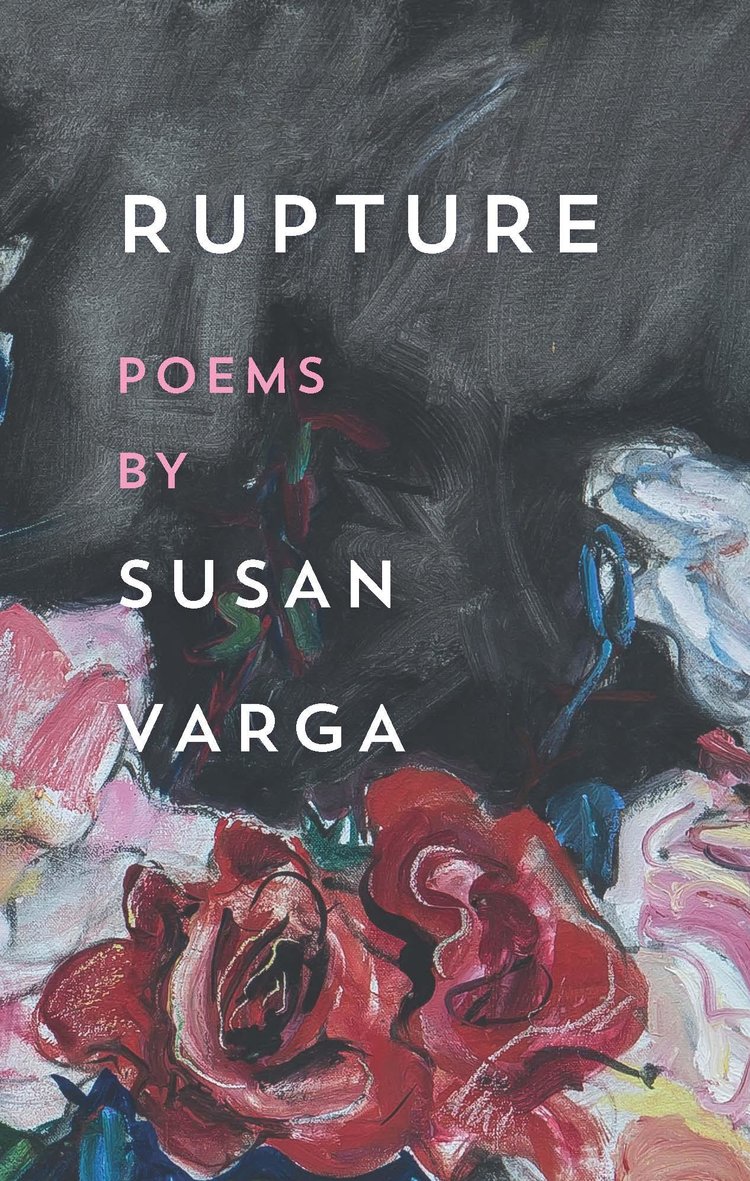
I have reviewed a Rushdie novel here, but instead of linking there, I’m choosing a poetry collection in which the poet shares her experience of a traumatic event, and of recovering from it. The poet is Susan Varga, and her traumatic event was a stroke. Her collection is titled Rupture (my review). I could also have linked on the fact that both books have stark, dramatic single word titles.

Susan Varga writes of a poet’s devastation of losing “sounds, words, sentences”. However, as I wrote in my post, it is not a bitter book, which reminded me a little of Dorothy Porter’s poetry collection, The bee hut (my review). It was the last book she wrote before she died of breast cancer at 54, and the final poem, written just two and a half weeks before she died, expresses gratitude for her “luck”.
Porter was a poet, and for her bees were a metaphor, said her partner, for “danger amid the sweetness and beauty”. I’m linking, however, to a book by someone who was fascinated by real bees, Bill McKibben’s memoir Oil and honey (my review). This book is subtitled “the education of an unlikely activist”, and is about his two main passions, one being bees, honey and good farming practice, and the other being oil, or the fossil fuel industry, and how to stop its impact on the climate. The book is both a memoir, and a manifesto about McKibben’s coming out as an environmental activist.
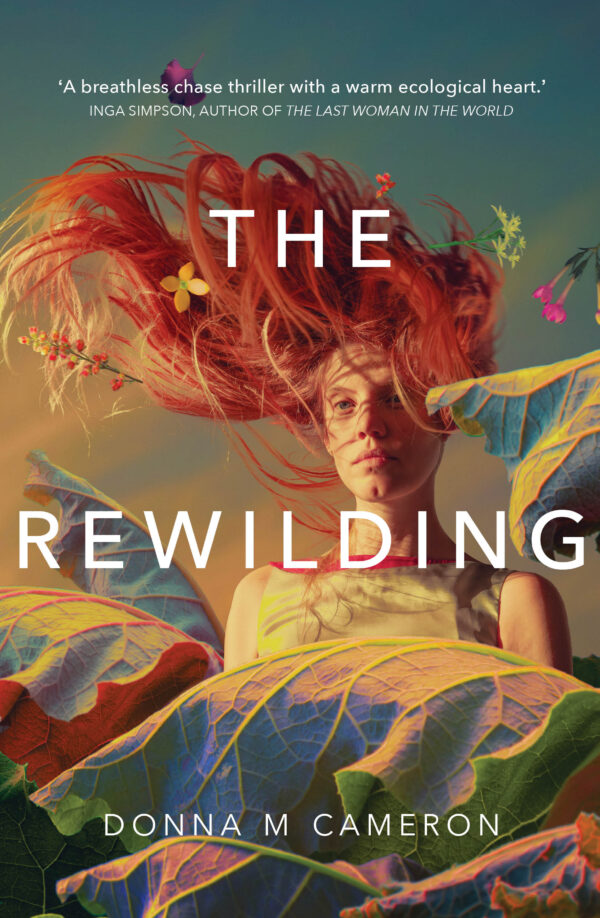
So, I am linking next to a novel about an eco-warrior/environmental activist, Donna M. Cameron’s The rewilding (my review). It’s a thriller by genre, but as I wrote in my review it’s about values, about the lines you draw, about the life you choose to live, and about what that means personally and politically.
Eco-warrior Nia is one of the protagonists of Cameron’s novel, but it opens with a young man, Jagger, sitting in his office deciding to do something that will lose him his flashy fiancée Lola. Just before I read Cameron, I read Willa Cather’s short story “The bookkeeper’s wife” (my review). It commences with a young man, Percy Bixby, sitting in his office deciding to do something in order to keep his flashy fiancée Stella, so it’s to Willa Cather than I am linking next.
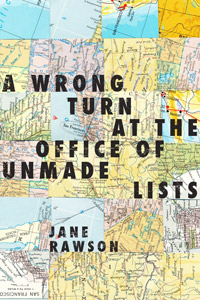
Finally, to close this chain, I’m following two young men pondering problems in their offices to a novel with office in its title, Jane Rawson’s A wrong turn at the Office of Unmade Lists (my review). This novel is partly a time-travel book, and the office appears in the GAP between two worlds. But what makes this book an extra good link for today’s chain is that it’s also a climate change book, which links it back nicely to McKibben’s and Cameron’s books. I’m not sure, however, that I can link it back to Knife.
So, four of my six books are by Australian writers; three are about climate change and activism; and two are by poets. Oh, and four of my six are by women, which is the case in my chains more often than not.
And, have you read Knife and, regardless, what would you link to?
 Whispering Gums
I’ve not read the Rewilding, but I have seen so many good reviews of it recently and I have added it to my wish list. Climate fiction as a concept is new to me, and I’m pretty keen to explore it. There will be a time probably where climate fiction becomes a reality.
Thanks Becky … Cli-fi as some call it is relatively new but I do “like” it and have read several. Cameron’s is a good example. You are right that there’ll be a time when it’s the mainstream.
actually this just made me think that I read an article recently that spoke to The Secret Garden being a precursor to modern climate fiction, it was really interesting https://aidanvale.blogspot.com/2025/03/the-secret-garden-revisited.html?m=1
Oh that’s really interesting Becky. I’ll come check it out when I’m on my laptop where it’s easier for me to comment on blogspot blogs.
Loved the way you have made the connections. And apart from Knife, i have only heard of two of them. And so good to see poetry listed. Am off to read your review of Rupture.
Oh thanks Josie … must say I was pleased to find a way of including two poets in the chain. I hope my post on Rupture interests you.
Excellent chain there. I haven’t read any of them but you have some great connections.
Thanks Joanne … that’s my common experience of reading other Six Degrees! It’s always interesting.
The cover of Rupture is gorgeous, but The Bee Hut appeals the most, Dorothy Porter had that extraordinary fearlessness in her work, which I admire.
Thanks Rose. It is a gorgeous cover isn’t it? SO you’ve read some Porter, but not this one?
Only Monkey’s Mask, which was fabulous. I should look out for more of her work.
And I should read that one shouldn’t I!
Always love to see poetry included. The Dorothy porter sounds very powerful and I’m definitely going to keep an eye out for it.
Thanks Cathy … it is. Her death was tragic.
Was Dorothy Porter being ironic or appreciative of the life she had had? I have read a lot of poetry but nothing very recent. I will look for her.
Bill McKibben was in my dorm in college, just a quiet guy working on the university newspaper. We are very proud of his work but I don’t know how it came about so I will read this.
Good question Staircase, but I think in this case she was being appreciative. It’s quite a heartfelt poem.
How fascinating about Bill McKibben. Still waters run deep? I think having had that experience you will find this book really interesting. I haven’t heard so much about him lately but I guess he’s still active in the US?
Very interesting chain here. And next month we start with another book entitled Rupture, but not this book of poems.
Thanks Davida … I did notice that, after the fact! There is a difference . The starting book is Rapture and mine here is Rupture. But I could very well have cheekily linked to Rupture if I’d not just used it.
Ah… my bad!
Good chain. This quote, “the office appears in the GAP between two worlds” I’m in the USA and it feels like the country is in a gap between two world–the sane world and HIS world.
Oh dear Lisa … I do feel so much for my friends (including blogging ones) over there.
Thank you! We rose up yesterday–no matter what our or your media showed. Even in little towns in deeply red states.
Our media showed it in our broadcast news and online! But I didn’t get a sense of how widespread it was across the political spectrum so your comment about the red states is – well – encouraging?
Well it was coast-to-coast and Canada to Mexico so I guess that’s super, right? And even in small towns where bullies could really get at you if you protested against them. It took Spain about 36 years to get rid of Franco. Please God not that long. I’ll be dead I imagine since I”m 63
I reckon that is super. When did such a protest against a president/administration last happen? As for Franco, hopefully your constitution will hold. AND in 36 years you could still be alive but T surely won’t be!
We haven’t had that kind of protest in a while. There were Black Lives Matter and Antif protests, but this reminded me more of Vietnam [I was a kid then but my folks talked to us about the news and we all watched the news]
That’s interesting Lisa … We over here are watching all this closely but love hearing the perspective of Americans who are living this every day.
You know how they say people didn’t realize it was a historic time? WE DO.
We do! (And me even more so as I’m older than you!)
What an interesting progression, and of course I enjoy the conclusion in some workplace stories. I know it’s not allowed, but I just watched the Swedish limited-series “The Breakthrough” about a 16-year-long struggle to solve a double murder (they found the murder weapon, a knife, very shortly afterwards, so it seemed that it should be tidily and quickly resolved), so I would link to that.
You are allowed to do anything Marcie and I’m glad you did. It sounds like an interesting series. I wonder if it’s available here. Limited-series … is that the same as miniseries?
I’d like to read the Rushdie book. I had it on hold at the library but it came in just as I was about to go away. So had to pass it on.
I’ve nearly picked it up on a few occasions, Pam, but then commonsense – that darned thing – prevailed!
Hi Sue, I love your link to the Wrong Turn in the Office. I have not read Knife, but made do. My links are: Let Me Tell You by Shirley Jackson; One Day by Nave Nicholls; Troublesome Words by Bill Bryson; Sharp Objects by Gillian Flynn: The Eye of the Storm by Patrick White, and A Separate Peace by John Knowles.
Thanks Meg … I’m glad you decided to make do. After all it’s what I mostly do anyhow! Enjoyed your links. I know all those authors, but haven’t read all those books.
A really interesting chain, Sue; I like your first link to Susan Varga’s poems and what you said about her sense of loss had me thinking of Kipling’s The Light That Failed about an artist who loses his sight, just managing to paint his masterpiece before it’s gone. I also like the sound of Rewilding and a Wrong Turn at the Office of Unmade Lists.
Thanks Mallika … I don’t know that Kipling so I’m glad to add that to my body of knowledge … I really only know his most famous books.
My mother’s office library many years ago had a whole set, and we read through most I think. Lots of lesser known titles and short story collections among them.
Ah, what a great opportunity to get to know an author.
Fun as always! I have read Knife and there is nothing about climate change in it 🙂
That’s was my fear Stefanie …. No closing the loop then!