Yesterday was the start of NAIDOC Week 2024. As has been my practice since 2013, I’m devoting this week’s Monday Musings to the cause.
NAIDOC Week’s theme this year is Keep the Fire Burning! Blak, Loud and Proud. Without specifically stating it, this theme responds, I’m sure, to the devastating loss of the Voice referendum last year. As the website says, it “celebrates the unyielding spirit of our communities and invites all to stand in solidarity, amplifying the voices that have long been silenced”. They say more, but I’ll just share two other points. One is that “the fire represents the enduring strength and vitality of Indigenous cultures, passed down through generations despite the challenges faced”, and the other is that
Through our collective efforts, we can forge a future where the stories, traditions, and achievements of Aboriginal and Torres Strait Islander communities are cherished and celebrated, enriching the fabric of the nation with the oldest living culture in the world.
For this year’s NAIDOC Week Monday Musings, I thought I’d pick up the point about cherishing and celebrating the stories of Aboriginal and Torres Strait Islander communities. This is simplistic, I know, but one way in which stories are celebrated is through awards – particularly through being short- or long-listed, or winning them. One award which has actively sought to embrace diversity in its foundational purpose is the Stella. Yes, that diversity is limited to “women and non-binary writers”. Nonetheless, the achievements have been significant in encouraging and raising the profile of many writers who may not have been seen otherwise.
So, with 17 years of the prize now in the bag and in the spirit of celebrating their achievement, I am listing all those works by First Nations writers which have featured in the Stellas over that time. This might also give them another little time in the air.
The Stella listees
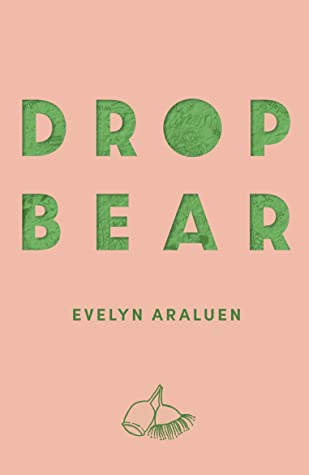
- Evelyn Araluen, Dropbear (Poetry and prose, UQP) : Winner 2022 (my review)
- Claire G. Coleman, Terra nullius (Fiction, Hachette Australia) : Shortlisted 2018 (my review)
- Dylan Coleman, Mazin Grace (Fiction, UQP) : Longlisted 2013 (Lisa’s review)
- Debra Dank, We come with this place (Nonfiction, Echo) : Shortlisted 2023 (my review)
- Ali Cobby Eckermann, She is the earth (Poetry/Verse novel, Magabala Books) : Longlisted 2024 (on my TBR, kimbofo’s review)
- Gay’wu Group of Women, Songspirals (Nonfiction, Allen & Unwin) : Longlisted 2020 (Denise’s review)
- Anita Heiss, Bila Yarrudhanggalangdhuray (Fiction, Simon & Schuster) : Longlisted 2022 (my review)
- Ngaire Jarro & Jackie Huggins, Jack of Hearts: QX11594 (Nonfiction, Magabala Books) : Longlisted 2023 (kimbofo’s review)
- Melissa Lucashenko, Edenglassie (Fiction, UQP) : Longlisted 2024 (on my TBR, Brona’s review)
- Melissa Lucashenko, Mullumbimby (Fiction, UQP) : Longlisted 2014 (Lisa’s review)
- Melissa Lucashenko, Too much lip (Fiction, UQP) : Shortlisted 2019 (my review)
- SJ Norman, Permafrost (Fiction, UQP) : Longlisted 2022
- Elfie Shiosaki, Homecoming (Poetry, Magabala Books) : Longlisted 2022 (Lisa’s review)
- Nardi Simpson, Song of the crocodile (Fiction, Hachette) : Longlisted 2021 (my review)
- Ellen van Neerven, Heat and light (Fiction/short stories: UQP) : Shortlisted 2015 (my review)
- Chelsea Watego, Another day in the colony (Nonfiction, UQP) : Longlisted 2022 (on my TBR, Bill’s review)
- Tara June Winch, The yield (Fiction, Penguin Random House) : Shortlisted 2020 (my review)
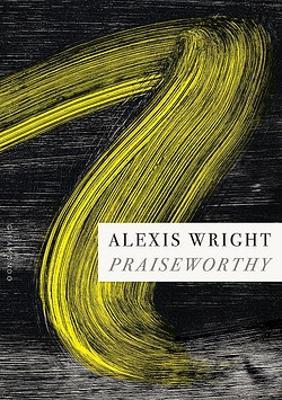
- Alexis Wright, Praiseworthy (Fiction, Giramondo Publishing) : Shortlisted 2024 (Bill’s second post with a link to his first)
- Alexis Wright, The swan book (Fiction, Giramondo Publishing) : Shortlisted 2014 (on my TBR, Bill’s review)
- Alexis Wright, Tracker (Nonfiction, Giramondo Publishing) : Winner 2018 (Bill’s review)
Some comments. There are 20 listed books (if I’ve got them all) out of 204. Of these there have been two winners – Alexis Wright’s Tracker and Evelyn Araluen’s Dropbear – seven shortlists, and 11 longlists. Alexis Wright and Melissa Lucashenko are the most listed authors – out of all authors – through the history of the prize to date. The listed books include novels, poetry and nonfiction.
Certain publishers appear frequently, particularly UQP which has an excellent – and long record – for supporting and publishing First Nations Writers. Eight of the listed books come from them. First Nations publisher, Magabala, has three, and Giramondo which publishes Alexis Wright also has three. Hachette has published two, with Simon & Schuster (which is behind the new First Nations imprint Bundyi I wrote about last week), Allen & Unwin, Penguin Random House and Echo, each having one. It’s healthy to see a spread, but it’s also great to see serious support being reflected here.
You will also see that almost every book has been reviewed by a litblogger. Some have been reviewed more than once, but I’ve just chosen one to share here. I hope that my posting this list will remind us all of some good books out there, and whet our appetites to check out First Nations writing.
Click here for my previous NAIDOC Week-related Monday Musings.
 Whispering Gums
I’ve read about half them, Blak writing in general is pretty exciting. Drop Bear has been sitting by my bed waiting to be read for a couple of years now; Alexis Wright is one of the world’s great writers; Terra Nullius is very good SF; Another Day in the Colony is essential reading; but I think, today anyway, Heat and Light is my favourite.
Thanks Bill … I’ve read 8 as you can see and will read another this month as my reading group already does a First Nations book in July. I have several on my TBR including Wright and Watego. I loved hear and Light too. But so many are great. I agree that overall Blak writing is exciting at the moment. And it’s across the board in terms of style, content and form.
I can’t remember reading anything about Alexis Wright from the Australian bloggers, so now I’m just wondering if I need to pay better attention. I’m going to check her out and see if she’s at my library. I know that you didn’t care for Too Much Lip, but I remember enjoying that book. I hadn’t realized the author had written more novels since then. For some reason, my public library system will buy a lot of Australian novels, so I’m going to go peruse and see what’s available.
Are you talking to Bill or me here, Melanie? I think Bill because I don’t think he liked Too much lip much whereas I did like it.
Bill has written quite a bit about Wright. I wrote one post on the first novel of hers I read but it was in my first year or so of blogging and I’d read the book before blogging. It’s an unforgettable book.
I’m so impressed that your library system will buy Aussie books.
Melanie and I exchanged notes in the night and I advised her to try Melissa Lucashenko, having determined that Wright is probably not her style.
Yes, I think that’s good advice Bill … I suspect Melanie would like Lucashenko.
Bill emailed me to reassure me that I would not like Wright because the books are rather like James Joyce’s work, and that’s not my jam.
Yes, I think Bill has probably given you the right heads up there. I did love Carpentaria but I need time to commit to Praiseworthy which I somehow don’t seem to find.
Pingback: She is the Earth | Ali Cobby Eckermann – This Reading Life
I have now read seven of the titles above, with some of the Alexis Wright’s and Claire Coleman’s on my TBR. Elfie Shiosaki has a new collection of poetry called Refugia that is just out this week too.
I think I’m 8 Brona and hope to make it ten by the end of July but we’ll see. I didn’t know that about Shiosaki. I’d like to read Homecoming.
I’ve read a handful of these but I think the most memorable for me was Ellen van Neerven’s Heat and Light (not saying I liked it but it was memorable). Still think about the very strange mutant-plant-person story. Incidentally, her poetry was featured recently on the big screen at Federation Square and it was really, really beautiful.
Thanks Kate … that book and that story do stay with you don’t they. It is one of the most memorable for me. How great that her poetry was displayed at Fed Square.
In theory I would like to read all the Stella nominees but in reality I rarely get to them. It’s interesting to see how the prizelistings have responded to work of Indigenous writers. I’ve read Carpentaria and The Swan Book and I’m technically reading Praiseworthy right now, but my bookmark hasn’t shifted for awhile because I had a real swell of new books come through unexpectedly at the library (and it’s not as though there’s a throughline narrative in her novel that needs tracking…so I paused it for a bit).
Thanks Marcie … I feel exactly the same about the Stella. How easy do you think it will be to pick up Praiseworthy and read in bits and pieces? Does it have obvious break points. I almost feel that without a narrative throughline I would find it harder to grasp and write on later, if I read it in bits? But this could be my advancing age too!
It’s inexplicable to me, so picking up my copy and putting it down again, resuming and repeating that pattern hasn’t effected my lack of comprehension one bit. /wideeyed
Bill shared up a review at one point, after I had repeatedly worried aloud that I was supposed to be grasping something, and I found it very helpful (even though normally that kind of piece would be too spoilery) cuz even though the reviewer had ordered their thoughts it underscored the idea that it’s not about narrative specifics.
So there are numbered parts (very long) and numbered segments inside them (rather short) and I think you’d be just fine reading a dozen pages each week for a year (flagging some passages along the way…but that’s challenging because it feels like poetry…where every line matters but context matters more).
Thanks Marcie … that’s helpful and makes sense given what I know of her and from just picking up the book a couple of times in bookshops. I quite like slow reads but I’ll see.