Monday musings on Australian literature: Some New Releases in 2022

For several years now, my first Monday Musings of the year has focused on “new releases”. As before, it is mostly drawn from the Sydney Morning Herald. Their writers do a wonderful job of surveying publishers large and small, but I have found a few more on my own! Also, remember, this is Monday musings on Australian literature post, so focuses on Australian authors. Do click on the SMH link to see the full list, which includes non-Aussies, Aussies I haven’t selected, and some additional book info.

Links on the authors’ names are to my posts on those authors.

Fiction

Last year, I listed over 30 fiction works, including short story collections, and read very few – though have some on my TBR. Here’s this year’s selection:
  • Robbie Arnott, Limberlost (October, Text)
  • Jessica Au, Cold enough for snow (February, Giramondo): Brona’s advanced review
  • Mandy Beaumont, The furies (February, Hachette)
  • Geraldine BrooksHorse (June, Hachette)
  • Michelle Cahill, Daisy and Woolf (April, Hachette)
  • Jay Carmichael, Marlo, 1953 (August, Scribe)
  • Steven Carroll, Goodnight, Vivienne, Goodnight (March, 4th Estate): final in the Eliot Quartet
  • Shankari Chandran, Chai time at Cinnamon Gardens (January, Ultimo Press)
  • Claire G. ColemanEnclave (July, Hachette) 
  • Gregory Day, The bell in the world (December, Transit Lounge)
  • Ceridwen Dovey and Eliza Bell, Mothertongues (April, PRH): “experimental book of bio-autofiction about early motherhood”, a genre-bender?
  • Robert Drewe, Nimblefoot (June, PRH)
  • Nigel Featherstone, My heart is a little wild thing (no date, Ultimo Press)
  • Victoria Hannan, Marshmallow (September, Hachette)
  • Hilde Hinton, The loudness of unsaid things (April, Hachette)
  • Gail Jones, no title yet (November, Text)
  • Yumna Kassab, Australiana (March, Ultimo)
  • Tom Keneally, Dancing the Liberty Dance (August, PRH)
  • Tom Lee, Object coach (November, Upswell)
  • Robert Lukins, Loveland (Allen & Unwin, March)  
  • Fiona McGregor, Iris (October, Picador)
  • Holly Ringland, The seven skins of Esther Wilding (June, 4th Estate) 
  • Philip Salom, Sweeney and the bicycles (November, Transit Lounge)
  • Wendy Scarfe, One bright morning (March, Wakefield)
  • Jock Serong, The settlement (September, Text)
  • Craig Sherborne, The Grass Hotel (February, Text)
  • Inga Simpson, Willowman (November, Hachette)
  • Steve Toltz, Here goes nothing (May, PRH)
  • Pip Williams, The bookbinder of Jericho (November, Affirm). 
  • Dominique Wilson, Orphan Rock (March, Transit Lounge)
  • Alexis WrightPraiseworthy (October, Giramondo)

SMH lists many books under Thrills and Chills, but this is not my area of expertise. So, I’m going to leave you to check SMH’s link if you are interested, and just bring a couple to your attention:

SMH also lists Debut Australian fiction. Most of these names are, by definition, unknown, so I’m sharing them by publisher:
  • Affirm: Omar Sakr, Son of Sin (February: poet moving into fiction)
  • Allen & Unwin (A&U): Isobel Beech, Sunbathing (May); Emily Brugman, The Islands (February)
  • Finlay Lloyd: Sandy Gordon, Leaving Owl Creek (February: on my TBR)
  • Fremantle Press: Brooke Dunnell, The glass house (November: Fogarty Literary Award winner)
  • Hachette: Megan Albany, The very last list of Vivian Walker (February: First Nations); Rhett Davis, Hovering (February: won the 2020 Victorian Premier’s Award for an Unpublished Manuscript)
  • Harper/Collins: Kimberley Allsopp, Love and other puzzles (February)
  • Picador: Jessica Stanley, A Great Hope (February)
  • Penguin Random House (PRH): Clare Fletcher, Five bush weddings (September); Ashley Goldberg, Abomination (May); Lizzie Pook, Moonlight and the Pearler’s Daughter (February); Justin Smith, Cooper not out (January)
  • S&S: James Weir, The Hemsworth effect (June)
  • Scribe: Sam Wallman, Our members be unlimited (May: graphic novel)
  • Transit Lounge: Brendan Colley, The signal line (May); Alan Fyfe (T, September); Adriane Howell, Hydra (August)
  • Ultimo: Pirooz Jafari, Forty nights (July)
  • UQP: Al Campbell, The keepers (February); George Haddad, Losing face (May)

Short stories
  • Ennis Cehic, Sadvertising (March, PRH)
  • lse Fitzgerald, Everything feels like the end of the world (April, A&U)
  • Chris Flynn, Here be Leviathans (second half, UQP)
  • Kat Gibson, Women I know (May, Scribner)
  • Mirandi Riwoe,The burnished sun (April, UQP)
  • Andrew Roff, The teeth of a slow machine (March, Wakefield Press) 
  • Maria Samuela, Beats of the Pa’u (March, Victoria University Press)

Non-fiction

SMH provides a long, long list of new non-fiction books covering a huge range of topics, so my lists here are highly selective.

Life-writing (loosely defined, and focused mainly on the arts and activism)
  • Carmel BirdTelltale: Reading, writing, remembering (July, Transit Lounge): need I say more?
  • Nick Cave, Faith, hope and carnage (October, Text): reflection on son Arthur’s death
  • Jessie Cole, Desire (August, Text): memoir
  • Jim Davidson, Emperors in Liliput: Clem Christesen of Meanjin and Stephen Murray-Smith of Overland (October, MUP): on these two literary journals and their editors
  • Aaron Fa’Aoso, So far, so good, (September, Pantera Press): memoir of Black Comedy star
  • Anna Funder, Wifedom (September, PRH): on George Orwell’s first wife; billed as a “blazing feminist masterpiece”
  • Hannah Gadsby, Ten steps to Nanette (April, A&U): memoir
  • Kate GrenvilleA room made of leaves: Elizabeth Macarthur’s letters (April, Text): non-fiction accompaniment to the novel 
  • Brittany Higgins, no title (October, PRH): memoir of activist
  • Nathan Hobby, The red witch (May, MUP): biography of Katharine Susannah Prichard (been waiting for this) 
  • Anita Jacoby, Secrets beyond the screen, May, Ventura): television producer’s memoir
  • Lee Kofman, The writer laid bare (March, Ventura)
  • Wendy McCarthy, Don’t be too polite, girls (March, A&U): activist/feminist’s memoir
  • Paddy Manning, Sly fox (November, Black Inc): unauthorised biography of Lachlan Murdoch
  • Patti Miller,True Friends (April, UQP): memoir
  • Brenda NiallMy accidental career (March, Text): biographer’s memoir 
  • Rick Morton (ed), Growing up in country Australia (April, Black Inc)
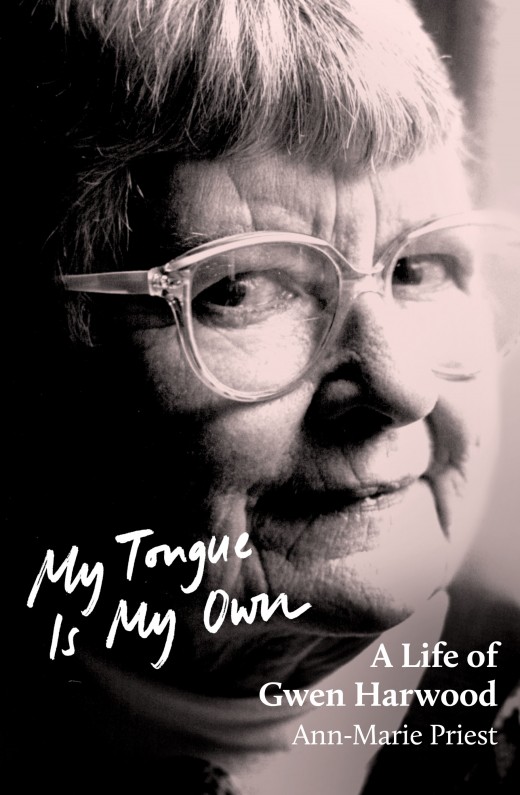
  • Ann-Marie Priest, My tongue is my own (May, La Trobe University Press): biography of poet Gwen Harwood
  • Magda Szubanski, no title (second half, Text): memoir
  • Simon Tedeschi, Fugitive (May, Upswell): pianist, “straddles the borders of poetry and prose, fiction and fact, trauma and testimony”
  • Tom Tilley, Speaking in tongues (September, ABC Books): broadcaster’s memoir

SMH also lists several biographies and memoirs on/by politicians, past and present, but, as last year, I’m taking a break from parliamentary politics. (Do check SMH’s link, if you are interested.)

Essay collections

  • Eda Gunaydin, Root and branch (May, NewSouth): race, genre and migration
  • Eliza Hull (ed), We’ve got this (March, Black Inc): by parents who identify as deaf, disabled or chronically ill
  • Kim Mahood, Wandering with Intent (October, Scribe)
  • Pantera Press anthology of Liminal and Pantera Press Nonfiction Prize longlist (August)

History and other non-fiction
  • Anna Clark, Making Australian history (February, PRH)
  • David Duffy, Nabbing Ned Kelly (March, A&U)
  • Meg Foster, Boundary crossers (November, NewSouth): Aboriginal, African-American, Chinese and female bushrangers
  • Duane Hamacher, The first astronomers (March, A&U): First Peoples’ knowledge of the stars; Hamacher is not First Nations, but did I believe work closely with Indigenous elders
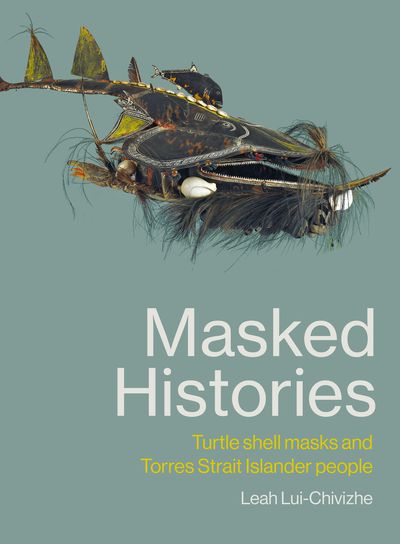
  • Leah Lui-Chivizhe, Masked histories: Turtle shell masks and Torres Straight Islander People (July, MUP): First Nations author
  • David Marr, A family business (November, Black Inc): our colonial past
  • Elizabeth Tynan, The secret of Emu Field (May, NewSouth): the first British atomic test site, South Australia
  • Don Watson, The passion of Private White (October, Scribner): the 50-year-old relationship between anthropologist and veteran Neville White and Aboriginal clans of remote northern Australia

Some current-interest topics being written about, include:
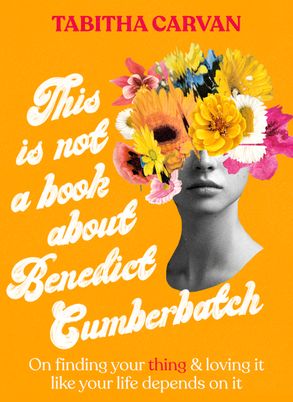
  • Women and the “home-front”: Tabitha Carvan, This is not a book about Benedict Cumberbatch (March, HarperCollins: joy in women’s lives); Eloise Grills, Big beautiful female theory (July, Affirm); Sonia Orchard, The female of the species (September, Affirm: the “science of womanhood”); Sian Prior, Childless (April, Text: living without children); Gina Rushton, The most important job in the world (April, Pan Macmillan: choosing motherhood).
  • Politics and current affairs: Allan Behm, No enemies, no friends (March, Upswell: on Australia’s diplomatic relationships); Ed Coper, Facts and other lies (February, A&U: on disinformation); Jo Dyer, Burning down the house (February, Monash University Press: rethinking our political system); Osman Faruqi, The racist country (August, PRH); Samantha Maiden, Open secrets (no date, HarperCollins: on the Canberra bubble); Andrew Quilty, Fall of Kabul (August, MUP); Matthew Ricketson and Patrick Mullins, Who needs the ABC? (April, Scribe).

Interestingly, I see little this year on COVID-19 and climate change, compared with last year. Nor much about our big women’s issue of 2021, except for Brittany Higgins’ memoir coming out. Why?

Poetry

Finally, if you love poetry, do check the link, but these might whet your appetite:

  • Lisa Gorton, Mirabilia (August, Giramondo)
  • Sarah Holland-Batt, The Jaguar (May, UQP)
  • John Kinsella and Charmaine Papertalk Green, Art (June, Magabala Books)
  • Les Murray, Continous creation (March, Black Inc): final posthumous collection
  • Tracy Ryan, Rose interior (April, Giramondo)

New publisher Upswell and the established Fremantle Press also have poetry collections coming …

Anything here grab your attention?
Blogging highlights for 2021

Finally, the last of my traditional, self-indulgent year-end trifecta (which includes my Australian Women Writers’ Challenge wrap-up and Reading highlights posts).

But, like last year, before I launch into my usual analysis, I must send another big shout-out to Bill (The Australian Legend) who continued to curated his Bill curates series of reblogged posts from my blog’s early days to help me over the doldrums in the months after my father’s death. I know I didn’t have to keep posting during that time, but I so appreciated being able to keep up the continuity. Thanks a bunch Bill.

Top posts for 2021

Gradually over the last few years my top posts have shifted to include more posts on recent Australian books. However, a few “usual suspects” posts keep hanging around, and it’s still true that most of the posts are over 5 years old. Regardless of whatever the top posts are, though, they raise the question, why them? They are such a motley lot.

Here is my 2021 Top Ten, in popularity order:

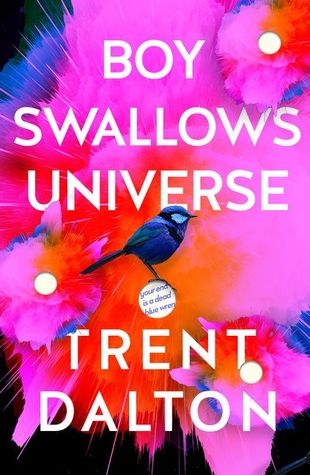
Trent Dalton, Boy swallows universe

None of these, as usual, were actually published in the reporting year (2021). Other observations:

Book cover
  • Mark Twain’s “A presidential candidate” joined the Top Ten in 2018 and reached 2nd spot in 2020. This year it gained the Top Spot! Curious.
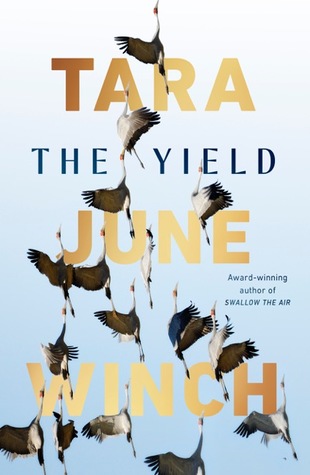
  • Three works made their Top Ten debut, and they are all Australian: Fergus W. Hume’s The mystery of a hansom cab, Tara June Winch’s The yield, and Julia Baird’s Phosphorescence.
  • Five of the Top Ten are for Australian works, one less than 2019’s record of 6.
  • Wallace Stegner’s Crossing to safety, a post from 2014, suddenly appeared in 2020’s Top Ten, and remained there? Why now?
  • Barbara Baynton, who has been in the Top Ten for as long as I have been doing this, has slipped out, with “The chosen vessel” slipping from 2020’s no. 5 to no. 15.
  • Red Dog (posted in 2011) was a Top Ten regular until last year when it moved to the Top Twenty, where it remained this year.
  • Seven of the top ten posts were published over 5 years ago.
  • Short stories and essays still feature strongly, but are decreasing – to just three this year.
  • My little post on English language usage in restaurant ordering keeps getting hits!

Five Australian posts appear in the next ten, one more than in 2019 and 2020, and are similar to last year’s: ABR’s Top Twenty Aussie Novels of the Twentieth Century (11) which was a Top Ten last year; Delicious descriptions: Clare Wright’s sources on the Australian landscape (12); Barbara Baynton’s “The chosen vessel” (15); Shaun Tan’s Eric (19); and Red dog (20).

As for posts actually written in 2021? Where did they fit? Well, as usually happens, they appear quite low in the list, with the first one ranking 32. Here are the Top Ten 2021-published review posts (excluding Monday Musings and meme posts):

Two from last year’s published-in-the-year Top Ten – Tara June Winch and Julia Baird – made it into the “real” Top Ten this year. Will any of these achieve the same in 2022?

My most popular Monday Musings posts were:

None of these were in the Top Three last year, except that the 2020 new releases post was. My Australian Gothic (19th century) post, which had been in the Top Three for a few years, wasn’t even in the Top Five this year. Maybe life has been too Gothic recently for people to want to read about it?

Random blogging stats

The searches

Help Books Clker.com
(Courtesy OCAL, via clker.com)

I love sharing some of the search terms used to reach my blog, even though changes to Google a few years ago dramatically reduced search term visibility. However, some still get through, and some find me despite some aberrant spelling at times.

  • there are always some searches that truly make me laugh, or mystify me: jane austen corner laughing; new panjabi sexy stories; chinese gym “guest post”
  • as last year, several searches seemed to be for a school or college assignment about Sherwood Anderson’s short story “Adventure”. Some hopefuls type in the whole question: explain the significance of the title ‘adventure’ by anderson; adventure by sherwood anderson 4. who should be blame for alice’s tragedy [I wonder what the previous three questions were?]
  • I have mentioned Austen scholar Gillian Russell, but my post wouldn’t have helped this searcher: “gillian russell” husband canberra
  • some searches are so general, I’m amazed they found my blog. I have no idea if they find what they want. Try this one: winner announced OR erotic story

Other stats

I wrote 154 posts, one more than in 2020, and just under my long term average of 158. This represents an average of nearly 13 posts per month..

Merlinda Bobis Fish-hair woman

Australia, the USA, Britain, in that order, continue to be the top three countries visiting my blog. The next three slots mirrored last year’s: India, the Philippines and Canada. The Philippines seems to be here primarily because of continued interest in my post on Philippine-born Merlinda Bobis’ Fish-hair woman. I think she’d be pleased. Anyhow, Germany, France, Mexico and China, in that order, round out the Top Ten.

Challenges, memes and other things

I only do one challenge, the AWW Challenge, which I wrapped up last week, and one regular meme, #sixdegreesofseparation run by Kate (booksaremyfavouriteandbest). I occasionally do others, which you can find on my “memes” category link.

I also took part in Lisa’s (ANZLitLovers) Indigenous Literature week, Bill’s (The Australian Legend) AWW Gen 3 Week Part 2, and Nonfiction November. More casually, I toyed with Novellas in November (Cathy of 746 books and Rebecca of Bookish Beck), the #YEAR Club (Karen of Kaggsy’s Bookish Rambling and Simon of Stuck in a Book), and Brona’s Aus Reading Month.

All of these align with my reading practice, and frequently give me a welcome opportunity to delve into the TBR.

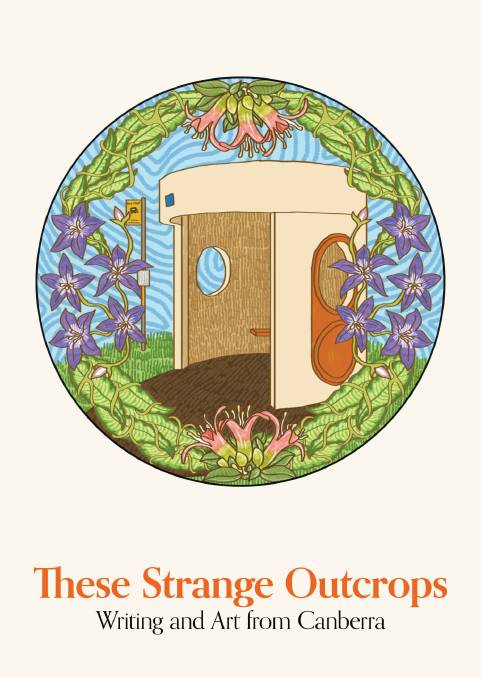
Being blogging mentor for the New Territory program (2017-2019) was a highlight, until the pandemic struck. Now, online communications have moved on, and thus, I’d argue, also the original impetus for this program. However, I want to report on the activities of its “alumni”. Angharad continues to actively blog at Tinted Edges and has had some wins in short fiction competitions, while continuing to work on her novel. Emma Gibson is now based in Melbourne, and following her dual interests of playwriting and writing about place. Amy Walters is building her excellent criticism cv. You can find a list on her blog, including several published in 2021. This year I reviewed These strange outcrops, a special edition of Rosalind Moran’s Cicerone journal. Rosalind continues to write poetry and reviews from her current homebase in Cambridge, UK. Shelley Burr, as I reported last year, won a Debut Dagger for her Aussie noir unpublished manuscript, Wake. It is now set for publication this year with Hachette. I will be reading it. Watch this space.

And so, 2022 …

As I say every year, a big thanks to all of you who commented on my blog this year – the regulars who have hung in with me year in year out, and the newbies who have taken the time to visit and comment. I do hope you stay, because, for me, the conversations are one of blogging’s biggest delights. They help us, I think, grow as readers. Also, as I wrote last year, the friendly but fearless sharing of sometimes opposing ideas demonstrates that social media can be positive and respectful, that communications technology can be used for good. I love being part of proving that.

Beyond the commenters, though, I also want to thank all you wonderful bloggers out there. I apologise for not always managing to visit everyone as much as I’d like. I wish you all good reading and great book talk in 2022.

Finally, huge thanks to the authors, publishers and booksellers who make it all possible (and who have put up with my extreme tardiness this year, but I am catching up). Roll on 2022 …

Six degrees of separation, FROM Rules of civility … TO …

I started last January’s Six Degrees with “Woo hoo! A New Year at last after what has really been a doozy for us all, in one way or another. So glad to see the back of it”. Little did we know – still, there was no harm in hoping for better. Regardless of what the year brought us, I hope you all had an excellent Christmas wherever you were and however you were able to spend it. And, given this year’s first Six Degrees of Separation meme actually happens on New Year’s Day, now’s the time to also wish you every good thing for 2022. Now, on with the show. If you don’t know this meme and how it works, please check meme host Kate’s blog – booksaremyfavouriteandbest.

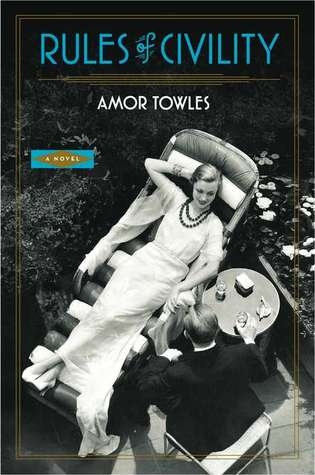
The first rule is that Kate sets our starting book. This month, she’s chosen a book that’s on my TBR (given to me by my wonderful Californian friend, in fact) and that I want to read, Amor Towles’ Rules of civility. One day!

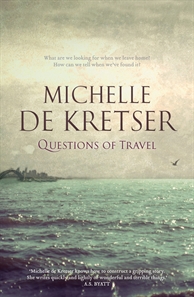
I’m going to start the year’s links by being a bit silly, and so my link is on a three-word title with “of” in the middle. I was surprised to find I had quite a bit of choice – including Book of colours and Field of poppies – but the title that felt closest in flavour to Towles’ is Michelle de Kretser’s Questions of travel (my review). This novel inspired and challenged me in so many ways.

Graham Greene, Travels with my aunt

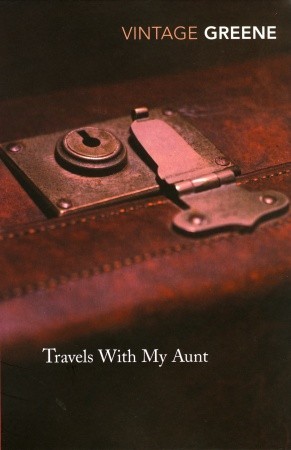
Staying with the idea of travel, I’m linking to a novel whose title starts with “travel”, Graham Greene’s Travels with my aunt (my review). I loved reading Greene again after a long hiatus. It was because my reading group selected it as our “classic” pick for 2017.

William Makepeace Thackeray, Barry Lyndon

So, my next link is my reading group’s 2016 “classic” pick … a book that I didn’t enjoy so much, though it had its moments, William Makepeace Thackeray’s The luck of Barry Lyndon (my review). (For those of you who think I LOVE every book I read – think again!)

Book cover

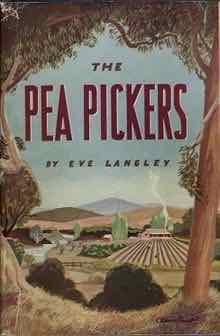
The luck of Barry Lyndon is a good example of a traditional – classic – picaresque novel. When I wrote my post on Eve Langley’s 20th century novel, The pea pickers (my review), I observed that it had elements of the picaresque, and so it is on that idea that I chose it for my next link.

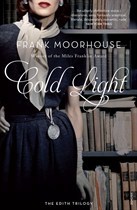
Frank Moorhouse, Cold Light

The two sisters in The pea pickers take to the road, finding work as they can, while exploring the country. In order to find work in those times – the 1920s – when women rarely went on such adventures, and for safety reasons, they dressed in men’s clothes and adopted male names. Ambrose in Frank Moorhouse’s Cold light (my review), however, cross-dresses (in the mid 20th century) because he likes to do so, and fortunatelyfor him the wonderful Edith doesn’t mind.

Marilynne Robinson, Gilead

Aussie readers will know that Cold light is the third book in what is known as the “Edith trilogy”, so I decided to take the trilogy idea for my last link. I initially thought to choose the third in a trilogy – for a strong link (if some links can be stronger than others) – but, despite having a candidate or two, I decided for various reasons (including a change of continent) to go with Marilynne Robinson’s trilogy, which starts with Gilead (my review).

Coincidentally, we’ve ended up in the country where we started – the USA – but instead of 1930s New York, we’ve moved to 1950s Iowa (in the midwest). Between these books, we’ve travelled more than usual – after all, two of the links are books about travel – and we’ve gone back to 1844. We’ve also visited various 20th century decades, and dipped our toes in the current century. We’ve met ne’er-do-wells and ministers, earnest young woman and cross-dressing diplomats, as well as travellers and migrants. We’ve seen it all – or, at least, a lot.

I like, too, that I’ve started the year with half of my books by men and half by women. How very even of me!

Now, the usual: Have you read Rules of civility? And, regardless, what would you link to?