Monday musings on Australian literature: Some New Releases in 2020

It seems from my stats that people like my “new releases” post, so here is the 2020 version. As in previous years, my list is mostly drawn from the Sydney Morning Herald, and as it is a Monday musings on Australian literature post, it will be limited to Australian authors (listed alphabetically.) Do click on the link to their see coming releases from non-Aussies, or from those Aussies I’ve omitted because I’ve only listed those most relevant to me, or for some basic information about the books.

Last year, I listed 27 fiction works, and read only four of them – but I will be reading a few more of them in the next 2-3 months.

Links on the authors’ names are to my posts on them.

Fiction

  • Patrick Allington’s Rise and shine (Scribe, June)
  • Richard Anderson’s Small Mercies (Scribe)
  • Robbie Arnott’s The rain heron (TextJune)
  • Margaret Bearman’s We were never friends (Brio, March)
  • James Bradley’s Ghost species (Hamish Hamilton, April)
  • Steven Conte’s The Tolstoy estate (Fourth Estate, August)
  • Trent Dalton‘s Shimmering skies (Vintage, June)
  • Meaghan Delahunt’s The night-side of the country (UWAP, March)
  • Jon Doust’s Return Ticket (Fremantle Press, March)
  • Ceridwen Dovey’s Life after truth (Hamish Hamilton)
  • Chris Flynn’s Mammoth (UQP, May, UQP).
  • Dennis Glover’s Factory 19 (Black Inc., July)
  • Kate Grenville‘s A room made of leaves (Text, July) (Coincidentally, Michelle Scott Tucker recently blogged about this Elizabeth Macarthur inspired novel. Do check it out!)
  • Sophie Hardcastle’s Below deck (Allen & Unwin, March)
  • Tom Keneally’s The Dickens boy (Vintage, April)
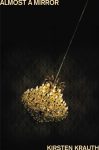
  • Book coverKirsten Krauth‘s Almost a mirror (TransitMarch)
  • Sofie Laguna‘s Big sky (working title) (Allen & Unwin, second half)
  • Bem Le Hunte’s Elephants with headlights (Transit, March)
  • S.L. Lim’s Revenge (Lounge, June)
  • Jamie Marina Lau‘s Gunk Baby (Brow BooksMay)
  • Donna Mazza’s Fauna (Allen & Unwin, February)
  • Kate Mildenhall’s The mother fault (Simon and Schuster, September)
  • Liam Pieper’s Sweetness and light (Hamish Hamilton, March)
  • Mirandi Riwoe‘s Stone sky gold mountain (UQP, April)
  • Craig Silvey‘s Honeybee (working title) (Allen & Unwin, second half)

I have been wondering what Grenville was working on, so am pleased to see another novel coming our from her. And, I’m very pleased to see Krauth and Riwoe producing new novels after their powerful debuts.

SMH also lists “new voices” (including new forms for old voices!):

  • Paul Dalgarno’s Poly (Ventura, August)
  • Anna Goldsworthy’s Melting moments (Black Inc, March) (old voice)
  • Erin Hortle’s The octopus and I (Allen & Unwin, April)
  • Tobias McCorkell’s Everything in its right place (Transit Lounge, July)
  • Laura Jean McKay’s The animals in that country (Scribe, April)
  • Andrew Pippos’ Lucky’s (Picador, second half)
  • Alice Pung‘s One hundred days (Black Inc., October) (old voice)
  • Ronnie Scott’s The adversary (Hamish Hamilton, April)
  • Pip Williams’ The dictionary of lost words (Affirm, April).

Short stories

Yes, I know these are fiction too, but they deserve a special section!

  • Emma Ashmere‘s Dreams they forgot (Wakefield Press, April)
  • Laura Elvery’s Ordinary matter (UQP, second half)
  • Mark O’Flynn’s Dental tourism (Puncher & Wattmann, February, );
  • Elizabeth Tan’s Smart ovens for lonely people (Brio, June, Brio)
Book coverAnd some “new” short story voices:

  • Melissa Manning’s Smokehouse (UQP, second half the year)
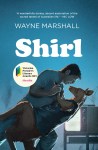
  • Wayne Marshall’s Shirl (February, Affirm)
  • Sean O’Beirne’s A couple of things before the end (Black Inc., February)
  • Stephen Pham’s Vietnamatta (Brow Books, October)
  • Barry Lee Thompson’s Broken rules and other stories (Transit Lounge, August)

Non-fiction

SMH provides a long list of new non-fiction books covering a huge range of topics, so my list is selective – but still, there’s a lot:

  • Randa Abdel-Fattah’s Growing up in the Age of Terror (NewSouth, July)
  • Elizabeth Becker’s Journaliste (Black Inc., September): on female journalists during the Vietnam War
  • Elise Bohan’s Future superhuman (NewSouth, October): on embracing the “transhuman”
  • Rutger Bregman’s Human kind (Oneworld, second half): on how altruism offers a new way to think
  • Bernard Collaery’s Oil under troubled water, March, MUP): the story of his being charged after exposing an Australian bugging operation in East Timor
  • Peter Cronau’s War on Terror (The Base, June): Australia’s role in the War on Terror
  • Robert Dessaix’s Time of our lives (Briosecond half): on ageing
  • Lindy Edwards’ Corporate power in Australia (Monash, February): on big business
  • Carly Findlay’s (ed) Growing up disabled in Australia (Black Inc, June): see my post on the Growing up series.
  • Fiona Foley’s Biting the clouds (UQP, September): 19th century Aboriginal “protection” and Indigenous opium addiction.
  • Rebecca Giggs’ Fathoms: the world in the whale: “the stories we tell about whales, what those stories signal about how we imagine our own species, and what whales reveal about the health of the planet” (from Scribe)
  • Julia Gillard and Ngozi Okonjo-Iweala’s Women and leadership (Vintage, July): gender bias
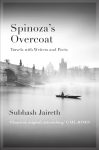
  • Book coverSubhash Jaireth’s Spinoza’s overcoat: Travels with writers and poets (February, Transit): on writers and writing
  • Ketan Joshi’s Road to resolution (NewSouth, August): climate change
  • Royce Kurmelovs’ Just Money (UQP, second half): on our debt
  • Garry Linnell’s Badlands (Michael Joseph, September): the fall of the Australian bushranger
  • Sophie McNeill’s We can’t say we didn’t know (HarperCollins, March): stories from war-ravaged areas by a former ABC Middle-East Correspondent
  • Paddy Manning’s Body count (S&S, May): climate change
  • Rory Medcalf’s Contest for the Indo-Pacifc (March, La Trobe): on “regional tensions”
  • Patrick Mullins’ The trials of Portnoy: how Penguin broke through Australia’s censorship system: “the first account of the audacious publishing decision that — with the help of booksellers and readers around the country — forced the end of literary censorship in Australia” (quoted from Scribe)
  • Jonica Newby’s Climate grief (NewSouth, September): climate change
  • Aaron Smith’s The rock (Transit, November): Australia as perceived from its northerly outpost, Thursday Island
  • Victor Steffensen’s Fire country (Hardie Grant, March): looks at how Indigenous fire practices might help our country (from an Indigenous fire practitioner)
  • Gabbie Stroud’s Dear Parents (Allen & Unwin, February, A&U): by the author of the well-regarded Teacher
  • Malcolm Turnbull’s A Bigger Picture (Hardie GrantApril): from our latest ex-Prime Minister
  • Marian Wilkinson’s Carbon Club (Allen & Unwin, June): climate change

I note that a book that was flagged for coming out last year – and which I noticed didn’t appear – is now flagged for this year: journalist Julia Baird’s Phosphorescence (Fourth Estate, April).

It’s interesting, encouraging and not surprising to see quite a few books on climate change in the above list.

Biography and memoir (loosely defined)

  • Darleen Bungey’s Daddy Cool (Allen & Unwin, May): “memoir” of crooner Laurie Brooks, father of biographer Bungey and writer Geraldine Brooks. Can you write a memoir of someone not yourself? Or, is this a hybrid memoir-biography?
  • Gabrielle Carey‘s Only happiness here (UQP, second half): on Australian-born novelist Elizabeth von Arnim (whose work I love and for whom I have another biography already on my TBR)
  • Melissa Davey’s A fair trial (Scribe, second half of the year): on George Pell
  • David Duffy (Radio Girl, May, A&U): on the first Australian woman electrical engineer, Florence Violet McKenzie
  • Clementine Ford’s How we love (Allen & Unwin, second half): on her experience of love
  • Evelyn Juers’ The dancer (Giramondo, September): on Philippa Cullen
  • Mary Li’s Ballet, Li, Sophie and me (Viking, September): memoir by Australian ballerina, and wife of Li Cunxin
  • Alex Miller: a memoir untitled? (Allen & Unwin, second half): on his friend and mentor, Max Blatt
  • Cassandra Pybus’ Truganini (Allen & Unwin, March): on the titular Indigenous Tasmanian woman
  • Miranda Tapsell’s Top End girl (Hachette, May): memoir
  • Robert Wainwright: untitled (July, Allen & Unwin): on the great granddaughter of the Lindeman wines founder, Enid Lindeman
  • Donna Ward’s She I dare not name (Allen & Unwin, March): on being a spinster

Does anything here interest you?

Six degrees of separation, FROM Daisy Jones and the Six TO …

I do love the sound of 2020. It has a lovely ring to it. It’s also the year that Father Gums will turn 100. However, that will be May. Right now, it’s time to kick off the first Six Degrees of Separation meme of the year. This meme for those of you who don’t know it is explained in detail on our meme host Kate’s blog – booksaremyfavouriteandbest.

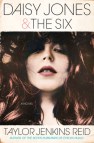
Book coverI’m starting this year the same as I did last year, that is, with Kate choosing a book I haven’t read. Indeed I haven’t even heard of Taylor Jenkin’s Reid book, Daisy Jones and the Six, which is a novel about the rise and fall of a fictional 1970s rock band.
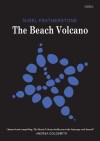
For my first link, I’m sticking with the theme of rock music, and choosing Nigel Featherstone’s novella, The beach volcano (my review). However, Featherstone’s novel, while featuring a successful rock musician – Canning aka Mick Dark – is not so much about Canning’s musical career as his return home after a long absence for his father’s 80th birthday, intent on getting answers to some longstanding family secrets and, thus, resolve underlying conflicts.
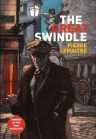
Pierre Lemaitre, The great swindleFeatherstone’s Canning returns home because he wants to improve his relationship with his family, and father. Not so for Édouard Péricourt in Pierre Lemaître’s The great swindle (my review). Severely wounded in World War 1, and the son of a dominating father, he flat refuses to return home to resolve those unresolved conflicts!
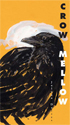
Julian Davies, Crow mellow Book coverAnd here, sticking, unusually for me, with content, I’m going to link on something a bit tenuous. Édouard Péricourt was so disfigured in the war that he wears increasingly bizarre but often beautiful masks rather than let people see his face. Masks feature in Julian Davies’ novel Crow mellow (my review), but via a masked ball that takes place in a country house/bush retreat where artists are staying with their patrons and admirers.

Charlotte Wood, The natural way of thingsCrow mellow belongs, then, to a sub-genre known as country house novels. While you couldn’t call my next link a country house, exactly, but the characters in Charlotte Wood’s The natural way of things (my review) are all stuck together in a sort of labour camp in the country somewhere. No masked-ball fun there!
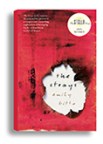
Emily BItto, The strays, book coverThe natural way of things won the Stella Prize in 2016. The 2015 winner was a sort of country house novel too, Emily Bitto’s The strays (my review) which is about an artist’s colony in Victoria, inspired by the Reeds and their Heide group. Yes, I know I’m stretching the country house friendship a bit, but why not?

Book coverSo, where to from here? How about another book which was inspired by artists, albeit of a different type? Dominic Smith’s The electric hotel (my review) was inspired by the silent film pioneers of the early twentieth century. Its protagonist, Claude Ballard, is fictional, like Bitto’s Trenthams, but it does directly reference real artists as well, such as the Lumière Brothers and Thomas Edison.

So, a different sort of chain for me because all the main links are content-related (with an additional link between Wood and Bitto on the Stella Prize.) Interestingly, I’ve realised that most of the books deal with artists of some sort – painters, musicians, filmmakers, and mask-makers. Four of my six authors are male, which is not common for me, and all of my linked authors, except Pierre Lemaître, are Australian (albeit Smith now lives in the USA). Oh, and all are set post 1900.

And now, my usual questions: Have you read Daisy Jones and the Six? And, regardless, what would you link to? 

Blogging highlights for 2019

Here is the last of my traditional year-end trifecta (the others being my Australian Women Writers’ Challenge wrap-up and Reading highlights posts). This is very self-indulgent, I know, but it interests me!

Top posts for 2019

There hasn’t been a huge change in my top posts – several posts have remained in the list for several years now, and seven of the ten were published over 5 years ago. However, this year has seen a bit of shift, as you’ll see in my comments below.

Trent Dalton, Boy swallows universeHere’s my 2019 Top Ten, by number of hits:

So, the shift. Mainly it’s that I have a new record with six Australian posts appearing in the Top Ten, four more than last year, and two more than the previous record of four. Barbara Baynton is an established regular, though which work/s change from year to year. Last year it was “Squeaker’s mate” while this year “The chosen vessel” returns to the Top Ten. Meanwhile, Red Dog, is here yet again, proving itself to be true blue! However, the BIG news is that for the first time an Australian book has actually topped the Top Ten, Trent Dalton’s Boy swallows universe. This is the same book that was my reading group’s top pick of the year.

Fascinatingly, Mark Twain’s “A presidential candidate”, which popped into the Top Ten last year, has remained there this year. As I said last year, does this have anything to do with you know who? Short stories and essays still feature strongly, but there are just four this year, versus seven last.

Four Australian posts appear in the next ten, and they are an eclectic lot. Two are for works, Barbara Baynton’s “Squeaker’s mate” and Vicki-Laveau-Harvie’s The erratics, and two are author-based posts, Vale Andrew McGahn (1966-2019) and Helen Garner on writers and writing.

Book coverI also like to note how well the posts actually written in the year ranked. Last year the first one came in at 23. This year, the winner, my Boy swallows universe post, romped in at number 1, with more than double the hits of the second ranked post. My next most popular 2019-written posts ranked 15th (Vale Andrew McGahan (1966-2019)) and 18th (Vicki Laveau-Harvie, The erratics). So, three from 2019 in the top 20. Unheard of!
For the Monday Musings fans amongst you, my most popular Monday Musings posts were:

Australian Gothic and Novels set in Sydney were second and first, respectively last year, with 2018’s new release post being third! Not a big change in substance, then. This suggests that our blogs are long-term resources, as well as places for current discussion.

Random blogging stats

The searches

Here’s a selection of 2019’s searches that found my blog:

  • many searches, not surprisingly, related to this year’s top post: the searches included (in order of frequency) boy swallows universe discussion questions, your end is a dead blue wrenboy swallows universe quotes, and boy swallows universe meaning. There were also various permutations of wording searching the meaning of red phone in the book! It’s interesting to see what people might be looking for besides straight reviews.
  • last year I noted that the word “summary” was popular in searches, more so than the previous year’s popular word “analysis“. This year, however, they were more neck and neck.
  • there are people out there clearly looking to prove Dark emu wrong, as some of the more popular searches had wording like dark emu debunked, critics of dark emu and, would you believe, critical reviews of black emu book. This last one suggests that people didn’t know exactly what they are searching for but had been told the work is no good. I don’t think my post would have satisfied them. Anyhow, I’m guessing it’s all these people who helped push this post into the Top Ten this year.
  • although my post on What to say when you order food at a restaurant is still among my Top Posts, there were fewer actual searches recorded for this one. A couple, however, are entertaining. One is: what to do if food is not the way you ordered. I’m not sure my post would have helped that person either. And another: why to say hi at restaurant. Why indeed!
  • I think I can guess what Australian poetry fraud was looking for, the Ern Malley affair.
  • and then, there are always the homework questions like: do you think that john muir made an effective argument for saving the redwoods? why or why not?

I should add the proviso here that many many search terms are not exposed to us bloggers, so the terms I’m sharing above are a small subset.

Other stats

I wrote four fewer posts in 2019 than in 2018, averaging just under 14 posts per month – and yet the traffic on my blog increased by more than 20% over last year. (Then again, last year’s traffic was somewhat lower than the previous year. It’s all a mystery to me!)

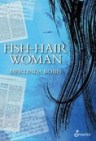
Merlinda Bobis Fish-hair womanAustralia, the USA, and Britain, in that order, were the top three countries visiting my blog, as in 2018. In 2017, India was fourth and Canada fifth, while in 2018, the order was reversed. This year, India regained its upper hand over Canada! The Philippines remains 6th for at least the third year, largely, I think, because of interest in Merlinda Bobis’ Fish-hair woman.
I’d like to thank all of you who commented on my blog this year. My comments count increased by around 7% in 2019, which is satisfying because the respectful conversations we have here are very special to me. I particularly want to thank Lisa (ANZLitLovers) and Bill (The Australian Legend) who tolerate, both on my blog and theirs, much contrariness from me. Their tolerance and forbearance (not to mention that of the rest of you who come back here again and again) is a true measure of how positive and respectful social media can be.

Challenges, memes and other things

I only do one challenge, the AWW Challenge, which I wrapped up this week. And I only do one regular Meme, #sixdegreesofseparation run by Kate (booksaremyfavouriteandbest), but I occasionally do others. You can see all the memes I’ve done on my “memes” category link.

I also took part in Lisa’s (ANZLitLovers) Indigenous Literature Week, Bill’s (The Australian Legend) AWW Gen 1 Week, and, more casually, in Nonfiction November run by a group of bloggers, because these all relate closely to my reading interests.

Each year I like to host some guest posts with this year’s coming from Amanda who mostly reviewed titles that were missing from the AWW challenge database, and my brother Ian, who wrote two posts on his attendance at the Hobart Writers’ Festival. To read them, click this link and look at those posted in 2019. A big thanks to Amanda and Ian for their contributions.

A major highlight of the year, though, was my continued involvement as blogging mentor for the New Territory  program sponsored by the ACT Writers Centre, the National Library of Australia, the Canberra Writers Festival and the Street Theatre. The program’s aim is primarily “to stoke cultural conversations in the ACT”. I enjoyed working with Shelley Burr and Rosalind Moran over the second half of the year.

And so, 2020 …

To conclude, a big thanks again to everyone who read, commented on and/or “liked” my blog last year – and to all the other wonderful bloggers out there, even though I don’t always manage to visit everyone as much as I’d like. I wish you all good reading in 2020, and look forward to discussing books with you here or there!

Finally, as I say every year, a very big thanks to the authors who write the books, and to the publishers and booksellers who get the books out there. I hope 2020 will be positive for us all.

Reading highlights for 2019

Regular readers will know that my Reading Highlights post is my answer to other bloggers’ Top Reads posts. It does not contain a ranked list of the books I considered my “best” of the year, because I prefer to talk about “highlights”, which I define as those books and events that made my reading year worthwhile.

I don’t set reading goals, but I do have certain “rules of thumb”, such as trying to reduce the TBR pile, increase my reading of indigenous authors, and read some non-anglo literature. How do you think I went?

Literary highlights

Literary highlights really means literary events, and there were some inspiring ones this year:

  • Festival Muse: for the third year running, Muse (cafe/bookshop/event venue beloved by Canberra’s booklovers) held, in March, their Festival. It’s a busy time of year and a long weekend, but I had booked to attend the opening, as I always do, and one other event. Unfortunately, a family member’s hospitalisation meant we had to miss the opening, but I did get to Alice Pung in conversation.
  • Sydney Writers Festival has been live streaming selected sessions to regional locations – like Canberra – for a few years now. I attended three in 2019: Boys to Men: The masculinity crisis; Andrew Sean Greer in conversation about Less; and “I do not want to see this in print”.
  • Canberra Writers Festival about which I wrote 7 posts: to find them click this link and select the 2019 festival posts.
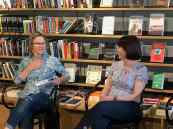
  • Simpson and White

    Simpson (L) and White (R), Muse, 2 Nov 2019

    Author interviews/conversations: I only got to a few of the many, many offered: Jane Caro, Frank Bongiorno, Stan Grant, Jessica White and Helen Garner.

  • Book launches: Two of the book launches I attended this year were particularly special because it was perfectly obvious that the authors involved were surrounded by a large, warm and enthusiastic group of people who cared deeply about them and their work: Nigel Featherstone’s Bodies of men (my review) and Madelaine Dickie’s Red can origami (on my TBR).
  • The Constructive Critic panel: this was the year I relented and finally said yes to a request to take part in a festival panel. It was part of the Design Canberra Festival, and I did manage to write it up, here.

Reading highlights

As in previous years, I’m sharing some random observations about the year’s reading, without ranking them in any way. Just know that I’d be happy to recommend all those I mention here:

  • The locals: Canberra is said to punch above its weight in terms of, per capita, the number of authors we have here. I don’t know whether this is statistically substantiated, but we are certainly well endowed! This year I read the latest novels by two of our well-published authors, Nigel Featherstone and Karen Viggers. (I also met Kaaron Warren, who is a multi-award winning author in genres I don’t read, speculative fiction and horror.)
  • The “dreaded” TBR: I didn’t make impressive inroads into the TBR, but I did reduce it by four, including two highlights, Louise Erdrich’s above-named book, and Marilynne Robinson’s Gilead. Can I improve next year?
  • Memoirs with a difference: There is a tried-and-true formula for memoirs in which the writer relates a trauma and how they’ve risen above it, or, if they’re celebrities and sportspeople, write tell-alls about their successes and failures. These memoirs have value, but are not my chosen fare. I prefer those that do something a bit different, like, say, Jessica White’s hybrid biography-memoir, Hearing Maud, and Ros Collins’ Rosa: Memories with licence in which she teases us about whether the book is indeed memoir or fiction. Or, like those which share experiences in order to educate readers. These can be off-putting if not handled well. Fortunately, Neil H Atkinson in The last wild west and David Brooks in The grass library managed to do just this, about racism and animal rights, respectively.
  • The book I wasn’t planning to read: Still on the subject of memoirs, I hadn’t planned to read Vicki Laveau-Harvie’s The erratics, feeling it was going to be a bit too much of the rise-above-a-trauma style, but when it won the Stella Prize, I decided to give it a go – and was rewarded for my effort.
  • Some interesting voices: This year didn’t produce any unusual narrators like fetuses or skeletons, but Sayaka Murata’s mystified yet open Convenience store woman is an engaging narrator who encourages us to think about people who don’t meet societal expectations. Trent Dalton and Tim Winton sustained powerful young male voices in Boy swallows universe and The shepherd’s hut, while Amor Towles’ A gentleman in Moscow was one of the most charming narrators I’ve read for some time.
  • Forgotten Australians: Bill’s (The Australian Legend) annual AWW Gen weeks provide the perfect opportunity for me to feed my love of past Aussie women writers. This year Louise Mack and Capel Boake had their turn.
  • Older Americans: This year also saw me read some older, excellent American novels – the already-mentioned Marilynne Robinson’s Gilead and Mary McCarthy’s The group.
  • Death, be not proud: Amanda O’Callaghan, in her debut short story collection This taste for silence, writes about death in more ways that you could think possible, and yet leave you wanting more.
  • Out of left field came Kim Scott’s nicely researched local history, Katherine’s tropical housing precinct 1946-1956.
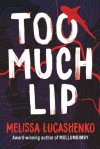
  • The book I’ve recommended the most: Melissa Lucashenko’s Too much lip is a perfect example of how to create engaging but flawed characters, and how to tackle deeply political issues with both humour and passion.
  • The one that got away: as always, there are the books that got away, which included, this year, Behrouz Boochani’s No friend but the mountains. It is still sitting in my TBR pile, accusingly.

These are just some of this year’s worthwhile reads.

Some stats …

I don’t read to achieve specific stats, but I like to keep an eye on what I’m doing to ensure some balance, all the while maintaining my particular interest in women and Australian writers:

  • 70% of my reading was fiction, short stories and novels (versus 80% in 2018): Around 75% is my rule of thumb, so I’m happy!
  • 64% were by women (making my average for the last five years, 2015-2019, 68%): As women writers are an important priority for me, without wanting to be exclusively so, this proportion seems reasonable.
  • 28% were NOT by Australian writers (versus 18% in 2018): Last year, I said I wanted to redress the balance to be something more like my previous one-third non-Australian, two-thirds Australian, and I got close.
  • 24% were published before 2000 (rather less than for the last two years which hovered around 30%): While this is ok, I’d really like to read more older books.
  • 34% were published in 2019 (similar to last year), which pleases me, because I don’t want all my reading to be current.

Overall, it was a good reading year in terms of what I read, but less so in terms of how much. Life got in the way moreso than usual! As always, I’m grateful for all of you who read my posts, engage in discussion, recommend more books and, generally, be all-round great people to talk with. Thank you for being here.

I wish you all an excellent 2020.

What were your reading or literary highlights for the year?