Monday musings on Australian literature: Best books of 1975

Given we’re all looking at best reads, I thought it might be fun to look at best reads of a past time? My initial thought was 1965, a neat 50 years ago, but I couldn’t find any appropriate lists. Google found a 1965 New York Times bestseller list on Wikipedia and a couple of 1965 lists in GoodReads, but they weren’t quite what I was looking for. I wanted Australian lists, but my first port of call, Trove, wasn’t helping. However, not being quite ready to give up, I thought I’d try ten years later, 1975, which is the year I moved to Canberra. Eureka! This time Trove produced two lists …

And they are nicely representative. One is by classics collector, “book reviewer and litterateur”, Maurice Dunlevy, writing in the Canberra Times (woo hoo!) on December 26. Dunlevy wrote a book review page for the paper for 30 years, to 2000 apparently. The other is by one Nina Valentine. A brief search hasn’t turned up much about her except that she was clearly a writer for the Australian Women’s Weekly, which is where I found her December 31 article. Given their different publishing environments, you won’t be surprised to hear that their styles, not to mention their recommendations, are rather different. Both, though, focus on books for summer reading – and, although this post is dedicated to Australian literature, I’m going to break my usual rule and include some non-Australian picks. After all, they were writing for Australian readers.

“… books to help you enjoy lazy, long summer days to the full”

Let’s start with Nina Valentine. Her circa 700-word article focuses on books that tell a strong story, though not all are fiction. Since there’s only five of them, I’ll list them all:

  • Evelyn Anthony, The Persian kingdom (an error, I think, for Persian ransom) A British writer, Anthony is, she says, “one of my favorite writers of sculptured novels”. Sculptured novels? That’s a new term for me, but she does define it. They are novels which – wait for it – have “form, character and situation”. Hmmm. Anyhow the novel has an interesting setting, Iran. It’s about the oil crisis, the Palestinian Liberation Army, and a secretary who, Anthony’s heroine knows, threatens her marriage. “Thrilling holiday reading”, Valentine says. According to Trove, many Australian libraries hold it, so there’s no excuse for not adding it to your summer pile!
  • Kenneth Harrison, Dark man white world. This, however, is something completely different. It is a biography of famous indigenous Australian tenor, Harold Blair. In addition to singing, he became an Aboriginal activist fighting, she writes, “for better education, better understanding and a better lifestyle for his people”. I love that Valentine chose this as a holiday read.
  • James Quartermain, The diamond hostage. Part of a series, this book she says is “tailor-made for holiday escapist fare”. Set in Frankfurt, it features Raven, who is security chief for Mrs Diamond, a very wealthy “diamond-hard business woman”. She’s kidnapped (as is the heroine’s child in Anthony’s book), setting up, presumably, an exciting read.
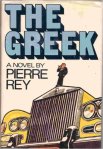
  • ReyTheGreekAmazonPierre Rey, The Greek. Translated from French, it’s about a “Greek shipping magnate whose affair with a concert singer finishes when he marries the widow of an American who has been assassinated”. Ring a bell, anyone? Rey swears it’s fiction, says Valentine, but for her the point is that it’s “racy” in the style of Harold Robbins and Jacqueline Sussan. (Love the cover.)
  • The Saturday Book sounds a little more interesting (to me). It’s an “elegant, gift-boxed collection of stories, poems, drawings, photographs and nostalgia”. Annually published, it may, she writes, be the last due to production costs. She describes it as “a book to beguile you while on holidays, and to enchant you at all times”.

So, overall, an interesting mix of the usual beach holiday plot-driven fare combined with a couple of other options for those looking for something a little different. Minimal Australian content, but interesting to see a translated – genre – book in the mix.

Doing “your bit in the grit to further your cultural education”

Dunlevy’s article is the same length as Valentine’s but he packs more into his by spending less time describing the books. He discusses his selections under categories, recognising his (surely) more diverse set of readers than Valentine’s.
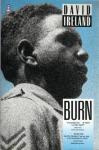
  • IrelandBurnLiterary fiction: I love that he starts with Australian literary fiction naming Xavier Herbert’s doorstopper Poor fellow my country, David Malouf’s autobiographical novel Johnno (the only one I’ve read), Thomas Keneally’s Gossip from the forest, David Ireland’s “fine novel about the Aborigines” Burn, Michael Wilding’s The short story embassy, and Laurie Clancy’s A collapsible man. I haven’t in fact heard of these last two. His foreign literary fiction choices are the last volume in Anthony Powell’s Music of Time sequence Hearing secret harmonies, Iris Murdoch’s A word child, and Saul Bellow’s Humboldt’s gift.
  • Poetry (or Verse, to him): This is his second category! Love it. His selections are all from established poets he says: A. D. Hope’s A late picking (which I actually have), David Campbell’s Deaths and pretty cousins, and Gwen Harwood’s Selected poems.
  • Australian literary criticism: If I was surprised by poetry being his second group, this third one made me really sit up. He recommends poet Judith Wright’s Because I was invited and poet Douglas Stewart’s The broad stream, describing them as fine successors to poet A. D. Hope’s Native companions, published in late 1974. The final critical work he names is again by a poet, Vivian Smith’s Vance and Nettie Palmer. I know a couple of these – but am mightily intrigued by the others.
  • Biographies: Here we move away from a focus on Australian works. He lists several books, including Hilary Spurling’s Ivy when young: The early life of I. Compton-Burnett, describing it “as a fine re-creation of the Victorian family life of an oddball novelist”; Michael Holroyd’s Augustus John; R. M. Crawford’s life of fellow English-Australian historian G. Arnold Wood A bit of a rebel; and Scottish-born Australian Mary Rose Liverani’s autobiography The winter sparrows. According to AustLit, this last book “has been acclaimed as a landmark in Australia’s migrant literature”. Onto the TBR list it goes.
  • Histories: Dunlevy says he’d read so many good popular histories in the year that he “would not know where to begin if I were not now reading the most diverting of all, William Manchester’s narrative social history of the United States 1932-72, The Glory and the Dream”. He describes it as “a huge journalistic history which reads like a massive newspaper written by a single brilliant journalist”. He offers two other social histories suitable for holiday reading: John Ritchie’s Australia as once we were and Michael Cannon’s “third volume about Australia in the Victorian Age, Life in the Cities“. I don’t know any of these historians.

Having gone to the trouble of listing all these worthy works, he then admits that he doesn’t “very often see people reading high quality fiction or poetry or criticism or biographies or history on the beach”! Not sure I do either. The “best-selling paperback” is probably the better bet, he thinks, and to that end he suggests P. Benchley’s Jaws, Harold Robbins’ The Pirate (‘which includes lots of stirring sex scenes, including one in front of a mirror”!), Frederyk Forsyth’s The dogs of war, and Irving Wallace’s The fan club. Personally, though, I’d be looking at those books in his first category. I reckon they still make perfectly good recommendations today.
Blogging highlights for 2015

So, I’ve done my Australian Women Writers’ Challenge wrap-up, my Reading highlights, and now, to complete what’s become my annual trifecta, my Blogging highlights. I hope I’m not boring you – but I’m doing this partly for my own record!

Top posts for 2015

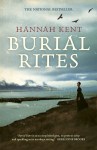
Hannah Kent, Burial Rites bookcover

Courtesy: Picador

As in 2013 and 2014, my most “hit” post for 2015 was a short story by Virginia Woolf, her “The mark on the wall (posted March 2012). I presume it’s a set text for schools/universities.

However, for the first time in my blog, Australian works occupied 2nd to 5th place:

Last year’s fifth highest hit, Barbara Baynton’s “The chosen vessel” (posted November 2012), continues strongly at 9th, and I’m thrilled that indigenous writer Tara June Winch’s Swallow the air (posted July 2014) ranked 10th. My most popular non-Australian novel post was Jeanette Winterson’s Oranges are not the only fruit (posted April 2010), which came in 8th. My most popular 2015 post – albeit 45th in the list of top posts – was for Fyodor Dostoevsky’s Crime and punishment.

As last year, many of my top hits are for older posts, which suggests that there’s some longterm value in litblogging.

Random blogging stats

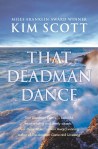
Kim Scott That Deadman Dance

(Courtesy Picador Australia)

I always love to share some of the searches that find my blog, and this year, as always, there were some interesting ones:

  • what new stories does that deadman dance tell: an interesting question – I’d love to know why it was being asked
  • how useful are hachette writers retreats: now, there’s someone doing their research
  • custard apple cultivation in india: I have no idea
  • chic lit gum: I suppose this found chick lit reviews (such as for Toni Jordan’s books)
  • unrevised japanese girl adult pictures: again, keine Ahnung

My busiest day this year was November 19th with 611 views. The most popular post that day was Don DeLillo, Midnight in Dostoevsky. Last year, my busiest day was October 28th with 436 views. Guess what the most popular post that day was? Yes, Don DeLillo’s Midnight in Dostoevsky. It must surely be a first semester set text in the US somewhere?

Other stats tell the story of my year. As many of you who read my blog regularly know, it was a very disrupted year, and this shows starkly in my posting stats. This year I wrote 133 posts, some 19 fewer than last year’s 152 (neither of which is anything like Lisa’s rate of posting!) This didn’t stop you visiting though – and for this I thank you. According to WordPress, my blog visitors came from 168 countries, and my most active commenters this year were: Stefanie (So Many Books, So Little Time), Lisa (ANZLitLovers), Ian Darling, M-R (author of the memoir, And then like my dreams), and Meg. Thanks to everyone who reads and comments on my blog. I love “my” little blogging community (and I worry when some of you disappear at times! I want to know you’re OK. You are allowed not to comment, of course, but …)

Monday Musings on Australian Literature

I have been posting Monday Musings since August 2010. WordPress tells me that Monday was my best posting day with 51 posts. Funny that! To be honest, I’m surprised I’ve managed to keep it going this long. It’s an interesting challenge, and makes me appreciate even more those newspaper columnists who have to keep producing to get paid! However, as I said in last year’s highlights post, it’s all of you who read and comment on my musings that encourages me to keep going, so, rest assured, you’ll see another one tomorrow!

Australian Women Writers’ Challenge

awwchallenge2016As I wrote in my AWW Challenge wrap up, I will participate in the Challenge again this year, so let this be my announcement post. I plan to stick to the top level – Franklin, read 10, review 6 – though, for fun, I may have a go at a Bingo Card challenge. (See here for the Sign Up page). I will read more of course, but I’m not in this for the challenge so much as for the community and supporting Aussie women writers.

And finally …

I’ve already said it in my Reading Highlights post, but I’ll say it again: thanks to everyone who read, commented on and/or “liked” my blog in 2015. You demonstrate what a positive place cybersphere can be. I wish you all happy reading in 2016.

And, of course, thanks to all the wonderful bloggers I visit, the authors who wrote the books that make it all possible, and the publishers who get the authors’ works out there for us to read. May 2016 be a stellar one for you all.

Reading highlights for 2015

Well, dear readers, we have turned the calendar to 2016 so I can now reveal my highlights for 2015. As usual, I won’t be naming top picks. I find that too hard to do. Instead, I’ll discuss highlights which combines best reads with those that were interesting for other reasons. I’d love to mention every book I read, as every one had something to commend it. I have too little time for reading to read books that have no value!  (Seriously. I know I’m retired, but …)

First, though, this year’s …

Literary highlights

By literary highlights I tend to mean literary events, and I went to a few this year (though no writer’s festivals. One day!) What I did attend, though, gave me such pleasure, not to mention new things to think about:

  • Carmel Bird’s launch of Marion Halligan’s latest novel, Goodbye sweetheart, at one of Canberra’s best independent bookshops, Paperchain. This was particularly a thrill because, out of the blue, Carmel Bird emailed me asking me if I’d like to post her launch speech on my blog. I would and I did. I’m embarrassed to say though that the book is still on my TBR. This has been a bad reading year. Bird and Halligan are two of Australia’s literary treasures. Unfortunately, I was travelling in Tasmania when Bird returned to Canberra later in the year for an In Conversation event with Halligan. (And here, I’ll sneak a reference to Carmel Bird’s clever, delightful essay Fair Game which I did read and review!)
  • Jane Austen Society of Australia’s biennial weekend conference titled this year, Emma: 200 years of perfection. I wrote three posts on this wonderful weekend, here, here, and here. No matter how often I read Austen, or how many academics write about her, there’s always to something new to learn.
  • Robert Drewe’s talk titled Who, me? for the National Library of Australia’s Seymour Biography Lecture. Halligan* needn’t feel too badly about her book still being on my TBR pile, because Drewe’s second memoir, Montebello, that I bought at this event, is there too.
  • Author talk with Kate Llewellyn, Barbara Hill and Ruth Bacchus, focusing on Hill and Bacchus’ edition of selected letters written by Llewellyn (my review).
  • Griffyn Ensemble’s Utopia Experiment concert was a musical event, but its focus on poet Dame Mary Gilmore made it, for me, a literary musical event – and a most enjoyable one at that.

Reading highlights

As I’ve done in previous years, I’m going to discuss this year’s reading under categories which reflect this year’s experience.

Literary trends … in my reading, anyhow

  • ScarfeHungerWakefieldHistorical fiction: I don’t see myself as a reader of historical fiction, and yet it seems to feature significantly in my reading fare. I guess it’s a case of interesting stories will out, no matter when they are set. Not surprisingly, most of these stories deal with the poor, or disadvantaged, such as Eleanor Limprecht’s Long Bay about a young woman gaoled for manslaughter in early 1900s Sydney, Wendy Scarfe’s Hunger town set on the Port Adelaide docks in the 1920s-30s, and Emma Ashmere’s The floating garden about a woman losing her home through construction of the Sydney Harbour Bridge in early 1930s Sydney. Emily Bitto’s The strays is not about disadvantaged people, but her Bohemian arts community of 1930s Melbourne comprises people on the edge of society in another way. I’d happily recommend all these books for the way they evoke their respective eras – and for the variety of their subject matter.
  • Farm stories: Although Australia is one of the world’s most urbanised nations, we do have farmers! Given climate change, concerns about food security, not to mention, here in Australia, the dispossession of indigenous people from their land, it’s good to see “literary” authors tackling these issues, such as Jessica White in Entitlement and Alice Robinson in Anchor point. Coincidentally, my first review for 2016 will probably be a farm story …
  • Climate change: Speaking of climate change, I’m keen to continue reading novelists who tackle this issue, and have created a cli fi tag to identify them. This year, in addition to the above mentioned Anchor point, I loved Jane Rawson’s inventive A wrong turn at the Office of Unmade Lists.
  • Danielle Wood, Mothers Grimm, book cover

    Courtesy: Allen & Unwin

    Is it a novel?: I love it when writers play with form, and two Australian books I read this year thrilled me with their use of the short story/long short story/novella forms to produce fascinating works: Ellen van Neerven’s Heat and light and Danielle Wood’s Mothers Grimm. And then there was Julian Davies’ Crow Mellow, with its exhortation on the back page that “This book is a novel. It has drawings on every page”. It is a novel – but the drawings add another dimension to the reading experience.

  • Short stories rule: I read some excellent short stories this year, and particularly enjoyed John Clanchy’s Six and Paddy O’Reilly’s Peripheral vision. Angela Meyer’s collection of flash fiction, Captives, also captivated me!
  • From over the seas: Contrary to how it might look, I did read some books that weren’t Australian. The three standout novels were Vincenzo Cerami’s A very normal man, Aminatta Forna’s The hired man, and Neel Mukherjee’s The lives of others.
  • It wasn’t all fiction: While fiction is my main fare, I do enjoy non-fiction too. Standouts this year were Karen Lamb’s biography Thea Astley: Inventing her own weather, Richard Lloyd Parry’s true crime work People who eat darkness, and Biff Ward’s memoir In my mother’s hands.
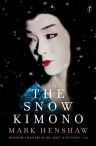
  • Mark Henshaw, The snow kimonoSpecial mentions: I can’t complete this list without mentioning two books that don’t fit the above categories but must be mentioned: Mark Henshaw’s The snow kimono and Fiona McFarlane’s The night guest. Both take their readers on a merry (or not so merry really, but you know what I mean) dance, and are very satisfying reads.

Serendipitous Reading Stats

Just because I like them (these percentages are for this year of course):

  • 67% of the authors I read were women.
  • 27% of the works I read were not by Australian writers.
  • 73% of my reading was fiction (short, long or in-between!)
  • 20% of the works I read were published before 2000
  • 30% of the works I read were published in 2015
  • I reviewed multiple (2) works by two authors – Jane Austen, and Ellen van Neerven

I did not achieve my one real goal for the year, which was to read more from my TBR, and, for reasons which regular readers here know, I did not manage to read more books. But, I had a great reading year, nonetheless, and I want to thank you all for joining me in my journey – for reading my posts, engaging in discussion, recommending more books to read and, generally, being all-round great people to know (cyberly, anyhow). I wish you all a wonderful 2016, and hope to see you here whenever the spirit moves you.

What were your reading or literary highlights for the year?

* I nearly missed the autocorrect of Halligan to Halogen!