Kurt Vonnegut, Slaughterhouse-Five (#BookReview)

While my reading group’s main reading fare has, from the start, been contemporary fiction, we also mix it up a bit. We do non-fiction, for example, and most years we try to do a classic. Over the years we’ve done Jane Austen, Elizabeth von Arnim, Anton Chekhov, EM Forster, and Randolph Stow, to name a few. This year we turned to Kurt Vonnegut, and, because we couldn’t decide which book to do, we narrowed it to two – Cat’s cradle and Slaughterhouse-Five – and let members decide. You can tell from the post title which one I chose. This was because I have read Cat’s cradle, albeit decades ago. Most of the group, however, read Cat’s cradle, because they’d read Slaughterhouse-Five before.

So, Slaughterhouse-Five it is then – and I’m confronted by the old challenge of what to say about a classic, and a cult classic at that. This book has been analysed ad infinitum, and been found, as the decades have trundled by, to retain its relevance to new generations. However, before I say more, let me give a very brief synopsis, just in case there’s someone out there who doesn’t know the story.

“jumbled and jangled”

Ha, did I say brief synopsis? Easier said than done, but I’ll give it a try. Slaughterhouse-Five tells the story of Billy Pilgrim, from his early years, through his time as an American soldier during World War II including being in Dresden when it was bombed, to the post-war years. During his life, Billy is also abducted by flying saucer and taken to the planet of Tralfamadore, where he is displayed in a zoo. The critical issue underpinning all this is that Billy was damaged by his wartime experiences, something we now recognise as PTSD. Vonnegut conveys – and represents – Billy’s discombobulation, his trauma, through a complex non-linear, non-chronological narrative, in which Billy, who “has come unstuck in time”, travels not only back and forth through time, but also back and forth between Earth and Tralfamadore. 

Slaughterhouse-Five is, as a result, a challenging, sometimes mystifying read, but it is also an exhilarating one, because Vonnegut tells his story through satire and absurdity, both of which I love. In the first chapter, the narrator, who is Vonnegut, tells us about writing the book we are now reading. As he hands his finished book to the publisher, he says

It is so short and jumbled and jangled, Sam, because there is nothing intelligent to say about a massacre.

Alongside the occasional appearance of this first-person narrator, we have the unsuccessful science fiction writer Kilgore Trout, who can also be read as a version – caricature – of Vonnegut. His “unpopularity was deserved”, the narrator tells us. “His prose was frightful. Only his ideas were good”. But, Billy loves him. We first meet Trout when Billy is introduced to him by Rosewater, another patient in the hospital to which Billy had committed himself when he feels he is “going crazy”:

Rosewater was twice as smart as Billy, but he and Billy were dealing with similar crises in similar ways. They had both found life meaningless, partly because of what they had seen in war. Rosewater, for instance, had shot a fourteen-year-old fireman, mistaking him for a German soldier. So it goes. And Billy had seen the greatest massacre in European history, which was the fire-bombing of Dresden. So it goes.

If you’ve read the novel, you will know that “so it goes” is its over-riding refrain. Used over 100 times, at moments of murder, death, and other disasters, it functions as a motif, one that both underlines and undermines the horror, by drawing attention to it, then passing it off. The constant opposition, in the novel, of the serious with the offhand keeps the reader unsettled, which is part of the point.

The occasional self-conscious appearance of the author/Vonnegut and the references to Kilgore Trout, along with its story-within-a-story framework, its wild playing with time and place, its fragmentary approach to storytelling, and its unapologetic undermining of “reality”, make this book a postmodern work, if that interests you. By this I mean what sort of work it is doesn’t matter, really. It’s what the work says or makes you feel that really counts. However, it’s these features and techniques which enable Vonnegut to convey what he wants to say in such a powerful way. The how of it is inseparable from the meaning of it.

Slaughterhouse-Five is said to be about many things, including war and pacifism, fate and free will, our experience of time. I could discuss each of these in turn, but the academics already have. I’ll simply say that my primary takeaway is that it’s about the absurdity and incomprehensibility of life and, by example, about how our everyman Billy Pilgrim copes (or doesn’t) with such life.

Slaughterhouse-Five was published at the height of the Vietnam War and the anti-war movement. It was, it seems, the right novel at the right time. Although Vonnegut had had some success before, this was the novel that apparently established him. I can see why. With wars just keeping on coming – and being just as horrific and absurd as the ones that came before them, I can also see why this novel continues to speak to new generations of readers. I mean, how can you not laugh at Billy on display in Tralfamadore:

Then he did exercises he had learned in the Army—straddle jumps, deep knee bends, sit-ups and push-ups. Most Tralfamadorians had no way of knowing Billy’s body and face were not beautiful. They supposed that he was a splendid specimen. This had a pleasant effect on Billy, who began to enjoy his body for the first time.

And, you know what? I’m going to leave you right here, because if this doesn’t convey why this book is such a complex, funny, humane read, I don’t know what will.

Kurt Vonnegut
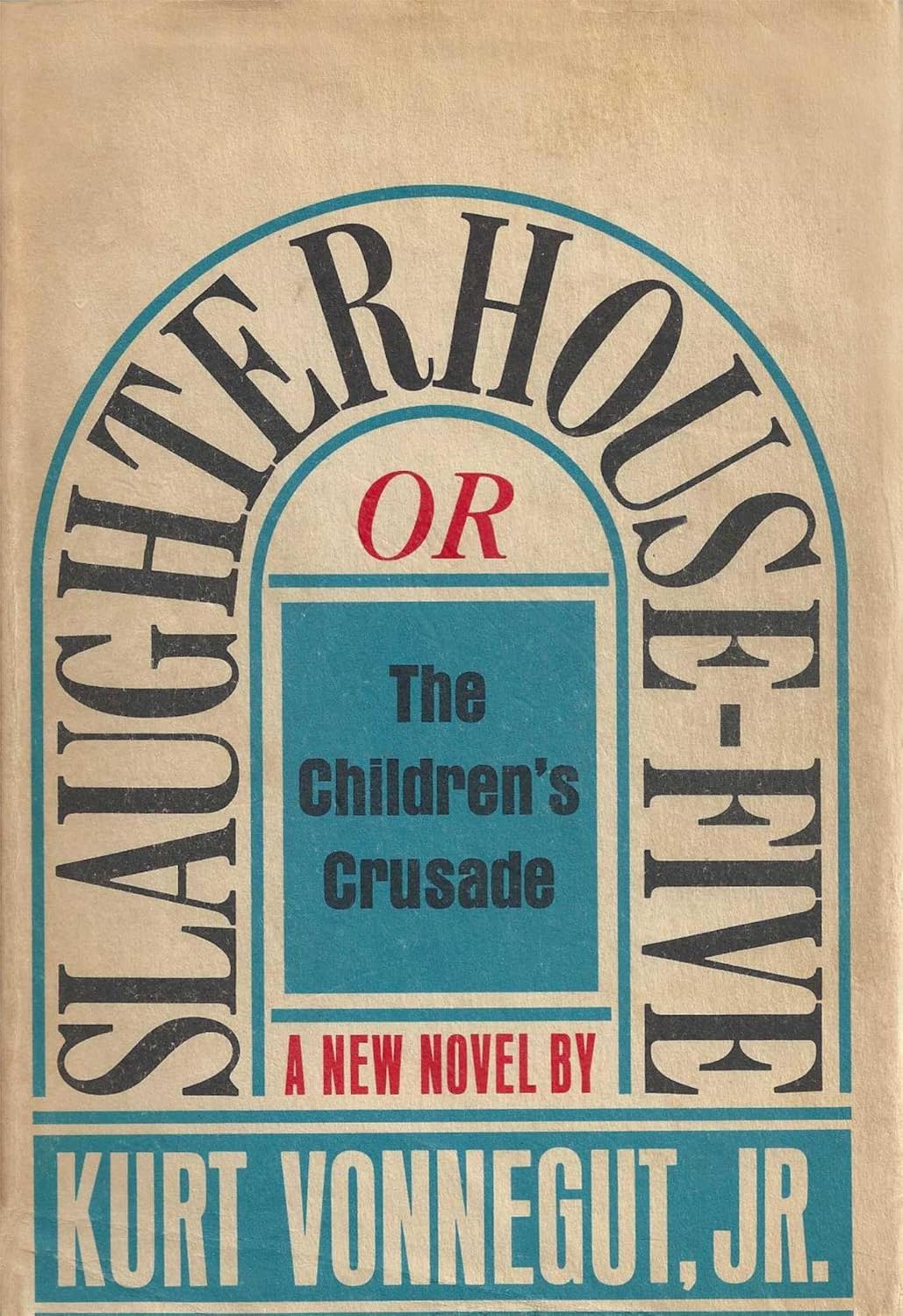
Slaughterhouse-Five, or, The children’s crusade
Horizon Ridge Publishing, 2024 (Orig. pub. 1969)
199pp.
ASIN: ‎ B0D9SKLL68

Rebecca Campbell, Arboreality (#BookReview)

Arboreality, by Canadian writer Rebecca Campbell, won the 2023 Ursula K. Le Guin Prize. However, not being much of a speculative fiction reader, I didn’t discover this book through this award. Fortunately, some bloggers I follow, like Bill (The Australian Legend), do follow this genre, and his review convinced me that this climate change dystopian work fits into the sort of speculative fiction that does interest me.

Before I talk about the book, however, a little about the prize. It was established in 2022, in honor of Ursula K. Le Guin, and is currently worth $25,000. It has some specific criteria: it’s an English-language award for a single work of “imaginative fiction”, and intends to honour authors who “can imagine real grounds for hope and see alternatives to how we live now”. This last bit is interesting – “real grounds for hope”. It reminds me of the Barbara Jefferis Award, which now seems to be in abeyance, but which was controversial because it stipulated that the winning work had to depict “women and girls in a positive way [my emph] or otherwise empowers the status of women and girls in society”. I don’t believe literature must offer hope or be positive, but I have no problem with awards sponsors making such stipulations.

So now, that out of the way, the book. It is set on Vancouver Island, a beautiful part of the world that I have visited. It’s novella in size, but, structurally, is best described as a collection of six inter-connected short stories:

  • “Special collections”
  • “Controlled burn”
  • “An important failure”
  • “Scion and root stocks”
  • “Pub food”
  • “Cathedral arboreal”

These stories are presented more or less chronologically, starting with the first two stories being set in the very near future (up to around 2050) with the last encompassing 2100. They are linked in various ways – by location; by characters (encompassing family and friends, ancestors and descendants, over time); and, as you’d expect, given the title, by trees, particularly but not exclusively, the arbutus and its mutant version, the golden arbutus. Each story focuses on a specific issue or idea and plays it out through personal stories, such as an academic saving books from a “crumbling” library (“Special collections”); a suburbanite trying to revive a devastated garden with local plants, as one-by-one his neighbours leave (“Controlled burn”); a luthier hunting for seasoned tonewood, via the black market if necessary, to make a Cremona-worthy violin (“An important failure”). These highly personalised stories are placed in context, through the addition of another voice – an omniscient narrator, in italicised sections – which conveys the wider ecological, economic and political picture. We see the land change through fire and rising sealevels; we hear of space colonisation; we learn of pandemics. It’s cleverly done, and although it requires concentration, I was more than willing to go with it because the vision Campbell presents is compelling in its awful believability. That, I think, is what telling a near-future story can achieve. It’s hard to pretend it won’t happen.

“What are we going to do?”

What makes this book so beautiful, however, is the way Campbell manages convey both absolute horror alongside a sense of hope born of human ingenuity, resilience, and sheer doggedness. Jude and Berenice, fighting a losing battle in their mission to save books, must constantly downgrade their expectations, which means becoming more and more selective about what is saved (and therefore also what is lost to human knowledge), but they don’t give up, and these books are seen in 2100. Similarly, Bernard, in his now empty suburb where gardens have died due to a watering ban, doggedly works to find plants that will live in his and neighbouring gardens, which we see, a few generations later in “Cathedral Arboreal”, has become a forest. And Mason’s “secret history” violin also appears in this last story in another generation. These people will not let go even though they are very aware of what has been lost, of what they have lost.

We’ve lived here for ten thousand years. Someone survived everything history threw at them, the fires and tsunamis, the earthquakes, the smallpox, the settlers. Empire. Capitalism. Someone’s going to survive this. (Benno, c. 2071, in “Scions and Root Stocks”)

The ecological story Campbell tells, alongside the human one, is fascinating, albeit probably more challenging to those of us who don’t know the plants of the region and their significance – the garry oak, the arbutus, the camas (lily), fireweed, Douglas fir, and so on. I know some of the plants she names, but I don’t know their particular role in the culture, their horticultural essence and value, or their symbolic meaning (if any any). Some I looked up, and some I didn’t, but certainly Campbell’s story is rich with interconnections here too, between past, present and future, and between Indigenous and non-Indigenous practices.

One of the meanings of “arboreality” is “of, relating to, or resembling a tree” which makes it a good literal title for a book in which trees stand for so much that is important to life – ecologically, culturally, and psychologically. But Campbell is also, perhaps, playing with the “sheltering” notion implied in “arbor” and “reality”.

The Ursula K. LeGuin Prize’s selection panel wrote:

Arboreality is a eulogy for the world as we know it. Rebecca Campbell’s extraordinary, deeply felt book explores the difficulties of the long hard project of survival. There are no heroes or villains here—only people making brave, difficult choices, out of hope and love for their community, for art, knowledge, and beauty. Arboreality imagines things that we haven’t yet considered about what can and will go wrong with our gardens, libraries, and archives if we don’t act now (maybe even if we do). In her masterful and profoundly ethical stories, Campbell asks us what might be saved, what must be saved, and what it will take to do so. 

‘What are we going to do?” asks Jude in the opening story, “Special collections”. Well might he ask. Arboreality is an astonishing book because of the way it imagines the dire, with all its attendant griefs, side-by-side with survival (and its attendant, hope). This makes it a bit discombobulating because we are constantly surprised by what happens next. The world is not beautiful, and life is tough, but people are surviving and working their way through what life has thrown at them. I don’t imagine Campbell intends us to think, “it’s alright then, let’s continue along our merry, destructive ways” but more that when (because we are, it seems, past “if”) we are confronted with the worst, humans can, and hopefully will, find ways through. The question is: is this the future we want?

Rebecca Campbell
Arboreality
Hamilton, Ca: Stelliform Press, 2022
128pp.
ISBN: 9781777682330 (eBook)

Claire G. Coleman, Night bird (#Review)

Wirlomin-Noongar woman Claire G. Coleman’s short story “Night bird” is the second First Nations Australia story in Ellen van Neerven and Rafeif Ismail’s anthology Unlimited futures: Speculative, visionary Blak+Black fiction, the book I chose for Bill’s (The Australian Legend) Australian Women Writers Gen 5 Week. The week finished officially a week ago, but I’m hoping Bill won’t mind my still referencing it. Coleman is not new to my blog. I reviewed her debut novel, Terra nullius, the year after it came out. She has written more fiction and some non-fiction since then, with a clear focus on the devastating impact of colonisation on First Nations culture and people.

“Night bird” continues this focus. It follows Ambelin Kwaymullina’s story in the anthology, “Fifteen days on Mars” (my review), which works well, because both draw on the importance and role of Ancestors in First Nations culture. Coleman’s story is told first person by an artist who is “too afraid to sleep, too tired to be awake”, who drinks to drown her sorrows, who fears she may be “going mad again [my emph]”. She tells us

I am haunted by the ghost of my Ancestors’ Country like a phantom limb …

[…]

I have been cut off from my Country, my ancestors cut up, the land drilled and dug and eaten by machines … my wounded homeland won’t let me rest.

This is not a subtle story. The narrator (whom I think is female, so I’ll go with that) grieves for a life she “could never have” because Country has been “severed”. She has “returned to Country” but, finding it “dead”, “could feel nothing and none” of her Ancestors. She feels haunted, but by what or whom?

I can hear a voice but I can’t make it out. I can hear a song but I can’t catch the words. I can hear the wind and it’s stealing my breath. I can hear nothing and it is screaming.

Country is part of her, but she wants to be free of the haunting, the “wordless voice”, the “phantom presence” that won’t go away. There is a wind, but it is “coming from the wrong direction – away from Country”. Then,

The wind changes, it caresses my back, and suddenly it’s coming from Country.

However, at the same time, a man appears and threatens her. There are now two voices – his and the Ancestors. This is a story about a battle between disempowerment (represented by the man) and empowerment (represented by the Ancestors). Is she, and are they, strong enough to prevail?

I suspect this story was inspired by an experience Coleman describes in her article in Writing the Country (The Griffith Review 63). She describes the life-changing experience of going to Country in 2015, her family’s Country that had been taboo due to a massacre that had occurred there in the nineteenth century. She writes:

I didn’t go there until 2015, that place changed my life forever, my world, my life, even the way I breathed. I took the taboo air into my lungs and I did not die or maybe I did. The bones of my feet landed on the sand and returned to life, I was born again on Country. The story of that place made me a storyteller; story is in my veins.

She says an old man told her that “no matter where we go Country calls out to us” and she writes of the bird, the Wirlo (or curlew), that “to me and mine are family”. Its cry, its scream, “calls me home” – as does the night bird in this story. She describes how Country cares for people as they care for Country. She writes:

I wept when I realised Country had not forgotten me even when I did not know Country. My old-people, my ancestors, would care for me.

All of this is seems embedded in “Night bird”, so now, back to it. It is another example of “Indigenous futurism”. It is ground very much in the real world. The voices that our narrator hears are mysterious, sometimes coming from her phone, sometimes from the air around her, but they are not magical, not fantastical, they are the Ancestors – and the story envisions a healthy relationship with them and thus Country.

On her website, Coleman includes a link to an interview she did with VerityLa after Terra Nullius came out. Among the questions was that one we readers love, which is whether any authors or novels influenced her. The first one she named was HG Wells’ War of the worlds, because it “is great in giving an understanding of how to show an overwhelming powerful enemy destroying a less well-armed defender”.  “In fact,” she says, “War of the Worlds is a powerful text for the examination of invasion and colonisation”. You can certainly see its influence in Terra Nullius, and it is evident here too.

Claire G. Coleman
“Night bird”
in Ellen van Neerven and Rafeif Ismail (ed.), Unlimited futures: Speculative, visionary Blak+Black fiction
North Fremantle: Fremantle Press in association with Djed Press, 2022
pp. 66-73
ISBN: 9781760991463 (eBook)

Ambelin Kwaymullina, Fifteen days on Mars (#Review)

In 2014, Ambelin Kwaymullina, whose people are the Palyku of the Pilbara region of Western Australia, described herself in a Kill Your Darlings essay as writing “speculative fiction for young adults”. Three years later, in the 2017 Twelfth Planet Press anthology, Mother of invention, she said that she was “a Palyku author of Indigenous Futurisms”, citing Grace Dillon (as did I in this week’s Monday Musings) as the term’s originator. I share this progression in her thinking because it’s indicative of the energy and intellectual engagement among First Nations people with literature and the politics of what they are doing. Kwaymullina is an example of a First Nations Australian writer who is actively engaged in First Nations culture and thinking, as well as in the craft of writing.

I first came across Kwaymullina early in my volunteer work for the original Australian Women Writers Challenge, because many reviews for her young adult novels were posted to our database. But, I had not read her because YA literature is not my thing. However, I decided to read Ellen van Neerven and Rafeif Ismail’s anthology Unlimited futures: Speculative, visionary Blak+Black fiction for Bill’s (The Australian Legend) Australian Women Writers Gen 5 Week 15-22 January, and the first work in the anthology by an Australian woman was “Fifteen days on Mars” by Kwaymullina. Woo hoo… here was my chance to finally read her. I will post on more in this fascinating book, which I’ve not yet finished, later.

“Fifteen days on Mars” is an accessible short story, told chronologically from Day One to Day Fifteen. The politics is made clear in the opening paragraph, by beautifully skewering colonial settler behaviour concerning the naming of places:

It had been almost a year since we came to Mars. That was what I called this place although it had another name. It was Kensington Park or Windsor Estate or something like that but I couldn’t have said what because I could never remember it.

Our first person narrator Billie and her mum have come to Settler suburbia, where they are “the only Aboriginal people”, for some reason that is not immediately clear though we sense there’s a specific purpose. Billie hadn’t wanted to come but, as her mother’s only offspring without children, she’d drawn the short straw. The story starts with her pulling weeds from their garden, the very plants that the rest of the neighbourhood love, plants (I mean “weeds”) like roses. In this metaphorical way the colonial setting is established. This is a world we know. Very soon a new couple moves in across the road. Billie, at her Mum’s insistence, does the neighbourly thing, and makes contact. She quickly realises that their new neighbour, Sarah, is being abused by her husband, whom Billie calls The Suit. What to do?

To this point, notwithstanding the hint at the start that there’s something unusual about the situation, the story reads like a typical piece of contemporary fiction – that is, set in the known present world. But slowly, we become aware that something else is going on. Billie refers to “the rules”. Does she just mean the normal “rules” of social behaviour? Nope, our suspicion is right, there is something else. There’s reference to Sarah needing to “ask”, and to whether what or how she asks is “good enough for them upstairs”, aka “the Blue”, as Billie’s mum calls them. Billie says:

the truth was we knew very little about them, except they were some kind of intergalactic healers. But we knew why they’d come. It was because of the Fracture.

So now it’s clear we are in speculative fiction/Indigenous Futurism/Visionary Fiction/SFF territory. This is the sort of speculative fiction I can enjoy, something that doesn’t require me to learn a whole new world but that injects something new into the world I know, something that upends it a little.

The Fracture is not fully explained, but “something had smashed into the relationships that were space-time and cracks had spread out from the point of impact” resulting in, says Billie, “bubbles of the past floating across my reality”. The Blue, we are told, are trying to repair this Fracture, leaving humans “to do something about the bubbles” – but to the Blue’s rules. Billie’s mum had signed up “for the job of changing the bubble-world, or at least, of changing some of the people enough so they could exist in our reality”. Hmm, this makes them sound a bit like missionaries. An ironic twist?

Anyhow, the story continues, with a strong reference to the Stolen Generations, as Billie and her Mum, recognising these are “strange times”, try a different tack to save Sarah, and call on the ancestors. They hope the Blue won’t mind.

I will leave it there. I enjoyed the story – because it tells a First Nations story truthfully but generously; because the characters of Mum and Billie, while being somewhat stereotypical (the wise Mum and the reluctant Billie), are warm and engaging; and because the ideas and the story itself are intriguing to watch being played out.

In her 2017 piece cited above, Kwaymullina describes Indigenous Futurisms as “a form of storytelling whereby Indigenous peoples use the speculative fiction genre to challenge colonialism and imagine Indigenous futures”. This is exactly what she does in “Fifteen days on Mars”. The colonial legacy is unmistakeable, with most inhabitants of Settler suburbia remaining “unbelievably ignorant”, but she also offers glimmers of hope. I don’t eschew bleakness, but as an optimist I also appreciate it when writers can see paths to a better future. It’s energising.

Ambelin Kwaymullina
“Fifteen days on Mars”
in Ellen van Neerven and Rafeif Ismail (ed.), Unlimited futures: Speculative, visionary Blak+Black fiction
North Fremantle: Fremantle Press in association with Djed Press, 2022
pp. 42-64
ISBN: 9781760991463 (eBook)

Monday musings on Australian literature: First Nations Australia speculative fiction

This post is my first contribution to Bill’s (The Australian Legend) Australian Women Writers Gen 5 Week 15-22 January. Gen 5 encompasses women who have been writing from the 1990s to now. Bill argues that two major trends characterise this era: “the rise and rise of Indigenous Lit” and “writing which in earlier days would have clearly been SF – but which now is generally characterised as Climate Fic., Dystopian, or less frequently, Fantasy/Surreal/Postmodern.” With this in mind, Bill decided that AWW Gen 5’s focus would SFF – Science Fiction/Fantasy.

Given Bill observed that First Nations Women are writing in this genre, I have decided, for this post, to combine the two trends. It won’t be comprehensive, but more in the spirit of providing an introduction or overview. Here goes …

I have seen various terms applied to SF, or what I prefer, though Bill doesn’t, to call Speculative Fiction. Introducing their anthology, Unlimited futures, Ellen van Neerven and Rafeif Ismail speak of Visionary Fiction, which Wikipedia explains is not “science fiction” because it is driven by “new and uncanny experiences (mystical, spiritual and paranormal) in the neural web”. Wikipedia quotes Michael Gurian, who was one of the first to promote the genre on the web. He defines visionary fiction as “fiction in which the expansion of the human mind drives the plot. Where science fiction is characterized by storytelling based in expanded use of science to drive narrative, visionary fiction is characterized by storytelling based in expanded use of mental ability to drive narrative.” So, it may not be traditional SF, but I believe it can be encompassed under the speculative fiction umbrella, particularly as First Nations people see it.

Claire G Coleman, Terra nullius

The other main term I want to share, I found in BookRiot, in their 2020 article, “Explore Indigenous Futurisms with these SFF books by Indigenous authors”, by Danika Ellis. Ellis, who also uses the umbrella term, Speculative Fiction, writes that “Indigenous Futurisms” was coined by Dr. Grace Dillon, professor in the Indigenous Nations Studies Program at Portland State University. It was inspired by Afrofuturisms, which explores speculative fiction through an African diaspora lens. Ellis explains that “depictions of Indigenous people in mainstream media has often placed them in a historical context, not recognizing the Indigenous cultures and individuals of today, never mind the future. Indigenous Futurisms imagine Indigenous people into every context: space travel, fantasy worlds, alien invasions, and more.” BookRiot’s list includes Claire G. Coleman’s Terra Nullius (my review) and Ambelin Kwaymullina’s young adult novel The interrogation of Ashala Wolf. Ellis makes the point that:

Indigenous Futurisms brings a much-needed perspective to a genre that is often uncritically colonial, whether it’s fantasy rooted in Medieval England, or space travel that celebrates conquering new worlds.

Good one. Not being a reader in this genre, I hadn’t clocked this.

Meanwhile, closer to home, last June The Conversation ran a review by Yasmine Musharbash of This all come back now: An anthology of First Nations speculative fiction, which was edited by Mykaela Saunders. This anthology, you will have noticed, uses the term Speculative Fiction, and Musharbash accepts this, offering her understanding of the genre:

In my view, speculative fiction – the narrative exploration of “what-ifs”, the creative probing into latent possibilities, the imaginary voyaging into potential futures – is the genre of our times. We are on the brink of … something. Environmentally, for sure. But also socially, politically, economically. 

What this something is, when it will happen, how it will shape the future: these are the questions at stake. 

This all come back now, she says, is the “first Australian anthology of First Nations speculative fiction”. This might be so, but of course First Nations Australians have been writing speculative fiction for some time. Musharbash discusses what characterises this anthology as “First Nations”, and says the first thing is “Country with a capital C, in that very First Nations sense of something utterly fundamental and intimately related to the self, is centrally present across these pages. Many of these stories are fully immersed in Country.” This is not surprising, nor, really is the other recurring element she identifies, humour. I have mentioned before First Nations humour and its particular flavour. Musharbash describes the humour as being cheeky, and often “bitter-funny”.

First Nations Australia SFF

I wrote above that First Nations Australians have been writing speculative fiction (SFF) for some time, and I’ve reviewed a little here on my blog, including Coleman’s Terra nullius, and Ellen van Neerven’s “Water” (my post), which is included in This all come back now. Coleman, in fact, is making this space a bit of her own, with two more novels, The old lie (Bill’s review) and Enclave (Bill’s review), published

Book cover

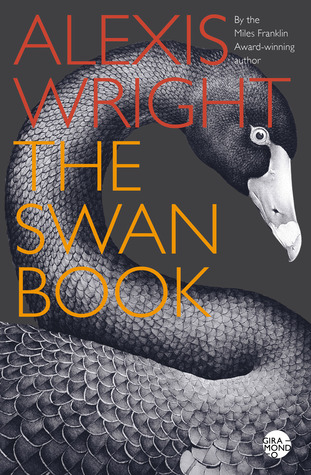
Before them was Alexis Wright with Carpentaria (my review) and, more obviously, The Swan book (Lisa and Bill). Bill describes this latter as being set “some time in the future after the countries of Europe have been lost in the Climate Wars”. It is still on my TBR.

However, there are several other writers whom I’ve not read or reviewed (yet) on my blog, like Karen Wyld and Alison Whittaker. Another is Ambelin Kwaymullina, who is best known for her YA speculative fiction series, The Tribe. Six years ago, she wrote a post, titled “Reflecting on Indigenous superheroes, Indigenous Futurisms and the future of diversity in literature on the loveozya blog. She starts with a strong argument about how Indigenous writing has been measured, against Western concepts, and addresses that colonisation aspect I mentioned above. She also addresses the point I have heard Alexis Wright make about “magic”, and takes it further:

In Australia and elsewhere, Indigenous peoples have also long been able to interact with the world in ways that the West might label as ‘magic’, but this is because the West often defines the real (and hence the possible) differently to the Indigenous cultures of the earth. There are many aspects of Indigenous realities that might be called ‘speculative’ by the West (such as communicating with animals and time travel). There is also much in Western literature that Indigenous peoples regard as fantasy even though it is labeled as fact, including the numerous negative stereotypes and denigrations of Indigenous peoples and culture contained within settler literature. 

Another good challenge to our worldview. She too references Dillon’s “Indigenous futurisms”, explaining that it describes “a form of storytelling whereby Indigenous peoples use the speculative fiction genre to challenge colonialism and envision Indigenous futures”.

Kwaymullina argues that there’s a growing Indigenous presence in speculative fiction, including in YA and Children’s fiction, and names some writers – Teagan Chilcott, Tristan Michael Savage, graphic novelist Brenton McKenna, and the young Aboriginal people responsible for NEOMAD (my post).

So, an exciting time for the genre and for literature in general, but I’ll close here …

Have you have read any First Nations (anywhere) speculative fiction? If so, care to share?

Monday musings on Australian literature: Supporting genres, 8: Science fiction

Unlike my last two posts in this “supporting genres”series, today’s is a true-blue genre. The problem is, as many of you will realise, that it takes me way, way out of my comfort zone. However, with this week being National Science Week in Australia, I decided that it was a good time to tackle this oh so popular genre. I will just add that, this not being my area of expertise, today’s post will be even more introductory than usual for this series.

I hope to hear from aficionados, who will hopefully fill in gaps and correct any misconceptions. Meanwhile, I’ll start with Wikipedia’s statement that

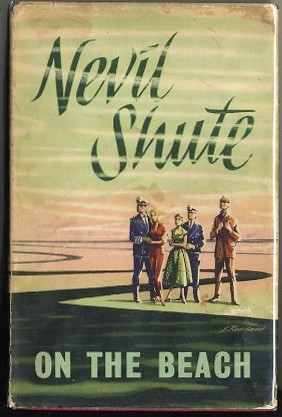
Nevil Shute, On the beach

Australia, unlike Europe, does not have a long history in the genre of science fiction. Nevil Shute’s On the Beach, published in 1957, and filmed in 1959, was perhaps the first notable international success.

Does international success define a genre’s history? This seems to be the implication of the opening paragraph, but I see it more as “a” measure of success rather than necessarily indicative of activity. Anyhow, the opening paragraph also suggests that the situation may have been worse in Australia had not importing American pulp magazines been restricted during World War II, “forcing local writers into the field”. “Forcing”?

Wikipedia then shares that pre-Second Word War Australian science fiction tended to be racist and xenophobic by today’s standards. This was due, it continues, to contemporary worries about invasion and foreigners. By the 1950s, as in other countries, the genre became influenced by technological progress and globalisation. I guess what all this is saying is that science fiction – perhaps more than most genres – is closely affected by contemporary issues and concerns. Even I know that current science fiction is drawn to issues like climate change and environmental degradation!

Definition

Must I? Science fiction, I suspect, though you can prove me wrong, is one of the most difficult genres to define. When we Australian Women Writers Challenge volunteers were establishing our genres, this area took some thinking. In the end, we called it Speculative Fiction, and incorporated “genres” like fantasy, horror, paranormal, into it.

Wikipedia calls Science Fiction a “genre of speculative fiction which typically deals with imaginative and futuristic concepts …”. It continues that SF “can trace its roots back to ancient mythology, and is related to fantasy, horror, and superhero fiction, and contains many subgenres” and then says that “its exact definition has long been disputed among authors, critics, scholars, and readers”. So, I’m not going to argue with that. The Awards below tend to encompass a broad church under the banner.

Conventions

Interestingly, Science Fiction followers seem to have conventions rather than festivals. Here are a few:

  • Australian National Science Fiction Convention (ANSFC) has been an annual event since 1952! That’s impressive, surely. Even more impressive is that, as Wikipedia explains, “each convention is run by a different committee unaffiliated with any national fannish body”. This speaks to the passion of its followers, I’d say. It even ran through the pandemic, as the Wikipedia article shows.
  • Conflux is an annual science fiction convention held in Canberra, since 2004, building on the CSFcons (Canberra Science Fiction Conventions), held in the early noughties. Its website says it encompasses “sci fi, fantasy, alternative history and horror”. It was not held during the pandemic, but, if I read its website correctly, it will host NatCon (ie the ANSFC) in 2022.
  • SwanCon is an annual science fiction convention held in Perth, since 1976. It has often hosted the Australian National Science Fiction Convention.

Awards

Australia has two main science fiction awards:

  • Aurealis Award for Excellence in Speculative Fiction was established in 1995 by the publishers of Aurealis Magazine. It’s an annual award for Australian science fiction, fantasy and horror fiction, and its categories are different to the Ditmar, below, being based on subgenre (like fantasy, horror) and age (young adult, children’s, for example). It now also has categories for form – anthologies, short stories, novellas, etc. If you want a sense of this award, check out its website.
  • Ditmar Award has gone through a few permutations since its establishment in 1969 (which makes it our longest standing science fiction awards). It is announced at the ANSFC, and, says Wikipedia, aims to recognise “achievement in Australian science fiction (including fantasy and horror) and science fiction fandom”. The fandom aspect is interesting. It encompasses a number of awards which are defined by form rather than content, like novel, novella, short story, fan artist, fan writer.

The notable thing about some genre awards, and we see it here, is that they often recognise various forms, like short stories and novellas.

Publishers

There seems to be a plethora of science fiction publishers in Australia. Many of them pride themselves on supporting inventive works and forms. Here are just a few, which I think are currently active:

  • Brain Jar Press: “Brisbane’s scrappiest, weirdest, and most genre-friendly small press, publishing outstanding and unexpected works of fantasy, science fiction, horror, and crime”. Their authors include Angela Slatter and Kaaron Warren.
  • Clan Destine Press: publishes “genre fiction in its myriad and wondrous forms: crime, mystery, historical fiction, thrillers, adventure, speculative fiction, fantasy, science fiction, horror, urban fantasy, paranormal, steampunk, and ah-ha! “
  • Sunburnt Fox Press: only publishes Australian science fiction and fantasy, mainly, it seems, through Etherea Magazine.
  • Twelfth Planet Press: aims “to elevate minority and underrepresented voices with books that interrogate, commentate, inspire. Challenging the status quo through provocative science fiction, fantasy, horror, and cosy crime”.

Of course, the general publishing houses also publish science fiction.

Science fiction and me

Bill recently responded to a comment of mine on his blog that “I think that if I ever got you started on reading women’s SF you would never stop”, because, he said, “the great majority are of the inner lives of women in unusual situations. The story is only rarely about the SF premise”. He’s right – to a degree. From my youth, I have read a smattering of science fiction – John Wyndham (and Nevil Shute) in my teens, and in my twenties and early thirties I read Huxley’s A brave new world, Orwell’s 1984 and Vonnegut’s Cat’s cradle. (All by men!)

Claire G Coleman, Terra nullius

I read no Australian science fiction through those years. However, in recent years I have read several Australian dystopian and cli-fi novels. Not all of these, though, are, technically, science fiction because not all are “futuristic”. However, some are, such as Jane Rawson’s A wrong turn at the Office of Unmade Lists (my review) and Claire G Coleman’s Terra nullius (my review). I loved both of these, and remain open to the genre – but I’m unlikely to ever become an aficionado.

Do you like science fiction and, if so, care to share why?

Previous supporting genre posts: 1. Historical fiction; 2. Short stories; 3. Biography; 4. Literary nonfiction; 5. Crime; 6. Novellas; 7. Poetry

Monday musings on Australian literature: Women science fiction writers

This year’s National Science Week finished yesterday, 19 August, but I figured no-one would mind if I wrote a Science-Week-dedicated post a day late. In past years I’ve written Science Week posts on novels about scientists (2015), science-based non-fiction (2015), and science writing (2016). I didn’t write a post last year. So, what to do this one? I’ve decided, given my Australian Women Writers Challenge involvement that I’d share some of Australia’s popular women science fiction writers. This is not, I admit right now, my area of expertise. but I’ll give it a go.

My first challenge is, as you might expect, definition of the genre. Wikipedia lists, in chronological order, over 30 definitions, starting with someone called Hugo Gernsback in 1926. I don’t want to get embroiled in this, and I want, for my purposes here, to take a rather narrow definition. Here are two, in Wikipedia, from well-known science-fiction writers:

  • Isaac Asimov (1990) “‘[H]ard science fiction’ [is] stories that feature authentic scientific knowledge and depend upon it for plot development and plot resolution.”
  • Arthur C. Clarke (2000) “Science fiction is something that could happen—but you usually wouldn’t want it to. Fantasy is something that couldn’t happen—though you often only wish that it could.”

So, I’m going to focus on women writers who, I believe, write (more or less) within these definitions. I’ll be on thin ground I know, but will welcome debate!

I decided that a good source for me to separate out science fiction from other forms of speculative fiction would be Australia’s Aurealis Awards which offers prizes in specific categories, one being “Science Fiction” (but even there, some of the books overlap into other sub-genres, like dystopian fiction, which I want to leave aside here.) Indeed, the more I looked into “my” topic, the harder I found it to locate relevant authors. It seems, as AWW Challenge Speculative Fiction expert Tsana Dolchiva said in a post for the challenge, “Australia hasn’t been the most fertile ground for science fiction — for whatever reason, the planets didn’t quite align for it the way they did for fantasy.” I wonder why this is? Any ideas? Anyhow, I don’t feel so bad now about the paucity of my knowledge.

Marianne de Pierres, Dark spaceSo, here goes with a few names – all Australian women of course:

  • Cally Black: New Zealand-born, Melbourne-based Black is a new writer in the YA science fiction arena. Her debut novel, In the dark spaces, won the Aurealis Award for Best Young Adult Novel. It is a sci-fi thriller about a 14-year-old orphan who is taken in by her aunt who happens to be a cook on a space freighter.
  • Amanda Bridgeman: The Western Australian-based Bridgeman has, so far, written the Aurora space opera series, and an apocalyptic novel, The time of stripes. The Aurora series comprises 6 books set in and around a spaceship named “Aurora”. The third in the series, Aurora: Meridian, was nominated for an Aurealis Award.
  • Marianne de Pierres: Tsana writes that you “can’t talk about science fiction in Australia without mentioning Marianne de Pierres” which makes sense to me because even I have heard of her! De Pierres writes across a wide range of speculative fiction genres, including in this more “pure” science fiction area that I’m focusing on here. An example is her space opera series, the Sentients of Orion. Its four books – Dark space, Chaos space, Mirror space and Transformation space – were all shortlisted for Aurealis Awards, with the last one winning Best Science Fiction Novel in 2010. The novels are set on an “arid mining planet” called Araldis. She lives in Brisbane, and writes crime under a different name, Marianne Delacourt.
  • Anna Hackett: Hackett is, her website says, a USA Today bestselling author, but she grew up in Western Australia and describes her childhood as “running around in the sunny weather, chasing my brother and turning my mother’s outdoor furniture into spaceships.” She writes action romance, some of which take us into space, such as her Galactic Gladiators series.
  • Amie Kaufman & Jay Kristoff, IlluminaeAmie Kaufman: Tsana describes Kaufman as “one of the most notable Australian authors writing science fiction today”. She is, her website says, “a New York Times and internationally bestselling author of science fiction and fantasy for young (and not so young) adults.” She seems to mostly write collaboratively. Her debut novel, These broken stars, was co-authored with US writer Meagan Spooner, as is her latest book published this year, Unearthed. It’s novel is about an alien culture that has advanced technology which may be able to undo environmental damage. She has also collaborated with Australian writer Jay Kristoff, such as on their YA series, the Illuminae Files. The first in the series, Illuminae, is set in 2575 and “two rival megacorporations are at war over a planet that’s little more than an ice-covered speck at the edge of the universe.”

So, that’s five, and, until today, I’d only heard of one of them. So many genres, so many authors. I tried to see if I could identify any consistent themes running through these books, but I don’t think there are – not, at least, the way there are in the dystopian sub-genre. It does, though, seem that more writing is happening in the YA area than specifically for adults, which is interesting.

But now, have you read these authors – or, if not, who are your favourite sci-fi authors?

(PS I might explore other speculative fiction genres in future National Science Week posts.)

Monday musings on Australian literature: Aurealis Awards for Speculative Fiction

Those of you who know my lack of interest in science fiction might be surprised to see a post dedicated to the genre here. However, I do like to be more representative in my Monday Musings series. If that means sometimes moving into areas that are out of my comfort zone, then so be it. And now seems to be an appropriate time to do so in this instance, because this year’s Aurealis shortlist has been released and it contains some books that interest me.

First, though, a little background. According to the website, the awards were established “in 1995 by Chimaera Publications, the publishers of Aurealis magazine, to recognise the achievements of Australian science fiction, fantasy and horror writers.” Their aim is to complement the Annual Australian National Science Fiction Convention’s Ditmar Awards and various other literary awards, but they delve deeper into the genre by distinguishing different types of speculative fiction – science fiction, fantasy and horror.

Their “rules” explain their criteria. They see themselves as “first and foremost a literary award”, so “literary merit, originality and contribution to the genre are of paramount importance in selecting the shortlisted works”. In other words, genre elements alone are not enough for shortlisting. Regarding genre definitions, they say that “a problematic definition of what makes a work of a particular genre” should not “bar an excellent book that contains appropriate elements of that genre”. They prefer “an inclusive view of what genre markers may include”. So, while they provide guidelines for their three named types of speculative fiction, these are not meant to be proscriptive. Rather, fluidity and inclusivity is their goal. This broad view is probably why there are a few books on this year’s list that interest me.

Over the years, award categories have come and gone, but the end result is that, today, the list is extensive. Their 2017 awards are for:

  • Best children’s fiction
  • Best graphic novel/illustrated work
  • Best young adult short story
  • Best horror short story
  • Best horror novella
  • Best fantasy short story
  • Best fantasy novella
  • Best science fiction short story
  • Best science novella
  • Best collection
  • Best anthology
  • Best young adult novel
  • Best horror novel
  • Best fantasy novel
  • Best science fiction novel

Phew! I love that they cover their three “types” in novel, novella and short story forms, and that they separately recognise children and young adult works, and collections and anthologies. It’s comprehensive, and it’s clearly successful because these awards have now survived more than two decades.

There is also the Convenor’s Award for Excellence. It’s something a little different, being awarded at the discretion of the convenors for “a particular achievement in speculative fiction or related areas” that doesn’t necessarily fit into award categories. ” It can be given to “a work of non-fiction, artwork, film, television, electronic or multimedia work, or one that brings credit or attention to the speculative fiction genres.” There’s no shortlist, and people can self-nominate. Again, if you’re interested to see the sorts of works being considered this year, do check the website.

Interestingly, I can’t find anything on their site about what the winners win, which makes me think it is more for the glory than for monetary gain.

Selected shortlist titles for the 2017 Awards

Given the large number of awards made, I’m not going to list the complete shortlist, but if you’re interested check out their  announcement. However, I’d like to identify a few that caught my eye.

Firstly, there are a few authors in the list who have appeared here, such as short story writer Deborah Sheldon (see my review of her 300 degree days and other stories). There are also popular children’s and young adult writer Garth Nix, local writer Kaaron Warren, and several writers I’ve learnt about through the Australian Women Writers Challenge, such as Kate Forsyth, Margo Lanagan and Tansy Rayner Roberts. I don’t feel quite so out of my comfort zone now that I recognise some names!

Claire G Coleman, Terra nulliusBut, this year’s shortlist also contains some specific titles that interest me:

  • Lois Murphy’s Soon, published by Transit Lounge (for Best Horror Novel). It won the Tasmanian Premier’s Prize for Unpublished Manuscript. Lisa reviewed it and found it compelling.
  • Claire G Coleman’s Terra Nullius, published by Hachette Australia (for Best Science Fiction Novel). This debut genre-bending novel by an indigenous writer (who identifies with the South Coast Noongar people of Western Australia) has also been longlisted for the Stella Prize. The judges wrote that “Coleman’s punchy prose is insistent throughout, its energy unflagging”. My reading group will be reading this in March so you can expect a review here in a month.
  • Krissy Kneen’s An Uncertain Grace, published by Text Publishing (for Best Science Fiction Novel). I’ve read one of her novels, Steeplechase (my review) and am intrigued to read more of her. An uncertain grace has also been longlisted for the Stella Prize (link above). The judges’ report begins with “Krissy Kneen does not simply perform the difficult feat of writing wittily about sex, she does so with aplomb. An Uncertain Grace is a formally ingenious and often amusing novel that combines eroticism and science fiction with a playful spirit of intellectual inquisitiveness.”
  • Jane Rawson’s From the Wreck, published by Transit Lounge (for Best Science Fiction Novel). I loved Rawson’s A wrong turn at the Office of Unmade Lists (my review) and am very keen to read this latest book of hers which, I believe, crosses historical and science fiction genres. I rather thought it might have been longlisted for the Stella, but that didn’t happen.

These awards are clearly sought after. This year 800 entries were submitted across the 15 categories. The winners will be announced at an awards ceremony over the Easter long weekend during the Swancon convention in Perth.

Does speculative fiction have a place in your reading preferences? If so, how?