 It’s April and finally the first starting book for 2020’s Six Degrees of Separation that I’ve read. If you are new to blogging and don’t know this meme and how it works, please check out meme host Kate’s blog – booksaremyfavouriteandbest.
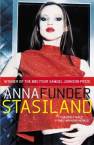 Now to April’s starting book, the critically acclaimed, multi-translated, award-winning nonfiction book by Australia’s Anna Funder – Stasiland (my review). Have you read it? If you haven’t do consider it because it’s not the sort of book to go out of date.
 Stasiland tells the stories of Stasi officers and collaborators and of those who suffered at the hands of the Stasi in the then East Germany. Largely because of this book, Mr Gums and I made a point of going to Leipzig in 2013 and visiting the Stasi’s Runde Ecke headquarters there. Anyhow, in announcing this book, Kate described it as a “classic on tyranny and resistance”. There are so many books that can link from that, so I’ll be interested to see what my co-meme-players do. I’ve decided to choose a related aspect, surveillance, which was fundamental to the Stasi’s tyrannical practices, and link to Janette Turner Hospital’s Orpheus lost (my review).
From here, I could take a cheery turn and link on, music, say, or the classics, but I’m going to stick with serious themes. Orpheus lost is partly about how terrorism leads to fear, surveillance and the loss of freedoms. Hospital was interested, she said, in the trading of civil liberties for safety in the post-9/11 world. However, I don’t want to spend all this post on this issue, so I’m making a cheeky jump to David Brooks’ The grass library (my review). It’s an animal rights focused memoir in which one of the main “characters” is Orpheus the lamb!
 From here it’s a very simple jump to another animal rights book, this one about the live export business, Bidda Jones and Julian Davies’ Backlash: Australia’s conflict of values over live exports (my review). I remember that when he sent the book to me, co-author and publisher Julian Davies described it as the most important book they’d published.
 So, I’m going to stick now with Julian Davies, or, at least, with his publishing company Finlay Lloyd, and link to the latest book of theirs published, John Clanchy’s In whom we trust (my review). One of the commenters on my post – someone who knows the author – described it as “an origin story” for the Royal Commission into Institutional Responses to Child Sexual Abuse. It is about child abuse, but is also about, as commenter David wrote, “the institutional tension between the Brother’s and Clergy power structure within the Church”. It’s a powerful, but deeply human read.
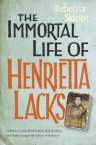 Trust, as Clanchy shows, is in short supply between powerful institutions and those who have no power and who, by rights, should be able to trust those who are not only able to but who morally should protect and support them. Rebecca Skloot had to work very hard to gain the trust of African-American Henrietta Lacks’ poverty-stricken family to write her scientific biography The immortal life of Henrietta Lacks (my review). This book is both a fascinating story of scientific discovery and a horrifying story of the abuse of people’s trust and, in fact, their rights.
 I am going to stay in America for last book, albeit the author is Australian, Elliot Perlman. The street sweeper (my review) is about many things, but the titular character is street sweeper Lamont Williams, an African-American, who has just started work as a janitor at a cancer hospital in a pilot program for ex-convicts. He is innocent of the crime that put him in jail but his colour and poverty meant he didn’t have a chance. This book which links the Holocaust to Civil Rights in America is fundamentally about moral responsibility – which, of course, is not what the Stasi practised at all!
I have stuck with politically charged books this month – and why not given the important role writers play in keeping us honest. So, I am going to conclude with Orwell from his essay, “Why I write”:
What I have most wanted to do throughout the past ten years is to make political writing into an art. My starting point is always a feeling of partisanship, a sense of injustice. When I sit down to write a book, I do not say to myself, ‘I am going to produce a work of art’. I write it because there is some lie that I want to expose, some fact to which I want to draw attention, and my initial concern is to get a hearing. But I could not do the work of writing a book, or even a long magazine article, if it were not also an aesthetic experience.
PS I wrote and scheduled this before COVID-19 restrictions took hold internationally. I decided not to rethink my post in the light of that but to leave you with what initially inspired me! However, I’ll add that I wonder what writers will make of COVID-19. When will the first COVID-19 novel appear? From where and from whom will it come, and what will be the take?
Anyhow, now the usual: Have you read Stasiland? And, regardless, what would you link to?
 So, we start with Lucy Treloar’s Wolfe Island …




 I’m starting this year the same as I did last year, that is, with Kate choosing a book I haven’t read. Indeed I haven’t even heard of Taylor Jenkin’s Reid book, Daisy Jones and the Six, which is a novel about the rise and fall of a fictional 1970s rock band.
 For my first link, I’m sticking with the theme of rock music, and choosing Nigel Featherstone’s novella, The beach volcano (
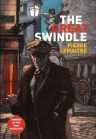 Featherstone’s Canning returns home because he wants to improve his relationship with his family, and father. Not so for Édouard Péricourt in Pierre Lemaître’s The great swindle (
 And here, sticking, unusually for me, with content, I’m going to link on something a bit tenuous. Édouard Péricourt was so disfigured in the war that he wears increasingly bizarre but often beautiful masks rather than let people see his face. Masks feature in Julian Davies’ novel Crow mellow (
 Crow mellow belongs, then, to a sub-genre known as country house novels. While you couldn’t call my next link a country house, exactly, but the characters in Charlotte Wood’s The natural way of things (
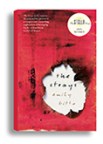 The natural way of things won the Stella Prize in 2016. The 2015 winner was a sort of country house novel too, Emily Bitto’s The strays (
 So, where to from here? How about another book which was inspired by artists, albeit of a different type? Dominic Smith’s The electric hotel (
 Last month’s starting book, Lewis Carroll’s Alice’s adventures in Wonderland, is of course a classic. This month’s would have been a classic I’m sure, if only the author had managed to finish it. The book is Sanditon (
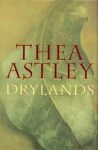 For my first link, I’m choosing Thea Astley’s Drylands (
 Now, Drylands has an unusual form. It is a novel, really, but it can read like a collection of short stories, which are written by someone called Janet. Another novel that can also be described as a collection of short stories, though not quite as tricksy in form as Astley’s, is Tara June Winch’s Swallow the air (
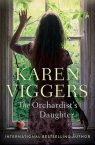 And here I’m going to change tack and move from Australia to France. Tara June Winch now lives in France, and has for some years. An Australian author who sells very well in France is, in fact, local Canberra writer, Karen Viggers. Her novel, The orchardist’s daughter (
 … and link to a book by an Australian writer (another Canberran in fact) that was drafted at a writer’s retreat in France and published by the people, La Muse, who are behind that retreat. The author is John Clanchy and his book, Sisters (
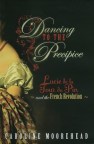 So far I’ve been a bit nationalistic in my French links, so next I’m linking to a book by – an English writer! Did I trick you there? However, it is about French people, Caroline Moorhead’s biography Dancing to the precipice: The life of Lucie De La Tour Du Pin, Eyewitness to an era (
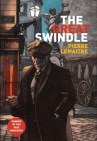 And finally, because of course I had to do it, a book actually written in France by a French writer. I’ve read a handful of French writers since I started blogging, so the choice was a bit of a challenge. However, given the flamboyance of some of the French aristocracy covered by Moorehead in her book, I thought perhaps Pierre LeMaitre’s novel,The great swindle (
 This month’s is a classic – the sort of book in fact which defines classic given its timelessness as a much loved book. It is, of course, given the post title, Lewis Carroll’s Alice’s adventures in Wonderland. And of course I have read it, though so so long ago that I really don’t recollect the actual time I read it because it’s one of those books that enters one’s consciousness isn’t it?
 For my first link, I’m going to do something that might shock those of you who know the book, because I’m linking to Charlotte Wood’s dystopian novel, The natural way of things (
 Now, not everyone approves of eating rabbits (or any animals for that matter). For Wood’s characters it was a matter of them or the rabbits, and they chose themselves. However, to be balanced about this, because, you know, we are supposed to be balanced here in Australia, my next link is to David Brooks’ animal rights reflection-cum-memoir, The grass library (
 The main animals in Brooks’ book are rescue sheep – two at first, then another, and finally a fourth. Sheep that desperately needed rescuing, because they are being mysteriously attacked, appear in Evie Wyld’s Miles Franklin award winning book, All the birds, singing (
 Birds of all sorts feature in All the birds, singing, as they also do in Carrie Tiffany’s Stella prize winning novel, Mateship with birds (
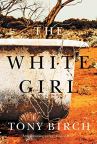 For Indigenous Australians, birds have many meanings and values, one of which is as messengers. We were introduced to this, practically, during our Arnhem Land trip last year, but birds-as-messengers feature in Tony Birch’s latest novel, The white girl (
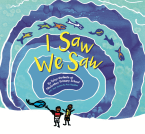 And now, because all my links to this point have involved animals, I am going to stick with animals. However, for this last link, I’m going for a double shot and am linking on indigenous author too. The book is I saw we saw written and illustrated by the Yolngu students of Nhulunbuy Primary School (
 It all starts, of course with Kate setting our starting book, and this month’s is – well, back to usual after a record run – that is, back to a book I’ve not read. Kate described it as a book everyone is taking about, Lisa Taddao’s Three women. I initially commented that maybe everyone is, but I’m not one of them. However, on reading a bit about it at GoodReads, I realise that I have heard the author interviewed. Her name and title just hadn’t clicked.
 So, Lisa Taddao’s Three women, for those of you who don’t know, is a non-fiction book in which the author spent nearly ten years researching the sex lives of three American women. It is, says the GoodReads blurb, “the deepest nonfiction portrait of desire ever written.” This year I read an historical fiction work in which a woman’s desire – or, at least society’s attitudes to/assumptions regarding her desire – resulted in her execution. The book is Janet Lee’s The killing of Louisa (
 Another historical fiction work inspired by the story of a real Australian woman who was sent to gaol, this time for performing abortions, is Eleanor Limprecht’s Long Bay (
 Since we are talking questionable or unjust imprisonments, I’m moving next to a highly questionable and unjust one, that of Australian journalist Peter Greste who was arrested in Egypt in 2013 for “spreading false news, belonging to a terrorist organisation and operating without a permit”. He spent over a year in prison there before his release was effected. While he was in gaol, a letter-writing campaign was organised to keep his spirits up (to which Ma Gums contributed). The book Prison post: Letters of support for Peter Greste contains a selection of those letters.
 I think that’s enough of prisons for a while – though in my next book one of the characters was, in fact, close to being sent to military prison so perhaps this is a double link1 The book is Nigel Featherstone’s Bodies of men (
 And now, just because I can, I’m going to take the easy path and link on title, so my next book is Hilary Mantel’s Bring up the bodies (
 Another trilogy that was published over almost as long a time-frame is Marilynne Robinson’s Gilead trilogy, which started with Gilead (
 The main point is, though, that Kate sets our starting book, and this month’s is – hallelujah, again – a book I’ve
  Now, A gentleman in Moscow is set, almost completely, in Moscow’s famous
 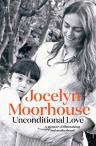 Claude Ballard, our gentleman in Los Angeles, is a film director, albeit a fictional one from the silent era, but it just so happens that my last read was the memoir of a contemporary Australian film director, Jocelyn Moorhouse, so it’s to her book, Unconditional love: A memoir of filmmaking and motherhood (
 Jocelyn Moorhouse’s husband, PJ Hogan, is also a film director, and two of his most famous films are Muriel’s wedding and My best friend’s wedding. A now classic novel, but one I only read recently, starts with a wedding, Mary McCarthy’s The group (
 The group, as I’ve said, starts with a wedding, but it ends, logically I suppose, with a funeral. A book that starts with a funeral – and this has its own logic – is Carmel Bird’s Family skeleton (
 But, enough of weddings and funerals. My next link is on something simple – the author’s name. Later this month I will be heading to Japan (my fourth visit). An early western visitor to Japan was the intrepid Englishwoman Isabella Bird whose 1879 travel book, Unbeaten tracks in Japan
 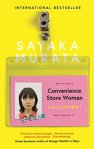 I like reading Japanese literature, though I haven’t read a lot since blogging. However, I did recently read a contemporary novel, Sayaka Murata’s Convenience store woman (
 Whispering Gums