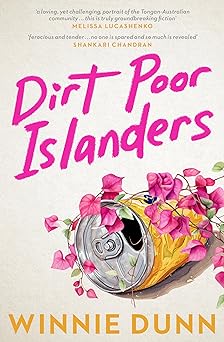
Winnie Dunn, Dirt poor Islanders (#BookReview)

Book cover

When my reading group chose our books for the second half of the year, the shortlist for the Miles Franklin Award had not yet been announced. However, wonderfully, the three books we chose from the longlist, all ended up on the shortlist. One of those was Winnie Dunn’s debut novel, Dirt poor Islanders. It is the first novel published by a Tongan Australian, and adds a welcome strand to the body of Australia’s second and third generation migrant literature.

Dirt poor Islanders spans around a year when its protagonist Meadow is approaching 12 years old. It can, therefore, also be read as a coming-of-age novel. It is a raw, earthy, honest and sometimes confronting read that exposes the challenges faced by Australian-born migrant generations, who are caught between two worlds.

This is not a new story. However, what is impressive here is that Dunn, in her first novel, has found her own strong and clear voice. It’s there in the way she gets right into the head of her protagonist Meadow, who is, admittedly, modelled on herself. It’s there in the way she interweaves English and Tongan language, capturing the vitality in her migrant community. It’s also there in her use of repetition, some of it onomatopoeic, to give her writing rhythm and create a tone that’s sometimes melancholic, sometimes humorous. Dunn also doesn’t spoon-feed her readers. She expects us to go with the flow and make the necessary connections. It’s not hard reading, but it does require attention.

“this way of seeing myself as half … and never enough” (Meadow)

So, who is Meadow? She’s a young girl who lost her birth mother at the age of 4. At the novel’s opening she is the eldest of six children in a blended family comprising three children from her birth mother, one from her step-mother, and two from this second marriage. Another is on the way. Her father is 30 years old. Meadow is grappling with what it means to grow up Tongan, particularly one who is hafekasi (half-Tongan half-White) and feeling caught between two worlds, neither of which fully accept her. She is desperate for a mother, and feels closest to her namesake, aunt Meadow, who lives in Mount Druitt with our Meadow’s paternal grandmother and another four aunts.

We follow Meadow through a tumultuous year. Early on, she spends most weekends at her Nana’s house surrounded by the five aunts, but when her father buys a new house in Plumpton, he wants Meadow, her sister Nettie and brother Jared, to call that home. With her birth mother gone, however, Meadow feels “stuck” and insecure. Aunt Meadow, also known as Lahi, is her “mother-aunt” and her rock. The narrative is built around the wedding of this Lahi, who, Meadow believes, is more interested in women. She fears for her boyish aunt, but she also fears for herself, that she will lose this mother figure to whom she clings with all her being.

Now, Meadow wants to be a writer, so she’s an observant girl, well able to express her feelings. She sees the messiness – literal and figurative – of Tongan lives, and she shares the lessons she is learning about being Tongan, not all of which are pretty. For example, “Tongan meant dirty” (p. 37), “being a joke” (p. 73) and “second best” (p. 102). But, there are positives too. “Togetherness was what it meant to be Tongan” (p. 40) and “being Tongan meant eating together and being grateful to eat together” (p. 118).

Dirt poor Islanders, then, depicts a migrant family living under stress. Big families and low-paying jobs with long hours mean a chaotic home. Meadow’s scalp is nit-infested, and her home, decorated with second-hand goods, much picked off roadsides, is cockroach-infested. Her parents work hard to keep the family sheltered and fed, but the mess overwhelms. Flipping between maturity and immaturity, Meadow sees all this – the hard work, the exhaustion, the love – but she struggles to find her place, to accept her Tongan heritage.

It all finally comes to a head, and her father organises for her to go to Tonga, because, he says, “it’s time for youse to know what being a Tongan truly means” (p. 239).

Migrant literature encompasses both memoir and fiction, with the latter mostly being autobiographical or autofiction. Dunn confirmed in her Conversations interview that much of the novel’s family background comes from her life, but the novel diverges from real life in its narrative arc and the resolution of Meadow’s inner turmoil. This answered the question I had as I was reading, which was why Dunn had chosen fiction, like Melina Marchetta did in Looking for Alibrandi, over memoir, like Alice Pung did in Unpolished gem. It’s a choice. What matters are the truths conveyed, not the facts, and Dirt poor Islanders feels truthful.

This truth is not all raw and confronting as I may have implied at the beginning. It is also warm and humorous. Meadow, who doesn’t like rich, fatty Tongan food tells us:

If it came out of a can covered in sugar and sodium, Tongans were eating it. But back then, all I wanted was food that came out of a window. (p. 37)

Preferably at Maccas! There are also funny scenes, many relating to the wedding which occupies the novel’s centre, and which is another nod – besides the title and epigraph – to the book that clearly inspired Dunn, Kevin Kwan’s Crazy rich Asians.

“no one could live as half of themselves” (Meadow)

However, Dunn’s book is fundamentally different from Kwan’s, whose aim, he said, was, to “introduce a contemporary Asia to a North American audience”. Dunn did want to introduce Tongan Australian culture – and counteract the image presented by Chris Lilley in Summer Heights High – but through Meadow, she also explores the excruciating difficulties children caught between cultures face. By the end of the novel Meadow comes to understand a little more the “messy truth” of being an Islander, and that:

No one could live as half of themselves. To live, I needed to embrace Brown, pālangi, noble, peasant, Tonga, Australia – Islander. (p. 275)

Dirt poor Islanders is both shocking and exciting to read, which is probably just what Dunn intended. I feel richer for it!

Winnie Dunn
Dirt poor Islanders
Sydney: Hachette Australia, 2024
293pp.
ISBN: 9780733649264
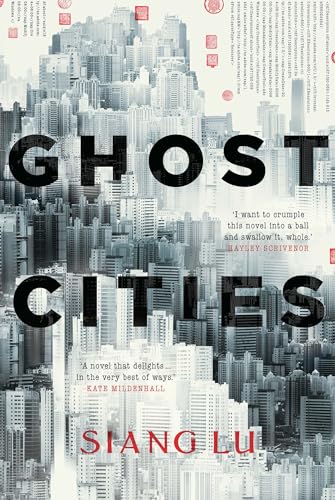
Miles Franklin Award 2025 winner announced

The winner of the 2025 Miles Franklin Literary Award, worth AUD60,000, was announced this evening by Australian journalist Fran Kelly during her program, The Radio National Hour. And the winner is:

Siang Lu’s Ghost cities

Kelly described the novel as being about an “epic conquest of ancient empires and tyrannical leaders”, and also about “what is truth and power”. Also, she said, “it makes you laugh sometimes”. Ghost cities was inspired by the migrant experience, and living in a diaspora. Consequently, it “grapples with the tensions of being Chinese but not Chinese enough”. She and Lu talked a little about his experience of living in such a diaspora.

The judges described the book as “at once a grand farce and a haunting meditation of diaspora”. Lu was happy with the “grand farce” description.

Publisher UQP starts its page on the novel with this description:

Ghost Cities – inspired by the vacant, uninhabited megacities of China – follows multiple narratives, including one in which a young man named Xiang is fired from his job as a translator at Sydney’s Chinese Consulate after it is discovered he doesn’t speak a word of Chinese and has been relying entirely on Google Translate for his work.

Steinberg – see my link below – concludes his short discussion of the novel, with:

Ghost Cities both embraces and defies its emperor’s directive to abandon “the pursuit of beauty” for art that favours “furrowed brows and scholar-like interpretation”. In its zany intertextuality, it displays a level of intellectual ambition rarely found in recent fiction.

Kelly discussed the novel with Lu, teasing out many of the ideas raised in the above descriptions, and in a review of the novel by Tara June Winch (which had, apparently, made Lu cry!) I didn’t capture it all for my post, but Australians, at least, will be able to listen to this interview on the program’s podcast. However, I did like Lu’s final comment regarding current concerns about the impact of AI on writing (and on the arts in general). He said that “if authors imbue their life and soul into their work, that’s the lodestar, and is something AI can’t replicate”. I love his confidence – and surely he’s right (for a while at least)?

To recap, the shortlist

  • Brian Castro, Chinese postman (Giramondo) (on my reading group’s 2025 schedule) (Lisa’s review): Castro has been shortlisted for the MF before
  • Michelle de Kretser, Theory & practice (Text Publishing) (my review): de Kretser has wont MF twice before, and this book won this year’s Stella Prize
  • Winnie Dunn, Dirt poor islanders (Hachette Australia) (review coming next week): debut novel by a Tongan-Australian writer
  • Julie Janson, Compassion (Magabala Books): sequel to Benevolence, which I reviewed; Janson’s author’s first shortlisting for the MF
  • Siang Lu, Ghost cities (UQP): Lu’s first shortlisting for the MF – and now on my TBR!
  • Fiona McFarlane, Highway 13 (Allen and Unwin) (kimbofo’s review): McFarlane has been shortlisted before, but for a novel; this book straddles the short story/novel divide. I’m keen to read it.

For a succinct discussion of the shortlist, you could check out the one posted at The Conversation, by Western Australian postdoctoral fellow, Joseph Steinberg. But there are others.

To recap, winners since 2020

To put this in context, I thought it would be interesting to share the winners, since 2020:

All women writers, and encompassing diverse backgrounds. Now, for the first time since 2016 (AS Patrić’s, Black rock white citymy review), we have another book by a male writer. Interestingly, like that 2016 winner, it’s a book inspired by migration.

This year’s judging panel comprised Richard Neville (Mitchell Librarian, the State Library of NSW and Chair), Associate Professor Jumana Bayeh (literary scholar), Dr Mridula Nath Chakraborty (literary scholar and translator), Professor Tony Hughes-d’Aeth (literary scholar and author) and Professor Hsu-Ming Teo (author – of Love and vertigo, among other books – and literary scholar).

A big congratulations to Siang Lu. I have been toying with buying this book, particularly because I’d heard it has a humorous element. After all, it was listed for the Russell Prize for Humour Writing, and the VPLA John Clarke Humour Award (see my post on Humour Writing prizes). A big plus for me.

Thoughts anyone?

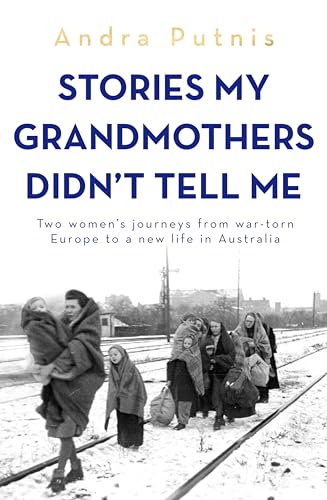
Andra Putnis, Stories my grandmothers didn’t tell me (#BookReview)

Cover

Local writer Andra Putnis’ book, Stories my grandmothers didn’t tell me: Two women’s journeys from war-torn Europe to a new life in Australia, was my reading group’s February read. Not only was it highly recommended by two members who had read it, but we were told the author would be happy to attend our meeting if we chose it. That was an offer too good to pass up, so we scheduled it.

We’ve had a few authors attend our meetings over the years, and it has always been worthwhile. Yes, it risks constraining discussion if people have any reservations about the book, but that has never really been a problem, either because there haven’t been serious reservations or because the value of having the author present has far outweighed any perceived impact on free discussion. In Putnis’ case, the story is so powerful and so well-told that it was unlikely there’d be any reservations that wouldn’t turn into questions about why or how she wrote her story.

“hidden pasts, still very much present”

Stories my grandmothers didn’t tell me is a family biography centring on the author’s two Latvian-born grandmothers, her maternal Grandma Milda (1913-1997) and paternal Nanna Aline (1924-2021). Teenage Aline was separated from her parents around 1942 to go serve in Germany’s war-time labour force. Meanwhile, in late 1944, with the war ending and the Soviet army looking set to return, 7-months pregnant Milda left Latvia with her parents and 18-month old son, enduring a tough, desperate journey. Both women ended up in UNRRA-managed Displaced Persons camps in Germany, where they experienced years of hardship before arriving in Australia in late 1949/1950. Milda, and later Aline, settled in Newcastle in the early 1950s, and met there through its tight-knit Latvian migrant community.

That’s the rough outline, but of course their stories – what they endured – are far more complicated, and Putnis wanted to understand. She told us that as a young child she had a sense of Latvia as almost an unreal fairytale place with beautiful forests, music and dancing, but she had also sensed, through family murmurs, a darker side, one that encompassed sadness and pain not only about Latvia but also about the family’s own story. She likened it to being on a boat, where you can see the surface but have no idea of what lies in the deeps below. She feared, as a granddaughter, that it wasn’t her place to go there, and worried about upsetting people. However, she did go there because she wanted to know and because Nanna Aline was willing. But, she said, she was always cognisant of just how far a granddaughter – even an older one – could, or should, go.

“moving between darkness and light”

I have read several hybrid war-related biography/memoirs written by family members, and this one is as good as any of them. This is not only because of the power of the story, and the honesty with which it is told – but also because of the structure Putnis uses. It is told chronologically, which is logical, but through the voices of Milda and Aline interspersed with those of others including, of course, Putnis’s own. I wanted to know about this and Putnis was happy to explain.

The structure was driven by Aline who told her story chronologically. She had thought deeply about and “understood the arc of her life”, said Putnis. So, with this in hand, Putnis started to piece Milda’s story – which was gathered less systematically – along the same lines. The challenge came in making the “weave” work, in getting the balance right, between them and their stories, and the wider historical, community and family framework.

Putnis worked on her book for nearly 20 years – with the occasional gap when life took over. Aline lived a long life so Putnis was able to spend a lot of time with her. Aline had also had the toughest life, particularly in terms of her personal choices and circumstances. Our hearts went out to her. Milda, on the other hand, died when Putnis was 19 years old, before she started working on her book. However, Milda had lived for nearly a decade with Putnis’s family, so Putnis had spent a lot of time talking with her, getting to know her. Putnis enhances both stories with information gleaned from conversations with other close family members, from secondary reading, and from primary research through letters, in archives, and so on.

The result is a coherent story of these two women told from more than one perspective, which has the effect of varying the intensity as we read – of mixing the light and the dark – and of enhancing authenticity, because the perspectives reinforce each other. It’s sophisticated and highly readable.

“the world is in tears” (Aline’s father)

It is a powerful and often heart-rending story, and it is to Putnis’s credit that she is able to convey both the individual personalities of her very different grandmothers and the universality of their experiences. Their experience of living under multiple invasions is both personal but, as we know too devastatingly well, political and general. Same for their experience of living in camps for years – of having your life on hold while you just survive. And for their experience of being migrants – “reffos” – in 1950s Australia. The negatives abound, with any positives achieved being hard fought. It’s a lesson in how ordinary lives are changed irrevocably by political actions way out of their control.

So, the book raises many questions – about the past and about what is happening now. Putnis also specifically raises the issue of protecting children, and I wanted to know about this too, because, given our knowledge of intergenerational trauma, how do you protect children from horror without laying them more open to ongoing trauma within? There is no easy answer, we concluded, but awareness and consideration about where to draw the line can only help.

Finally, Stories my grandmothers didn’t tell me, is fundamentally a book about the importance – and limits – of stories. Early on Putnis talks to Aline about her project, and Aline is clear about her intentions:

Alright then, I don’t remember everything. But I have my own point of view. Some old Latvian women go on about how wonderful things were before the war … You heard these stories? Well, it was not always like that. Not all the boys were good and I was not as kind to my māte [mother] as I should have been. If you want that story, you are talking to the wrong grandma.

Aline was brave, and this is a brave book about survival that doesn’t shy away from the tough and sad stories. But, more importantly, it conveys something about stories, which is that individual stories are very important, but they are not the whole story. In other words, the more stories we have the better picture we have – of history, and of the complexity of humanity that makes us who and what we are.

Putnis concludes with Aline’s funeral, and shares the words she spoke, which also encapsulate this book:

Nanna taught me nothing less than what it means to be human, to earn the grace and wisdom that come from surviving darkness and celebrating light.

I’d like to tell more stories about the book, including about Milda and the strong woman she was, but this post is long enough, so I’ll just encourage you to read the book for yourselves.

Andra Putnis
Stories my grandmothers didn’t tell me: Two women’s journeys from war-torn Europe to a new life in Australia
Crows Nest: Allen & Unwin, 2024
292pp.
ISBN: 9781761471322

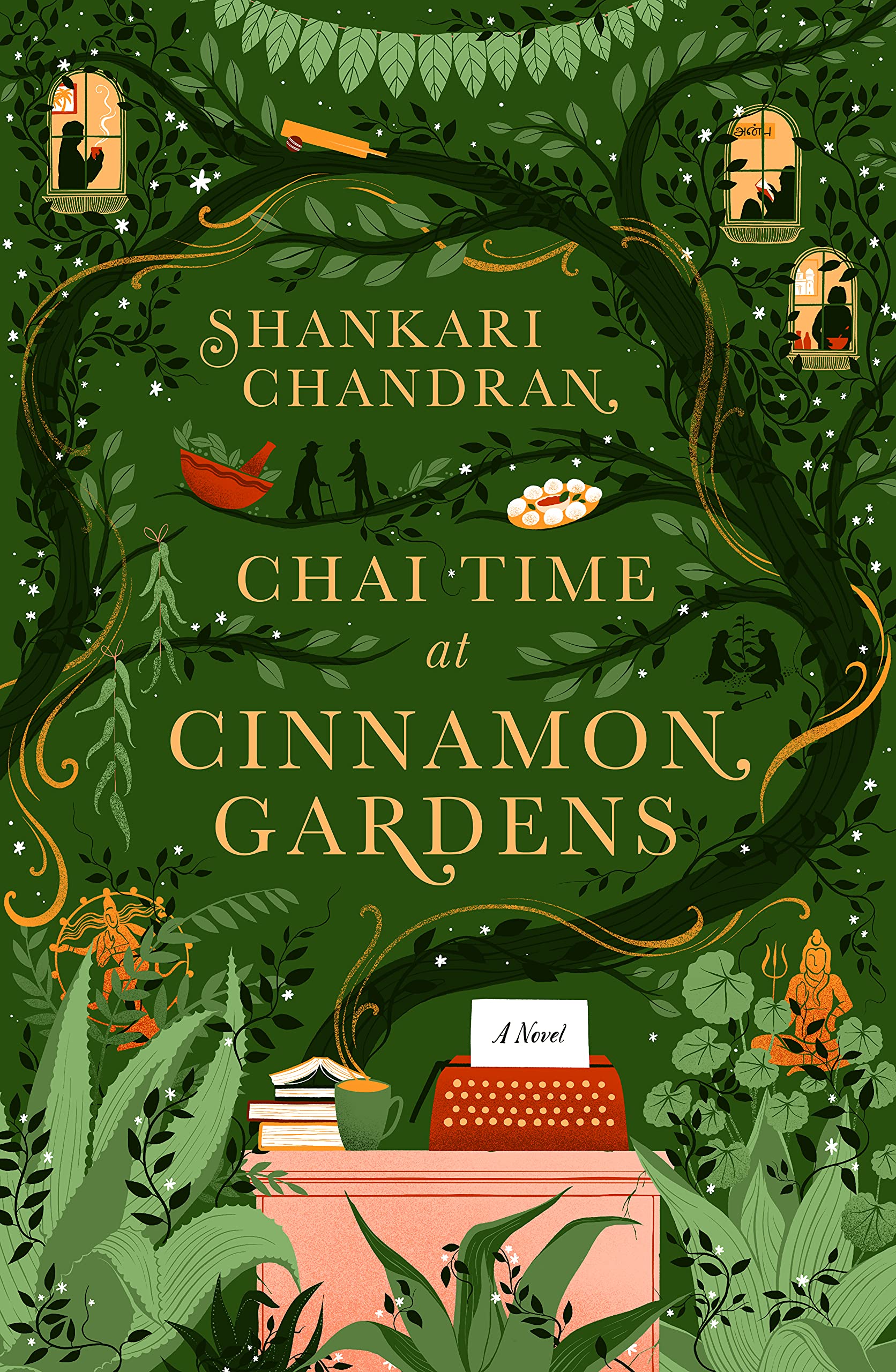
Shankari Chandran, Chai time at Cinnamon Gardens (#BookReview)

Shankari Chandran’s Miles Franklin Award winning novel, Chai time at Cinnamon Gardens, was my reading group’s March book. Unfortunately I was out of town at the time of the meeting, but of course I wanted to read it – and I did, finally!

Like many people, I think, when I first saw the book, I assumed it was one of those cosy crime novels set in a nursing home or retirement village. The title and the pretty cover certainly suggest that. Only a fraction of this first impression was right, though. It is set in a nursing home, and crimes do occur, but it is not a crime novel and nor is it cosy. Instead, it is a serious, thoughtful and immersive novel that covers many issues confronting modern multicultural Australia, but that also has one main driving idea – which I’ll get to soon.

First, though, I want to clear up another assumption I had, which was that Chandran is a Sri Lankan-Australian writer. Wikipedia told me otherwise. It describes her as a British-Australian writer, who was born in London to Tamil refugees from Sri Lanka. She grew up in Canberra, and studied law at the University of New South Wales, before working as a human rights lawyer in London for a decade. She now lives in Sydney. Chai time at Cinnamon Gardens is her third novel. GoodReads describes her first novel, Song of the Sun God (2017), as being “about three generations of Australian Tamil women and the choices they make to survive Sri Lanka’s civil war“. I don’t know what that novel’s overarching idea is, but Chai time at Cinnamon Gardens also draws from its main characters’ experiences during that civil war, and I do have a view on what drives it, so let’s get to the novel.

It is set in the Cinnamon Gardens Nursing Home in a fictional Sydney suburb called Westgrove, which situates it in Sydney’s multicultural western suburbs. The home is taken over in the early 1980s by Sri Lankan migrants, Cedric, Zakhir, and his wife Maya who wants to transform it to a place “where people will be valued”. The novel is told through multiple alternating voices, but starts with a Prologue which describes the home and which, if you read carefully, also prepares us for what’s to come:

Arabian jasmine climbs the wooden trellises staked in the garden beds. They are bold travellers, dark vines carrying white stars up the two-storey walls and around the windows of the residence. The plant grows obediently in the quiet suburb of Westgrove, Sydney, but its tropical ancestors are a wild breed, a vine that grows rampant in the villages of Sri Lanka, a home more familiar to many of the residents.

“Bold travellers”, “dark vines”, and “white stars” together with words like “obediently” and “wild” suggest a tension that we are going to explore.

We then start the narrative proper. It’s 2020, and Maya is now old and living as a resident in the home – albeit one who still holds many strings. Ruben is attending her, and we become aware that he bears fresh and old scars on his body. As the narrative progresses, we learn that the fresh scars come from recent racist attacks on him in the vicinity of the home, while the old scars relate to his experiences in Sri Lanka during the war. These scars more literally embody the tensions that pervade the novel.

From here, the rest of our narrators, all third person, are gradually introduced – Ruben; Maya’s daughter Anjali (Anji), who now manages the home; Anji’s old schoolfriend Nikki, who is the home’s geriatrician; and Nikki’s husband Gareth, who is white-Australian and a local councillor. There are other characters, including, most significantly, Anji’s also white-Australian husband, Nathan, and Maya’s aforementioned husband, Zakhir who disappeared, now presumed dead, ten years before the novel’s opening.

A strength of the novel is the way these characters inveigle their way into our hearts and minds so that we care about them, even the unappealing Gareth who, blinded by self-pity, rashly but unintentionally unleashes the dreadful drama that unfolds. It all hinges on racism. Chandran exposes the awful truth of how endemic racism is in Australian society and how, as a result, things can so quickly get out of hand. Interspersed with this present-day storyline are Maya’s, Ruben’s and Zakhir’s backstories, which explain why they had come to Australia – personally, in terms of what they had experienced during the civil war, and politically, in terms of their Tamil heritage and what that civil war was about.

I said at the beginning that the novel covers many issues which confront modern Australia, but that it also has one main driving idea. The issues include racism, colonialism, and multiculturalism; trauma, loss and grief; friendship, family and community; and the role played by the media, including social media, in fuelling emotions rather than encouraging reason. Underpinning these issues is the idea that drives the narrative – storytelling, and “the most powerful” of all stories, history. By framing her story within the Sri Lankan civil war and its battle over contested histories, Chandran makes her novel relevant to all cultures and societies where history has been used to oppress minorities resulting in violence, disempowerment and oppression, where distortion produces misinformation and confusion that can be manipulated to serve personal and political ends.

As grim and confronting as much of it is, Chai time at Cinnamon Gardens is not without hope. Alongside Chandran’s exploration of the misuse of history is a commitment to the positive value of story. To this end Maya, from the beginning, interviews all residents of the home, capturing their lives and their dreams in order to properly know and care for them. This provides the book with another underlying tension, that between histories that erase and stories that “must not be erased”.

Does it all work? Chandran holds a lot of balls in the air. Early on I felt caught in an awkward amalgam of a contemporary novel about middle class angst (husband versus wife, daughter versus mother, and so on) and one exploring critical political ideas. Also, there’s constant moving backwards and forwards in place and time, the plot felt a little contrived in places, and the main themes are hammered home. However, Chandran balances the tone well, mixing light humour and satire with sadness and tragedy, and the characters are vividly and sympathetically drawn. The end result is a book that reveals our essence, and asks us to consider how we might live together in respectful community. Consequently, despite some unevenness, I greatly enjoyed the read.

Shankari Chandran
Chai time at Cinnamon Gardens
Ultimo: Ultimo Press, 2022
360pp.
ISBN: 9781761151408

Julie Koh, Portable curiosities: Stories (#BookReview)

I’ve decided to try reading more audiobooks this year, despite not being a big fan of this mode of consuming books. I’m a textual person. I like to see the print on the page, how it is set out. I like to see the words. I like to see how the names are spelt. Given my reservations and the fact that I expect to “read” in short stints, I thought short stories might be the way to go. I think they are, though my overall reservations still stand.

My first book was one that was well-reviewed when it appeared in 2016, Julie Koh’s Portable curiosities. It won the SMH Best Young Novelists Awards in 2017, and was shortlisted for several other awards, including the Steele Rudd Award for Short Story Collections (Queensland Literary Awards) and the Glenda Adams Award for New Writing (NSW Premier’s Literary Awards). I checked to see who won the Steele Rudd Award that year, because Koh’s collection is great. It was clearly a strong year. There were co-winners, Elizabeth Harrower’s wonderful A few days in the country, and other stories (my review) and Fiona McFarlane’s High places, which I’ve also been wanting to read.

So, Portable curiosities. I had no idea what this collection was about, and was delighted to find a lively, engaged and engaging interrogation of contemporary Australia, particularly as it intersects with Chinese-Australian experienceIt is highly satirical, penetrating the myths and assumptions that underpin our shaky existence.

The order of stories in a collection is always worth thinking about, and it is notable that this twelve-story collection opens with a story called “Sight” which satirises immigrant Chinese mothers who are so ambitious for their children to fit in and achieve success that they discourage any sort of individuality or creativity. Many of the stories have a surreal or absurdist element. They start realistically but suddenly we find ourselves in another realm or dimension. “Sight”, starting off the collection, is an example. Here, we suddenly find our young narrator having a “third eye” painted on her navel. This eye represents her imaginative self, so her mother organises for it to be removed in an operation.

From here, having satirised Chinese immigrant culture, Koh moves on to critique, with biting clarity, aspects of Australian culture, from misogyny (in “Fantastic breasts” where our male narrator looks for “the perfect set of breasts to have and to hold” at a conference on “The difficulties of an objective existence in a patriarchal world”) to crushing, soulless workplaces that pay lipservice to their employees’ mental health (in “Civility Place”). “Satirist rising” mourns the end of the civilised world, with a bizarre travelling exhibition that aims to ensure the continuation of the “landscapes of our mind”, while the cleverly titled “Cream reaper” (you have to read it to see what I mean) tackles foodie culture, turning foodie-ism into an extreme sport. Along the way, it also skewers multiple aspects of our capitalist culture, like the housing bubble, the commercialism of art, institutional banking, and the plight of the tortured writer.

As a retired film archivist, I loved “The three-dimensional yellow man” which takes to task the stereotyping of Asians on film. There’s “no need for a back story”, our one-dimensional (yellow man) Asian actor is told, “you’re evil”. He belongs, after all, to the “cruel, meek blank-faced race”. Again, the satirical targets are broad-ranging from film festival panels to Pauline Hanson – and embarrassingly close to the bone.

Many of the stories, like “Two” and “Slow death of Cat Cafe”, explore success, materialism and power, while the 2030-set “The Sister Company” exposes a cynically commercial “mental health industry” through the application of androids to the problem. All these stories, despite, or because of, their laugh-out-loud moments and forays into absurdity, hit their mark. A couple, such as “Two” and “Cream reaper”, felt a bit long, even though I thoroughly enjoyed their imagination, but this might have been a product of listening rather than reading, so I’m reserving judgement on this.

My favourite, however, was probably the last, “The fat girl in history”, which opens on a reference to the popular (in Australia) CSIRO Total Well-being Diet. The narrator is Julie, and, although this story also moves into surreal realms, there is a strong sense of autofiction here. Remember, though, that autofiction is still fiction so … Our narrator is a fiction-writer experiencing a crisis of confidence. She has written about a depressed girl, androids and the future – all of which appear in this collection. She’s been told that she writes like Peter Carey, though she admits she’s never read him. She reads an article telling her that contemporary literature is “in the throes of autofiction”, that the “days of pastiche are over”, and then informs us that she’s going to write autofiction titled “The fat girl in history.” Australians will know that Peter Carey has written a short story, “The fat man in history”, and that his debut collection named for this story started his stellar career. I will leave you to think about the portents and threads of meaning Koh is playing with here, but her outright cheekiness in daring us to go with her made me laugh – particularly when I saw where she went.

Portable curiosities deals with serious, on-song subjects, and I so enjoyed seeing her address them through satire, absurdity and surrealism with a healthy dose of black humour. At times the lateral thinking in these stories, not to mention Koh’s interest in satire, reminded me of Carmel Bird. A most enjoyable collection, that was expressively read by Lauren Hamilton Neill.

Julie Koh
Portable curiosities: Stories
(Read by Lauren Hamilton Neill)
Bolinda Audio, 2018 (Orig. pub. 2016)
5hrs 48mins (Unabridged)
ISBN: 9781489440808

Monday musings on Australian literature: Greek-Australian literature

In a Sydney Writers Festival conversation with Michelle de Kretser, Andrew Pippos, winner of the 2021 Readings Prize for his debut novel, Lucky’s, said “the fact that we can talk about a Greek-Australian literary tradition is a sign that Australian literature is developing”. It made me think about Greek-Australian literature and what I know about it, which is not a lot, really.

First, though, what does he mean by his statement? I’m assuming he means that Australian literature is enriched by encompassing significant, identifiable bodies of work from Australia’s constituent cultures, that when there are such bodies of work they reflect on, feed into and, therefore, change and expand the majority culture?

When I think about my own reading of Greek-Australian literature, it is, of course, Christos Tsiolkas who comes to mind. Before him was Beverley Farmer. She is not Greek, but she married a Greek man and lived for some time in Greece, which experience fed into her early writing. I loved her insight into village life and relationships – but that was more about an Australian experiencing Greek culture in Greece.

Greek-Australian literature “proper” goes way back and, in my superficial Internet search I uncovered rather a lot about it, most, though, behind paywalls. Some of those had useful abstracts, and some I could access via my membership of the National Library. I skim-read a couple. But, I also found a blog, From the plastic pen, containing a post that had also been published in Meanjin in 2017. The post is titled “Living in a hyphe-nation: Exploring the Greek-Australian identity through literature”, and the author is Peter Papathanasiou. Papathanasiou is Greek-born and Australian-raised, and has just published a debut crime novel, The stoning, featuring a Greek-Australian detective.

Concerned about the next generation, the Greek-Australian-Australians, Papathanasiou posed the question:

How had Greek writers in Australia explored their hyphenated identity, and what could future generations—including other ethnic minorities—learn from their writings?

And then, he shares some literary history that I had found in those pay-walled academic articles. The earliest example of Greek-Australian literature, he says, was oral poetry at the start of the 1900s, which was shared “at events such as family celebrations, social gatherings, and entertainment in smoke-filled coffee houses (kafeneia)”. Poetry, Papathanasiou, says “has traditionally played a central role in Greek literature” and it continues here “although all types of Greek-Australian literature (poetry, prose, drama, theatre) have been represented, poetry collections have predominated”. Not reading a lot of poetry, I wasn’t aware of this, though I have read Komninos (1991), by Greek-Australian performance poet, Komninos Zervos.

Anyhow, Papathanasiou says that the first Greek-Australian literary work to be published was George Nicolaides’ short story “To gramma tis manas (Letter to mother)”, in 1913  Afstralia. From the beginning, he says, “family was a central theme, along with social issues, community activities, and migrant experiences”. He discusses the various waves of migration. In the 1920s, Orthodox Christians driven out of Asia Minor following the Turkish War of Independence brought well-educated immigrants who “introduced new subjects to the local literary scene because of the atrocities, poverty, and political upheavals they witnessed”. Then World War 2 and post-war migration brought stories of “the Greek army’s heroic fight against the Axis powers, and the united struggle of Greek and Australian soldiers against a common enemy”.

However, he said these waves did not result in much exploration of the Greek-Australian identity. These first-generation migrants wrote mainly in Greek and were “largely preoccupied with exile and dislocation, and haunted by trauma”. They wrote about “the fear of ageing and dying far from the homeland, patriotism (to Greece, not Australia), communication difficulties, and problems adapting and assimilating”. A change in theme came when second-generation migrants started writing in English, and their “connection to the fatherland” grew increasingly distant. They were were interested in “ethnicity and hybridity”, and their writing changed “from loss and yearning to identity and self” and

the rigid identity of the alienated migrant fell away, replaced by a new entity: the hyphenated Australian, whose conflict was more internal than external. These writers explored the dilemma of living between two worlds and with dual identities, the use and maintenance of Greek language and traditions, and surviving in a modern Australia while still bound by conservative parents. It was tense writing, fraught with internal conflict and doubt.

With third generation Greek-Australians now on the scene, Papathanasiou suggests that the subject-matter is changing again. There are still explorations of migration and identity, but these are no longer exclusive. Contemporary “Greek-Australian writers deal with a broad range of subjects including class, culture, gender, sexuality, faith, politics, economics, and sport, and blend various genres including memoir, autobiography, travelogue, and magic realism”.

Interestingly, alongside his discussion of subject matter, Papathanasiou also tracks changes in the publishing of Greek-Australian writing from self-publishing, at the start, through small independent publishers, like UQP and Fremantle Press, to the bigger publishers like Allen and Unwin, who have not only published some Greek Vogel award-winners but also publish Christos Tsiolkas. Pippos’ Lucky’s was published by Pan Macmillan.

Papathanasiou’s perspective, written in 2017, is similar to that written in 2014 by Penni Pappas on the Neo Kosmos website. She describes a similar trajectory in publishing and subject-matter, drawing in particular on the work of Helen Nickas who established Owl Publishing in 1992, to publish writing by Greek-Australian writers. George Kanarakis, writing in The Cud, provides another, and similar, but more detailed survey of Greek writing in Australia. All are worth reading if you are interested in the subject.

The cafes

Meanwhile, I thought I’d conclude on a quick reference to cafes, because most Australians of a certain age will remember at least one Greek cafe in their neighbourhood or on roadtrips. Pippos’ publisher, Pan Macmillan writes that, as a child, he regularly visited the family’s café in Brewarrina, NSW. These early experiences “laid the foundation of his work as a writer”:

The compelling role of the Greek-Australian café within modern Australian identity is increasingly documented in popular culture and history books alike. While sadly few exist now, for much of the second half of the twentieth century these cafés could be found on urban shopping streets and in rural country towns. They represented a new Australian zeitgeist and symbolised every-day multiculturalism. The Greek-Australian cafe milieu gave Andrew his earliest sense of community.

Lucky’s is set around a restaurant chain. You can read Lisa’s thoughts in her review.

A few years ago, I reviewed a little (literally) memoir – from the FL smalls collection – Growing up cafe (my review) by Greek-Australian, Phillip Stamatellis. I enjoyed his evocation of a cafe-based childhood.

The aforementioned Komninos also has cafe heritage. On his website we are told that “his maternal grandfather came to Australia in 1908 to work in a café”, and he, himself, born in Melbourne in 1950, grew up living above his family’s cafe-fish shop. There are poems about cafes in his collections.

It’s pretty clear that the Greeks enjoyed cafe culture long before we Anglo-origin Australians ever did (and in so doing they enriched our culture). But, for many second generation Greeks, as Stamatellis shares, the cafe which provided a living for the parents also brought challenges for the children

my nostalgia is burdened by an unseen weight, a sense of entrapment.

Anyhow, I enjoyed my brief foray into Greek-Australian literature, partly because its trajectory seems similar to those of other diaspora literatures here, albeit they may be on different points on the continuum. It brought to mind my recent post on Diversity and memoir and the idea that writers from culturally diverse backgrounds do not want to be tied to writing about that background. In the Greek-Australian case it seems like there’s been a progression from a close focus on their heritage to broader concerns. Is this is the trajectory that most immigrant literatures will naturally take – or is it forced upon them for lack of support and opportunity?

Thoughts?

Marie Younan with Jill Sanguinetti, A different kind of seeing: My journey (#BookReview)

In many ways, Marie Younan’s A different kind of seeing: My journey is a standard memoir about a person overcoming the limitations of her disability which, in this case, is blindness. It’s told first person, chronologically, from her grandparents’ lives through her birth in Syria to the present when she is in her late 60s and living in Melbourne. However, there are aspects of her story which add particular interest, and separate it, in a way, from the crowd.

One of these aspects is that Younan’s story is not only a story about blindness, but about migration and cultural difference. Younan is Assyrian, and was born, the seventh of 12 children, in the small village of Tel Wardiyat in northeast Syria. Her maternal and paternal grandparents moved, variously, through Turkey, Iran, Russia, Greece and Kurdistan escaping genocide and persecution before they all ended up in Tel Wardiyat. In her own life, Younan’s family moved to Beirut, but with some of the family having already migrated to Melbourne and with civil unrest increasing in Lebanon, more of the family applied to migrate to Australia. Younan herself was initially rejected because of her blindness, so, while her parents left for Melbourne in 1975, she returned to Syria, before moving to Athens to an older sister. Finally, in 1978, and now in her mid-20s, she was granted a visa for Australia joined her parents and family. (What a kind nation we are!)

If this wasn’t enough challenge, Younan’s life was also affected by her conservative upbringing. The book starts with a little prologue chapter describing how, at the age of 7, she came to properly understand her difference, that she is blind:

it dawned on me that there was a ‘thing’ called seeing that everyone else could do except me […]

It was the day my life as a blind person began.

We gradually come to realise that Younan was, as a child, doubly disadvantaged, because while she was brought up lovingly, nurtured by parents and siblings, she was excluded from so much that could have helped her develop as a person. She was not allowed to go to school; she was not allowed to go to big family events like weddings; and when a doctor suggested a corneal transplant for her when she was 10, her grandmother and father refused, because they didn’t believe such a thing was possible. Further, when she was 12, a relative offered to take her to a boarding school for blind girls – so she could “learn something and grow up with knowledge” – but her grandmother and father again opposed it. Her father said,

‘I’ve got 12 children, and I’m not sending one to boarding school, especially if she’s disabled.’

She was heartbroken, asking her mother why not. She didn’t “know anything about the world, or about life”, and badly wanted to. Yet, she expresses no bitterness in the book towards her family. Indeed, she dearly loves and respects them.

Anyhow, she arrives in Australia, highly dependent on her family and functionally illiterate.

I have spend a lot of time on this first part of the book because not only is her early life so interesting in its difference from my own life, but because it lays the groundwork for the astonishing changes she made in her life, with the help and inspiration of others, after her arrival here. I’m not going to detail all that. I’ll simply say that, largely through the mentorship of a man called Ben Hewitt (to whom the book is dedicated), she was introduced to various services, organisations and people that resulted in her learning to read; learning Braille; studying psychology and later interpreting; travelling around Victoria speaking on behalf of the Royal Victorian Institute for the Blind; and working as an interpreter, including for refugees through Foundation House. It’s an amazing trajectory – and one told quietly, and with humility and respect for her family and for all who helped her on the way.

It’s not surprising that she’s been described as “Ben’s biggest challenge and his best success story”. His role in encouraging her, in turning around her thinking from “I can’t” to “I can” cannot be underestimated, because, by the time she met him, Younan had a desire to learn but very little confidence in her ability to do so.

For all its straightforwardness, though, her story does have a little mystery. Younan was not born blind, but became blind when she was a few months old. Just what caused her blindness is a little question that runs through the book, and I’ll leave it to you to discover, but well-intended actions by a much-loved grandmother were involved. It’s a heartbreaking story of mistakes, accidents and missed opportunities, but Younan, if she resents any of it, has the grace to focus on what she has, not what she hasn’t or what might have been.

Now, you may have noticed that this book was written “with” Jill Sanguinetti, who has appeared here before with her own memoir. Younan met Sanguinetti around 1988 at the Migrant Women’s Learning Centre, when she joined sighted migrant women in a Return to Learning class. Sanguinetti was the teacher, and explains in the her Introduction to the book how she and Younan had stayed in touch after the class finished. Some years later, they “decided to work together to write the story of Younan’s life and educational journey”. Younan is, she writers, a “mesmeric storyteller”, but with one thing and another, it took 8 years to finalise the book. There were “many cycles of telling and writing, re-telling and re-writing”, and it shows in the end product, which is tight and keeps focused on the main theme of Younan’s journey from a dependent, innocent young girl to the independent achiever she is today.

A good – and relevant – read.

Challenge logo

Marie Younan with Jill Sanguinetti
A different kind of seeing: My journey
Melbourne: Scribe, 2020
214pp.
ISBN: 9781922310256

(Review copy courtesy Scribe.)

Monday musings on Australian literature: Refugee literature

I had planned another post for this week, but that can wait, as Lisa (ANZLitLovers) has reminded me that it is Refugee Week, and I thought that should take priority. Lisa has posted on a book relevant to the week, and includes in her post a link to a reading list of books she provided last year. Do check her posts out, because she also briefly describes the successes and failures of Australia’s treatment of refugees.

Refugee Week was first commemorated in Australia in 1986 in Sydney, and became a national event in 1988. It runs from Sunday to Saturday of the week which includes 20 June (World Refugee Day), so this year it actually runs from Sunday 20 to Saturday 27 June. Its aim, as you can imagine, is “to inform the public about refugees and celebrate positive contributions made by refugees to Australian society” in order to encourage Australians to welcome them and help them become integral part of our community.

Before I get to my main topic of refugee literature, I thought it would be worth reminding us of a book that was not written by a refugee but which, among other things, makes a point about the contributions made to Australia by postwar European refugees. I’m talking Madeleine St John’s The women in black (my review). For baby-boomers, this novel brought back the suspicion with which Australians viewed, for example, the strange food introduced into Australia at the time, like salami, for example! My sense is that we learnt a lesson from this and are now more welcoming of the wonderful new foods refugees can bring to us. But, of course, refugees bring much more than simply food to a country. For St John’s Europeans, this included more cultured or intellectual interests, and greater equality between the sexes.

Recent refugee literature in Australia

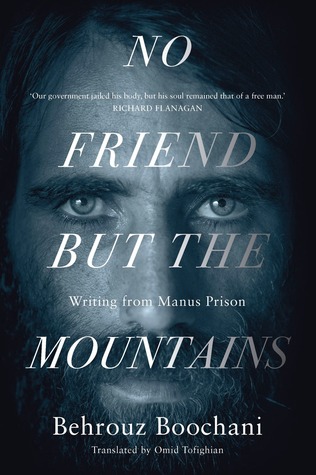
Behrouz Boochani, No friend but the mountains

There is a wealth of post-war European refugee literature published in Australia, but for this post I want to focus on more recent literature. And probably the best known recent work of refugee literature in Australia was/is Behrouz Boochani’s No friend but the mountains. As it turns out, this Kurdish-Iranian asylum-seeker to Australia has ended up in New Zealand. However, his book, which he wrote on a mobile phone and transmitted in a series of single messages, won the 2019 Victorian Prize for Literature and the Victorian Premier’s Prize for Nonfiction. It was translated from Persian into English by Omid Tofighian.

Refugee literature comes in various forms – memoirs, of course, of which Boochani’s book is an example, but also novels, poetry and drama. Most commonly, it’s the next generation whose voices are heard, than the adults who came here.

AS Patric, Black rock white city

These “next” generation writers include those who came as quite young children. They are true bearers of both worlds. Anh Do, author of the memoir, The happiest refugee, is an example. He came to Australia as a Vietnamese boat-person in 1980 when he was just a toddler. Nam Le, author of the short story collection, The boat, was a baby when his parents arrived here, also as Vietnamese boat people. Two of the stories in his collection deal specifically with the experience of migration, but all, as I recollect, confront the idea of survival which must surely have been inspired by his family’s experiences.

Another example is AS Patrić, who was a child when he came to Australia from Serbia (and the Yugoslav Wars). He won the Miles Franklin Award with his debut novel, Black rock white city (my review), which graphically portrays the feeling of displacement experienced by refugees.

Alice Pung, by contrast, was born in Australia a year after her parents arrived as refugees from Cambodia. She has written memoirs about her family, including Her father’s daughter (my review).

Indian-born Aravind Adiga’s novel, Amnesty (Lisa’s review), has recently been shortlisted for the 2021 Miles Franklin award. He is not a refugee, and does not live in Australia, but his novel deals with with some of the most complex issues confronting Australia at the moment, that of people coming to Australia via people smugglers, seeking asylum but not deemed to be refugees. This novel forces its protagonist to confront his status, while also looking at how his position in Australia makes this such an issue.

Refugee literature makes many contributions to our literature. One is refugee writers’ willingness to challenge literary norms and genres, and to push boundaries. Boochani and Patrić are particularly good examples of this. Another is the focus they bring to our perception of Australian culture and identity, confronting us with issues like racism and promoting social justice causes. Alice Pung’s writing exemplifies this. Both, though, force us to rethink the status quo, and to see both our literature and our culture through different eyes and we are, surely, richer for it.

I’m afraid that this is a brief post because, as some of you know, I am family and grandchild visiting in Melbourne. However, I hope I have done at least a little justice to Refugee Week.

I’d love to you to contribute to the discussion, with, for example, your own favourite examples of refugee literature – and why you like them.

Balli Kaur Jaswal, Erotic stories for Punjabi widows (#BookReview)

Book cover

Broadly speaking, Singaporean author Balli Kaur Jaswal’s third novel, Erotic stories for Punjabi widows, reminds me of Anita Heiss’ choclit books like Paris dreaming (my review). By this I mean it presents as an escapist romcom genre novel but within it is some serious intent. In this case it relates to the oppression of women, particularly widows, and, more specifically, the problem of honour killings, in Britain’s Punjabi Sikh community.

The story concerns the “still searching for her calling” Nikki, who, twenty-two-and-a-half years old with half a law degree behind her, obtains a job teaching writing to immigrant Punjabi widows in Southall, the heart of London’s Punjabi community. Except, what she finds is that these widows do not want to learn to write:

I’ve survived all this time without reading and writing; what do I need it for now?’

What they want is to tell stories – erotic ones – to each other. What they want, really, is companionship and a safe place to be themselves, away from the oppressive eyes of a traditional community dominated by the self-appointed “morality police”, the Brothers.

And here is where some darkness comes in, because within this community, several young women have died. Officially, these deaths are recorded as accidental or suicide, but it gradually becomes apparent that all may not be as it seems and that murder and honour-killing may be involved. Widow Sheena chillingly says later in the book that “in this community I’m suspicious of accidents.” The novel, therefore, is a romcom-cum-crime mystery.

Paralleling this story of the widows and their writing class is that of Nikki and her nearly 25-year-old sister, Mindi. Born in England to Punjabi immigrant parents, they represent the other side of the cultural coin – to a degree, anyhow, because Mindi, a nurse and (still) unmarried, is considering “embracing our culture” and going the traditional arranged marriage route. This shocks the freer wheeling, English-to-a-core-she-thinks, Nikki, who tells Mindi:

This is what young women do in Britain! We move out. We become independent. This is our culture.

Even so, our modern Nikki does sometimes feel “split in two parts. British, Indian.” Fortunately, Nikki meets a man the more usual way – by serendipity – and love starts to bloom. But, this is a rom-com so, as you’d expect, the course of true love doesn’t run smooth and soon enough Nikki finds herself wondering why this man is behaving a little strangely.

As with Anita Heiss’s choclit books, what lifts Erotic stories for Punjabi women out of the straight chick lit genre, is its interrogation of social issues. Besides the above-mentioned mystery concerning a young woman’s death, two other issues are reflected in the lives of these characters, one being the challenges faced by young first generation women, and how they navigate the two cultures they find themselves straddling. By having Nikki and Mindi handle this quite differently, Jaswal reveals the complexity of what this generation faces. Then we add in Nikki’s new love, Jason. I don’t want to spoil anything, but let’s just say that his experience of being a first generation Sikh man from the USA, and the expectations placed on him, adds commentary to Nikki and Mindi’s thoughts about life, love and marriage.

The other main issue is the oppression of Punjabi Sikh women, particularly but not only widows, within their own culture and in the culture of their adopted home. Our widows are invisible in their own community. Without their husbands they are seen as and feel “irrelevant”. However, these Punjabi women overall haven’t made any inroads into the English community either, feeling the English “haven’t made their country or their customs friendly” to them. “Britain”, Nikki realises, “equalled a better life and they would have clung to this knowledge even as this life confounded and remained foreign.”

There is, then, a lot going on here, but Jaswal, whose first novel, Inheritance, earned her a Sydney Morning Herald Best Young Australian Novelist Award, knows how to construct and move along a plot. She also knows how to entertain. The erotic stories are a bit of a hoot. With our widows finding creative synonyms for certain body parts, you may never look at a cucumber the same way again. It’s laugh-out-loud funny at times, which my reading group enjoyed, and there are some lovely touches of irony. For example, the earnest Kulwinder, interviewing Nikki for the writing class, starts to sense that Nikki’s idea and her own may not be aligned:

It dawned on Kulwinder that she had advertised for something she did not understand.

The joke, though, is on Nikki too, because for all her “passion to help the women”, little did she expect just how that “passion” might play out!

My favourite books are those which touch the heart and challenge the mind. Erotic stories for Punjabi widows, for all its serious intent, primarily meets the former. It ticks all the boxes: it’s fun to read, has likeable characters, and its message is valid and relevant. For me, though, it’s a little too obvious and predictable, and the resolution is too neat to give the book the sort of gritty, punchy power I love. However, I enjoyed the read and recommend it to anyone wanting an enjoyable romp of a read with a little meat on its bones.

Lisa (ANZLitLovers) also enjoyed this book.

Balli Kaur Jaswal
Erotic stories for Punjabi widows
London: HarperCollins Publishers, 2017
ISBN: 9780008209902 (eBook)
299pp.

Favel Parrett, There was still love (#BookReview)

Book coverFavel Parrett’s third novel, There was still love, is one of those novels in which not a lot happens but has a lot going on. Just the sort of novel, really, that I tend to like. (It all started with Jane Austen!)
The novel revolves around the lives of two Czech sisters, one who ends up in Melbourne with the other remaining in Prague, but their story is mainly seen through the eyes of their grandchildren. Melbourne-based Malá Liška or “Little Fox” lives with her grandparents Máňa and Bill, while Prague-based Luděk lives with his Babi (grandmother). The novel is set mostly in 1980, and alternates between these two places, with occasional forays into other places and/or times to fill in some backstories. It’s a carefully constructed book, one that benefits from close reading, which is not to say it’s hard reading, because it’s not. It’s one of the fastest reads I’ve had in some time.

Now, if you know your European history, the above description will have suggested to you the book’s framework, and you’d be right. Separated during World War Two, with young Máňa going to England, the women’s lives are further up-ended by the 1968 Czechoslovakian Revolution. Through it all, although physically separated, they stay in touch, via letters and the occasional visits back to Prague by Máňa and Bill:

My grandparents saved their fifty-cent coins to buy aeroplane tickets. They managed to do this every four years, sometimes every three years if they were careful. If they saved very hard.

They bought the cheapest tickets.

They took the longest route.

Such is the call of home, about which more later.

The stories, as mentioned above, are told through the eyes of Malá Liška (in first person) and Luděk (in third person.) I suspect Malá Liška’s is first person because she is modelled on Parrett herself, thus providing a grounding authenticity. Luděk’s story is, the Author’s Note says, drawn from the experiences of her cousin Martin. The Prague scenes, she writes, “would be nothing” without his help. I haven’t visited Prague, but Parrett, through Luděk via Martin, brings it alive:

Luděk loved the mess, the decay. His city wasn’t clean, it wasn’t pretty. And there were wires everywhere in the sky and they crisscrossed like a million black lines. Everything was covered in stinking soot, in pigeon shit, covered in old rusted scaffolding … Prague was his city, the flat his whole world, and he loved it all.

Prague, and his grandmother’s flat, in other words, are his home.

There was still love is about many things, of which love, which survives upheaval and separation, and home, which you can make and remake throughout life while never forgetting your origins, are the two overriding ones. These are big themes, and yet the novel is just over 200 pages. I’m in awe of Parrett’s concision. There were some in my reading group who wanted the whole family saga – which I get – but I loved Parrett’s ability to convey a wealth of meaning and history in a phrase, a sentence or a short scene. Here, for example, is a scene between Luděk and his uncle Bill, in Prague:

‘I think that man is following us,’ he [Bill] said, and his eyes moved up the path towards another bench.

Luděk remembered how his Mama said they were always watching at the airport, watching, taking photos …

Babi told him never to say anything important on the telephone.

The reality of living under surveillance is conveyed quietly, thus, in a couple of pages, but we readers know exactly the fear and brutality that lie just behind these words.

Another example of this concision is a brief scene in a Melbourne shop during which Máňa is called a “stupid wog”. She walks out of the shop with dignity, but Malá Liška notices that “a tear, just a small one, spills down her soft, powdered cheek and she does not wipe it away.” Again, a brief scene, but we know that this is not the only time Máňa has been treated like this. Life, Parrett shows, can be difficult whether you stay or go.

Parrett also achieves concision through a “suitcase” motif. It is introduced in the gorgeous brief poetic prologue called “The suitcase”. Parrett describes suitcases being everywhere, evoking a powerful image of people on the move, of people escaping and of people not getting away. She writes:

You must close up tight, protect your most needed possessions … your heart, your mind, your soul. You must become a little suitcase and try not to think about home.

From here on, suitcases of all sorts are subtly dropped into the narrative to suggest various ideas – a suitcase in a roof space holding an old gymnastics blazer from a past life; “a suitcase with yellow eyes – a suitcase with a mouth like a big black hole” in a Czech Black Light Theatre performance in Melbourne; people arriving at airports, looking “dazed, pushing trolleys loaded up with suitcases”. The most powerful reference, though, comes from The Black Light Theatre Company’s Magician (based on the still living Jiří Srnec):

I put the broken in my suitcase and take them with me until they are ready to go home again.

There is still love.

There it is, home and love again. Luděk’s much missed mother travels with this company, and is tempted to defect to the free West.

Closely related to the idea of love and home is the story of refugees, of migration. In a little section devoted to him, Bill tells of changing his name from Vilém in 1942 England in order to fit in, while Máňa “works on her accent”. He shares the pain of leaving one’s home:

The only way to live now is to keep moving forward and not look back. It is the only way his heart can keep on beating and not break. He must look forward and not behind.

He must never look behind.

A common – and painful – experience for refugees.

Finally, There was still love is also a story about women, and particularly old women who carry on. It is Luděk, loving his grandmother and coming to care for another old women, who voices this:

The city was full of old women left behind, left to keep everything going – to carry the old goddam world by themselves.

My reading group briefly discussed the title, There was still love. What did “still” mean we pondered? “Still” as in ongoing, or as in continuing despite everything? Both, I think. Whatever the meaning, however, There was still love is a moving read that reminds us yet again that the most important things in life are home and love, wherever you find them.

Lisa (ANZLitLovers) also loved this book.

Challenge logo

Favel Parrett
There was still love
Sydney: Hachette Australia, 2019
214pp.
ISBN: 9780733630682