 I love it when the book I’m reading picks up ideas explored in my previous book. Alice Robinson’s debut novel Anchor point is, in reality, far removed from Mark Henshaw’s The snow kimono (my review), but the first line of Henshaw’s book – “There are times in your life when something happens after which you are never the same” – could have been Robinson’s first line. Her focus is more personal than Henshaw’s audacious broad sweep, but the point is still made with punch.
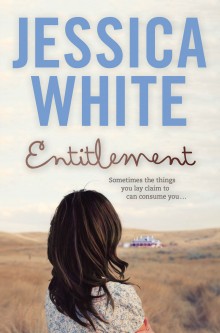
Another aspect of this novel that popped out for me is its rural focus. Rural romance is becoming popular here, but not much of our literary fiction focuses on the rural – on farm life, specifically, I mean. In this regard, it reminded me a little of Jessica White’s Entitlement (my review), though they are different books in terms of what drives them.
Have I intrigued you? I hope so, but it would probably help if I now told you a bit about it, rather than the books it reminded me of! The novel starts with a small family on a farm – ten-year-old Laura, five-year-old Vik, their artist-potter mother Kath, and farmer father Bruce. It’s clear there are tensions between the parents, and early in the novel Kath disappears. Interestingly, White’s novel also has a disappearance. Anyhow, young Laura, in a state of anger and shock, makes, as the book’s promos say, “an impulsive decision that will haunt her for decades”. Nonetheless, she fills the gap left – she mothers Vik, takes on the domestic duties, and helps her father on the farm. Robinson conveys beautifully the impact of on her – her pride in helping out, her exhaustion and loneliness, and her realisation of what she is missing. Her childhood, like that of a character in Henshaw’s The snow kimono, was “wrenched” from her. Late in the novel Laura reflects on “what she had lost, what she had cost herself”.
The novel is told third person, in a linear structure. It is divided into parts identified by dates: 1984, 1997, 2008 and 2018. Such a span could suggest saga, but this is a quieter work. It has its dramas, but the tone is not dramatic, which conveys a sense that this is life. Life, in other words, comes with highs and lows, and you just have to get on with it. So we follow the family as Vik grows up and leaves home for university, and as Laura eventually leaves too, at the suggestion of her father. There is always, though, the pull of the farm for Laura – and she does return.
Besides the family drama and the resulting narrative arc to do with Kath’s disappearance, the book is also concerned with farming and the land. Bruce and Laura struggle against drought, bushfires and land degradation to keep the farm going. Climate change hangs over this novel. By 2018 Laura has given up the struggle to regenerate the farm: “the climate had long stopped being something she understood”. This little jump into the future is surely a message from the author, and gives the book a foot in the cli-fi genre.
The other important land issue for farmers – indigenous people and their relationship with the land – is also a thread, introduced early on via Laura’s school friend, the indigenous boy Joseph. This issue is not laboured but bubbles along underneath, coming to the surface in 2018 when Joseph reappears as a man asking for occasional access to the farm for his people. Laura is taken aback:
The land belonged to her and Vik. She thought how mixed up they all were. There was what they believed and what they did, the stories they told. So many truths contained in skin, concentric rings. Laura imagined herself a log, sawn open. How many layers.
She remembers Joseph’s help in the past, and recollects the canoe tree on the property. “‘Course'”, she says, “You can use the place any time you like”.
Like White, for whom this issue is more central, Robinson offers no longterm resolution, but it’s positive to see non-indigenous authors addressing it. (As an aside, I can’t help but think Robinson’s naming one of the farms in the area, the Jolley farm, is a little tribute to Elizabeth Jolley.)
Robinson introduces another contemporary concern, Alzheimer’s. It works well as a plot device, but she does push it a little far. Not unbelievably so, but enough to weigh the novel down a little with issues. On the other hand, it could also work as a metaphor for the way we “forget” what we’ve done and are doing to indigenous people, and to the land.
I enjoyed Robinson’s prose. Here for example is a description of time passing:
The months broke across the year in alternating tasks: clearing, fencing, cutting wood.
And here is a description of the house, when Laura returns after a time away:
The house looked long abandoned, falling into the dry earth. Paint worn away by weather. Verandah sagging. Foundations shifted like rheumatic joints, as though it hurt the wooden skeleton to stay still.
The language, as you can see, is generally spare – sentences tend to be short, and not a lot of time is wasted in long descriptions, just as Laura herself has little time for anything but work.
Overall Anchor point is a tight, well conceived novel. The title, meaning “a safe place”, can be read in multiple ways. Laura does find some “safety” or redemption, but it’s not a simple or easy one for her, and the land itself is far from safe. In the end, it’s all about choices, and, as Laura learns, our choices can create ripples that last long after they’re made. Best, really, to make good choices first off. I’m not sure we’ve learnt that lesson yet.
Lisa at ANZLitLovers also enjoyed the novel.
 Alice Robinson
Anchor point
South Melbourne: Affirm Press, 2015
263pp.
ISBN: 9781922213617
(Review copy courtesy Affirm Press)





 Whispering Gums