Monday musings on Australian literature: Coming in 2015

Although my readerly eyes are always too big for my readerly brain, I do like to know about coming attractions – book-wise – and assume you’re interested too. If you’re not, apologies, but I know I’ll find this post useful to refer to as the year progresses. As I did last year, I’m basing this post on an article in The Australian by literary editor, Stephen Romei, followed by a little research of my own.

Here, according to Romei, are some of the fiction (and poetry) treats we can expect:

  • Les Murray: Given I opened my recent Reading Highlights post with Murray, I like that Romei starts off with him too. Apparently, Black Inc will be publishing two books from Murray this year. The first, Waiting for the past, is apparently his first volume of new poems in five years. I think we heard some poems from this volume at the Poetry at the Gods event I attended last year. The second, Bunyah, is a collection of poems he has written about his home town. It apparently will have an introduction by Murray. And, Romei asks, “Might this be the year the Bard of Bunyah finally collects Australia’s second Nobel Prize in Literature. I wouldn’t mind having an early wager on him doing so”.
  • Steven Carroll: Forever young (Fourth Estate, June), the next in his Glenroy series. Carroll jointly won the 2014 Prime Minister’s Literary Award for fiction last year with Richard Flanagan.
  • Stephen Daisley: Coming rain (Text Publishing, May). I was just wondering the other day what had happened to Daisley who won the Prime Minister’s Literary Prize in 2010 with his novel Traitor. Well, now I know!
  • Marion Halligan: Goodbye sweetheart (Allen & Unwin, May). I’m a Halligan fan and reviewed her gorgeous Valley of grace early in this blog.
  • Krissy Kneen: The adventures of Holly Whit and the Incredible Sex Machine (Text Publishing, May). Text describes it as “an amazing literary sci-fi superhero sex romp from Australia’s genre-bending queen of erotica”! Sounds intriguing, eh? I reviewed her Steeplechase a couple of years ago.
  • Malcolm Knox: Wonder lover (Allen & Unwin, May), his fifth novel. He also has two non-fiction books coming out.  Knox is probably most famously known for exposing the Norma Khouri hoax in 2004.
  • Amanda Lohrey: A short history of Richard Kline (Black Inc, March). Lohrey is an acclaimed novelist and essayist, and can be relied upon to produce something thoughtful and, very likely, different.
  • Frank Moorhouse: The book of Ambrose (Random House, November), about the second (and cross-dressing) husband of Edith Campbell Berry, heroine of Moorhouse’s Edith trilogy. I’ve reviewed Cold light, the last of this trilogy.
  • Steve Toltz: Quicksand (Penguin Books, May). Toltz is another author I’ve been wondering about lately. I loved his “out there” A fraction of the whole, which was shortlisted for the Man Booker Prize way back in 2008.

Romei’s article runs to 6 pages and includes Australian non-fiction, as well as fiction and non-fiction from overseas writers. I couldn’t possibly list them all, but I will note that some interesting sounding memoirs are coming out from Kate Grenville, Gerald Murnane, and Ramona Koval, among others. Caribbean-background author Maxine Beneba Clarke, whose Foreign soil was highly recommended in a comment on this blog by author Julie Twohig, has The hate race, a book about her experience of discrimination, coming out. It’s a real reader’s feast that awaits us.

While Romei mentions several debut novels in his article, I’d like to introduce two of my own gleaned from women I’ve come across via blogging and the Australian Women Writers’ Challenge:

  • Robyn Cadwallader: The anchoress (Fourth Estate, early 2015. It’s historical fiction set in the 13th century, about a woman who commits herself to a life of prayer, rather than marry a wealthy lord. Cadwallader is an expert in mediaeval literature.
  • Lizzy Chandler (pen-name of Elizabeth Lhuede, instigator and convener of the Australian Women Writers’ Challenge): Snowy River man (Escape Publishing, February 2015). This is in the romance genre, so not my preferred fare as Elizabeth knows, but in the spirit of the challenge’s commitment to diversifying our reading I’d like to give her a shout out here.

Finally, I wish good luck – because we all know that talent is only part of the equation in the “getting-published” game – to those out there working hard to get their first or next novel published.

Do any coming releases – either listed here or that you know about from elsewhere – appear on your must-read list for 2015?

(PS I’ll be getting back to reviewing soon!)

Reading highlights from 2014

Unlike last year when I crammed all my highlights into one post, this year I’m returning to the two-post approach. This keeps the posts shorter, which better suits this lazy time of year (southern hemisphere speaking anyhow!) So, this post will focus on literary/reading highlights, and the other will share my blogging highlights (such as they are!)

Literary event highlights

I didn’t get to many literary events this year, partly because my year was fragmented with many small trips out of town (overseas and within Australia). Consequently, I only have two event highlights, and a special – well, you’ll see:

  • Les Murray, probably the current grand man of Aussie poetry, at Poetry at the Gods. What can I say about this except that getting a chance to see and hear one of Australia’s most significant living poets in an intimate venue was a treat, and something I’ll treasure.
  • Mansfield Park Symposium during the Jane Austen Festival of Australia. For some reason I didn’t write this most enjoyable event up on my blog. It involved four academics talking about Mansfield Park from different aspects: Janet Lee on letters and letter-writing, Heather Neilson on education, Gillian Dooley on music and its relationship to morality, and Christine Alexander on landscape gardening and the urge for “improvement” in the era. I’m hoping the 2015 festival includes another targeted symposium.
  • Meeting overseas readers. I began discussing books on the Internet eighteen years ago in January 1997 when I joined the “bookgrouplist”. Through this and other online book discussion groups, I’ve “met” a lot of wonderful readers, cyberly! Over time I have also managed to meet some face-to-face. In 2014 I added to my “met” list by seeing* Emmy, Merrilee and Murph in Toronto, Canada, Cheryl in Montreal, and Trudy (a re-meeting, in fact) in Redondo Beach, California. All lovely people. It’s special being able to put faces to the names, and, of course, meeting locals adds to the joy of travel. I thank them all for making the time to catch up.

* POSTSCRIPT: I’m mortified that I forgot to mention meeting cheeky Cheryl and her husband Tony in Montreal – and receiving three sample jars of Tony’s delicious homemade maple syrup. Never name names because you’ll aways forget one!

Aussie reading highlights

Once again, rather than trying to list my “top [X] books of the year”, I’m going to share some highlights:
  • Classics: I didn’t make great headway this year in my reading of Australian classics, but I did read the last two short stories in Barbara Baynton’s Bush studies collection, having started it in 2013. She’s a significant Aussie writer who offers an important counterbalance to the bush-writing of people like Henry Lawson and Banjo Paterson. I have another classic part-read on my Kindle. With any luck you’ll see a review of that appear some time soon …
  • Juvenilia: At the aforementioned Mansfield Park Symposium I met one of the speakers, Christine Alexander, who also happens to be Director and General Editor of the Juvenilia Press. They have published several volumes of Jane Austen’s juvenilia, but they also publish juvenilia from around the world, including Australia. I bought several, and to date have enjoyed Mary Grant Bruce, Eleanor Dark and Ethel Turner. Fascinating stuff if you are interested in writers and their writing lives.
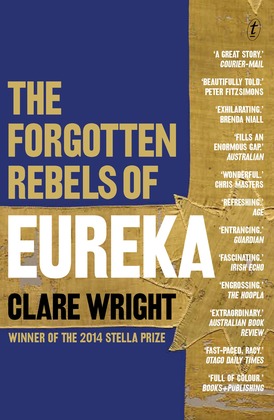
  • Awards: Three of this year’s award winning books particularly impressed me: Evie Wyld’s somewhat controversial All the birds, singing (Miles Franklin Award), Richard Flanagan’s generous The narrow road to the deep north (Prime Minister’s Literary Award, among others), and Clare Wright’s The forgotten rebels of Eureka (Stella Prize).
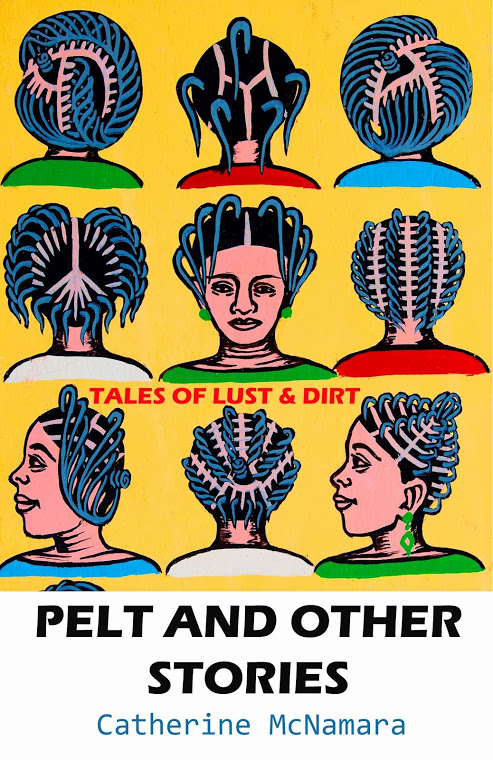
  • Catherine McNamara, PeltShort stories: While I always read short stories, I read more anthologies and collections in 2014 than in 2013. The standout anthology was Australian love stories edited by Cate Kennedy. It left me with such a buzz, for the variety of stories and styles, and the depth of emotions presented. I also loved the latest Margaret River competition anthology, The trouble with flying and other stories, and The great unknown edited by Angela Meyer. And I enjoyed expat author Catherine McNamara’s Pelt and other stories for its unsettling subject matter, often involving exploitation and power imbalances in relationships, and for her richly expressive style.
  • TBR reading: I actually read 4 books from my TBR pile. Three were Australian – and all were well worth diving into the pile for: Jessica Anderson’s One of the wattle birds, Sara Dowse’s Schemetime, and Tara June Winch’s Swallow the air.
  • Non-fiction: I read 7 Australian non-fiction books this year, including four memoirs and a biography. I was particularly moved by Margaret Rose Stringer’s tribute to her husband in And then like my dreams, and Olivera Simić’s passion for non-violence in Surviving peace. And I loved Helen Garner’s latest foray into non-fiction, This house of grief. I admire the way Garner can wear her heart on her sleeves while writing with such perspicacity.
  • Small presses: Once again I read some excellent offerings from our small presses, including Nigel Featherstone’s The beach volcano (Blemish Books), Howard Goldenberg’s Carrots and Jaffas (Hybrid Publishers), and Margaret Merrilees The first week (Wakefield Press). They deserve a shout out.
These are just a few from what was another great year of Aussie reading.

Reading highlights from other parts of the globe

While the greatest percentage of my reading was Australian this year, I did read some excellent books from elsewhere. Highlights were:
  • Simone de Beauvoir’s Memoirs of a dutiful daughter. It reminded me that no matter how radical people are, they can never completely escape their childhood influences and the values of their times.
  • Adam Johnson’s Pulitzer prize winning The orphan master’s son. A surprisingly compelling, yet discomforting novel critiquing politics and power in North Korea.
  • Wallace Stegner’s Crossing to safety. My fourth TBR pile read. I love Stegner’s ability to get to the heart of relationships – with warmth and generosity.

Innovative/experimental/different works

Finally, here are a few books that impressed or excited me because of their voice. Some are pretty grim, but I like my reading fare to include books that shock and/or surprise and/or test my expectations …

  • Kirsten Krauth’s just_a_girl: a story that challenges us to think about young girls, their sexualisation and how they might safely traverse our on-line world.
  • Morris Lurie’s Hergesheimer in the present tense: a novel in thirty stories about an ageing writer coming to grips with love, life and writing.
  • Annabel Smith. The arkEimear McBride’s A girl is a half-formed thing: a confronting story about family, disconnection and the urge to self-harm, told in an idiosyncratic voice that reaches your core.
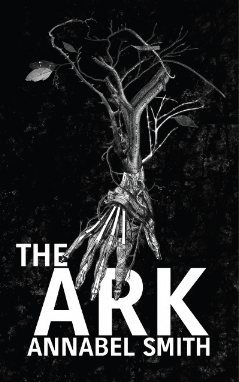
  • Annabel Smith’s The ark: an inventive modern epistolary novel/app/e-book, dystopian speculative fiction set in a post-peak oil world.
  • Ouyang Yu’s Diary of a naked official: another challenging story, this one about sexualisation and self-indulgence in a materialistic world.

All in all, an exciting year of reading that included some challenging, confronting and controversial reads. I wouldn’t have it any other way.

What were your standout reads for the year?

Books given and received for Christmas

Here at the Gums, we like of course to give and receive books for Christmas. Like you, I’m sure, I love choosing books for those I love, albeit tinged with a little anxiety. Have they read it? Will they like it? That doesn’t stop we readers giving it a go though does it? Anyhow, just in case you’d like to hear what decisions I made this year, here goes.

  • For Ms Gums Jr, who loves poetry: Owen Musa’s Parang
  • For Mr Gums Jr, who enjoys humour: Simon Rich’s Spoiled brats (with thanks to one of those end-of-year lists, in The Guardian I think!)
  • For Ma Gums, who has worked as a lexicographer: Paul Dickson’s Authorisms: Words wrought by writers
  • For Aunt Gums, who likes a nice English writer: Joanna Trollope’s Balancing act
  • For Brother Gums, historian and lover of good writing of all kinds: Best Australian essays 2014 (but unfortunately, as I feared, someone else had a similar bright idea so it’s back to the drawing board for this one!)
  • For Sister-in-law Gums, who’s always up for something different: Jane Rawson’s (recent MUBA award-winner) A wrong turn at the office of unmade lists
  • For Gums’ Californian friend, who teaches Japanese: Mark Henshaw’s The snow kimono (and I hope she doesn’t read this before she opens her parcel)
  • For Gums’ Californian friend’s daughter, who likes a good mystery: Mark Henshaw’s In the line of fire
  • For Gums’ Californian friend’s daughter (yes she has two), who reads widely and, I believe, also enjoys a bit of commentary: Kill Your Darlings #19

POSTSCRIPT: I returned Best Australian Stories 2014 and decided to go more local for Bro Gums – Julian Davies’ Crow mellow.

And while we are at it, I also gave copies of Australian love stories edited by Cate Kennedy for two late-in-the-year birthdays.

As for what I received, well, they are an intriguing and wonderfully eclectic bunch:

  • From Ma and Pa Gums: Don Watson’s The bush: Travels in the heart of Australia. Woo hoo – I was hoping Santa or someone would bring this!
  • From Mr Gums Jr, who knows I’ll give something new a go: Vivek Tiwary and and Andrew Robinson’s graphic novel The fifth Beatle: The Brian Epstein story. Love the out-of-left-fieldedness of this.
  • From Bro and SIL Gums, who live in Tasmania and can be relied upon to give me something by a Tasmanian writer: Danielle Wood’s Mothers Grimm, which reworks four fairy stories from the point of view of mothers and sounds right up my alley!

Monday musings on Australian literature: RN presenters’ pick reads of the year

I was going to write my Case for post this week, but I think now that I’ll leave it to January. Life is a bit too busy right now to put proper thought into presenting my case (though I’ve pretty much decided which book it will be!) So, instead, since various media outlets are starting to publish “best” or “favourite” books of the year, I thought I’d share those from the presenters of the radio station that I most listen to, ABC Radio National.

Many did not choose Australian books, but given the theme of this post, I’m only going to share those who did. However, you can see the whole list online at Radio National. Here goes:

  • Helen Garner, This house of grief book cover

    Courtesy: Text Publishing

    Damian Carrick – presenter of the Law Report – chose Helen Garner’s This house of grief. Not surprising, I suppose, that a presenter on law would choose this book about a murder trial. He was concerned, he said, that he might find it too bleak, but “from the opening page I was hooked. It’s a page turner, and as it should be it’s an aching lament to the loss of three lives”. I hate the use of the word “aching” in reviews but regular readers here will know that I liked it too.

  • Jonathan Green – presenter of Sunday Extra – chose Richard Flanagan’s The narrow road to the deep north. I’m glad someone did! He felt that, given it had won the Booker Prize, “anything I say isn’t much more than licking the spoon that somebody else used to put the icing on the cake. Even so, gosh this is a good book”. I agree.
  • Lynne Malcolm – presenter of All in the Mind – chose comedian Tim Ferguson’s Carry a big stick. Again, it’s not a surprising choice for the presenter of a program about the mind and the brain, as this book is a memoir focusing particularly on Ferguson’s being diagnosed with multiple sclerosis. Malcolm refers to Ferguson’s progress from denial to eventual admission when he could hide the condition no longer.
  • Rhianna Patrick – presenter of AWAYE – chose Ellen van Neerven’s Heat and light. This is a book I have on my TBR. Here’s what Patrick says “Van Neerven is part of what I see as the next wave of Aboriginal and Torres Strait Islander writers, who are university graduates in creative writing. What’s clear early on is van Neerven’s exploration of indigeneity and sexuality, and whether the two can coexist”. That intrigues me. Why can’t they coexist? Clearly, I’ll have to read it to find out.
  • Robyn Williams – presenter of the long-running Science Show – chose Evie Wyld’s All the birds, singing. He says that “It may be about blokes with beers and rugged times on the land, but the voice is always clear and convincing”. Hmm, blokes with beers do appear but I wouldn’t quite say that’s what it was “about”. However, I like the fact that he appreciates Wyld’s voice. (You can check out my review if you like. I expect it will feature high in my top books – when I do my list in January).

Other choices included Eleanor Catton’s The luminaries, and Eimear McBride’s A girl is a half-formed thing, both of which I’ve reviewed this year. The most interesting choice, from my point of view anyhow, was from Ann Jones, presenter of Off the Track. She chose Mexican writer Juan Pablo Villalobos’s Down the Rabbit Hole which she described as “fantastically surreal and brutally real”.

For each of the choices, there is a sound grab (at the link I provided above) that you can listen to which gives you a little more about their reasons. I don’t find them all enlightening, but I do find it interesting at this time of year to hear people’s choices and why they chose them.

Have you chosen your favourite book of the year, or are you, like me, waiting until the year is over? (Even then, I suspect, I won’t be able to choose ONE book to top all the others but I will have some favourites.)

Monday musings on Australian literature: The case for …

Back in February, the online journal, The Conversation, about which I’ve written before, started a occasional series they call The case for …. They described it simply as …

If you had to argue for the merits of one Australian book, one piece of writing, what would it be?

That’s very open-ended and I did think the intention might have been for contributors to argue for a book of controversial standing or, perhaps, one that has not received the recognition the casemaker thinks it deserves. But neither of these work for the first book, which was …

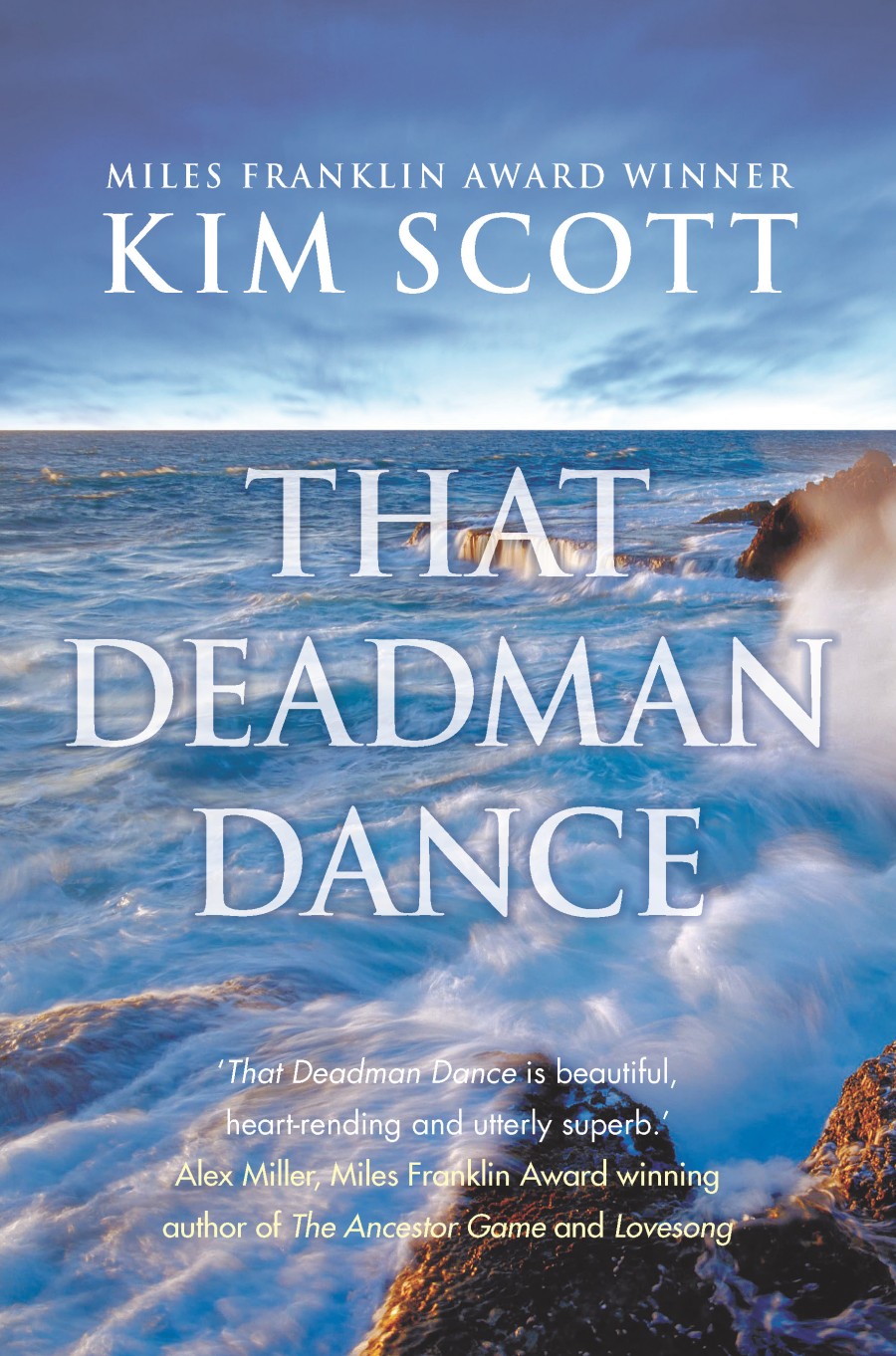
Kim Scott That Deadman Dance

(Courtesy Picador Australia)

Kim Scott’s That deadman dance, chosen by Tony Hughes-D’Aeth, Associate Professor, English and Cultural Studies, University of Western Australia. (See my review). It is not controversial, though some readers found it a little hard to read, and it won a swag of awards, as Hughes-D’Aeth tells us at the start of his case. However, he makes a case on the basis of its importance and relevance to the ongoing discussion in Australia about the facts and implications of first contact. And his case has to do with what he calls Scott’s “bold wager” that “he wanted to write a novel from the point of view of Aboriginal confidence” and that he was “inspired [to do so] by history”. Hughes-D’Aeth discusses his surprise at this idea of “confidence”, given that the history is one of “decimation” and “cultural annihilation”. You can read his “case” if you’d like.

I should clarify, before I continue, that The Conversation also says that the work can be “fiction or non-fiction, contemporary or historical”.

So far there have been eighteen cases put. Several are for books I know or have read (often before blogging), such as (links are to the “case”):

But some cases are for books, I don’t know at all (which probably just demonstrates my ignorance). These include:

Of the eighteen cases listed on the site, the one that stands out as a bit odd to me is Johnny Warren’s book, published in 2002. Warren was a legendary Australian footballer. Casemaker Lee McGowan (Senior Lecturer, Postgraduate Coursework Studies, Queensland University of Technology) admits that the book has its weaknesses, but argues that it’s important nonetheless. He says that “the book’s title refers to what Warren described as a ‘mentality’ that exists around football in its early days in Australia, a mentality he implied was borne of fear.” McGowan suggests this seems outdated now – though I’m not sure exactly what he’s saying is outdated. The words in the title? The mentality? The fear? He doesn’t explore this further, but moves on to say that the book’s main value is that it “remains the best, most insightful account of the Australian game’s contemporary development”. I guess I wouldn’t see the development of football as a critical issue warranting my attention, but to each their own I suppose.

I’m intrigued – though not surprised – to note that several of the books for which cases have been made are by indigenous writers or confront indigenous issues (including Kim Scott, Randolph Stow, Peter Temple, Paddy Roe, and Gail Jones’ Sorry). The cases, in other words, reflect the zeitgeist of our times. Suzie Gibson from Charles Sturt University, arguing for Stow’s To the islands (1958), for example, writes that in it

contemporary readers are confronted with the fruits of Australia’s racist policies concerning Aboriginal peoples.

She argues that, in addition to its literary merit, it is relevant to modern Australia

which tends to function in ignorance of the ongoing cultural disenfranchisement of Australia’s first peoples.

Literature, as we all know, comes in and out of fashion, sometimes for reasons that aren’t immediately obvious. I love this initiative by The Conversation – and hope further academics and researchers take up their offer to present cases.

Anyhow, I’m sharing this series for a couple of reasons. One is that it provides yet another list to look at when considering what to read next. And the other is, as you’ve probably guessed, to ask, What book* would you make a case for – and why? I will make a case for a book in a future Monday musings!

* Preferably from your own national literature.


Monday musings on Australian literature: The novel in Australia, 1927-style, Part 2

Today’s Monday Musings is Part 2 of my two post series discussing Nettie Palmer‘s article, “The novel in Australia”, that was published in The Brisbane Courier, 15 October 1927.

As I did in last week’s post, I’ll use her headings to share her view on Australia’s great novels.

A novelist abroad

Here she discusses Australian writers who wrote their novels while living overseas, Australians being, as we know, good travellers. It’s no surprise that her choice of the best known novel written while its writer was abroad is Henry Handel Richardson’sMaurice Guest (1909), which is a “brilliant story of music-student life in the Leipzig of the ‘nineties”. (This is another languisher on my TBR pile).

Palmer then tells us about Richardson’s Australian trilogy, The fortunes of Richard Mahoney, which she wrote mostly from her home in England though she “revisited Australia about 1912 to verify impressions”. Palmer’s article was written before the third book in the trilogy was published, but here she is on the first two:

The writer’s knowledge of the period – costumes, food, and customs – is immense but the “Fortunes” is never a mere costume novel: there is character all through. All Henry Handel Richardson’s novels, even those whose setting is wholly Australian, are better known in Europe than here, and are discussed at length in German and Scandinavian literary encyclopaedias and reviews. In America too, they have received deep attention. Victoria is fortunate to have found such a chronicler, more fortunate than it knows yet [my emphasis].

Cultural cringe, or because Richardson was based overseas? Whatever the reason, recognition of her work did increase through the century. The Australian Dictionary of Biography entry on Richardson, written in 1988, discusses her reputation briefly, and touches on the unevenness of her reputation – overseas and in Australia.

Contemporary novels

Palmer concludes her article by looking at contemporary (to the late 1920s, that is) novels, and names a few she deems significant.

Katharine Susannah Prichard

Prichard, 1927/8 (Courtesy: State Library of NSW, via Wikimedia Commons)

Katherine Susannah Prichard’s works, she says, “are the fruit of an intense devotion to her subject matter. Her gifts are mainly two: first, that of brilliant impressionism, then a rare power of writing group-scenes.” In Black Opal, for example, the opal miners are “standing about chaffing each other and discussing the universe, every man of them alive”. She says there are similarly vivid scenes of groups of timber-getters in Working Bullocks. “Such scenes”, she says, “are too difficult for most novelists, who shirk them: yet they enrich a book immensely and the reader feels that our everyday life is full of unsuspected charm”.

Palmer then writes something rather strange (to me anyhow). She comments that each of Prichard’s books is located in a different place – the tall-timbers of South-east Victoria (presumably The pioneers, which I’ve reviewed), the opal fields of Western New South Wales, and the saw-milling country in the south of Western Australia. She says:

(Reading over this list of regions I can only feel how wretchedly inconvenient our Australian names are: a mere mention of latitude and longitude! Are we too big to think about? It will take many years for many of our names to become easy and vivid.)

What does she mean? Those names are purely geographical descriptions. The pioneers is, yes, set in south-east Victoria but this region does have a name – Gippsland – which it has had since the nineteenth century. I don’t think I’m on Palmer’s wavelength here at all.

Anyhow she concludes this section with the statement that there’s “little space left for some recent Queensland books” (because, of course, The Brisbane Courier is a Queensland newspaper). She names Zora Cross, whose books “put on record the changing years of a South Queensland [ha!] district” and M. Forrest, whose novels “have that special quality which readers of her verse would expect – a power of painting in words the rich details of Queensland’s unexplored landscapes”.

Conclusion

As I read this article I pondered what criteria Palmer was using to define quality novels. Good characterisation, meaningful realism (if that makes sense), and a capturing of Australian identity seem to be what she was looking for. Fortunately, she has a go at answering this question herself in her last two paragraphs.

Firstly, she says that:

the most satisfactory definition of a good novel seems “the revelation of character through narrative,” but the character need not be only human. There is also the character of a country.

She then suggests that good novels break new ground, with the author “giving part of himself away, revealing his personal vision of ‘men, coming and going on the earth'”. On this point of innovation, she quotes Randolph Bedford, who appeared in Part 1 and who, she says, satirised the idea that “the average publisher loves words written to a formula, to please a reading public which dislikes anything new”. Bedford apparently said of this public:

It loves to read some old friend it recognises, so it can say, “How original it must be, because I know it so well”.

Oh dear. Have things changed do you think?

Palmer then presents her own definition of “a more genuine kind of originality” – and it’s to do with the difficulty of making “Australian life and character their theme”. She concludes:

Some day, when a novel about life in Indooroopilly seems as natural as one about Piccadilly, we shall thank those who turned the first sods so fruitfully.

So there it is really. The cultural cringe. This I think has changed.

* Wikipedia tells us she was Iris Murdoch’s second cousin twice removed. A remote relation, perhaps, but interesting nonetheless!

Monday musings on Australian literature: The novel in Australia, 1927-style, Part 1

Nettie Palmer was one of Australia’s leading literary critics, not to mention essayist and poet, through the 1920s to 1940s. I have mentioned her several times in this blog, including in my post on Australia’s literary couples. She also mentored younger women writers such as Marjorie Barnard and Flora Eldershaw. However, what I want to discuss today – and next week – is the article she wrote in 1927, about “The novel in Australia”. It was published in The Brisbane Courier, 15 October 1927.

She starts by commenting that the number of “good novels written in Australia has been small”. There are reasons for this she says but discussing those is not her aim in this article. Rather, her plan is to reduce her list of “good” Australian novels to just the best. The result “is a nugget of surprisingly high quality”. And now my plan is to share with you those nuggets that she defined for her readers back in 1927. It makes for interesting and sometimes surprising reading. Here goes, using the headings she did.

Some early nuggets

She names two.

Thomas Alexander Browne (aka Rolf Boldrewood) (Public Domain from the National library of Australia, via Wikipedia)

Thomas Alexander Browne (aka Rolf Boldrewood), by Henry Walter Barnett (Public Domain from the NLA, via Wikipedia)

Henry Kingsley’s Geoffrey Hamlyn (1859), which is a book I have in my TBR and would love to find time to read. I’m not sure I had heard of it until a few years ago but it keeps popping up in unusual places which has piqued my interest. It has, Palmer says, without elaborating, “a very colonial outlook”.

Rolf Boldrewood’s Robbery under arms (1882), which I defy any self-respecting Australian to say they haven’t heard of (though I suspect many of us haven’t read it!). She does elaborate over one and a half paragraphs on this one! She writes that, despite its “truculent title”:

It is one of those rare books that can please on several different counts – as an adventure story, as a sketched historical background, and as a sons psychological novel.

I love that she praises it for its “fine and unexaggerated vernacular, without dropped aitches or other irritating apostrophes to spot its pages”. She sees it as a model for good novels in Australia.

Some successors

Palmer then says that it was a “long time before the simplicity and naturalness of that book was again reached”, but eventually some more nuggets appear.

Marcus Clarke’s For the term of his natural life (1870), but she does not elaborate.

Mrs Campbell Praed’s (or Rosa Praed as I know and have read her) “easy flowing books now almost forgotten” (1890s). Books being forgotten is, clearly, an age-old problem! Anyhow, she names one, which I haven’t read, Longleat of Koralbyn.Wikipedia tells us that it  was first published in 1881 under the exciting (my description!) title of Policy and passion! No wonder it was republished under a different title. I have read Praed’s rather raw The bonds of wedlock (1887). I laughed at Palmer’s comment that Praed’s books are set in Queensland but “the writer shirks the whole problem of making her Queensland live in the readers’ sight”. That could mean a number of things – but the important thing, I suppose, is that she likes Praed’s writing!

Then, though her subject is novels, she mentions short story writers, naming Louis Becke, Price Warung (whose stories I’ve reviewed), Henry Lawson and Albert Dorrington.

She concludes this section with the following:

For many years it has seemed that only short stories would ever be published again (and those only in fugitive form): any novels that appear have had every sort of circumstantial opposition to overcome.

Fugitive form? Does she mean in magazines (like The Bulletin, established in 1880) and newspapers rather than something more permanent like books? I suspect her comment about the difficulty of getting novels published is not totally incomprehensible to writers today?

Novels after 1900

Her choice of novels from the early twentieth century includes a couple of authors I don’t know. Regular readers here will recognise which ones they are by not having seen them mentioned here!

First up, of course, is Miles Franklin’s My brilliant career which she describes as a “bit of ironic auto-biography, set in an up-country township of the drearier sort”. Palmer, from the point of view of 1927, hopes that “some day she [Franklin] will be able to repeat her early success, looking through the opposite end of life’s telescope”. Franklin did achieve fictional success again, in the late 1930s, with All that swagger.

She then names Randolph Bedford’s – quick quiz question: have you heard him mentioned here? – two novels. True eyes and the whirlwind (1903) and The snare of strength (1905). (Don’t you love these titles?) Palmer describes the first as “a novel of the picaresque style, a useful type for expressing the nomadic youth spent by many Australians before they find their life’s work”. Interesting. I hadn’t quite realised just how far back the idea of Australians as travellers extends, but it reminded me that Patrick White spent time jackarooing in Australia, in the 1920s, and travelling overseas as he sought a place for himself in the world. Overall, she says, Bedford’s work “is never without a fine gusto”. Sounds worth checking out.

I’m pleased to see that she also includes in her list, Barbara Baynton and her novel The human toll (1907) which, she says “had a strong, if acrid life of its own … full of bush tragedy”. That’s our Baynton!

And finally, in this group, she names Louis Stone’s Jonah, “a Sydney story of young larrikins, done with sincerity”.

Palmer ends this section with a cry that is surely universal:

Out-of-print, out-of-print – that is what one has to lament about all these books! Many novels deserve to die in their year of birth, but what of those that have permanent quality? We can only beg for new editions.

I will conclude my discussion of her article in next week’s Monday Musings.

Monday musings on Australian literature: Indigenous writers recommend …

Last week, to commemorate the beginning of NAIDOC Week, I devoted Monday Musings to Anita Heiss’s series of interviews with indigenous Australian writers, In conversation with BlackWords. I said then that this week’s post would also draw from the series – and so here it is.

I’m not 100% sure of Heiss’s process, but I think she sent the same set of questions to all writers, and they answered some or all of questions as they desired. I am focusing, in this post, on one of the questions. Seventeen of the twenty writers responded to it. The question is:

What book do you think every Australian should read?

Anita Heiss, Am I black enough for you?

Courtesy: Random House

The answers are fascinating. Most, as you would expect, recommend books that would help all Australians learn and understand more about indigenous culture and history, and the books they recommend are mostly by indigenous Australians. But, the interesting thing is that there’s a lot less duplication than I expected. I like this. It suggests the existence of an active indigenous literary culture. No simple, easily defined cannon here! It provides a great list for us all to go to – both now, and when we are planning for ANZLitLovers’ 2015 Indigenous Literature Week.

Anyhow, I thought, when I decided to do this post, that I could tally up the recommendations and list them in popularity order. But, given what I actually found, I have decided instead to simply list them in alphabetical order by author/editor, with the name of the recommender/s and comments where appropriate.

  • Berendt, Larissa: HomeEllen van Neerven called this “A very important book.”
  • Carey, Peter*: True history of the Kelly GangJared Thomas said it “alerted me to class struggle – the fact that it is not only Aboriginal people who have endured persecution in this country.”
  • Chi, Jimmy: Bran Nue Dae (script). Kim Scott.
  • Eckermann, Ali Cobby and Fogarty, Lionel (eds): Southerly, Vol 71, No. 2, 2011, “A Handful of Sand: Words to the Frontline”. Lorraine McGee-Sippel described this as “An invaluable resource of Australia’s First Nations writers … Across all genres, ages and life experiences”. She believes is should be “compulsory reading … in all high schools and universities”.
  • Eckermann, Ali Cobby: Ruby MoonlightBruce Pascoe.
  • Gammage, Bill*: The biggest estate on earthKim Scott simply said “an important book”.
  • Gilbert, Kevin: Because a white man’ll never do itKerry Reed-Gilbert, his daughter.
  • Green, Evan*: Adam’s empireSue McPherson described it as “a good Aussie story. It should be made into a film.”
  • Haebich, Anna*: For Their Own GoodKim Scott said that it “focuses on south-west Western Australia, but the power relationship it articulates applies across the continent”.
  • Heiss, Anita: any book. Lionel Fogarty gave Heiss as an example in recommending “Indigenous-authored books such as those by Anita Heiss.
  • Heiss, Anita: Am I black enough for you? Jared Thomas, Bruce Pascoe (my review)
  • Heiss, Anita and Minter, Peter (eds): The Macquarie PEN Anthology of Aboriginal LiteratureKerry Reed-Gilbert.
  • Leane, Jeanine: Purple threadsMelissa Lucashenko (my review).
  • McMullen, Jeff*: any writing. Samuel Wagan Watson.
  • Maynard, John: Fight for liberty and freedom. Recommended by himself.
  • Munkara, Marie: Every secret thingBruce Pascoe (my review).
  • Papunya School with Nadia Wheatley and Ken Searle: The Papunya School Book of Country and HistoryAnita Heiss likes this because it is “accessible to all”.
  • Pascoe, Bruce: works by him. Recommended by himself.
  • Pascoe, Bruce: EarthMelissa Lucashenko.
  • Pilger, John*: A secret countryKate Howarth.
  • Reynolds, Henry*: any book. Kerry Reed-Gilbert argued that “it’s time for people to know the truth of this country”; Samuel Wagan Watson.
  • Reynolds, Henry*: Forgotten WarLorraine McGee-Sippel said that it “addresses Australia’s selective amnesia in relation to the wars fought between Traditional Owners and the Invaders. Where are our memorials?”
  • Reynolds, Henry*: This whispering in our heartsJackie Huggins.
  • Scott, Kim: Benang: From the heart. Bruce Pascoe.
  • Scott, Kim: That deadman danceKerry Reed-Gilbert; Bruce Pascoe (my review).
  • Scott, Kim: True countryMelissa Lucashenko.
  • Thiele, Colin*: Labourers in the vineyardBruce Pascoe.
  • Weller, Archie: stories by him. Bruce Pascoe.
  • Willmot, Eric: Pemulwuy: The rainbow warriorDub Leffler.
  • Wright, Alexis: CarpentariaBruce Pascoe (my review).
  • Wright, Judith*: stories and poems by her. Bruce Pascoe.
Kim Scott also recommended that people read an anthology of writing from the region in which they live, such as Those Who Remain Will Always Remember: an Anthology of Aboriginal Writing, edited by Rosemary van den Berg, Anne Brewster and Angeline O’Neill.

Tegan Chillcott and Samuel Wagan Watson were a little wary of being prescriptive. Chillcott said, simply, ““whatever book seems most interesting to them”.  Watson, though was a little more explanatory. He said:

Every Australian?’ Hmmm … It’s hard to say, and I know mature Australians who have admitted to having never finished reading a book because literature bores them. I can’t answer that question? I’ve never watched a cricket match in my 41 years either … So I must seem weird to people who don’t pick up a book. If I was on a ‘soapbox’, I’d say any writing by Uncle Henry Reynolds or Uncle Jeff McMullen.

But some people can be turned off literature – altogether – by books that are too confronting. And that’s the delicate balance that needs to be dealt by a writer when you’re thinking about audiences. I do believe some writers have no idea that they are either not engaging with an audience or they don’t care? As a writer, on the journey of composing your work or novel or music, you need to consider your audience at every turning point. If you don’t think about the needs of your reader, you are simply writing in a very tight vacuum.

Another respondent who didn’t seem keen to name specific titles or authors was Samantha Faulkner.

Papunya School Book

(Courtesy: Allen & Unwin)

I’d like to conclude with her lovely, generous statement. She wrote:

Any book by an Aboriginal and/or Torres Strait Islander writer. Reading a book by a First Nations Australian writer will identify similarities that connect us, and bring us together, rather than divide us. After all, we live on this beautiful country together.

* Non-indigenous author

Monday musings on Australian literature: Reading Matters’ ANZLitMonth

ReadingMattersANZLitLogoThis is the third year that expat journalist Kim has hosted an Australian Literature month on her blog Reading Matters – except that this year, for the first time, she has included New Zealand literature in her scope. As she writes in her introductory post, her aim is to celebrate and “raise awareness of the amazing range of literature produced by these two countries, much of which never gets publicised beyond their shores”. 

Over the month, which is nearly over, she has reviewed several books from the antipodes, highlighted some current award winners and interesting shortlists, used Australian bloggers for her Triple Choice Tuesdays, and published some specific suggested readings posts (including two guest posts). 

With Kim’s permission, I’m providing links to the suggested readings posts in today’s Monday Musings. As a reader of my blog, you’ve already shown an interest in Aussie literature, and so it’s likely the most of you will probably have heard of many of the books listed in these posts, but you never know …

Kim’s Triple Choice Tuesdays are always worth checking out. In them she asks her chosen blogger to name three books: a favourite, one that changed his/her world, and one that deserves wider recognition. The Aussie bloggers featured (so far) this month are:

  • Kirsten Krauth, author of just_a_girl (my review)
  • Book to the Future (Michelle McLaren), whose plan is to read (and review) a book from every year of the 20th century in chronological order
  • Alan Carter, crime novelist who was born in England but emigrated to Australia in 1991

These links provide just a sample of what has been happening over at Reading Matters this month. To see more, check out this link to all posts for the month …

Thanks Kim for hosting another month promoting our literature – and for the opportunity to write a guest post. I look forward to next year’s event!

Monday musings on Australian literature: Here come the men!

Women really have dominated the literary awards season in Australia over the last two years. In 2012, the majority of the awards were won by Anna Funder with All that I am and Gillian Mears with Foal’s bread. Last year it was mostly Michelle de Kretser with Questions of travel and Carrie Tiffany with Mateship with birds. ML Stedman also won an award with her The light between oceans. As well as all this, last year we had, for the first time ever, an all female shortlist for the Miles Franklin Award! Where, you may have been wondering, were the men?

Well, in their writing rooms it seems, beavering away, because by late last year their books started appearing in droves … and nice to see it is. I love reading fiction by women, but I also love reading fiction by men. Let’s face it, I love reading good fiction! Anyhow, I, and others like The Australian’s literary editor Stephen Romei, expect some strong showings by our male writers in this year’s award lists. Books like:

  • Richard Flanagan’s The narrow road to the deep north
  • Tom Keneally’s Shame and captives
  • Roger McDonald’s The following
  • Alex Miller’s Coal Creek
  • Christos Tsiolkas’ Barracuda
  • Tim Winton’s Eyrie

Stephen Romei predicts that Winton and Flanagan will battle it out, though says there are other strong contenders from a bumper year for Australian fiction. I will be reading Tsiolkas and Winton with my reading group over the next few months, and received Flanagan for Christmas. I am greatly looking forward to getting my teeth into these writers, each of whom I’ve reviewed before on this blog, and each of whom I respect and enjoy.

None of these, though, are debut authors. Every one has won and/or been shortlisted for the Miles Franklin at least once, and most, more than once. Of course it takes a little time for a debut to make it into public consciousness. However, you may remember that last year’s Miles Franklin Award shortlist of five titles contained three – yes, three – debut novels (Floundering, by Romy AshThe Beloved by Annah Faulkner, The Mountain by Drusilla Modjeska). That was healthy, and augurs well for the future, but I wonder if we’ll see any debut novels by male authors in the shortlists this year? While I don’t report regularly on awards, I’ll certainly be keeping an eye out for new authors appearing on the scene – or, indeed, for more established authors making their debut on the award lists.

Meanwhile, of course, I’ll continue to read Aussie women for the Australian Women Writers’ Challenge, including Hannah Kent’s debut novel Burial rites which could very well give the men a run for their money this year if the buzz surrounding this book is right.

2014 looks to be another exciting year for Australian fiction. How do you – Aussies and otherwise – see your reading shaping up for the year?