Monday musings on Australian literature: ABC Bookshelf’s top Aussie reads 2019

The usual end of year listmania has begun, and I also like to join in, but with a focus on Aussie book lists. This year, I’m starting with the Aussie books subset of the books recommended on ABC’s Bookshelf program. Recommenders, in addition to the show’s presenters, Kate Evans and Cassie McCullough, were Stephen Romei, Literary Editor of The Australian; David Gaunt, independent bookseller of Sydney’s Gleebooks; and Michaela Kalowski, interviewer and moderator for writers and ideas festivals and local libraries. To see the full list of books they recommended, check out their page or, even better, listen to the program (accessible on that page). Do listen to the program if you have time, as they discuss issues like books that are hard to sell (and why) and liking (or not) books that are grim or too close to the bone.

Books from around the world were mentioned, but of course there was an emphasis on Aussie books, and that’s what I’m focusing on here. I like that this list roams across genre (including historical fiction, crime and sci-fi/fantasy) and to some degree across time (including books not out until next year. That’s prescient of them!)

Here are the Aussie books mentioned, separated into fiction and nonfiction, and ordered alphabetically by author.

Fiction (and poetry)

  • J.M. Coetzee, The death of Jesus: novel, coming in May 2020
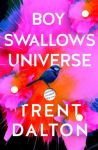
  • Trent Dalton, Boy swallows universe: novel, my review (Also recommended was Dalton’s second novel, All our shimmering skies, coming in June 2020.)
  • Garry Disher, Peace: crime fiction
  • Lexi Freiman, Inappropriation: novel
  • Chris Hammer, The Martin Scarsden seriescrime fiction series
  • Kathryn Hind, Hitch: novel
  • Toni Jordan, The fragments: historical fiction, Lisa’s review
  • Leah Kaminsky, The hollow bones: novel, Theresa’s review
  • Paul Kane, A passing bell: Ghazals for Tina: poetry (by an American poet who spends half his time in Australia)
  • Amie Kaufman and Jay Kristoff, Aurora rising: YA sci-fi/fantasy novel
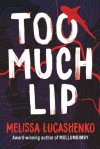
  • Melissa Lucashenko, Too much lip: novel, 2019 Miles Franklin Award winner, my review
  • Roslyn McFarland, All the lives we’ve lived: novel
  • Adrian McKinty, The chain, of The Sean Duffy series (Irish really, but lives – or has lived – in Australia, and has won the Ned Kelly Award more than once): crime fiction
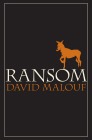
  • David Malouf, Ransom: novel, my review
  • Heather Rose, Bruny: novel, on my TBR, Lisa’s and Bill’s reviews
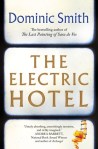
  • Dominic Smith, The electric hotel: novel, Australian-born but now US-based, my review
  • Ilka Tampke, Songwoman: novel, 2019 MUBA winner, Lisa’s review
  • Peter Temple, works: crime fiction, my review of Truth, his 2010 Miles Franklin Award winner
  • Lucy Treloar, Wolfe Island: novel, Lisa’s review
  • Christos Tsiolkas, Damascus: historical fiction, on my TBR
  • Rohan Wilson, Daughter of bad times: speculative fiction, Lisa’s review
  • Rohan Wilson, The roving party: historical fiction, winner of NSW Premier’s Literary prize, Lisa’s review
  • Tara June Winch, The Yield: novel, on my TBR, Lisa’s review
  • Charlotte Wood, The natural way of things: novel, 2016 Stella Prize winner, my review
  • Charlotte Wood, The weekend : novel, on my TBR, Lisa’s review

Nonfiction

  • Meera Atkinson, Traumata: creative nonfiction/part memoir
  • Trent Dalton, By sea and stars: nonfiction
  • Helen Garner, Yellow notebook: Diaries Volume I 1978–1987: non-fiction, on my TBR
  • Katharine Murphy, On disruption: essay
  • Cathy Perkins, The shelf life of Zora Cross: biography, on my TBR

This is a lot of books, and there was a good number of non-Australian books mentioned too, many of which I’d love to read, so the program covered a lot of reading in an hour!

By the way, if you really, really, really love end-of-year book lists, you need go no further than Kate’s (booksaremyfavouriteandbest) blog post, Best Books of 2019 – A List of Lists. She will keep adding to it as more lists appear!

Do you use these lists to direct your own reading or – as I suspect many listmakers hope – to help with your gift-shopping?

Monday musings on Australian literature: University of Canberra Book of the Year 2020

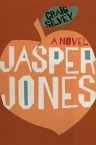
Jasper Jones, by Craig SilveyI wasn’t necessarily planning to announce the University of Canberra’s Book of the Year again this year, having written about it three times already – in 2012 when it was initiated, in 2014, when I checked to see how the program was going, and in 2018 to announce this year’s book. However, next year’s book is such a good choice that I felt it worth reminding you again of this initiative, which is now in its 8th year.

The program involves the University providing a selected book, free, to all commencing students across the five faculties. It is “required reading”. The book is “integrated into the curriculum and provides a common conversational topic on campus”. You can see the main goals in my 2018 post, and there is more about the program at the UC Book page. I had to laugh at one of the FAQs on this page. The question is:  “What does ‘required reading’ mean? Do I have to read the book?” And the answer:”Yes, all commencing undergraduate and postgraduate students in 2020 are required to read the Barbed Wire and Cherry Blossoms…” I would love to see more on the site about how this actually plays out.

It’s an inspired and inspiring initiative, though I’ve had some quibbles. I wrote last year that it was a shame that the books haven’t always been Australian, because it provides an excellent opportunity to introduce students to Australian literature. I also note that while the genres and subject matter have varied somewhat, there’s not been much diversity in terms of writers. No indigenous writer, no writer from a non-white/non-English language background, for example. Well, that has changed this year!

First though, here are the books to date:

2013: Jasper Jones, by Craig Silvey (my review)
2014: Room, by Emma Donoghue
2015: The Rosie Project, by Graeme Simsion (my review)
2016: The strays, by Emily Bitto (my review)
2017: The white earth, by Andrew McGahan
2018: Do Androids dream of electric sheep? by Philip K. Dick
2019: The natural way of things by Charlotte Wood (my review)

UC Book for 2020

In October, the University announced the shortlist, which comprises, this year, all recent Australian books. But, not only are they ALL recent Australian books, they are ALL by indigenous writers! What a wonderful message that sends.

Here’s the shortlist:

  • Tony Birch’s Ghost River (my review): “The highly anticipated new novel from the Miles Franklin-shortlisted author of Blood … The river is a place of history and secrets. For Ren and Sonny, two unlikely friends, it’s a place of freedom and adventure…
  • Claire G Coleman’s Terra nullius (my review): “The Natives of the Colony are restless. The Settlers are eager to have a nation of peace, and to bring the savages into line. Families are torn apart, re-education is enforced…”
  • Anita Heiss’ Barbed wire and cherry blossoms: “In 1944, over 1,000 Japanese soldiers break out of the No.12 Prisoner of War compound on the fringes of Cowra. In the carnage, hundreds are killed, many are recaptured, and some take their own lives rather than suffer the humiliation of ongoing defeat. But one soldier, Hiroshi, manages to escape. At nearby Erambie Station, an Aboriginal mission, Banjo Williams, father of five and proud man of his community, discovers Hiroshi, distraught and on the run…”
  • Melissa Lushenko’s Mullumbimby“When Jo Breen uses her divorce settlement to buy a neglected property in the Byron Bay hinterland, she is hoping for a tree change, and a blossoming connection to the land of her Aboriginal ancestors…”
  • Kim Scott’s Taboo: “From Kim Scott, two-times winner of the Miles Franklin Literary Award, comes a work charged with ambition and poetry, in equal parts brutal, mysterious and idealistic, about a young woman cast into a drama that has been playing for over two hundred years…”

While I’ve only read two of these books, I have read books by all of these authors, and am thrilled to see them represented here because each has something to offer to the program.

Book coverAnd the winner is: Anita Heiss’ Barbed wire and cherry blossoms.

The judges have chosen, probably, one of the less challenging reads from the list, but that’s sensible given the diverse readership they are choosing for in interest, skills and background – and it will serve the purpose of raising some necessary issues regarding indigenous history and lives. Sure, it’s about the past, but it can lead from there to discussions about How much has and hasn’t changed since then, and why …

Responding to the news of her win, Heiss told CityNews:

To have the UC community engaging in the story of the Cowra Breakout, and life of Wiradjuri people living under the Act of Protection during wartime, will add to a greater understanding of a significant moment in Australian history.

What do you think about the book choices, or the program itself?

Non-fiction November 2019, Weeks 4 to 5

Meme logoAs for my first Nonfiction November post this year, I am concatenating my last two posts, and posting them in the middle of the two weeks.

The meme is jointly hosted by Julz (Julz Reads) (Week 1), Sarah (Sarah’s Book Shelves) (Week 2), Katie (Doing Dewey) (Week 3), Leanne (ShelfAware) (Week 4) and Rennie (What’s Nonfiction) (Week 5).

Week 4: (Nov. 18 to 22) Leann (Shelf Aware) Nonfiction favourites:

What makes a book you’ve read one of your favorites. Is the topic pretty much all that matters? Are there particular ways a story can be told or particular writing styles that you love? Do you look for a light, humorous approach or do you prefer a more serious tone? 

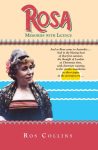
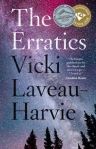
I’ll start with what I don’t look for, which is tone. That is, I don’t look for any particular tone over another. The important thing is that the tone matches the subject. I am not put off by serious, sad or confronting tones, but I can also enjoy (who doesn’t) a humorous tone. I also don’t gravitate to memoir, though I do read a select few each year. This year, for example, I’ve read Ros Collins’ Rosa: Memories with licence (my review), Anita Heiss’s anthology Growing up Aboriginal in Australia (my review), Vicki Laveau-Harris’ The erratics (my review),  and Jocelyn Moorhouse’s Unconditional love (my review).

What I do look for are subject matter and author’s approach or style. My favourite subject matter would have to be literary biography (and to a slightly lesser degree, literary memoir) but none of this year’s books have been such. I like essays, of which I’ve read a few this year, some stand-alone, some in collections. And I particularly like reading authors who explore form, who don’t stick to the tried-and-true. This doesn’t mean I don’t read and enjoy the tried-and-true if it’s well-written and a topic I’m interested in. Two standout non-fiction books this year for me were:

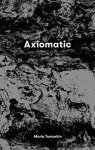
  • Maria Tumarkin’s Axiomatic (my review), which she says is not a collection of essays, though I’m not sure what else to call it. This is a humane, provocative books that forces us to rethink those axioms, those cliches that we too often resort to in an effort to not confront uncomfortable truths and situations.
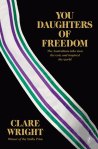
  • Clare Wright’s You daughters of freedom (my review) for its well-researched but highly readable history of the women’s suffrage movement in that late nineteenth to early twentieth centuries, and Australia’s significant role in it. Wright has done a wonderful job of bringing a hidden history to the fore.

Note: I have only included books I’ve read from November 2018 to October 2019. Any read this month will be in the running for 2020’s meme!

Week 5: (Nov. 25 to 29) Rennie (What’s Nonfiction) New to my TBR:

It’s been a month full of amazing nonfiction books! Which ones have made it onto your TBR? Be sure to link back to the original blogger who posted about that book!

I’m afraid that I haven’t really had time to take note of many books posted by other meme posters, though I have read several posts. So, I’m listing here a small selection of non-fiction books I am keen to read, not just ones that have appeared via this year’s meme:

  • Larissa Behrendt’s Finding Eliza: Power and colonial storytelling, which is in fact old on my TBR but which I’m going to make a concerted effort to read by next Nonfiction November.
  • Peter Carey’s Wrong about Japan, because I love Japan and am interested in what Peter Carey has to say. Brona (Brona’s Books) posted about this in her Be the Expert post.
  • Annie Cossins’ The baby farmers, because I’m interested in colonial Australian women’s history. Shelleyrae (Book’d Out) included this in her Be the Expert post.
  • Paul Genoni and Tanya Dalziell’s Half the perfect world: Writers, dreamers and drifters on Hydra, 1955–1964, which won this year’s Prime Minister’s Literary Award for Nonfiction. It’s about the post-war international artist community on the Greek island of Hydra, which included our Aussie literary couple, Charmian Clift and George Johnston.
  • Chloe Hooper’s The arsonist, which has been shortlisted for several awards and has been on my TBR most of this year. It seems an absolute must given the early start to this year’s bushfire season here down under.

And there you have it. Another Nonfiction November completed in two posts. I apologise for not giving it the attention it deserves, but I am glad I was stimulated by the meme to spend a little time thinking about nonfiction this month.

Any nonfiction favourites you’d like to share? (Not that my TBR pile needs them, mind you, but other readers might like to hear of them!)

Four books that changed me

A couple of weeks ago author and blogger Angela Savage posted the contribution she’s made to a column in The Age newspaper in which the columnist is asked to identify Four books that changed me.

Savage, being a writer – her works include The dying beach (my review) and her latest novel Mother of Pearl (on my TBR) – chose books which changed or affected or inspired her life as a writer. Lucky her to have such theme by which to narrow her selection. No such luck for me. Even so, she said she had to whittle her selection down from about 400 to 4! It’s hard, of course, but I’ve decided to choose books that have taught me something about life. I’m going to list them in the order than I first read them because, in fact, three of them I’ve read more than once. The other I would happily read again.

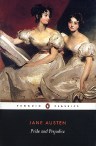
Book coverFirst up is Jane Austen’s Pride and prejudice, of course. You knew there had to be a Jane Austen in my list didn’t you. It was hard to choose which one, in a way, because all of Austen’s books teach me about people, and they keep teaching me every time I read them, because every time I read them I’m at a different point in my life. The richness of her observation and understanding is timeless and unsurpassed. I chose Pride and prejudice because it was the first one I read, in my early teens, and is the one that hooked me on her. teaches me so much about life, about people’s  – a book that I can read again and again
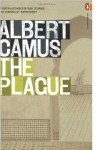
Albert Camus, The plagueNext is Albert Camus’ The plague/La peste (my review) which I first read in my very late teens. I love Camus’ exploration of how different people react when presented with a difficult life-threatening situation – like a plague or, say, the Holocaust. I know which character I’d like to be, but would I? This book, I hope, keeps me honest.

Book coverAnd then there’s that terrifying book, Toni Morrison’s Beloved, which I first read with my American reading group in 1992, when I was living there, and then again with my Australian reading group a few years later. If you want to read a book about the devastating impact of slavery – of its horror, of the way it destroys all sense of self, of agency, of hope – then this is the book to read.
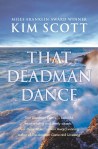
Kim Scott That Deadman DanceAnd finally, I wanted to choose a book that has moved along my understanding of Australian history. There are many I could have chosen – so many great books by indigenous writers – but I think Kim Scott’s That deadman dance (my review) is a foundational book, because it reminded me of/showed me the generosity of indigenous people in the early days of settlement and how it was thrown back in their faces by people who didn’t respect them as human beings (let alone as owners of the land they were “taking up”.) Oh, and I read it in 2011, the year after it came out. Was it that long ago?

If you asked me to do this next year, would I choose the same books? I don’t know, but I think I probably would, because each of these books remains vividly in my mind years after reading it.

And now I’m going to ask you what Angela asked her blog readers, what four books would you choose?

ABR’s Top Twenty Aussie novels of the 21st Century

Ten years after publishing its first ABR readers fan poll, the Australian Book Review asked its readers again to nominate their best Australian novels, but to keep it to those published this century. In its intro to the resultant list, ABR says that Richard Flanagan’s novel The narrow road to the deep north emerged as the clear winner. It also noted that Tim Winton’s Breath came fourth as it did in the original FAN Poll for the best Australian novel of all time. (That poll was won by Tim Winton’s Cloudstreet). Two other books appeared in the top ten (I think they mean) of the two lists: Alexis Wright’s Carpentaria and Christos Tsiolkas’ The Slap.

In my report of that first poll, I wondered whether Breath’s high ranking was “largely due to its still being fresh in people’s minds”. Clearly it’s more than that, which is fine with me because it’s a book that has remained vivid for me.

You can see the whole list, plus reviews and interviews for the Top Ten, on ABR’s page.

The top twenty

  1. Richard Flanagan’s The narrow road to the deep north (2013) (my review)
  2. Trent Dalton’s Boy swallows universe (2108) (my review)
  3. Alexis Wright’s Carpentaria (2006) (my review)
  4. Tim Winton’s Breath (2008) (my review of sorts)
  5. Markus Zusak’s The book thief (2005) (my review)
  6. Peter Carey’s True history of the Kelly Gang (2000) (read before blogging)
  7. Heather Rose’s The museum of modern love (2016) (my review)
  8. Charlotte Woods’ The natural way of things (my review)
  9. Christos Tsiolkas’ The slap (2008) (my review)
  10. Hannah Kent’s  Burial rites (2013) (my review)
  11. Craig Silvey’s Jasper Jones (2009) (my review)
  12. Michelle de Kretser’s Questions of travel (2012) (my review)
  13. Jane Harper’s The dry (2016)
  14. Kate Grenville’s The secret river (2005) (read before blogging)
  15. David Malouf’s Ransom (2009) (my review)
  16. Peter Temple’s Truth (2008) (my review)
  17. Steve Toltz’s A fraction of the whole (2008) (my review)
  18. Gillian Mears’ Foal’s bread (2011) (my review)
  19. Kim Scott’s That deadman dance (2010) (my review)
  20. Shirley Hazzard’s The great fire (2003) (read before blogging)

Comments? Not many. After all I’m on the road in Japan and my time is short. I am astonished though, to discover that I’ve read nineteen of the top twenty, and most of those I’d regard as worthy of faring well in such a list. Some of course are very recent, and may not appear in ten years time, given the century is so young. Nine of the twenty are by women, which is a fair representation, and two are by indigenous writers. There’s also some immigrant literature here, that is, fiction dealing with issues relating to our multicultural society. There are coming of age stories, some crime, a dystopian novel, and quite a bit of historical fiction. There are books grappling with our uncomfortable history, and there are quieter more contemplative books. In other words, a broad range.

Although there are notable omissions – Murnane springs to mind, for example, but there are many many others – I’m not going to get into what I think should or shouldn’t be here. Sorry!

Thanks to Colin Steele who organises ANU/The Canberra Times Meet the Author events that I try to attend.

And now, over to you. I have a train to catch.

World Refugee Day – #StepWithRefugees

World Refugee Day was denoted by the UN General Assembly in December 2000, and has been celebrated on June 20 ever since. Why 20 June? Because this was the date on which many African countries had already been celebrating Africa Refugee Day. The Day’s aims, as for all UN International Days, are “to educate the public on issues of concern, to mobilize political will and resources to address global problems, and to celebrate and reinforce achievements of humanity.”

It’s probably worth, at this point, sharing the definitions provided by the UN on its World Refugee Day site:

  • Refugee: someone who fled his or her home and country owing to “a well-founded fear of persecution because of his/her race, religion, nationality, membership in a particular social group, or political opinion”, according to the United Nations 1951 Refugee Convention. Many refugees are in exile to escape the effects of natural or human-made disasters.
  • Asylum seekers: someone who says he or she is a refugee and has fled his/her home as refugees do, but whose claim to refugee status has not (yet) been definitively evaluated in the destination country. (And we all know how hard some countries can be, don’t we.)
  • Other related groups – Internally Displaced Persons, Stateless Persons and Returnees – are also included in their list.

There’s always been movement of people escaping their homes for a safer, more secure life, but over the last century they have included Jews escaping persecution before, during and after WW2, Southeast Asians (particularly Vietnamese and Cambodians) escaping civil strife around the 1970s, people of diverse backgrounds escaping the Yugoslav Wars of the 1990s, and the ongoing movement of people from multiple countries in the strife-ridden Middle-east, and South and Central Asia.

Anyhow, each year has a theme, with this year’s being:

#StepWithRefugees — Take A Step on World Refugee Day

I figured that one step could be to highlight some fiction and non-fiction Aussie books that might help educate us about the experience and lives of refugees, and thus in turn mobilise some action. So, here’s a small selection (alphabetically by author):

Non-Fiction

Behrouz Boochani, No friend but the mountains

Anna Rosner Blay’s Sister sister (1998) (my review): While I’m not sure the word “refugee” is specifically used in this book, Blay’s extended family left their home-land of Poland, after experiencing the atrocities of the Second World War, because post-war anti-Semitism meant it was no longer “home”. “We could feel we were not welcome”, Blay’s aunt Janka tells her.

Behrouz Boochani’s No friend but the mountains (2018) by Iranian-Kurdish journalist who has been on Manus Island since 2013 – an inhumane and unacceptable situation. Most Australians will know this book, because it has won multiple literary awards over the last few months, including the Victorian Prize for Literature. I wrote about taking part in a marathon reading of it a couple of months ago, and Bill (The Australian Legend) reviewed it last week.

Anh Do’s The happiest refugee: My journey from tragedy to comedy (2010): I haven’t read this, but it’s hard to ignore. Do and his family came to Australia in 1980 on a boat from Vietnam. He was 3 at the time. His book chronicles the horrors of that trip, and the challenges of the family’s early years in Australia.

Alice Pung’s Unpolished gem (2006), Her father’s daughter (2011) (my review): Pung was born in Australia a year after her Teochew Chinese parents from fled Cambodia and the Khmer Rouge in 1980. Her two books share her experience of being the child of refugees. I have also written about a conversation between her and Sam Vincent at this year’s Festival Muse.

Olivera Simić’s Surviving peace: A political memoir (2014) (my review): Academic Simić writes about the challenges of being a refugee from the wrong side. It’s a moving, but also analytical, analysis of the long term impact of violence, on those who find themselves in the centre of it, though no choice of their own.

Fiction (long and short)

Hans Bergner, Between sea and skyHans Bergner’s Between sky and sea (1946) (my review): This is a gut wrenching story about a group of Jewish refugees from the Nazi invasion of Poland, bound for Australia on an old Greek freighter. The story is reminiscent of the historical MS St Louis which kept being turned away from port to port.

Michelle de Kretser’s Questions of travel (2012) (my review) and The life to come (2017) (my review): Migration has featured in a few of de Kretser’s books. In The life to come, a do-gooder employs refugees to serve food at her party, while other characters in the novel stereotype refugees and migrants. In Questions of travel, too, de Kretser reveals misunderstandings about refugees and other migrants.

Irma Gold’s “Refuge” in Two steps forward (2011) (my review): A short story about a medical officer in a detention centre, and her reaction to the dehumanisation she’s forced to be part of. Most of the stories we read focus on the refugees and asylum seekers themselves, so I appreciated reading this story from another perspective.

Nam Le’s “Love and honour and pity and pride and compassion and sacrifice” and “The boat” in The boat (2009) (my post): These two autobiographical short stories bookend the collection. They draw on his life and on his family’s experience of migrating to Australia from Vietnam as boat refugees, in 1979, when Le was just one.

AS Patric, Black rock white cityAS Patrić’s Black rock white city (2015) (my review): Patrić’s Miles Franklin Award winning book is about two refugees from the Yugoslav Wars, who, academics in their own country, are forced in their new one to work as cleaners and carers. Fiction, but oh so true! This is a complex book which fundamentally questions how are we imperfect humans to live alongside each other.

Arnold Zable’s Cafe Sheherezade (2003): It’s a long time since I read this unforgettable novel. As its name suggests, it contains multiple stories – in this case of Jewish refugees from World War 2. The novel’s cafe is based on an actual cafe in Melbourne which was frequented by displaced Jewish people. The book is confronting and affecting, and affirms the importance of memory and story to survival.

Once I started looking, I found, in fact, that I couldn’t stop. I apologise to all those authors I’ve read but not listed here, but hope this sample is representative.

Now, I’d love you to make your contribution to this commemoration of World Refugee Day by sharing some of your reading on the topic.

Stella Prize 2019 Longlist

I don’t do well at having read the Stella Prize longlist at the time of its announcement. In 2017 I’d read none, and last year I improved on that by having read one of the 12-strong longlist. By the end of the year, though, I had read five, which is good for me, given in 2017, I’d only read three. How will I go this year?

I do have a BIG fail though, which is that until now I had read all the winners – Carrie Tiffany’s Mateship with birds, Clare Wright’s The forgotten rebels of Eureka, Emily Bitto’s The strays, Charlotte Wood’s The natural way of things, and Heather Rose’s The museum of modern love – but I have yet to read 2018’s winner, Alexis Wright’s Tracker.

The judges are again different to last year’s – with the exception of the chair, Louise Swinn, who also judged last year – which is good to see.  The 2019 judges are writer, journalist and broadcaster Daniel Browning; writer Michelle de Kretser (whom I’ve reviewed a couple of times here); bookseller Amelia Lush; Walkley Award-winning journalist Kate McClymont (who is in that Media Hall of Fame I wrote about a couple of weeks ago); and writer and publisher Louise Swinn (the chair). Once again attention has been paid to diversity on the panel.

Here is the longlist:

  • Jenny Ackland’s Little gods (novel/Allen & Unwin) (my review)
  • Stephanie Bishop’s Man out of time (novel/Hachette)
  • Belinda Castle’s Bluebottle (novel/Allen & Unwin) (Theresa Smith Writes review)
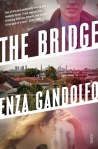
  • Enza Gandolfo’s The bridge (novel/Scribe) (Lisa’s review)
  • Chloe Hooper’s The arsonist (non-fiction/Penguin Random House) (Lisa’s review)
  • Gail Jones’ The death of Noah Glass (novel/Text)
  • Jamie Marina Lau’s Purple Mountain on Locust Island (novel/Brow Books) (Amanda’s guest post here)
  • Vicki Laveau-Harris’ The erratics (memoir/Finch Publishing)
  • Bri Lee’s Eggshell skull (memoir/Allen & Unwin) (Kate’s – booksaremyfavouriteandbest – review)
  • Melissa Lucashenko’s Too much lip (novel/UQP)(on my TBR, and coming up soon) (Lisa’s review)
  • Maria Tumarkin’s Axiomatic (essays/Brow Books) (my review)
  • Fiona Wright’s The world was whole (essays/Giramondo) (on my TBR – I loved her Small acts of disappearance

So, I’ve read and reviewed just two – creeping up my one each year! – and have a guest post for a third on my blog. I have two more on my TBR right now, and a couple more I am very keen to read, including Chloe Hooper’s The arsonist. I have been out tonight, and  so had tried to get a head start by partially drafting this before I went out with my “guesses” inserted – I had only 5 right!

The judges commented on the longlist that:

Reading for the Stella Prize … [is] a sample of the zeitgeist, a look at what is informing our thinking right now …

It feels like a big year for fiction, and our longlist reflects this. As well as some strong debuts, it was reassuring to see so many books from writers whose work we have admired for some time. Family relations and the persistence of the past in the present continue to inspire writers, and several books were concerned with the aftermath of trauma, especially sexual violence. Realism continues to dominate Australian fiction, with a few standout departures into other modes.

We wished for more representations of otherness and diversity from publishers: narratives from outside Australia, from and featuring women of colour, LGBTQIA stories, Indigenous stories, more subversion, more difference.

[…]

Ultimately, we chose books that strove for something big and fulfilled their own ambitions. … These are all artists concerned with the most important questions of our age and how to live now, and it has been a pleasure to be in their company.

I like their comment about a wish for more diversity – but I would expect nothing less from them. As always there are surprises, but that’s to be expected. It would be a sad world if we all came up with the same 12 eh?

Anyhow, I’d love to know if you have any thoughts on the list.

The shortlist will be announced on March 8 (International Women’s Day, as has become tradition), and the winner in April.

Indie Books Awards shortlist, 2019, announced

And so it, starts, the Literary Awards trail! Early in the year will be the Stella Prize, but first up is the Indie Book Awards. These are lovely awards, because they are run by Australia’s Independent Booksellers – who are members of Leading Edge Books – and we love to support them don’t we? Consequently, I’ve decided to share them this year. (I don’t list every award, every year, but just select a few to give a flavour to the year’s Awards scene!)

The Press Release I received reminds us of the Awards’s role and history. They were established in 2008, and, they say, have developed “a well-deserved reputation for picking the best of the best in Australian writing”. They “recognise and celebrate this country’s incredible talent and the role independent booksellers play in supporting and nurturing Australian writing.”

Past Book of the Year winners have gone on to be bestsellers and win other major literary awards, and include Charlotte Wood’s The natural way of things by Charlotte Wood (my review); Don Watson’s The bush (on my TBR); Richard Flanagan’s The narrow road to the deep north (my review); Anna Funder’s All that I am (still on my TBR); Craig Silvey’s Jasper Jones (read before blogging); and Tim Winton’s Breath (my post).

The shortlisted books have been nominated by independent booksellers, but the winners in each category will be selected by judging panels. The booksellers, though, get to vote for their favourites in each category too. And, there is also an overall Book of the year which is what those examples I mentioned above won.)

The list seems a reasonable one though we could make the usual comments about diversity. There’s not a lot of it here, though indigenous writers (Marcia Langton, and Ambelin Kwaymullina & Ezekiel Kwaymullina) appear in the categories I haven’t listed here.

The shortlist

Fiction

  • Jane Harper’s The lost man (Macmillan Australia)
  • Kristina Olsson’s Shell (Scribner Australia) (Lisa’s review)
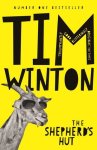
  • Tim Winton’s The shepherd’s hut (Penguin Random House Australia)
  • Markus Zusak’s Bridge of clay (Picador Australia)

 Non-Fiction

  • Richard Glover’s The land before avocado (ABC Books, HarperCollins Australia): Mr Gums is reading this now
  • Chloe Hooper’s The arsonist (Penguin Random House Australia) (Lisa’s review)
  • Bri Lee’s Eggshell skull (Allen & Unwin)
  • Leigh Sales’ Any ordinary day (Penguin Random House Australia)

Trent Dalton, Boy swallows universeDebut fiction

  • Trent Dalton’s Boy swallows universe (HarperCollins Australia): (my review)
  • Chris Hammer’s Scrublands (Allen & Unwin)
  • Heather Morris’s The tattooist of Auschwitz (Echo Publishing) (Lisa’s review)
  • Christian White’s The nowhere child (Affirm Press)

There are also shortlists for Illustrated non-fiction, Children’s and Young Adult. For the full list, check out the website

The Winners will be announced on Monday 18 March, 2019 at the Leading Edge Books Annual Conference Awards Dinner, in Adelaide, SA.

The Indie Book Awards list their main sponsors for these awards: Peribo, Pan Macmillan Australia, Affirm Press, Allen & Unwin, Thames & Hudson Australia, Hardie Grant Egmont, Text Publishing, and Awards partner: Books+Publishing.  

Good Australian writing needs good Australian bookshops to prosper. Without them Australian writers are one more endangered species whose bush has been bulldozed.
(Richard Flanagan, Indie Book Awards 2014 Book of the Year,
The narrow road to the deep north)

Monday musings on Australian literature: Some New Releases in 2019

I’ve been doing this “new releases” post for three or four years now. As the post title says, it’s about books that will be published this year, but I’ll be selective, focusing on those most interesting to me. This doesn’t mean that I expect to read them all, just that they interest me!! Last year I listed 14 works of fiction, and read four of them, with another likely to be read this month, so, you know, I do get to some!

My list, as in previous years, is mostly drawn from the Sydney Morning Herald, but, because this is a Monday musings on Australian literature post, it will be limited to Australian authors (listed alphabetically.) Do click on the link to see coming releases from non-Aussies, and from those Aussies I’ve omitted.

Links on the authors’ names are to my posts on them.

Nigel Featherstone, Bodies of menFiction

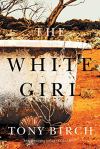
  • Tony Birch’s The white girl (UQP, July 2019)
  • Carmel Bird’s Field of poppies (Transit Lounge, November 2019)
  • Stephen Carroll’s The year of the beast (Fourth Estate, February 2019): the last of his Glenroy novels
  • Melanie Cheng’s Room for a stranger (Text, May 2019)
  • Simon Cleary’s The War Artist (UQP, March 2019)
  • Madelaine Dickie’s Red can origami (Fremantls Press, December 2019)
  • Nigel Featherstone’s Bodies of men (Hachette Australia, April 2019)
  • Peggy Frew’s Islands (Allen & Unwin, March 2019)
  • Andrea Goldsmith’s Invented lives (Scribe, April 2019)
  • Anna Goldsworthy’s Melting moments (Black Inc, July 2019)
  • Peter Goldsworthy’s Minotaur (Viking, July 2019). Haha, father and daughter being published in the same month.
  • Wayne Macauley’s Simpson returns: A novella (Text, April 2019)
  • Andrew McGahan’s The rich man’s house (Allen & Unwin, late 2019.)
  • Gerald Murnane’s A season on earth (Text, February 2019)
  • Elliot Perlman’s Maybe the horse will talk (Vintage, October 2019)
  • Kate Richards’ Fusion (Hamish Hamilton, February 2019)
  • Heather Rose’s new apparently unnamed novel (Allen & Unwin, second half of 2019)
  • Philip Salom’s The returns (Transit Lounge, August 2019)
  • Angela Savage’s Mother of Pearl (Transit Lounge, July 2019)
  • Graeme Simsion’s The Rosie result (Text, February 2019)
  • Dominic Smith’s The Electric Hotel (Allen & Unwin, June 2019)
  • Carrie Tiffany’s Exploded view (Text, March 2019)
  • Lucy Treloar’s Wolfe Island (Picador, September 2019)
  • Christos Tsiolkas’ Damascus (Allen & Unwin, second half of 2019)
  • Karen Viggers’ The orchardist’s daughter (Allen & Unwin, early 2019)
  • Tara June Winch’s The yield (Hamish Hamilton, July 2019)
  • Sue Woolfe’s new apparently unnamed novel (Scribner, November 2019)

There is an oddity. SMH and The Australian say that Anna Krien’s first novel, Act of grace, will be published by Black inc in October 2019. However, internet searches show it as having been published in May 2018, and Readings bookshop listed it last year as coming in September 2018? Was it scheduled for 2018 and it didn’t happen? Anyhoo…

The SMH also lists what it calls “new voices”. These include:

  • Sienna Brown’s Master of my fate (Vintage, May2019)
  • Melissa Ferguson’s The shining wall (Transit Lounge, April 2019)
  • Kathryn Hind’s Hitch (Vintage, June 2019): which won the Penguin Random House Prize
  • Alex Landragin’s Crossings (Picador, June 2019): which “can be read in two directions and covers hundreds of years and multiple lifetimes”
  • S.L Lim’s Real differences (Transit Lounge, June 2019)
  • Felicity McLean’s The Van Apfel girls are gone (Fourth Estate, April 2019)
  • Ruby Porter’s Attraction (Text, May 2019): which won Text’s Michael Gifkins Prize for an Unpublished Novel
  • Tim Slee’s Taking Tom Murray home (HarperCollins, August 2019): who won the Banjo Prize for Australian fiction with Burn. Is this the same book with a new title?

Short stories

Yes, I know these are fiction too, but they deserve a special section!

  • Debra Adelaide’s Zebra (Picador, February 2019)
  • Josephine Rowe’s Here until August, (Black Inc., September 2019)
  • Chris Womersley’s A lovely and terrible thing (PicadorMay 2019)

Non-fiction

SMH provides a rather long list of new non-fiction books covering a huge range of topics, so, like last year, I’m going to be very selective, focusing on writers I know or topics that particularly interest me:

  • Julia Baird’s Phosphorescence: On awe, wonder and things that sustain you when the world goes dark (HarperCollins, September 2019): a meditation on maintaining joy (by the author of the recently acclaimed biography, Victoria)
  • Phil Barker’s The revolution of man (Allen & Unwin, February 2019): on Australian masculinity
  • Luke Carman’s Intimate antipathies (Giramondo, first half of 2019): on “the writing life”
  • Jane Caro’s Accidental feminists (MUP, February): On Caro’s generation’s gender politics
  • Sophie Cunningham’s City of trees: Essays on life, death and the need for a forest (Text, April 2019)
  • Ben Eltham’s The culture paradox: Why the arts are the best thing Australia has going for it but no one really cares (NewSouth, August 2019): “a much needed examination of Australian arts and culture” – and a VERY long title!
  • Hannah Gadsby’s Ten steps to Nanette (Allen & UnwinJune 2019)
  • Stan Grant’s Australia Day (HarperCollins, May 2019): follow-up to Talking to my country (my review), apparently
  • Stan Grant’s On identity (MUP, May 2019)
  • Jacqueline Kent’s Beyond words: A year with Kenneth Cook (UQP, February 2019): autobiography
  • Fiona McGregor’s A Novel Idea (Giramondo: April): a photo essay
  • Emily Maguire‘s This is what a feminist looks like (NLA, October 2019): on the Australian feminist movement .
  • Jocelyn Moorhouse’s Unconditional love: A memoir of filmmaking and motherhood (Text, April 2019)
  • Mandy Ord’s When one person dies the whole world is over (Brow Books, February 2019): described as a diary comic
  • Jane Sullivan’s Storytime (Ventura, August 2019): on her favourite childhood books (which sounds just right for me as a new grandma)

Biography

  • Mary Hoban’s An unconventional wife (Scribe, April 2019): on “Julia Sorrell, a Tasmanian ‘colonial belle’ who refused to follow gender expectations”
  • Matthew Lamb’s Frank Moorhouse: A discontinuous life (Vintage, December, Vintage): a great title, given Moorhouse often describes himself as writing “discontinuous narratives”
  • Derek Reilly’s Gulpilil (Pan Macmillan, second half of 2019)
  • Margaret Simons’ biography of Penny Wong (Black Inc., October 2019): not sure of the title
  • Anne-Louise Willoughby’s Nora Heysen: A portrait (Fremantle Press, April 2019): on “the first Australian woman to become an official war artist and to win the Archibald Prize”.
  • Jessica White’s Hearing Maud: A Journey for a Voice (UWA Press, July 2019): memoir/biography about Australian writer Rosa Praed’s deaf daughter Maud

There are some great sounding books here. Do any interest you?

Reading highlights for 2018

If you are a regular here you’ll know that my Reading Highlights post, which is my answer to those Top Reads posts that many bloggers do, will not contain an ordered list of the books I considered my “best” of the year. I find that just too hard to do (though I did make a stab at it on Amy’s blog last month.) I prefer to talk about “highlights”, that is, those books and events that made my reading year worthwhile.

Literary highlights

Literary highlights mean literary events, and there were many wonderful ones in Canberra this year. I didn’t get to near as many as I’d wish, but I enjoyed those I did attend:

  • Festival Muse: Muse is a cafe, bookshop and event venue, and a popular haunt for Canberra book people. For the second year running they held, in March, their Muse Festival. It’s a busy time of year and a long weekend, so I only attended the opening session, Turn Me On. The aim was for the five speakers to share “the lightbulb moments and hidden drivers” behind what turned them on (of course). The speakers included old hands, like journalist Michael Brissenden, and the up-and-coming, like feminist writer Zoya Patel. A wonderful event.
  • Sydney Writers Festival live streams some of its sessions to regional locations, and Canberra was one of those in 2018. I attended three sessions: Conflicting narratives, Annabel Crabb’s BooKwiz, and Emily Wilson on Translating the Odyssey. How wonderful modern technology is when it facilitates events like this.
  • Canberra Writers Festival about which I wrote six posts. You can find them by clicking this link and then selecting those posts for the 2018 festival.
  • Author interviews/conversations of which I only attended a few of the many offered, but those I attended were nicely varied: Robyn Cadwallader, Nadia Wheatley, and Elizabeth Kleinhenz.
  • Annual lectures: the NLA’s Seymour Biography Lecture, given by broadcaster Richard Fidler; and Manning Clark House’s Dymphna Clark Lecture given by historian Clare Wright. As last year, we had supper at Muse after both lectures.

Reading highlights

And here, as in previous years, is where I share some observations about my reading this year. These aren’t necessarily my “top” reads, but all were good ones:

  • Strange synchronicities (1): Setting: The universe, as I mentioned in one of the posts, is clearly telling me to make good on my plan to visit the Mallee region because every second book I read this year – well, I’m exaggerating a little – seemed to be set in the Mallee or near it: Jenny Ackland’s Little gods, Charlie Archbold’s Mallee boys, Sofie Laguna’s The choke, Emily O’Grady’s The yellow house, and Sue Williams’ Live and let fry. I’m not sure that these books presented the Mallee in its best light – there were a lot of struggling families – but this flat, hot and dry, somewhat remote, self-contained region made an excellent backdrop for drama.
  • Strange synchronicities (2): Narrator: I read a lot of child narrators/protagonists, most of them from the Mallee! How did that happen? Sue Williams’ Live and let fry is the exception, but to the remaining four Mallee-area novels, I add three others featuring young protagonists: Nick Earls’ LA-set novella, NoHo, Wendy Scarfe’s Adelaide-based novel The day they shot Edward and a book I’ve just finished but won’t post until 2019, Jarrah Dundler’s northern NSW set Hey brother. All but two of these were adult fiction. Writing child narrators for adults, without becoming sentimental or being simplistic, is a challenge, but when done well – like, for example, Sofie Laguna’s The choke – these voices add a depth that can open our eyes to the impact of adult actions and/or enable us to see adult behaviour from a different perspective.
  • Exotic places I may never get to, like Beirut in Rabih Alameddine’s An unnecessary woman, and Tel Aviv in Raphaël Jerusalmy’s Evacuation. These two books were revelations, in very different ways, and I’d highly recommend both.
  • Great covers: Covers aren’t ultimately important to me, but I do love gorgeous ones. Two particularly caught my attention this year: Robyn Cadwallader’s Book of colours which conveys a sense of mediaeval lusciousness appropriate to its subject matter while also being modern, clean, fresh; and HC Gildfind’s The worry front which is inspired by the front lines on a weather map. So evocative, so metaphorical.
  • Interesting finds: I read three early twentieth century short stories, two from Trove, “The bridge” (1917) and “Christmas tree” (1919) by Katharine Susannah Prichard, and one sent to my by Pam (Travellin’ Penguin), “The hand” (1924) by ML (Mollie) Skinner. I love reading these writers from the past.
  • Biggest surprise (1): I didn’t plan to read Sarah Krasnostein’s The trauma cleaner because I expected it to be one of those sensationalist stories, but how wrong I was. It’s an intelligently written respectful book about a warm and complex person well worthy of a biographer’s time.
  • Biggest surprise (2): I couldn’t believe that such a dense, contemplative book as WG Sebald’s Austerlitz could be a page-turner, but it was.
  • The odd man: I don’t mean by this that the men themselves were odd but that there weren’t many of them in my reading diet this year. However, I loved reading Rodney Hall again, with his provocative A stolen seasonRichard Flanagan’s First person was an engaging and intriguing read too, and John Clanchy’s novel about women, Sisters, was right up my alley. Then there was the daddy of them all – well, I mean, one of the great writers from the past – EM Forster. Loved re-reading Howard’s end.
  • The ones that got away, or, the books I really wanted to read, but didn’t. There are too many of them, but two that really bother me are Jane Rawson’s From the wreck, and Gerald Murnane’s Border districts.

Michelle Scott Tucker, Elizabeth MacarthurThere were many more great books. Michelle Scott Tucker’s biography of Elizabeth Macarthur was excellent, both informative and engaging, as was Clare Wright’s You daughters of freedom. I read several Australian classics, and was impressed again by works by some of our older, fearless women writers – Carmel Bird, Helen Garner, and the late Elizabeth Jolley.

Some stats …

And here is where there are some surprises (for me, anyhow):

  • 80% of my reading was fiction, short stories and novels (versus 53% in 2017): I said last year that I wanted to rebalance the fiction-nonfiction ratio towards more fiction. I sure did it – and then some!
  • 70% of the authors were women (versus 73% in 2017,  65% in 2016, and 67% in 2015): I like to read women writers and reading them is one of my specific reading interests, but 70% is a little higher than it need be. I’m not unhappy though!
  • 18% were NOT by Australian writers (versus 35% last year and 32% in 2016): Last year, I said that roughly one-third non-Australian, two-thirds Australian felt like a fair ratio. Less than 20%, however, does not feel “balanced” and I’d like to redress it next year.
  • 28% were published before 2000 (similar to last year’s 31%): I’m happy with this.
  • 35% were published in 2018, which seems reasonable.

Last year, I noted that I don’t set reading goals – except a general one of trying, vainly, to reduce the TBR pile – but I did say that I’d like to lift my fiction ratio. I did achieve that. I also increased my TBR reading by 100% – meaning I read 6 books from the TBR pile (defined as books I’ve owned for over a year) compared with 3 in 2017. Woo hoo!

Overall, another good reading year containing some excellent reads. I’m grateful for all of you who read my posts, engage in discussion, recommend more books and, generally, be all-round great people to talk with. Thank you for being here.

I wish you all a wonderful 2019.

What were your reading or literary highlights for the year?