Monday musings on Australian literature: Capital men novelists

It’s been a year since I wrote my post on Capital women novelists, the third in my series on Canberra’s writers. (The other two were Capital women and Capital men poets.) Today I am finally getting to the male novelists.

I’ll start in a round-about way with a local controversy. Last year, the ACT government changed the eligibility requirements for its ACT Book of the Year awards, narrowing location to ACT residents only. As the City News reported at the time, this contradicted “the principle enunciated in artsACT’s arts policy framework of ’embracing Canberra’s position as a regional centre and fostering opportunities for increased engagement with regional communities’” and it reversed the previous practice of allowing nominations from writers in the region. Fortunately, after serious lobbying from arts practitioners and supporters in the ACT, the government agreed that “regional NSW residents with an ACT based arts practice” could apply. I’ve told you all this not only because it shows that lobbying can succeed, but to justify my including regional writers in my ACT-based series!

As will other posts in this series, I am just going to share a few current novelists – in alphabetical order.

Andrew Croome
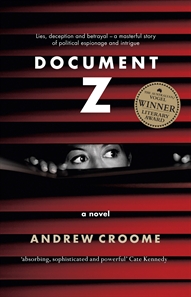
Document Z bookcover

Allen & Unwin

Croome, like many writers, is (or has been) somewhat peripatetic but is currently based in Canberra and has been for a couple of years at least. His first novel, Document Z (my review), which was published in 2008, deals with one of Canberra’s most famous stories, the Petrov spy scandal. It won  the The Australian/Vogel Literary Award and the New Writing award in the NSW Premier’s Literary Awards, and was shortlisted for others. I thoroughly enjoyed it, both for the perspective he presented and for his evocation of 1950s Canberra. His second novel, Midnight Empire, which I’ve also reviewed, was not set here though its main character had come from Canberra. It will be interesting to see where he goes next.

John Clanchy

Like many writers based here, indeed like many people of a certain age who live here, Clanchy came from elsewhere. I discovered in the ACT Writers Showcase that he moved to Canberra in 1975, the same year I did. He is still based here, as far as I know. In my recent review of his latest book, Six, I indicated that I was sorry I hadn’t read Clanchy before this. He has published 10 works of fiction, some of which are short story collections and two of which are crime thrillers co-written with another Canberra writer, Mark Henshaw. He apparently taught writing at the Australian National University, and in addition to fiction has co-written non-fiction books on academic writing, research and related topics. A versatile writer.

Julian Davies

Julian Davies, Crow mellow Book cover

Finlay Lloyd

You may remember Davies because, like Clanchy, he’s another established writer that I’ve come to late. He is also one of two men behind the Finlay Lloyd non-profit publishing venture. He has published around 6 novels, plus many short stories and essays. According to the ACT Writers Showcase, he has lived in Canberra or what we call the Southern Tablelands for most of his life. I’d like to think the grand house in Crow Mellow (my review) is located in the region, though I suspect it’s a little north. Regardless of where it is, I did enjoy the descriptions of place in the book, of which this is one:

This far view was unmistakably Australian, the bunched crowns of eucalyptus gleaming blue on the ridge-tops, deep green plumwood trees and sassafras holding to their lower creases. In the valley, the farm’s paddocks showed their patchwork of varying greens, some farm sheds and, higher than the others, an old two-storey building, a brick mill which Mitchell had painstakingly restored. At the valley bottom, the enormous dam, and beyond it, short reaches of the creek gleamed between stands of dusky she-oaks.

Nigel Featherstone

Courtesy: Blemish Books

Blemish Books

Nigel Featherstone is the local writer who has featured most in my blog, through my reviews of his novellas, a guest post, and an interview. Featherstone was born in Sydney, has lived in Canberra, and currently lives in Goulburn, an hour’s drive away. He has published a novel, novellas, short stories and is a freelance writer for the Canberra Times. He is also the founder of the online literary journal, VerityLa. He is active in the ACT (and wider Australian) arts community, being committed to the idea that a strong arts community is critical to the health of our society. He walks the talk – and I look forward to seeing what he comes up with next.

Alan Gould

Alan Gould, author of The lakewoman which I reviewed, is yet another under-recognised Australian writer. English-born he came to Canberra in 1966. He is a poet and novelist – and I did mention him in my Capital Male Poets post, so will move on to others whom I haven’t mentioned before.

Mark Henshaw

Henshaw is the writer least known to me, though I do have his latest, Snow kimono, on my TBR, and I did attend its launch. He lives in Canberra and worked until recently at the National Gallery of Australia. He made a big splash with his first novel, Out of the Line of Fire, which, Susan Wyndham, literary editor of the Sydney Morning Herald, wrote “bedazzled critics with its post-modern playfulness, philosophical intelligence and European sophistication”. It was shortlisted for the Miles Franklin and Age Book of the Year awards. It was also, she says, “translated into several languages, and became one of the best-selling Australian literary novels of the decade”. Between it and Snow kimono which came twenty-six years later, he co-wrote two crime thrillers with the aforementioned John Clanchy. I am greatly looking forward to reading Snow kimono which, he told us at the launch, he wrote without ever visiting Japan. A brave and clearly interesting man!

Roger McDonald

McDonald is the most successful of the writers I’ve listed here, at least in terms of writerly accolades. These include his first novel, 1915, winning the Age Book of the Year award and being made into a successful miniseries; The Ballad of Desmond Kale winning the Miles Franklin Award in 2006; and When Colts Ran being shortlisted for the Vance Palmer, Miles Franklin and Prime Minister’s awards in 2011. Like Gould, he is also a poet. McDonald was born in Young, NSW, about 2 hours drive from Canberra. He has lived mostly in rural areas, on farms, as well as in Canberra. He is now based, I understand, in the Braidwood area (where Julian Davies also lives). His novels tend to reflect his rural background – pubs, sheep stations, and the lives of the men and women who live there. This description of young Colts from When Colts ran captures such lives perfectly:

Loose soil and road ruts baked in the sun were the material of his playground then, soil blunting his hearing as he wiggled a finger in his ear imitating the way men did, at the same time as holding their pipes. The grainy feeling of Limestone Hills dirt, the taste of it spat from his tongue, clinging to damper cooked in the ashes, dirt stuck to a boiled lolly taken from a paperbag, was the medium Colts was born into, as far as he could tell. A fly got stuck in his ear, sizzling deeper. That was the feeling too. He’d never get over it, or past it either. The hum of the dry bush, crickets, Christmas beetles, cicadas.

This book, too, is on my TBR. So much to read …
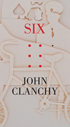
John Clanchy, Six: New tales (Review)

ClanchySixFinlayLloydJohn Clanchy, like Julian Davies whose Crow mellow I recently reviewed, is another Australian writer I’d heard of but not read until his piece in the Canberra centenary anthology, The invisible thread. What a treasure trove that has turned out to be! Anyhow, titled “The gunmen”, Clanchy’s contribution was an excerpt from his first novel, The life of the land, published in 1985. He’s a versatile writer, it seems, crossing genres (such as crime and mystery) and form (novels, short stories, and non-fiction). Six, the book I’ve just read, is a collection of six short stories – long short stories, in fact. An earlier collection of his, Vincenzo’s Garden, won the 2005 Queensland Premier’s Literary Award for Short Stories and the 2006 ACT Book of the Year. If it’s anything like Six, I can see why.

But, before I get onto the book itself, a little about the publisher. Finlay Lloyd describes itself as a

a non profit publisher dedicated to encouraging imaginative and challenging writing, to subtly innovative design and to celebrating the pleasures of print on paper in an electronic age. Without the commercial imperative of most publishers, we are able to champion ideas and authors for their intrinsic interest and quality. We support independent bookshops as local outlets for these ideas and authors. Our books are printed in Australia to support the local industry (by Griffin Press and Ligare Book Printing).

It’s the “subtly innovative design” I particularly want to mention here (while also appreciating the rest of their philosophy). I’ve handled now about four of their books and they are beautiful. The shape varies, with some, such as Six, being long and thin. Subtly different (just like all planes!), and nice to hold. Six has an additional special touch – the first page of each of the stories is on slightly whiter, finer paper. There’s no table of contents, but you can quickly locate each of the stories by flicking the book through to these pages. These are simple things, but they make you feel that the book in your hand has been produced with love and care.

Anyhow, onto the book itself. I found all six stories completely engaging, imaginative, and one, surprisingly, laugh-out-loud funny. I say surprisingly because it’s rare that I’d read a truly funny short story, although there’s often one or two in a collection that make me smile. This story, “Slow burn”, is, I suppose, a “mere male” story, and, while I don’t really approve of “mere male” stories – they can be somewhat condescending – this one is too funny, too beautifully controlled, not to make me laugh. It’s all about Daryl Turtle who is “ill. Dangerously, perhaps fatally ill” and his wish to make himself a comforting piece of toast to go with the thermos coffee his thoughtful wife has left for him.

The other five stories – “Slow burn” is the third in the collection – are more serious. They deal with contemporary situations, a father who turns out to be gay and another who is discovered to have had a second family in another country. There’s a husband whose affair with an indigenous woman exposes an ugliness that shocks him. And there’s a powerful story about a couple whose daughter was killed overseas in a Bali-style bombing. These are the sorts of situations you read or hear about and wonder how the people at the centre of them cope. Clanchy explores just this, with sensitivity and authenticity, teasing out the underlying humanity of his characters. Whether they are a philandering husband, or rebellious daughter, a grieving father or lonely postman, we empathise and are encouraged to see the extent of human capacity to accommodate the unexpected. To put it another way, Clanchy’s characters tend to be confronted with seemingly black-and-white situations but find themselves capable of recognising the greys and responding, in most cases, generously and/or with growth.

The stories are not tricksy. In other words, they are not the sorts of short stories that you get to the end and wonder, “what was that about?” This may come from Clanchy’s experience in writing genre – two collaborative crime thrillers with another Canberra writer, Mark Henshaw. It may also relate to the fact that these are long-form short stories. (My rough calculation is that they are around 15,000 words, some shorter, some longer, whereas short stories are typically half that or less.) You may have noticed that, with the exception of “Slow burn”, I haven’t named the stories I’ve referred to. This is to avoid spoilers implicit in my comments. That said, while each story has a strong narrative arc with clear plot points, the focus is not really the plot. It’s the characters – which is where my interest lies and why I enjoyed the book so much.

I also enjoyed Clanchy’s writing. It’s clear and direct, and abounds with sharp observation. There’s humour, even in the serious stories, and fun wordplay. Here’s a description I loved:

Dot runs the general store and post office in town. She hates the sound of ‘Dot’ and you won’t get the time out of day if you call her that. ‘Dot is what a pen does to an eye,’ she says to anyone who doesn’t know, ‘and I’m an optometrist’s daughter, so call me May.’ And since she’s in charge of the town mail, that’s exactly what people do, though most people think that Dotty would suit her better. (from “True glue”)

As I neared the end of the last story, I was reminded of one of my favourite quotes, Wallace Stegner’s “Civilisations grow by agreements and accommodations and accretions, not by repudiations” in Angle of repose. In Six, as in most fiction of course, the characters are challenged by some event or situation and need to decide how they will respond. Stegner’s quote can, I believe, be applied not just to civilisations but to relationships and, indeed, character. Six evokes this perfectly. I really don’t know why Clanchy is not better known.

John Clanchy
Six: New tales
Braidwood: Finlay Lloyd, 2014
245pp.
ISBN: 9780987592934

(Review copy courtesy Finlay Lloyd)

Pulse: First 2014 (Review)

Now here’s the thing. I’m a librarian by training, so I have certain expectations of how publications are titled, and Pulse, I must say, confused me. However, we librarians also know that publishers and writers don’t care about our rules; they just do what appeals to them! Fair enough. They’re the creators after all. Still, when I see a serial publication titled Pulse: First 2014, my immediate assumption is that the serial’s title is Pulse, and that I have in my hand the first edition for 2014. Not so, in this case. In fact, the serial – here, an annual – is titled First, and the title for the 2014 edition is Pulse! Got it? I have now!

So, what is First? It is “an anthology of creative works by students at the University of Canberra”. It has been published as First since 1995, but it commenced in 1993 under another title, Analectica. The editors of the 2014 edition therefore see Pulse as the anthology’s 21st volume, a “coming-of-age” edition. An impressive achievement I think. I’m not an expert on student-writing publications but 21 years in a world where projects come and go with some rapidity demonstrates a wonderful commitment by the university to its teaching of writing, design and editing.

The volume was put together by an editorial committee comprising students, some of whom feature in the volume. We are assured however that entries were all read blind. According to the university’s online news site, Monitor Online, there were 130 entries from which the final 26 stories and poems were chosen. Two prizes were given, though this is not noted in the volume: Best short story to Andrew Myers for “Neon Snow”, and best poem to Madonna Quixley for “The Archeological Dig”. The Monitor Online article also says that this was the first time all first year design students at the University submitted designs for the book’s cover. Sarah Watson won with her design which suggests “a sharp and energetic heartbeat”. It’s an attractive design, simple but strong, and I like the way a simplified version of the heartbeat (or pulse) carries through at the bottom of each page. Very stylish.

So, the content. I’m always interested in the order used in anthologies. In this collection, the first story, Alex Henderson’s imaginative “Easiest job in the world”, is futuristic, about a new way of creating energy using human power. There is a sinister mismatch between the protagonist’s unquestioning acceptance of his/her role and the reader’s suspicion that this acceptance is dangerously naive. It makes for a powerful start to the anthology. The last story is, fittingly, about death! Titled “Death’s apprentice”, and by Kaitlyn Wilson, it’s a reassuring, somewhat light-hearted, but by no means trivialising exploration of dying. In between is a diverse collection of works including poems, a graphic short story and a travel piece, as well as more short stories. Let’s talk about the poems, first.

Nine, if I’ve counted correctly, of the works are poems. I laughed at Cameron Steer’s “Nuts”, and smiled at the wry but wistful “Love song” in which an uncertain Katherine McKerrow writes to her potential lover, as yet unknown:

I’m not sure you should
look for me.
Try someone made with more
reality, brave enough to sing with the world

I loved Marjorie Morrissey’s short but evocative poem, “Canberra”, in which she captures the life and noise of the bird we love to hate, the Sulphur-crested cockatoo. If you like dogs, you’ll relate to the powerplay between master and dog in Owen Bullock’s “On the beach”, and if you like Murakami you’ll enjoy spotting his books in Gloria Sebestyn’s “Ode to Murakami”. Then, of course, there’s Madonna Quixley’s winning “The Archeological Dig” to which I can certainly relate. It starts:

Called ‘my side of the bedroom’,
it bears imprints of
geological and metaphorical
layers; not necessarily
related to years or epochs.
Books, almost categorised,
files, letters, pretty pieces of
paper that wrapped
gifts, now unclothed,
lie strewn throughout the sediment.
There are attempts at organisation
amongst the dust.

Against this, in the margin, I wrote “oh yes”!

This is an unusual anthology – at least in my experience – for the diversity of forms it contains, the most surprising of which is a graphic short story. It’s “The bringer” by architecture student Christopher Olalere. The art is sure, with a lovely use of colour. Like a few of the stories in the anthology, it has a speculative fiction element, this one to do with a “wishing star” that isn’t what it appears.

I wish, as I’ve said before, that I could comment on all of the pieces, but we’d be here forever, so I’ll just comment now on a few of the short stories. I liked, for example, Kieran Lindsay’s “Emily”, which is a cancer story with an unexpected ending. Ashley John’s “Not a toy” is about an arguing couple in which the apparently down-trodden husband gets his own back in a shocking way, while Rachel Vella’s “The noose” is a surprising story about a rather sour mother-son relationship. Claire Brunsdon effectively builds up tension in “Run”. I enjoyed Niki van Buuren’s “Only silence leads to salvation” about a future world in which music has been banned! Wah! No music? The story itself is a little predictable, perhaps, but I did laugh at the idea of a “Silence Revolution”. Andrew Myers’ “Neon snow” is a father-son story about a father’s concern for his gay son, and his promise to always be there. Nick Fuller’s entertaining “How not to write”, on the other hand, provides some wise advice about writing, despite its “philonoetic hebephrenia*”!

I wasn’t sure what to expect of a tertiary student anthology, but I enjoyed it. Not all the students are young. Some, from the bios, are clearly “mature-age”. Consequently, there’s a range of stories from those dealing with transition to adulthood to those exploring more mature relationships. I was intrigued by the overall tone. Although individual pieces vary and although much of the subject matter – like cancer, the environment, noxious relationships, good relationships under threat, and technology – is serious, there is, somehow, a light touch. Misery isn’t laboured, and yet there is no sense that life is easy either. Interesting too is the fact that several pieces either fall into the speculative fiction spectrum or involve eerie happenings or other-world beings. Does this signify a loosening of genre division, a willingness to break free of the purely rational – or it simply that this is a broad-brush anthology?

Whatever the case, Davis puts it well in her Introduction:

There’s magic, humour, hope, fear, colour, variety, simplicity and complexity in this Pulse: First 2014.

There’s talent and heart too. It will be interesting to see where these writers go next.

awwchallenge2015Pulse: First 2014
Managing editor: Irma Gold
Introduction: Brooke Davis
Faculty of Arts and Design, University of Canberra, 2014
85pp.
ISSN: 1838-5303

(Review copy courtesy University of Canberra)

* “Philonoetic : intellectual” AND “Hebephrenia : a condition of adolescent silliness” (according to Nick Fuller)

Favourite quotes: from Thea Astley’s Coda

I’ve decided to start a new, occasional series – a bit like The Conversation does! I have two reasons for this. One is that I’m reading pretty slowly at the moment, partly because my current read is a big one, and partly because life is busy. The other is that during my current decluttering project I’ve come across a lot of old reading notes, and they contain such treasures that I want to share them (not to mention document them so I can toss out my notes!) Who better to start with than Thea Astley?

Coda, published in 1994, was her third last novel (a novella, in fact). You know how readers love to remember favourite first lines? Well, Coda’s first line is one of mine. It starts

I’m losing my nouns, she admitted.

This immediately tells us the main subject matter of the novel – aging – and hints at the speaker’s attitude. Kathleen, our speaker and protagonist, is getting old, and when her house is reclaimed by the government for a right-of-way, her children (daughter mainly) move her into a retirement community. This is a satire, so you won’t be surprised to discover that the name of this village is Passing Downs. Kathleen, needless to say, is not happy. She’s not ready to be, as she says, “corpsed”, but she’s a wily, acerbic old woman, a self-styled “feral-grandmother” who’s pretty clear-eyed about the way life goes, about the

… four ages of women: bimbo, breeder, babysitter, burden.

In a Sydney Morning Herald article written, as it turned out, the year before she died, Astley is described as one of Australia’s “prose-poets”, who were “led” by Patrick White. You can see it in this line can’t you? The confident alliteration that ensures the words are almost spat out as befits their meaning.

I’m not going to write a review here. It’s too long since I read it, but this is one of those books that has left a lasting impression on me. It’s wicked, funny, bitter and, yes, poignant, too, because it deals with a situation for which there are no simple answers (except, of course, compassion, which is lacking here). I will though share a few more quotes to show the way Astley uses language. You’d be hard-pressed to find a cliche in an Astley book.

Here is a description of, as I recollect (my notes aren’t clear here), her husband’s island dream going sour:

The island had become for him a bright stamp whose colours had run.

Then there’s Kathleen describing her income, her

Public service pension that drizzled brief fortnightly puddles of support into her bank account like a rusty tap.

And here she is, looking for words:

She was scrabbling and rooting about for words in that old handbag of her years.

I love how these images draw on the familiar – and yet they have a freshness that grabs me, and makes me smile, every time I read them.

For a recent review of this novel, check out Lisa’s at ANZLitLovers.

Julie Twohig, Full circle (Review)

When I review individual stories, I tend to choose ones that are available on-line. Is that fair, I wonder? It means the author receives no payment for the story I review, but it does mean readers can enjoy a story that they may not otherwise easily access and, I suppose, that the author receives some exposure. Does that make sense? Whatever! This is what I do!

So, to Julie Twohig. She came to my attention when she commented on one of my posts. As most of us do when people who have blogs themselves comment on our blogs, I checked out her blog. It turned out that Twohig is a short story writer, and has had some success, winning or being shortlisted for various awards/competitions, and being included in a few published anthologies. She’s a good example – I hope she doesn’t mind being held up as an example – of the hard work short story writers put into getting their stories known and published.

She provides the text for a few of her stories on her blog, but I chose to read “Full circle” because it is, she writes, her “first winning story and first short fiction to be published”. It won the Leader (Leader being a newspaper group) Darebin (being a community in Victoria) Short Story Competition and was also Commended by The Society of Women Writers Victoria Inc. I enjoyed the story. It’s not one of those tricky short stories that leaves you wondering at the end, but it’s a story from the heart about a middle-aged woman, Jean, returning to the Luang Prabang area of Laos, alone, thirty-two years after her previous visit with Peter, the man who was to become her husband. Peter isn’t with her because, we soon realise, he has died (not because of divorce). Early in the story Jean remembers him saying “I’ll rest when I’m dead”. The tone, here, is sad, nostalgic, not angry or bitter.

The story starts like a typical travel story. Our protagonist is on a bus in an unfamiliar environment, trying to work out how to navigate a different culture. It’s nicely done:

After freeing her backpack from an overhead rack Jean tries to dodge the spillage while scrambling past passengers packed tightly along the aisle. ‘Sorry, sorry … excuse me.’ She had thought it might be rude to thump her fist on the ceiling the way the locals do to make the driver stop. She wishes now she had.

All travellers are, I’m sure, familiar with this uncertainty about how to act. Anyhow, we are not sure what Jean is doing except that it is something she feels she must do – “this trip is for her. For Peter. Full circle”. Aha, there it is, the title, half way through the story.

I’d love to discuss what she is doing because it rang true to me – not that I have experienced exactly the same thing (my spouse is still alive), but I’ve experienced enough for it to have that lovely sense of “ah yes, this makes sense”. The story is well structured. There are a few flashbacks to give us a sense of where Jean is in her life, but only as is needed to convey who Jean is and why she might be doing this trip. The imagery isn’t particularly original, but it is effective, and not overdone, which suggests that Twohig has taken care to hone her story.

At the end of the story on her website, Twohig tells us that poor handling of the publication of the anthology resulted in a furore, which led to the competition not being repeated. Interestingly, the very same Leader newspaper group ran an article in February last year announcing the inaugural Mayor’s Writing Awards in Darebin, with two prizes – for Adult and Children’s short fiction. The winners of these prizes were announced in June on the Darebin Arts website. The winning and highly commended stories earned a cash prize and the “option to be published in n-SCRIBE issue 9″, the City of Darwin’s community arts magazine, which is published annually. It remains to be seen whether this competition will be run again in 2015. Full circle?

awwchallenge2015Julie Twohig
“Full circle” in Around the block: Our Darebin Community
Greensborough, Vic: Flat Chat Press, 2007
Available online at the author’s website

Monday musings on Australian literature: Noted Works series

In early December I wrote a post about online journal The Conversation‘s occasional series they call The case for …. I promised that I would write my own case, and I will – soon. It’s just that I feel like a – well – a reader in a library. So many great books to choose from. I think I know which one I’ll choose, but I’m still thinking …

In the meantime I thought I’d share another occasional series The Conversation has created in its literary area, Noted Works. They describe it as:

 a new series on The Conversation devoted to long-form reviews of significant new books.

They go on to say that “If you’re an academic or researcher and you’d like to write on a recent work that has been a game-changer in your field, please contact the Arts + Culture editor.” So far it seems that not many have contacted the editor – but more on that anon. First I want to clarify these two literature-focused series: “The Case For …” is about arguing for “the merits of one Australian book, one piece of writing” which means it can be any sort of written work from any period, while “Noted Works” is intended to be long-form reviews of new works. Hmm, fair enough though the title “Noted Works” is not particularly self-explanatory. However, wot’s in a name? The important thing is that The Conversation is supporting the idea of long-form reviews.

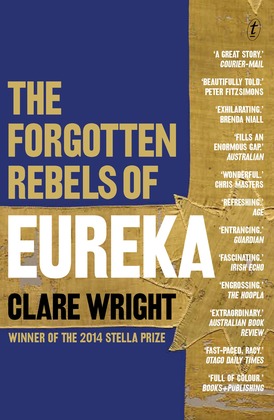
Book cover, The forgotten rebels of Eureka

Courtesy: Text Publishing

But, although they announced this series in July last year, so far, if I have searched the site correctly, only three “Noted Works” reviews have been published. They are (in the order published):

  • Carolyn D’Cruz and Mark Pendleton’s (ed) After Homosexual: The legacy of gay liberation (UWA Publishing): After Homosexual, reviewer Peter Robinson writes, is a celebration, or festschrift, of Dennis Altman’s Homosexual: Oppression and liberation which was published in 1971. Robinson argues that the book explains “the rhetoric and underpinning philosophies of gay liberation in the 1970s and queer social movements that have been bubbling along in the four decades since then”.
  • Nicholas Clements’ The black war: Fear, sex and resistance in Tasmania (UQP): Reviewer Lyndall Ryan begins by contextualising this book as a descendant of the now well-known Australian “History Wars” in which historians argued, fiercely, over how we interpret the history of settlement in Australia in relation to our indigenous inhabitants. She then discusses Clements’ analysis of the “war” in Tasmania, arguing that his approach identifies a different way of looking at its major triggers, and confirms that it was indeed a significant war that should be recognised as such.
  • Clare Wright’s The forgotten rebels of Eureka (Text Publishing) (My review): Reviewer Zora Simic‘s aim is to “locate The Forgotten Rebels of Eureka as part of the wider field of Australian feminist history”. She discusses the challenges feminist historians face in the inevitable “historical silences and ambiguities”, because, of course, women’s stories/lives/actions (like those of other disempowered groups) were regularly not deemed important enough to capture and document at the time. She argues that Wright’s history is as important for its contribution to the way history (women’s history) can be researched and written, as it is for the arguments she’s presented about Eureka.

So, here we have three thoughtful reviews tackling significant social/historical issues. It’s interesting that all three books featured to date are non-fiction, and all are historically focused. Where are the academics in literature? Surely there are recently published fictional works or poetry that warrant in-depth reviewing – from the point of view of their content and style, or perhaps in terms of their reception (or lack thereof), or even, say, exploring different theoretical approaches that might be taken to understanding them?

The three reviews I’ve described here were all published in July and August last year. Will there be any more or has this series died an early death? I hope not.


Thea Astley, Drylands (Review, of sorts)

I read Thea Astley’s Drylands many, many years ago now, so what I’m going to share here – inspired by my post earlier this year on confronting Australian novels – are the notes I made when I read it. They are not particularly well-formed, because I wasn’t planning a review at the time, though I must admit that I did spend some time skimming it as I tried to massage my notes into some shape. Too hard not to! It’s her last novel, and it earned Astley her fourth Miles Franklin Award (shared with Kim Scott’s Benang).

Drylands is subtitled “a book for the world’s last reader”. It’s one of those tricky books that looks like a collection of short stories but is, albeit perhaps loosely defined, a novel. Its structure comprises sections titled “Meanwhile” by the so-called writer of the stories, Janet, alternated with stories about inhabitants of, or visitors to, a dying town called Drylands:

a God-forgotten tree-stump of a town halfway to nowhere whose population (two hundred and seventy-four) was tucked for leisure either in the bar of the Legless Lizard or in front of television screens, videos, Internet adult movies or PlayStation games for the kiddies.

[…]

No one was reading anymore.

It’s a town “being outmanoeuvred by the weather. As simple as that. Drought. Dying stock.”

The main subject of these stories are three men (Franzi Massig, farmer Jim Randler and the indigenous Benny Shoforth) and three women (Evie the writing teacher, Lannie Cunneen, and Joss the publican’s wife). This is all quite neat, except that we are thrown somewhat by the fact that the “Janet” character may be a conceit dreamed up by Evie, who says she will “write a story … about a woman in an upstairs room above a main street in a country town, writing a story about a woman writing a story”. Since Janet is an inhabitant of Drylands while Evie is not, it makes sense that this might be Evie’s work, not Janet’s, making Evie both character and observer*. Another spanner in the narrative-voice-works is that two of the stories – those of Franzi Massig and Joss – are told first person. I might be reading too much into it, but I wonder if Astley is using this uncertainty to mirror the disorder she sees in society, if that makes sense.

Drylands explores many of the issues important to Astley. The two overriding ones are words and their importance/power, and the impoverishment of the spirit (often related to our inhumanity). Subsumed in the latter are some of Astley’s recurrent issues – gender and race, dispossession and power imbalances. She rails against the shallowness and small-mindedness that lead to poor treatment of “other” (indigenous people, women, less educated people, the ageing, etc), to “the powerlessness”, as Benny calls it, “of poverty and colour”. Here is a husband coming to drag his wife out of her writing class to get him his lunch:

He was hurling words at his shrinking wife like clods or bricks and she was not dodging but receiving them like a willing saint, enduring abuse like a terrible balm.

I wonder what Astley would have written about our treatment of asylum-seekers had she still been around, but unfortunately she died in 2004.

Thea Astley is, as you’ve probably gathered, an unsettling writer – and one with some very strong viewpoints. Besides being unimpressed by how women, indigenous people, and ‘oddballs’ (or outsiders) are treated, she’s also not too fussed about computers, television, and our sports-mad society. For these reasons I’m inclined to agree with Kerryn Goldsworthy that there’s a dystopian element to her vision. I didn’t pick it at first because I tend to see dystopian novels as being speculative or fable or allegorical, as being, in other words, about what “might be” rather than what “is”. The handmaid’s tale is a dystopian novel that is not specifically set in the future but neither is it set in a recognisable “real” world. Lord of the flies and Animal farm are dystopian views of the world that are not set in the future but, arguably, neither do they present a realistic community/society/place. Drylands, though, is recognisably our world, but a pretty grim version of it, which suggests dystopia. It’s probably worth noting here that Drylands was published in 1999, that is, at the end of the millennium.

Regardless of formal definition, though, Drylands, like dystopian novels, is pervaded by a sense of hopelessness. There are likable people – many – but life isn’t easy or happy for them. There are, however, some positive or redemptive hints, particularly for Clem and Joss. Janet, the linking character, on the other hand, can only glimmer the fact that there might be something out there:

There was something out there, but she doubted she would ever discover. The idiocy of her wasted years made her laugh even more.

There were no endings no endings no

awwchallenge2014The writing in Drylands, though sometimes colourful, is sparer, more restrained than we are used to from Astley – and just right for a bitter tale about lack of literacy, loss of reading skills, and the implications thereof. Janet’s mother tells her that “being unable to read is being crippled for life”. Janet, writing her story, worries whether she’s getting her narrative right, but decides it’s “better for readers to frolic with their own assumptions from the words spoken, the deeds done” – which is, perhaps, the ultimate irony if everyone has lost the ability to read! If you only ever read one Astley, you couldn’t go wrong with this one.

Thea Astley
Drylands
Ringwood: Viking, 1999
294pp
ISBN: 9780670884704

* There is a scene in “Stranger in town”, where Evie briefly meets the eyes of the woman (whom we know is Janet) living above the newsagency.

Helen Garner, This house of grief: The story of a murder trial (Review)

Helen Garner, This house of grief book cover

Courtesy: Text Publishing

Well you might ask why you would want to read a book about the trial of a man accused of murdering his three sons by driving his car into a dam and escaping the car himself? Indeed, Helen Garner was asked why she would want to attend such a trial – and write about it. But Helen Garner is made of strong stuff, having previously written The first stone about the sexual harassment of two girls at Melbourne University’s Ormond College and Joe Cinque’s consolation about the trial of a woman accused of murdering her boyfriend via a drug overdose. I’ve read and appreciated both these books, along with novels and short stories by Garner, and so was keen to read this, her latest.

For those of you who don’t know the story, here’s Wikipedia’s summary of what happened:

… as Farquharson was returning his children to their mother after a Father’s Day access visit, his white 1989 VN Commodore vehicle veered across the Princes Highway between Winchelsea and Geelong, crashed through a fence and came to rest in a farm dam where it filled with water and submerged. His three children, Jai (10), Tyler (7) and Bailey (2), were unable to free themselves and drowned. Farquharson managed to escape and alerted another driver who took him to nearby Winchelsea. Police divers recovered the boys’ bodies about 2 am the next day. They were still inside the vehicle and unrestrained by seatbelts.

Farquharson claimed that he did not intend to kill his children, that he had blacked out during a coughing fit (a condition known as cough syncope). However, he was tried and found guilty, tried again after winning an appeal and found guilty again, and was then refused leave to appeal to the High Court of Australia.

Garner sat through both trials, the first one lasting around 7 weeks, and the second one 11 weeks, and managed to condense it all into 300 pages of lucid prose. One of the reasons I was keen to read the book was to see what approach she’d take. In The first stone and Joe Cinque’s consolation, Garner’s opinion is pretty clear from the beginning – and I didn’t fully agree with her (for very different reasons in each of the books). However, in This house of grief, Garner is more measured. She doesn’t want to believe that Farquharson is guilty – “longed to be persuaded” otherwise – but is gradually swayed by the evidence to believe it must be so. She doesn’t engage emotionally with the participants in the intense way she did in Joe Cinque’s consolation, but she is emotional. How could you not be in such a case? There are two reasons I like Garner – her tight, evocative prose, and her fearless honesty. And so, in this book, she tracks her own response as she listens to the evidence – from her disbelief that a father could do such a thing, and her sentimental desire to believe Farquharson, to her horrified admission that any doubt about it is “no more substantial than a cigarette paper shivering in the wind”.

So, let’s get back to the original question. Why read such a story? There are a few reasons, but I’ll discuss my two main ones. The first is to gain insight into, and understanding of, human behaviour. Why do people do what they do? It’s so easy to judge people out-of-hand, but even horrific events have nuances, and I want to understand those. Not to excuse, because it’s impossible to excuse taking the lives of those in one’s care, but to be able to empathise in some way. Isn’t this what literature is about?

Garner achieves this by not demonising Farquharson. As she watches him in court, and listens to the evidence – professional, personal, expert – she presents a picture of a man who was “emotionally immature, bereft of intellectual equipment and concepts, lacking in sustaining friendships outside his family”. At the end of the first trial, the judge speaks kindly to Farquharson, and Garner writes:

Farquharson nodded to him, courteous and present. For the first time I saw him as he might have been in ordinary life, at work, at school. It touched me. Again I felt shocked, as if this response were somehow illegitimate.

(Interestingly, Garner did not accord such recognition to Anu Singh in Joe Cinque’s consolation. Yes, different case, very different people, but the principle still stands I think.) A little earlier in the trial, Garner quotes “a tough American prosecutor” who’d said to her:

‘If I were appearing for him, I’d try to make his family see that loving him doesn’t have to mean they believe he’s innocent’.

But, how tough that would be, eh?

My second reason is to understand the workings of courts and justice. I have never (yet anyhow) been called for jury duty. Oh my, oh my, after reading this, I’m even more desperate that I never am. Although it’s pretty obvious that the right verdict was achieved in this case, the process was not reassuring. Garner’s reporting of evidence and cross-examination reads very like those court dramas you see in film and television. There’s drama, police mistakes, twisting of the truth, character assassinations, conflicting expert opinions – and, in this case, a lot of complicated and sometimes obfuscatory technical evidence about cars and tire tracks and steering inputs, about arcs and gradients. And it goes on for weeks.

Garner keeps it interesting by focusing on the people and their reactions, reporting some dialogue, and summarising the critical (which, she makes clear, is not always the most relevant) points of evidence. Her descriptions of the defence and prosecution team are drawn with a novelist’s eye for character. Sometimes Morrissey, the defence barrister, is “as jumpy as a student undergoing an oral exam”, while at other times he’s “less flustered … more in control of the content and tone of his discourse”. His “waxen” appearance at the second trial is quite different from the beginning of the first when he’s presented as a hearty “spontaneous, likeable man” whose “stocks were high”.

She also pays a lot of attention to the jury. Of course we cannot know what they thought or discussed but Garner watches them, noting when their attention flags and when it picks up, when emotions get the better of them. She writes, for example, of one witness that “the jury liked him … he was one of the witnesses they instinctively trusted”. During her report on the second trial, she quotes American writer, Janet Malcolm who wrote that “jurors sit there presumably weighing evidence but in actuality they are studying character”.

Partway through the book, Garner comments that the question “Did he do it?” is the “least interesting question anyone could ask.” Later, between the first and second trial, she quotes a grandmother from another murky situation in which a father was suspected of killing his children via a house fire. The grandmother asks:

‘What’s worse? — living with suspicions and various possibilities and never knowing the truth, or living with the truth of something too horrible to contemplate.’

Books like Garner’s enable us – nay, force us – to contemplate such questions. They show us that trials are less about retribution, perhaps even less about justice, but more about the truth. What we are to do with the truths we so glean is another question – but that question, Garner suggests, is our “legitimate concern”, and I agree.

awwchallenge2014Helen Garner
This house of grief: The story of a murder trial
Melbourne: Text Publishing, 2014
300pp.
ISBN: 9781922079206

(Review copy courtesy Text Publishing)

Monday musings on Australian literature: The case for …

Back in February, the online journal, The Conversation, about which I’ve written before, started a occasional series they call The case for …. They described it simply as …

If you had to argue for the merits of one Australian book, one piece of writing, what would it be?

That’s very open-ended and I did think the intention might have been for contributors to argue for a book of controversial standing or, perhaps, one that has not received the recognition the casemaker thinks it deserves. But neither of these work for the first book, which was …

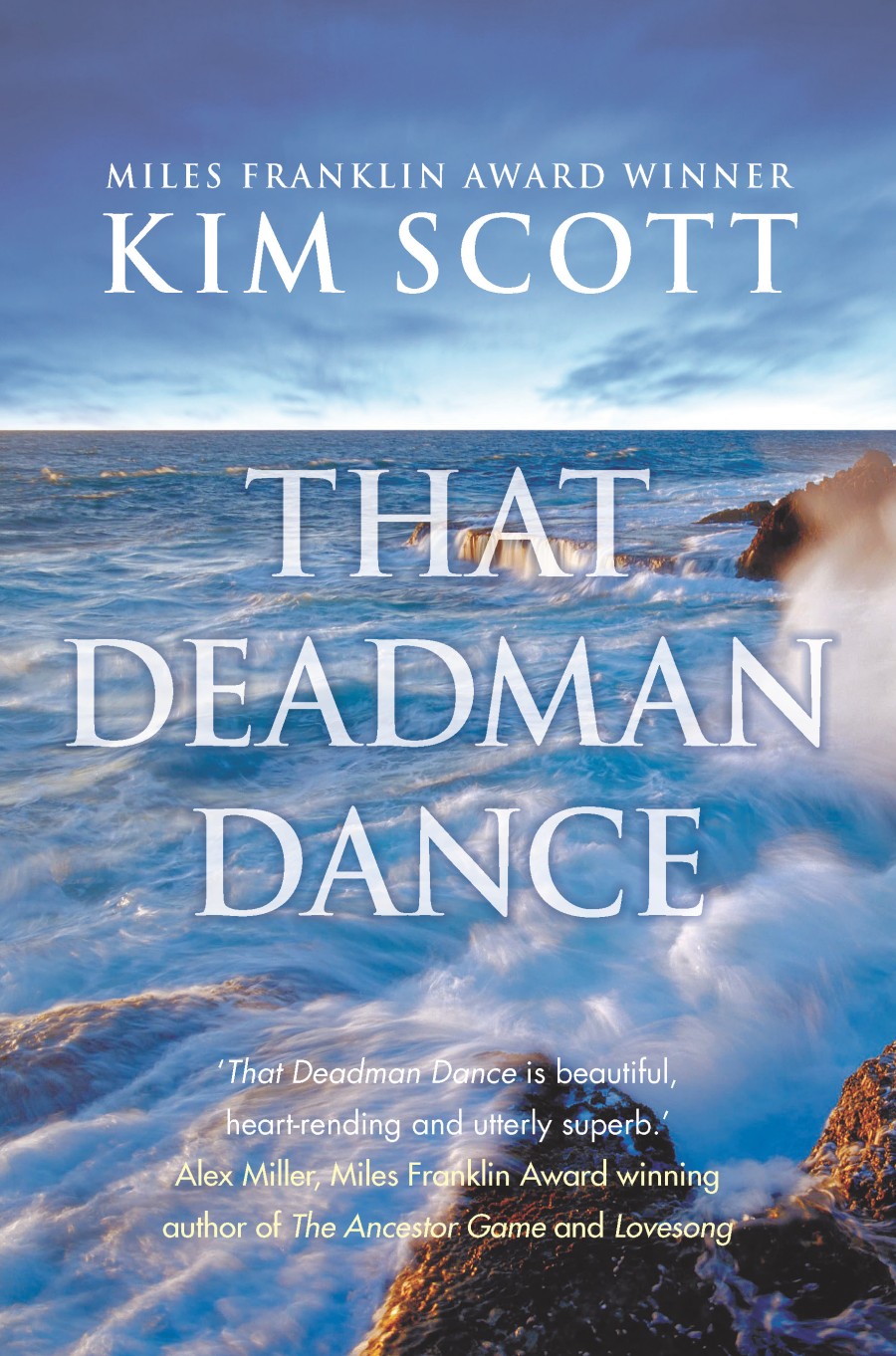
Kim Scott That Deadman Dance

(Courtesy Picador Australia)

Kim Scott’s That deadman dance, chosen by Tony Hughes-D’Aeth, Associate Professor, English and Cultural Studies, University of Western Australia. (See my review). It is not controversial, though some readers found it a little hard to read, and it won a swag of awards, as Hughes-D’Aeth tells us at the start of his case. However, he makes a case on the basis of its importance and relevance to the ongoing discussion in Australia about the facts and implications of first contact. And his case has to do with what he calls Scott’s “bold wager” that “he wanted to write a novel from the point of view of Aboriginal confidence” and that he was “inspired [to do so] by history”. Hughes-D’Aeth discusses his surprise at this idea of “confidence”, given that the history is one of “decimation” and “cultural annihilation”. You can read his “case” if you’d like.

I should clarify, before I continue, that The Conversation also says that the work can be “fiction or non-fiction, contemporary or historical”.

So far there have been eighteen cases put. Several are for books I know or have read (often before blogging), such as (links are to the “case”):

But some cases are for books, I don’t know at all (which probably just demonstrates my ignorance). These include:

Of the eighteen cases listed on the site, the one that stands out as a bit odd to me is Johnny Warren’s book, published in 2002. Warren was a legendary Australian footballer. Casemaker Lee McGowan (Senior Lecturer, Postgraduate Coursework Studies, Queensland University of Technology) admits that the book has its weaknesses, but argues that it’s important nonetheless. He says that “the book’s title refers to what Warren described as a ‘mentality’ that exists around football in its early days in Australia, a mentality he implied was borne of fear.” McGowan suggests this seems outdated now – though I’m not sure exactly what he’s saying is outdated. The words in the title? The mentality? The fear? He doesn’t explore this further, but moves on to say that the book’s main value is that it “remains the best, most insightful account of the Australian game’s contemporary development”. I guess I wouldn’t see the development of football as a critical issue warranting my attention, but to each their own I suppose.

I’m intrigued – though not surprised – to note that several of the books for which cases have been made are by indigenous writers or confront indigenous issues (including Kim Scott, Randolph Stow, Peter Temple, Paddy Roe, and Gail Jones’ Sorry). The cases, in other words, reflect the zeitgeist of our times. Suzie Gibson from Charles Sturt University, arguing for Stow’s To the islands (1958), for example, writes that in it

contemporary readers are confronted with the fruits of Australia’s racist policies concerning Aboriginal peoples.

She argues that, in addition to its literary merit, it is relevant to modern Australia

which tends to function in ignorance of the ongoing cultural disenfranchisement of Australia’s first peoples.

Literature, as we all know, comes in and out of fashion, sometimes for reasons that aren’t immediately obvious. I love this initiative by The Conversation – and hope further academics and researchers take up their offer to present cases.

Anyhow, I’m sharing this series for a couple of reasons. One is that it provides yet another list to look at when considering what to read next. And the other is, as you’ve probably guessed, to ask, What book* would you make a case for – and why? I will make a case for a book in a future Monday musings!

* Preferably from your own national literature.


Ethel Turner, Tales from the “Parthenon” (Review)

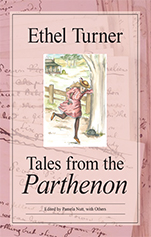
Ethel Turner, Tales from the Parthenon

Courtesy: Juvenilia Press

Hands up if you’re an Aussie and didn’t read Ethel Turner’s Seven little Australians in your childhood. Surely no hands have gone up? Seven little Australians, her first novel, was published in 1894 when she was 24, and was an instant hit, eventually becoming a classic. According to Wikipedia, it was, in 1994 (and may still be), “the only book by an Australian author to have been continuously in print for 100 years”. It seemed only right then that I should choose Ethel Turner‘s Tales from the “Parthenon” for my third foray into the bundle of juvenilia books I bought back in April from Juvenilia Press.

Like Juvenilia Press’ other publications that I’ve read to date, Tales from the “Parthenon” contains a wealth of supporting material besides the actual juvenilia, including an in-depth introduction, notes on the text, endnotes and footnotes, an appendix, and a list of references.

Ethel Turner (1870-1958) and Mary Grant Bruce (1878 – 1958), whose juvenilia was the first I wrote on, were contemporaries, and, according to the Introduction, “dominated the market for children’s fiction in Australia”. However, while Bruce focused on the bush, and the national character as exemplified by bush living, Turner, whose career started earlier, had, says the Introduction, “already moved away from that tradition and firmly established her fiction in suburban Sydney”. The Introduction also tells us a little about Turner’s early writing career, at school and then immediately post-school. At school she and her sister, Lilian, established a magazine Iris when the school’s newspaper, Gazette, which was edited by another Australian writer-in-training, Louise Mack, rejected Ethel’s contributions!

Turner left school in 1888, and in 1889 she and her sister established another magazine, the Parthenon, which ran from 1 January 1889 to 4 April 1892. An impressive effort methinks for two young women. As you will have now gathered from the title of this volume, it is from this magazine that Pamela Nutt and her team have chosen works to represent Turner’s youthful writing.

While the focus on urban/suburban life and settings is one point of interest in Turner’s writing, another is her awareness of gender issues (though she wouldn’t of course have used such language). This is made clear in the Parthenon’s first issue in which they identified their goals. They wrote that their great grandmothers had learnt to write and spell, and their grandmothers had added “French, the harp and pianoforte, and the use of globes”, but

now the desire for knowledge in rapidly growing: deeper and deeper, woman goes into the mazy labyrinth, untrodden before by any but men’s footsteps,—culling the flowers of knowledge,—yes, and enjoying them, and appreciating them even as much as men do.

Ethel Turner was active during the first wave of feminism in the late 19th to early 20th centuries. While this early wave didn’t reject women’s domestic role and function, it did argue for women’s rights and recognition of intellectual equality. Turner fits within this paradigm. The Introduction suggests that her novel Miss Bobbie, of which an earlier serialised version appeared in Parthenon, promotes “vigour and independence” in young women but situates this within a world still framed by “patriarchal expectations”.

The Introduction mentions a third way in which Turner contributes to Australia’s literary tradition: incorporating Australian elements into traditional English fantasy. The pieces in this volume have been well-chosen to reflect all these aspects of her writing. They are all children’s pieces – “Gladys and the fairies” (in 2 chapters), “A dreadful pickle” (in 3 chapters), both published in 1889, and chapter 3 of “Bobbie” from 1890. And all feature spirited if not naughty girls. Jane Gleeson-White, in her Australian classics: 50 great writers and their celebrated works, quotes Turner’s opening to Seven little Australians:

Before you fairly start this story, I should give you just a word of warning. If you think you are going to read of model children, with perhaps a naughtily inclined one to point a moral, you had better lay down the book immediately … Not one of the seven is really good, for the very excellent reason that Australian children never are.

Gleeson-White’s point is that Turner may have been called Australia’s Louisa May Alcott, but her children are very different. And these juvenilia pieces show her moving down that path. Gladys is “dreadfully spoilt” and behaves tyrannically. However, time in Shadowland and Fairyland, forces her to rethink her ways, though not before she collapses in a typical Victorian faint! It is here we find English fairies in a new environment. Turner’s fairy queen rides in a chariot comprising “part of an emu’s egg, wondrously carved” with elfs* following, “dressed in yellow and riding locusts”.

Midge, the protagonist of “A dreadful pickle”, is also spoilt, and, like Gladys, treats her governess badly. However, she has a kind heart along with her independent spirit, and “wants to help poor people like those in London”. The story takes a Dickensian turn when Midge finds herself out of her depth and alone with some of these poor people. There’s some fun wordplay in this story – and I was intrigued by the note on the word “pallor” telling us that Turner used the American spelling that was popular in Australia at the time. The things you learn!

Then there’s Bobbie. We only have one chapter of her story. Bobbie, like Gladys and Midge, is in a household of boys, but in her case she’s been left there by her father who is travelling in Europe with his new wife. From the little excerpt we have, she seems to be a more developed character than Gladys and Midge, that is, less the typical spoilt child, but she too gets in a pickle when her perverse behaviour brings on teasing from one of the boys, with disastrous results. The notes on this story point out that Turner and Mary Grant Bruce “created strong female characters who challenged the Victorian stereotype of the submissive female”.

So, once again, I’ve enjoyed reading a well-known writer’s juvenilia, not just for evidence of the writer to come, but also for the insight provided into Turner’s times and the role her work plays in the development of Australian literature. These may be stories for children, written by girls, but the value of material like this for students of literature shouldn’t be underestimated.

My previous Juvenilia Press posts are on Mary Grant Bruce and Eleanor Dark.

awwchallenge2014Ethel Turner
(ed. Pamela Nutt, with students from Year 11, the Presbyterian Ladies College Sydney)
Tales from the “Parthenon”
Sydney: Juvenilia Press, 2014
62pp.
ISBN: 9780733433740

* Turner’s plural form, not mine!