Canberra Writers Festival, Day 2: A morning tea, a launch and some conversations

Let’s get the guilt admission over first. I ditched the session I’d paid for this afternoon to attend three free events. I reckon I got my money’s worth. I did this for a couple of reasons. Firstly, I didn’t realise that the afternoon event – on adapting a book (Rosalie Hamm’s The dressmaker) to film – occupied the whole afternoon. I’ve read the book, seen the film, and had seen Rosalie Hamm at my morning (paid) event, so decided that would suffice in the face of other temptations. Secondly, that event was on the other side of the lake and, having found a parking spot with a little challenge in the NLA precinct, I didn’t feel like losing it. Finally, there were two events at the NLA that I really wanted to see, and I couldn’t do them all. Such is life!

Now, a couple of warnings. Today’s post will be longer than yesterday’s, as I attended more sessions. Ignore, skim, or read it all. Your choice. I won’t know. And, while I did my best to take good notes, I may have skewed the odd thing. It’s hard to listen, reflect and take notes in these thoughtful, vibrant sessions.

Morning Tea (at Hotel Realm) with Marion Halligan and Rosalie Ham, introduced by Karen Viggers

This was a lovely way to start the day. We got to sit down at tables, with food and drink (self-served from a buffet), and be entertained by three writers. They, however, I was sorry to see, had to stand!

Using the tried-and-true format, session chair Karen Viggers, herself an author, posed a number of questions to Halligan and Ham. There were those expected questions – like how did you come to be a writer, where do you get your ideas from, how do you go about writing – as well as some more specifically geared to Halligan and Ham. The answers were lively, sometimes humorous, and all worth hearing, but I’ll just share a selected few.

Both talked about how they see stories all around them, how everything they see has potential. And that, dear readers, is why they’re the writers and I’m the reader! Anyhow, Ham said that her novels start with an idea, with “whatever is up my nose”, and that she’s currently into questioning verities. The novel she is writing now questions accepted views about irrigation. If it doesn’t work, she said, she’ll return to family squabbles!

Concerning the process of writing, Halligan, unlike Ham who starts with a synopsis of her story, said she doesn’t know where her stories will go when she starts. She quoted author Rodney Hall who said that the way to take your reader on a journey is to go on one yourself. And anyhow, she said, plots, as her readers know, are not the essential thing – which is perfectly fine with me.

The conversation also turned to death, grief and loss which both have written about. Halligan talked about losing her husband in 1998, and how she saw everything through grief. People tell you time heals, she said, but grief is always there, tucked away in a little corner. (She’s right, it is.) She told how her novel The fog garden was her response to her husband’s death, but its sex scenes were too much for her publisher, Penguin. They weren’t for Allen & Unwin, so she’s been with them ever since! Her latest novel, Goodbye sweetheart, is all about death – about reactions to death, and secrets.

Both writers said more about grief, death and sex, but what was said in the room stays in the room. Instead, we’ll move on to Viggers follow-on question from Halligan’s comment re secrets. Why are secrets so good in novels, she asked. I loved Ham’s simple, to-the-point answer. It’s because, she said, they relate to power. (Yes, of course.) She has seen the way secrets work in life this way – in staff rooms, for example, and sports clubs, and country towns (in which she grew up)!

There was more conversation, but I’ll share just one other insight and that’s Halligan’s comment that she has to like her characters. If you don’t like them, she said, why should your readers? I’d love to have followed this up in terms of that common complaint from readers that they don’t like a book because they don’t like the characters. Did their authors like them I wonder? I suspect that what an author means by “like” and what some readers mean may be two different things? Anyhow, question time ran out – and so has my time on this event (engaging as it was). Let’s move on …

Waking the Dead: Paul Daley, Sulari Gentill, Ros Russell

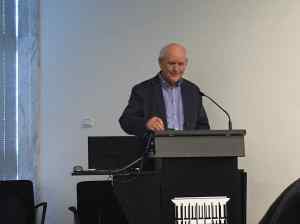
Russell, Daley and GentillThis session was a very different kettle of fish. Chaired by NLA curator Robyn Holmes, its aim was to explore how authors use archival/historical materials in their writings. She, like Vigggers above, had come armed with a good set of questions – and the answers were considered, sometimes provocative, and more than I could perfectly capture.

For those who don’t know them, Paul Daley and Ros Russell are Canberra-based, Daley being a journalist and writer of fiction and non-fiction, and Russell an historian who has also written a novel. Sulari Gentill is a writer of historical crime fiction.

Holmes started by asking what “waking the dead”, that is, exploring archival materials, meant to them. Daley said it meant looking for voices that will drive the narrative, such as for his current project, a novel about the impact of 1930s-1940s anthropologists on black-white relations in Australia. Russell agreed, saying that for her latest history, High seas and high teas, she looked through diaries for voices to animate the story. She said that she often finds evidence that overturns some of her perceptions while confirming others.

Gentill, on the other hand, said she looks for holes in history, for the gaps where she can “make stuff up”. (The audience laughed.) Historical fiction, she said, is about writing “plausible tales” about what might have happened which gives insight into what did happen. (I like this.) It’s about playing in the shadows.

Holmes then asked about how collections determine the direction of their writing? Daley said, among other things, that every time he goes into an archive he comes back with five more book ideas! Russell talked of how archives can take you in directions you hadn’t expected when you started. A mundane diary, for example, can suddenly include a surprising story that you decide to feature.

The ever-humorous Gentill told us that her husband is a 1930s historian, which is the era she writes in. “I married my collection”, she announced! She doesn’t research in advance, but as she goes. She talked about the newspaper articles (found in Trove – yes!) that she includes in her novels’ chapter headings. Using them is her response to publishers telling her that she’d taken things too far. Those things were always things that had actually happened she said. But, you lose readers, she said, if they think you’ve gone too far – hence the newspaper “proof”.

Daley also referred to this issue of believability when he said that research can provide details like names and practices of the time, the sort of detail that gives authenticity. And later in the session, Russell also mentioned the importance of research to underpinning plausibility. It was critical for her historical fiction book, Maria returns, that she find a Barbados plantation owner who was also an abolitionist. She did!

Regarding the sorts of resources that can best bring stories to life, Russell mentioned unexpected places like government papers and reports. You have to cast your net widely, she said, to find the stories that illuminate. Daley said he loves photographic collections, and used his current research into 1930s/40s anthropologists as an example. He found a trophy-like photograph of American anthropologist Frank Setzler posed with human remains. This helped him write his composite character, because he felt he could see from the photo what the anthropologist was thinking.

Gentill said that she attracted primary resources, that historians send her materials that fit the period she writes in. She hasn’t experienced, she said, the oft-talked about historian-historical fiction writer divide. She also said that since, fundamentally, she writes about people, she relies on her own memory archive, her experiences and knowledge of people.

Gentill said that she makes up her protagonists, but often uses real people for her secondary characters. She always makes sure that she doesn’t say anything more heinous about the person than the historical record shows, but the rest she makes up. And here she said something beautifully clarifying: her aim is not to present an absolute or rounded version of an historical person but an angle or perspective of that person that is true. In other words, she presents that person, let’s say, Earle Page, from the perspective of her character, who may not like that person. It is not a complete picture of Page, but an aspect of Page as experienced by her character.

There was much more – writing about place, using oral histories, and the like – but I’ll close with two final topics. One concerns blurring the line between fiction and history. Gentill said that she is a fiction writer and that her whole purpose is to blur the line. The fiction writer’s job, she argued, is to give a bit of history by stealth – which is another issue I’d liked to have explored further. Daley said that his non-fiction writing is “true” and based on archival research, but in his fiction he can be more creative, such as messing with dates to make a story work. I’ve heard other writers say this. Seems fair enough to me, because I know I’m reading fiction, but will all readers who are getting their “history by stealth” make the distinction between historical “facts” that are played with (messed around) and the “truths” that are the writer’s real story?

And finally, there was a discussion about ethical responsibilities. Russell said that historians must not distort what they find, must be true to their sources, but that she always looks out for things that might say something different to the prevailing narrative. Somewhat similarly, Daley said that if something confronts his preconceptions he must address it. For example, in his current anthropological research, he was assuming he’d find a cruel man, but he found a kind one. This will affect his narrative.

Gentill said she looks for other perspectives to the prevailing ones, that she likes to find people who have been forgotten, but who are interesting. (I guess these are minorities, the “little” people, the women, and so on?) She sees this as doing a service to Australians.

All in all, it was a thoroughly engrossing session and I’m glad I decided to attend it.

Richard Begbie’s Cotter: A novel (launched by Tim Begbie and Jack Waterford)

I had not planned to attend this session, but given my decision to not go over the lake, I had an hour to fill between the two sessions I’d flagged, and so decided to attend this session launching an historical novel set in the Canberra area. I was glad I did, because I learnt something more about this region I call home.

Richard BegbieCotter: A novel tells of the local early nineteenth century settler family – after whom our lovely Cotter River is named – and their relationship with indigenous people of the region. Garrett Cotter, an Irishman from Cork, arrived in Australia in 1828, and became friendly with the local indigenous chief Honyong. He formed a good relationship with Honyong, but was also, of course, part of “the inexorable forces” which led eventually to the dispossession of Honyong and his people. Retired editor of The Canberra Times, Jack Waterford, who helped launch the book, described it as “a well-written book of our country, our neighbourhood and a good yarn”.

Richard Begbie told us that he had researched the book intensively with the descendants of both the indigenous people and the Cotters, and said there had recently been an event – not a launch – at which both groups had got together to renew a friendship that had been initiated 200 years ago.

He gave a brief reading from his novel of the moment when Cotter, working on the farm owned by the (also still local) Kenny family, first met Hongyong. It sounds like an engaging read written by someone who knows this area well.

In conversation: Melinda Bobis “Love, climate and the politics of care” (with Lucy Neave)

I should explain here that the Festival’s theme – fitting to our national capital setting – is Power, Politics, Passion. Consequently, there are several sessions involving political writers and journalists. Merlinda Bobis, however, is not one of them, but she is highly political, and politics underpinned much of this session, which was conducted thoughtfully by author Lucy Neave.
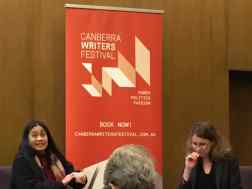
BobisFor those of you who don’t know her, Bobis, whose novel Fish-hair woman I’ve reviewed, is a Philippine-born trilingual poet, novelist, performer, scholar and retired academic. Leave explained that the session would  focus on two of her novels – Fish-hair woman (woo-hoo) and her latest one, Locust girl: a love song – and would explore how we tell stories and the politics of caring. Politics, you see! Like Waking the dead, this session was full-on, so will be hard to condense, but condense it I will – which means omitting a lot.

Bobis gave a couple of readings and included “performance elements” – singing and chanting – in the process. Lucky us. Neave asked why she performed, and her answer was a practical one. She arrived in Australia as a published poet, but could not get published here. She started performing her poems, and found that people listened. Then she started dancing. Her strategy, she said, suddenly became an art form!

I enjoyed the discussion of Fish-hair woman because while I felt I’d grasped its main meaning, I knew there were things I’d not fully comprehended. She talked about hair as a metaphor for memory, with memory here being mainly of trauma, grief and loss. She reminded us how grief and trauma can can turn hair white or even cause hair loss, but she inverts this in her novel and has Estrella’s hair keep on growing as the losses build.

Fish-hair woman is also a novel also about writing a novel and, because it contains both Philippine and Australian stories, it is about collaborative story-telling and grieving, and about not privileging one group, one grief, over another. Do we grieve for losses equally, she asked, referring to philosopher Judith Butler’s work on the politics of grievability, on differential grieving. Whose losses, whose stories do we validate? Is an Arab body mourned equally to a Western one? And here, you see, we were at politics again, the politics of mourning.

Bobis talked about our current political climate and the politics of fear. She argued that we need to encompass a new story, the politics of care. She referred to new indigenous MP Linda Burney’s statement that she’ll bring grace and kindness to parliament. Not a soft kindness, said Bobis, but kindness with spine!

She discussed how we define politics in terms of governance, or talk about it in terms of the personal being the political, but to her politics is feeling, thinking, doing. The central question of Fish-hair woman is, she said, how much can the heart accommodate. Can it accommodate even those we don’t love?

Locust girl continues and extends these concerns to how we care and love across borders. It’s about countering the politics of fear with the politics of love, extending the question of how much can the heart accommodate to how do you care for other. While Fish-hair woman has its hair metaphorhere it is the locust, which stands for extreme other, for fighting against demonising other.

Neave then led the discussion on to the environment. Bobis said that in Fish-hair woman, which is set during the 1987 Philippine government’s war against communist insurgents, she was worried about river. She said war is an environmental issue, it damages the planet. Locust girl is set in the desert, which represents climate change, the loss of water, a place where nothing grows, the drying of the human heart, and that there will be environmental refugees. (I hope I’ve got all this Locust girl stuff right, as I haven’t read it.)

She and Neave talked about projects they are working on, separately or together – in Spain, Philippines, Singapore – because writing is not enough. Bobis called it developing a creative arts practice in which storytelling becomes action.

Some interesting ideas came out of the Q&A at the end. I particularly liked her response to a question about her use of magical realism which is, she said, her favourite device. It’s part of her culture to believe that there is another world, but magical realism can also be seen as a post-colonial strategy, as a way of challenging the real, of challenging our established worldview.

Another question concerned how the imagination might relate to the politics of caring. Bobis said we need to imagine scenarios: “imagine this, and if this happens, what do you do”. We must give multiple imaginings to parliament she said, and if something has already happened, we must ask what can we imagine to address it.

She concluded by reading a love poem from her new poetry collection. Looking up from her paper, and looking directly but warmly at us, she read the last line: “there is hope for us”. What more can I say?
Canberra Writers Festival, Day 1: Two book launches

Well folks, finally we have another writers festival here in Canberra. From 1983 to 2001, we had something called the Word Festival (though its name varied a little over the time). Since then, to the best of my knowledge, we’ve only had the one-off Canberra Readers’ Festival (on which I posted) in 2012, so it was a thrill to hear many months ago that a Writers Festival was once again in the offing – and now it is here. I do hope there are plans for it to continue. If today’s buzz is evidence of success then I hope the organisers are feeling positive about future events.

However, here’s the thing. This year has been a topsy-turvy one for me, so I didn’t book a season ticket, and missed out on a couple of events that I would like to have attended, but that’s no biggie. I’ve booked some appealing events and look forward to those. Today, though, due to other commitments, I decided to just attend a couple of free afternoon events (so I missed, for example, Anne Summers). Oh well, I can’t do everything, and I know that whatever I choose to do I will enjoy. I’m easy that way!

Carmel Bird’s Family Skeleton (launched by Marion Halligan)

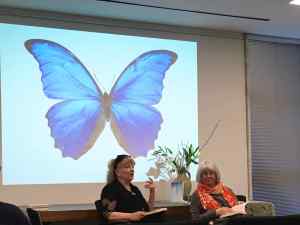
Carmel Bird and Marion Halligan
Bird, Halligan and butterfly, 2016

I’ve written about Carmel Bird and Marion Halligan before, when Bird launched Halligan’s Goodbye sweetheart. I realised then, and it was clear again today, that they are good friends. So when they launch each other’s books which they’ve done for each other a couple of times now, there’s no formality or stiffness, and they almost make it up as they go, making for a delightfully relaxed but nonetheless meaningful launch.

I won’t summarise the whole launch but just share a couple of points that struck me. First though, something about the book. It’s a black comedy – which, if you’ve read Bird, wouldn’t surprise you – and is largely narrated by a skeleton. It is about the O’Day family, and particularly about Margaret, the family’s widowed, wealthy matriarch. The epigraph, by Bird’s fictional character Carrillo Mean who provides all her epigraphs, goes like this: “The Storyteller knows what the Storyteller knows, and the Storyteller tells what the Storyteller tells”. But, said Halligan, does the Storyteller tell all that he knows? I think this is a book for me, so I’ve bought it.

And so the launch proceeded, with a couple of expressive readings by Bird, and engaging repartee between Bird and Halligan about Bird’s love of words and the naming of characters; her inspiration for the novel (which was seeing an Edwardian hearse on a country road in Victoria); and death, sex and butterflies, and whether the novel’s butterflies are a trope or a motif! I’m not a creative writing specialist, said Bird airily, passing off this issue! Fair enough. Leave that to the reviewers!

There was a lot more, but what I mainly wanted to share was Bird’s statement that she is always “looking for virtue” in her novels. That made us all sit up. Novels, she said, always explore evil, because evil is more interesting than goodness, but the end point of it all is always “where is the good, where is the hope?” An audience question had her clarify this a little further by saying this hope could for things like goodness, reason, happiness, beauty. I immediately thought of those grim, depressing books that many readers feel have none of this, like, for example, Charlotte Wood’s The natural way of things (my review)and the fact that in most of those books I do usually find a hint of hope. I can’t help thinking that most writers are like Bird, that is, that they want to end with some little bit of positivity, even when they also want us to remember the serious issue they are exploring.

Carmel Bird
Family skeleton
Crawley: UWA Publishing 2016

Nicholas Hasluck’s The Bradshaw case (launched by himself)

Nicholas Hasluck
Nicholas Hasluck, 2016

A completely different kettle of fish was the launch of Nicholas Hasluck’s The Bradshaw case, partly because he launched it himself and partly because it’s a very different sort of book – a fact-based courtroom drama about contemporary political issues regarding native title.

I haven’t read Hasluck before, though he’s won The Age Book of the Year and been shortlisted twice for the Miles Franklin Award. The packed room for his launch was evidence of his renown I’d say.

Again, I’m not going to going to summarise the whole session. He started by telling us he was launching a “device” called a book, in which thoughts and images could be conjured up in your mind from the pages you read. We all liked that, of course.

His book, he said, mixes fact and fiction. It explores, via a court case, some controversial issues about the origin of rock art in the Kimberley and how this plays out in terms of native title. He provided quite a lot of background about the rock art at the centre of this controversy – the Bradshaw images and the Wandjina images – a controversy I’ve come across in some of our outback Australia holidays. Hasluck was inspired to write his novel by the ambiguity surrounding this. But this is not what I want to share here.

What I was particularly interested in was some of his general comments regarding novels and history. Novels, he said, can both cast a light on what happened in the past and on what is said about the past now. They can explore (expose?) contested versions of the past.

Commenting on his use of fiction to tell this story, he said “give a man a mask and he will tell the truth”. I like that – as regular readers here who’ve read me on truth and fiction would expect. He also said that he chose fiction because he’s not an expert in the area and that many specialists have, and are, going the non-fiction path.

Discussing the question of how readers should approach the fact-fiction nexus of historical fiction, he said that the author-reader contract is that readers will assume everything they are told is true. (Note that he didn’t say “factual”). He hopes that people, once intrigued by something they’ve read in fiction, might then question what they’ve read and do their own research. This brought us back to the central controversy about the images, and what this means for indigenous people – and it resulted in his making a statement that, like Bird’s regarding looking for virtue, made me sit up. He said that the odd thing about Australian literature is that novels are not seen as part of current debates, unlike the USA, where works by Gore Vidal and Thomas Wolfe (Bonfire of the vanities), for example, do enter such debates. Australians, he said, see fiction as something quite separate. I’d love to know what others think about this claim – but for me, again, it made me think of Charlotte Wood’s The natural way of things and the contribution she clearly wanted to make to the misogyny debate.

The issue we didn’t really discuss, though it was touched on, concerns indigenous Austrlians’ reaction to this story being told this way by a non-indigenous writer. All Hasluck said on this point was that his book is about “cultural integrity”. It will be interesting to see.

Nicholas Hasluck
The Bradshaw case
North Melbourne: Arcadia, 2016

STOP PRESS: AS Patric’s debut novel Black rock white city has just been announced the winner of the Miles Franklin Literary Award. Congratulations to him! Another book for the TBR!

Robyn Cadwallader, The anchoress (Review)

Robyn Cadwallader, The anchoressLet me start by saying that I’m not a big reader of historical fiction, and particularly not of non-Australian historical fiction, so to read a novel set in mediaeval times is quite a departure for me. However, I did want to read Robyn Cadwallader’s The anchoress for a number of reasons. Not only is Cadwallader an Australian writer living in the outskirts of my city, but we did meet a couple of years ago for a lovely lunch when she was in the throes of negotiating the publication of this book in three countries! And, besides this, the topic was so intriguing. I’m not a mediaevalist and had never heard of anchoresses and anchorholds before. It’s taken me sometime to get to it, but I finally have.

Now, one of the reasons I don’t jump to historical fiction is that I’ve tended to see it in terms of bodice-rippers and romances, and these don’t really interest me. But, The anchoress is not such a story. I don’t read back cover blurbs before I read books but towards the end of this book, as I was trying to guess where it might be going, I did look at the back, not because I wanted to know the end – because I didn’t – but because I was intrigued about how this book that was teasing me was marketed. The last sentence of the blurb is that the book is “both quietly heartbreaking and thrillingly unpredictable”. This reassured me that it wasn’t likely to go where a “genre” novel would probably go. Does that make sense?

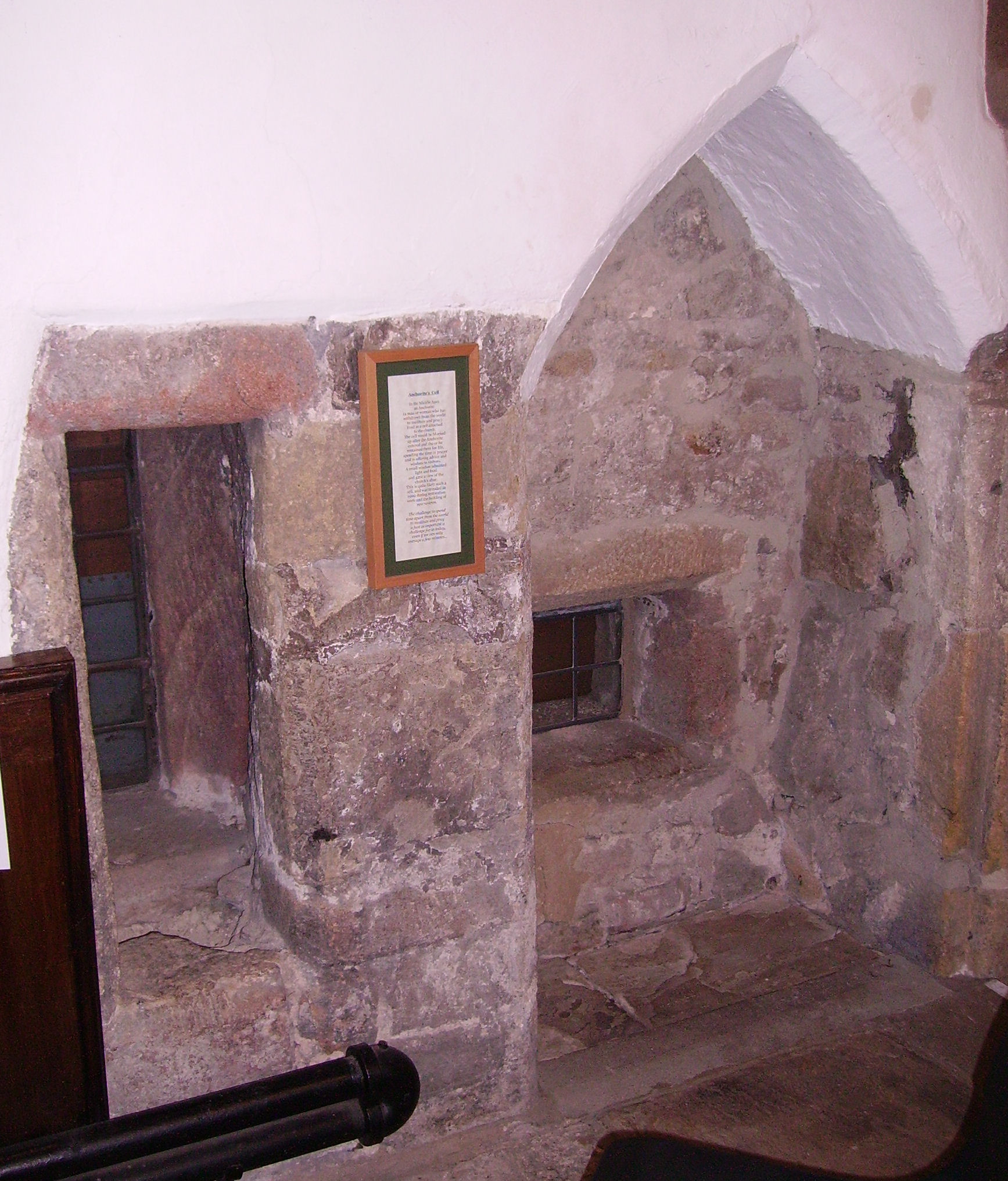
Anchorites' cell, Skipton

Anchorite’s cell, Holy Trinity Church, Skipton, UK (Courtesy: Immanuel Giel, Public domain, via Wikimedia Commons)

So, the plot. It tells the story of Sarah, a young 17-year-old girl who, after some traumatic experiences including the death of a loved sister in childbirth, asks to be enclosed as an anchoress. This means she agrees to spend the rest of her life in a small stone cell, essentially “dead to the world”, tended to by a maid through a window in the wall and visited by a priest who will provide guidance and take her confession. Her support is paid for by a patron, the local Lord. She is given a Rule book as her guide, and is expected to provide advice to village women. Sarah’s story is told first person but, interspersed with hers – in shorter third person chapters – is the story of young, inexperienced Father Ranaulf, her priest-advisor-confessor. And so the stage is set for – well, we don’t quite know what.

As the story progresses, all sorts of narrative possibilities present themselves. Will she stay (like Sister Agnes) or leave (like Sister Isabella)? How will her relationship with Father Ranaulf develop? And why did Sarah really decide on this rather extreme course for her life (because, of course, there is a reason)? These all have the potential for melodrama or cliche, but Cadwallader keeps it grounded. There is drama – a fire – but even it is downplayed in the service of Cadwallader’s bigger themes rather than generating page-turning excitement.

However, it’s not plot that draws me in my reading, but character, themes and language. And here the main characters are well-drawn. The story takes place over the period of a year or so. At the beginning Sarah is an idealistic young anchoress, keen to do it right. She takes seriously her decision with the uncompromising enthusiasm typical of a young person, and so is determined to be disciplined. She allows herself no pleasure, not even some tasty food donated by the villagers, despite advice that this level of self-denial is not expected, and moves into self-flagellation. Over the course of the novel she comes to a more realistic understanding of what being “holy” might mean, and of what she needs to survive her chosen role. Father Ranaulf is also young and inexperienced, which results, initially, in stiff, black-and-white responses to Sarah. Over time, he too comes to a more humane understanding of her and of his role as her advisor. I’m almost tempted to call it a mediaeval coming-of-age story as these two young people come to a maturer world view. Anyhow, it’s nicely and realistically done.

There are other characters of course – Sarah’s maids, villagers who visit Sarah, various priests, and Sarah’s patron and local Lord, the somewhat cliched Sir Thomas. These are less rounded but they enrich the picture Cadwallader paints of mediaeval life, and contribute to the story-line.

“Body without a body”

“True anchoresses”, Sarah reads in her Rule, “are like birds, for they leave the earth – that is, the love of all that is worldly – and … fly upwards towards heaven”. Birds are a recurring motif in the novel, starting with a symbolic bird, the jongleur whom Sarah calls Swallow. “An acrobat”, she says in the opening paragraph of the novel, “is not a bird, but it is the closest a person can come to being free in the air. The nearest to an angel’s gift of flying”. For Sarah, being enclosed was her way of emulating Swallow, of leaping into the air, of being a “body without a body”. She yearns to be free of her body, to leave the senses behind, but the more she tries to escape them, the more they make themselves known. Her challenge is to reconcile this dichotomy, this need to deny the senses while still very much having them, this being, theoretically, dead to the world, while very much alive.

Tied up with Sarah’s challenge is the wider story of mediaeval life and values. Cadwallader conveys life at the times, mostly through the people who visit Sarah. Life, we discover, if we didn’t already know it, is hard for women. We meet women who are abused and assaulted, and we realise that their rights are few in a society which sees women as “lustful and tempting”. Father Ranaulf tell Sarah that:

It is man who is mind and soul, woman who is body.

Wise Father Peter allows women some advance on this when he tells Father Ranaulf that holy women can develop manly souls and “almost become a man”! But it is Sarah who really confronts Renaulf, and forces him to a more empathetic understanding of her (and, by extension, of other women).

Life is also hard for the poor, as Cadwallader tells through the villagers’ lack of power in the face of the Lord’s control over the land they work. And life is a challenge too for church-men, who have to manage villagers and lords while earning money to survive. Father Ranaulf wants to make beautiful books but must “produce an income”, not to mention advise an intelligent young woman who won’t accept his platitudes and thoughtless “rules”!

So, The anchoress is an engaging story. It’s about a time long distant, thus satisfying our historical curiosity, and it’s about power in gender and class, that still resonates today. But, above all, it is about human beings, about how we read or misread each other, about how (or if) we rise to the hard challenges, and about whether or not we accept a duty of care to those who come into our lives. An enjoyable read.

awwchallenge2016Robyn Cadwallader
The anchoress
Sydney: Fourth Estate, 2015
314pp.
ISBN: 9780732299217

Monday musings on Australian literature: Contemporary thoughts on Elizabeth Harrower

Contemporary is an odd word isn’t it? I like using it, but worry about ambiguity, given it can mean either “living or occurring at the same time” or “belonging to or occurring in the present”. So, when I say “contemporary thoughts on Elizabeth Harrower”, how do you know which meaning I intend? Well, to put your minds at rest, in this instance I’m intending the former.

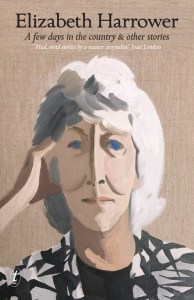
Elizabeth Harrower, A few days in the countryMany of you know who Harrower is, but for those who don’t, she’s an Australian writer who was active in the 1950s to 1970s, and then largely disappeared from view. She was born in 1928 and is still alive. Four of her five novels were published in the 1950s to 1960s. The fifth novel, In certain circles, was written in the late 1960s to early 1970s, but not published until 2014, because she withdrew it from publication at the time. Her short story collection, A few days in the country, and other stories, was published last year, but includes stories dating back to the 1960s. (I have reviewed three of her books.)

So, she was an unknown to many of us when her books started appearing in Text Publishing’s Classics series. What a find she’s been, but what, I wondered, was thought about her in her heyday, and where did she fit in that literary world. To Trove, therefore, I went – and found the snippets I’m sharing today.

The first comes from “Your bookshelf” by Joyce Halstead in The Australian Women’s Weekly in 1961. Halstead writes briefly about Harrower’s third novel, The catherine wheel, which was published in 1960. She describes the plot, and concludes with her assessment:

An intense, probing study of human relationships, intricately and interestingly resolved, and deserving of high literary praise.

That certainly accords with my experience of Harrower’s writing, though I haven’t read this one – yet.

Elizabeth Harrower The watch towerNext comes another article from The Australian Women’s Weekly, this time in 1966. (Why was this very literary writer mainly featuring in a women’s magazine?) The article is titled “Op art? … Commas caused full stop” and is about her fourth novel, The watch tower. It conveys a lovely sense of Harrower’s down-to-earthness:

We mentioned the publishers’ description of her as “one of Australia’s most sensitive and psychologically perceptive novelists.”

“You know, you shouldn’t blame writers for what other people say about them,” said Miss Harrower.

She says that she had never studied psychology, and that:

“Because I am interested in people, it doesn’t mean that I go around consciously analysing them … Sometimes it is years afterwards that you remember an occurrence which, when it happened, just flowed past you.”

She then describes “having words” with her publisher (for whom, in fact, she worked herself, because writers, she said, need to have a job unless they are “a Morris West or have a private income”):

“When the publishers sent me the proofs I found they had altered all my ‘whichs’ to ‘thats’ and had taken out a lot of commas. I didn’t like it — so I changed them all back.”

I love this. I much prefer “whichs” to “thats”, regardless of what grammarians say about nonrestrictive and restrictive clauses, and I’m inclined to use more commas than less, despite modern style!

My city’s newspaper, The Canberra Times, also wrote about The watch tower, in early 1967. The reviewer, John Laird, admires Harrower’s writing, saying she:

employs a style distinguished by its sensitivity and subtlety, and displays considerable ability in capturing the flow of thoughts, emotions, and sense-impressions in the minds of her two main women characters.

But, he concludes that

What is not so convincing is the portrait of Laura’s misogynic husband. To me he seems a specially concocted figure, largely an embodiment of the malevolent and destructive forces that constantly menace the women characters in Elizabeth Harrower’s novel world.

I wonder how many women would find him “not so convincing”? Seems like Mr Laird wants to underplay the gender aspect of the “malevolent and destructive forces” menacing the women?

The next two articles* also come from The Canberra Times. One, in 1967, announces that Harrower (along with George Johnston and Thomas Keneally) had won a 12-month Commonwealth Literary Fund Fellowship, which is, I expect, the Fellowship that led to In certain circles, the one she withdrew from publication.

Second time around …

The other article comes from 1979, and we are now getting into re-issues of her work. The article, written by Lyn Frost, is titled “Fine Australian writing new and rediscovered”. It announces a new imprint, Sirius Quality Paperbacks, by Angus and Robertson. “The first six books”, Frost writes, “are by women and some have been out of print for far too long. Teachers of Australian literature must be grateful for their appearance.” I sure hope they were! The authors include Henry Handel Richardson, Eleanor Dark, Christina Stead and, of course, Elizabeth Harrower. In fact, the six books include two of Harrower’s, The Catherine wheel and The long prospect (which Stead called Harrower’s “masterpiece”). Frost is impressed by Harrower’s writing, saying:

I can’t think how I’ve missed reading Harrower’s perceptive work before this.

How embarrassing is it that this was exactly the response many of us had over 30 years later when Text started republishing her!

Then, along similar lines, comes critic Peter Pierce in 1988 reviewing Murray Bail’s The Faber book of contemporary Australian short stories in The Canberra Times (again). It’s a “real” review which discusses the anthology at some depth, including reference, naturally, to some of the works included. One is Elizabeth Harrower’s “The cost of things” (which also appears in A few days in the country, and other stories). Pierce describes Harrower as “Too little celebrated and too long silent in Australian literature”. (I had to laugh at Pierce’s comment that the anthology is “misleadingly titled” but that “Bail is unapologetic about including stories written nearly half a century ago”. “Contemporary” by any other name!)

There are other brief references to Harrower – including to her being a National Book Council Award judge in 1981 – but I’ll conclude with another article from The Canberra Times. It’s one of those weekly new-paperback-releases columns, and this particular week’s bunch, in 1995, included Harrower’s The long prospect (ETT Imprint). Columnist (and local English teacher) Veronica Sen calls it a “determinedly unsentimental novel”, and says that it treats “suburban small-mindedness and the pain of growing up … with panache”.

If you haven’t read Harrower yet, I hope my post has pushed you a little further in her direction.

* The Canberra Times has been digitised, to date, by the NLA, up to 1995, whereas the Sydney Morning Herald, for example, has been digitised to 1954. Disparities like this are primarily due to what permissions are granted by the respective rights holders.

Helen Garner on writers and writing (in Everywhere I look)

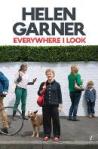
Helen Garner, Everywhere I look

As I promised in my main review of Helen Garner’s engaging book of essays and jottings, Everywhere I look, I am here doing a little follow-up post on her discussions of other writers. I enjoyed reading her thoughts about specific writers, but even more I liked that in talking about these writers she gave away her own writing preferences.

So, what did I know about Garner’s writing before this? One is that she tends to write from her own life and experience. This is why, I’m sure, she moves so comfortably between fiction and non-fiction, but it’s also something that has got her into trouble at times. Some critics argued that her first, generally applauded novel, Monkey grip, was just her diary; others suggested that The spare room is not really a novel either. Garner has retorted – and I take her point – that when she writes novels drawing from her life, she selects, orders and constructs a narrative and that that is art.

The other main thing I’ve noted is that her writing is on the sparer side of the spectrum. She can be highly evocative but she doesn’t go much for metaphorical flourishes. I’ve quoted her before as saying that Thea Astley’s writing “is like a very handsome, strong and fit woman with too much makeup on … This kind of writing drives me berserk”. I was reminded of this when I read her piece in this collection on Tim Winton. She says about first meeting him at a writers’ weekend in 1982. She had not long before written a review of his first novel:

Stabbed with panic, I scoured my memory for what I’d said in my review. I liked the novel and had said so; but from the lofty eminence of a minimalist who’d published  fully two books, I’d drawn attention to what I saw as his overworked metaphors …

Fascinating, because as much as I love Winton, I clearly remember thinking something similar about his second novel, Shallows.

But now, with that introduction, I’ll get to what I really want to share. Her discussions about writers come mainly from two (“Notes from a brief friendship” and “The journey of the stamp animals”) of the book’s six sections. The writers she talks about include Australians Tim Winton (“Eight views of Tim Winton”), Elizabeth Jolley (“My dear lift-rat”), and Barbara Baynton (“Gall and bare-faced daring”), the American journalist Janet Malcolm (“The rapture of first-hand encounters”), and the English novelist who needs no introduction here Jane Austen (“How to marry your daughters”). Each of these gave me little insights into Garner, and I’m just going to tease you with a smattering because – well, you know why, because you should read the book yourself.

Although I’ve already mentioned Winton, I’ll share one more thing. It relates to Garner’s interest in (and reputation for) sentences, and is an exchange from their ongoing correspondence:

I sent him a jubilant letter: ‘Hey! I’ve just written a 200-word sentence which is syntactically perfect!’ ‘I couldn’t care less,’ he replied, ‘about that sort of shit.’

For all this, though, she likes Winton!

Garner loves Elizabeth Jolley for her ability “to strike a note of mortification and inject it with the tincture of the ridiculous that makes it bearable.” That’s Jolley alright, and I can see that both she and Garner, while very different writers, do both look at the world, at people’s relationships in particular, with a sort of self-deprecating sense of absurdity that can lighten darkness. Does that make the sense I think it does?

I was surprised by her piece on Barbara Bayntonabout whom I have written frequently here – not because I was surprised to find she admires Baynton but because I didn’t know she did! Her piece starts:

I was well into my forties when I came upon Barbara Baynton’s story “The chosen vessel”, and I have never got over it.

Yep, I know what she means. I was late to Baynton too, and equally stunned. Garner is impressed, of course, with the power of Baynton’s stories, with their lack of romanticism, particularly about women’s lives. But what I want to share here is her comment on Baynton’s writing.  She recognises that some of Baynton’s sentences can seem “clogged and heavyhanded” to modern ears, but, Garner writes

… my God, when she hits her straps, she can lay down a muscular story […]

At their height, her dry, sinewy sentences stride forward, powered by simple verbs.

You are probably getting a picture of the sort of writing Garner likes – direct, clear, fearless, like Jolley, like Baynton.

And then there’s the American journalist Janet Malcolm, of whom I’ve heard but not read (to the best of my knowledge). Malcolm, she says, has been her greatest teacher. I’ll just share a comment from her opening paragraph:

I have never met her, or heard her speak, but I would know her voice everywhere. It is a literary voice, composed and dry, articulate and free-striding, drawing on deep-learning, yet plain in its address, and above all fearless …

Need I say more?

And finally, Austen. She surprised me when, describing herself sitting down to read Pride and prejudice in 2013, she said that she wasn’t sure when, or even whether, she’d read it before! What? However, she writes,

I sharpened a pencil and sat down at the kitchen table.

Just how I like to read, with a pencil in hand. Garner goes on to describe her experience of reading Austen – providing wonderful writer’s commentary on the style, the narrative arc, the characters – and how she became hooked:

I lowered the blinds against the heat, unplugged the phone and moved operations to my sopha, where, dispos’d among charmingly group’d cushions, I settled in for the duration.

… as did I, to read more of her (first?) impressions! She continued, still with her writer’s eye:

In order to keep my eye on how Austen was actually doing things, I was having to work hard against the seduction of her endlessly modulating, psychologically piercing narrative voice, her striding mastery of the free indirect mode.

She describes how Austen “gives us five enthralling pages of Elizabeth thinking“, she provides commentary on how the story proceeds, but best is her perspective on that “piece of trash” Lydia and her role in ensuring that the loose ends aren’t quite so perfectly wrapped up as Garner feared they would be. It’s a delicious piece of writing – Garner’s I mean – about a delicious piece of writing. I laughed.

And now, I must get Garner’s previous collection of essays, The feel of steel …

Helen Garner, Everywhere I look (Review)

Helen Garner, Everywhere I lookI was very sad to come to the end of Helen Garner’s latest essay collection, Everywhere I look. It was such a joy – such a joy – to read. Garner ranges across a wide variety of subjects from a kitchen table to Russell Crowe, from some of the darkest things humans do to each other to the beauty of ballet dancers in rehearsal, and she does it in a natural, warm voice that makes you almost feel as if she’s sitting across that kitchen table from you. While it would be cheeky of me to say that I now understand her, this collection provides wonderful insight into the way she thinks, how she goes about the business of living, why she writes the things she does. We come to know her as a human being who muddles through life, making mistakes, questioning herself, confronting challenges, rather than as the literary doyenne she in fact is. In other words, as she always does, she lays herself open.

I call these essays, but some are probably better described as articles or perhaps even columns, and there are a few which read more like collections of jottings or diary entries. Form isn’t the important thing here, it’s the content. The collection comprises 33 pieces, all but three of which have been previously published. Three date back to the 1990s. Many were published in Monthly, and some others in the Age and the Sydney Morning Herald. It’s not always obvious why they were originally written, but in this collection they have been loosely grouped into six broad thematic groupings, starting with “Part One: White paint and calico”, which is all about homes and things domestic, and ending with “Part Six: In the wings”, which I’d describe as comprising reflections about life and self. The cover, designed by the award-winning WH Chong, is just gorgeous, and I found myself looking at it several times as I read, opening it out to look at the whole front-and-back panorama.

But now, that common challenge of writing about a collection: what to discuss, what to leave out. I am going to leave out one thing, and that’s her discussion of writers and writing, because I want to save that for another post. Perhaps I’ll start with some “yes” moments, not that I have to always agree with writers to appreciate them, but affirmation can be nice. There’s her jotting in “When not writing a book” in which she expresses elation over the election of Obama. What an exciting time that was, even for us antipodeans. Her statement – “To think I’m alive when this happened” – is one many of us shared. I remember popping a bottle of bubbly with my patchwork group for the occasion.

There are delightful, often humorous, anecdotes about family life, especially about her grandchildren who now live next door to her, and there are little jewels of description, such as this perfect one of Christmas mornings:

The unnerving silence of Christmas morning. No sound of traffic. Sun lies fresh on everything. Birds sing with unnatural sharpness. The air is still.

And I did love her reference to a criticism of Muriel Spark in “Funk paradise”, another diary style piece:

Apparently her letters make no reference whatsoever to current events. So?

This accusation is also levelled at Jane Austen – for both her novels and letters – the implication being that to be valid you have to be political. I contest that. Austen and Spark write compassionately but incisively about human nature. Let others do politics if they will!

However, the section that grabbed me most was “Part Four: On darkness”. Here she explores the dark sides of human nature through five stories/cases about people who have done terrible things to others. This is subject-matter that many readers shy from, and those who do this tend to make those of us who don’t feel a bit ghoulish. Garner writes in this section about some well-known cases in Australia including the rape-murder of Jill Meagher (“The city at night”) and the murder of Luke Batty by his father (“The singular Rosie”). The fifth and last piece in this section is called “On darkness” and it’s about the Robert Farquharson trial which is the subject of her book, This house of grief (my review). In her opening paragraph she writes:

When the book came out I was struck by the number of interviewers whose opening question was ‘What made you interested in this case?’ It always sounded to me like a coded reproach: was there something weird or peculiar about me, that I would spend seven years thinking about a story like this.

She continues, describing how she would try to come up with “sophisticated explanations” for her curiosity, but eventually tired of being defensive. She outlines the complexity of the case – the ordinary people who behave in ways that even they can’t understand or explain – and asks why this is not worth exploring. She says:

People seem more prepared to contemplate a book about a story as dark as this if the writer comes galloping out with all moral guns blazing. A friend of mine told me that the woman who runs his local bookshop had declared she would, under no circumstances, read my book. Surprised, he asked why. ‘Because’, she replied. ‘I know that nowhere in the book does she say that Robert Farquharson is a monster.’

If he had been a monster, I wouldn’t have been interested in writing about him. The sorts of crimes that interest me are not the ones committed by psychopaths. I’m interested in apparently ordinary people who, under life’s unbearable pressure, burst through the very fine membrane that separates our daylight selves from the secret darkness that lives in every one of us.

This is why I like Garner. She’s generous, openly questioning, tender, but fierce too. And just in case you think she has no “moral guns”, read her piece in the last section, “The insults of age”, in which she describes her reaction to a young teenage girl whom she’d seen intimidating/disrespecting some Asian people. Garner writes:

… I saw the Asian woman look up in fear, and something in me went berserk.

In two strides I was behind the schoolgirl. I reached up, seized her ponytail at the roots and gave it a sharp downward yank. Her head snapped back. In a voice I didn’t recognise I snarled, ‘Give it a rest, darling.’ She twisted to look behind her. Her eyes were bulging, her mouth agape. I let go and she bolted away to join her friends …

This is why I like Garner!

There is so much in this book, lighter stuff too, but I’ll leave those delights for you to discover.

In “My dear lift-rat”, her delightful piece on Elizabeth Jolley, Garner says that she frequently wrote about Jolley’s books “in literary magazines, trying not to go over the top”, and that Jolley would write “formal” thank you letters. “I never knew”, Garner wrote, “whether she really liked them, or if she thought I had missed the point”. If Garner can feel that way about writing reviews (or critiques), then I don’t feel so badly about having the same worries! I sure hope, though, that I haven’t missed her points in this one.

awwchallenge2016Helen Garner
Everywhere I look
Melbourne: Text Publishing, 2016
227pp.
ISBN: 9781925355369

Larissa Behrendt, Under skin, in blood (Review)

ANZLitLovers ILW 2016In my last review – that for Ali Cobby Eckermann’s Ruby Moonlight – I shared the following lines:

Jack knows the remainder of the conversation
before it was spoke ya see any blacks roaming
best ya kill ’em disease spreading pests
(“Visitor”, from Ruby Moonlight)

Quite coincidentally, this point I was making, that it was not “the blacks” who brought disease, turned out to be the subject of my second choice for Lisa’s 2016 Indigenous Literature Week, Larissa Behrendt’s short story, “Under skin, in blood”. I chose it because I wanted to read at least something by Behrendt.

The story is told in first person by an older woman – called Nana Faye by Merindah, the granddaughter she’d raised – and is divided into three parts. The first and third parts are set in the present while the middle part flashes back to Faye’s past as she tells us why she no longer has her husband and son (Merindah’s father).

In the present, Faye (and Merindah) live in Faye’s grandmother’s country, Gadigal land, around Sydney. But Faye spent her married life, the place where Merindah was born, in Baryulgil on the land of the Bunjalung people. Faye’s flashback is inspired by a discussion she has with university student Merindah who is researching the Northern Territory’s Kahlin Compound, a place to which “half-caste children” (members of the Stolen Generations) were taken between 1911 and 1939. It had – and here you’ll start to understand my introductory paragraph – high rates of leprosy. Merindah is researching claims – claims which have indeed been made and researched – that children there were used as guinea pigs for leprosy drugs. Whether or not these claims are true – they may never be fully resolved due to lack of records – the case causes Faye to comment that the most lethal things white settlers brought to Australia were not guns and alcohol but “microbes” which were “flowing through their veins, floating in their blood, under that skin like bark from a ghost gum tree”. Leprosy, in other words, and malaria, small pox, syphilis, influenza. These killed more indigenous people in the first year of white settlement than bullets.

But these microbial-based diseases are not the main focus of Faye’s memories. It’s the mine in Baryulgil, the mine that opened in 1944 and which everyone thought made them lucky. Having lost their land to the pastoralists, but having decided to stay to be close to their country, the people suddenly found they had jobs – but, what were they mining? Asbestos! Faye tells of the tragic impact asbestos had on her husband Henry and son Jack:

… the mine we felt lucky to have, that gave us the benefits of work and kept the community together was slowly but surely killing us.

The scandal is that there was awareness of deleterious health effects of asbestos in the early 20th century, and certainly by the 1960s its relationship to mesothelioma was recognised. Australia’s best known asbestos mine, Wittenoom, was closed in 1966, ostensibly for economic, not safety reasons. It is telling though that Baryulgil was not closed until 1979. Faye says that the official enquiries that came later found

the mine was barely profitable and only continued to operate to prevent permanent unemployment among the Aboriginal workers in the area. Turned out this employment that was supposed to be doing the community a favour was actually a death sentence.

So, Wittenoom was closed more than a decade earlier because it wasn’t profitable, but different decision-making was used for Baryulgil. Now, normally, I’d approve of decision-making that took into account social values but this one is a bit suss.

This is, I have to say, a fairly didactic story. It could almost have been an essay, except that Behrendt has clearly thought, as she in fact says in her interview with Annette Marfording, that telling it as a story, showing the impacts of policy on human beings, would be the more effective way to go. So, while the story imparts a lot of factual information, Faye shares the devastating impact on her of losing her husband and son. She also tells how indigenous cultural practices work to their disadvantage in a white world. She says:

The hardest thing is to trust these people. These people who have the power of life or death over you, and use that power carelessly. These people we are mute to argue against. And our words never seem a match for what they wrote down, even though we have good memories and they make mistakes.

Now, that is probably the most important message in the story.

awwchallenge2016Larissa Behrendt
“Under skin, in blood”
in Overland (203), Winter 2011
Available online

Ali Cobby Eckermann, Ruby Moonlight (Review)

ANZLitLovers ILW 2016Ali Cobby Eckermann has been on my radar for a while, so when Lisa announced her 2016 Indigenous Literature Week, I decided Eckermann’s verse novel Ruby Moonlight would be my first choice. This novel won the poetry prize and the book of the year in the 2013 New South Wales Premier’s Literary Awards.

I enjoy verse novels but don’t read them often enough to build up a comprehensive understanding of the form. Eckermann’s Ruby Moonlight is the shortest and sparest of those I’ve reviewed on this blog, but its narrative is just as strong. It is set in colonial South Australia – the not-very-poetic subtitle being “a novel of the impact of colonisation in mid-north South Australia around 1880” –  and tells the story of Aboriginal teenage girl, Ruby Moonlight, whose family is massacred by white settlers. The novel reads like a classic three-act drama. It opens with the massacre and Ruby’s lonely wanderings, and then moves into a somewhat idyllic phase when Ruby meets the also lonely “colourless man”, Miner Jack. They become friends and lovers, giving each other the company and warmth they both so desire:

good friendships
blossom
slowly
(from “Friends”)

and

in the moonlight
solace is shared
in this forbidden friendship
( “Solace”)

But it can’t last, of course, not in that place and time, because neither the colonisers nor the Aboriginal lawmen will accept it: “it is the oasis of isolation/that tolerates this union”. Nothing else.

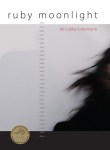
Ali Cobby Eckermann, Ruby MoonlightThe poetry, as you can see from my excerpts, is spare. There’s no punctuation, not even apostrophes, and no capitalisation except for proper names. Lines are generally short, and description is generally minimal. There’s a lovely but restrained used of repetition, and the rhythm is matter-of-fact, that is, it moves the story along with few flourishes (if that makes sense). The story is told through separately titled poems, each of which occupies its own page, though some only part of it. The titles are simple and to the point – “Ambush”, “Friends”, “Oasis”, “Hate”, “Cursed”, “Sunset”. You could almost track the trajectory of the story through its titles. This spareness, I think, enhances the emotional power. The poems say what they need to say without embellishment.

The excerpts above are from more narrative-focused poems, but there are also poems which provide context, describing the seasons as time passes, commenting on the landscape within which our characters operate, providing a sense of the country’s spirits watching, tending, ready to act. The novel opens on the poem “Nature” which sets the scene perfectly by conveying the opposing faces of nature – “sometimes/turning to/butterfly” or sometimes just to “dust” – which also subtly heralds the coming massacre. And, a few poems in, soon after the massacre, comes one describing nature’s nurturing of Ruby:

chirping red-browed finches lead to water
ringneck parrots place berries in her path
trust nature
(“Birds)

The words “trust nature” are repeated at the end of each couplet in this poem, providing a soothing mantra for Ruby.

Most of the poems are presented in couplets or triplets, but occasionally one uses a different structure, usually to mark a dramatic change. Early in the novel is the devastating, shaped-poem, “Ambush”, in which all lines but one comprise single words (“hack/hack/hack” it starts); and half-way through is another shaped-poem, “Tempo”, which marks both the passing of time and acts as a transition from a short time of idyll for Ruby and Jack to the appearance of others:

Jack knows the remainder of the conversation
before it was spoke ya see any blacks roaming
best ya kill ’em disease spreading pests
(“Visitor”, immediately after “Tempo”)

The irony of it! Who brought disease?

So, Ruby and Jack. One of the delights of the book is the sympathetic representation of these two characters. Bereft after the loss of her family, Ruby stumbles across Jack, a loner who scrapes a living out of fur-trapping. Both are outcasts in colonial Australia, Jack an Irishman, a hated “Mick” (“a music-less man stands aloof at the bar/scowling his hatred for the Micks”, from “Loose”) and of course Ruby, a lubra or black woman. These two cautiously find a “small trust … growing” (“Solace”) between them, but it is a “forbidden friendship”, forbidden from both cultures, so their times together are snatched carefully. Ruby is watched by members of another mob, people who are “slowed by fatigue” and “weary with worry” (“Signs”), and who know the dangers:

camp smoke whispers
tell story of the killings
(“Whispers)

Jack and Ruby become the target of the aforementioned “music-less man” – a man who’d lost his “music heart” after an act of barbarity – and his hired help, two brothers “with rotten teeth smirks” (“Scheme”). Hatred and greed fuel these men. And so the scene is set, but it doesn’t quite play out the way you expect, because Eckermann wants to focus more on our universal need for warmth, love and companionship, and also on survival.

The novel is imbued with indigenous presence, from the opening where Ruby’s family live in “Harmony” in their environment, through her meeting with the other mob, the Cloud people, “on their winter trek”, to the appearance of “Kuman”, her guardian spirit who guides her to safety.

Ruby Moonlight is a special read that adds another perspective and voice to colonial contact narratives, a voice that pays respect to indigenous law and traditions, addresses the politics of contact, but also recognises our personal and universal need for love and companionship. It’s a warm and generous book, but it doesn’t pull punches either. A good read.

awwchallenge2016Ali Cobby Eckermann
Ruby Moonlight
Broome: Magabala Books, 2012 (2015 reprint)
74pp.
ISBN: 9781921248511

Julie Proudfoot, The neighbour (Review)

Julie Proudfoot, The neighbourWhen Julie Proudfoot offered me her debut novel, The neighbour, for review I was more than happy to accept. After all, it had won Seizure magazine’s Viva La Novella Prize in 2014, and you all know how much I love a novella. I must say it’s a gorgeous looking book. I’m not one to judge books by their covers, but neither am I immune to a beautiful book, and The neighbour is that – from its rich, green and mysteriously intriguing cover to its crisp, clear internal design. It is such a pleasure to hold and read. No wonder I prefer print to electronic!

But of course, the most important thing is the content, and the book delivers here too. It’s an Ian McEwan style page-turner. By this I mean it starts with a dramatic event which sets in train actions and reactions as the characters struggle to come to grips with the event, with its impact on themselves and their relationships, and with the way it exposes secrets and past traumas. The event is the horrible but accidental death of a child due to a mistake made by a neighbour. The circle of characters is tight – Ryan, Angie, and the nearly-five Lily, who live next door to Luke, Laney, and their four-year-old son Sam. On the opening page, Luke acknowledges, internally, that a frisson of tension (“a nervous kind of energy”) exists between himself and Angie  – and then she asks him for a favour he does not want to do.

“His actions were wrong, but now he can right them”

The neighbour is a novel about psychological disintegration brought about by grief and guilt, and about the tension that ensues when one wants to forget, another wants to remember, while yet another wishes to atone. Grief, we see, is a personal, private thing, and particularly so when it is bound up in a secret that prevents its full expression. Luke has always been Mr Fix-it for Angie and Ryan, so of course he wants to keep on fixing. If he can just fix their house, the loose roof-tiles, for example, he can make amends. Actions, he tells Angie, are the only way he can “beat down” the guilt. But you can’t help or fix for others if you are falling apart yourself, and you certainly can’t if those others don’t want that help. This is something Luke has trouble recognising as his thinking becomes more and more disordered.

And Luke’s thinking becomes so disordered, in fact, that his behaviour moves into quite bizarre territory. His determination to fix things for Angie and Ryan, despite their refusal, edges him into stalker territory. But, stranger still, Lily’s death resurrects (I’ve chosen this word specifically but I’m not going to explain why!) memories of his older brother’s drowning when they were children. Luke’s response to these memories is, there’s no other word for it, sadistic, but we go with it because we know Luke is losing his hold on reality. He is not a sadist. He is a troubled man. We care about him – because Proudfoot makes sure we do.

She achieves this by telling most of the story through Luke’s perspective, though we also occasionally enter other perspectives, such as Angie’s, too. It’s in third person, but present tense, so we journey with Luke, and other characters, as they try to make sense of their situation. Here’s Luke after Ryan has vehemently rejected his attempt to fix their roof:

As he climbs back over the fence, he can feel Ryan watching him. It’s going to be tough. Ryan will fight it. He knows this, but they’ll thank him in the end. They don’t even know what they need right now. He’ll get them all back on track. Ryan and Angie need never be aware of it.

The language, as you can see, is clear and direct. Because we are in Luke’s head most of the time, description is kept to a minimum, but the writing is nonetheless evocative. Sentences are generally kept short, which keeps the story moving and develops tension. The short, choppy sentences also mimic the characters’ erratic, distressed mental states. Here is Angie through Luke’s eyes:

When she talks her face is in parts. Her eyes shine. Her mouth moves. Her cheeks square up when she speaks and droop when she stops. In doing what Ryan wants, she has become fractured and tense. The more Luke tries to help her, the worse she gets.

Then there’s the plotting. It’s delicious. As the novel progresses, we think we’ve guessed the back story, and we have, but not quite. As it builds to its conclusion, we think we know how it will end, and we are right, almost. The end, in fact, has a beautiful irony – and is perfect.

Despite its brevity, The neighbour tells a complex story of grief, guilt, culpability and responsibility. There are layers, here, as there often are in tragic accidents, but rather than labour them, Proudfoot trusts us to comprehend them while she gets on with the story. This is a powerful, thoughtful – and at times – shocking novel that gripped me from its opening sentence. I look forward to seeing what Proudfoot produces next.

Lisa (ANZLitLovers) read and enjoyed this when it first came out.

awwchallenge2016Julie Proudfoot
The neighbour
Sydney: Xoum Publishing, 2014
204pp.
ISBN: 9781922057983

(Review copy courtesy the author)

Monday musings on Australian literature: Spotlight on Larissa Behrendt

Courtesy: Annette Marfording

Courtesy: Annette Marfording

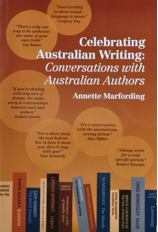
This is the fourth in my occasional series of Spotlight posts inspired by Annette Marfording’s Celebrating Australian Writing: Conversations with Australian Authors, and this time I’m featuring an indigenous author to coincide with Lisa’s (ANZLitLovers) Indigenous Literature Week.

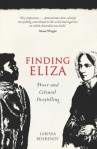
Larissa Behrendt is the perfect subject for what is also NAIDOC Week, not only because she has a few books under her belt, but also because her new book published earlier this year, Finding Eliza, explores how colonisers have written about indigenous people. Behrendt is a Eualeyai/Kamillaroi woman, and in her interview with Marfording describes herself as a Type A person. Looking at what she has achieved in her less that 50 years I can well believe it. She is currently Professor of Indigenous Research and Director of Research at the Jumbunna Indigenous House of Learning at the University of Technology, Sydney. She has won awards for her fiction, and been on the boards of various arts organisations including the Sydney Writers Festival, Bangarra Dance Theatre and the Museum of Contemporary Art. She was the National NAIDOC Person of the Year in 2009 and NSW’s Australian of the Year in 2011. As a lawyer, she has served on many boards, review committees and land councils, most of them indigenous-related. The list is impressive.

Marfording’s interview occurred in August 2010. As she does with each of her interviews, Marfording commences with a brief biography of her subject at the time of the interview, and follows the interview with a biography update to the time of publication. It’s nicely done.

I particularly loved this interview not only because Marfording asks, as she does in all the interviews, thoughtful, relevant questions showing her understanding of the subject, but because in this interview she covers some issues of particular interest to me. More on that anon.

Marfording asked Behrendt, as she tends to ask all award-winners, what winning awards means to her. Behrendt admits that it is affirming to win an award but also says that the richest prize is when a reader tells her that a book “touched” them or that it’s “like me and I never see myself in a book”.

Some of the questions Marfording asked relate to the autobiographical nature of her work, as her two novels, Home (2004) and Legacy (2009), both draw strongly on her family, with Home looking particularly at the stolen generation issue and Legacy being more specifically about her father and her relationship with him. She said that although Home was heavily fictionalised, her father found it hard to read. “It was flattering to me as a writer,” she said, “because it meant I’d got it right.”

Marfording also questioned Behrendt about the fact that her two novels also tend to be issue-based. As a fiction reader, I loved Behrendt’s response. She said that, as a lawyer, she has advocated and written factual pieces on many of the same issues, but that

telling a story that actually explains how a policy can impact on somebody’s life so personally, telling that story from a really human point of view, can influence more people than the most eloquent legal argument, especially when you can talk to somebody through the universals that they understand, like the love between siblings, the love between parents, etc.

I love this reference to universals – to the things that bring us all together. She mentions them again later in the interview, but here I want to share her gorgeous language. She said:

I’ve got very strong opinions, and I think it was a real learning process to learn that sometimes it’s through the whisper of a story that you can influence people more than through the louder, shouting style of activism.

There were other questions too, but I want to conclude on two that focused on her as an indigenous writer, one on labelling, and the other on the issue of non-indigenous people writing about indigenous people (which, as you know, I’ve raised here a few times).

Regarding labelling, Behrendt described it as a complex question. While she has no problem being identified as an indigenous writer, she said it can become problematical when writers are pigeonholed. For example, at the Byron Bay Writers Festival she was invited on a panel discussing “fathers”, a panel that recognised the diversity of perspectives, but in many festivals indigenous writers are lumped together on a panel about indigenous writing. She said that:

What we like to say is that within our writing – and I think that’s true of every Aboriginal author – there are universal themes about family, about love, about betrayal, about hurt, about anger and jealousy, and these are the things that actually unite us.

It’s a problem, in other words, when indigenous authors are seen to be writing only about indigenous subjects. Love it. The comment reminded me of Ellen van Neerven’s Heat and light (my review) in which some of the stories didn’t focus on or clarify race or ethnicity of the characters. They were just about people. For Behrendt, any story – whether the focus is an indigenous issue or not – is, essentially, about universals.

Larissa Behrendt, Finding ElizaAnd finally, that issue about non-indigenous writers writing on indigenous people. Again Behrendt is thoughtful rather than dogmatic. She says she’s always interested in how non-indigenous people portray indigenous people – hence, obviously, Finding Eliza – but that it’s difficult for them to do it authentically because they don’t know enough about Aboriginal life and culture. The reverse is a little different because Aboriginal people are “so bombarded with the dominant culture”. She identifies some writers who have not done it well – albeit she respects their hearts – and then names some who have impressed her. Kate Grenville in The secret river is one. Grenville, she says, doesn’t try an Aboriginal point of view. Instead

through using her non-indigenous characters, by showing their ignorance, their violence, their sense of entitlement, their fear, she tells a very strong story about Aboriginal experience. You read her book and you know exactly what it was like for Aboriginal people.

Grenville talks in Searching for The secret river about the issue of presenting the indigenous perspective. It was something she thought carefully about. Nice to see she’s been vindicated, in the eyes of Behrendt anyhow. The other effective portrayal she offers is Liam Davison’s The white woman. (Davison was tragically killed in the MH-17 disaster, and Lisa reviewed The white woman, as well as his other novels, as a tribute to him.) Behrendt says that Davison tells the story of massacres in Gippsland but relates

the story from the perspective of somebody who goes out as part of those hunting parties, and by getting into the psyche of the kind of person that can actually commit the most brutal aspects of a colonisation of a land, he tells a very strong story about Aboriginal people.

So, while she doesn’t see it as a no-go zone for non-indigenous writers, she does believe that the level of ignorance makes it a difficult challenge.

Another great interview with a writer who’s been in my list of must-reads for a long time. I’ll be starting soon with a short story. Watch this space.

Previous Spotlight posts:

Annette Marfording
Celebrating Australian Writing: Conversations with Australian Authors
Self published, 2015
273pp.
ISBN: 9781329142473

Note: All profits from the sale go to the Indigenous Literacy Foundation. To find out where you can purchase this book, please check Marfording’s website.