Anthony Doerr, All the light we cannot see (Review)

Anthony Doerr, All the light we cannot seeJust when you thought that there couldn’t possibly be another angle to writing about World War 2, up comes another book that does just that, like, for example, Anthony Doerr’s Pulitzer prize-winning All the light we cannot see. I had, of course, heard of it, but it wasn’t high on my reading agenda until it was chosen as my reading group’s September book. I wasn’t sorry we chose it, because I do, in fact, like World War 2 stories, and Doerr’s turned out to be an engaging one – warm, generous but not sentimental, and highly readable despite its alternating time-frames, locations and characters.

I’ve read several and reviewed some World War 2 novels and memoirs. Many have been about Jews and the Holocaust, such as Imre Kertesz’s Fateless, Hans Bergner’s Between sea and sky, Marcus Zusak’s The book thief, and two memoirs, Halina Rubin’s  Journeys with my mother and Anna Rosner Blay’s Sister, sister. A couple have been about the fighters, such as Alan Gould’s The lakewoman and Richard Flanagan’s The narrow road to the deep north. Some have drawn on the perspectives of children and young people – Zusak’s The book thief, Ursula Hegi’s Stones from the river and, of course, Anne Frank’s The diary of a young girl. Doerr’s book fits into this last group, but is different again. Zusak’s and Hegi’s girls are non-Jewish Germans, and Anne Frank is of course a Jewish girl in Amsterdam. These books focus on the Holocaust. Doerr’s does not. His interest is the personal experience of his young people – a blind French girl, Marie-Laure, born around 1928, and an orphan German boy, Werner, born around 1927. Their stories – Marie-Laure’s birth in Paris and flight with her father to Saint-Malo after Paris is occupied, and Werner’s childhood and youth in Germany followed by his war experience in Russia, Central Europe and France – are told in parallel until they inevitably meet.

Marie-Laure and Werner are nicely realised characters. They are ordinary young people trying to make a life for themselves in terrible times, but are extraordinary too. Marie-Laure’s childhood-onset blindness makes her initially helpless but she becomes a resourceful and imaginative young girl. Werner, the orphan, is a clever boy who develops a fascination with radios and things electrical. This leads him to a particular role in the war – tracking down partisan-resistance transmitters – that is different from most “soldier” stories.

All the light we cannot see is a big book. It has a wide, but not unwieldy, cast of characters, and a complex structure comprising two chronological sequences, within each of which the stories of our two young people alternate. This might sound difficult or confusing to read, but Doerr handles it well.

I’m not going to write a thorough review of this. Being a top-selling prize-winner, it has been reviewed widely. Instead, I’d like to share some of its themes, or ideas, because these are what interests me most. Before that though, I want to raise one issue. One review I read and some in my reading group expressed irritation at Doerr’s use of American idiom (such as people going “to the bathroom in their pants”). For some reason this sort of issue rarely worries me. Does that make me a bad reader? Perhaps. But it’s difficult, I think, to write in the language of another place and time, and when writers try to do it, it can feel forced. Some manage it (like Peter Carey’s True history of the Kelly Gang) and some compromise by relying on some well-placed words from an era. Generally, I’m happy for the author to use contemporary-to-them expression.

What you could be (Volkheimer to Werner)

What interests me most as a reader is not whether authors get these sorts of details right but questions like why is the author writing this, why has the author structured the story this way, what does the imagery mean, and so on. It is to the first of these that I’ll turn now. The novel’s overall subject matter is the obvious one – the tragedy of war, the way war destroys people’s lives – but within this are some interesting ideas.

One relates to logic and reason. Early in the novel, Marie-Laure’s locksmith father believes (or, perhaps, wants to believe) in logic:

Walk the paths of logic. Every outcome has its cause, and every predicament has its solution. Every lock its key.

This idea is reiterated in the book Marie-Laure is given by her father, Verne’s Twenty thousand leagues under the sea:

Logic, reason, pure science: these, Aronnax insists, are the proper ways to pursue a mystery. Not fables and fairy tales.

The opposing view, however, is put by Werner late in the war when he is tracking resistance transmitters:

Everybody, he is learning, likes to hear themselves talk. Hubris, like the oldest stories. They raise the antenna too high, broadcast for too many minutes, assume the world offers safety and rationality when of course it does not.

Logic and reason may work well enough in “normal” life, but during war they can stand for very little.

Somewhat related to this are the discussions about curses and luck. A major plot line concerns an ancient gem, the Sea of Flames diamond, which is said to carry a curse. It’s surely not by chance (ha-ha) that Doerr hides this stone behind the 13th door in the museum, and that his novel has 13 sections! Anyhow, here is Marie-Laure’s father on curses and luck. There are, he says:

no such things as curses. There is luck, maybe, bad or good. A slight inclination of each day toward success or failure. But no curses.

AND

Stones are just stones and rain is just rain and misfortune is just bad luck.

Later though, when her father has been arrested and Marie-Laure is scared and alone, she conducts an imaginary conversation with him:

You will survive, ma chérie.
How can you know?
Because of the diamond in your coat pocket. Because I left it here to protect you.
All it has done is put me in more danger.
Then why hasn’t the house been hit? Why hasn’t it caught fire?
It’s a rock, Papa. A pebble. There is only luck, bad or good. Chance and physics. Remember?
You are alive.

In almost every story I’ve read about war – fiction and non-fiction – luck has played a significant role. It’s one of the things that makes war so scary. You cannot expect reason to prevail.

Finally, related to these two ideas is that of choice:

Frederick [Werner’s friend at Schulpforta, the Nazi training school] said we don’t have choices, don’t own our lives, but in the end it was Werner who pretended there were no choices …

Frederick, in fact, chose to exercise his choice by refusing to follow orders and he suffered the consequences, while Werner did as he was told – at school and later in the field (“they do as they’re told”) and suffered the consequences in a different way. Late in the novel, Werner meets Marie-Laure:

He says, “You are very brave.”
She lowers the bucket. “What is your name?”
He tells her. She says, “When I lost my sight, Werner, people said I was brave. When my father left, people said I was brave. But it is not bravery; I have no choice. I wake up and live my life. Don’t you do the same?” 

These and similar discussions thread through the book. They remind us that in war survival is largely a matter of “luck”, that reason and logic will only get you so far when you confront the chaos of war, and that, perhaps paradoxically, you do have choices even if they are between two unappealing alternatives. The ultimate tragedy is that war destroys “what you could be” – all those talents, all those dreams, are subsumed into the business of survival.

This is not a perfect book. It’s a bit sprawling, trying to do a lot with imagery that I haven’t been able to completely untangle. And I wonder about the necessity of the final decades-later chapters. However, it is a page-turning read and produced a lively discussion in my bookgroup. I’m glad I read it.

Anthony Doerr
All the light we cannot see
London: Fourth Estate, 2014
531pp.
ISBN: 9780007548682 (eBook)

John Muir, Save the redwoods (Review)

Giant Sequoia, Yosemite

Giant Sequoia, in the Sierras

Any fool can destroy trees. They cannot defend themselves or run away. And few destroyers of trees ever plant any; nor can planting avail much toward restoring our grand aboriginal giants. It took more than three thousand years to make some of the oldest of the Sequoias, trees that are still standing in perfect strength and beauty, waving and singing in the mighty forests of the Sierra.

“A wind-storm in the forests” by American naturalist/environmentalist John Muir (1838-1914) was the first Library of America (LOA) story of the week that I ever reviewed here. I was consequently keen to read his short essay “Save the redwoods” when it popped up as an LOA story-of-the-week three weeks ago. It’s an interesting piece, partly because it was found amongst his papers, posthumously, so was not published during his lifetime.

As LOA’s notes say, Muir spent four decades writing articles for the national press which argued for the “protection of such natural wonders as the Petrified Forest, the Grand Canyon, and—above all—Yosemite.” Yosemite was a particular love of his. LOA tells how it was his and Robert Underwood Johnson, associate editor of The Century Magazine, alarm about the “substantial damage caused by lumbering, sheepherding, and tourism” there that eventually resulted in the creation of Yosemite National Park.

It is this issue of lumbering that Muir takes up again in “Save the redwoods”. It was apparently written around 1900 when there were concerns that the Calaveras Grove of Big Trees or Giant Redwoods (Sequoiadendron giganteum) was at risk of being sold and cut down for timber because the owner, James Sperry who had protected them, was old and no longer able to maintain it. A lumberman, Job Whiteside, planned to buy it – but there was a public outcry. This is when Muir apparently wrote his piece, arguing that the various scattered groves of redwoods not included in Sequoia National Park should be protected..

In his piece Muir, as was his style, draws on religious imagery, analogy and personification, amongst other devices, to argue his case. He discusses the destruction of a couple of Big Trees in the grove back in the 1850s:

Forty-seven years ago one of these Calaveras King Sequoias was laboriously cut down, that the stump might be had for a dancing-floor. Another, one of the finest in the grove, more than three hundred feet high, was skinned alive to a height of one hundred and sixteen feet from the ground and the bark sent to London to show how fine and big that Calaveras tree was—as sensible a scheme as skinning our great men would be to prove their greatness. This grand tree is of course dead, a ghastly disfigured ruin, but it still stands erect and holds forth its majestic arms as if alive and saying, “Forgive them; they know not what they do.”

He then comments on the new plans to mill this grove, saying

No doubt these trees would make good lumber after passing through a sawmill, as George Washington after passing through the hands of a French cook would have made good food.

That’s an analogy to get our attention! He argues that if one of these

Sequoia kings [could] come to town in all its god-like majesty so as to be strikingly seen and allowed to plead its own cause, there would never again be any lack of defenders.

He describes the proliferation of sawmills and the ongoing destruction of these big trees, and sets this activity against Mr Sperry’s protection of the sequoias in his Calaveras Grove. Muir notes that when news starts to come through of this Grove being bonded to the lumberman, there is suddenly a “righteous and lively indignation on the part of Californians”. This, he says, seems strange given “the long period of deathlike apathy, in which they have witnessed the destruction of other groves unmoved”. However, he writes, public opinion had been rapidly changing in recent years and there had always been a special interest in the  “Calaveras giants [because] they were the first discovered and are best known”.  Moreover:

  • they have a worldwide reputation;
  • they are visited and admired by “travelers from every country”; and
  • the names of great men have long been associated with them (including Washington, Humboldt, Torrey and Gray, and Sir Joseph Hooker)

He argues that “these kings of the forest, the noblest of a noble race, rightly belong to the world” but, as they are in California, Californians “cannot escape responsibility as their guardians”. Then comes some patriotism and buttering up! He writes:

Fortunately the American people are equal to this trust, or any other that may arise, as soon as they see it and understand it.

It is here that we find the excerpt I opened my post with. It’s followed by his brief description of a bill being put before congress to protect the Calaveras Grove. He argues that not only will the bill protect this particular grove of trees but the resultant/concurrent “quickening interest in forest affairs in general” will result in improved chances for other groves and forests.

The piece feels a little rushed and unfinished, which is probably why he never submitted it for publication, but the work of Muir and others did eventually result in most of the west coast’s major sequoia and coastal redwood groves being “gathered under the jurisdiction of the National Park Service”. I saw many of these trees in the 1980s and again in the 1990s. They are unforgettable.

“Any fool”, Muir wrote, “can destroy trees”. Saving them is much harder. It takes passion, patience and persistence, something Muir exemplified in his life-time. Luckily, a long succession of environmentalists – around the world – continue this tree-saving work today.

John Muir
“Saving the redwoods”
First published (posthumously): In Sierra Club Bulletin, January 1920.
Available: Online at the Library of America

Mark Twain, A presidential candidate (Review)

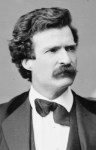
Mark Twain, by Matthew Brady, 1871 (Public Domain in the US, via Wikipedia)

Mark Twain, by Matthew Brady, 1871 (Public Domain in the US, via Wikipedia)

Towards the end of his life, Mark Twain wrote, the Library of America (LOA) says,

The political and commercial morals of the United States are not merely food for laughter, they are an entire banquet.

I’m not sure the US had/has a monopoly on this. However, let me get to the point. LOA published Twain’s column, “A presidential candidate”, back in 2012 but, given the current political shenanigans in the USA (no offence to my American readers intended), I couldn’t resist sharing it with you today. It’s very, very brief, so my post will be too. In fact, I suggest you ignore my post, and just click on the link below to read it yourself.

Sometimes, I think, we forget – at least I do – how little things have changed really. Just read Twain’s opening:

I have pretty much made up my mind to run for President. What the country wants is a candidate who cannot be injured by investigation of his past history, so that the enemies of the party will be unable to rake up anything against him that nobody ever heard of before. If you know the worst about a candidate, to begin with, every attempt to spring things on him will be checkmated. Now I am going to enter the field with an open record. I am going to own up in advance to all the wickedness I have done …

And he then proceeds to own up to a wide range of rather bizarre “wickedness” as you would expect from Twain, wickedness like running “a rheumatic grandfather” up a tree in the middle of a night because he snored, and burying a dead aunt under a tree to fertilise his vine. He also ran away, he says, at the battle of Gettysburg. His friends try to excuse him, he writes, on the basis that he was trying to emulate George Washington at Valley Forge, but no, he says, the reason is that he was scared. He’d like his country to be saved but would prefer someone else to save it. Indeed, he writes,

My invariable practice in war has been to bring out of every fight two­-thirds more men than when I went in. This seems to me to be Napoleonic in its grandeur.

I like his style! He also discusses his financial views and what he would do with poor people, but you can read those for yourself.

LOA tells us that the piece was written the year before the presidential race between Republican James A. Garfield and Democrat Winfield Scott Hancock. Twain supported Garfield. As American readers would know, Garfield won, but was assassinated before he finished his first year.

But that’s another story. Twain’s “A presidential candidate” is an entertaining piece of political satire in which Twain suggests that all he need do to be a valid candidate is to make known upfront his “wrongdoings”. What sort of man he is, he implies, is far less relevant. Indeed, Twain once wrote that “an honest man in politics shines more there than he would elsewhere”. If Twain is at all representative of his times, it makes me think that not as much has changed in the last hundred or so years regarding our attitudes to politics and politicians as current commentators think.

Mark Twain
“A presidential candidate”
The Library of America
Originally published as Mark Twain as a presidential candidate, 1879
Available: Online

Edith Wharton, Writing a war story (Review)

According to Keirsey, Edith Wharton may have b...

Edith Wharton (Presumed Public Domain via Wikipedia)

“Writing a war story” is quite different to the Edith Whartons I’ve read to date, and it was clear from the opening sentence – “Miss Ivy Spang of Cornwall-on-Hudson had published a little volume of verse before the war”. It was the comic tone that did it. All the previous works of hers I’ve read, several novels and novellas, plus a couple of short stories, have been serious, if not downright tragic. However, Wharton was a prolific writer, so I wasn’t completely surprised. In fact, I was rather thrilled to have come across this story via the Library of America (a few months ago now).

I haven’t yet read the highly recommended biography of Wharton by Hermione Lee, but I’ve heard enough about her life to know that she lived in France during the First World War, and that she contributed significantly to the war effort. As LOA’s notes tell us, she stayed in France when the war started while others fled. She raised money, visited the front, established refugee hostels and homes for children. She was admired widely but she, herself, apparently underplayed her role, believing, writes LOA, “that nothing she did could compare with the agonies suffered by the soldiers and their families”. Her story, “Writing a war story” satirises both this role and the idea of writing stories for soldiers, for the war effort.

The plot is simple. Ivy Spang, who had published, to minimal recognition, a book of verse, is asked to contribute a short story to a new magazine, The Man-at-Arms, aimed at convalescent soldiers. Flattered, she accepts, and, due for leave from her volunteer work of “pouring tea once a week” for soldiers in a hospital, she sets off “to a quiet corner of Brittany”, because

devoted though she was to her patients, the tea she poured for them might have suffered from her absorption in her new task.

But, the task proves harder than she’d imagined. She struggles to find “Inspiration”, her mind being full of the one serious but unfortunately pretentious and condescending review, by the editor of Zig-Zag, of her published verse collection. She tells her companion, Madsy, that “people don’t bother with plots nowadays” and that “subject’s nothing”. Eventually, in desperation, she accepts Madsy’s offer to use/collaborate on one of the “stories” Madsy had jotted down from her hospital volunteer work. They agreed that Ivy would take the basic story but add her literary “treatment”. You can probably guess the outcome, but you should read the story to see just how it comes out. There’s a photo and a famous novelist involved too. In addition to the satire on “literature” and war volunteer work, there’s also a gender dig.

One of the things I most enjoyed about the story was its satire of literary pretensions, and how easy it is for an unconfident writer to be derailed by the wrong sort of praise, as Ivy is by Mr Zig-Zag!

In the story’s conclusion, a novelist laughs at her story, before he realises she’s the author. When he realises, and she asks for feedback:

He shook his head. “No; but it’s queer—it’s puzzling. You’ve got hold of a wonderfully good subject; and that’s the main thing, of course—”
Ivy interrupted him eagerly. “The subject is the main thing?”
“Why, naturally; it’s only the people without invention who tell you it isn’t.”
“Oh,” she gasped, trying to readjust her carefully acquired theory of esthetics.

Poor Ivy! I liked the fact that Wharton’s satire is subtle, not over the top. We readers can see what’s coming but Ivy isn’t ridiculed. We feel for her aspirations but we can see that her lack of confidence has laid her open to influence. And there’s irony here because that very influence, that editor of Zig-Zag, had warned her of “not allowing one’s self to be ‘influenced'”, of the importance of “jealously guarding” her “originality”.

There’s more to this story, particularly for people interested in Edith Wharton’s biography. My point is that whatever your interest – literature, war literature, Edith Wharton herself – this story has something to offer, as well as being a good read (with a subject, or two!)

Edith Wharton
“Writing a war story”
The Library of America
Originally published in Woman’s Home Companion, 1919
Available: Online

Kate Chopin, A pair of silk stockings (Review)

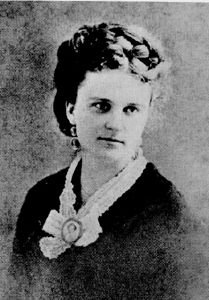
Kate Chopin

Kate Chopin (Public domain, via Wikipedia)

Over the years, the Library of America‘s (LOA) Story of the Week has published seven short stories by Kate Chopin, and I’ve posted on four of them. Now comes my fifth. It was actually published in February. I noted it, printed it out, but have only now found time to sit down and read it, and of course, I’m glad I did. It’s another little treasure.

Most of Chopin’s writing – including her most famous novel, The awakening, which I’ve read twice – offers commentary on the lives of women in late nineteenth century America. “A pair of silk stockings”, as you can probably tell from the title, doesn’t depart from this.

I enjoyed, as I usually do, LOA’s introductory notes. They are always succinct, yet hone in on something particularly relevant about the writer and the work. The notes to this story remind us that Chopin met with some resistance to her stories, both because of her themes and what literary historian Richard Gray calls her “subversive streak”. Go Chopin! However, what interested me most in these notes was something I’d forgotten, Chopin’s interest in Guy de Maupassant. I loved Maupassant’s short stories in my youth, and still have my little now-yellowing paperback of his stories. Chopin wrote about why she liked Maupassant, in 1896:

Here was life, not fiction; for where were the plots, the old fashioned mechanism and stage trapping that in a vague, unthinking way I had fancied were essential to the art of story making. Here was a man who had escaped from tradition and authority, who had entered into himself and looked out upon life through his own being and with his own eyes; and who, in a direct and simple way, told us what he saw.

LOA’s notes continue to say that Maupassant’s influence on her was substantial, particularly in his “emphasis on psychological character development” and in the use of “the surprise or disconcerting ending”. That’s certainly the case in “Desirée’s baby” (my review).

But today’s post is about “A pair of silk stockings”, which critics argue is one of her best short stories, one critic contending, in fact, that “it is one of the best pieces in turn-of-the-century American literature by anyone”. It is certainly an excellent read – a quiet slice of life with a little bite. The story concerns “Little Mrs Sommers” who suddenly finds herself with a little windfall of $15. We are not told the source of this money, because that’s not the point. The point is how it makes Mrs Sommers feel and what she does with it.

First, though, who is Mrs Sommers? We don’t know a lot about her, but enough. She has a few children – “the boys and Janie and Meg”. I’m sure Chopin is making a little point in naming the girls but not the boys. Anyhow, she is not well off, and has to scrimp and save to dress her children. She “knew the value of bargains” and could line up at sales and “elbow her way if need be” with the rest of them.  She has not always been poor apparently, having once known “better days”, but she doesn’t think of those now:

She had no time—no second of time to devote to the past. The needs of the present absorbed her every faculty. A vision of the future like some dim, gaunt monster sometimes appalled her, but luckily to-morrow never comes.

So, this money, which has “given her a feeling of importance such as she had not enjoyed for years”, needs careful consideration to ensure she makes “proper and judicious use” of it. She doesn’t “wish … to do anything she might afterward regret”.

That’s the set up. As you can probably imagine, for all her careful planning, things work out very differently. The day she goes shopping she’s “faint and tired” having forgotten to eat lunch with all the “getting the children fed and the place righted, and preparing herself for the shopping bout”. She goes shopping – yes – but what she buys and does with her money is nothing like what she planned. Now I could tell you what she spends it on, without telling you the punch-line, but I won’t. It’s only five pages, and is a good read – not only for what it tells us but for its insight into turn of the century American life.

And this last point is what critic Robert D Arner says we should see in the story. It’s not just a story about a poor, struggling woman, but about the whole society, one that is “caught between traditional ideas of feminine roles and the newly emergent American ‘culture of consumption’.” This is not the gut-wrenching Chopin of The Awakening or “Desirée’s baby” but it’s no less poignant for its recognition of the pressures women face in negotiating their lives in a world over which they have little control – not to mention a world in which the temptations to buy are starting to abound.

Kate Chopin
“A pair of silk stockings”
First published: Vogue, September 16, 1897
Available: Online at the Library of America

Washington Irving, The adventure of the German student (Review)

Washington Irving, c. 1855-60 (Copy daguerreotype by Mathew Brady, reverse of original by John Plumbe. Public domain, via Wikimedia Commons)

Washington Irving (1783-1859) is best known for his short stories “Rip Van Winkle” and “The legend of Sleepy Hollow”, but in fact he was a prolific writer and, according to Wikipedia, is often credited as being America’s first “man of letters”. I was fascinated to read in Wikipedia that, as well as being a writer, he worked as a diplomat in Europe. He helped other writers, promoted the writers’  rights in issues like copyright, and he was admired by the likes of Sir Walter Scott, Lord Byron and Charles Dickens. I guess Americans know all this, but I didn’t.

However, I have had a recent encounter with Irving, before the story in this post that is, because I dipped into his Tales of the Alhambra (1832) when we visited that part of Spain in 2013. I was fascinated by his description of a place that is not totally unfamiliar to an Australian:

its scenery is noble in its severity, and in unison with the attributes of its people; and I think that I better understand the proud, hardy, frugal and abstemious Spaniard, his manly defiance of hardships, and contempt of effeminate indulgences, since I have seen the country he inhabits.

And I loved his desire to travel with an open heart and mind:

but above all we laid in an ample stock of good humor, and a genuine disposition to be pleased, determining to travel in true contrabandista style, taking things as we found them, rough or smooth, and mingling with all classes and conditions in a kind of vagabond companionship.

That’s the spirit, as Son Gums would say.

Anyhow, let’s get to the story, “The adventure of the German student”, that was recently published in the Library of America’s Story of the Week program. It came from his collection, Tales of a traveller, which comprised essays and short stories published in 1824 under his pseudonym, one of several he used, Geoffrey Crayon. This collection was divided into four “books”, and our story was in the first, titled  “Strange stories by a nervous gentleman”.

Most of the stories are set in Germany and Paris, with “The adventure of the German student” being set in Paris during the French Revolution. The opening lines are:

On a stormy night, in the tempestuous times of the French revolution, a young German was returning to his lodgings, at a late hour, across the old part of Paris. The lightning gleamed, and the loud claps of thunder rattled through the lofty, narrow streets …

The story, you may not be surprised to hear, is Gothic in tone. LOA’s notes say this is surprising because his “supernatural tales are known more for gentle whimsy and wry satire rather than the Gothic horror found in this story”. They tell us that this story predates Edgar Allan Poe “by a good twenty years” and that American horror writer H.P. Lovecraft admired it for diverging from his “lighter treatment of eerie themes”.

It’s a simply told story. After that opening, the narrator decides that before continuing he needs to tell us a bit about this German student, Gottfried Wolfgang. He was “a young man of good family” but was, perhaps, a little too sensitive and suggestible for his own good. During his studies he had “wandered into those wild and speculative doctrines which have so often bewildered German students” and he starts to feel that “there was an evil influence hanging over him; an evil genius or spirit seeking to ensnare him and ensure his perdition”. His friends decide he needs “a change of scene” and send him off to Paris.

There, Gottfried starts by enjoying the revolutionary spirit but soon all the blood gets him down. In true Gothic style he lives in “a solitary apartment” in a gloomy street not far from the monastic walls of the Sorbonne”. He visits “the great libraries of Paris, those catacombs of departed authors”, becoming a “literary goul (sic), feeding in the charnel house of decayed literature”.

However, he also has “an ardent temperament” but is too shy to approach women so, being of fanciful bent, he dreams up a woman of “transcendent beauty”. She haunts him in the way such visions do to “the minds of melancholy men”.

Now, remember, this is set during the French Revolution, so as the story progresses a guillotine appears where our student meets his dream-woman. He brings her to his home and is, of course, totally enamoured. Fortunately, these are modern times:

It was the time for wild theory and wild actions. Old prejudices and superstitions were done away; every thing was under the sway of the “Goddess of Reason.” Among other rubbish of the old times, the forms and ceremonies of marriage began to be considered superfluous bonds for honourable minds. Social compacts were the vogue. Wolfgang was too much of a theorist not to be tainted by the liberal doctrines of the day.

Ha-ha! Who needs “sordid forms to bind high souls together” he tells the young woman. So he talks her into immediately pledging herself to him. And here, I’m afraid I’ll leave you, but let’s just say that things don’t quite work out for Gottfried, or his dream-woman. There are several layers in which we can read the story – political, philosophical, psychological, sexual, feminist – but all point, at some level at least, to satire of the times.

In 1860, Irving wrote this about his stories:

I am not, therefore, for those barefaced tales which carry their moral on the surface, staring one in the face; they are enough to deter the squeamish reader. On the contrary, I have often hid my moral from sight, and disguised it as much as possible by sweets and spices, so that while the simple reader is listening with open mouth to a ghost or a love story, he may have a bolus of sound morality popped down his throat, and be never the wiser for the fraud…

An interesting, thoughtful man, this Irving.

Washington Irving
“The adventure of the German student”
First published: In Tales of a traveller (1824)
Available: Online at the Library of America

Frederick Law Olmsted, Trees in streets and in parks (Review)

I last came across the American landscape architect, Frederick Law Olmsted, a few years ago when I was doing some freelance research for a Canberra 2013 centenary project. This was because Olmsted, who designed New York’s Central Park with Calvert Vaux, inspired Walter Burley Griffin and Marion Mahoney Griffin, the original designers of Canberra. Now, it just so happens, that my current read is a book by Jane Jose, Places women make, about the contributions women make to the development of cities. In it she talks of Marion Mahoney Griffin, and her role in the design and planning of Canberra, a garden city. So, when a piece by Frederick Law Olmsted titled “Trees in streets and in parks” popped up as last week’s Library of America’s Story of the Week, I decided it was for me.

Frederick Law Olmsted

By James Notman, Boston, 1893, engraving of image later published in Century Magazine (Public domain, via Wikimedia Commons)

It’s a fascinating piece for its insight into nineteenth century thinking about trees, parks and cities. The article was published in a journal called The Sanitarian. He commences by disagreeing with an idea promulgated by French art critic, Charles Blanc, that nature is not beautiful, only design can be so described! Olmsted admits that some trees can be poorly or inappropriately planted or maintained but even those can be – well let him say it

But looking up at the continuous green canopy which these maltreated trunks support, swaying in the light summer breeze against the serene blue beyond—swaying not only with the utmost grace of motion, but with the utmost stately majesty—I say that cheaply, inconsiderately as the planting work was done, if the result is not to be called beautiful, it is only because it has more of sublimity than beauty.

Take that Monsieur Blanc! However, sanitation being his apparent main interest, he moves on to talk about parks and their importance to the “sanitary apparatus of a large town”. Parks are important for providing clean air to city residents. Travellers to London, he writes, had until recently described its myriad parks as ‘“airing grounds,” “breathing places,” “the lungs of London”’. Although times are changing, “the atmospheric theory”of the value of parks still holds strong, he says. For people to benefit from this air, the parks have to be attractive, so trees are planted for their decorative value.

However, it is not for their air-purifying value, nor for a decorative motive, that he plants trees in his parks. His reason doesn’t “interfere with or lessen the value of a park as an airing ground”, but not pursuing decoration as a goal results, he suggests, in a more attractive and less costly park. So, what is his purpose? Well, it has to do with defining “sanitation” more holistically: it’s not just about supporting the body but also encompasses the mind. Yet, he realises,

It is plainly not enough to answer that it is to move the mind recreatively, because that is equally the motive of Punch and Judy, of a flower-garden, of a cabinet of curiosities, of jewelry.

Frederick Olmsted

Portrait of Olmsted, at (the beautiful) Biltmore Estate, 1895, by John Singer Sargent (Public domain, via Wikimedia Commons)

Admitting he’s not a scientific expert, he argues that “the recreative and sanative value of large parks” comes from what he describes as an unconscious process. He distinguishes, in other words, between “conscious, or direct recreation, and unconscious, or indirect recreation”. Designing the placement of trees (and other garden objects) to call people “to a halt, and to utter mental exclamations of surprise or admiration” runs counter to this idea of “unconscious recreation”. A park’s highest value lies, rather, in “elements and qualities of scenery” to which the minds of those experiencing them give “little conscious cogitation” at the time. These elements or qualities “are of too complex, subtle and spiritual a nature to be readily checked off, item by item, like a jeweler’s or a florist’s wares”.

He provides an analogy. It’s the difference he says

between the beauty of a common wildflower seen at home, nearby others of its class, peeping through dead leaves or a bank of mossy turf, and that of a hybrid of the same genus, double, of a rare color, just brought from Japan, now first blooming in America, taken from under glass, and shown us in a bunch of twenty, set in an enameled vase against an artfully-managed back-ground.

In other words, coming across a scene, flower, tree unexpectedly and perhaps without even consciously stopping to comment on it, may have “a more soothing and refreshing sanitary influence”. These are the natural, simple pleasures that “cottagers in peasant villagers” have always been able to enjoy. And here he moves to a more political point. With the growth of cities and the development of the rich, with “the prominence given by the press to the latest matters of interest to the rich and the fashion-setting classes”, the problem is that

the population of our country is being rapidly educated to look for the gratification of taste, to find beauty, and to respect art, in forms not of the simple and natural class; in forms not to be used by the mass domestically, but only as a holiday and costly luxury, and with deference to men standing as a class apart from the mass.

This impoverishes us, dissipates tastes that once brought happiness. It’s a very appealing attitude to parks and park-making, though I must say his language is not the most straightforward to read.

The National Association for Olmsted Parks summarises the legacy of Frederick, his sons and their successors as:

The Olmsteds believed in the restorative value of landscape and that parks can bring social improvement by promoting a greater sense of community and providing recreational opportunities, especially in urban environments.

I think this is what you’ll be hearing about again soon, when I review Places women make!

Frederick Law Olmsted
“Trees in streets and in parks”
First published: In The Sanitarian (September 1882).
Available: Online at the Library of America

Ward Farnsworth, rhetoric and the modern politician

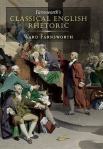
Farnsworth Classical English RhetoricOne of my favourite go-to bloggers, Stefanie (So Many Books), recently posted about a book by Ward Farnsworth titled Classic English rhetoric. (Her post, though, was titled for his second book, Classical English metaphor.) I was intrigued, particularly when she described the letter from the author himself that accompanied this second book. Stefanie writes:

Also in the package was a cheeky letter from Mr. Farnsworth expressing his disappointment when he saw that about a year after he sent me his book I had posted about A Tale of Two Cities and mentioned the book’s use of repetition wondering what it was called. He takes me to task in this letter because in his book he names this technique and uses Dickens to do it. He goes on to say that he has enclosed the paperback copy in case the hardcover he originally sent me was no longer handy because “Every household should have one in case of rhetorical emergency.” This made me laugh out loud.

Well, I had a rhetorical emergency earlier this year when I was preparing for my reading group’s discussion of a book, Steve Toltz’s Quicksand. It used a literary (or rhetorical) device that I knew had a name but I could not remember it. Eventually, through Google, I found it, but it took a little while. The device is asyndeton and yes, it is in Classic English rhetoric, which I have now bought on my Kindle – the perfect place for a dipping-into-cum-reference book like this. No more rhetorical emergencies for me!

However, this is not my main reason for writing this post. I have started the book and, while with fiction I always read the introduction last, with non-fiction I read it first. In this book, it’s called the Preface, and Farnsworth uses it to define rhetoric (“the use of language to persuade or otherwise affect an audience”) and argue for the worth of his book. There is a decline, he says, in rhetoric. It is possible, he continues, to write well without using rhetorical figures “but most of the best writers and speakers – the ones whose work has stood up the longest – have made important use of them”.

The opposite also occurs, he says. That is, “rhetorical figures show up in a lot of bad speech and writing”. And here we get to the point of this post. He writes that:

When used in contemporary political speeches and read from teleprompter, figures often sound tinny – like clichés, or strained efforts to make dull claims sound snappy. This is partly because today’s politician tends to be a creature of very modest literacy and wit who spoils what he touches, but there are more specific reasons as well. First, figures sound splendid when used to say things worth saying. They can show a worthy sentiment to great advantage. But they merely are grating when used to inflate the sound of words that are trite or trivial in substance …

Hmmm … “to say things worth saying”. Farnsworth is really socking it to our* political leaders. I do despair at the type of speech-making we hear today, at the lack of real oratory. Is it because of our sound-bite world? Or because politicians seem more focused on vote-getting or sniping at their opponents, than on presenting a vision to us who vote for them? Oh, for a leader who will inspire and lead.

I could go on and name a few of Australia’s good orators or great political speeches – we have had them – but my plan was to keep this post short, to just share this idea and ask what you think. Can you name a current politician who can regularly be relied upon to make a beautiful – and meaningful – speech? Do you have a favourite political speech, past (I’ll allow that) or present? I promise not to test you on its rhetorical figures.

* I’m not sure whether he meant American or something more global by “our”, but what he says can certainly apply down under.

Annie Dillard, The Maytrees (Review)

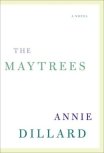
Annie Dillard, The MaytreesI am not, as I wrote in my recent post on Emma Ayres’ memoir Cadence, a big “reader” of audiobooks. In fact, until Cadence, I hadn’t listened to one for a few years. However, we do have a few here that we had given Mr Gums’ mother as her sight started to fail and which we retrieved after she died back in 2011. I bought them for her, so am rather keen to see what I think of my choices!

Now, I’ve never read Dillard, though of course I’ve heard of her. The Maytrees, published in 2007, is her second novel, her first being the Pulitzer prize-winning novel Pilgrim at Tinker Creek published over thirty years earlier in 1974. Fascinating … but I’m not surprised. The Maytrees is such a quiet, deeply thoughtful book, it could only have grown out of years of living and contemplation. It reads like a lifelong meditation on the meaning of life at its very foundation – on how and why we love, on how we should live our lives.

WARNING: POTENTIAL SPOILERS

Provincetown, 1983

Provincetown, 1983

There is very little plot, though there is a storyline which tracks the relationship, through various ups and downs, of Toby Maytree (called Maytree in the book) and Lou, the woman he marries. This story is imbued with the place they live, Provincetown, Cape Cod, a place I visited in the 1980s. I loved reliving my experience through Dillard’s gorgeous evocation of it. Anyhow, the time spans from Maytree’s childhood in the late 1920s and 1930s through several decades to, I guess, the 1990s or so. Paradoxically, while the place is woven closely into the story – you get to know, intimately, the dunes, the tides, the beach shack, and even the bed that is moved, as needs change, up and down the floors of their home to bring the outdoors in – the story is absolutely universal. It’s the quintessential boy-meets-girl story but one that doesn’t end at “happily ever after”. It takes us through the long years of their marriage, the birth of their child, a devastating betrayal, a huge-hearted forgiveness, and their deaths. The book shifts around a bit in chronology, making you work a bit, but you usually know where you are.

While the main themes of the book relate to love and life’s meaning, many other ideas come through. There’s a lot of discussion of reading and literature. We are told early in the novel that “He read for facts, she for transport”. When she, Lou, finds love, here is her reaction:

Love so sprang at her, she honestly thought no one had ever looked into it. Where was it in literature? Someone would have written something. She must not have recognized it. Time to read everything again.

Later in the book when love is lost and recovered, she wonders again about love and life’s meaning. There might be a point to life, she wonders, and there might be an answer in books. She feels, however, that she had only moved a millimetre on these questions in her lifetime. She reflects on how life with Maytree had felt complete – until she’d had her baby, Petie, after which she couldn’t imagine life without him. But, inevitably, he too moved on, and in time had his own child presenting him to her as if she didn’t know the experience or feeling!

In other words, it’s a wise, knowing book, a book which sees how people think and behave. Here is Lou, newly alone:

She ignored whatever did not interest her. With those blows she opened her days like a piñata. A hundred freedoms fell on her. She hitched free years to her lifespan like a kite tail. Everyone envied her the time she had, not noticing that they had equal time.

I loved that little kick – “not noticing they had equal time”. How often do we see the other grass as greener, not seeing our own!

There’s also sly – or perhaps not so sly – commentary on American politics. Dillard describes Hoover, in 1947, warning Americans about artists, and asks “Did America have a culture besides making money?” There’s reference to a “Strictly for profit hospital”, and, at another point, when Maytree ponders the idea of shooting himself to save getting too old, we are reminded that “this was America”. These scattered political jibes provide interesting intrusions into what is mostly a philosophical novel.

The language is quietly beautiful. As I was listening to it, I could only really capture phrases to share, such as “he rummaged her spare comments”, or a description of one of Maytree’s earlier girlfriends as “a great handful of a girl out west”, or a description of the sea as a “monster with a lace hem”. Little motifs run through the book. Lou’s various red items of clothing like a scarf or a dress and Maytree’s red-speckled notebooks, for example, provide colour and continuity, and hint too at the passion of their love.

Maytree and Lou are drawn at depth. We move inside both their heads at different times. At the time of Maytree’s betrayal – which I must say is the point in the book that is hardest to grasp – gentle, but strong and resourceful Lou decides that “if this was not shaping up to be Maytree’s finest hour it might as well be hers”. The other main characters populating their Provincetown world include Deary, Reevadare Weaver, Cornelius Blue and Jane Cairo, all of whom add depth and diversity to the close community Dillard depicts.

I must say though that I found it quite a difficult book to listen to. In some ways it was too slow – we read faster than we can listen, I’ve been told. As the reader, David Rasche, read pages and pages of admittedly beautiful description and contemplation, I felt held back. I wanted to read it at my pace, faster. And yet, it was also too fast, because at times I wanted to stop and mull over the words and ideas.

I could go on, but without having the book itself to bring it all together the way I’d like, I’ll just close here and say that I found it a thoroughly satisfying book. It is warm, non-judgemental, generous and wise. And if that sounds like it’s also sentimental and corny, you’d be wrong. One day I’ll read more Dillard.

Annie Dillard
The Maytrees (audio)
(read by David Rasche)
Harper Audio, 2007
5.5 hours on 5 CDs

George G. Foster, The eating-houses (Review)

Some of you will know that Mr Gums and I love to eat out. So, when I saw a Library of America (LOA) Story of the Week titled “The eating-houses” by one George G Foster appear in my in-box at the end of last year, I knew I had to read it. I just had to find the time to slip it in. I eventually did, and here I am.

The first thing to say about it is that those of us who thought our era of conspicuous dining-out was a new thing are wrong. Foster writes in the opening paragraph of his article that:

We once undertook to count these establishments in the lower part of the City, but got surfeited on the smell of fried grease before we got half through the first street, and were obliged to go home in a cab. We believe, however, that there can’t be less than a hundred of them within half a mile radius of the Exchange. They are too important a “slice” [see publication details below to understand this reference] of New York to be overlooked …

This reminded me of my return last year to the little suburban shopping centre of my teen years – Wahroonga, in Sydney. I looked across the street, from where I was standing, to the local supermarket on the corner and ran my eyes down from it to the other corner. Just a short distance. And it was wall-to-wall cafes with nary another business in between. That was just that little side of that street. There were a couple of cafes on my side, and around both corners, and across the other street as well. Amazeballs as the young would say! Clearly Mr Gums and I are not alone in our predilection for eating out.

Anyhow, back to Foster. You might have gathered from my excerpt that he was not much in favour of these establishments, and you’d be right. He satirises them, and their denizens, pretty mercilessly. He clearly thinks home-cooked meals are  better – “the fare is generally bad enough — not nearly equal to that which the cook at Home above Bleecker* saves for the beggars”. He ridicules their lack of style and taste:

It is really wonderful how men of refined tastes and pampered habits, who at home are as fastidious as luxury and a delicate appetite can make them, find it in their hearts—or stomachs either—to gorge such disgusting masses of stringy meat and tepid vegetables, and to go about their business again under the fond delusion that they have dined.

He categorises the three main styles of eating-houses – satirically referencing the great Swedish botanist and taxonomist Linnæus – and satirises the diners. He describes a journalist ordering “rosegoose”: “when goose leaps suddenly in front of a poet of the Press, who ordered it probably through a commendable preference for a brother of the quill”.

At the cheap Sweenyorum “sixpenny eating-house” style of place, you only get a spoken menu which, he says, “does away with lying in print, to which bills of fare as well as newspapers are too much addicted”. Still, beware here, he advises, of added extras, or your sixpenny cut will suddenly be “seven shillin'”! Just order “a small plate of roast beef mixed, (this means mashed turnips and potatoes in equal quantities)”, add some bread perhaps, and a glass of free water. Then you will “pay one shilling for the whole, and go about your business like a refreshed and sensible man”.

He briefly mentions the cake and coffee shops which are open all night, and therefore frequented by journalists, firemen, and the like. He reserves special praise for the latter:

They are generally far more moderate than politicians and less noisy than gentlemen. At the first tingle of the fire-bell they leap like crouching greyhounds, and are in an instant darting through the street towards their respective engine-houses—whence they emerge dragging their ponderous machines behind them, ready to work like Titans all night and all day, exposing themselves to every peril of life and limb, and performing incredible feats of daring strength, to save the property of people who know nothing about them, care nothing for them, and perhaps will scarcely take the trouble to thank them.

Oh dear – I do hope their “plate of biscuits with a lump of butter in the belly for three cents, and a cup of coffee for as much more” provided them with enough sustenance! And did you note the reference to politicians?

His final paragraph is reserved for the “expensive and aristocratic restaurant of which Delmonico’s is the only complete specimen in the United States”. I was rather intrigued by this because he argues that, at a place like this, you will get

a dinner which is not merely a quantity of food deposited in the stomach, but is in every sense and to all the senses a great work of art.

“A great work of art” is how many of our top chefs like to see their food today. Paying large sums for food like this seems, in one sense, insensitive. And yet, does art have to last forever, or can it be enjoyed in the moment before we move on? I’m still pondering this.

The interesting thing is, as LOA’s notes tell us, that Foster’s “preference for high-society haunts like Delmonico’s ultimately caused his downfall”. He was imprisoned for forging cheques, and spent 9 months in prison the year before he died. His obituary in the New York Times described him as

a remarkable example of the worthlessness of a brilliant talent unguided by a moral purpose, or a decent regard for the proprieties of civilized society.

Do consider reading this article. It’s short and entertaining – and is a fascinating piece of 19th century social history.

George G. Foster
“The eating-houses”
First published: In New York in slices, by an Experience Carver, 1849.
Available: Online at the Library of America

* A residential area of New York.